Rick Conlow's Blog, page 24
May 15, 2017
How Effective is Customer Service Today, Really?
 How good or bad is the customer service you receive? I know it depends on the company and even the person. Yet, overall, how would you rate the customer service delivered by the companies you encounter?
Check out these statistics from research on what’s happening. Then give a rating…
50% of service agents fail to answer customer questions appropriately.
66% of customers went to a competitor due to bad service.
70% of the buying experience is based on the way the customer feels they are being treated.
73% of customers cite incompetent and rude customer support.
75% of customers say it takes too long to reach a live person for help.
78% of customers ended a business relationship due to bad service.
80% of the daily one million customer service tweets are negative.
86% of customers will not buy from a company with negative online reviews.
87% of companies are at elementary levels related to the quality of their customer experience.
89% of customers who experience poor service will leave a brand.
90-95% of service problems are management related according to Deming, Juran and Crosby.
95% of unhappy customers tell others and will tell three times as many people as happy customers.
96% of customers don’t actually tell a company about their complaints, and 25% of customers have some level of complaint at any one time.
 So what is your overall rating? Feel free to leave a note it in the comments, or a message about bad or good experiences with companies.
April was International Customer Loyalty Month. It’s a reminder to all of us that the customer has the power. The American Customer Satisfaction Institute (ACSI) has been rating service since 1994. The overall rating was 74.2 at the end of that year. As of the 4th quarter 2016, with over 500 companies included, it’s 76.8. That is only a 3.5% improvement in 22 years. Now this fluctuating a bit from quarter to quarter. What’s astounding to me, considering all of the money and emphasis related to customer loyalty, it that little has changed in the customer’s perception. While on on hand this is bad news. On the other hand, for companies that know the lucrative link between employee engagement and customer engagement, it is superb news! It means more market gains for them.
Isn’t it time that companies and employees alike renew their commitment to the highest levels of quality and service?
Want to learn how to serve the customer better as an organization? Check out this whitepaper: Creating Sustainable Customer Loyalty and Sales Growth.
 Maybe you want to enhance your individual skills, see Rick’s book, Superstar Customer Service.
The post How Effective is Customer Service Today, Really? appeared first on Rick Conlow.


May 6, 2017
12 Eloquent Leading by Example Quotes
Many leaders today say one thing and do another. They focus on their needs and not that of their team. Here is wisdom that shows us a better way-leading by example.
“The deeds you do may be the only sermon some persons will hear today” Francis of Assisi
“What you are speaks so loudly, I can’t hear what you are saying.” Ralph Waldo Emerson
“The real power of a leader is in the number of minds he can reach, hearts he can touch, souls he can move, and lives he can change.” Matshona Dhliwayo
“An ounce of practice is worth more than tons of preaching.” Mahatma Gandhi
“Never separate the life you live from the words you speak.” Paul Wellstone
 “In leadership, the way up is down. Serve before you get served” Bangambiki Habyarimana
 “Nothing so conclusively proves a man’s ability to lead others, as what he does from day to day to lead himself.” Thomas J. Watson
“Courage is contagious. When a brave man takes a stand, the spines of others are often stiffened.” Billy Graham
“The leader sees things through the eyes of his followers. He puts himself in their shoes and helps them make their dreams come true. The leader does not say, “Get going!” Instead he says, “Let’s go!” and leads the way. He does not walk behind with a whip; he is out in front with a banner.” Wilfred Peterson
“The world is changed by your example not your opinion.” Paul Coelho
“Leadership is not position or a title; it’s action and example.” Cory Booker
“The three most important ways to lead people are:… by example… by example… by example.” Albert Schweitzer
Lead by example through your integrity and character. As one manager told me, “Example and integrity motivate me to be my best not money.” Mark Twain added, “”Always do right. This will gratify some people and astonish the rest.” Talk the walk and walk the talk, and your team will astonish you with high performance.
 By the way, do YOU want to assess your leading by examples skills? Take this
complimentary Leading by Example assessment.
Want to accelerate your career? Check out my Superstar Leadership book or others in the Superstar Book Series

Call for consulting, training and coaching services – 888-313-0514 or mail rick@rickconlow.com.
The post 12 Eloquent Leading by Example Quotes appeared first on Rick Conlow.
April 24, 2017
The 5 Deadliest Enemies of Leadership Success
Leaders can prevent a career disaster by avoiding the enemies that cause it. First, he or she has to pay attention to the signs and then reform. We have all seen too many high-profile leaders in a mix of venues fall from grace in a subsequent media circus.
In similar cases managers throughout an organization meet defeat because of their indiscretions. However, most go relatively unnoticed except by their destructive impact on the employees or companies that are wronged. What’s the matter with these people? Where is their character? What happened to their integrity? Don’t they know the signs of their inevitable downfall?
 Here are the five greatest enemies of a leader. Far too many fall prey to these potentially poisonous pills that subtly weaken and defeat even the strongest of managers. Each of these enemies sucks the life out of workplace harmony. They inevitably leave a trail of turmoil, workplace distrust, employee disengagement and an overall negative result.
The Ron Johnson Approach
Ron Johnson spectacularly failed because he succeeded in the past at Apple. Therefore, he thought he knew what JC Penney’s customers wanted and needed. He didn’t ask them or test his theories. His arrogance overrode his past genius and nearly bankrupted the company.
 A manager in a manufacturing company consistently shut down employees who brought up problems or new ideas. He believed that HE had the answers, not them. It was his way or the highway. He said, “I am all for employee involvement as long as they come up with what I want.” When results were screwed up or not up to his standards, he blamed and screamed at his team. Employee morale and performance hit rock bottom.
The Enron Principle
Ken Lay and Jeff Skilling of Enron are among the top ten crooked CEOs. Through deceit and shady business practices they rapidly built the seventh largest company in the US, over $100B in size. Eventually their house of cards collapsed almost overnight. Thousands of people, innocent of the necrotic scheming, lost their jobs and life savings because of their lack of integrity.
 A sales executive in a chemical sales company habitually lied and made empty commitments to customers to get the business. The company, unaware of his antics for a while, lauded his expertise. When the other departments failed to follow through on these unknown promises, this leader washed his hands of it. Then he complained about the lack of company teamwork. The corporate office was in turmoil with everyone pointing fingers.
The Richard Nixon Method
After the Watergate fiasco, for US President Richard Nixon’s alias was Tricky Dick. Throughout his political career he resorted to dirty tricks to get and keep power. It all caught up with him through the scandal and that is how is often remembered..
One company President called his employees ‘children’. He boasted that you needed to pat them on the back and at other times, the behind. Whenever anyone confronted him or gave contrary news, he pounced on them. He held grudges forever. In most cases, he reassigned them to lesser duties or had them fired to demonstrate his control. Abraham Lincoln said, “Nearly all men can stand adversity, but if you want to test a man’s character, give him power.”
The Bernie Madoff Syndrome
Former stockbroker, Bernie Madoff , epitomizes corporate or leadership greed. He had no sense of ethics as he swindled people out of millions of dollars. It apparently continues in prison as he jockeys with journalists for the most money, over who would tell his story.
 A retail manager often bragged to everyone about his results. In fact, the company recognized him often for excellent sales achievements. He always received the biggest bonus and wasn’t shy about telling everyone. His results were so much better that a number of people questioned his tactics. This went on for a few years. He was quietly “cooking the books” and lining his pockets. Eventually he was exposed and prosecuted.
The Target Proposition
Past Target CEO, Gregg Steinhafel’s poor communication added to Target’s online debacle, Canadian failures, and cultural fiasco. The lack of people skills is often the biggest reason for leadership derailment.
In a study CEOs were asked the reason for their rise up the corporate ladder. The number one response was their ability to communicate. Employee engagement surveys often find the lack of communication is the key issue in the company. There is an obvious huge gap in perception between these two groups here.
How to Avoid the 5 Enemies of Leadership
The five leadership enemies above involve serious character flaws. Consider these guidelines as a leadership compass for more acceptable behavior:
Be accountable. If a leader isn’t, someone else will eventually hold them accountable–colleagues, the board, customers, or the law. Great leaders don’t deceive themselves into thinking they are smarter than everyone else, and that they will get away with doing whatever they want.
Conduct business with integrity, it will serve everyone well. The measure of respect a leader has is often gauged by how well he or she keeps commitments. This is about doing what you say you will do, and doing it the right way.
Treat everyone with respect and dignity. The best leaders genuinely seek to help other people become successful. They care about the goals and needs of the team, and it catapults them to higher levels of achievement.
Create a coaching culture with your team. Better leaders talk about values regularly, and live it “out loud.” Most management failures could be prevented if their boss or mentor coached them frequently.
Become a student of the game. Every manager that I have seen succeed keeps learning. Complacency, another enemy, is avoided. They also foster that with their teams.
 Warren Buffet said, “It takes 20 years to build a reputation and five minutes to ruin it. If you think about that, you’ll do things differently.” Mark Twain added, “”Always do right. This will gratify some people and astonish the rest.”
Do you want to create an environment that brings out the best in people and increases employee engagement? See this complimentary article: How to Motivate People and the High Performance Formula.
Want to accelerate your career? Check out my Superstar Leadership book or others in the Superstar Book Series
The post The 5 Deadliest Enemies of Leadership Success appeared first on Rick Conlow.
The 5 Deadliest Enemies of a Leadership Success
Leaders can prevent a career disaster by avoiding the enemies that cause it. First, he or she has to pay attention to the signs and then reform. We have all seen too many high-profile leaders in a mix of venues fall from grace in a subsequent media circus.
In similar cases managers throughout an organization meet defeat because of their indiscretions. However, most go relatively unnoticed except by their destructive impact on the employees or companies that are wronged. What’s the matter with these people? Where is their character? What happened to their integrity? Don’t they know the signs of their inevitable downfall?
Here are the five greatest enemies of a leader. Far too many fall prey to these potentially poisonous pills that subtly weaken and defeat even the strongest of managers. Each of these enemies sucks the life out of workplace harmony. They inevitably leave a trail of turmoil, workplace distrust, employee disengagement and an overall negative result.
The Ron Johnson Approach
Ron Johnson spectacularly failed because he succeeded in the past at Apple. Therefore, he thought he knew what JC Penney’s customers wanted and needed. He didn’t ask them or test his theories. His arrogance overrode his past genius and nearly bankrupted the company.
A manager in a manufacturing company consistently shut down employees who brought up problems or new ideas. He believed that HE had the answers, not them. It was his way or the highway. He said, “I am all for employee involvement as long as they come up with what I want.” When results were screwed up or not up to his standards, he blamed and screamed at his team. Employee morale and performance hit rock bottom.
The Enron Principle
Ken Lay and Jeff Skilling of Enron are among the top ten crooked CEOs. Through deceit and shady business practices they rapidly built the seventh largest company in the US, over $100B in size. Eventually their house of cards collapsed almost overnight. Thousands of people, innocent of the necrotic scheming, lost their jobs and life savings because of their lack of integrity.
A sales executive in a chemical sales company habitually lied and made empty commitments to customers to get the business. The company, unaware of his antics for a while, lauded his expertise. When the other departments failed to follow through on these unknown promises, this leader washed his hands of it. Then he complained about the lack of company teamwork. The corporate office was in turmoil with everyone pointing fingers.
The Richard Nixon Method
After the Watergate fiasco, for US President Richard Nixon’s alias was Tricky Dick. Throughout his political career he resorted to dirty tricks to get and keep power. It all caught up with him through the scandal and that is how is often remembered..
One company President called his employees ‘children’. He boasted that you needed to pat them on the back and at other times, the behind. Whenever anyone confronted him or gave contrary news, he pounced on them. He held grudges forever. In most cases, he reassigned them to lesser duties or had them fired to demonstrate his control. Abraham Lincoln said, “Nearly all men can stand adversity, but if you want to test a man’s character, give him power.”
The Bernie Madoff Syndrome
Former stockbroker, Bernie Madoff , epitomizes corporate or leadership greed. He had no sense of ethics as he swindled people out of millions of dollars. It apparently continues in prison as he jockeys with journalists for the most money, over who would tell his story.
A retail manager often bragged to everyone about his results. In fact, the company recognized him often for excellent sales achievements. He always received the biggest bonus and wasn’t shy about telling everyone. His results were so much better that a number of people questioned his tactics. This went on for a few years. He was quietly “cooking the books” and lining his pockets. Eventually he was exposed and prosecuted.
The Target Proposition
Past Target CEO, Gregg Steinhafel’s poor communication added to Target’s online debacle, Canadian failures, and cultural fiasco. The lack of people skills is often the biggest reason for leadership derailment.
In a study CEOs were asked the reason for their rise up the corporate ladder. The number one response was their ability to communicate. Employee engagement surveys often find the lack of communication is the key issue in the company. There is an obvious huge gap in perception between these two groups here.
How to Avoid the 5 Enemies of Leadership
The five leadership enemies above involve serious character flaws. Consider these guidelines as a leadership compass for more acceptable behavior:
Be accountable. If a leader isn’t, someone else will eventually hold them accountable–colleagues, the board, customers, or the law. Great leaders don’t deceive themselves into thinking they are smarter than everyone else, and that they will get away with doing whatever they want.
Conduct business with integrity, it will serve everyone well. The measure of respect a leader has is often gauged by how well he or she keeps commitments. This is about doing what you say you will do, and doing it the right way.
Treat everyone with respect and dignity. The best leaders genuinely seek to help other people become successful. They care about the goals and needs of the team, and it catapults them to higher levels of achievement.
Create a coaching culture with your team. Better leaders talk about values regularly, and live it “out loud.” Most management failures could be prevented if their boss or mentor coached them frequently.
Become a student of the game. Every manager that I have seen succeed keeps learning. Complacency, another enemy, is avoided. They also foster that with their teams.
Warren Buffet said, “It takes 20 years to build a reputation and five minutes to ruin it. If you think about that, you’ll do things differently.” Mark Twain added, “”Always do right. This will gratify some people and astonish the rest.”
Do you want to create an environment that brings out the best in people and increases employee engagement? See this complimentary article: How to Motivate People and the High Performance Formula.
Want to accelerate your career? Check out my Superstar Leadership book or others in the Superstar Book Series
The post The 5 Deadliest Enemies of a Leadership Success appeared first on Rick Conlow.
April 19, 2017
Are You a Bad Boss or a Good Boss?
Think of the worst supervisor or a bad boss you had. Chances are someone comes immediately to mind. Why do you consider this person “the worst?” How did he or she act? How did this bad boss’s approach affect your attitude and work effort? Did this person influence you to do your best?
Now, think of a situation where you had the best boss ever. It’s harder to identify a boss who shines, isn’t it? What was this person like, and what did he or she do differently? How did this person affect you and your work effort? Did you want to do a better job for the best boss versus worst boss? Of course!
The Impact of a Bad Boss
 Regrettably, it’s far more likely that the majority of our work life has been spent reporting to bad bosses. Bad bosses continue to dominate the landscape of corporate America today. Despite the research on effective leadership there are too many bad bosses. They are an epidemic killing off employee productivity, loyalty, creativity and company profit.
The worst bosses contribute to poor morale and bad attitudes, which lead to poor productivity, indifferent customer service, lower sales, reduced quality, and poorer overall financial results. They have employee turnover problems and often have to coerce or bribe employees to do things. Employees may perform because they have to, not because they want to. They are like mercenary soldiers being paid to do the job. They aren’t the spirited patriots fighting to protect their homes.
In big companies, poor bosses stand on every step of the corporate ladder. In smaller organizations, the owners or key executives are often the culprits. In fact, research from various suggests that there are many bad bosses out there. In fact, Gallup says 70% of managers are poor. In addition:
Eighty percent of employees say they get no respect at work.
Less than 55 percent of Americans are satisfied with their jobs compared to 61.1 percent twenty years ago.
87% of worldwide employees are disengaged.
I know what you’re thinking… What about those awful bosses who get good results? Yes, it does seem that some managers do well in spite of the pitiful leadership practices. In fact, if you talk to enough people, you’ll find poor bosses and good bosses can both achieve organizational objectives. The difference is in the “how” and what happens long-term. Lack of respect and poor relationships are weak fuel, leaving poor bosses with nothing to drive sustainable results. Results are unsustainable because poor bosses sap employees’ commitment and positive emotion to invest their best in their work.
In other words, bad bosses’ behavior does eventually catch up with them (or their organizations), but unfortunately for their victims-the employees-and, it doesn’t seem to happen fast enough.
Are you a bad boss or good boss?
 It’s a gloomy picture if we feel we can’t alter it. But we can. Knowing how dismal it can be to work for a bad boss, we can decide to be the good boss. And if we have a few rough edges (and don’t we all), we can get them polished. Maybe you can become an exceptional leader.
Start by looking at your team. The number one reason employees say they quit is because of unhappiness with their boss. Employees with bad bosses are four times more likely to leave than employees who believe they have good bosses.. Interviews in seven hundred companies of 2 million employees suggest that the productivity of employees depends on their relationship to their boss. Also, how do you stack up on these characteristics?
Bad Bosses
Commands and controls employees
Operates with position power
Communicates ambiguity
Tells employees what to do
Takes advantage of others
Talks “I”
Takes the credit for wins
Blames others for problems
Offers little training
Manages with fear, conflict or avoidance
Good Bosses
Coaches and empowers employees
Engages through personal influence
Communicates with passion and clarity
Models the way
Respects others as partners
Talks “We” and teamwork
Shares credit for wins
Owns the problems
Provides on-going training and development
Leads with integrity
Becoming a Better Boss
How do you start to become a better boss? If you want your team to be better you have to be a better leader. So, keep learning: read new leadership books, attend seminars and webinars, and get a personal coach. Ask for feedback, and be willing to change. Do this consistently and apply new strategies immediately.
Congrats for reading this blog, it has over 400 other complimentary resources. So, keep it going. This is a great beginning to dramatically improving your performance. This will lead to increased employee engagement, performance and productivity.
 Also, do you want more ideas on how to inspire your team and be a better boss? Check this eBook, How to Motivate-NO-Inspire People.
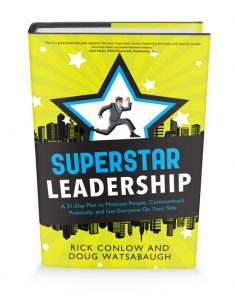 Or, do you want a proven game-plan for career success? If so, check out Doug and Rick’s Superstar Leadership book.
Rick Conlow International is an online management coaching and training company. RCI is a business consulting and training company that coaches leaders to achieve record-breaking performances in sales growth, customer experience improvement, employee engagement and leadership effectiveness.
Online RICK CONLOW LEADERSHIP Resources
Consulting Services
Books & Training Resources
Call for more information – 888-313-0514 OR EMAIL RICK: rick@rickconlow.com.
The post Are You a Bad Boss or a Good Boss? appeared first on Rick Conlow.
April 13, 2017
How to Deliver Moments of Magnificence to Your Customers!
Few people talk about receiving outstanding service. Few companies deliver what I call Moments of Magnificence to customers. It shouldn’t be that way. It doesn’t have to be that way.
The State of Customer Service in the Marketplace
 The drive to improve customer loyalty has received an unprecedented amount of attention by companies worldwide. The Bureau of Labor Statistics, the American Society for Quality and other studies report that the additional focus isn’t making a difference. Regardless of the service approaches, customers see little progress. Research concludes that customer service continues to erode at a dizzying rate. The six key reasons for poor service.
poor hiring practices
downsized companies and service
acquisitions and mergers
limited labor pools
lack of training, lack of support
lack of management commitment
Harry Beckwith, who wrote Selling the Invisible, agrees with the bad news. He says, “Service in this country is so bad that you can offer above-average service and still stink.”
But I believe these reasons are just excuses, as it relates to customer interactions. Organizations like Federal Express and Disney deliver exceptional service in spite of their circumstances or challenges. The article entitled, “The Death of Manners,” which was featured in the Sunday magazine section of the Minneapolis Star Tribune. It reveals a more compelling reason. According to the article, people aren’t as civil as they used to be. In fact, they are often rude and discourteous. The cover photo was, appropriately enough, a picture of a herd of pigs!
I’m sure you’ve experienced enough discourteous behavior from customer service reps. It is interesting to see it confirmed in cold, hard data. For example, in a survey conducted by market research firm Yankelovich Partners, 90% of the people questioned said they feel they pay enough to get the highest level of service. Yet, 69% of these customers reported that the customer service people they deal with don’t seem to care. In other words, there remains a significant gap between what companies are delivering and what customers want. This presents a huge opportunity for the people in organizations that really do care. And since you are reading this, I presume that includes you.
A Customer Experience Opportunity
 87% of companies deliver poor to average service, and seem never to improve. How can you take advantage of this opportunity? It’s simple. Deliver planned acts of kindness to achieve “moments of magnificence” one customer at a time. Let me explain. Say you are a service rep for a major retailer. You don’t feel well, but you go to work anyhow. Your supervisor strongly reminds you about the importance of complete paperwork. He says you will be written up for any more mistakes. Now, the store opens and customers approach you. I’d like you to consider two questions:
Is your sickness or your boss’s reprimand a good reason to give poor service to the customers?
Is it your customers’ problem that you have problems?
The answer to both of these questions has to be an emphatic, “No!” Great service requires you to move from self-concern to a concern for others. Superstars in customer service deliver exceptional service in five key moments of truth. Moments of truth are where you have the opportunity to create happy or unhappy customers. It is your responsibility (employee, manager, CEO- to manage them). By doing so, you can overcome internal or external stresses that don’t matter to the customer. You can create moments of magnificence – not mediocrity or misery for your customers. The truth is a company’s culture greatly influences how well employees and managers perform. See my post: The Lucrative Link Between Employee and Customer Loyalty.
Turn 5 Moments of Truth into Moments of Magnificence
 Mental Psyche – The first step to satisfying the customer has nothing to do with the customer. It has everything to do with you. How do you stay positive and treat customers right no matter what? With peak performance strategies, it only takes a few moments to “self-manage” your attitude. Acknowledge how you are feeling and refocus on the customer. How? Use these three steps multiple times during the day.
Visualize yourself giving sensational service to customers
Verbalize it to yourself (I am the best; I give superstar customer service to all of my accounts!)
Vitalize it by acting with an upbeat approach with everyone.
The Greeting – How can you greet your customers every time so they are impressed with you? It only takes a few moments to be nice. Smile, be prompt, pay attention and use uncommonly good manners in dealing with people. Use words like: please, thank you, excuse me, thanks for waiting, I appreciate you, or how may I help you? Customers crave courtesy and friendliness. After all, it’s what you expect as a customer, isn’t it?
Meeting the Need – How do you help the customer solve her problem proactively? Be a good listener, ask key questions and be genuinely helpful. This is hard work. Take the time. Take notes if necessary and summarize what you heard, and explain your action plan. It only takes a few moments to do it right. Then, do it with a sense of urgency! One additional note-be a student of the game and keep learning. Always be open to knowing more about your product, procedures and how to deal with people. This is what superstars do in all professions.
Follow-through – How do you go the extra mile to be of service?
Follow up with e-mails
Send a thank-you note
Ask if you can be of further assistance
Point out additional products
Call back to check on results
And, genuinely express a thank you or appreciation for the customer’s business. Think of complaints you have had as a customer. How many times did the reps at the company really follow-up? It only takes a few moments to exceed the customer’s expectation. Do this proactively and you’ll become a legend in the customer’s mind.
Handling Problems – How do you deal with complaints or difficult situations? Deal with the person first. Listen, empathize and apologize. Second, solve the problem. Too many service providers skip the first step. They take care of the problem and still have a dissatisfied customer. Remember, deal with the customer as a person first to let them vent and express their emotions. Then fix the problem. This is a key to healthy human relationships. It only takes a few moments to demonstrate you care by making this effort when the chips are down.
Pulling It All Together
These five steps represent a game-plan to make a customer happy-now. While it is not a cure-all, it does give you proven and practical steps to show your customers that you care. The alternative is to skip some steps and deliver moments of mediocrity to the customer, only meeting expectations. Or worse yet, giving moments of misery, doing significantly less than the customer expects. You can be better than that and your customers deserve it. These five moments of magic are about over-promising and over-delivering to the customer.
 If you are a manager, you need to train and coach your team in these principles. Apply them yourself. It’s your obligation to bring these best practices to your team. If you are on the front-line of service of your company learn and adhere to these five steps daily. It’s your job to excel regardless of your manager’s support. After all, whose responsibility is it to satisfy the customer? It’s your job. Be a service superstar. You and your company will retain more customers and succeed in a challenging marketplace.
Check out our resources for improving the customer experience:
Customer Service Group training
Customer Service Individual Study
Customer Service Training DVDs
5 customer service books
For CX consulting services contact us: rick@rickconlow.com or call: 1-612-868-8521.
The post How to Deliver Moments of Magnificence to Your Customers! appeared first on Rick Conlow.
April 5, 2017
7 Robust Rules for a High Performing Team
Want a high performing team? At least 60% of team’s fail with many more enduring rocky paths.
Children stories of Frog and Toad are the creation of Arnold Lobel. Frog often comes up with exciting new ideas for his friends to try such as sledding, swimming, or telling scary stories. And just as often, Toad’s response to Frog’s enthusiastic plans is “Blah”. My grandchild always giggles to hear that, but Toad’s way of thinking keeps him in a safe but lackluster existence. Likewise team activities or meetings often get a “Blah”.
Everyone talks about teamwork but few get it right. If you get it right you will standout! A team’s synergy is more important than any one employee’s performance. The sooner you learn this the faster you metamorphosize into a true leader. A manager tends to focus on the work of individuals. A leader’s priority is the team.
7 Robust Rules for a “Rockin’ & Rollin’ Team
 After sifting the research and having practical experience in facilitating hundreds of teams over twenty years in varied organizations, I have outlined seven robust rules for a rockin’ and rollin’ high performing team. Check these out.
Rule #1: Start with credibility
You will never lead a high performing team if your people don’t trust you. Your team may do well but not reach their potential. If you lack integrity employees won’t give you their best. Quite frankly, they may be looking to get out. The job becomes a paycheck, not a mission. So, invest in your team. Walk the talk and lead by example. Mentally you will capture their imaginations and emotional dedication. (Here are some ideas.)
Rule #2: Determine clear challenging goals and roles
High performance demands bigger goals. Employees can only be their best by stretching themselves. In addition, our research shows that 80% of performance problems is the lack of clear expectations and goals. Involve your team in the planning process and it builds buy-in and ownership. Outline team norms and turn the goals into a vision that excites the team so that when they do it, they know that they are champions or industry leaders. Establish individual goals to support the team goals along with a competitive-everybody can win challenge. I did this recently with a client on a sales project, and they improved their performance 52%! Too much at work today is “the same old same old.” This motivates nobody.
Rule #3: Communicate, communicate, communicate

Hold a regular team meeting to review results, recognize the team, celebrate successes, deal with problems and talk. Observe and work with your team in action. Consistently meet one on one with each employee. The absence of communication derails even the most talented managers. With it, people feel safe to risk and try new things. (See this.)
Rule #4: Establish a learning culture
Olympic athletes maintain the highest level of performance because they train relentlessly. Top rated companies provide 60-70 hours of training to their teams a year. You have to do the same. Time is not an excuse. If it is, it costs. Keep your team sharp with all of the formal team dynamics (content and process), and other developmental training you or your company can deliver.
Rule #5: Embrace conflict
The lack of conflict is a sign of distrust. You need you team to be willing to share ideas and bring up differences. This is where people get to the next level or innovate. You can’t improve if you suppress contrary thinking. You end up with groupthink which leads to mediocrity, not excellence. Learn to deal with conflict and teach it to your team. Get your ego out of the way and admit mistakes. A high performing team requires that you shut up and listen more before you quash its creativity.
Rule #6: Coach with commitment
[image error]
The positive impact of coaching is the ‘secret sauce’ of leadership success. Yet, most managers invest less than 4 hours a week in people-skill activities like coaching. Be different, be better. Apply regular formal one on one coaching to each individual on your team. Always be coaching informally which involves those many daily short but precise employee connections in person, on the phone, through email or text. Make them positive and valuable but not overbearing. Leadership engagement creates employee engagement. If you are committed you spend time like this with your team. If you aren’t it becomes obvious. (Study this.)
Rule #7: Lead courageously
Too many leaders aren’t ” into it”. They have the title and may be all puffed up with authority. Yet, they have no substance. Where’s the passion? If you are inspired your team will be, or the opposite will be true. So get some enthusiasm. Get uncomfortable to get better. Accelerate your effectiveness. Encourage and renew your team when the momentum dips. You can be a positive force for change. Lead by example by putting your heart into your goals and team members–then success will be inevitable. (Learn more.)
The Bottom-line for a High Performing Team
This comes back full circle to credibility–the integrity of your leadership. In other words, be what you are doing. That’s what creates a high performing team–rockin’ and rollin’ to success!
 By the way, do you want to elevate your performance and more effectively your team? Check out this complimentary Creating a High Performance Team Ebook.
Want to accelerate your career? Check out Rick’s Superstar Leadership self-study training plan.
The post 7 Robust Rules for a High Performing Team appeared first on Rick Conlow.
March 29, 2017
The Greatest Sales Secret of All-Time
All salespeople want to win and be a sales leader. Yet, many shoot themselves in the foot by how they conduct their careers. They don’t know or pay attention to the greatest sales secret of all-time. Sales has been called the lowest paid easy work and the highest paid hard work. If you want to be better, if not one of the best, you have to model what the best do.
7 Key Traits of Top Salespeople
 Our organization has worked with over 500,000 salespeople. We have seen the best and the rest. If you study the top people in any industry, you will find they have a few common traits.
Integrity
Hard work
Dream big
Service Orientation
Knowledge of products
Excellent people skills
The greatest sales secret of all-time
While you will never be perfect, aim for perfection in these areas, and you will achieve excellence.
The Sales Secret for Success
 In this sales motivation video, I will define the “Greatest Sales Secret of All-Time.” Superstar salespeople do what others don’t do enough of or won’t even attempt. Listen to and act on the sales advice in this message.
Also, remember, sales is about partnerships. You focus is on the customers’ needs not your needs. If you sell right, the money will come. More commissions is the byproduct of diligently:
learning professional sales skills
gaining more product knowledge
understanding your customer’s problems, emotions and desires
persevering in spite of the obstacles
Do you need to make more money? Do you want to achieve your highest potential in sales? Do you want more recognition and sales success? Watch this sales training video now, learn apply the greatest sales secret of all-time. Be a sales superstar!
By the way, do you want to learn how to exceed your goals and make more money this year? Click here for a complimentary GOALPOWER guide.
 And, do you want to accelerate your sales career success? Then order the Superstar Sales book. You can reach Rick at:
www.rickconlow.com
rick@rickconlow.com
1-888-313-0514
The post The Greatest Sales Secret of All-Time appeared first on Rick Conlow.
March 26, 2017
What is the Difference Between Bad and Good Employees?
Not many people go home at night and enthusiastically yell to their family as they walk in the door, “Want to know what people think of me at work? I am a puke, a slug, and my boss will fire me by noon tomorrow!” Few people show up at work wanting to fail. I am a believer that nearly all employees want to do well and can be good employees. Yet, the reality is that not everyone wins the gold medal or even makes the team. What is the difference between those who excel and those who don’t?
Understand that most people think they are performing better than they are. Most can perform significantly better than they are. With the right training and support almost anyone can make significant gains in their performance. Why would anyone not what to? Why do so few make a serious effort?
Bad and Good Employee Impact

The fact is that some people perform better than others. Research shows that 5% of the people produce 26% of the work or 400% more than you expect. They show up with energy, positive attitudes, ideas, creativity, and referrals. If you want to hire more of them, most are working and so you have to network to find them, to steal them from another company.

Poor performing employees are a drag and produce 30% below average. They also take 17% more management time than other employees. Also, they bring more complaints: sick days, theft, accidents, team conflicts, customer service or quality issues, and problems.
A Key Consideration for the Difference

Education, training, personal characteristics, relationships, and life circumstances will influence a person’s personal behavior and performance at work. Yet, bottom-line, the difference between bad and good employees is in the results. Now consider this: 70% of the impact on an employee’s engagement and performance relates to his or her direct supervisor.
If you are a manager take this to heart. Your leadership can help a poor employee become an average performer, an average employee good, a good employee a superstar, and a superstar…well the potential is unlimited. What can we learn from this? Your thoughts about what you will do better or differently?

By the way, do you want to elevate your performance and more effectively lead by example? Check out this complimentary LEAD BY EXAMPLE ASSESSMENT.
Want to accelerate your career? Check out Rick’s Superstar Leadership self-study training plan.
If you liked this post, please share it. THANK YOU
The post What is the Difference Between Bad and Good Employees? appeared first on Rick Conlow.
March 22, 2017
The “ONE” Leadership Thing for Communicating Effectively with Employees
Why don’t managers communicate very well? This management training video will succinctly answer that question. If you are good at communicating effectively, you will ramp up your career.
 Unfortunately, research shows that the #1 reason employees leave a job is that they don’t like their boss. Leadership derailment studies demonstrate that at least 50% of managers fail. Many more have serious “people” skill deficiencies. See this list.
The Top Ten Areas Managers Need to Improve
1. Listening
2. Treating people with respect
3. Coaching
4. Dealing with conflict
5. Handling performance problems
6. Speaking at meetings
7. Facilitating meetings
8. Problem-solving
9. Planning
10. Building teamwork.
This is why, worldwide 87% of employees are disengaged! On employee engagement surveys managers get hammered for not communicating well. (all the above items involve communication skills) I mean, who hasn’t worked for a boss who communicates poorly? As a leader, YOU can be better than all of this!!!
The “ONE” Leadership Thing for Communicating Better
 Bottom-line, improvement relates to the golden rule. You have to care about the success of your team. If it is all about you as the leader, long term you will lose. Zig Ziglar said it this way, “Give other people what they want and you will get what you want.” In other words, treat people with respect, hold effective meetings, listen to their concerns, do regular coaching, provide helpful and regular training, and positively engage them as individuals and as team. If you get your ego out of the way and focus on the helping the team, they will want to do a better job. This will quickly separate you as a good leader. Finally, I say it this way as well, “If you want your team to be better you have to be a better leader.”
IF YOU LIKE THIS VIDEO PLEASE GIVE IT A “THUMBS UP AND LEAVE A COMMENT. THANKS!
 By the way, do you want to elevate your performance as a manager NOW? If so, check out this complimentary How to Motivate People Ebook:
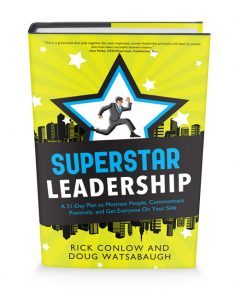 Or, do you want a proven game-plan for successful management career? If so, check out Rick’s Superstar Leadership book.
Rick Conlow International is a business consulting and training company that coaches leaders to achieve record-breaking performances in sales growth, customer experience improvement, employee engagement and leadership effectiveness. Also, visit our online resources to coach and train any and all managers to higher levels of success.
For books & training resources, check the RCI store.
Call consulting, training and coaching services , 888-313-0514 or email us, rick@rickconlow.com.
The post The “ONE” Leadership Thing for Communicating Effectively with Employees appeared first on Rick Conlow.