Rick Conlow's Blog, page 22
October 12, 2017
Leadership Excellence: Rewards or Risks?
With almost every element of life there are rewards and risks with the decisions we make. It’s scary, ambiguous, unpredictable and compromising – but can we really expect to achieve excellence without risking the comfort that comes with complacency?
 That’s the question I pose to you today. Think hard and long before you answer. I think it will determine what you do and the direction you head. Therefore, it will define what you achieve.
Think of it like this. When a super successful person tells you her story, are you more excited about her achievements and her journey when she had to sacrifice a lot to get what she’s gotten? Or are you just as stoked when she tells you that everything she has was handed to her? I think we all know your answer if you’re anything like the average person. We love a good story that shows a lot of heart, determination and hard work. Why? Because we admire those people. They inspire us. They remind us of our potential. We all have greatness within us. What are we going to do with it? The answer lies within this question, do we focus more on the potential rewards or risks?
How to Focus on the Rewards of Leadership Excellence
 Professionally and personally, we must break the bounds that hold us back if we want to reap the rewards we long to reach. Here are five of my solutions to stepping outside of our comfort zones:
Do something different daily. Routine removes risk. You can’t take advantage of opportunities you fail to open yourself up to.
Reflect on how risk-adverse you tend to be. Maintaining an awareness of what you tend to avoid can help you approach unfamiliar territory.
Befriend the brave. Seek out those who approach life the way you want to.
Be patient. Don’t expect yourself to be transformed in a week; instead, take minor steps in the direction you hope to head. Before you know it, you’ll be looking back on the life you once led, feeling empowered to take on what lies ahead.
Find an accountability partner. The best way to break down the barriers that normally scare you into staying stationary is to tell someone else where you hope to make headway. This person should be someone supportive, who can encourage you in your efforts without shaming you when you slip.
Risking comfort and familiarity is hard work – but, here’s the best news: it’s not about what you get in the end, it’s about the process of your progress. That’s the real reward. What you learn, who you become and all you achieve in the meantime – is what really matters. Take it from someone who did the impossible – Amelia Earhart said, “The most difficult thing is the decision to act, the rest is merely tenacity. The fears are paper tigers. You can do anything you decide to do. You can act to change and control your life; and the procedure, the process is its own reward.”
To improve your leadership coaching, go here for a complimentary guide: Coaching for Results Assessment and Self-Study.

For 4 dynamic online leadership training programs go here: RCI Online Leadership Training.
Want to accelerate your career? Check out one of my books in the Superstar Book Series for a boost!
The post Leadership Excellence: Rewards or Risks? appeared first on Rick Conlow.


October 2, 2017
The Challenge of Achieving Leadership Excellence
“All excellence is equally difficult”, is a fine quote. However, studies show that over half of managers fail, and never achieve leadership excellence. Gallup studies show that 82% of managers are unfit for their jobs. I am not trying to scare you but these are the facts. Why does this happen? Too many managers settle for less.
Settling for Less than Leadership Excellence
 All too often, we choose to believe our professional fate is not about a choice we make right now, but it’s about the choices we’ve made back then. What college to attend? What degree to pursue? What job to accept? Travel or work? Attend conference A or conference B? Return to school for MBA vs. climb the corporate ladder?
When it comes to our professional lives, we’ve all made dozens of decisions that, in hindsight, maybe we’d do differently (sometimes, we might do things pretty similarly). And we think that “had I just… , I’d be in a different situation than I am right now.” We think that with more experience, different experience, or less of a specific experience – we’d be more prepared or less jaded. We think that with more education, we’d be in higher demand and less likely to be overlooked. And we think that with more expertise and skill in X, Y or Z, we’d really be everything we want to be. The unfortunate thing about that attitude is that it feels pretty hopeless because it’s all an all-or-nothing. It’s either more or less of something, which inevitably never feels just right. If it’s all about what we’ve done, achieved and become up until this point – well, we think what’s the point?
Learning to Achieve Leadership Excellence
 To me, the reason many managers live their lives and careers in this standstill is for one reason: it’s an easy excuse to excuse yourself from putting in the effort. It’s a way to make it all about what you should have done instead of making it all about what you could do! Simply, to become a leader, a great leader, decide to do it. I’m not suggesting that what we’ve done prior to this point has no impact on our current realities, but to throw ourselves a pity party because we’re not where we want to be… is just our way of letting ourselves off the hook. If we truly wanted to be great leaders, we’d stop whining over what’s been and start capitalizing on what’s here.
So, I’ll ask you now are you going to choose or excuse the opportunity to lead well? With the choice to lead with greatness comes the commitment to the following:
To become a diligent student of the game.
To honestly look at your shortcomings and work to improve.
To openly listen to others feedback.
To really seek a mentor or coach to help you.
To focus on intense learning and training about how to coach others to win.
Why all of this? Great leaders are made not born.
 Do you want to be a leader and achieve managerial excellence? Start by continuing your personal development. Focus on the outcomes not the obstacles. You are either part of the solution or you’re an ally to the problem. If you fail, ask, what can I learn from this and what will I do better or differently next time? Then, remember to focus on helping the people you work with–your team. They aren’t used to excellent leaders. They have to learn how to respond to your new approaches and your involvement in their success.
Success is indeed a state of mind. Leading is a state of mind, a habit that can be cultivated. Certainly, obstacles will arise. An architect has a blueprint to guide her work. Unforeseen problems always arise. The successful architect is persistent day in and day out, month in and month during the construction process working with project leaders or others to adapt and succeed. Leaders take the same approach whatever the problems are. In summary, to move from manager to leader (see 4 more tactics to help) you have to choose to achieve leadership excellence, experience is less important than what you decide to do today.
To improve your leadership coaching, go here for a complimentary guide: Coaching for Results Assessment and Self-Study.
For 4 dynamic online leadership training programs go here: RCI Online Leadership Training.
Want to accelerate your career? Check out one of my books in the Superstar Book Series for a boost!
The post The Challenge of Achieving Leadership Excellence appeared first on Rick Conlow.
September 26, 2017
3 Tips for Deftly Managing Managers or Supervisors
The struggle of leading effectively is taken to another level when you are managing managers or supervisors. But there is one major thing that managers of managers have working to their advantage: empathy. Of course, that’s if they care about the success of others.
If one hasn’t been a manager, it’s easy to assume a lot of things about that role and how one will operate once occupying it. But if you’re already a manager, there are fewer assumptions and misunderstandings and hopefully more common ground. So–start here! But then move onto these three strategies that will help you guide your managers or supervisors with the necessary compassion and care.

3 Tips for Managing Managers or Supervisors
CLARITY
I’m sure you’re not surprised that communication made the list. It’s the key to employee engagement at all levels. The amplifier here is OPEN communication. Honest conversations with your managers regarding their fears, challenges, mistakes, team dynamics, concerns, and results all matter. Do this regularly one on one in a coaching mode. Also, do this as a team in team meetings. In either case, be a good listener from the outset. Most managers feel as though they need to carry all the problems on their own. They make the assumption that nobody else is struggling with the same things. We all know that when someone can empathize with and guide us, we can become more at ease with the ebbs and flows we’re facing. So whatever you do, be sure to establish an environment where your managers don’t worry about whatever concerns that they share. This creates clarity.
TRUST
Do not micromanage. I repeat: DO NOT MICROMANAGE! Just because you have a mass of managers reporting to you does not mean you should manage them like a hoard of minions. You are not their master–you are their manager. Help them. Empower them. Trust them. Encourage them. Reward them. Coach them. Train them. Praise them. This establishes trust. As John Maxwell says, “People buy into the leader before they buy into the vision.” In addition, because good managers are busy getting their team members recognized, they themselves often get overlooked; make sure that you are getting your managers’ time in the limelight. Trust doesn’t come in with your office supplies; you have to earn that every day.
VISION
Every day your managers are busy building teams, encouraging employees and fighting fires. At the very least you must provide direction for them. Establishing goals, setting priorities, creating expectations and aligning objectives is yourjob. Why is this? Because what you do at this stage will get shuffled down the ladder to your managers’ reports. So if you’re floundering without focus, you can bet your business that the bottom line will not benefit from your muddled managing style. This is about distilling what your team is at work, with customers and the community. This develops the vision. Your passion and belief about this will inspire your teams to their greatest heights.
Summing it all up
Without question, CLARITY – TRUST – VISION will do wonders with your managers’ motivation and performance. Use an empathetic backdrop to your advantage, but don’t bank on it to bear the weight of the burdens that your managers are bound to bring you. Just because you’ve been a manager and are a managing managers doesn’t mean you are mind reader for their problems–remember that.
Consider strongly these words from economist John Kenneth Galbraith, “All of the great leaders have had one characteristic in common: it was the willingness to confront unequivocally the major anxiety of their people in their time. This, and not much else, is the essence of leadership.”
To improve your coaching, go here for a complimentary guide: Coaching for Results Assessment and Self-Study.
For accelerated individual online leadership training go here: RCI Online Leadership Training.
Want to accelerate your career? Check out one of my books in the Superstar Book Series for a boost!
The post 3 Tips for Deftly Managing Managers or Supervisors appeared first on Rick Conlow.
September 11, 2017
The 5 Cultural Habits of Customer Driven Companies
In the quest to improve the customer experience and customer loyalty, consider the “cultural habits” of successful service organizations, such as: Disney, Apple, Southwest Airlines, Wegmans, Nordstrom, and Amazon. Their cultural habits are not merely lip service. It’s how they do business. Watch this customer experience training video for details.
Hints of the Cultural Habits of Customer Driven Companies
 Cultural Habit #1: Wegmans’ motto is: Every day, you get our best. Wegmans makes grocery shopping a true experience rather than offering the same drudgery of a chore that most consumers expect at the grocery store. Its reputation goes well beyond its market area. Southwest Airlines began at Love Field in Dallas. They became the “love airline” with the flashy flight attendants and the most entertaining flight experience. Emeritus, Colleen Barrett, has a favorite saying about Southwest Airlines: “We are a Customer Service Company; we just happen to fly airplanes.” Disney cast members consider what they do to be a helping profession and a noble calling.
Cultural Habit #2: Nordstrom’s golden rule for employees is widely recognized: “Use good judgment in all situations.” Top service companies are willing to trust employees. Amazon’s approach is to hire the world’s brightest minds and to create an environment where they can invent and innovate the customer experience.
Cultural Habit #3: Walt Disney established the Disney University after opening Disneyland to use a structured learning environment to teach the unique skills that are required of Disney cast members. It was the first corporate university and remains one of the largest training facilities in the world. Numerous classes and dozens of online courses provide a plethora of learning opportunities to employees and managers alike. Surprisingly, Disney University does not offer specific quality courses. Quality and service are built into all the training programs taught by Disney. In addition, Disney courses have been delivered to hundreds of other companies. Tom Peters once said that in the best organizations, “Everyone has a chance to learn, improve and build up their skills.”
Cultural Habit #4: On the desk of Pete Nordstrom, the company’s President of Merchandising, sits a stack of letters from customers and employees, each telling a story about a memorable experience they had with Nordstrom. Few company executives can say the same. Apple doesn’t have strict sales quotas in place for employees. It does have metrics like “attachment rates,” the frequency with which staff members are able to provide customers with additional products like AppleCare. Those who fall short of the goals receive more sales training, which is really about helping customers with stated or perceived needs.
Cultural Habit #5: Disney’s strong belief in “attention to detail” is what sets them apart from other organizations. Disney says it has to “sweat the small stuff.” Disney pioneered the concept of exceeding people’s expectations. Apple’s Genius Bar is the in-store tech support station. It’s not a help desk or customer service center. The idea illustrates out-of-the-box thinking by recognizing employee potential and customer priority.
Call to Action for Change
 Many companies desire to deliver better service and over 80% are at elementary stages of improvement. Some try and a few improve. But, most are unwilling to make the necessary changes because they lack the commitment and more importantly, the ethics. Most say they want a superior service reputation, but they are unwilling to do the work it takes to earn it. However, any company that consistently strives to improve by aligning with these five cultural habits will make a huge difference with their employees, customers and bottom-line. Share this customer loyalty training video and give it a thumbs up if you like it. We all know that more companies need to pay attention.
 By the way, do you want to learn a proven 3 step approach for improving the customer experience? If so, I suggest you check out this complimentary white paper: Creating Sustainable Customer Loyalty and Sales Growth.
Or, do you need more specific guidance to achieve a superior customer experience? GO HERE FOR AWARD WINNING CX COACHING, CONSULTING AND TRAINING.
The post The 5 Cultural Habits of Customer Driven Companies appeared first on Rick Conlow.
August 31, 2017
4 Tactics to Transform from Manager to Leader
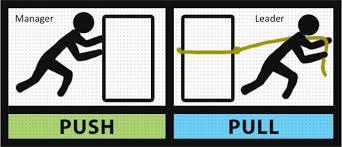
Want to transform your effectiveness? The difference between what a manager knows and what a leader does determine whether that person suffers or succeeds in leadership.
Anyone can “know” something, especially today when there’s a book for anything and the capability to Google everything. Nothing is out of reach to anyone that wants to reach out and learn. A manager becomes a successful leader when he or she applies the knowledge and strategically does the right things with the information. Peter Drucker said it this way: “Management is doing things right; leadership is doing the right things.”
4 Tactics that Transform You from Manager to Leader
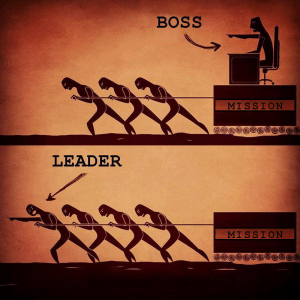
To ensure that, you separate yourself as a leader that does the right things, instead of one that just knows what’s right. Soak up these tactics for differentiation.
Detail down a strategy into specifics. So, you have a great idea (or you read about one)? Great! Sort of. But unless you break that down into specific, action-orientated details, you can’t take specific, detail-orientated action. Make sure you consider how to empower your team (training, engagement, eliminating obstacles etc.) to win. Think of your idea as a work of art – an ongoing process of creating and reworking things until the intended outcome is established and achieved.
Communicate well with employees and other key partners. Too often I see managers come up with these extravagant ideas, only to throw them onto their teams with confusing direction, unrealistic expectations, and little follow-up. If you take this approach, I can promise that you’ll have a lot of unmotivated, frustrated followers and co-workers. Just like a house can’t be built without a clear blueprint, a team can’t successfully execute with an unclear game plan.
Tell the story or vision. Think of any strategy as a story and imagine telling the story to someone who has no background information. This is the best way to hone in on what you don’t know and to define what you need to know. If you start telling the story and find yourself needing to stop, it’s because you don’t have the information or the resources you need at that point to continue with the story. This doesn’t need to put a halt to your plan but it should lead you to gather the missing pieces before moving on. Here’s a strong suggestion: include your team in flushing out the story. Participation breeds engagement. You can’t execute a successful strategy if the story is falling apart because no one understands it or is committed to it.
Accept responsibility and delegate certain authority. A really good strategy can’t be done in a silo. Great leaders understand how to appropriately empower others while taking responsibility when necessary and where relevant. Do your best to intentionally and strategically lead by example while including your team each step of the way.
Pulling it all Together
How do you transform from manager to leader? It comes down to learning what to do and understanding how to do it as well. The act makes something happen. With the above steps, you will create a higher performing team that achieve notable results. Writer William Arthur Ward said, “The mediocre teacher tells. The good teacher explains. The superior teacher demonstrates. The great teacher inspires.”
To improve your coaching, go here for a complimentary guide: Coaching for Results Assessment and Self-Study.
For accelerated individual online leadership training go here: RCI Online Leadership Training.
Want to accelerate your career? Check out one my books in the Superstar Book Series for a boost!

The post 4 Tactics to Transform from Manager to Leader appeared first on Rick Conlow.
August 28, 2017
The Foreshadowing of an Employee Apocalypse
The term “going postal” became infamous because of eleven employee incidents in the US Post Office service since 1983. Thirty-five people were killed by current or former employees. The US Post Office doesn’t condone the term, of course, and who can blame them? Worldwide today, across all industries and companies, employee discontentment is growing, the seeds are planted. Hopefully not to the point of workplace rage but for sure foreshadowing a potential employee apocalypse.
 The fact is that many employees have become frustrated, disappointed, indifferent, fearful, anxious, restless, and yes, angry. Why wouldn’t they be?! Have you noticed?
Exposing Negative Employee Relations
Wage theft from employees in the US has reached over $50 B by estimates. Employees aren’t paid for overtime, or exempt employees are taken advantage of and made to work many extra hours. In some restaurants, tips are a ripoff from servers. In other companies, fancy titles with more time required but no pay increase gives the illusion of more opportunity. It’s dishonest. Because of high health care costs, employees pay more. Greater numbers lack healthcare. Today only 9% of employers pay 100% of health care compared to 34% in 2001.
Globally, corporations have their leadership competency challenges. Gallup research shows that 82% of managers are not the right hire to do the job and lack the talent. Other management derailment studies show 50-67% of leaders fail, mostly due to “poor people skills”.
 As a result, corporate malfeasance becomes accepted practice in some businesses:
A large entertainment company hires recent marketing graduates for wages just above minimum. The attraction for these new employees involves experiences with celebrities. They work 32 hours a week. If they do more, the hours are banked in the future. This way, the company doesn’t have to pay benefits or overtime. This isn’t legal. In addition, an autocratic leadership style begins to indoctrinate these young people into the reality of corporate America.
A global manufacturing company purchased a business that it has little experience in. They were told that up to a certain level, executives could stay and run the company as in the past. Within a year the leaders were gone and half the employees out of work. How many times has this happened?
An executive in a nationwide company regularly worked 24/7. Emails came at all hours. The managers under this exec were expected to be just as driven. If you didn’t respond as he thought you should or work similar ‘always accessible’ hours, no promotions were considered for you. His tirades about a too-slow response didn’t make time there very pleasant. Employee engagement results were poor and turnover high. Because results are better than their poor past, the manager keeps his job.
A Desperate Problem Waiting to Explode
 As employee attitudes simmer, their loyalty degrades. Over time, I have shared these stats or similar ones in other posts. They require a loud and resounding repeat.
These disturbing trends from a 2017 study spell the continued scarcity for employee engagement: only 21% of employees believe their company’s performance planning is any good. 24% of employees feel connected at work. 25% of employees feel managers are transparent with employees while nearly twice as many managers truly believe that they are. 26% of employees feel valued at work.
A Rand Report press release this August shows that while most employees get social support at work from co-workers, they complain that the workplace is increasingly physically and emotionally taxing.
The why employees leave a job is that they hate their boss.
An Accenture study says that only 21% of employees have received a company sponsored training in the last five years.
58% of employees say “give more recognition” when asked by leaders what will improve engagement. 65% of employees say they weren’t recognized at all last year. 69% of employees say they would work harder if they are appreciated more.
67% of worldwide employees don’t believe CEO’s are credible or very credible. This is down 12 points since 2016 and the lowest level since Edelmann’s Trust survey began in 2001.
70% of people don’t believe business executives add very much value to society, according to Pew Research.
CEO pay worldwide had risen astronomically. In the US, employee pay is 354 times less than that of their CEO. From 1978 to 2013, CEO pay rose, with inflation-adjustment, 937%– more than double stock market growth and astronomical to the pitiful 10.2% gain by employees.
In addition to all of this robots are replacing people at an alarming rate.
As a result of all of these kinds of issues, nearly 9 out 10 employees are disengaged worldwide . Can you blame employees for being dissatisfied, if not angry?
The Bottom Line Impact: Dollars and Humans
How much does this cost employers? GlassDoor estimates that poor employee disengagement costs the US $450-$550 B a year. The US economy is $18.6 trillion or 24.3% of the world’s GDP. The global economy equals approximately $76 trillion. Therefore, dismal employee engagement costs businesses about $1.8-$2.2 trillion a year and counting. The International Monetary Funds says the global economy will grow 3.5% this year. With greater employee engagement and working conditions it could be nearly double that!
Yet the real bottom line has to do with the negative impact on employees and their families from unscrupulous, greedy, or untrained business managers and leaders. The truth is what the best leaders and companies have always found–that people are a company’s greatest resource. When you treat people right, they perform in significantly better ways.
 Amazon offers over 57,000 books with the word ‘leadership’ in the title and new ones come out at the rate of over four per day. But we still have a dismal state of affairs as described above. Businesses have serious problems, and our world has serious challenges. Politically and economically things seem to get worse more than they get better. And unfortunately, not enough leaders want to personally cooperate, collaborate, or change to improve. Poor and disreputable leadership is a disease that needs to be eradicated. It plagues the minds and spirits of employees worldwide. I wrote a post entitled: 6 Compelling Reasons for an Employee Bill of Rights, a couple of years ago. This may very well be needed in the age of AI and robots. Who protects the rights of employees? Government…no? Unions are declining. The concept of that rings truer today than ever before.
 I believe that the next revolution in leadership thought is about the power of people (not technology). If this doesn’t happen, I predict that there will be an apocalypse type event in the workplace, and it won’t be pretty.
To improve your coaching, go here for a complimentary guide: Coaching for Results Assessment and Self-Study.
For accelerated individual online leadership training go here: RCI Online Leadership Training.
 Want to accelerate your career? Check out one my books in the Superstar Book Series for a boost!
The post The Foreshadowing of an Employee Apocalypse appeared first on Rick Conlow.
August 14, 2017
6 Phases for Managing the Impact of a Leadership Mistake
When a manager makes a leadership mistake, others will notice. Any manager is faced with navigating the expectations of others as well as identifying and managing their own. Most leaders have teams to inspire, goals to accomplish and results to drive. It’s hard for managers, who generally have higher profiles, to conceal their oversights and shortcomings. Not only that, it is in their best interest not to attempt to cover-up errors. Depending on how a leader addresses and approaches his or her mistakes, the experience can be humbling, humiliating or rewarding.
In any life circumstance when a mistake is recognized, a person has a decision to make: how to handle the erroneous action. Although there are nuances to doing this, well that may depend slightly on the person’s personality.
Managing the Impact of a Leadership Mistake
I believe there are six universal phases (It’s not always a step by step process) to minimizing the magnitude of a leadership mistake.
1. Identify what actually went wrong
 Before doing anything else, make sure you understand where you went wrong. If you prematurely accept responsibility and apologize to others, you’ll come across as ill-prepared and uninformed. As a leader, you want to demonstrate to others that it’s okay to make mistakes, as long as they are handled professionally and responsibly. Considering getting input from a coach or another manager you trust. So once you know a mistake has been made, do your best to identify what went wrong, acknowledge how you were at fault, and all of the details that made this mistake what it is. This way you can approach your team positively with the facts rather than hearsay or guessed at suppositions.
 2. Accept responsibility
With step one under your belt, you’ll be able to accept appropriate levels of responsibility. It’s important not to overstate your role nor to understate your fault, which can be a hard balance to find. This is because if you accept responsibility for everything but others were involved, you are subtly communicating that it’s okay for others to pass the buck, which isn’t the example you want to set. If you don’t accept your role in all of it, you are setting the stage for others to overlook their roles and further problems. Neither of these extremes is helpful.
3. Apologize to the appropriate teams and individuals
Yes, it’s good and decent to acknowledge that you were wrong, but it’s also critical to determine who was affected by your mistake. Too often, managers make a blanket apology that feels insincere and unauthentic. When an apology is done right, you can leave the situation more respected and admired for your courage, humility and honesty. Monitor and manage your emotions and apologize for your part in all of it.
4. Problem-solve if possible and/or outline future considerations
If it’s possible, determine what can be done now to resolve the issue. If it’s too late to clean up the mess, it’s still critical to plan ahead to avoid such faults in the future.
 5. Take appropriate action
After identifying the real problem and the potential problem-solving solutions, take action. Delegate tasks, do your part with integrity, and work hard to reduce the repercussions of the mistake.
6. Ask, what can you learn or relearn?
Finally, a key to future success is to focus on continuous improvement. Ask a mentor for feedback about the situation. Think about what you did well. Think about what you can do better next time. As George Bernard Shaw once said, “Success does not consist in never making mistakes but in never making the same one a second time.”
 Want to accelerate your career? Enroll in this one of a kind Excellence in Management training for managers.
 Rick and his business partner Doug published these approaches in their book, Superstar Leadership. They created the Superstar Leadership Model, and online training and coaching as a way to learn and apply the principles.
The post 6 Phases for Managing the Impact of a Leadership Mistake appeared first on Rick Conlow.
August 10, 2017
3 Tips for Cultivating the Mindset of a Champion
 Over nine decades ago, Dr. Evan O’Neill Kane of New York’s Kane Summit Hospital changed his mindset. He felt doctors were losing too many customers in appendectomy surgery, many because of the effects of general anesthesia. He felt that local anesthesia would be better for the Customer but, not surprisingly, no volunteers came forward to test his hypothesis. Until, that is, February 15, 1921. That’s when he performed an appendectomy with local anesthesia — on himself! In the process, he changed accepted medical practice. To be your best you can be in customer service, sales, leadership, sports, or any other endeavor, you often need to change too. Sometimes that change means operating on yourself! Begin analyzing your own situation by simply counting the how many times the letter f appears.
FEATURE FILMS ARE THE RESULT OF YEARS OF SCIENTIFIC STUDY COMBINED WITH THE FORMAL EXPERIENCE OF YEARS.
How many did you get? 3? 4? 5? 6? 7? There are a total of seven! Most people get four or five. If you missed some, why? Why would anyone miss an f or two or three? It has to do with our mindset or the way we perceive things and act on them. This little exercise points out that what you are missing in terms of personal performance improvement is most likely right in front of you. Sometimes the solutions to your challenges are there, but you just don’t see them. Why? Because of entrenched habits, perceptions and beliefs. When you try to improve, it seems as futile as trying to lose weight with fad diets.
How Do You Achieve a Breakthrough Mindset?
 So what’s the key? How do you breakthrough? Dr. Charles Garfield of the Peak Performance Institute has discovered exercises that help individuals tap their personal best performances. Garfield experienced these techniques himself as a world- class weigh-lifter and researcher. Garfield explains, ” In the process, the researchers discovered that mental training techniques not only combated negative reactions, but also threw open the doors to hidden reserves of energy and endurance.” Dr. Denis Waitley identified similar peak performance strategies in his work with Olympic athletes and business people. To begin remember these important principles to achieving peak performance in your career:
Self-development is self-management. There is no self-improvement only increasing in the ability to be all that you already are. You can’t change others but you can change yourself.
You have to change proactively not reactively. To manage yourself to become more effective you must be willing to change some habits to increase productivity.
All good performance begins with clear goals. A foundation to self-management is to respond to all events based on your goals and priorities rather than responding to current difficulties, problems or needs.
 With these approaches winning because more than an outcome it’s an attitude. Mind and body are intricately intertwined; to control what you do, better control what you think. Just like a champion athlete systematically physically and mentally prepares to win the gold, champion salespeople, leaders, and customer service reps do likewise. Make the effort to learn more, know your product, gain new techniques to be customer centered, and prepare mentally too. It will help you handle the setbacks, the no’s and rejection that go with the job and think creatively. This is called emotional resiliency.
The Best of the Best Exercise
 Think of a time in your career when you did your best work ever. Choose a situation that exemplifies your highest performance. Get a clear mental picture of the event. Replay it in your mind as if it were a movie. Think of the details –people, problems, sounds, feelings, and surroundings. Review in your mind what happened, how you behaved, what you felt and achieved. Capture your thoughts with the questions below:
What was the situation?
What was your motivation to succeed or act?
How did you feel?
What key behaviors or strategies did you use?
What lessons can you learn or relearn about your Peak Performance?
By learning to replicate that experience, you learn how to easily adjust your mindset as needed. You will begin to transform your efforts and results. To be the best you can be, make a commitment to personal development and excellence. If you want to be exceptional, do exceptional things. The difference between winners and losers is that the winners do what losers won’t do at all or won’t do enough. Author Lewis Howes says, “I have learned that champions aren’t just born; champions can be made when they embrace and commit to life-changing positive habits.”
TO ACCELERATE YOUR CAREER? READ THESE BOOKS:
FOR EMPLOYEES: THE EXTRAORDINARY EMPLOYEE: A ROADMAP FOR SUCCESS

FOR MANAGERS: UNPARALLELED LEADERSHIP: HOW TO ACHIEVE EXTRAORDINARY SUCCESS AND RESULTS AS A MANAGER

The post 3 Tips for Cultivating the Mindset of a Champion appeared first on Rick Conlow.
August 1, 2017
Excellence: The Ultimate Leadership Success Secret
A very long time ago in this galaxy, a wise man dedicated himself to learning from the greatest managers in the world. He wanted to learn the one key success secret to leadership. He invested all of his time going far and wide to the farthest reaches of the globe. He sought out the best managers anywhere. He interviewed and observed them. Finally, he discovered that the ultimate leadership success secret comes from embracing excellence, and the commitment to coach others about it.

Excellence is defined as:
Doing more than expected.
Focusing on the highest standards.
Acting your very best in all that you do.
Going the extra mile.
Committing to continuous learning.
Helping others succeed and sharing your success with others.
Living with integrity.
5 Powerful Quotes about Excellence
“Excellence is the unlimited ability to improve the quality of what you have to offer.” Rick Pitino
“Excellence is not a skill; it’s an attitude.” Ralph Marston
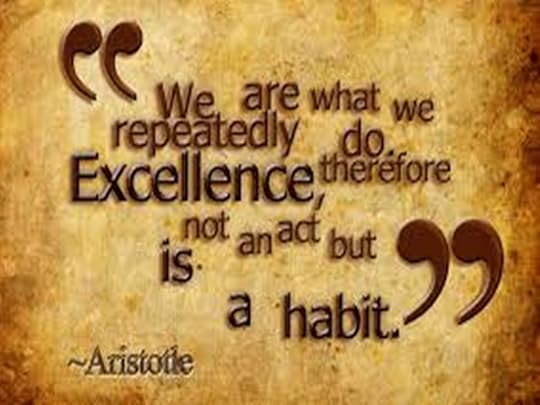
“We are what we reportedly do, excellence is not an act but a habit.” Aristotle
“The will to win, the desire to succeed, the urge to reach your full potential… these are the keys that will unlock the door to personal excellence.” Confucius
“Excellence is doing the common things in an uncommon way.” Booker T. Washington

The wise man also learned that all excellence is equally challenging. Along the way he met many who had excuses for their failure like:
It takes too much time.
It isn’t fair.
Other people get in the way.
Nobody helps me.
It’s too hard.
Ultimately,this is why so many managers stumble and fail. They are unwilling to put in the effort to learn, to change, and to mentor and coach others. Those that are diligent and persevere reap the rewards in personal and career achievements. Legendary football coach Vince Lombardi wisely said, “The quality of a person’s life is in direct proportion to their commitment to excellence, regardless of his chosen field of endeavor.”
 To improve your coaching go here for a complimentary guide: Coaching for Results Assessment and Self-Study.
For accelerated individual online leadership training go here: RCI Online Leadership Training.
Want to accelerate your career? Check out one my books in the Superstar Book Series for a boost!
The post Excellence: The Ultimate Leadership Success Secret appeared first on Rick Conlow.
July 22, 2017
3 Approaches for High Performance Team Planning
High performance team planning answers one question. What’s your plan for your team’s success this month, this quarter and this year? If you don’t plan well, you are planning to fail. In this leadership training video, Rick will share with you 3 levels of operational planning that will lead you to victory. It does take time but not that much. It is involved but not complicated. A good team plan should be a couple of pages at the most. However, most managers and companies don’t plan well as the statistics below verify.
The Lack of High Performance Team Planning
Only 27% of plans are based on employees workload.
Only 35% believe their planning and execution process gets results.
73% of CEOs say improvement is needed in planning, strategy & execution.
75% of mgrs. don’t have an incentive tied to executing new strategies and plans.
82% of CEOs believe don’t believe their execution of plan is effective
92% of organizations don’t track results on the execution of their plans.
95% of managers and employees don’t understand what’s expected of them related to company plans and execution.
What does High Performance Team Planning Mean to You?
 If you get your team involved in creating a team plan, you will create understanding, commitment, motivation and buy-in. You will have an advantage over other managers because few do this. Most plans come from on “high”. Your team will perform at a higher level in their execution and engagement for success. Why? Because it is their plan, too.
Also, in this team training and planning video, you will learn the importance of translating team plans into individual performance performance plans for each employee. The process described is simpler and more powerful than nearly every performance system on the market. This will help you accelerate your team’s engagement, productivity and results. The value of on-going coaching will be emphasized and highlighted, too.
 Finally, Rick will review the importance of your own personal and professional planning for success. You have to know what you want, too. Walt Disney said, “If you can dream it, you can do it.” When you do this you lead by example.
These 3 planning levels gives you a Win/Win scenario for your team and you. Want to have a great year and improve results? Watch this leadership training video clip and access the resources below. (If you like the video, click thumbs up or leave a comment. Thanks.)
By the way, do you want to elevate your performance planning with employees? If so, check out this complimentary BlueBook Goalsetting and Planning guide.
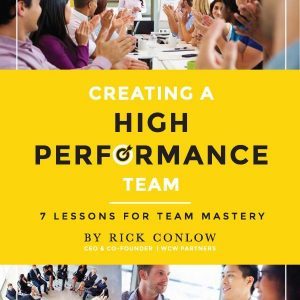 Want to kick start your team progress, check out this Creating a High Performance Team eBook by Rick.
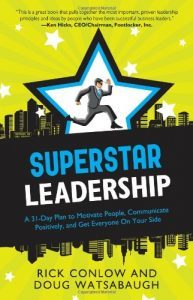 Or, do you want a proven game-plan for career success? If so, check out Rick’s Superstar Leadership book.
The post 3 Approaches for High Performance Team Planning appeared first on Rick Conlow.