Ruth Holroyd's Blog, page 9
October 31, 2022
Bronchial thermoplasty is one of the best modern treatments for asthma
The Professional Master’s Degree in Allergology of TECH University is designed to train experts to give the best service to patients with this common disease.

As is well known, asthma is a chronic disease that causes the airways in the lungs to swell and narrow which causes shortness of breath such as wheezing, shortness of breath, chest tightness, and coughing. It could be caused due to distinct factors such as dust mites, animals, some medications, changes in weather, chemicals in the air or in food, physical activity, mold, pollen, respiratory infections, strong emotions, smoke of tobacco, and personal or family history of allergies, such as hay fever, rhinitis, or eczema.
What if standard asthma treatments don’t work?These symptoms can usually be treated with inhaled treatments, including bronchodilators, and steroids, however, in some patients, this disease cannot be controlled properly with these drugs because they are truly resistant or do not take them. Experts with a Professional Master’s Degree in Allergology explain a non-pharmacological procedure called bronchial thermoplasty which reduces severe asthma symptoms in patients 18 years of age and older who are not well controlled with standard asthma treatments.
What is Bronchial thermoplasty?This is a minimally invasive bronchoscopy procedure that is performed in three outpatient procedure visits, it consists of the application of heat generated by radiofrequency, through a catheter that is inserted into the bronchial tree with flexible bronchoscopy, to reduce the amount and contractility of smooth muscle. However, it is necessary to emphasize that it does not cure asthma, but it does reduce severe attacks and controls them. However, a pulmonologist who specialises in performing the procedure will be able to figure out if you are suitable for it.
 Professional Master’s Degree in Allergology
TECH Technological University created this program due to the relevance of allergology, which is one of the most demanded medical specialties today because this type of disease has increased remarkably, and few countries have specialized services in this field of medicine. According to the WHO hundreds of millions of people suffer from rhinitis, and at least 300 million suffer from asthma. The institution considers it important to train professionals to aid its patients with a proper study of their disease and supply allergens to work towards life hygiene that proposes to avoid symptoms and progression of the disease.
Designed by expertsThis program was designed by experts to ensure that students get each of the skills necessary to become true experts in this field because each lesson has the latest updates in diagnosis and intervention. TECH students will know about the new lines of research and praxis of allergic disease with a special focus on areas such as asthma and diagnosis by inflammatory genotypes or measurements such as measurement of cytokines and interleukins., induced sputum, and flow cytometry.
Includes new advancements in allergic diseasesAlso, due to the new advances in technology this academic offer will allow the incorporation of skills in the use of Big Data and telemedicine, in addition to specific topics such as food allergies epidemiology, diagnosis and treatment, major allergic respiratory diseases, allergy-related skin diseases, immunodeficiencies in allergology, main pharmacological groups causing allergic pathology, allergy to Hymenoptera its classification and taxonomy, associationism in allergy, professional experience in the diagnosis and treatment of allergic diseases.
Re-Learning methodThe Master’s Degree in Allergology of TECH is developed entirely online. During the 12 months of training, the student has access to the contents of the program at any time and from any device, allowing them to self-manage the study time with maximum flexibility and adapt to the schedule of each student.
It has its own learning method, ‘Re-Learning’, based on asynchrony and self-management. The contents are presented in an attractive and dynamic way in multimedia capsules that include audio, videos, images, diagrams, and conceptual maps to corroborate knowledge.
TECH Technological UniversityTECH Technological University, the world’s largest university, is also the official online university of the NBA in Latin America. It belongs to the TECH educational group, a Spanish-owned multinational recognized by the Financial Times as one of the 200 fastest-growing companies in Europe. The company, founded and directed by Manuel Sánchez-Cascado de Fuentes, has also been considered the most highly valued Spanish technology company in the last 15 years.
Thanks to its fully digital learning system, it supplies training to students from anywhere in the world. An international trajectory that has allowed it to become a benchmark in distance learning, with a catalog of more than 10,000 programs, more than 100,000 new students each year, and 500,000 graduates from more than 150 countries.
Specialized in highly qualified postgraduate programs, they offer their students the best training programs at an international level, being leaders in employability with 99% of their students working in the first twelve months, according to data from the consulting firm KPMG.
Click here to find out about The Professional Masters Degree in Allergology.
You may also be interested in reading:‘No more allergies and asthma’ book review10 things your asthma nurse won’t tell youNatural treatments for allergic asthmaThe post Bronchial thermoplasty is one of the best modern treatments for asthma first appeared on What Allergy Blog.

October 25, 2022
The ultimate gift for people with eczema
Look no further for suitable Christmas, birthday, or just because you love them gifts; The Eczema Sample Store has just launched its Eczema Box scheme into the UK. Already doing well in America, The Eczema Sample box provides recipients with a selection of useful, suitable and perfect gifts for anyone with sensitive skin, but particularly those living with eczema.
It can be painful, exhausting both physically and mentally living with eczema and people don’t fully understand just how much it can impact our lives. These gift boxes are the perfect way to show someone you really care.
 What you can expect in an Eczema Sample Box
Each box contains mystery products, carefully chosen for people with sensitive skin and eczema. It could be anything from sample sizes to full sized products and can help people find new brands to try that will be kind and healing to their skin.
Win the UK – Winter Eczema Box!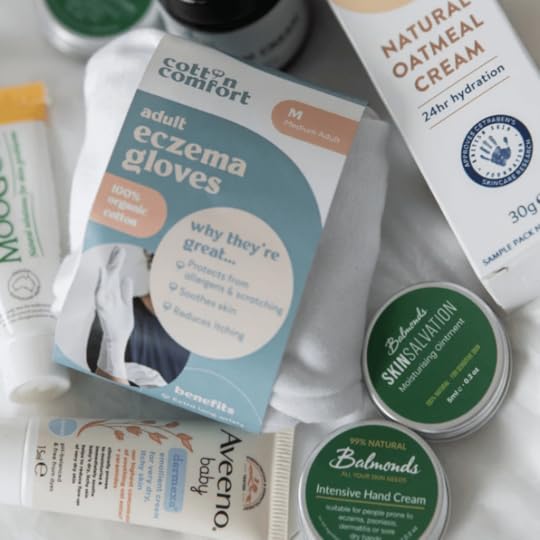 Winter UK Eczema Sample Box giveaway
For a limited time the UK Eczema Winter box is up for a giveaway! You could win:
The Eczema Sample Store Winter Box UK. With over 15 skin soothing treats for your sensitive skin, including:A Pair of Cotton Comfort’s famous 100% Organic Cotton GlovesA mug, stickers, and more goodies to itch and… well you know what with from @itch_n_bitchThe Shape of Skin – my inspiring book of poetry about living a life with sensitive skinIt’s easy to enter:
FOLLOW ALL 4 ACCOUNTS @eczemasamplestore@itch_n_bitch@whatallergy@eczema_clothingLIKE this postTAG a friend (1 entry per friend)Good luck!
Visit Instagram to enter this UK giveaway today. Offer ends 31st October 2022. UK Only.
How can I get one of these eczema boxes?If you live in the US, visit https://eczemasamplestore.com/ to sign up now for annual or seasonal subscriptions.
They are also coming soon to the UK! Head on over the Eczema Sample Store website to order your UK Eczema Winter Box now.
 Tell me more about the Eczema Sample Store
Stephanie is the woman behind this brilliant innovation. She has had eczema since she was only a few months old. It has been a lifelong battle for her of treatments, anxiety, flares, allergies, and more. Sometimes her eczema seemed all consuming, but she has grown and learned so much through it. She know that there is so much more to her than her eczema and that she is not alone in this struggle. That is why she created the Eczema Sample Store to help support other eczema warriors like herself in conquering this condition. You can follow her and her eczema journey on Instagram (@eczemasamplestore) or on her blog – the Eczema Element.
Do you struggle with gift ideas for your sensitive friends and family?It can be hard to find something for a friend or family member when chocolates are a potential no no, (allergies), the cosmetics and smellies could cause a skin reaction and you just can’t think what they might like. Let the experts hand pick products that have been tested and approved by people with sensitive skin.
I’d love to hear your thoughts on this, would you buy one? Are you going to enter to win a box (UK only) and would you buy these for a friend or family member? (hint hint)
You may also be interested in reading:Get £10 off an Oddbox fruit and veg boxBest Christmas gifts for your allergic friendCheck out my books on AmazonThe post The ultimate gift for people with eczema first appeared on What Allergy Blog.Wearable air purifier for allergies
Have you ever wished you could put your head in a bubble and go about your daily life unhindered by allergies? Or that you could visit that friend who has a furry, cute, cat and actually relax; even maybe pet the cat and not become overcome with dripping nose, watery eyes and asthma?
With this Respiray wearable air purifier this dream may not be possible.
The device has been created for allergic and asthmatic people and is called Respiray Wear A+. It helps millions of people who struggle with animal, dust or other airborne allergies. Our scientists, engineers and designers worked for two years and made hundreds of prototypes to get it right. Respiray Wear A+ cleans air from the pollen, dander, dust and mold particles, and creates an allergy-free space around the face.
Preliminary field tests show that 9 out of 10 people get help from this device. Respiray are continuing testing in the most prominent laboratories in the world.
 Clean, allergen-free air — anywhere you go
Airborne allergies can get in the way of your everyday life. Having watery eyes, an itchy nose or sneezing is never pleasant. Wearing a Respiray air filter could help with:
Dust and dust mite allergyHay fever and airborne pollenMould and fungus sporesPet danderIf you’re inside and you think you’ll be exposed to your allergens this wearable tech could help save you some discomfort and allergic reactions.
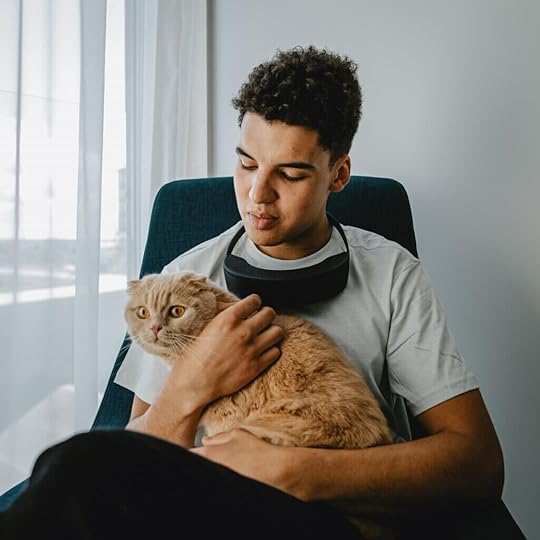 How easy is it to use?
It’s dead simple to use and has very few options so you can’t go wrong. There is a mini usb charging point and a button to switch on. It has two settings – on and then a stronger filter option if pollen is high.
I tested a Respiray portable air purifier for a week and it couldn’t be easier. Here’s how it works:
Open the device from the left sidePlace it on your shoulders (as in pictures above)There is a quick release magnetic strap to fasten it around your neck.Push the small black button to activate – the 1st setting is suitable when sitting down.The 2nd turbo setting is suitable when moving aroundUnder the device there is a USB charging dock. It should last about 8 hours with each charge.Device is intended for indoor use only.It really is so simple to use once you’ve located the button to activate and adjusted the straps to rest comfortably under your chin. It shouldn’t be too tight, see pictures above and below for optimum location of the device.
Here I am trying out the Respiray Wear A+ Who should wear one of these portable air purifiers?Anyone with allergies may benefit from this wearable air purifier. The device is suitable for young adults and anyone over the age of 14 years old who has allergies. Respiray is not suitable for young children who may run around more making it less comfortable to wear and less effective if the device is in the wrong position in relation to the face.
Anyone with friends who have pets – No longer avoid visiting people for fear of getting wheezyIf you get wheezy in busy places because of your dust allergyIf your place of work has allergens, be more comfortable doing your jobWhen friends live in dusty houses, but you really want to visit themOn cleaning day, avoid getting an allergic reactionThere are so many more uses – anyone with air borne allergies could find relief from wearing the Respiray Wear A+.
Visit the Respiray websiteHow can I trust this product will work?The Respiray Wear A+ is being testing by SGS, the worlds’ leading testing and certification company, against various air borne allergens. Testing is also taking place at the University of Tartu’s independent European testing laboratory.
This product is being created in Estonia, and is also supported by the Estonian Allergy and Asthma Foundation, who are also running their own tests. If you live in Estonia, we may be looking for testers in Estonia only.
The device contains replaceable HEPA filters and uses state of the art ultra violet ventilators. You could also be part of the testing exercise, see details below.
Would it help with air borne food allergens?I wonder if I’d tested it for longer whether it would allow me to sit in a cafe; currently the airborne milk particles make me very wheezy within quite a short space of time. It’s not intended for outdoor use, it works in enclosed spaces like homes and I guess cafes and restaurants. I tested it for a few days in my own home which I have already allergy proofed so it wasn’t the most scientific test. My other frustrating diagnosis is ‘dry eye’ which means my eyes can just be very watery, regardless of what’s around me. This can be very frustrating as it can be confused with an allergy, when it’s not.
Interested in testing during prelaunch?To find out more about the Respiray Wear A+, visit their website and sign up for the newsletter and get details about the forthcoming launch.
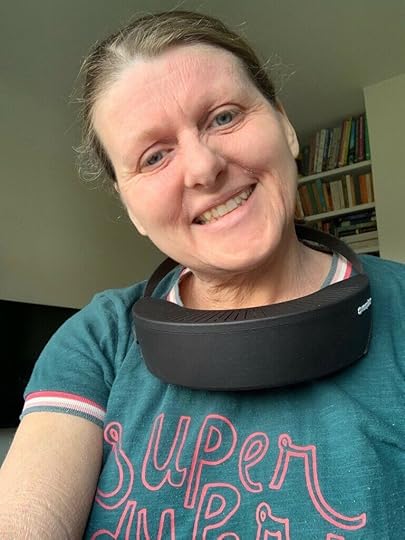 Respiray wearable air purifier
I would love to hear your thoughts on this little portable gadget. It’s really light to wear and I found that I forgot I was even wearing it and just got on with my work, or reading, or whatever I was doing. It could mean you don’t need to take an anti-histamine before going to risky places that may expose you to your allergens. Long term use of anti-histamines are not fully understood and it’s something I worry about myself. Are you interested in trying this device out? Do you struggle with air borne allergies? I’d love to hear your thoughts.
You may also be interested in reading: ‘No more allergies and asthma’ book reviewNatural treatments for allergic asthma10 things your asthma nurse won’t tell youThe post Wearable air purifier for allergies first appeared on What Allergy Blog.October 22, 2022
Is it ‘steroid blisters’ or Eczema herpeticum?
If you’ve ever had experience of a cold sore you’ll be familiar with the herpes simplex virus, and the painful blisters that come with it. Eczema Herpeticum (EH) is a nasty and very contagious virus that can get into broken eczema skin, causing blisters much like the cold sore virus in appearance. However it can also occur on healthy skin, it’s not just eczema skin that is affected. People who have never had eczema CAN still get eczema herpeticum. It’s caused by the herpes simplex virus that can lie dormant in the body, ready to jump into action when the person is run down or their immune system challenged.
But are all blisters the same? and how do you tell them apart?
What is eczema herpticum?Eczema herpeticum is caused by the same virus as the cold sore – herpes simplex. It’s a very dangerous virus to catch and must be taken very seriously because it can spread across the whole body and in very rare cases can be fatal if left untreated.
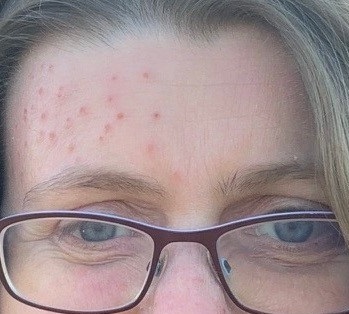 This shows the scabs/scars left as EH heals
For a person with eczema this virus can quickly and easily spread across the skin, whereas the cold sore will be confined to the mouth and lips. It can also make the person with eczema herpeticum feel very unwell with a high temperature. It’s important to use separate flannels, towels and bedding because it is very contagious. If you do get this virus you should also try very hard not to spread the virus through scratching and passing it to other areas of broken or impaired eczema skin barriers.
Eczema herpiticum is also very painful. Having experienced cold sores, shingles, eczema herpticum (EH) and eczema steroid blisters, I can confirm they all feel remarkably similar, so that even the person feeling the onset could be confused about what virus is at play.
What are ‘steroid blisters’?These blisters are commonly found on eczema skin that has been treated with topical steroids, particularly if the person is trying to taper off or withdraw from topical steroid treatment. The blisters appear very similar in appearance to the EH blister and are also extremely painful.
For this reason, they are often misdiagnosed. Steroid blisters will heal on their own in a few days’ time.
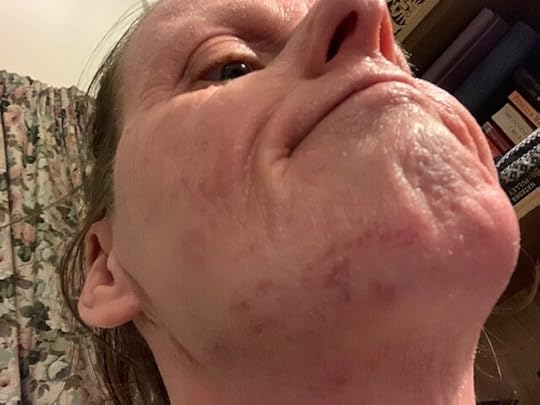 Incredibly, these steroid blisters heal within a matter of days
These blisters would be fluid filled, excruciatingly painful, so much so that I used to cry myself to sleep. They would often strike at nighttime as I was going to bed and EVERY time I would promise myself I would go to the doctor the next day… only to find they would be drying up and not so painful in the morning. It never made sense. Now I know what they are it finally clicked into place.
What are the main differences between EH and eczema steroid blisters?I’m not a doctor and can’t find much written about this but from my own experience, there are a few ways to tell the difference:
Steroid blisters can be spread but they are not as viral at spreading as EH. They are typically seen on the face whereas EH can spread across the whole body. Steroid blisters can heal in a few days, but EH can take a few weeks or longer to heal.Herpes simplex is not involved in the steroid blisters. A simple test for the virus should help to identify if it is EH.Thank you Bee“A patient reported that she was diagnosed with eczema herpeticum and in a few days or so was much better taking aciclovir. I have seen and heard about this for 15 years and written repeatedly that this is not herpes, just steroid blisters. People are scared unnecessarily with hospitalisations, un-needed medications, expense accrued. Patients going through Red Skin Syndrome (RSS) do not have eczema, they are in topical steroid withdrawal. Herpes simplex needs 7-12 days of treatment to get better or cured. Steroid blisters get better quickly on their own. I have not seen a case of EH n 40 years – all my patients just had steroid blisters. Doctors should be taking a positive viral culture to diagnose Eczema Herpeticum and the herpes simplex virus, but they don’t.”
Dr marvin rapaport, MD
Thanks to my friend Bee the Brave for sharing this quote above on instagram. These blisters were one of my worst TSW symptoms, but I’d never heard them mentioned by a specialist or realised they were so common. I had wrongly thought that they were the herpes simplex virus and that maybe I was just fighting it off fast. I had these steroid blisters over and over again during the worst parts of TSW but they healed quickly, and I didn’t get the scars and length of blister life span I had when I DID have eczema herpeticum. My case of EH was triggered by going onto Methotrexate in 2019. Methotrexate also caused a terrible bout of shingles later that same year, at which point I ceased to take the immunosuppressant. My dermatologist was keen for me to start taking Methotrexate again when the shingles had healed but that was one warning sign too many for me.
Steroid blisters are another symptom of TSWI have not seen ‘steroid blisters’ listed as a symptom of topical steroid but I’d like to add that to the mix! Seeing Dr Marvin Rapaport mention them has made me feel a lot calmer and I wish I’d seen this when I was experiencing recurrent steroid blisters. I was perpetually terrified that it was EH which I know is potentially serious. I wish I’d know so this blog is for anyone going through topical steroid withdrawal who may experience this. Doctors may wrongly diagnose it as EH because it looks very similar. Insist on a viral swab to be done to put your mind at rest.
How should you treat both conditions?Having experienced both of these skin conditions, they can be treated in a similar way, with a few differences if you get the more serious EH.
If you are diagnosed with EH you can treat it with antivirals if caught early enough. Take painkillers to help with the pain.Dead sea salt baths can help to dry up the blisters. Apple cider vinegar – Dilute a capful in warm water and use to gently clean the area with a soft bamboo cloth, flannel or cotton wool.Don’t touch – Avoid touching them if you can.Try not spread it – If you have touched the blisters wash your hands and try not to spread the virus to other parts of your bodyHeat – Holding a hot water bottle on the blister can be soothing.Cold – Similarly, an ice compress can also help to stave off the pain.Box breathing – this can help you to relax, release tension and allow you to perhaps detach from the pain a little. This is a very painful condition, but slowing your breathing and relaxation can help. To do box breathing you breath in for less than you breathe out and you can experiment with it. For instance. Breathe in for 5 seconds, out for 8 seconds and hold for 5 seconds. Then repeat, as if you are following the sides of a box. If that timing isn’t right for you can can modify it, as long as you are concentrating on breathing in through your nose slowly and out through your nose slowly. Relax your shoulders and also try to release tension in your face, brow, mouth, lips, tongue etc.Distraction – Find something you enjoy to distract yourself, anything from drawing or reading to doing a puzzle, painting or watching a film.Rest – your body needs rest. Let it rest.I hope this blog helps someone, because I really wish I’d know this was a ‘thing’ when it was happening to me. Topical Steroid withdrawal is intense, confusing, repetitive and exhausting. Sometimes nothing makes sense. Knowing when you need to seek expert medical attention is so difficult because infections are a high risk. If in doubt get it checked out.
Did you find this helpful? Did you get steroid blisters? And have you had Eczema herpeticum?
You may also be interested in reading:Topical Steroid Withdrawal – Frequently Asked QuestionsThe Shape of Skin – poems about eczema and topical steroid withdrawalSeven natural bath treatments for eczemaThe post Is it ‘steroid blisters’ or Eczema herpeticum? first appeared on What Allergy Blog.October 19, 2022
How to respond to TSW and eczema gaslighting
Ever been gaslit by your doctor, GP or specialist dermatologist? This probably happens for people with any conceivable medical complaint or long-term condition. I don’t think it’s just reserved for eczema and topical steroids. For the purpose of this gaslighting course we are just concerned with topical steroid withdrawal and how it is currently viewed by the specialists we see. So here, to help you navigate the utterly despicable behaviour of our medical professionals is my Gaslighting #101
 20 responses to medical gaslighting about your skin, eczema and or topical steroid withdrawal
1). Dermatologist: Rolls eyes and ignores what you’ve just said
Response: Excuse me, but I just raised a very important issue for me, it’s why I came to see you today and I’d really appreciate it if you could listen to me and discuss this with me. Thank you.
2). Laughs at you when you mention TSW
Response: I’m confused that you think my skin is funny. Would the head of this surgery/clinic/hospital think laughing at a patient who is asking for help is appropriate? All I’m asking is that you listen to me and my concerns. It feels very dismissive.
3). Dermatologist: There is no such thing as TSW, it’s just uncontrolled chronic adult eczema
Response: I know my skin with eczema and I know that this is a worsening rebound that happens when I try to stop using topical steroids. My skin is 100% addicted to these creams. I have done my own research into this condition. I have some handouts for you here, and also some references to clinical studies, as well as links to the British Association of Dermatologists, MHRA and National Eczema Society detailing what Topical Steroid Withdrawal is, recognising its existence and detailing the symptoms.
4). Dermatologist:: I haven’t got time to read those
Response: This is really important to me. I know you are busy, but living with eczema I have noticed my skin change. TSW is real, it’s recognised by medical bodies. Sureyly you have a ‘duty of care’ to all your patients. That doctors should always uphold their ‘Bedside Manner’ and also pledge to ‘Do no harm’. If I took this attitude in my own career, to dismiss any research, progress and updates in my own specialist field, I would lose clients. I hope you take some pride in your professional career, and in being the best you can and keeping up with advancements. I appreciate that you are busy, but you could be doing great harm to your patients if you don’t make time to understand this very debilitating and appalling withdrawal process. I will leave them with you and also email you all the links and electronic copies so that you can print them off and share with your colleagues. There are also videos and documentaries that I hope you will find useful and helpful. Topical Steroid Withdrawal is very real, as acknowledged by BAD, MHRA, NES etc.
5). Dermatologist: I’ve never seen anyone else with topical steroid withdrawal
Response: How do you know that if you refuse to find out more? Understand the symptoms, how it differs from eczema symptoms, what causes it, how it happens and how to spot the signs? I think what happens, is that dermatologists dismiss our concerns, can’t help us, so people going through TSW do so alone, at home, without any support. But you will never see them again because they won’t return, because you refuse to even have a dialogue about this and it’s so hurtful and too painful to continue to get taken seriously. We all give up trying to get heard and go away and get through TSW alone. I wonder how many adult patients who present with worsening eczema who then stop coming because you dismiss their concerns?
6). Dermatologist: Don’t get so upset, I’m trying to help (when they continue to push more topical steroids and clearly aren’t listening)
I am upset, I leave every appointment in tears, because I just don’t feel like you are listening, showing any empathy for how I feel nor trying to help me find solutions and therapies that fit with how I want to heal. I have decided to got through topical steroid withdrawal for myself. A condition caused by medication that YOU prescribed but refuse to acknowledge. Just for a moment consider, what if I am right? and you just ignored me and dismissed me. Can we please discuss what you can do to support me through this? Natural and supportive natural treatments?
7). Dermatologist: In my opinion you just need to use more topical steroids, blitz your skin with a stronger potency, use it every day, morning and night for two weeks. You get like this because you don’t use it as prescribed and don’t use enough of it.
Response: I’ve been using topical steroids, as prescribed now for xx years and I know my own skin. It is not helping. When I finish a course and stop, the eczema comes back worse than before. It’s getting worse and I’m doing what you tell me to do. I think I need to find a different treatment. I use the topical steroids as directed and my skin no longer heals, it’s just getting worse and when I stop, deteriorates so rapidly into full body crisis and that’s different to my original localised eczema symptoms. My skin is addicted to topical steroids and I am considering topical steroid withdrawal. Can we discuss this?
8). Dermatologist: You’re just being steroid phobic
Response: A phobia is a fear of something that is not a danger to me, for instance, being scared of spiders or having a phobia about being in a dark room. Being ‘phobic’ of using steroids is completely the wrong term here. You told me topical steroids would cause thinning of my skin, you can’t blame me for being worried about this. How thin will it get? When does it stop thinning? I’m the expert in my own skin and how it feels, I have been using topical steroids since childhood, as advised by specialists like yourself. They have not controlled and stabilised my skin. Far from it. They appear to work at first but I can tell you from my own experience, if I stop using them my skin is worse than it’s ever been before. I have read about topical steroid withdrawal and seen photos of what my skin could get like, this is terrifying. So yes I’m scared, but to call it a phobia is very dismissive. I think topical steroids have damaged my skin, made it addicted and leaves me in a spiral or rebounding eczema. How would you feel if this was happening to you?
9). Dermatologist: Topical steroid withdrawal is very rare, it can only happen from oral steroids that go internally or excessive use of high potency steroids on the face or genitals.
Response: This directly contradicts the recent advice shared on the MHRA website and from the British Association of Dermatologists and the National Eczema Society. There are also two charities helping who are going through TSW, ITSAN and Scratch That. I will send you the details of both so you can update your understanding of TSW. It can happen with topical steroid creams and it generally has little to do with genitals or just the face. Most of us know not to use it on our faces and don’t do so. However you HAVE advised me to use Elocon on my face at times and told me it was safe. You can’t now claim that doing so is my fault.
10). Dermatologist: I’m so sorry you’ve been exposed to this TSW social media trend. It’s so damaging and very frustrating for us specialists in skin, eczema and atopic dermatitis to see all our hard work being undermined by people with no experience.
Response: Oh don’t be sorry. It’s the first time I’ve felt like anyone was actually listening to me, understanding me and experiencing what I’m going through. To finally realise I am not going mad, that I am not suffering alone. There are so many people going through this. It’s real! It’s brutal. This is NOT a social media trend. To call it a trend is the most unfair gaslighting I’ve ever heard. People are going through hell, TSW is torture. This is not a trend, it is a disaster, a travesty, an avoidable chronic suffering. For you to dismiss it is confusing, as an expert, wouldn’t you rather try to understand why? research it and find out what people are getting so fired up on social media about? What if we’re right? What if there is truth in this, and TSW is real and you ignore everyone who asks you for help and continues to ignore people? If I were in your position I’d be concerned, worried and keen to find out why. I sounds like you’re just dismissing it and burying your head in the sand.
11). Dermatologist: You’re gaslighting my years of experience by keeping on challenging all the advice I’m giving you.
Response: If you want a definition of gaslighting, I’ll explain it to you. It originates from an old film called Gaslight, where the husband tries to trick, confuse and control his wife, by belittling her concerns, tricking her and controlling her, using a gaslight that he can turn up to indicate he has got home to his office. Gaslighting is when someone refuses to listens to another’s very real concerns, instead forcing their own version of the truth. Your behaviour is gaslighting, you talk over me, roll your eyes, ignore the things I say and dismiss all my concerns. As a patient I have a right to put my concerns to you and to be listened to an taken seriously.
12). Dermatologist: You can forget about TSW because you don’t have it. I know badly controlled severe eczema when I see it.
Response: Well, I would like to challenge your view on my skin. I have visited the ITSAN website and I have all the symptoms of TSW (list your symptoms) – None of these are things that happened when I had my original eczema diagnosis. Here is a handout explaining Topical Steroid Withdrawal and how it differs to eczema. I would really appreciate it if we could discuss this when you’ve had a chance to examine this condition. It sounds like you don’t have all the correct information and experience of this condition.
13). Dermatologist: You are refusing all the treatments I have to offer you so I will have to discharge you.
Response: I respect this and I do understand, I am going against medical advice, however I am trying to heal my skin naturally and would really appreciate it if you could see me, even if it’s just once a year, to chart my progress. I really believe that I can heal and manage my skin naturally. And if you just dismiss patients doing this you will never see if they are right. Are there things we can do that might support my natural skin healing journey? Things like allergy testing, immunotherapy, patch testing, steroid free supporting treatments? I don’t believe there is only one way to heal and I have the right to choose my treatment.
14). Dermatologist: You’ll never heal on your own, you’ll be back for topical steroids, immuno-suppressants or the new treatments we have coming soon. It’s not possible to control eczema without these drugs
Response: How is telling me I will never get better helpful? Would you say this to someone with cancer who wanted to try alternative therapies? Doesn’t the patient have the right to choose and agree to their own treatment? My choices may seem controversial to you, but they are my choices. Doesn’t it make sense to support these choices? and help me? Find ways you can help rather than telling me I will never get better? I also know people have healed through Topical Steroid Withdrawal and return to manageable skin with just normal eczema. I believe I can achieve this too and hoped you would support me in that decision.
15). Dermatologist: Just keep using more of the topical steroids, why would you not? why do you want to go through withdrawal when you don’t have to? It’s needless agony and suffering for you.
Response: I just don’t agree that continuing to use a drug that has stopped working and not only stopped working but done irrevocable damage to my skin barrier is the answer. I have lost faith in your advice, and in this cream. I don’t want to keep using a cream that barely maintains poor skin function. Can we discuss ways in which you might support or recommend alternative treatments that are not immunosuppressants?
16). Dermatologist: Why are you so worried about topical steroids? They’re safe
Response: I feel like they are masking a natural reaction. Eczema is a sign something else is off kilter, or not quite right. I don’t believe that long term, just putting something on the skin to stop and ignore that natural reaction is helpful. I think we need to be looking at finding out why and trying natural solutions to reducing inflammation and finding out the triggers.
17). Dermatologist: TSW is just nonsense. Forget about it and just accept that you will need to use medication for the rest of your life
Response: That’s your opinion but I disagree. I have done a lot of research and have a list here from the MHRA, the British Association of Dermatologists and the National Eczema Society explaining what TSW is. You’ve heard of them I hope? I’m happy to pass on all my research, with videos you can watch, documentaries, studies and charities and blogs.
18). Dermatologist: I am quite happy with my own knowledge and years of training to become and dermatologist. I am the professional here
Response: OK tell me when was the last time you updated that training? Went on any training or refresher into eczema and treatment? When did you do your training was it solely focussed on what pharmaceutical interventions and drugs you can use? )
19). Dermatologist: You need to stop googling what’s wrong with you
Response: I am googling my skin condition because I never get any answers from you. I am experiencing terrifying deterioration of my skin and your answer is to just use more cream, and for longer. Or you suggest other drugs that I don’t understand and that also seek to turn off or stop the inflammation. This sounds great but is there an underlying problem that we are missing here? And I am googling sources and resources from reputable places that you should also be aware of. (Repeat that you can send or hand over all your research to them).
20). Dermatologist: Topical steroids are just topical, they cannot be absorbed into the body.
Response: I would disagree. There is a lot of research that you can read, I’ve got the links and information here for you. (always go armed with supporting evidence) TSWAtlas videos explain how topical steroids are absorbed into the skin. (Link to YouTube Video – What is TSW?)
It is absorbed into the body and damages the skin and nerve endings as well as other organs that are involved with cleansing the body such as lymphs, adrenal, liver, gut, and more. This is all connected. Can I ask you to look into this before we next meet please so we can discuss properly?
21). Dermatologist: Gets up, walks out and just goes to get his next patient
This actually happened to me. My dermatologist just decided he didn’t want to continue with our consultation, got up and walked out. Possibly the rudest behaviour I’ve experience. I wrote to him by email expressing my disappointment and sending him all the links and documents again. He won’t read them but what else can I do? He did apologise and sent this response: “Thank you for this. I’ll take a look. Apologies if I came across that way; not intended, I just have a concern we / you should be managing things more actively and I don’t want you to miss out an opportunity to get better control of your skin and allergies, which to be fair will always be there. I know modern medicine isn’t perfect. In the end it is your choice and I definitely respect that and I enjoy our meetings. I hope to catch-up in a year but of course sooner if there are problems before then.“
22). Dermatologist: Interrupts, talks over you and won’t listen.
Response: Just sit, calmly, and look at them. Straight in the eye. When they stop talking, which they will because they’ll feel uncomfortable. You can return to your point. e.g. OK so I’m not sure if you caught what I was just saying, that I am worried about my skin and the fact that my skin is addicted to topical steroids and that I am now going through topical steroid withdrawal. (Or whatever the point was you were trying to get across.) refer to questions above with organisations to reference and offer supporting evidence.
“To be fair, your skin problems and allergies will always be there.”
My dermatologist after my most recent appointment
Oh how I will relish going back one day with clear skin. Or maybe not clear skin but well managed skin – I think it is possible to control and live with eczema and not use immuno suppressing medication. I dream of this day. Maybe it won’t be perfect but it’s so much better now. It will be four years in January 2023 and my skin is looking pretty spectacular now if I do say so myself. The only real problem areas at the moment are behind the backs of my knees and elbow creases but I’m working on that.
To be able to say now that I do not use ANY medication for my skin or asthma is something I will never get over. I do still have a blue inhaler for emergency asthma attacks and carry this with me. However not only do I no longer use topical steroids, I no longer need oral steroid preventative inhalers. For this I will forever be grateful.
Why dermatologists struggle to accept TSWWe need to all realise that to our GPs and dermatologist, this isn’t widely understood. They have been assured through their training that this medication is safe by people they trust so it will take time to communicate what is really happening.
Rare – If their limited knowledge comes from statements that it is rare, they can be forgiven for not thinking our skin problems are TSW. They probably do just believe they’re seeing worsening uncontrolled eczema. We need to just quietly and calmly keep on raising awareness and encouraging them to find out about TSW.Use it correctly – again it’s hard for any of us to even remember our usage and we certainly can’t prove how we used a medication after the fact. What we need to communicate calmly and firmly is that we followed their advice, and that their advice differs from what is now suggested ie. 2 weeks use then take a break from treatment. This is new advice and certainly not what I was told, I was told to just use it when I needed to and stop when it got better, so what happens when it just never gets better?Repeat prescription – It would seem that no one is actually monitoring or being alerted that we are being given a dangerous medication over and over again.Pharma training – Their training will have told them that topical steroids are the first line of treatment and it works well. It does appear to work well at first. And not everyone experiences problems and gets TSW. So we have a problem when the cheapest and easiest treatment, that is offered to everyone with eczema, is not working. What do they replace that with? Their job is to get rid of the troublesome symptoms and rarely to look for root causes. There is no money in finding out what causes inflammation.TSW is not listed on medication side effect warnings – To date there are no official medication warnings for withdrawal, only skin thinning. This hopefully will be changing soon but until it’s there in black and white as a known problem it will be hard for many specialists to accept it.Research is lacking – We need more research. Currently the research done is woeful. The most recent medical study was purely looking at the ‘growing social media trend’ which is infuriating because it just plays into their view that we are all steroid phobic hysterical crazy people. Check out Topical Steroid Withdrawal Studies to read more on this.New treatments coming along to replace topical steroids are just more immuno-suppression or aimed at halting or stopping a body reaction. They are also very expensive. We don’t yet have a solution to what else they can do to help patients with severe eczema, the whole system needs an overhaul. It starts with kids who should be tested for allergies, food and contact and taught how to manage the condition and treat naturally, instead of babies being given strong potency steroids.
How we’d like dermatologists to speak to usI think we can all agree, all we really want is:
For them to listen. Respect our years of living in our own skin. Do some research, to find out what we’re going through and at least meet us half way, having found out what TSW is.Stop being so dismissiveStop calling us steroid phobic, neurotic, and telling us TSW is poppycock, nonsense, not real etc.Perhaps one day, for them to admit that they didn’t know these drugs were doing us harm, but to accept what we are going through is real.To diagnose us with TSW and help us with real, natural healing solutions.To recommend steroid free alternatives to those who wish to find drugs that are not topical steroids.To learn from us and realise that sometimes the patient might actually know more than they do.Be kind and empathetic. It’s OK to not understand, never have heard of TSW (Actually if you are a medical professional and don’t know what TSW is you are in the wrong job) but you can still be gentle and try to be sympathetic with patients who are clearly really struggling and asking for help.I’ll add to this as I think of things. Derms, if you’re reading this, we don’t want an argument, we just want a dialogue where you aren’t just dismissing all our concerns. And do the work! Be the best you can in your profession. That includes at least familiarising yourself with even rare side effects of the medication you prescribe daily as a first line treatment for every eczema patient who walks in your door.
And please consider, what if this not rare and everyone using topical steroids long term is experiencing withdrawal rebounding worsening eczema BECAUSE we are all addicted and stuck in a spiral that is not our fault.
Please share your experiencesI’d love to hear of any of your particularly gaslighty comments you’ve heard, or even the good experiences. Let’s spread the good advice and let the dermatologists hear how we’d like to be treated. I don’t want this to become a bashing derms blog, I just want to help both sides to more forwards positively towards a better outcome.
Because currently I feel that the majority of dermatologists are failing their patients on a daily, hourly basis.
You may also be interested in reading:Topical Steroid Withdrawal – Frequently Asked QuestionsA dermatologists review of The Shape of Skin, eczema poetry bookTSW is NOT a Social Media Trend – TSW Rant!How to get the most out of your Dermatology appointmentPhoto by Tima Miroshnichenko on Pexels
The post How to respond to TSW and eczema gaslighting first appeared on What Allergy Blog.October 6, 2022
10 tips to enjoy your massage with eczema skin
If you’re nervous about having a massage due to sensitive skin you’re not alone.
If you have eczema, psoriasis, acne or topical steroid withdrawal, spa days and massage treatments can be daunting experiences. You’ve probably felt the itch and had hives after what should have been relaxing and calming facial. It can be frustrating that you can’t enjoy the simple pleasures that your friends with ‘normal skin’ can.
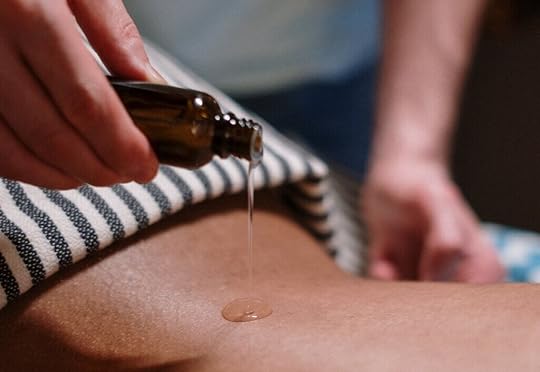 10 tips for enjoying a massage with sensitive eczema skin and topical steroid withdrawal
Here are some things you can do to keep your skin calm and soothed whilst still enjoying the pampering:
Do your research – If you can, phone ahead and find out what oils they use. You might find that they are OK for your skin and the spa or masseur should be able to tell you all the ingredients in the oils they mix of the brands of products they use.Nut Allergies – Tell them about your allergies, including latex, nickel, nuts, dairy. Some massage oils contain unrefined nut oils which would cause a reaction for someone with a nut allergy. Latex allergy – Also make sure they do not wear latex gloves to do the massage. This may sound insane but it can happen. If the person doing the massage is allergic to the oil they may wear latex gloves and might not think to tell you this unless you’ve explained your latex allergy. Certain fruits can also cross react with latex such as avocado so make sure to avoid these too. Read ‘Latex allergy fruit cross reactions’.Take your own safe oil. Massage oils can often contain nut oils which may not be refined. Other essential oils can be too harsh for sensitive skin so play it safe. If you can test an oil at home on a small area of skin before going this is the safest thing to do. I took my own Balmonds Rosehip and Calendula, omega rich oil (which contains sunflower, safflower, rosehip and calendula). Use code: WHATALLERGY for 20% off all Balmonds products. This oil is not cheap but it will last you such a long time. I use it on patches of skin that will not heal for its healing qualities and it’s still going strong.Parabens – Look out also for parabens. These should be avoided if you have sensitive skin.Go prepared in case of a reactionAvoid any scented oils – Strong synthetic oils and products with lots of chemically ingredients might be too harsh for sensitive skin.Explain your situation – Explain about your skin and tell them any areas you’d like avoided, eg. face, any flarey patches, sensitive skin.Beware grape seed oil – this is touted as safe and simple base oil but I find it very irritating. I’ve been told over and over that no one can be allergic to it, so listen to your gut. If it starts to itch, tell the masseuse. After two or three physio sessions leaving the backs of my knees ravaged with hives I’ve finally accepted grape seed oil isn’t’ for me. You may be fine with it, but just because someone says it’s safe doesn’t mean it is!Candles and joss sticks – If you have asthma, ask if there are candles and joss sticks burning. They can add to the ambience and experience for most, but if you have breathing problems, it could restrict your airways and trigger an asthma attack.Relax and enjoy xxxI hope these tips help. What’s important is being open, honest and communicating what you need. Spa’s and massage therapists are there to give you relaxation and will always, in my experience, accommodate any requests to use your own oil etc. Don’t be shy about speaking up.
 Use code WHATALLERGY for 20% offCan you enjoy a massage whilst in topical steroid withdrawal?
We are all different but from my own experience, I did have times where I felt my skin was calm enough to have a massage. The benefits it brings in terms of calming the heart rate, reducing anxiety and helping you feel still, relaxed and at peace can be so beneficial.
I had a few massages whilst my skin was quite bad and both times I didn’t regret it. Be honest and explain TSW and what that means for you. If there is a language barrier just explain you are very sore and need them to be gentle and voice the affected areas. Whatever you feel is right for you.
Even the sensation of the skin heating up from the massage motion can trigger itching, hives and discomfort, both in TSW and for those with eczema. See if you can just be still and notice whether you can let it be, and let the itch pass. I often get some discomfort but it’s not all consuming and the absolute relaxation is worth it.
Massage through clothingIt is also possible to do a gently and simple massage whilst still clothed. You won’t get the deep tissue stimulation but if you really can’t have someone touching your bare skin, this is a safe alternative. And far from being second best, I felt so safe and so relaxed afterwards without the awkwardness of being almost naked and needing to be woken, asked to get dressed, get up and move out of the room. Far from it, I was able to stay snuggled up on the comfy chair till I was ready to move.
After massage care…So you’ve had your massage, now what?
Drink plenty of water – Make sure you drink lots of water or herbal tea after a massage. Hydrate and capitalise on the goodness massages can bring to those aching tense muscles and body tissues.Expect some pain – This is particularly relevant to those of you who love a deep tissue massage. You can feel a bit bruised the day after a massage, especially if they’ve worked on some knarly tense bits. Don’t panic about this, just be gentle the next day. Applying a hot water bottle to the bruised feeling bits can release that final bit of tension.Reflect – Massages can bring up some very deep thought. Things can come up to the surface during and after a massage that you hadn’t realised were causing you anxiety or worry. Other times you’ll drift into complete tranquility and have no thoughts at all. You might even fall asleep. All of these are OK, but it can be helpful to journal how you feel afterwards. Learn from what comes up, it can be quite deep sometimes.Prioritise your own self-care – What always comes up for me is how much I’d love to have them more regularly… but I never stick to this! Not least because they’re not cheap. If you loved it, promise yourself to book more massages, even if it’s only a few times a year, because you’re worth it. You might have a totally different experience and have hated the whole thing; it’s not for everyone.I’d love to hear your massage stories. Do you love them or hate them? What do you to stay safe and reaction free? Please comment below.
If you loved this, you might enjoy:Get The Shape of Skin, eczema poetry book with a free bookmarkTrigger warning! What caused that skin flare?The best washing powders for eczema skinThe post 10 tips to enjoy your massage with eczema skin first appeared on What Allergy Blog.September 29, 2022
Hospital admissions for anaphylaxis rise
Hospital admissions for allergy and anaphylaxis begin to increase following COVID-19 pandemic
New figures published on 22nd September 2022 by NHS Digital show an increase in hospital admissions for allergy and anaphylaxis for March 2021 to March 2022.
Every September, NHS digital releases data about patient admissions to NHS hospitals across the UK for the previous year. Anaphylaxis UK, a UK-wide charity that provides support and information to people with serious allergies, analyses the figures for allergy and anaphylaxis admissions to monitor the trends.
Prior to the COVID-19 pandemic, admissions for allergy and anaphylaxis had steadily increased year on year from 2013 onwards.
In contrast, in 2021 the NHS reported – Last year’s figures showed a dramatic decline.
. This was thought to be for a number of possible pandemic related reasons including:
Reluctance to seek medical help due to fear of the virus/stay at home adviceReduction in travel leading to reduced air pollutionStay at home advice leading to reduced transmission of viruses/exposure to allergensSocial distancing, hand washing and use of face masks reducing transmission of viruses/exposure to allergensFor children aged 18 and under there has been a 16.8% increase in allergy and anaphylaxis admissions on 2020-2021 but this is still below the level in the years immediately before the COVID-19 pandemic.
 Hospital admissions for allergy and anaphylaxis – 18 years and under
For adults aged 19 and over, there has been a 15.6% increase in allergy and anaphylaxis admissions on 2020-2021 but this is also below the level in the years immediately before the COVID-19 Pandemic.
 Hospital admissions for allergy and anaphylaxis – 19 years and over
Hospital admissions for anaphylaxis have remained largely stable compared to 2020-21 for all age groups.
 Hospital admissions for anaphylaxis 2013 – 2022
Tables created by Anaphylaxis UK using figures from NHS Digital.
Simon Williams, CEO of Anaphylaxis UK said:
“It is worrying for us to see that the number of admissions to hospital for allergy and anaphylaxis has once again begun to rise following the COVID-19 pandemic decrease. These figures show the importance of continuing to raise awareness of serious allergies and the need for more research to help us understand why the prevalence of allergy continues to increase. Our ongoing aim is to create a safe environment for all people with allergies by working with and educating those in schools, universities, the food industry, healthcare professionals and other key audiences.”
Doctor Helen Evans-Howells, GP and trustee of Anaphylaxis UK, said:
“I am not surprised to see a rise in hospital admissions for anaphylaxis as allergies did not ‘go away’ during the pandemic. I am aware from our patients that people are still reluctant to attend hospital settings. Some believe they can manage anaphylaxis themselves at home. I would implore anyone who has an anaphylactic reaction to seek urgent medical attention. Do not be afraid to contact your GP or emergency department if you need advice or believe you or your child has an allergy. If an allergy is diagnosed, we can help you manage this and look at the best treatment options available. Anaphylaxis UK also have a wealth of online resources to help you and your friends and family understand allergies.”
The charity has a number of resources available to help enable those at risk to manage their allergies. These include;
• Online e-learning courses at allergywise.org.uk for adults, schools, parents and carers and healthcare professionals.
• Factsheets with information about allergies which is evidence based and checked by clinical experts.
• Information on Living with serious allergies.
This week the charity is also hosting its annual Anaphylaxis Awareness Week (1-7 October) with the theme #WearItBright representing its aim to create a brighter future for adults and children at risk of anaphylaxis. They will be hosting interviews with allergy experts and providing free resources to businesses, schools, and healthcare professionals throughout the week.
If you would like further information and support, please call Anaphylaxis UK’s national helpline on 01252 542029 or contact here.
Further informationAnaphylaxis UK, formerly Anaphylaxis Campaign, is the only UK charity solely supporting people living with serious allergies, offering information and advice for individuals and their families, for businesses and for schools and other places of education. We provide resources for people with serious allergies that can be trusted and are both scientifically based and factually accurate.
Anaphylaxis is a serious and often sudden allergic reaction. It can occur when someone with allergies is exposed to something they are allergic to. Reactions usually take place within minutes and rapidly progress but can occur up to 2-3 hours later. It is potentially life-threatening and always requires an immediate emergency response.
You may also be interested in reading:Buy Anaphylaxis – The Essential Guide – the ultimate self-help tool for fear and anxiety of anaphylaxisAre allergen free menu choices shrinking since Covid?Get 10% off Equal Eats – Food Allergen eating out cardsThe post Hospital admissions for anaphylaxis rise first appeared on What Allergy Blog.September 23, 2022
Trigger warning! What caused that skin flare?
If you’ve got eczema, you’ll have been asked this time and time again.
“What caused that skin flare?”
It’s something I was asked constantly throughout my topical steroid withdrawal journey. It’s a bit of a trigger because we can never be 100% certain about anything. There can be so many potential triggers and skin can flare up for no reason at all!
And what causes sensitivity to one person might not be a problem for another.
We want to blame something and know the reasonWe like to know though don’t we? We need something to blame, even if that’s ourselves for falling off the perfect life wagon and eating something we see as bad!
There are things you can do to help pinpoint causes for some of your skin flare ups. I wrote a blog for the lovely team at Balmonds to help you find out what your skin triggers might be. Check out ‘Identifying your eczema, skin sensitivities and triggers’ here.
I just have eczema…And if you’re thinking, ‘No I just have awful skin and nothing makes a difference’, I’d urge you to explore this, even if there doesn’t seem to be a correlation. Reactions aren’t always instant, they can build up and they can come and go. It can be more about the overall load your body can cope with; so when you’re stressed, busy, not slept well, menstruating etc. your skin and body may be tested to its limits.
Living with eczema is a detective journey, it’s a job. It’s your unpaid job now to do the best you can for your body, your skin, your mental health and the planet around you.
It’s complex but it’s worth doing the work.
 What are my own skin triggers?
I know I have many triggers and it’s taken me a lifetime to slowly work out what they are. So here you go, my skin flare triggers are:
Sugar – too much and my skin itches like crazy. I’m trying to eat natural sugars if I need the sweetness, like maple syrup, honey, dates, banana etc.Processed food – by this I mean anything with fillers, emulsifiers, bulking agents and really any ingredient you don’t recognise. The weird things like e numbers and methyl cellulose, calcium propionate etc. I do eat some processed foods if, and only if, I know the ingredients and they’re all real foods that I would know and buy myself. e.g. wine, oat takes, falafall from some brands. I’m careful but by avoiding these things I am way less itchy.Food Allergens – I am allergic to dairy, nuts, wheat and soya and these foods, if consumed cause anaphylaxis. I often get a skin flare if I eat any by mistake, even trace amounts. I avoid these allergens assiduously but if mistakes happen my skin will likely flare up afterwards as well as the other anaphylaxis symptoms. I will often be covered in hives which can trigger an eczema flare for me also.Contact allergens – for me it’s latex, nickel, dust, mould, animal dander (sometimes) for cats, dogs, horses etc. You can manage these by avoiding them but they can 100% trigger eczema on contact with the skin.Food intolerances and sensitivities – Certain foods seem to make my itchy or irritate my gut, which in turn can affect the skin function. I avoid tomatoes, celery, broad beans and kidney beans because I get an adverse reaction when I eat them. Not a life-threatening reaction but never good for my skin.Diet – I used to stress about food so much, in the blog I wrote for Balmonds (link above) I touch on this because it is complex. None of us are the same and what affects my skin may not affect yours. Some foods can vasodilate the skin which is potentially a nightmare for the already inflamed eczema person. Do the research and experiment.Diversity – A lack of diversity in our diet can lead to poor gut health, and in turn tired, dry and itchy skin. I’ve started to ‘eat the rainbow’ so I’m trying new different coloured plant-based foods and trying to eat as much raw salad and vegetables as I can. Download my ‘Eat the Rainbow’ challenge. They’re easier for the body to digest than protein and carbs and it’s going to provide more diversity for your gut. It’s a minefield though so be aware of whether you flare when eating new foods by keeping a Food, Mood and Symptoms Diary. Download your Free Food Diary tracker here. Alcohol – In moderation I can drink most alcohol though the more sugar the more likely I am to flare. Even the dehydration caused by alcohol can trigger a skin flare for me. I seem to be OK if I have one or two drinks and can get away with the odd binge, though obviously none is best. It causes inflammation in the body and so puts pressure on other body organs. If you can avoid alcohol, great! But if you want to have the odd drink, don’t beat yourself up about it. For instance I know red wine can be bad for my skin, but I like red wine. Call me stupid but I still enjoy a glass or two or vin rouge; but things like prosecco, gin or vodka can be less of a burden to your skin and body organs.Indoor air quality – this one is so important and I think might surprise many of you. Everything in your indoor environment could build up and affect your body and skin function. Not just the obvious dust, mould, but also what you clean your house with, candles can be really toxic (switch to beeswax, natural soya candles or oil burners) This is a huge topic and one I want to write more about in the future. Even just making sure you open a window, every day, even in winter, to get air circulating can make a difference. Plug in air fresheners, too much dust, candles and using strong cleaning products can trigger a flare for me. I’ve started switching to natural cleaning products.Hay fever and airborne allergens – obviously what’s in the air outside can have a dramatic effect if it gets onto your skin, like pollution, allergens, hay fever, dust, etc. and you can’t control that, apart from moving house! You can cover up though on high pollen days with a very wide brimmed hat, long sleeves or a shawl and a parasol or umbrella.Stress – If I’m over stressed, be it busy and excited or over worked and finding it overwhelming, my skin responds with inflammation.Anxiety – Every time I’m anxious I’ll be itchy… always! Learning to meditate, slow my breathing, find distractions, practise self-care, self-love and really learn to be present and be grateful has helped me remain calm during flares and know that nothing stays the same. Everything changes.Exercise – this is key for me but it’s a balance. Going for a run and getting sweaty can cause inflammation, overheating and acid burning from the sweat. But that doesn’t mean I avoid exercise, except on really hot days when I just melt. I have ice packs ready, cold water, stand in front of a fan and have learnt what I need to do to minimise damage, yet still be active. My mental health is terrible when I can’t run, walk etc. so I try to prioritise what I can do and make sure I am consistent.Doing too much – I know that I need a lot of rest, if I go out a lot my skin, mental health and gut health suffer. It’s important for me to prioritise quality time for relaxation. That could be different for everyone. What helps me is a daily walk in nature, yoga, meditation, journaling, relaxing in a dead sea salt bath, reading, early nights or catching a film on netflix. Learning to say no sometimes has been a valuable lesson. Your friends will still love you even if you decline some invitations to go out with them. They’ll probably love you more for being honest with them.Over thinking could be making things worseThe more stressed out you get about your skin and what’s going on, the more stressed you will become. It’s a thankless task and can feel like nothing you’re doing to help makes a difference. Then there is a tendency to give up trying because it’s just too hard. Try not to become obsessed. If you want to try to work things out, choose one thing at a time and start to tune into that inner voice. Deep down our bodies know what’s good and bad for it but it can be hard work doing that extra leg work and taking better care of ourselves. Find ways that you can enjoy, stick to and maintain. Simple is often better than complex.
Choose simpler solutions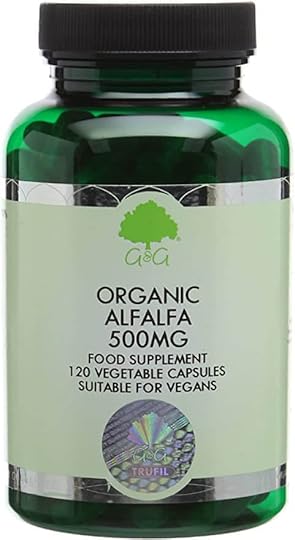
For instance, taking a whole raft of supplements might not be making a whole lot of difference, and in fact some may just be going straight through you with little or no effect or even making you worse. Think really carefully about the supplements you take and perhaps just choose one to take for a month to see if it helps. They can also be very expensive! I choose things that are more natural so I take an Alfalfa supplement that is packed with calcium. Liquid tinctures can also work better and be absorbed and used easier in the body – so I choose Floradix magnesium tonic instead of a pill. I can’t advise you what supplements, if any, you should take. If you are interested try to get your levels tested and find a specialist who can help you. I have got a lot of my knowledge from Rebecca Bonneteau The Eczema Expert.
Stop trying to fix everythingRelated to the previous paragraph, I used to throw everything at healing. Not only does that become expensive but you have no idea what’s helping from the slew of products you are eating and putting on your skin. Letting go and accepting my skin as it was gave me a kind of freedom. I didn’t have to like my skin when it flared, but what if I had to live with constantly flaring skin, could I cope with that? What if I never got better? I’m not saying give up, but I am suggesting we take a step back and give ourselves a break. It can feel often like everything makes us flare and nothing makes a difference, but I know that my eczema isn’t just a thing I have to live with. Slowly I am taking back control but I’m trying not to beat myself up and make life unbearably stressful.
Learn to manage skin flaresAs I discuss in the Balmonds blog – How to find your skin flare triggers (linked above) it can just be ebbing and flowing and itchy skin for no reason at all. Learn to let it be and manage the itch rather than endlessly looking for something to blame and answers to impossile questions.
I’d love to know what your skin triggers are? How did you discover them? and has anything in this blog helped?
You might also enjoy readingThe best washing powders for eczema skinSeven natural bath treatments for eczemaPatch testing for eczema and allergy triggersPhoto by Kristina Nor: Pexels
The post Trigger warning! What caused that skin flare? first appeared on What Allergy Blog.September 22, 2022
Top 10 allergen free chocolate and biscuits
If you’re allergic to dairy, nuts, soya or wheat most mainstream shop bought chocolates are off limits. You can’t just walk into a newsagent and buy free from chocolate, however ranges are growing at health food shops like Holland and Barret or a larger supermarket free from aisles.
If chocolate ingredients look allergen free, they often have ‘may contain’ warnings and even dark chocolate isn’t safe. Green and Blacks famously ‘added’ milk powder to their dark chocolate a while back, making it dangerous for allergic chocolate lovers. Never assume that because it’s dark chocolate it’s OK. e.g Lindt chocolate all come with a dairy and nut warning.
 Even small traces of nuts in chocolate can cause an allergic reactionThe manufacturing process for chocolate
The way chocolate is produced makes it a dangerous treat for anyone with allergies. Manufacturers cannot guarantee that their plain chocolate varieties are nut and/or free; this is because machinery is washed down with chocolate, not cleaning agents as these would affect the taste of the chocolate. The chocolate used to clear out the system then gets circulated back into the big chocolate vat, so any traces of nuts and other ingredients it picks up, could then be found present in any bar of chocolate the company makes. It’s not safe to risk it.
Should you eat chocolate with ‘may contain’ warnings?Nut and dairy allergic people will probably be aware of the risks, and sometimes for the rush or a chocolate fix, defy the warnings and hope for the best. Sometimes you’ll be OK but other times that tell-tale tingling starts to spread over your lips, mouth and tongue and you know you’ve found a rogue nut or dairy trace. It’s like playing Russian Roulette, and maybe you’ll get away with it, but reviewing the way chocolate is made there could be a very high risk of quite large traces of allergen protein. I would advise that you don’t take this risk, having done the stupid thing myself, I can tell you that there are quite often traces. I used to take a small bite and then give the chocolate away if my lips tingled. That was back in my teenaged years, before I knew better.
Finding soya free chocolate if you have a soya allergyOne of my bug bears is soya lecithin in chocolate. There are affordable alternatives like sunflower lecithin and many brands are swapping to this safer alternative. I have a soya allergy myself however and I do find that I’m Ok with soya lecithin, but I know many avoid that too. The reason the lecithin should be OK for a soya allergic person is that all the protein has been processed out of the lecithin. I am very allergic to soya milk but the lecithin is OK for me, though I avoid it if I can.
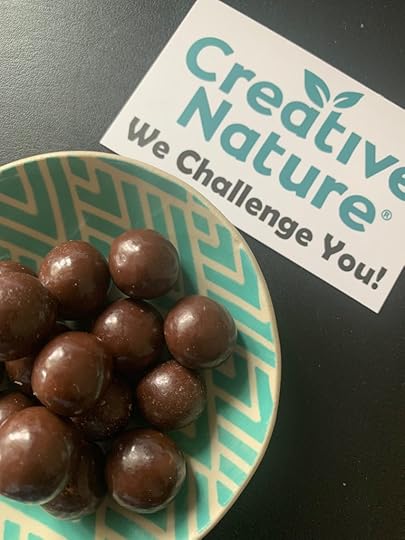 Creative Nature FreeFrom Top14 chocolate and cake mixesChoosing safe free from chocolate
Life without chocolate isn’t something I want to submit to, and I have found lots of companies out there who make nut, dairy and many other allergen free chocolate. You should find them in large supermarkets; Tesco, Morrisons, Waitrose and Sainsbury’s often stock free from brands and also produce their own very nice allergy free chocolate, but you have to be prepared to search around and keep your eye out for new varieties.
Ordering on-line is the best way to guarantee your chocolate fix, consider ordering a couple of months’ worth of dairy free chocolate if you have the cupboard space.
It’s best to avoid any brand that has nut and milk chocolate varieties as there could be cross contamination.
If in doubt, always contact the manufacturers to confirm their processes, I wonder if no may contain warning means it’s safe, or just that the company hasn’t assessed their allergen trace safety procedures.
Top 10 Free From chocolate brandsI have discovered a number of companies that make allergen free chocolate and here are few of my favourites, in no particular order:
Kinnerton and Nomo – their 100g Luxury plain chocolate is delicious. They also do a full range of flavours including Caramel, fruit and crunch, caramel and salted chocolate, orange crunch, sharing bags and advent calendars for kids and adults! Plamil – my favourite is their new Rum and Raisin bar. You can buy online and delivery is free if you spend over £25. Also available through Holland and Barrett online.Creative Nature – All products FreeFrom Top14 allergens. They have amazing flavours like Hazlenot, salted caramel and more. I am addicted to Gnawbles – if you’ve not tried them yet you have to! Like a cross between Ferrero Rocher and Maltesers. Check them out today and use code WHATALLERGY10 for 10% off every purchase! Creative Nature also sell cacao nibs if you love that raw dark chocolate hit. Cocoa Libre – These are vegan, gluten free, nut free, dairy free and wheat free. They do a kids range and some really cool luxury options for adults, as well as beautiful animal shapes and Christmas chocolates. Some of these contain soya lecithin so check the ingredients before buying if you have as soya allergy. Freedom Chocolate – Sign up to their newsletter for 10% off your first purchase. All chocolate is Dairy-free, Top 14 allergen free, Nut free and Soya free & gluten free. These are great if you are looking for adult chocolate and the dark high content chocolate hit. The ingredients are also so simple. eg. Coffee Chocolate bar – ingredients: Organic Raw Cacao Butter, Organic Raw Cacao Powder, Organic Coconut Sugar, Organic Fairtrade Coffee (4.8%). Raw Cacao 73% Raw Chocolate Company – vegan and raw chocolate made with oat milk. Sign up for 10% of your first order. These are NOT suitable for anyone with a nut allergy, but are wheat, dairy and soya free.Nono Cocoa Chocolates – These area adult luxury chocolates! Can’t wait to give them a try. They also do an advent calendar. Free from the Top 14 allergens. Moo Free – Dairy free, gluten free, soya free and lactose free chocolates. They do mini bars for kids and baking drops and artisan options. They also do a great range of allergen safe Christmas treats for kids. Sign up to their newsletter for 10% off your first order.D&D Chocolates – These are one of the original older established brands, one of the first to offer nut free chocolate. They were originally founded in the late 1980’s by Michelle Berridale-Johnson of Foods Matter and the Free From Food Awards. They are dairy, nut and gluten free. They do a christmas range, fondants, egg shaped chocolates, vegan sweets and carob drops.Supermarket own brands – Some contain soya lecithin and always check the labels but most now do their own brand chocolates. Coops mini chocolate bars are great. Tesco giant chocolate buttons are also brilliant. Shop around as new products are coming on board all the time.Best free from biscuit brands Nairns – They do a range of biscuits from fruity to chocolate flavour. I’ve always been OK with these. Most are wheat free and nut free but some have soya, and may contain dairy warnings as they do produce some savoury biscuits with milk as in ingredient. They also have some confusing labelling. e.g. ‘ Both our recipe and factory are nut free. We cannot guarantee that our ingredients are nut free. Manufactured on equipment that handles milk. ‘ So is it nut free? or just sort of nut free? Messaging like this is very confusing. I will confess that I have eaten these biscuits for years and had not issues with them. I would urge caution with the chocolate flavour ones as I think there may be milk traces in this one.Angelic Free From – The best luxury cookies in various delicious flavours including Ginger Choc Chip and Chocolate Chip and Double Choc chip. They are all Top 14 Allergen Safe and have horrible may contains. These are almost too good and I wolf them down in no time Free delivery on orders over £20. Creative Nature – Protein snack bars that are sugar free, high in protein and free from the top 14 allergens. They also do cake, pancake and bread mixes to make at home.Freedom Mallows – egg, dairy and nut free marsh mallows!Supermarket own brands – All the usuals, including Tesco, Sainsbury’s, Coop, Morrisons and Waitrose now all supply their own brand free from chocolate biccies. Always check the labels! You could save some money looking at these as they can often be cheaper.Lazy Days Foods – Chocolate Tiffin bites, Millionnaires Shortbread, Rocky Road and more. They also do cakes! Check the labels as some do contain soya. These are fab though and they also supply to the supermarket own brands so you’ll notice that the exact same products are there under Tesco, Coop etc. branding. Always read the labels.Where can I buy free from chocolate?It can be frustrating when you have to hunt around for your favourite brands, but if you plan ahead, it can be done. Here are my suggestions of where to find them:
Buy direct – I often buy direct (use links above) and make sure you reach the value that gives you free postage! Sign up for newsletters, you often get a small discount for doing so and will be notified of any future offers. Yumbles – An online shop for all things free from. Get £5 off your first order! Holland and Barrett stocks Nairns, Angelic and Nomo. If we all ask them for other products, they may extend their range. So contact them if you’d like to find other products in their stores and online. Nut Free Living Marketplace – Suppliers of nut and peanut free food.Supermarket Free From aisles – Always growing and improving and own brand options can also be cheaper.Health Food shops – I like to find the independent health food stores, they can often have things I’ve never seen before so a well worth a browse.Garden Centres – They often have wonderful shops with carefully chosen produce, many of which is often free from, and allergen free.Amazon – I’m often loathed to recommend them because we all know they don’t pay their taxes and often sell at very low prices, making it have for genuine independent retailers to survive. However, many of these brilliant free from allergen brands have an online shop on Amazon. So if you’re watching the pennies, and can buy in bulk, you can often make great savings on Amazon. Having a Prime membership will also help with free postage.What’s your favourite free from brand?What is your favourite free from chocolate brand? I find it hard to choose, they’re all a very high standard, and I think I have favourites for different occasions. I really like very dark chocolate so Freedom Chocolate hits that mark. I don’t have such a sweet tooth so some of them are a little over sugary for me, but I do love the Nomo pink fruit and choc bar and also of course, Gnawbles from Creative Nature which are like the most amazing Maltesers! (Use code WHATALLERGY10 for 10% off.)
Need another roundup?Are you looking for something in particular but can’t find it? Looking for a roundup of freefrom products? Let me have your ideas and I’ll add them to my blog list. I can’t promise anything but I’m here to help you so inspire me!
You may also be interested in reading:For my American readers, Check out this Top 8 Allergen Free chocolate guideFor vegan chocolates read – 10 best vegan chocolatesAlex at Allergy Insight’s blog – Free From Christmas ChocolateCan you buy nut and dairy free cocoa powder?We need to talk about my Gnawbles habitVisit the Free From Food Awards website for endless inspiration of freefrom goodiesPhoto from Pexels by Polina Tankilevitch
The post Top 10 allergen free chocolate and biscuits first appeared on What Allergy Blog.September 15, 2022
Talking about eczema with Ashley & Marie
Atopic eczema (also known as atopic dermatitis) is one of the most prevalent skin conditions globally, affecting over 230 million people worldwide.
It is often dismissed as “just a skin condition”, but it is more than itchy skin. It is a complex, multidimensional condition that impacts mental health, impacts daily life and places an immense burden on patients and caregivers.
To raise awareness of the impact and burden of this condition, we were truly honoured to host a discussion with two of our patient experts, Ashley Wall and Ruth Holroyd.
 Watch the conversation here on YouTubeWatch the conversation here:
In the 45 minute interview chaired by Marie Ennis of Merakoi, we talked about:
The language we use and words for eczema, atopic dermatitis and what that means to patients.We discussed where people can find trusted sources of informationShared Decision MakingDigital HealthThe future of eczema skin careAnd more…We could have talked for hours and it was a fantastic discussion. Click on the link below to watch:
World Atopic Eczema Day – Inside Atopic Eczema: More than “Just” a Skin Condition
Hopefully we’ll do more of these in the future!
What is atopic eczema?Atopic eczema is one of the most prevalent skin conditions globally, affecting over 230 million people worldwide. It is often dismissed as “just a skin condition,” and patients’ needs are not addressed in a supportive and timely manner.
Atopic eczema – also known as atopic dermatitis (AD) – is more than itchy skin. It is a complex, multidimensional condition that impacts mental health, impacts daily life, and places an immense burden on patients and caregivers.
Ashley Wall is a writer, consultant, and eczema patient advocate who’s battled this skin condition for three decades.
As an eczema warrior, she’s had the pleasure of speaking on stage in front of a pharmaceutical crowd of 300 industry leaders, interviewing celebrities such as BAFTA award winner Peter Moffat, and attending leading events through her advocacy work.
She’s extremely passionate about helping suffering patients and hopes to see eczema disappear within her lifetime.
Ruth Holroyd is an author, blogger, and patient advocate.

She writes about allergies, anaphylaxis, asthma, eczema, and topical steroid withdrawal on her award-winning blog www.whatallergy.com.
She won the Free From Food Awards Hero Award 2021 and has written two books. ‘Anaphylaxis: The Essential Guide: An Action Plan For Living With Life-Threatening Allergies’ which focuses on anxiety and fear and how to live with the daily challenge of living with a life limiting condition.
Her second book, The Shape of Skin, is a poetry book for people with eczema, psoriasis and sensitive skin.
Who are Merakoi?
Merakoi are a wonderful organisation who I’m proud to have been working with now for about a year. They work in between the pharmaceutical companies and the patient – Enabling successful patient expert and healthcare company collaboration. The team are so friendly, welcoming and inclusive and I enjoy getting together every month with other patient advocates with other medical conditions such as multiple sclerosis, cancer and Irritable Bowel Disease, to name just a few. I’ve worked with them on focus groups, helping their experts really understand the patient and their daily lived experience.
I wrote a blog for them last month entitled, How to get the most out of your dermatology appointment which I thoroughly enjoyed writing, and which could be applied to any patient anywhere with any medical condition. The idea being we all need to become experts in our own condition to advocate for the best care.
Get involved with World Eczema Day
If you want to get involved with raising awareness about World Eczema Day on Wednesday 14th September, visit https://www.efanet.org/campaigns/world-atopic-eczema-day/join
You can download a toolkit to help you with images and logos.
As part of our campaign to show the inside of atopic eczema they are calling on patients, carers, and healthcare professionals to join in by turning our clothes inside out to make atopic eczema visible. When people living with atopic eczema face itching and discomfort every day, even wearing clothes can become unbearable on their sensitive skin. We want to bring the community together and give attention to the everyday burden in our Inside Out action. I’m not sure I quite get this… but maybe I’ll do it on the day.
#InsideAtopicEczema
You may also be interested in reading:40 amazing Women in Eczema20 tips for being an eczema and topical steroid withdrawal advocateGet The Shape of Skin, eczema poetry book with a free bookmark!The eczema treatment pathway in the UKThe post Talking about eczema with Ashley & Marie first appeared on What Allergy Blog.