Ruth Holroyd's Blog
November 9, 2025
How to spot a Gluten Free dough ball at Pizza Express
Do you know how to spot the difference between Classic Dough Balls at Pizza Express and the gluten free ones? Neither did I until recently.
These are some of the hacks you need to know if you’re planning to eat out at Pizza Express. As well as the dough balls, there are other differences… This special information could help you stay safe, avoid any allergic reactions and help you feel more confident and more comfortable eating out at our favourite pizza restaurant.
What allergen safe meals do Pizza Express offer?Pizza Express operates under Coeliac UK accreditation, and the procedures they use for gluten-free dishes are specific, carefully controlled and separate from our wider allergen processes. Their accredited gluten-free process appy only to Gluten Free dishes, whereas other allergy requests follow a different set of procedures. Be sure to communicate clearly exactly what your dietary restrictions are to ensure staff can advise you and help you order a safe meal for you.
That being said, they have a great and easy to follow Allergen menu. They do gluten free pizza, GF pasta, vegan cheese for toppings as well as other options, depending on what your allergies are. You can view the extensive and very reliable Allergen Matrix online. Here is a link to our comprehensive online allergen, nutritional, and ingredient information: PizzaExpress Allergen Information.
I recently had a very interesting conversation with Pizza Express Allergen Management team. What they told me was a bit of an eye opener. It made me feel so much safer eating there. Here’s what I found out:
All their pizza toppings are gluten-free; therefore, all of our Romana and Classic recipes can be ordered on our unique, classic-sized, gluten-free base, made in our gluten-free bakery. Important note: If your gluten-free pizza is not served to you on a black board, please check this with a member of our team.The Filter by Diet function on our app is not an allergen tool but simply highlights gluten-free, vegetarian and vegan dishes; it should not be used to manage allergies or Coeliac requirements. If you are ordering a gluten free meal or have an allergy, always speak to staff.The message boxes on delivery apps are driver-only notes and are not seen by our restaurant teams, so guests who require dishes prepared under our Coeliac UK accredited system must always order directly with the restaurant rather than through digital platforms.Gluten-free pasta is intentionally made with fusilli rather than penne because the spiral shape helps the kitchen visually confirm that a GF pasta has been prepared correctly. All gluten-free pizzas are now served on plates rather than black serving boards (as was previously the case)Gluten-free Dough Balls and Dough Balls Doppio are plated and marked differently to ensure very clear visual identification.‘PizzaExpress’ Dough Balls available gluten-free.Loose pasta is made with rice flour and therefore suitable for a gluten-free diet. NB Lasagna and Cannelloni are NOT Gluten Free.To reduce the risk of cross-contamination, they only use loose gluten-free rice flour in their kitchens.They offer a wider selection of gluten-free dishes which are marked as ‘GF’ on our menus, as accredited by Coeliac UK. Gluten-free dishes ordered via our website are delivered by a third party. Please note that our Gluten-Free Accreditation with Coeliac UK does not cover a situation where a third-party delivery company is used.Gluten-Free describes foods that contain gluten at a level of no more than 20 parts per million (20ppm).Vegan dishes and Vegan symbols do not guarantee a Dairy free dish or beverage.There are also a number of gluten free desserts on the menu so you don’t have to miss out.Watch out for may contain labelling on the Allergen Matrix. This means I can’t eat any of the puddings, but depending on the severity of your allergy you may be able to. Always check ingredients and allergens with staff before ordering.How to spot the gluten free dough ballsKnowing how to spot the difference between the normal gluten and wheat containing dough balls and the gluten free ones could be live saving.
Gluten free dough balls are just slightly smaller than the standard ones.They will also always look identical as they are pre-prepared and come packed specially to avoid contamination. The normal dough balls are cooked to order and whilst they are similar, you will be able to see slight differences in size as they are baked fresh each day in the restaurant bakery.Gluten free dough balls are served on a white plate with a black serviette.This was the mistake we experienced – and because I didn’t know how to identify them, I couldn’t tell I’d been brought he wrong ones. Make sure you remember this and make sure you tell everyone you know who has allergies or is a coeliac. If you are not sure, always check with staff who are always happy to ask the kitchen to clarify what food you have been served.

This is something I have never been told by staff in Pizza Express. Why don’t they tell everyone ordering gluten free to check they get them in a white bowl with a black serviette? It would help me so much to know they really know what they’re doing AND give me agency to know I can check too.
How to tell you have orderded the correct pizzaIf you look carefully, you CAN spot the difference between the three pizzas below. Importantly please note that the gluten free pizza is no longer served on a black slate, however the descriptions of the dough, toppings etc are still helpful so I’ve kept this image in here.
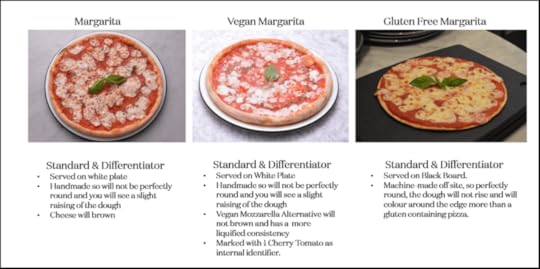 Gluten free vegan pizza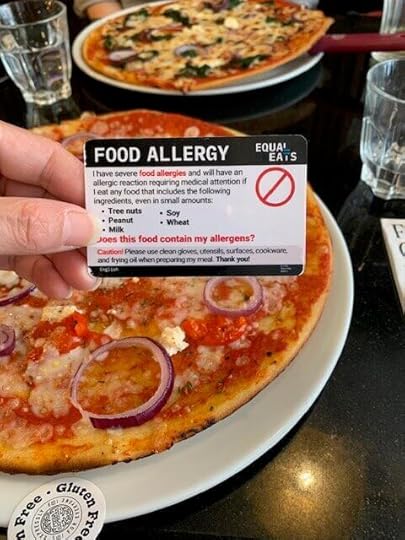
Up next, in real life, my gluten free pizza with vegan cheese:
If you look at my gluten free and vegan pizza here, you can see it’s almost perfectly round in shape. It is often smaller than the standard pizzas too. And you can see the vegan cheese stays quite white in colour and does not brown like other cheese will on a pizza.
your plate will also come with a Gluten Free sticker on the side so that you and staff know the right dish has been served to the correct diner.
I hope this helps, but I have one final tip that gives me added peace of mind, and further discounts at Pizza express…
Please also note, the one thing I always do when eating out, I show my Equal Eats allergen dining care. It really helps me communicate with staff, especially when I’m not feel quite as confident. Staff can take this to the kitchen to show the chef and I always get really good feedback on how much this helps. Visit my affiliate page for your Equal Eats Discount code.
Get the app for even more peace of mindIf you download the Pizza Express app, you will be many benefits, inluding discounts, which apply to the normal and gluten free pizzas and dough balls. No discrimination here!
The best part is the “Check-In” on the app option. Whether it’s just you or a large group, ask for the table number and you can check-in. This will allow you to collect points, and also check what dish has been ordered.
You can check that the server has recognised any allergy orders. You can see exactly what meals have been ordered. It will say Plus Vegan cheese and also Minus mozzarella. So you can see your substitution ingredientYou can also see any allergies or special notes.And you earn rewards!This makes me feel so much safer. It also gives me more confidence to check if I feel the need to because I can show the waiting staff the app and we can confirm what was ordered and check the right food has been brought to the table.
Always photograph your mealFellow diners may think you’re crazy, but taking a photograph of your meal is really helpful. If mistakes are made, you have proof of what was served to you. This is an old photograph showing gluten free doughballs on a black plate; since this photograph was taken the proceedure has changed to a white plate with black serviette.
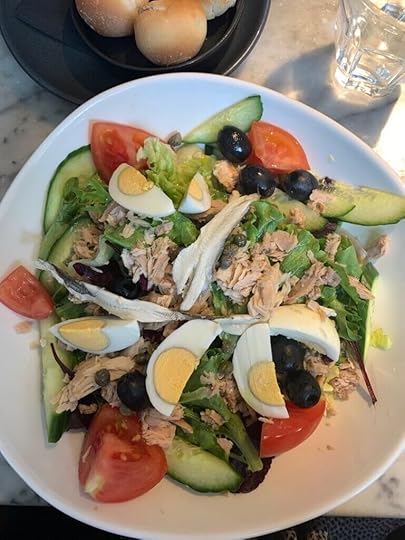 Nicoisse Salad and gluten free dough balls from Pizza Express
What do I recommend at Pizza Express?
Nicoisse Salad and gluten free dough balls from Pizza Express
What do I recommend at Pizza Express?These are the menu items that I feel safe ordering:
Salad nicoisse with Honey and Mustard dressingGluten free pizza with vegan cheeseGluten free doughballsChicken wings (Lemon and herb)Pizza Express will remain a firm favourite of mine, a place I can trust. With the tips above about how to understand the measures taken to keep those with allergies safe.
My personal all-time favourite tip for eating out with allergies is using the Equal Eats Food Allergy Dietary Card. It helps you communicate effectively and means the staff can check, take the plastic card with them to show the kitchen staff
Do you eat out with allergies? What do you do to feel safe? Did you know these things about ordering at Pizza Express? I’d love to hear your thoughts.
You may also be interested in reading:You need to know this if you have a wheat allergy – Wheat dependent exercise induced anaphylaxisAnaphylaxis – The essential guide – the best book and the No.1 Anaphylaxis book on Amazon!Get 10% off Equal Eats Allergen Dietary Cards30 Tips to eating out with AllergiesHuge thanks to Pizza Express for helping me get the information in this blog correct.
IMPORTANT DISCLAIMER: The information in this blog is correct at the date of writing, 28th November 2025. Menus, dishes and ingredients supplied can change at any time so please always refer to the Allergen Matrix and cheak with staff every time you order at Pizza Express.
The post How to spot a Gluten Free dough ball at Pizza Express first appeared on What Allergy Blog.

November 7, 2025
You need to know this if you have a wheat allergy!
This is something I have been meaning to blog about for a long time, because whilst I’ve been aware of Exercise Induced Anaphylaxis (EIA), suspecting that I’ve had it before, it’s not well understood. Wheat Dependent Exercise Induced Anaphylaxis (WDEIA) is even rarer than EIA.

What is wheat dependent exercise-induced anaphylaxis (WDEIA)?
Wheat dependent exercise-induced anaphylaxis (WDEIA) is a type of immediate allergy to wheat that only happens if you exercise around the same time as eating wheat. This is a complex condition and needs to be diagnosed by an allergy specialist. (Source: Anaphylaxis UK)
Have you ever heard of an allergy so specific that it only triggers a life-threatening reaction when you combine eating wheat and exercising? It sounds almost unbelievable, but for a small subset of people, this is a very real—and very dangerous—condition called Wheat-Dependent Exercise-Induced Anaphylaxis (WDEIA).
Let’s break it down.
What’s so special about WDEIA?It would appear that something strange happens when someone with WDEIA consumes wheat and then exercises. It is a rare form of food-dependent, exercise-induced anaphylaxis. In simple terms:
Wheat (or sometimes other gluten-containing grains) acts as the trigger.Exercise serves as the cofactor.Anaphylaxis—a severe, potentially fatal allergic reaction—only occurs when both are present within a specific time window.Without exercise, the person can often eat wheat with no issues. Without wheat, exercise is perfectly safe. But combine the two? The immune system goes into overdrive.
How Does It Happen?The leading culprit is a protein in wheat called omega-5 gliadin (specifically, the peptide Tri a 19). In people with WDEIA:
They produce IgE antibodies specific to omega-5 gliadin.Eating wheat-containing foods sensitizes mast cells and basophils.Physical exertion (especially within 4–6 hours of eating wheat) causes these cells to degranulate rapidly.Histamine, leukotrienes, and other mediators flood the body → anaphylaxis.Other cofactors can lower the threshold:
AlcoholNSAIDs (like ibuprofen)StressHigh temperatures or humiditySymptoms: From Mild to Life-ThreateningReactions typically begin 10–60 minutes into exercise, but it can happen up to 4 hours after consumption. Symptoms may include:
StageSymptomsEarlyItchy skin, hives (urticaria), flushingModerateSwelling (angioedema), shortness of breath, wheezingSevereDrop in blood pressure, dizziness, collapse, loss of consciousnessWarning: This is a medical emergency. Epinephrine (EpiPen) is the only first-line treatment.
Who Gets WDEIA?Prevalence: Extremely rare—estimated 0.01–0.1% of the population.Age: Most commonly diagnosed in adults 20–50 years old.Geography: More reports in Europe, Japan, and East Asia, possibly due to diagnostic awareness.Risk Groups:People with atopy (asthma, eczema, hay fever)Endurance athletes (runners, cyclists)Those who eat large amounts of wheat before workouts (e.g., pasta-loading)Fun fact: In Japan, WDEIA is sometimes linked to udon noodles consumed before exercise.
Diagnosis: Not Always StraightforwardThere’s no single “WDEIA test,” but doctors use a combination:
Clinical history – Anaphylaxis after wheat + exercise (but not wheat or exercise alone).Skin prick test or blood IgE test for omega-5 gliadin.Exercise challenge test (under medical supervision!): Eat wheat → treadmill → monitor for reaction.Management and PreventionNever attempt a self-challenge. It can be fatal.
There’s no cure, but WDEIA is highly manageable with awareness:
 Do:Avoid wheat 4–6 hours before exercise.Carry two epinephrine auto-injectors at all times.Wear a medical alert bracelet.Inform coaches, teammates, and workout partners.Consider gluten-free pre-workout meals (rice, oats, potatoes).Continue to check ALL labelsExercise extreme caution when eating out
 Don’t:Assume “a little bread” is safe.Exercise after a wheat-heavy meal.Take Nonsteroidal Anti-Inflammatory Drug (NSAIDs) like Ibruprofen, before workouts (they worsen reactions).Living with WDEIA: Real Stories
“I collapsed during a half-marathon after eating toast for breakfast. I thought I was having a heart attack. Turns out, it was the wheat + running combo.” – Sarah, 34, diagnosed in 2022.
“I’m a baker. I can work with flour all day—no problem. But if I jog after lunch? Hives everywhere.” – Tom, 41.
“Paramedics thought a bee had stung my head, because the swelling was so bad and I had been walking outside before when the reaction happened. I was pretty sure I hadn’t been stung and it turned out I had eaten wheat at a restaurant almost 4 hours before anaphylaxis took hold. – Ruth, 52, author of this blog
These stories highlight the bizarre specificity—and the importance of listening to your body.
It also highlighted for me how reactions can change pretty drastically over time, so keeping an eye on worsening reactions or those that appear to be random will help you build better understanding of what’s going on inside your body.
The Future: Research and HopeScientists are exploring:
Desensitisation therapies (similar to OIT for peanut allergy)Better diagnostic blood testsGenetic markers for susceptibilityOne day, WDEIA might be preventable or treatable beyond avoidance.
Key TakeawaysFactDetailTriggerWheat + Exercise (within 4–6 hours)ProteinOmega-5 gliadinTreatmentEpinephrine (immediate), avoidance (long-term)PrognosisExcellent with proper managementFinal ThoughtWDEIA reminds us how complex the human immune system can be—one protein, one workout, one perfect storm. If you or someone you know experiences unexplained reactions during exercise after eating bread, pasta, or pastries, it might be time to talk to your doctor or allergy specialist.
Knowledge isn’t just power—it can save a life.
Have you or someone you know experienced WDEIA? Share your story (anonymously) in the comments. Let’s raise awareness together.
Disclaimer: This blog is for educational purposes only and is not a substitute for professional medical advice. Always consult a healthcare provider for diagnosis and treatment.
Second disclaimer: Grok.com AI generator helped me write this! I have tweaked quite a bit, added things that AI missed and removed some duplication but AI is getting better. This saved me hours of research and I didn’t find any mistakes! The last time I tried to use AI to write a blog it wasn’t great. Should we be scared? Or make use of this brilliant time saving tool?
You may find the following resources useful:Check out Anaphylaxis UK to find out more and download the Exercise Induced Anaphylaxis factsheet.Wheat Dependent Exercise Induced Anaphylaxis – Pubmed have a 2023 study if you like the sciency stuff!Wheat allergy or hayfever?Anaphylaxis – The Essential guideImage: Photo by Pixabay: https://www.pexels.com/photo/close-up-of-wheat-326082/
The post You need to know this if you have a wheat allergy! first appeared on What Allergy Blog.October 30, 2025
Top 16 asthma tips that will blow your mind
This blog post has been a long time coming and is filled with ideas I’ve gleaned from my own research and experience and so many other people. Huge thanks to my lovely friend Tanith from Be Natural Yorkshire who was so helpful and also Misty’s Gut Instinct on instagram.
These are ALL things I have implemented into my life and slowly I’m recovering my lung health and strength. I don’t know what caused so much inflammation in my lungs, but we’re working on it. Some of these things are options I would like to try, but have not been brave enough. I will be very clear which I have tried below.
For full transparency, I am using oral steroid preventative inhalers again at the moment because I need the extra help, but I don’t think they’re working very well. I use a Clenil brown inhaler with a spacer and Ventolin blue reliever. Book an Asthma Review if you’re worried.

So here, in no particular order are my top 16 things you’ll not have tried for your asthma:
Mullein and thyme herbal tea – There are so many health benefits of this delicious herbal tea, but asthma is one condition that it can really help. I love herbal tea, so I’ve incorporated this one into my stash. It works by reducing inflammation in the body and in particular the lungs. Find out more on Healthline. There are lots of herbal teas that also help reduce inflammation, including Dandelion tea (see link below).Sleep roller ball – These are made by Tanith at Be Natural Yorkshire. It’s an essential oil blend that you gently roll on your chest and back before bed. I will be honest, I sometimes forget to do this, but when my asthma is bad I feel some relief. This is not scientific, I can’t prove this helps, but it calms me and perhaps this helps lower and relieve my breathing. Obviously not everyone is OK with essential oils so be careful.Pollen net curtains – I got mine from Coopers of Stortford. This was an idea I came up with because I absolutely have to have windows open for fresh air. The website claims that up to 50% of pollen and allergens are kept out of your room. I feel like it’s more because they’re quite stiff and fit nicely down the back of the radiator so they stay in place quite effectively. I don’t love how they look but they can easily be taken down when the pollen and allergens you’re allergic to are no longer causing you problems.Dr Morses Herbal tincture for Lung Detox – I get mine from Juice Retreats online. It’s a tincture with a dripper and contains: Mullein Leaf, Chickweed Herb, Pleurisy Root, Fenugreek Seed, Marshmallow Root, White Oak Bark, Yerba Santa Leaf, Horehound Herb, Bayberry Root, Thyme Leaf. Check out Juice Retreat and search for ‘Lung’ to buy online. I take a ten drops in water, along with other tinctures when my ashma is bad.Nebuliser – or home use – These are the amazing misting machines that you’ll be given if you are admitted to hospital with asthma. They will use oxygen and perhaps other asthma medication in the nebuliser. But using a home bought one with a water, saline mix can help to clear the lungs, particularly if you have a chest infection. It’s a bit like when you steam your nasal system over a bowl of really hot water when you’re blocked up. I bought two from Amazon and both broke, so I’m still on the look out for the perfect one for home use. One of them worked for a week and using it morning and night really helped shift a nasty chest infection that I caught. The second lasted 2-3 weeks and really helped relieve my asthma. I don’t have one right now because the two I got were not robust. However this saved me at a time when I was really scared for my health and life. I do want to find one for home use but am looking for a good recommendation that I trust.Silver colloidal inhaler – I have some silver colloidal spray that is really helpful at healing stubborn skin infections. I haven’t yet tried this in a nebuliser as both models failed, but I think a few drops could really help. I will be checking on this with my allergy doctor on my next visit to work out how much is the right dose. (Attenuation of allergic airway inflammation and hyperresponsiveness in a murine model of asthma by silver nanoparticles)Grounding sheet– Thanks to both Tanith and Misty’s Gut Instinct. Check out also PubMed research – The effects of grounding (earthing) on inflammation, the immune response, wound healing, and prevention and treatment of chronic inflammatory and autoimmune diseases. I bought a grounding sheet and have it on my mattress under the bedding. I don’t know how it works but I sleep so much better when it’s switched on and when I’m at home. My sleep improved after getting one. I can’t remember where I got mine.Correct breathing – this was something I learnt from a breathing coach during lockdown when I was worried about my asthma. What I learnt was that my posture and breathing technique sucked! I was not breathing effectively. I found it actually quite hard to modify my breathing, I’d been doing it that way all my life. I’m still working on it, but I am constantly dropping my shoulders now, down and back and reducing the depth of breaths I take. It’s about shallower, gentler breaths, allowing it breathe to reach right down into your lungs. Taking huge deep lungfulls feels like it is better but it is not as effective. Using better breathing techniques allows me to shift mucous up from my lungs pretty effectively and by doing this I can often reduce the times I need to use my inhaler. I have the inahaler with me at all times and do need it. If I’m struggling I will take a puff to help me get back to normal breathing.Mullein tincture drops – Put 1-3 drops under your tongue every day – this again helps to reduce inflammation. Make sure you get good quality organic drops from someone you trust. I did this religiously for 6 months. I don’t have anecdotal evidence that it works, but it certainly can’t do any harm. If you’re like me and want to just do all you can to strengthen your airways and lungh health why not give it a go?Immunotherapy – This is on here because I have been trying to get this for YEARS. I have a friend who works at a Harley Street practise who do this at their private practise to help people live with airborne allergies. The treatment is expensive though, however my plan is to get a batch of tests done through the NHS to guage my levels of allergen, then get pay for one session with the private practise to understand the treatment and how it works. If it works, I could then go to my GP and ask him to get me the medicine through the NHS. This option really excites me because every winter during mould and tree pollen season, when the central heating comes on, my asthma gets worse. I can’t do anything about it. It gets worse despite using the preventative inhaler and I have to up the dose every winter. I am so terrified of steroid inhalers. The Asthma Nurse is completely unsympathetic about this. After you’ve had your whole skin layer destroyed by topical steroids with NO help from the NHS an have not recovered from that, being old oral steroids won’t do you any hard isn’t reassuring. I’m sorry but I do not trust any doctors any more. I never will. I have to take these asthma drugs to keep my alive but I HATE them and wish I could find a better way. That is what doing all these supportive extra things is all about. Can I get off the steroid inhalers one day? I believe I can and I will never stop trying.Ivy Thyme drops from AVogel – I’ve only just got these as they’re quite expensive. Tanith recommended these to me as well and I love tinctures, they’re so much more accessible to the body than powdered supplements. I add this to the tincture concoction that I take. I don’t do it every day but I do remember to take them fairly regularly. More in winter.Keep grass lawn mown – This is a tough one when you have a grass allergy. This year I’ve actually got some help from a local gardener who just spends a few hours each month helping me keep on top of mowing the grass and also trimming hedges and weeding. If you have a pollen allergy, leaving it till it goes to seed is not a good idea. I love gardening, but only last about half an hour before it gives me an asthma attack and I have to stop and come inside, shower and decontaminate!Dandelion root coffee – You can make this yourself by digging up dandelions in our garden or nearby but it’s very time consuming. Check out YouTube for videos showing you how. I bought mine ready dried on Amazon and have been brewing it ever since I discovered it. It’s not a replacement for coffee but I really enjoy it. I limit my coffee intake anyway and may try cutting out caffeine for a few months to see if it helps further reduce my inflammation. You can make this tea with water or milk by boiling in a pan for 3-5 minutes so it’s quick and easy to make.Buy this Asthma Book – No More Allergies, Asthma and Sinus infections – It’s a fascinating read and I learnt a lot. I now always have a Xylitol nasal spray handy. It is really good and clearing my airways. I have never managed to do this as often as the book suggests. Maybe if I did my asthma would go away? Mine is so allergen related though that I need to cure my allergies to get complete relief. Working on that. Find out more…Eczema Decoded – Another book which I found really helpful has references to eczema and asthma. It’s all about reducing inflammation and the two do often come hand in hand. There are so many scientific studies included in this book and I love it when the information is backed up by experts. Eczema Decoded: How to Rescue Yourself or Your Children from Atopic Dermatitis Paperback – 6 April 2023, by Carolyn Akinyemi Castor oil body wrapping – Full disclosure, this is one that I’ve not tried myself. Misty does it and explained how you strap on the pack which is soaked in castor oil and the oil somehow draws out toxins and helps heal the body. I do not understand how this works but Misty does. I have bought the body wrap but not go around to trying it yet, mostly because castor oil is so messy I don’t know how I’d clean it. I put castor oil on my eyebrows to help them grow and spilt some ones – what an absolute mare that was to clean up. I will blog about this when I try it but thought I’d include so you can research it. I bought this one on Amazon: Castor Oil Compression Wrap Kit. Misty recommended that I try it for just 20 minutes at first as it can be quite powerful.I know there is a lot to take in here, so have a think about what you might be able to start doing. I didn’t do this all at once, I started with simple things like keeping on top of the grass lawn this year (I usually let it get out of hand). I’ve slowly introduced new things as and when I’ve felt comfortable with the research and that I could afford it. If you try just one thing, think seriously about nasal breathing and learning the Buteyko breathing technique, which I have become very lax on doing. It really helps me, so as I finish writing this blog I am actually Buteyko breathing! I must remember to keep doing it, it’s incredibly effective at shifting mucous and calming breathing.
Also full transparency, I am still using steroid inhalers and still have asthma attacks. Particularly in winter, if I go in a cafe with the milk vapour etc. None of the things above are cures. They might not help you, but I just love having the knowledge of what’s out there that could potentially help others.
What helps your asthma? is yours bad this time of year? How do you cope?
You may also be interested in reading:Ten things your asthma nurse won’t tell youDandelion tea for asthma, eczema and allergiesDoing an Elimination Diet for Asthma, Eczema and AllergiesThe post Top 16 asthma tips that will blow your mind first appeared on What Allergy Blog.October 29, 2025
‘Let Them’ judge me for having allergies
I’ve just read the book Let Them by Mel Robbins, it’s such an incredible book. I can highly recommend. What struck me whilst reading it was the many ways saying ‘Let Them’ can help you let go things that no longer serve you.
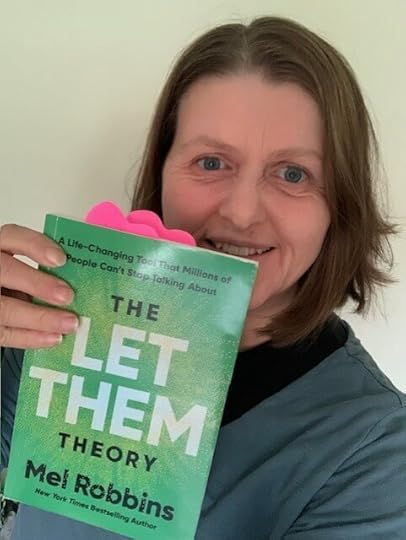
If you have allergies, like me, you will have felt many emotions, including sadness, guilt, anger and disappointment surrounding how hard it is to live with life-threatening allergies.
I have always been a people pleaser so I never want to be a burden, appear awkward or make things difficult of complicated. This can lead to me being blase or going along with something that I have not quite checked thoroughly enough. It’s hard to be searching for those subtle messages that are relayed through rolling of the eyes, sighing, or the lack of information.
People’s views of those with allergiesPeople have opinions about those with allergies and they judge us all by how we manage this. Things are made more complicated by the language we use; lactose intolarant, coeliac, gluten intolerant, allergic etc. It can be very confusing, particularly for restaurant staff who have only done a 30 minute online hygiene and saftey webinar that pays a fleeting attention to life threatening allergies.
Here’s what I mean…
Let them judge and let them be ignorant of the factsLet them judge me for being very particular about my allergies – I have to be strict to ensure my safety and I’m cool with that and proud of how I advocate for myself and others.
Let them have a very limited allergen menu – they don’t have to serve me. There are plenty of places I can go. Let me take my custom elsewhere.
Let them ‘Pfft’ and ‘Non’ in my face – our experience on a recent holiday in Paris was laughable, how rude the waitress was. This was Paris, known for their rudeness, but still. When I showed my allergen card the waitress rolled her eyes, wouldn’t look me in the eye and just said “Mard, pfft!” and then when she returned, just a simple “Non!”. With the words Let them ringing in my ears I could see how funny this was. How like a joke or a parody of the worst waitress on the planet. But you know what? She probably didn’t understand how she coud keep me safe, I’d rather she was blunt about it than very polite and bringing me food that’s not safe for me to eat.
Just let them.
The book goes on to explain how this doesn’t mean letting people walk all over you and treat you badly. But some people won’t change, they can’t. So really letting them just be themselves without taking any offence or feeling a need to rise up. I often feel I want to stand up for myself if I feel misunderstood, to correct the wrongdoing and point out injustice. It rarely helps to do this. When you realise you can just let them, and move on, it’s liberating.
The follow on and most important part of Let them is Let me.
LET ME!
Let me remain polite.
Let me make a safe lunch to take with me so I know I am safe.
Let me take care of myself when I don’t have the tools available, like the language skills and knowledge of what places would be safer. It’s very hard doing research into safe places to eat from another country. I just didn’t have the mental energy and also didn’t know what we would be doing each and where where we be located for each meal.
Let me do whatever I need to do to stay safe.
Let me have a panic attack if that’s where my brain is going, and let me be kind and gentle with myself when this happens. It is my body warning me that it wants me out of that situation. Sometimes I try really hard to communicate, find information and confirm food is safe and when staff are not behaving in a way that makes me feel reassured, or information is not forthcoming, I HAVE TO be sensible.
Let Me educate the world one person at a timeAnd if I have the energy, let me explain my allergies in detail. Let me advocate when I have the strength to do so and educate people who do not understand.
But also let me run away and hide sometimes. It does feel like advocating is my lifetime’s unpaid job. A job noone asked me to do, but I do it anyway. I’ve had a huge break from blogging but I’m back!
Have you read Let Them by Mel Robbins? I’d love to hear your thoughts on this.
I am also doing an online course, “The Allergy Anxiety Method” written by Dr Francesca Sawyer, a Clinical Pschologist specialising in anaphylaxis and allergy fear. I will share more on this very soon.
July 19, 2024
Planning a work meal with multiple allergies?
So I work in a School and we are having an end of term BBQ. I would usually bring in my own food for something like this. It’s really hard for me to trust someone cooking a BBQ with so many opportunities for cross contamination and mistakes.
I’m still not quite sure if I’ll be up Monday night cooking sausages – LOL
But my colleagues encouraged me to ask. There has been something for me to eat at some previous events during the winter months but it’s always a bit of a military procedure for me and the company providing the food.

Sometimes I wonder whether it’s just easier to bring my own food.
To not be included in what for others is a free meal.
It makes sense to do this, as it takes away all the worry. But hear me out. It adds to the already massive list of times my needs can’t be met and I’ve not been included. I know it’s hard, but there are ways around it and if you try, people with special needs can be accommodated.
Ask what can be done? Is the food safe?I decided to ask, and started with the person I spoke to last time.
Previous contact – Nope it wasn’t her this time.She suggesting speaking to the admin team. Great call I thought, and I did get given two names.One of these people said it wasn’t their remit.The other said she wasn’t sure why her name was given either.She told me to contact the Kitchen manager and his assistant.She pointed to him and said he could help meI think got an email saying he would get in touch with me.He didn’t get in touch with meI popped into the kitchen early one morning and he told me he was just cooking the food and had no idea what was in the meat.He went through the salads; Greek salad with feta, cous cous salad and a tomato and onion salad I’ve previously been able to have the tomato salad and thought that would go with with a burger or sausage. Win Win. I decided not to push it. I didn’t ask him if he could do a special salad for me because I felt he was already sounding busy. I don’t like putting extra work on busy people when my life depends on it.I then get send to the Finance Manager who said he thought the burgers would be OK and that he would check. He later came back to confirm the burgers weren’t safe but that there would be ten gluten free burgers for those who were coeliac or had allergies like me.He also told me that the Kitchen Manager was thinking of putting feta in the tomato salad too. So that’s nice for everyone else! (quietly seething)He suggested I check the ingredients of Hellmans’ mayo which is what they buy in. This isn’t everso helpful as Hellmans do loads of different mayos. The Light version contains milk, the Normal may does not. If I cannot check the actual label I will not be having any Mayo. I will contact him again to just confirm the ingredients of the burgers – He will think I’m crazy but I have come across milk and cheese in burgers. These sound like they are not that kind of burger but that nagging voice won’t let me not check. He also suggested I bring my own wheat free buns. These I purchased today. Thank you Warburtons soft gluten free brioche buns.He also told me one of the maths teachers is providing the sausages so could I check with her about those. I’ve not done that yet. It might be a bridge too far. I’ve lost the will the live at this point. If I have time I will check with her but I might just take my own sausages as it’s now only a few working days until the BBQ as this has taken me literally weeks of going round the houses to get the information.I’ve also spoken to Matron who how has my list of allergens on her spreadsheet.The lady in Finance confirmed that my allergens were recorded somewhere on SIMS where no one but her can find it.I am now sitting rocking in a dark roomI’m feeling a little jaded by this whole experience. Because even after all this I’m still not 100% sure what’s going to be there on the day.
How do companies provide safe food for allergic staff?It doesn’t work like a well oiled machine at my employers.
Basically unless someone asks, there will not be suitable food for them.
I’ve learned through my life that no one owes you anything in life so make your own luck and be prepared – especially when you have multiple serious life threatening allergies.
But this whole experience made me think, if it was this hard for me to guarantee (kind of) that some food would be suitable for me… and I’m still not 100% sure the BBQ will be safe, free from cross contamination from wheat containing burgers, cheese, etc.
I may take also a roll of kitchen foil and insist our gluten free burgers are cooked on this and then wrapped in it to keep it safe until we are able to retrieve it to eat it!
What will I be doing at the school BBQ?I can confirm I will be taking my own salad – I make a pretty mean salad so this will be a lovely treat, and I enjoy making it, and my own special dressing to die for (not literally die for I hope). I will take a bit of my own safe mayo and mustard too.
I will also cook up a batch of sausages and possibly take in a tub of potato or rice salad as a special treat.
I’ll share a picture of my food at the picnic for you all the marvel at. But I’d love to hear from companies who manage allergen information for their staff. Can it be done? I know there are teachers with nut allergies and also some coeliacs, but should we just look after ourselves? Or does an employer have a duty of care to provide safe refreshments?
What happens where you work? How easy is it to ensure your needs are met at social gatherings? I’d love to hear your comments. Currently I can only eat the hash browns (available randomly once a week) and jacket potato with baked beans. No one knows what’s in anything else when I ask.
It’s made me think about the kids at the school and how easy they find it to get safe food. I know the school is a nut free school but a pupil unfortunately had an anaphylactic reaction last week to peanut traces. I also know the cashless system alerts the till if a child has allergies – but I’d like to see this in action and wonder whether my own account is set up in the same way.
I’ve been in this job a whole year now so it’s time for me to tackle, sensitively and calmly, how this can be made easier in school for our students.
Watch this space!
Photo by Pam Menegakis on Unsplash
You may also like to readThe following blogs may also be of interest to you:
12 Tips for Cooking for Someone with Allergies Anaphylaxis – The Essential Guide – the No. 1 book on living with anaphylaxisWhy do we think Eczema is Ugly?The post Planning a work meal with multiple allergies? first appeared on What Allergy Blog.June 12, 2024
My Journey Through a Decade of Topical Steroid Withdrawal
This is a guest post from Nina Ajdin, a fellow topical steroid withdrawal expert, through personal experience. She has been going through TSW for ten years and I’ve learnt so much from our friendship. I first saw Nina on the Preventable Documentary – a brilliant short film about TSW. in this blog she shares what it’s like to still be going through TSW after ten years…
It’s hard to believe it’s been ten years since I started my journey of Topical Steroid Withdrawal (TSW). When I first found out about TSW and made the decision to stop using topical steroids, I had no idea what I was getting into. I never thought it would be a decade-long battle that would test every ounce of my strength, patience, and hope.
As my ten year anniversary approaches and I reflect on my journey, I’m reminded of the darkest days when hope was nowhere to be found, but also the experiences and times when hope was rekindled again, and refueled my spirit and soul.
The Beginning: Filled With HopeWhen I started TSW, I was filled with more hope than I had in the decade of my life prior to that. As my skin continued to worsen while using topical steroids for 14 years, the rest of my body did too. By the end, right before starting TSW, I was even having seizures multiple times a week. I also found myself admitted into psychiatric inpatient 3 times within 3 months for severe suicidal ideations. I felt I had no more strength to go on with life and saw no way out … that is, until TSW.
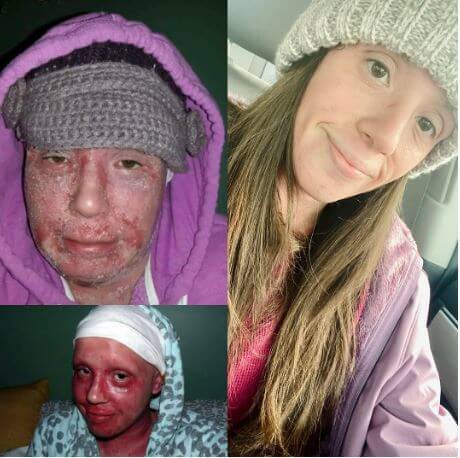
I knew TSW was the answer as soon as I learned about it. While I knew it was going to be difficult based on the research I did, It was my light at the end of the tunnel. The thought of there even being a possibility of healing one day fueled me. I grabbed a box, labeling it “garbage”, and put all my steroid products I had in the house, from creams to drops and inhalers, and even prednisone pills I had been taking on and off for 8 years.
Little did I know, the road ahead would be what I imagine hell would be like, if it did exist. Dealing with the never-ending itching, burning, and sleepless nights was exhausting and took a toll on me. The initial months were the hardest, but somehow I was still able to hold onto the hope that healing was still happening and coming for me any day. I clung to the idea of that and hope like a lifeline.
When Hope Started to FadeAs months turned into years, and I continued to cycle through unbearable flare ups, hope was harder to hold onto, and the reality set in. I watched as others shared their stories of healing in a year or two, and I wondered why my path was so much longer and harder. It was during these years that hope suddenly became a fragile and elusive thing – something I could no longer grab onto like I used to.
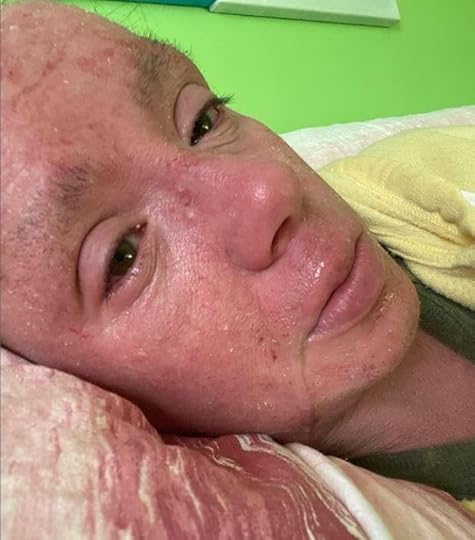
Through the trauma of going through TSW for so many years, my mind, body, and spirit all felt like they were shutting down. Suddenly, I was too afraid to go out anywhere in public, even being scared to just go outside at all. I isolated more than ever in my life, and I was so terrified of anyone seeing me and my destroyed and broken body. For many years, my parents were the only people who saw me. Human connection of any kind, especially human touch, became completely foreign to me.
I hit rock bottom more times than I can count in my life, but at that time, I felt like I was lying right down at the bottom, with no desire or strength to get up.
The mirror became my enemy and greatest fear, reflecting a face and body I didn’t recognize as my own. A face and body torn apart by TSW. Social events and human connection, once something I enjoyed, became terrifying, and isolation felt safer. The frustration of slow progress was eating at me, and there were days when giving up seemed like the only option. But even in my darkest moments, somehow there was a small, stubborn spark of hope that refused to be extinguished.
The Turning Point: Finding Strength Through TCM & Emotional Healing
In my fifth year of TSW, thanks to ITSAN, I started working with Dr. Olivia Friedman from amethyst holistic skin solutions. Olivia is a TCM (Traditional Chinese Medicine) practitioner who specializes in dermatology, and who, by now, I consider one of the few experts on TSW. I was at an incredibly low point when I discovered she was open to working with me, and to my surprise – lived about 5 minutes away from me.
When I started TCM treatment with her and got my herbs the first time, she came over to meet me in person, and I drank my first cup of herbs with her. Any kind of doctor doing that and truly showing they care was completely foreign to me. I was pleasantly surprised, and that alone gave me some hope again. While I wasn’t fully sold on the herbs actually working for TSW yet, after trying so many things and not seeing major improvement, it was incredibly helpful just having someone like her in my life who I could turn to, and who believed in me and my healing, especially when I didn’t believe in myself.
As I continued the treatment with her, and started to see improvement – first in my energy and mood, and eventually with my skin, my hope started to restore even more. I went from feeling like I couldn’t go on anymore and not feeling like I had any strength, to once again seeing and truly feeling that it was possible for me to get better and heal. Olivia and TCM rekindled my passion for life, and that gave me the fuel to keep going.
As Dr. Olivia Friedman put it, “It was a real privilege to work with Nina. Each time we met, I could see the light behind her eyes grow brighter. Little by little, her interest in participating in life expanded. Watching her transform really crystallized for me the extent to which TSW impacts not just someone’s skin, but their entire being and their ability to function in the larger world. It was and continues to be very rewarding to watch patients get their lives back when they respond well to TCM.”
Although TCM did help me tremendously, it didn’t magically just cure my skin or mental health. However, it gave me the strength and space to be able to truly begin working on my own healing more. This meant going back to regular therapy and even starting hypnotherapy to dive deeper into trauma recovery and emotional healing. TCM helped open the door for that, as it showed me how everything is truly connected. How the mind, body, and even spirit are all interconnected and there are so many different factors to take into account.
I began to realize that healing is not a linear process, and that there are many different stages we go through on our healing journey. Comparing my journey with TSW to others, as hard as it can be at times to accept that my journey has been longer than most, is completely counterproductive and hurtful. We are all so different and have different individual needs and experiences, and there are so many things to take into account when looking at this.
The Later Years: Learning to Embrace the JourneyBy the time I reached the latter half of this decade, my perspective had slowly started to shift.
I started to stop thinking of each flare up as a step backwards, but as just another part of my healing journey. I worked on acceptance of all the parts of my life – both the “good” and “bad”: I dove deeper into my subconscious through hypnotherapy and somatic work, as well as meditation, and learned more about how my mental, emotional, and spiritual well being was connected to my skin and body in general. It showed me how powerful the mind is, and how repressed trauma and emotions can be stored in the body, and even show up on our skin.
Dr. Olivia Friedman added to this, highlighting the importance of incorporating all components of healing: “There are so many books and studies that show that trauma and emotional/psychological obstacles can play a huge role in keeping all types of medical conditions, chronic. Complete healing often cannot happen without addressing the psychological and spiritual aspects that contribute to the condition. I give Nina so much credit, because it’s not easy to face what has likely been buried in our minds and to do the work to overcome our painful past. But I find that those who do the work have a much better prognosis for not just their skin, but also their overall happiness in life.”
Through doing this work, I learned to find joy in small improvements and to appreciate my body’s gradual progress toward healing.
Ten Years LaterNow, as I stand at the ten-year mark, I can say that hope has been my constant companion. Even when it felt like it was completely extinguished, that spark never completely went out.
 Nina in December 2023
The journey through TSW has been long and arduous, but it has also been my greatest teacher. I’ve learned to be patient with myself, to be loving and compassionate with myself and my body, and to find strength in vulnerability, instead of seeing it as a weakness.
For those who are just starting this journey or who are somewhere in the thick of it, my main message would be: Don’t lose hope. Healing is more of a journey, not a destination. While we all strive to have clear skin, and while that’s the ideal outcome, I truly believe it’s even more important to learn to have compassion and to love ourselves and our bodies at every stage – whether we have clear skin or not. Surround yourself with a supportive community, embrace the ups and downs, and trust in your body’s incredible capacity to heal. No matter what it might seem or feel like, your body is always working for you, not against you. Treat your body as a friend, and hold and speak to your flaring skin like you would a hurting wounded child. It needs and deserves all of your love and compassion, and that in itself is truly the most potent medicine of all.
As I look to the future, I carry with me both the pain and the lessons of the past decade. I know that there will still be challenges ahead, whether that be with my skin or other areas of life, but I also know that I have the strength and ability to face them.
My journey through TSW has been a testament to the power of hope, strength, and resilience. It has taught me more about myself and life than I could have ever imagined. And for that, I am deeply and eternally grateful.
Thank you so much Nina, for sharing your experience with us in such a raw and honest account. So well written and heartbreaking. Please head on over to Instagram to give Nina some support @NinaAjdin
I wrote my own TSW Long Haul Hell blog at 4.5 years… that seems churlish now. My own skin is flaring, albeit mildly at the moment. However now I am able to work full time and am getting decent sleep most nights. Life does get better but the healing is not linear and none of us truly know what damage has been done to our skin and how fast or slow we will all heal.
I’ll leave you with one final thought, and that’s how you speak to ANYONE with a chronic condition. Never ask them, “When are you going to get better?” and please don’t say, “But you like fine..” We know we don’t and you saying that what we look like doesn’t bother you, is really not helpful. All we want is your understanding and empathy. No advice, no ‘poor you’ or ‘I don’t know how you do it’… just ask us if we would like a coffee/cake/hug and listen when we need to cry/moan/rant etc.
I’d love to hear your comments. How long did it take you to heal from TSW? Are you still healing and if so, how far in are you? I’ll start… Hi, my name is Ruth, I am a TSW-holic and it has been 5.5 years since my last steroid...
PhotosPhoto of herbs on spoon by Valeria Boltneva on Pexels
You may also be interested in readingTopical Steroid Withdrawal – Frequently asked questionsITSAN – The International Topical Steroid Withdrawal Addiction Support NetworkThe Shape of Skin – Healing poetry about eczema and TSW skinThe post My Journey Through a Decade of Topical Steroid Withdrawal first appeared on What Allergy Blog.April 2, 2024
Ten reasons to use Red Light Therapy for TSW
I’ve been researching Red Light Therapy and Near Infrared Light for eczema and topical steroid withdrawal (TSW) damaged skin healing now for a long time. The price of the treatment and purchasing the panels was just a minefield and I just didn’t understand the science behind how it worked.
I started using Red Light therapy in March 2024 so it’s early days for my treatment. It will be interesting to compare any skin changes after 2-3 months. I will update this blog at that time.
Check out Red Light Therapy – Pro’s and Con’s for more information.
How does Red Light Therapy help heal skin?The science behind how this works is complex. It basically increases nitric oxide which is released during RLT. Nitric oxide dilates blood vessels and improves blood flow at any site on the body. So how can it helps our skin?
Many people are using it to reduce signs of agingIt can increase collagen production in the skinIt can also encourage the skin to naturally produce hyaluronic acidIt can also help reverse the skin aging and atrophy seen in many TSW skin.There are a huge number of uses, including acne, skin lesions, remove skin pigmentation and so much more.Promotes hair regrowth, which is great as I need my eyebrows backDr Thomas Burke is an expert in blood flow and nitric oxide when using Red Light Therapy, he talks about how so many other uses help healing. e.g. A diabetic woman saved her leg from amputation after just 3 months of RLT for just three times a week. Another man healed a 40 year old venous ulcer with 5 months of red light therapy each day. Thanks to TSWKidd for sharing this.Promotes healing deep in the skin’s dermisSkin will feel smoother after just 2-3 months of useThere are no known side effects of adverse reactions or risk to using Red Light and Near Infrared light therapyWhat you don’t want is Far Infra red light – this can be too harsh for sensitive skin such as eczema and TSW damaged skin. You want to make sure you’re using Near Infra red light and Red Light together.
How does light therapy help heal the skin?The incredible way it works is that red light and near infra red light can pass through the skin layers to the deeper layers of the dermis to heal where the damage is, right down inside your skin. It really is incredible. Check out this video for more on the science behind how red light heals skin.
Video showing Dr Thomas Burke talking about light therapyThis video isn’t specifically about treating eczema, topical steroid withdrawal affected skin or skin healing but it shows that even necrotic skin from diabetes can be healed using light therapy. It’s incredible what this treatment can do.
How long should you use it for?The advice on the length of time you should use your RLT panel for varies, but generally it’s advised to start with just one to two minutes at first to make sure you won’t react.
I was advised to use if for 10-15 minutes but I’m going slow and will work up from 2 minutes.
You would then try to do this treatment daily. If you are treating different parts of the body, you just repeat this for each body part.
There is no added benefit to sitting for longer, and in fact it could do harm to the skin.
How far away should you sit from your red light panel?There is conflicting information out there and lots of different distances shared. I think for sensitive skin, particularly someone going through topical steroid withdrawal or with eczema and psoriasis, caution is advisable. I think I was sitting too close to mine at 6-8 inches away. The Optimal distance for safety and no inflammation is more like 6 inches to 48 inches.
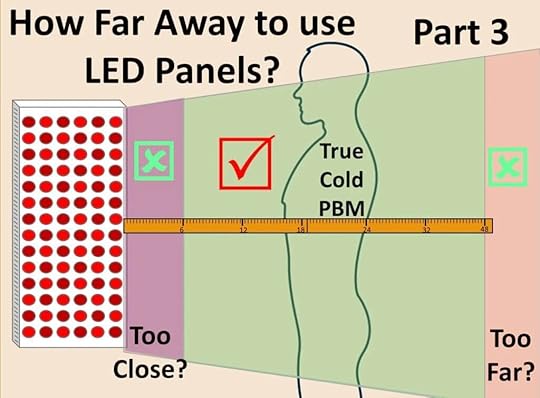
Check out this article which explains the science bit in more detail – How Far Away to be from Red Light Therapy Panels Part 3: Cold LED Light Therapy.
I will be sitting in the far point of that range and trying for less time in a week or so; about 30-40 inches. I need to find a way of healing, whilst working, that doesn’t trigger so much inflammation. It might be nothing to do with the RLT, who knows with TSW damaged skin, but this feels like a precaution for me.
Trust you own instincts, if you feel something is irritating you, take note. You know your skin better than anyone else.
How often do others use Red Light Treatment?I asked people how long they used theirs for. These comments are from Instagram and Facebook Red Light Therapy users:
I went on just for 10 mins but did my whole body coz its a bit like a sunbedI do 10 mins, then change to a different side or part of my body and treat the areas that are worstYou only need 10 to 15 minutes each day – TSWKiddI started with 1 minute, then 2, then 5, and worked slowly up to 15 minutes and I do this daily.What’s important is consistency, making sure you keep doing this treatment daily. I’m cautious about everything these days, so start with less, and work your way up. I’m thinking five minutes, then build up to ten and so on. 15 minutes is optimum and longer times using don’t necessary add benefit, and in fact may be detrimental.
What does Red Light Therapy feel like?I find it very relaxing actually, taking ten to fifteen minutes out to just sit, either quietly, listening to a podcast or audio book or meditating. Here’s what it’s like:
It’s very bright, shockingly so; make sure you protect your eyes before you turn it onYou can wear goggles or close your eyes. Since I have poor skin on my eyelids and the goggles are quite irritating after a few minutes, I shut my eyes. That is completely safe.Pinging sensation – I might be imagining this, but I swear I can feel tiny little fizz sensations, not unpleasant, on my skin while using the red light. They are almost imperceptible, last for a nano second and go very quickly.Get comfortable. I’m searching for the best way to use mine. Others have said they have a sofa table that sits in front of them, or they lay down with it next to them. I have been sitting on an upright chair in front of the dining room table and that’s working for me. Set a timer – I set a timer on my phone so I know when to stop the treatment.Always use the Red Light and Near Infra Red at the same time a both work together and are both beneficial to the skin healing.When I finish a treatment the world appears as if through a sepia lens, it’s very odd. It passes in a few moments but is quite funny how odd that feels. No matter what time of day, your eyesight will be a bit odd after treatment, only for a very short time though.I have not found any side effects of treatment, except perhaps a slight drying of the skin. However drying and flaking during topical steroid withdrawal promotes healing. Skin proliferation, or the excessive flaking we get isn’t to be frowned at, the skin needs to do this to hear deeper layers.
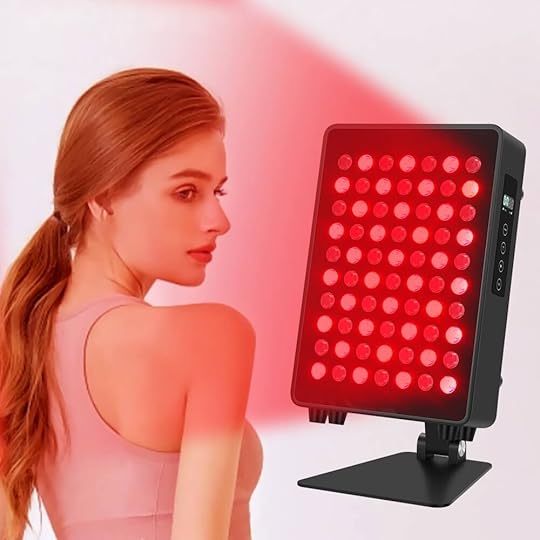 Similar model to the Red Light Panel I got. Mine doesn’t have the stand.
Source: AlibabaHow do you choose a Red Light panel?
Similar model to the Red Light Panel I got. Mine doesn’t have the stand.
Source: AlibabaHow do you choose a Red Light panel?Most products will work, the technology isn’t that complicated and just uses LED lights so have a look online on Amazon. There are so many brands to choose from. Here a few things to look for:
Avoid getting one from Emr-tek, I have been told by TSWKidd that these can be too strong and may actually damage the skin.Make sure you get one what has Red Light and Near Infrared together as this is the best for safe skin healing.I got mine shipped via https://azure8.en.alibaba.com and you can also whatsapp Nicole in China on +86 177 101 24650. Please tell them Ruth with the TSW sent you! And huge thanks to Cyn for recommending them to me. There was too much choice for my poor brain to process. Mine is just a small face panel and is so well made, solid and easy to use.I got a small face panel and the price was very reasonable. The spec was AL300 – Commercial Physical Therapy 300-3600W 660/850nm 5 Wavelengths LED Red Light Therapy Panel.If you have the money, find one that has Red light and Near Infrared coming out of the same bulb. Most are alternate bulbs, like my own one. These will still do a great job but if you have the cash available, a dual bulb (is that the right term) will work faster and better, but it costs a lot more for that technology.Make sure you do your research and check reviews etc. If you can get a recommendation from a friend, ask what panels others have. Obviously a full body panel will cost more.
Video explaining how to use Red Light for eczema and TSWIf you visit Youtube there are quite a few videos from people using it for eczema and topical steroid withdrawal so head over for a watch if you’re interested
Red Light Therapy research resourcesHere are some resources that you may find interesting if you’re looking into Red Light Therapy treatment.
TSW Kidd shares other’s success stories using RLT on instagram. Follow TSWKiddLow-level laser (light) therapy (LLLT) in skin: stimulating, healing, restoring.There are absolutely loads of studies on PubMed sharing research into Red Light Therapy for so many conditions such as brain injury, psoriasis, and more. Red Light Therapy for Topical Steroid Withdrawal by TSWAssistI am searching for more current studies into this, but sadly I don’t think anyone is studying this treatment for eczema, atopic dermatitis or topical steroid withdrawal. It’s certainly not a magic cure or anything, but for conditions like TSW which result on collagen stripping, skin atrophy and deep skin tissue damage, it could be very powerful.
Many people are prescribed Light Therapy on the NHS in the form of UBV and UVA treatment, however this can be potentially harmful, and must be strictly monitored and only done for short periods of time under supervision. It also can’t be done long term. If you’re interested in my own experience doing this read, UVB treatment for eczema and topical steroid withdrawal.
You may also be interested in reading:Topical Steroid Withdrawal – Frequently asked questionsTop 10 things that really helped my eczema skin8 bath treatments for eczemaThe post Ten reasons to use Red Light Therapy for TSW first appeared on What Allergy Blog.Red Light Therapy for Topical Steroid Withdrawal
I’ve been researching Red Light Therapy and Near Infrared Light for eczema and topical steroid withdrawal damaged skin healing now for a long time. The price of the treatment and purchasing the panels was just a minefield and I just didn’t understand the science behind how it worked.
I started using Red Light therapy in March 2024 so it’s early days for my treatment. It will be interesting to compare any skin changes after 2-3 months. I will update this blog at that time.
Check out Red Light Therapy – Pro’s and Con’s for more information.
How does Red Light Therapy help heal skin?The science behind how this works is complex. It basically increases nitric oxide which is released during RLT. Nitric oxide dilates blood vessels and improves blood flow at any site on the body. So how can it helps our skin?
Many people are using it to reduce signs of agingIt can increase collagen production in the skinIt can also encourage the skin to naturally produce hyaluronic acidIt can also help reverse the skin aging and atrophy seen in many TSW skin.There are a huge number of uses, including acne, skin lesions, remove skin pigmentation and so much more.Promotes hair regrowth, which is great as I need my eyebrows backDr Thomas Burke is an expert in blood flow and nitric oxide when using Red Light Therapy, he talks about how so many other uses help healing. e.g. A diabetic woman saved her leg from amputation after just 3 months of RLT for just three times a week. Another man healed a 40 year old venous ulcer with 5 months of red light therapy each day. Thanks to TSWKidd for sharing this.What you don’t want is Far Infra red light – this can be too harsh for sensitive skin such as eczema and TSW damaged skin. You want to make sure you’re using Near Infra red light and Red Light together.
How does light therapy help heal the skin?The incredible way it works is that red light and near infra red light can pass through the skin layers to the deeper layers of the dermis to heal where the damage is, right down inside your skin. It really is incredible. Check out this video for more on the science behind how red light heals skin.
Video showing Dr Thomas Burke talking about light therapyThis video isn’t specifically about treating eczema, topical steroid withdrawal affected skin or skin healing but it shows that even necrotic skin from diabetes can be healed using light therapy. It’s incredible what this treatment can do.
How long should you use it for?The advice on the length of time you should use your RLT panel for varies, but generally it’s advised to start with just one to two minutes at first to make sure you won’t react.
I was advised to use if for 10-15 minutes but I’m going slow and will work up from 2 minutes.
You would then try to do this treatment daily.
There is no added benefit to sitting for longer, and in fact it could do harm to the skin.
How often do others use Red Light Treatment?I asked people how long they used theirs for. These comments are from Instagram and Facebook Red Light Therapy users:
I went on just for 10 mins but did my whole body coz its a bit like a sunbedI do 10 mins, then change to a different side or part of my body and treat the areas that are worstYou only need 10 to 15 minutes each day – TSWKiddI started with 1 minute, then 2, then 5, and worked slowly up to 15 minutes and I do this daily.What’s important is consistency, making sure you keep doing this treatment daily.
What does Red Light Therapy feel like?I find it very relaxing actually, taking ten to fifteen minutes out to just sit, either quietly, listening to a podcast or audio book or meditating. Here’s what it’s like:
It’s very bright, shockingly so; make sure you protect your eyes before you turn it onYou can wear goggles or close your eyes. Since I have poor skin on my eyelids and the goggles are quite irritating after a few minutes, I shut my eyes. That is completely safe.Pinging sensation – I might be imagining this, but I swear I can feel tiny little fizz sensations, not unpleasant, on my skin while using the red light. They are almost imperceptible, last for a nano second and go very quickly.Get comfortable. I’m searching for the best way to use mine. Others have said they have a sofa table that sits in front of them, or they lay down with it next to them. I have been sitting on an upright chair in front of the dining room table and that’s working for me. Set a timer – I set a timer on my phone so I know when to stop the treatment.Always use the Red Light and Near Infra Red at the same time a both work together and are both beneficial to the skin healing.When I finish a treatment the world appears as if through a sepia lens, it’s very odd. It passes in a few moments but is quite funny how odd that feels. No matter what time of day, your eyesight will be a bit odd after treatment, only for a very short time though.I have not found any side effects of treatment, except perhaps a slight drying of the skin. However drying and flaking during topical steroid withdrawal promotes healing. Skin proliferation, or the excessive flaking we get isn’t to be frowned at, the skin needs to do this to hear deeper layers.
Similar model to the Red Light Panel I got. Mine doesn’t have the stand.
Source: AlibabaHow do you choose a Red Light panel?Most products will work, the technology isn’t that complicated and just uses LED lights so have a look online on Amazon. There are so many brands to choose from. Here a few things to look for:
Avoid getting one from Emr-tek, I have been told by TSWKidd that these can be too strong and may actually damage the skin.Make sure you get one what has Red Light and Near Infrared together as this is the best for safe skin healing.I got mine shipped via https://azure8.en.alibaba.com and you can also whatsapp Nicole in China on +86 177 101 24650. Please tell them Ruth with the TSW sent you! And huge thanks to Cyn for recommending them to me. There was too much choice for my poor brain to process. Mine is just a small face panel and is so well made, solid and easy to use.I got a small face panel and the price was very reasonable. The spec was AL300 – Commercial Physical Therapy 300-3600W 660/850nm 5 Wavelengths LED Red Light Therapy Panel.If you have the money, find one that has Red light and Near Infrared coming out of the same bulb. Most are alternate bulbs, like my own one. These will still do a great job but if you have the cash available, a dual bulb (is that the right term) will work faster and better, but it costs a lot more for that technology.Make sure you do your research and check reviews etc. If you can get a recommendation from a friend, ask what panels others have. Obviously a full body panel will cost more.
Red Light Therapy research resourcesHere are some resources that you may find interesting if you’re looking into Red Light Therapy treatment.
TSW Kidd shares other’s success stories using RLT on instagram. Follow TSWKiddLow-level laser (light) therapy (LLLT) in skin: stimulating, healing, restoring.There are absolutely loads of studies on PubMed sharing research into Red Light Therapy for so many conditions such as brain injury, psoriasis, and more.I am searching for more current studies into this, but sadly I don’t think anyone is studying this treatment for eczema, atopic dermatitis or topical steroid withdrawal. It’s certainly not a magic cure or anything, but for conditions like TSW which result on collagen stripping, skin atrophy and deep skin tissue damage, it could be very powerful.
Many people are prescribed Light Therapy on the NHS in the form of UBV and UVA treatment, however this can be potentially harmful, and must be strictly monitored and only done for short periods of time under supervision. It also can’t be done long term. If you’re interested in my own experience doing this read, UVB treatment for eczema and topical steroid withdrawal.
You may also be interested in reading:Topical Steroid Withdrawal – Frequently asked questionsTop 10 things that really helped my eczema skin8 bath treatments for eczemaThe post Red Light Therapy for Topical Steroid Withdrawal first appeared on What Allergy Blog.January 8, 2024
Set intentions not resolutions for 2024
This year I’m not going to set any resolutions. In previous years I’ve written about this, and why I think New Year’s Resolutions are Bollox.
However, if you’re like me, you do like a list, and that inner desire to keep on learning, developing, letting go of what no longer serves you and generally living a better life.
What I don’t like a resolutions is that they’re so final, measurable and just plain hard. I often feel despondent and like I’ve let myself down when I can’t reach the lofty goals I set.
 Hard resolutions for your skin and allergies
When you set resolutions like this you are almost setting yourself up to fail, or at least making life hard for yourself. Especially if you are living with limiting conditions and don’t have as many spoons as other people. Here are few examples of hard ones:
Do yoga every day, because it really helps my breathing, anxiety and wellbeingEat clean, low inflammation food only, no processed foods and no alcoholGet up an hour early every day to do gratitude journalling, set intentions, go for a walkThese all sounds great, but if you write down that you will try to this every day, you probably will fail. If you CAN maintain A star commitment well done, you are more motivated than many of us.
Measurable objectives are fantastic, particularly in business, but our lives are not machines, or organisations. We are human beings, not human doings and we need to spend more time being humans rather than doing stuff. I forget who coined this phrase but I love it and it’s always stuck with me.
Setting intentions for your skin and allergiesGive yourself more grace, more acceptance and more peace this year, here are some different ideas for setting intentions, instead of hard goals.
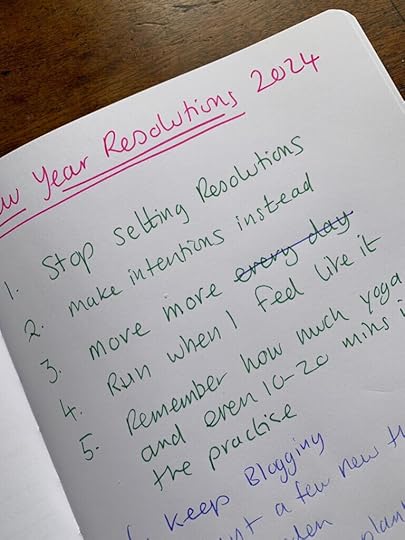
I will try to move more, get out into nature more, and find time to practice yoga for breathing, yin yoga and strength yoga.I will continue to make plans to meet others at Parkrun (this makes me more accountable and more likely to go) and continue to do bootcamp. If you already have good habits in place, set an intention to continue doing these, when you can.If my skin, asthma or allergies are really affecting me I will give myself some time out, to rest, relax and recover from the stress of daily life. Spending time doing absolutely nothing is underrated.I will continue to declutter because that is giving me so much joy, pleasure and more space to enjoy my home.I will chose one factual book or podcast every month and learn something about a subject I am interested in.I will continue to explore more plant foods, choosing new, different colours and bringing in whole foods, local, organic food into my diet where I can.STOP apologising for my skin, having allergies, being an inconvenience and instead ‘own it’ and be confident, proud and in control.Carry on loving my blog and keep on blogging for enjoymentI know these may seem more vague than traditional resolutions but give yourself a break. What if you are already brilliant and doing what you can? It’s OK to have intentions that create more space, peace and calm in your life.
Making intentions workBy setting intentions, you are making even very small steps a win. You can break these down into tiny little goals, and you will hopefully find it easier to stick to. It allows you to have weeks where you might not achieve much, but you know you will start again afresh the following week.
Intentions can also be the idea of stopping doing certain things if you know they don’t help.
It also means that if you do feel like some chocolate, you haven’t failed if you give into those cravings. If you have sweet tooth, you could explore different, healthier sources such as maple syrup, dates, coconut sugar etc. As you probably know, normal sugar is highly processed and can exacerbate inflammation in those susceptible to skin problems and eczema.
You may also find ‘Ditch resolutions: Make intentions instead’ and ‘Setting intentions, not just resolutions’.
 Focus on positive experiences
The positive gratitude jar
Focus on positive experiences
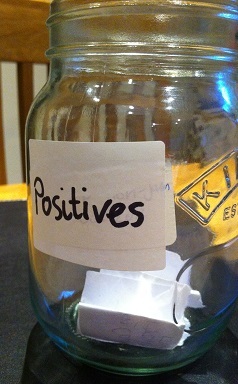
The positive gratitude jarI’ve done this before and am going to reinstate it this year. Get a jar, box or even a bag and write Positivity Jar on a label on the outside. Have some fun, you can label it anything… Magic, Gratitude, anything. Then write on a piece of paper any time something wonderful happens. That could be anything from finding a Jay’s feature to reaching a goal or target. It could be a huge achievement or a small one, but make it something that brought you joy. Then at New Year, get cosy, grab a blanket and sit down with your jar. Take out the pieces of paper and read what you wrote. It’s a really heart warming exercise. In a similar way I do this by reviewing my journal (Passion Planner) at end of each year.
I’d love to know your thoughts. Did you set resolutions? Or did you ditch them?
You may also be interested in reading:Vegan and dairy free calcium sourcesI can’t stop touching my faceGet discounts off allergy and eczema friendly productsThe post Set intentions not resolutions for 2024 first appeared on What Allergy Blog.December 18, 2023
Why I hate Rachel Johnson’s horrible article
Thank you Michelle for drawing my attention to Rachel Johnson’s, quite frankly diabolical article in the Guardian. You’ll enjoy reading Michelle’s well put together and brilliantly written, ‘A food fad won’t kill you, an allergy will.’
 Rachel really doesn’t look very happy
But you’ll be seething when you read, “Endless dietary requirements are a sign of our decline as a society”.
Rachel is a well respected journalist and a good writer, so it’s sad to read something like this written by her.
It’s been ages since I had a really good rant but this article has my blood boiling. I will be sending a link of this blog to Rachel Johnson, she also has over 14k followers on instagram. Check her out here RachelJohnsonPublic
I’m a little surprised that the Guardian has printed this rubbish, it sends the message, you’re only welcome here if you’re lucky enough not to have been born with food allergies or any other disability. It shows a complete lack of understanding of a life threatening condition which affects over 2% of the population, and if we include those with coeliac disease, and food intolerances that figure is more like 40-50%.
Food intolerance can be really painful, and inconvenient. So Rachel, unless you want your guests to have explosive diarrhoea in your immaculate, privileged toilet when they dine at your house, I suggest you rethink your mantra, “You’ll EAT it and you’ll LIKE it.”
Rachel – I find your article offensive, and since you’ve come at my community with such a lack of empathy, you’re not getting much empathy from me in this response.
 My thoughts on Rachel Johnson’s views on allergies
Where to start? It’s a complete dumster fire of an article, but here goes:
The title – Endless dietary requirements are a symbol of our decline as a society – Really Rachel? It’s actually a sign of a rise in people with life threatening allergies, colieac disease, veganism, gluten free by choice etc. All are valid, all are on the rise. But lumping those with a life threatening allergy together with people making a dietary choice is wrong and misplaced. No one chooses to have food allergies, and living with them is terrifying. We are on high alert daily and often choose not to go out. So when kind friends and restaurants CAN and DO cater for us it’s wonderful to be included. It is also someone’s right to choose to be vegan or avoid certain foods if they want to. It’s all about dialogue and understanding what a customer needs. Our decline as a society is shown more in your complete lack of understanding and empathy. “restaurants advertise their seasonal offerings of “vegan and gluten-free set menus” – It seems that Rachel is really offended that restaurants are catering for those with dietary requirements. Why Rachel? Why does this bother you so much? And thank you – THANK YOU! To every restaurant who has an allergen matrix of menu. It really helps both customers and your staff.The cost of living crisis – This is the introduction – that we have a food shortage and rising costs. What on this planet does having dietary requirements have to do with the cost of living crisis? Please explain? Having less disposable income doesn’t make allergies of dietary requirements go away. Some of us could die from our allergies, some of us could be made really ill and cause long term health complications from repeated exposure (ed. coeliacs, chrohns, colitis…) There is literally no correlation here. We have to spend even more on our safe freefrom food and regularly pay a surplus charge for our safe food. For one, I am happy to do this because I love my life thanks very much. Yes I’ll happily order the steak because it’s the meal that can often be most safely made for me. I’m just glad I can celebrate with my friends and family.“You’ll EAT it and you’ll LIKE it.” – Rachel’s lovely fridge magnet. Yes we are all feeling the pinch, rising bills, stagnant and falling salaries etc. But the festive season is a time to forget all that, just for one month, to splurge, treat ourselves, meet with friends and family. I’ll pass thanks Rachel. I won’t be eating it. Not if you had anything to do with it. Many of us will go without a meal when we feel unsafe or don’t want to risk things if we can’t be sure it’s safe. Have you had to do that Rachel? Been too scared to eat so you’ve chosen not to? No, I didn’t think so.London society is far too encouraging of food fads and preferences – Missing the point totally here Rachel. London businesses are seeing the value of these customers. We are many and we are multitude and we aren’t going away. This is comlex though. On the one hand we have serious life threatening allergies – on the other, choices not to eat certain foods. These are very different. But people are choosing, lots of them. Rather than ostracising us, many restaurants are welcoming us and doing a darn good job of it too. Why does this bother you so much Rachel? Why the judgement? ‘You do you’ and we’ll do us. Just keep your small minded views to yourself.It’s soft to the point of degeneracy – WOW! Fine choice of words there Rachel. Do you think that a restaurant owner wants to have a diner die from food allergies in their establishment? Or receive a bad review because a coeliac had a week of painful symptoms after a meal out? Dictionary.com tells us the word degenerate means “to fall below a normal or desirable level in physical, mental, or moral qualities; deteriorate: to diminish in quality, especially from a former state of coherence, balance, integrity, etc. I’d say actually, and thankfully, people generally see the business sense in catering for the rise in dietary needs. Having allergen menus in inclusive, it helps diners choose a safe dish and helps servers guide customers to a safe choice. Just ignore the gluten free menu Rachel, it’s not for you! Are you feeling left out or something? You have a whole other menu all for you. It’s really not that bad. Almost any emailed invitation to an “event” irritatingly demands data when it comes to “dietaries” – The message for dietary requirements isn’t for you Rachel, just ignore it. Why are you getting so upset? Why don’t you want people with allergies and dietary requirements to be included? Do they have “dietaries” in the Sudan? – What on earth Rache? What has Sudan got to do with your current monologue? There are fewer food allergies in Sudan and other parts of Africa due to their lifestyle. It does seem that our western living increases the chances of having food allergies. However allergies are on the rise in Africa too, particularly in the higher income African countries. I suggest firstly this is irrelevant to your article, but secondly, it would be interested to hear from anyone in Sudan who can comment. Do you have food allergies? How are they catered for? What are people allergic to?Did they have “dietaries” in the dreary Fifties – Harping on about how there weren’t dietaries back in the 50s. How old are you Rachel? You don’t look old enough to have been born in the 50s so why do want to go back to those times? People used to just sadly die from allergies back in the 50s, it would have been put down to heart attack, asthma or something else, but allergies are not new. They are however far more common. That’s just a fact. People aren’t getting allergies just to piss you off Rachel. We’d love not to have them.we live very boring safety-first risk-free lives – Yes we do Rachel. We are very fortunate not to live in a war zone. I know you have written a lot about the war and that’s great, but is this really relevant? I would also like to point out that living with life threatening allergies can feel like living with a sniper at your back. Every day, we could make a mistake our selves, the food allergen being the bomb incendiary. Or someone else could misunderstand or not take us seriously. We don’t take risks and try to be organised to the point that we do not risk our lives. We mostly all carry adrenaline, life saving medicine. We live with this daily. It’s terrifying, and you writing an article like this is irresponsible to the point of being thoroughly offensive. If you have a violent allergy to shellfish, say, you are not unaware of it. Therefore you don’t choose it if it’s on the menu. You avoid it. You don’t have to make a federal case about it. – Calm down Rachel! Yes we do avoid our allergens. We have to. Those with food intolerances and coeliacs also have to avoid certain foods, every day! However some allergens can be in a dish and it might not be obvious. e.g. fish in a Thai curry, gluten in a gravy or nuts in a sauce. What’s the harm in us being able to find that information out? You really do seem overly upset about all this Rachel.Waiting staff, presumably by law? — dully enquire about “any allergies” as soon as diners sit down – No Rachel, it’s not law at all. If you’d done any research you might know that. Waiting staff do this because their boss sees the value of opening up dialogue, so they can keep all customers safe. Some people are nervous of explaining that they have allergies. I wonder why that is Rachel? Perhaps its because they have come across bigoted people like you and they feel shame and embarrassment. The only person who should be embarrassed right now is you Rachel for writing such a biased, one sided, poorly researched and ignorant article.Surely, when it comes to allergies, the onus should be on the consumer not the provider – Customers do take most of the risk on themselves, it’s our choice whether we eat out somewhere or not. But what is the harm in a waitress or waiter asking if a diner has allergies? It’s helpful Rachel. Young adults are the most risk of anaphylaxis for many reasons, but mostly because they don’t want to be the only one asking, they are shy, they just want to be like everyone else. Some don’t realise how serious their allergy is. By making it normal, accepted and part of the dining experience, they can easily notify the wait staff of their allergy and get the guidance and support they need. Several hundred passengers were ordered not to eat “any nut products we might have brought on board” in deference to the one traveller with a severe allergy – How hard is it Rachel to go for one flight not eating peanuts? You can gorge on them as soon as you get off the plane. You can eat whatever you like whenever you want. That is a huge privilege. People with serious food allergies have to be vigilant all the time. But for that short flight you can help someone stay safe. Why does this get your blood boiling so much?I don’t think I heard my parents ever once ask about “dietaries” – that’s because they, and you Rachel are really lucky not to have any food allergies or dietary health complications. You are very lucky. I wish every day that I could not have allergies any more but there is no cure (unless you have a lot of money for desensitisation).It’s astonishing how often a friend comes to the house and expects me to remember they are dairy-free or keto or intermittently fasting – I wonder how many of your friends are reading this Rachel and thinking.. WOW! What a total and utter cowbag!Toby Young always warns me as he knows I’ll forget that his wife eats neither fish nor meat but I have another friend who is a “pescatarian”, apparently, which means that if you have Andy round you either have to remember to make fish pie for everyone or a separate meal just for him – naming and shaming your friends. I trust you got their permission first. Public Service Warning – don’t accept a dinner invitation to Rachels! She doesn’t want you there and may not take much care keeping you safe! And she probably bitches about you behind your back too.In my ideal world, the rule would be this. No dietaries required – mine too Rachel, but for different reasons. I would love to find a cure for everyone with allergies because it can be really hard living with them. But when you say this Rachel, you’re just thinking about yourself. Because people with allergies are so annoying! Poor Rachel.Unless you are instructed specifically otherwise it is fair — if not always safe — to assume everyone can eat everything. – this is true. If you have allergies, you either have to eat before you go (my favoured option sometimes if I’m getting any ‘Rachel vibes’.) or you speak to the host and hope to find a little compassion there. Or we take out own food! Also works really well. The meal has to be perfect – Is it really mean of me to be wishing you a dry turkey, burnt stuffing and soggy roast potatoes? While you sob over your ruined Christmas Rachel some people won’t be getting a Christmas meal at all. We are so very very fortunate to be able to buy the festive food and celebrate together with our friends and families. My daughter has been a practising vegetarian forever. There are no potatoes roasted in goose fat for her. She toils alone over a mushroom Wellington, maybe, and a separate vegetarian gravy that requires as much washing-up as the entire festive meal. Glad tidings! She has been converted back to meat by her gorgeous girlfriend Jess and so this year we are a completely nut roast-free household and will all sit down to turkey together for the first time this Christmas. I couldn’t be happier. – Oh how wonderful for you Rachel. And for your daughter, who it seems had to cook her own Christmas dinner as a vegetarian… Her choice to be a vegetarian and it sounds like you were never really able to appreciate, respect or accept that.I just can’t with this article. It’s so snarky, bitchy and unkind. It’s so one sided and mean. It’s just awful.
What you can do if this article annoys you tooI’m going to send a link to this article to Rachel as I’d love to hear what she has to say. Could you do the same? If enough of us complain it will send a message that we refuse to be accept outdated views like this.
Rachel is so lucky, to have no allergies. To have the privilege to cook some ridiculous 127 dishes for Christmas… I would like to ask for an apology from Rachel, from all the allergy and dietary restricted community. Also the Guardian – you should be apologising too.
I’ve had enough of this kind of attitude. We are no longer in the 50s and should be celebrating how far we have come in inclusivity, empathy and acceptance. We are all different, some people have disabilities. Can we all just be kind? Is that too much to ask?
How will you be spending Christmas?I will be spending Christmas with my wonderful family who are both accepting and inclusive of me and my many allergies. I can eat almost anything except the chef’s special delight – the cheese board! Thank you to all my friends and family. I really truly do appreciate how you all support me. It means a lot.
PS. Don’t go to Rachel’s for xmas if you have any dietary requirements or you might need a sneaky Maccie Ds on the way home.
You may also be interested in reading:20 tips on how to be an allergy advocateAnaphylaxis – The Essential GuidePlease cover up your eczema / psoriasis – it offends meThe post Why I hate Rachel Johnson’s horrible article first appeared on What Allergy Blog.