Ruth Holroyd's Blog, page 12
May 18, 2022
TSW is NOT a social media trend – TSW RANT!
Today I read an article in the Washington Post entitled, What is Topical Steroid Withdrawal? You might be thinking, fantastic! That’s amazing coverage, but I’m left fuming at the journalists lack of research and general dismissive attitude towards people going through this.
Here’s why I hate this article, written by Tonya Russell – I’ve just tweeted here my blog response to her article… Feel free to contact here on Twitter also if you want to share your topical steroid withdrawal journey.
A recent social media trend – The five words used to begin this article left me short. A trend? A TREND? I think possibly the writer has just chosen the wrong word here but let me stress, this is NOT a trend. None of us want to have to spending our time raising awareness about the most debilitating, brutal, painful condition we have ever experienced. This isn’t going away. The word trend implies an upswing in posts, hashtags, social media coverage that will wane with time. Sadly this is just the tip of the iceberg when it comes to topical steroid withdrawal. It’s a storm waiting to break. It’s an avalanche teetering on the lip of a mountain. This condition has taken three and half years of my life away and I am still healing. Far from being a trend, this is a travesty. It’s a disaster! How dare you call it a trend. The numbers taking to TikTok and Instagram to document, share and learn is growing daily.Stoking fears – The author also stresses that the rush of people with topical steroid withdrawal making social media posts, videos and blogs are causing fear, in fact stoking fear. We are NOT doing anything of the sort. Whilst this condition is terrifying and brutal, the fear for us is the damage of continuing to use a drug that is just making our skin worse and worse. I had poorly managed skin while using topical steroids and facing stronger and stronger medication, cancer drugs and new treatments that made me feel like a guinea pig. My skin could not sweat, it was thinned so badly in some places and the pigment was damaged badly. I do accept however that some of the videos and information being shared could be dangerous. None of us going through this are experts and as such we should never be pushing anyone towards any particular medical pathway. All we can do as patients is share our experience, not tell anyone to do something without medical guidance. TSW can be dangerous and lead to complications and infections so people should make sure they are very clear about what they’re doing and get medical help if they need it.Relatively Rare – I strongly believe that all ‘chronic eczema’ patients are probably experience the TSW addition rebound flare and being dismissed by doctors who just give us more and tell us to apply more, more often, add on other meds like immunosuppressants. It’s heart-breaking to hear this being called rare. I fear it’s way more common than they realise and the rise in people sharing online should cause concern over this.Thank you NEA – The link to the NEA which has details of fellow TSW warriors Linette Roungchun, Briana Banos and Kelly Tullos, ITSAN founder who is now healed from TSW., is the best bit about this whole article.They spoke to a dermatologist and family medicine practitioner – whilst this guy recognises TSW as real, he then implies that it only happens when a person who is doing well decides to stop treating their skin. NO doctor! We are not doing well. We can hear our body screaming, our adrenals, lymph and digestive systems are broken because the suppressant medication we’ve been taking all our lives has told them to take a break. He says: the area previously treated can become severely inflamed, sometimes even worse than the rash that was being treated,” Fromowitz says. This guy does understand TSW, how quickly the skin rebounds and flares after ceasing treatment and how the skin becomes worse that it was to begin with.Not all dermatologists agree on the causes of TSW nor how to diagnose it or that it even exists – ain’t that the truth. Never a truer word spoken. This needs to change. How can they call themselves dermatologists and yet refuse to read up about TSW so they can understand and diagnose it? It’s a failure of their duty to their patients.Some doctors say it’s just an eczema flare up – That is just gaslighting at its finest. You just have eczema, you’ll never get better. you’ll have to use steroids for the rest of your life. I’ve heard it all before. What if we’re right though? Have doctors thought about that?Research is in the early stages – Sadly that’s true. Despite studies noting TSW as early as 1979 no one is really studying, monitoring or following patients through TSW and no one is researching causes or treatments to help people through it except and huge cohort of TSW warriors.The physicians we spoke with say that few people who use topical steroids will suffer from this complication – so enraging. Few people… FEW PEOPLE! Yet thousands are taking to social to try to get their voices heard.Dermatologist Michael Rogers says – he has only once in his 40-year career seen a case of TSW. We as patients need to report TSW using the Yellow Card Scheme, sign the TSW petition and be seen by our doctors and dermatologists. I understand why people don’t want to do this but unless we go in front of medical professionals and ask for a diagnosis and tell them what we are going through, how can they know? It’s unpleasant in the extreme being dismisses, belittled and gaslit but I won’t stop going to see my dermatologist. They need to see us going through this to get the message. We need to bombard them with complaints. We need to be emailing, visiting, complaining in our droves because our voices are not being heard.Can take months to heal – or a year in Dr Rogers’s patient – Sadly it can and does take far longer than that for some people. And if people are acknowledging a patient can heal from TSW they why not help people do this when clearly topical steroids are no longer working? Instead we get gaslit and dismissed…People most at risk are those who have used topical steroids over an extended, uninterrupted periods and who increase the amount and potency of the medication over time are most susceptible – Well that’s most of us then. Put on them as children and then needing to continue to use them. You prescribe them to us so don’t you dare now say it’s our fault for over using.The face was the part of the body most prone to developing a rash or peeling from TSW. – weirdly this does seem to be the case although it can affect the whole body. Mine was way worse on my face.Avoiding using topical steroids is the only way to avoid TSW – I really don’t think they are a safe treatment. Everyone I’ve even spoken to either used them for a short time and stopped, or had a rebound. All those having rebound flare are given more, stronger… and the terror of developing TSW. It happened to everyone I know who is in TSWTopical steroids are effective and inexpensive, and they have been used to treat eczema for more than 50 years – The fact that they have been around for my whole life and the treatment has not changed in that time says a lot. Severe eczema just didn’t exist before topical steroids were invented. We have created this monstrous condition with a so called magic healing cream but nothing that claims to cure comes without a cost. There are nonsteroidal topical alternatives – If we’re talking about Protopic, steer well clear. It appeared to work well for me but on quitting the rebound was brutal. No medication should create a situation where a patient has a broken skin layer and is completely addicted to the cream. As I heal from TSW my skin is becoming so strong and has never been this good in my memory. Other treatments like Dupixent and JAK inhibitors are so much more expensive I can’t see them working as a solution. I also worry they will only work short term and potentially cause people further harm.Stop long showers – well yes we all know that can help but those of us going through TSW can’t even have a shower of any length as the skin is so damaged and triggered by the water jets. I think we all need a bit more advice than stop having long showers.Warmer water dries the skin – I’ve never found this to be the case for my skin. I really think it’s a myth. Hot baths are a dream for me and so I say, if you find it helps, do it. If it makes your skin worse don’t. It’s not really helpful advice because we’ve tired everything. Cold showers is not a cure for eczema..For those with a severe case of eczema, he recommends even turning the water off, lathering up, then turning it back on only to rinse. – are you for real? I mean I do this myself anyway to save water and there is a point in the shower where I can start to get itchy., But that’s hardly ground breaking rocket science. It’s the tip of the iceberg but I’ll give you that Dr, yes that is good advice.Wet wrap therapy can help the topical medications work better – But we don’t want to use the topical medications guys. I believe so strongly that topical steroids are not good for the skin so wet wrap treatment is just something i wouldn’t recommend. Unless of course you’d like to try out TSW? It could help with moisturising I guess but wet wrapping is cumbersome and time consuming. Does anyone else find this helps?Who is the author Tonya Russell? She is a Philadelphia-based writer who covers mental health, culture and wellness. She has bylines in the New York Times, the Washington Post, SELF and more. She’s also a professional speaker who educates people on mental wellness in the workspace, cultural sensitivity and creating healthy boundaries. Russell is an avid runner, yogi and traveller. I will be sharing this blog with Tonya as I really feel we need journalists to understand the severity of this situation. She hasn’t mentioned ITSAN – the charity who helps and supports people through topical steroid withdrawal.I don’t want to come across as angry but I am really really angry. We’ve seen so much great coverage of TSW over here in the UK and I thank everyone who helps us raise awareness of this condition but this problem, of being dismissed and gaslit just perpetuates when the so called experts are allowed to keep on telling us it’s rare, it’s safe if you use them correctly… We did use them as you directed.
If you want to write something to really help the situation with topical steroid withdrawal I suggest you find out what it’s really like for us, to be continually reading that our condition is rare and avoidable if we’d only used them right.
And do you know what? Even if some people have over used them, we want warnings on the medication to that warn people that addiction is a potential outcome and that withdrawal is barbaric and will make your skin worse than when you started.
We want proper, robust peer reviewed and respected studies.
We want doctors and dermatologists to do the bloody work and research this condition because it’s not going away. It’s not a trend. It’s here to stay and it’s growing.
And I don’t know how you can sleep at night with even a small worry that TSW is real. If you are a doctor or dermatologist you’d better wake up and find out about this because you have to live with what you’ve done to us.
I’m not blaming anyone. No one wants TSW to happen. But I am blaming every one of you who has dismissed patients and not listened to them. Who have seen continual rebounding of eczema and continued to prescribe. Who prescribe topical steroids to babies. That’s on you!! and you really should be a shamed of yourselves.
In contrast, I also read a brilliant, well researched article this week by Habib Mbacke, Atopic Dermatitis are topical steroid based treatments on the out? Because, yes, yes yes i hope TS creams are on the way out as treatment. That would make my day.
I’d love to hear your views on this article…
You may also be interested in reading:My Topical Steroid Withdrawal – Frequently Asked questionsTop 7 books on topical steroid withdrawalA dermatologists review of the Shape of SkinThe post TSW is NOT a social media trend – TSW RANT! first appeared on What Allergy Blog.

May 13, 2022
Government response to TSW petition for research
Thank you to everyone who signed the Change.org petition to push for funding and research into Topical Steroid Withdrawal. We needed to get 10,000 signatures to get a response from the government and they have responded. This is just the beginning…
Here is the Government response in full:This response was given on 12 May 2022
Adverse reactions from topical steroid withdrawal can occur following long-term or incorrect use of these medicines. The Government welcomes high-quality research to further understand this issue.
Steroids are both natural chemicals produced by the body and manufactured as medicines to treat inflammation. Topical steroids are applied directly to the skin. Corticosteroids are the most common type used to treat skin conditions. Topical corticosteroids are available in several different formats including gels, creams, and ointments.
There are growing reports of withdrawal reactions in people who have stopped using topical steroids. A particularly severe type of topical steroid withdrawal reaction has been reported with skin redness (or a spectrum of colour changes or change in normal skin tone) and a burning, which patients report as worse than the original condition.
The Medicines and Healthcare products Regulatory Agency (MHRA), the government agency responsible for regulating medicines and medical devices in the UK, is unable to estimate the frequency of withdrawal reactions to topical steroids. However, given the number of patients who use topical corticosteroids, the understanding is that these effects occur very infrequently. Although reactions may be infrequent, they can be debilitating and long lasting, and the impact this can have on an individual’s health and mental wellbeing should not be understated.
The MHRA continually reviews the safety of all medicines in the UK and informs healthcare professionals and the public of the latest updates. In September 2021, the MHRA conducted a comprehensive review of the available evidence on topical steroid withdrawal reactions. This review considered side effects reported to the MHRA by patients and healthcare professionals, and information published by researchers and medicines regulators. The review also sought advice from dermatologists and skin charities.
The review concluded that, when used appropriately, topical corticosteroid medicines are safe and effective treatments for skin disorders. It is essential that patients have access to clear advice on the risks of topical steroid withdrawal and feel fully informed on how to safely use these medicines. Safe usage includes using these medicines to only treat certain skin conditions for short periods of time, or with short breaks in treatment over an extended period. Information about these reactions will be added to the product information provided to healthcare professionals and patients. The MHRA has produced materials for patients and healthcare professionals advising on the best way to minimise the risks of adverse reactions and what to do if they occur.
The funding of robust research and scientific evidence is recognised as playing a pivotal role in shaping our understanding of health, and this includes understanding the side effects of medicines. In 2017, the National Institute for Health and Care Research (NIHR) funded a £2 million study to improve the lives of people with eczema. Part of this study will update existing evidence around the safety of topical corticosteroids and develop targeted advice on this medicine for patients and healthcare professionals. The study is due to be completed in 2023.
The NIHR welcomes funding applications for research into any aspect of human health, including topical steroid withdrawal. However, it is not usual practice to ring-fence funds for particular topics or conditions. Applications are subject to peer review and judged in open competition, with awards being made on the basis of the importance of the topic to patients and health and care services, value for money and scientific quality.
Department of Health and Social Care
At 100,000 signatures…At 100,000 signatures, this petition will be considered for debate in Parliament…
I have a lot to say about this response…I’ll take it bit by bit and respond to each point:
The MHRA is unable to estimate the frequency of withdrawal reactions to topical steroids – That’s because there is no proper research and no one is monitoring, recording or diagnosing TSW patients. That’s the reason we need this research.The understanding is that these effects occur very infrequently – If you can’t even estimate the frequency because literally no one is accepting, diagnosing, recording or researching and monitoring TSW… how on each can you assume it’s infrequent? The problem is the the very specialists we are supposed to turn to are not listening, not making a note on our records, not diagnosing us. This is a never ending loop of doom.The MHRA continually reviews medicine – really? It feels like they did a review and shared it and everyone has swept that under the dusty, bloody, skin covered carpet.When used appropriately, topical corticosteroid medicines are safe and effective treatments for skin disorders. – Not that sh*t again. Use it for 2 weeks only it says on the advisory notice yet dermatologists continue to prescribe it for long term use. Essential that patients have access to clear advice on the risks of topical steroid withdrawal and feel fully informed on how to safely use these medicines – There are no warnings for Topical Steroid Withdrawal on the medicine contraindications for topical steroid creams. I am also not aware of any doctors or dermatologists who are making people with eczema aware of this risk. It’s just not happening. I hear every day of more and more people facing TSW and more and more people being prescribed topical steroids with no warnings… just advice that it’s complexly safe to use.The MHRA has produced materials for patients and healthcare professionals advising on the best way to minimise the risks of adverse reactions and what to do if they occur. – Really? have they? Then why is my dermatologist refusing and unable to diagnose me with the condition? Why have I been offered no advice on what to do now it’s ‘occurred’? The guidance on minimising risks is not enough, I don’t think they really understand the sheer magnitude of this and really struggle to fathom how delaying serious action is helpful to anyone. It makes me so angry.It mentions a £2 million study done in 2017 by the NIHR. – 2 years before I started to go through TSW myself. This study could well be largely irrelevant if it’s been formed and based on understanding back in 2017 because Topical Steroid Withdrawal was only really accepted as real last year in 2021. The results should be available in 2023… I’d love to get an understanding of how far reaching and helpful this study will be since I’ve not even heard of it myself. I’m going to find out who is in charge of this study and get to the bottom of that. Because if it’s not taking TSW into consideration and is then used as the gold standard research for moving forwards YEARS of suffering will continue for people using topical steroids and those who will start to use them without knowing the dangers.Apparently part of this study will update existing evidence around the safety of topical corticosteroids and develop targeted advice on this medicine for patients and healthcare professionals.- If all it does is go on to recommend immunosuppressant creams, not currently recognised as dangerous (but which I am also withdrawing from with very detrimental side effects, worse that topical steroid withdrawal) it will have failed. If it pushes patients to take immunosuppressants orally and then go on to use newer drugs like Biologics and JAK inhibitors I really fear that there is more trouble brewing when these are proven also as short term sticking plaster treatments. All they do is suppress the bodies natural response. Why can’t anyone look at what is happening and why? Instead of this sticky plaster response.They’re asking for funding – The NIHR welcomes funding applications for research into any aspect of human health, including topical steroid withdrawal – Well this is the first thing I agree with. But who is going to fund this research? Should the pharmaceutical giants who created this medication foot the bill? Or do they all walk away scot free? Are they all now rubbing their hands with glee because the new drugs coming in are way more expensive? Topical steroids are relatively cheap to produce though the damage they do is uncountable… dangerous! Unfathomable and so heart breaking the damage these drugs have done. The lives on hold, the lives lost, the suffering.It is not usual practice to ring-fence funds for particular topics or conditions – Really? All research funding surely needs a strict finely defined objective for it to be effective. All the research done is into specific conditions and patients. This just reads to me like they’re saying… go away you lot, it’s just a skin condition and there are people far more needy of help and research. Maybe I’m just being very cynical. Applications are subject to peer review and judged in open competition, with awards being made on the basis of the importance of the topic to patients and health and care services, value for money and scientific quality. – GREAT! To me this study and research could help so many people avoid unnecessary and untold years of hell on earth. Living through topical steroid withdrawal has felt like a prison sentence and a life on hold. This statement, whilst true, is one of those so what statements. we know this is the case, t’s obvious all research has to go through rigorous processes before going ahead. And we all know long these processes can take. This worries me though because I don’t think it’s going to be easy research to do. This condition is complex and no one is monitoring it right now.So basically they’re not saying anything new.
WE NOW NEED 100,000 SIGNATURESAt 100,000 signatures, this petition will be considered for debate in Parliament. I thought the 10,000 signatures was for that, but now we extend the goal posts.
So now we have a new target to aim for… Can we do it? We need all your help.
 My face in January 2022 0 3 years into TSW and flaring badly
Can we get to 100,000 signatures? Because unless we do NOTHING will change.
When you’ve come so far and been through so much, hitting brick walls at every turn, it’s frustrating. The way I learn and make sense of the world and the experiences I’ve had is to share, learn and help others.
This condition not only leaves me exhausted and demoralised. It leaves me heartbroken that no matter what we do and how much we talk about it, people are still going to be prescribed topical steroids. The only voice we have is the one we use on social media.
Please help us, whether you have eczema or know someone who has, or whether you know nothing about it, please sign this petition and share it and share it. Please help.
I feel lost and scared for the future. TSW has taken so much and now it leaves me with a mission I cannot put down. I can’t rest, I have to keep on fighting. I will never stop fighting to make things better for people in the future who go to their doctor with eczema because there is a better way.
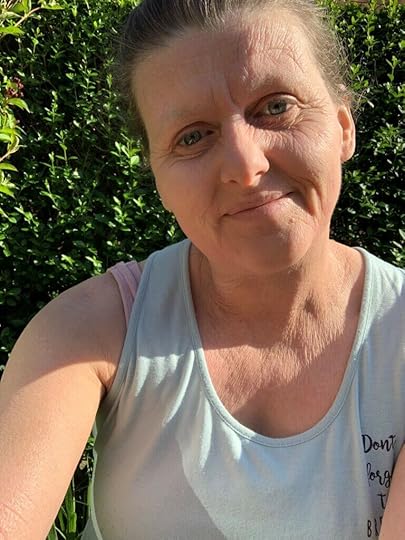 Me today, 13th May 2022 – Healing, healing, healingPlease sign the petition here:
Please sign TSW petition Today!
Me today, 13th May 2022 – Healing, healing, healingPlease sign the petition here:
Please sign TSW petition Today!
I’d love to know your thoughts… will we ever get there? Have you signed the petition yet? Why are they so reluctant to take this seriously?
You may also be interested in reading:My Topical Steroid Withdrawal Frequently Asked QuestionsTop 7 books for Topical Steroid WithdrawalA dermatologists review of The Shape of Skin‘My live during Topical Steroid Withdrawal – Film ReviewThe post Government response to TSW petition for research first appeared on What Allergy Blog.May 9, 2022
Speaking at a Food Allergen Forum
This week I was honoured to attend as the guest speaker at the Lancaster Food Allergen Forum, at Morecambe Football Club in Lancashire. It was a fantastic opportunity to share the experience of the allergic consumer, some of the challenges and fears we face and what we’d like to see from food service businesses.
There were 50-60 delegates at this event which was great to see and it really was wonderful to be back at an in person event finally after so long spent presenting form home online.
\
 Food Safety Forum agendaFiona Inston – Welcome and openingLizzi Watton – Food Safety and common mythsKevin Burge – Allergen Management in Food businessesRuth Holroyd – Living with Anaphylaxis, a customer’s perspectiveGary Singleton – PPDS, Food LabellingLee Wojarski – Health and SafetyLucy Caldwell/ Lyn Page/ Daniel Clarke – Help for businessesUnderstanding the allergic consumer
I shared my learnings of living with anaphylaxis, some of the good and bad eating out experiences that I’ve had over the years and also what we’d like to see happening as allergic consumers.
We’re not asking for the world, just respect and inclusion, and in my case just one safe item, that can quite simple. I’m not fussy what you I have (as long as my allergens are not present) and will often ask advice from the chef as to what he thinks is safest and easiest.
It’s more about being included and able to experience the eating out experience with friends and less about having loads of choice for me. But then as I begin a lot of talks, I’m most chef’s worst nightmare with multiple life threatening allergies. I’m severely allergic to all nuts (except almonds – make that make sense) and dairy. I also have a wheat and a soya allergy which cause asthma and stomach problems that are quite dramatic but so far not life threatening. They are all four officially diagnosed allergies so I need to be able to avoid them when I eat out – no mean feat!
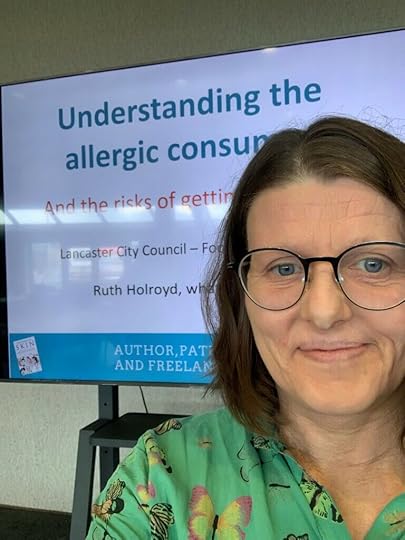 What I learnt
I learnt so much about the sheer extent of challenges food businesses face in today’s competitive and fast moving environment, from changing legislation to staff shortages and more. It was also interesting to get an insight into the great work Trading Standards and Food Environment Officers do to keep businesses safe. There is a kind of myth that they are to be feared and not welcomed into a business, but their role is to help and support, not to hinder the success of any café or restaurant.
It was great to meet such a friendly team at Lancaster City Council and hear about the kinds of work they get involved with, from Covid awareness lately, to the more traditional business inspections.
Food safety myths I didn’t know about!Lizzie Watton shared some really fascinating food and safety myths, and as the only non food safety expert in the room I was pleased to get most of them right. However I learnt a few things that make loads of sense once explained but that I had been wrong about.
Do you need to wash watermelons before eating/cutting? Well I looked down horrified at the watermelon slices that I had with me as snack. I’ve never washed a watermelon in my life. Well you should wash them. There was a recent salmonella outbreak reported due to the bacteria being present on the outside of the fruit skin. Once you but into and you transfer the germs onto the inside fruit, the bit you do eat! Wash those melons everyone! Just warm running water should be enough.Is it safe to eat a fresh beef burger that’s cooked pink inside? NO IT’S NOT! And I’m pretty sure I’ve had quite a few very tasty pink cooked burgers. I always assumed that because you can eat a beef steak rare that burgers would be the same, but they’re not. Because the germs get cooked off the outside of the steak joint, this doesn’t happen to any germs trapped inside a rare burger! You have been warned! It could be OK but it could be dangerous if meat is contaminated from the abattoir, which is very expensive to test for.Is it better for your fridge to be completely full to run better and more efficiently? Again I’m sure I’ve been told that a full fridge stays colder and keeps food at the best temperature, costing you less money. It’s actually another myth and could mean tightly packed food can’t get proper air circulation around the food. If you are finding that your fridge is jam packed, you either need a bigger fridge or a second one!Food Allergen Training and adviceI was so impressed that this training was offered free to all the businesses who were able to attend and lots of them did. Kevin Burge shared the 10 worst Allergen Fails (inspired by Heather Landex’s 10 ways to kill your customers) that can happen in a kitchen. I hope he doesn’t mind me sharing them here. He went into detail for each area, sharing what was going wrong and key tips and guidance for food service establishments to avoid making the same mistakes!
Failure to communicate – Processes, listening skills and understandingAllergen matrix errors – These need to be correct and up to dateStaff!!! – Must be trainedDeep Fat Fryer – cross contaminationBarista machines – those dirty rags and dairy/plant/nut milk cross contaminationSauces and garnishes – How were they made?Kitchen cloths – transference of allergens!Utensils, pans and reusable tubsIce cream scoops – the jug of waterToasters – one crumb of wheat is enough to make a coeliac or wheat allergic person very illHad you considered any of these?
Getting help for your food service businessThis free event was so helpful and well attended. If you want advice for your business here are some things you could try:
Trading Standards Laws Explained – In depth guidesFood Allergy Training for Food BusinessesGov.uk has LOADS of resources. Search for what you’re looking for to find informationLook for Food Safety Courses in your local area – Lancaster will be running them throughout 2022LinkedIn – is a great hub for Food Allergen experts. Get involved in the discussions on there and make connectionsYour local Trading Standards and Environmental Health contacts may also be able to answer your questions and point you in the right directionEngage with local allergy customers, turn them into raving fans!We need this across the countryI’d love to see this kind of training available across the UK. It’s only a tip of the iceberg and people need much more specialist allergen training but it’s a start, to get people thinking about possible problem areas.
You may also be interested in:Anaphylaxis: The Essential Guide: An Action Plan For Living With Life-Threatening AllergiesEqual Eats – Food Allergen Cards (10% off)30 tips for eating out with allergiesThe post Speaking at a Food Allergen Forum first appeared on What Allergy Blog.April 29, 2022
Boiling Point, anaphylaxis film review *****
A friend recommended that I watch this film (thanks Steve) and boy did it hit home. It really shows what a melting pot of potential disasters and mishaps a busy kitchen is. If you run a restaurant or food service business you have to watch this film.
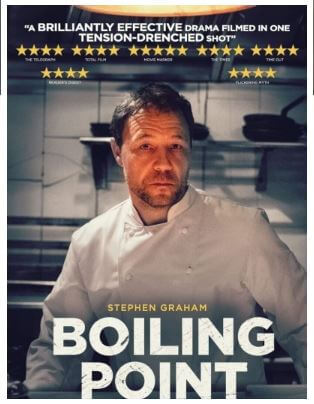
I watched in free on Netflix.
Trigger warning… anaphylactic reactionIf you have anaphylaxis and have ever had an anaphylactic reaction after eating out, or fear having one, make sure you’re in a safe place with someone if you feel this might trigger you.
It’s hard hitting and incredibly emotionally charged.
I knew ahead of time what the content was and it really was so similar to what happened to me with my last anaphylactic reaction when everything went wrong that possibly could.
However I felt safe, had snacks and tissues ready and dived in. It made me cry, it made me really emotional, but I also really enjoyed the film.
Watch the Boiling Point trailer hereBuckle up, sit back and get ready for a frenetic, hectic, action packed evening in a kitchen… what could possibly go wrong? To set the scene, they have a kitchen inspection and lose points due to some hygiene and storage issues, losing a star rating. The chef is furious, over worked, stressed and there we begin our story. It gets 5 tomatoes on Rotten Tomatoes so guarantees a good night in.
How did they handle anaphylaxis?I thought they handled allergies very respectfully. The staff took it seriously, they knew how dangerous food allergies could be and they had processes in place to ensure the table with the allergic diner was kept safe.
But accidents happen, and this film really highlighted how important it is be really hot on these processes and really make sure all staff are trained. Because every single part of the process and person in the unfurling drama plays a part with disastrous consequences…
I don’t want to spoil the film for you by saying too much, but the person who had the reaction was treated well, they knew what to do, stayed with the couple, called an ambulance, apologised, and had a debrief afterwards to work out what had gone wrong.
Why I love this film so muchI really enjoyed this film, mostly because the girl with the allergy was just a girl, a normal girl. Also it was portrayed respectfully, the person with the allergy was just another diner, albeit one that needed some extra care and attention put into their meal.
So often we either don’t see anyone with allergies in films of the producers get it so wrong that more damage is done e.g. Incorrect use of adrenaline injectors, disrespectful, the person is portrayed as weak and a wierdo. So thanks so much for this brilliant film.
We are just people trying to live out lives just like everyone else.
Is it safe to eat out with food allergies?I hear this a lot, why do you even eat out? It’s just not safe. This film will rock your confidence, but I strongly believe that being careful, choosing quiet places, booking early, speaking to staff in advance and choosing a simple safe meal CAN be done safely.
But it has given me new respect for kitchen staff and chefs to see an insight into just how many things can go wrong, because it’s not just the process, staff and kitchen, it’s other customers, circumstances, the personal lives of your staff and freak accidents.
A boiling point, a melting pot… for anaphylaxis.
But if I never ate again I would miss out on so much, and there are lots of places willing and able to take the risk with me to provide a safe meal.
Will I ever eat out again?I won’t lie, I have been more anxious since watching this. I don’t see that as a bad thing, it’s a natural emotion and it keeps me vigilant and aware of the dangers.
I had a panic attack just a few weeks ago when I found myself out of my comfort zone with everyone I was with ordering an Indian takeaway. I initially just went straight into panic attack mode. I couldn’t function, my brain froze and it took me about half an hour to calm down.
I stayed safe, didn’t order any takeaway, a rule of mine as I don’t think Indian Takeaways are safe. I had chicken and chips and walked home alone. A sad end to the evening but I am still here, chose a safe option and protected myself.
If I were to play through the evening again I wish I’d been stronger in seeing this risk ahead, telling my friends I wasn’t confident eating there and going straight to the safe food option. And since I was tired and anxious, I wish I’d booked a taxi home instead of walking alone as I really felt unsafe, heightened anxiety and the stress of feeling like such an idiot can do that to you.
I’d love to hear your feedbackPlease come and tell me what you thought of this film when you’ve watched it. How did it make you feel? Do you think people with allergies should eat out? Is it safe? Or not fair on chefs and restaurants?
Let’s have a heated debate!
You may also be interested in reading…Anaphylaxis – The Essential Guide – the book every allergic person should read10% off Equal Eats Dietary Allergen CardsAllergy Mistakes – Near Miss ReportingAllergy Companions – The Trip Advisor for people with allergiesThe post Boiling Point, anaphylaxis film review ***** first appeared on What Allergy Blog.April 26, 2022
Allergy Awareness Week and we are 13!
This month marks thirteen years of blogging about allergies, eczema, asthma and anaphylaxis! It’s been a blast and I am still loving blogging.
But we still need to keep raising awareness; there is still so much misinformation and lack of awareness so I won’t be stopping sharing and advocating any time soon.
 Find out more about both my books hereAllergy Awareness Week 2022
There’s loads going on this week as it’s also Allergy Awareness Wee 2022. One of the key pieces of research I read this week was from Allergy UK, about the hidden cost of mental health.
Check out the Allergy UK website for some shocking stats about living with allergies.
For instance, did you know:
Over half (53%) of people living with allergies in the UK regularly avoid social situations due to their allergy.Over half, (52%) of people feel they had to play down their allergies due to fear of judgement.2 in 5 (40%) parents of children with allergies reported their child had experienced bullying due to a conditionI can say with confidence that my own allergies and the risk of anaphylaxis have and still do cause me a great deal of anxiety and panic attacks. I had a panic attack this month when faced with an unplanned food stop at an Indian Takeaway. I didn’t eat there and got home safely but not without a load of unnecessary anxiety and a minor panic attack outside the restaurant that no one realised was even happening.
It’s why I wrote my book, Anaphylaxis: The Essential Guide: An Action Plan For Living With Life-Threatening Allergies. I wanted to help others learn to live with these strong and terrifying emotions.
To celebrate my blog birthday with you all I’m giving away a copy of both my books to one lucky winner.
You could win a copy of
Anaphylaxis: The Essential Guide: An Action Plan For Living With Life-Threatening AllergiesThe Shape of Skin – eczema poemsAll you have to do is comment below telling me why you’d like to win them and how allergies and eczema affect your life.
I’ll choose a winner at random from the comments below on Monday 2nd May, so make sure you enter by the 30th April .
Discounts, even if you don’t win!I have quite a few affiliate codes now for products that I love from companies who I really trust and believe in. Here’s just a few:
10% off Creative Nature with code WHATALLERGY1015% off MedicAlert Bracelets and jewellery with cod What15Allergy.10% off EqualEats dietary allergen cards with code WHATALLERGYFor even more discounts, click on the button below:
I do get a small kickback from some of the above and some are just for you guys to get some money off. Some people feel uncomfortable about me doing this but it costs my money to host and keep this blog safe so these rewards help me to get the blog going and also help me keep stocked on the natural skincare and shampoo that works best for my skin.
So what are you waiting for? Do you want help me celebrate my blog’s birthday? Please enter my giveaway as I love seeing my books go out into the world
Comments below to be in with a chance to win.
The post Allergy Awareness Week and we are 13! first appeared on What Allergy Blog.April 25, 2022
Long Covid, ME, TSW and diagnosis…
Long Covid is a recognised condition, one that doctors are learning to recognise, diagnose and support patients through. Yet it’s a tricky condition to identify, so it’s not easy to test for. Yet the guidelines for doctors encourage them to diagnose patients even if they have one symptom.
This recent article by Michelle Berriedale-Johnson, Long Covid, gave me so much hope for those people who have been unlucky to now have lasting and damaging consequences to the covid vaccine.
But it also made me really angry. Topical Steroid Addiction and Withdrawal was known about as long ago as the 1970’s. However most doctors will not and cannot diagnose it, despite the fact that most of us have all the symptoms associated with this horrible condition, lasting YEARS!
I know Covid caused many deaths and TSW is not life threatening, and I understand a lot of people are affected by Long Covid But what if TSW is real, what if there are thousands, millions of people thinking they have uncontrollable severe eczema that they’re going to have to just live with for the rest of their lives. What if all those people being told to keep using
Topical steroid withdrawal is rareWe just keep being told it is rare, but visit support groups, Facebook Groups, social media and you’ll see thousands of patients who think they’re experiencing TSW. They mostly go undiagnosed and choose to heal their own way, with no support. Doctors and dermatologists aren’t seeing these people in their clinics because they dismiss them, gaslight them and belittle them.
Topical corticosteroids are completely safe if used correctlyWe’re also told that topical steroids are safe, yet we are still experiencing rebound flares and withdrawal, requiring stronger and stronger steroids for longer and longer… yet new guidelines now say use for 1-2 weeks only and then go back to your doctor. Doctors and dermatologists are still mostly of the belief that TSW is very rare and most of us just have out of control severe eczema.
How do rare, hard to diagnose conditions get discovered?There are many other instances where it’s taken a long time for the medical profession to recognise the damage done by drugs and medications. These include thalidomide, vaginal mesh, lithium and many more drugs and procedures all do more harm than good. Just read Baroness Cumberlege’s Do No Harm Review . A link can be found in this blog, Topical Steroids harm is not heal us.
There are also many more rare medical conditions that took years to be understood fully, like coeliac disease, ME, MS, etc. and typically patients can struggle for years before getting that diagnosis and the care and support the need and deserve.
However they do get a diagnosis eventually and they are then eligible for lots of different treatments, not jus the drug route. So what is going to take to get TSW to be taken seriously?
I thought I’d just do a really quick review of a few conditions, Covid being one of them – a new pandemic but a condition that has already been widely recognised and researched.
Medical ConditionFirstobservedConditions and
Symptoms
approvedDoctors can diagnoseStudiesLong Covid2020/21Visit the NHS website to see the most common side effects of Long CovidYes – They are encouraged to diagnose even if patients have only one symptom!There are already 1,438 studies listed on Pubmed into Long Covid.
An international survey found that 45% of Long COVID sufferers had reduced their workload and 22% were still unable to work. This has implications for labour force productivity and the cost of long-term sickness absence.
The latest ONS Survey found that Long COVID symptoms adversely affected the day-to-day activities of 63% of those with self-reported long COVID, with 18% reporting that their ability to undertake their day-to-day activities had been ‘limited a lot’.Myalgic Encephalomyelitis (ME)As far back as 1750, Sir Richard Manningham talked of Little Fever, thought to be MEExtreme fatigue, lasting longer than six months.Diagnosis can take 6 months as other causes of fatigue do not last longerThere are approx 9,835 results into ME on the PubMed website.Coeliac DiseaseIdentified 8,000 years ago by Areteaus, a greek physicianCan be confused with other conditions such as IBS but are well documentedAntibody Blood tests and a gut biopsy are required diagnose CD.There are 28,569 results shown on the PubMed website. Visit the Coeliac UK website for Current and Past studiesAllergiesEgyptian hieroglyphics depict a bee sting allergyNICE guidelines outline the symptoms, including skin swelling, difficulty breathing, anaphylaxis etc.Tests take anything from an hour to weeks or months to receive blood test resultsThere are approx. 536,295 studies into various types of allergies, from good to venom, listed on PubMed.
Many studies can also be found in Allergy and Immunology publications. Also visit The Allergy UK website.Topical Steroid Addiction
and Withdrawal (TSW)1970sDr George Moncrieff – the only doctor willing to speak out about TSW
ITSAN, the Topical Steroid Withdrawal Support US charity was established in 2021.
UK support group – Scratch That – 2021
Eczema Society and British Association of Dermatologists join statement issued 2021
MHRA – Sept 2021NoI found 18 studies into TSW, most not robust or well respected enough to be taken seriously yet. Most also state it is very rare, whilst this may be the case but I think it’s more common than dermatologists admit.
Click here for more information on TSW StudiesDiagnosis for other addictions
A patient could walk into any doctor’s surgery and ask for help, treatment and a diagnosis for alcoholism, drug addiction and smoking tobacco addiction and they would be believed and taken seriously.
So why are those of us experiencing rebound flares and decided to go through TSW just systematically ignored, disbelieved and gaslit and being told to just use more topical steroids?
Surely as patients we deserve to be listened to. Instead most of us are discharged when we refuse topical steroid and immuno suppressant medication because there is nothing else available. What this means is that doctors are not seeing TSW patients. We are just all doing this on our own without medical supervision.
My dermatologist is currently continuing to see me although he is not happy about things and isn’t convinced about TSW.
It’s unacceptable and I will not stop raising awareness until things improve and doctors are able to give a diagnosis to TSW patients.
 So what’s the future for TSW?
Firstly I think we should rename it Really Really Long Topical Steroid Withdrawal!
I think we have a very long way until we can convince doctors and dermatologist that what we are going through is not just uncontrolled severe eczema, but until more of us have healed and gone through it, we cannot prove it.
And until doctors and dermatologists can diagnose it we will continue to go through it alone.
The post Long Covid, ME, TSW and diagnosis… first appeared on What Allergy Blog.April 19, 2022
Topical Steroid Withdrawal Studies
What can we learn and what research has been done so far into topical steroid withdrawal? It would be easy to assume there had not been any studies made into this complex condition judging by the lack of medical support and diagnosis pathways.
However as you can see, there have been quite a few, as far back as 2015 and even one in March this year!
 TSW Studies from 2015
A systematic review of topical corticosteroid withdrawal (“steroid addiction”) in patients with atopic dermatitis and other dermatoses.
Hajar T, Leshem YA, Hanifin JM, Nedorost ST, Lio PA, Paller AS, Block J, Simpson EL; (the National Eczema Association Task Force).J Am Acad Dermatol. 2015 Mar;72(3):541-549.e2. doi: 10.1016/j.jaad.2014.11.024. Epub 2015 Jan 13.PMID: 25592622
Review. Although many of the side effects of topical corticosteroids (TCS) are addressed in guidelines, TCS addiction is not. …LIMITATIONS: Low quality of evidence, variability in the extent of data, and the lack of studies with rigorous steroid addiction methodology are …
Steroid Withdrawal Effects Following Long-term Topical Corticosteroid Use.
Sheary B.Dermatitis. 2018 Jul/Aug;29(4):213-218. doi: 10.1097/DER.0000000000000387.PMID: 29923852BACKGROUND:
Concerns about topicalsteroidwithdrawal (TSW) are leading some patients to cease long-term topical corticosteroid (TCS) therapy. .
Topical Steroid Withdrawal: A Case Series of 10 Children.
Sheary B.Acta Derm Venereol. 2019 May 1;99(6):551-556. doi: 10.2340/00015555-3144.PMID: 30734047 Free article.
Concerns about topicalsteroidwithdrawal are causing some patients to cease long-term topical corticosteroid therapy, however, little is known about the ensuing clinical outcomes. This qualitative case series studied 10 children whose parents stopped …
Topical corticosteroid withdrawal (‘steroid addiction’): an update of a systematic review.
Hwang J, Lio PA.J Dermatolog Treat. 2021 Feb 4:1-6. doi: 10.1080/09546634.2021.1882659. Online ahead of print.PMID: 33499686
BACKGROUND: Topical corticosteroid withdrawal is an entity associated with chronic steroid use and misuse that has not been fully described. …METHODS: We searched Ovid Medline, Pubmed, and Cochrane library for terms related to topical corticosteroid …
Steroid Phobia: Is There a Basis? A Review of Topical Steroid Safety, Addiction and Withdrawal.
Tan SY, Chandran NS, Choi EC.Clin Drug Investig. 2021 Oct;41(10):835-842. doi: 10.1007/s40261-021-01072-z. Epub 2021 Aug 18.PMID: 34409577 Free PMC article.
Review. There is a growing concern amongst patients about topical corticosteroid (TCS) side effects, with increasing discussion of topicalsteroid addiction (TSA) and topicalsteroidwithdrawal (TSW) particularly on social media platforms. …
Topical corticosteroid withdrawal reactions.
[No authors listed]Drug Ther Bull. 2021 Dec;59(12):184. doi: 10.1136/dtb.2021.000062.PMID: 34824131
Overview of: Medicines and Healthcare products Regulatory Agency. Topical corticosteroids: information on the risk of topicalsteroidwithdrawal reactions. …
This study is interesting as it’s the only one looking at possible treatments for the condition, rather that just observing the symptoms.
Traditional Chinese medicine for food allergy and eczema.
Wang Z, Wang ZZ, Geliebter J, Tiwari R, Li XM.Ann Allergy Asthma Immunol. 2021 Jun;126(6):639-654. doi: 10.1016/j.anai.2020.12.002. Epub 2020 Dec 10.PMID: 33310179
Review. Triple TCM therapy including ingestion, bath, and cream markedly improved skin lesion, itching, and sleep loss in patients with corticosteroid dependent, recalcitrant, or topicalsteroidwithdrawal. Xiao Feng San and Japanese and Korean formulas were found to …
Guys this report just show how much of a difference we are all making by sharing our journey. Not only are we helping each other and getting the word out there, but we also sparked this review by dermatologists. They reported a 288% increase in number of mentions and a 592% increase in performance of #topicalsteroidwithdrawal
I’d love to read this one in full but I don’t have access to read it.
Topical steroid withdrawal through the lens of social media.
Bowe S, Masterson S, Murray G, Haugh I.Clin Exp Dermatol. 2022 Mar 26. doi: 10.1111/ced.15194. Online ahead of print.PMID: 35340034
BACKGROUND: The term topicalsteroidwithdrawal (TSW) describes an adverse effect that generally occurs with inappropriate prolonged use of high-potency topical corticosteroids (TCS). The presence of user-generated content relating to TSW on social media has not been well defined to date.
Results: Across all social media platforms there was a 274% increase in mentions of the hashtag #topicalsteroidwithdrawal in the year 2020(7992) compared with the year 2016(2138). Top associated hashtags included #TSW, #eczema, and #topicalsteroidaddiction. On Instagram, we found a 288% increase in number of mentions and a 592% increase in performance of #topicalsteroidwithdrawal in 2020(618,354) when compared to 2016(89,390).
Conclusion: Our results confirm an increase in the presence of user-generated content relating to TSW on social media and also highlight its extent. Large numbers of patients are exposed to this content which could influence their engagement with TCS.
Why aren’t doctors and dermatologists reading these studies?It’s interesting to see studies being done as long ago as 2015, even if these are not as rigorous as required. It would be easy to assume there hadn’t been any studies at all if you spoke to most dermatologists in the UK. Are dermatologists reading them? And if they’re not, why not? Are they printed in unpopular journals?
I will be sending this blog to my dermatologist to read and asking for his feedback. I’d love it if you could all do the same? Let’s love bomb our derms with TSW content.
Even if you don’t have an appointment, your dermatologist or GP will have an email address you can contact them on. If we don’t tell them about this stuff, who else will?
And would any dermatologists like to comment below? We would just all love to talk about TSW with you, more than anything. To just feel seen, understood, heard and respected and to get a diagnosis that we are not going mad would do so much good.
Why is this so hard?
The biggest study of all – Every person going through TSWI really feel like every one of us going through TSW today are taking part on one huge, massive, horrible experiment. A scientific study with no guidance, no support, no monitoring! So I would urge every dermatologist reading this, don’t just discharge us because we are refusing the immune supressing treatments you are offering, instead engage with us, see what natural treatments you can help with and observe this process with us. Because what if we’re right?
Does your dermatologist diagnose TSW?I’m looking for dermatologists who are actually diagnosing TSW. Are there any anywhere? Do they exist? And I’m not talking about Dr Rappaport in America charging over $500 for a zoom consultation.
I’d love to hear your feedback on this if you’re an eczema or TSW person. Did you know about these studies? Does it help you feel more understood and give you some hope? Or do we thing these studies are lying unread and dusty in some locked cupboard somewhere?
You may also find the following helpfulTopical Steroid Withdrawal – Frequently Asked QuestionsWhy don’t anyone talk about TSW?The Shape of Skin – eczema and TSW poemsA dermatologists review of The Shape of Skin, Eczema poemsThe post Topical Steroid Withdrawal Studies first appeared on What Allergy Blog.April 13, 2022
Buy Coop Free From – support The Natasha Foundation
Any free from products bought from the Co-op Free From range between Wednesday 13th April and Tuesday 3rd May will see a donation of 10% made directly to The Natasha Research Foundation (NARF) charity.
 https://www.narf.org.uk/What is The Natasha Allergy Research Foundation?
The Natasha Allergy Research Foundation (NARF), is the cause behind Natasha’s Law, in honour of Natasha Ednan-Laperouse who sadly lost her life after an anaphylactic reaction to undeclared Sesame in a bread roll sold at Pret.
What is Natasha’s Law?Natasha’s Law came into effect on the 1st October 2021 and affects allergen labelling on pre-packaged food for presale, e.g. sandwiches made on the premises or in a factory, and put into a package to sell at any sandwich outlet.
National Allergy Week 2022 runs from 25th April so this initiative should hopefully help lots of much needed money for more research.
Any Co-op Free From products purchased by Nisa partners during the three-week period will generate a 10% donation to the Foundation.
You can read the full article here, “Nisa and Coop set to raise money for allergy research.”
Coop supports allergy researchJonny Lambert, Co-op Brand Planning and Comms Manager (Wholesale) said: “Food allergies can have life-threatening consequences which is why we are raising funds for the Natasha Allergy Research Foundation who invest in research whilst raising awareness. When Nisa partners buy any Co-op Free From product during the three week period, we’ll donate 10% of sales so the more partners buy, the more we donate. More and more shoppers are turning to Free From as a sustainable, conscious choice and the Co-op range offers real value too.”
Head of Retail at Nisa, Victoria Lockie, said: “This is another brilliant opportunity for our independent partners to make a real difference, without it costing them a penny, and at the same time they are investing in an exciting growth category.”
Why not support even if you don’t have allergies?I’d like to ask you all a huge favour, if you have a Coop near you, and even if you don’t have allergies, why not see what’s on offer? Remember this only applies to the Coop branded free from range and I think you’ll be surprised.
Make weekly savings with the new Coop appAnd if you do shop at Coop, check out their new App. Every week you get to choose from two special offers on things you usually buy, including anything from 25p off fresh fruit to £2 off your weekly shop. This week my offers include 50p off Tyrells crisps and 50p off Coop fresh fruit.
Now let’s see how much money we can all raise for a good cause. Get shopping! Follow me on my social channels to find out what I’m buying!
You may also be interested in:Allergen and pollen free plants and flowers for your homeDiscount codes on eczema skin care and allergy productsBuy Anaphylaxis – The essential guideThe post Buy Coop Free From – support The Natasha Foundation first appeared on What Allergy Blog.April 6, 2022
Are allergen free menu choices shrinking?
Since lockdown ended and we can all started to go out to restaurants to eat again it became evident that choices for free from foods had drastically reduced. It’s understandable why that was, less availability, smaller staff teams, stricter processes and many more restrictions regarding covid and safety that rightly took priority.
When we were not able to leave our houses again the takeaway options were still not safe or available for those with food allergies; choices have reduced and companies seem reluctant to prioritise allergic diners in favour or recouping losses made. I totally understand this, smaller menus meant they could focus on building their businesses back up after a tough few years of trading.
Choices have reduced for allergic dinersI don’t know about any of you, but from my own small adventures eating out again after lockdown, I’ve noticed a marked reduction in choice and confidence in allergen free options. A few things I’ve observed:
Less or no free from options More focus on vegan and gluten free meals (not suitable for dairy, egg or fish allergic people as laws for vegan food do not require totally free from food, just the intention to do the best they can)Fewer options created that are easily free fromSmaller menus, meaning less choicePoor processes meaning staff can’t check even if they want toMore ‘may contain’ blanket statements that aren’t welcoming to allergic dinersSo what can we do to feel safe and included when eating out? And what can restaurants and cafes do to address this issue?
An example of a poor eating out experienceI recently visited Bill’s in Bracknell with friends one Friday evening. I’ve had good experiences at Bill’s and we chose it because of that. I checked the website and looked at the allergen menu and contacted them before going and was assured they would be able to cater for me. However on the night, there was only one thing suitable, the steak – always the MOST expensive option on the menu. There was NO safe carb option as the chips were not safe due to potential cross contamination. They did not have any other safe potato sides and the rice contained grains. That’s pretty poor. I did manage to get some broccoli to go with it… but as you’ll see it’s a paltry portion of broc. I’d have been a bit disappointed if I’d paid a the side of greens at £3.75! Thankfully they didn’t charge me extra.

The only other thing on the menu suitable was a black coffee! There was a Coconut chai latte that sounded lovely, but it had really poor labelling on it and no ingredients listed on the packaging so staff couldn’t advise me whether it was safe. I accept that with allergies to dairy, wheat, soya and all nuts, this is maybe difficult for a restaurant, but I’ve definitely had more choice at Bill’s before lockdown.
Visiting another Bill’s, in St Alban’s for breakfast just weeks before I had a totally different experience. I was able to enjoy a pretty good breakfast with bacon, eggs, gluten free sausages and sour dough toast.
So what’s going on Bill’s? Where is the lovely green thai curry you used to do? Why so few choices for those with food sensitives?
It looks like Bill’s, instead of having an allergen menu, have chosen to offer vegan options, which do not have to be free from allergens such as fish, milk, egg etc. Great for vegans but not probably safe for people with allergies. Read, “Is vegan food safe for people with food allergies”.
I do however like the little allergy flags they put on the allergen free meals, a nice touch and lets me know I have the right meal.
What can restaurants do to include those with allergies?There are loads of things you can do and lots of companies offering advice and consultancy. If you can’t afford to get professional advice, there are still simple ideas.
Offer things like jacket potatoes and simple rice for those with allergiesKeep labels for bought in products and make sure you know what’s in the products you serve.Start making a note of all the allergen bookings you get. What is in demand in your area? What are people asking for? Can you cater for them?Have dressing on the side so salads are accessible to allHave an allergen menu available, not just verbal information.Ask everyone if they have allergies when you take the food order, that way you normalise it help to remove the stigma that we are being awkward.Have an inclusive allergen statement, not an unwelcoming one that is basically covering your arse and implying we are taking all the risks and you’ll take no responsibility at all.There are so many things restaurants can do. If you would like advice speak to Hazel Gowland, Jacqui McPeak and Caroline Benjamin, who provide advice, guidance and training in food allergen processes.
There are always safe places to eat out with allergiesIt’s not all doom and gloom though, there are still loads of places that will be able to cater for allergic diners and I’ve had some amazing meals out recently. But for every great experience there have been times when it’s been really hard to find anything safe to eat and others where it’s been difficult for staff to help due to poor labelling and processes.
Here are a few of the good places that I’d recommend:
Locanda Locatelli restaurant reviewNo 1 Aldwych – 10/10 for allergen save diningThe English Indian (mobile fish and chip van)Pizza ExpressLoads of local cafes including Muddy Boots at Rowans and The Potting Shed near Jersey Farm in St Albans, interestingly both at garden centres!There are probably many more and I’ll be exploring more eating out places over the coming months so watch this space! For more ideas visit Allergy Companions, the Trip Advisor for people with allergies
Free from choice at supermarkets has also become limitedAnyone else noticed their favourite free from snacks and go to staples are hard to find or just disappeared from supermarkets? I’m having to source things direct from the manufacturers because the free from choices in supermarkets near me have seriously reduced. I think this goes for all products, including the main stream not allergen free foods, but it hits the allergy consumer harder. We already pay more for our safe products, because it costs more to produce freefrom foods. We understand the extra costs but buying direct adds on postage and makes it harder to plan.
It’s important to support the independent brands we love by buying from Holland & Barrett, other health food shops and also direct from them; if you have the storage, buy in bulk to avoid postage, or share with an allergic friend. I wonder how many of our favourite brands will struggle to compete in a market which is pushing them to the side-lines.
It’s all about gluten free and vegan choiceHave you noticed that there is LOADS of choice for gluten free (with may contain warnings) and vegan diners (also with may contain warnings).
I understand why restaurants are choosing to follow these markets, arguably they are larger and in the case of vegans, they are not in danger of anaphylaxis or illness if they eat any animal products.
Whereas those with life threatening allergies could end up in hospital and coeliacs are made very unwell, vegans just won’t know if a meal is cross contaminated or even contains an allergen. Is it a bid to avoid potential law suits for allergen process negligence? I do get it, but it’s frustrating as it feels like we are being discriminated against and excluded from many places.
I also wonder how many of those with coeliac disease are finding they get ‘glutened’ more often, a phrase used for when they eat gluten by mistake and suffer the consequences. This is also very worrying as many coeliacs do not have any outward symptoms despite damage being done inside their small intestine. If undetected and prolonged this can lead to serious complications and permanent damage.
What has your allergen eating out experience been like?I’d love to hear from you all. How has your experience changed since Covid? Is it easier? harder? The same as before? And I’d love to hear from any restaurants owners of chefs who have any ideas of how to make eating safe and inclusive for allergic diners.
You may also be interested in readingEating out with allergies after CovidThe post Are allergen free menu choices shrinking? first appeared on What Allergy Blog.March 24, 2022
Reframing skin flares as healing
This applies to anyone going through topical steroid withdrawal really as skin flares can signify issues, triggers, allergies or stress that needs to be addressed. But if you’re going through TSW the flares are probably often just skin your healing.
It can feel like a constant attack, like it’s never ending and the flares just keep coming. That’s because they do, when you’re healing. And it’s a great sign, the healing cycles go from inflammation and itching to excessive flaking when your skin is healing.
 Reframing skin flares as skin healingIs it a skin flare and what’s causing it?
I hear people often saying, “My skin is flaring again.” or questioning what has caused their latest flare.
With TSW it’s often so random and isn’t caused or triggered by anything. Although of course it can be if you have allergies and sensitivities that you’ve not uncovered or which have just begun during withdrawal. Therein lies the complex and frustrating relationship with skin when it’s inflamed and healing.
For me, during my TSW journey my skin has ‘flared’ almost every week and often every day in some shape of form, from more severe to much milder inflammation and flaking.
Check out The Healing Crisis – why it gets worse before it gets better.
What is the TSW healing cycle like?I think this may vary between people, but mine go like this:
Inflammation, redness, swollen skin that is very itchy. In worst cases can also ooze or be damp.Extreme pain, deep grooves that have nerve pain, insomnia.Crusting and excessive flaking. This can be anything from thick crunchy flakes to smaller finer flakes in a milder healing crisis.And this cycle has repeated on an endless, exhausting loop throughout my TSW healing journey so far. Sometimes it can go from inflammation and itching to the shedding flake off phase in the same day! It’s incredible how the skin can proliferate like that so fast.
It’s been pretty intense since October 2021 but I feel like as Spring and Summer approach the warmer weather seems to signal some relief in my healing
Believing you’re healingHaving a positive mindset has really helped me through my topical steroid withdrawal journey. At first I kept setting fake deadlines in my heard, targets by which I expected to heal by. Then when that didn’t happen I would begin to doubt. I would lose hope and start to feel negative, like I’m doing something wrong or not doing enough to aid my skin healing.
Now I am learning to use different language. When I talk to myself now I say things like:
I will heal when my body is readyI have everything within me to heal and I am healing every dayMy skin knows how to heal itselfYou have to accept what is happening, let go and dive in. Just go with the flow, the ups and downs and the healing crises (formerly known as skin flare ups) and learn to sit with the discomfort.
This is something that was really brought home to me during recent hypnotherapy and regression therapy. The meditations that were provided for me by my hypnotherapist focuses on these mantras, that we are worthy of healing and will heal.
What if I don’t heal?What if my skin doesn’t heal from topical steroid withdrawal? Would I be OK with that? If you can learn to love yourself and find happiness even through pain and inflammation you are also healing deeper traumas.
Many people live with permanent skin differences, scars and conditions that can never be changed or healed. They are worthy of love, empathy and kindness. Learning to show that same love for yourself, your skin and your own body as it goes through this traumatic transformation is humbling.
#skinpositivityThere is a whole movement online of the skin positivity community. People with conditions like Treacher Collins that affects how the face is formed, those with acne, psoriasis, burns survivors and many more. In a world where we are often instantly judged by our outward facial appearance it can be hard to accept things if you’re not happy with them.
Check out this blog, “Let’s stop eczema bullying.” to find out how Jono Lancaster stays positive despite his facial differences
I’m learning to be at peace with my skin as it is today. My quality of life is pretty good; I can run, walk regularly, love yoga, have amazing friends and family who I enjoy spending time with. I am still working, part time with flexible hours, writing and blogging. I have so very much to be grateful for and practise regular gratitude journaling and guided mindful meditations. I find this brings me back to the present, helps me see how lucky I am and shows me how much I have.
Behaving as if you’re healed.Another thing that is helping me is to kind of pretend I’m feeling better than I am and start planning for stuff, even on a day when I’m in pain and want to hide away. By doing this I’ve begun to embrace life more and get back out into the community again. I started booking meals out, accepting invitations, going to parties and nothing bad happened. Occasionally I was very uncomfortable, itched ferociously and was desperate to get home. But more often I was OK, and more than that, I loved being back out there.
It’s also OK to cancel if you are really struggling. Learning what your boundaries are and when you need to really rest is part of the process. Your friends and family will understand.
Don’t put your life on holdThere is a tendency to stop doing what is painful and isolate, Covid has cemented that as normal for us. Putting life on hold until we are truly healed. But what will healed look like? For instance I’ve put off dating because of my appearance, when actually if I met the right person that shouldn’t matter at all. I’ve put off buying new clothes and bedding because I just keep messing them up with the emollients I’m wearing that stain things, blood stains, and rips from scratching through the fabric. Something I’m going to start doing is to push these things.
Knowing when to push and when to restThis month I’m having a massive declutter of all the messed up clothing and plan to buy some new items – carefully chosen – to be part of a new smaller capsule wardrobe. I have so much, stuff I never wear.
As for the bedding – that’s expensive so I’ll scuzz up these ones with the zinc cream for a while longer.
The dating can wait though. I’m happy with my decision to focus on myself at the moment. I have so much going on that I have very little time and room in my life for someone else. Time will tell though, maybe I’ll meet someone normally but for now, I’m happy with concentrating on healing.
It’s also OK to know when to say no, when to rest and take time to be on your own and do the things you love. Finding the right balance can be hard to do but in time it gets easier.
How’s your skin healing journey going? Are you struggling to stay positive? What do you do that helps you?
You may also be interested in reading:The Shape of Skin – Eczema poetry book for healing skin30 ways to stay cool for eczema skinPositive Affirmations for your skinThe post Reframing skin flares as healing first appeared on What Allergy Blog.