Ruth Holroyd's Blog, page 13
March 22, 2022
Is blogging dead? Do I keep blogging?
I’ve been blogging now for over thirteen years and I love it. What began as a hobby now generates income and is a passion that fuels me daily. I have so many ideas for future blogs and so many things I want to write about, but blogging is tough. Do I keep going? Are you guys loving my content? or losing interest?
Because the stats speak otherwise. Over the last few weeks I’ve seen a dramatic drop in sessions, session duration and bounce rate. What’s going on?
 What is blogging?
Blogging has been around now for years and mine for quite some time. I’d describe a blog as a kind of website but one that catalogues the bloggers life, journey and experiences. Blogs change often with new content being added as bloggers share what their new content. You can get lifestyle blogs, recipe blogs, fashion blogs, travel blogs, blogs about anything and everything really, but bloggers often give up blogging after a year. The reason? Because blogging is hard work, it’s a commitment and to be good at it you need to invest time in learning and be genuinely passionate about doing it.
There are apparently 600 million blogs out there, according to Create Go , a very successful 6 digit income blogger. Blogging is clearly still popular, but is the blog dead now that we have so many other platforms like Instagram, Tiktok and Youtube? Because trends are changing, people seem to want quick, short video content rather than the written word. Should I change what I do and create more video content and stop writing?
Why I love bloggingDiscovering blogging, the whole process and the community I’ve discovered has been amazing. Here’s why I love blogging:
It’s in my blood, I can’t stop now. I just enjoy the whole process of researching, crafting and polishing a blog.It’s my job; even though much of what I do here is for my own enjoyment and not bringing in income. I am trying to monetise what I do here with limited success.I get to share things I’ve learnt and help people live better lives with their health condition, whether that’s eczema, asthma, allergies or topical steroid withdrawal.I feel passionate about raising awareness about these conditions and blogging is one way that I can do that.I am always learning from others, researching and exploring new subjects.I love writing and it’s just a hobby now, blog ideas are always popping into my head and I have over 80 in planning at any one time which is a bit bonkers.It has lead to so many amazing experiences and opportunities from speaking at the Houses of Parliament to being on TV.I’ve met so many other lovely bloggers and one thing I love to do is have a blog trawl and support other bloggers by reading, commenting and sharing their amazing content.I’ve won awards – Definitely proves this blog isn’t dead! Check out I won the Free From Food Awards Hero Award 2021It definitely sowed the seeds for me writing my first took; Anaphylaxis – The essential guide.So I think we can say that this blog is definitely not dead… not for me anyway. I’ll just keep on blogging and praying you guys are reading my content.
The downsides of bloggingBut it’s not all good, it can be heart breaking, hard work and sometimes even a burden.
Is anyone there? It can often feel like no one is reading or listening to the blogs I write.No comment – I rarely get comments on blogs any more. Why is that?Declining stats – Blog stats have been steadily declining over the last few weeks. I’m not sure why, the nice weather? people don’t have time to read? my blog is rubbish? I need to move with the times and do something new? all of the above?Free marketing – Many businesses expect you to blog and share their information on social media for free and rarely value the hard work that goes into making a blog look great and work well. Unsolicited begging emails – I get emails daily from people who have links I must include, requesting link insertions, asking me to share infographics, their own guest blog for free. It’s endless and I often now just delete these. I can’t reply to them all and I don’t owe anyone anything. A lot of these emails are completely irrelevant too and show that they haven’t learnt what’s important on my blog before getting in touch so I’m even less inclined to engage. It’s a no from me!Everyone wants a piece of you… and I generally love helping others share their work, get their survey completed, contribute to outreach projects, build advocacy, but these activities are rarely paid and come in thick and fast. It can feel like I am obliged to do all these things with no reward, sometimes that’s wearing. Other times I don’t mind because I’m helping others, but it’s a constant stream of requests.Time consuming – It does take up a lot of my time. I can spend hours, whole evenings tweaking, fixing broken links, planning future content, writing blogs. A blog can take me anything from 1-2 hours to sometimes days of editing and anguishing.Freebies with no payment – with the request of a blog but no payment doesn’t pay my bills. Sometimes it’s lovely to receive a free gift in exchange for a product review but for me, that requires payment too. Often that’s not on the table so I’ve started to say no.Demanding payment – I’m not very good at monetising my blog and find it hard to ask for payment.So with all these negative aspects on the table, is blogging still a worthwhile hobby or business venture?
Should I continue?
For me, right now, I’m still enjoying it. And I really don’t think blogs are dead. If you’ve ever tried searching Twitter, Facebook, Instagram or TikTok for some content you saw the week or month before, you’ll know it’s not easy. Content is transient and passes out of vision pretty fast.
Is blogging dead or does it have a future?I have to believe it’s not dead, but some kinds of blogs definitely are. Many of the bloggers I met back when I started have stopped and their blog has disappeared. There are also far fewer bloggers that I can name now. But there is content that people do want and need.
Solving problems – Helping others navigate difficult challenges and sharing useful tips, helping hacks, advice etc. is not dead. People need this, want it and often thank me for it.Sharing products – Product reviews are still definitely popular. I share the things that I find that really help me in my daily life from brands that I love and believe in.Fresh content – Often I find that what I’m looking for just doesn’t exist. An example would be when I want to review all the oat milks on the market to see the ingredients in them, this took me hours, and then became a blog – Roundup of oatmilks available in the UK So if it doesn’t exist, and I think I can create it and it will be useful to some of you out there, I’ll put in the hours and create blogs like this. They take me weeks to do but I enjoy it.Video content – I’ve been experimenting with video so this is something I’d like to incorporate a bit more, but I’m not really going to go hard on that. There are many other vloggers out there and it’s a skill I’m not going to delve into right now. Writing is most definitely my thing.Monetising your blog – It has to generate income or pay for itself. I’ve kind of gone slow on this one. I have affiliate links that generate enough income to keep my stocked up on my favourite skincare and hair care products. When you’re living with a chronic skin condition that’s very helpful. I also earn enough from paid posts to cover the costs of running the blog. Mine has its own server now and I also pay someone to maintain it, keep it safe etc, as well as hosting and domain name fees. The income I make covers the costs of having this blog. I don’t make a lot of money from this blog but I’d love to do that a bit better, so that is one of my aims in 2022. Showcasing talent – as a writer it’s also good to have a blog to show that my writing brain is active and also so they can see the kind of content I create. This creates most of my income as people find me through my blog. It’s lead to a lot of consultancy work and brand work so in that way I am making money through the blog.I think we can agree, blogging isn’t dead… not just yet anyway.
I found this interesting article, Is blogging dead in 2021? which is an interesting read if you’re still reading this! I also found this quote which sums it up nicely…
So what’s the future for the What Allergy blog?
Blogging hasn’t died. It has simply changed from what it used to be, and it’s still changing today. As bloggers, we must continue to evolve with it in order to stay relevant.
Alex Nerney – Create and go
With all that said above, the highs and lows, I’m still in this for the long haul. I love what I’m doing and I’m really proud of what I write, the awards I’ve won and how the blog is going. I know people do value it because I get lots of private messages and emails telling me this. But people rarely put these comments on the actual blog anymore? Why is that?
If you’re thinking of starting a blog, one great resource that I’ve used loads is Productive Blogging.
I know that I have many more years of blogging to come and I hope you’ll all stay with me.
Tell me, why are you still here reading this blog?
Do you read other blogs? What are you favourite blogs?
What would you like to see more of? What could be better?
Photo by Karolina Grabowska from Pexels
The post Is blogging dead? Do I keep blogging? first appeared on What Allergy Blog.

March 18, 2022
Free From Hero Award 2022 – Vote now!
I still can’t quite believe that I won the Free From Food Awards Hero Award in 2021 and I’m still so proud!
It’s that time of year again to vote for your Free From Hero of 2022, but there are a few weeks left.
The deadline for voting is 31st March 2022.

Who is your favourite Free From Hero?
Who do you think goes the extra mile, to serve the allergy community, help raise awareness, advocate for others with allergies?
It’s such a wonderful community that we have so it’s never an easy choice.
I’ve voted and I’m not saying who I chose. Who will you vote for? Please click on the button below to vote:
Vote for your Free From HeroNominations for the Free From Hero Award 2022 remain open until 31st March and the winner will be announced at our Awards Presentation Party.
And if you missed my blog last year about winning this award, check out I won the Free From Food Awards Hero Award 2021 to hear my potty mouth when I won, I was so shocked. And you’ll find out who else has won in the past.
Please, please support these awards and put a comment below if you have a hero. Who is it? I’d love to know.
You may also be interested in:Sponsoring and judging at the Free From Food Awards 2022My favourite free from Soup and Bowl meals10% off Equal Eats Allergen Dietary cards and being the first Equal Eats Ambassador10 reasons to wear a MedicAlert bracelet (and 15% discount)The post Free From Hero Award 2022 – Vote now! first appeared on What Allergy Blog.March 16, 2022
Why won’t anyone talk about topical steroid withdrawal?
Why are people so scared to stand up and talk about topical steroid withdrawal?
Why is it such a taboo subject? I know you love my rants and this one has been bubbling since last Friday, so I’m warning, I am about to let rip.
Doctors, GPs and dermatologist mostly refuse to even acknowledge TSW even exists and this creates a lot of problems.
I’d like to firstly thank those unicorns, the sympathetic dermatologists, for taking the time to read up, understand and talk about this, because I can count the number on one hand.
 Why is everyone so scared to talk about topical steroid withdrawal?What is Topical Steroid Withdrawal (TSW)?
TSW happens when the skin becomes addicted to the topical steroids, needing stronger and stronger potency of cream until there is nothing left to progress to, at which point the skin begins to change, break down and deteriorate and instead of treating irregular flares you become unable to stop using them, but with less and less effect. So basically they stop working. And when you stop using them, because they have stopped working, your skin is x100 times worse than it was to begin with.
It can take anything from months to years to get through TSW, after which you should be back to your original skin and may still have eczema. I am now 3 years and 2 months into my withdrawal journey and have seen so much healing. Currently flaring but there is no going back from this.
Doctors say it’s rare and shouldn’t happen if used correctlyBut is it really rare? And what is the correct way to use them because quite frankly I hear so much conflicting information. And more worryingly, I hear that dermatologists dismiss the new NICE guidelines that you should only use them for 1-2 weeks, by saying they are safe to use long term, if you use them right. So who is correct here? Are they safe or are they not? Who is at risk? Everyone or just certain people? And how do we ever move forward with finding out what’s really going and coming up with solutions if we refuse to address the problem.
What if all adult severe and worsening eczema were actually misdiagnosed topical steroid withdrawal?
I’m not trying to scare monger here, I have a very real fear that this is not rare at all.
And as someone who has been to rock bottom with TSW, I feel I have a duty to speak up. I CANNOT sit back and let this just continue to happen to others.
Dermatologists have nothing to replace the topical steroidsI think the main problem is that if topical steroids were taken out of the equation, all doctors have to offer the eczema patient is emollients and moisturisers, patch testing, UVB and allergy tests. There are other new drugs (Immunosuppressants, Biologics and JAK inhibitors) but these are expensive and will not be available to everyone. They are also not long term solutions for everyone and we don’t know the long term effect of these either.
Topical steroids appear to work really well and they work fast too. Within days or a week of using topical steroids eczema can and does heal. But it’s suppressing your body’s natural immune response so when removed, symptoms can return.
Could we be replacing one problem with another?
All the treatments coming along are working by stopping something negative from happening.
But what we fail to do over and over again is work out WHAT is going on? WHY is this happening? What’s causing the reaction or flare up in the first place?
It’s all funded by big pharmaCall me cynical, but some of the new drugs coming on board to treat eczema are very expensive. Someone is making a lot of money and I would love to know how much. I am also interested to learn whether the NHS practises and even our doctors and dermatologists get kick-backs when they sign up a patient on a trial or to use a new drug.
Biologics and JAK inhibitors work in a different way to topical steroids and could promise safer treatment for eczema but they’re so new. I’m too scared to try them.
My dermatologist is so keen for me to give them a go, that this also makes me even more suspicious. Are we all just guinea pigs? It certainly feels that way. If one thing doesn’t work, chuck something else at it.
Even our charities are funded by pharmaceutical companiesThis is one that causes me a lot of confusion and I think it’s the reason that the charities set up to support people with atopic dermatitis, eczema, psoriasis etc. are so reticent to talk about TSW. The elephant in the room is there because these charities are mostly funded by the pharmaceutical companies who make the drugs that treat the condition.
One one level this is great because charities such as the National Eczema Society do so much to support people living with eczema. Charities always struggle to get funding so why not get funding from these rich pharmaceutical companies who can afford to put their hands in their pockets?
But there’s a problem, a big one.
Because it feels like these very charities are unable to talk about TSW because if they did they would be biting the hand that feeds them.
Both the NES and BAD issued statements acknowledging TSW but they are very vague and use terms like ‘rare’ and ‘safe if used correctly’.
These charities will always be a step behind if their funding funnel prevents them from being at the forefront of change, understanding and support of people going through topical steroid withdrawal.
If we compare topical steroid addiction to gambling addictionThe big gambling companies have long been funding the addiction rehab centres and programmes that help those who struggle with gambling addiction. Just this month Top NHS clinicians call for ‘addiction levy’ on gambling industry The gambling industry should pay a new multimillion-pound statutory “addiction levy” to fund the prevention and treatment of gambling-related harm, the most senior NHS clinicians treating gambling addiction have said.
However confusingly, this followed news in February 2022 that the NHS to cut all ties with GAMBLEAWARE RET funding. with one statement being, “Our decision has been heavily influenced by patients who have previously expressed concern about using services paid for directly by industry.”
On the one hand surely it seems good that the companies causing the problem be faced with some of the burden of cost that goes to helping people quit their gambling addiction.
But there is a conflict of interest because it means that gambling self perpetuates… we aren’t preventing it from happening, just picking up the pieces afterwards, regardless of the damage done to the people involved and their families and friends.
What is happening to real journalism?This week also saw Channel 4 pull a segment on topical steroid withdrawal from Packed Lunch with Steph McGovern. I will probably get in trouble for sharing this but I didn’t sign any disclaimer and it’s no secret, that the reasons given were pretty shocking. The Channel 4 lawyers got involved and basically pulled the program because…
There is no wide stream replacement for topical steroids and we don’t want to scare peopleWe can’t say anything bad about the NHSWe can’t say anything bad about dermatologists, the are following guidelinesI was so upset. It was so far in the planning that I’d checked I could speak about it and started sharing on my social media channels, only to have to go back and remove the posts. Not before huge interest that I then and had to respond to to explain.
Finally I had thought I had a chance to get topical steroid withdrawal discussed live on TV. It would have been so amazing, to be seen and heard and to feel I’m really doing something worthwhile.
And if you read the reasons above they’re so worrying for democracy, freedom of speak and hard hitting journalism, getting to the to the truth. What is really going on here? I’ll address each one in turn.
We don’t want to scare people? People SHOULD BE SCARED! My God this TSW thing is brutal. This is scary and we all need to STOP, LISTEN and take action. It’s all our responsibilities. People with eczema need to look for the root cause instead of leaping for a magic cure and doctors need to wake up and see what is happening before them. How can they even sleep at night knowing that there is even a small chance of the risk of TSW. Don’t they have a duty of care to know about this? read about it? research it? Acknowledge it and learn how to diagnose it in the patients they treat?I love the NHS but it’s not perfect. Nothing is perfect. It probably never will be perfect but what do we learn by burying our heads in the sand? If we never make mistakes we don’t learn. Can’t we all stand together and talk about this? Look at what is happening and find a way of helping the people who are suffering instead of ignoring them, gaslighting them and preventing their voices from being heard?Dermatologist need to man up. Do your job. Learn the stuff. You are an expert in skin so be an expert in skin. If you are upset when patients speak up about a condition caused by the treatment you prescribed they so be it. If you can’t handle that maybe you’re not right for the job.This is all so messed up that the voices of people going through topical steroid withdrawal cannot be heard in case we get complaints and upset people. Since when did journalists worry about that?
Yet Phil and Holly covered topical steroid withdrawal, inviting Dr Chris Steel, an old man and not a specialist in dermatology to comment. How is that right? Sensible? Serving the general public? When this supposed expert states that all topical steroids are completely save, TSW doesn’t exist and it’s just a trend.
I have a lot of respect for Dr Chris Steele but quite honestly, he should be ashamed for voicing such hurtful, incorrect and damaging comments.
Who is brave enough to talk about this?
And who is stopping us from talking about it?
Thank you to the Daily Mail, Metro and Daily MirrorI would like to thank every magazine and tabloid that has covered TSW, there has been some amazing coverage. You know who you are, the wonderful journalists who work at the Daily Mail, Mirror and Metro. Say what you like about them, they’ve grabbed this story. It might be because it’s click bait and the pictures of our skin are shocking, but they’ve got the story correct in most cases and it’s been amazing to see the condition getting the coverage it deserves.
But not so much in the larger more intellectual newspapers? Why so quiet?
What is the answer?I really don’t know what the answer is but I will never stop. I won’t stop talking about this until things change.
I want black box warnings on all eczema topical steroid medication.I want diagnosis checklists for doctors and dermatologists to help them diagnose TSWI want support and therapy available for those going through itI want doctors and dermatologist to acknowledge this condition and stop gaslighting usI want research into TSW and what it happensI want more research into eczema and what causes itI want change and I demand to be heardWill you stand up and talk about this?
Are you a dermatologist? Explain to me why you refuse to see TSW in front of your eyes?
Channel 4? Why so scared? What’s going on?
Everyone? What do you think? Am I expecting too much?
What can we do?One thing you can do is join us to march on Saturday 26th March to protest about Topical Steroid Withdrawal.
11am, St Thomas’s Hospital, London, Saturday 26th March.
The march will gather at The Tuckshop Tanner Statue in Archbishop’s Park SE1 7LG, walking past St Thomas’ Hospital Westminster, moving on to the Houses of Parliament and finishing at Downing Street.
Visit: TSW March in March or follow Nik at Topical Debate on Instagram.
You may also be interested in reading:Topical Steroid Withdrawal – Frequently Asked QuestionsThe system is broken and nothing is changingSkin on Fire – Documentary about TSWMy life through topical steroid withdrawal – new short filmPhoto by Liza Summer from Pexels
Photo by Sora Shimazaki from Pexels
The post Why won’t anyone talk about topical steroid withdrawal? first appeared on What Allergy Blog.March 14, 2022
The 10 different types of itching and scratching
If you have eczema skin you’ll understand the itch. It’s something everyone with sensitive skin, from psoriasis to rosacea, and atopic dermatitis to topical steroid withdrawal has expert experience of. And all everyone tells us to do is to stop scratching… if only it were that simple.
 Never tell someone to stop scratching
So firstly, if you’ve said that anyone, your child, your friend, your partner… anyone. Stop it right now, because we can’t. We already feel a lot of guilt and shame, and telling us off for responding to a natural and infuriating urge only makes is hide it from you.
Even worse are the people who smack our hands to make us stop. Don’t you dare do that!
You’re not helping. We don’t stop. You just shame us into keeping or dirty habit a secret.
The dream would be to conquer that itch, but what if there were ways of taking control sometimes? To do that we need to understand the itch.
The science behind why we itchItching is actually a very natural and in built reaction which goes back to caveman times. If a bug, parasite or mosquito lands on your arm, the body reacts with an uncomfortable tickly sensation and you brush it off or scratch the area to remove it. You do this without thinking. The same applies to things like plants that night irritate the skin, if things brush our bodies we don’t like it and brush it off also. I’m simplifying a very complex process here, but when you itch, it’s a natural response to something your body is responding to. There is way more to it than that but if we can see it’s really inbuilt and natural, we can begin to stop beating ourselves up quite so much.
The brain definitely plays a part; we know that it sends messages via nerves to the skin, but researchers still understand very little about this mechanism. We don’t know why it happens and what can be done to prevent, alleviate or bypass it.
This cool video. a TED talk on Why do we itch? helps to explain it a little further…
To find our more, visit the National Eczema Society to read, The complex science behind why we itch.
Ten different kinds of itchingI’ve been planning this blog for a while as I search for ways to help myself stop scratching or lessen the time I spend giving into the urge. In order to get my head around that I wanted to really unpick the times when I do scratch, are the patterns, triggers? What can I do about that? I can’t quite believe but I found ten different kinds of scratching
Allergic – whether it’s caused by food or an external contact allergen like dust, pollen or animal hair and dander, the allergic itch is one of the hardest to ignore. It’s usually accompanied by hives, itchy raised bumps that drive you insane. One of my least favourite kinds of itch.Healing cycle – when you scratch, you itch. It’s so annoying but the very act of healing makes you itch, so it can be a vicious cycle. If you can cover the healing skin it can help you ride out that itch.Habitual – You might be thinking it’s not a habit, I’m itchy, but bear with me. Do you always scratch when you go the loo? go to bed? Get home from a day out and change your clothes? I definitely have times when I just start to scratch and I can also now use tactics to distract myself. Like when I go to the loo, grabbing the toilet roll I’ll need straight away and making a consious effort to hold it with both hands on my lap, or having a book or magazine to hand. Or try putting moisturiser gently when you change clothes to see if that can stop you habitually having a scratch. Even just the knowledge that this might happen can help you take a second before giving into the habit. Try it!Waking up an itch – this is annoying, but I definitely to this too. My skin can be quite calm but I’ll start picking or rubbing and I can start of a serious itch attack from no where. TSW bone deep itch – There is nothing else to say about this except IYKYN. It’s the pits and you will be powerless to ignore this one. It’s like it’s coming from so deep inside you that you need to rip something out to free you. Just know that it’s the deep skin layer healing and it will pass.Lifestyle itch – when you’re rushed, stressed, anxious, agitated… you could well find yourself feeling itchy. I know when I’m anxious I often find myself feeling very itchy too. Learning breathing techniques and working out how to slow your heart rate and calm your nervous system can really help. It’s a life’s practise and will help in many other areas of your life.Diet and inflammation – some foods can be more itchy and cause inflammation in the skin. Obvious culprits often blamed for itchy skin are processed foods, dairy produce, alcohol, tomatoes etc. Check out the Itchy Dozen and consider whether they might be causing you itching. You might like to start keeping a food, mood and symptom diary to track this. Other foods such as high histamine, high salicylate etc. can also cause itching.Dry skin – When it’s dry it can be itchy, for me anyway, so keeping hydrated and making sure you have emollients or moisturisers with you can avoid some of the dry skin itch fests.Irritation – by this I mean things like clothing that itches you like wool or things that make you hot like nylon and acrylic. Stick to natural fibres and ditch the itchy jumpers. Also things like going for a run and getting hot and sweaty can be really uncomfortable to so go prepared with cooling towels, water, a fan etc. to help minimise damage.Enjoyment – OK I’m going to come right out and say it, I quite like scratching. It can feel amazing and sometimes that’s why I do it. To satiate an itch yea for sure but I also know who amazing it feels when you really let rip and get into that scratching trance. Not sure how to work this one out but over time I’m seeing gentleness and self care as more helpful and this can also feel wonderful too.By understanding what’s going on in your body and on your skin, can you find ways to sometimes avoid scratching? Or start to put things in place that can help to alleviate the itch and certain times. Every second that you avoid scratching is a win, so start slowly.
Can we understand out itching and prevent scratching?I’ve been scratching my wrist with a pen lid while writing this so I’m no angel and I don’t have this one sewn up fully, but now I’ve moisturised and I’m going to bandage up the wrist in question to see if I can ride out the itch cos it will not stop itching – it’s in a little healing phase and it’s driving me mad. It seems even thinking about itching and writing about it makes me itchy!
Can you relate to any of these? Have I missed any? When do you find you scratch most? Are you able to stop yourself scratching?
All I want you to do for now is to observe and not to try too hard. Don’t beat yourself up and don’t try too hard to stop. Part of the battle is accepting the situation, understanding it and almost welcoming the discomfort. Sit with it, and ask the skin, what’s this all about then? What are you trying to teach me today? I even find looking at the itchy area of skin can help.
It’s so hard to get your head around and even harder to ignore any itching but I would love to hear your thoughts on this one.
You may also be interested in reading:The Shape of Skin – eczema poetry book crammed with wonderfully powerful poems about scratching!Is scratching eczema a form of self harm?Stop Scratching – a poem about scratching eczema skinPhoto by Kristina Nor from Pexels
The post The 10 different types of itching and scratching first appeared on What Allergy Blog.March 12, 2022
Equal Eats Ambassador and 10% off allergen cards!
I was recently asked to test out the new website for an exciting new product, coming from our favourite Canadian Kyle Dine, he has created Equal Eats dietary allergen cards. Kyle has allergies himself so he gets it and understands the challenges we all face in the day to day. If you haven’t come across Kyle yet in the allergy world, check out his website, particularly if you have children. Visit https://www.kyledine.com/
Equal Eats has just launched in the UK and I am so proud to announce that I am their first ever UK Ambassador, helping them raise awareness for these cool little cards and best practise when eating out with allergies.
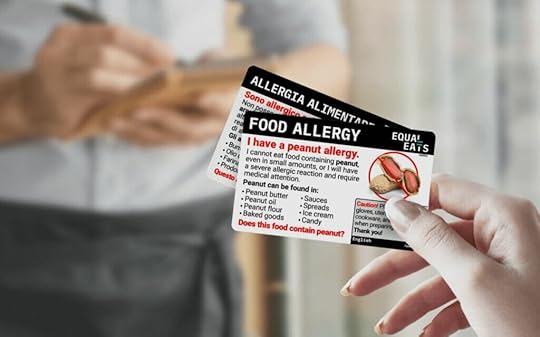 Equal Eats Dietary Allergen Cards – Use code WHATALLERGY for 10% off
Here are 15 benefits that I have come up with to buying an Equal Eats Allergen Dietary Card, all the reasons why I think these are such a great idea:
Helps communicate – You can easily communicate your allergies to staff. Particularly if you have more than one allergy, it can get lost on translation. This way staff can take your card to the kitchenAvoid confusion – How many times do waiting staff return with the gluten free or vegan menu when you mention your nut allergy. I don’t know why this happens so much but these little cards should help avoid confusion.So simple – They are written in simple, concise and strong language so servers and chefs can understand what’s required and how much care to take.Customised – Tailor them to your needs, whether you have one allergy, multiple allergies, intolerances, coealic disease or other dietary needs, there is a card for you.Affordable – For the cost of a few cups of coffee you can have peace of mind that the card can help you bridge language barriers, loud restaurants, etc. and keep you safe. It’s another piece of armour to stay safe with your allergies.Shyness – I know lots of people don’t like speaking up about their allergies and get embarrassed, so you can discreetly pass this card to staff to read and hopefully it will make things a little easier for you.Translations – They are customisable to 50 languages and these have been verified and checked by native speakers in those countries so you can travel safe with the knowledge that your allergies will be communicatedReviews – These cards are popular. They have over 150 amazing reviews and mine is one of them. Anything that makes eating out with allergies easier gets my vote.Digital cards – You can get digital cards to have on your phone so it’s with you at all timesPrintable – You can print these at home so if you lose a card you have a backup.Smart – these cards are smart and stylish and have been carefully designed so you can use them with pride.Accessories – You can also get sticky notes, card sleeves, card holders and more accessories coming on line soon.Gift cards – Give the gift of peace of mind and added safety by offering these as a gift to your allergic friend.Peace of mind – I do lots of things to help with my anxiety, like always carry my adrenaline, wearing a medical bracelet, calling restaurants ahead to discuss allergies, etc. This is just one more thing in your arsenal of helping you feel more in control of a frightening health condition.Chefs like them – Chefs who have been asked about these cards say they really help. Better than having information on a phone that a customer may not want to part with or verbal messages of hand written notes that can be mis read or mis heard and mis understood.Visit equaleats.uk today and get 10% off with my promo code WHATALLERGY to get 10% off.
Many of the cards are already discounted so you could get a real bargain.
Personally I can’t wait to try these cards out next time I eat out. I’d love to know, do you carry allergen cards with you when you eat out? How do you communicate your allergies to staff? I’d love to hear your views. And if you’re a chef, how would you rather diners communicated their allergies to you? Would you welcome these allergen cards?
You may also be interested in the following:10 reasons to wear a medical bracelet – 15% off a MedicAlert bandThe Trip Advisor for people with allergies30 tips for eating out with allergiesThe post Equal Eats Ambassador and 10% off allergen cards! first appeared on What Allergy Blog.March 11, 2022
TSW awareness in the Daily Mirror
On Tuesday 8th March 2022, Topical Steroid Withdrawal was featured in the Health Section of The Daily Mirror in a huge double page spread, this is incredible coverage for the TSW community.
It begins with the best introduction:
“Despite growing evidence that topical steroid withdrawal is a serious problem causing nerve pain and skin problems worse than the condition they are treating, patients are still struggling to get help, discoverers Elizabeth Archer.”
You can read more here:
Steroid cream withdrawal was agony but my GP laughed it off
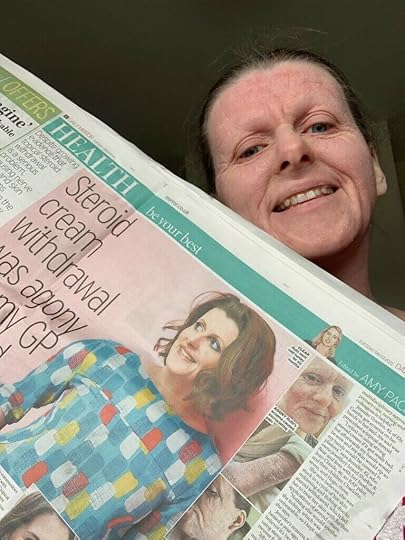 Topical Steroid Cream features in the Daily Mirror
However, and there is always a but, I have a few issues with the narrative… and want to put a few things straight due to what must have been just misunderstandings.
NICE guidelines stated steroid creams should only be prescribed for seven to 14 days – the article states this yet doctors and dermatologists allow people with eczema to use for years on repeat prescription and that hasn’t changed since the guidelines were issues.MRHA “growing evidence of topical steroid withdrawal reactions if they are used continually for a long time.” This kind of implies that using them often for long periods of time is unusual and somehow the patient misusing the medication. However our doctors and dermatologists allow repeat prescriptions and tell us they are safe for long term use. The new guidelines are out of kilter with the advice we are given. It’s as if the statements were made and updated but the medical profession is continuing as if nothing had changed. This can’t be right.…those effects occur very infrequently – this is what gets said about TSW. That it’s rare, but the more I think about it the more I fear that I’ve been going through TSA and rebound withdrawal all my life, since I first started using the steroids and became trapped into the cycle. I seriously do pray that this isn’t the case, maybe some people can use topical steroids to clear up a flare and never need to use them again. But if you are using them regularly, start to analyse the cycles, frequency of flares and any changes in your skin. I do get why it’s discussed as rare because we are only beginning to understand it but there are growing numbers going through TSW and many more deciding they can’t face it. In her 40’s Ruth began using a high dose topical steroid cream four times a day and continued for years. This statement is incorrect. I have NEVER applied any TS cream 4 times a day. I may have actually been discussing emollients and the journalist misunderstood. I just want to get that straight right now. I always followed guidance on the pea sized dab of cream to apply an area the size of the palm of your hand. You are now advised to moisturise and wait for 30 minutes for that to soak in before applying topical steroids but who has time for that every day? Some doctors advise the TS first and then wait 30 minutes before applying emollients. Similarly not really something we will do.The article mentions my GP often when in actual fact most of my discussions about eczema in later life have been with a dermatologist.The article then seems to imply my skin is now clear after six months of Topical steroid withdrawal. Also not true. I’ve been in withdrawal now for 3 years and 2 months and still going. I’ve had long periods, mostly in the summer time of almost clear skin but winter seems to herald rebound flares. So I’m definitely NOT yet over this guys. I’m still healing. But I strongly believe that I will heal.The National Eczema Society and British Association of Dermatologists said, some people are allergic to their corticosteroid and it is thought to be the culprit of a preservative or ingredient in the cream rather than the steroid itself – This is bonkers. This is not an allergy. I was patch tested for this supposed preservative and the tests were negative. If this is the case it’s the first I’ve heard. And if this is the case what is being done to change the product to prevent these rebound flares and allergies?Stopping topical steroids may also result in rosacea or acne flaring as inflammation in the body is no longer suppressed – Firstly I’m not sure acne and rosacea do flare for those with eczema but please correct me if I’m wrong, but the final part of this statement – no longer suppressed… here in lies the ultimate problem in how we treat eczema in the western world. We suppress it. We don’t look for a cause or a reason for that inflammation. We don’t every try to reduce it by any other means than a band aid approach because we all want a quick fix. WE ALL NEED TO STOP EXPECTING MAGICAL CURES – Let’s look for cause and not leap to topical steroids in future.The British Skin Foundation adds – Getting control of TSW problems can take some time and often multidisciplinary approach with primary care, nursing and other colleagues is helpful – What is this they talk of? What actually happens is, we are dismissed without a diagnosis, offered more topical steroid creams, told we are steroid phobic and laughed at. There is no support. Nothing. However a multidisciplinary approach would be incredible, offering guidance on dressing wounds, medication for nerve pain, insomnia, infections. Support from occupational therapists, rehab centres, natural creams on prescription, alternative therapies on prescription. Instead it’s the eye roll and dismissal. I have been offered patch tests and UVB therapy but the test were unhelpful and the therapy isn’t a long term option so only offers short term minimal relief.Jennifer’s story of healing from topical steroid withdrawal gives me hope – She is now healed after 15 years using topical steroids for hand eczema. The best bit in the article. Thanks for sharing your story Jennifer.The National Eczema Society and British Association of Dermatologists issued a joint statement that TSW was real saying, “symptoms usually occur after excessive use, of using high strength creams frequently for more than 12 months – This is the norm for people eczema. We start with hydrocortisone and when that stops working we need the higher potency creams. What is ‘excessive use’? On a talk this week with a dermatologist he said it was ‘perfectly safe to use Hydrocortisone liberally for as long as you needed to’ . Yet I know people in TSW now from only using hydrocortisone, the weakest potency topical steroid, shockingly available over the counter in chemists. You can’t have doctors encouraging use on the one hand, telling us this stuff is safe, letting us have it on repeat prescription and then turning around and saying we over used them. It’s victim blaming and it’s gaslighting. We are ill through no fault of our own and being blamed by the very medical professionals who put us in this position. We trusted doctors to help us get better from eczema and are now left with a condition far worse than what we had to begin with. I am now healing naturally and not taking any time or funds from the NHS. I hope this continues and I can heal in time. Watch this space!Andrew Proctor of the NES said, It’s worrying and disappointing to hear people feel concerns were dismissed by their GP – Andrew sadly that’s the norm. Finding someone who has had their concerns taken seriously is almost impossible. I know of a handful who have sympathetic dermatologists. I can’t even get a diagnosis. My dermatologist won’t even entertain the idea and refuses to read the documents, studies and NICE, MRHA and charity statements I give him. This is what happens for all of us. So people stop going. Imagine being laughed at by a specialist. Being told you are wrong, being made to feel small, stupid, ignored, misunderstood. I’ve left many appointments in tears. That is not right, it’s a failing of service for a patient. Dermatologists should have a duty of care to not dismiss any patient concerns and surely they should be up to date on the new findings on a potentially debilitating condition?Finally the article recommends new drugs such as tacrolimus, an immuno-suppressant cream which is not a steroid and other alternative treatments. sadly I fear these topical immunosuppressants are just as dangerous, if not more so, yet this is not even being discussed. Surely we have a problem if any medication leaves a patient with a condition far worsened and impossible to manage if they decide to stop using it. If you are given protopic please try to use for a short time and wean off steadily and carefully after a maximum of 6 months.We end with a recommendation to ask your GP for a referral to a dermatologist for other treatments – These other treatments also failed me. Methotrexate, an oral immuno-suppressant caused me to have such worsened immune system that I got shingles. And don’t expect your derm to take you seriously. I’d suggest expecting the worst and then you won’t be too disappointed. I sound jaded and cynical but after three years trying to get myself taken seriously I’ve kind of given up with the NHS dermatology system. It has failed me and has nothing to offer except drugs that in my opinion are still experimental, new and also terrifying.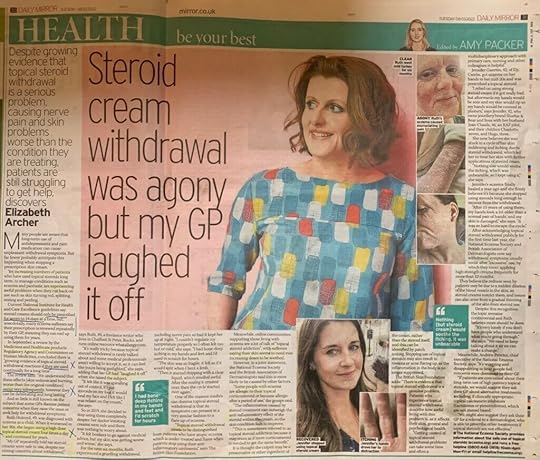 Special thanks for writing this
I want to end on a high point though, the fact that this article was written and is so thorough in exploring the current situation is fantastic. Hearing Jennifer’s story should give anyone contemplating or going through TSW some hope. There are many more out there who have healed.
I would like to thank the Daily Mirror, Elizabeth Archer and Amy Packer for writing this article. We really need to talk about TSW and this coverage is phenomenal. Thank you both.
It’s a brilliant article and packs so much into a double page spread.
I wish they had also included details of the two charities who are serving the TSW community. If you are interested look up ITSAN and Scratch That.
Why are they so scared of covering TSW?As a result of this article being published I was invited to join Steph McGovern on Packed Lunch on Channel 4. Sadly this was pulled at the very last minute by producers who were worried about saying anything negative about the NHS and getting complaints from GPs and dermatologists.
Also because there was concern it could cause panic in eczema patients scared to use topical steroids as currently it’s the main line of treatment, with other alternatives being much more expensive and not available to all.
I do understand the latter concern and hope that topical steroids are safe for most, if used as directed. But to be told that we can’t even discuss the fact that doctors and derms don’t recognise a very real and very serious condition is ridiculous. To feel your truth is being shut down. When is someone going to stand up and admit this? Smacks to me of the strong arm of big pharma, but maybe I’m just being cynical.
They had a dermatologist who was happy to discuss TSW too so it would have a made a great segment and could have helped so many.
This is so disappointing because it doesn’t make sense – why can’t I tell my story? In a country known for its investigative journalism and getting to the truth of subjects what we scared of. In a democracy where we should all have our say, what is the problem here?
The fact that Channel 4 are too scared to air a program about TSW says so much. I plan another blog on that shortly so watch this space.
I’d love to hear from anyone who read this article. What did you think? Do you have eczema or TSW? What’s your experience been?
You may also be interested in reading:Topical Steroid Withdrawal – Frequently Asked QuestionsDoubt is the worst symptom of topical steroid withdrawalGaslit by my dermatologist for the last timeGetting the most out of your dermatology appointmentThe post TSW awareness in the Daily Mirror first appeared on What Allergy Blog.March 9, 2022
Can you get a tattoo if you have eczema?
You may have been told that if you have eczema it is best to avoid getting any kind of tattoo. This isn’t necessarily true, while it is definitely the case that eczema can add a little bit of concern and consideration to those who might want to get a tattoo it doesn’t have to prevent you from ever getting one.
If you visit tattoo shops in NYC or other big cities, there will likely be multiple options of studio and tattoo artists, and you can always chat to them about the options you have if you have eczema. Many will be happy to advise.
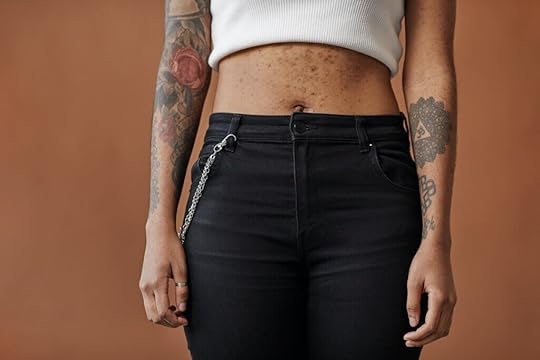 Can a tattoo affect eczema?
Yes, it is possible that tattoos can affect eczema, but that does not mean you should rule out getting one if you really want to.
The risks are very similar to those who don’t have eczema, but you might be more prone to these risks, or find more severe side-effects if you are prone to eczema skin. If you have anything that causes skin sensitivity then you need to think really carefully about the tattoo and aftercare.
It’s true that tattoos can affect your eczema, but there are so many considerations including how seriously you suffer from the condition before you decide whether or not you are going to go ahead and get your ink.
Are there risks of getting a tattoo if you have eczema?There are always some risks if you have eczema or otherwise.
However, the good news is that if you follow the guidelines of your tattoo artist and take good care of the area then it is unlikely that you will experience any serious problems.
People with eczema scars should probably make sure that this area of their body does not get any sort of tattoo if they are worried about the side effects, this can make things worse or cause hyperpigmentation.
The other risks of getting a tattoo include the fact that it is very likely to be incredibly itchy if you are the sort of person that has a sensitive skin condition. This itching on its own is not serious, but scratching can have complications. It can make it more difficult for the tattoo to heal, and this can lead to a greater risk of infection. Infection certainly can be serious.
Skin irritation and redness is common but it is very likely if you have eczema so think very carefully about the time after you get your tattoo, and how you are going to treat it to make sure the itching is kept to a minimum. Tattoo artists will usually give you recommendations for ointments that may well help.
The tattoo risks if you have eczema are not extreme risks, but they are definitely worth thinking about. The chances of getting some complication are high, so make sure you follow all the rules on recovery to the letter.
Also consider getting a very small test tattoo done somewhere that isn’t visible in case you do get an adverse reaction, and to patch test the ink is suitable.
You may find this article from the National Eczema Society useful – Can you get a tattoo if you have eczema?
And also a first hand experience from a person with eczema who had a tattoo and lived to tell the tale, Getting a tattoo with eczema
Is there special ink for sensitive skin?Some artists do use specific and specialist inks that have a reputation of being better for people with sensitive skin. Tattoo ink is actually a huge industry and it is changing all the time, so there are lots of different inks available for people to explore.
Some artists have certain ink already in stock that allows them to tattoo those with skin conditions or sensitive skin with less chance of causing any kind of a flare-up. It isn’t a guarantee that you won’t experience any issues, but it certainly helps to consider which inks you are putting into your body, especially if you are prone to allergies.
Healing and Maintenance of the New TattooIt is part of finding a reliable and quality tattoo artist to ensure that they give you the proper aftercare routine.
Tattoos can be difficult, especially in the first few days, and you need to make sure you do everything correctly to give the best chance of healing without complications.
Initially, the tattoo will be wrapped by the artist, and they should probably instruct you to leave it for 24 hours in this scenario. After this, it is time to remove the wrap or bandage, and you may be able to apply ointment at this stage.
While you can’t submerge the tattoo it is also important to keep it rinsed and cleaned with water.
If you have sensitive skin there is also even more of a risk that some of the problems people get with tattoos, such as redness and itchiness, will cause you problems too. Try to resist the urge to scratch as this can cause serious problems. Eventually, you can switch to moisturisers as long as they don’t have any chemical or fragrance ingredients that are likely to irritate.
At the first sign of anything concerning, go to a doctor. It is always better to be safe.
Things to Consider When Choosing a Tattoo ArtistYou should always find a reliable tattoo shop when you are thinking about getting inked. It sounds like a cliched thing to say, but it is true that this is going to be on your body for the rest of your life (well, that’s the plan anyway). You should give some thought to the style and quality of your artist.
On top of that, be sure to chat with them about any concerns you might have, even if that concern is regarding your eczema or other skin conditions.
If you can find a tattoo artist who also has eczema or another similar skin condition even better, as they will have first hand experience.
Any people out there with eczema and a tattoo?I’d love to hear from you if you have eczema and a tattoo? Have eczema flares affected any tattoos or have you had a bad reaction to the ink?
I’ve read also that you can get medical tattoos, for instance I could have my MedicAlert member number tattooed on my skin instead of wearing medical jewellery. I’ve met people have ‘diabetic’ tattooed on their wrist and the technology is advancing so that you could even get a QR code that gave paramedics all the information needed should you go into anaphylaxis or not be able to communicate your own medical emergency for a chronic life threatening condition. I’d worry that QR codes would cease to exist though and then it would an obsolete tattoo! You may find this old blog interesting:
Medical bracelet or allergy tattoo?
Personally I’ve not got any tattoos and am probably too nervous to even consider getting one. Although the idea does appeal to me, and I can understand why people have them. Any eczema people out there considering getting one? Also what does topical steroid withdrawal do to a tattoo? and can the tattoo recover from serious skin disfunction?
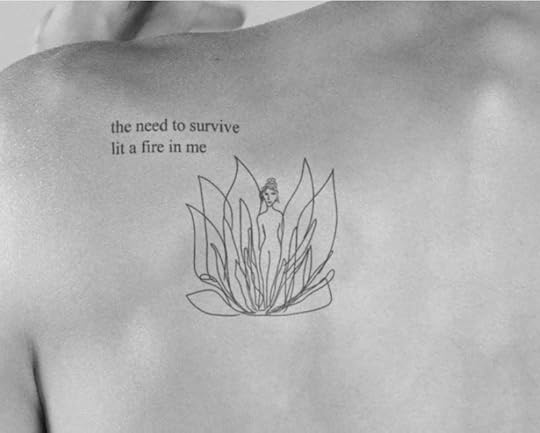 The need to survive lit a fire in me – Rupi Kaur Tattoo
There are loads of fake tattoos that last about 3-5 days available so if you want to try a temporary tattoo for special occasions this could be a safe alternative. There are loads available online and on Etsy so get surfing. And if you love the poetry and art of Rupi Kaur as much as I do, you can buy temporary tattoos on InkBox: Rupi Kaur Tattoos. Sign up to the Inkbox newsletter for 20% off.
You may also be interested in the following:20 tips for coping with an eczema flare30 tips to help you stop scratching eczema10 reasons to wear a MedicAlert bracelet for anaphylaxis – 15% off with code What15AllergySponsored post
The post Can you get a tattoo if you have eczema? first appeared on What Allergy Blog.March 8, 2022
Doubt is the worst symptom of Topical Steroid Withdrawal
I am terrified that Topical Steroid Withdrawal is here to stay. That I’m going to be stuck like this, struggling to heal, in pain, with dysfunctional skin. Itching, shedding, flaking, cycling through flares, losing sleep and feeling like I’ll never get better and heal.
It’s like a nightmare that keeps replaying.
Not helped by my recent visit to the dermatologist who refuses to discuss TSW with me, won’t entertain putting it on my medical notes and pretty much doesn’t think I’ll get better without topical steroids or new drugs like Dupixent and JAK inhibitors. These scare me just as much at the topical steroids, they’re so new we really don’t understand the long term effects fo them either. Just more drugs to suppress the body so all we do is ignore a natural skin reaction.
Read Gaslit by my dermatologist for the last time.
What if I never get better?All the symptoms are horrible, the pain, itching, shedding, oozing, nerve pain, elephant skin, insomnia, anxiety and depression, to name just a few, are exhausting and uncomfortable.
I can’t remember what life was like before TSW. I’m so deep in this now, three years and two months and there is no turning back.
I just feel so lost right now.
I keep telling myself. This isn’t forever. It will pass. I will heal. I AM healing and I will continue to heal.
That it takes time and I used topical steroids for a long time, and Protopic too.
I think I am getting better, I’m sure I am, but after such an awful relapse from October last year until Jan/Feb this year it’s been tough to remain positive.
I try to face each day smiling and optimistic and I can see that I’m achieving more, going out more, walking and running more, so I know that I am getting back to normal.
But my face and neck just hurt, all the time. Every day I shed layers and layers and every day I clear it up, hoover and clean the bed.
And I have no idea how much more of this I will go through.
How long should it take to heal?Some people heal in months.
Some heal in six months.
Some people take a year to heal.
Others take two years.
From a recent episode of the TSW Podcast, I’m expecting perhaps 3-5 years for me, having heard Dr Marvin Rappaport explaining his thoughts on TSW healing. So that gives me a goal, it just seems far far away and I just feel like I should be doing better by this stage in the healing journey.
I’m trying not to compare my journey to anyone else but it’s so hard. The what ifs. The doubt. If I did this, drank that, ate celery juice (yuk!) or did red light therapy daily I would be healed now.
Why I think it’s so hardI can see that there is progress, I am sleeping better, I am less red, I am doing more and going out more and able to take part in more, but every now and then I am in so much pain it takes me right back to the darkest days.
Some days I am so itchy that it brings back the fear and makes me feel I’m going backwards.
Despite the fact that I am itching less, and the itch attacks last less time, the PTSD makes it horrendous. Because I don’t really know what I’m doing. I’m blindly trusting and going on with this because some other people online did it too and I thought it looked like a good idea. How is this ever going to make sense? We are always going to doubt when we do not have a diagnosis from a medical professional and also don’t have support and reassurance from anyone either.
The shame of being a long haul TSW healerI see others healing faster than me but mostly they are much younger than me. I hear things like, NMT helps you heal faster, eat this, don’t eat that, take supplements, don’t take supplements, believe you’re healed and it shall come to pass.
It all just makes me feel like I’m doing this all wrong.
Like if I was more positive I would be healed now.
And if I was doing my best I’d be further along the path to ending these horrible cycles of inflammation, crusting and excessive shedding.
I’m tired of this now. Bone tired. I don’t feel like I can talk to anyone about it because I feel like a broken record. People think I’m better now, especially those who saw me back in August when things looked so good.
“Oh I thought you were through the steroid withdrawal.” was what one friend said to me this week when we caught up.
Nope! Not yet.
I’m embarrassed to tell people how longI hate admitting that I am now three years into Topical Steroid Withdrawal and still flaring and deep into healing with poorly functioning skin.
Particularly people new to TSW or those who think they may be addicted to topical steroids. When they ask me how far I am into the TSW journey I can see the fear and horror on their faces when they see how bad my skin still is. I feel terrible, like I’m encouraging people into this hell.
Yet I’m not a doctor so what do I know? Sometimes the sheer number of people with questions about TSW is overwhelming and I feel so unqualified to advise anyone.
I need a break. I need a sign.
I know it just takes time, as our leader Cara Ward is always telling us, but how much time? How long do you have to sit on the side-lines watching life go by… wishing you could live again. Cara has healed from TSW and now has the most amazing skin.
Healing from topical steroid withdrawal just takes time…
Cara Ward, TSW Survivor
I’m sorry this has been such a negative blog, I just feel I need to be honest. I’m finding this really hard right now. I’m losing hope but trying to cling onto it. This past few months it’s been really hard.
I have been working on my mental health and found hypnotherapy to be really empowering. I’ll tell you more about that in a future blog post. I’m also doing a Mindfulness Based Stress Reduction course with my yoga teacher Tawny Cortes which was really helping, but this week I just lost it, fell off the mindfulness wagon and it all just seems too hard.
You are not alone, it’s OK to find TSW hardSo if you are struggling too, you are not alone. It’s OK to find this hard. It’s OK to feel hopeless and confused. It’s OK to let go of all the fighting and accept what comes to pass. It’s OK to have bad days and you don’t have to be endlessly positive all the time.
For all the bad days, there are good ones. And as I sit here finishing this blog it’s the following day and I’m feeling much more positive, not in any pain, only a little bit dry and itchy and feeling so proud of all that I’ve achieved whilst going through withdrawal, including writing and publishing two books, continuing to raise awareness of allergies and topical steroid withdrawal and eczema, working freelance and getting out to enjoy life as much as I can. It’s important to remember TSW healing is not linear, it’s up and down and back and forth and can drive you crazy second guessing and trying to set your own dates and deadlines to be healed by. For me, now I’m going to try to accept things as they are and let it be as it will. I’d love to hear, how is your skin doing? Are you also going through topical steroid withdrawal?
You may also find the following useful:Topical Steroid Withdrawal – Frequently Asked QuestionsHow running is helping my skin heal from TSWA dermatologists review of The Shape of Skin – poems for eczema and TSWWorking with a chronic illness – Topical Steroid WithdrawalThe post Doubt is the worst symptom of Topical Steroid Withdrawal first appeared on What Allergy Blog.March 7, 2022
40 Amazing women in Eczema and TSW
Because it’s International Women’s Day, these are the women I’d like to thank, the women who have taught me, helped me and continue to help the eczema and topical steroid withdrawal community with education, service, blogging etc.
Finding women working in a professional capacity in this arena (ie. dermatologists, doctors, scientists etc. was tough, it seems to be a highly male dominated industry. I wanted to find women scientists, inventors and dermatologist but I didn’t find many. I don’t know why. The women I’ve found seem to make up the caring, nurturing, wholesome, natural and holistic side of eczema healing so go women!
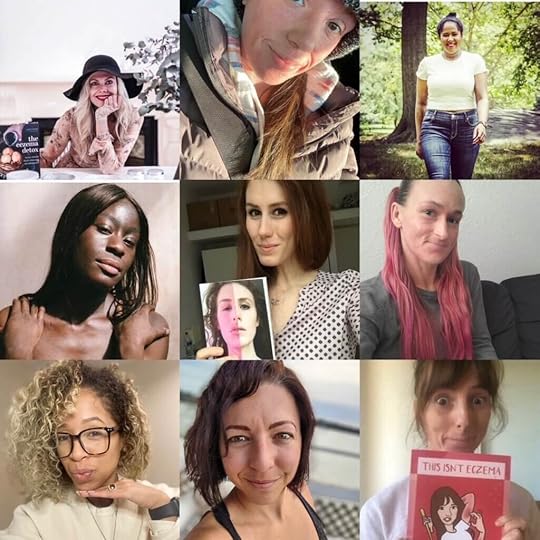 40+ Amazing women in the Eczema and Topical Steroid Withdrawal Community
There is even a study examining the state of Dermatology and the women working there. Read ‘Women in Dermatology Leadership: Results from a Nationwide Survey’, Significant progress has been made in the representation of women at various fronts in dermatology. Nonetheless, women fall far behind their male counterparts when it comes to leadership roles as indicated by recent research data.
If this is something that interests you, check out Women in Dermatology for more about why this is so important. Women don’t get the best care, particularly women of colour, as it turned out many dermatologists didn’t even know how to even identify eczema on darker skins – all the text books and learning is on white skin, though that is now changing.
So my women superstars are, in no particular order, here they are…
Kathy Tullos, RN – President/CEO of ITSAN and all the wonderful ladies supporting this charity; Jolene MacDonald – Secretary, Jodie Ohr – Treasurer, Michelle Li – Board of Directors, Natalie Lawton – Board of Directors. Janelle Harris has just joined the board.Kelly Barta – Board of Directors – ITSAN and former president. Also on the Allergy and Asthma board and a full time advocate fo rour community. She is really fighting for better research and awDr Ruth Cammish, GP with a special interest in dermatology and skin conditions, in particular TSW as she has gone through it herself. Also know just as Dr Ruth GP on Instagram!Samantha Skelding, Deputy Chief Executive of the National Eczema Society in the UK.Julie Van Onselen, Dermatology Nurse and also a member of staff at the National Eczema Society, she is always raising awareness about eczema.Briana Banos, producer of Preventable, the TSW documentary. This woman inspires me and I was proud to attend the public screening of this documentary in the early days of my TSW journey. Tea with Bri…Lianne Reeves, my allergy and eczema dietician, who has taught me so much about diet, what foods to avoid and how to maintain a balance diet whilst avoiding foods that I’m allergic to. Ashley Ann Lora, guides health organizations to improve resources and treatment options for the eczema community. She also shares her own skin and eczema healing journey through topical steroid withdrawal and is a huge inspiration to me in the community. Visit: https://www.ashleyannlora.comDr Heba Kaled, also know as TSW Atlas, has been sharing her education and invaluable videos about what TSW is, how it affect the the body and more. You must follow her on YouTube and she’s also on Insta as TSW Atlas.Cara Ward has a brilliant TSW blog and a book, Curing my Incurable eczema all about her TSW journey. She has healed from TSW and her journey gives me so much hope.Louise King, also known as Louigiskin on Instagram. Founder of @scratchthat.uk, Director of @ourprescribedhell and one of the Owners of @skinsolaceclinic.uk where she treats people with TSW skin.Ashley Wall writes one of my favourite blogs, Itching since 87, where she shares her positive outlook on living with eczema.Lauren Dupree shares her eczema and TSW story on her blog Just Dupree the blog and uses her creative side and music to educate others. She was also featured in the Skin on Fire documentary.Nina Ajdin is one of the first people to ‘come out’ and share their TSW journeys. She is featured in the Preventable Documentary and also writes brilliant articles for AD – atopicdermatitis.net. Nina has been a constant support to me in my own TSW journey and is one of the long haulers – now 6+ years TSW and healing. Nina is also working with ITSAN on an awareness campaign.Dr Jennifer Fugo is a clinical nutritionist who recognises TSW and has spoken about it on her podcast. She also shares so much good information about how to focus on your gut to get on top of eczema. Check out https://www.skinterrupt.com/Instagram/Rebecca Bonneteau runs The Eczema Expert – Giving parents the support they need and deserve while learning to take control of eczema naturally.Camille Knowles – the brains behind The Beauty of Eczema book and her own skincare range for eczema skin.Lydia Finnegan has her own blow – https://www.itchie-scratchie.com/ shares her journey to healing her skin from eczema and also topical steroid withdrawal. She can also be found as Lyds Life on Instagram.Karen Fischer – author of The Eczema Detox cookbook has also taught me loads about good and bad foods for eczema and I use some of her recipes often. Her cook book is also one of the first places I saw TSW acknowledged in print. You can find her at https://www.eczemalife.com/Lucy Gulland – Founder of Balmonds – one of my favourite skincare brands. Natural skincare to support people with sensitive skin. I know many of us with eczema can’t live without it so thank you.Vicky Lyons – Founder and owner of Lyonsleaf – who make the zinc and calendula cream and the marshmallow emollient I am always banging on about. Seriously cannot live without it, another wonderful natural skincare brand which I buy every month.Aramide, is a skin model and is almost healed from TSW. She also shares her journey on YouTube with healing tips and organises TSW skin family meetups in London. You can follow her on instagram as myatopicskin and on YouTube.Erin Gilbert, MD, PhD, FAAD – President of the Women’s Dermatologic Society. You might also be surprised to know there even is such a thing, but here it is: Women’s Dermatologic Society. Sadly there is no mention of TSW when you search their website so I may reach out with some information for them soon. Feel free to also do the same.Cristela Tello Ruiz, for writing so many pieces on the disparity of women in dermatology. Read The importance of gender equality in dermatology. International Journal of Women’s Dermatology examined this gender disparity in the leadership of professional societies of dermatology worldwide. To do so, researchers used online databases as well as individual society websites. They also collected data from 92 countries, with 1,733 society leaders identified. According to the study’s findings, women constitute a minority in dermatology professional society leadership throughout North America, Europe, Asia, Australia, and the Middle East. In contrast, women make up a slight majority in South America, Central America, and Africa. Additionally, men were more likely than women to hold the position of president in all professional societies and, female leaders were less likely to hold concurrent academic positions as deans, chairpersons or directors.Ruth Holroyd, author, blogger and patient advocate – I had to add myself in here somewhere didn’t I? So proud of my book, The Shape of Skin, eczema poems which I hope will help dermatologists and eczema and TSW patients see their skin in a different way. And if you’ve found yourself here, then this my friends, is my blog! All mine! Written by me for people with allergies, asthma, anaphylaxis, eczema and topical steroid withdrawal.Lauren Bell who has suffered from chronic eczema since childhood, invented the Cosi Care range of cooling stars, rollers and stop scratching aids. I don’t know what I’d do without my Cosi Care stars.Holly, Hannah, Harriet, Lou and Laurie – the girls behind Scratch That, the UK website for topical steroid withdrawal information and awareness.Abby Tai, a holistic nutritionist who also hosts the Eczema Podcast.Linette Roungchun – Recently featured in
Skin on Fire
the documentary and co founded The Itch Factor, showcasing the creativity in this community. She is also a tireless advocator for awareness pf Topical Steroid Withdrawal.Julia Blanka – helps people overcome skin issues naturally https://www.skinsoulhealth.com/Rakhi Roy – a registered dietitian living with eczema, shares her advice on how to eat in a healthy way that benefits your skin, whether you have eczema or not – Gut Skin NutritionistMerel Van der Ham – Founder of Clover Skincare Fashion, making wonderful, soothing, cooling Lyoncel eczema clothing, including gloves, scarfs and tshirts.Michelle Mills – Eczema Coach, helps adults with eczema heal naturally. Follow Michelle on Instagram.Raelle Brown – Woke Within Skin, blogs about her eczema journey. She is currently 3 years TSW and share her experiences and helps raise awareness.Clare Hart – Host and founder of the TSW Podcast. Topical Steroid Withdrawal success stories, expert advice and community support. Disclaimer: Please note the advice given within the podcast does not constitute individual medical advice, and it is important you discuss your personal situation with a qualified medical practitioner.Daisy Malin and Katie Mackie, creators and hosts of the Itch and Bitch podcast and both skin warriors, going through TSW.Zainab Danjuma – also know as beezeebuz on instagram has done some brilliant YouTube videos to help people through TSW and especially TSW and having a baby. Check her out on YouTube.Claire Oxenham – Author of This is not Eczema, a pictorial portrayal of all the symptoms of Topical Steroid Withdrawal. You can find her on instagram as TheendlessitchHannah Davies – A professional writer who has been running poetry and writing workshops for a small group of topical steroid withdrawal poets and writers. I cannot praise her talent at writing and her amazing skills at teaching and enabling us to spend a few hours creating, using words and exploring the power of poetry to heal. Follow Davieswords_tsw on instagramNina Marshal, was in the Preventable documentary (mentioned above) and is one of the first people many us came across who has healed from TSW. Follow her on instagram as NinaBeanOlivia Friedman – Traditional Chinese Herbal Medicine practitioner who is helping many heal through their TSW journey. You can find here at Amethyst Holistic Skin Solutions.Celia French – A last minute addition after the recent unveiling of her absolutely incredible short film, My Life During Topical Steroid Withdrawal. Please watch it. It’s truly outstanding. I felt like she was looking inside my head, and it felt so good to see how I feel and what I’ve been through, and am still going through, portrayed in such a beautiful and heart-breaking way. You can find her on Instagram as MissCecifrenchMelanie Wieseler – Works at Merakoi, enabling successful patient expert and healthcare industry collaboration. Helping to research and understand Atopic Dermatitis and working with patients to explore the unmet need and emotional toll this condition takes. Follow on instagram.
Director of @ourprescribedhell and one of the Owners of @skinsolaceclinic.uk where she treats people with TSW skin.Ashley Wall writes one of my favourite blogs, Itching since 87, where she shares her positive outlook on living with eczema.Lauren Dupree shares her eczema and TSW story on her blog Just Dupree the blog and uses her creative side and music to educate others. She was also featured in the Skin on Fire documentary.Nina Ajdin is one of the first people to ‘come out’ and share their TSW journeys. She is featured in the Preventable Documentary and also writes brilliant articles for AD – atopicdermatitis.net. Nina has been a constant support to me in my own TSW journey and is one of the long haulers – now 6+ years TSW and healing. Nina is also working with ITSAN on an awareness campaign.Dr Jennifer Fugo is a clinical nutritionist who recognises TSW and has spoken about it on her podcast. She also shares so much good information about how to focus on your gut to get on top of eczema. Check out https://www.skinterrupt.com/Instagram/Rebecca Bonneteau runs The Eczema Expert – Giving parents the support they need and deserve while learning to take control of eczema naturally.Camille Knowles – the brains behind The Beauty of Eczema book and her own skincare range for eczema skin.Lydia Finnegan has her own blow – https://www.itchie-scratchie.com/ shares her journey to healing her skin from eczema and also topical steroid withdrawal. She can also be found as Lyds Life on Instagram.Karen Fischer – author of The Eczema Detox cookbook has also taught me loads about good and bad foods for eczema and I use some of her recipes often. Her cook book is also one of the first places I saw TSW acknowledged in print. You can find her at https://www.eczemalife.com/Lucy Gulland – Founder of Balmonds – one of my favourite skincare brands. Natural skincare to support people with sensitive skin. I know many of us with eczema can’t live without it so thank you.Vicky Lyons – Founder and owner of Lyonsleaf – who make the zinc and calendula cream and the marshmallow emollient I am always banging on about. Seriously cannot live without it, another wonderful natural skincare brand which I buy every month.Aramide, is a skin model and is almost healed from TSW. She also shares her journey on YouTube with healing tips and organises TSW skin family meetups in London. You can follow her on instagram as myatopicskin and on YouTube.Erin Gilbert, MD, PhD, FAAD – President of the Women’s Dermatologic Society. You might also be surprised to know there even is such a thing, but here it is: Women’s Dermatologic Society. Sadly there is no mention of TSW when you search their website so I may reach out with some information for them soon. Feel free to also do the same.Cristela Tello Ruiz, for writing so many pieces on the disparity of women in dermatology. Read The importance of gender equality in dermatology. International Journal of Women’s Dermatology examined this gender disparity in the leadership of professional societies of dermatology worldwide. To do so, researchers used online databases as well as individual society websites. They also collected data from 92 countries, with 1,733 society leaders identified. According to the study’s findings, women constitute a minority in dermatology professional society leadership throughout North America, Europe, Asia, Australia, and the Middle East. In contrast, women make up a slight majority in South America, Central America, and Africa. Additionally, men were more likely than women to hold the position of president in all professional societies and, female leaders were less likely to hold concurrent academic positions as deans, chairpersons or directors.Ruth Holroyd, author, blogger and patient advocate – I had to add myself in here somewhere didn’t I? So proud of my book, The Shape of Skin, eczema poems which I hope will help dermatologists and eczema and TSW patients see their skin in a different way. And if you’ve found yourself here, then this my friends, is my blog! All mine! Written by me for people with allergies, asthma, anaphylaxis, eczema and topical steroid withdrawal.Lauren Bell who has suffered from chronic eczema since childhood, invented the Cosi Care range of cooling stars, rollers and stop scratching aids. I don’t know what I’d do without my Cosi Care stars.Holly, Hannah, Harriet, Lou and Laurie – the girls behind Scratch That, the UK website for topical steroid withdrawal information and awareness.Abby Tai, a holistic nutritionist who also hosts the Eczema Podcast.Linette Roungchun – Recently featured in
Skin on Fire
the documentary and co founded The Itch Factor, showcasing the creativity in this community. She is also a tireless advocator for awareness pf Topical Steroid Withdrawal.Julia Blanka – helps people overcome skin issues naturally https://www.skinsoulhealth.com/Rakhi Roy – a registered dietitian living with eczema, shares her advice on how to eat in a healthy way that benefits your skin, whether you have eczema or not – Gut Skin NutritionistMerel Van der Ham – Founder of Clover Skincare Fashion, making wonderful, soothing, cooling Lyoncel eczema clothing, including gloves, scarfs and tshirts.Michelle Mills – Eczema Coach, helps adults with eczema heal naturally. Follow Michelle on Instagram.Raelle Brown – Woke Within Skin, blogs about her eczema journey. She is currently 3 years TSW and share her experiences and helps raise awareness.Clare Hart – Host and founder of the TSW Podcast. Topical Steroid Withdrawal success stories, expert advice and community support. Disclaimer: Please note the advice given within the podcast does not constitute individual medical advice, and it is important you discuss your personal situation with a qualified medical practitioner.Daisy Malin and Katie Mackie, creators and hosts of the Itch and Bitch podcast and both skin warriors, going through TSW.Zainab Danjuma – also know as beezeebuz on instagram has done some brilliant YouTube videos to help people through TSW and especially TSW and having a baby. Check her out on YouTube.Claire Oxenham – Author of This is not Eczema, a pictorial portrayal of all the symptoms of Topical Steroid Withdrawal. You can find her on instagram as TheendlessitchHannah Davies – A professional writer who has been running poetry and writing workshops for a small group of topical steroid withdrawal poets and writers. I cannot praise her talent at writing and her amazing skills at teaching and enabling us to spend a few hours creating, using words and exploring the power of poetry to heal. Follow Davieswords_tsw on instagramNina Marshal, was in the Preventable documentary (mentioned above) and is one of the first people many us came across who has healed from TSW. Follow her on instagram as NinaBeanOlivia Friedman – Traditional Chinese Herbal Medicine practitioner who is helping many heal through their TSW journey. You can find here at Amethyst Holistic Skin Solutions.Celia French – A last minute addition after the recent unveiling of her absolutely incredible short film, My Life During Topical Steroid Withdrawal. Please watch it. It’s truly outstanding. I felt like she was looking inside my head, and it felt so good to see how I feel and what I’ve been through, and am still going through, portrayed in such a beautiful and heart-breaking way. You can find her on Instagram as MissCecifrenchMelanie Wieseler – Works at Merakoi, enabling successful patient expert and healthcare industry collaboration. Helping to research and understand Atopic Dermatitis and working with patients to explore the unmet need and emotional toll this condition takes. Follow on instagram.There are hundreds and thousands of amazing women sharing their eczema and TSW journeys on social media, so a huge shout out to all of you too, but I can’t list you ALL here. Special thanks to Nina Ajdin who helped me brainstorm and hopefully ensure I’ve not missed any shining stars.
Have I missed anyone who absolutely should be on here? When I wrote a blog for Women in Allergy the list grew from 10 to 30 and some of these were your suggestions so please yell if I’ve not included someone who is helping our community!
You may also be interested in:New eczema poetry book, The Shape of SkinWireless comfy bras for sensitive, eczema and TSW skinGetting the most out of your dermatology appointmentThe post 40 Amazing women in Eczema and TSW first appeared on What Allergy Blog.March 4, 2022
Allergen and pollen free artificial plants for your home
If you have a pollen allergy or even a fragrance allergy, having plants in the home can be problematic, causing wheezing, shortness of breath and other allergy symptoms. But there is a solution with silk artificial plants and flowers.
Firstly I would like to thank Faux La Fleur for gifting me a potted rosemary plant and hydrangea bouquet to try at home. They’re absolutely stunning and I love them.
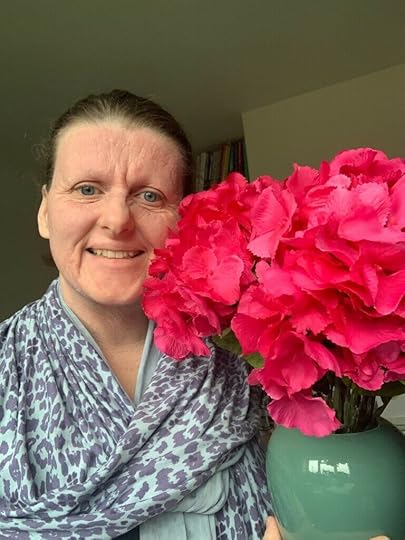 Faux La Fleur artificial and silk hydrangea plants
Which flowers are the most allergenic?
Faux La Fleur artificial and silk hydrangea plants
Which flowers are the most allergenic?WebMD reports flowers with the most pollen production like chamomile, chrysanthemums, daisies, goldenrod and ordinary sunflowers are among the worst. I’ve also heard that Lilies are also very allergenic and people can also be allergic to Poinsettias. Read this for the 12 worst flowers for people with pollen allergies.
What I loved about these artificial plantsI do have a few artificial plants in my home and I love the effort free burst of colour and joy they bring me, but it’s not easy to find good quality, realistic silk flowers. These ones really are top quality and very professional, you could easily believe they were real living plants.
If you know me and follow this blog you’ll know that I’ve been on a mission to reduce the allergens in my home so these instantly appealed to me. I hope you are intrigued and inspired by them as I was.
Here are my top benefits of having artificial flowers and plants in your home:
So pretty – They look amazing guys. Look how pretty they look, how colourful and alive. The colours are so vibrant.They are so realistic – My mum visited the other day and wanted to know how I’d got my hydrangeas looking that amazing. She thought these were dried ones as I dry the flowers from my garden and keep in vases. The Rosemary potted plant looks so luscious and green, you’d never know it’s a fake!No pollen – Doesn’t really need explaining! But what a brilliant gift for your pollen allergic friends and family.Easy to clean and dust – You can wipe the silk flowers clean with a damp cloth and the plastic house plant could go in a bowl of warm water to clean it. There are instructions on the website of how to care for these plants. They suggest a hair dryer to blow off dust but if you have a dust allergy, wiping with a damp cloth may be safer.They won’t die! – I am a terrible house plant mother and often neglect or over water plants so this is the ultimate solution! No more dead and wilting plants, forgotten and unloved. These will always look amazing despite my negligence.UK business – What I also love about these guys is that they are local, UK based and family run. I love supporting home run companies like this.Perfect Gift – Whether you need a gift for Christmas, Home Décor, Gardens, Weddings, Funerals, or any number of Special Occasions, there is something suitable from their range. Go and take a look. Cute little rosemary plant from Faux La Fleur. Looks so realisticThe story behind Faux La Fleur
The company came about after trying to find suitable plants for a wedding bouquet as the bride had asthma and her mother had a very severe pollen allergy. Real flowers would obviously not be suitable but they couldn’t find any artificial or silk arrangements that were quite right so the bride decided to create her own! Clearly there was a gap in the market because not everyone would be able to turn their hand to creating wedding flower arrangements by hand!
‘It is estimated 20% of the global population suffers from a pollen allergy which is considered the most common allergy on a global scale. Although only 8% are officially diagnosed, it is suspected that 20% of the US population suffers from pollen allergy. Europe has the same percentage while Australia has the lowest with just 10% of the population suffering from pollen allergies as per allergy statistics worldwide 2017.’ (Poaceae pollen as the leading aeroallergen worldwide: A review, H. García‐Mozo, First published: 22 May 2017, European Journal of Allergy and Clinical Immunology)
If you are allergic to pollen, you may also be interested in finding out more about Pollen Allergy Syndrome or Oral Allergy Syndrome where certain foods can cross react in the pollen allergic individual.
This revelation presented its own questions, where do all of these individuals buy flowers and floral arrangements from? How do they decorate their homes? How do they hold a wedding bouquet made from lilies and roses or send their loved one Valentine’s flowers? It was then we decided no longer would these people go without, and thus, Faux La Fleur was born.
The intention behind the company is to provide a wide, varied, and affordable selection of products through an eCommerce and online setup available across the UK. To find out more visit Faux la Fleur.
These products are only available in the UK, so apologies to all my followers in other countries, but I’m sure there will be a local supplier near you. Delivery in the UK is FREE! These guys have really amazing reviews on Trust Pilot, solid 5 stars. I’ll be reviewing on there shortly and would agree they get 5 stars from me too.
To start searching and shopping, visit the Faux La Fleur website. The only problem you’ll have is which flowers to choose! I have my eye on some more and may treat myself as I’m also loving the potted Thyme, Sage, Ficus Tree and Topiary Pot.
You may also be interested in reading:How clean is the indoor air quality in your home?Testing the Dyson V8 vacuum cleaner with asthmaNatural treatments for allergic asthma20 things you can to reduce hay fever symptomsThe post Allergen and pollen free artificial plants for your home first appeared on What Allergy Blog.