Ruth Holroyd's Blog, page 16
January 26, 2022
Skin on Fire – TSW documentary reviewed
Skin on Fire is a documentary short film about Topical Steroid Addiction (TSA) and Topical Steroid Withdrawal Syndrome (TSWS).
Through the heartbreaking, inspiring stories of diverse individuals who have suffered from TSWS, the film shows their suffering is undoubtedly from a legitimate condition, and the respected medical experts who weigh in offer viewers a better understanding of why someone may develop TSWS, what can be done to prevent it, and what new treatments may be on the horizon. Visit www.skinonfiredoc.com for more information.
You can watch it here:
So what did I think about the Skin on Fire documentary?It’s a relatively short film at just under 30 minutes so they’ve crammed an awful lot into a short space of time.
I have very mixed feelings and at the risk of upsetting people I’m going to just let rip. This is my blog, my opinions so if you don’t like it, apologies and please comment below. I’d love to discuss all of what I’m about to say.
What is TSWS?
Firstly they call it TSWS – I can’t get behind this. I don’t get TSW really because it really doesn’t explain fully what the condition is because this isn’t just topical. People can become addicted to oral steroids and immunosuppressants like Protopic. This isn’t the fault of the producers, as a community and as medical professionals, we need to find a word that makes sense of what’s happening. Dr Heba has discussed this in the past… we need a new word!
Shocking that America don’t recognise TSWEmotional viewingI have mixed feelings, but mostly I do feel that it’s a very positive step forwards. I cried as I watched and wept at the end, the film is dedicated to a man called Eric who died due to complications from Topical Steroid Withdrawal. Utterly heart-breaking.
Marvin Rappaport is just incredible. When John went to see him he explained “You’re going to be just fine. We got a long trip and it’s gonna be a tough trip. I’m here for you and my main job is make sure you don’t kill yourself. I’ll keep you alive.” it made me feel so sad, but so seen and understood. This doctor understands, he gets it and after years of treating people with eczema he knows that unfortunately, the only way to heal is go through withdrawal and there is no quick fix or short cut for this. It can take years.
His words, “You will recover..” give me hope.
He also explains that most adults don’t have eczema at all, just topical steroid addiction, which makes the skin condition spread, worsen and become dependent on stronger and stronger suppression medication.
It was great to see so many different patients represented and I loved hearing their experiences, how many things were similar, how lonely, desperate and in pain they all felt. How most of them did not get help from doctors. This needs to change.
STOP gaslighting us… please!What I didn’t like were the two black clad male nurses. Dr Shah who has a huge following online, who I felt were both implying that if used correctly topical steroids are safe, that they will continue to prescribe them… well if that’s the case have we learnt nothing? I didn’t feel that those two were really on board, that they blamed patients for being ill with withdrawal.
If they keep saying that no doctor is going to change what they do and they will continue to think this isn’t their problem. We need urgency, we need some serious straight talking and we need doctors to listen to us.
This is what they said:
Topical Steroids are Very very effective – when used correctly
We use them because the provide effective and consistent results
It’s uncommon…(meaning TSW)
Alternative treatments will help people bridge TSW
Most of us are here despite following advice given to use by GPs and dermatologists. Some admit they over used topical steroids but here’s the thing – why are they able to? Who checks the frequency of use? It can’t still be the patients fault, the system has failed us all.
There was a woman in a white coat, I haven’t made a note of her name, because she also confused me and made me feel on edge and defensive. All the seemed to be saying was that we were often emotional and anxious about the rash on our face… well yes… we are! Because this far more than a red rash on our faces, it’s all over our bodies, it’s nerve pain, bone deep itch, lack of sleep, anxiety, oedema, excessive flaking… and more. We need help with that, psychological therapy and guidance, not just a half smile. I’m probably being really harsh but I didn’t warm to her.
I also feel worried that the end of the film points to new treatments. There are no new treatments that give me any hope – they are ALL drugs that suppress the immune system. We need drastic change to how we diagnose and treat eczema in future. We need a more holistic approach and to use natural remedies and creams to treat mild rashes. We need to stop treating mild eczema with potentially dangerous topical steroids.
One common theme was how mild eczema was treated, often with very strong topical steroids and from that point on the problem has begun. You flare again once you’re addicted and have to get stronger and stronger medication and doctors, apart from Dr Marvin Rappaport, seem to ignore these warning signals and keep on prescribing and telling people to use more medication.
They did both redeem themselves later in the documentary but by using the language they use above, they make us feel like it’s our fault.
I worry also that TSW is not rare, just undiagnosed and that the new treatments are another band aid and will ultimately just delay healing and damage further. Certainly using Methotrexate was a short lived solution for me and in the end made me very sick.
Final verdictI did enjoy the film but also felt sad that still the old messages slip in. It’s our fault, if we used them correctly we’d be OK. That it’s eczema, that word is used so often and it’s confusing the issue. I don’t have eczema at all, I now have a full body iatrogenic condition caused by topical steroids.
I do feel hopeful that it will help raise awareness of the heart break and suffering caused by Topical Steroid Withdrawal. Hopefully others will recognise themselves in the people in this documentary and begin researching TSA and TSW and find healing. I also hope it will make others question whether they need to use topical steroids.
It was interesting to hear that the strength of topical has increased in potency by over 600% – that’s insane!
Before the 1970’s kids would grow out of eczema. It used to be mild and never when into the red phase – Marvin Rappaport
Well done to everyone who took part including fellow TSW warriors who I know from the online TSW community: Linette Roungchun, Kai Clark, Lauren Du Pree, Luke Jacobsma and all the other people sharing their stories. Thank you all from the bottom of my heart.
Thanks also to the producers. It is a great documentary and will hopefully help to raise awareness
I guess I’m just being critical because those phrases used trigger me. They make me feel blamed and ignored. They make me feel like this terrible condition still isn’t being taken seriously enough.
How can dermatologist sleep at night? Do they really all think that this is not real? If I was a dermatologist and had any doubt a medication I prescribed had such disastrous side effects I would start to research and start to listen to patients and question what I knew.
Doctors should first do no harm. But Doctors have harmed me and thousands of others and they don’t even know about it. They don’t listen and they don’t care.
We need change and hopefully this documentary is part of that change. Change is coming.
I’d love to know your thoughts on the documentary. Please share them below.
For more information:Visit the ITSAN – The Topical Steroid Withdrawal Syndrome CharityFollow Scratch That – a voluntary UK charity run by fellow TSW warriors and survivorsYou may also find the following of helpMy Topical Steroid Withdrawal journey and Frequently Asked Question resourcesThe post Skin on Fire – TSW documentary reviewed first appeared on What Allergy Blog.

January 25, 2022
The system is broken, but change is coming
I’m feeling a bit broken today too. A day of listening and watching stuff about skin all day has been exhausting. This Morning shared advice that topical steroids very effective” they are & that they are not responsible for “causing any addictions.” That makes me sad. I listened to a podcast that really upset me. Parliamentary live was disappointing to hear nothing much has improved since the last parliamentary review in 2003 and 2013, however TSW was mentioned in great detail. So this is just a rambling rant about skin and awareness and how annoying it is to hear people gaslight TSW. It is real! It is happening. And it is a cruel and terrible thing to experience in the face of so much disbelief and ignorance.
I listened to a podcast that triggered and upset meThanks my good friend Olivia who inspires quite a few of my blogs. She told me about this podcast.
Primary Care Knowledge Boost pod cast – on Apple podcasts
Speciality Doctor Rachel Hilton joins us on the podcast to talk about eczema. You’ll hear from the episode that she is passionate about getting the basics right as a way of providing vastly better care to our patients. In the episode we cover: what eczema is, types of eczema and some important differentials, before focusing on the management of atopic eczema. This includes navigating emollients, steroids and calcineurin inhibitors with advice on how to use these effectively.
Rachel has some quite shocking things to say…
The good
Avoiding detergent on skin for washing – using an emollient instead so apply emollient and then wash offThe bathe study – Southampton – pour in bath emollients do not work!Use a teaspoon to get emollient out of the tub – not fingersThe Bad
And these are her opinions not my own…
Underuse of topical steroids is almost universal – There is an awful lot of uncertainty and anxiety – pharmacy have to put label on saying apply thinly or sparingly but tell my patients to ignore that! (Ed: What the actual F**K Rachel!)Here’s her analogy for Topical steroid potency. Hydrocortisone – shandymoderate – wine.potent like spirits. super potent like methsSteroids should be applied thicker on thicker areas of skin – to permeate to the lower levels of the skin. Adult – moderate on face or genital. I never prescribe mild to adult. potent of super potent for limbs or trunk of adult. Mild or moderate for any area on children. Sometimes potent on children. Never super potent in genitals or face. Elderly – straight to super potent as not worried about long term use! As long as you choose right potency I don’t advise stepping down – continue to use same potency. only use on days when you have eczema, don’t use when you don’t Don’t taper… (Ed. Spoken like someone who has never used them… so worrying – we have such a long way to go)Never limit days a patient can use the topical steroids for… only treat on days when it’s there.Apply emollient first then apply steroidsAdvise the patient to ignore the label saying apply thinly or sparingly. Instead should apply more, enough to cover or colour in the red area.Protopic – tacrolimus – I prescribe these out of licence, under age of 16 years to children – never prescribe the lower potency.Reducing use of topical steroids on the face to reduce risk of glaucomameans reducing use of topical steroids on the faceTell patients to ignore the flushing warming feeling – Apply once a day at night and leave on over nightAdvise patients to topical steroid on face in morning and protopic at night! (Ed: Holy Moly… seriously?)I don’t want to run down any dermatologists, she had a lot of good things to say and it sounds like she has some success. Advice has obviously changed too because I was always told to continue using topical steroids even after it had cleared up for two weeks at least, whereas Rachel advises only using when skin is red.
But some of what she said is so worrying… Ignoring the advice and warning labels, prescribing potent steroids over weaker ones… advising people to use TS and Protopic on their face at the same time! I really fear for the TSW looming in some of her patients.
Skin on Fire Documentary is out…The much awaited Skin on Fire documentary came out today, Tuesday, January 25 on YouTube at 8pm. Showcasing TSW and the very real struggles, suffering and pain it causes. I hope this will really help raise awareness. You can watch the trailer here:
The whole video will be out soon and I’ll share it when it’s live.
Good to hear TSW mentioned in Parliament todayI wept listening to Rachel Maskell raising the problems faced by my friend Hannah who is going through Topical Steroid Withdrawal. And encouraging to hear that there was a Skin and Mental Health Debate on parliament live website that I could actually listen to. Thanks again to Olivia for the link. The following was raised to a very empty room of like minded people, but it’s a start to hear this debate going on:
Year long wait to see a Dermatologist at the momentLack of any psychological support for those with serious skin conditionsMental health, thoughts of self harm, mental deterioration, due to skin conditionsEczema is rising – 1.3 million people Psoriasis affects 1-1.2 million peopleNeed support and better link between Dermatology and mental health55% of children are bullied about their appearanceRachael Maskell MP mentioned TSW in detail, sharing the huge pain and suffering of those who are unlucky enough to find themselves addicted to topical steroids. So proud of my lovely friend Hannah who spoke to her MP about this and who got this to happen. Rachael also mentioned ITSAN and Scratch That.Thank you to everyone who spoke. They also mentioned the wonderful Changing Faces charity that supports anyone with a facial difference, scarring or disfigurement.
Shame on you This Morning – gaslit again‘This morning’, the popular ITV morning show with Phil and Holly, had a tiny segment about eczema and now I’m fuming.
Having spent three years going through topical steroid withdrawal without yet finding a medical professional who will accept, acknowledge and discuss my condition with me, I cannot believe what I saw on ITV this morning
Because before you defend your nice little segment on how good topical steroids are, TSW has been recognised quietly by the MRHA and the main eczema charities. I say quietly because they don’t know how to handle it, it’s been brushed under the carpet. But it is real and it’s horrendous.
So to hear how “very effective” they are and that ‘they are not responsible for “causing any addictions.” And Mentioning problems occur when they are applied on areas that it’s not necessary” – beggars belief.
Our doctors are telling us how to use them and we are using them accordingly.
Advice from doctor to doctor varies.
We are given repeat prescriptions over and over again. That is not our fault. Who polices that system? You cannot blame a patient who is still using a medication.
The guidelines have been reviewed and changed to use for 2 weeks only.
Yet the advice doctors continue to give out is that they are safe and to keep using them.
I believe TSA and TSW is a far bigger problem than currently realised. Because we are told again and again to go away and use more, that we are not using them properly. I was told last year by a nurse to apply them in a slick layer. Ridiculous.
These creams are destroying our skin and leaving us with a whole body condition that is worse than you could imagine.
We should not have skin from a nightmare if we decide to discontinue using some medication. The skin condition we began with has become the worst you could possibly imagine. That shouldn’t happen. It’s not right.
Can someone please do some research so you give a balanced and correct viewpoint in future?
I want to say to ITV This Morning, Phil and Holly, If you would like to address this issue on a future show I would love to come on and discuss it with you. Google TSW and you’ll see how huge this is. Go on Facebook and Instagram to find the community out there just desperate to be seen, heard, acknowledged…
We are the gaslit.
The ignored.
The belittled.
We are angry!
And we are marching to raise awareness of Topical Steroid Withdrawal in London on 26th March. Contact TopicalDebate for more info if you’d like to join us.
Sorry for this rant. It feels disjointed but that’s how my day has been. Change is coming. People do care. But it’s going to be a while before we see any real change.
The post The system is broken, but change is coming first appeared on What Allergy Blog.January 24, 2022
Anxiety and post traumatic stress in adults with and without food allergy
Do you experience anxiety and post traumatic stress disorder as a result of your life threatening allergies, anaphylaxis and past allergic reactions? It can be really debilitating trying to cope with something that could be catastrophic if you or someone else makes a mistake. Living on high alert is wearing, exhausting and can cause real anxiety problems.
I know I’m not the only one who has experience anxiety and PTSD from anaphylaxis.
So when I received this survey request via email recently and thought some of you might be interested. Please read the entry criteria below before taking part but I think it’s great to see some research into this. I really struggled with panic attacks after having two serious anaphylactic reactions that caused me to be unconscious and rushed to A&E. Dealing with that has been really hard and I’ve had CBT therapy to help me, which was really useful. Watch out for a future blog about this because I don’t think I’ve ever shared that experience yet.

So I am very grateful to the team at Aston University in Birmingham, England, for conducting this research. Thanks also to Allergy UK for supporting and circulating the survey.
The research team is looking for participants for this research study which aims to understand if there are differences in levels of anxiety and post traumatic stress symptoms (PTSD) between people with and without food allergies. The research team also wants to find out whether participants who have experienced anaphylaxis are more at risk of developing anxiety and PTSD.
Who can participate in this study?Participants must be adults aged 18 and over, with a medically diagnosed food allergy or with no food allergies.
What will I be asked to do if I take part?If you decide to take part, you will be asked to complete an online survey to assess your levels of anxiety and stress symptoms. The survey will take approximately 20 minutes to complete.
Interested in taking part in this research?If you would like to take part in this research, please click the following link to access the online survey:
Take part in this surveyUseful resources if you need helpI would suggest visiting your GP and speaking to your allergy consultant if you are experiencing any anxiety and PTSD symptoms. There is help out there both through the NHS and privately. The following resources may also prove useful; both the Anaphylaxis Campaign and Allergy UK have support help phone lines.
Anaphylaxis Campaign – https://www.anaphylaxis.org.uk
Allergy UK – https://www.allergyuk.org/
Anxiety UK – https://www.anxietyuk.org.uk/
Mind – https://www.mind.org.uk/
PTSD UK – https://www.ptsduk.org/
If you have any questions about the research project, please contact the main researcher: Sana Ahmad on 180067606@aston.ac.uk or supervisor: Dr Rebecca Knibb on r.knibb@aston.ac.uk
The post Anxiety and post traumatic stress in adults with and without food allergy first appeared on What Allergy Blog.January 21, 2022
My Protopic usage, tapering and withdrawal
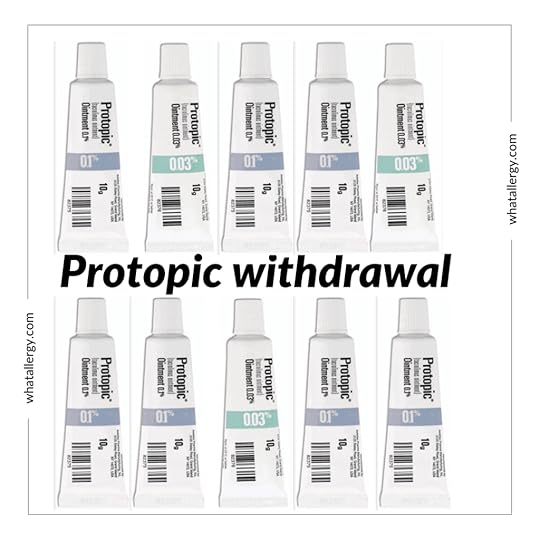
We hear a lot about topical steroid withdrawal, but little about Protopic withdrawal so there is hardly any research existing about what happens if a person decides to stop using Protopic. This is my analysis of my own usage and withdrawal from Protopic so far… and counting…
I can’t even prove that the problems I’m having with excessive burning, inflammation, crusting and flaking on my face is caused by Protopic at all because I’ve yet to find anyone who has used Protopic alone, and not firstly been prescribed topical steroids.
The withdrawal process is confusing because you have symptoms on parts of your body where you never had eczema before and never used steroids, so what I think is Protopic withdrawal may not be.
 How much Protopic did I use and for how long?
I had to ask my doctor’s secretary to run this report for me because I couldn’t remember. We don’t record when we get prescriptions, nor how long a tube lasts, how often we apply and where we apply it on the body each time. Maybe we should, it would make understanding a lifetime of use of topical steroids easier to understand.
According to my records I was issued 11 scripts of 0.01% Protopic between Mar 2014 and July 2017 and 1 script of 0.03% strength Protopic in June 2014.
I believe the 0.01% is stronger than the 0.03% script.
2014 – Started off using it twice a day, morning and night. 2015 – Began to use less, every other day.2016 – Weekend maintenance dose – once a weekend2017 – Weekend maintenance dose – once a weekend2018 – No Protopic issued – this year I was tapering and I did not use up all the medication I was prescribed. That’s 5 years use in totalApprox 2 tubes per year by my estimation2019 in April I quit Protopic for good after tapering to once a fortnight, then once a month, but it had started to stop working as I did this, so I would periodically boost back up again.I was told it was completely to safe as often as I wantedI was told by my dermatologist that Protopic was completely safe.
That it wouldn’t harm my skin like topical steroids could.
 This was my face in December 2021
That he was happy for me to use it more often. He often told me I should use more.
But I continued to question this and try to reduce my usage.
It just never felt quite right.
I’m due to visit my dermatologist in February 2022 so let’s see how that goes. I’d love to be able to walk in with significant healing to show.
So where are we now?
Currently about 2.5 years Protopic freeMy face is where I used Protopic, nowhere else and its by far the worst affected area, although the elephant thickened skin is present on the elbow creases, backs of knees and now inner groin and thigh as well us underarms.
In October last year things took a turn for the worst and my face has been flaring ever since. It has thankfully just begun to become more manageable this January 2022 and long may that last.
It’s still flaking and shedding, but no longer oozing, dripping and crusting with such ferocity. To have such a dramatic decline so far into my withdrawal journey has been hard to take but I see it as all healing. It’s got to heal deep into the skin layers and that healing journey is not linear, nor is it gentle and logical.
It’s a rollercoaster and it’s a complete head F**K!
I get asked so often how can people withdraw, wean and stop using Protopic and I really don’t have the answers. All I can do is continue to share my experience because I know I’m not the only one quitting this immuno-suppressant as well as the topical steroids. They are both immuno-suppressants when you get down to it.
Are topical immuno suppressants like tacrolimus worse than topical steroids? We don’t know. No one is monitoring this. No one is researching it. No one is listening.
But we are out here conducting out own live research project. What happens when you say no.
What happens when you stop?
Because no one ever said to any of us, if you use these you will be hooked. You will never be able to stop using them because your skin will be damaged so much you’d be crazy to even try.
No one told us this could happen.
I’d love to hear from other Protopic users who have quit. What was your usage? How long have you been using Protopic? How long have you been in withdrawal? Have you healed from using Protopic?
I am shortly going to be reporting Protopic to the Yellow Card Scheme, which is a system in the UK where we can report damage done to us be medication. I would urge you to do the same for both immuno-suppressants and topical steroids if you have not already done so. We have to report this issue for things to change.
You may also enjoyHow to report Topical Steroids using the Yellow Card SchemeMHRA recognise TSW as a real condition – but not Protopic Withdrawal!My TSW – Frequently Asked Questions pageTOPICAL STEROID WITHDRAWAL – HEALING NATURALLY – NO MORE TOPICAL STEROIDS – NO MORE PROTOPICThe post My Protopic usage, tapering and withdrawal first appeared on What Allergy Blog.January 20, 2022
Top 25 Eczema blogs
Today I received some wonderful news that my humble little blog has made it into the Top 25 Eczema blogs in the world! Whoop Whoop! Another excuse to celebrate as it’s also my 3 year TSW anniversary today.
 Top 25 Eczema Blogs from Feedspot
The best Eczema blogs are chosen from thousands of blogs on the web ranked by traffic, social media followers, domain authority & freshness. What Allergy is listed at number 6 out of 25 so I’m really chuffed with that.
What an honour! Some of them I’ve heard of but some of them are new to me so I’m really looking forward to exploring some new blogs and sharing some support to fellow itchy scratchy bloggers.
Check out the Top 25 Eczema Blogs on Feedspot here.
Here are my top five favourite eczema bloggers:
Itchin Since 87, written by the wonderful Ashley who I discovered online last year is packed with inspirational, positive and challenging blogs. I highly recommend following her. – https://itchinsince87.com/Eczema Life, written by Karen Fischer, author of The Eczema Detox cookbook, the first book I ever say TSW mentioned in and a great resource for anyone looking for guidance of good foods to support eczema prone skin – https://www.eczemalife.com/blogs/eczema-newsEczema Healing blog, written by plant-based doctors such as Dr. Michael Greger and Dr.Nneal Barnard who have poured years of effort into researching and teaching how our diseases can be prevented, arrested or reversed through healthful lifestyle factors. https://eczemahealing.org/blog/Sugarpuffish, Sarah’s skincare blog is packed with reviews of natural skincare products, from creams and moisturisers to soaps and shampoos. If you’re looking to change up your skincare regime, Sarah is one to follow, and also shares vegan and lifestyle advice and tips. https://www.sugarpuffish.uk/Just Du Pree blog, written by Lauren, who I discovered through my TSW journey shares her experiences with topical steroid withdrawal and I love her candid video content. If you have eczema or TSW check her blog out here: https://www.justdupree.com/blogShare the eczema blog love!
Do you have a favourite eczema blog? I’d love to hear about your faves, especially if I’ve not listed them above. Share the blog love!
The post Top 25 Eczema blogs first appeared on What Allergy Blog.January 19, 2022
Spoonie life – life with a chronic condition
I’d heard of this term before and knew it was something to do with being ill but never really understood what it meant. I’m not sure what prompted to me to google it the other night, but it’s actually a really cool analogy that helps the healthy and well understand what others who are struggling with their health are having to contend with on a day to day basis.
 The spoon theory of living with a chronic condition – I chose spoons with potential allergens for added complexity
Spoon theory is a metaphor that is used to describe the amount of mental or physical energy a person has available for daily activities and tasks. It was developed by Christine Miserandino in 2003 as a way to express how it felt to have lupus. You can visit her blog at https://butyoudontlooksick.com/
The idea is that we all start the day with our spoons. Each spoon represents a task that needs to be performed in order for the day to proceed. For people with a chronic condition, the spoons get used up pretty early on in the day, leading to fatigue, exhaustion and depression if people aren’t coping and getting the support and understanding they need.
And we’re not looking for pity, or even sympathy here, we’re just asking for understanding and an appreciation that each day can take more out of some of us who are dealing with daily challenges. Here’s a few examples using my day.
Spoon One – Didn’t sleep much so waking up tired already. Setting numerous alarms if I have to get up and having to set them early to give myself time to wake up properly.Spoon Two – Skin will have crusted and flaked up over night. Sometimes this happens during the day and over night. Excessive flaking is common for people healing deep skin layers due to damage done by topical steroids. If I’m planning to go out this may mean I need a long, gentle bath to help loosen and remove some flakes so I’m more comfortable, flexible and feel more normal with less obvious proliferation of flakes showing on my face.Spoon Three – Every morning I over heat, particularly after bathing or showering. I’ll usually need an good hour or two after bathing to sweat, sitting in front of a fan usually, chilling till I feel calm and cool enough to put on clothes. Rushing this and getting dressed anyway can lead to itch attacks, more damage done to skin, and I just can’t function, work, concentrate, let alone actually drive or anything when I’m this over heated.Spoon Four – Trying to heal my skin means I’m eating a clean, fresh and natural diet. It also means it can take me longer to produce food and put meals on the table.Spoon Five – Work tasks can take me ages, especially if I am really itchy. I have to check, double check and triple check my work because concentration is in short supply. It can take me far longer than it should due to regular interruptions, getting ice packs, cooling down, changing clothes, moisturising, etc. etc.Spoon Six – Hoover up the excessive flakes from last nightSpoon Seven – Change bedding again after a night of hot sweats and blood on the sheetsSpoons, spoons, spoons. I’ve run out of spoons!Each day you have choices, a healthy person wakes, gets up, washed, dressed and goes about their day. They’ll have challenges too of course, but being a human being isn’t one of them.
When just existing is hard, when you feel like you are getting by, surviving, struggling with life, this concept of normality seems so far away and so unachievable, it can be easy to feel jealous of all those perfectly well humans just doing life.
The more things a person with an illness or disability needs to do in their day, just to function, adds to the spoon life, hence the term spoonie.
A healthy person doesn’t need to worry about spoons, they can just continue their day with an endless supply. They won’t run out of spoons.
So I guess this blog is a little bit about what life is like managing chronic or severe eczema or going through Topical Steroid Withdrawal but also about anyone you know with a condition that complicates things, like MS, lupus, fibromyalgia, cerebral palsy… the list goes on.
These conditions often come with a good dollop of pain and discomfort to manage too which in turn add to the exhaustion and require the spoonie to remember not to use up all their spoons too early or the pain might floor them.
Living with anaphylaxis adds layers of planning, checking, preparation, emotional anxiety and strength. The strength to say no, to not eat food you’re not sure about, to explain your allergies again, to demand safe food, to alert someone to a potential risk.
When all you want to do is experience life as the well people do. Just to be a human being.
So be grateful for your health, for a good night’s sleep. Be grateful for your skin, your body, your mind. Be grateful for the robin singing in the bush outside, for the sun shining and the trees you can see around you. Be grateful for those small things because they really make life rich and they don’t require spoons to be enjoyed.
I am feeling really grateful for this opportunity to let me skin heal through topical steroid withdrawal and believe that I will heal. I may always have eczema but the intense ridiculous roller coaster of symptoms will ease and I cannot wait to see what my skin can be like.
So if you have friends of family who live with a chronic condition, be mindful that they may show you a smiling face and hide the stuff they need to do each day. They may be tired and not let you know. Have some empathy, being flexible and understanding if they pull out plans, seem unavailable when you need them or are constantly tired. They don’t need to to do anything or necessarily help, although that can be wonderful, they just want your respect, understanding and your spoons please if you could pass some over to us spoonies…
If you’re a spoonie…You may like to connect with other spoonies!
My Spoonie Life blogOne man and his catheters – Mark’s blog about a positive life with MSWhat is a spoonie? A patient explains spoonie lifeYou may also be interested in reading…10 tips for caring for someone with chronic eczema or topical steroid withdrawalTopical Steroid Withdrawal – Frequently Asked QuestionsSleep tips for eczema and topical steroid withdrawalPhoto by Miguel Á. Padriñán from Pexels
The post Spoonie life – life with a chronic condition first appeared on What Allergy Blog.January 18, 2022
Nickel Allergy, a More Common Allergy Than Expected
Nickel allergy is an allergic reaction that’s characterised by red and itchy skin with rashes or bumps. It is caused by contact with objects that release nickel into the skin. An allergic reaction to nickel could also be triggered by consuming food items that contain nickel.
 Nickel allergy and coins!How Common Is Nickel Allergy?
Contrary to what most people believe, nickel allergy is extremely common in most parts of the world. In fact, nearly 12-15% of women and 1-2% of men are affected by nickel allergy. Also, it is one of the leading causes of allergic contact dermatitis.
That is not surprising considering the wide prevalence of nickel in various items of daily use, such as:
JewelleryWristwatchesBelt bucklesZipsButtonsKeysCoinsMobile phonesOrthodontic bracesNickel is also used to manufacture certain types of surgical instruments. Additionally, small amounts of nickel are found in the following foods:
Soy products, such as tofu and soy milkGrains, such as oats and buckwheatFresh vegetables, such as broccoli and cauliflowerFresh fruits, such as bananas and pearsCanned fruits and vegetablesChocolate and cocoa powderWhat Causes Nickel Allergy?As with any allergic reaction, nickel allergy symptoms result from an adverse immune response to the metal. If a person is sensitive to nickel, their immune system mistakenly recognises the metal as a harmful substance. This, in turn, results in the release of chemicals to fight off the intruder, triggering an allergic reaction.
The precise reason behind why a person develops nickel allergy is not known. Research indicates that some people might be genetically predisposed to developing nickel allergy. Also, women are more likely than men to suffer from nickel allergies.
It is worth mentioning that triggering an immune response to nickel requires direct and prolonged contact with an object that releases a significant amount of nickel into the skin. Moreover, once a patient develops nickel allergy, they will experience an allergic reaction every time they come in contact with the metal.
What Are the Symptoms of Nickel Allergy?Crowdsourced and AI analysed data from StuffThatWorks indicates that the most widely reported symptoms of nickel allergy include:
ItchinessSkin rashFatigueJoint painBrain fogUrticaria (hives)BlistersRednessEyeglassesAmong these symptoms, skin rash and itchiness are the most indicative of nickel allergy. A majority of user reports also feature urticaria as an indicative symptom of the allergy.
Most patients start developing symptoms within the first 12 to 48 hours of direct contact with nickel. Depending on the intensity of the allergic reaction, these symptoms can last for two to four weeks.
The skin reaction to nickel is localized to the area that has been exposed to the metal. Some patients also develop dry, discolored and scaly skin with a burning sensation. Additionally, fluid-filled blisters are one of the most common symptoms of severe nickel allergy.
Severe nickel allergy symptoms also include:
Breathing problemsDiarrheaBloatingConstipationChronic fatigueBrain fogIn rare cases, patients can also develop allergic asthma due to an immune response to nickel. It is important to consult a licensed physician or dermatologist as soon as a patient starts developing severe symptoms.
What Treatment Options Are Available for Nickel Allergy?As is the case with most allergies, nickel allergy will not miraculously go away once a patient’s immune system identifies the metal as an intruder. However, there are certain treatments available to alleviate the symptoms of nickel allergy.
The most commonly used treatments for nickel allergy include:
Oral corticosteroids, such as prednisoneOral antihistamines, such as cetirizineTopical corticosteroid creams, such as betamethasone dipropionateTopical non-steroidal creams, such as tacrolimusTypically, antihistamines are prescribed to reduce skin itching. On the other hand, corticosteroids are commonly used to treat severe nickel allergy symptoms. Patients are advised to exercise caution when administering corticosteroids (topical or oral).
Additionally, prolonged use of corticosteroid creams can lead to topical steroid withdrawal once they stop the treatment. It is essential to follow the physician’s instructions regarding dosage and duration of treatment with corticosteroids.
Natural Treatments for Nickel AllergyOral and topical medications are effective in alleviating nickel allergy symptoms. However, patients can also follow simple home remedies to heal their skin. Applying calamine lotion helps ease skin irritation and itching.
Additionally, moisturizing the skin with a lotion or petroleum jelly soothes dry and scaly skin. It also helps create a barrier on the skin that provides protection from nickel-releasing objects.
Applying a wet compress on the affected area is a good idea as well. It dries out and heals fluid-filled blisters in case of a severe allergic reaction.
Prevention of Nickel AllergyIn most patients, nickel allergy is a life-long condition. While medical treatment and home remedies provide symptomatic relief, they cannot cure the condition. The best way of preventing an allergic reaction is to avoid direct contact with nickel for prolonged periods.
That involves checking with retailers, designers and manufacturers before purchasing any piece of jewelry or clothing. Also, they should use covers for their smartphones to prevent exposure to nickel.
Additionally, if a patient is undergoing surgery, they should inform the surgeon’s team about their condition. The same applies to patients about to undergo a dental procedure or have to buy new eyeglasses. It is just as important as avoiding foods that contain nickel.
People with nickel allergies should also stay away from stainless steel utensils and cookware. They should also avoid cooking with utensils that have metallic handles.
A Life With Nickel AllergyWhile nickel allergy is a fairly common condition, it is not life-threatening. Patients are not likely to experience anaphylactic shock as a result of the condition. The most severe nickel allergy symptoms include blisters, respiratory distress, chronic fatigue, etc. It is important to keep an eye out for these symptoms and seek immediate medical care.
Preventing direct contact with nickel also plays a key role in managing the condition. Patients are advised to exercise caution while purchasing new jewellery, clothing and other items of daily use. They should also disclose their condition to medical professionals before undergoing any diagnostic test or surgical procedure.
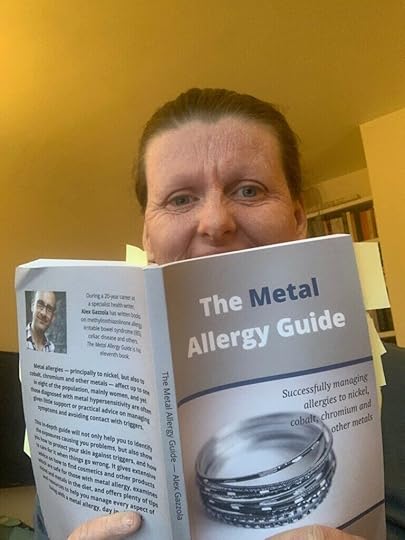 The Metal Allergy Guide by Alex GazzolaYou may also like
I’ve written so many blogs about nickel allergies now so here are a few more you might like:
10 tips for coping with a nickel allergy
The Metal Allergy Guidebook Review
Patch testing for allergy triggers
Sponsored Post
The post Nickel Allergy, a More Common Allergy Than Expected first appeared on What Allergy Blog.January 16, 2022
Eczema treatment pathway in the UK
What are the current treatment pathways for adults with eczema? You might be surprised to know that there are actually no NICE guidelines for adults with eczema, so it’s no surprise doctors and dermatologist simply follow the protocols, that have not changed for far too long.
We all know are how outdated the current guidance can be and we need change.
There is change coming, in the form of new treatments and more forward thinking about holistic solutions, talking therapy, diet and allergy testing. But what we also need is recognition that Topical Steroid Withdrawal is a real condition and furthermore, help, support and research to help those facing this condition.
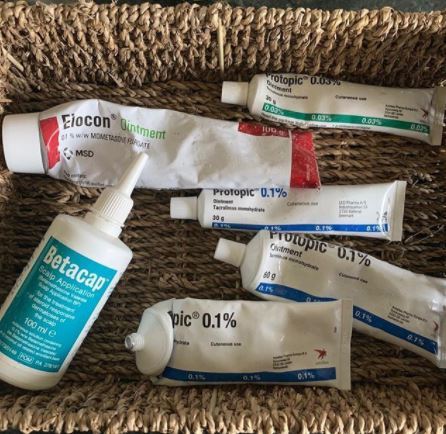 Just a selection of the topical creams I was prescribed
You can read the NICE guidelines for eczema here.
Current treatment pathways for eczema in the UKThis is traditionally what will happen in the UK
Emollients – the first line if defence. Often starting with the cheapest, least effective alternatives. Push harder for options without paraffin and no preservatives. They do exist. Epimax do a paraffin free emollient. If you can afford to, try to incorporate some natural skin care products such as Balmonds and lyonsleaf balms. Click here for Discounts and Promo codes.Topical Steroids – Beginning with the weakest, Hydrocortisone, and increasing the the strongest, Dermovate and Betnovate to name a few. For transparency I am no longer using any topical steroids. I stopped using them in January 2019 and have been in steroid withdrawal ever since.Topical Immunosuppressants – (Tacrolimus) Elidel or Protopic for treating eczema, can work really well. I used it on my face for about five years but I think this is causing me the most challenges with healing after stopping using them in April 2019, I am still going through quite severe withdrawal three years later. You might be thinking, is it worth it for all the pain? Well it’s not always been like this, I have had periods of quite stable skin and almost normal life experiences but this healing isn’t linear it would seem. Read Protopic Withdrawal and TSW.Immunosuppressants – Oral immunosuppressants such as ciclosporin, methotrexate, azathioprine and mycophenolate mofetil, can work well at supressing the immune response. I used methotrexate for about six months, a drug administered to cancer patients on much larger doses. It was highly monitored, you had to have regular blood tests and check the dose you took was correct each week. I was never happy using it and gave up when my immune system hit rock bottom and l it gave me shingles, the most hideous painful experience of my life, without a doubt. I decided I didn’t want to suppress my immune system any more and am choosing to heal naturally. It did improve my skin slightly but my dermatologist wasn’t really happy with the results. Perhaps it gave me an easier time during TSW, or maybe it just delayed healing, I’ll never really know.Biologics – Dupixent (Dupilomab) – for treating moderate to severe atopic dermatitis in adults. A biologic is a drug made from biological (living) sources like cells from humans, animals, plants, fungi or microbes. Biologic drugs are sometimes called “biologic response modifiers” because they change a process already occurring in cells or for a particular disease. In AD, new biologic drugs can modify the elevated immune response driving the disease. In my opinion this is STILL an immune suppressant, albeit perhaps more targeted. I’m not every so keen on what it’s made from either as I’ll bet it doesn’t say, ‘made from humans’ or ‘made from animals’ on the label. A vegan might not want to use this if it was derived from animals.Less invasive treatments – if you’re luckyThese are often not offered by doctors or dermatologists unless patients push for them. The general thinking is that we all ‘just have eczema’ and that it’s not caused by anything. That it’s just random. This outdated now as we know that it can be triggered and exacerbated by many things, including contact and food allergens, skin care products, pollution, stress, alcohol and lifestyle, to name just a few. The following treatments may help you get the bottom of your skin journey but you’ll generally have to push and ask for them.
Patch testingUVB therapy and PUVA phototherapySkin prick testing for allergiesPaste bandages and wet wraps.Blood testing for allergiesBlood tests for vitamin, mineral deficiencies and other potential problemsDietary adviceCBT TherapyFuture treatmentsTralokinumab: a new biological drug that is some time away from widespread release. This medication will be very similar to Dupixent, but where Dupixent blocks two targets, this new medication will only block one. To this point, the trials have been highly successful and promising.Baricitnib – People with moderate to severe atopic dermatitis that has not responded to at least 1 systemic immunosuppressant are usually offered either dupilumab or best supportive care. Dupilumab does not always work, and some people stop taking it because of side effects.. Baricitinib is an alternative to dupilumab and best supportive care. It is likely to be offered alongside topical corticosteroids.Targeting enzymes – A new class of medications to target enzymes: Pfizer is working on an oral medication that a person can take once each day to control eczema symptoms. If successful, this medication will target a new group of enzymes related to the inflammation that coincides with the condition Cibinqo® (abrocitinib), from manufacturer Pfizer , has been approved by the U.S. Food and Drug Administration (FDA). Cibinqo is an oral Janus Kinase (JAK) inhibitor medication for adults (18+) living with refractory, moderate to severe atopic dermatitis (AD) whose disease is not adequately controlled with other systemic drug products, including biologics, or when use of those therapies is inadvisable. JAK inhibitors can target one or more of these family members to block these immune signals and inhibit the inflammatory effect of key cytokines involved in AD. Cibinqo works by selectively blocking JAK1 resulting in improvement in AD signs and symptoms.There may be more treatments that I’ve not identified yet and I will update this blog as I find them.
And please let me know if I’ve got anything wrong or missed anything off.
What do we need in the future? Are these future treatments better than what came before? Are they safer?
Further readingRead A dermatologist discusses the future of eczema care here, By Jonathan Silverberg. He has set up a multidisciplinary treatment centre in America looking at allergists, neurologists and sleep specialists, in addition to board-certified dermatologists. Also visit his website at https://revolutionizingad.com/
The post Eczema treatment pathway in the UK first appeared on What Allergy Blog.January 14, 2022
A dermatologists review of The Shape of Skin, eczema poetry
Thank you to Dr Amanda Penny who works as Cosmetic Doctor at PHI Clinic in Twickenham, Harley St, Maidenhead, a non surgical cosmetic clinic, for this truly wonderful review.
This is why I write.
I recently came across the poem ‘You are golden’ by Ruth Holroyd of Whatallergy

It really resonated with me. On a daily basis I see how my patients, with or without dermatological pathology, are affected day-to-day by their skin, its flaws and imperfections, societal perceptions and expectations.
I aim to help patients achieve better confidence in their own skin but it is a delicate balance – to treat while maintaining a natural result; to refresh a person’s appearance while encouraging them to love their wonderful skin for all that it does, imperfections and all.
Ruth’s book, ‘The Shape of Skin’ is “a journey from childhood and the early lessons of eczema kids learn through the pain and anger of a life limiting condition. Finally finding acceptance, healing and love.”
The book is dedicated to everyone living with eczema, psoriasis, atopic dermatitis and any other inflammatory, itchy skin condition. However, I would also encourage anyone working with skin, from dermatologist to make-up artist, to read this beautiful collection of poems.
For medics in particular, it gives insight into the ways in which we can, often unwittingly, be part of the problem, especially when we don’t take a holistic view of the person we are trying to help, rather than just the condition we are trying to treat or control.
Thank you @whatallergy for sharing your collection on poems and good luck with your next book! #theshapeofskin #eczema #psoriasis #atopicdermatitis #tsw #troubledskin #aesthetics #dermatology
WOW! What a wonderful review. Thank you so much Amanda.
It reminds me of a blog I wrote called ‘Anxiety and itching’, which explores how my skin makes me feel and how much stress plays a part in that cycle of itching and anxiety.
My aim is to get this book of poems for people with skin conditions in front of more dermatologists and people with eczema. Please forward this blog to any skin doctors, dermatologist of people with eczema, psoriasis, atopic dermatitis or topical steroid withdrawal that would be amazing.
Writing these poems and generally expressing myself through poetry is so therapeutic. It somehow gets to the root of a problem or situation in a way speaking out loud or just reading about it can’t achieve. Poetry can be powerful, moving and emotional and that’s what I’ve aimed to achieve with this book. It’s a love story to my skin which I’ve learned to love over the years, despite its current state of healing and deterioration due to topical steroid withdrawal.

If you want to see some sample poems, read further reviews and find out more about The Shape of Skin use the button below:
Find out moreOr you can Buy The Shape of Skin on Amazon here.
Have you read it yet? Do you find poetry helps you to heal things, feel things, express things? I’d love to chat poetry!
The post A dermatologists review of The Shape of Skin, eczema poetry first appeared on What Allergy Blog.January 13, 2022
Frio Cooling wallets – for ice packs – reviewed
Yes I know it’s winter, but some us of live in a perpetual heat wave! I am really struggling to regulate my temperature these days, which could be a symptom of going through Topical Steroid Withdrawal, as the skin heals, it has to learn again how to sweat and detect the external temperature and it seems to often over heat. It could also be the menopause… more coming on that soon. I’m getting checked out by the doctor shortly to make sure it’s not anything else making me so hot all the time.
Carrying ice packs to help with itching and over heatingSo I was really excited to be sent this cool (no pun intended) pouch for storing and carrying my ice packs, which is something I have to take with me a lot these days as my skin seems to struggle to regulate temperature during topical steroid withdrawal, and ice packs also help with intense itch attacks.
I heard about them after pulling my plastic bag with an ice pack wrapped in a tea towel from my bag during a walk on a hot day with my friend. She knew about them due to working with diabetic children who use these cooling wallets to store their insulin., which needs to be kept cool.
She thought it might help and would be nicer than a slimy ripped plastic bag and damp tea towel combo, although that was working quite well for me for anyone who can’t afford one of these cooling wallets.
Once it’s been activated the pouch stays cool for about 48 hours which is pretty impressive!
So for occasions when I’m not near my freezer, I know I can travel in style with my ice pack inside my stylish Frio Cooling Wallet. All you need is access to cold water!
They come in a number of really fun designs; mine is called Tropical and you can choose from plain and lots of other colourful designs and they also come in different sizes.
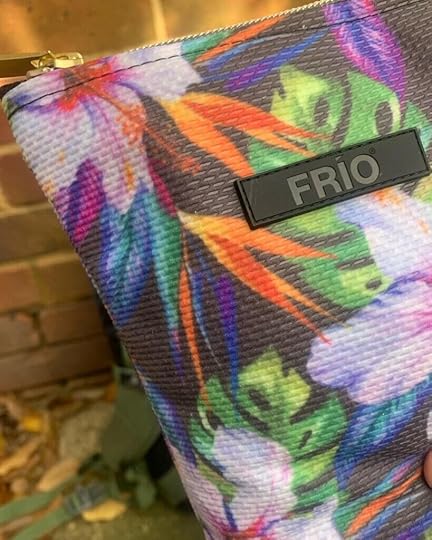 This is my Tropical Frio Cooling Wallet
Seriously how trendy and funky is this little cooling wallet? I’m actually really proud to carry this with me and much less embarrassed to whip it out than I was with the plastic bag option.
 To give you an idea of size, it fits easily in my huge hand bags and rucksackHow do Frio Cooling Wallets work?
It’s actually really easy to use them, although the first time you do need to concentrate to make sure you do it properly. Basically you soak the inner cloth insert pouch in water for about 10 minutes, or as long as it takes for the gel pockets to fill and swell with water. The little gel pockets then magically feel really cold.
You can oversoak so be careful to set a timer and make sure you remove it from the water at the right time.
You then pat dry it off to remove excess water and insert your medication or in inner wallet which you can then insert into the more sturdy outer wallet. In my case, I insert my ice pack and that’s it!
No condensation and dripping like you get when you carry an ice pack in a plastic bag.
All you do in between using them is allow them to dry flat naturally. Check out this video from Frio explaining how to use them:
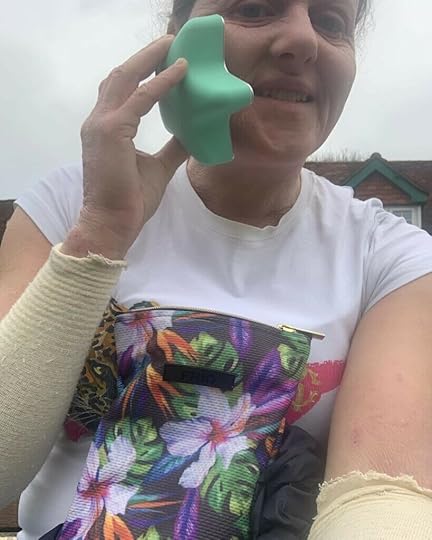
Watch this short video to learn how to activate your cooling walletHere I am using my Frio Cooling Wallet to keep my Cosi Care cooling star cold. These are brilliant little gizmos that you cool in the fridge of freezer (if freezing be careful of freezer burn and rub on clothing for 30 seconds before applying directly to skin) and then gently apply to the itchy hot skin. It brings instant blissful relief. I have two that I rotate at home. They say cool for approximately 20-30 minutes.
If I need longer cooling protection I take a solid ice pack from the freezer which will stay cold longer.
This is me back last year when I was out on a walk. I also take my Frio cooling wallet and ice pack to restaurants, friend’s houses, pubs, walks with friends. It fits in my bag or rucksack and and is a lifesaver.
I also take to my favourite restaurant. the Three Oaks.
 Spot the Frio cooling wallet with my ice pack inside…
If you’d like to try one of these brilliant cooling wallets, also perfect for story diabetic medication, visit www.friouk.com to find out more.
What do you take with you when you go out? Do you struggle with over heating and getting itchy? How do overcome that when you’re on the go? Let me know!
The post Frio Cooling wallets – for ice packs – reviewed first appeared on What Allergy Blog.