Ruth Holroyd's Blog, page 19
October 1, 2021
Natasha’s Law will help save lives
“From October 2021, Natasha’s Law will require food businesses to provide full ingredient lists and allergen labelling on foods pre-packaged for direct sale on the premises. The legislation is being introduced to protect allergy sufferers and give them confidence in the food they buy.“
 Natasha’s Law came into effect on 1st October 2021
I have been waiting for this day and I’m so proud of what the Ednan-Laperous family have achieved in such a short space of time. This new law will save lives.
If this had been done in Pret back then, when Natasha Ednan-Laperous bought a baguette she would still be here. Her loss is a tragedy that could have been avoided. Because she and her father checked with the staff and since it wasn’t labelled they all assumed it was OK.
Thankfully this loophole in the law has now been sewn up. But are food establishments ready?
If my local cafes are a benchmark I’d say some are ahead of the curve but others have a long way to go.
To find out more visit the Natasha’s Law website here.
How do I get training?If you have a cafe or restaurant and want to learn more, speak to Caroline and Jacs at Food Allergy Training Consultancy.
How will it help?Eating out, especially on the go, unplanned and impromptu, choices can be terrifying and not just for those with food allergies, for their friends, families and those serving them.
So how will it help me and others?
Allergens will be labelled so I will be able to easily find out what I need to know to help me make an informed decisions.Staff at cafes will also have more confidence if allergens are written down.Allergen awareness is still quite poor, so the more people see them labelled clearly the more they will register the importance of allergen vigilance in all walks of life.Lives will be savedYoung people are more at risk because they can be shy, and less confident about asking questions and may look at food and think it will be OK.I think we still have a long way to go and no one should assume that all food establishments will be on board with this law today. You should still remain very vigilant, and if any cafes or shops cannot advise you on allergens present, don’t risk it and tell them about Natasha’s Law.
Putting your trust in anyone is hard, so you need to be confident, clear and consistent.
Unless you are confident that food is correctly labelled, please don’t take a risk.
GB News online TV talking about Natasha’s LawI was on GB Newshis evening talking about Natasha’s Law so tune in at 6.20pm roughly and you should see me. It’s so great to see the media taking this seriously and spreading awareness because it will take time for people to understand the new law and get on board with how they need to label foods to be compliant with the regulations.
What do you think about Natasha’s Law?
Do you think it will give you more confidence when eating out?
Or do you feel like me? That it’s a huge step in the right direction but that it will take some time for it to actually become commonplace?
The post Natasha’s Law will help save lives first appeared on What Allergy Blog.

September 16, 2021
My life with anaphylaxis in chat magazine
I just had to share this brilliant article which was featured this week in Chat Magazine, with the fantastic headline of “Snogging me comes with a health warning!”. That made me laugh so much, possibly the heading for my dating profile?
This article details my allergy journey, from my first even anaphylactic reaction, diagnosis with a nut allergy, right up to my last anaphylactic reaction to nuts in a starter while eating out.
The heading is a reference to a particular kiss which resulted in an allergic reaction after my partner at the time had eaten nuts. You would not believe how much my lips swelled up! If you have a nut allergy, be very careful who you kiss!
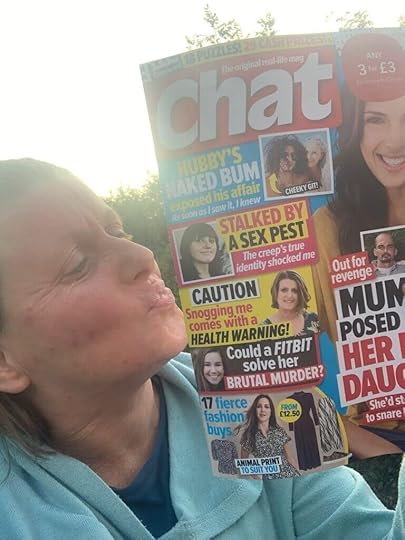 Allergies and anaphylaxis featured in Chat Magazine, September 2021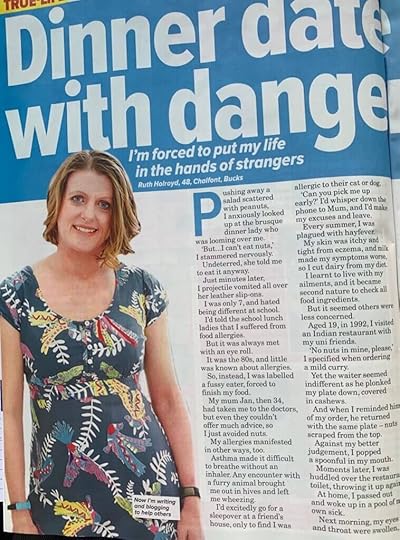
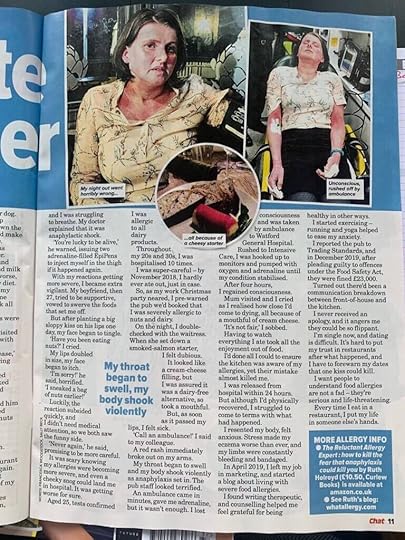
Just re-reading this story brings back the fear and terror of that night, waking up in intensive care and knowing how close I had come to death, again! I had been out for a meal and been given a meal containing dairy, despite all my best efforts to inform the restaurant beforehand, remind them on arrival and continual checking during the meal.
I was failed that night by the staff at this pub due to the following reasongs:
No processes in place to handle allergen bookingsThe manager who handled by booking was out that night, without this key member of staff no one knew what to doStaff were not adequately trained to take allergy food requestsKitchen staff were not trained to understand the severity of anaphylaxisCommunication between the team was lackingDespite my repeated questions and the staff’s obvious lack of understanding, no one admitted they didn’t know or didn’t check and to this day I do not now know quite how I was given a meal so laced with dairy, yet being told it was dairy free and made especially for me.No one knew what to do after the fact of the allergic reaction taking place and staff hid, avoided me and refused to help or communicateI did not receive any proper apology except an email from the pub assuring me they took allergies very seriously and hoped I was now OK! Clearly they didn’t take them seriously at all and I very, very, very much NOT OK!It was basically an accident waiting to happen and a truly awful evening in my life. Thanks go to my wondering colleagues and friends who were with me that night. Thank you all for staying with me, getting me help and helping me heal afterwards.
I don’t think I will ever truly get over these incidents. They haunt me to this day. They stay with me. They still give me nightmares and I remain to this day, incredibly anxious any time I am eating out.
This isn’t such a bad thing as it keeps me ever vigilant but when you have had a near death experience it never really leaves you.
It wasn’t the first time I’d had an anaphylactic reaction and it probably won’t be the last. Living with the knowledge that certain foods could cause anaphylaxis, or in the worst case, could kill me, is very hard to live with.
I’ve developed anxiety and panic attacks because of this and needed therapy to learn now to come to terms with it.
So I am very grateful to everyone who keeps me safe, to my friends and family, thank you.
And to Chat magazine for taking my story and sharing it with their readers. I will never stop campaigning and raising awareness about allergies in the hope that I can help others not feel alone and help educate everyone about how to keep people with allergies safe
Death from anaphylaxis is avoidable but it takes a community, a family, a nation to ensure those at risk have the information they need to stay safe.
 Writing therapy for my anxiety and fear
After my last anaphylactic reaction I was asked to write a book, the theme being, how do people with the anxiety, fear and worry that anaphylaxis could make the ill and possible even result in death.
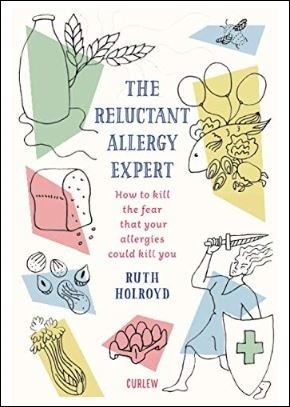
If you or your loved one has anaphylaxis, you might find my book, The Reluctant Allergy Expert – How to kill the fear that anaphylaxis could kill you, useful.
It’s available on Amazon as a kindle and in paperback.
To find out more, read The Reluctant Allergy Expert.
And finally, thanks again for reading my blog. I’d love to hear your stories. How do you live with the fear? How do parents cope? How do children cope? What do you do to help?
Stay safe and keep checking those labels, menus and asking again and again. It’s never enough!
The post My life with anaphylaxis in chat magazine first appeared on What Allergy Blog.September 15, 2021
MHRA recognise Topical steroid withdrawal
This has been a long, long time coming but finally, all of us who reported our Topical Steroid Withdrawal (TSW) through the Yellow Card scheme can feel some relief that TSW is finally being taken seriously.
A press release was released today, 15th September, during National Eczema Awareness Week to finally recognise that TSW is a thing!
For so long our GPs, doctors and dermatologists have been ignoring us, telling us:
we’re wrong, we’re just steroid phobicwe used the drugs wronglywe just need to use moreI honestly don’t know how any doctor or dermatologist can look a patient with the signs of TSW and feel like they are doing the best for them.
My eczema was never ever as bad is the picture on the left. And it’s been worse that this in TSW but I’ve not managed to get pictures well as I live on my own, and when it’s really bad the last thing you want to do is take pictures.
I knew I had a problem when just days without my daily topical medication saw my skin deteriorate so fast and so badly that it would be oozing open wounds. This is not eczema. This is topical steroid withdrawal.
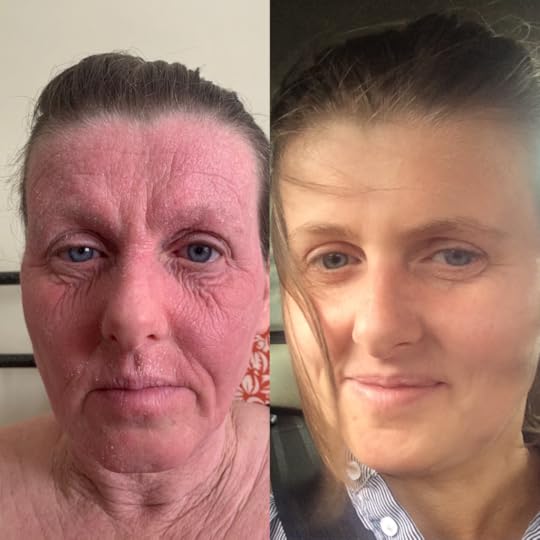 On the left, skin aging due to TSW – on the right, before staring TSW and addicted to topical steroids and protopic
Here’s that press release in full:
Long-term continual use of topical steroids linked to skin withdrawal side effectsPatients using topical corticosteroid creams to treat conditions such as eczema or psoriasis are reminded to do so in accordance with advice from their healthcare professional, after a national review found that people using topical steroid for long-periods of time can suffer severe skin withdrawal symptoms.
Although this is very infrequent reaction, the Medicines and Healthcare products Regulatory Agency (MHRA) is advising anyone experiencing skin redness or burning sensations after they have stopped using these creams or ointments to seek advice from their health professional before using these products again.
Topical corticosteroids are medicines applied directly to the skin to treat conditions such as eczema or psoriasis. Patients can experience topical steroid withdrawal reactions after using these products at least daily for long periods of time. It is not unusual for skin conditions to flare up or return shortly after stopping topical corticosteroids. However, very infrequently, a severe type of topical steroid withdrawal reaction can occur, which may also be known as red skin syndrome or topical steroid addiction.
Signs of severe topical steroid withdrawal reactions include redness of the skin which can be a spectrum of pink to purple, or as darkening of the normal skin tone, depending on the skin tone of the individual. Other signs include burning or stinging, intense itching, peeling of the skin, or oozing open sores. These signs may occur days or weeks after stopping treatment and are known to occur after as little as 2 months of continuous treatment in children. Examples of topical steroids include beclometasone, betamethasone, clobetasol, hydrocortisone, mometasone, and triamcinolone.
Alison Cave, Chief Safety Officer of the MHRA said:
“When used correctly, topical corticosteroids are a safe and effective treatment for conditions such as eczema and psoriasis. However, a withdrawal reaction following long term use of these products can lead to skin redness and a burning sensation worse than the original skin condition. These reactions can be hard to distinguish from the original skin condition.”
“Patients should follow their healthcare professional’s advice on where, how often and for how long to use topical corticosteroids. Patients experiencing symptoms after stopping their topical steroid treatment should contact a healthcare professional for guidance. We advise anyone experiencing potential withdrawal symptoms to speak to their healthcare professional before starting to use these products again. Suspected adverse side effects can be reported to us through the Yellow Card scheme.”
Andrew Proctor, Chief Executive of National Eczema Society said:
“Many children and adults rely on topical corticosteroids to manage eczema inflammation. As with other treatments though, they can have side-effects including after you stop using them. It’s very important people know how to use topical corticosteroids safely and effectively. We urge people who are affected to read the newly published patient safety leaflet and to speak to their doctor or other prescriber if they have questions and concerns.”
To coincide with National Eczema Week the MHRA is publishing the outcome of a comprehensive national review, which included assessment of published clinical research, reported drug reactions and advice from skin charities and organisations. Product information for topical corticosteroids is being updated to include safety warnings on withdrawal reactions. We have developed a patient safety leaflet to support patients and health care professionals, which includes advice on how to reduce the risk of severe reactions.
Healthcare professionals should:
prescribe the lowest potency of topical corticosteroid needed to effectively treat the skin disorderconsider reducing the strength or frequency of application gradually if topical corticosteroids have been used for a prolonged timemake sure patients know how to use it safely and effectively, especially on sensitive areasreport all suspected adverse drug reactions to the Yellow Card scheme, including after discontinuation of topical corticosteroidsFor further information on using topical corticosteroids safely please see the full Drug Safety Update article and Patient Safety Leaflet.
Also check out the Gov.uk website for Topical Corticosteroids and Withdrawal Reactions.
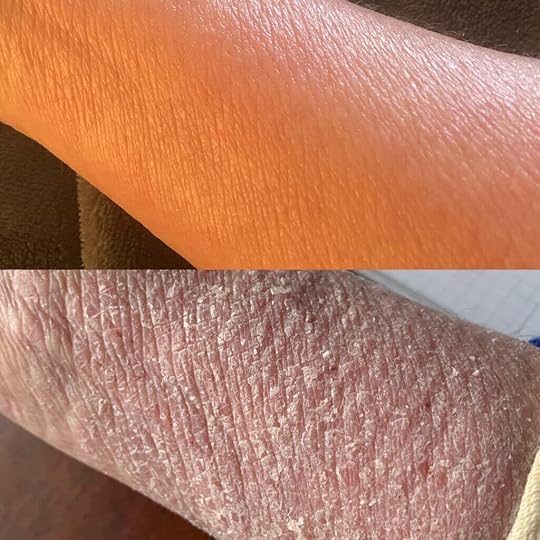 TSW arm skin shedding – just a snap shot of the years of shedding skinSo where are we now?
It’s going to take some time for any of this to make a difference for patients. Because I did use my topical steroids as directed by my doctor and dermatologist. In fact I was told frequently to use more.
I think that Protopic, a topical immunosuppressant is also dangerous and has pretty much broken the skin on my face.
Just last year whilst having UVA light therapy I was told to put topical steroids onto my skin so it was slick! Shiny and slick. I was already in TSW at that time so refused point blank. I fail to see how there can be any efficacy in the light treatment even working if you ask patients to slather on topical steroids like that.
These creams are dangerous.
I worry that this is the tip of an iceberg that is about to split into two and tip everyone into the churning sea.
Our current NHS system cannot support people like me through TSW. I have pretty much got myself through it alone and I’m still going.
My dermatologist is lovely and has been monitoring my progress but there is no therapeutic support available other than more immunosuppressant drugs or biologics. And forgive me for being wary, but I’m not going to trust a doctor with advice on my skin for a long long time. I have spent an absolute fortune on natural skin care products, bandages, tea tree oil, aloe vera, dead sea salts, tubular bandages and so much more. All this to treat, heal and cover the wounds, sores, ooozing and split skin caused by TSW.
This was not my fault yet I am paying the price.
I worry that these new drugs are just supressing an immune response too. An immune response that we need to listen to, not dampen down like a quick fix.
Why are people getting eczema? Let’s get to the root cause instead of applying a very dangerous sticking plaster.
After spending a day on radio interviews yesterday talking about the very real toll that eczema has on the mental health of the 1 in 10 adults who have it. we have a big job on our hands.
If you’re interested in my TSW journey check out my TSW FAQs here.
And if you think you have TSW, here’s how to report it – Reporting TSW through the Yellow Card Scheme.
I’d love to hear your views!
The post MHRA recognise Topical steroid withdrawal first appeared on What Allergy Blog.September 14, 2021
Win Westlab Dead Sea Salt for eczema skin
Because it’s National Eczema Awareness Week from the 13th to the 19th September, the amazing people at Westlab are giving away 500 packs of Dead sea salts which are great for anyone with dry, sensitive or eczema skin.
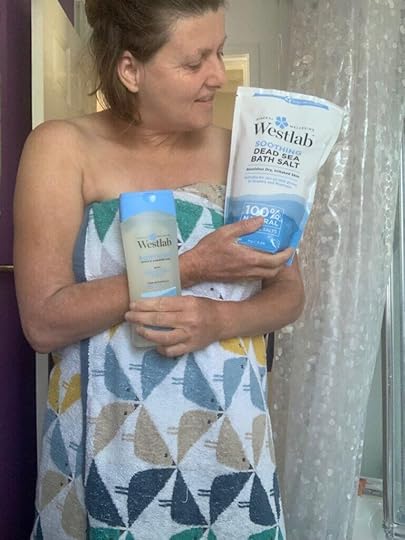 Dead sea salt baths have been one of the most helpful treatments for my skin
All you need to do to be in with a chance of winning one is to join their mailing list during National Awareness Week, which runs from the 13th 19th September.
Visit https://westlabsalts.co.uk/pages/eczema-awareness-week to enter. All they need is your email address and tell them I sent you by popping WHATALLERGY in the ‘Who told you about this giveaway’ box. Good luck! These will be allocated on a first come, first served basis to get in quick to be sure of receiving your free sample.
Why are Dead Sea Salt baths so good for eczema?I’ve been using Dead Sea salts for eczema in my bath now for a few years and it’s made such a difference. It helps reduce inflammation and is packed with Magnesium, Calcium and Potassium minerals that are beneficial to the skin and promote healing. It also softens and soothes dry skin leaving it much more hydrated and calmer.
The Dead Sea Salts pictured above were kindly gifted to me by Westlabs. Thanks guys. I’m loving them and the shower gel is pretty good too!
You may also be interested in 7 natural baths for eczema skin here.
The post Win Westlab Dead Sea Salt for eczema skin first appeared on What Allergy Blog.September 7, 2021
Natural treatments for allergic asthma
I’ve had allergic asthma all my life and used both reliever and preventative inhalers regularly for YEARS. This blog is about my journey to living with asthma naturally and no longer using any asthma medication.
I’ve always worried about this continued use of steroids for asthma and whether they were bad for me, causing side effects etc. Naturally when I began topical steroid withdrawal I looked into whether this was going to hinder my progress because the preventative asthma inhaler contains a steroid drug. It was hard to find any advice that I really trusted so I continued to use both.
Asthma can be life threatening.
Every day 3 people in the UK die because of their asthma.
Asthma UK
“Asthma deaths in England and Wales were recorded at 1,320 in 2017 and 1,422 in 2018 giving us an increase of 7.7%. Asthma UK analysed asthma deaths data from the Office for National Statistics, Deaths registered in England and Wales 2018 .“
I believe many of these could be due to undiagnosed allergies, but I can’t substantiate this.
My asthma historyHowever during lockdown, purely by chance, the slower lifestyle and isolation, different pace of life, outlook, eating habits and daily routines, I realised I’d forgotten to use the preventative inhaler for months. I felt fine, so I kept on as I was, being very careful, avoiding my triggers and watching my peak flow.
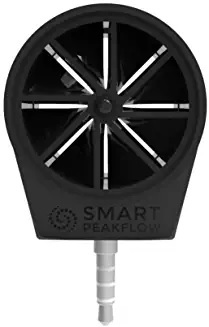 Smart Peak Flow
I have a Smart Peak Flow device which was given to me free to review on Instagram. It links up to your phone and you can then easily track your readings, see peaks and troughs and monitor your asthma really quickly in the app. You can also share this with your medical professional so they have up to date information to see. You can buy a Smart Peak Flow unit on Amazon.
At my last asthma consultation I sought advice from my local asthma nurse who, whilst nervous to condone my choice of quitting the medication, admitted my peak flow was normal. She told me to keep an eye on it and get in touch if I needed to get back on the preventative inhalers. The other interesting advice I was given was to stop using the blue one before a run, as had been previously advised. Instead, I should take the inhaler with me and only use it as needed. I now find I rarely need the blue inhaler at all and actually couldn’t tell you the last time I used it.
I still get a little wheezy, I think caused by hay fever, dust and other triggers, but it seems to be very mild. A visit to a cafe can set me off on a wheeze attack due to air borne dairy particles, but this was still the case when I was using both reliever and preventer inhalers. Sitting outside and leaving cafes quickly when I get wheezy is a price I have to pay to stay safe .
Ban the bloody latte!
PUBLIC ANNOUNCEMENTNatural asthma treatmentsI’m not a doctor so would not for a moment suggest that anyone stop using their asthma medication. If you are using preventative inhalers and the blue relievers please continue to do so as directed by your doctor. If you are concerned please get an appointment with the asthma centre closest to you for a review.
Since not using my preventative inhaler I’ve been looking into how to ensure I remain drug free safely. Sometimes I do still get wheezy, on high pollen days and sometimes for no apparent reason that I can determine. Luckily these have been mild and I can manage it myself. Monitoring regularly by taking your peak flow is good practise so you can see any dips and deterioration. By far the best thing was one particular breathing technique that has helped so much and it got me thinking, what other research and things are out there that could help? What else am I missing?
Buteyko breathing – Buteyko (pronounced Bu-tay-ko) is a breathing technique which can ‘improve asthma symptoms, quality of life and reduce bronchodilator (blue reliever inhaler) requirement in adults with asthma’. To do Buteyko breathing, breathe in normally, hold your breathe by covering your nose with your finger and thumb and keep your mouth closed. Hold for 10 seconds or as long as you can. Let your breathe out slowly when you need to, or after ten seconds and now breathe in and out normally ten times. Every time I do this I find it shifts mucous after only one try, and always by the second cycle. I used to feel like my chest was restricted and that the mucous was stuck, dry and wouldn’t move, leaving me sort of breath. This simple technique works every time I feel a little shortness of breath of wheezy. You can read more about this in my blog about the Buteyko Breathing technique for asthmaSalt Therapy Inhaler – I’ve not used one of these before but a few of my contacts on Instagram have recommended them to me. I nearly bought one but at the moment I don’t have any asthma to test it on. Check out Saltair inhalers on Amazon.Reduce anxiety – This is key, for me there is a direct link between being anxious and itching and wheezing or shortness of breath. It’s not always easy to just do something like cut out stress or reduce anxiety as it’s not simple. But do you what makes you stressed and anxious? Can you control it in any way? or work to make thing better and reduce that burden on your immune system. I have had counselling and continue to work on the things that worry and upset me. I have loads of tools that I’ve learnt over the years and learning what’s not good for me is really helping. Learning to say no when you need to and look after yourself first will start to show a difference in your health. It’s all those little things like maintaining good sleep, healthy screen time, self care, nature and exercise. Don’t under estimate the effect of a busy lifestyle with no time to rest, recharge and rewire. Meditation – I’ve been learning to meditate now for a few years and I am by no means an expert. I don’t for a moment try to clear my mind or do anything clever, but what it does do for me is to help me slow my breathing down. So many of us are not learning to breathe properly. By taking just ten minutes out of my day to just sit and try to slow everything down I have noticed a huge difference in my mental health and my physical health. Learning to breath properly, deeply and plug into that part of your nervous system that helps you relax is something I think everyone should learn to do. Just try it for 30 seconds and you’ll notice a difference. Just sit with a straight back, feet planted firmly on the floor, try to relax your jaw, your tongue, your forehead and your shoulders and close your eyes and breath in deeply, hold your breath for few seconds and breath out slowly. There are loads of different breathing exercises so give it a go. It’s free, you can do it anywhere and I guarantee it will help. I have the Calm app and find that a guided meditation helps me to keep focus on the breath. If you would like a free month’s trial on Calm let me and I’ll send you a link.Vitamin C – Vitamin C is involved in the metabolism of histamine and prostaglandins, which are involved in bronchoconstriction so it’s a natural antihistamine. It certainly isn’t going to do you any harm because the body doesn’t store it if you take too much. So if you have allergic asthma it should definitely help. Obviously a diet rich in vitamin C will help but you can boost your intake, particularly when wheezy. Get Vitamin C powder or pure ascorbic acid on Amazon.Magnesium – The reason this mineral can help is because it’s a natural bronchodilator which means it opens up the airways and also helps reduce inflammation. It’s even used by doctors in emergencies either intravenously or in a nebulizer. You can try Liquid Magnesium from Floradix on Amazon.Learn your triggers – My asthma is triggered by a number of things including dust, latex, mould, pollen and grass, airborne dairy particles, some dog and cat dander, horses, other animals etc. Even when I was using all the medication these triggers would still cause asthma. The only way to really manage it is to avoid these triggers as best you can. Really keep an eye on when you get wheezy and what’s happening each time. Keep a diary so you can work out what’s happening. Ie. is it in the bath, in the garden, when at a particular friend’s house, time of year, season of pollen. It takes time to piece it all together but by understanding your body and what it reacts to you can live your life to avoid them as much as possible. So for instance, I always sit outside in some cafes, even in winter, because sitting inside makes me too wheezy.Detox your home – I’ve been doing this slowly now for a few years. As things run out I replace with a natural kinder solution. I’m talking about skin care, cleaning products, fragrances, everything. I love my new essential oil diffuser that helps me get calm and chilled for bedtime. I only use 100% pure essential oils now to fragrance my house, those plugin perfume things are awful, honestly really bad for your asthma and general health. Please everyone stop using them!Diet – Soya triggers an asthma attack for me, immediately. Could a food type be giving you problems too? Keep a food diary if you think this is the case and request allergy testing from you doctor.Dust mite and allergen bedding – This one is also really important if you have a dust allergy. I have got the SleepAngel anti allergen pillow which I really love and take everywhere with me when I go on holiday. It goes with a carry bag so you can easily transport it. It is the only allergen free and waterproof pillow on the market and nothing gets inside it. It’s special coating means you can wipe it clean if you need to a disinfect also so there is no need to machine wash either. Although who ever washes pillows? Or is that just me who’s never washed a pillow? Check out the SleepAngel pillow here. You can also get Anti Allergen mattress and duvet covers from Allergy Best Buys.Demystifying Atopic eczema and asthma course – I have just started a course to understand eczema better and some of these tips are from that. I will share a link when I have it so you can find out more too. If you’re interested contact Carolyne Akinyemi on Linkedin.References and further readingMagnesium and Asthma on asthma.net
Asthma and pathogenesis and novel drugs for treatment (the vitamin c link) from the British Medical Journal
Disclaimer: By using any of the Amazon links above a small amount will be paid to me from Amazon as commission. It costs me money every month just to host and maintain this blog so these links help me keep the blog going.
I do want to stress here I am not suggesting that anyone stops using their asthma medication. I am not a doctor, just a patient sharing their experience. Please make an appointment with your GP or local asthma clinic if you need help or advise about managing your asthma.
How is your asthma? Do you use a preventive inhaler? What do you do to help you manage your asthma?
The post Natural treatments for allergic asthma first appeared on What Allergy Blog.September 4, 2021
Why I love Balmonds eczema skincare
And why I’m proud to be a Balmonds Ambassador.
I’ve been an Ambassador for Balmonds products now for many years and first discovered the company whilst speaking at the Allergy Show. Someone from the company had been watching my talk and came over to gift me a free jar and I’ve been a huge fan ever since. That very first product was their Skin Salvation emollient and that remains my favourite product to this day.
What I love most about their skin care range is that it’s safe for eczema skin and there are no harmful ingredients like steroids, SLS, parabens or artificial fragrances or preservatives. They are also paraffin free, an ingredient used in most over the counter products prescribed for people with eczema. Balmonds skincare range is brilliant for anyone with sensitive skin, atopic dermatitis, eczema, psoriasis or topical steroid withdrawal who is looking for a natural skincare range.
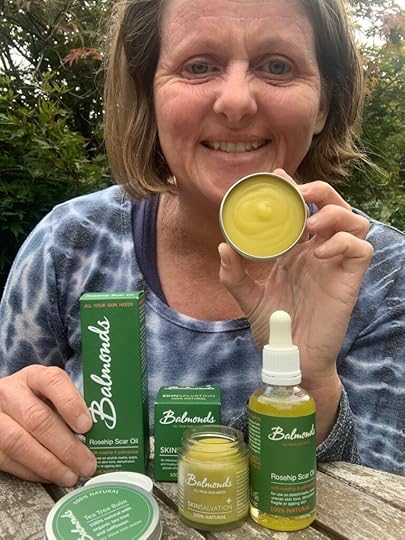 My top 3 Balmonds favourite products
As part of my role as am ambassador I was asked to choose my three favourite products to share you with you guys and it was so hard to choose. They now do scalp oil, shampoo, body wash and so much more. However the actually choice for me was an easy one because I have some products that I return to time and time again. So here are my top three Balmonds products. In the interests of transparency I was given samples for this blog, however I also buy Balmonds products myself year round. Using my affiliate code below helps keeps me supplied with the luscious natural skincare I love.
Balmonds Skin Salvation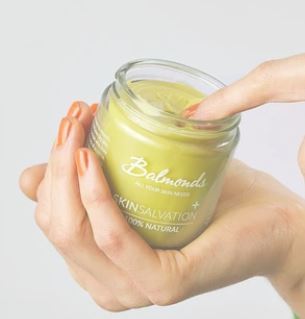
I just love this product so much, I can use it on any part of my skin, face, body, hands, anywhere and it’s super moisturising and doesn’t irritate my skin in any way.
I would recommend it to anyone with sensitive skin, eczema or who is going through topical steroid withdrawal.
I find I don’t need to use much, it goes a long way and as my skin heals I’m needing to use it less and less.
It comes in 30, 60 and 120ml jars.
Ingredients: Olea Europaea (olive) fruit oil*, Cera Alba (beeswax), Carthamus Tinctorius (safflower) seed oil*, Cannabis Sativa (hemp) seed oil*, Aqua and alcohol (from tinctures), Calendula Officinalis (calendula) flower extract**, Chamomilla Recutita (chamomile) flower extract*, Stellaria Media (chickweed) extract** and Urtica Dioica (nettle) extract**
The skin is incredible and has amazing healing qualities if we let it do what it needs to do. This balm supports healthy healing, alleviates dryness and soothes my sore skin. I’m trying to wean myself off the paraffin based emollients and swap entirely to natural skincare and I’m getting there.
I also love that they use environmentally friendly glass jars that can either go in your recycling or be used to plant little succulents in. Thanks to Amy for this idea.
I’m saving mine to create a little Balmonds windowsill garden.
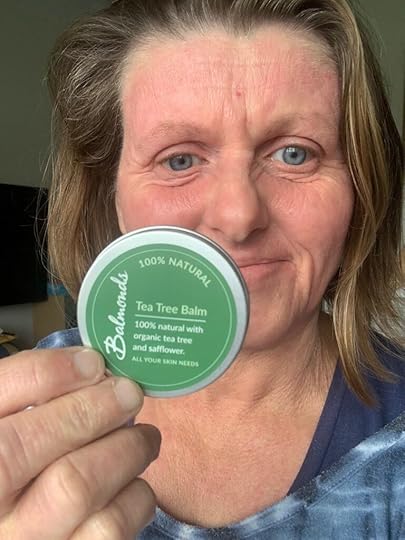 Balmonds Tea Tree BalmBalmonds Tea Tree Balm
Love Love Love the tea tree salve. It used to come in a tiny little lip balm pot and I always felt I’d like more of it.
Well they listened and now it comes in a 50ml pot, more lovely healing tea tree goodness.
This stuff works on so many things.
And it’s so simple. Only five ingredients.
Ingredients: Olea Europaea (olive) fruit oil*, Cera Alba (beeswax), Carthamus Tinctorius (safflower) seed oil*, Melaleuca Alternifolia (tea tree) essential oil* and Limonene (from essential oils).
I’ve used it on cold sores, cuts and sores, stings, but mostly on open sores and angry eczema. Those nasty bits that aren’t so easy to heal.
It’s been a godsend throughout my TSW journey and thanks to this product, some Aloe Vera with tea tree inside and also my Dead Sea and Espom Salt baths I think this is why I keep on top of my eczema and don’t get infected skin.
Rosehip scar oilI have lots of areas of skin that are either scarred or have lost pigmentation altogether.
I also have areas of skin that is deeply wrinkled around my eyes, chin and also legs and arms and I’m starting to use this to see if it can help heal. It smells amazing and I hope that as my skin heals I can rely on this more and less on the thicker emollients.
Ingredients: Vitis Vinifera (grape) seed oil, Rosa Canina (rosehip) fruit oil, Helianthus Annuus (sunflower) seed oil*, Tocopheryl (Vitamin E), Calendula Officinalis (calendula) flower extract*, Anthemis Nobilis (Roman chamomile) flower oil*, Lavandula Angustifolia (lavender) flower oil*, Cymbopogon Martini (palmarosa) oil and Geraniol & Linalool (from essential oils)
Always, always patch testAsk for sample sizes and always patch test any skincare products before applying on sensitive areas. Just because these work for me doesn’t mean they’ll work for you. There is always a chance that one of the ingredients could aggravate someone’s skin because a lot of them contain essential oils.
However I have tried A LOT of products over the years that have not worked and there are very few products I feel safe enough to put on my skin.
Where can I buy Balmonds skincare range?If you are in the UK visit their website here www.balmonds.co.uk and use my code WHATALLERGY for 20% off everything you buy.
Click here to Buy Balmonds (UK link)You can also find Balmonds in most Holland and Barrett health food stores.
Customers in the US can get $5 off their first order if they sign up to the newsletter. Visit www.balmonds.com
You can read about my TSW skin journey in a blog I wrote for Balmonds here, The Brutal Truth – My TSW Story
And I also share My Top 20 TSW survival tips, which features Balmonds skincare products!
#MyFavouriteBalmonds, #Balmonds, #SkinSalvation, #BetterWithBalmonds
The post Why I love Balmonds eczema skincare first appeared on What Allergy Blog.August 20, 2021
Allergies, asthma and eczema protect you from Covid-19
I knew it was sexy to have eczema, allergies and asthma. I knew it was my superpower to have an immune system that was on hyper lookout. Being a superhero can be life threatening in certain circumstances, like coming into contact with an allergen, but it could be protective in other situations, like the Covid virus!
Check out this article from The School of Medicine and Public Health in Wisconsin in the US, Respiratory allergies and allergic asthma may have protective mechanism in Covid-19.
There I was shielding in the early stages of lockdown, on advice from my doctor and later on being told it was ‘probably safe’ for me to venture out if I was careful and that I didn’t have a higher risk because of having asthma. With no real evidence for either course of action I remained very nervous of mixing and did most of my shopping online and relied on the kindness of friends, neighbours and family.
Not a bad thing anyway, I stayed safe and as far as I know didn’t even come into contact with anyone who had the virus, let alone catch it.
You can read my blog about Covid-19 vaccine, anxiety and my skin, where I discuss my fears of having anaphylaxis or a skin flare up after having the covid vaccine.
Atopic patients are having better outcomes to CovidThe cells in our body react to viruses and our immune response is what eventually helps the body overcome the virus. People with eczema have more pathogens on their skin, making them more inflammatory, the redness, itching, swelling and pain is caused by TCells which release cytokines. These are little messengers which travel around the body communicing how the body should respond.
People with eczema remain on high alert and in an inflammatory state. They somehow produce more Ige antibodies and receptors. It makes people more prone to allergic reactions but something interesting happens with Covid.
Watch the video, Carolyn can explain it way better than me.
Basically Covid binds to the ace2 receptors which are in short supply for people with atopic conditions. It makes it hard for Covid to replicate.
For once having eczema looks like it has a benefit to you from the point of view of Covid!
Eczema patients are 3 times more likely to have no or mild symptoms to Covid!
Also boost your Vitamin D as this will help.
This makes me much less anxious.
Follow the Eczema Channel on YouTube for more fascinating insights.
Remain careful, vigilant and responsibleThis new research won’t make me complacent. I won’t be rushing out and being careless but it does take away some of my deep fear, that I will react really badly and also that if I did get ill I would need steroids to save me, which could put me back into the worst of topical steroid withdrawal.
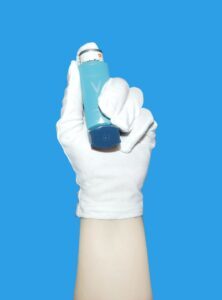
I also have a terrible fear of hospitals, that they’ll give me something that will give me allergic reaction. I have had two unexplained anaphylactic reactions in hospital due to something in drips that has never been explained. I also fear the food because hospital food is not great if you have allergies.
I have been double vaccinated though so I do feel much safer, knowing that the likelihood will be that I’ll get some protection from that also and would not get so ill.
Allergen exposure leads to significant reduction in Covid virus symptoms“Respiratory allergy, asthma and controlled allergen exposure were associated with significantly reduced gene expression in a protein that the coronavirus uses to infect cells with COVID-19.”
University of Wisconsin School of Medicine and Public Health.
The study, published online April 22 in the Journal of Allergy and Clinical Immunology, suggests a possible reason why people with respiratory allergy and asthma do not seem to experience some of the more severe and life-threatening manifestations of the COVID-19 disease.
Researchers used data from three different cohorts of children and adults to determine whether asthma and respiratory allergy are associated with reduced ACE2 expression in airway cells. In all three studies, total RNA was extracted from nasal or lower airway samples. Within the cohort of children (n=318), moderate and high levels of allergy were associated with progressively greater reductions in ACE2 expression. Children with high levels of allergy and asthma had the lowest ACE2 expression. In the adult cohorts (n=47), allergen exposure led to significant reductions in ACE2 expression as well.
What do you think about this research? Does it make sense?
Having allergies and allergic asthma protects us from Covid-19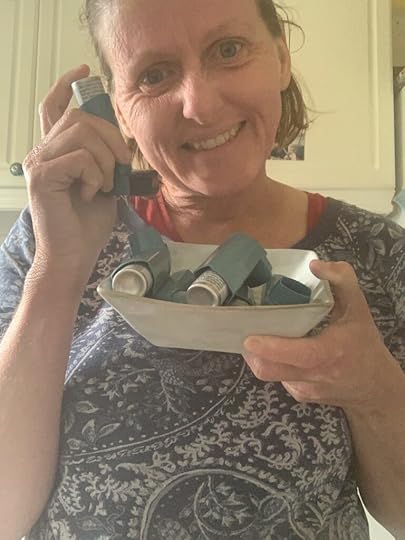
I think it’s amazing to think that having allergies and allergic asthma could actually protect you from getting the covid virus.
Does it make you feel any safer?
Obviously the virus can still be passed on even if one isn’t unwell so caution and safety must always be followed. But I now feel much safer and Just a little bit smug that for once my allergies and asthma make me a little bit special, and little bit safer.
For once it’s cool to have allergies and asthma. I bet you now wish you did too!
The post Allergies, asthma and eczema protect you from Covid-19 first appeared on What Allergy Blog.August 19, 2021
Is lab made milk safe for dairy allergies?
Milk made without cows? It sounds amazing doesn’t it? Great for the cows, no animal cruelty and so would be great for vegans, but is it safe if you have a dairy allergy? The short answer is most definitely No!
 What is lab made milk?
Milk can now be created under laboratory conditions without needing any animals involved at all.
Instead of looking for plant based ingredients that can create the best alternative, this ground-breaking new food product is not derived from plants, but made from the same proteins as actual milk.
Imaginedairy, An Israeli start-up is applying AI (artificial intelligence) to precision fermentation to artificially brew the whey and casein proteins that make up real milk and milk-based products.
While not plant-based, this animal-free production process could meet the requirements of the vegan market and potentially transform the dairy industry.
What does this mean for those with a dairy allergy?This is pretty terrifying for me, as someone with a life threatening dairy allergy, will my body see these new products and man made proteins as the same as real milk and dairy?
Would it give me an anaphylactic reaction?
The answer is most probably, yes it would be dangerous. Lab made dairy milk could cause an anaphylactic reaction if you have a dairy allergy.
This is something to look out for, I don’t think it’s mainstream yet but watch this space. Be aware because in the future, some vegan milks could contain clones of real milk proteins and so be potentially fatal for those with dairy allergies.
Do you have a dairy allergy? How does this new lab made milk and dairy make you feel?
Terrified?
Special thanks to Adrian Rogers of Romer Labs for raising this on LinkedIn.
Remain vigilant, please be aware and raise awareness of the impact novel foods and food processes have on the allergic community #foodallergyawareness
Read, Real Milk, no cows required in LabNews to find out more.
I also wrote about a similar issue before after the production of A2 milk, a special cow’s milk with the most allergenic protein from the milk removed. It is much better for people with a dairy intolerance but potentially fatal for anyone with a real dairy allergy. When you get tested for a dairy allergy, you do not find out which protein you are allergic to. A1 milk protein is just one of many. Read Why A2 milk gives me nightmares here.
I’d love to hear your thoughts on this. Is it a good thing? I guess, like all other products it would need to be labelled, as an allergen for milk dairy, but it could cause significant confusion amongst the general public and food service industry.
Photo by Charlotte May from Pexels
The post Is lab made milk safe for dairy allergies? first appeared on What Allergy Blog.August 18, 2021
Eczema and skin poetry workshop, 4th Sept 2021
This is the fourth Poetry Workshop we have organised, taking place on Saturday 4th September at 3pm, for anyone wanting to explore the written word and poetry as a vehicle to learn, explore feelings and emotions and find release and peace through poetry.
The first workshop was a great success with people joining from all around the world, from America, Germany, Hungary and the UK.
Our tutor Hannah Davies, professional writer and performer, leads the workshop. She also has eczema and is also going through topical steroid withdrawal so has a deep understanding of skin conditions.
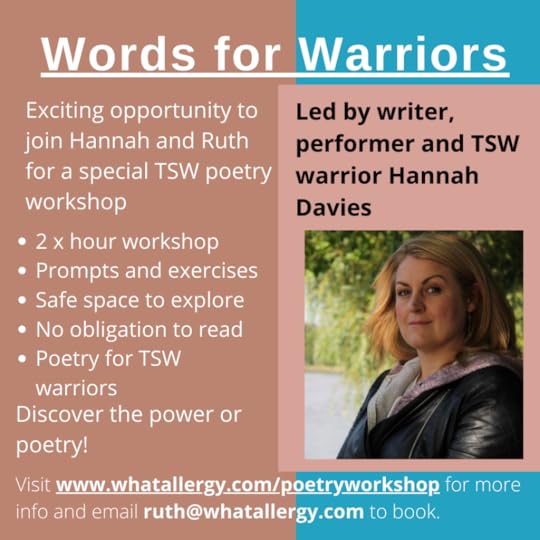 2 hour free workshopPrompts and exercises prepared by HannahSafe space to explore your writingNo obligation to read outPoetry for TSW Warriors and eczema people!
Discover the Power of Poetry to heal. It’s therapy!
Taking place on Saturday 4th Sept at 3pm, this is a free workshop and we will be limiting numbers to ten people to allow better learning and a manageable group.
To find out more visit Words for Warriors
And to reserve your place email ruth@whatallergy.com today.
The post Eczema and skin poetry workshop, 4th Sept 2021 first appeared on What Allergy Blog.10 tips for caring for chronic eczema or topical steroid withdrawal
I know how hard it can be watching someone suffer with a condition that you don’t have first hand experience of yourself. It’s difficult to know what to say or how to help. And it can be heart-breaking watching them struggle, knowing they are in pain and you feel powerless to help. Here is my advice of what was really helpful for me during my Topical Steroid Withdrawal worst days.
So if you have a friend with severe eczema or who is going through Topical Steroid Withdrawal, this blog could be really useful. Some of this is obvious but not all of it. It applies for any chronic condition really. Sometimes people can feel so low that they won’t be able to reach out for help. This isn’t any reflection on you or your friendship with them. They will simply be running on empty.
They will be in survival mode.
 Just a simple trip out for coffee….
Support from close friends and family could really make a difference to their experience and help them to not feel so alone and lonely.
I wrote about this a while ago in, How to speak to someone going through TSW. This blog gives you some insight into the kinds of things we find really hard. Things NOT to say! And explains the things that really wind us up! It may seem helpful to suggest your favourite moisturiser to us but for a person who has tried everything and is just feeling so tired of fielding well meaning comments it isn’t helpful. We don’t want advice or to hear about your insect bites, or the time you had a really nasty rash.
We just want a hug, for you to listen and to treat us like a human being, because the chances are we feel like a walking wound. Self conscious, unconfident and exhausted. Living with constant pain takes it toll too.
So what can you DO to actually help?
Here’s some really practical ideas:
10 tips that could help you care for someone with TSW or eczemaOffer your time – It can be really hard to get on with daily life, housework, gardening, washing, cleaning… I think if someone had offered to help me out with the garden and housework it would have meant so much. Things often got on top of me and I did it when I had a good day. But having a clean house to heal in is a wonderful gift to give.Cook some food – Offer to bring round meals, come round and do a batch cook and put meals in their freezer. Ask them what they’d really love, what they’re craving and bring them their favourite takeout. Bring them a coffee from the local cafe! It can be very lonely and isolating going through TSW.Don’t get annoyed if they don’t respond – Lack of sleep, daily fatigue, pain and discomfort and very low mood, depression and anxiety will be in full force so your friend or family member may not prioritise replying to you. It isn’t personal. They days blur into one and they may not have the energy to think what to say and may also be fearful of seeing anyone.Just listen – Be there, on the phone, or in person. Listen, ask questions. Don’t offer any advice or suggestions because trust me when I say, we’ve tried everything. Unless someone asks you specifically for advice for their skin, don’t try to offer any sort of suggestions. But do listen, ask questions and encourage them to share. It will help you understand what they’re going through.Do your research – If you want to really help a friend going through TSW, find out everything you can. Do your research. Explore the charities, sources and research available. Make it your mission to find out everything you can so you can more fully understand them. It will also mean you don’t have to keep asking questions. Check out my TSW FAQ resources page for links and help.Ask what you can do to help – They may say they’re OK and refuse your offer, but ask anyway. Be persistent and ensure they know nothing is expected in return. Ask what you can do to help. It might be just popping in to have a cuppa, doing some shopping for them, keeping on top of the gardening, doing a load of washing, cleaning up when they can’t. It could be helping them wash their hair when their hands are too sore. Or giving them a manicure or pedicure to cheer them up. It could be small things or big things. Just let them know you are there.Tell them you love them no matter what – Real friends should know this, but they might need reminding. Tell them you don’t care if their skin is bad, that they don’t need to be on show, wear makeup, or cover up their skin condition. Tell them it’s not important to you and tell them you love them just as they are. And also that you are behind them and have their back through their healing journey.Try to coax us out – Ask them for a walk, out for a coffee, or for a picnic… and encourage them. I guarantee they’ll feel better afterwards. Choose somewhere close to where they live, offer to take them so they don’t need to drive (if they have nerve pain like I did driving felt dangerous due to the spasms in my arms and face). Somewhere quiet, comfortable and easy to bail from. Most times I always felt better when I dragged myself out for a walk etc.Invite them to take part in something – I’m talking about perhaps an online Zoom yoga meetup, or set a challenge to read the same books together. They may struggle to read but they could get the audio book instead. Listen the the same podcast together and meet to chat about it. You could also watch the same TV program or Netflix series and have a Whatsapp check-in group to chat about it. I found doing yoga on zoom with my little group of TSW friends so encouraging. I could get onto the mat and do what I could, and I know the rest of the group find it motivates them to keep trying, even on days when they feel really poorly. Giving them a purpose, however small, might just help lift their mood.Thoughtful gifts – One of my friends would bring me things like lollipops, some lovely shampoo she knew I loved and once a book written by a fellow TSW sufferer called The Peculiar Disappearance of Jillian Sanchez by Kelly Toews. I’d not even come across Kelly before and had certainly never heard of the book. It was such a touching gift and is well worth a read for anyone going through TSW and their friends and family. It’s only available on Amazon in Canada so who knows how she found it! Thank you Vic xCheer from the side lines – what really helped me was when people told me how well they thought I was doing and how brave, strong, resilient I was being. Because quite often we feel weak and pathetic. We feel like we should be doing better. So reminding someone they are amazing can be really encouraging and give them a boost to keep going.I know many people move back home so their family can care for them, but for many of us that isn’t possible. Either by choice or because we have partners and children to care for.
I did find this wonderful article, Coping with Chronic Illness: A caregivers guide to helping others
I’m writing another blog packed with great gift ideas for people with eczema or TSW so watch out for that.
It may take me a while because I keep discovering new wonderful products to share. From clothing to books, self help to journaling. You’ll just have to wait! It doesn’t have to be hard to find thoughtful gifts that are not based on chocolate, skincare or food! All things best avoided unless you really know someone well and know what they can and can’t have.
I’d love to hear from friends and family and those with chronic eczema and topical steroid withdrawal. What really helped you? How did you want to be cared for? Who really made a difference? What advice would you give to carers?
The post 10 tips for caring for chronic eczema or topical steroid withdrawal first appeared on What Allergy Blog.