Ruth Holroyd's Blog, page 22
May 21, 2021
Coeliacs and Vegans can shut up
At the risk of alienating half my audience and many close friends… this is a rant that has been boiling for a while.
I’d like to say firstly that I love you all very much… I’m just venting some frustration. All of my vegan and coeliac friends are amazing accommodating of me and my allergies, probably because they understand what it’s like having limited choice and also because all my friends are just all round lovely empathetic people.
But when I hear Coeliacs complaining that they can only get gluten free chocolate brownies in coffee shops… it makes my blood boil.
When I hear vegans protesting that there isn’t much choice on menus… I roll my eyes.
Because I have very low expectations.
My only hope when I eat out is that I will not die.
That fear is very real and live with it. I’ve learnt to keep it under control, but it’s there to keep my safe, because I have faced death more times that I’d like to mention. Having an anaphylactic reaction feels like you are dying. The feeling if impending doom is a strong symptom for me, because the body is fighting. Fighting against itself and it does not want to die either, but the reactions are all messed up.
So just don’t kill me. Seriously, it’s that low.

If you give me a packet of crisps and an apple and tell me you don’t think your kitchen is safe, that’s fine with me. I mean it’s disappointing but I’ve grown up with disappointment. I’m used to having a plain meal, no pudding, only one thing that’s safe on the menu.
If I get the blandest meal imaginable and leave alive and without an allergic reaction – that’s a successful meal out. For me, eating out is more about the company, the living, the laughs and the experience. The food aspect gives me so much anxiety.
If you can only offer me one option, and that’s plain, no sauce, no potato, missing items from what should be included as they’re not safe… yup… I’ll pay the full price, (which is often what happens anyway), to guarantee a safe meal.
If a cafe is OK with me bringing in my own cake, that’s a win.
If I’m allowed to bring in my own gravy, I’m happy.
If you have nothing safe but will let me join friends and bring in my own food, thank you.
Because all I need from you is honestly. Don’t guess. Don’t assume. Check and tell me if you think anything is not safe. It could be my life on the line if you’re wrong.
Look what happens with just a little thought and kindnessIf staff will enter into any conversation with me to discuss what’s safe, what’s not, what I like, what can be adapted… I’m already buzzing and chuffed that someone cares.
Because quite often, they don’t. I am getting turned away more often lately. Just today I phoned Nando’s in London to check about booking and discuss my allergies. It was an automated message declaring that they can’t even cater for allergen requests for click and collect. We may not go there now, despite them being so great for me in the past.
And I hear so many times, ‘We cannot guarantee, our kitchen contains x,y,z allergy… eat here at your own risk…’
When I get a starter, main and pudding that is not plain salad, steak and fruit salad… you’ll get Trip Advisor reviews, Facebook checkins and Instagram posts from me over the moon. This applies to other people living with allergies too.
You might even get them anyway if I have a nice safe meal. Because every meal out if an achievement in staying alive. In living life as normally as I can.
But if you go above and beyond.
If you create a tasty, well seasoned and nutritionally balanced dish… I’ll be sending my compliments to the kitchen and tipping your staff.
You’ll also get a raving fan, a return visitor and a customer for as long as you continue to value me as a human and cater for my allergies.
Because I live daily with a very real, very raw and still very insistent fear of dying. A lack of trust. A gnawing fear.
That maybe, today, this risk, this meal out, this time will be my last.
And I have SO MUCH LEFT TO DO ON THIS EARTH!
I am so alive it hurts.
So next time you complain that your choices are limited.
Remember this.
Vegans – I completely respect and try to emanate your life choices, but they are just that. Choices. If you are served a meal cross contaminated or containing animal products, maybe you won’t even know. You won’t get ill and you don’t live daily in fear for your life.
Coeliacs – You have so much choice now. Be grateful. Be vigilant and I know many of you do get glutened regularly because cross contamination is a real problem… But with careful planning and avoiding gluten, your life is not at risk. You won’t die from being glutened. I see GF or Gluten free on so many menus. I see you being quite well catered for.
So that’s why, when I hear you moan, I get cross.
You are so lucky. I would give anything to just have to avoid gluten.
I would love to be able to try being vegan, but plant based diets would be so limiting for me with my already limited diet, including an allergy to nuts, soya and tomatoes – the basis of a lot of vegan meals.
And so much shame…Finally, it’s taken me years to develop confidence in my allergies. I now feel that I have control of my life and my allergies do not define me or shape me, but they do affect how I live my life. In the past I’ve always felt embarrassed and ashamed to speak up, because you can see on people’s faces what they think.
It’s in the eye roll. It’s in the sighs. It’s in the fake smile that doesn’t reach their eyes.
It’s in the things they say. “Just a bit’s OK though?, Can you take an antihistamine? It should be OK for you. We can’t guarantee…”
“Shall I check?” erm yes please.
A lifetime of feeling smaller. Of hiding and limiting my life.
Of feeling like I need to beg people to take me seriously. It’s exhausting.
I don’t think Vegans feel like this. I have many friends who are vegan and they, quite rightly, feel proud of their status and their values and beliefs, the reasons they follow a vegan diet do define them. They certainly don’t ever feel any shame, embarrassment or limiting beliefs. On the contrary. They want the world to know. They are fuelled by their passion.
Sadly I suspect coeliacs also get the eye rolls and confusion as this is also a greatly misunderstood condition.
But I don’t thing being Coeliac is looked upon with quite so much distrust as allergies.
People think we’re faking it. Making up our allergies. They think we just don’t like certain foods. They think it’s a fad, a lifestyle choice, a dietary phase we are going through.
Despite deaths from allergies now getting widely reported on the news, people still don’t understand how serious anaphylaxis is.
So what I’m trying to say is. Please be grateful for what you have.
And please, if you don’t have an allergy, stop saying you do! Just be honest. Say you have IBS, or an intolerance, or follow a fodmap diet, or find too much gluten bloats your belly. All chefs want you to enjoy their cooking so they’ll know how to advise you and what to give you to keep you well. Just own your choices and your situation. Be honest and open and talk clearly. If you don’t have an allergy you don’t get to use that word!
By saying you have an allergy you just cloud the already muddy waters, especially when you’re spotted eating some cheese or ordering a pudding as a treat. Don’t make the kitchen clean down an area, take extreme precautions or prepare a special dish when it’s not necessary.
Because you make life so much harder for those of us living daily with the fear that this might be our last.
The post Coeliacs and Vegans can shut up first appeared on What Allergy Blog.

May 16, 2021
Patch testing for allergies and eczema triggers
Patch testing is done to ascertain what contact allergens e.g. chemicals, cleaning products and cosmetic and skin care ingredients could be causing allergic reactions and eczema.
Small metal dishes which are pre-filled with different things are stuck to the back of the patient. The metal discs are kind of meshed into the sticky plasters in batches of about ten.
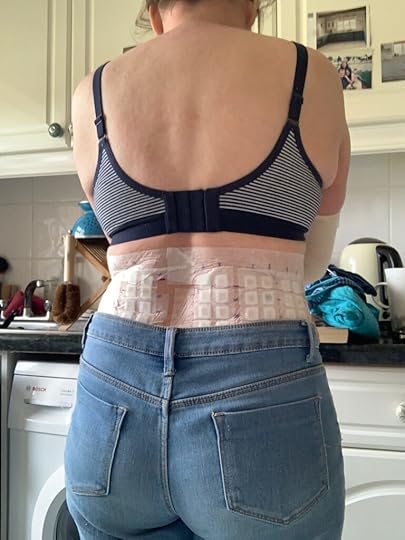
I had these done back in 2009 but the tests were inconclusive and I had numerous aborted appointments, postponed because the skin on my back was not clear enough with bad active eczema. But the problem was you had to have two weeks clear of using steroids before testing, but when I did that my skin flared up! When they finally did the tests the patches didn’t stick very well, many peeled off and I didn’t get any conclusive reactions apparently. Despite feeling very itchy and tingly patches to certain test areas.
This time around not using any steroids had become my super power so that part was easy. For those of you reading this blog without have read any of my other blogs, I’m going through topical steroid withdrawal and have not used any on my skin for over two years. They also suggest you don’t moisturise before the tests and that was easy too. I’m not using much moisturiser now, particularly not on my back which is (or was) pretty clear.
What are the patches testing for?Normally a patient would be tested for 60 to 100 different allergens but because of the sensitivity of my skin and the condition of my skin while going through topical steroid withdrawal, they decided to pick the most allergenic contact allergens and test for those first. This is what was put on my back, just 40 of the most likely contact allergens:
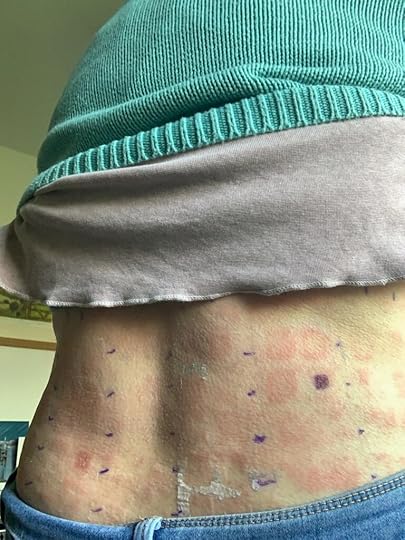 Day 3 – the patches come off to reveal a lot of rashesPotassium DichromateNeomycin SulphateThiuram mixp-PhenylenediamineCobalt ChlorideCaine Mix IIIFormaldehydeColophoniumQuinoline mixMyroxlylon Perierae (Balsam of Peru)N-Isoprpopyl-N-Phenyl-e-phenylenediamineLanolin alcoholMercapto mixEpoxy resinParabens mix4-Tert-Butylphenol formaldehyde resinFragrance mix 1Quaternium 15 (Dowicil 200)Nickel Sulphate –
Allergic Reaction
Cl+Me-IsothiazolinoneMercaptobenzothiazoleAmerchol L101Sesquiterpene Lactone Mixp-Chloro-m-Cresol2-Bromo-2-nitropropane-1,3,diolCetearyl alcoholSodium FusidateTixocortol-21-pivalate –
This is a corticosteroid used to test for an allergy to topical steroids
Budesonide (A steroid! Grrr) Imidazolidinyl urea (Germal115)Diazolidinyl Urea (Germal 11)MethylDibromoGlutaromnitricile2-Hydroxymethacrylate4 Chloro-3-5-xylenol (PCMX)Carba mixFragrance mix IIDisperse Blue Mix 106/124Hydroxyisohexyl3-cylohexene carboxaldehydeComposite mixMethylisothiazolinoneMy patch test results
Day 3 – the patches come off to reveal a lot of rashesPotassium DichromateNeomycin SulphateThiuram mixp-PhenylenediamineCobalt ChlorideCaine Mix IIIFormaldehydeColophoniumQuinoline mixMyroxlylon Perierae (Balsam of Peru)N-Isoprpopyl-N-Phenyl-e-phenylenediamineLanolin alcoholMercapto mixEpoxy resinParabens mix4-Tert-Butylphenol formaldehyde resinFragrance mix 1Quaternium 15 (Dowicil 200)Nickel Sulphate –
Allergic Reaction
Cl+Me-IsothiazolinoneMercaptobenzothiazoleAmerchol L101Sesquiterpene Lactone Mixp-Chloro-m-Cresol2-Bromo-2-nitropropane-1,3,diolCetearyl alcoholSodium FusidateTixocortol-21-pivalate –
This is a corticosteroid used to test for an allergy to topical steroids
Budesonide (A steroid! Grrr) Imidazolidinyl urea (Germal115)Diazolidinyl Urea (Germal 11)MethylDibromoGlutaromnitricile2-Hydroxymethacrylate4 Chloro-3-5-xylenol (PCMX)Carba mixFragrance mix IIDisperse Blue Mix 106/124Hydroxyisohexyl3-cylohexene carboxaldehydeComposite mixMethylisothiazolinoneMy patch test resultsNot only did I react to a number of these contact allergens, but also to the micropore plasters that were used to attach them all to my back. Not a great outcome but does confirm what I already knew, that I am allergic to the glue in all plasters.
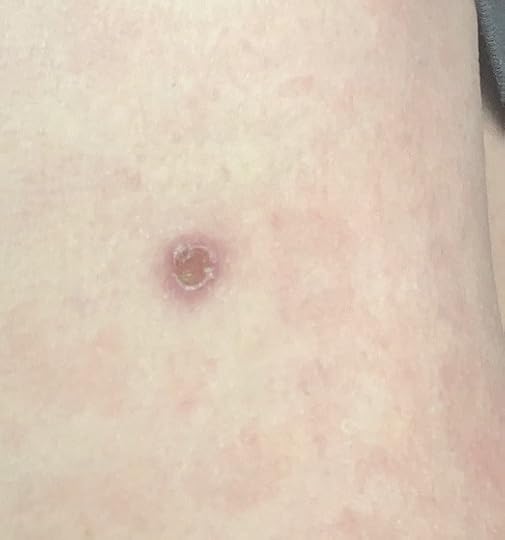 Monday – 1 week after patch tests – Allergic reaction to Nickel
However the eventual results was anything but helpful. Despite my back feeling like there were holes burning into and a lot of itching and discomfort, I was apparently only allergic to nickel.
It is so painful guys. I can barely touch it and it feels like it is still burning into my back. I’m treating with aloe, tea tree and zinc and calendula and it’s slowly healing.
But even though my whole back was so itchy, red and inflamed I am apparently not allergic to anything else. NOTHING ELSE! I so wanted answers.
How could that be? It seemed impossible. They looked at my broken, rash covered back for what seemed like mere moments and said, “You’re only allergic to Nickel.”
All the other reactions were just sensitivities and irritants, not allergic reactions. I could have avoided the whole thing as I already knew about the nickel allergy.
And whilst it might be the case that these others were only irritants, I tried to argue that I’d still like to know what these things were, the ones that had been so painful, but apparently they don’t tell you that. They can tell you though so be firm and demand to know if you are interested.
Huge thanks to one person who contacted me via Instagram, reactions can continue to intensify even after the patches have been removed and even after the final meeting after five days. Some of mine, two others apart from the nickel are still VERY sensitive, almost impossible to touch and remain red, blistered and angry. I’m contacted the Dermatology department again after the weekend to find out which chemicals or ingredients these are. Read on…
Allergic reactions vs Irritant reactionsIt’s hard to understand how they can tell the difference between allergic and irritant reactions and to decide that irritants are not worth investigating and understanding.
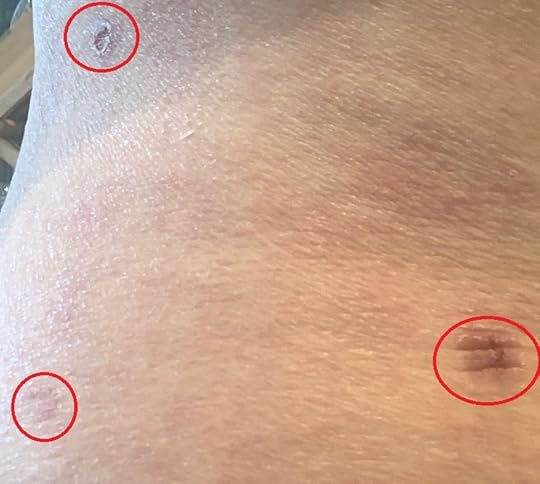 Nickel allergy reaction (top left) and Chromium and Cobalt
I asked for clarification and the dermatologist told me this:
“Thanks for sending the photos. The three irritant reactions that are very visible are chromate, cobalt and nickel which are the three allergens most likely to give irritant reactions in people with eczema.
The type of reaction is an irritant rather than allergic one. As I think we may have discussed last week, irritant reactions do not have any clinical significance but they can of course be very irritating to the skin. There are no allergic reactions.”
So confusing! It’s an allergen with an irritant reaction!
And my back is still sore now, and it’s a week after the patches went on.
Living with a nickel allergyI’ve known about my nickel allergy for years so I know what to avoid. They gave me a pretty rubbish handout, one side of A4 telling me to avoid things like cheap jewellery, metal parts in clothing, wrist watches and spectacle frames, dental products like braced and retainers, eye cosmetics such as some eye shadows, and eyelash curlers, electric razors, cigarette lighters, keys, scissors, tweezers, hooks, screws, paperclips, coins (especially Euros), joint prosthesis and industrial equipment. You can buy a testing kit to test items in your own home.
I asked about foods containing Nickel and was told that this was not well researched and was very complicated an unlikely to help as most foods contain nickel… urm! Right so that’s one I’ll be looking into . Anything a doctor dismisses is worth investigating. Am I becoming so very cynical?
Anyone got any experience with living wit a nickel allergy? Although I’ve always had this I’ve not ever looked at foods so I plan to take this a bit more seriously going forwards.
I will also start a list of nickel free resources as I’ll be looking myself and always love to share what I discover.
I’ve written about nickel allergy before so you may like to read the following:
Top ten tips for living with a nickel allergyiPads can cause nickel allergy reactionNew 5p and 1p pieces contain raised nickel contentGood and bad food for a nickel allergyWhat you need to know before patch testingYou will need to visit three days in the same week, usually Monday, Wednesday and Friday.On the first day, patches will be applied on your back and sometimes on the backs of your upper arms.On the second visit the patches are removed to observe any reactions. This is because some react when the oxidise with contact with the air AFTER the patches are removed.You should not shower of bathe your back during this week, even after the patches are removed mid way through.You should avoid exercise as you don’t really want to sweat too much while they are on, and also this could cause the patches to lift and fall off, which would invalidate and ruin the results.They may try to apply Betnovate or other topical steroids to your skin if there are rashes at the mid point. Just a warning if you are doing TSW and don’t want steroids on your skin. You are quite within your rights to refuse having steroids applied if you don’t want them. Your back will heal naturally.You must not use topical steroids on your back for 2 weeks prior to the patch testing in order to get a true result. The topical steroids could dampen or mast a reaction. If you’re going through topical steroid withdrawal this is easy.You also need to have pretty clear skin on your back for this procedure to be completed.Wear old clothes as some of the patches contain dye that can stain clothing.It will potentially itch like fire ants are eating your back alive!This is possible with blood tests so push for this if you can – patch tests are not much fun.After the patches – how to heal naturallyYou’ll want to wash your back afterwards. I would recommend using a gentle soap and soft sponge to clean your back in the shower. Don’t have a bath as you may be laying in a soup of the toxic stuff if you do that. Be kind to your skin, don’t scrub even if you feel like you want to. A soothing bath can really help once you’ve cleaned off those nasty chemicals. In the bath you’ll be able to gently rub off any remaining plaster or glue from the the patches.Once you have cleaned your back, an Epsom salt bath or similar healing salt bath can be very beneficial. Other natural baths for eczema include oats, apple cider vinegar and bicarbonate of soda.Apply a healing salve onto any blistered and allergic patches of skin. I used Aloe Vera 99% gel with tea tree in it, then applied Lyonsleaf Zinc and Calendula cream to encourage healing.Keep an eye on any patches that continue to get worse as these could be slower reacting allergies. If this happens contact the hospital where you got the tests done.These sores will heal naturally. There should be no need to apply steroids to heal them.Is it worth getting them done?I’m really not sure. These tests are pretty barbaric when you consider that even if allergic reactions are not present, many of the things tested are irritants, so you’ll probably be in some discomfort and then have to heal your back again afterwards.
I think it is probably worth getting done if you have active eczema and don’t know what is causing it, these tests could give you answers. However I’ve been told you can get blood tests instead. I’ll be asking about this as it may not be available on the NHS, but if you can afford to go private you may get results much easier and with no pain apart from giving a blood sample!
Many people contacted me on Instagram to tell me what they had reacted to from their patch tests so it can be very helpful if it’s an ingredient hidden in many skincare products that you might be using.
However these tests are time consuming, very uncomfortable and if like me, the results are inconclusive, you’re left with painful eczema on your back afterwards caused by the toxic things in the patches.
I’m not sure they are really something I’d suggest for a small baby or child. They’re very painful if there are reactions.
Blood tests sound like a better way of finding answers but are not offered widely, if at all.
For more information about Patch Testing and other allergy testing visit the NHS website and The British Association of Dermatologists website.
I’d love to hear your thoughts on this. Have you had it done? Was it helpful? What did you react to?
The post Patch testing for allergies and eczema triggers first appeared on What Allergy Blog.May 5, 2021
Free From Hero Award Finalist!
OH MY GOD! Guys I can’t believe this is happening. I’ve been nominated as a finalist in the Free From Hero Award 2021! I love these awards and have been judging, supporting and trawling the winners for many years now so this has blown me away. I’ve discovered so many new favourite brands that are now part of my regular free from shop (more on that in a future long overdue blog) met so many amazing people and learnt so much about production, labelling, packaging and may contain legislation.
To be nominated for the Free From Hero Award 2021 is a dream, an honour and a privilege. Let’s just let that sink in, percolate and OH MY GOD! I’m screaming!
 Free From Hero Award 2021
Sponsored by previous winners Natasashas Foundation, the finalists are:
Emma Amoscato, Free From FarmAkila Chokkalingar, Chef AkilaRuth Holroyd, What Allergy?Daniel Kelly, May ContainJulianne Ponan, Creative NatureThomas Silvera, Elijah-Alavi FoundationThis nomination means so much because they were voted on by the allergy community. I’m so proud and would like to thank everyone who voted for me and for the other wonderful people above. I know Emma, Dan and Julianne really well and would class them as friends. We’ve all worked together on podcasts and raising awareness and will continue to do so.
I’ve also now discovered Chef Akila who is doing amazing work providing curries that are gluten free and allergen free. This is the dream and I’m in touch with him to see if any will be safe for me to try. I’m getting quite excited about eating a meal that hasn’t been cooked by me or my Mum! Early investigations are looking promising, he does some that are tomato free – Hoorah!
I also wasn’t familiar with the Elijah Foundation which raises awareness in schools and day care centres for better allergy support, training and protection for allergic children.
I’m looking forward to getting to know both of these heroes and well done to all of us. What a humbling place to find myself. I’m actually a bit overwhelmed.
Thank you all, all of you who help raise awareness are my heroes.
You can see all the Free From Award Finalists for 2021 here! for all categories and highly recommend you do take a look. I found so many new products which I’ll blog about soon I promise.
The post Free From Hero Award Finalist! first appeared on What Allergy Blog.May 4, 2021
Next eczema and skin poetry workshop, 5th June
I am organising the second poetry workshop on Saturday 5th June at 3pm for anyone wanting to explore the written word and poetry as a vehicle to learn, explore feelings and emotions and find release and peace through poetry.
The first workshop was a great success with people joining from all around the world, from America, Hungary and the UK.
Our tutor Hannah Davies, professional writer and performer, leads the workshop. She also has eczema and is also going through topical steroid withdrawal so has a deep understanding of skin conditions.
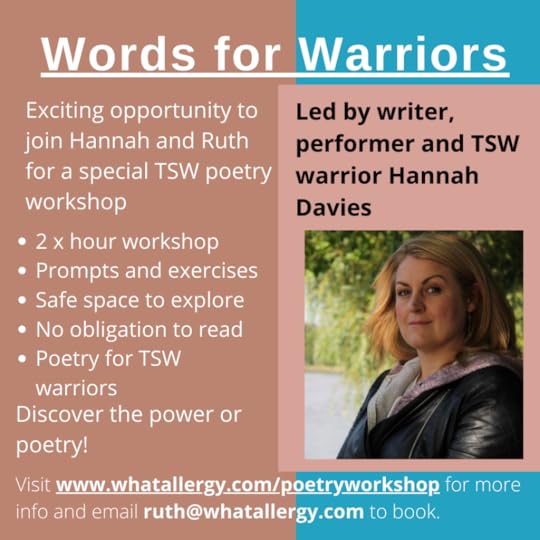
Taking place on Saturday 5th June at 3pm, this is a free workshop and we will be limiting numbers to ten people to allow better learning and a manageable group.
To find out more visit Words for Warriors
And to reserve your place email ruth@whatallergy.com today.
The post Next eczema and skin poetry workshop, 5th June first appeared on What Allergy Blog.Free eczema and skin poetry workshop
I am organising the second poetry workshop on Saturday 5th June at 3pm for anyone wanting to explore the written word and poetry as a vehicle to learn, explore feelings and emotions and find release and peace through poetry.
The first workshop was a great success with people joining from all around the world, from America, Hungary and the UK.
Our tutor Hannah Davies, professional writer and performer, leads the workshop. She also has eczema and is also going through topical steroid withdrawal so has a deep understanding of skin conditions.
Taking place on Saturday 5th June at 3pm, this is a free workshop and we will be limiting numbers to ten people to allow better learning and a manageable group.
To find out more visit Words for Warriors
And to reserve your place email ruth@whatallergy.com today.
The post Free eczema and skin poetry workshop first appeared on What Allergy Blog.May 1, 2021
Scared to eat out after lockdown?
You are not alone. I’m really feeling the anxiety building and that’s OK. It’s a good thing actually because it keeps me vigilant and alert. After too many mistakes when eating out, all caused by poor communication, lack of training, awareness and knowledge of the seriousness of allergies, I’m always a little nervous
Having not had to worry about my allergies apart from double checking food labels for over a year, it’s going to a big mind shift for all us with life threatening allergies.
I wrote a guide to getting back out there as a guest blog for the lovely Lindiwe at The Allergy Table blog. Do follow her for amazing recipes, a positive attitude and tireless allergy advocacy.
Check out here for my tips of how to get back out there eating at cafes, pubs and restaurants as things return to some kind of normal.
Are you ready? Are you scared? What are you doing today to help you control your anxiety and prepare for eating out again? I’d love to hear from you.
The post Scared to eat out after lockdown? first appeared on What Allergy Blog.April 30, 2021
What Allergy is 12 years old!
OMG my blog is nearly a teenager! How did that happen? The same age as two of my beautiful nieces! I hadn’t realised she was born on the same year as them but oh how time flies. Yes What Allergy is a girl! Of course she is!
It’s been a wonderful journey. From the day I first began this blog, I’ve learnt so much and met so many amazing people along the way. So I thought I’d give you an update on what I’ve been doing this past few years. I know I’ve been blogging a bit less frequently so apologies for that. A lot has been happening!
I’ve noticed a lot of new people subscribing to this blog lately so WELCOME! Thanks for following me. I am 48 years young, am anaphylactic to nuts, dairy and soya, also allergic to wheat, tomato and celery and also nickel, latex, dust, animal hair, pollen, mould, grass, weeds, idiots! What are you allergic to? Please comment below and if I can I’ll do some blogs especially for you!
I’m now a twice published author!I can’t believe I really am, but it’s true. I’m a proper author of real actual books with my name on and everything. Never let anyone tell you can’t do what you dream of doing. If you want to be a unicorn or a yellow button you might have some issues achieving that, but I stand by this, if you want to, see if you can. Don’t let others tell you you’re not good enough, that it’s too hard, that you should set more realistic goals.
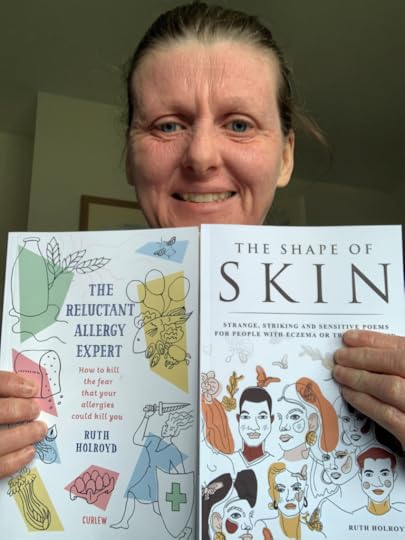 Twice published author Ruth Holroyd
I found my old diaries over lockdown and in them I often wrote that I wanted to be a writer. And no one believed I could. Not my teachers, nor my careers advisors for what good they were! One of my suggested career paths was secretary at a veterinary surgery – I am quite allergic to most animals so that as a non starter. I felt that these dreams were unachievable and so I kept them to myself to avoid anyone else telling me I couldn’t do it.
I wish I’d had some encouragement but I am glad that I kept on writing because that’s what eventually got me where I am today. Write! Write how you feel, it’s been a really useful therapy tool for me too.
My advice to anyone who would love to be an author but feels it’s unachievable would be this:
Read! Read what you love and learn about the authors you enjoy reading too. The more you read the better your writing will be.Write! Journal, doodle, scribble, write a diary (as I did from age 12 until about 25), write poems and short stories. Write about the things you love. Educate yourself. I have now done quite a few writing courses, both for work and pleasure and these have been invaluable.Explore ways of making it your job! I became freelance about the same time I created this blog and the work I love most is the writing jobs. I’m a copywriter at heart but I could be writing blogs, articles, press releases, website copy and brochures or even short tweets and social media post copy. By doing this it keeps my writing brain active.Carry pen and paper with you – you’d be amazed at when ideas pop into your head. Make notes, make plans, make wish lists and the more you think about it and dream about your passion, the more it come to life!Just do it! Believe you can and you will.My first book, ‘The Reluctant Allergy Expert – How to kill the fear that anaphylaxis could kill you‘ tackles the difficult subject of anaphylaxis and the fear of having a severe allergic reaction. This can become overwhelming when your trust is broken over and over again. I am so proud of this one and an humbled by the feedback from all the courageous allergy people out there who find it helpful.
My second book, ‘The Shape of Skin‘, has been a lifetime in the making. It’s full of poems about eczema, itching, self love, despair, topical steroid addiction and withdrawal and also hope for the future, for healing and better skin. The reviews of this new book have blown my mind. I’m so overwhelmed.
I am planning proper or perhaps virtual launch events for both of these books soon. Lockdown kind of got in the way of a lot of my our book promo plans but where there is a will there’s a way! I’m looking into ways of making this fun, inclusive and interactive.
I’m also writing again on another book project and have lots of ideas for future books!
Healing my own wayIf you’ve followed this blog for a while you’ll know I have been struggling with topical steroid withdrawal. It’s been really tough but finally, after two years and three months I am feeling like I have some lasting healing. Since December my skin got really bad, mainly on my face, which has been very hard to cope with. My sleep is pretty awful, but all that is improving too. I’ve noticed I have way more energy, my sleep is improving, I am using less ice packs, waking up at a normal time and am able to walk, run and do more. I’ve been doing regular daily yoga now for over 45 days and am loving it. I am sure this is really helping. Meditation, breathing, positive affirmations, gratitude practise and just slowing life right down are all really helping. I really do believe that one day I will not be in this hideous cycle of pain, inflammation, crisping and peeling and flaking skin because none of that is real eczema. It’s the side effects of damage done by those topical steroids, used for over 40 years of my life, so it’s going to be a long journey.
Thank youFinally thank you, to those who have been following me for years and to those who are new to this blog. It means so much that people find my blogs and read them. If you have read this far please pop a little comment below. Tell me how you found my blog and why love it. Or ask me a question, or tell me what you’d love me to blog about.
I have so many ideas for future blogs but find I’m not making enough time so that’s going to be a goal for me going forward. More blogs! More writing. More books!
The post What Allergy is 12 years old! first appeared on What Allergy Blog.April 28, 2021
Hay fever affects almost half of UK population
As part of Spring Allergy Week this news seemed very relevant. The number of people with hay fever in the UK has almost doubled! Why is this? Mine has certainly been worse with streaming eyes, wheezing, sneezing and itchy skin.
Here’s the stats:
Half (49%) of UK population report suffering from hay fever symptoms, almost double previous estimates More than a third (37%) have developed symptoms for the first time in the last five years Over half (56%) are anxious that others may mistake their symptoms for signs of Covid-19 Evidence that warmer temperatures and increasing pollution are contributing to a longer UK pollen seasonA new study by leading national charity Allergy UK in partnership with Kleenex has revealed that nearly half (49%) of the UK population now suffer from hay fever, almost double the number previously thought.
Hay fever – otherwise known as Seasonal Allergic Rhinitis – was formerly estimated to affect somewhere between 10 and 13 million people in the UK, or 20-30% of the population.
But a poll of over 7000 respondents suggests there has been a significant increase in the number of those with the allergy, as more than a third (37%) said they had developed symptoms for the first time in the last five years. The research has been released to mark the start of Allergy UK’s 2021 Allergy Awareness Week (26-30 April).
With the pollen season running from March-September in the UK, the lifting of lockdown restrictions comes at a potentially difficult time for the increasing number of hay fever sufferers.
Over a third (35%) with the allergy are concerned about spending more time outside as restrictions are lifted, while 32% said their excitement about lockdown lifting has dampened because it is happening during peak pollen season. Meanwhile, over half (56%) are anxious that others may mistake their hay fever symptoms for signs of Covid-19.
The recent rise in people experiencing hay fever may be closely linked to rising temperatures in the UK according to Allergy UK, the leading national charity for people living with allergic conditions.
Amena Warner, Head of Clinical Services at Allergy UK, said: “There is evidence that suggests that climate change, with increasing temperatures may contribute to extending the grass pollen season in the UK. Grass pollen is the cause of the majority of pollen driven hay fever symptoms. Furthermore, with warmer weather, pollen counts can be high, and breeze can spread pollen over a large area as it is carried in the wind.
“Human activities have increased atmospheric concentrations of carbon dioxide (CO2) and other greenhouse gases. Studies are showing that plants produce more pollen as a response to high atmospheric levels of carbon dioxide (CO2), and so people may also find that their hay fever is worse when pollution levels are high, especially in warm weather.
“These are the factors that lead us to expect rising pollen levels in the UK in the coming years, triggering the unpleasant symptoms of hay fever over longer periods”.
The study has also revealed the negative impact of hay fever on people’s quality of life. Nearly two thirds (64%) reported tiredness due to poor sleep quality, while a third (34%) have skipped social engagements due to symptoms.
Workers said that hay fever affects their concentration (46%) and lowers their productivity (35%), whilst a third of sufferers (34%) have reported experiencing embarrassment and anxiety (30%) due to their symptoms. Despite this, 44% have never discussed their hay fever with a healthcare professional.
Hay fever can also discourage people from adopting an active lifestyle. Almost half (49%) of sufferers spend less time exercising outside because of symptoms, while almost a third (30%) have reported weight gain and becoming unfit as a result of not exercising outside.
Amena Warner, Head of Clinical Services at Allergy UK, continued: “Hay fever can sometimes be trivialised, but this research illustrates its real impact on the millions of people across the UK who experience it each year. We know that anxiety about the condition has become worse during the pandemic and we urge anyone who is suffering in silence to speak to a pharmacist or healthcare professional to help find treatments that work for them”
“This year’s Allergy Awareness Week is focused on hay fever, and with support from Kleenex, we have developed more resources to help people manage their symptoms and reduce the impact on day-to-day life at this difficult time”.
Ori Ben Shai, Vice President and Managing Director, Kimberly-Clark UK, said: “We know how unpleasant hay fever can be and this research highlights the issues that millions of people will be facing as we approach peak pollen season. Kleenex is determined to support the UK’s hay fever sufferers and our partnership with Allergy UK will provide them with a range of tools and content to help them manage their symptoms across Allergy Awareness Week and beyond.”
To learn more about hay fever, how to manage it and products that may help to make life more comfortable when experiencing symptoms, please visit the Allergy Awareness Week website: https://www.allergyuk.org/allergy-awareness-week-2021
For further advice, you can call the Allergy UK Helpline on 01322 619 898.
How is your Hay fever this year? Do you think you’re getting it for the first time or is yours worsening? In March and April it’s the tree pollen and that always gets me but I’m getting by without any medication. I’ve been worried about the continued use of antihistamines on my health. Anyone else worry about that?
The post Hay fever affects almost half of UK population first appeared on What Allergy Blog.April 27, 2021
Story, songs and animation help children with eczema
Story, songs and animation helps children with eczema care for the ‘dragon’ in their skin
Health experts from Birmingham City University and the University of Nottingham have teamed up with an author, illustrator and an East Midlands orchestra to produce a new book, animated film and songs to help children with eczema cope with the condition.
The Dragon in My Skin is a story aimed at children aged 5 to 7 with eczema. It forms part of the National Institute for Health Research funded Eczema Mindlines study, which Fiona Cowdell, Professor of Nursing and Health Research at Birmingham City University leads. Eczema Mindlines is committed to improving the treatment and management of the skin condition, which affects around 20% of children in the UK.
Through a programme of research and co-creation work with children living with eczema, healthcare professionals and other interested groups, Fiona developed five key messages about eczema treatment and self-care for children, which she was keen to share widely in an easy-to-understand, attractive and accessible format.
Writer Hazel Gould and illustrator Jay Nolan-Latchford – an old school friend of Fiona – adapted the key messages about eczema care into words and pictures, which evolved into The Dragon in My Skin story. The mythical creature at its centre acts as a metaphor for the condition with the moral of the tale being that rather than fighting the ‘dragon’ living within their skin and making it angry, children become its friend and so live a happier life.
Dr Stephanie Lax, a colleague of Fiona’s from the Centre of Evidence Based Dermatology at the University of Nottingham, suggested working with Derby based professional orchestra and education charity Sinfonia Viva to share these messages and helped develop the artistic outreach concept, incorporating feedback from the Centre’s Patient Panel.
As a result, children with eczema and their families joined a series of online workshops with writer Hazel Gould, songwriter Abimaro Gunnell and the Sinfonia Viva creative team to compose a series of songs based on their own experiences of the condition and the dragon story which they have recorded alongside professional players from the orchestra.
Professor Fiona Cowdell said:
“Eczema can be a difficult condition to live with. It can make the skin itchy and sore, so much so in fact that it can seriously disturb sleep and concentration. Children can also feel embarrassed and self-conscious about having eczema so we wanted to help explain to them in a fun, simple-to-follow way how to deal with the condition.
“We struck upon the idea of a dragon living within the skin – they are scary, scaly skinned monsters after all – as we thought this was something children could relate to. We hope they’ll easily grasp the messages about looking after their ‘dragon’ and learning to live with and treat their eczema.”
Fiona, Stephanie and the team have also worked with Alison Pemberton Smith and colleagues from Birmingham City University’s School of Education and Social Work to develop an accompanying collection of curriculum linked resources and a workbook, all designed to reinforce the key messages about self-care to those who have eczema, and improve awareness of the condition among those who don’t. These will be free to access for Key Stage 1 teachers. A hard copy of The Dragon in My Skin book is also being sent to the 800 local primary schools that work in partnership with Birmingham City University.
Ten-year-old Arielle Carty from Birmingham, who has had eczema from an early age, was among the participants in the project.
Arielle’s mum Shauntelle explained:
“Arielle used to be very self-conscious when her eczema was at its worse so I was keen for her to get involved in this project to show her that she is not the only one who has this condition. She really enjoyed helping to write the songs and her confidence has grown.
“I am so glad that the book and other resources will now be shared in schools to raise awareness among children of what some of their friends are going through and to hopefully encourage more parents to talk about this and share experiences of what treatments have worked for their children.”
Marianne Barraclough, Deputy Chief Executive at Sinfonia Viva, added:
“This has been a wonderful healthcare and artistic collaboration and we are delighted with the outcomes. Hearing the young people’s voices through the songs and animated film is incredibly powerful as the words and lyrics are inspired by their personal experiences and emotions about living with eczema.”
Ends..
I just had to share this wonderful initiative. In a week where most of my blogs have been about eczema and creativity and how this can help us cope, relate, heal and feel stronger, it’s wonderful to see something for kids. I’d love to hear what you think.
The post Story, songs and animation help children with eczema first appeared on What Allergy Blog.April 26, 2021
Does eczema affect body image?
I know 100% that having eczema all my life has affected my body image and how I have judged, quote wrongly, my worth and value in this world. I was really fortunate to have CBT counselling a few years ago and was shocked to discover how wrapped up my fears, anxieties and completely wrong judgements stemmed from how having eczema made my feel, as a human, as a woman and how I felt deep shame, guilt and dirtiness as a result.
Writing, journaling and poetry makes up a huge part of my ongoing self care practise and I think it always will. If you’re nodding your head in agreement, read on to take advantage of this fantastic opportunity:
 Do you have a skin condition that affects your body image?
If so, please consider helping psychologists at the University of Sheffield test whether a one-week online writing intervention could improve body image in individuals living with a dermatological condition, and be in with a chance to win a £50 voucher.
Who can take part?
Anyone:
Age 18 or overLiving with a dermatological condition (e.g. Eczema, TSW, acne, hair loss, excess hair, psoriasis, vitiligo) that affects their body imageLiving anywhere in the world who has an internet connection and can read and write in English.Willing to complete 3 writing tasks over the course of 1-week.What will it involve?
You will be asked to complete three 15-minute online writing tasks over the course of a week. You will also be asked to complete several questionnaires before the first writing task, after the final writing task and one month later. As this is a Randomised Controlled Trial, you will be randomly assigned to either:
The writing intervention or A control writing task. (If you are allocated to the control tasks, you will be able to download the intervention materials at the end of the study.)Please follow this link below to find out more and take part (I’d allow about 30 minutes for the first set of questionnaires and writing task 1):
Can a one-week online writing intervention improve body image in adults living with a skin condition?
Complete the online survey herePlease contact Dr Kate Adkins (Trainee Clinical Psychologist, University of Sheffield) via k.adkins@sheffield.ac.uk for further information or if you experience any difficulties completing the study.
I’m fascinated to see how some of you get on with this and love it if you could keep me posted. I think I’m going to give a go myself to help the study as I’m definitely a case of YES it helps!
The post Does eczema affect body image? first appeared on What Allergy Blog.