Ruth Holroyd's Blog, page 18
December 9, 2021
Topical Steroid Withdrawal and eczema of the genitals
Eczema or TSW of the genitals is a delicate subject that affects more people going through topical steroid withdrawal, eczema and sensitive skin than you may realise. It is particularly a problem for women due to the anatomical make up and delicate balance inside the vagina, but can also affect men’s genitals too.
What on earth do you do when you get eczema, oozing, excessing flaking and itching skin ‘down there’!
What is vulvar dermatitis?Eczema of the soft folds of the vulvar is far more common than you might realise because there is still a lot of taboo about discussing our genitals. I don’t know why, all women have them! It can be very painful, forming tiny thin cracks, be very itchy and cause vaginal weeping and a crusting formation. Please do not use topical steroids to try to heal any eczema here. The skin is so soft and sensitive and could become very damaged. Instead look at removing all fragrances and soap and just wash gently with warm water. The tips below may also help.
Tips for alleviating eczema and TSW of the genitals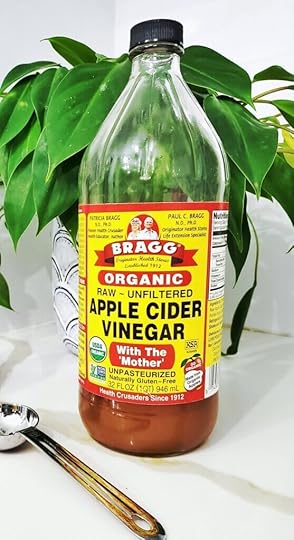
It’s a dark, humid warm place so if the skin gets irritated it can become a real problem so here are my tips for coping and the things I found helped me. They are also cheap and available in your home so shouldn’t cost the earth.
Apple Cider vinegar baths – add a cupful of apple cider vinegar to a warm bath and submerge your lower half below the water level. Rinse off with warm water after soaking for 20 minutes.Tea tree oil – add 5-10 drops of tea tree oil to your bath as this also can help to avoid any infection.Bicarbonate of Soda bath – Add about 5 tablespoons of bicarbonate of soda to a warm bath and soak for 10- 20 minutes max. It will help to soothe and reduce irritation. When the condition is really sore, you could do this twice a day but once cleared you can just have one periodically to keep the skin healthy and avoid further occurrences.Jug of warm water with apple cider vinegar – I have a jug that I fill with water and add a table spoon of apple cider vinegar and mix. After using the toilet, and whilst still seated on the toilet, pour this jug full down over your perineum and practise tipping your body so that the water trickles into the vulva and washes out into the toilet. Using toilet paper, gently wipe and dry from front to back. Pat dry with a towel. If you are out and using public toilets this might not be possible. If you can, grab a wad of paper towels used for drying hands, or if not available, some loo roll and dampen it. Take this into the loo with you and use to gently wipe over the area, front to back, after you’ve emptied your bladder and bowels. Be careful not to block the loos though. This can also really help if you are experiencing a lot of pain when you pee and the urine gets into cuts and sores. Pour the warm water down between your legs as you pee and it should avoid a lot of discomfort and pain.Only wash with water – no soap! Just use a soft flannel and warm water and a flannel.Bamboo flannels – I use super soft bamboo flannels and wash at a basin, from front to back. I have quite a few of these and put them in the wash after one use. They are a great eco alternative to using disposable wipes which could also irritate the skin. A healthy vagina is self cleaning and does not need soap anywhere inside the labia. I use Eczemaland bamboo flannels. You can get 15% off using code Ruth15 at https://eczemaland.co.uk/No fragranced products – avoid any perfumed or fragranced products, moisturisers and soaps when cleaning female genitalia, especially if you have sensitive skin.Air it! – At night, don’t wear any panties. Let the area get as much as possible to avoid it getting warm and itchy. Choose 100% cotton underwear or bamboo or merino knickers to ensure the skin can breathe and not get over heated.Pat dry – Try to be really gentle when wiping. If can remember to dab gently and pat try it will help to not open up those tiny little cracks in the skin and aid healing.Vitamin E oil and tea tree tampons – If the skin inside your vagina becomes badly affected, soak some tampons in a simple oil such as vitamin E oil or grapeseed oil, mix in a few drops of tea tree oil and insert into the vagina for a few hours, them remove, throw away and insert a freshly soaked on. Do this a few times once a week and this should help and aid healing.Avoid tight clothing – whilst the skin is affected, and all the time if you can, avoid tight clothing that rubs or chafes the groin. Choose loose natural materials and wear cotton tights if you can instead of nylon.Plain unbleached toiler roll – Don’t buy fragranced loo roll. It’s completely unnecessary and is not good for the delicate flora of our genital areas. You might find, Allergic to toilet roll – fragrance allergy interesting. Choose instead just basic, white, uncoloured and unbleached toilet paper.Avoid sex – it goes without saying that sexual intercourse will only make this worse. If you can abstain until you’ve healed the skin you will avoid a lot of extra discomfort.Ice – wrap an ice pack in a tea towel or scarf and gently hold it between your legs for relief when it feels hot and itchy.Try not to itch or rub too hard – It can make things much much worse but I know how impossible it is sometimes to ignore that bone deep itch. Try to do it as gently as you can. I find the ice tip above helps a lot with the itch.Moisturise sparingly – I would recommend trying to avoid moisturising inside the vagina if you can. It should be able to self lubricate. But if you really feel dry and sore it can be really soothing to apply something. Stick to unperfumed non fragranced products. I found a little Epaderm soothing when it was really sore. Lyonsleaf marshmallow balm also helped.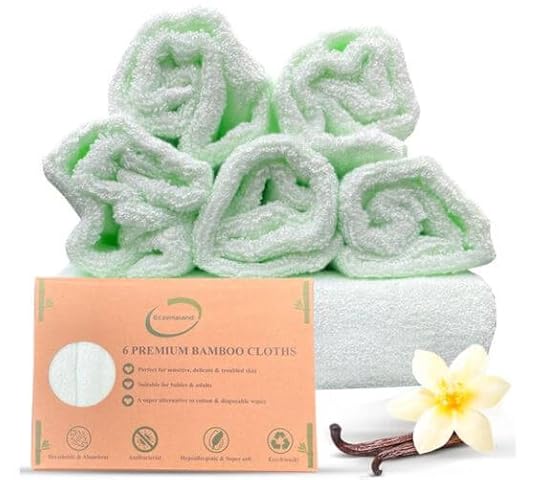 Eczema land bamboo face cloths – Code RUTH15 for 15% ofhttps://eczemaland.co.uk/
I hope you can find some help and comfort from some of the above. I really feel for you all, I’ve been there and it’s nasty! You feel like you can’t even go out in case you need to itch your crotch – not really acceptable behaviour is it?
NB: If you have any worrying vaginal discharge that is painful, stings or smells nasty you should seek advice from your doctor or local STI clinic who can test to ensure you do not have anything that requires antibiotics or further treatment. Left untreated infections or STIs can cause long lasting damage and spread to your sexual partners so please be responsible and get checked out. I am not a doctor so the advice above is just things I’ve found that have helped me. Please get checked with your doctor if symptoms persist.
You may find this link from the Eczema Society useful, but please ignore advice to put any topical steroids on your genitals. That way pure destruction lies! Read Female Genital Eczema.
For some truly fantastic insights into the experiences of both men and women going through TSW who have experienced problems with the skin around their genitals, read: Let’s Talk about TSW and the genitals from my amazing friend Cara’s blog.
Photo by Rosana Solis from Pexels
The post Topical Steroid Withdrawal and eczema of the genitals first appeared on What Allergy Blog.

December 8, 2021
I’m sponsoring the Free From Food Awards 2022
This is a very proud moment for me, I’m beyond excited to announce that I am sponsoring the Free From Food Awards 2022 for the newly created Soup and Bowl meals category.
I am a huge soup and bowl meal lover. Most of the food I make at home is soup or bowl related, quick, healthy and easy, but finding safe alternatives for this when eating out, on the go, or shopping is not easy.
I’m excited to see the entrants in this category and to discovering some new, tasty and exciting new options for me for 2022.
What are the Free From Food Awards?In case you aren’t aware of what these awards are all about, they’ve been going now for an incredible 14 years and I’ve been involved with judging for about 10 years so I feel very fond and proud of everything the Free From Food Awards has achieved and stands for.
They are the only awards of their kind that champions good quality, tasty, safe and innovative allergen free, gluten free and vegan food options for those living with allergies, intolerance or other conditions that require the avoidance of certain food types.
As someone with multiple life threatening allergies (nuts, dairy, wheat and soya) these awards provide peace of mind, a place to come to discover new products and an incredible directory of the brands who care.

 Gnawbles freefrom top 14 allergensSome of my Free From Food Awards highlights…
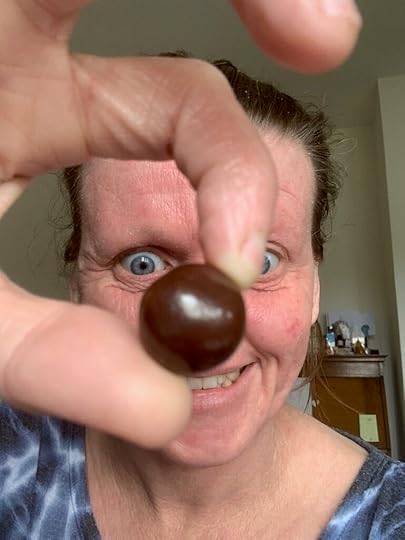
I’ve found so many wonderful brands through these awards but some of my highlights have been discovering Creative Nature and their cake mixes, snack bars and most importantly Gnawbles (pictured right).
Everything they make is free from the top 14 allergens which is such a relief, to know you can buy anything without having to check the labels.
Winning the Free From Hero Award this year was also a huge achievement for me and a complete surprise. I still can’t quite believe that. You can read more about that here, “I won the Free From Hero Award 2021”
There are so many brands I could list here from Saintly pies to Belly Goodness sauces. Have a root around my old blogs about the awards to find out more, and the highlights from judging this year here – “My favourite Free From Awards Finds 2021”
Still time to get involved…Whether you are a free from food producer or want to sponsor a category, you still have time to get involved.
Visit the https://www.freefromfoodawards.co.uk/ to find out more about sponsorship or entering your product to a category.
And if you have a product you’d like to submit to the awards, Entry now closes on 12th December at midnight.
You won’t regret it. Please get involved and I look forward to discovering new brands and hopefully meeting you all in person at the Awards do in 2022!
The post I’m sponsoring the Free From Food Awards 2022 first appeared on What Allergy Blog.December 6, 2021
Topical Steroids harm us, not heal us
We expect our doctors and the expert dermatologists who treat us will help heal us, not harm us. It’s not too much to ask is it? I think we all expect that basic truth.
Doctors should all have one main aim, to help patients get better.
You’ve no doubt heard the term ‘Bedside Manner’, referring to a doctor’s ability to find compassion, listen and ensure the patient feels their needs and fears are understood and their treatment is something they are comfortable with.
How many of us really feel seen and heard? In the eczema community, sadly not that many of us.
Right back in 460 BC Hippocrates, a Greek physician, wrote of his oath to uphold certain standards in his work. Mainly to see the patient as a person and not just as an illness.
It should go without saying that all doctors should strive listen with compassion and also to Do No Harm to their patients.
However there have been a number of occasions where the medicine given to people to heal them makes them worse. I’m thinking of the Thalidomide scandal in the 1950s where pregnant mothers, who were given the drug to counteract nausea gave birth to babies with malformed limbs.
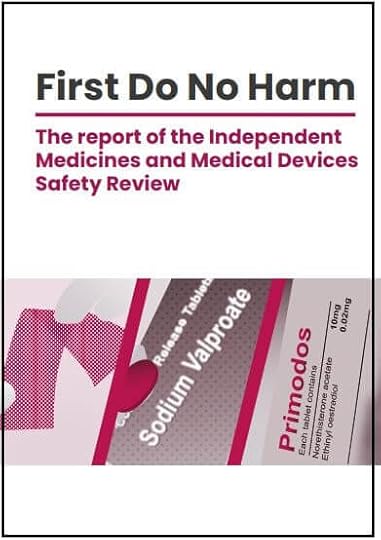
More recently the Independent Medicines and Medical Devices Safety Review was announced in February 2018. It was asked to focus on how the health system responds when patients and their families raise concerns about the safety of treatments. Baroness Cumberlege was asked to chair the review and to look at the cases of:
vaginal meshsodium valproatehormone pregnancy tests (HPTs), in this case PrimodosRead the First do no harm report from Baroness Cumerlege here.
It’s over 280 pages long but the main gist of the report was to investigate surgeries and treatments that were not fit for purpose, malfunctioned, caused damage, ongoing pain, resulting in further surgery to fix the problem… and so much more.
The Review published its report on 8 July 2020 and made 9 recommendations to parliament, many of which have not yet been acted upon.
Here are just some of the findings from statements of patients. Sounds so similar to the journey of many of us with TSW:
the lack of information to make informed choices;lack of awareness of who to complain to and how to report adverse events;the struggle to be heard;not being believed;dismissive and unhelpful attitudes on the part of some clinicians;a sense of abandonment;life-changing consequences, not only for those directly affected, but for their families and friends too; breakdown of family life;loss of jobs, financial support and sometimes housing;loss of identity and self-worth;a persistent feeling of guilt;children becoming their mothers’ and siblings’ carers;clinicians untutored in the skills they need to make a proper diagnosis;clinicians not knowing how to learn from patients;inaccurate or altered patient records;a lack of interest in, and an inability to deliver, the monitoring of adverseoutcomes and long-term follow-up across the healthcare system.Sound familiar?
Nothing at all to do with topical or oral steroids, but I think you’ll agree. the parallels and findings have so many similarities.
Is history repeating itself?
How many times will pharmaceutical companies create products that become mainstream treatments where no one listens to the cries and pleas of those using the drugs, becoming ill, losing hope, struggling to cope.
No one is tracking patient histories.
No one is listening to the concerns of the people using the treatment.
We become just an illness and not a person. Hippocrates will be turning in his grave!
So what can we do?
We need a review of topical steroid useWe need a review
We need change
We need recognition
We need an apology
We need diagnosis pathways to be holistic
We need redress and support for those who need it
We need clearer guidance for reporting medication we think has harmed us
We need a system which alerts and updates both patients and doctors when new guidelines are made
We need the Hippocratic Oath
We need treatments that DO NO HARM
What we do not NOT need is to constantly gaslit, misunderstood, ignored and belittled.
We need TSW added to all our patient records. We need this red flag to be flashing in the NHS system.
We need to tell our doctors our concerns.
We need to stand up and be counted.
We need so much and currently we are not getting anything at all.
I feel helpless, what can I do?If you or a loved one is feeling frustrated because topical steroids have done them untold hard and no one seems to care, there are some things you can do.
Complete the Yellow Card Scheme form – detailing when you began treatment and what damage has been done to you and submit it to the J+MHRA. Read How to report topical steroid addiction here.Join us for a TSW March in March 2022 – Meeting at St Thomas’s Hospital in London at 11am on Saturday 26th March 2022. Follow Topical Debate on Instagram for all the details.Sign the petition to help Fund Research into Topical Steroid Withdrawal. We have nearly 5,000 signatures but we need over 10,000 for government to start talking about thisWrite to your MP – Tell then your concerns, share your experience and ask them to help. You can download a template from the Scratch that website. Download the TSW MP letter here.Tell your story – Share what’s happening with your friends, family, GP, social media. By talking we can start the process of change.I’ve been talking to my MP Sarah Green of the Liberal Democrats and she has so far been very open and helpful. We had a 20 minute zoom call and she has taken actions to speak to the Department of Health and other organisations on my behalf. It’s a start. I will now be writing to her to ask for another Do No Harm review, similar to the one discussed above, into the damage done by topical steroid withdrawal. Together we can make a difference.
The post Topical Steroids harm us, not heal us first appeared on What Allergy Blog.December 1, 2021
Wireless, comfy bras for sensitive, eczema and TSW skin
I’ve never liked bras much, they cost a lot of money and most of us just want to take them off the minute we get home. Having a sore, painful skin condition adds an extra complication to this every day clothing item. Have you ever wished your bra was softer, more comfortable and less irritating?
I’ve toyed with the idea of ditching the bra and just burning them all but as someone with a bigger bust and a loathing of being stared at, I feel I need to cover up and keep them secure. The nips do not always stay nicely behaved!
I also get cold in winter too and feel I need that extra covering on the extremities!
As someone going through topical steroid withdrawal, comfort is essential as it can be a challenge to find anything comfy. Let me tell you, having open itching, oozing skin on the boobs is not an easy thing to live with – it can make wearing bras uncomfortable and so here we are, discussing the best bras for comfort, skin sensitivity and healing.
Just a little round up of bras thanks to some Instagram research.
CompanyWebsiteCostBra type Have I tried? Comments and deals 1ASOShttps://www.asos.com/From £10New Look Seamless braNoDownload the app for 15% off everythingWith code: ASOSCREW2Boodyhttps://boody.co.uk/£16-£26Ribbed Seamless and Padded Shaper crop brasYes! I’ve bought a couple of these and they’re so comfy15% off 1st purchase if you sign up the newsletter.3Molkehttps://molke.co.uk/£26White Racer BackNot yet! Thinking of buying!Made in Scotland, all staff paid a living wage. Sustainable and the most diverse and inclusive brand I found.4M&Shttps://www.marksandspencer.com£35VariousNoSells the Sloggi zero feel, Ever fresh and now wire bralettes5Primarkhttps://www.primark.com/£10Seam free braletteNoVery affordable but not sure of their eco or environmental credentials or wages for production.6Scarletshttps://scarletcustom.com—Mastectomy brasNoThis company do mastectomy bras and compression garments7About Wearhttps://aboutwear.com49 Euros +Tencel and soy waste bralettes . Lovely colours and designsNoFree delivery on orders over 100 Euroes 8Cosabellahttps://eu.cosabella.com/£31.20Free Wireless Scoop braletteNo10% off first order if you sign up to their newsletter11Sloggihttps://www.justsloggi.co.uk/From £10-15 upwardsZero Feel and lots of underwired choicesYes and loved it!This is an older well established brand and I remember having a lovely soft bra from then as a young adult.
This is probably not an exhaustive so please comment below if I’ve missed any fantastic brands.
I write this in England too so depending on where you live, these may or not be available..
How to wrap up a poorly boobIf you do have oozing TSW boobs, I actually find a bra essential so that I can pop in some gauze and dress, treat and tend to my sore nips. When they were really bad I’d apply aloe vera ( I have one with 99% aloe vera and tea tree in it too) liberally. Then I add a good dollop of Balmonds skin salvation balm, dab on a roughly rub in. Cover with Gauze or conforming bandage and gently tuck into the bra. It’s not easy but I found being braless caused too much friction and much more pain. I did also effect kind of pouches using really soft scarves, wrapping over shoulder, over boob and back round, tie off and pop on a soft tencel or cotton top. https://balmonds.co.uk/ Use code WHATALLERGY for 20% off.
For oozy bits I also use Lyonsleaf Zinc and calendula cream. https://www.lyonsleaf.co.uk/ Use code WA20 for 20% off
Anyway that’s enough about my boobs. I’d love to hear your thoughts. Do you have a favourite bra? Burnt them all years ago and go free and braless? Let’s share some bra and boob love!
The post Wireless, comfy bras for sensitive, eczema and TSW skin first appeared on What Allergy Blog.November 26, 2021
The first natural supplement for skin
I’m really excited about this new skin supplement brand called Pellamex, the world’s first supplement created for eczema and dry skin. I’m lucky to have been sent a month’s supply to try and today I had the first gel.
The story behind PellamexThe first of its kind in the global market, Pellamex has been formulated by leading skin biologist, Dr Neil Gibbs alongside a team at the University of Manchester’s dermatology department, for those with dry, sensitive and eczema-prone skin.
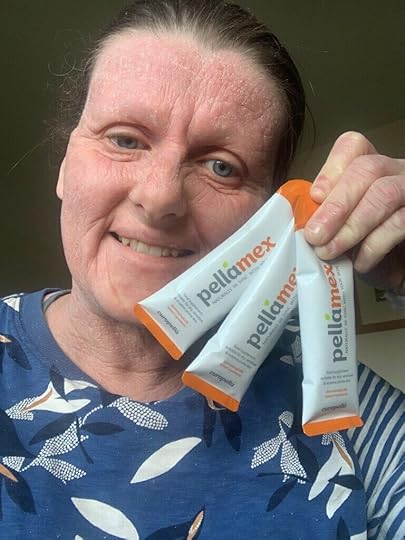 Excited to be testing this new Skin Supplement for eczema and dry skin
Unlike creams and lotions, this smart supplement in ingested in liquid form and works to target the entire skin area. The highly effective formula combines a clinically-tested amount of a high-purity amino acid, l-histidine, with other key skin nutrients such as zinc, biotin, vitamins B2, B3 and E. This powerful combination works to increase your production of filaggrin, a protein, found in the epidermis. This plays a vital role in preventing water loss to retain essential moisture and strengthen the skin barrier, locking moisture in and keeping pollutants out. Alongside this, filaggrin is broken down by enzymes, creating amino acids which result in natural moisturising factor,
Unlike creams and lotions, this smart supplement in ingested in liquid form and works to target the entire skin area. The highly effective formula combines a clinically-tested amount of a high-purity amino acid, l-histidine, with other key skin nutrients such as zinc, biotin, vitamins B2, B3 and E. This powerful combination works to increase your production of filaggrin, a protein, found in the epidermis. This plays a vital role in preventing water loss to retain essential moisture and strengthen the skin barrier, locking moisture in and keeping pollutants out. Alongside this, filaggrin is broken down by enzymes, creating amino acids which result in natural moisturising factor (NMF), which helps to improve our skin health and hydration.
This powerful combination works to increase our production of filaggrin, a protein, found in the epidermis (outermost skin layer).
Developed by leading skin biologists, Pellamex’s patented technology has been put to the test in a clinical study where adults with eczema saw a 40% improvement in their skin over an 8-week period. Mike Cork, Professor of Dermatology at the University of Sheffield commented “This is the largest effect of any treatment affecting the skin barrier that I have seen in a clinical study. Seriously impressive effects.”
It’s never been easier to take back control and transform your skin from within. The daily 25ml dose comes in a portable sachet, which you can take on the go or dissolve into water for a refreshing drink. After just 30 days you can expect healthier, stronger, more hydrated skin.
More on Pellamex’s Founder, Dr Neil Gibbs
Dr Gibbs has worked in the dermatology sector for over 40 years. He holds a MPhil and PhD from St John’s Institute for Dermatology, is the author of over 70 scientific skin biology papers and has consulted for major, global skincare brands. He is a true powerhouse of evidence-based knowledge and information and is passionate about sharing information on the latest research, connecting science with a holistic approach to our skincare and overall health and wellbeing. Alongside his scientific work, he is an entrepreneur and inventor of several skin healthcare patents. Most notably, he is the founder and Chief Scientific Officer of the company behind Pellamex, the world’s first ingestible supplement for dry, sensitive and eczema-prone skin.
Here’s a short video from Curapella who created Pellamex
The science behind Histadine for eczema skinI found this great article written by my favourite dermatologist Jennifer Fugo. You can read more here: Can histadine supplements help eczema skin and leaky gut? and also find an audio link to listen to from her podcast if you prefer.
According to the data, researchers found a dramatic improvement in eczema “similar to that of using mid-potency topical corticosteroids.”
Histadine is similar to that of using mid-potency topical corticosteroids.
Skinterrupt.com and jennifer fugo
And those in the study experienced a 40% improvement in their skin! WOW!
I don’t think it’s a miracle cure but it certainly sounds promising and could be a great supplement to support healthier skin in people who are prone to dry skin and eczema.
You can watch this short video that explains more behind the research.
How can you buy Pellamex eczema skin supplement?You can buy this direct from Curapella and it costs £49.99 for a month’s supply.
One box containing 30 sachetsSimply take one a dayBacked by scienceShipping to UK onlyFREE UK delivery on all ONE box ordersBuy Pellamex hereWhat supplements do you take for your skin? Would you like to try this new skin supplement? I’d love to hear your comments below.
Just for your info, I am also taking flax seed oil, fish oils, alfafa (for caldium) magnesium and some healing tinctures including milkthistle, burdock, nettle and dandelion. I am also taking Collagen with hyaluronic acid. More on that soon.
The post The first natural supplement for skin first appeared on What Allergy Blog.November 19, 2021
Can a water softener help eczema?
I’ve often wondered whether investing in a water softener at home could help my skin. Living in a very hard water area, my skin has always felt tight, stiff and dry after bathing and the difference when staying in soft water areas was always markedly better.
I also bathed in lake Windermere a few years ago and that natural pure water felt amazing against my skin too and didn’t irritate me or leave my skin tight and needing moisturiser.
It’s been a dream to have a water softener so now that I’m finally testing one I’m excited to see the results.
The trace minerals in hard water such as calcium and magnesium can clog and block your pipes and washing machine and leave bathrooms and kitchens stained with limescale, so just imagine what it can do to sensitive skin. It can clog skin pores which can lead to acne or eczema and it also strips the skin of its natural moisture leading to dryness, tightness and irritation and also a dry flaky scalp.
Free radicals can also form, caused by those traces of calcium and magnesium, which are known to break down collagen which keeps the skin firm.
A study done to understand whether water softeners could help eczema in children found that there seems to be a link between having a filaggrin mutation, being exposed to harder water and developing eczema.1
A genetic filaggrin mutation means that the skin is lacking the gene that helps the skin stay hydrated and moisturised, leaving it susceptible to eczema and atopic dermatitis.
Benefits of using a water softenerA water softener can be easily fitted into your plumbing system to remove the hardness from the water using salt and filters. There are so many benefits of using one, but the number one for me was the hope that it would help my skin heal. I hadn’t really considered all the other added benefits that you also get:
Softer water makes soap easier to rinse off and so leaves little or no residue on the skin, in turn this allows the skin to retain more of its natural balance and doesn’t irritate it like hard water can.You need to use way less soap and shampoo as it lathers quickly and easily, much better than in hard water.You don’t need to use as much or as powerful cleaning products. Gone are the days of soaking and scrubbing at limescale, soft water doesn’t leave scale and limescale.Your kitchen and bathroom will shine with little effort! – It won’t get as dirty as it did with hard water so will be shiny clean and easier to maintain.Your appliance will last longer e.g washing machine, dishwasher, boiler as they too won’t get clogged up with limescale.You will have lower bills. Any pipes that are already clogged should clear over time and since you are cleaning less and using less water to clean, your bills will reduce all round. Less products required and less shampoo and soap used so you’ll save money everywhere.Did I mention it’s softer on your skin? Check out Harvey Skin Care Hub here for loads of tips on caring for your skin. (https://www.harveywatersofteners.co.uk/skin-care/)
Well the first reason was on a recommendation and a girl loves a good first hand review. I also did a lot of research and contacted about five different companies. Harveys responded immediately, the other companies? Still not a peep despite me chasing a few of them.
I also liked that Harvey Water Softeners have a number of different payment schemes to help you manage your finances and also offer a rental system which makes it much more affordable and can work well in rental properties.
They were also really open to working with me so this is a sponsored blog post and a live experiment. When I’m through this current flare I’ll be looking closely at my skin to see what changes I can see.
How was my skin before using a water softener?I’ll be honest, this water softener has arrived at a new low point with my skin. I’ve been in a very deep healing crisis now which has been worsening for a few months and hit its peak just days after the unit was fitted.
If you read my blog regularly you’ll know I’ve been going through Topical Steroid Withdrawal now for nearly three years which means a continual cycle of healing symptoms as the skin heals from deep down, including inflammation, oozing, crusting, dry skin and excessive flaking.
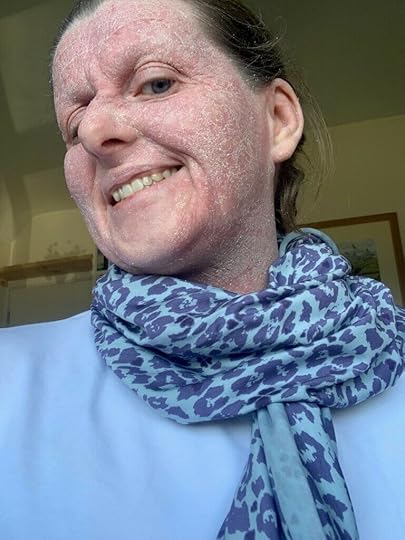 My skin the week the water softener was delivered… a flake fest!
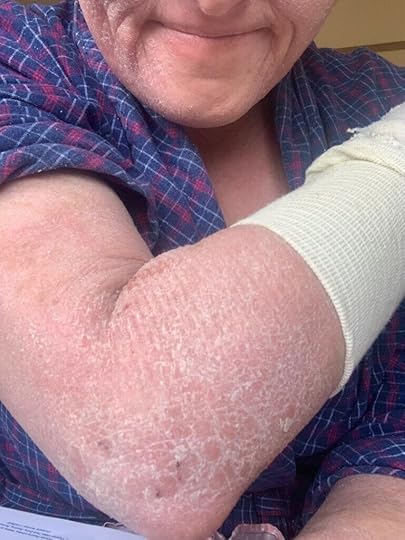 Smiling despite the difficulty moving my limbs due to elephant skin and thick scabs and crusty flakes
So you can see, the skin is healing. I call it a healing crisis and I have been deep in healing recently.
How am I getting on so far?It’s early days yet as my skin was already very dry, super flaky, crusty, oozy etc. I’m hoping it will make showers easier as they are currently hard to have as they trigger itching and dryness. I’ll be honest, I rarely shower, finding baths much kinder to my skin.
But I’ve already noticed a huge difference:
When washing my hands the water feels silky soft and you need hardly any soap and lathering. They also don’t feel dry afterwards and as hand eczema is something I’m plagued with I’m hoping this will help them heal.My mum came into the room saying my new soap felt amazing on her skin. Well it wasn’t a new soap or anything fancy, just my new water softener. She was impressed!I’m also now only using a pea sized dollop of shampoo and it lathers and feels lovely and silky soft after washing.Cleaning the bath is also really easy and as I bath often this is a huge win win. It doesn’t leave any scum at all!It really has only been a few weeks so far so I can’t say too much, as since my skin is at all time low, things can only get better!
I will be sharing some videos and a future blog with an update in a few months so watch this space.
Want to find out more about Water Softeners?
If you’re interested in getting a water softener for yourself or your child or partner, check out the Harvey Water Softener website using the link below:
 Me and my Harvey Water Softener
I am very impressed with Harvey, from my initial inquiry to the installation and after care. This is a company that has the customer first and the product is top quality. I also love the Harvey app which tells me when I need to reorder salt.
“Buy a Harvey Water softener and receive 6 months free salt. Plus up to 50% off our drinking water solutions.”
Harvey Water Softeners
Offer ends Monday 29th November”
This is a great offer for anyone deciding to invest in a Water Softener with Harvey between now and 29th November, as well as discounts on tap options.
People have been telling me to get a water softener for years so it’s exciting to finally be taking that advice and investing in my skin health.
If you have any questions or comments, please share them below. Do you have one? Has it helped your skin?
Sources and further readingWater hardness and a possible genetic link with eczema in children, Br J Dermatol. 2020 Aug, British Association of Dermatologists.Skin raft blog – The effects of hard water on your skinNB: THIS IS A SPONSORED POST
The post Can a water softener help eczema? first appeared on What Allergy Blog.November 10, 2021
‘The metal allergy guide’ book review
If you’re allergic to nickel then the chances are you’ll know the basics. If you’ve had a diagnosis after testing at an allergy clinic you probably got the one page handout that I received, which was helpful but by no means expansive.
There are a lot of places nickel can be found that you would not expect it to be.
Reading this book, The Metal Allergy Guide, by Alex Gazzola really opened my eyes to just how much more there was to this allergy, and I thought I was somewhat of an expert.
In the book Alex tackles every single aspect of nickel allergy, right from testing and getting a diagnosis to how to avoid exposure, finding safe products (there are loads of useful links and resources) cosmetics, medical treatments and especially low nickel diets -something I’ve found really hard to understand.
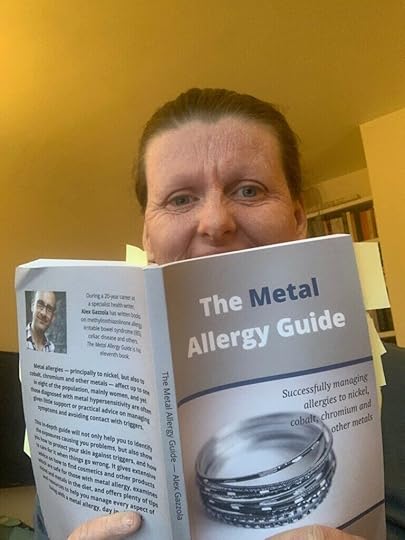 As you can see, I made a few notes while reading!
Not only does Alex identify potential pitfalls and areas for exposure, but also shares safe alternatives for nickel free products.
And if you are allergic to nickel, it’s not easy at all to work out which foods are good and which bad because so many resources seem to differ in their analysis.
Nickel free and low nickel dietThe chapter I learnt most from was the food chapter, and I need to go back to this one and learn more and really look at what I eat, because it would seem I am unwittingly consuming quite a few foods on the high to moderate nickel content list. Foods can contain nickel naturally, or from being stored in tins, cooked in metal pans, served in metal urns (tea and coffee) or even your water system, pipes and the inside of your kettle!
There was also a great chapter on jewellery with links to places where you can buy safe rings, necklaces and watches – another really useful chapter.
My mind is reeling with possibilities for improving my skin through the things I’ve learnt in this book.
It really is a must read for anyone with nickel, cobalt or chromium allergy and I actually have an allergy to all three!
This book should be recommended to everyone testing positive for nickel allergy and I will be telling my allergy consultant about it on my next visit.
One of my favourite resources that Alex recommends was the Nickely Challenged website which explores nickel diets, low nickel recipes and more.
There are tonnes of other resources but you’ll have to buy the book to find them all.
The Metal Allergy Guide by Alex Gazzola is available on Amazon.
The post ‘The metal allergy guide’ book review first appeared on What Allergy Blog.November 2, 2021
Working with a chronic illness
Working with a chronic illness is something I have first hand experience of, having navigated full time employment with severe allergies, anaphylaxis and severe eczema and it’s a hard one to write about.
Because it’s not easy. I’ve had some ups and downs, some really good experiences and some really bad ones. But I do hope that as a nation we are becoming more aware of mental health issues and also discovering more flexible ways or working and living after everything Covid has taught us.
What is a chronic illness?You may not think you have a chronic condition or you may, like me, know very well that what you live with is constant, continuing and often very difficult to live with. Whether it’s the anxiety of anaphylaxis, topical steroid withdrawal (which can leave me bedridden and unaable to work) or MS, Cancer, any condition that brings with it pain, inability to focus and work and daily maintenance that can remain unseen, but is essential to keep you moving, going and ready for the world. These things can take a toll and make working a challenge.
The dictionary describes chronic as:
Constant; habitual; inveterate:
Continuing a long time or recurring frequently:Having long had a disease, habit, weakness, or the like: a chronic invalid.Having long duration (opposed to acute).I think that description probably applies to many conditions, but it’s definitely true of anyone living with severe eczema and/or the anxiety of living with life threatening anaphylaxis.
The emotional burden of serious skin conditions and indeed anaphylaxis isn’t really well understood.
Anaphylaxis is life threatening but to look at someone with allergies, the fear, anxiety and shame are hidden, it’s an invisible suffering. We look quite normal most of the time, so we’re OK. But living with panic attacks and the PTSD of living through terrifying anaphylaxis and feeling that you are indeed dying stays with you. Ever present, keeping you vigilant and alert and keeping you safe.
Eczema and Topical Steroid Withdrawal on the other hand are not life threatening, just completely debilitating, exhausting and painful. But because we hide away, don’t share what it’s like, hide our skin and suffer in silence, we aren’t making anyone else aware of how hard it is. How it affects literally every minute of every day.
So how do you cope on a day to day basis? And how do you navigate working with a chronic condition?
How living with eczema and TSW affects my work lifeLiving with topical steroid withdrawal day to day feels like a full time job in itself:
From the sleepless nightsThe struggle to rise during normal office hours for workBathing and skin care routine. I can’t rush the bathing. I can’t have a quick shower as this sends me into a spiralling itch attack, so I need long, gentle, soaks in the bath. Then I need to dry naturally in front of a fan and get ready slowly to avoid getting over heated.Trying to cope with normal tasks like making food whilst itching constantly and in painTrying to focus during the dayNeeding constant ice packs and a fan to maintain normalityWorrying what to wearWorrying what we look likeObsessing that i’ll miss the ten alarms I’ve set to wake me up (Ok 5 alarms. My ears get blocked with the TSW so I regularly sleep through alarms, needing to set multiple in succession in the hope one will do the trick)ALL DAY LONGIt is not easy. I always feel that my mind is fatigued and unfocused with the sometimes monumental task of just getting by, just surviving.
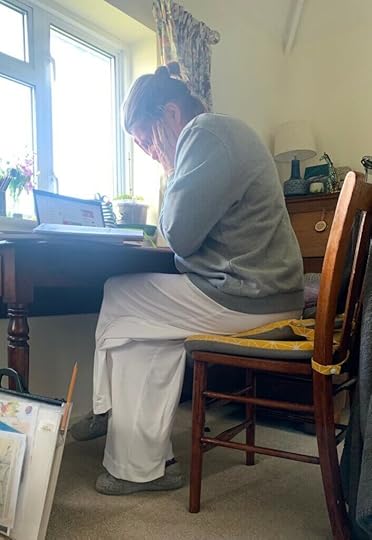 The not so good experiences…
I always want to share positive outlooks on here and ways to move forward with optimism and hope, but not everyone will understand.
One particularly bad experience was what led me to leaving full time employment to work freelance again. I had been really struggling at work and asked to meet with my boss to discuss this. I won’t go into the details but I felt lost, misunderstood, scared and confused. I wanted to ask for help, to tell my boss that I was finding things hard. It didn’t go well.
“Not everyone can cope in these new fast paced working environments. The rest of the team is coping OK. Maybe you’re just not cut out for this job.“
One boss told me….
Whilst this opinion of my working abilities was heart breaking and left me weeping, crying, I literally broke down in tears and said to him, ‘So basically you’re suggesting that I leave then?’
I’d been reaching out for help and felt totally rejected and misunderstood in that moment.
But it was also freeing. As I sat in that office, crying and feeling all alone (because said boss had then left me in a crying heap to go home) I made a decision.
If I can’t fix it, I’ll create my own future. I’ll work freelance again and no one will ever get the opportunity to make me feel like such a useless failure ever again.
And maybe he was right, maybe I wasn’t cut out for the role, but I don’t think he was correct. I loved the job but was being pushed back into more and more menial and mundane roles and being micromanaged to the point of being ridiculous.
I have that man to thank, because I’m now thriving as a work at home freelance, so much happier and the proud author of two very good books!
The good experiences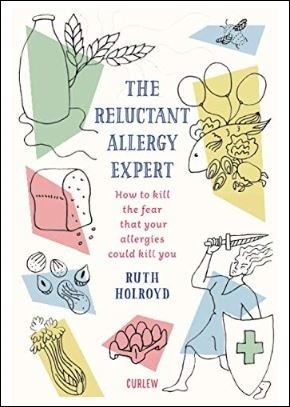
There have been many many good experiences too. My manager and colleagues supported me through the pain, anxiety and fear after my two last really bad anaphylactic reactions, which both happened when I was with them, my team.
They looked out for me, made sure the office treats were sometimes OK for me to have, made me allergy free cakes, changed lunch plans so I could go and feel safe eating out. They were wonderful and I am very grateful to this day for what they did to make me feel understood and welcome in the team.
I was also allowed to attend CBT pain and anxiety counselling each week for months which really helped me learn to live better with the panic attacks and nightmares I was having.
So you take the good with the bad and you go forwards.
Working freelance can be lonely but for me it offers the best place right now as I heal from topical steroid withdrawal.
There is a whole section in my book, The Reluctant Allergy Expert – How to kill the fear that anaphylaxis could kill you, detailing tips and advice for navigating the workplace if you have anaphylaxis.
What can you do to help you work with a chronic condition?It’s been hard to get my head around this and I’m kind of jealous of those people who don’t need to work or are able to take time off to heal properly. That isn’t a luxury I can afford, I have to work to pay the bills and I live alone so no one else can pick up the slack.
However I’ve learnt a lot over these few years and it can be done. Here’s a few tips.
Accept what you cannot change. So if you really can’t sleep during normal night time hours, you need to grab sleep when you can. Sleep is essential for healing and sanity so if you need to sleep during the day, or those hours from 5-6am until 10 ish, which is when I find I’m in a deep slumber finally, that’s what you need to do.Work around your condition – I’ve found that working freelance has been a godsend. I can work when I feel good and rest when I don’t. I can have a constant flow of ice packs, rest when I need to, wear the clothes I feel most comfortable in and even work from my bed some days.Talk to your employers – I know working freelance isn’t available to everyone so if you have a boss, you need to speak to them. I also hope that recently companies see that offering flexible working can benefit all employees, not just those managing a chronic illness. Tell your manager how you feel, what you need to do go maintain your working day and get work done. Ask them whether you can start work later, join meetings from home when you’re flaring, wear more comfy clothes to work. Explain how you are feeling emotionally too. If might be that you can swap to do a slightly less taxing role while you heal.Tell your coworkers and friends – This is just as important. They may not realise how much you’re struggling, especially if, like me, you hide the pain and suffering and put on a brave face. Be open, honest and vulnerable. Tell them how it is and what would help you. If nights out on the town are out of the question, ask if you can do simpler activities like a gentle walk, a coffee, of a film night in so you can feel safe, have your coping strategies close at hand and aid your healing journey.Disability allowance – I don’t yet know of anyone who has been successful in getting this but I believe that in some cases it should be available. I have no experience of how to go about this either but I’d start with your GP and your local council. Start asking what rights you have and it might be that you can get some help while you need it and cannot work.Go prepared – Take what you need, your bag of tricks. Your emollients, cotton hankies in case of ooze or sweat attacks, ice packs (if carefully wrapped these can stay cold for quite some time). Take spare tubular bandages. Take time out when you need to – Don’t be afraid of saying enough. I’m done. Don’t be scared to tell your employers you need time out. Sick leave. You are entitled to it and if you are feeling so overwhelmed and in too much pain to work, admitting this and taking time to recover will help you in the long run.Notice if you make mistakes – I do make mistakes sometimes, when I’m rushing. And it’s often when I’m struggling with my skin. Take note if you start to notice you’re struggling as these little mistakes may show before you admit that are finding things tough. No one wants to be making mistakes but they are just mistakes. They don’t really matter in the scheme of life. Don’t beat yourself up, but do find ways of learning from them, like making sure you double check work, get approval if you think you’re not 100% something is OK. Keep that dialogue open and share those struggles.Accept that you will get less done – Learn to prioritise efficiently. What is essential, what is most important. What are the quick wins. Learn to accept that you can’t do late hours, take work home and go the extra mile while you heal. Just do your job and look after yourself. That’s all you’re being paid to do.You’re not lazy – Be kind to yourself. You are ill and struggling. Healing takes a lot of energy and lack of sleep takes what is left over like a thief in the night. Just do what you can to the best of your ability and be honest about this with your team.Advice for managers of the chronically illIf you’re reading this and thinking, how can I help my employees to cope better? What can I do to help? This is what would have really helped me.
Check in – If a member of staff has shared that they are living with a chronic condition, don’t just assume they are coping. They may be hiding it well. Remember to ask them how they are doing, are they coping? How is the illness making them feel? Is it easier? Worse? Just be there to listen to them if they feel they want to share.Ask what you can do – The most powerful question I’ve been asked is, ‘What can I do to help?’. Be open, ask this question and really have a think what could be done to help support your employee.Become an expert – Find out about their condition, do your research. Find the charities and understand what the condition is. It might help you find resources or give you ideas of how you can support them and understand better what they’re going throughBe a team – Make sure the rest of your team is also on board and understand what their colleague is going through. Can they help pick up some slack? Can they help their colleague and support them too?Emotional support – Does your company offer psychological support to staff? Is there an advice line or therapy available to staff? If you think it could help, encourage them to seek help for the emotional burden. Can they learn tactics to help them better manage the psychological impact.Anyway, I hope this helps. It’s taken me so long to write, because, yes, you guessed it. I’ve been struggling with work during my latest healing crisis.
I’m so fortunate to have the ability to work safely from home and I feel so much gratitude every day for that.
Also thanks to all my wonderful clients who have supported me and allowed me to dictate that no early morning meetings be put in my diary as I’d never wake up for them!
I’d love to hear your comments on any of the above.
Further readingWhat’s it like living and working with a chronic illness? by Alex Haagaard
Working with a chronic illness by Julie from the Counting my spoons blog
Living positively with MS by Mark Webb – One man and his catheter blog
You may also find this blog that I wrote about Caring for someone going through TSW useful.
The post Working with a chronic illness first appeared on What Allergy Blog.November 1, 2021
Being a twice published author!
Happy National Author’s Day! A great day to celebrate my writing achievements.
I am so proud to be able to call myself an author, a writer and a poet. This short video tells the story of how I became one, fulfilling my dream to be a real author!
I’ve always loved reading and wrote a daily diary from the age of about 12 until my 20s. I still write and journal today but less frequently, but I remember how much comfort my diary gave me back then. I used to write that I wanted to be a writer and was always told that wasn’t possible for me, that I should be more realistic. Not many people make it as writers.
Book one – “The Reluctant Allergy Expert – How to kill the fear that anaphylaxis could kill you”, was published by Curlew Books and I had an editor which was such a brilliant experience. She gave me advice, guidance and we had lots of meetings to agree the contents, order of the book and word count, with checkins along the way.
I wrote it during topical steroid withdrawal and it really gave me a purpose and focus to get up and be productive.
Book two – The Shape of Skin is my first poetry book. A collection of poems about living with eczema, from childhood to today, looking at itching, scratching, self image, acceptance, healing and everything in between. It was such a therapy to write it and I’m so proud.
Now I’m not going to make my fortune from my book sales, it’s hard work being an author and the effort it takes to write a book doesn’t ever get repaid from book sales.
But I didn’t write my two books to make money, I did it to help others, to share my story, to raise awareness and to hopefully challenge and point people towards the resources and support they need, giving them focus, ideas, tips and advice by sharing my own journey and experiences.
Thanks so much for listening, watching and reading.
Thanks so much for your lovely reviews and feedbackCan I ask you one small favour? If you have read either of my books and not yet reviewed them, could I ask you to hop on over to Amazon and/or Goodreads to share your views? It really helps with book promotion and helps others to find the book and understand whether it’s going to the right book for them.
Review The Reluctant Allergy Expert or buy on Amazon
Review The Shape of Skin or buy on Amazon
Find me, Follow me and Review my books on Goodreads
Anyway thanks again for being my readers and following me. I’ve been struggling with my skin lately so haven’t been sharing much but I have lots of blogs planned for you.
Don’t be a stranger, pop a comment below to make my day.
Shout out below to your favourite authors today
October 13, 2021
Shortlisted in UK’s Mental Health and wellbeing Awards
I’m really excited to be shortlisted in The UK’s Mental Health and Wellbeing Awards, for an award in the category of
Inspirational Mental Health Story (lived experience).
It’s organised by The Root of it and The Mental Health Tick and I’m so excited to be attending an awards ceremony on Zoom later this month.
Getting awards like this makes blogging, campaigning and raising awareness about living with life threatening allergies and a life limiting skin condition, (eczema and topical steroid withdrawal) all worthwhile.
The anxiety, fear, pain and discomfort, take a huge toll on mental health. Being able to turn up day in day out with positivity, confidence and hope for a better future takes a lot of work.
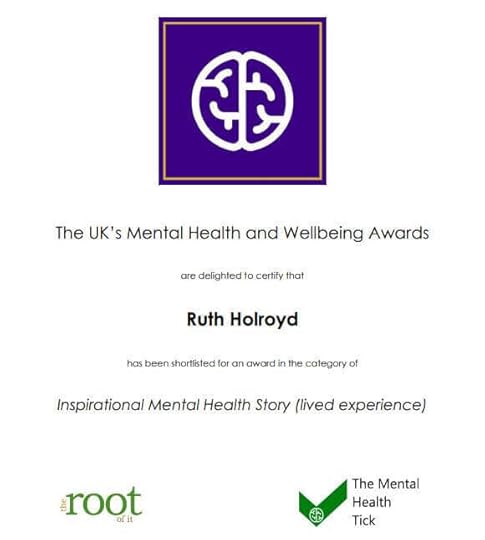 Shortlisted in the UK’s Mental Health and Wellbeing Awards
So it’s both an honour and a privilege to be shortlisted for this award.
I have learnt so much about self love, self esteem, self care and gentle kindness through both anaphylaxis and eczema.
You don’t need to be strong and on top of it all.
You just need to accept what you are living with and learn to live with it the best you can.
Both allergies and eczema have also taught me so much empathy for others. When you face death or live with extreme pain and live through that experience it gives you a whole new perspective on life.
I remember feeling this huge buzz the morning after my last anaphylactic attack. I realised that I felt so alive that it hurt. It hurt but that meant I was still here and that was such a precious gift.
Realising that it was OK to not be OK. That having a bad day didn’t mean I was a failure or a terrible person seems obvious but I had always put so much pressure on myself, particularly to help others, at the detriment of looking after myself.
You are worthy of love and you are perfect just the way you are. Remember that!
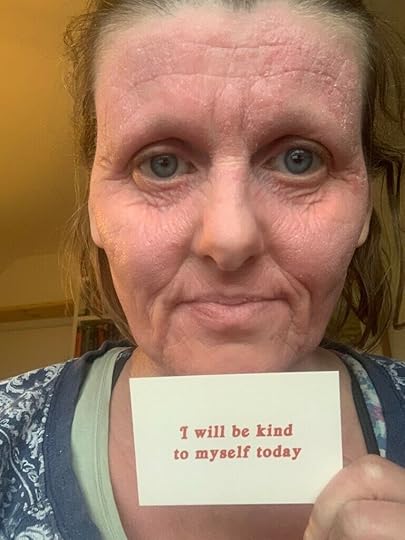 Be kind to yourself today…
(Skin positivity cards are from The Real Skin Club. Visit my affiliate page for a link and promo code (SHAPEOFSKIN) to buy at 20% off.
Be kind to yourself today. Be gentle and talk to yourself like you speak to a good friend or a small child. We are often our worst inner critic and say such mean things to ourselves inside our heads. Remember that you are not this voice, you are not your thoughts. Let them go, don’t give them time, just acknowledge and wave them off as they pass.
And wish me luck in the awards!
The post Shortlisted in UK’s Mental Health and wellbeing Awards first appeared on What Allergy Blog.