Ruth Holroyd's Blog, page 30
June 18, 2020
Can gel gloves help heal hand eczema?
I’ve always had hand eczema which has bothered me throughout my life, but during Topical Steroid Withdrawal, my hands are one of the areas worst affected by symptoms. So when I saw fellow TSW and eczema friend Amara sharing her experience of using these gloves I was really interested. It looked like a very natural, simple and promising treatment for my hands.
The skin on my hands was and is often red, swollen, with open wounds, oozing, scabbing, leathery, and just so dry and itchy. Alcohol sprays and extra hand washing during the Covid-19 outbreak didn’t do them any favours either. Thankfully they are slowly healing through the TSW process but it’s a slow journey.
I contacted Silipos to find out more and see if they would be suitable and was offered the chance to try these vitamin mineral gel gloves to see if they worked – I leapt at the chance.
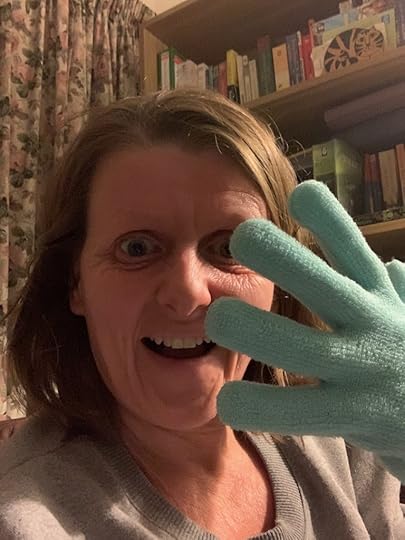
A bit about Silipos gel gloves
“Silipos gels release moisture-rich medical grade mineral oil that gently hydrates, softens, and conditions the skin. Our gloves and socks are beneficial for treating skin conditions such as eczema, psoriasis, and dermatitis while giving the patient a pampered feeling. Our gel forms protect the post-surgical area while releasing medical grade mineral oils that help to reduce scarring while moisturizing the skin.
“Our Gel-Care® Advanced product line offers a revolutionary new scar management system using the clinically proven SymRepair® Technology. The gel sheeting can be cut to desired size and the body wraps offer flexibility for hard to reach, bendable areas of the body. Gel-Care® Advanced is an excellent alternative to silicone for the prevention and reduction of scars.
Silipos gels are washable and reusable, and with proper care will continue to release skin beneficial mineral oils throughout the life of the product.“
Have my hands healed?
I started using these gel gloves at the end of April. You should wear them for about 30-40 days in a row but I did have some breaks when my hands flared up.
It’s so hard to capture the true picture of my hands, and the photographs never quite show the real truth. The problem with TSW skin is that it heals and then it gets worse again, as you flare, itch, scratch and damage them again and again. What’s frustrating is that one day they will seem so much better and then something or nothing at all will trigger an itching episode and I’ll feel like I’m back to square one. But they do heal, slowly and by tiny degrees and despite these continuous flares, there is healing progress. I am always aware that nothing is a complete cure but I love finding products that can support me on my healing journey.
I definitely think my hands have improved while using these gel gloves. Here’s how:
They FEEL so much softer – When I stroke the skin on the backs of my hands the skin is smoother, and less like sandpaper. I rub my face with the backs of my hands and I’ve noticed that my hands are becoming a less satisfying itching tool as they are not so dry and rough… true TSW hack, we scratch with the dry skin on the backs of our hands.
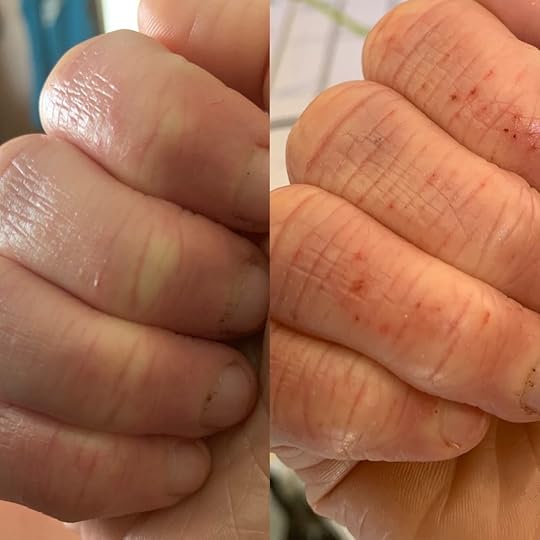 My fingers before and during using these gel gloves
Fingers are healing – My fingers would be split and cut and often bleeding. This picture shows less of the deep red lines, or grooves, no cuts or splits and calmer looking skin. You can definitely see improvement here. They’re not perfect but as I’ve healed I’ve begun to do more too. I can spend an hour gardening now which was a real struggle before as my hands were just so sore. It still irritates my hands, even wearing gloves, so by doing this I’m probably causing minor flares but I want to be in my garden so I’ll take that.They are also less itchy at night – I can’t remember the last time I lay in bed scratching my hands… This used to be a regular nightly ritual!Less moisturising required – I am moisturising less, although they do still need emollient applied in the mornings and throughout the day, I think they’re holding up better.Less redness – my hands look calmer, less red and inflamed.The treatment is lovely – after a treatment my hands feel softer and calmer. I think it also helps me not to scratch, pick or rub when I’m doing a treatment as the gloves remind me to stop.Helped me relax – I used the time wearing the gloves to meditate, slow my breathing, read or relax in front of the TV. You can’t do much while you’re wearing them anyway as they are quite bulky.
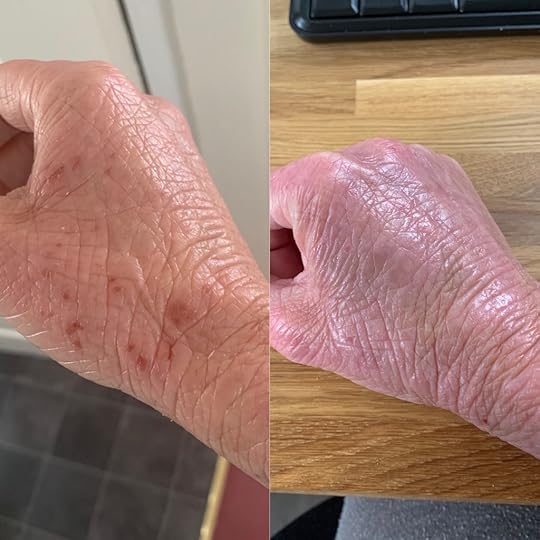 Comparing hands from April (before treatment) to June (today)
How do they work?
They last for about a month of daily wear and you put them on and wear them for about 30-45 minutes and just let the oils and minerals do their stuff.
There is a slight smell to them, but it’s faint. There is a very light perfume to them. Silipos Nourishing Gel is a green tea scented soft gel that provides moisture, cushioning and comfort to the skin.
They contain the following ingredients:
Olive oil, Canola oil, jojoba oil, grape seed oilSoyabean extractAvocado oil and Vitamin E
They seem massive when they first arrive and quite chunky and cumbersome to wear, but once you’ve had them on for a session they are often really hard to remove so they do need to be this size!
My routine was to wear them in the evenings while I read my book; often a challenge to turn the page 


June 16, 2020
Should you take supplements for eczema?
Over the years I’ve taken so many supplements to help my skin recover from eczema, including calcium, vitamin E, selenium, vitamin D, zinc, evening primrose and echinacea, to name just a few…
Ideally we should we be looking to get these minerals and vitamins from the food we eat so eating a diet rich in green leafy vegetables, fresh fruit and vegetables will help. If you consume a varied diet of different coloured fruits, vegetables, seeds and grains you should be getting most of what you need.
And the problem with supplements is that they are not food, they are not natural and so the body doesn’t always utilise them effectively. It can just flush through you without being effectively metabolised.
Look at what grows in abundance around us in our countryside such as nettles, burdock, dandelions, chickweed, cleavers (that velcro plant you used to stick on your friends backs) grow so well and we just treat them like weeds. The time to cleanse and help you body eliminate is spring and summer when they are growing everywhere. Harvest these plants and make teas and brews. Gather them, dry them by laying them out in the sunshine, then crumble and store in jars to use over winter.
I’ve been working with Rebecca Bonneteau the Eczema Expert to help me heal my skin from within, working on boosting and supporting all the organs in my body that need to be in top form to help remove toxins and cleanse my body.
Herbs for eczema
It’s important for me to point out that what Rebecca has suggested for me might not be the best thing for you, so do reach out to her to find out more. I completed a detailed questionnaire in order to decide on the best course of action. I also sent her close up pictures of my eyes which can tell you a surprising amount about how your body and organs are performing!
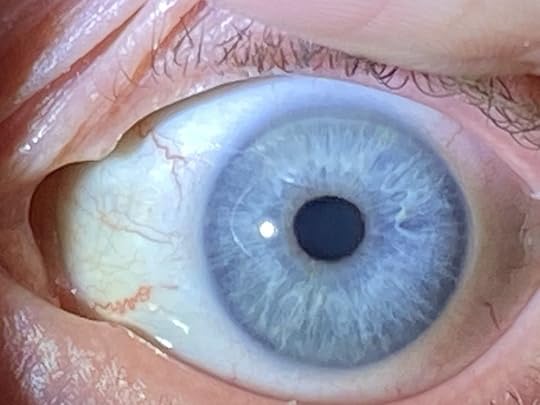 A creepy close up of my eye!
She’ll work with you to tailor the solutions to your budget and what will help you heal.
I’m taking the following tinctures:
Dr Morses Adrenal Support – This contains a collection of herbs including Wild yam, cleavers, parsley, dandelion root, rhodiola, and other herbs. This was to help my adrenals which were particularly compromised, as is the case for many people going through TSW. This tincture forces the adrenals to wake up and get on with their job!Gentian – Digestive support to work on GI tract, repair, cleansing, calming the digestive system.Astragulus – A Chinese herb, used for lympatic cleansing and very alkalising. A good tonic for the thyroid gland that needs support.Burdock Root – Liver support and skin cleansing. Great for eczema and skin conditions. Helps calm inflammation.Nettle – Exceptionally nutritive from a mineral content perspective. Helps eliminate acid from the body. Milk Thistle – Good for elimination, detoxification and liver support.Alfalfa 500mg capsules – Packed with natural calcium and magnesium.
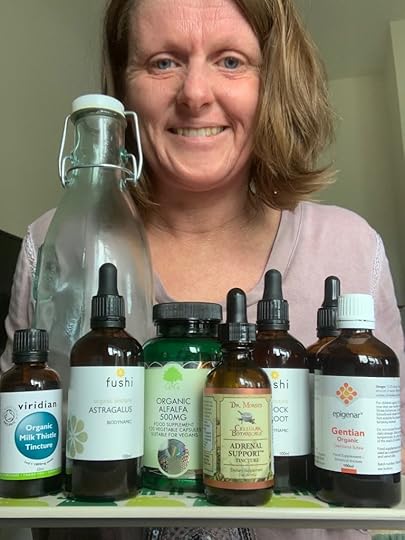 Herbs for eczema and skin support
You might be interested in this detailed discussion about what we can do to support out bodies to help with eczema and TSW:
Listen to Rebecca and Ruth talk about supplements for eczema
What supplements do you take?
What are your thoughts on taking them?
June 15, 2020
Stopping the allergic march
The atopic march or allergic march describes the typical journey seen in atopic people, beginning with hay fever, eczema, asthma and building into life threatening and often multiple allergies.
The way I understand it, when a child is born with dry skin and eczema, often the first sign of atopy, this is the beginning of the march.
Eczema is often not treated seriously at this stage and can lead to sensitisation to allergens through the open skin. The way we treat eczema seems to be to moisturise at the first line of defence and then prescribe steroids if that doesn’t help. Typically you’ll get prescribed cheaper emollients and creams and will go through loads of different brands before you find one that doesn’t irritate the child’s skin more. There is also nothing natural or healing about these prescription moisturisers.
No one looks at what is causing the eczema. No one asks why?
I strongly believe that early interventions at these first signs of eczema would potentially identify allergies that could be treated. Some allergies such as grass, pollen and dust can be treated with immunotherapy but this is not easy to get on the NHS.
Push for allergy testing if your child has eczema and you don’t know why. Try everything else before you resort to any steroids and because of my own personal experiences, don’t go down the topical steroid route. I’d avoid immunosuppresants too if you can.
Once we are on the march we go through life reacting and trying to dampen that response with anti-histamines, emollients and steroids.
We never look for the cause and try to fix things internally.
And the body continues to react. I think of it like a bucket. When your bucket has a little bit of water in it you can carry it easily and not spill any water. As the bucket fills, or the allergens get worse and you get more allergens, your bucket quickly fills up, begins to overflow and you can no longer carry it.
The body becomes so reactive to outside triggers and allergens that you are now on this march and you can’t stop it!
I believe that you CAN and should be able to stop it and work with your body to reduce inflammation but it’s not easy.
There is no cure, no pill or sticky plaster to fix an atopic person.
But I’m finding that as I navigate through my journey with TSW I am slowly removing things from my life that I don’t think are helping and trying to promote better operation of my organs, less allergens, food that’s easier for my body to process, hydration from fruit and vegetables.
I really believe that if anyone had explored my childhood chronic eczema that the dairy allergy would have been identified. I may have been able to find a way to navigate life better and I might not have anaphylaxis to dairy now. I will never know for sure but it makes sense to me.
I decided to cut out dairy in my twenties which did indeed help my body heal and my eczema almost disappeared. However when I next consumed dairy I had anaphylaxis to it, not just eczema flare ups. Why would my body do this? How do things move from inconvenient and unpleasant to life threatening?
I also became allergic to more foods as I grew older. It began with an egg allergy, then peanuts, then other nuts, then dairy, then wheat, then soya…
You can read about The Allergic March on the World Allergy Organisation website to find out more.
And if you love the further reading, check out also The Atopic March: Critical Evidence and Clinical Relevance
More studies are needed into how we can stop this happening.
Have you experienced being on this march? Collecting new allergies along the way and not being able to stop the process?
And can we reverse this march and heal? That is the next big question…
June 12, 2020
A day in the life of TSW
A day in the life of topical steroid withdrawal is exhausting, painful and relentless. Here’s an insight into how it was and how much things have improved for me during the process. I am now 1 year and 5 months topical steroid free.
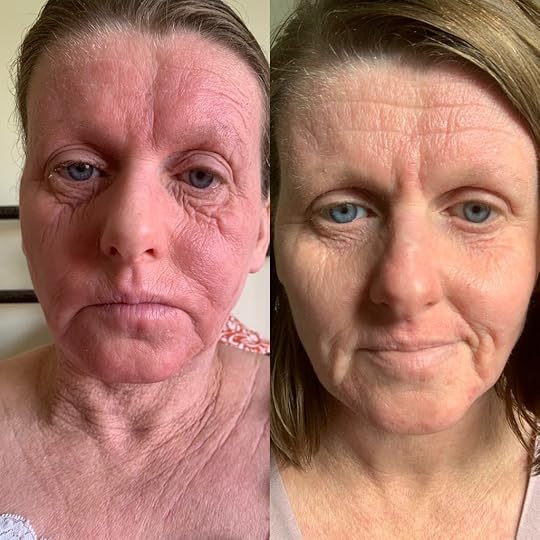 Showing healing does happen… These photos were taken days apart…
 Starting the day with very little sleep, sometimes 1-2 hours, sometimes none. Resting throughout the day has been almost the most important factor for me for healing. Night times were so itchy and difficult that any rest in the day is essential. Waking up to the alarm knowing you didn’t get much sleep. I tried to not have an alarm and sleep in when I could, but on days when I had to get up, an alarm or ten was needed to wake me. It amazes me how well I coped on so little sleep. However the last few months I feel like I’m sleeping for England and catching up a year’s missed sleep. I often had blocked ears, I assume due to skin shedding inside the ear cavity, so this made it doubly hard to hear alarms. It made me so deaf and was a horrible symptom to deal with. Daily olive oil spray into each ear really helped. I also mixed apple cider vinegar, a drop of tea tree and put a few drops of that into my ear too. Also Sodium bicarb ear spray. I had to have them sucntioned twice professionally, the last time being just before lockdown and luckily it never blocked up again. This lasted about six months and is no longer an issue, my ears are fine now. Thanks goodness.My eyes are always completely glued shut. Not with conjunctivitis just some kind of white gunk. It would be so painful to open them and take me 10-15 minutes before I could without pain. I find a cotton handkerchief to dab the eyes and soak up the leaking helped. My eyes are still swollen and glued shut sometimes but it’s getting less and some mornings I wake up and I can open them and it doesn’t hurt. This is rare but I’m looking forward to that being the norm. Once I’ve cleared the gum it no longer hurts but it’s just a part of the TSW process. The body is moving out toxins any way it can, and one way is through tear ducts and lymph glands in the face.
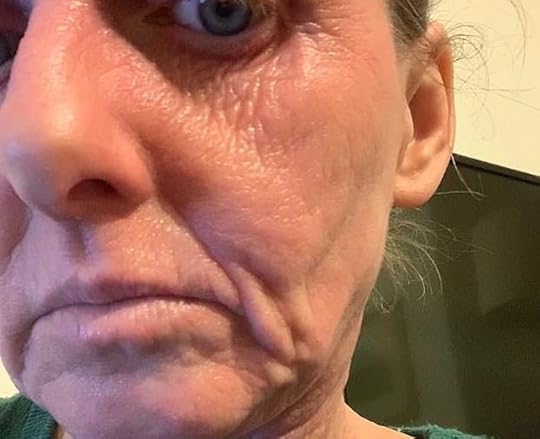 TSW aged my skin – taken early 2020
Morning Flake – Once you can open your eyes you can survey the skin to see how the day is going to go. Most mornings will start with my full face flaking off. The cycle of TSW goes from burning, redness, to splitting and oozing into a crust, and then the crust then finally flakes off in huge massive flakes of skin. It can be flaking once a week, every other day, or as at the moment, every day or often all day long! Sometimes it will go through this cycle twice in a day! Snowing flakes constantly..Avoiding mirrors – You just don’t look like you any more. I avoided mirrors because I just hated how my face looked. So aged, saggy, leathery and old looking.Meditation – I try to start my day with my Daily Calm guided meditation, although I’ve not been as diligent in the last few months. Ten minutes to meditate, focus on breathing and set you up for the day. I do usually do one of these before I go to sleep to relax me.Morning bath – If my skin is particularly crusty, painful and flaky, I often started the day straight into the bath. Epsom salts, tea tree oil and a long soak, gently exfoliating skin flakes from my body and mostly from my face with my fingertips. When I was trying to work I would be trying to get up at 6am so I could have a bath, soak off the flakes, wash my hair (every day due to greasiness and flakes) then get to work by 8am. It was exhausting and in the end I had to give up work.Exercise – if you can, daily exercise has been the key for me. It could be just a walk but when I can I run. The sweat and focus and sheer effort, raising the heart rate and not thinking about how itchy I am for 30 mins or however long I could manage has really helped. I think sweating helps the body clear out toxins.Itching like crazy – the itching during TSW is intense. Its’ like nothing you will ever experience. It can go on all day and feel like it will never stop. Sometimes it has been so bad I can’t even make a meal or a cup of tea. It’s part of the healing process so I try not to beat myself up when I scratch or rub my skin. Ice packs can help.Herbal support – The first year of TSW I took a lot of supplements to try to help my skin, but since January I’ve been working with the Eczema Expert and taking herbal tinctures, Adrenal Support tincture, Alfalfa supplement and a Heal all tea. I have seen both a dramatic dip or healing crisis and also now some pretty promising healing. The body needs to learn how work again after years of being suppressed by the steroids. These tinctures work by encouraging the adrenals, lymph, digestive and other cleansing organs to spark back into life. It takes time to heal from topical steroid addiction but we can support out bodies as we do so. I’m planning a full blog on this when I have time.Reading – escape into a good book has kept me sane through all of this. I’ve also treated myself to Audible audio books and love to lose myself in a good read.Work – I’ve been so lucky. I was able to take four months off after completely burning myself out trying to keep my full time job going for the first three months. That was awful. Going into work with my hands, wrists and arms bandaged. My ankles oozing through my socks. Blood seeping through my work shirts. I don’t know how I did that now. I have been really fortunate also to have some really lovely clients who have stood by me and understood when I’ve been less responsive. Working from home has allowed me to work when I can and rest when it’s bad. I’m now really busy with work. Probably not 9-5, but keeping a steady work life balance whilst working on my blog and book, which comes out soon! Food and drink – I have tried to keep my diet simple and healthy. Where I can I’ve eaten lots of fruit, vegetables and raw too when I can. I cut out processed foods as much as possible and cut down on alcohol. Sugar isn’t great but I do have a sweet tooth so I’ve struggled with that. Food can definitely be a trigger for making my skin itchy. If you’re worried about this, keep a food, mood and symptoms diary and try to work it out. Some foods can cause inflammation in the skin but this isn’t the case for everyone. I also drink a lot of water, juice and herbal tea to keep hydrated. Fruit helps hydrate you too.Moisturise – I did moisturise my skin throughout and continue to do so. It’s up to you whether you try not moisturising or NMT but I found it too difficult. Dry skin for me means itchy skin so I’ve use emollients and natural skincare throughout. I am needing this less and less as I heal and am now trying to use more healthy natural skin care brands where I can.Love yourself – I’ve been working hard at gratitude journaling, positive affirmations and learning to love my skin. Living in a place of anger, jealousy, desperation and negativity won’t help healing. I’ve been there and sometimes it is impossible not to feel completely lost and in despair. But we know others have got through this. It takes time but it is much easier to do this journey with self love. So what if I don’t heal any more? What if this is me and my skin is like this? I’ve been learning to love what my body is doing to heal. It’s incredible to observe this horrendous process playing out. Who would imagine that some topical ointments could wreak so much havoc? I have so much less pain now I’m learning to just be, whatever my skin is like, to accept it and go with it. My quality of life now is really good so I could live with it if it stopped healing but I believe it will heal more. I hope it does!Bedtime routine – sleep is one of the hardest times. I’ve written about this extensively. Read Sleep remedies for eczema and TSW. I am quite strict about this and go to bed quite early to try to slowly wind down. it’s got easier. I can now stay awake till about 11pm but I used to be so tired in the early months I would fall asleep at 9pm only to wake at 11pm and not be able to sleep again till 6am. So frustrating! The blog above will give you loads of tips.Talk about it – Social media daily helps me so much, although sometimes it’s too much and I have to take a step back. I get so may messages from people and try to help when I can but it can be exhausting and painful to hear about so much suffering and feel helpless. On the whole though, seeing others who have healed and being able to help those at the beginning of their journeys keeps me going. It also helps to talk to friends and family. Tell them how you are doing, how you are coping. It will really make a a difference and they can’t help you if you don’t tell them you are struggling. Catalogue it – Finally, I am so glad that I kept a journal and took regular photographs. Seeing progress can be hard until you look back and see how bad it was before.
What’s hardest about TSW is the relentless nature of it. You can tell someone but you feel like you can’t keep on saying the same thing. It just goes on and on and on. It’s painful and it’s exhausting and we just have to do the best we can with as much positivity as we can. I am fortunate to have a great support network and some friends who have continued to check in, give me support and encouragement and let me know they love me. Thank you all of you. It really helps.
I do believe that working on my self esteem, self love and focusing on just being kind to myself have really helped me. I’m not always happy and I still have days when it’s so painful I want to cry, but guys, it gets easier.
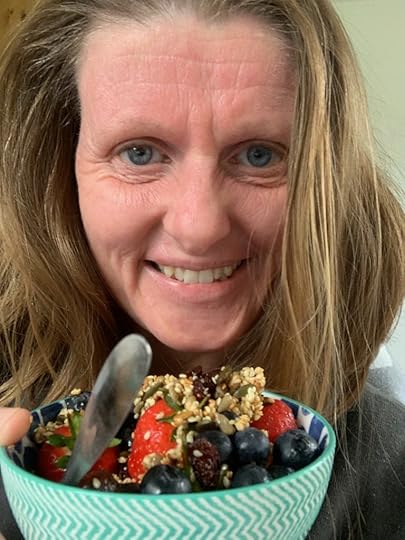 My skin has healed so much and I am so grateful
Trust in the process. It takes time and the rewards are worth the effort.
June 9, 2020
Testing BetterAir probiotic purifier for asthma
I’ve been trying out this product for a few months now and I really think it does help. I am not getting paid to write this but I was gifted the probiotic purifier to try.
What is a probiotic purifier?
The unit emits a spray of probiotics every 70 minutes and this spreads around the room, treating surfaces, objects and air, ridding pathogens (harmful bacteria and mould) as well as allergens and reducing Asthma triggers.
Watch this short video to get a better idea of how it works:
This is what BetterAir say about the Biotica800
“We represent the cutting edge of wellness optimization by harnessing the power of all-natural probiotics. Our systems help turn your home into a hypoallergenic safe zone free from organic irritants.”
You site the unit in your bedroom, away from any opened windows, plug it in, insert the probiotic liquid and it starts doing its magic. I tweaked mine so that it wasn’t running at night as the noise bothered me a little, and in that case it releases more probiotic in the daytime and stops at about 10pm (or whenever you choose pause your unit. It should have the same effect as if it ran 24 hours a day.
The only thing I don’t like is the light on the plug which I have had to cover up and the flashing the unit does, but you can cover up this light too. I’m just funny about any light while I’m sleeping. Once the lights were covered it was fine.
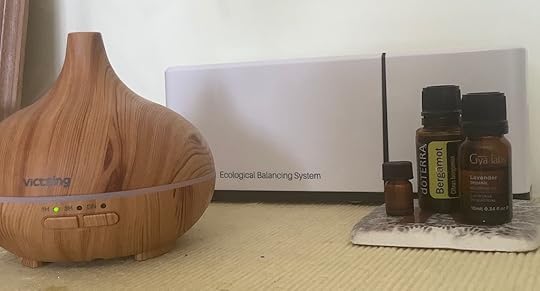 My BetterAir system sits in my bedroom next to my oil diffuser
Has it helped me?
I think it has and here’s how:
I’m sleeping really well – Now I do a lot of things to help me get a good night’s sleep but the quality and duration of my sleep has certainly improved since I started using BetterAir. Before using it I always felt I had only just fallen asleep when my alarm went off. I struggled to get up and always felt tired. I am now waking up early, at 6-7am feeling rested.Works well with oil diffusers – I had just bought a natural essential oil diffuser and was assured that this would not interfere with the system. I love using essential oils to help scent the air and also promote sleep. This is something the manufacturers may add as a feature of this probiotic purifier in the future, so you could add your favourite essential oils and fragrance the room as you purify it!My asthma has improved – I did start taking peak flow readings during my testing but annoyingly I didn’t have a base reading at the start. What I have found is that my peak flow readings are steadily improving from around 300 to 430-450 which is really good for me. My breathing had been really troubling me and I had been experiencing some wheezing before trialling this product. I am not using my preventative inhalers anymore and have not noticed a difference or worsening in my breathing. If anything I’m improving all the time. I only use my blue inhaler before exercise and always take it with me when I go out, just in case. But I feel my asthma is well controlled at the moment.Asthma symptoms disappear quickly – I have always woken up wheezy when the weather changes, like a barometer, the change in pressure seems to temporarily affect my breathing. However now, instead of needing the blue inhaler to relieve the wheeze, I seem to be able to breathe through it, cough and mucous now moves freely to free my airways. I always used to have such a dry wheeze and always struggled to clear mucous.Hay fever is much better controlled – My hay fever does seem to go in cycles and it was awful last year. This year I have watery eyes when I go outside but inside I’m not having as many problems. I’m not taking any anti-histamines, just dealing with the watering as it’s not severe as it was at the beginning of the year. I think my tree pollen allergy is worse than my grass and weed allergies.
I’ve been inside so much more during the current lockdown and had been really worrying about my breathing so this has really helped.
I have also been going through Topical Steroid Withdrawal so anything that can help me reduce the use of preventative inhalers is amazing. I am not using the preventative one at all at the moment
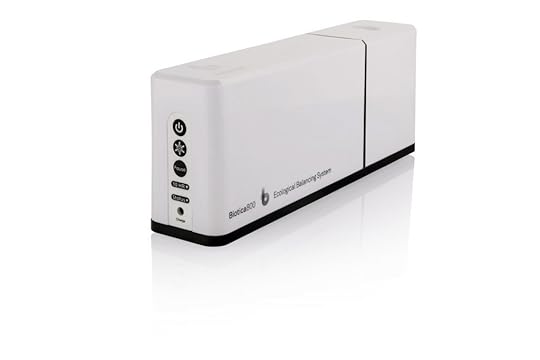 Biotica800 Biological Balancing System – probiotic purifier
I have horrible old carpets in my house at the moment which I do plan to replace but I can’t afford to at the moment, nor do I have the time, head space and energy to even decide what I want instead. So having a product like this that works on reducing the allergenic load in your house using natural probiotics has to be a positive step.
I am hoovering up a lot of dust and skin from my bedroom at the moment due to the incessant flaking of Topical Steroid Withdrawal (TSW) so I am always conscious about the extra dust.
I have definitely seem improvements in my asthma and breathing since using BetterAir. I do many other things like learning to master deep breathing, daily meditation, regular yoga and running, but most of these were activities I had already begun exploring well before I started trying out BetterAir. It’s great to have a natural product that can help reduce the allergen load in your house.
f you want to find out more about BetterAir and the Biotica800 contact Vladislav Bronnikov or visit their website better-air.com
And to hear from more people who’ve used it read their case studies.
NB. This product was gifted to me for this trial.
June 1, 2020
Yoga for skin healing…
I’ve discovered so much calmness, relaxation and healing through my yoga practise that I had to share this. I’ve loved doing yoga for many years now but the yoga styles I’ve found in the last year have changed how I view my practise.
I used to see it as stretching, strength and flexibility. I enjoyed what my body could do and pushing myself, because this is by no means an easy exercise choice. I find it challenging but rewarding and always end a class on a high.
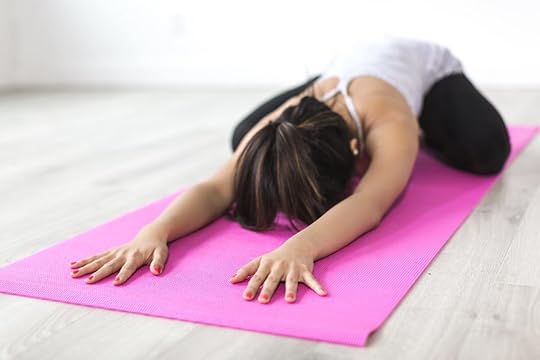 Inversions and forward bends or folds are great for the skin
I’ve always done Hatha yoga but recently found Restorative, Yin Yoga and Somatic movement. I wanted to understand more about these different styles of yoga and share it with you guys so I hope you enjoy this blog post with some interviews and videos from my amazing yoga teachers.
Restorative yoga for eczema and TSW
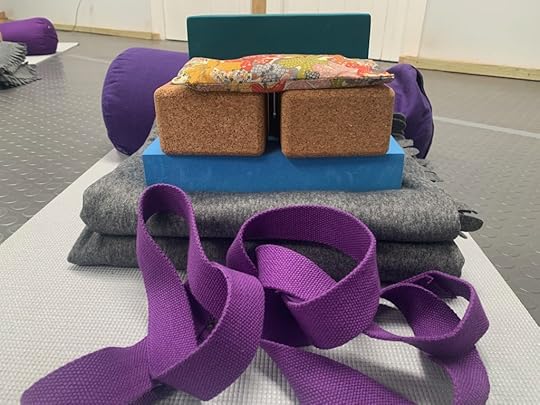 Restorative yoga uses props, such as straps, blankets, bolsters, blocks etc.
My yoga teacher Tawny started offering Restorative yoga classes a few years ago. It made sense, we all love that relaxation part of the class at the start and finish and I have often wished there could be more of that in each class.
The first restorative yoga class I did was deep into TSW and I was itchy, itchy, itchy… so red, sore, swollen, not sleeping and did I mention itchy?
Sometimes I would really struggle to do yoga without being completely distracted, waiting for a break in a posture so I could scratch. Restorative practice seemed to take me away into a calm, peaceful and safe place. Not every time, and sometimes only for snatches of time, but I saw what it could do.
It consists of gentle supported postures using blocks, bolsters, blankets, eye pillows and straps to explore different relaxing positions without any pushing, holding, effort or tension. I found them so relaxing and fell asleep snoring a few times (very embarrassing). But at that time I wasn’t sleeping much at night and getting by on about 2-3 hours sleep so I really needed it.
I realised that it was OK to just be. You didn’t have to always be active, strong and challenge your body. Mine needed nurturing, self love and self care and this discovery came at about the same time that I realised I had very little empathy for myself.
I find restorative yoga to be a nurturing, comforting, warm and healing place. Doing some restorative postures before bed can really help ease you into the right frame of mind to sleep. Here’s Tawny, talking about restorative yoga…
Check out Tawny’s website to find out more.
Somatic movement
I went on a yoga retreat just before Lockdown which was organised by Tawny (my lovely yoga teacher) and her yoga colleague Gabi. It was a blissful idyll packed with yoga, good food and meditation and there was one thing that stuck with me. Somatic movement.
I’ll let Gabi explain it below, but what I understood it to be was to listening to your body and moving how it needs to move. We started on our hands and knees and just tried to feel the music. It was a bit weird at first but once you got into it it was very freeing and centering. With eyes closed we just moved and tested out bodies. Did our back ache or knees feel stiff? Was our neck sore? Whatever movement felt good you explored and it was amazing how fast the time passed
Gabi explains it better than I can, “SOMATIC movement is not really yoga – it is a form of movement which focuses on the intention of the internal experience or feeling of moving vs the external experience or result of movement. There are different forms of somatic movement and one is The Non Linear Movement Method which I shared with you.“
Gabriella Espinosa, Yoga teacher. Follow her on instagram or check out her website www.gabriellaespinosa.com
Here is the link to the NLMM website which explains this form of movement.
Gabriella Espinosa demonstrating Non Linear Movement Method (NLMM)
Yin Yoga
By far the most challenging yoga practise I’ve done and I’ve tried Asthtanga. With Yin Yoga you explore discomfort and hold positions for longer than you do in normal yoga classes.
You shouldn’t feel pain or push yourself into positions, but instead reach your ‘place’ and hold. It really is tough, your brain is screaming, stop! Stop now! Stretch… I don’t like it! Stop!
But by working through, breathing and trying to relax those unhappy muscles you can reach deeper levels of calm and understanding.
I wonder if this resonates with me so much because for so long I’ve lived with a level of discomfort and pain. And often I can’t ignore the itch and give in to the need to tear at the skin.
What Yin teaches us is to sit with discomfort. To hold, breathe and explore what you can do if you ignore that discomfort and stay.
It’s definitely helping me to be calmer, to be OK with the sensations that rip through my body and to sometimes find a better way to cope with itching. And certainly while I’m doing a Yin Yoga class I have no time to even think about scratching.
I discovered Yin quite by accident at my local yoga studio, Yin & Yoga in the next village to where I live. Everyone there has been so welcoming and kind because some days I was turning up bandaged, itchy, red faced and self conscious. No one said a thing, no comments, but they have been so supportive.
A recent Yin practice focused on Yin healing for the skin and it really blew me away. I’ve asked my lovely yoga teacher Tessa to explain it all a bit more below. Here is Tessa, explaining Yin Yoga much better than I can.
Check out the Yin and Yoga studio website here.
I’ve really loved researching this blog post and would like to thank Gabi, Tawny and Tessa for being so open and giving their time for free to chat to me.
If you would like to explore some kind of yoga retreat where we explore skin health in more depth and immerse ourselves in yoga, learning about the practise, meditation, skin care and nutrition please comment below. If enough people are interested we can make that happen.
Please share your experiences below. Do you practise yoga? Does it help you? or is this something you’ve never tried before?
May 28, 2020
UVB therapy for eczema and TSW
I was lucky enough to get UVB phototherapy on the NHS to help heal my eczema and perhaps help speed the healing of topical steroid withdrawal (TSW). They didn’t really know whether it would help but there was one other patient going through TSW who was also having treatment.

This blog is about my experience, what UVB therapy is, how it can work to help treat eczema and topical steroid withdrawal, the pros and cons and how it affected my skin.
How does it work?
The most common type of phototherapy used to treat eczema is narrowband ultraviolet B (UVB) light. This uses a special machine to emit UVB light, which is the best part of natural sunlight for treating eczema. Phototherapy helps to:
Reduce itchCalm inflammationIncrease vitamin D productionRamp up bacteria-fighting systems in the skin
Source: The National Eczema Association
What does UVB feel like?
Here’s my quick rundown of what the therapy is like.
You go into a private room where the UVB machine is, undess and apply moisturiser all over.Once you’re naked and moisturised you ring the little doorbell to tell them you’re ready and step into the tardis like machine, making sure you put down the paper foot protector on the floor. You have to stand the exact same position each session to ensure an even coverage from the UBV raysYou must also remember to wear eye protection (and for guys, a sock over your willy, there is a hilarious poster reminding guys to do this that makes me chuckle every week)The nurse runs through your personal details, checks they have the correct information, agrees the next dose, checks you have eye safety, sets it going and leaves the room so you can get dressed again afterwards. The feeling is divine, like a warm yellow glow that filters through my closed eyelids, taking me to another land, with desert sands, cactus and aloe and a huge orange disc of sun beating down. I love that feeling of sun warmed skin.That’s it! The treatments begin at about 10 seconds which increase in increments of 1 or 2 seconds and sometimes staying the same for a maintenance dose. You could go up to 30 sessions if it is doing your skin some good. I got just over half way through treatment before lockdown and my last session then was 33 seconds long.Treatment may stop earlier if it’s not working or making your skin worse.For me it can make my skin feel a little itchy after a treatment but I’ve not noticed any adverse skin reactions.TSW gives you so many cycles of flare, burn, flake and peel you do feel sunburnt on a regular basis anyway, but I don’t think the UVB is burning my skin.
Important information
You must avoid being in the sun while you do UVB as it could be dangerous for your skin.Always stand in the same position each week.Don’t have a drastic hair cut or expose skin that was previously covered half way through your treatment course as this skin could burn.Remember to moisturise before each session using an emollient or cream that is not plant based as plant oils can react with the treatment and cause burns. I use Balneum before each treatment.Be aware that they are used to patients also using topical steroids and encouraged me to do so and up the dose. Explain to them what TSW is, why you are doing it and stick to your guns. My nurses now understand and have accepted my right to choose how I have this treatment. If you would like to download a handout that I’ve created to explain TSW visit www.whatallergy.com.freeresourcesTake notes, and make a record of each treatment length. Ask questions. I found that whilst they did explain what would happen I’m still not sure why or how it works and I asked a lot of questions.Take your own emollient or moisturiser as they will try to make you use theirs otherwise and it may not be suitable for your skin. Annoyingly they seem to requite the use of paraffin based creams but try to find a good one you can trust such as Double Base, Diprobase or Balneum.
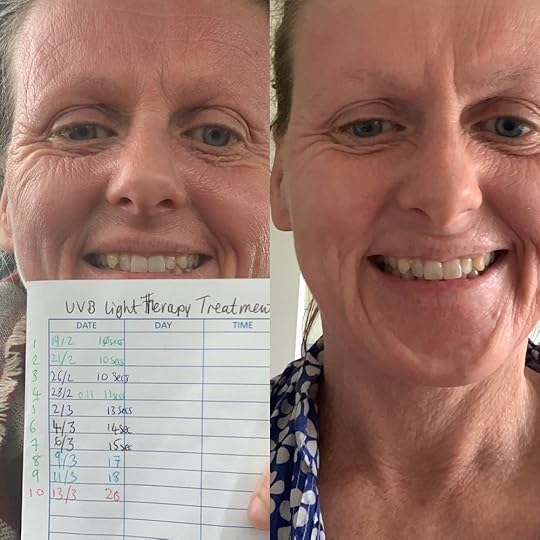 On the left after 10 session. On the right this week.
Is it working?
This is so hard to tell whilst going through TSW as the skin flare, burn, crust and flake is a regular cycle.
My first session was on 19th February and it all stopped in the middle of March when Covid-19 put a stop to it being safe to continue. I managed to do 18 sessions before they stopped.
The nurses at the hospital thought it was working from their regular observations of the redness of my skin. I feel I am slowly improving, but them deteriorating, or not quite that but still experiencing days of intense itching and the flare, crust, flake cycle. These have got easier though and I do feel I am healing. Is it UVB that helped? It’s impossible to prove this for sure.
Would I have continued healing anyway? Who knows.
I think my face is slowly healing from my hairline and ears forwards. I’m still getting really itchy, still getting flares, but recovering fast and seeing some really lovely smooth skin coming through.
In the photograph above I think you can see a difference on my forehead and around my eyes. Less creases, wrinkles and smoother looking.
I’ve now started the treatment again since lockdown has eased. Annoyingly it has to start back at the beginning so I started last week on 10 seconds again. They hope to take me up to 30 seconds.
Is anyone else doing UVB therapy for eczema? Has it helped? Anyone tried it during TSW? If you’d like to try it please feel free to ask any questions and I’ll do my best to answer them
May 15, 2020
Moisturising vs Moisture Withdrawal for TSW
If you’re going through Topical Steroid Withdrawal (TSW) or living with active eczema you’ll know how difficult it can be to work out what’s right for your skin. If it’s oozy do you let it dry out? If it’s dry do you moisturise and what should you use?
There is so much advice out there and everyone seems to be diving into moisture withdrawal, but I’ve really struggled with it. My skin gets so dry, sore and painful and when I try not to use any moisturiser everything just deteriorates and I’m in agony. I scratch more and do more damage. I itch more and just cannot ignore the itch scratch call!
So I’ve decided to be kind to myself. It’s OK to moisturise. It doesn’t mean you’ve failed. And I’ve noticed that I’m using less and less as my skin heals.
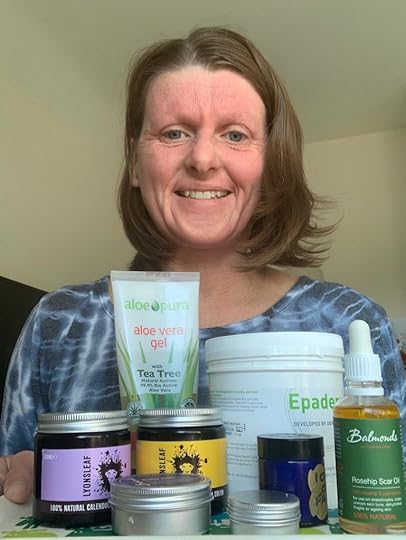 These are the products I’m using to heal, soothe and moisturise my skin during TSW
I’ve also recorded a little video for you here explaining a bit about NMT, my TSW journey and how I’ve been coping with my skin during TSW.
So what moisturisers do I use?
99% Aloe Vera with tea tree – I put this on if I think it’s in danger of getting infected, is oozing or weeping. This can sting a bit at first but it eases off and has really helped me cope with my wrists, which were really broken, oozy and hard to heal.Epaderm – The only thing I used from the start, all over, after my bath and at night, covering with tubular bandages or bandages to stop me scratching. I find Epsom salt, bicarb and oat baths really helped.Balmonds – I find their products soothe and are gentle enough for my very sensitive skin. I love the Rosehip oil because it’s so simple and the tea tree balm on really sore areas. Also their Skin Salvation and Lavender baby balm. Visit the Balmonds website and use code WHATALLERGY for 20% off.Lyonsleaf – Another lovely independent brand who grow their own herbs and make lovely ointments and balms. I love their calendular and zinc cream to soften very dry scaly skin and help it to flake off and their new marshmallow balm which is so moisturising.I tend to apply Epaderm over the top sometimes when I’ve used Balmonds and Lyonsleaf, just to really slather on the moisture, then I bandage really troubled areas of skin.
It’s such a confusing quandry and I’m always reluctant to offer advice or tell people what to do. I’m not a doctor. But I can share what I do myself.
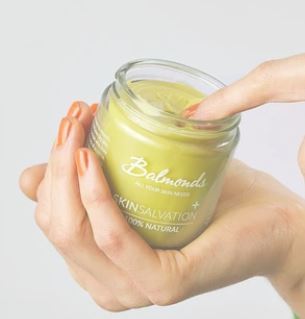 Use code WHATALLERGY for 20% off
Just to really confuse things, some days my skin feels so calm and comfortable that I don’t use anything on it at all. Over time I hope that my skin will be able to self lubricate but for now, I’m helping it along as much as I can.
Moisturising is also one of my scratch avoidance tactics as often I find I’m itching because my skin is dry.
I have not been paid to write this blog post. I’ve written about the brands mentioned above because I love their products. They are both independent English companies who have been very kind to me during this awful skin journey. I have worked with both, and you can read my guest blogs here:
Lyonsleaf – Topical Steroid Withdrawal and skincare Balmonds – How to get through TSW: Ruth Holroyd’s Sleep Tips for Eczema prone skin.
I will also be joining Rebecca Bonneteau for our weekly Monday afternoon chats to discuss ‘Natural skincare’ at 3pm on the 18th May. Find out more here. Use the link to book and join us on Zoom every Monday at 3pm.
Still interested in moisture withdrawal?
You can find out more in this blog, written by Harriet Hammond, a fellow TSW survivor who has been through the process herself. Read How to get through TSW: No Moisure Treatement (NMT)
You can also watch this brilliant video sharing Ahmed’s experience with TSW and NMT.
Possible downsides to NMT
Hydrate your skin – I feel that keeping hydrated with plenty of water and fruit is beneficial to the skin. Keep skin clean – I have tried to reduce the bathing, as the bath was the only comfortable place at one point. I can now just wash the important bits and let my skin do its thing sometimes, but the Epsom salt baths just seem to calm inflammation, reduce redness and keep my skin healing. It’s also important to keep skin clean to avoid getting infections during TSW.Fruit and vegetables – I’ve been eating lots of fruit and vegetables to help my digestive system. These foods are moisture rich and will help hydrate the body and are also easier to digest. Complicated – I know this is a stupid reason to not do something, but I’m so busy with work and my blog, and writing a book that I’m not sure I can manage counting the water content of everything I consume. I need my life to be as simple and stress free as possible and just feel this would put added pressure on me.It’s painful – Perhaps I’m wrong and there is no gain without pain, but living alone and struggling with the pain of the flares, I feel that making this journey more painful is not going to help me. I’m going for self care, learning to love my skin and restful pastimes.
I can see that my skin is healing. I am moving in the right direction. Who knows whether I would heal quicker doing NMT. No one knows the answer to this. So I’ve tried to choose the best path for me.
Have you tried and given up like me? I just feel my skin feels calmer and less painful, especially when it’s sore after a flare and the skin splits open. Sometimes it hurts to open my mouth, so I use balms and emollients to soothe and smooth my journey.
What do you think? I’d love to hear from you guys. Do you do NMT or do you moisturise and what do you use on your skin? I’d love to hear your views on this.