Ruth Holroyd's Blog, page 26
December 10, 2020
Why I love The Free From Awards
This is just a little bit of a lovein for these awards. I absolute admire and need them. I tell so many people about them all the time because they champion and showcase so many amazing free from products. I have discovered so many new companies through them.
The awards cover food and skincare and I’ve been lucky to be involved as a judge for both for many years now.
As someone living with food allergies and eczema, I’ve discovered so many new products through these awards. Look out for their distinctive yellow logo on freefrom foods when you’re out shopping.
Have you visited their website yet?
Free From Food Awards
 https://www.freefromfoodawards.co.uk/
Established in 2008, The FreeFrom Food Awards are the UK’s ONLY award for freefrom food and drink.
They celebrate the very best in freefrom and assures that a product has been rigorously taste tested and has compliant/good labelling. Food and drinks that win these awards are seen as benchmarks in the business; small producers and supermarkets compete on a level playing field for these coveted awards.
Visit the Free From Food Awards website.
Free From Skincare Awards
The only awards focusing on ‘free from’ cosmetics and skincare products — with two annual awards.
The winners of the Free From Gift Awards 2020 were announced on 24th November 2020. Click here to see the full results.
The Free From Skincare Awards 2021 will open on 1st February 2021. Visit the Free From Skin Care Awards website.
Judges perks
Being a judge at these awards is so much fun. We get to taste so many tasty foods, anonymously and blindly and together we vote on which we prefer. The process is complex, we do see the ingredients because many judges, like myself, have life threatening allergies. We then have to rank each product out of ten and this can be tricky. When you can’t remember the one you tried first and need another taster!
It’s a lot of fun but it’s a very responsible position. I’m so thrilled and humbled every year to be invited back and look forward to these sessions. I hope we can still go ahead with judging in the new year.
The Free From Skincare judging did take place earlier this year, socially distanced, with masks, but it just wasn’t quite the same, when you can’t see the other judges lovely faces properly.
Rest assured, all of us judges take our role very seriously and we often disagree! There can be heated debates about which Crumpet is the best and why!
Follow the FreeFrom Awards today!
Follow, follow, follow, follow, follow the yellow free from logo! All the way to the Awards!
Check out their website: https://www.freefromfoodawards.co.uk/
Follow them on Facebook: https://www.facebook.com/FreeFromFoodAwards
Follow them on Instagram: https://www.instagram.com/freefromfoodawards/
And if you have a favourite Free From brand who you engage with, encourage them to enter. It’s not just for big brands and supermarkets, although we champion the ones who do it well, it’s also for the small independent companies.
Thank you all, for making free from great!
The post Why I love The Free From Awards first appeared on What Allergy Blog.


December 9, 2020
Allergic reactions to Covid Vaccine
People who suffer from ‘significant’ allergic reactions should not take Covid vaccine, UK regulators warn.
The UK’s drug regulator has warned that people with have a history of “significant” allergic reactions should not receive the Pfizer–BioNTech vaccine
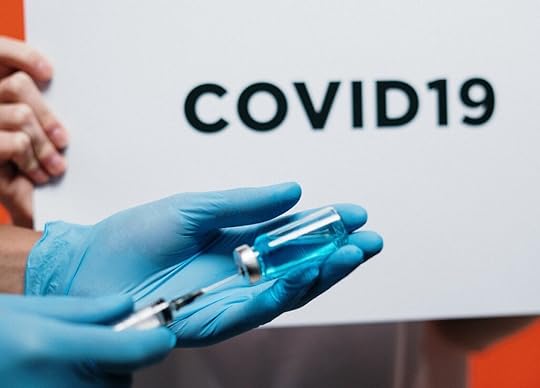
The Medicines and Healthcare products Regulatory Agency (MHRA) issued the warning after two NHS staff members who were administered with doses on Tuesday both suffered an allergic reaction.
The two NHS staff members, who are understood to have a “strong past history of allergic reactions” and carry an adrenaline auto injector with them, both recovered after receiving the appropriate treatment.
It remains unclear what element of the vaccine the two staff members were allergic to, while The Independent understands that officials were not aware this would be an issue.
Professor Stephen Powis, national medical director for NHS England, said: “As is common with new vaccines, the MHRA have advised on a precautionary basis that people with a significant history of allergic reactions do not receive this vaccination after two people with a history of significant allergic reactions responded adversely yesterday.”
This means that anyone scheduled to receive the vaccine on Wednesday will be asked about their history of allergic reactions.
The MHRA advice states: “Any person with a history of a significant allergic reaction to a vaccine, medicine or food (such as previous history of anaphylactoid reaction or those who have been advised to carry an adrenaline autoinjector) should not receive the Pfizer/BioNtech vaccine.
You can read more in the Independent online here: People who suffer from significant allergic reactions should not take Covid vaccine.
Are you worried about the vaccine? I’m scared of taking anything so new and untested, it just worries me.
Maybe it’s partly due to my experience with topical steroids and a growing mistrust of those medical experts who appear to ignore my concerns as a patient. And it’s not clear yet what element of the vaccine caused the reaction.
Will you be getting the vaccine?
Image source: Photo by cottonbro from Pexels
The post Allergic reactions to Covid Vaccine first appeared on What Allergy Blog.
December 8, 2020
Almond allergy #101
I lived my whole life thinking I was allergic to almonds but never quite knowing for sure. I knew I’d been exposed to them by mistake in a snack bar years ago which contained nibbed almonds and I didn’t react.
At the time I continued to avoid them because I was too scared to risk it and worrying about cross contamination. Allergy blood tests recently confirmed – I am not allergic to almonds!
This blog explores the almond, what is it? How do you avoid almonds, hidden sources, cross reactivity and why I can eat almonds but not other nuts!
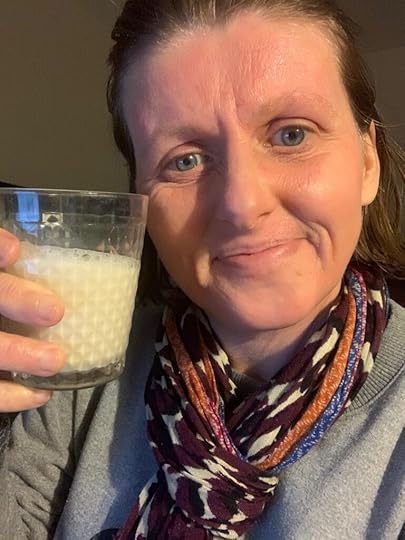
Now I wonder, have I ever been allergic to almonds? Or have I been following doctor’s advice and avoiding all nuts after my allergies to peanuts, cashews and walnuts were diagnosed. I knew that I reacted to every nut I’d ever come in contact with so I just erred on the side of caution and avoided them all.
There are some nuts I don’t think I have ever eaten; Brazil and Pecan nuts!
So despite being allergic to ALL the other nuts, almonds can now be my friends. I did some very careful reintroductions, starting with a tiny bit of almond milk on my hand, then on my lip. Nothing happened. I then tried a tiny bit of almond milk and again, I didn’t react.
Now I am drinking almond milk and eating almonds. But I am VERY careful! Some almond products could be unsafe due to cross contamination. We’ll come to that a bit later in more detail.
Just to add, I love almond milk and am just fascinated with how my body can differentiate and allow me eat almonds but be able to spot other nuts a mile off! A mere whiff of peanuts has my senses tingling and my body on high alert!
But maybe it’s not so crazy. I did a bit of research into what almonds really are.
What are almonds anyway?
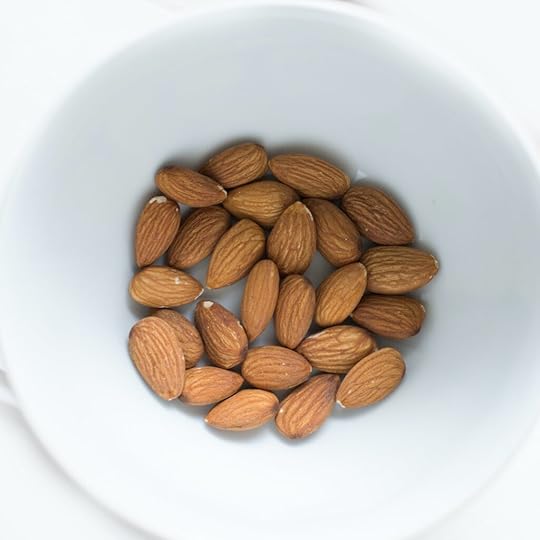
Almonds or Prunus dulcis to give them their latin name, are the oval edible nutlike seed (kernel) of the almond tree, which grows in a shell. The almond tree is related to the peach and plum. So guys, they’re not actually nuts! They are technically known as a Drupe, not a nut
But neither are peanuts, they’re actually legumes. Go figure that one out. Although it has been discovered that the protein makeup of peanuts is very close to the rest of the nut family.
Understanding the origins helps us to understand why I might be able to eat almonds fine, but not other nuts.
Other nuts and cross contamination
Due to the way nuts are handled in the production plants where they are dried, cleaned, nibbed, hulled and packaged, there is a very large chance of cross contamination. Since almonds are farmed and treated very much like other nuts they are handled and processed in the same factories as other nuts. These large places may not have strict allergen safety proceedures so there could be traces of any other nut on any shelled and hulled almonds.
So with that in mind, I would only buy almonds still in their shell. And I have discovered that almond milk is safe.
But look at the packaging of any snacks, cakes, biscuits etc. that contain almonds and no other nuts and they will undoubtedly say ‘may contain nuts’ or a more specific, ‘may contain peanuts’ for example.
It’s frustrating but it’s just how it is. So I plan to experiment making my own nut butter when I have time.
Oral allergy syndrome
Almonds can also cross react for people who also get hay fever from birch pollen. Oral allergy syndrome (OAS) is less serious than a food allergy and symptoms are usually only affecting the mouth, causing itching, swelling of the throat. The reason this happens is because the birth pollen is very similar of molecules found in almonds. This is usually not a life threatening reaction and many people find that they can tolerate the food after it’s been cooked. Other trees which cross react with almonds include:
PeachPlumLatex allergy can be related also
If you have any reaction that worries you and that spreads to affect more of you body that just your mouth seek medical advice. In rare cases OAS can cause anaphylaxis and become more severe over time.
Hidden sources of almond
Many people are allergic to almonds and they can be found hidden in lots of other foods and drinks. Here’s a list of things to watch out for:
Many gins are distilled with almondsPeach schnappsMany skincare products may contain almond extract, oil etc.MarzipanCurries, particularly Korma, Peshwari NaanChinese, Thai and Indian foods use almondsAmaretto and other liqueursBakewell tartsAlmond paste, flavouring and essence can be used in cakes, biscuits, baked goods.
Are you allergic to almonds? Are you also allergic to other nuts? Or do you also react to foods in the almond family? I’d love to hear your stories on how you discovered your allergy, how you manage it and any hidden sources I’ve missed from here!
Photo by Keegan Evans from Pexels
References
The post Almond allergy #101 first appeared on What Allergy Blog.
December 7, 2020
Join me for an allergy coffee morning
I will be the Expert Patient Allergy guest at the next talkhealth coffee morning on Friday 18th December at 11am.
APOLOGIES TO ANYONE THINKIGN THIS WAS ON 11TH DEC, I GOT MY DATES MIXED UP… TIME NOW UPDATED AND CORRECT!
I’ve been to a few of these talkhealth coffee mornings now and they’re lovely, warm, funny sessions.
Allergies are a serious subject but we’re going to sit with our coffee, cake, biscuits and have a chat.
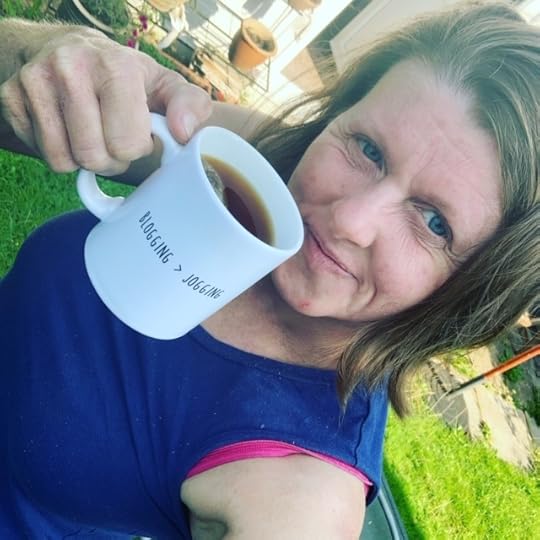 One of my favourite mugs! But which one will I have on Friday?
It’s a safe place to ask the questions you’ve been wanting answers for, to share your frustrations and ask for advice.
I look forward to seeing lots of you there and best of all, it’s free to attend!
To book your place visit the talkhealth website here: Allergy Coffee Morning.
If you have any questions you’d like to submit please email the team at talkhealth info@talkhealthpartnership.com
The post Join me for an allergy coffee morning first appeared on What Allergy Blog.
December 3, 2020
Scratch Covid – don’t make rash decisions!
Apologies to anyone coming here for some serious journalism and well research blogging. I received this on one of my many Whatsapp groups and in my sleepy morning state I glanced at it and thought, ‘Oh this might be a cool article to craft a blog around…’
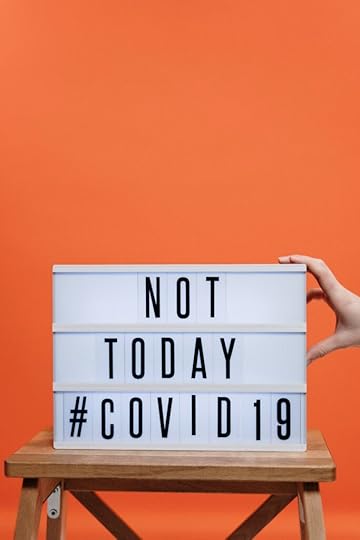
And apologies I don’t know the source, (if you do know the source please let me know) but when I read it properly I realised it was some Covid humour! We all need a bit of humour right now.
Medical experts in London today were asked if it is time to ease the COVID lockdowns.Allergists were in favour of scratching it, but Dermatologists advised not to make any rash moves.Gastroenterologists had a sort of a gut feeling about it, but Neurologists thought the government had a lot of nerve.Obstetricians felt certain everyone was labouring under a misconception, while Ophthalmologists considered the idea short-sighted.Many Pathologists yelled, “Over my dead body!” while Paediatricians said, “Oh, grow up!”Psychiatrists thought the whole idea was madness, while Radiologists could see right through it.Surgeons decided to wash their hands of the whole thing and pharmacists claimed it would be a bitter pill to swallow.Plastic Surgeons opined that this proposal would “put a whole new face on the matter.”Podiatrists thought it was a step forward, but Urologists were pissed off by the whole idea.Anaesthetists thought the whole idea was a gas, and Cardiologists didn’t have the heart to say no.In the end, the Proctologists won out, leaving the entire decision up to the assholes in politics.
So I thought I’d share this one, because it’s actually quite clever and it made me laugh.
If you’re like me you may be finding this second lockdown really tough. I don’t know why, Maybe because my skin is flaring a bit – but nothing I can’t handle. Maybe it’s the dark nights and winter weather. Maybe it’s living alone and feeling a little bit lonely.
Maybe it’s all of those things. And I am so grateful for everything I have in my life, I really am so lucky. I’m busy with work, I wrote a book that I’m really proud of and my skin is healing. But I just feel so overwhelmed. I am so over this now. Read this blog from one of my clients Paul Halsall, who is a bit of an expert in mindfulness, “Lockdown 2.0 feels worse than Lockdown 1.0 and what you can do about it (5 tips)”
So I am taking some time out. Planning some days off. Organising walks or runs on those days and working on just taking care of myself. For me that means long baths, reading, writing (book two is coming finished and being edited – so exciting) yoga, catching up with friends and family and early nights. Also cooking healthy meals and baking! All perfect pastimes for long winter days and nights. I am also loving Netflix, Podcasts and Audiobooks.
So I hope you enjoyed some humour on a Thursday evening.
Take and care and I hope you are all doing OK.
Photo by cottonbro from Pexels
The post Scratch Covid - don't make rash decisions! first appeared on What Allergy Blog.
November 23, 2020
How to report topical steroid addiction
If you’re reading this there is a chance you’ve used topical steroids for eczema and perhaps some of you are going through topical steroid withdrawal, as I am.
But how many of us have actually reported the medication we used to the appropriate organisations?
I know I haven’t. It just never occurred to me.
And because we are made to feel that we misused these medications we feel like perhaps it was our fault.
We raise it with our dermatologists and doctors and it’s swept under the carpet.
Like if we ignore this problem it will go away.
But TSW is not going to to go away.
Now that I can see how much my skin has improved, and continues to do so I feel I need to take action. And now I can look back at the side effects of topicals steroid withdrawal and see what a truly brutal withdrawal it was. There are side effects and there is losing two years of your life to recovery.
I’m exaggerating, but I certainly put my life on hold for six months completely when I could not work or do much. I have definitely put my dating and relationship life on hold for over two years. I didn’t sleep properly for well over 15 months. All because a medication that was supposed to fix my skin stopped working.
So I urge you all, if you are in the same boat, to report these problems. It could be one way that we can get people to hear us. Because at the moment we feel like we have no voice.
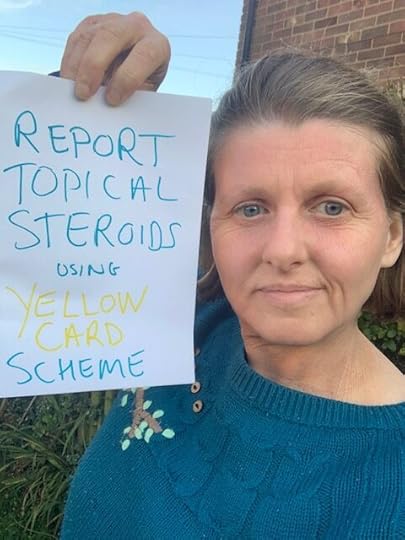
Use the Yellow Card Scheme – UK
In the UK you can report a problem with medication with Gov.uk via the Yellow Card scheme.
Select the first option – Side Effect to a medicine (arguable could also be Defective medicine but I went for the first option)It’s a lengthy form and you may need your medical records to hand to know when you first started using topical steroidsI may do another form for ProtopicPossibly one for Methotrexate which I think gave me shingles, but I can’t really prove that…
And in America
In the USA you can report to the US Food and Drugs Administration (FDA)
Reporting medication in Australia
And in Australia, contact Health Direct.
You can also report directly to the Therapeutic Goods Association (TGA) in Australia. All you do is complete the online form.
I haven’t done this research for other countries bur similar schemes must be available.
Make your voice heard.
Report your addiction and the lack of recognition, support and guidance.
We have to stop the over prescription of topical steroids for eczema. Long term use of these creams is not good and is causing a potentially massive problem in the future.
The post How to report topical steroid addiction first appeared on What Allergy Blog.
November 21, 2020
Tachyphylaxis – when the drugs don’t work
There isn’t a satisfying word for this. A word to describe what’s been happening to me over the last few years. We describe it as Topical Steroid Withdrawal but that’s just not catchy. It’s a mouthful and I have to explain it often, not that I mind, it’s my favourite subject after running and allergies!
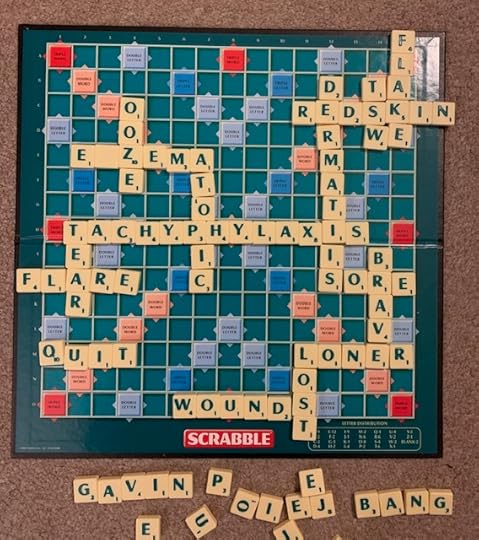 Hours of fun playing Eczema Scrabble
We have the same problems in the allergy world with terms like anaphylaxis, intolerant, sensitive and allergic. These words are interchangeable and are used in the wrong context all the time.
Read ‘Nowt to do with hay or fever’ here.
TSW is the same. It’s still pretty unknown as a term, even doctors don’t recognise that it’s real, but here are a few ways to describe it such as red skin syndrome, resistant atopic dermatitis, eczema, topical steroid addiction and topical steroid withdrawal. But let me just say, TSW is not eczema, nothing like it. Oh how I wish I had never used them.
I do feel like the numbers going through it are growing but since it’s not a recognised condition amongst the medical profession it’s a struggle to raise awareness and there isn’t much research into the condition.
My good friend Cara has blogged about what we should call Topical Steroid Withdrawal. Read more here in Thisisnoteczema.
Am I experiencing tachyphylaxis?
I spoke to my dermatologist recently and asked him if there was anything in the world of dermatology that did recognise that steroids can stop working, and in fact can cause adverse affects.
He told me there was and it’s another tricky word to get your tongue around. I don’t really want another -phylactic to my name!
He told me it could be tachyphylaxis and this is now on my medical records.
This is what tachyphylaxis means:
“Tachyphylaxis is the rapid decrease in response to a topical steroid due to repeated use. Overuse of steroids can cause the skin to develop a tolerance to the drug, rendering them useless. When this happens, people will often increase the dosage or apply the steroid more frequently, which only increases a person’s tolerance to the drug.”
verywellhealth.com
However in another study it said, “In most patients, treatment-resistant AD is most likely due to poor adherence to treatment rather than loss of drug responsiveness.“
So implying they’re not working because we used them wrongly. Easy to blame the patient but it’s not helpful.
We used them exactly how we were supposed to use them. Some of us may have used less than prescribed, that was certainly my experience. I always felt unhappy about using topical steroids and treated my skin with the least amount possible. Way less than the doctors prescribed.
But others used them too much and admit that they probably did this. Others used them exactly as prescribed. All of us have had the same problems. There is a correlation between those who erred with caution, those who followed guidance to the letter and those who upped the dose when it stopped working. Despite how much steroids we applied, we still have TSW. It isn’t the same for everyone. Some only used the creams for a short time.
There are no warnings with these topical steroids that overuse can cause addiction.
There are no warnings that using them could leave us with eczema worse than what we started with.
Read ‘Topical Corticosteroids for treatment – resistant atopic dermatitis’
Topical Steroid Withdrawal is an Iatronic condition which affects the whole body, where previous eczema and atopic dermatitis had only affected local areas. Despite steroids only being used on particular parts of the body, TSW typically affects the whole body indiscriminately and causes widespread inflammation, redness, oozing, crusting and flaking.
You can find out more on the ITSAN charity website.
And also the Scratch That website, created by five women who have healed from topical steroid withdrawal which pulls together lots of resources.
We have only scratched the surface but we are not going ot stop.
We know what’s happening.
But the medical profession refuse to accept it’s happening.
They call us steroid phobic or tell us we used the steroids wrongly.
But we are healing, slowly, one by one. We are warriors.
And we will not stop campaigning and talking about this until we see change.
We don’t even have the words to describe what’s happening so we will use TSW. And if you hear anyone saying they are considering topical steroids for their skin, tell them about us. Tell them to google TSW or topical steroid withdrawal.
Ask them to pause before using this drug, this toxic, dangerous, insidious innocent looking cream that could break your skin and the organs in your body worse than you could imagine.
Tell them we have a word for this. But we are looking for a better word. And we will wait until the medical profession accept this and maybe they will call it something else.
For me, I am so happy to be steroid free for 18 months now. Never felt better. still healing but thank you to those who told me what was happening to me. Thank you to those people who commented on my blog. I was in denial for years but I listened.
The post Tachyphylaxis - when the drugs don't work first appeared on What Allergy Blog.
November 17, 2020
How to love your skin…
It often seems impossible to even ‘like’ your skin when you have eczema, atopic dermatitis, psoriasis, rosacea or any other skin condition. And let’s not even get stared on what Topical Steroid Withdrawal can do to your skin.
However, learning to love my skin and to love yourself despite what it looks and feels like has been a game changer.
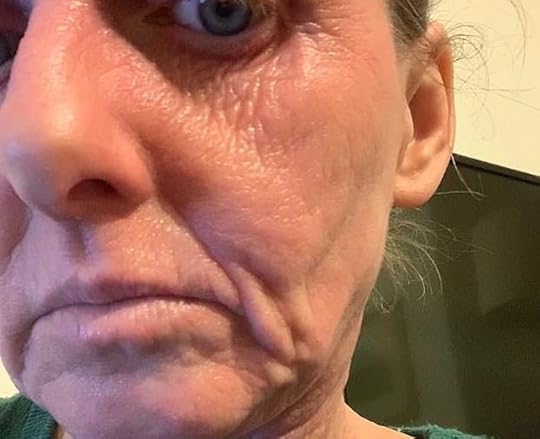 During TSW – taken early 2020. My skin felt like it had aged 20 years.
Yes it can be very difficult at times. When it feels like you have literally aged 20 years in the space of a year, it’s hard to find the positive in that.
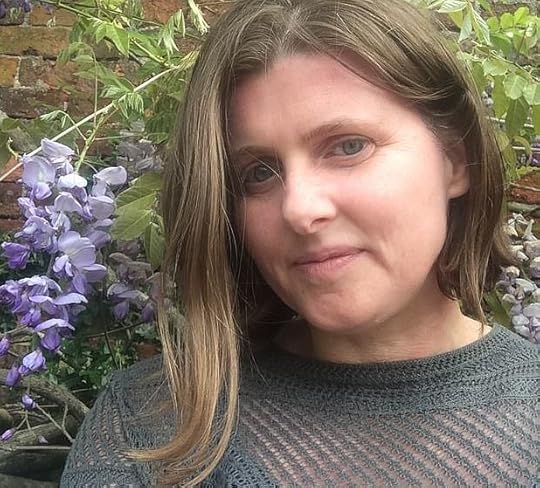 Before TSW… Protopic helped my facial eczema but steroids had stopped being effective.
When you lay in bed itching and scratching and every day is built around managing your skin, not enjoying live to the fullest like normal people do, it can make you feel despondent and hopeless.
I still have a long way to go, but I had to change the way I saw my skin in order to heal from TSW. It has been a HUGE life lesson.
When I realised during some counselling a while ago that I actually hated myself. And not just that, I was disgusted with my skin, with my face, with everything. It was a big turning point.
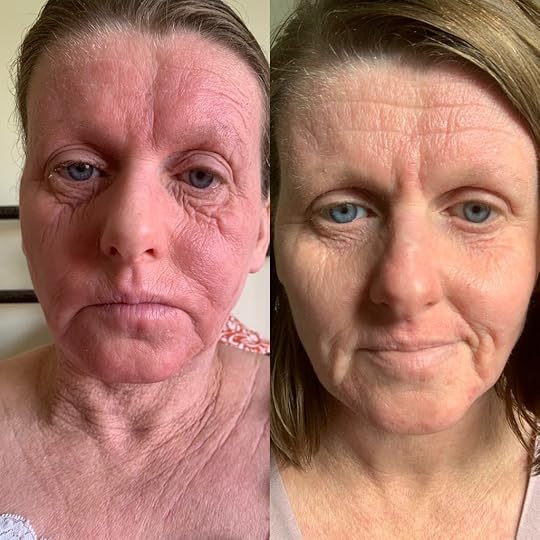 Comparing October 2019 (on the left) with March 2020.
Picture the scene.
Therapist: ‘Ruth, can you say out loud, I love you Ruth. To yourself.‘
Me: ‘Err, No. Why would I do that? I’m not saying that out loud’
Therapist: ‘I’m just asking you to say those four words.‘
Me: ‘I’d feel silly saying it out loud… ‘
Therapist: ‘Can you say them in your head, just to yourself?’
I’m now looking down, not maintaining any eye contact. There are tears in my eyes. I can’t look at her. I can’t process these emotions. I can’t say I love you Ruth, I can’t. And it dawns on me that the reason I can’t say this is because the opposite is true. I hated myself. I didn’t even really like myself much if I’m being honest.
And I never did say it out loud in that session. I just wept. For a long time. And we spoke about the voice I use to talk to myself. About the negative things I say inside my head. Because my inner critic back then was a complete and utter bitch to me. Way worse than any bully and I’ve experienced the nasty rotten side of school and workplace bullying myself. No one else has ever been as mean to me as I was being to myself.
I realised that I could find deep depths of empathy for others. I could and did speak to others with kindness and am able to empathise and talk to people quite easily. I can feel their pain, almost too much sometimes. People seem to find me easy to talk to and have learnt that the best thing to do is just to listen. Being heard, seen and accepted can help way more than advice, which may not be welcomed or helpful. Often I I have nothing to say, so I just listen.
I wasn’t doing either of these things for myself.
I wasn’t listening to my soul, to my skin or to myself. My skin had been crying out for help and I just kept on tearing at it and treating it with disgust. I was rough with my skin, I ripped it without any attempt to moderate this behaviour. I just didn’t care.
It took me a very long time to be able to look in the mirror and say ‘I love you Ruth’, and to really mean it. But I have made huge progress. I do love myself now and I’m really proud of what I’ve done, how far I’ve come and the bravery and courage I’ve found inside.
But it’s not easy. I had to fake it. You know the saying, Fake it till you make it! Or with TSW, Flake till you make it! It kind of works, but it really is a challenge. The first time I did this I cried, and the second, and the third. But over time I was able to stand tall, shoulders back, and look myself in the eyes any say, out loud, ‘I Bloody love you!’
It took me months and I would say it and inside be thinking… no you don’t. But some days I did, and other days I felt more warmly towards that part of me that cared and wanted enough to try this.
If you can’t love yourself you can’t expect anyone else to love you back! Another hard life lesson.
And you can’t heal if you hate your skin. It’s so true. And possibly one of the most important lessons to learn. You need to find a way to love yourself and your skin as if it were the most precious gift.
I know eczema is horrible and TSW is nasty, but we are not horrible and nasty. We are not our eczema and TSW.
What you look like is such a small part of who you are.
Sadly, as a nation, we are so hung up on appearance. We judge people on how they look, how they dress, how they speak, we all do it. The media, portraying air brushed stick thin women and muscled, perfectly groomed men are definitely not helping.
I started listening to podcasts and researching skin positivity. I found The Calmer You Podcast from @chloebrotheridge which is really good and also Discovered the book “I love me” by David R Hamilton @davidrhamiltonphd He explores the science of self love. and it’s so very simple, some of things he recommends. Like simply just standing up tall, putting your shoulders back and training yourself to do this as you stand, walk, move around in the day. It’s actually remarkable how much that helps.
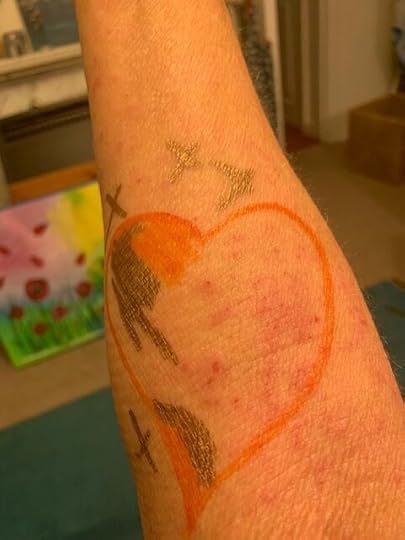 Eczema on my arm now, 18 months into TSW is manageable
I would say that now, 18 months into Topical Steroid Withdrawal, my skin is more like the eczema I grew up with and less like TSW. I now have less nerve pain, I can sleep and my skin is less oozy, crusty and flaky. Being able to sleep has made a huge difference as so much healing, regeneration and mental recharging happens at night.
I now have itchy, red sore skin on the backs of my knees and inside crease of my elbows, where I had it as a child! It’s still healing on my hands and my face. But on the whole I’m really healed. My skin is way better than it has ever been for a very long time and I am putting nothing on my skin except emollients.
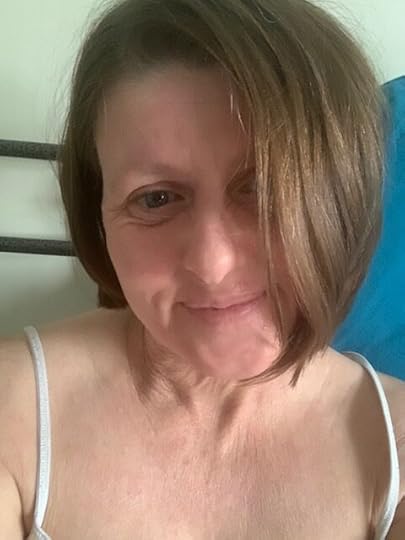 November 2020. 18 months into TSW. Not perfect but improving every week
So I’ll leave you with this. I love me. I do. I love you Roo 
November 16, 2020
Video review of my book!
I would like to thank Lindiwe Lewis, or Lindi for short. I am so blown away by this amazing video review of my new book, The Reluctant Allergy Expert: How to kill the fear that anaphylaxis could kill you..
WOW!
If you’ve been thinking about whether you need my book, Lindi has not only reviewed the book, she’s vloggged about why she loved it so much.
She has shared point by point why she loves it, from the personal stories I’ve included, the laws that govern allergies, where to find help, the psychological impact and more…
Thank you Lindi!
Watch Lindi’s video review here:
Follow The Allergy Table blog
Now I would like to shout out for Lindi.
We met last year while recording an episode of The Allergy Today podcast, which I hope will return soon… watch this space!
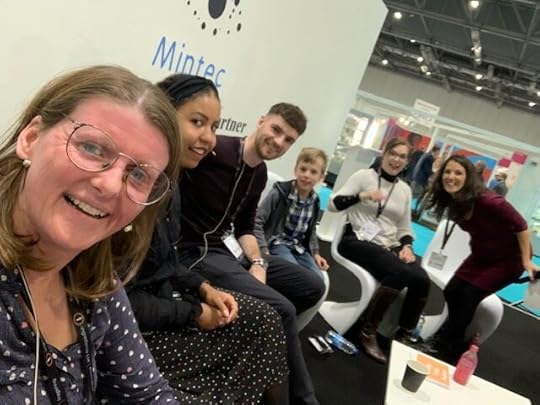 Lindi (next to me) on the Allergy Today Podcast at The Allergy Show
Lindi came on the panel for us and spoke up bravely and eloquently about her experiences with allergies. I was impressed with her professional attitude and not least because she’s so young! This girl will go far! Keep an eye on Lindi.
If you’re not already following her: I urge you to do so. I love what she does.
Visit her website – The Allergy Table Blog
And follow her on Instagram at the.allergytable
She blogs recipes, thought pieces and her campaign, The person behind the allergy has been amazing. She also shares other allergy advocates stories which are really useful, heart-warming and inspirational to read.
So I want to thank Lindi for everything she does for the allergy community. Together we can make a difference, raise awareness about allergies and educate others about what living with allergies is really like. And remember, there is a person behind the allergy!
And of course, buy my book!
It’s brilliant! Lindi said so!
The post Video review of my book! first appeared on What Allergy Blog.
November 13, 2020
The dangers of oral corticosteroid (OCS) inhalers
We all know that asthma is a serious health condition and if you are unlucky enough to have it, you’ll be familiar with inhalers for when you have an asthma attack and for preventative support.
It’s always worried me, especially since my own withdrawal from all medication to treat my eczema, including topical corticosteroids… should I be taking my preventative inhaler? I wrote about this a while ago and you read, ‘Should you use your preventative inhaler during TSW?’
I recently saw an article on LinkedIn shared by someone (apologies if it was you, I didn’t make a note and can’t remember) about OCS medication and how this treatment was bad for long term use. I’m 47and have been taking my preventative inhaler most of my life. Though in the last few years my asthma has been improving.
Read ‘Severe asthma and oral corticosteroids: Time to change the relationship’.
Severe asthma directly impacts more than 30 million people worldwide and their condition can mean a life of frequent, severe attacks and reduced lung function.
Politico
The article, which is sponsored by one of the large pharma companies Astrazeneca, points to severe health risks from long term use of Oral Corticosteroids (OCS). Yet my experience is that this is the only treatment being offered to people living with asthma.
As someone who is going through Topical Steroid Withdrawal, I stopped using all topical steroids in January 2019. I stopped using Protopic, a topical immunosuppressant in April 2019.
And I often worried about whether I should still use my preventative asthma inhaler.
The medical advice was to keep doing so. Asthma is a serious potentially life threatening condition, especially for someone with added complications from allergies.
Are OCS bad for long term health?
The article suggests that many using steroid inhalers see them as ‘frenemy’ and I certainly understand that. They keep you safe but you hate that you have to use them.
Special thanks to Anja Wolf for her help with research on this blog.
Dr Fukaya advises, “TSW occurs only on the skin. You should not stop asthma inhalers. This is very important.”
Andrew Williams, Allergy nurse agrees, saying “Not using Inhaled corticosteroids as prescribed (or poor care from your GP/asthma nurse) is one of the main causes of these unnecessary asthma deaths.”
Dr Ruth, who I follow in Instagram has also gone through topical steroid withdrawal and is still taking her OCS inhaler for asthma. She is a GP who has had severe eczema, gone through withdrawal and is now on the way to recovery. Her advice is to keep taking that inhaler.
So what are we to believe? The article clearly states that OCS prescription is reducing for many other inflammatory conditions such as Lupus and Rheumatoid arthritis, but not for asthma. Why is that? And what is the alternative? If not OCS then what?
Why is my asthma clearing up?
I also have a confession to make. Over lockdown, and since I’ve got further through my TSW journey, my asthma has been getting better. I’ve also worked hard on eating a healthy diet, getting rid of anything that might trigger allergies in my home and going very eco and natural as much as I can.
Is this just a coincidence? Or is the fact that I’ve cut out topical steroids meaning I don’t need the oral ones? Could there be a link? Has anyone else noticed this?
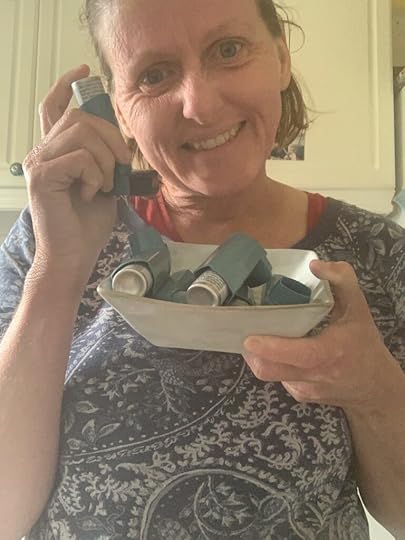
I have almost forgotten about my inhalers. I do still carry the blue one around and use a precautionary puff before going for a run, but a rarely need the blue one, and now never use the preventative one. My asthma has almost gone.
I had a minor attack this week pulling up old tomato plants in my greenhouse. They were rotting, the stems brown and dead and all this kind of fungus puff came off them, like an airborne dust and that really made me wheeze. I know I’m allergic to mould, so I hot footed out of there, took my inhaler, sat down and concentrated on my deep breathing and it went away.
I really don’t want to open a can of worms here but what are these OCS doing to us long term?
Having experienced first hand the very real and very horrific damage caused by my internal organs withdrawing from Topical Steroids I’m very concerned.
But if we don’t have our steroid inhalers, what other treatments could people turn to?
And why has my asthma suddenly healed?
The post The dangers of oral corticosteroid (OCS) inhalers first appeared on What Allergy Blog.