Ruth Holroyd's Blog, page 24
February 26, 2021
Caring for someone with TSW
Are you caring for someone with Topical Steroid Withdrawal (TSW)? Actually this message would apply to any condition that limits life, anything that affects someone, is difficult to live with, is relentless, is painful. It can equally apply to someone living with life threatening allergies. A completely invisible condition!
Does your friend, wife, sister, mother, child have eczema or TSW and is it hard for you to watch them and frustrating when you see them struggle?
And do you REALLY understand how to care for them most effectively?
I want to say first off, most of these things I’ve mentioned below come from a place of kindness, of wanting to help, or seeing someone suffering and wanting to reach out and be there. And we do get that.
Most of the time I welcome the opportunity to share about eczema, TSW or whatever it is. And I do, often and whenever asked I’m happy to explain what’s going on if someone asks, but it’s really hard sometimes because this kind of thing happens SO MUCH and sometimes we are just too tired to keep on explaining and pushing down our feelings of shame, of failure and of being a burden. Anyway I hope this is useful. And I am eternally grateful for all my family, friends and support network who are amazing.
 Top ten tips – what not to do or say!
Here are my top 5 tips for caring for someone who is going through Topical Steroid Withdrawal. I’ve done a little insta live that goes into more detail so please watch that too. But in a nutshell:
Don’t ask us when we will get better. We don’t know. No one does. It could take months, years, MORE YEARS. It will take time and we all just need to be patient.Don’t ask us what triggered this latest flare. Chances are that again, we don’t know and these cycles of healing happen regularly until we heal. Regardless of anything else.Don’t say anything at all if you’re not sure what to say. Just ask if you can help. This will make us cry because we don’t get asked this often.Do not offer us advice, e.g. Oh try Vaseline, it got rid of mine, or any other magical cure or treatment. We have tried everything and spent a fortune doing so.Do your own research so you understand the condition – Don’t expect us to keep on explaining why we look like this to you. Please, if you really care about someone, take some time to find out more about what they are going through.Don’t tell us to stop scratching! Don’t you dare! Don’t even think about it. We try to stop all day long. The itch is contact and relentless and we try so hard. Sometimes I actually think it’s OK to have a scratch, to let out some ooze quicker, to remove some skin flakes. Who on this planet is perfect and can ignore all the itch triggers? No one!Don’t say, “Oh but it looks fine today” or “It doesn’t look that bad” because we have probably been in agony, struggled to make ourselves presentable, not slept for days and are dreading the next flare… I could go on. But we do a lot of things that save you from seeing us at our worst. We try to hide the worst from you.Don’t say, “Oh I have eczema” – this is NOT eczemaDon’t judge us for our treatment choices. This journey is individual. Some people use immunosuppressants, some try Biologics, Some taper of steroids and need oral steroids, some do Moisture Withdrawal, some of us moisturise. None of us want to be judged. This condition is brutal and we will all get through it in our own way.Don’t ever say, what’s up with your skin? of words to that effect. If it looks bad it will probably be painful and uncomfortable and we may be really struggling. Just don’t mention it. You can bet we are 100% aware of it so keep these kinds of statements or comments to yourself. The 3 question checkAnd here is something I learnt which I think is really helpful to remember, every time you feel like saying something to someone or about someone behind their back.
Is it true!Is is helpful?Is it kind?If the answer is NO to any of the above, it’s not worth saying.
Have I missed anything?
I’d love to hear your thoughts. And hope I’ve not offended anyone. I really don’t want people to be scared of asking questions and asking us how we are, but this whole TSW thing is relentless and monotonous.
And unless you really want to know… chapter and verse how we really are, best to maybe stick to other subjects or conversation.
Thanks for listening. Love to hear your thoughts.


February 21, 2021
More sleep tips for eczema and TSW
Getting good sleep is essential for regeneration and healing, so if you have eczema and are going through Topical Steroid Withdrawal (TSW) you need to work on your sleep habits.
I’ve written about this before in 30 sleep remedies for eczema and TSW and have spent many hours trying to get the best night’s sleep possible and most of the time failing! It seems the more you obsess and try to get this right the harder it becomes.
And if you’re in TSW at the moment, stuff is happening at night. It just is. I don’t know what but the skin, the organs, the body is working hard at night to heal and this seems to mean all TSW people struggle to sleep. And that’s without night-time being the time being the most itchy time of day for eczema.
Writing this having had another poor night’s sleep you might think I’m pretty unqualified to comment, but getting rest when you are going through Topical Steroid Withdrawal is a life’s art! I’m getting really good at it, and that doesn’t mean I get eight hours every night, it means I’ve learnt how to prioritise rest, learn what activities contribute to a more restful mental state and how to make the most of broken sleep!
Here are my latest additions to my huge list of sleep hacks linked above.
Water – Your skin does dehydrate at night which might explain why we can be more itchy at this time. One thing I struggle with is waking up in the night feeling thirsty and a little nauseous. I take a flask of water to bed every night, keeping it safely on the floor by the side of my bed so I can reach for it without getting out of bed. I find it really helps me feel more comfortable and I can often drop back to sleep.Ice – This is a great tip I got from TSW Harriet on Instagram. I’ve always found ice a great way to cool down at night, but Harriet suggests having a box by the bed with more than one ice pack inside it. You can reach for a new one when the first one has warmed up and they stay colder if kept together. If, like me, you’re on three ice pack nights, this is really useful, as again it means you don’t have to get up and so wake your body up too much.Snatch sleep – The weird thing about TSW is that many of us just can’t sleep well during normal night-time sleeping hours. With this in mind, I’ve shifted my day so that I don’t generally start work until 11am. This gives me time to get about 4-5 hours if I’ve only managed to fall asleep by 3-4am. I found that trying to set alarms, force myself up and working by 9am was almost impossible, as sometimes I’d not have fallen asleep until 6am. With a 7am alarm this is torture.Calm meditations and sleep stories – Probably one of the most useful apps I have ever used. I try to do a ten minute guided meditation before bed and also regularly check in with my mood on the app. When you do this you will be pointed to special tailored master classes and sessions based on various subjects, such as anger, anxiety, fear, loneliness. I’ve found it really helpful to listen to positive and helpful focused sessions that in turn help me rest more calmly instead of going to bed stressed about something.Don’t stress it – Knowing that almost all of those going through TSW struggle with sleep, if you can just accept this and go with it, it’s easier to cope with. If you are resting you will be getting some benefits from the rest. It’s amazing how little sleep we can get by on. Trust in the process and know that one day, you will be able to sleep again.Hot flush is OK – One thing I get nearly every time I try to sleep is a hot rush up over my face, every time and almost the minute my head hits the pillow. I’ve no idea why this happens. And it comes over me again and again throughout the night. It’s like nerve pain, also called the zingers and is worse at night. And whilst it’s uncomfortable it passes. So I have learnt to breathe through this, not to focus on how horrible it feels, try not to get upset and basically just ride it out. It does pass and it comes and goes, but eventually you will get some sleep.I hope this helps in some way. Lack of sleep is one of the hardest things to live with throughout Topical Steroid Withdrawal. All the other symptoms could be born more easily if we could just sleep well at night, but we don’t.
What do you do to sleep better? Do you find night-time hard with your eczema and TSW?
Photo by Negative Space from Pexels
February 18, 2021
22 types of eczema skin
It struck me the other day that what one person thinks of as eczema can differ from another. The many skin deteriorations of eczema can be challenging and not what you might expect.
I’m including here also the things Topical Steroid Withdrawal does to skin because let’s face it, most people think it’s eczema anyway. And it’s all part of the skin situation we are all dealing with!
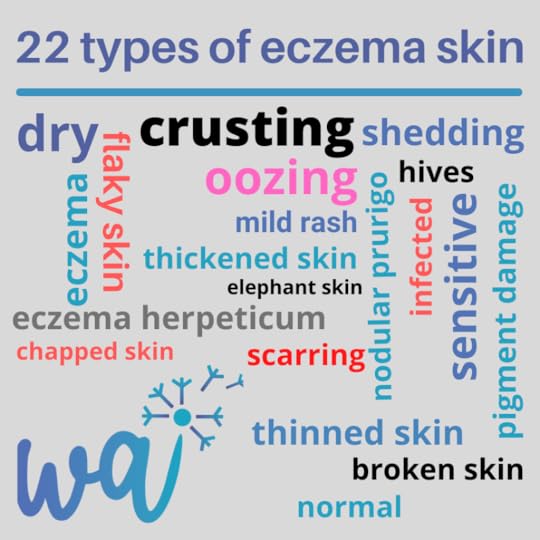
There’s actually LOADS of different things your skin can do as it progresses through the many stages of eczema, TSW and healing. Here’s some I can think of:
Mild rash – Slight redness, irritation and itchy skin. I’d suggest always trying to treat this naturally and holistically. Don’t just leap to steroids. Look for what is causing your skin irritation first.Thinned skin – One of the only side effects anyone is ever warned about with topical steroids. Skin can become paper thin after extensive use.Thickened skin – This can happen when skin is rubbed, scratched or succumbs to eczema for an extended period of time. It can be hard to shift but should heal if you find out the root cause of your eczema and treat naturally.Oozing skin – This means your body is struggling to eliminate toxins. This can be a clear liquid which comes from the lymph glands or plasma. It’s nothing to worry about as it means the skin is doing what it can to eliminate waste. If this persists you need to work out what support your body needs to help adrenals, lungs, lymph system, digestive and other organs to work effectively.Crusty skin – Often follows on from the oozy skin, this can then become covered in a thick, overly scabby crust that builds up as the skin oozes and heals underneath. It looks a bit like cradle cap but on adults with TSW.Broken skin and open wounds – all normal with eczema. Keep the skin clean and covered of very badly effected.Skin damaged by excessive scratching – The more we scratch, the more damage we do and more the skin itches, It can be very hard to break that itch and scratch cycle. If you can identify your triggers and when you itch most, you can begin to reduce the itching and scratching. It could be anxiety, stress, hot water, cold weather, central heating, your dog or cat, certain foods, mould, alcohol. Become your own detective and start to work out what is irritating your skin.Eczema herpeticum – itchy painful blisters caused by the herpes simplex virus. Broken eczema skin can become infected with this virus and can spread so needs careful attention.Infected eczema – if skin is very hot to touch, throbbing and very angry and red for more than a few days with no sign of any change this could signify infection. During TSW my skin has done this as part of the cycle of healing but goes through excessive shedding in between being inflamed and red. It’s important to recognise signs of skin going through detoxification and TSW healing and potential infection. If you are in any doubt, get it checked out. I treat mine with aloe vera gel 99% with tea tea extract. Apple cider vinegar can also work well. And finally, warm epsom salt baths can really help reduce inflammation and redness.Dry skin – dry, sand papery skin that needs extra moisture. Many people can get dry skin, sometimes in later life is skin ages. Stay hydrated and work out what triggers your skin to be dry. Find a natural emollient that helps keep your skin from getting too dry. Dry skin can be itchy so it can really help to get on top of this and find solutions that help your skin.Hives – Seems very popular during TSW and also caused by allergies, heat and irritation. Small itchy lumps that come come and disappear quickly and can be very itchy.Chapped skin – often affects the lips, where skin can become cracked open which can be very painful. Find a natural solution like beeswax, shea butter, or natural oils. Emollients can also work better than cream based solutions. Try to protect skin so if this is affecting your hands, use gloves where possible to limit dehydration and irritation.Flaking skin – Don’t need to say much about this. All skin falls off but with atopic dermatitis it can form larger flakes that struggle to fall off and appear to cover skin rather than shedding naturally as dust!Excessive shedding (usually TSW) – Like flaking but on a crazy level, just snow globe, epic flake proportions. It’s usually a sign of healing and follows on from inflammation, redness and oozing typical in TSW.Normal atopic skin – Can be healed but also susceptible to triggers that can cause flare ups, skin rashes and irritation. Some people will always have atopic dermatitis but it can be managed naturally.Pigmentation damage – Many people notice that their natural skin tone is damaged by steroid use. This is particularly visible on darker skin tones. It can repair over time but can often be permanent.Scarring – any wound or damage to skin can cause scarring. There are many oils that can help to improve and aid healing of scars. I use Rosehip oil from Balmonds.Nodular Prurigo – This is one I’ve had before. Basically very itchy lumps that when broken, bleed like Vesuvius! Mine is triggered by processed foods, alcohol and stress, but strangely has disappeared since starting TSW.Elephant skin – This happens in TSW where the skin loses collagen and become loose, causing rolls of skin to form, like an elephant. It can also be dry and thickened. It will heal in time.Nerve Damaged skin – my favourite! I get this now on my face but it affected most of my body at some point during TSW. The nerves deep down in the skin layers become damaged and it can be very painful as they begin to heal and send new messages to the top layer of the skin.Sensitive skin – people with eczema can have sensitive skin that reacts to detergents, perfumes, pet hair, dander, allergens, wool, cosmeticsAllergic skin – Any triggers or allergens can trigger an eczema reaction from food to contact allergens like dust, mould and latex.Have I missed any? Just thought it was interesting to look at all the many things skin can have happen to in the name of eczema. No two people have the exact same symptoms and when you have all this going on at the same time, it’s a lot to deal with!
What are you worst ones? Least favourite? and what do I need to add to the list?
The post 22 types of eczema skin first appeared on What Allergy Blog.February 9, 2021
Why do I eat skin flakes and scabs?
This is something I’ve never spoken about before. I’ve never even really faced up to it. Because it’s disgusting and I don’t know why I do it.
Please don’t judge me.
I’ve been so nervous about sharing this and am perhaps risking losing loads of readers and followers on my social channels.
It’s not something I think about doing, I don’t have conscious thoughts about eating skin.
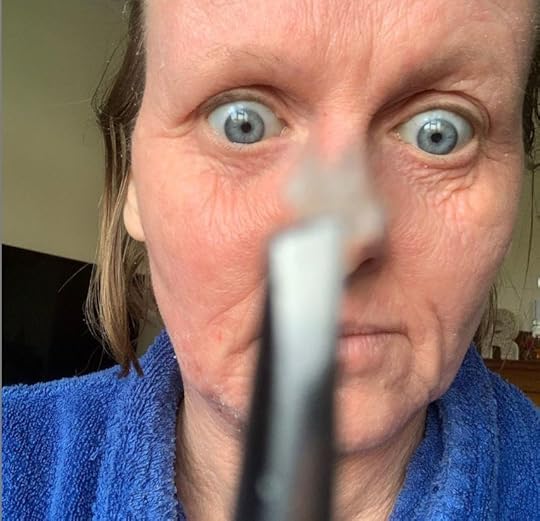
I don’t think, Mmmmm, I’ll just dine on a nice meal of flakes and scabs’, anyone? Ironically a dish I could actually prepare in my current Topical Steroid Withdrawal (TSW) state.
I often don’t even know I’m doing it. I become aware when I sense the skin flake or scab in my mouth and often spit them out. But sometimes I only realise when I’ve been doing it for ages.
And for the record, in my head, I find eating flakes preferable to scabs. Eating scabs feels more wrong. Don’t ask me to explain that one.
Excoriation or dermatillomaniaSo what is it that I’m doing? Is this a recognised condition? I found myself late one night typing into google, “Why do I eat my own skin flakes and scabs?” and of course there it was. It has names, well the picking bit does. Excoriation and Dermatillomania refer to when a person repetitively picks their skin.
Pica – eating non food substancesPica is when people feel a compulsion to eat stuff that’s not food! For instance, some will crave coal or eat things like chalk or brick dust. They often don’t know why they’re doing it but it can be a sign of some underlying condition, like a vitamin deficiency or other illness. The body knows it needs something but doesn’t generate the correct response to fix the problem.
But if my skin is in good condition I don’t even think about it. It doesn’t happen when my skin is clear and healed. So have I got these conditions?
And where did this shameful habit come from? and more importantly, how do I stop it?
Because most of the time it happens at night, and I don’t even know I’m doing it. It ends up as part of some frenzied dream place where the picking and eating of flakes or scabs is all wrapped up in something I have to do in the dream, like escape from somewhere, find someone or something or just that I need to harvest and clean the skin of any irregularity. I hate it, but I do it without thinking.
So I have been trying to understand whether perhaps there was a reason I started to do this and maybe I can help myself to stop.
Why do people eat skin and scabs?Healthline explains: Picking and eating scabs can have multiple underlying causes. Sometimes, a person may pick at their skin and not even notice they’re doing it. Other times it’s a coping mechanism to deal with other issues such as:
Anxiety (me)Anger (sometimes also me)Sadness (sadly sometimes me)Itchy (YES ME!)Self grooming (I feel like that’s what I’m trying to do)As a response to serious episodes of stress or tension (definitely me)From boredom or habit (boredom – no never. Habit? Yup!)A genetic family history of the conditionAlthough eating scabs is not harmful, obsessively picking at the skin can cause permanent discoloration and scarring. I don’t really do this, I don’t gnaw at my skin or pick and dig at it until it becomes infected and damaged. I do however, sometimes pick a scab that’s not ready to be picked but for me, that’s a sign to stop picking.
It’s as if I don’t like the scabs and skin building up under my nails somehow and have to remove them. And at night, if I’m in this kind of dream job of having to pick and eat, it’s a way of knowing whether my job is done… if there are no scabs of flakes detectable in the dark stuck under my fingernails, then my job is done and I can stop.
I know it’s gross – don’t judge me.
I don’t eat my boogers – I have standards!
But why would I see eating bogies as unacceptable and yet continue to eat flakes and scabs?
It’s like I feel relieved when I’ve done the picking and feasting but quite quickly feel shame and guilt. I know it’s not something that’s socially acceptable and I should stop. But I can’t!
Again from the brilliant Healthline website: Picking and eating skin can scabs are described as repetitive skin picking disorders or as body-focused repetitive behaviours (BFRBs). They occur when a person picks their skin repeatedly and often has urges and thoughts of picking at the skin, including picking scabs. Other examples include repetitive hair pulling and eating or picking one’s nails.
Now I’m not aware of urges to do this, but it’s definitely developed into a habit. I know these can be broken so I’m actively working on analysing this behaviour and trying to put into place more acceptable ways of dealing with what’s going on. If I can stop picking altogether that would be amazing, but for me I think it comes from being very itchy which is not something I can stop from happening. I only pick because I’m itchy and excessively flaky. I can leave scabs sometimes and am working on doing this as I know the skin heals better if the scab is left to do it’s job.
But when you are experiencing TSW the scabs and flakes are profusely appearing and shedding. It’s not like a normal scabbing situation.
Skin picking and scab eating is OCDIt would appear that my skin picking habit and compulsion to eat skin flakes and scabs is listed under “obsessive compulsive and related disorders” in the Diagnostic and Statistical Manual-5 (DSM-V). This is the manual that psychiatrists use to diagnose medical disorders.
I would never have previously classed myself as having OCD.
However I do remember as a child I was told that I used to pull out my hair and eat it, which caused problems with compacted stools. I’m not sure how this was dealt with but probably being just by told not to. Over time I guess being told not to do something harmful and shameful and warned of the serious consequences of something must have worked. I’ve no memory of doing it.
Is skin picking and eating skin bad for you?It can lead to scarring, infections and non-healing sores. I’m not sure this is the case for me, but if the compulsion is always there and impossible to stop it’s easy to see how this could develop into a very real problem.
It can also spread viruses, disease and food poisoning, amongst other things. The less you tough your mouth and put your fingers near your mouth the better.
We are in a pandemic after all… Another reason to stop!
It’s also a very disgusting and anti-social habit. If you ever see me doing it please slap me! I’m kind of joking, I feel that berating someone with severe eczema when they scratch is unkind and unnecessary, but this eating business… urgh… it’s got to stop!
How can you treat scab eating?Behavioral therapiesThere are few ways of treating this condition:
Cognitive Behavioural Therapy or CBT. I’ve done this before in therapy so I can see how this might help. I’ve started to look at this for myself, staring with observing and accepting that this is what I’m doing, the first step to reversing the habit. Dialectical behaviour therapy (DBT). I have no experience of this one myself so need to do some research. There are four key areas you would work through:mindfulness – understanding the triggers that make you pick, accepting them and observing when it happensemotion regulation – by identifying these triggers and emotions that make you pick and eat, you can try to change how you see this experience, how it makes you feel and what actions you could take.distress tolerance – learning to accept the urge and compulsion but no respond to it or give in to the urge to pick and eat.interpersonal effectiveness – this can be where family and group therapies can work as people help each other and learn how to support a successful outcome.I’m not quite sure what the difference between CBT and ABT are but this is now my homework.
I’ve been doing well, not with the stopping picking, but certainly with the not eating. Every little step is one in the right direction. Instead of eating any scabs or flakes I pick I’ve been trying to drop them onto the floor or put them into the bin, sink or a tissue. In the daytime this is easy to do.
There is so much dead skin from the constant TSW shedding that this isn’t bothering me. I hoover the skin up regularly as it’s like a human snow globe in here right now!
However sometimes I’m still finding myself doing it, but I’ve started to recognise it now, to catch myself, and to accept it. And not to beat myself up, just to ask myself, do I need to do that right now?
It apparently takes 60 days to break a habit so let’s see how I get on with this one.
I plan to explore getting some therapy for this too as it could be really helpful and give me some tactics and techniques that I’d not thought of before.
The nutritional value of skin and scabsAnd yes, I googled this too. The answer is nothing.
Nada.
Not even fibre. There is absolutely no benefit or logical reason to do this.
Just thought I’d share that little bit of google trivia because I know you were all wondering… NOT!
Do you pick and eat your scabs?If you think you have this condition too, there is a online resource where you can go to get help. Check out The TLC Foundation for Body Focused Repetitive Behaviours.
I will also be journaling and following my own journey so watch out for updates… and apologies if this has completely grossed you out…
I’d LOVE to hear your thoughts on this fascinating addiction!
January 27, 2021
Talking allergies, eczema and TSW
We need to talk about allergies, anaphylaxis, eczema and topical steroid withdrawal (TSW) more often. They are conditions that people are ashamed to share and talk about and this can cause a lot of shame, anxiety and stress.
This is why it’s so important to accept these things and understand how we can learn to live with allergies, eczema and anaphylaxis, all life limiting conditions that should not limit our enjoyment of life.
I am so excited to share this video, recorded last year when my skin was so much better and I met (on Zoom) with my lovely friend Vicki. In her Hopeful Conversations series she speaks to people who have faced adversity, challenges and illness with positivity and compassion. I’ve watched a few of the others and they are inspirational. It was an absolute privilege to be invited to take part.
Here is our Hopeful Conversation… I hope you find it interesting.
If you haven’t come across Vicki before, we first met when she was The Free From Fairy and she sells her gluten free flour online. I can highly recommend it. I always have some in my cupboard and this reminds me I need to make my favourite cookies and some bread which I’ve been too scared to experiment with.
She also offers psychological support as a wellbeing coach. Visit her Free From Limits website here.
Back when I was in the depths of TSW she offered me a free counselling session and I can honestly say I’d never thought of things before in the way Vicki does. She has a way of explaining things that is completely different. It did confuse me a little at first but when I went away and examined how it made me feel I realised she was right, I was trapped behind layers and layers of wrong beliefs, self doubt and confusion. It wasn’t my fault that this had happened, it just does. It happens because we experience difficult things, trauma and adversity and we accept things we are told. She helped me to see things differently and learn to question those unwelcome thoughts.
Instead of berating myself every time I felt low, questioning myself or giving myself a hard time, I should welcome these feelings. To sit with them. To just be with them. And then to ask them, so what do you want from me now? These circling thoughts, whilst often uncomfortable, are essential to keep us safe, ensure we are alert and vigilant when we need to be, it’s how the fight or flight mechanism works. If we didn’t have them we’d have been eaten by the first saber-toothed tiger that walked past. Now we lead such comparatively safe and comfortable lives we don’t need to be anxious about everything. And it is possible to learn to just let these thoughts come and go. Eventually you can learn to not get involved with them at all, although I’m not quite there yet.
So now, when I have a panic attack I think of that saber-toothed tiger. I tell myself I’m safe and it will pass. I think I am becoming that saber-toothed tiger and when I get through this horrible journey of healing my skin I’m going to be dangerous. I won’t be sitting down and letting what happened to me happen to others. I am going to fight for better eczema care and treatment.
Thankfully I don’t have panic attacks so much now but I did have one on my sofa, safe at home, for no reason at all recently. It wasn’t pleasant, but slowly it passed and my breathing went back to normal.
Anxiety about allergies and anaphylaxisI think a real turning point for me and my anxiety was to realise that I wasn’t anaphylactic all the time, just when I ate the allergen.
And that anxiety was there simply to keep my safe. I have to accept that I have allergies and need to be vigilant to stay safe but they don’t need to limit my life.
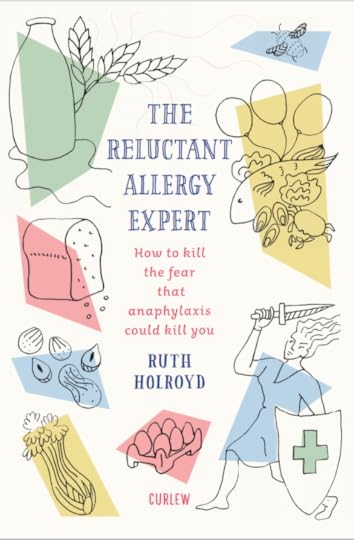
It’s also one of the main reasons I wrote my book, The Reluctant Allergy Expert – How to kill the fear that anaphylaxis could kill you.
You can find out more about my book and how to buy your copy on Amazon as a paperback or Kindle here.
More about my book – The Reluctant Allergy Expert.
One of the things we talk about in our conversation is that internal voice, you could call it instinct. It’s the thing that makes us question things. It’s what makes us inquisitive and also wary. It’s an alarm in our heads when something is not right. It’s also what helps us solve problems and move forwards because most of us have the answer inside us, if we could only find the way to discovering them.
It’s what made me question my doctors and ultimately reject topical steroids for a more natural way of living with eczema. It’s what made me reach out and ask for counselling which I was incredibly lucky to get on the NHS.
It’s what has driven me throughout my life to find happiness and positivity.
Do you think you have it? That inner voice?
There is always hopeIf you are feeling alone or confused and don’t know where to turn, find someone to talk to. Whether that’s a family member, friend or you doctor. Or even a support group on social media. Find someone. And if you are stuck, please send me a message. I will help if I can and point you toward someone who you can trust if I can’t. There is always hope, and that’s what these Hopeful Conversations are all about.
Take care everyone and I’d love to hear your thoughts on this video.
The post Talking allergies, eczema and TSW first appeared on What Allergy Blog.My allergy free Lockdown Birthday
Despite not being able to see friends, most of my family or go out for a meal as I would normally do for my birthday I had the most wonderful day. Thanks to everyone who made it special.
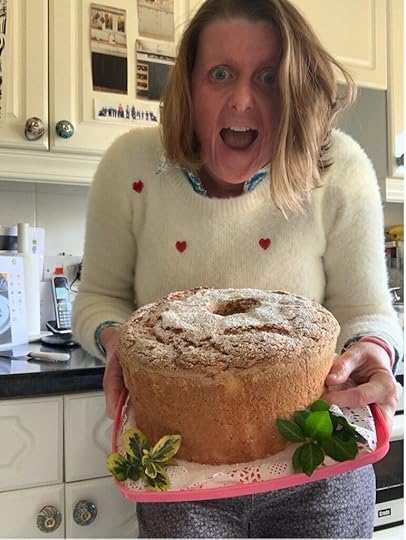 I did share this cake, honest. It was made with white spelt flour and was allergen safe for me
I hope this gives you all a few ideas of how to make a lovely Lockdown birthday. It was the thoughts, the kind texts, messages and knowing people cared, even if they couldn’t see me, that made it special.
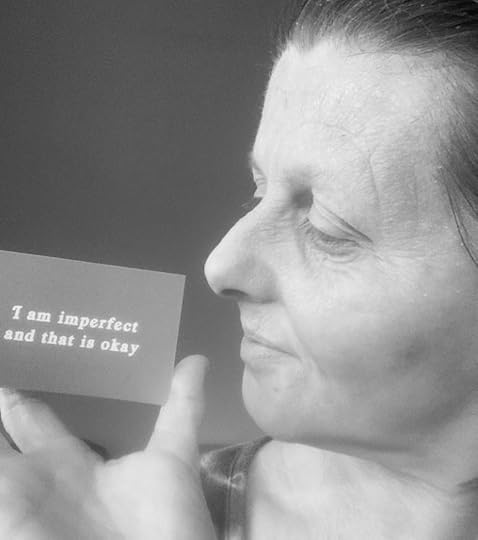 Probably my favourite thing right now – Positive Affirmation Cards from Real Skin Club https://realskinclub.com/Balloons! – In a box! Two, lovely non latex foil birthday balloons from my lovely sister and her family are brightening up my home.Cards – People send fewer cards than they used to but I really appreciated the carefully chosen, funny and thoughtful cards I received.Gifts – Again, when you get older you get fewer gifts and right now the only gift I’d really love from my friends is their company IN REAL LIFE! But I got some lovely pressies, just little things, perhaps a lot of chocolate and an eco wooden washing up brush from my Mum that I think I was strangely a little too pleased with. I also received some cute little felt hearts and bird and the most terrifying face mask from my lovely Friend Helen. Prosecco and a candle from my besties and little treats to open from Mum. Hello Fresh – My aunt gave me some money which I used to trial this home meal service where you get all the elements of the meal sent to you with easy instructions. I’ve really enjoyed the three I’ve had so far although one was a tad too over complicated for me and I found it took me ages to cook. I’ve learnt new skills and new ideas that I’ll use again and had some really tasty food. Check out Hello Fresh here.The Real Skin Club – again from the money from my aunt, I treated myself to these truly beautiful Positive Affirmation Cards for skin. I love them! Check The Real Skin ClubCake! My lovely, wonderful neighbour made me a HUGE birthday cake from white spelt flour which was so amazing. It tastes incredible and is so fluffy, soft and moist as well. Perfect cake and I’m ashamed to say not much is left. Although I have shared it with my Mum and my next door neighbour who lives alone and who really loved it too!Amazon vouchers – Thanks Dad! I bought some new running longs and top!Messages – So many messages! I don’t think I’ve replied to them even now but they all made me feel very special, loved and appreciated. Thanks to everyone who took the time to say Happy Birthday.Long walk – It was a glorious sunny day so I went for a lovely, long, muddy walk with my Mum and Bertie the dog!Sunday Roast – Mum cooked me my favourite meal, Sunday roast! And I did not lift a finger, except open the Prosecco!Family Zoom – We had a family get together, which we’ve been doing monthly with a family quiz which is great fun. I’m terrible at quizzes and even with the them being Ruth – I still didn’t win! But I did discover some interesting Ruth facts. Did you know that Bette Davies was actually christened Ruth Elizabeth Davies! My middle name is Elizabeth too! And also that I couldn’t say my own name when I was little and so called myself Ooofie instead. Awwww so cute.Messages – so many! Thank you all guys.
Thank you all for making this birthday one to remember and for my Mum for making is so special.
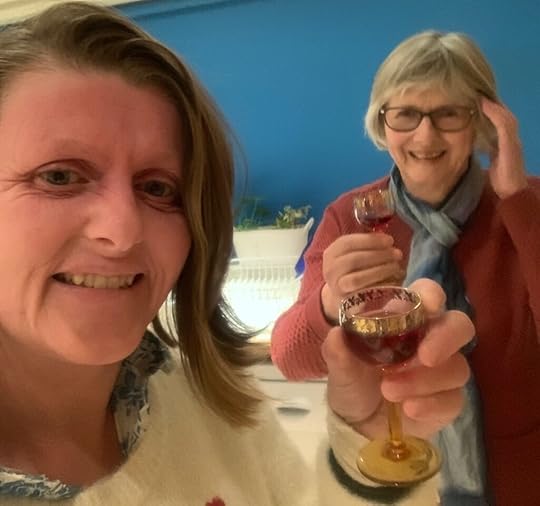 Cheers Mum! This was the Damson Vodka I made – it’s absolutely delicious!
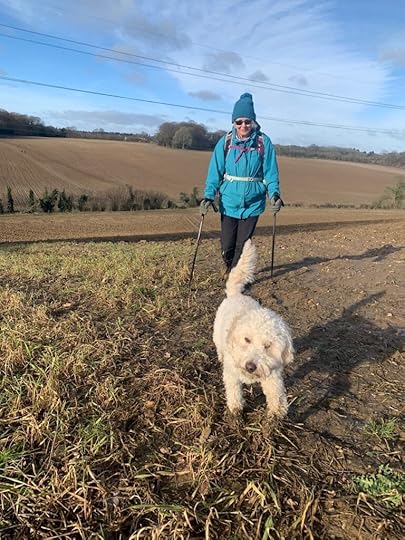 And a lovely long walk through bogs and swamps of mud with these two! Mum and Bertie
And apart from an incident with some fox poo that meant both me and Bertie ended up soaking wet it was a wonderful day. And I think Bertie loved being covered in fox poo so at least he was happy for an hour!
What do you do make your allergy birthdays special?
Read also, Best Christmas gifts for your allergic, atopic, asthmatic friend here!
The post My allergy free Lockdown Birthday first appeared on What Allergy Blog.My allergy free Lockdown Bday
Despite not being able to see friends, most of my family or go out for a meal as I would normally do for my birthday I had the most wonderful day. Thanks to everyone who made it special.
I did share this cake, honest. It was made with white spelt flour and was allergen safe for meI hope this gives you all a few ideas of how to make a lovely Lockdown birthday. It was the thoughts, the kind texts, messages and knowing people cared, even if they couldn’t see me, that made it special.
Probably my favourite thing right now – Positive Affirmation Cards from Real Skin Club https://realskinclub.com/Balloons! – In a box! Two, lovely non latex foil birthday balloons from my lovely sister and her family are brightening up my home.Cards – People send fewer cards than they used to but I really appreciated the carefully chosen, funny and thoughtful cards I received.Gifts – Again, when you get older you get fewer gifts and right now the only gift I’d really love from my friends is their company IN REAL LIFE! But I got some lovely pressies, just little things, perhaps a lot of chocolate and an eco wooden washing up brush from my Mum that I think I was strangely a little too pleased with. I also received some cute little felt hearts and bird and the most terrifying face mask from my lovely Friend Helen. Prosecco and a candle from my besties and little treats to open from Mum. Hello Fresh – My aunt gave me some money which I used to trial this home meal service where you get all the elements of the meal sent to you with easy instructions. I’ve really enjoyed the three I’ve had so far although one was a tad too over complicated for me and I found it took me ages to cook. I’ve learnt new skills and new ideas that I’ll use again and had some really tasty food. Check out Hello Fresh here.The Real Skin Club – again from the money from my aunt, I treated myself to these truly beautiful Positive Affirmation Cards for skin. I love them! Check The Real Skin ClubCake! My lovely, wonderful neighbour made me a HUGE birthday cake from white spelt flour which was so amazing. It tastes incredible and is so fluffy, soft and moist as well. Perfect cake and I’m ashamed to say not much is left. Although I have shared it with my Mum and my next door neighbour who lives alone and who really loved it too!Amazon vouchers – Thanks Dad! I bought some new running longs and top!Messages – So many messages! I don’t think I’ve replied to them even now but they all made me feel very special, loved and appreciated. Thanks to everyone who took the time to say Happy Birthday.Long walk – It was a glorious sunny day so I went for a lovely, long, muddy walk with my Mum and Bertie the dog!Sunday Roast – Mum cooked me my favourite meal, Sunday roast! And I did not lift a finger, except open the Prosecco!Family Zoom – We had a family get together, which we’ve been doing monthly with a family quiz which is great fun. I’m terrible at quizzes and even with the them being Ruth – I still didn’t win! But I did discover some interesting Ruth facts. Did you know that Bette Davies was actually christened Ruth Elizabeth Davies! My middle name is Elizabeth too! And also that I couldn’t say my own name when I was little and so called myself Ooofie instead. Awwww so cute.Messages – so many! Thank you all guys.Thank you all for making this birthday one to remember and for my Mum for making is so special.
Cheers Mum! This was the Damson Vodka I made – it’s absolutely delicious!And a lovely long walk through bogs and swamps of mud with these two! Mum and BertieAnd apart from an incident with some fox poo that meant both me and Bertie ended up soaking wet it was a wonderful day. And I think Bertie loved being covered in fox poo so at least he was happy for an hour!
What do you do make your allergy birthdays special?
Read also, Best Christmas gifts for your allergic, atopic, asthmatic friend here!
The post My allergy free Lockdown Bday first appeared on What Allergy Blog.January 20, 2021
Doctor agrees TSW is real!
I have just watched a really fascinating and interesting webinar hosted by talkhealth with George Moncrieff, entitled Atopic Dermatitis and the truth about topical steroids.
He explained everything about topical steroids, how they work, when they were invented and how they should be used.
He also went into detail explaining the skin layers, barriers and how corticosteroids and environmental factors affect the skin and damage its natural oils, PH and resilience.
And whilst I didn’t agree with everything he said, I came away from this webinar feeling uplifted, seen, understood and validated!
Because two huge things happened that were actually very powerful for me.
Yes TSW is real!The first one being that Dr George Moncrieff actually said the words, Yes TSW is real. It’s the first time I’ve heard any medical professional say, Yes, TSW is real.
I’ve never been diagnosed with it, I’m just blindly following the path I think is right, against the advice of my own dermatologist.
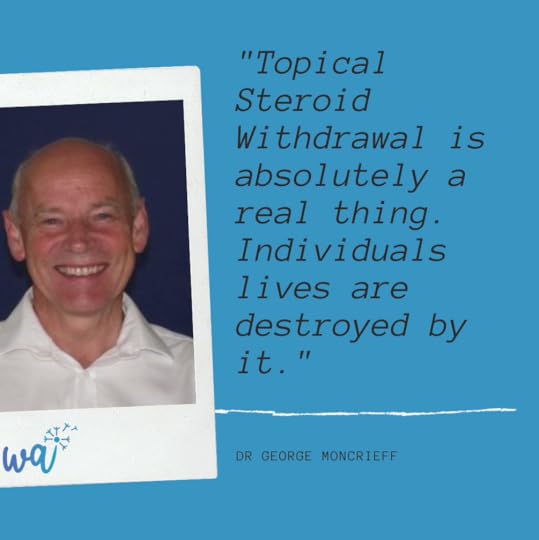
“Topical steroid withdrawal is a real thing. Individuals lives are destroyed by it.” Dr George Moncrieff.
This is huge. It’s massive. It’s made my day. Thank you George.
There will be a national statementHe also told us that the British Association of Dermatologists (BAD) and the National Eczema Society (NAS) will shortly be sharing an updated statement about Topical Steroid Withdrawal (TSW). This is also HUGE!
Because this means that doctors, GPS, dermatologists and other health practitioners can download this information and it will begin the process of working out what to do about it.
The first step is acknowledging that it’s real and allowing patients who are going through it to get a diagnosis.
The only thing I can get written on my medical notes is:
“She seems content not to rely on topical corticosteroids.” which is not probably how I’d phrase things. There is a huge leap to assuming I am content about any of this, but the sentiment is correct. I just want it on my records. She has TSW and is going through withdrawal.
You can download the Current Statement on Topical Steroid Withdrawal provided by BAD and NAS here.
To listen to this seminar visit the talk health website and go to the Events section. The recorded webinar will be available in the next few days to watch for free. All you have to do is create a login with talkhealth but if you don’t already have one, you should. I’ve found so much support, freebies, online events and learnt a lot too from this company.
I would love to hear how you all feel about this. It’s definitely a HUGE step in the right direction. TSW is real. One doctor thinks so! and I know there are others out there but for me, until today, doctors who recognise TSW have been a bit like unicorns to me. I didn’t think I’d ever meet one!
So thank you George. Thank you for seeing us. Thank you for listening to your patients and recognising a real condition. Thank you for talking about it so openly and frankly.
It is only by talking about this that we can help others to avoid this condition and help those who will be diagnosed in the near future. If research can be done and studies learn what is happening, then hopefully there can better treatment and support in the future for people living through it.
How do you feel? Does your GP or dermo recognise TSW?
The post Doctor agrees TSW is real! first appeared on What Allergy Blog.January 19, 2021
Protopic withdrawal and TSW
I’ve written a lot and read a great deal about Topical Steroid Withdrawal (TSW) but have seen very little discussion about the effects of long term use of Protopic, a topical immunosuppressant.
I stopped using topical steroids on the 20th January 2019 so it’s two years since I started this journey. In April 2019 I decided that I was equally as addicted to Protopic as I had been to the steroids so I stopped using that as well. I had weaned myself off it gradually so that I was using it once every two weeks to a month, but after that time it would start to deteriorate and become even worse that it had been to begin with.
I first used Protopic to calm the constant redness and inflammation, like a butterfly pattern on my face, and huge inflammation on patches of my face. Little did I know that these were signs of TSA which I believe Protopic initially masked well.
I never used Protopic on the rest of my body, only very limited experiments which just didn’t seem to help like it did on my face.
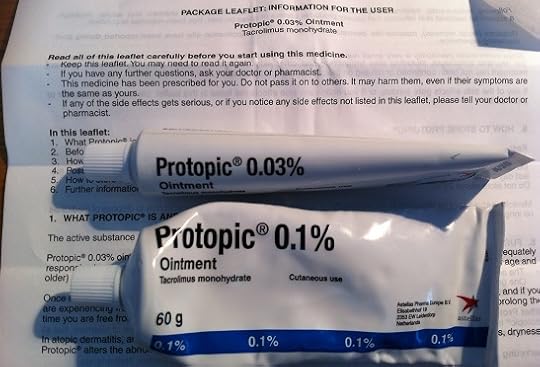 Start with 0.1% which is stronger and then move to 0.03% as your skin improves
I used it really sparingly and one tube probably lasted me 6-8 months, if not longer.
Protopic withdrawal symptomsIt’s really hard to pinpoint what might be caused by Protopic and what by the steroids, but I barely used topical steroids on my face, not even hydrocortisone. I did on my neck and décolletage and these areas have been very badly affected by TSW.
But these are the things I think happen due to Protopic:
Intense heat – rising up the face to the scalp. So hot it feels like you’re standing in front of the oven and not moving away. It prickles and feels very unpleasant. This wakes me at night and often happens the minute I put my head on the pillow and snuggle down to sleep. This used to distress me greatly but I’ve learned how to ride these out now.Eczema herpeticum – Or the herpes virus, getting into cracks on my chin, jaw and sometimes forehead and brow causing intense debilitating pain. This was so painful it often left me in tears. It would be incredible painful for a day and night and then I’d wake and it would be settling in. It would then crust over and eventually peel, flake off and be back to normal (what is normal?) after a week.Cheek creases – I don’t even know where to start. It appears to me that the worst areas on my face are where I concentrated application of the cream So I would run my fingers down both cheek creases, nose creases, across my forehead etc. The most pain and worst affected inflammation, oozing, crusting and flaking seems to be worse where Protopic would have been smoothed most often.That flaky glue skin – you know at school when you got the Copydex glue all over your fingers and it would go hard and peel off? That’s what the skin on my face has been like. Almost like my skin crusts, hardens and turns into a layer that feels like plastic. This then comes off in giant flakesNormal flaky – in between these ridiculous glue like flake offs are the normal flake offs, Sometimes twice a day, sometimes just at night, sometimes in the afternoon, often not every day but at the moment, back to relentless. It’s a constant inflammation, harden and crust and then flake situation.Insane itching – My whole face would be so itchy sometimes that I couldn’t even do simple tasks. Even brushing my teeth was difficult because I was so insanely itchy I though I would go mad. My eyebrows mostly fell out due to incessant rubbing.Damp not oozing – my skin would just feel damp, like I was sweating but I wasn’t. I read just today on one of the resources listed below that we should not wipe off the ooze and we should also not remove flakes. I have been removing flakes all the way through and I’ve bathed off the ooze when I could. Have I been doing it all wrong? I just found it gave me some comfort, albeit short lived where my skin felt vaguely normal and I could go out, be on Zoom and see people and not feel like a complete monster.Nausea – I have no idea if this is related but I wake up every morning and feel like I have a hangover. This is getting better and usually fades as I get up and wake up, but it’s not a nice feeling to wake up and feel crap from the minute you wake up.Eyes glued shut – Literally glued up. Painful to open, and it can take me half an hour to unglue them. I use a cotton hankie to press over my eye. I can them dab off excess eye bogies and eventually get out the white gum that seems to cement up my eyes each night. Paper tissues make it worse.I think that’s all for now! But maybe these are normal TSW symptoms… I’d love to hear your thoughts.
Please don’t use Protopic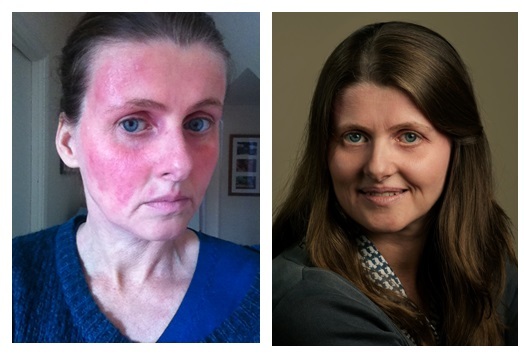 On the left, before Protopic – on the right after a year of using Protopic
What I would do to have back that red early TSW skin on my face and start a natural healing journey.
But it is what it is, and so you see the many faces I’ve woken up to over these two years of healing.
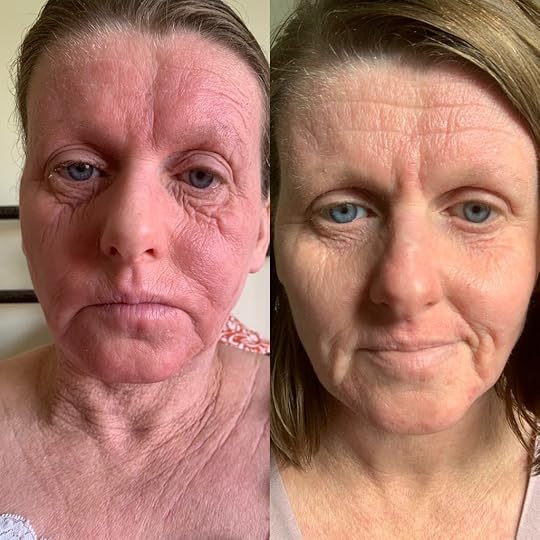 The many faces of TSW healing…
Some good days. Some bad. Most flaky.
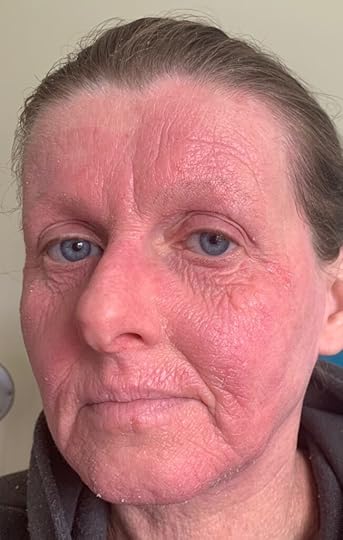 Trust me, it’s not worth it. Don’t use Topical Steroids or Protopic on eczma.
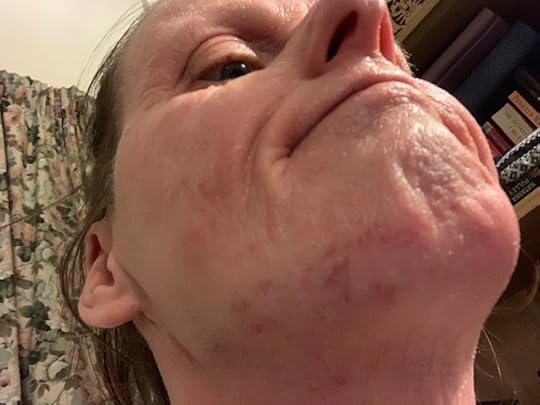 One of the worst affected areas, under my chin
And so, here ends my warning.
I started using Protopic in March 2014 so I was applying it to my face regularly for five years before I quit in April 2019.
It is clearly just as addictive as topical steroids, although my sister managed to wean herself off fairly quickly, my dermatologist assured me that it was completely safe to use twice daily and he was worried about my continuing to use it.
A great introduction to TSW here:Further reading:Check out Skins of Rose – Topical Steroid and Protopic Withdrawal
Also Everything Eczema about Protopic
Anyway thanks for reading. I do try not to go on about TSW too much, but if just one of you tells a friend about this and they think twice about using either topical steroids or Protopic then I’ve done my job.
Anyone else going through Protopic withdrawal? Is it different to Topical Steroid withdrawal? or similar?
The post Protopic withdrawal and TSW first appeared on What Allergy Blog.January 15, 2021
Understanding the lived experience of eczema
On September 23, 2019, hundreds of members of the eczema community gathered in person and by live webcast to share their experiences at the More Than Skin Deep patient-focused drug development (PFDD) meeting held in Silver Spring, MD. This meeting and a web-based survey was the first initiative of its kind for eczema.
It was hosted by five organisations serving the eczema community (Allergy & Asthma Network, Asthma and Allergy Foundation of America, Global
Parents for Eczema Research, International Topical Steroid Awareness Network, and National Eczema Association) in collaboration with the U.S. Food and Drug Administration (FDA).
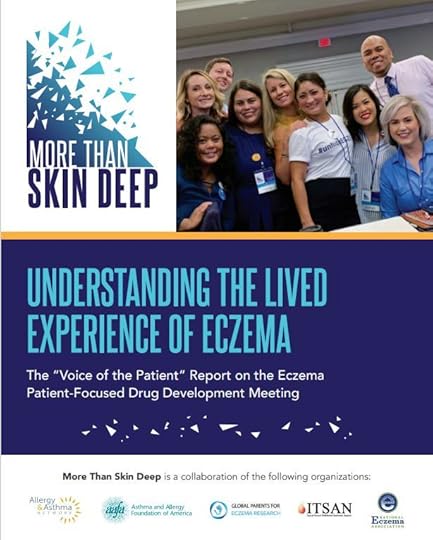
It talks about all the challenges faced by those living with eczema and their caregivers. From the horrendous burden of the itch to challenging treatments and the future.
The burden of itch went far beyond a simple sensation. It contributes to long-lasting physical, mental, emotional, social, and financial tolls on the individual and family.
More than skin deep report 2020
You can download your copy of the More than Skin Deep – Voice of the Patient report here:
More than skin deep reportSpecial thanks to Linette, Kelly and Keri for allowing me to share this.
References
The Allergy and Asthma Network
Asthma and Allergy Foundation of America
Global Parents for Eczema Research
ITSAN
National Eczema Association