Ruth Holroyd's Blog, page 27
November 13, 2020
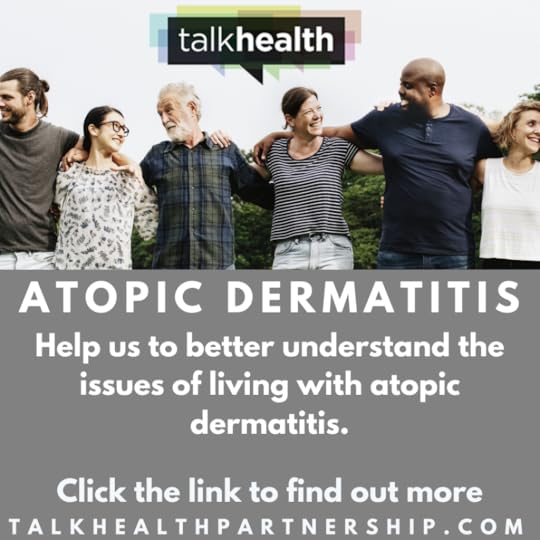
Calling all eczema and atopic dermatitis peeps!
Fancy winning £20 Amazon voucher and receiving £45 for competing a survey?
Atopic dermatitis (AD / eczema) is a chronic inflammatory disease of the skin affecting approximately 3% of adult population in the UK. Living with AD can significantly impact the quality of your life, both physically and emotionally.
 https://www.talkhealthpartnership.com/trials/atopic_dermatitis_survey
talkhealth have been asked by a pharmaceutical company to research and understand how itching affects the quality of your daily life both physically and emotionally if you have moderate/severe AD. The survey offers the opportunity to really express what matters most to you, so we can fully understand the issues.
The survey will close on 7th December 2020. After this date, 20 participants who have completed the survey in full, will be selected at random to win a £20 Amazon voucher. but that’s not all! We’re also looking to chat with 10 people . to get a more in-depth understanding of your AD. Phone interviews will last between 30 to 50 minutes, and you’ll receive £45 as a thank you for your participation. There’s an opportunity within the survey to register your interest in being interviewed.
Click here to complete the survey
The post Calling all eczema and atopic dermatitis peeps! first appeared on What Allergy Blog.


November 6, 2020
Best Christmas gifts for your atopic friend
I’ve wanted to pull together a list of the perfect gifts for the allergic people in your life for a while, so here it is. It’s a bit early for Christmas posts I know, but this gives you plenty of time to research and order and it’s something productive to do in Lockdown!
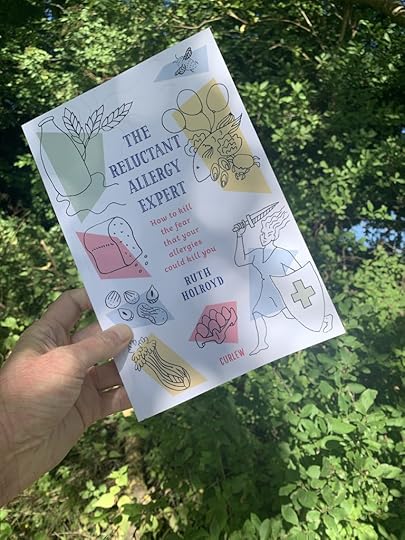 The Reluctant Allergy Expert by Ruth Holroyd
I know it can be hard to choosing something safe when they might be allergic to a food allergen and sensitive to skin care products etc. All those easy gift ideas are out of the window.
So here are my Top 10 things to give to anyone with allergies, eczema, asthma or any atopic condition!
The Reluctant Allergy Expert: How to kill the fear that anaphylaxis could kill you. By me! My book baby would make a lovely stocking filler for anyone with allergies themselves or caring for someone. You can buy it as a kindle or in paperback on Amazon here. If you already have it, the best gift for me would be an Amazon review! Help me spread the word so others can find this book. Thank you all so much.Kalm Koala weighted blanket – I bought one of these last year when I was hardly getting 1-2 hours sleep a night and feeling like I was about to lose my mind. Sleep deprivation is brutal. Now this blanket isn’t a miracle cure, it’s not going to transform your sleep, especially if you are going through TSW because there is stuff that just has to go on and there is more to sleep than just a blanket. But let me promise you this, you will fall in love with it. It’s a weighted anxiety blanket and it will make you feel held, soothed and calmed. It definitely helped reduce anxiety and I was able to feel more rested, often when I was still not actually drifting off into a dreamless sleep. This blanket is one of my prized favourite things now. Not only do I sleep under it every night, it is also luxurious, a beautiful grey colour and is just such a treat to use. If you don’t have one yet, get one! Everyone would love one of these, but especially anyone who lives with anxiety, fear, stress and that feeling of not being able to stop the mind racing. You can buy them from Kalm Koala here. I have an Affiliate link, WHATALLERGY, which will give you £20 off your order. This also gives me a small kickback which helps to keep this blog going.Gnawbles and all the other Top14 allergen free Creative Nature products – Anyone who knows me will know much I love this company but seriously guys, you just can’t go wrong with any of their products, because they are all brilliant and all freefrom the main allergens. From Gnawbles to cake mixes and snack bars to the perfect pancake batter, I’ve tried them all. I am also a affiliate for these guys and love working with them. Visit their website and use my code WHATALLERGY10 to get 10% off everything you buy. Christmas needs Creative Nature! Lyonsleaf natural skincare – I absolutely love this brand of skincare products. All natural, independent and they grow most of the herbs and ingredients that go into their products. I have been recommending their products now for over a year and so far everyone who’s tried them loves them! My favourites are the Zinc and Calendula for when my skin is inflamed and irritated and the Marshallow balm for everyday moisturising. They look amazing, smell amazing and feel amazing on my skin. They have some deals on at the moment, for instance, sign up to their newsletter and you’ll get 15% off. And tell them I sent you xxx. Visit their website to try and you won’t be disappointed. Balmonds skin care range – This is also one of my favourite natural skincare companies. I love their Skin Salvation and also the Lavender baby balm, I also use their shower wash and shampoo. If you have sensitive skin and find the high street brands irritate your skin, check these guys out. Visit their website here and use my code WHATALLERGY FOR 20% off.Passion Planner – I adore my Passion Planner and use it every day,, all the time. I’m pretty much glued to it. If you’ve never come across them before they are leather bound, beautifully crafted daily and weekly planners with sections to plan, set goals, reflect on achievements, make notes and just generally doodle and jot. Mine includes poems, lists, work challenges and personal plans. Anyone who lives stationery, diaries and beautiful notebooks will adore one of these. They’re not cheap but they do have great referral programs and points system so you can save money on your future purchases, because once you’ve had one, you will want another! Visit their website to find out more here.An annual membership to TH+ From the TalkHealth Partnership – Packed with live events, meet-ups, online classes and massive giveaways, we’re convinced that it’s the best way to get the most out of our platform. Think of it a little like a health club membership – except without the aggro of having to leave your house! I’ll be trying it out so watch out for my feedback coming soon. Visit their website to enter to win a free month’s trial. and if you’re not successful it only costs £35 for an annual membership at the moment which is absolute BARGAIN!Calm App annual membership – I use this EVERY day and I am not exaggerating. I don’t manage a guided mediation every day but I do on most days. It’s just ten minutes of sitting, being still and trying to just be mindful to whatever message is playing that day. Just me and my breathing. I don’t get any commission or kick backs from this one I just bloody love what the do. I listen to talks, master classes and the short five minute Daily Spark to kick start your focus. Visit Calm to find out more. And if you are interested message me and I’ll invite you to a free month trial.Audible membership – With everything that’s been going on this year I’ve found it hard to focus my brain and very hard to read books at the moment. This is very hard for me as books were one of my true releases and give me great pleasure. What I have discovered is Audible membership. Literally thousands of audio books to choose from. I have the basic membership which costs me just £7 for one free book a month. However there are loads of free listens, professional podcasts only available to audible members and also free comedy, crime, drama and more. You won’t ever be left stuck waiting for the next token to activate with nothing to listen to. Although I’ve been devouring audio this year. I am all over Spotify podcasts, Podcasts anywhere really. Can’t get enough. When I’m walking, driving, cooking dinner, feeling blue. Ya know. Again I don’t get anything for promoting this, it’s just one my favourite things. To sign up visit the Audible website here. They also have a free 30 day Trial at the moment to what are you waiting forSpotify and Netflix – At the beginning of this year I treated myself to Audible, Spotify (paid for) and Netflix because I was deep in TSW and had reached the one year in hell milestone. I was going to choose one to keep but I can’t decide. All three are worth their weight. So I’m keeping them all. So my last suggestion is Netflix. I have been so impressed with the quality of films, series and documentaries. I’ve almost given up on normal TV. Spotify premium is just so much nicer without the adverts and it has all my playlists, for running, feeling sorry myself, positive vibes, and more. You can discover new music, find old music, listen to relaxing sleep musing and I also love the concentration tracks for when I need to really focus on work but don’t feel like being in silence.
I’d love to hear your thoughts. Do any of these appeal to you? I could probably go on and on and on. Waterstones vouchers are also a great gift. people can buy online and it means a real bookshop benefits! Look at local businesses too. Your local farm shop, independent businesses and small companies. They really need our help this Christmas. I will also be giving the gift of yoga to some very lucky friends and that’s also a great gift idea. If you have a local studio or a favourite online teacher – I am currently spoilt for choice.
What are you gift ideas for people with allergies, eczema and asthma?
The post Best Christmas gifts for your atopic friend first appeared on What Allergy Blog.
October 27, 2020
20% of anaphylactic reactions occur at school
After watching Food Unwrapped last night, many people are struggling to get hold of adrenaline auto-injectors. Facing a ten month wait could put lives at risk. To hear that a staggering 20% of reactions take place while your child is in the care of their school make worrying reading.
My two favourite charities are working together to do what they can to raise awareness about the importance of checking expiry dates, getting staff trained and storing adrenaline correctly.
Allergy charities combine forces and urge schools to check it, don’t chance it when it comes to stored allergy medications
Most classrooms can expect at least one child to have a food allergy with 20% of severe food allergic reactions occurring while a child is at school. Anaphylaxis Campaign and Allergy UK have joined forced to raise awareness of the need for the treatment of such allergies, AAI (auto adrenaline injector) pens to be checked to ensure they are safe for administration.
After a six month break due to the Covid-19 pandemic many schools are facing a potential risk of AAI medication being void due to expiry dates, storage conditions and more importantly a lack of up to date training of key staff. Covid-19, whilst a life-threatening virus for many, data[1] shows that only two (0.005%) of the 38,156 deaths from coronavirus during March and April in the UK were children aged 14 or under. By comparison, research of children with allergies by Anaphylaxis Campaign discovered that 80% of school aged children had experienced anaphylaxis and 61% had been admitted to hospital when they last experienced a severe allergic reaction[2].
Peanuts, tree nuts, milk and eggs are some of the most common allergens responsible for adverse reactions in children. A very severe allergic reaction can cause anaphylaxis which affects more than one body system such as the airways, heart, circulation, gut and skin. Anaphylaxis is a potentially life-threatening reaction and always requires an immediate emergency response.
Amena Warner, Head of Clinical Services at Allergy UK said: “For parents of children with food allergies their anxiety will be particularly acute with very specific worries about the care and safety of their child in the ’new normal’ school environment. Schools have implemented many changes to keep pupils and staff safe during the pandemic including social distancing bubbles, regular hand washing and cleaning of shared spaces. A ‘no sharing of food’ policy will be one additional protective measure for the food allergic child who should always be aware that they should not share or accept food from others.
“All schools must also ensure measures are in place and they are adhering to the strict guidance governing the health care and safeguarding needs of children in schools which includes the administration of allergy medication and adrenaline auto-injectors (AAIs).”
The treatment for anaphylaxis is an injection of adrenaline and children at risk of anaphylaxis are often prescribed adrenaline auto-injectors (AAIs) to use in an emergency. Children prescribed adrenaline should have two AAIs available to use at all times. Parents and schools are being encouraged to ‘Check It, Don’t Chance It’ to ensure the safeguarding of children with allergies:
Expiry Dates: With schools having been closed for six months or more it is important that schools holding either the child’s own AAIs or ‘spare’ AAIs check that they are still in date. AAIs are typically dispensed with a shelf life of 12-18 months so many held in schools are likely to have expired and will need replacing. When replacing expired AAIs schools can register their new devices on the manufacturer’s website to receive future timely text and email alerts when the expiry date approaches.
Storage: Adrenaline must also be stored correctly. Pens (AAIs) should be kept in their original containers to prevent light exposure, must not be stored above 25c and must not be refrigerated or frozen. Given the hot spring and summer this year it is paramount these are checked. All AAIs have a small window that allows the adrenaline inside to be checked. The liquid should be clear and colourless. Any AAIs where the liquid appears discoloured or contains particles should be replaced. AAIs should be stored in a safe, but easily accessible place where they are no more than five minutes away from the child at any time.
The child’s weight and dose of adrenaline: AAI pens are available in two doses 150mcg and 300mcgs. Children grow fast so parents are urged to keep an eye on their child’s weight and ask their GP to prescribe the higher dose AAI once they have reached the appropriate weight as instructed by the adrenaline manufacturer.
Allergy Action Plan: Every child with severe allergies needs to have an allergy action plan which should be kept with their AAIs. Check that this plan is up to date at all times.
Training: Check that all school staff are fully aware of the signs and symptoms of anaphylaxis, how to provide emergency treatment and the implications for management of severely allergic children in school. Free training is available at www.allergywise.org.uk and the SAAG (School Allergy Action Group) free online toolkit for the development of a whole school management policy is available at www.allergyuk.org
Lynne Regent, Chief Executive Officer at Anaphylaxis Campaign said: “Allergic reactions can happen at home, school or when out and about, so correct use when it is needed may save a life. It is important for schools to be aware that 20% of serious food allergic reactions occur in school and that in children, serious allergic reactions may occur for the first time while they are at school. It is therefore essential that staff are educated to recognise the signs and symptoms of severe food allergy and initiate treatment.
“Since a change in the law in 2017, schools have also been allowed to purchase additional AAIs without a prescription to keep in school. They are not intended to replace the child’s own prescribed AAIs but for use as emergency back-ups if the child’s own pens are not available for any reason.”
 Oliver Green,11 and his mum Keren Greene,38 at their home in Edgware London. Oilver who has taken part in case study to raise awareness for schools and parents to check their stocks of AAI pens and make sure they are in date and that staff training is refreshed after the long COVID lockdown. Oliver hops that by sharing his story of going into anaphylactic shock at school this will help raise awareness.
Oliver Greene, aged 11, from Edgware, North London was born with a range of food allergies however as he grew, his allergies slowly changed and by the age of 6, his only known allergy was to nuts. However, in 2018 Ollie suffered an unexpected anaphylactic shock, at school after he ate a vegi-salami lunch.
Keren, Oliver’s Mum said: “The school reacted really well, they called the ambulance and followed advice. They then checked all the ingredients in the kitchen that day to ensure there had been no traces of nut. However, upon taking Oliver to an allergy consultant for further tests it was discovered that his allergy to soya, which was in the vegi-salami, had returned.”
For Keren, Oliver and his school this was their first experience with anaphylaxis. The school invested in adrenaline auto-injectors (AAIs) and trained staff in the steps to follow if someone has symptoms of anaphylaxis. Oliver recovered but suffered further anaphylaxis, in January 2019, on the first night of a weekend away with his school year group and again spent a night in hospital. Further tests revealed it was possible that he was allergic to celery:
“The second time, school gave Oliver the adrenaline pen and called the ambulance straight away. They had an adult with him all the time and checked the kitchen and ingredients but again it was an undiscovered allergy. The school also bought spare adrenaline pens to keep in case this happens to a child again and offered a first aid programme to the children to teach them how to administer AAI’s. Anaphylaxis can come with no warning, so it is vital to be prepared.”
A brand of AAI called Emerade has recently been withdrawn from the market and even if it is in date it should be replaced. Speak to your GP about this and to get a prescription for a different brand such as EpiPen or Jext that can still be prescribed.
For further information, resources, and advice visit: www.checkitdontchanceit.co.uk
[1] Office for National Statistics (ONS) show that only two (0.005%) of the 38,156 deaths from coronavirus during March and April in the UK were children aged 14 or under, and eight (0.02%) recorded in the 15-19 age range.
[2] Study conducted by Anaphylaxis Campaign, 1217 people responded (562 adults and 655 parents/carers on behalf of their child)
About Allergy UK
We are the leading national patient charity for people living with all types of allergy. We work with government, professional bodies, healthcare professionals and corporates to bring about change and help improve the lives of the millions of people living with allergic disease.
It is estimated that 21 million people in the UK live with allergy, but there remains a gap in healthcare services for those affected by this disease. Our mission is to raise the profile of allergy at all levels, with a vision for everyone affected by allergy to receive the best possible care and support.
Our dedicated Helpline is there for people who need our help and support. Our free Factsheets and wide range of resources provide information to explain the symptoms and triggers that impact on the quality of life of those with allergy
About Anaphylaxis Campaign
The Anaphylaxis Campaign is the only UK wide charity focused on supporting those at risk of severe allergies. We have been providing information and support to patients and their families for over 25 years.
Our ultimate aim is to create a safe environment for all people with allergies by working with and educating the food industry, schools, pre-schools, colleges, health professionals and other key audiences. Our focus is on medical facts, food labelling, risk reduction and allergen management.
References and further reading
[1] Office for National Statistics (ONS) show that only two (0.005%) of the 38,156 deaths from coronavirus during March and April in the UK were children aged 14 or under, and eight (0.02%) recorded in the 15-19 age range.
[2] Study conducted by Anaphylaxis Campaign, 1217 people responded (562 adults and 655 parents/carers on behalf of their child)
#SponsoredPost
The post 20% of anaphylactic reactions occur at school first appeared on What Allergy Blog.
In response to the ‘anonymous chef’
Last night I watched Food Unwrapped Investigates, along with some predicted 1.9 million viewers, all on the edge of our seats to see the much awaited Allergy Special, uncovering the shocking truth of eating out with allergies.
Ruth said, “Don’t get too excited!”
First of all let me just get my jealousy and disappointment on the table. I was gutted that I wasn’t featured at all, apart from in the line-up at the start. I didn’t get a single speaking word in the entire show after a whole day in London filming, not even getting my expenses paid! That’s TV for you guys! But now I’ve had time to digest the show and given myself a good talking to, I’m really very proud to have even been involved.
And I wasn’t the only one. The lovely Stefan Manku joins me on the cutting room floor. I couldn’t be in better company there 
October 23, 2020
Food Unwrapped allergy special
I’m so excited to let you all know that on Monday evening I will be on TV on the Food Unwrapped programme with the lovely Kate Quilton.
The show explores the shocking truth about eating out with allergies and follows a group of brave and intrepid allergy adventurers going out around London.
Tune in to Channel 4 at 8.30pm on Monday 26th October to watch this Food Unwrapped special and discover the shocking truth about eating out with allergies.
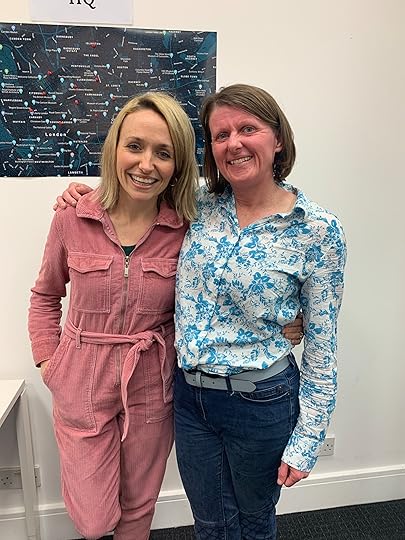 Me with the lovely Kate Quilton, back in February when my TSW face was visibly sore!
I’ll be sharing the link to watch it back afterwards if you miss it.
The show features the family of Natasha Ednan-Laperous who sadly lost her life after eating a baguette at Pret which contained undeclared sesame. New laws come into force soon to prevent further deaths due to inadequate food labelling. Check out the Natasha Foundation.
It was also the day I met Julainne Ponan, the owner of Creative Nature and the creator of Gnawbles. If you know me you’ll be aware that I have a slight addiction to these gorgeous chocolate snacks. If you’d like to try them, please use my affiliate code WHATALLERGY10 for 10% off. It helps to keep me supplied with Gnawbles…
October 22, 2020
All year round hay fever…
Could it be possible? Sadly, yes it is. If you’re allergic to grass, tree pollen, weeds, moulds, dust, air borne pollutants and allergens you could experience hay fever symptoms all year round!
My eyes water pretty much all the time.
This can be caused by different air borne particles or just be a symptom of dry eyes, something many people experience as they age, during menopause or due to allergen triggers.
It’s difficult to manage because you can’t see these air borne allergens and you never really know exactly what’s causing it.
Pinpointing which mould, weed, tree pollen or pollutant isn’t easy. Some people react to perfumes and fragrances which can be almost impossible to avoid. Consider that, anyone could be wearing perfume or aftershave, shops often pump smells around their shops to make you buy more, like the smell of fresh bread, coffee or just a ‘fresh clean smell’. But these artificial chemical smells can cause serious anaphylactic reactions for some people, not just eye and airway irritation.
I digress. This blog is about year round hay fever and it reminded me of a poem that I wrote when I realised that my eyes were finally calm and not irritating me. It was the depths of winter and I was dreaming of springtime… until spring came and brought with it pollen!
So here’s a little poem for you, it just might help
October 12, 2020
Nowt to do with hay or fever
Have you ever thought about the phrase ‘hay fever’ before? We all know what it means, it conjures images of sneezing, wheezing, watery eyes and swollen stuffy noses, but it has absolutely nothing to do with hay or fever.
The correct term should actually be ‘allergic rhinitis’ but that doesn’t roll off the tongue so easily. Hardly anyone uses this term in normal every day language except for doctors and allergists.
History of hay fever
It’s a relatively new term or ‘disease’ and only really became know as hay fever in about 1825; people were thought to have a fever from the smell of hay, which we now know is not the case. It was also referred to as ‘hay asthma’ or ‘summer catarrh‘.
Disease is a funny one too. It sounds serious, like really bad. A disease sounds like you’d need medication, hospitalisation and a specialist but the real meaning of the word is just dis-ease – the body is unhappy. It is not at ease with itself. It needs help!
If you’re interested in finding out more about the origins of hay fever, read 6 facts about the history of hay fever by Rachel Dinning which is very interesting.
I think it’s also important to note the different words we use to describe allergies, such as allergy, anaphylaxis, allergic shock, food sensitivity or intolerance!
They are all very different yet get used interchangeably.
I have a milk / dairy allergy and often get described as lactose intolerant. The two are very different. An allergy means you cannot consume proteins from certain foods and an intolerance means you struggle with the sugar in that food.
I also use the word ‘milk allergy’ often and specifically list the food types e.g. milk, cheese, butter, yogurt and cream. The reason being that people often misunderstand what dairy means. The amount of times I get brought the gluten free menu after mentioning my very serious dairy allergy is enough to worry me!
People often also assume that eggs are dairy. Nope. You ever seen a cow lay an egg? Yet they do seem to get lumped together.
The word allergy can mean different things to different people too.
An allergy could be hay fever or a mild food allergy or it could mean life threatening anaphylactic reactions and in extreme and thankfully rare cases, death!
It frustrates me how often I hear all these terms being misused.
If you don’t have an allergy, don’t say that you do. Use the right language.
Because every time you go into a restaurant and say you have an allergy to dairy or wheat and then order a dessert that contains that food, you’re not only putting all those with life threatening allergies at risk, you’re also annoying the staff. They have likely taken precautions to keep you safe and you appear to not have required such extra care!
If you can eat small amounts of dairy but would like a dairy free main meal, so that you can safely indulge in the pudding, say so. Tell them you have a serious food intolerance, but that it’s not life threatening. Tell them you don’t have adrenaline you just would like to know you won’t get over dosed with dairy as that will make you feel very unwell.
We have to all start taking responsibility for our actions and our language. That means all of you people who just want to avoid these allergens for lifestyle reasons anyone with a food intolerance.
Don’t say you have an allergy when it’s not true.
If you don’t like a certain food, say so. Don’t say you’re allergic to foods you just don’t like the taste or mouth feel of. That’s just plain daft.
We need allergy for ourselves. We need allergy to communicate that we could be at risk of a serious life threatening allergic reaction.
We need everyone to use the correct language.
Personally I think allergy as a word isn’t really cutting it. Anaphylaxis sounds more serious but isn’t widely understood.
What language do you use when you speak to waiting staff? I always feel that more words help, like explaining it’s a life threatening allergy that causes anaphylaxis, which is why I carry adrenaline!
What word work best? What language should we be using to communicate to people about our allergies?
Photo by Maksim Goncharenok from Pexels
The post Nowt to do with hay or fever first appeared on What Allergy Blog.
October 7, 2020
Why I’m dating myself…
I’m no dating expert. That becomes obvious when you delve into my recent dating failures… Covid aside, I’ve not done much dating during the corona times due to TSW healing and the practicalities of that. If I’m honest I used it as an excuse to put all that on hold. Hiding behind a mask isn’t the best start to a date, although it does hide your eczema! Navigating any intimacy is tricky and since I wasn’t that body confident it suited me to back off.
But over the summer I went on a few dates and dabbled on some of the online dating sites.
If you’re interested in finding out more, check out my latest blog on the brilliant Talk Health blog, ‘Navigating the dating game with allergies and TSW.’
This is ‘part one’ of a series we’re doing on dating. We might be also doing an Insta live soon about dating because we had so much fun putting these blogs together.
 The day I went on a first date with a full face eczema flare from TSW
My skin might look so bad in this picture above but it was red, hot and burning. I was mid TSW healing crisis which kind of goes through a red swollen faze, then an oozing and then a crusting and flaking. This was a mild one but still uncomfortable and I was very conscious of feeling over heated and red faced. It wasn’t a bad first date, he brought me gifts and we walked and talked. Well he talked…a lot more than me! It gave me confidence and I’d never had gifts on a first date before so that was nice. But it didn’t really lead anywhere. Perhaps it wasn’t right for either of us.
And so the dating game continues…
Would you be interested in an Insta live chat about dating with someone who has zero success at actually snaring a guy? HAHAHA 
October 5, 2020
Daily hay fever and dry eye treatment
Living with hay fever and constantly watery eyes is a daily challenge, juggling the seasons; those days when they’re dry and scratchy and other days when they water incessantly.
Over the years I’ve been recommended eye drops by my optician but have often been put off by the possible side effects of prolonged use, the ingredients or the taste! Yes the taste! Not that my eyes have taste buds but sometimes the drops can filter through your eyes, back down through your nose and into the back of your throat. Maybe I’m imagining this but I’ve often stopped using eye drops because of this. If they contain steroids I’m also very wary and would avoid using them.
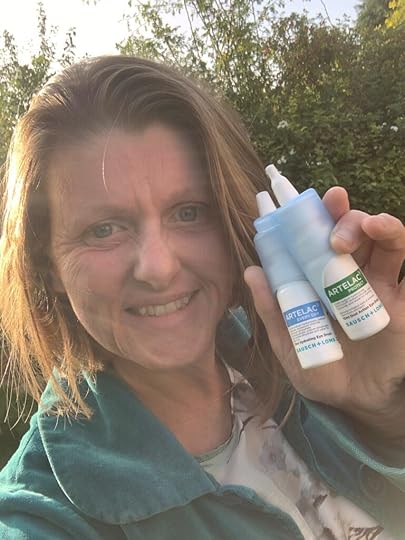 Artelac Every Day and Protect eye drops for dry eyes and hay fever
So why are your eyes so sore? It’s important to understand what’s going. It might be hay fever but it could also be other allergen triggers such as dust, pollution , mould or that you just have dry eyes.
How do I know if I have dry eyes?
Dry eyes can happen for a number of reasons and can affect anyone at any time in their life. So many things could be irritating your eyes, including dust, lack of sleep, age (it’s more common if you’re over 50), if you wear contact lenses, nicotine smoke and the list goes on…
You may have dry eyes if your eyes are: itchy, sore, gritty, red, blurry, sensitive to light or more watery than normal.
NHS website
For me, dry eyes means they are much more watery than normal, can be puffy, especially when I wake up and can also be itchy and sore and often feel gritty, all year round! They also get gummed up, it’s hard to explain, but white sort of gummy bits clog up my eyes and can cause a lot of irritation. It can become obsessive to try to remove the grit of gum but this can oten lead to further irritate so leave eyes alone as much as possible.
There are couple of things I do regularly to keep on top of my eye health, including:
Anti-histamines – I take a fast acting anti-histamine tablet when pollen is high. I don’t take it all the time. I know some people say to take them daily, regardless, to maintain protection but I don’t want to be taking them all the time. I need them to be effective if I have a full on allergic reaction so I err on the side of caution and try to get by without them when I can.Eye Drops – I’ve been using some new eye drops for dry eyes in the day time and some lubricating eye drops at nighttime. I think I’ve already been waking with less pain in the mornings. Typically my eyes can feel welded shut and painful to open at first, I think this is due the lack of natural lubrication of my dry eyes. This symptom has begun to alleviate as I progress through Topical Steroid Withdrawal (TSW) which I also find interesting. What effect did those long term topical steroids have on my eyes?Moisturise – I apply Aloe Vera to my eye lids and under my eyes when they are really sore and swollen. I also have a jar of oily emollient on hand and apply this first thing and throughout the day when my eyes feel dry and scratchy. It definitely makes my eyes feel less sore and the dryness on my eyelids has reduced. Doing this can also catch pollen in the emollient and so prevent some of it going in your eyes.
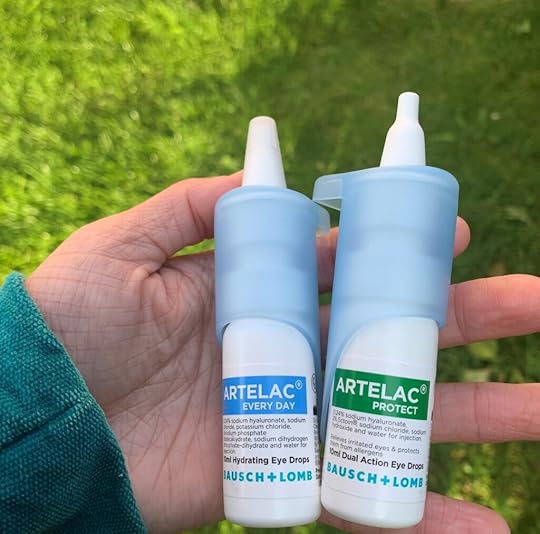
Why Artelac
I try to source products that only contain natural ingredients. Since cutting out topical steroids, immuno-suppressants and other drugs I’m now feeling the healthiest I have in long time. But my eyes have always watered. It’s just something I’ve got used to. So when I heard about these new eyedrops I decided to give them a go. My eyes water nearly all the time and I’m always carrying a hanky to dry the excess water.
I read the small print before using and was encouraged to see hardly any side effects listed. Always check ingredients and look for brands that you trust. Also always read any contra-indications on anything you use.
If you’re interested in finding out more, visit www.artelac.co.uk
What else can I do for dry dyes?
Always seek advice from an optician or pharmacist if you’re worried about your eyes. I’m not a specialist, I’m just sharing some simple tips that help me. The following could help you to avoid further irritation;
Keep eyes clean – You can do this by wearing wrap around sun glassed if pollen count it high or you’re doing gardening or a dusty job.Wear goggles – if you’re doing a particularly dusty DIY projectDehumidifier – These can help to keep your home environment optimal for eye health.Air purifier – Can also help remove allergens and irritants from the air in your home. Keep windows closed if you can, especially on windy days.Sleep – Tired eyes can be more susceptible to irritation. Getting plenty of sleep can make more difference than you might realise.Avoid touching – It can feel like you need to rub out grit or remove something from your eye, but when you rub there is nothing there and you just make the situation worse. Try to avoid touching your eye if you can. Cotton Handkerchief – If you really need to do something to alleviate the itch, just a cotton hanky, not a paper tissue, to dab the eye. I find particles from paper tissue can make my eyes more irritated. Hold the hankie gently to the eye to mop up excess liquid but don’t rub!Relief – I find a flannel soaked in water and placed over the eyes can really help soothe. Put the flannel in the freezer or fridge for extra soothing. Ice packs also help.
You can watch this short video for more information.
And you can buy Artelac here on Amazon or from Superdrug.
Watch this space for more on my skincare routine, daily cleansing and hair care blogs/vlogs in the future!
#Ad #SponsoredPost #Artelac
The post Daily hay fever and dry eye treatment first appeared on What Allergy Blog.
Daily hay fever and eye treatment
Living with hay fever and constantly watery eyes is a daily challenge, juggling the seasons; those days when they’re dry and scratchy and other days when they water incessantly.
Over the years I’ve been recommended eye drops by my optician but have often been put off by the possible side effects of prolonged use, the ingredients or the taste! Yes the taste! Not that my eyes have taste buds but sometimes the drops can filter through your eyes, back down through your nose and into the back of your throat. Maybe I’m imagining this but I’ve often stopped using eye drops because of this. If they contain steroids I’m also very wary and would avoid using them.
Artelac Every Day and Protect eye drops for dry eyes and hay feverSo why are your eyes so sore? It’s important to understand what’s going. It might be hay fever but it could also be other allergen triggers such as dust, pollution , mould or that you just have dry eyes.
How do I know if I have dry eyes?
Dry eyes can happen for a number of reasons and can affect anyone at any time in their life. So many things could be irritating your eyes, including dust, lack of sleep, age (it’s more common if you’re over 50), if you wear contact lenses, nicotine smoke and the list goes on…
You may have dry eyes if your eyes are: itchy, sore, gritty, red, blurry, sensitive to light or more watery than normal.
NHS website
For me, dry eyes means they are much more watery than normal, can be puffy, especially when I wake up and can also be itchy and sore and often feel gritty, all year round! They also get gummed up, it’s hard to explain, but white sort of gummy bits clog up my eyes and can cause a lot of irritation. It can become obsessive to try to remove the grit of gum but this can oten lead to further irritate so leave eyes alone as much as possible.
There are couple of things I do regularly to keep on top of my eye health, including:
Anti-histamines – I take a fast acting anti-histamine tablet when pollen is high. I don’t take it all the time. I know some people say to take them daily, regardless, to maintain protection but I don’t want to be taking them all the time. I need them to be effective if I have a full on allergic reaction so I err on the side of caution and try to get by without them when I can.Eye Drops – I’ve been using some new eye drops for dry eyes in the day time and some lubricating eye drops at nighttime. I think I’ve already been waking with less pain in the mornings. Typically my eyes can feel welded shut and painful to open at first, I think this is due the lack of natural lubrication of my dry eyes. This symptom has begun to alleviate as I progress through Topical Steroid Withdrawal (TSW) which I also find interesting. What effect did those long term topical steroids have on my eyes?Moisturise – I apply Aloe Vera to my eye lids and under my eyes when they are really sore and swollen. I also have a jar of oily emollient on hand and apply this first thing and throughout the day when my eyes feel dry and scratchy. It definitely makes my eyes feel less sore and the dryness on my eyelids has reduced. Doing this can also catch pollen in the emollient and so prevent some of it going in your eyes.
Why Artelac
I try to source products that only contain natural ingredients. Since cutting out topical steroids, immuno-suppressants and other drugs I’m now feeling the healthiest I have in long time. But my eyes have always watered. It’s sut something I’ve got used to. So when I heard about these new eyedrops I decided to give them a go. My eyes water nearly all the time and I’m always carrying a hanky to dry the excess water.
I read the small print before using and was encouraged to see hardly any side effects listed. Always check ingredients and look for brands that you trust. Also always read any contra-indications on anything you use.
If you’re interested in finding out more, visit www.artelac.co.uk
What else can I do for dry dyes?
Always seek advice from an optician or pharmacist if you’re worried about your eyes. I’m not a specialist, I’m just sharing some simple tips that help me. The following could help you to avoid further irritation;
Keep eyes clean – You can do this by wearing wrap around sun glassed if pollen count it high or you’re doing gardening or a dusty job.Wear goggles – if you’re doing a particularly dusty DIY projectDehumidifier – These can help to keep your home environment optimal for eye health.Air purifier – Can also help remove allergens and irritants from the air in your home. Keep windows closed if you can, especially on windy days.Sleep – Tired eyes can be more susceptible to irritation. Getting plenty of sleep can make more difference than you might realise.Avoid touching – It can feel like you need to rub out grit or remove something from your eye, but when you rub there is nothing there and you just make the situation worse. Try to avoid touching your eye if you can. Cotton Handkerchief – If you really need to do something to alleviate the itch, just a cotton hanky, not a paper tissue, to dab the eye. I find particles from paper tissue can make my eyes more irritated. Hold the hankie gently to the eye to mop up excess liquid but don’t rub!Relief – I find a flannel soaked in water and placed over the eyes can really help soothe. Put the flannel in the freezer or fridge for extra soothing. Ice packs also help.
You can watch this short video for more information.
And you can buy Artelac here.
Watch this space for more on my skincare routine, daily cleansing and hair care blogs/vlogs in the future!
#Ad #SponsoredPost #Artelac
The post Daily hay fever and eye treatment first appeared on What Allergy Blog.