Ruth Holroyd's Blog, page 28
September 23, 2020
Why are the UK public self diagnosing allergies?
This is nothing new, with the waiting lists for an appointment with allergy specialists people naturally turn to other sources of information.
This recent report makes for worrying reading…
Why are the UK public avoiding their GP?
Over half of the UK say that Covid-19 has made them more likely to try and diagnose their own symptoms before consulting a healthcare professional, a YouGov online study conducted on behalf of Thermo Fisher Scientific Inc, has found.
The new analysis, based on a survey of more that 2,000 UK adults aged 18+, shows that many are still reluctant to go straight to visit their GP when symptoms of an illness or health condition appear and will instead try to manage their condition alone first.
52% say that the pandemic has made them more likely to try and diagnose their own symptoms if feeling unwell, before consulting a GP. The survey also showed that since the beginning of the lockdown 39% are reluctant to visit their GP at this time because they didn’t want to waste their GP’s time. A quarter of respondents (25%) stated that they didn’t want to visit their GP because they were worried about catching Covid-19.
The UK has the highest prevalence of allergies
Avoiding the GP surgery has serious implications for many health conditions including allergy, where the UK has some of the highest prevalence rates in the world.
Affecting over 20% of the UK population, allergy can prove fatal without an accurate diagnosis. Despite this, more than a third (37%) of those surveyed said they considered allergies to be a ‘minor health condition’. Almost half (47%) incorrectly agreed that allergy was simply a more severe type of intolerance.
When asked in which ways, out of a list, they would respond if they or a family member developed symptoms of an allergy or intolerance,
59% said that they would search online for information and 56% would buy over the counter medication, such as antihistamines. 26% would consult a family and/or friend, only 10% would contact a patient charity (e.g. Asthma UK etc.) and 8% would buy a home testing kit online.
Amena Warner, Head of Clinical Services at Allergy UK, says, “We need to take allergy seriously and stop treating allergy and allergic asthma as ‘minor’ health conditions. Attempting to manage these kinds of conditions alone, without accurate diagnosis, can be dangerous.”
In the 20 years leading up to 2012, there was a 615% increase in the rate of hospital admissions for anaphylaxis in the UK. Today, a staggering 44% of British adults suffer from at least one allergy and the number continues to rise.[1]
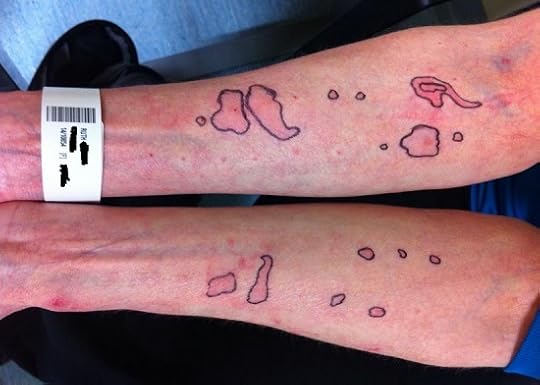 An old skin prick test result: Peanuts, Cashew, pistachio and others
The most accurate way to discover a person’s allergy triggers, and potentially save lives, is through specific IgE testing*. Accurate testing is available through GP surgeries, yet almost two thirds (63%) stated they were not aware that this was the case. 80% of those surveyed, however, said that Covid-19 had made them aware that testing in order to track and trace diseases was important.
Warner continues, “Always speak to your doctor first and discuss options for getting a specific IgE test for what may be triggering your allergic symptoms and avoid trying to source online or unvalidated tests.”
Editor’s Notes
Thermo Fisher Scientific Inc. (NYSE: TMO) is the world leader in serving science, with annual revenue exceeding $25 billion. Our Mission is to enable our customers to make the world healthier, cleaner and safer. Whether our customers are accelerating life sciences research, solving complex analytical challenges, improving patient diagnostics and therapies or increasing productivity in their laboratories, we are here to support them. Our global team of more than 75,000 colleagues delivers an unrivaled combination of innovative technologies, purchasing convenience and pharmaceutical services through our industry-leading brands, including Thermo Scientific, Applied Biosystems, Invitrogen, Fisher Scientific, Unity Lab Services and Patheon. For more information, please visit www.thermofisher.com.
Allery UK is the leading UK patient charity dedicated to helping adults and children with all types of allergy. They work with government, professional bodies, HCPs and corporates to help improve the lives of millions of people with allergic disease. To find out more, please visit https://www.allergyuk.org.
*IgE tests, or immunoglobulin E tests, measure the levels of IgE, a type of antibody. Antibodies are made by the immune system to protect the body from bacteria, viruses and allergens. IgE antibodies are normally found in small amounts in the blood, but higher amounts can be a sign that the body overreacts to allergens. This can lead to allergic reaction. IgE testing is the most accurate and conclusive method to find out if you have an allergy.
Research was conducted amongst a group of 2045 adults (18+) nationwide. Fieldwork was carried out between the 26th – 29th June. The survey was carried out online and the figures have been weighted and are representative of GB adults.
What can we do about this?
More education is needed to help people understand which symptoms are an intolerance, and which more serious things indicate a real allergic reaction, and particularly what anaphylaxis looks like.
Do GP’s know how to recognise allergies and refer patients for expert help and testing?
I’d love to hear your views. Are you more or less likely to visit your GP now? Do you have food allergies or intolerances and have these been diagnosed with an IgE test?
Because not all tests are equal. There are many companies offering expensive tests which may not provide conculsive proof or reliable results.
The post Why are the UK public self diagnosing allergies? first appeared on What Allergy Blog.


September 21, 2020
You’re just steroid phobic
Ever been confused by the advice you’re given by medical professionals?
This is just a snapshot of all the confusing advice I’ve ever been given about my skin… and why I chose to listen to my body.
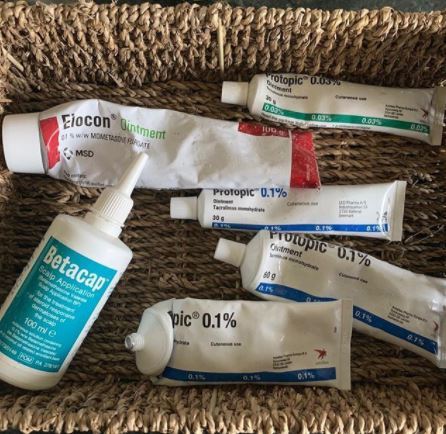 Just some of the topical steroids I’ve used…
Topical steroids are quite safe for long term use.
Topical Steroids may thin your skin.
Topical steroids can cause thickening of the skin.
Use sparingly…
A finger tip of topical steroids for an area of skin the size of your palm…
Apply topical steroids so that they form a slick layer.
Use topical steroids
Don’t use topical steroids
You misused them
You used them too much…
You didn’t use them. enough
You didn’t use them correctly
It’s your fault
You’ll be using steroids all your life
You won’t be able to just stop using topical steroids.
You just have eczema.
Stop scratching.
Your skin will never heal if you don’t stop scratching.
No you can’t have any more steroids.
It’s genetic. There’s nothing you can do about it.
Moisturise your skin more.
Don’t moisturise your skin at all.
Eat the right diet for your skin.
Diet has no impact on your skin.
None of this advice is right. Or some of it? or all of it?
It’s so confusing.
But the one thing I have learnt is that deep inside, my body knows what’s right for you.
That soul inside me, that inner instict, it has power to educate.
Learn to tune into that wisdom.
Listen.
You know what’s right for you and don’t let anybody tell you otherwise.
If it feels wrong, it probably is. If it feels vague it’s probably not conclusively going to work.
If it seems risky, it probably is.
The best risk I took was to listen to that voice.
It was screaming at me to stop using those topical steroids.
And whilst over a year later, I’m still healing… my body, my skin and my soul thanks me daily. So the lesson is, question everything, be inquisitive, don’t just do what your doctor says because they are not always right.
I say this with a pinch a salt. I love the NHS and what they do is amazing, but for eczema and skincare? we have a very long way to go…
The post You’re just steroid phobic first appeared on What Allergy Blog.
You’re steroid phobic
Ever been confused by the advice you’re given by medical professionals? This is just a snapshot of all the confusing advice I’ve ever been given about my skin… and why I chose to listen to my body.
Just some of the topical steroids I’ve used…Topical steroids are quite safe for long term use.
Topical Steroids may thin your skin.
Topical steroids can cause thickening of the skin.
Use sparingly…
Apply steroids so that they form a slick layer.
Use steroids
Don’t use steroids
You misused. them
You used them too much…
You didn’t use them. enough
You didn’t use them correctly
It’s your fault
You’ll be using steroids all your life
You won’t be able to just stop using topical steroids.
You just have eczema.
Stop scratching.
Your skin will never heal if you don’t stop scratching.
No you can’t have any more steroids.
It’s genetic. There’s nothing you can do about it.
Moisturise your skin more.
Don’t moisturise your skin at all.
Eat the right diet for your skin.
Diet has no impact on your skin.
None of this advice is right. Or some of it? or all of it?
It’s so confusing.
But the one thing I have learnt is that deep inside, my body knows what’s right for you.
That soul inside me, that inner instict, it has power to educate.
Learn to tune into that wisdom.
Listen.
You know what’s right for you and don’t let anybody tell you otherwise.
If it feels wrong, it probably is. If it feels vague it’s probably not conclusively going to work.
If it seems risky, it probably is.
But the best risk I took was to listen to that voice.
It was screaming at me to stop using those topical steroids.
And whilst over a year later, I’m still healing… my body, my skin and my soul thanks me daily. So the lesson is, question everything, be inquisitive, don’t just do what your doctor says because they are not always right.
I say this with a pinch a salt. I love the NHS and what they do is amazing, but for eczema and skincare? we have a very long way to go…
The post You’re steroid phobic first appeared on What Allergy Blog.
September 16, 2020
BAN Super Cortisone+
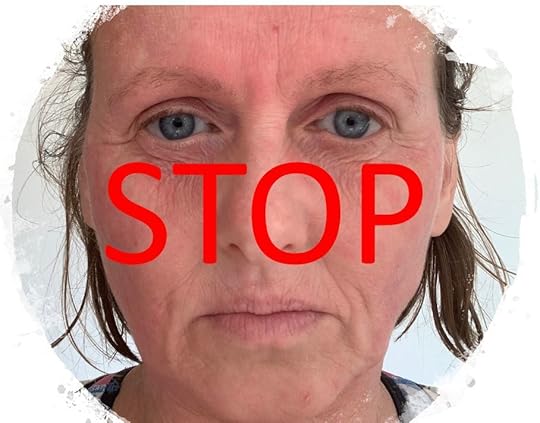 S.T.O.P the promotion of high potency topical steroids as Dream Cream
I and many of the Topical Steroid Withdrawal community are absolutely furious to see a high profile TV dermatologist pushing a strong potency topical cortisone steroid as an over the counter product.
Dr Sandra Lee is sending out free samples to high profile celebrities like Kim Kardashian.
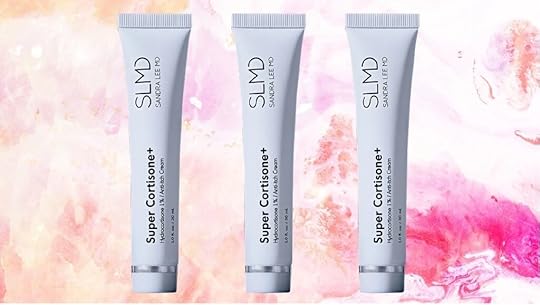 Dr Sandra Lee’s Super Cortisone+
Marketing Super Cortisone+ as the heal all cream that every home should have in their medical cabinet.
As someone who is still going through withdrawal from using prescription topical steroids such as Betnovate, Elocon and Locoid this is giving me nightmares. I can’t bear to think of other people going through what I have been through unnecessarily.
Read ‘Dr Pimple Popper just made cortisol cream cool!’
No! Not Cool Sandra. NOT COOL!
How is this allowed? Why is this even legal?
I do not endorse this video
This video has me literally fuming. I have been through a lot of anger, guilt, shame and anxiety throughout my withdrawal and this has got me all riled up again. I will be using this anger to help calmly raise awareness for what can happen. This is a serious drug that should not be sold as a cosmetic super cream.
Only in America (and Canada)…
This is happening in America, where else? and would be illegal here in England. But it seems in the US anyone can sell topical cortisone. I’d love to know what big pharma is paying Dr Sandra Lee. It must be a lot of money. If you’ve not heard of her before, she’s Dr Pimple Popper and she has a huge following on Instagram, Twitter, YouTube and other channels. I don’t even want to share links to her social platforms because this scares me so much.
There is a big movement driven by Cara and many others in the TSW community. I’m late to the game really because it’s been going on for a while. All we can do is respond, sharing our fears and misgivings and try to get our message across, that this is dangerous.
Super Cortisone+ is 1% potency
In my book that’s a very high potency. In the UK the first topical steroid you’ll be given is Hydrocortisone which is 0.1%. You can buy Hydrocortisone over the counter to use on itchy skin rashes and insect bites. It works and is safe for short term use.
But when this doesn’t help your eczema you begin to be prescribed stronger and stronger cortisone creams. They eventually stop working and begin to cause more, worse skin problems and you’ll end up addicted.
Now this doesn’t happen to everyone who uses them, but we don’t understand yet why some people become addicted and need stronger and stronger medication and eventually Oral Immunosuppresants like Methoterexate or Biologics like Dupliomab. We don’t know what the long term effects of using these are either. They scare me just as much as the topical steroids. Methotrexate resulted in me getting shingles which caused me 5-6 weeks of extreme discomfort and pain so bad and shocking to my body that the TSW actually went away. I was just a ball of pain. I would not wish that on anyone.
Dream Cream and Super Cortisone+
Also, how is it ethical or appropriate to use words like ‘super’ and ‘dream’ when describing a topical hydrocortisone? She describes it as ‘cool’ and ‘super charged’. This fluffy marketing speak should not be used alongside a serious topical steroid cream.
OK so it doesn’t contain parabens, phalates,sulfates or fragrances and it also has other more healing ingredients such as aloe vera, vitamin E and shea butter… but there is nothing dreamy about topical steroids.
No products like this should be making claims about being Super or a Dream. These are serious products that you can only get on prescription in the UK. If used wrongly they are dangerous. The language is misleading and wrong. It is cortisone cream. That is all. It should not be sold as anything other than that and in my opinion the very real risk of addiction and withdrawal should be shown far more prominently with graphic pictures of how bad this stuff can make your skin.
Because believe me, your skin will be worse than you an ever imagined when you try to give it up. This is a lifetime choice unless you have a few years to go through withdrawal.
But hey, you might not get addicted… are you willing to take that risk?
Drugs on drugs on drugs
It terrifies me that drugs like this are the first thing prescribed by so many doctors. So few people are encouraged to examine their diet, lifestyle and mental health and I truly believe you’ll never be free of eczema unless you do.
It terrifies me further that they can be given away as special gifts to anyone and everyone.
How is this happening?
YOU all need to STOP.
This has to STOP.
I feel like this is just a big massive marketing ploy to get a nation, a world, the globe, hooked on topical steroids, so that they are then a permanent money stream.
It takes a lot of guts, support and planning to go through withdrawal, so many are left without the option of ever being free of these toxic and damaging drugs.
Because that’s what they are. They are more addictive than herione.
Harder to come off and go through cold turkey than any other drug I’ve ever come across. You can go to rehab for drug and alcohol addiction and be clean in months. I know it’s not the same and I have never taken drugs like this but the withdrawal is shorter that topical steroids.
Topical Steroid withdrawal can go on for YEARS and it’s one of the most painful, undignified, destructive processes I’ve heard of.
You may lose your job or not be able to work. You will lose your dignity.
Be stripped of everything that makes you human, woman, man, functioning. You will question your sanity.
You will go to places you never dreamt it was possible to go. You will be brought to your knees and you will question whether you can go on. But you do go on because going back is not an option.
Your hair will fall out. Your skin will erupt into oozy open wounds. You will itch and flake in a constant cycle for as long as this bloody process takes.
You may have chronic and debilitating nerve pain which I had for months. I’m not sure I should have been driving while this was happening and pretty much didn’t because it was so hard to concentrate when my body was spasming with these nerve cramps.
But do you know what the worst thing is?
TSW and TSA are not recognised by the medical profession
Yup. That’s right. We are all just making this up. Few doctors and dermatologists recognise this is actually happening to us and there is no support for anyone choosing to go through withdrawal.
Having said that, there is enormous and incredible support from the online community so if you think you have TSA don’t despair. Do your research and find out everything you can. Arm yourself for battle. Check out ITSAN and watch the Preventable Documentary.
I’ve been fortunate that my dermatologist has followed my journey through withdrawal from topical steroids and protopic and I’ve been lucky enough to get UVB therapy to see if that helped.
But enough about me.
I’m calling for all Dermatologists out there.
All doctors and GPS.
Anyone with an interest in eczema and skin health.
Please listen to us.
This is real.
Topical steroid withdrawal is a nightmare but it’s very real. It’s happening. And if you use topical steroids for a prolonged period of time it could be coming to you too.
Until TSA and TSW are recognised as real and debilitating conditions this kind of thing will continue. And while pharmaceutical companies are willing and able to pay high profile celebrity dermatologists to pedal these drugs, there is little we can do.
This blog feels like a drop of rain in the middle of a desert but I have to try.
Dr Sandra Lee, how can you sleep at night? How will you help those people who become addicted to your Super Cortisone+ ?? You probably won’t, but we, the TSW community will be left to pick up the pieces.
OK Rant Over. If you feel so driven, why not pop a nice, calm, respectful comment to Dr Sandra Lee or Dr Pimple Popper as she is also know. The more comments she gets from people concerned about this marketing campaign for her product the better.
Yours with steroid free passion…
The post BAN Super Cortisone+ first appeared on What Allergy Blog.
September 14, 2020
Question everything…
Topical steroids are quite safe for long term use.
Only use topical steroids for short term use.
Use sparingly…
Apply steroids so that they form a slick layer
Steroids may thin your skin.
Topical steroids may cause thickening of your skin
Use topical steroids
Don’t be scared of topical steroids, they’re quite safe
You’re steroid phobic
Don’t use topical steroids
You misused them
You used them too much…
You didn’t use them enough
You didn’t use them correctly
It’s your fault
You’ll be using steroids all your life
You won’t be able to just stop using topical steroids.
You just have eczema.
Stop scratching.
Your skin will never heal if you don’t stop scratching.
No you can’t have any more steroids.
It’s genetic. There’s nothing you can do about it.
Moisturise your skin more.
Don’t moisturise your skin at all.
Eat the right diet for your skin.
Diet has no impact on your skin.
You’ll never be able to stop using topical steroids
I’m happy for you to continue using topical steroids.
I’d be happy for you to try this immuno-suppressant (which ultimately caused Shingles)
Are you feeling the confusion?
Just some of the topical steroids and Immunosuppressants I used on my skinI’ve been told so many conflicting things over the years about eczema and the treatments I should use.
I just want to share this simply to say, question everything.
Look for second opinions. Look for answers.
Don’t always just go with what your doctor tells you is the right course of treatement.
Be inquisitive.
Trust your instinct.
My instinct always made me very wary of topical steroids.
I’ve always hated using them, held off and used them as a last resort.
My current skincare routines
Now, having cut out topical steroids in January 2019 and Protopic in April 2019 my skin is au naturel. I use Epaderm when it’s flaring and some lovely natural skin care products do help with various different symptoms and skin problems.
Epaderm is a steroid free emollient and has no SLS, fragrances, preservatives or colourings so should be kind to your skinBalmonds – Their tea tree salve is good on really sore areas, Lavender Baby Balm is a dreamy treat for my dry sore thickened areas and I use Skin Salvation on hands, feet, arms and legs and my face when it’s feeling calm. Their Rosehip facial oil is also really lovely. Use code WHATALLERGY for 10% off.Lyonsleaf – Their Zinc and Calendula cream is so gently and great on oozy skin. I also apply a layer at night and often bandage sore areas to give an intensive treatment with Epaderm on top to increase the moisturising qualities and make it go further. Use code WA20 for 20% off until the end of September only.
My skin is still healing. Even after all that time I’m still experiencing withdrawal on my face, the back of my legs and a little on my arms and hands which are all healing slowly.
As a nation we need to question more. We need to stand back and see if there is a natural solution.
I’m not saying ignore all your doctor’s advice because they can and do save lives. I love the NHS… but sometimes, it could be changes in our lifestyle, diet and outlook on life that can have a huge impact on your overall health.
Especially with conditions caused by inflammation, which is linked to having a low immune system, anxiety, depression, stress and poor mental health in general.
If you have a small mild rash, try everything natural first. Please don’t automatically reach for the steroids because they can and do have long term damaging effects on your skin health.
The post Question everything... first appeared on What Allergy Blog.
September 9, 2020
Sleep tips for eczema and TSW
Over the last year, after cutting out Topical Steroids I’ve really struggled with my sleep. Sometimes only getting a few hours, if that, and finding I finally drop off just hours before my alarm is due to go off.
 Create a calm, tranquil and peaceful space to sleep in and keep it just for sleep
 There seem to be strange cycles of hives, night sweats and anxiety that plague me all night. Coupled with the fact that I’m Peri-menopausal and you’ve got some challenges on your hands.
Sleep used to be the only thing I was any good at. I used to fall asleep and wake as if no time had passed feeling refreshed and ready for the day. Now sleep eludes me I feel I’ve lost a super power. Everything becomes such hard work when you’re functioning on very little sleep.
And so I embarked on a mission to fix this, to find sleep again, because sleep is also essential for positive mental health, healing and particularly skin recovery during a gruelling journey with topical steroid withdrawal.
I did a lot of research and discovered lots of things that really work. Some of the below I’ve not tried yet, but I’ll make that clear. Many of them have made small little differences and some have been game changers. I hope some of these might help you and thank you to everyone who helped me by giving me advice on this from their own personal experience. Here goes. My 30 tips for a good night’s sleep..
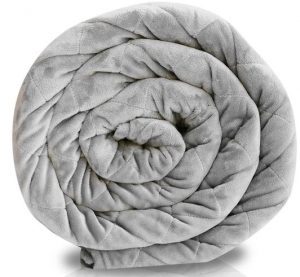 Use Coupon Code WHATALLERGY for £10 off a Kalm Koala Weighted Blanket.
Weighted blankets – I’m trying this one at the moment and am about one week into testing, began using on about 24th January 2020. They can also be called anxiety blankets and have just the right amount of weight to calm you, relieve stress and so ease you into sleep. I’m using the Kalm Koala weighted blanket at the moment and will write a full review in a few weeks. I think it’s already helping. Use code WHATALLERGY FOR £10 OFF. Listening to sleep stories or music I highly recommend the Calm App. If you want a month free let me know as I can send you a link. Someone else recommended listening to Gayatri mantra, a Hindu meditationRead the book ‘Why we Sleep‘ by Matthew Walker – The new science of sleep and dreams – to get a better understanding of why it’s so important and what sleep does for us, the different stages of sleep etc.Listening to an audio book – as long as it’s not a grizzly, scary thriller, will relax and soothe you as you listen. One of the best things I did last year was investing in Audible. I am a little hooked but love listening to stories narrated to me. I have to admit that I often need to listen back a few chapters if I’ve fallen asleep, but it’s such a treat and they have loads of free audio books available.CBD Oil – I have tried this for a few weeks. I’m not sure if it worked and would like to try again for longer. However there are many reports that it helps to reduce anxiety for many and can help with sleep. Buy CBD GummiesRead a book – just try to avoid really stimulating reading matter like horror or thrillers which might raise your heart rate.Get the Vagus/parasympathetic nervous system working – humming, singing, meditation can help with this.Herbal tea eg. Camomile or Sleep Tea at least a few hours before bed. This is also one of my nightly routines. I find it calming, and the cup of tea signifies I’m winding down and getting ready for sleep. Recently I discovered the Chuckling Goat sleep tea which really does help!Dormesan tincture from Dr Vogel – should aid sleep. I take this every night if I’m struggling to sleep.20 Minutes meditation – Find a quiet space, sit with your back straight and either do a guided meditation or concentrate on your breathing and gratitude for 10-20 minutes before bed. Can work wonders if you can get into the mindset! I try to do a Calm guided meditation every day. Sometimes I spend the whole ten minutes scratching or trying not to scratch, but by the end of the meditation I have usually managed to find many moments of calm, and have also managed to slow my heart rate and sit and talk to my itch. Let it know it’s OK and that we can just be itchy, but that I am going to try to sill my twitching fingers none the less. Even a bad meditation is better than none at all and don’t beat yourself if it feels like it’s not working. Work at it and you’ll find it gets easier.Get into bed and lie still, arms by your side, on your back and slow your breathing. Try not to touch your skin, scratch or fidget, but don’t feel tense. The idea is to gently relax and sink into the bedEssential oils e.g. Lavender – these can be really calming. Put some on a hankie or on your pillow case. Try some Lavender linen sprays – but make sure it’s organic, natural and not full of chemicals Buy an oil diffuser – I have just bought an oil diffuser and they work really well, leaving a gentle aroma in the room. They’re also safe as they don’t involve any candles. You can add any essential oils of your choice; I am using Borage and Lavender at the moment. Thanks Jen for this recommendation.Cool temperature in your room – have a window open, turn off the radiator in your room and don’t heat your house at night. It’s far healthier to get warm from snuggling in bed and having a cool head outside the covers,Natural, cotton bedding – this should prevent you getting over heated. Synthetic covers and bedding that is too think and not breathable may make you overheat and sweat.Try sleep inducing tinctures e.g. Californian Honey by She is of the woods. This is a recommendation from an Instagram friend. I’ve not tried this but it’s on my list. Tinctures can work really well so try some, look for things that you like the sound of and do some research. Take Melatonin supplements – Not tried this myself but have heard from friends that it can really help with both sleep and anxiety.No Screen time, TV or computers for at least an hour before bed. You can set your phone to cut you off using screen time at a chosen time. I’m going to try this, but so far failing and I have to override it but I love this idea.Antihistamines if you’re really itchy, can make you drowsy too so if this applies to you, could be worth a dryGrounding sheet – I’m not sure how these work but have been doing a little research and I’m tempted to try it if I’m still struggling in a few months time.Make your bedroom a tidy, quiet, calm and peaceful place. Don’t work in your bedroom, try to keep it just for sleep. Make it an oasis of calm.Darkness – I also need the room to be as dark as possible, with blackout blinds and no blinking lights or technology glowing. Eye masks can help if you’re somewhere and cannot make it dark.Cuddling my huge teddy bear can help me feel soothed and calm. I know I’m a grown woman but it works for me, in the absence of a human!Fan – if you get hot at night, keep a fan by the bedside. I have this amazing cool neck fan which is pictured below. Easy to use and quiet, just don’t turn on the rotating light setting or that will wake you up!Get an old fashioned alarm clock – like the one pictured here. In this way you can try to banish the evil mobile phone from the bedroom and avoid the temptation to look, check and so wake yourself up again by stimulating your brain.Bandage up sore skin – I find this almost stops itching and allows me to sleep better. I also use tubular bandages most nights and the pressure of the tightness seems to allay many itching. It’s not a complete cure and I usually always have some kind of itch attack every night but I’m learning to cope with these better each time. I can stop myself, then try to touch the itchy areas with fluttery light touches, soothing touches and gently brush the itch away. Doesn’t always work!Yoga – do a short yoga session, working on gentle flows or some of your favourite positions. Choose relaxing postures and not awakening strong ones. I find this can really help me focus on the practise of yoga and so move me into a more tranquil mindset for sleep. I have been known to fall asleep on my yoga mat! To avoid this I try to remember to set an alarm

Should you use your steroid inhaler during TSW?
This has really been worrying me. If you have asthma then you’ll be familiar with those brown preventative inhalers and you’ll also know that they contain steroids.
That’s just what they contain, not much we can do about that, and they work! They help you keep your asthma under control.
But what if you are also cutting out topical steroids? Apologies to the asthma peeps who are not doing TSW, I hope there will be something of use for you guys here too, but keep your eyes peeled as I have another blog about living with asthma coming up shortly that will appeal to everyone with asthma and I hope everyone without too! It’s about reducing indoor pollution and everyone needs a bit of that.
So back to the steroids…
Will using your inhaler affect TSW?
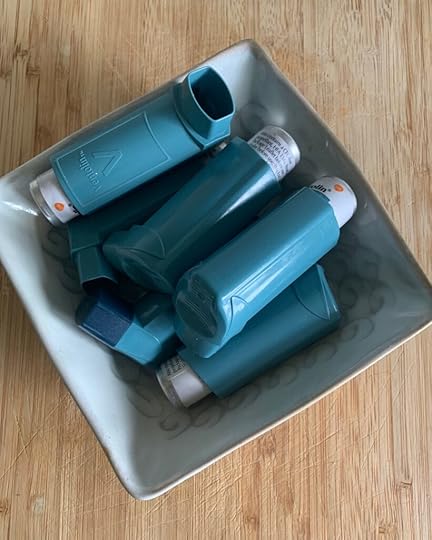
The blue inhaler which helps with flare ups or asthma attacks doesn’t contain steroids so you’re fine using that. But as everyone with asthma knows, using the blue inhaler a lot isn’t good. If you need to puff on your inhaler daily and feel your breathing isn’t controlled, then you probably need a preventative inhaler.
These are the ones that contain steroids. Some are brown, mine orange. These need to be taken every day, either one or two puffs or whatever our doctor or asthma specialist advises.
Reducing the dose of oral steroids
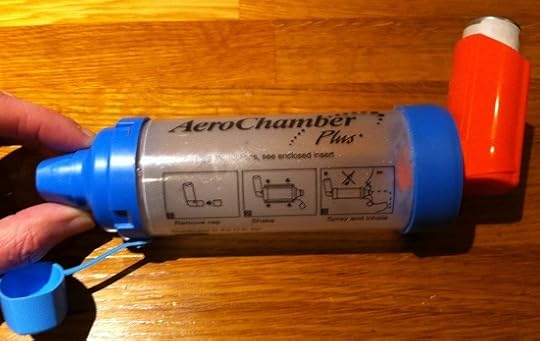 Always use a spacer when you take your preventative inhaler
Always use a spacer to take your preventative inhaler and also remember to gargle after each dose, and also brush your teeth. I did get thrush in my throat from using this during a bad spell of asthma and you don’t want that. It’s horrible. Using the spacer means the drug is held inside the central tube and you can breathe in slowly, rather than the drug being blasted at your tongue and the back of your mouth.
Flixotide propionate
This is the steroid in my preventative inhaler that I use, pictured above, and it’s administered doses of 125 micrograms of active ingredient.
Looking at topical steroids, choosing Elocon as just one example, each gram contains 1 mg of mometasone furoate, the active steroid ingredient.
There are 1000 micrograms in 1 mg. So yes, it’s less but it’s not THAT much less. I hate steroids so much that I don’t want any of them in my body at all.
When I first started my TSW journey I tried to reduce my dose of preventative inhaler and at some point, when I was probalby at my worst, I started forgetting to take it.
I realised I hadn’t used the preventative inhaler for about six months during lockdown when an asthma nurse phoned to check I was OK, due to having asthma and self isolating. I couldn’t actually remember the last time I’d taken it and my asthma was the best it had ever been.
This wasn’t a conscious move on my part and I’ve always advised anyone with asthma to keep up with the preventative meds because asthma can kill. It’s a very serious condition when it gets out of hand.
So what had changed for me? Was it the reduced stress? Less pollution? Getting out for regular exercise? Working less? Sleeping more? Learning to breathe? Eating better? Cutting out processed foods? Drinking less alcohol?
A combination of all of these?
Or was it something more sinister. Was my asthma improving as my skin was healing. Was there a link with the topical steroids and my asthma?
But then came a flare up..
In the last few months I’ve noticed my asthma has been getting worse. I don’t know if it’s linked to hay fever and pollen, moulds or pollution increasing again. I don’t know if it’s the weather.
Anyone else get a mild increase in asthma EVERY TIME THE WEATHER CHANGES?
This can be really annoying when the British weather gets into it’s four seasons in one day nonsense, which I actually love by the way. I’m one of those true Brits who loves the weather, finds it fascinating and loves how the scenery, views, nature and woodlands change with the seasons, skies, weather etc.
But it plays havoc with my asthma.
Holidays and asthma
My asthma also often seems to flare up when I go away. I’m not sure why. Again, is it dust? damp? Excitement? I have no idea. But I was really wheezy in the lake district, which was frustrating. I also stayed at a friends house, who have a dog and I had one evening where I could hardly breathe. I could tell they were really worried too and their lovely if boisterous dog was banished to see if that helped.
I was there for a few days and it seemed to calm down after that awful first night. I didn’t seem to be allergic to Murphy’s saliva (we played gross slobbery ball games for a long time) or his fur. I seemed to be able to pet him and be near him and not be wheezy but then really struggled in certain rooms of the house, like the living room with soft furnishings and carpets. I was happier in the kitchen which was tiled. So I suspect it may be my dust allergy, which is so annoying. I don’t seem to react like this with my own dust just other peoples.
TSW flare up vs Asthma flare up
My skin has flared up in the last few months. Is this linked to my asthma also worsening? I started to take the preventative inhaler in the last few weeks and my skin is just getting worse and worse. Is there a link? I’ll be gutted if there is because I really need to get on top of my asthma.
Steroids in your inhaler are low dosage
When I spoke to my ashma nurse I expressed my concerns about using the steroid inhaler whilst trying ot do TSW and she did allay some of my fears.
I was told that inhaled steroids mostly remain very localised to your lungs, and that very little actually enters the blood stream leading to systemic effects. The dosage of steroid in inhalers is also extremely small compared to the amount in topical corticosteroid creams that we were being prescribed.
I’ve also been told that topical steroids are perfectly safe so I am still a little skeptical, because the problem is, these so called experts don’t know. They don’t know and they don’t see; they don’t accept that TSW is real so why should I believe them about inhaled steroids?
I am clinging to the hope that the steroids in my inhaler will not spiral me back to square one. I hope that I will and can keep healing. I have to remain hopeful.
I have to cling to the belief that I will heal.
I felt so close back in March and April. In May, June and July I had the most amazing taste of what living with normal skin will be like.
So for now, I will keep using my preventative inhaler. I also have an oxygen machine at home which I think is also helping so I will keep on with that, twice a day when I can find the time.
And I am clinging to the hope that we will all get through this. Stay safe asthma warriors. Asthma can be deadly so take your meds. Eczema and topical steroid withdrawal are just grim, not life threatening.
Learning to love yourself, to love your faulty misbehaving skin and to really believe that you are enough, is also part of this healing process.
I am beautiful. I am perfect just the way I am.
(But maybe not quite the way I am, I mean I’d be so much better without this eczema plague #amiright ???)
I am beautiful, and so are you. All you beautiflawed TSW warriors. Keep fighting. Keep smiling and keep using your inhalers!
Anyone else out there have asthma and going through TSW? What do you feel about this? I’d love to hear from you guys…
The post Should you use your steroid inhaler during TSW? first appeared on What Allergy Blog.
Should you use your inhaler during TSW?
This has really been worrying me. If you have asthma then you’ll be familiar with those brown preventative inhalers and you’ll also know that they contain steroids.
That’s just what they contain, not much we can do about that, and they work! They help you keep your asthma under control.
But what if you are also cutting out topical steroids? Apologies to the asthma peeps who are not doing TSW, I hope there will be something of use for you guys here too, but keep your eyes peeled as I have another blog about living with asthma coming up shortly that will appeal to everyone with asthma and I hope everyone without too! It’s about reducing indoor pollution and everyone needs a bit of that.
So back to the steroids…
Will using your inhaler affect TSW?
The blue inhaler which helps with flare ups or asthma attacks doesn’t contain steroids so you’re fine using that. But as everyone with asthma knows, using the blue inhaler a lot isn’t good. If you need to puff on your inhaler daily and feel your breathing isn’t controlled, then you probably need a preventative inhaler.
These are the ones that contain steroids. Some are brown, mine orange. These need to be taken every day, either one or two puffs or whatever our doctor or asthma specialist advises.
Reducing the dose of oral steroids
Always use a spacer when you take your preventative inhalerAlways use a spacer to take your preventative inhaler and also remember to gargle after each dose, and also brush your teeth. I did get thrush in my throat from using this during a bad spell of asthma and you don’t want that. It’s horrible. Using the spacer means the drug is held inside the central tube and you can breathe in slowly, rather than the drug being blasted at your tongue and the back of your mouth.
Flixotide propionate
This is the steroid in my preventative inhaler that I use, pictured above, and it’s administered doses of 125 micrograms of active ingredient.
Looking at topical steroids, choosing Elocon as just one example, each gram contains 1 mg of mometasone furoate, the active steroid ingredient.
There are 1000 micrograms in 1 mg. So yes, it’s less but it’s not THAT much less. I hate steroids so much that I don’t want any of them in my body at all.
When I first started my TSW journey I tried to reduce my dose of preventative inhaler and at some point, when I was probalby at my worst, I started forgetting to take it.
I realised I hadn’t used the preventative inhaler for about six months during lockdown when an asthma nurse phoned to check I was OK, due to having asthma and self isolating. I couldn’t actually remember the last time I’d taken it and my asthma was the best it had ever been.
This wasn’t a conscious move on my part and I’ve always advised anyone with asthma to keep up with the preventative meds because asthma can kill. It’s a very serious condition when it gets out of hand.
So what had changed for me? Was it the reduced stress? Less pollution? Getting out for regular exercise? Working less? Sleeping more? Learning to breathe? Eating better? Cutting out processed foods? Drinking less alcohol?
A combination of all of these?
Or was it something more sinister. Was my asthma improving as my skin was healing. Was there a link with the topical steroids and my asthma?
But then came a flare up..
In the last few months I’ve noticed my asthma has been getting worse. I don’t know if it’s linked to hay fever and pollen, moulds or pollution increasing again. I don’t know if it’s the weather.
Anyone else get a mild increase in asthma EVERY TIME THE WEATHER CHANGES?
This can be really annoying when the British weather gets into it’s four seasons in one day nonsense, which I actually love by the way. I’m one of those true Brits who loves the weather, finds it fascinating and loves how the scenery, views, nature and woodlands change with the seasons, skies, weather etc.
But it plays havoc with my asthma.
Holidays and asthma
My asthma also often seems to flare up when I go away. I’m not sure why. Again, is it dust? damp? Excitement? I have no idea. But I was really wheezy in the lake district, which was frustrating. I also stayed at a friends house, who have a dog and I had one evening where I could hardly breathe. I could tell they were really worried too and their lovely if boisterous dog was banished to see if that helped.
I was there for a few days and it seemed to calm down after that awful first night. I didn’t seem to be allergic to Murphy’s saliva (we played gross slobbery ball games for a long time) or his fur. I seemed to be able to pet him and be near him and not be wheezy but then really struggled in certain rooms of the house, like the living room with soft furnishings and carpets. I was happier in the kitchen which was tiled. So I suspect it may be my dust allergy, which is so annoying. I don’t seem to react like this with my own dust just other peoples.
TSW flare up vs Asthma flare up
My skin has flared up in the last few months. Is this linked to my asthma also worsening? I started to take the preventative inhaler in the last few weeks and my skin is just getting worse and worse. Is there a link? I’ll be gutted if there is because I really need to get on top of my asthma.
Steroids in your inhaler are low dosage
When I spoke to my ashma nurse I expressed my concerns about using the steroid inhaler whilst trying ot do TSW and she did allay some of my fears.
I was told that inhaled steroids mostly remain very localised to your lungs, and that very little actually enters the blood stream leading to systemic effects. The dosage of steroid in inhalers is also extremely small compared to the amount in topical corticosteroid creams that we were being prescribed.
I’ve also been told that topical steroids are perfectly safe so I am still a little skeptical, because the problem is, these so called experts don’t know. They don’t know and they don’t see; they don’t accept that TSW is real so why should I believe them about inhaled steroids?
I am clinging to the hope that the steroids in my inhaler will not spiral me back to square one. I hope that I will and can keep healing. I have to remain hopeful.
I have to cling to the belief that I will heal.
I felt so close back in March and April. In May, June and July I had the most amazing taste of what living with normal skin will be like.
So for now, I will keep using my preventative inhaler. I also have an oxygen machine at home which I think is also helping so I will keep on with that, twice a day when I can find the time.
And I am clinging to the hope that we will all get through this. Stay safe asthma warriors. Asthma can be deadly so take your meds. Eczema and topical steroid withdrawal are just grim, not life threatening.
Learning to love yourself, to love your faulty misbehaving skin and to really believe that you are enough, is also part of this healing process.
I am beautiful. I am perfect just the way I am.
(But maybe not quite the way I am, I mean I’d be so much better without this eczema plague #amiright ???)
I am beautiful, and so are you. All you beautiflawed TSW warriors. Keep fighting. Keep smiling and keep using your inhalers!
Anyone else out there have asthma and going through TSW? What do you feel about this? I’d love to hear from you guys…
The post Should you use your inhaler during TSW? first appeared on What Allergy Blog.
September 8, 2020
Do you recycle used inhalers?
How often do you throw out inhalers? And how do you dispose of them? I’ve never really given it much thought until I saw a sign outside a pharmacy recently saying ‘Inhaler Recycling’. It got me thinking because I just throw mine in the bin.
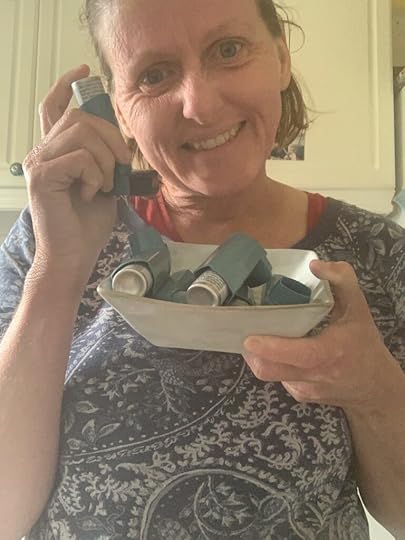 How many old inhalers have you got knocking around? Will you recycle them?
I’m a little bit disappointed in myself for not looking into this before. I am very conscious of all my other household waste and try to limit what goes into my bins, minimising packaging and recycling what I can.
My asthma has been playing up recently which has made me seek out all the available blue inhalers from bags, coat pockets etc. to ensure I always have one with me and there was quite a pile!
So I started looking into what do with them, as some of them were empty or almost empty.
Return used inhalers to the chemist
All used inhalers should be returned to a pharmacy to be disposed of safely.
They can be disposed of by the pharmacist with other drugs waste, this is then thermally treated to destroy the greenhouse gases. This environmentally safe disposal route is available at all pharmacies and is paid for by NHS England.
Alternatively it is possible to recycle Inhalers at those pharmacies participating in the GSK scheme.

For more information visit the Complete the Cycle website.
Or visit: https://www.recyclenow.com/what-to-do-with/inhalers-0
Look out soon for a blog about managing asthma and also how this affects topical steroid withdrawal, because preventative inhalers contain steroids…
I will leave you with the question. What do you do with your old, empty and expired inhalers? Is anyone creating artistic sculptures with theirs?
September 1, 2020
Ruth has a lot of these…
On my recent family holiday in the Lake District a funny thing happened. During a game of Taboo, someone had to describe the word ‘allergies’.
If you’ve never played this game before, you have to describe a word without using a list of key words, so you can’t say the actual word or other things e.g. YOU CANNOT SAY: ALLERGIES, ALLERGY, PEANUTS, ETC.
They said, “Ruth has a lot of these!” And the first response was ‘alcohol‘