Patch testing for allergies and eczema triggers
Patch testing is done to ascertain what contact allergens e.g. chemicals, cleaning products and cosmetic and skin care ingredients could be causing allergic reactions and eczema.
Small metal dishes which are pre-filled with different things are stuck to the back of the patient. The metal discs are kind of meshed into the sticky plasters in batches of about ten.
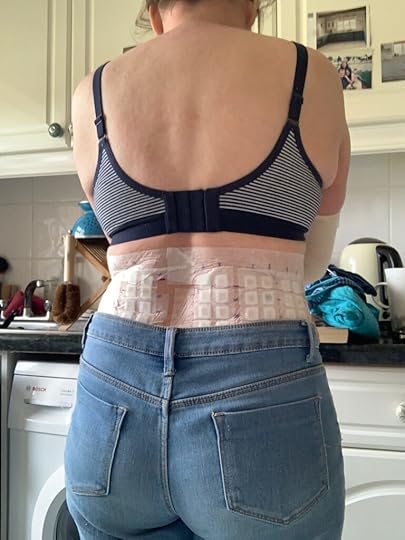
I had these done back in 2009 but the tests were inconclusive and I had numerous aborted appointments, postponed because the skin on my back was not clear enough with bad active eczema. But the problem was you had to have two weeks clear of using steroids before testing, but when I did that my skin flared up! When they finally did the tests the patches didn’t stick very well, many peeled off and I didn’t get any conclusive reactions apparently. Despite feeling very itchy and tingly patches to certain test areas.
This time around not using any steroids had become my super power so that part was easy. For those of you reading this blog without have read any of my other blogs, I’m going through topical steroid withdrawal and have not used any on my skin for over two years. They also suggest you don’t moisturise before the tests and that was easy too. I’m not using much moisturiser now, particularly not on my back which is (or was) pretty clear.
What are the patches testing for?Normally a patient would be tested for 60 to 100 different allergens but because of the sensitivity of my skin and the condition of my skin while going through topical steroid withdrawal, they decided to pick the most allergenic contact allergens and test for those first. This is what was put on my back, just 40 of the most likely contact allergens:
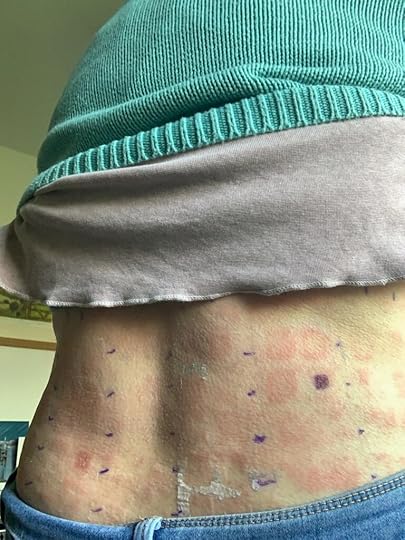 Day 3 – the patches come off to reveal a lot of rashesPotassium DichromateNeomycin SulphateThiuram mixp-PhenylenediamineCobalt ChlorideCaine Mix IIIFormaldehydeColophoniumQuinoline mixMyroxlylon Perierae (Balsam of Peru)N-Isoprpopyl-N-Phenyl-e-phenylenediamineLanolin alcoholMercapto mixEpoxy resinParabens mix4-Tert-Butylphenol formaldehyde resinFragrance mix 1Quaternium 15 (Dowicil 200)Nickel Sulphate –
Allergic Reaction
Cl+Me-IsothiazolinoneMercaptobenzothiazoleAmerchol L101Sesquiterpene Lactone Mixp-Chloro-m-Cresol2-Bromo-2-nitropropane-1,3,diolCetearyl alcoholSodium FusidateTixocortol-21-pivalate –
This is a corticosteroid used to test for an allergy to topical steroids
Budesonide (A steroid! Grrr) Imidazolidinyl urea (Germal115)Diazolidinyl Urea (Germal 11)MethylDibromoGlutaromnitricile2-Hydroxymethacrylate4 Chloro-3-5-xylenol (PCMX)Carba mixFragrance mix IIDisperse Blue Mix 106/124Hydroxyisohexyl3-cylohexene carboxaldehydeComposite mixMethylisothiazolinoneMy patch test results
Day 3 – the patches come off to reveal a lot of rashesPotassium DichromateNeomycin SulphateThiuram mixp-PhenylenediamineCobalt ChlorideCaine Mix IIIFormaldehydeColophoniumQuinoline mixMyroxlylon Perierae (Balsam of Peru)N-Isoprpopyl-N-Phenyl-e-phenylenediamineLanolin alcoholMercapto mixEpoxy resinParabens mix4-Tert-Butylphenol formaldehyde resinFragrance mix 1Quaternium 15 (Dowicil 200)Nickel Sulphate –
Allergic Reaction
Cl+Me-IsothiazolinoneMercaptobenzothiazoleAmerchol L101Sesquiterpene Lactone Mixp-Chloro-m-Cresol2-Bromo-2-nitropropane-1,3,diolCetearyl alcoholSodium FusidateTixocortol-21-pivalate –
This is a corticosteroid used to test for an allergy to topical steroids
Budesonide (A steroid! Grrr) Imidazolidinyl urea (Germal115)Diazolidinyl Urea (Germal 11)MethylDibromoGlutaromnitricile2-Hydroxymethacrylate4 Chloro-3-5-xylenol (PCMX)Carba mixFragrance mix IIDisperse Blue Mix 106/124Hydroxyisohexyl3-cylohexene carboxaldehydeComposite mixMethylisothiazolinoneMy patch test resultsNot only did I react to a number of these contact allergens, but also to the micropore plasters that were used to attach them all to my back. Not a great outcome but does confirm what I already knew, that I am allergic to the glue in all plasters.
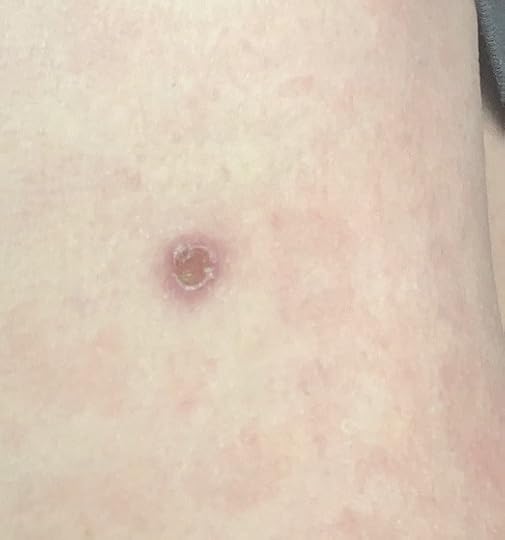 Monday – 1 week after patch tests – Allergic reaction to Nickel
However the eventual results was anything but helpful. Despite my back feeling like there were holes burning into and a lot of itching and discomfort, I was apparently only allergic to nickel.
It is so painful guys. I can barely touch it and it feels like it is still burning into my back. I’m treating with aloe, tea tree and zinc and calendula and it’s slowly healing.
But even though my whole back was so itchy, red and inflamed I am apparently not allergic to anything else. NOTHING ELSE! I so wanted answers.
How could that be? It seemed impossible. They looked at my broken, rash covered back for what seemed like mere moments and said, “You’re only allergic to Nickel.”
All the other reactions were just sensitivities and irritants, not allergic reactions. I could have avoided the whole thing as I already knew about the nickel allergy.
And whilst it might be the case that these others were only irritants, I tried to argue that I’d still like to know what these things were, the ones that had been so painful, but apparently they don’t tell you that. They can tell you though so be firm and demand to know if you are interested.
Huge thanks to one person who contacted me via Instagram, reactions can continue to intensify even after the patches have been removed and even after the final meeting after five days. Some of mine, two others apart from the nickel are still VERY sensitive, almost impossible to touch and remain red, blistered and angry. I’m contacted the Dermatology department again after the weekend to find out which chemicals or ingredients these are. Read on…
Allergic reactions vs Irritant reactionsIt’s hard to understand how they can tell the difference between allergic and irritant reactions and to decide that irritants are not worth investigating and understanding.
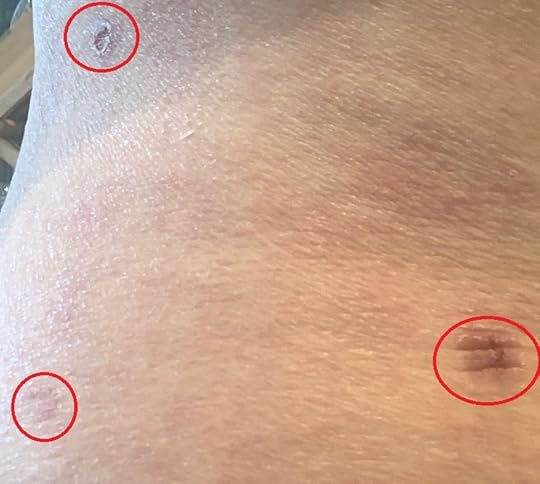 Nickel allergy reaction (top left) and Chromium and Cobalt
I asked for clarification and the dermatologist told me this:
“Thanks for sending the photos. The three irritant reactions that are very visible are chromate, cobalt and nickel which are the three allergens most likely to give irritant reactions in people with eczema.
The type of reaction is an irritant rather than allergic one. As I think we may have discussed last week, irritant reactions do not have any clinical significance but they can of course be very irritating to the skin. There are no allergic reactions.”
So confusing! It’s an allergen with an irritant reaction!
And my back is still sore now, and it’s a week after the patches went on.
Living with a nickel allergyI’ve known about my nickel allergy for years so I know what to avoid. They gave me a pretty rubbish handout, one side of A4 telling me to avoid things like cheap jewellery, metal parts in clothing, wrist watches and spectacle frames, dental products like braced and retainers, eye cosmetics such as some eye shadows, and eyelash curlers, electric razors, cigarette lighters, keys, scissors, tweezers, hooks, screws, paperclips, coins (especially Euros), joint prosthesis and industrial equipment. You can buy a testing kit to test items in your own home.
I asked about foods containing Nickel and was told that this was not well researched and was very complicated an unlikely to help as most foods contain nickel… urm! Right so that’s one I’ll be looking into . Anything a doctor dismisses is worth investigating. Am I becoming so very cynical?
Anyone got any experience with living wit a nickel allergy? Although I’ve always had this I’ve not ever looked at foods so I plan to take this a bit more seriously going forwards.
I will also start a list of nickel free resources as I’ll be looking myself and always love to share what I discover.
I’ve written about nickel allergy before so you may like to read the following:
Top ten tips for living with a nickel allergyiPads can cause nickel allergy reactionNew 5p and 1p pieces contain raised nickel contentGood and bad food for a nickel allergyWhat you need to know before patch testingYou will need to visit three days in the same week, usually Monday, Wednesday and Friday.On the first day, patches will be applied on your back and sometimes on the backs of your upper arms.On the second visit the patches are removed to observe any reactions. This is because some react when the oxidise with contact with the air AFTER the patches are removed.You should not shower of bathe your back during this week, even after the patches are removed mid way through.You should avoid exercise as you don’t really want to sweat too much while they are on, and also this could cause the patches to lift and fall off, which would invalidate and ruin the results.They may try to apply Betnovate or other topical steroids to your skin if there are rashes at the mid point. Just a warning if you are doing TSW and don’t want steroids on your skin. You are quite within your rights to refuse having steroids applied if you don’t want them. Your back will heal naturally.You must not use topical steroids on your back for 2 weeks prior to the patch testing in order to get a true result. The topical steroids could dampen or mast a reaction. If you’re going through topical steroid withdrawal this is easy.You also need to have pretty clear skin on your back for this procedure to be completed.Wear old clothes as some of the patches contain dye that can stain clothing.It will potentially itch like fire ants are eating your back alive!This is possible with blood tests so push for this if you can – patch tests are not much fun.After the patches – how to heal naturallyYou’ll want to wash your back afterwards. I would recommend using a gentle soap and soft sponge to clean your back in the shower. Don’t have a bath as you may be laying in a soup of the toxic stuff if you do that. Be kind to your skin, don’t scrub even if you feel like you want to. A soothing bath can really help once you’ve cleaned off those nasty chemicals. In the bath you’ll be able to gently rub off any remaining plaster or glue from the the patches.Once you have cleaned your back, an Epsom salt bath or similar healing salt bath can be very beneficial. Other natural baths for eczema include oats, apple cider vinegar and bicarbonate of soda.Apply a healing salve onto any blistered and allergic patches of skin. I used Aloe Vera 99% gel with tea tree in it, then applied Lyonsleaf Zinc and Calendula cream to encourage healing.Keep an eye on any patches that continue to get worse as these could be slower reacting allergies. If this happens contact the hospital where you got the tests done.These sores will heal naturally. There should be no need to apply steroids to heal them.Is it worth getting them done?I’m really not sure. These tests are pretty barbaric when you consider that even if allergic reactions are not present, many of the things tested are irritants, so you’ll probably be in some discomfort and then have to heal your back again afterwards.
I think it is probably worth getting done if you have active eczema and don’t know what is causing it, these tests could give you answers. However I’ve been told you can get blood tests instead. I’ll be asking about this as it may not be available on the NHS, but if you can afford to go private you may get results much easier and with no pain apart from giving a blood sample!
Many people contacted me on Instagram to tell me what they had reacted to from their patch tests so it can be very helpful if it’s an ingredient hidden in many skincare products that you might be using.
However these tests are time consuming, very uncomfortable and if like me, the results are inconclusive, you’re left with painful eczema on your back afterwards caused by the toxic things in the patches.
I’m not sure they are really something I’d suggest for a small baby or child. They’re very painful if there are reactions.
Blood tests sound like a better way of finding answers but are not offered widely, if at all.
For more information about Patch Testing and other allergy testing visit the NHS website and The British Association of Dermatologists website.
I’d love to hear your thoughts on this. Have you had it done? Was it helpful? What did you react to?
The post Patch testing for allergies and eczema triggers first appeared on What Allergy Blog.