Ruth Holroyd's Blog, page 11
July 29, 2022
Do you need help? Are you distressed?
I get so many messages from people who are desperate for help, people who are anxious, having panic attacks and feeling like they can’t find the answers they need.
There is a huge gap in the care of this nation. People are falling between the cracks and our NHS cannot cope.
Whether you are scared of anaphylaxis, struggling to cope in topical steroid withdrawal or trying to find ways to support your loved one through allergies, asthma, eczema or TSW, you are not alone.
I wanted to create a resource that held all the things I share with people when the reach out because for every person asking or help there are probably thousands out there who are too frightened to speak out.
It’s hard when I need support and time out tooIt’s also exhausting for me, and added trauma to hear over and over how difficult people are finding life and how hard it is to find help and support for many.
Please don’t feel you can’t contact me, my email is always open and I try to reply to all messages via email and DMs on social media. But sometimes I need to take a step back, off social media and to protect my own often fragile sanity!
This is my calling, it’s my job now. I thrive on helping others, but I just need to get the balance right. So this resource is here for when I’m not around. It will keep growing and become a place to find the help you need.
So here are my collected resources and advice for anyone desperate for help. This is a work in progress and I will be adding to this in the coming months. If you have any resources you think I should add please let me know in the comments section.
 BullyingThe Anti-Bullying Alliance – Runs Anti-Bullying Week in November and tackles the behaviours that leads to bullying.
anti-bullyingalliance.org.uk
Respect me (Scotland’s anti bullying network – An independent charity that supports anti-bullying work in schools, offering training, consultancy and publications to help. https://respectme.org.uk/Anti-Bullying Pro – Part of the charity The Diana Award, a legacy to Diana, Princess of Wales, they help young people and professionals stand up to bullying.
antibullyingpro.com
Anxiety and panic attacks
BullyingThe Anti-Bullying Alliance – Runs Anti-Bullying Week in November and tackles the behaviours that leads to bullying.
anti-bullyingalliance.org.uk
Respect me (Scotland’s anti bullying network – An independent charity that supports anti-bullying work in schools, offering training, consultancy and publications to help. https://respectme.org.uk/Anti-Bullying Pro – Part of the charity The Diana Award, a legacy to Diana, Princess of Wales, they help young people and professionals stand up to bullying.
antibullyingpro.com
Anxiety and panic attacksHere are a few places you can go for podcasts, to hear people discussing anxiety, mindfulness etc.
The Calmer You by Chloe Brotheridge – A brilliant podcast to gently help you find a calmer way of living. Chloe has expert guests on her podcast and offers free resources on her website calmer-you.com The Anxiety Guy – Gives a man’s perspective and is also a good listen. Bite- sized episodes to help you manage this natural emotion.Owning it by Caroline Foran – Anxiety Podcast delves into the murky world of anxiety and helps you climb back out. It’s normal, it’s okay and it’s possible to live with it.Some other anxiety podcasts you could listen to include The Overwhelmed Brain , Headspace and Untangle .Mental health supportThere are loads of charities out there who might be able to offer you free advice. Check them out and give them a call or an email.
Anxiety UK – A charity that focuses on helping people living with anxiety. anxietyuk.org.uk Healthy Minds – NHS Self-Referral – Cognitive behavioural therapy (CBT), available free through the NHS by self-referral. Google Healthy Minds and your area and your local group will come up.Mental Health Foundation – You can visit their website to find loads of resources, advice and help on anything to do with mental health. mentalhealth.org.uk Mind – The mental health charity. mind.org.uk National Health Service (NHS) – Call 111 if you don’t have a doctor and are not registered. This free helpline is available 24 hours a day and will be able to give you advice on where to get help. nhs.uk/conditions/anaphylaxis Patient Advice and Liaison Service (PALS) – If you are unhappy or unsatisfied with the support and guidance you’ve received from your doctor or specialist, contact PALS. nhs.uk/palsThere are also lots of different kinds of therapy that you could try and not all of them work for everyone. Do some research and you’ll probably find you’re drawn to one particular type. e.g Cognitive behavioural therapy, parts based family trauma therapy, rapid healing regression hypnosis, psychoanalytic therapy , art therapy, writing therapy and more. Visit the Healthline website for an explanation of the Different types of therapy available.
Do you feel suicidal?If you feel like you really can’t go on as things are, please, please find someone to talk to. Whether it’s a family member, friend, your GP, a trusted teacher or a therapist, talk to someone. It can be really hard taking that first step, but once you’ve talked about how you feel it can be easier to ask for and get the help you need, because talking about things makes you accountable. Your friend or GP, whoever you spoke to will hopefully make sure you do take steps to improve your mental health and wellbeing.
Samaritans – If you feel you have no one to talk to and can’t go to your doctor, there is always the Samaritans who offer emotional support. They are always there at the end of the phone to listen to you 24 hours a day. samaritans.org
Image: Photo by christopher lemercier on Unsplash
Topical Steroid WithdrawalPlease refer to my TSW – Frequently Asked Questions
Advice for carersIf you are caring for someone with anaphylaxis or chronic eczema, here are some blog and resources that might help you:
20 tips for being an eczema or TSW advocate20 tips for being an allergy advocate10 tips for caring for someone in topical steroid withdrawalYou may also find the following useful Anaphylaxis: The Essential Guide: An Action Plan For Living With Life-Threatening AllergiesThe Shape of Skin – eczema poetry covering childhood, trauma, shame, guilt and finding love for your skin.Anxiety and Post Traumatic stress with and without allergies10 tips for dealing with rage and angerThe post Do you need help? Are you distressed? first appeared on What Allergy Blog.


Do you need help?
I get so many messages from people who are desperate for help, people who are anxious, having panic attacks and feeling like they can’t find the answers they need.
There is a huge gap in the care of this nation. People are falling between the cracks and our NHS cannot cope.
Whether you are scared of anaphylaxis, struggling to cope in topical steroid withdrawal or trying to find ways to support your loved one through allergies, asthma, eczema or TSW, you are not alone.
I wanted to create a resource that held all the things I share with people when the reach out because for every person asking or help there are probably thousands out there who are too frightened to speak out.
It’s also exhausting for me, and added trauma to hear over and over how difficult people are finding life and how hard it is to find help and support for many.
Please don’t feel you can’t contact me, my email is always open and I try to reply to all messages via email and DMs on social media. But sometimes I need to take a step back, off social media and to protect my own often fragile sanity!
So here are my collected resources and advice for anyone desperate for help. This is a work in progress and I will be adding to this in the coming months. If you have any resources you think I should add please let me know in the comments section.
BullyingThe Anti-Bullying Alliance – Runs Anti-Bullying Week in November and tackles the behaviours that leads to bullying.
anti-bullyingalliance.org.uk
Respect me (Scotland’s anti bullying network – An independent charity that supports anti-bullying work in schools, offering training, consultancy and publications to help. https://respectme.org.uk/Anti-Bullying Pro – Part of the charity The Diana Award, a legacy to Diana, Princess of Wales, they help young people and professionals stand up to bullying.
antibullyingpro.com
Anxiety and panic attacksHere are a few places you can go for podcasts, to hear people discussing anxiety, mindfulness etc.
The Calmer You by Chloe Brotheridge – A brilliant podcast to gently help you find a calmer way of living. Chloe has expert guests on her podcast and offers free resources on her website calmer-you.com The Anxiety Guy – Gives a man’s perspective and is also a good listen. Bite- sized episodes to help you manage this natural emotion.Owning it by Caroline Foran – Anxiety Podcast delves into the murky world of anxiety and helps you climb back out. It’s normal, it’s okay and it’s possible to live with it.Some other anxiety podcasts you could listen to include The Overwhelmed Brain , Headspace and Untangle .Mental health supportThere are loads of charities out there who might be able to offer you free advice. Check them out and give them a call or an email.
Anxiety UK – A charity that focuses on helping people living with anxiety. anxietyuk.org.uk Healthy Minds – NHS Self-Referral – Cognitive behavioural therapy (CBT), available free through the NHS by self-referral. Google Healthy Minds and your area and your local group will come up.Mental Health Foundation – You can visit their website to find loads of resources, advice and help on anything to do with mental health. mentalhealth.org.uk Mind – The mental health charity. mind.org.uk National Health Service (NHS) – Call 111 if you don’t have a doctor and are not registered. This free helpline is available 24 hours a day and will be able to give you advice on where to get help. nhs.uk/conditions/anaphylaxis Patient Advice and Liaison Service (PALS) – If you are unhappy or unsatisfied with the support and guidance you’ve received from your doctor or specialist, contact PALS. nhs.uk/pals Do you feel suicidal?If you feel like you really can’t go on as things are, please, please find someone to talk to. Whether it’s a family member, friend, your GP, a trusted teacher or a therapist, talk to someone. It can be really hard taking that first step, but once you’ve talked about how you feel it can be easier to ask for and get the help you need, because talking about things makes you accountable. Your friend or GP, whoever you spoke to will hopefully make sure you do take steps to improve your mental health and wellbeing.
Samaritans – If you feel you have no one to talk to and can’t go to your doctor, there is always the Samaritans who offer emotional support. They are always there at the end of the phone to listen to you 24 hours a day. samaritans.org
Image: Photo by christopher lemercier on Unsplash
Topical Steroid WithdrawalPlease refer to my TSW – Frequently Asked Questions
You may also find the following usefulAnaphylaxis: The Essential Guide: An Action Plan For Living With Life-Threatening AllergiesThe Shape of Skin – eczema poetry covering childhood, trauma, shame, guilt and finding love for your skin.Anxiety and Post Traumatic stress with and without allergies10 tips for dealing with rage and angerThe post Do you need help? first appeared on What Allergy Blog.
July 26, 2022
Red Light Therapy Pros and Cons for Your Skin
Red Light Therapy (RLT) is a treatment that uses specific wavelengths of light to improve the appearance of your skin. It has become increasingly popular in recent years, and there are many different products on the market that claim to offer these benefits.
Some people swear by its results, while others are unsure about whether or not it works. We’ll figure out the truth.
 Red Light Therapy – how does it work?What are the positives and drawbacks of red light therapy?
Red light therapy has a considerable influence on skin appearance. Heliotherapy Institute will help you choose the best device. It has reviews of popular phototherapy devices. Check it to have more information.
In this complete guide, we will explore all of the potential benefits and drawbacks of this treatment.
What is red light therapy, and how does it work?Red light therapy (RLT) is a treatment that uses red low-light lasers or LEDs to stimulate skin cells and promote healing. RLT has improved several skin conditions, such as wrinkles, scars, and inflammation.
It works by stimulating the production of collagen and elastin, and these two proteins are essential for healthy, glowing skin. RLT also helps to reduce the appearance of fine lines and wrinkles by plumping up the skin. In addition, RLT can help to speed up the healing process of wounds and scars.
There are different ways to use RLT, including at-home devices, professional treatments, and LED light beds.
The main pros of red light therapySkin is one of the most common areas to use red light therapy because it has a notable result. It helps improve skin tone and texture, fades dark spots and blemishes, and reduces aging. Let’s check more advantages of RLT.
Non-invasive procedureRed light therapy is a non-invasive procedure because it uses low wavelength red and near-infrared light to penetrate the skin. You can use it on the face, neck, chest, back, or any other area of the body where you wish to improve the appearance of your skin. This process is painless, so there is no discomfort associated with red light therapy treatments. The red light penetrates your skin, and you may experience a mild tingling sensation.
It helps to reduce aging signsOne of the best things about this treatment is its efficiency after aging. Some evidence suggests red light therapy improves skin tone and complexion. It can decrease the appearance of fine lines and wrinkles. It stimulates the production of collagen and elastin, two proteins that help keep skin looking young and firm.
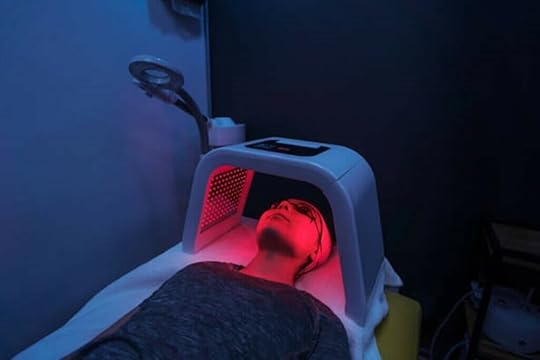 Red Light TherapyReduce inflammation
Red light therapy stimulates the production of ATP. It helps repair damaged cells and reduce inflammation. Also, it increases levels of certain antioxidants and blocks some inflammation-causing molecules. So it can be helpful for several skin conditions.
Improves circulationRed light therapy can improve circulation and help the body to produce more collagen. It can lead to healthier and younger-looking skin.
Stimulation of blood flow led to increase oxygenation to the skin. It can help to reduce inflammation and redness, as well as promote healing.Circulation is essential for removing waste products. Poor circulation can lead to a build-up of toxins in the skin, which can cause premature aging and a dull complexion.Red light therapy can also help to improve lymphatic drainage, which is responsible for transporting toxins out of the body. It can help to reduce puffiness and swelling, as well as cellulite.Treatment for several skin conditionsAs RLT improves circulation and reduces inflammation, it can be beneficial for treating some skin conditions. We’ll inform you about the most common of them.
EczemaEczema is a chronic skin condition that causes the skin to become dry, itchy, and inflamed. It can be debilitating, preventing people from enjoying their everyday lives. “There is no cure for eczema, but there are treatments that can help to manage the symptoms and keep the condition under control, and RTL is one of them.” – the founder of Heliotherapy Institute Jose Mier notes.
A study published in the Journal of Dermatological Science found that red light therapy could significantly improve the symptoms of eczema, including reducing itchiness and inflammation.
If you suffer from eczema, red light therapy may be worth considering as a treatment option. However, it’s essential to speak to your doctor first to ensure that it’s the right for you.
PsoriasisRed light therapy can be beneficial for people with psoriasis. The National Psoriasis Foundation notes that red light therapy can help reduce the inflammation, itching, and scaling associated with psoriasis and promote skin healing. However, they caution that more research is needed to determine the long-term efficacy of this treatment.
AcneAcne is one of the most common skin conditions in the world, and it can be very frustrating to deal with. Red light therapy is the most natural way to treat this skin problem.
It can help to kill bacteria that cause acne, and it can also reduce inflammation. However, there is no evidence that red light therapy can help to treat the underlying cause of acne, such as hormonal imbalance. It can significantly reduce the size of pimples in just four weeks.
 Wound care
One of the most common uses for red light therapy is wound care. Light therapy can help to speed up the healing process by increasing blood flow and collagen production. It can also help to reduce inflammation and pain. Though, there are a few things to consider before using red light therapy for wound care.
First, it’s essential to ensure that the area is clean and debris-free.Second, avoiding this therapy on open wounds or infections is essential.Scars and stretch marksRed light therapy can help to fade scars and stretch marks. It does this by increasing collagen production, which gives the skin its elasticity. The results are not immediate, but you should see a significant improvement over time.
However, one thing to remember is that red light therapy will not altogether remove scars or stretch marks. If your goal is to eliminate them, you may be disappointed. However, if you want to improve their appearance, then red light therapy can certainly help.
Topical steroid withdrawal skinRed light therapy can help treat a condition called topical steroid withdrawal skin. It is a condition where the body becomes dependent on topical steroids, and when they are stopped, the body cannot function properly.
Jose Mier notices, “Red light therapy can help to reduce the inflammation and redness associated with TSW. It can also stimulate collagen and elastin production, improving the skin’s appearance.”
However, it is essential to note that red light therapy is not a cure for this condition. Working with a doctor or dermatologist is crucial for finding the best treatment plan for you.
Negatives of red light therapyWhile red light therapy has many benefits, there are also some potential negatives to be aware of. The most common side effect is temporary skin reddening, similar to a mild sunburn. It usually goes away within a few hours but can sometimes last up to a day or two.
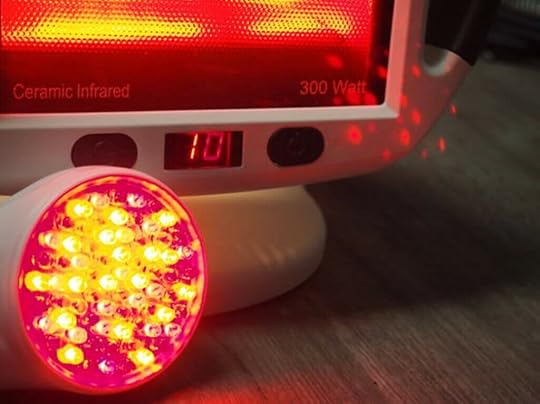
Other potential side effects include:
Don’t wait for a quick resultRed light therapy won’t give you overnight success. You can wait for weeks or months to see some positive effects. It isn’t the right solution if you’re looking for a quick fix.
Another thing to remember is that not everyone will respond to red light therapy similarly. Some people may see dramatic results, while others may only see subtle changes. And a small percentage of people won’t see any results at all.
Unsuitable for all peopleRed light therapy is not suitable for all people. If you are pregnant, have an autoimmune disease, or take photosensitizing medication, you should not use RLT. People with conditions like lupus, cancer, or diabetes may experience a worsening of their symptoms. People with light sensitivity may also find that red light therapy causes discomfort. Please consult with a healthcare professional before beginning treatment if you have any concerns about whether red light therapy is right for you.
Can cause a skin damageOne of red light therapy’s most common side effects is skin damage. It can include burns, blistering, and even permanent scarring. But this damage can only appear if you don’t use the device correctly to instructions.
More research neededRed light therapy is a newish skincare treatment that shows promise, but more research needs to determine its long-term efficacy. Some dermatologists consider that risks exceed benefits. It also helps with conditions like acne, psoriasis, eczema, and rosacea. Preliminary research has been conducted on red light therapy for these conditions, but more large-scale studies must confirm its effectiveness.
Is Red Light Therapy for you?Red light therapy is a new and popular skincare treatment that uses low-level, red LED light to improve skin health. Red light therapy has many claimed benefits, including reducing wrinkles, improving skin texture, and increasing collagen production. However, there are also some potential risks associated with this treatment. In this article, we’ve explored the main pros and cons of red light therapy for your skin so that you can make an informed decision about whether or not it’s right for you.
Images from https://media.istockphoto.com
NB: This is a guest post. I have not tried Red Light Therapy myself but would love to hear from anyone who has. Did it help your eczema or topical steroid withdrawal? Would you recommend it?
You may also be interested inTopical Steroid Withdrawal – Frequently Asked Questions30 tips to help you stop scratchingMindful Scratching – is it even possible?The post Red Light Therapy Pros and Cons for Your Skin first appeared on What Allergy Blog.July 14, 2022
Proud to be in Top 10 health blogs 2022
I’ve been selected in the Top 10 health blogs yet again, for the sixth year running and I’m so proud.
These awards are chosen by Vuelio and you can see the Top 10 here, Healthcare blog UK Top 10.
Special Needs Jungle – provides parents with information and advice on special education, health conditions, rare diseases and disability issues that impact children and young people.Evidently Cochrane – Sharing health evidence you can trust.The Mental Elf – Expertise from around the world about mental health.Physchreg – Resources for Clinical Psychology, Counselling, Health Psychology and Neuropsychology as well as stories related to mental health and wellbeing.The Hippocratic Post – covers international health-related news in sections including Ageing, Diabetes, Heart & Lung, Muscular, Innovation, Sexual Health, Paediatrics and much more.Same Difference – shares ‘news, views and information for people with disabilities,’ most recently writing about Disability Pride, the impact of the cost-of-living crisis and accessibility problems at this year’s Wireless FestivalWhat Allergy! All things Allergy, Asthma, Anaphylaxis, Eczema and Topical Steroid Withdrawal related!Life in a breakdown – dedicated Mental & Physical Health Issues category, Sarah writes about Money Matters, Travel & Days Out and much more.Talkhealth Blog – Providing a look into ‘the very personal daily lives of people living with various health issues as well as their carers,’ the blog features insight from experts in the health industry alongside breaking health newsBe Healthy Now – Believing that natural living includes ‘avoiding everyday toxins, choosing organic where possible, avoiding pollution’ as much as healthy eating and exercise, Petra posts about Natural Health, Healthy Recipes, Healthy Living, Fitness and Natural Beauty.I’ve just had a scout over all of the above and I have to say, I’m amongst very strong company. All great blogs and if you’re interested in any of the topics mentioned above, well worth a follow.
If you want to know how the rankings are decided read, How does Vuelio decide on the Top 10 Health Blogs?
Thanks again to all you for your support. Blog engagement, comments, sharing and liking on social channels is one of the ways I get into this top 10 and I really appreciate each and every one of you. I’d love to know what your top favourite blogs are so I can follow them. Please share them below:
The post Proud to be in Top 10 health blogs 2022 first appeared on What Allergy Blog.July 6, 2022
More TSW Gaslighting – I’m fuming!
I recently came across an article written on 29th June 2022 by Kui Mwah, a journalist who has eczema and uses topical steroid creams. She interviewed people about Topical Steroid Withdrawal on Tiktok and also found dermatologists to consult.
And you guessed it, the dermatologist gaslights us yet again.
I’m so disappointed to read yet more gaslighting… it’s so frustrating, unfair and damaging to all that we are doing to try to raise awareness…
Topical steroid addiction or withdrawal occurs due to inappropriate use, typically from the use of moderate to high potency steroids on the face and genitals over a long period of time in people with various skin conditions, especially eczema and seborrheic dermatitis,”
Kui Mwai – The Bustle ‘Ruth Jobarteh, M.D., dermatologist at DRMTLGY‘
You can read the full infuriating and inaccurate article, What is Topical Steroid Withdrawal here.
TSW gaslighting is so damaging and dismissiveNow we can’t blame her for quoting a derm but honestly, I am so beyond sick of hearing this shit over and over again. Dismissing it’s a problem, saying it’s rare and claiming it is our fault.
This is why I disagree with everything in this quote.
I never used topical steroid inappropriately, only ever moderately and as directedI never used any moderate to high potency steroids on my faceI certainly never used any steroids ever on my genitalsYes I used them for a long time, but as my dermatologist keeps telling me, I’ll never heal from eczema and just need to KEEP USING MORE TOPICAL STEROIDSWhat is Topical Steroid Withdrawal really?Here’s what topical steroid addiction and withdrawal really is:
Emilie shares her TSW journey on TikTokTopical steroid addiction or withdrawal occurs after using even mild, moderate and potent topical and oral steroids as directed by doctors and dermatologists. It can happen after even short term use but many continue to use long term as doctors refuse to diagnose or recognise the condition. TSW affects various skin conditions, especially eczema, psoriasis and seborrheic dermatitis,”
Ruth Holroyd, Founder and owner of whatallergy.com
Emilie Chho, who I follow on TikTok has TSW herself. She shares eloquently what the condition is like and how she’s managing her healing. This part of the article is brilliant. Thanks for sharing Emilie and I hope you continue to heal.
Be very careful if you’re using topical steroidsWe end with another completely hopeless comment from that dermatologist again…
If you’re going to use topical steroids, Jobarteh stresses the importance of following your prescribing dermatologist’s instructions in order to make sure you’re using your cream or pill safely.
Kui Mwai – The Bustle ‘Ruth Jobarteh, M.D., dermatologist at DRMTLGY‘
Can I just point out that all our dermatologists advised us how to use these creams and we followed this advise in most cases, yet we still became addicted and face a lifetime of worsening uncontrolled rebounding eczema if we continue to use them.
Dermatologists – please listen to us about TSWPlease can a dermatologist admit that this is not rare and that it can happen even with minimal use and after following guidance as directed.
Because if we all listen to dermatologists we’d never go through Topical Steroid Withdrawal. We would continue to damage our skin, our internal organs and who knows where that might lead? Cataracts, eye problems and possibly even cancer.
Before so called experts comment on this condition more research is needed.
How much training do dermatologists actually get into eczema and the effects of long term topical steroid use? Not much. I’ve heard it’s as little as month of their five years training.
We deserve better.
Where are you dermatologists?
Where the hell are you?
I have yet to meet someone with eczema who is happy using topical steroids and there is a growing number of people realising that they do not have worsening eczema but in fact rebounding from topical steroid addiction.
Please listen to us, read up, research and man up. This could become an epidemic and let me tell you, discovering your skin is completely destroyed by the very cream meant to heal it is devastating, yet we get no support, no diagnosis, no acknowledgment and certainly never any apology.
I will not stop campaigning, writing and sharing about this until things change.
But thanks to Emilie Chho for sharing her journey. She is now healing well and is taking Rinvoq, a steroid free pill that reduces inflammation in the body. I know nothing about this medication and it’s not explained in the article but worth looking into if you are really struggling. There is a link to find out more about Rinvoq in the article linked above.
If you’re not following Emilie yet the link is above to find her.
I’d love to know your thoughts on this. Are you going through TSW and find this infuriating? Or are you free from eczema and TSW and observing from the sidelines?
You may also find the following of interestTopical Steroid Withdrawal – Frequently Asked QuestionsGet discounts on Allergen free and Natural Eczema productsThe Shape of Skin – Eczema Poetry book – So raw and relatableThe post More TSW Gaslighting – I’m fuming! first appeared on What Allergy Blog.June 22, 2022
20 tips for being an eczema & TSW advocate
I’ve been advocating, sharing, fundraising and talking about eczema and topical steroid withdrawal (TSW) now for many years, long before I started this blog, so I thought I’d write about how you can advocate, whether you have eczema, TSW or skin sensitives yourself or not.
Eczema and Topical Steroid Withdrawal community – You don’t have to be a blogger, speaker or sharing everything on social media to be an advocate.
All of you lovely skin family supporters – There are loads of really simple ways you can make a big difference for us, even if you have fully functioning eczema, psoriasis, TSW, rosacea free skin. Even just being there for a friend and offering support, listening and understanding their struggles is a huge help to that person.
 What is advocacy?
So firstly, what is advocacy and what can it look like?
“Advocacy is providing support for, or recommendation of particular relevant resources of help. It could mean getting support from an advocate to help you stand up for your own rights, or acting as an advocate to raise issues and become a voice for those who don’t have one or aren’t in a position to do so.”
Ruth Holroyd, Whatallergy.com
Advocacy can take many forms, and you can be an advocate in lots of small ways, or you can also seek out an advocate to help you if you are feeling lost, unsupported and confused.
So I’ve made a list of all the ways that I have advocated in the past, and more, so you can help those of us living with this life limiting condition.
A lot of you will already be acting as advocates without even knowing it. so to you all HIGH FIVE yourselves right now!
Thank you all so much, from the bottom of my heart 

And if you think you could be doing more, I’m not saying you have to do all of these, just one. See what you think and choose something that works for you or that you’d feel comfortable doing. And if you’re feeling like you don’t either the energy or the time to advocate, there are still things that you can do show support that don’t take any time at all. And finally, if you need support, reach out. You are not alone.
Educate yourself – Find out what your friend or family member is going through, whether it’s severe eczema, topical steroid withdrawal or psoriasis. Ask them what would help them. Be in their gang. Have their back! Because trust me, it’s exhausting healing from topical steroid addiction. For me this also means going to conferences, events and exhibitions and absorbing everything I can. I am always learning about my own condition, so you can do this too for your friends and family.Join online groups and engage – you’ll learn loads on all the different social media challenges. Follow a few of the top inspirational advocates on Instagram or check out the Facebook groups to find out what the hot topics are.Keep up to date – Set some google alerts so you hear of the latest news, research and become a mini expert. I love it when my friends send me links to articles and news because most of the time I’ve often not seen it yet (I am a news phobic) so you’re doing me a favour and showing me you care!Check out the charities – there are quite a few charities supporting those with eczema and allergies. Find out how you can get involved, read what they’re doing and get involved if you can. Can’t believe how many there are!ITSAN – The US charity for Topical Steroid WithdrawalScratch That – A UK charity for Topical Steroid WithdrawalTSW Assist – provides crowd-sourced recommendations for managing topical steroid withdrawalCall people out – if you hear someone being disrespectful about someone’s skin or flippant about what someone is going through, call them out. Ask them if they know how life limiting TSW is. Ask them if they know anyone who has severe eczema or TSW and chances are they won’t. Share a bit of your story and ask them to be kinder and more respectful. You can do this politely and it’s much needed. It always amazes me how many people still don’t really know how awful and serious TSW really is.Get reading – There are loads of great books out there to help you learn more, so if reading is your thing, this could be the one for you Check out My Top 7 Books for TSW. You could also source one of these for a friend going through TSW if you think it might help them.Visit the a TSW Meet-up or March – You could arrange to join your TSW friend or family member. We have regular meetups and recently held a March in London. It’s actually really good fun and educational with loads of support, listening and learning from each other. Immerse yourself in our world and soak up some knowledge.Plan something fun – With your TSW person in mind, take the control and choose a venue or activity that’s suitable for them and plan a day out with their safety, needs and requirements in mind. For instance find a safe place to eat that caters allergies if they have them or organise a safe free from food picnic. where they can remain anonymous and not have to face the general public. Complain – If you hear people saying topical steroid withdrawal is not real on TV, radio, in the news, press, media of any kind, such as flippant comments, disrespect, incorrect statements, please write to complain, tweet or share your thoughts. By doing this we make those responsible for production more aware and accountable. We need awareness, we need people to hear about TSW and we need everyone to question treatment suggestions instead of just grabbing the quick solutions. Because the quick solutions can lead to whole heap of pain further down the line if you do get addicted.Write to your MP – If you feel really passionate, you could always write to your local MP to raise concerns about the lack of support, poor referral rates, lack of funding. Every little helps.Sign the Petition – You can support us by signing the TSW petition, created to ask parliament to discuss TSW. We need change, funding and more and we need 100,000 signatures! Sign the TSW petition here.Donate – If you have the funds available, you could consider donating to ITSAN, they do amazing work supporting those living with Topical Steroid Withdrawal, from support over the phone, groups, training, raising awareness and online information. You could also donate to help with funding the TSW Retreat I am organising with a group of other TSW friends on 10th July 2022. Click here to donate.Simply listen and support your allergy friend – You can be an awesome advocate simply by asking your friend or family member how they are, how they feel, what is troubling them. Be their friend, be their back up, be their support. They will probably put a brave face on things but it can get on top of people dealing with pain, discomfort and itching of eczema and TSW all the time. Be kind, be gentle. Be understanding and be thoughtful. Never judge, don’t offer advice, just let them be, let them breathe and let them heal in their own way, but you can still be there for them.Build others up – The community is immensely supportive and nourishing. One way you can support us is to encourage, share content, comment and build up other skin warriors and advocates, bloggers, influencers, writers and anyone vocal and sharing their experiences, tips, great products etc. Together we are stronger and together we can all share what we’ve learnt.Say thanks – When you see really good advocacy going on, say thanks to that person. Give them a like, a thumbs up, a huge thank you. It can be endless, tireless and sometimes feel like a drop in an ocean, but seriously we appreciate it. Thank you all!Support the small businesses – There are loads of people going into business, inspired to provide something safe and previously missing for their child or themselves. Let’s support those businesses. We’ll miss them if they’re gone. I see so many brilliant initiatives fail or disappear after a few years and it always breaks my heart.Become a volunteer – Offer your help for free at events, meetups, charity fundraisers if you have a transferable skill such as yoga, therapy, mindfulness, reiki, etc. Learn how to how to treat eczema and skin rashes naturally – There are so many things we need to learn from the body. Rather than reacting with instant topical steroids we should be listening and observing skin rashes to see what we can learn, what does the body need? Things like dead sea salt baths, body brushing, Chinese herbal medicine, yoga, looking after mental health, getting allergy or skin patch testing done. Be questioning, be curious and understand your skin better.Offer your help – If you see anyone struggling, anyone from a friend to a stranger, reach out and offer your help. You can find an advocate to help you through. If you need help, ask for it. ITSAN or ScratchThat would be good places to go if you’d like to offer help.Send an anonymous gift – Think outside the box and find a gift you think might help someone who is unsung hero and tireless advocate. It doesn’t need to be a big gift. Anything from a little thank you note to flowers or skin positivity cards. For more ideas of suitable gifts visit my Discounts and Affiliate page here.Actually, you don’t have to be doing any of these things at all, you could just be realising that this is a real, traumatic and worrying condition for a lot of people. All we really want is your understanding and respect.
If you’ve never met anyone with severe eczema or Topical Steroid Withdrawal before and don’t know what it means, just find out that simple fact and you’ll be huge steps ahead.
Just by more people knowing this is a serious condition, we make progress and it still amazes me that many people don’t know the dangers of topical corticosteroids..
To me advocacy is about inclusion, empowerment and community.
Are you an Eczema and TSW Advocate? Are you going to start being one? What are you going to do? Do you advocate in other ways? Who is your favourite allergy advocate? I’d love to hear your views. Please comment below…
You may also be interested in…The Shape of Skin – Eczema poetrySpoonie life – Living with a chronic conditionTop 10 tips for caring with someone who has Eczema or Topical Steroid WithdrawalPhoto by Kelly Sikkema on Unsplash
The post 20 tips for being an eczema & TSW advocate first appeared on What Allergy Blog.June 16, 2022
I’m exhibiting at the Allergy Show 2022
I’m so excited to be exhibiting at The Allergy Show 2022 this year alongside my good friend Liljia of Allergy Companions. What I call, The Trip Advisor for people with allergies!
It’s taking place from Friday 1st July to Sunday 3rd of July at the Excel exhibition centre in London.
 Top tips for attending the Allergy Show
Here are my tips for making the most of the show:
Make sure you get a free ticket – see the link belowBring a big bag – Or better still, a wheelie suitcase because there are usually loads of deals on free from products to be had.Get there early to miss the crowds – Although there is often a queue. Friday can often be quieter as some people are at work.Don’t take any risks – Never try any sample without checking ingredients thoroughly and if in doubt, don’t try anything. Stay safe.Plan your day – Take some time to work out where the companies are who you want to visit and be methodical. Some stands may be busy and I often find I need to go on more than one day to see the whole show.Check out the free seminars – there are loads of speakers lined up talking about loads of different subjects.Take advantage of show deals – You could get some real bargains as many stands have special offers and discounts.Catch up with friends – Find out who you know that’s going, consider setting up a Whatsapp group for the show to make sure you find each other. It can be so busy at the show and it’s a great opportunity to catch up.Sign up for the AFF club – Get the low down on what’s going on, special deals and events at the show. Join the AFF club.Get Expert Advice – Visit the AFF Chat Theatre to get advice from the experts on everything from living gluten free, weaning, allergies and IBS.Get a show guide and a map – The show gets bigger every year so don’t miss out. Find a map and a show guide and make the most of your day.Show goodie bag – In previous years there has been a show bag, I’m not sure if there is this year too but there has always been a huge queue for it. Go first thing to make sure you don’t miss out and avoid the hanging around and wasting time.Blogger meetup – Fellow bloggers and vloggers, don’t miss the meet up on Saturday 2 July 2022 | 11:00-12:00.Book lovers – If you love books, get to the Book Signing Theatre to grab a signed copy of Becky Excel’s book and also Healthy Living James, Jane Devonshire and Megan McKenna. An actual crime that I’m not in this line up but you can come to stand A203 to remedy that!I hope you enjoy the show and hope to see you there and find out more on the Allergy Show Website.
Get your free tickets to the Allergy Show 2022Are you planning to go to the Allergy Show? If you are, please use this link here to get your free tickets.
Free Ticket to The Allergy ShowSee you there!Please pop by our stand, at A203. We will have a competition and I’ll be doing some deals on both my books; Anaphylaxis – The Essential Guide and The Shape of Skin eczema poetry. Give me a shout out below if you’re planning to attend.
You may also be interested in reading…Allergy Companions – The TripAdvisor for people with allergiesWe need to talk about my Gnawbles habit30 Amazing Women in Allergy!The post I’m exhibiting at the Allergy Show 2022 first appeared on What Allergy Blog.June 14, 2022
Penicillin is the UKs most common allergy!
From pets, to foods, to metals; anything can be an allergen in today’s world. But what are the people of the UK most allergic to?
I think many people might assume it would be nuts or cow’s milk, so you might be surprised by the results of this recent study.

New research from William Russell has identified the most common allergies in the world’s most populated countries: https://www.william-russell.com/blog/common-allergies-around-world/
The most common allergies in 10 of the world’s highest populated countries:
CountryMost Common AllergyAverage Number of SearchesPhilippinesLatex allergy78,500CanadaPenicillin allergy35,300United StatesDog allergy33,100United KingdomPenicillin allergy8,100AustraliaPenicillin allergy2,900RomaniaCat allergy1,290BrazilCat allergy1,140GreeceWater allergy1,020PortugalCat allergy790MadagascarCat/Mold allergy60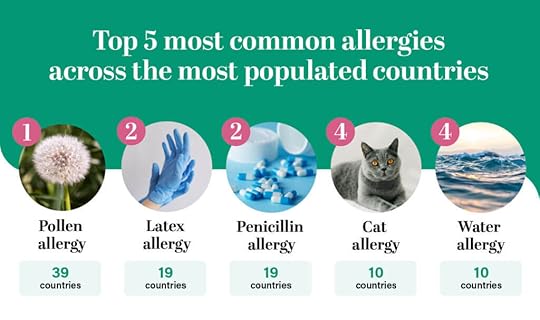 The top 5 most common allergies across the world:
The most common allergy worldwide is to dogs! Man’s best friend, followed closely by Penicillin. This really surprises me because I’ve only ever met a handful of people with a penicillin allergy and dog allergies don’t seem that common either.
RankAllergyGlobal Average Number of Google Searches1Dog allergy633,0002Penicillin allergy561,6003Pollen allergy513,9004Latex allergy507,2005Cat allergy419,400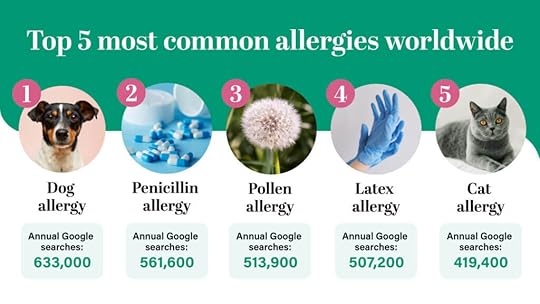
According to the research:
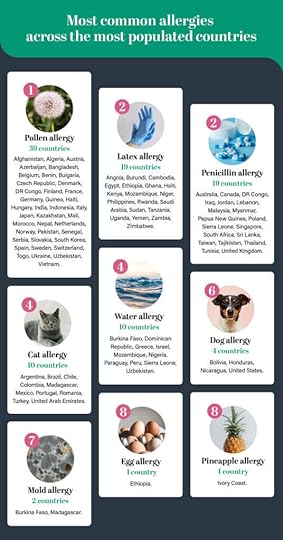
The most common allergy in the UK has been revealed to be the penicillin allergy. It saw an average of 8,100 searches between April 2021 – March 2022. According to the NHS, around 1 in 10 people suffer from an allergic reaction to antibiotics, citing penicillin to be the most common specific drug to cause such a reaction. However, it has been shown that penicillin allergies may be over-reported as they are commonly misdiagnosed when the actual cause is due to the passing side effects of medication.Pollen allergies are the most common in 39 out of the 100 most populated countries in the world, followed by latex allergies, which are the most common allergy in 19 of the world’s most populated countries.In terms of the most common allergies worldwide, dog allergies top our list, with around 633,000 annual Google searches, followed by penicillin allergies, with 561,600 annual Google searches.You can see the full research here: https://www.william-russell.com/blog/common-allergies-around-world/
 What are you allergic to?
I’d love to hear from all you penicillin allergics out there. Where are you? And are you allergic to something really uncommon and rare? Does your allergy cause anaphylaxis?
You may also be interested in the following:Allergen and Pollen Free artificial plantsWhat is Super Pollen and Thunder Fever?Hay Fever affects half the UK population20 things you can do to reduce your hay feverThe post Penicillin is the UKs most common allergy! first appeared on What Allergy Blog.June 9, 2022
10 things your asthma nurse won’t tell you!
Asthma affects over 8 million people in the UK alone according to the British Lung Foundation and it is a dangerous condition when poorly managed. According to Asthma UK, there has been a 42% increase in deaths amongst people aged 35 – 44 in the last year. Read, Asthma death toll in England and Wales is the highest this decade.
Visit the Healthline website for another great article which I found really interesting, What is Asthma?.
Asthma is potentially life threatening so we should take it seriously. It’s perhaps unsurprising then that it’s always easier to get to see someone about at your asthma than it is for dermatology and allergies; despite the fact that allergies can get severely life limiting and fatal in rare cases. Asthma reviews have always been regular and reminders forthcoming. They can’t wait to get you in to see the asthma nurse.
 Regular asthma reviews…
I’ve always recognised the importance of these reviews and always take up the invitations to get my breathing checked.. I’ve always followed their advice and understand the importance of well controlled asthma. Having had hospital admissions due to asthma and anaphylactic reactions which include asthma as a symptom, I have felt the raw fear of not being able to get enough breath into my lungs.
I’ve been so impressed with the asthma care I’ve had over the last few years, particularly all the zoom checkups over covid. I can remember being really wheezy in 2019 and 2020 and being terrified when Covid hit – fearing that if I caught it I might be really ill. I think I must be the only person to not catch Covid (fingers crossed) so never had to face that particular challenge.
That seems like such a long time ago now, a distant memory, and so much has changed since then.
It’s important to keep up with regular asthma reviews, but the last few I’ve had, one on the phone and the last in person, have confused me greatly.
Confusion from my asthma reviewsI’m coming at my asthma and breathing from a different angle now. Since my asthma had pretty much disappeared for over a year I’d not been using oral steroid preventative inhalers. I haven’t needed to. However the current pollen load has affected my breathing. So I went into my latest asthma review full of hope and lots of questions.
If you’re reading this blog you will doubtless know about my experiences with topical steroids and the damage they’ve done to my skin. Forgive me for being cynical, but when a nurse smiles at me and tell me I just need to go back on the oral steroid preventative inhaler and that it won’t do me any harm… the chill struck my bones.
I can’t trust anyone now. I don’t think I ever will ever again.
Weird things your asthma nurse might tell youThere were many things that caused me concern and I left feeling frustrated and in tears, far from my previous experiences. I felt like the nurse had her set spiel and couldn’t see through to the patient beneath, and some of the things she said just made me question everything else.
Your blue inhaler is damaging your lungs – This is what my asthma nurse told me on two occasions now. I’m pretty sure this is complete nonsense or they wouldn’t prescribe them. It really scared me. I’d been managing my asthma really well and only needed it on the odd occasion, but when my wheezing got a little worse she told me I’d be damaging my lungs with the blue inhaler. I think this is just a scare tactic to get people onto oral steroid inhalers. As someone who has some serious PTSD about ever using steroids again this is a problem for me, a huge problem. I wanted to be able to discuss natural therapies or things I could try first. There was nothing except to try antihistamines which I also have issues with – more on that in a future blog. I just don’t believe the blue inhaler is dangerous and when I questioned her she threw out comments about lung damage and I just found myself doubting. These blue inhalers can’t be bad for our lungs. You only need a preventative inhaler if you are using your blue one more than 3-5 times a day and it becomes ineffective. I’ve been using mine once a day when I’ve needed to, which is pretty infrequently. I can go weeks without, and during this recent mild flare up I’ve had the odd day when I’ve needed to use it, but certainly not 3-5 times a day, and it works like a treat when I do use it. So why, when the NICE guidelines detail that 3-5 times a day is not good, is this nurse so adamant that I should be back on oral preventative steroids? I’m not using my blue inhaler every day just on the odd occasion and I suspect it’s pollen related.Steroids, steroids, steroids – Why is this the only treatment available? It makes me so angry, because the more I read about this drug the more I fear it’s not that effective for many conditions. The side effects and potential damage are a worry too. but no research is being done on this. I know asthma is serious but who don’t we get told about all these amazing therapies and techniques that could really help us live normally without medication?I don’t want to diss the NHS, they do a great job, but they really to skim the surface of every condition, never look deeper, never explore food, allergies etc. and NEVER look at how someone is breathing which seems crazy to me. Once again it’s getting someone onto a medication for life. I’m just very cynical now.
10 things your asthma nurse won’t tell youHow to breathe properly – 6 Breathing exercises for severe asthma – My asthma nurse gave me this today, but only after I told here I had been working a Breathing Coach, Kelly, (see below) and it was already helping after just one session.TSW and Asthma inhalers – I’ve been told by medical professionals that it won’t affect my TSW but forgive me for being sceptical. No one knows. No one is researching this. No one recognises TSW as even a real condition which is still quite frankly baffling to me. Doctors told me topical steroids were completely safe and they’re not. So I can’t trust anyone now. It’s a deep rooted fear now.Stop taking the blue inhaler before exercise – I now believe this could be poor advice too. Using the blue inhaler before exercise can be really wise move, particularly of you have exercise induced bronchia dilation, which I believe I may do. No one has ever taken the time to assess my asthma properly however, so I don’t know for sure. I’ve only ever seen a nurse and no disrespect to nurses, but they pretty much focus on peak flow, how to correctly use inhalers and getting you on the medication when you need it. Nothing else. No deeper diving or looking at other factors. On a recent session with a breathing coach who works with athletes who have asthma, she told me it was actually wise to keep using the blue one BEFORE exercise as I had been doing before. Better to prevent any asthma than to just wing it and wait to see if I start to get breathless and then react.ALWAYS use a spacer inhaler – I’ve always had one of these but previously only used it with the preventative inhaler. The nurse prescribed me a new one of these, despite the fact that I showed her my perfectly good one. This just infuriates me, I told her it was a waste as the one I had worked fine, but she said they were doing this for all patients, so I know have yet another plastic item to throw out. Can we not think about this? If I have perfectly good one why replace it? She didn’t urge me to use the spacer when taking my blue inhaler though. However having had a session with a Breathing coach this week, Kelly Mitchell, who worked for many years for the NHS teaching asthma patients how to breath properly, she told me to use if when taking the fast acting blue inhaler too.You do have a choice – The asthma nurse said this to me, ‘You have a choice’ and I know she was trying to be kind but there seems to be only one way, the oral steroid way. There isn’t much point saying to a patient ‘you have a choice’ but giving only one option to choose from. I think because TSW is so poorly understood there is now way of me knowing whether my skin would be affected or not. I mistrust steroids so deeplySeravent – long lasting inhaler – The recommendation is that this only be prescribed alongside a preventative steroid inhaler but I don’t understand why. I’m going to try to find out more because I have friends going through TSW who have been able to get this medication. Thanks Hannah for sharing this with me, as of yet I have not been able to get this medication. Kelly Mitchell, The Breathing PT – Check out The Breathing PT for advice on learning to breathe properly. Special thanks to Anja, another TSW friend who recommended I speak to her. I really think I can learn something here. I know I don’t breathe properly because for years as a child I couldn’t breathe properly through my nose, so I became a mouth breather. I know it’s not the best way to breathe so I’m trying to train myself to be a nose breather but I also notice that in stressful situations I mouth breathe, and that’s also the times when my breathing worsens. When I run also I find it hard to nose breathe and will be working on trying to do this. Back to basics, slowing down and making sure I’m getting this basic function correct over any speed. I had a short consultation with Kelly and she assed my breathing and it’s not good. I can feel that I only breathe into the top part of my lungs so that’s what needs to change. Kelly told me that Looking at how you breathe when you have asthma is so important. We know about 40-50% of asthmatics have poor breathing patterns – including mild asthma, so independent of severity. When I worked in the NHS I would be horrified by the inclination to increase medications instead of referring to a physio for breathing pattern work. It’s in the NICE guidelines that every person should be assessed but in practice it’s really rare which is such a shame. I’m going to be working with Kelly to see what can be achieved here. I’m not even going to try going through the NHS because it’s already crippled. My asthma nurse told me this kind of therapy is usually only offered to people with chronic lung conditions. So the rest of us just get put on medication without trying anything else then. Same old, same old.Breathe by James Nester – So many people have recommended this book to me and I think I’m going to have to buy it. If you have asthma and it bothers you and affects your day to day life, invest in your health and become an expert.No more allergies, asthma or sinus infections by Dr Lon Jones – I’ve just treated myself to this book but it’s quite pricey so I’m found a second hand copy. It was recommended to me by Tam a fellow TSW warrior and follower on social media who said it really helped her. It’s only available in America. Diet most definitely can affect breathing and exacerbate asthma so check out my Elimination diet for asthma, allergies and eczema.Peak flow readings – It’s really important to take these regularly too and I’m terrible at remembering. I use a Smart Peak Flow gadget that connects to my phone via an app, however comparing it to the a traditional peak flow reading done with the nurse, the Smart Peak Flow reads much higher than the manual one the nurse had. It’s still a guide though; note down what your healthy peak flow is and monitor it is your breathing deteriorates. Ask for a peak from from your surgery or get a Smart Peak Flow. Visit https://smartasthma.com/Nose taping – Another way to increase nose breathing. You can buy nose tape relatively cheaply. I’m not going down this route yet as I’m probably allergic to the adhesive on the tapes, but the idea is, if there are sinus issues. the tape helps allow easier nose breathing. I know I snore at night so I may explore devices that help train me to only nose breath at night too. I think the snoring happens when the mouth is open.Shut your mouth! – Apparently most asthmatics breathe abnormally, through their mouths, too deeply and either too fast or too slow. Read Does taping your mouth shut cure asthma? And just start to notice, are you mouth breathing? If you are you need to work on breathing more through your nose and there is an art to rediscovering this lost skill. We knew how to breathe properly as babies but we forgot how, usually due to blocked sinuses.Magnesium can help – This has been shown to help improve asthma as it reduces inflammation. According to Healthline, “It’s possible that magnesium may help stop an asthma attack by: relaxing and dilating your airways reducing inflammation in your airways inhibiting chemicals that cause your muscles to spasm increasing your body’s production of nitric oxide, which helps reduce inflammation.” It’s even given intravenously in hospital in some cases of acute asthma. Check out Magnesium in Prevention and Therapy. Gröber U, Schmidt J, Kisters K. Nutrients. 2015Read the NICE guidelines on Asthma diagnosis and treatment here.
I have never actually seen a specialist about my asthmaCan you believe that? Never. Not once. Despite now being 49 years old I’ve never actually seen a specialist about my asthma. I’ve never had it assessed or been given any expert advice. I think asthma nurses do a great job but I feel like we’re missing something here. And we don’t connect the dots between gut health, allergies and skin conditions. I see a dermatologist about my skin and the same derm about my allergies. Yet me asthma is reviewed separately. I’ve always thought this was a little odd.
An update on my asthmaAfter a month of working on controlling my allergy symptoms with anti-histamines, the lesser of two evils, my breathing is significantly better. I’ve also had two sessions with Kelly Mitchell, a breathing coach (details above) who is helping me explore my breathing and helping train me to breath normally again. There is a lot to this, is a complex assessment and many things have come up. I now have daily breathing exercises to do (which I’m finding very challenging and uncomfortable) so I’ll do another blog about what I’ve learned from Kelly at a later date. Guys its blowing my mind!
I had a follow up session with the asthma nurse this week and despite my readings being better on both the questionnaire and my peak flow (today at 400) she STILL mentioned that I should taking two puffs of Clenil twice a day for two months, then wean off slowly. To one puff morning and night, one puff a day, and then every other day. etc. These reductions would be done after seeing a month with no symptoms. However she was happy to see me knowing I have the Clenil but don’t as yet plan to use it. She agreed my asthma was now well managed so why still the insistence on taking oral steroid inhalers? I do understand, she has a job to do and that is to keep my safe. And I’m not stupid. If I can’t control this asthma flare with antihistamines, diet and breathing then I’ll go back on the preventative inhalers. It’s just such a deep rooted fear for me now. If they lied about topical steroids are they lying about the oral steroids in inhalers too?
What else am I doing?The other things I’m doing are using a Saltaire salt inhaler to help me with nose breathing. I breathe this inhaler in through mouth and out through my nose or mouth but not into the inhaler. The saline salt air creates a better environment for the lungs. I also have an oxygen machine that I use with a mask which I try to do as often as possible, when I’m watching Netflix of reading. This also helps me breathe better, helps healing and reduces inflammation.
Do you have asthma?What are you thoughts and experiences with asthma? If you have TSW are you also an asthmatic and are you using the oral preventative inhalers? Let’s have a heated debate.
You may also be interested in reading:Allergen Free and pollen free plants for your home20 things you can do to reduce hay feverNatural treatments for allergic asthmaThe post 10 things your asthma nurse won’t tell you! first appeared on What Allergy Blog.May 23, 2022
Elimination diet for asthma, eczema and allergies
If you think you have gut issues that may be affecting your asthma, eczema and allergies, then the only real way to find food culprits is to do an elimination diet.
I will start by saying I’m not a medical expert and I would urge you to find a dietician or nutritionist who can help and guide you through this process.
However I did this diet in my 20s when I think I went through topical steroid withdrawal without really realising. I worked with a dietician so feel I am able to revisit the information I learnt and try it again.
How do you do a food elimination diet?You have to be really strict if you’re going to do this, if you don’t you’ll get confusing results and won’t really get an understanding of what’s going on at all. You need to be really regimented, only eat things from the safe list below and also keep a food, mood and symptoms diary so you can log your progress. Your specialist may advise slightly different foods but this is the protocol suggested by my dietician at the time. If you’re going to find any answers you should see changes or improvements quite quickly. I’m going to give it a go for a week or so. It’s very restrictive so isn’t practical for much longer.
You may also find some further help and guidance on how to do an elimination diet on the IBS clinics website and also Diet Recommended for Asthma on Healthline’s website.
Allowed foodsThis list of elimination diet foods is from the Nutrition and Dietetic Department at St Albans City Hospital and I hope you find it useful. It’s quite strict but will help avoid most of the common culprits to start with.
Do this diet for at least a week, but possibly for a whole month. If you can last for three months and work on doing as much to reduce inflammation like getting good sleep, constructive rest
MEAT – Chicken and lamb – Buy plain, fresh or frozen, any cut. Roast, stew or grill in own juice with permitted oil and saltSTARCHY STAPLESRice – brown or white. Rice krispies, rice flour, rice cakes, flaked rice, rice pasta, ground rice, rice noodles (not egg) Sweet potatoVEGETABLES – Fresh or frozen, raw, or cooked in homemade soup or stewBroccoliBrussel SproutsCabbageCauliflowerFRUIT – May be stewed or bakedApplesPearsFATSOlive oilSunflower oilPure dairy free spreadBEVERAGESMineral water, still or sparkling to drink and use for cooking rice etc. Herbal teas – Mint, camomile.Rice MilkMISCELLANEOUS – Salt, Pepper, Pure herbs (fresh or frozen)Some ideas for daily mealsI’ll add to this as I get more experience and find more recipes for you.
 Roasted sweet potato wedges with olive oil, salt and pepper and Cauliflower roasted in olive oil, turmeric, black pepper
Breakfast – Stewed apples or pears, rice flake porridge, sweet potato bread
Lunch – Cooked chicken with raw brocolli and roasted sweet potato or Soup
Evening – Lamb stew or minced lamb with cabbage and sweet potato mash
Snacks – Sweet potato crisps, apples and pears, rice cake
Keeping a food, mood and symptoms diaryIt’s not easy remembering what you ate in a day, so to help you I’ve created my own food, mood and symptoms diary. You can download it for free here – Keeping a Food Mood and Symptoms Diary.
 Keeping a Food, Mood and Symptoms Diary
I hope it helps you. Be really strict about this, note down everything. I’ve also heard friends use fitness tracker apps on their phones to log what they eat. If you think this is more your style, check out My Fitness Pal, My Net Diary or See how you ate apps. I haven’t used these myself so can’t tell you how they work but have hear good things.
Good luck! And don’t cheat!
Reintroducing foods againThis is where the advice of a specialist will be useful. I have a feeling there is an order you should reintroduce foods to the diet. When you choose a food, only introduce one food at a time and wait a day to see if there was any adverse reaction in gut, mood, skin or breathing.
You need to do this very carefully and slowly. Pick your foods, maybe a wish list of what you really would like to get back into your diet and reintroduce them slowly.
Some foods are definitely more inflammatory, like dairy, eggs etc. so save those to reintroduce last.
The way to reintroduce would be to just have it one day for one meal. Some foods are simpler than others. For eggs for instance, you might start with egg cooked in a cake with safe ingredients. If you have no symptoms, try egg yolk. The next day egg white. Eggs change quite a lot during cooking so you may find some types of egg are OK but not all egg.
Be really scientific and note down all your reactions, from skin to gut, bloating, itching, irritability etc.
Responses can be delayed so don’t rush to add everything back in really quickly, take your time.
Other things to considerAre you reacting to high histamine foods?Are you reacting to high salicylate foods?Is FODMAPS an issue?These questions are not simple to answer and this is where having a nutritionist involved to help you understand the reactions.
I’d love to hear from anyone who has done this, What were you reacting to? What did you discover? Please share your thoughts below and any advice you might have.
Coming soon…I’m also looking into what supplements can help asthma, including magnesium which I do know about. How to breathe properly and stop mouth breathing so watch this space for future blogs.
And finally, asthma proofing your home! from cleaning products to furnishings. There is a lot you can do to help you breathe more easily at home.