Ruth Holroyd's Blog, page 8
December 20, 2022
Signs & Symptoms of Cannabis Allergy
In this article, we’re going to be looking at the signs and symptoms of a cannabis allergy.
Using cannabis can cause many issues for a person in life. For example, if a person is found guilty of a conspiracy to supply cannabis, they can face a heavy fine or even a prison sentence. Using cannabis can also have a considerable impact on a person’s health, in some cases a person may not realise they have an allergy to it, which can cause much more serious health issues.
The use of cannabis in the UK is illegal so some may be scared to seek medical attention. However, if you have a bad reaction to anything, including an illegal substance, you should seek medical attention as soon as possible.
In this article, we’re sharing the signs and symptoms of a cannabis allergy and the action that should be taken.
What is Cannabis?Cannabis, also known as marijuana, is a derivative of the cannabis plant and is commonly used as a recreational drug by smoking or eating the plant in order to achieve a ‘high’. Cannabis is also used to create CBD oils and products which have medicinal properties but does not contain THC (the substance that produces the high).
The use and supply of cannabis is illegal in the UK and can result in a fine, a prison sentence and possibly a driving ban if a person is found to be under the influence of cannabis while in control of a vehicle.
While many people consider cannabis to be a ‘harmless’ drug, others feel that it can lead to long term health issues, including mental health problems. If a person has an allergic reaction from cannabis, the effects can be very serious.
What are the Signs and Symptoms of a Cannabis Allergy?
The pollination of cannabis plants can create airborne particles which may cause ‘marijuana sensitisation’ or an allergic reaction. Such reactions can vary depending on the type of contact with the plant and the length of exposure to it. Some signs and symptoms are as follows:
Skin contactA person who is allergic and touches a cannabis plant may experience one or more of the following symptoms:
Rashes – A concentrated grouping of small spots or blisters which may cause pain or itching.Hives – Hives (or Urticaria) are similar to a rash but are extremely itchy and will generally cover a larger area – for example, in many cases, hives can cover the entire hand if left untreated.Swelling – Contact with cannabis may cause the swelling to the affected area.Inhalation of cannabisWhen a person inhales cannabis, either deliberately or inadvertently, this can cause number of symptoms if allergic, including:
Nasal symptoms – Some nasal symptoms may include excessive sneezing, a runny nose or itchy nose. In some cases, a person may also suffer mild nosebleeds.Ocular symptoms – Itchy, swollen or watering eyes are extremely common symptoms of an allergic reaction to cannabis.Breathing issues – A shortness of breath can often indicate a cannabis allergy.Anaphylaxis – This potentially life threatening condition can develop extremely rapidly and, in addition to one or more of the symptoms above, may include vomiting and diarrhea, a swollen tongue, the closing of the throat and a loss of consciousness.What to do in the Event of an Allergic Reaction to Cannabis
If you or another person experience an allergic reaction to cannabis, the action to be taken depends on the severity of the reaction as follows:
Mild symptoms – If the symptoms are mild; for example, a rash, a runny nose or itchy eyes, you will not usually need to take any action other than removing the cannabis and / or refraining from further consumption. If symptoms are particularly uncomfortable, an over the counter allergy medicine may help. Once the source of the allergy has been removed, symptoms will usually be alleviated within 24 – 48 hours.Moderate symptoms – With symptoms such as a shortness of breath or hives, the person may need to contact their GP or pharmacist in order to gain medication such as antihistamines or antibiotics. Once a course of medication has begun, symptoms will usually ease within a few days.Severe symptoms – When symptoms are severe, for example anaphylaxis or acute breathing difficulties, the person should seek medical assistance immediately – in the case of anaphylaxis, an ambulance should be called straight away. Treatment for anaphylaxis may require a hospital stay and will include a course of adrenaline to reduce the allergic response, intravenous antihistamines and cortisone and, in some cases, a beta-agonist to help ease breathing.Allergies, addiction and authorities…While they can be unpleasant, most allergic reactions to cannabis are thankfully fairly mild and should dissipate quite quickly once use or contact with the drug has been removed. If, however, symptoms are more serious or are persistent, it’s important that you seek medical assistance as soon as possible.
In some cases, people may be reluctant to visit A&E after an allergic reaction to cannabis out of fear that staff may contact the police but, don’t worry – although cannabis use is illegal, hospital staff will not contact the authorities without your permission.
As well as the mild to severe effects of an allergic reaction, the use of cannabis can impair your judgement, leading to accidents. If the use of cannabis is prolonged, the user may suffer some long-term health effects including respiratory problems and mental health issues. Should you feel that you need help with an addiction to cannabis, your GP should be able to point you in the direction of some local resources.
Images from Pexels;
Allergy medicine bottle
Man smoking cigarette
Emergency building


A huge thank you from what allergy
Firstly I wanted to thank each and every one of you, for everything. For all your support, reading my blog posts, commenting, sharing and just being all round good friends to me over the many years I’ve been waffling away on this blog.
Thank you allThanks to those who came and visited me on my stand at The Allergy Show this year. What an incredible experience. I loved having my own stand and meeting so many of you in person so much. If you came along to London or Birmingham, thank you!
I meant to write a blog about all the amazing products and brands I discovered there but I never quite got around to that. If you’d like to hear about it let me know in the comments below and I’ll get that remedied ASAP! You know when you could have sworn you wrote the blog but you definitely didn’t write the blog!
As a thank you to you all I’m giving away a free copy of one of my books to one lucky winner. If you can share below in the comments what the glaring deliberate (aherrm) mistake in this photograph is, I’ll be choosing a random winner in the new year.
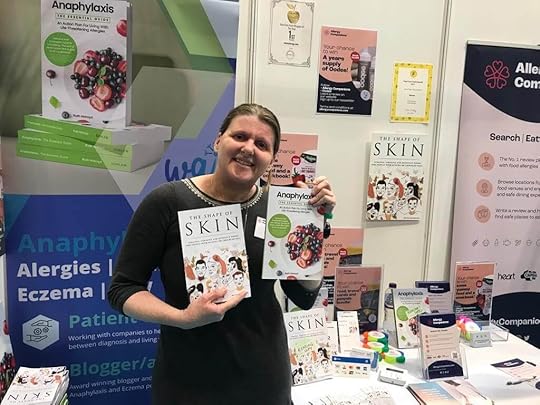 So much happened this year
In January I will reach four years in topical steroid withdrawal and I am so pleased with my healing. I think I’m experiencing some very mild cycling of TSW symptoms; sore redness, itching and then very gentle flaking. I think my skin now looks more like mild eczema, in fact one GP visit the doctor commented, “it just looks a bit dry.” I’ll take that as a huge win thanks!
What I’m most proud of is all that I’ve achieved this year, so here’s to 2022:
Visiting friends – I’ve caught up with so many friends over food, coffee and walking and it’s all been about living in the moment and not getting through the experience. My skin is not affecting my quality of life any more.Organised an Topical Steroid Withdrawal Retreat – this was incredible and I am so proud of what we achieved. Thanks to Izzy, Sasha and Steph, my co organisers and to everyone who came along. It was such a special day.Spoke at events – I spoke at two Food Allergen Service conferences, a local writing group and at the Allergy Show. I both dread and love public speaking and that’s something I really want to do more of in 2023.Went to two special weddings – All weddings are special but the two I was invited to this year were so incredible. Both very lovely friends who have both been through and achieved so much. I am so proud to call you both my friend and really very grateful to be invited to share your special days. Thank you Caroline and James and Rash and JP.Basked in the Lakes – I love the lake district and this year I was so lucky to be able to visit three times. Once with a huge bunch of friends, once with my family and the final time on my own. It’s a very special place for me with so many memories and I am looking forward to more lake swimming in 2023 now I have my own wetsuit.Eaten out at loads of places – I’m not letting my allergies stop me joining others in the joy of food and eating out. There are enough places who are able and willing to cater for me and I now have a good, robust process in place to keep myself safe.Kitchen renovations – I now have a new fancy kitchen which I love so much. It cost so much more than my original calculations but I’m so pleased I did it, went for it and chose things I loved and not went for the cheapest things. I spend a lot of time at home alone, I love my own company, cooking and giving my body the fresh healthy food it needs to heal so I deserve this lovely new kitchen. I am now never going out again though as it’s emptied the savings but I don’t regret it for a second.Guest blogs galore – You all know I love blogging and I’ve been feeding that passion this year. I’ve written lots of guest blogs, including:How to get the most out of your dermatology appointment – this would apply equally to any complex medical condition so do read it if you are struggling with any element of your health.Allergy disclaimers when eating out – have you signed one?And more… for a full roundup of guest blogs click hereI probably haven’t even mentioned half the things I did. I also read a tonne of books, listened to a zillion pod casts and audio books, rekindled my love of doing a jigsaw. I walked loads and just enjoyed my house and garden and building real connections with the wonderful friends I am so lucky to have.
Throughout it all I’ve blogged. This blog is my happy place, where I can share what I’ve learnt and rant about things that make me mad.
Thank you for joining me for the journey. Here’s to many more years of blogging, sharing, learning and adventures with allergies, asthma, eczema, anaphylaxis and topical steroid withdrawal.
I wish you all a happy, healthy, peaceful and restful Christmas with friends and family. See you in 2023!
You may be interested in reading:Topical Steroid Withdrawal – Frequently Asked QuestionsUseful allergy, asthma, anaphylaxis and eczema links – have I missed any?Why New Year’s Resolutions are bolloxThe post A huge thank you from what allergy first appeared on What Allergy Blog.December 19, 2022
Top 20 gifts for someone with eczema or TSW
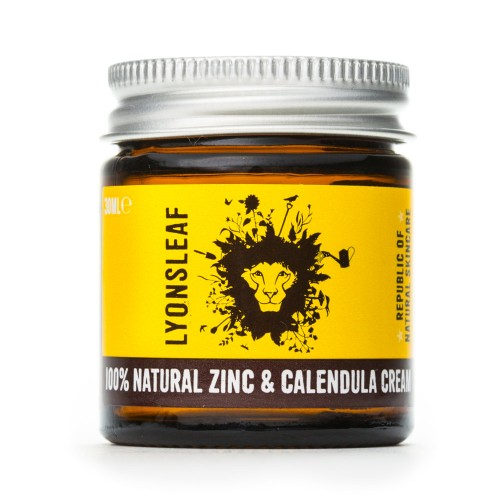 Lyonsleaf Zinc and Calendula cream
Buying gifts for someone with sensitive skin, or with topical steroid withdrawal (TSW) and also potentially someone going through a really terrible time too, can be daunting. You can’t reach for the obvious chocolates and smellies as they may well be avoiding skin care products and watching what they eat.
Unsuitable giftsIt can be very easy to get it completely wrong when buying gifts for sensitive folks, so here are a few mistakes you don’t want to make:
Any fragranced skincare product you bought on the high streetChocolate gift boxesAlcohol – they may not be able to drink if it irritates their skinSynthetic clothingTop 20 gifts for someone with eczemaHere are a few ideas of really lovely things that you could treat them to:
Soft and soothing eczema clothing –Clover Skincare – They do a beautiful scarf, gloves and soft cotton face mask. Eczema Clothing Company – Endorsed by the National Eczema Society, this range of 100% cotton clothing was created for those who have both lived with eczema all their lives. They sell nightwear, socks, tights, tops, gloves and so much more.Books – there are loads of books, from self helps books that help with pain to books dedicated to TSW and actually written by TSW people too!The Shape of Skin – eczema poetry (by me xxx)Check out my Top 7 books for people with eczema and TSW.Real Skin Club Positive Affirmation Cards – I love these so much. They also do mirror vinyls, stickers and more. Visit https://realskinclub.com/DermaWarrior skincare products – I’ve tried the Oat Soak and healing balm. They’re all natural and a safe bet for anyone with sensitive skin. Check out Dermawarrior.Balmonds Skin Salvation – You guys all know I love Balmonds and use their products all the time. From Skin Salvation to their natural healing body oils, shampoo and body wash, there is a huge range to choose from. Check out their website here balmonds.co.uk and use code WHATALLERGY for 20% off.Lyonsleaf skincare – I’m obsessed with their Zinc and Calendula cream on my sore bits and also the marshmallow balm for when you need more moisturiser. Visit their website at lyonsleaf.co.uk Use code WA20 for 20% off.Colouring books – Adults can do colouring too. Pair with pretty coloured fine tipped pens or pencils – the perfect unwinding activity. I’ve bought the ones with swear words for people going through TSW and they loved them. Getting distracted from your skin is what it’s all about, and getting out of your own head space for a even a short time can be wonderful and calming.Bach Flower healing remedies like Sweet Chestnut, Agrimony, Water Violet, Wild Oat. Who knows if these actually work, there is some science behind them and I’ve used them a lot of my TSW journey. Maybe it’s placebo but I use a remedy depending on how I’m feeling for a boost, calming, relaxation and when I’m very anxious.Creative Nature – Top 14 allergen free, perfect for everyone so no need to worry about allergies! Checkout Creative Nature for cake mixes, pancake mixes, chocolate treats, Gnawbles, cacao nibs, protein bars and so much more. All allergen free. They do gift boxes with a selection of products. Check out Creative Nature and use code WHATALLERGY10 for 10%West Labs Dead Sea Salts – I swear that using dead sea salts helps my skin heal so much. It helps to reduce flares and help me heal when I do flare. Check out West Labs and use code RUTHH30 for 30% off everything you buy, from bath salts to shower gel.Chuckling Goat sleep tea – it’s honestly the best, most delicious sleep tea I’ve ever had and I highly recommend. Whilst it’s not a 100% sleep cure, I definitely think it’s helped me.Cosi Care – Cooling stars, rollers and ice – they are so good for adults or kids. I highly recommend, and I still use mine when I’m flaring.Eczema Land – Bamboo face clothsItch & Bitch merchandise, itchy stickers, itch n bitch bags, sweaters, so much stuff. Check out Itch n Bitch for inspiration for your itchy friend.Bee the Brave’s inspirational quotes and merchandise for TSW and eczema peeps – Check out Beethebrave on Instagram. Oil diffuser and essential oils – this is such a good idea and I’m talking about the water based diffusers which then send up steam into the room. You add a few drops of essential oils to fragrance, calm and relax your home. Always get good quality 100% pure essential oils, like Naisssance or D’oterra. Other brands exist, but check it’s pure! Otherwise synthetic perfumes could make things worse for someone. Candles – Avoid the reed diffusers and paraffin was candles as these can contain lots of chemicals. Opt for soya or beeswax candles which are much safer, kinder to the planet and won’t irritate airways and skin.Eczema sample boxes – Send them a carefully curated Eczema Sample Gift box from the Eczema Clothing Company. They’ll get small sample products to try before they buy! Check out Eczema Sample Boxes here.Beautiful stationery – Not everyone loves this kind of thing so check the lay of the land before buying this, but some lovely note books, journals, pens and stickers etc. could be perfect!Membership – Find out what they’d love and think about getting them a membership to something that will help distract them like Netflix, Audible, Calm, there are loads of potential options.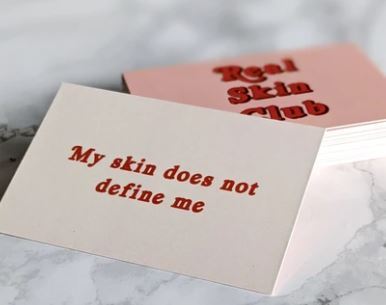 Positive Affirmation cards for your skinAdvice when buying for eczema peeps
It takes a little more planning but ultimately you’ll end up with a well thought out and much more highly appreciated gift.
Ask them if they need anything, and whether they have any allergies, sensitivities or things you should avoid.Try to think of something that will show them how much you care.Do your research into the condition and think of something that will surprise them.Use the list above and support the amazing skin community!
 Get the Shape of Skin on AmazonIf money is no object
You could really splash out on something like:
Red light machineIce therapyGood quality, bamboo or high cotton thread’luxurious beddingRobot hoover for cleaning up all the skin flakes!I’ll add to this list as things come to me.
If you don’t have much moneyIt could be as simple as inviting them for a coffee, taking them for a country walk, or offering to clean for them or do a task in the home that they are struggling with. Take them some soup, batch cooked meals, anything like that. It can be lonely and isolating and often people hide at home and won’t go out.
Read 10 tips for caring for someone with chronic eczema or topical steroid withdrawal.
Air fryer vs Microwave with food allergies
If you have a small kitchen but want the time savings of a microwave the air fryer might be a brilliant alternative. Having just updated my tiny kitchen I wanted to try and integrate a microwave but I’ve not had one for so long… and worktop space is precious in a small kitchen.
Where would I put the microwave? They’re big and take up counter space.
I’d also been hearing all the hype about air fryers… so with my birthday coming up I wondered which of these modern gadgets would work best for my current situation.
First you need to think, what do you need it for? and will you use it if you get one?
I have a ‘One pot’ cooker that I was given and it’s never made it out of the box yet! (Sorry Cory… it might bet an airing in 2023)
So here’s my research, maybe you could ditch the microwave and just have an air fryer?
Reasons to get a microwaveIf you’re like me, most of things you use the microwave for are limited, simple tasks. e.g.
Reheating mealsReady meals (Batch cooked by me)Jacket potatoesDefrostingSo is this cumbersome large kitchen appliance really necessary?
What’s all the hype about air fryers?Everyone is talking about Air Fryers. Two people I know have published air fryer cook books recently. So why are they soooo coveted?
Zero or very low oilCooks using air using clever technologyFastEffectiveUses much less energy than your conventional ovenSmaller than a microwave!Can you compare microwaves with air fryers?They are two very different kitchen beasts, but can you compare an air fryer with a microwave? They’re not really doing the same thing, but they are both there to speed up kitchen tasks and cook food faster. So here goes, how do they compare?
TaskMicrowaveAir FryerReheat meals3-6 minutes depending on meal2-3 minutesJacket potato5-6 minutes but often shrivelled and never crispyBeautiful crispy jacket spuds, like from the oven in xxCake in a mugQuick, easy, tastes amazing! 3 minutesIt’s possible! Google says soCook/steam vegetablesWorks, makes a lot of steam and you have to keep checkingCook vegetables so they’re perfect in a fraction of the timeDefrostWorks but often sears the edges of the meatYes you can! in a fraction of the timeCook meatNot a great ideaCooks meat as good as oven roastingChipsYou can do special chip in bag/box ones. They’re okAmazing, crispy chips with no or very little oil requiredReady mealsWhat microwaves were made forNot what air fryers were made forHow do you choose an air fryer?There is so much choice, and some can be quite large. I’ve looked at a number of reviews and top 10 lists, but so far it’s been hard to really work out which one is best. Being a single person I only really need a small one, though you can get family sized air fryers too.
I think they’re probably ideal for smaller meals, imagine cooking every element of a roast dinner in your air fryer and having to keep everything warm as you keep popping different things in. Yes it’s quick but that sounds like a faff. So some of the hype might be over egging the air fryer benefits, but they really do look cool, save on bills and cook things really quickly.
I’m going to be going into some actually shops to take a look and see what I like the look of and also doing some polls to find out what Air Fryer my friends recommend as literally everyone is talking about them. It looks like you can get a small one for around £60-£80, which is cheaper than I thought and certainly comparable to the price of a microwave.
Will air fryer recipes work if you have food allergies?From my research, I’d say, 100% yes. Air fryer recipes tend to be quite simple so you can just substitute your safe milk, etc. and if you’re avoiding gluten, check out Becky’s recipes below.
There are loads of air fryer cook books out there so make sure you take a look inside before buying. You can do this on Amazon, so do your research. I’ve found two sources that should help you to get an idea as to whether an air fryer is for you:
Which air fryer cook book should you get?I’ve noticed two people who I know and respect in the healthy eating, gluten free area who have been writing a lot about air fryer cooking; Jenny and Becky.

Air Fryer Cookbook by Jenny Tschiesche
(THE SUNDAY TIMES BESTSELLER): Quick, healthy and delicious recipes for beginners.
An air-fryer is the latest kitchen must-have and this is the recipe book to go with it! This nifty, counter-top appliance is similar to an oven, as it bakes and roasts, but the key difference is its heating elements are located at the top and are enhanced by a large, powerful fan. The result is food that’s crisp and delicious in no time and, most notably, it makes the perfect alternative to a deep-fat fryer for anyone adopting a healthier lifestyle. But air-fryers offer plenty of other benefits too: they require practically no heat up time, cook food fast and evenly, can be used away from home (making them popular for camping trips, staycations and student living), plus clean-up is easy too. Nutritionist Jenny Tschiesche has developed 101 tried-and-tested recipes to help you get the very best out of your air-fryer. Her appealing ideas take their inspiration from all styles of world cuisine, and there is something here to suit every occasion, from snacks and sides to complete meals and sweet treats.

Becky Excell on Instagram
Becky is another Sunday Times Best selling author who is also a blogger, food writer and gluten free recipe creator as she lives with coeliac disease.
She’s written a few gluten free cook books already and I wouldn’t be surprised if there was an air fryer recipe book coming out soon.
Check out Becky on Instagram for loads of slow cooker and air fryer recipes. I’ve been following Becky for years and love her recipes. She does use other allergens but I think you could substitute and create most of her gluten free recipes without your food allergens.
I would love to hear from you guys, do you have one? Will it work for me? even though I have food allergies? Which one is best? I’ve been going down rabbit holes of air fryer reviews for days and with the big birthday coming this could be the perfect gift to ask for. Watch this space for my air fryer adventures.
You may also be interested in reading:Dairy, wheat and egg free cake in a mug recipeAre microwave ovens safe?Top 14 allergen free carrot cake recipeThe post Air fryer vs Microwave with food allergies first appeared on What Allergy Blog.December 14, 2022
How The Emotional Freedom Technique Can Help You Live A Less Stressed Life
Short-term stress is uncomfortable at best. It can lead to mood changes, feelings of anxiety, trouble sleeping, muscle tension, and fatigue, alongside other impacts. If stress is prolonged, the effects become far more serious, leading to an increased risk of heart disease, diabetes, anxiety, and depression. Stress can disrupt work, education, interpersonal relationships, and how you feel about yourself. So, what can you do?
The emotional freedom technique (EFT) can help you relieve stress and protect your health in a way that is unique to other modalities. EFT tapping addresses markers of stress in both the mind and body. This is part of why it is so powerful. Even better, the positive effects of EFT are confirmed through a variety of research studies.
In this article, we’ll go over:
How EFT can help you live a less stressed lifeUsing the Gamut point tapping to reduce stressHow to conduct the 9-point Gamut procedureBenefits of EFT tapping vs. other techniques for stressHow to find an EFT practitioner near youHow EFT Can Help You Live A Less Stressed LifeResearch shows that the emotional freedom technique can lower physical and mental markers of stress. This includes lowering of the stress hormone called cortisol. Whereas other modes of therapy focus on thoughts alone, the emotional freedom technique requires that you:
Acknowledge and work through thoughts that increase stress (e.g., “what if I get in trouble at work today?”)Connect with the body and use points to relieve physical tension.This is what makes the emotional freedom technique so valuable. As you may know, there are various ways to use EFT tapping. EFT tapping sequences are tailored to the individual, and various points in the body can be utilized for the best results. Today, we’ll talk specifically about the use of the gamut point.
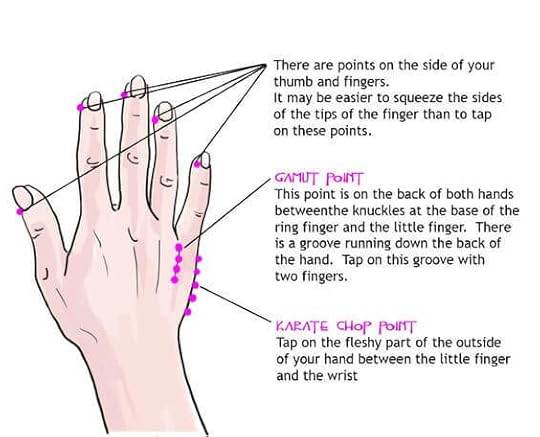 Where is the Gamut Point?
Ref: Losingweightwitheft.comEFT For Stress And The Gamut Point
Where is the Gamut Point?
Ref: Losingweightwitheft.comEFT For Stress And The Gamut PointThe gamut point is one of the most powerful spots for EFT tapping. But, you might wonder – What is the Gamut point? How do I find it?
The gamut point is found on the back of your hand (roughly an inch below your knuckles) between your ring finger and little finger. When you hold, tap, or massage the Gamut point, it stimulates what is called the triple heater meridian. Also referred to as the triple heater acupuncture meridian or triple warmer meridian, the triple heater meridian consists of twenty-three acupuncture points. It is known as the meridian that controls the “fight, flight, or freeze” response in the human body.
The fight, flight, or freeze response is sometimes called the stress response, and it is what signals our body to protect us from danger. The problems start when we’re high alert and feel as though we’re in danger even when we aren’t truly in harm’s way, as is the case for those with persistent stress or anxiety.
Understanding how to utilize gamut point tapping is so powerful because it allows you to connect with your body directly and calm the fight, flight, or freeze response.
How To Conduct The Gamut ProcedureLet’s talk about how to conduct the Gamut procedure, which consists of nine brain-stimulating actions. First, locate and start lightly tapping the Gamut point on your hand. Then, while tapping, complete the following actions:
Close your eyes.Open your eyes.Move your eyes down toward the right without moving your head.Move your eyes down toward the left, still without moving your head.Roll your eyes clockwise.Roll your eyes counterclockwise.Hum a simple, neutral tune (such as “happy birthday” or “twinkle twinkle little star”) for two secondCount rapidly from the numbers one through five.Hum a simple, neutral tune for two seconds again.While you can pick virtually any tune to hum, make sure that you don’t have any negative memories associated with the song you choose. Gamut point tapping can be used independently or alongside basic EFT tapping – the kind of tapping sequence you may have used or heard of before, which often takes a deeper dive into your thoughts and emotions.
Using the Gamut procedure can promote better sleep alongside a reduction in feelings of stress. This is an ideal benefit, as stress is often linked to difficulty sleeping.
The emotional freedom technique can be used alongside or independent of other therapies. However, certain benefits may set EFT apart from other methods.
Benefits Of EFT Over Other Techniques For StressWe have already touched on one of the greatest benefits of EFT, which is that it supports both mind and body wellness, reducing physical and emotional tension alike. In Western society, the mind and body are often separated in healthcare. A professional will frequently focus on the body or the mind, but not both. EFT acknowledges mental and physical health, but not only that: It addresses the two as one entity. In turn, people like you are able to find holistic (meaning whole-self) healing.
Even still, utilizing the mind-body connection is only one part of what makes the emotional freedom technique special. Other benefits of EFT vs. other techniques for stress include but aren’t limited to the following.
a. EFT lets you navigate stress independentlyWhile it is ideal to learn from a trained EFT practitioner, you can take the skills you learn from your practitioner and use them yourself. The right EFT practitioner should teach you how to engage in EFT tapping on your own, and how to work through or troubleshoot negative thoughts, so that you can do it after your course of treatment is over.
Working with a practitioner also provides the opportunity to learn a number of different EFT procedures, whether that is the gamut procedure or a sequence that includes affirmations, thought reframe, and other tools frequently employed with EFT. It’s ideal to learn all that you can so that you have a full toolkit of stress reduction techniques.
b. EFT tapping for stress is convenientEFT tapping is both convenient and accessible. Once you learn EFT tapping, you can take it anywhere. No special tools are required. Some people even learn about the basics or the foundation of EFT online through free videos and articles.
However, note again that it is ideal to have an EFT practitioner who can help you learn to use EFT correctly for the best results. If people do not know how to self-administer EFT tapping properly, they may not get all of the benefits of EFT.
c. EFT works both long-term and immediatelyEFT shows promising effects long term, but it also has the advantage of helping people find relief right away. A study on nurses during the COVID-19 pandemic even found that one session of EFT led to a reduction in stress, anxiety, and burnout. In other words, many people feel the benefits of EFT right away.
Since procedures like the Gamut point procedure physically calm the body through acupuncture points, you don’t have to wait to experience the positive effects. EFT can bring you to a point of calm faster than other long-term therapy methods can, similar to breathing exercises, progressive muscle relaxation, and other mind-body tools.
d. The efficacy is similar to that of other techniquesResearch suggests that EFT is similarly effective to other common therapy techniques, like cognitive behavioral therapy (CBT). Some people even prefer EFT over CBT or choose to use both. Again, it is safe to use EFT with a host of other forms of mental health support. The side effect risk is low with EFT, as it is an evidence-based and natural intervention.
Finding An EFT practitionerWhen you look for an EFT practitioner, you want to ensure that you feel comfortable with the professional in question. Ask about how much experience they’ve had, what their education and training is like, and whether they’ve had success with clients facing concerns similar to your own. Remember that any practitioner you work with works for you and should be willing to answer your questions.
At the end of the day, what’s most important is that you find the right match and work with a professional who can help you most. If you are on the lookout for an experienced EFT practitioner tapping school would be an excellent choice.
ReferencesChurch, D., Yount, G., & Brooks, A. J. (2012). The Effect of Emotional Freedom Techniques on Stress Biochemistry. Journal of Nervous and Mental Disease, 200(10), 891–896.
Dincer, B., & Inangil, D. (2021). The effect of Emotional Freedom Techniques on nurses’ stress, anxiety, and burnout levels during the COVID-19 pandemic: A randomized controlled trial. EXPLORE, 17(2), 109–114.
You may also be interested in reading:Eczema, stress and itchingFree Skin Conditions Guide10 tips for getting therapy for fear of anaphylaxisThe post How The Emotional Freedom Technique Can Help You Live A Less Stressed Life first appeared on What Allergy Blog.Why Should You Be Taking A Collagen Supplement?
Collagen supplements are one of the most popular ways to take care of your body. You should take collagen tablets for hair and skin to improve your health and wellness. It can help promote glowing skin.
Most collagen in the body accounts for 75% of muscles and skin. It’s also the building block of collagen-rich foods like fish, chicken, and eggs—which means you can get plenty of it simply by eating well. Your complexion will look more vibrant due to the antioxidants in fruits like blueberries and strawberries; vegetables like carrots; legumes such as kidney beans; nuts such as almonds/walnuts, etc.
It can strengthen hair and nails.Collagen is a vital protein that helps to keep your skin looking young and healthy. It’s found in the body’s connective tissues, including tendons, ligaments, cartilage, and bone. It’s also a major component of hair follicles, making it possible for you to grow strong hair and nails.
It plays a significant role in repairing damaged tissue, which is why it’s crucial for people who play sports or have active lifestyles.
 Collagen has been proven to help with joint pain
Collagen tablets help your joint health.
Collagen has been proven to help with joint pain
Collagen tablets help your joint health.Taking collagen supplements can help you with the joint pain that comes from overuse, as well as from an injury.
If you already have osteoarthritis (OA) or arthritis, a collagen supplement may help stop your body from getting worse by preventing additional damage from chronic inflammation.
Collagen, an essential protein, makes up 90% of body connective tissue. As people age, their bodies manufacture less collagen and begin to show symptoms of degenerative joint diseases like osteoarthritis.
It may increase muscle mass.A protein called collagen is present in the body and is crucial for developing connective tissue.
It also provides support for joints like the knee and hip. Age-related or injury-related collagen levels drop, particularly after surgery, causing joint pain and other circulation issues like itching.
The good news is that collagen supplements are available. They’re inexpensive and can be taken as a pill, powder or liquid, depending on your preference.
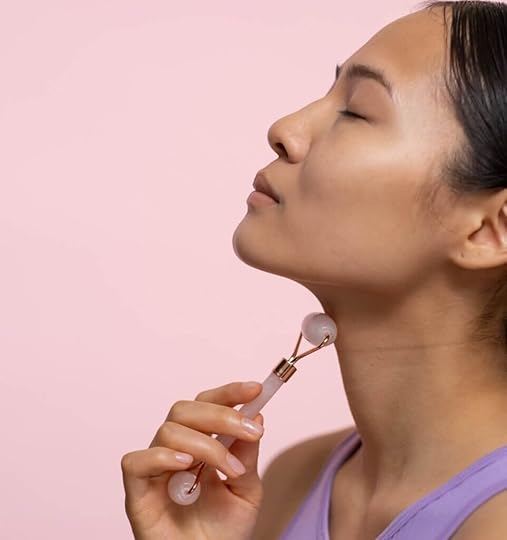 Many people take collagen supplements to promote skin health
How does the skin benefit from collagen supplements?
Many people take collagen supplements to promote skin health
How does the skin benefit from collagen supplements?Collagen supplements can help your skin look and feel its best, but they can have some side effects. Let’s take a closer look at the skin benefits of collagen so you can get the maximum benefit.
Wound healing – First, it helps with wound healing, which is essential because wounds are uncomfortable and annoying and leave you open to infections and other health problems. Collagen supplements can help reduce inflammation caused by the wound and promote faster recovery.Hydration – Second, collagen helps keep your skin hydrated. Your skin needs water to function correctly, but you also need to get enough water through your diet, exercise, or other means to produce enough collagen. Taking a collagen supplement will help keep your skin moisturized as well as protect it from damage caused by dryness.Acne – Finally, it may also help with acne breakouts because they work as an anti-inflammatory agent in the body. This means they’ll reduce swelling in the skin and aid in the fight against acne-causing bacteria!So can collagen make a difference?Collagen tablets for hair and skin can make a significant difference. The more collagen you have in your body, the better it will be able to heal itself from wounds or injuries. They are a great way to boost your health, but they should be taken in moderation. They can be beneficial in several ways but can also cause harm if you overdo them. Collagen supplements will not compensate for a poor diet or lack of exercise, so take them only when you feel you need them.
The research behind collagen supplementsThere have been a few studies into collagen and its many uses but you may be interested in reading:
I will add more research references a I find them.
Why I’m trying collagenI’m actually trialling Pura Collagen at the moment, for skin health and plan to also try it for my joints. There is far more research behind the benefits for joints than for skin. It’s not a quick fix or an instant cure but it can be beneficial to the body, especially as we age and collagen production reduces. Menopausal women can see a reduction in collagen; just a healthy sign of aging but many choose to boost the skin’s health and elasticity in a bid to stop those wrinkles!
This is a sponsored post
Images:
Photo by Ron Lach
Photo by Karolina Grabowska
December 2, 2022
‘Food to go’ with serious food allergies
It’s always been a problem for people with food allergies all over the world, there is little safe choice for lunch or snacks when you’re on the go. And if you are brave enough to try, there are fewer and fewer options available. I’d love to hear your suggestions because I really struggle. I often end up with an apple and packet of crisps. Long live the trusty oat cake!
It also seems that choices have reduced dramatically since lockdown, products that have previously been available are no longer stocked on the shelves. Both brexit and the Covid-19 pandemic have meant many food service establishments have focused on their core customers. You can’t blame them, there is also no risk of litigation if you don’t offer free from food, but that doesn’t mean you’re safe from risk to your business.
 The allergic consumer is still visiting you
There are a large number of people with allergies who don’t always declare them or ask about safe options. These are predominantly young adults, who will choose what they ‘think’ is a safe option, but it may well not be. This means you STILL need to label all allergens and should do so even on products that are made on the premises.
Just because an accident isn’t your fault, imagine how you would feel is someone was seriously ill or tragically died after eating food they bought from your restaurant?
Allergic consumers – please always check, check and check againIt’s up to us allergic consumers to be open, vocal and explain our allergies simply and confidently to ensure we remain safe. We do take on a lot of the responsibility, please always check food is safe before consuming and ALWAYS CARRY TWO!
Do you always check? I know when I was younger I’d often choose something I thought was safe and not ask, like a chicken salad. It often went wrong due to garnishes, dressings or cross contamination.
If people don’t know you have a serious allergy they can’t be blamed for not taking adequate care.
Whilst choices have shrunk, there are still places and options that might be safe for you.
Cafes – Independent cafes can have some great safe options. I’d suggest opting for simple things like:Plain jacket potato and safe fillingAsk if they have wheat free bread – Ask if they are able and willing to clean down and use clean utensils to make you a sandwich. Simple salad, check cross contamination and go through each element to check it’s safeGet to know the owners – They can often be more accommodating than the larger chains. In my local cafe, The Kitchen Larder, they can make me a safe salad which is delicious and safe for me. Just take the time to explain your food allergies to the staff and avoid really busy times.Chain lunch cafes Pret – The only thing I can get is sometimes a salmon salad but often these all contain some allergen or other. Sometimes there is an egg and potato salad that’s OK. I also opt for Sushi as I love it. I have a soya allergy but the little soya sauce pot is optional.Starbucks – You can get a coffee and a packet of crisps. If you’re coeliac there can be some sweet cake/biscuit options, but these are not always suitable if you have a nut or dairy allergy too.Leon – Leon used to be amazing but has since become very limited on choices and the owner has been very vocal about customers with allergies not taking risks! He spoke out 2019 so I doubt things have got easier since then. You can read what he said here: Leon tells diners with allergies NOT to eat in their restaurants because they ‘cannot guarantee dishes are allergen-free’. Personally, I don’t feel safe eating there and have had the spiel from staff that they can’t guarantee etc. etc. but it does sound like they do have safety procedures in place.Supermarkets – there used to be one option at most supermarkets for a gluten and dairy free sandwich. Since 2021 I’ve not seen one anywhere, although they have been spotted and shared on social media by others. I’ve found these in Waitrose, Marks & Spencer and Tesco. Sainsbury’s is also good for lunch options. You can also grab a pack of cooked meat, salad etc. and tub of humous, as long as you have some cutlery!Street food – I would usually urge extra caution with these as staff may not have English as their first language and may not fully understand all the ingredients. However, with that said, I’ve come across some amazing mobile vans at music venues, shows and in my local area. You can usually get to speak to the owner and find out what’s safe and I’ve been pleasantly surprised with some. e.g. the Well Nice Food Company fish and chips. Always phone them and ask them to check all sauces, fryer protocols etc. If you’re going to a festival, see if you can find out ahead of time what food options will be there. It is often prohibited to bring in your own food, but if you can prove you have serious health concerns you can get permission but do this early as it can take a month to sort out.Exhibition venues – Don’t count on finding anything safe at large exhibition venues, even if you’re going to a specialist foodie show. You should always bring your own safe lunch with you or you’ll end up with a packet of plain crisps again.It takes planning, preparation and involves often taking your own food it you’re not able to suss out the options ahead of time.
Research shows over two thirds of takeaways flout the lawsIt’s worth using caution when eating out at takeaway venues, they really could be dangerous so please use extra caution.
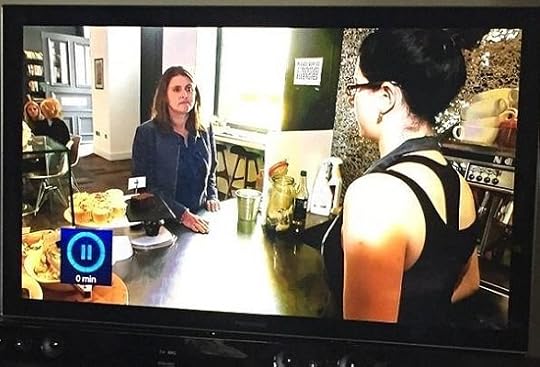 Me looking downright miserable live on ITV news, talking about eating out with allergies
“…over two thirds (70%) of takeaways appeared to be flouting the law by not providing information in the right way.”
RSPH
You can read more about the allergen regulations and how take away establishments are matching up.
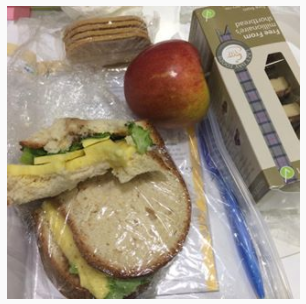 Typical packed lunch on the go – Warburtons GF, Violife, Lazy Days and Nairns)What do I take for lunch on the go?
I’ll usually go prepared with the following:
Bottle of waterSandwich or bento box with left oversApple or similar firm fruit!Oat cakes for snacksLazy Days snacks for a treatPacket of crispsThere are loads of companies making safe free from crisps, snacks, biscuits etc. like Angelic biscuits, Creative Nature protein bars and Nairns. Keep a stock in your cupboards ready for those days out, because they aren’t always easy to find on the high street or in supermarkets.
Advice for mums with allergic kidsAlways take snacks, I know you all do, but it’s doubly important for children. We adults can miss a snack of a meal and not get too hangry but it can ruin a day if your kid is hungry and fractious and it’s so hard seeing them miss out. Here’s a few suggestions you probably already do:
Keep snacks separate in small tubs or bags so you can get out one portion at a time to help ration snacksIf you know what everyone else is having, try to find a safe replacement for your kid, or something even better. It’s hard for them for to be on the side lines and always missing out.Stick to more robust snacks, not bananas and pears and things that deteriorate.Pre-cut fruit into small hand portionsGet the small snack size lentil chips, carrot sticks etc. You can get some great healthy optionsMake safe sandwiches to takeTake a flask/water in case they get thirstyTake some wet wipes or go eco and keep some damp ecloths in a tubs so you can easily clean up.Don’t forget snacks for yourself too!What do you take? Do you have favourite go to snacks?
Free From Food Awards – Food on the goIf you are in the free from industry and would like to enter the Free From Food Awards 2023, Entry opens 10am Tuesday 3rd January 2023. Let’s hope the entries wow us and give us allergic consumers more choice. At the moment you can see it’s a little limited though some places are getting better. For inspiration of amazing award winning free from foods for all occasions click the link above to see past winners.
I’d love to hear your thoughtsDo you struggle to find safe lunch and snack options when you’re out and about? Where do you go? Or do you take a packed lunch each time?
Photo by Kampus Production on Pexels
You may also find the following interesting:For my American readers – ‘The Best on the go snacks for kids’ The Trip Advisor for people with allergiesGet yourself Food Allergen Eating out Cards from Equal Eats for 10% offThe post ‘Food to go’ with serious food allergies first appeared on What Allergy Blog.FREE ‘Skin Conditions Guide’ to eczema
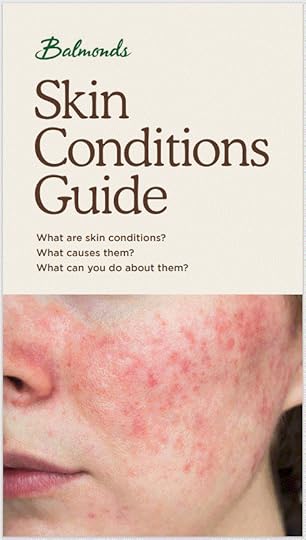 Balmonds Skin Conditions Guide
If you have any kind of inflammatory skin condition, check out this new FREE Skin Conditions guide from Balmonds.
It is jam packed with well researched and beautifully put together information including:
What are skin conditions?What causes them?What can you do about them?I’m very proud to have played a small part in contributing some content for the section on allergies and your skin.
Allergic reactions on the skinThe problem with allergies is that we associate this with an immediate reaction, yet this isn’t always the case. Balsam or Peru allergy for instance can take about four days to present as a reaction on the skin, which makes it almost impossible to pinpoint by just observing day to day lifestyle.
However, many contact allergies can have a swift onset, so you know exactly what caused it because you know what you doing, touching, close to. For instance, pollen, dust, linen detergent, all cause a reaction when they land on or come into contact with your skin.
More about the Skin Conditions GuideSign up to the Balmonds newsletter today and you’ll receive this incredible Skin Condition Guide absolutely free. And inside you’ll find the following information.
Introduction Skin Condition DirectoryWhat Is Atopic Eczema?
What Is Childhood Eczema?
What Is Psoriasis?
What Is Rosacea?
What Is Dyshidrosis?
What Is Contact Dermatitis?
What Is Topical Steroid Withdrawal Syndrome?
What Is Acne?
What Is Venous Eczema?
What is Perioral Dermatitis?
What Is Seborrheic Dermatitis?
What Is Ichthyosis? Nutrition and Your Skin, By Jennifer Fugo Ms, Cns, LdnManaging Childhood Eczema, By Zoe T. WilliamsAllergies and Your Skin, By Ruth HolroydBuilding A Skincare Regime with Sensitive Skin, by Dr Sina GhadiriGoing Clean: Ingredients to Avoid if you have Sensitive SkinStress & Your Skin: Wellness Strategies for Skin ConditionsMaking your Home Skin Condition-FriendlyTeenage Skin Resources
So much information!
Well researched with expert contributorsEach section has been sourced from renowned experts, and if you’re not following these guys (and me) on the socials, you should be.
Jennifer Fugo – Clinical Nutritionist and podcast host of The Healthy Skin Show is absolutely brilliant. She helps people heal their skin naturally. Check out her podcast via her information packed website at jenniferfugo.com.Zoe T. Williams – Author of blog, My Allergy Kitchen and The Busy Parent’s Guide to Food Allergies. Zoe loves experimenting with alternative ingredients and coming up with allergy friendly recipes. She believes you shouldn’t let allergies stop you from doing anything you want to do in life.Ruth Holroyd – An absolutely stunning guru and all round good egg and your go to source of information about everything allergies, asthma, eczema and TSW from the patient’s perspective.Dr Sina Ghadiri – Dermatology Registrar, Founder of Topiskin, which is a platform created to empower you around your use of both medical and non-medical topical treatments, track your progress, stay up to date with cutting edge news and see the hottest and best rated treatments related to your concerns.Take your time with simple small changesReading something like his guide may make you feel totally overwhelmed, but don’t worry. You don’t need to try and be perfect all the time and make all the changes. Just choose one thing you think you might like to try, like switching to a more natural shampoo. Make a list of the things you need to change, like fixing mould, getting hard flooring, ditching toxic candles, etc. and start to change your lifestyle.
It’s important to find what works for you and that you can embrace and stick to.
“I find it’s all about making tiny changes that add up over time to calmer, better, more easily managed and healthier skin.“
Ruth Holroyd, Whatallergy.com
What are you waiting for? Sign up for the Balmonds newsletter to get hold of your copy, and stay up to date with offers, products and news. You can also download the Free Skin Conditions Guide here.
You may also be interested in reading:The Shape of Skin eczema poetry book – poems to help you heal and love your skinThe ultimate gift for eczema peoplePositive affirmations for the skinThe post FREE ‘Skin Conditions Guide’ to eczema first appeared on What Allergy Blog.November 15, 2022
Please stop using the word sufferer
If you start to pay attention, you’ll hear people with allergies described as ‘allergy sufferers’ all the time. The same for atopic dermatitis and eczema, the term ‘eczema sufferers’ is used as if the person were in constant pain with the condition. It’s a term that we all need to stop using, because in most cases people really don’t like to be called sufferers.
I understand why people do it, I used to use the term myself, until a BBC journalist explained why it perhaps wasn’t the best choice of words. It’s a lazy word to use, shows little thought, and it’s also a little offensive to the people with the condition being described.
 I am not a sufferer, I am just a person getting on with a life with challengers
What is a sufferer?
I am not a sufferer, I am just a person getting on with a life with challengers
What is a sufferer?What do we think of when we use the word sufferer?
a person who is affected by an illness or ailment: “a long-term sufferer from depression”
dictionary.com
It infers long term, constant pain and illness which is very often not the case.
Language is so importantIt may seem over sensitive to object to words like this being used, but it also doesn’t help the person living with the condition. The language we use in everyday life is so important. If you talk about yourself and say ‘my allergies’ and ‘my eczema’ you are sort of implying it’s yours, and you own it. Instead try to see is as just a condition you are sometimes affected by.
It’s a subtle MindShift but it’s an important one. If we can accept a condition we may be living with and move on, with positivity, to find ways of coping, challenging ourselves and making the most of life and what it has to offer, that mental mindset can make a big difference.
Why we don’t want to be called ‘sufferers’There can be pain and symptoms for any condition that are hard to live with sometimes. You could call that suffering. Certainly, anaphylaxis causes suffering for many people, and eczema can be a lifetime of itching and discomfort.
But from my own experience, the use of the word sufferer is all wrong. I don’t suffer the conditions I live with, I just get on with it. I don’t want to be seen as a sufferer. I am not in constant pain and take great joy from even the small comforts and experiences in my day-to-day life. The term ‘sufferer’ makes you think someone is perhaps in a constant state of pain and discomfort, that they require our pity because this would be a terrible way to live.
Think carefully and use positive language insteadIf you want to write or speak about someone with eczema, you can use inclusive language. It’s a condition that ebbs and flows, we have skin flares but aren’t in a constant state of eczema so how about:
people with eczemapeople living with anaphylaxisthe allergic communityIt’s a similar to the way people often say someone is ‘confined to a wheelchair’ when in fact, most people who use them find them freeing and liberating as their chair allows them access they wouldn’t otherwise have had. They certainly don’t want your pity, they just want respect and access to normal life.
What not to say…Please avoid terms like:
afflicted victimsuffererpatient (makes people think of hospitals)People are just human beings who find themselves living with different challenges and conditions. It may mean adapting to doing things in a different way, but that shouldn’t always be seen as a bad thing. Think about using more inclusive language like just ‘people living with…’ or ‘a person with x,y,z’
Definitely don’t pity peoplePeople often say things like, ‘what a pity’ this happened, or what a pity you can’t eat this or that. No one wants your pity and it can come across as condescending, because the person saying it can do or eat the thing. It can often be a constant reminder of what you can’t do.
The language you use yourself can affect how you feelIt can be easy to then feel you are missing out. Instead focus on what you CAN do reframe how you refer to your condition. If you have food allergies, focus on what you CAN eat, not what you can’t. Just think of all the other foods that you’re not allergic to.
Never say, ‘Poor You!’Finally, ‘Poor you.’ is also a poor choice of words. When surveying a menu or a spread of food, people often say things like, “poor you, you can’t eat any of this.” and whilst it may be true, you don’t want and you certainly don’t need reminding and having it rammed down your throat. It is coming from a place of kindness though, the person saying it can’t imagine how they would cope in your shoes. But it’s unhelpful. If you want to help a person with limited choices, you could ask if they’d like you find a member of staff to help explain what’s safe. If you know someone has allergies and you think their choices are limited, you could ask if they’d like some support asking for some safe food to be provided. It can be hard standing up for yourself sometimes but most people with food allergies are used to this kind of situation and will have come prepared or ordered a safe option. If you’re not sure what to say, you could also just stay quiet and be very grateful you can eat everything on offer.
What is the opposite of sufferer?There are other words used like survivor, warrior, fighter and champion. These are more positive, but can also sometimes be challenging. When people call someone a fighter or a warrior it can make them feel uncomfortable. People with cancer or other serious life-threatening conditions don’t appreciate words like fight and beating this… I can make people who are worsening and not getting better feel like they are failing in some way and not doing enough to fight and beat the prognosis.
Finally, topical steroid withdrawal takes suffering to a new levelThe pain, discomfort and utter hopelessness that topical steroid withdrawal causes is indescribable. It really is a condition that causes a lot of suffering with very little acknowledgment and support. The lack of any diagnosis, research, recognition and safeguards for helping people get through it, make this so much harder. There are new drugs coming in that may help, but understandably people are worried about the side effects of these and don’t understand how they work. TSW gives people an innate distrust of any medical solutions put forward. I don’t know what the answer is, but this yawning gap for people struggling with TSW is what causes so much more of the suffering. If the medication had warnings on it explaining withdrawal it would be easier to live with and move forward with a plan for healing.
All we need is kindness and empathyNone of this is rocket science, but it does take all of us to see people and their daily challenges and to try to put ourselves in their shoes to understand what they live with day to day. All we really want is respect, kindness and support when we need it. We can all do better.
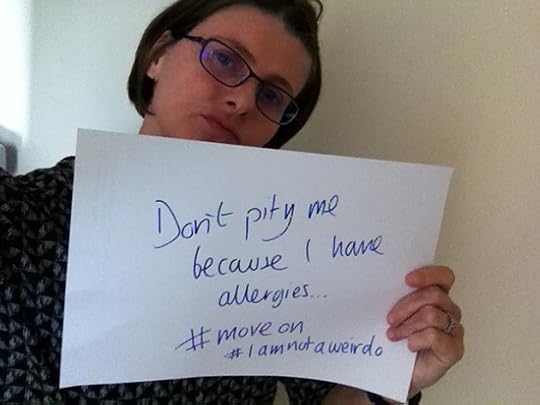 Don’t pity me… I have allergies. It’s not so bad. My life is so rich in other waysWhat do you think? Over sensitive and over thinking?
What do you think? Do you have a problem with how people are described when talking about different disabilities and life limiting conditions. I’d love to hear your thoughts on this. Let’s have a heated debate!
Photo by Alex Green on Pexels
You may also be interested in reading:Spoonie life – living with a chronic condition10 tips for caring for someone in TSW or with severe eczemaResponding to difficult commentsYou have no right to my medical storyThe post Please stop using the word sufferer first appeared on What Allergy Blog.November 7, 2022
Report medication that makes you ill
This week is the seventh annual #MedSafetyWeek, a global campaign aimed at encouraging people to report medication that makes them ill or causes serious side effects etc. If we don’t do this, we can’t hope to help others. If people don’t use the reporting procedure, medication could continue to affect others.
In this blog you’ll find out how to report an adverse drug reaction. It’s never too late to do so either, if you think something happened a while ago, still report it. But the sooner the better so we can affect real, meaningful and timely changes towards better safety.
 Report suspected adverse reactions to medicines
This year’s campaign theme is “how patients and healthcare professionals make safety work” and the focus is on the importance of reporting suspected adverse reactions to medicines and vaccines as soon as they arise. We are also encouraging the reporting of suspected problems with medical devices or other healthcare products to the Yellow Card scheme and local reporting systems.
Help improve the safety of medicines and medical servicesRunning from the 7th until 13 November, this campaign aims encourage widespread public engagement and improve patient safety by reporting suspected side effects associated with medicines and adverse incidents involving medical devices.
Together we can improve drug safety“Every report to MHRA’s Yellow Card scheme helps improve the safety of medicines and medical devices for all.”
Medicines and Healthcare products Regulatory Agency (MHRA)
This year’s campaign is a truly global effort and involves healthcare product regulators from no fewer than 82 countries. It focuses on the vital role played by every healthcare professional, patient, and carer who reports a suspected side effect or adverse incident, which in turn supports the safe use of medicines and medical devices.
They’re not telepathic – please report adverse reactionsAll medicines may cause side effects and adverse incidents may occur during the use of medical devices, so it is important to have robust measures in place to continuously monitor their safety after they are taken into clinical use. The purpose of safety monitoring is to gain more information about known side effects and adverse incidents, to find out about new ones, and, most importantly, to make use of medicines and medical devices as safe as possible. Regulators operate systems to detect and analyse those side effects and adverse incidents and prevent harm to future patients.
It’s not too late – report adverse reactions todayIt is important that everyone makes a report as soon as they suspect side effects and adverse incidents. This ensures that regulatory assessments are genuinely representative and can improve safety for as many people as possible.
Introducing the Yellow Card Scheme (in the UK)The Yellow Card scheme is the MHRA’s single system for collecting suspected side effects of medicines and adverse incidents involving medical devices. These side effects and adverse incidents are then collated and swiftly investigated by the MHRA. Since its establishment in 1964 the scheme has identified numerous safety issues to the benefit of many, thanks to individual reports from medicines users across the nation.
Minimum information required for the Yellow Card FormYou’ll find an online form to fill in when you visit the Yellow Card scheme and it can be quite daunting. You will need the information below before you proceed:
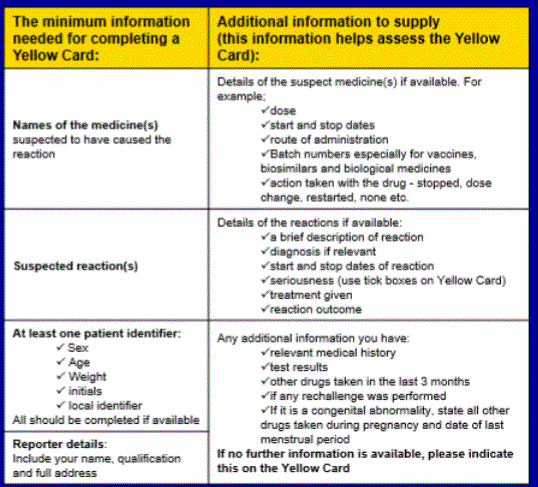
You can also request your medical history from your local GP practise if you can’t remember dates etc. which will help you complete the form accurately.
You can help protect against further harmEveryone who reports suspected side effects and adverse incidents to the Yellow Card scheme website or app, is actively participating in identifying emerging national safety issues, so that the MHRA can act when necessary and protect against harm.
Phil Tregunno, MHRA Deputy Director of Patient Safety Monitoring, said:Minister of State for Health and Secondary Care, Will Quince, said:
Every report made by a patient, a healthcare professional, or a carer plays a key role in gaining knowledge about the risks of medicines and medical devices in clinical use and allows rapid, targeted action to be taken to minimise harm and ensure that the benefit-risk remains favourable.
Reporting suspected side effects and adverse incidents to the Yellow Card website is not just about the individual involved, it helps to improve the safety of medicines and medical devices for all patients. By reporting, you are part of the solution – and you may be helping to protect the most vulnerable, at-risk groups from potential harm.
If you, your child, or a patient in your care experiences a suspected side effect or adverse incident relating to a medicine or medical device, it is essential that you report it to us promptly. The faster you report, the likelier it is that we can intervene and prevent others from experiencing untoward, serious, life-altering, and occasionally life-threatening issues.
Here’s how to use the Yellow Card Scheme
Patient safety is at the heart of ensuring the best care, and this government takes it extremely seriously. I’m pleased to support this campaign which will help to further improve the safety of medicines in the UK.
I urge everyone from healthcare professionals to patients to continue to report any adverse effects involving medicines or medical devices through the Yellow Card scheme, so potential incidents can be investigated quickly.
Anyone can report suspected side effects and adverse incidents to the Yellow Card scheme. Reports can be submitted in several ways:
Online at www.mhra.gov.uk/yellowcardVia the free Yellow Card app (available for Android and Apple devices)By phone on 0808 100 3352By paper forms available at pharmacies and GP surgeriesHealthcare professionals and providers can also use local clinical systems to make a report, such as MiDatabank, SystmOne, or VISION.
Reports related specifically to COVID-19, including suspected side effects caused by medicines, vaccines, and medical device and incidents when using coronavirus test kits should be made at coronavirus-yellowcard.mhra.gov.uk
Notes to EditorsNational medicines regulators from 82 countries across the globe and their stakeholders will be taking part in this international campaign led by Uppsala Monitoring Centre (UMC) – the World Health Organisation (WHO) Collaborating Centre for International Drug Monitoring. The campaign is supported by members of the International Coalition of Medicines Regulatory Authorities (ICMRA). The #MedSafetyWeek 2022 project team consists of representatives from the following organisations working collaboratively: the Medicines and Healthcare products Regulatory Agency (UK) as co-lead, the Health Products Regulatory Authority (Ireland), the International Society of Pharmacovigilance (ISoP) Egypt Chapter, and the Colombian Pharmacovigilance Association.The Medicines and Healthcare products Regulatory Agency (MHRA) regulates medicines, medical devices and blood components for transfusion in the UK. MHRA is an executive agency, sponsored by the Department of Health and Social Care.Patients using the Yellow Card site should type the relevant medicine, vaccine, or medical device into the search bar and select ‘Start report’ on the right-hand side of the bar. The search bar also offers a drop-down menu to report for medicines, vaccines, medical devices, blood factors and immunoglobulin products, E-cigarettes, and herbal or homeopathic medicines that are not on the MHRA’s list, as well as the option to send additional details of the suspected material(s) if the product type is unknown, so that the final report is accurate.For adverse incidents associated with a medical device, healthcare professionals should report through the Yellow Card scheme or their local clinical reporting systems. Healthcare professionals in Northern Ireland and Scotland will need to report adverse incidents involving medical devices through the Northern Ireland Adverse Incident Centre (NIAIC) or National Services Scotland.Patients are advised to contact a healthcare professional if they are worried about their health or the safety of any healthcare product they are receiving.Have you reported an adverse reaction?I have previously reported my own experiences using topical steroids for eczema since long term use of topical corticosteroids caused my skin to become addicted, leaving me in a rebound flare cycle that I couldn’t get out of. Having almost reached four years without using any topical steroids and with my skin continuing to heal, sharing this experience with others is important to me.
It’s also a good way to feel you are making a difference and helping others. Have you ever reported a medication? I’d love to hear your stories. What did you report? How did it make you feel? Have you seen change from drug reporting using the Yellow Card Scheme?
You may also be interested in reading:Topical Steroid Withdrawal – Frequently Asked QuestionsTSW is not a social media trendGet discounts off cool allergy, eczema and asthma related productsThe post Report medication that makes you ill first appeared on What Allergy Blog.