Ruth Holroyd's Blog, page 7
January 26, 2023
Balancing allergies with Infant and Toddler Nutrition
In the first of a series of guest blogs, today we hear from Amy, the founder of Grow with Iris, who I met at the Allergy Show in Birmingham last year.
 Amy and Iris – where it all started
Milk allergy statistics in the UK
Amy and Iris – where it all started
Milk allergy statistics in the UKAccording to the BDA (The Association of UK Dietitians) In the UK, CMA (Cow’s Milk Allergy) affects 2-3% of babies and young children up to the age of 5. It’s also one of the more serious allergies, which surprises many people who assume peanuts are the most allergenic.
Grow with Iris is proudly dairy free and our rigorous allergy testing also ensures we are free from lactose, eggs, soya, peanuts, tree nuts and gluten.
The story of Grow with Iris and one Mum’s mission to bring choice to the Allergy Community.
Grow with Iris, a fortified, plant based, free from, growing up drink for little people. Iris, Amy’s daughter was diagnosed with numerous allergies including dairy, soya, eggs, tree nuts, peanuts, and sesame at the age of four months old. She is the muse behind our brand ‘Fed up and frustrated by the lack of choice for nutritional milk alternatives when Iris was growing up, Amy started to develop Grow with Iris to offer a delicious option for children with allergies or those who prefer plant- based alternatives to milk. Grow with Iris is Paediatrician and Dietician approved, fortified to support the nutritional needs of growing toddlers and children meaning no need for separate vitamins and milk.
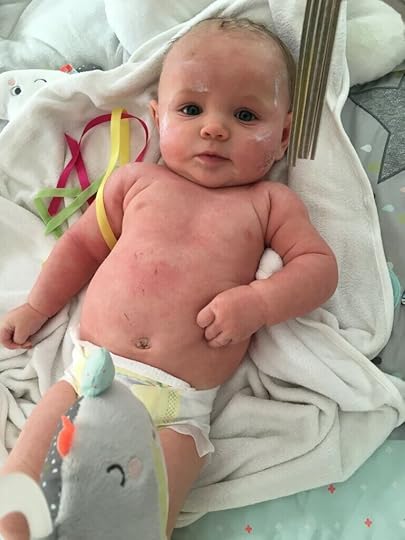 Amy and Iris’ story
Our allergy story began in 2017 when Iris was just a few months old. She had developed severe, red raw eczema. We went to the G.P and we were given steroid creams to help her but deep down I knew there was something else going on. Iris was exclusively breastfed, so I started to remove the more common food allergens from my diet such as dairy and eggs. I was reluctantly planning to go back to my full-time teaching role, Head of Art in a busy prep school. I knew there would be little time to express milk for her and the reality was that this was impossible. I wanted to be organised and make the transition as stress free as possible, so I went to my G.P to seek advice
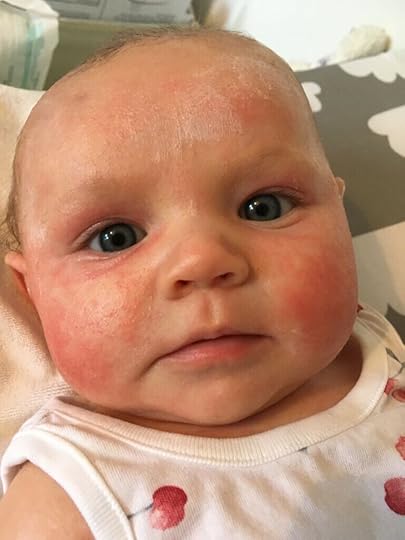 Trust your baby’s instinct when it comes to food
I had an overwhelming gut feeling that Iris should not have cow’s milk. I was told to try ‘any old formula’ I did some research as this did not feel right so I tried a goat protein-based formula as I heard it was easier to digest.
It was as though Iris knew; her intuition was not to drink it. She fought and fought, and after a stressful few minutes, – (which felt like a lifetime), – she took a drop then flat refused the bottle. Within minutes her little eyes started swelling, her face went bright red. I immediately gave her antihistamine and it subsided.
Getting the allergy diagnosisThe next day we went to the G.P and were advised to go private as it could take months for a diagnosis. Feeling like we had no other choice, we found the money and we were seen privately the next Saturday and blood tests were booked. I took my Mum for support. It was so traumatic, – it took 45mins to get the blood from her and we were all in fretful tears in a hot little room. The results confirmed allergies to milk, eggs, oats, wheat, soya, nuts, peanuts, sesame, kiwi and banana and we were given a prescription for two injector pens and antihistamines.
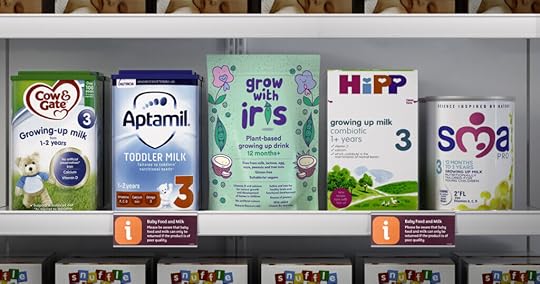 Grow with Iris plant based baby growing up drink
Cow’s milk free alternative baby milk formulas
Grow with Iris plant based baby growing up drink
Cow’s milk free alternative baby milk formulasMy partner Matt and I were at a loss as to what formula to give her. The one offered by our G.P was full of corn syrup and had a list of synthetic ingredients I did not understand. This was not what we wanted to feed our precious little baby, – when we were very conscious of eating healthily for ourselves, – it did not seem right to give her that. I continued to breastfeed morning and night while Matt scoured the internet looking for alternatives for when I was teaching. Importing other options from the US, France, and Australia at around £60 a time was not financially sustainable, and I knew I could not be the only one in this situation, so I decided there and then to do something about it and create my own line of free from and delicious plant-based drinks.
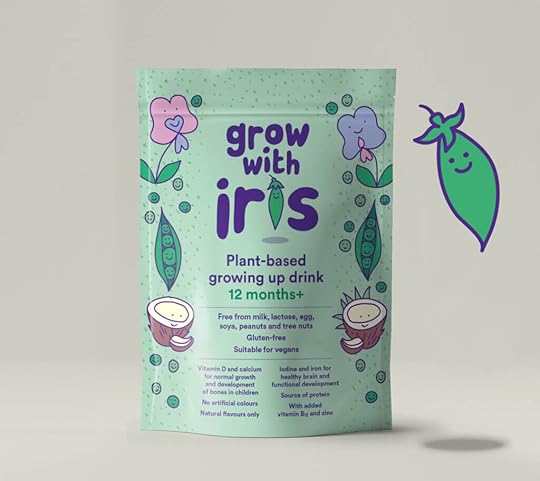 Grow with Iris – Growing up milk for 12+ months old
Grow with Iris was born
Grow with Iris – Growing up milk for 12+ months old
Grow with Iris was bornSophie, my Co-Founder, came on board two years in. A schoolfriend of mine and a Creative Director and Designer by trade, Sophie began by helping with the branding. So overwhelmed by the story and compelled by the potential of the brand, she became my business partner. Four years on, together we have been on a relentless journey of research and product development, manufacturer visits,
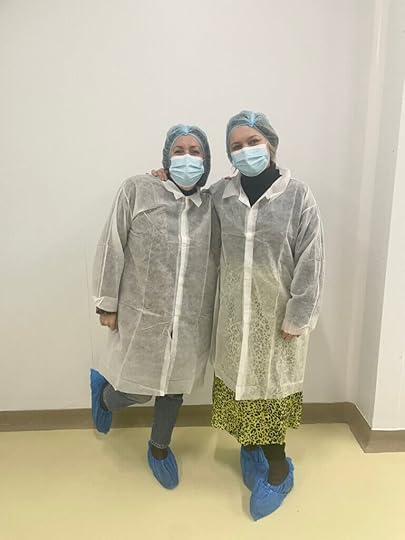 The Grow with Iris team – Sophie (left) and AmyWe wanted to create a plant-based tasty milk free formula
Sampling, zooms, meetings, risk registers and networking. With Sophie on board Grow with Iris has elevated. We have won two rounds of Innovate UK funding; ‘Sustainability in Innovation’ and ‘Women in Innovation,’ which have helped to get us to a safe, legal, and just as importantly, delicious choice for parents of children with allergies or who are plant based.
A dairy free formula with all the nutrients baby needsOur aim is to make life easier for parents and create something safe which provides complementary nutrition for little ones so they can grow and thrive. Grow with Iris will be available to buy in 2023 and we hope to create a community of people who feel heard, catered for and seen.
Watch out, there is a new challenger brand in town ready to disrupt the toddler nutrition category. Plant Powered, complementary nutrition for a growing generation. Become part of our ‘Grow with Iris’ community by joining our mailing list Plant-based growing up drinks | Grow Wit
Become part of our ‘Grow with Iris’ community by joining our mailing list Plant-based growing up drinks | Grow With Iris and why not give us a follow on Instagram and Facebook.
You may also be interested in reading:Free Skin Conditions Guide for EczemaThe Shape of Skin – eczema poems from a childhood in pain to adulthood and healing28 questions to ask to help you get an allergy referralThe post Balancing allergies with Infant and Toddler Nutrition first appeared on What Allergy Blog.

January 25, 2023
Managing Allergic Symptoms to Prevent Bladder Incontinence in the Elderly
Allergies are never any fun for anyone. However, something most of us don’t probably consider is how hard they may be on the elderly. While allergies may not cause bladder incontinence in the elderly, they certainly can cause symptoms to worsen.
The good news is that there are a number of ways you can manage both allergies and bladder incontinence to ensure you or an elderly friend stays comfortable and dry. Let’s talk about it.
 What Is Bladder Incontinence and Why Do Allergies Make it Worse?
Bladder incontinence doesn’t have to be just for the elderly. But it is more common within this age group. Bladder incontinence or urinary incontinence is when someone loses control of their bladder and ultimately has urinary leakage. To understand the role allergies play, it’s worth noting there are several types of bladder incontinence.
Types of Bladder IncontinenceStress incontinence – This is when urine leaks out due to pressure put on your bladder through actions like sneezing, laughing, coughing, exercising, sudden movements, or lifting something heavy. Urge incontinence – Urge incontinence happens when an intense urge to urinate occurs, and then you lose control of your bladder resulting in leakage. It can happen often, including during the night. It also may result from a condition such as an infection or something more serious like a neurological disorder or diabetes. Overflow incontinence – This is when there is constant leakage or urine because you can never fully empty your bladder when going to the bathroom. Functional incontinence – Functional incontinence is different because the problem doesn’t necessarily have to do with the bladder. Instead, something physical or mental keeps you from making it to the toilet when you need to pee. This is common with someone who has arthritis. Mixed incontinence – Mixed is when you are experiencing more than one type of incontinence. This is normally the combination of urge and stress incontinence. Allergies and Bladder IncontinenceSo with everything listed above, where do allergies come in? Most of the time, when we talk about allergies, this plays a role in stress incontinence. This is particularly true for elderly women as their bladder and pelvic floor muscles weaken if they have given birth.
The continuous sneezing and coughing that may be associated with seasonal allergies is one contributing factor. But you may also have pet allergies or even food allergies that make you cough or need to drink more water which leads to other types of incontinence.
Whatever the allergy cause is, managing them is critical for helping manage your incontinence.
How To Help Manage Your AllergiesGetting to know what your allergies are is the most important step. If you deal with seasonal allergies like the rest of us, then there are a number of steps you can take to ease sneezing, coughing, and wheezing.
Keeping your windows shut if you have seasonal allergies is important. Don’t let it creep into your home where it’s difficult to get it out. Continually getting up dust through proper cleaning is a great idea. But be sure to wear a mask and maybe goggles if venturing into particularly dusty areas. Keep a nasal spray and any hand medication nearby. If you think your allergies are starting to act up, get ahead of the game by taking your medication. Be sure to check with a doctor before trying out any new medication. The best time to head outside for a walk is after a good rain shower when the condition is humid. Avoid dry and windy conditions. Avoid activities like gardening, weeding, or mowing the lawn if you have seasonal allergies. If you participate in any of these activities, remove your clothes and wash them when you get inside. If you have pets but also have some allergies try to keep them indoor pets. The more they are outside, the more they drag inside with them. There are plenty of weather resources to let you know when pollen counts or allergy season days are particularly bad. Check before going outside or when to use your medication. An indoor humidifier and a purifier are awesome ways to keep indoor air as clean as possible. This is a great investment if you have the money to do so. How to Manage Bladder IncontinenceManaging your allergies is not the only thing you can do if you are dealing with incontinence. Plus, it’s not totally possible to stop sneezing or coughing anyways. So by taking it a step further, you can manage your bladder incontinence.
Strengthening your muscles and, more importantly, your pelvic floor muscles is a proactive way to manage your bladder incontinence. This may seem counterintuitive with stress incontinence, but stress continence likely occurs from weak muscles. Even at an elderly age, exercise and light strength training can make a huge difference. A healthy diet also supports managing bladder incontinence. In particular, eliminating caffeine and alcohol are two major factors. These liquids go right through us, so cutting back can make us feel like we don’t have to go to the bathroom as often. Wearing bladder leak underwear for when things do happen is the best way to protect yourself from irritations or feeling uncomfortable in public. There are many different styles and briefs from brands like Because Underwear (US based) that specialise in premium quality to help manage your bladder incontinence. In the UK two leading brands are TENA and Modibody.Keeping Things In ControlA big part of managing your allergies and bladder incontinence is taking note of the small things. With so many variables, it can be difficult for the elderly to keep track of what is negatively affecting their incontinence. By being proactive and taking control of allergies, regardless if they are full-time or seasonal, the chances of accidents go down.
But it’s also important to have the understanding that urinary incontinence still does happen. Having a backup plan to be proactive about the bladder is key. And furthermore, wearing protective underwear for when things go awry can make a major difference.
You may also be interested in reading:10 spring allergy tips for senior and older adultsHow clean is your home’s indoor air quality?Food to go with serious food allergiesImages:
Photo from Pexels by Andrea Piacquadio
January 24, 2023
Can collagen help eczema and TSW?
There are loads of skin health trends at the moment but one that seems really popular is taking collagen supplements. However there seem to be quite a few on the market, so how do you choose one and how they work?
Ways to take collagenThere are lots of different ways to take collagen, including:
Supplements in capsule formLiquid collagenCreamsPowderedThere are also different types of collagen, which is a naturally occurring substance in our bodies that makes up the plumpness of skin and is also found in bones. When we age we naturally lose collagen so the idea of taking it as a health aid is to help prevent signs of skin aging, wrinkles and loss of definition.
Collagen can be made from bovine or marine sources and there are also some vegan collagen products on the market.
My own collagen experienceThis is purely based on my own experience, not a scientific experiment. I’ve used Pura Collagen twice during my Topical Steroid Withdrawal journey.
3 years TSW during my worst flare – at this point I enjoyed using and felt I was doing something positive so in that respect it think it was beneficial. However it’s not a cure for TSW. It didn’t stop my flare or encourage healing. I did begin to see some change but at this point my skin was so intensely flaking, dry and cycling in withdrawal that I felt it wasn’t affordable to continue at that point.3.5+ years TSW seeing more typical eczema – as my skin began to heal and my quality of life improved I had the opportunity take part in a trial to test Pura Collagen for three months. I leapt at the chance because I believe this can help. Our skin needs collagen and this begins to reduce as we age, during menopause and particularly was a symptom I experienced in TSW. Steroid withdrawal almost stripped the collagen from my body, causing pouching and sagging skin.But what is collagen and why do people take it?
What is Pura Collagen made from? PURA Collagen glow+
I’ve looked at quite a few collagen products and I don’t always understand the ingredients. Lots of weird words, fillers, powders, gums etc. What I love about Pura Collagen is the clean ingredients:
VERISOL® Hydrolysed Collagen Peptides proven to reduce wrinkles, improve skin elasticity, increase hair thickness and promote faster nail growth. These are bovine sourced.Vitamin C, which contributes to normal collagen formation.Hyaluronic Acid, which is essential in the body for rejuvenating skin cells and contributes to healthy skin hydration.Biotin, which contributes to the maintenance of normal skin and hair.Selenium, which contributes to the maintenance of normal nails.Zinc, which contributes to the maintenance of normal skin, hair and nails.Vitamin D, which contributes to the normal function of the immune system.So many skin enhancing ingredients, what’s not to like?
What is the science behind how collagen works?The team at Pura Collagen have done their research and chosen peptides to use that are proven to work. Collagen works by reducing wrinkles and increasing dermal matrix synthesis, as well as skin elasticity. One study showed a 60% improvement in those being given Verisol.
In this double-blind, placebo-controlled study, the effectiveness of the specific bioactive collagen peptide VERISOL® was assessed on eye wrinkle formation and stimulation of pro collagen I, elastin, and fibrillin biosynthesis in the skin.
114 women aged 45-65 randomly received either VERISOL® or a placebo once a day for 8 weeks. Skin wrinkles were objectively measured in all participants before starting the treatment, after 4 weeks, then 8 weeks, and also 4 weeks post-treatment.
The results found that the ingestion of VERISOL® promoted a statistically significant reduction of eye wrinkle volume in comparison to the placebo group after 4 and 8 weeks of intake. Moreover, a positive long-lasting effect was observed 4 weeks after the last VERISOL® administration. After the full 8 weeks, a 65% increase of procollagen type I, 18% increase of elastin, and 6% increase of fibrillin was found in those who had been taking VERISOL®.
In conclusion, the study findings demonstrate that the oral intake of VERISOL® clearly reduced skin wrinkles and had positive effects on synthesis of the dermal matrix (the middle layer of the skin, in which structure and strength are located).
If you want to do further reading, check out these Collagen Scientific Studies here.
Ways to integrate collagen powder into your diet?I’ve tried a few ways to use it and all are easy, successful, simple and you can’t taste anything has been added.
Add to your coffee, tea or any hot drink – it dissolves really well in hot drinksIn your protein shake or juice – if you can use a flask with a lid and shake well it is dissolved wellMix in with porridge, fruit and seedsAdd to muesli as aboveYou can either add two scoops or heaped teaspoon fulls into one option above or spread it across the day. There’s now benefit to either so I prefer to put it all in my morning coffee and get it done, otherwise I know I’d forget to take it.
For more ideas check out the Pura Collagen Recipes.
Can you get vegan collagen?I’ve been asked this by a few people who’ve seen my posts on Pura Collagen on my social media and the quick answer is, no not easily. Vegan collagen – plant based seaweed can be used. I found a few sources
Weight World vegan collagen complex – Ingedients: Amla (Phyllanthus Emblica) Powder, Spinach (Spinacia Oleracea) Powder Extract, Green Tea (Camellia Sinensis) Extract, Kefir Probiotics (Coconut Derived), Lemon (Citrus Limon) Extract, Rose (Rosa) Petal Extract, Barley Grass Extract, Pomegranate (Punica Granatum) Powder, Orange (Citrus Sinensis) Peel Extract, Acerola Cherry (Malpighia Emarginata) Extract, Basil (Ocimum Basilicum) Extract, Guava (Psidium Guajava) Extract, Ginger (Zingiber Officinale) Powder, Ceylon Cinnamon (Cinnamomum Verum) Extract, Sesbania (Sesbania Grandiflora) Extract , Spirulina Extract, Strawberry (Fragaria Ananassa) Powder, Bamboo (Bambusoideae) Shoot Extract , Sea Buckthorn (Hippophae Rhamnoides) Extract, Pink Salt, Acai (Euterpe Oleracea) Berry Extract.Bio-Structure liquid vegan collagen – Ingredients: Purified Water, L-Glycine, L-Proline, L-Alanine, L-Hydroxyproline, Sweetener (Glycerol), Thickeners (Sodium Carboxymethylcellulose, Xanthan Gum), Flavouring (Orange Natural flavour), Vitamin C (L-Ascorbic Acid), Preservative (Sodium Benzoate).There are probably others but I have no data on whether vegan plant-based collagen works. What I think IS important is checking the ingredients are natural and not stuffed with fillers etc.
Absolute Collagen is one source or marine collagen.
Do you take a collagen supplement?Has anyone tried collagen? Does it work? Which one do you use? Let me know. I’d love to hear from you guys. I’m just about to review my three month trial to see if the before and after photos show any progress, and thinking I may experiment with the Flex option that works on joint health instead of skin.
You may also be interested in reading:Why should you be taking a collagen supplement?20 gift ideas for eczema and topical steroid withdrawal peopleA dermatologists review of The Shape of Skin – eczema poetry for therapy and healingThe post Can collagen help eczema and TSW? first appeared on What Allergy Blog.Honey for eczema: Exploring the benefits & proper usage
Winter is here, and dryness of the skin is one of the main concerns both men and women face in cold areas. The problem gets severe for those with skin conditions like eczema.
Eczema, also known as atopic dermatitis, is a chronic skin condition characterised by dry, itchy, and flared skin. It is a common condition that affects people of all ages; it is most common in infants and children but is getting more common among young teens and adults.
The problem results from an overactive immune response, which causes inflammation and irritation in the skin. The exact causes of eczema are often unknown; it’s believed to be related to genetics and environmental factors. Find out here why skin gets flared.
Eczema can cause red, scaly, and itchy patches on the skin, and it can be a persistent and debilitating condition that affects the quality of life. While eczema has no cure, various treatments are available to manage the symptoms. One such treatment is the use of honey for eczema.
In this article, we talk about how honey has unique benefits for people with eczema.
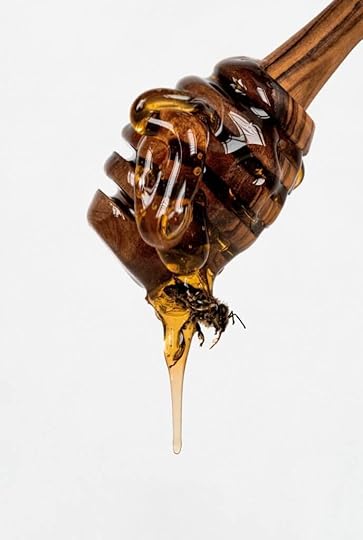 The Benefits Of Using Honey For Eczema
Honey has been used for medicinal purposes for centuries and has been found to have anti-inflammatory, antibacterial, and antioxidant properties. These properties make honey an ideal treatment for eczema.
Soothing – One of the main benefits of using honey for eczema is its ability to soothe and moisturise the skin. Eczema causes the skin to dry out and become itchy, and honey can help to hydrate the skin and reduce itching and potential also prevent hair loss. The antibacterial properties of honey also help to prevent and treat infections, which can be a common complication of eczema. In addition, honey has been found to have an anti-inflammatory effect, which can help to reduce redness, swelling, and pain associated with eczema in different parts of the body.Completely safe – another benefit of using honey for eczema is that it is a natural and safe treatment option. Many eczema treatments, such as corticosteroids, can have side effects, but honey is a natural product that is unlikely to cause any adverse reactions. It is also readily available and easy to use.Honey should be used in conjunction with other eczema treatments, such as moisturisers, oil, shampoo with honey etc.
Using raw, unpasteurised honey is important as it contains more beneficial enzymes. It can be applied directly to the affected area or mixed with other ingredients, such as coconut oil or turmeric, to make a paste.
In conclusion, honey has been found to be an effective treatment option for eczema due to its anti-inflammatory, antibacterial, and antioxidant properties.
It is a natural and safe option that can help soothe and moisturise the skin, reduce itching, and prevent infections on the skin and scalp.
How To Properly Use Honey For Eczema TreatmentUsing honey for eczema treatment can be an effective and natural way to manage the symptoms of this chronic skin condition. To properly use honey for eczema treatment, here are a few steps to follow:
Choose the right type of honey or honey products: Using raw honey for eczema treatment is recommended. Pasteurised honey has been heated and processed, which can destroy many of the beneficial enzymes found in raw honey. Manuka honey is considered one of the best types of honey for eczema treatment due to its high levels of antibacterial activity. In addition, using good quality honey-infused products for your hair and face would be incredibly beneficial if you want to soothe skin issues.Cleanse the skin: Before applying honey to the eczema-affected area, it is important to cleanse the skin to remove any dirt and debris. This can be done by gently washing the area with mild soap and water. Avoid using harsh soaps or scrubs, as they can further irritate the skin.Apply the honey: Once the skin is clean, apply the honey directly to the eczema-affected area. A thin layer of honey is all that is needed. You can use your fingers or a cotton swab to apply the honey.Leave the honey on for at least 20 minutes: The honey should be left on the skin for at least 20 minutes to allow it to work effectively. This will give the honey time to penetrate the skin and provide anti-inflammatory, antibacterial, and antioxidant benefits.Rinse the honey off: After 20 minutes, rinse the honey off with warm water. Pat the skin dry with a clean towel.Repeat the treatment as needed: The treatment can be repeated as needed, but it is important not to overuse the honey as it may irritate. Using honey in conjunction with other eczema treatments, such as moisturizers is also important.It is also worth noting that before using honey for eczema treatment, it is always best to consult with professionals, especially if you have any underlying condition or are taking any medications. This is also important if you experience allergic reactions or discomfort when using honey.
 Potential Risks & Precautions When Using Honey For Eczema
While using honey for eczema treatment can be effective and natural, there are some potential risks and precautions to keep in mind.
Allergic reactions: Some people may be allergic to honey, which can cause an allergic reaction, such as hives, itching, or difficulty breathing. It is important to do a patch test before using honey on the affected area and stop using it if allergic reactions occur. Also knowledge of types of itching can also help understanding if you have an allergic reaction or a flared skin. Interaction with medications: Honey may interact with certain medications, such as blood thinners, which can increase the risk of bleeding. Risk of contamination: Raw honey can contain bacteria or other contaminants, which can cause infections. It is important to use a reputable source of raw honey and adequately clean the skin before applying it.Risk of overuse: While honey is a natural and safe treatment option, it is essential not to overuse it as it may irritate. Honey not suitable for infants: Raw honey should not be given to infants under one year of age, as it can contain the spores of a bacteria called Clostridium botulinum, which can cause botulism in infants.In conclusion, using honey for eczema treatment can be an effective and natural way to manage the symptoms of this chronic skin condition that lead to various skin and hair issues.
However, it is important to consider potential risks and precautions such as allergic reactions, interaction with medications, risk of contamination, and overuse.
It is always best to consult a professional dermatologist before using honey for eczema treatment. However, with the proper usage, in consultation with a dermatologist, honey can be a beneficial addition to the eczema treatment regimen.
You may also be interested in reading:Honey for eczema Natural treatments for allergic asthmaNatural non irritant shampoos for eczema scalpsThe Shape of Skin – moving, real and raw poetry for people with eczema and sensitive skinPhoto from Pexels by Lennart Zeising
Photo from Pexels by RODNAE Productions
Using Honey for Eczema: Exploring The Benefits and Proper Usage
Winter is here, and dryness of the skin is one of the main concerns both men and women face in cold areas. The problem gets severe for those with skin conditions like eczema.
Eczema, also known as atopic dermatitis, is a chronic skin condition characterised by dry, itchy, and flared skin. It is a common condition that affects people of all ages; it is most common in infants and children but is getting more common among young teens and adults.
The problem results from an overactive immune response, which causes inflammation and irritation in the skin. The exact causes of eczema are often unknown; it’s believed to be related to genetics and environmental factors. Find out here why skin gets flared.
Eczema can cause red, scaly, and itchy patches on the skin, and it can be a persistent and debilitating condition that affects the quality of life. While eczema has no cure, various treatments are available to manage the symptoms. One such treatment is the use of honey for eczema.
In this article, we talk about how honey has unique benefits for people with eczema.
The Benefits Of Using Honey For Eczema
Honey has been used for medicinal purposes for centuries and has been found to have anti-inflammatory, antibacterial, and antioxidant properties. These properties make honey an ideal treatment for eczema.
Soothing – One of the main benefits of using honey for eczema is its ability to soothe and moisturise the skin. Eczema causes the skin to dry out and become itchy, and honey can help to hydrate the skin and reduce itching and potential also prevent hair loss. The antibacterial properties of honey also help to prevent and treat infections, which can be a common complication of eczema. In addition, honey has been found to have an anti-inflammatory effect, which can help to reduce redness, swelling, and pain associated with eczema in different parts of the body.Completely safe – another benefit of using honey for eczema is that it is a natural and safe treatment option. Many eczema treatments, such as corticosteroids, can have side effects, but honey is a natural product that is unlikely to cause any adverse reactions. It is also readily available and easy to use.Honey should be used in conjunction with other eczema treatments, such as moisturisers, oil, shampoo with honey etc.
Using raw, unpasteurised honey is important as it contains more beneficial enzymes. It can be applied directly to the affected area or mixed with other ingredients, such as coconut oil or turmeric, to make a paste.
In conclusion, honey has been found to be an effective treatment option for eczema due to its anti-inflammatory, antibacterial, and antioxidant properties.
It is a natural and safe option that can help soothe and moisturise the skin, reduce itching, and prevent infections on the skin and scalp.
How To Properly Use Honey For Eczema TreatmentUsing honey for eczema treatment can be an effective and natural way to manage the symptoms of this chronic skin condition. To properly use honey for eczema treatment, here are a few steps to follow:
Choose the right type of honey or honey products: Using raw honey for eczema treatment is recommended. Pasteurised honey has been heated and processed, which can destroy many of the beneficial enzymes found in raw honey. Manuka honey is considered one of the best types of honey for eczema treatment due to its high levels of antibacterial activity. In addition, using good quality honey-infused products for your hair and face would be incredibly beneficial if you want to soothe skin issues.Cleanse the skin: Before applying honey to the eczema-affected area, it is important to cleanse the skin to remove any dirt and debris. This can be done by gently washing the area with mild soap and water. Avoid using harsh soaps or scrubs, as they can further irritate the skin.Apply the honey: Once the skin is clean, apply the honey directly to the eczema-affected area. A thin layer of honey is all that is needed. You can use your fingers or a cotton swab to apply the honey.Leave the honey on for at least 20 minutes: The honey should be left on the skin for at least 20 minutes to allow it to work effectively. This will give the honey time to penetrate the skin and provide anti-inflammatory, antibacterial, and antioxidant benefits.Rinse the honey off: After 20 minutes, rinse the honey off with warm water. Pat the skin dry with a clean towel.Repeat the treatment as needed: The treatment can be repeated as needed, but it is important not to overuse the honey as it may irritate. Using honey in conjunction with other eczema treatments, such as moisturizers is also important.It is also worth noting that before using honey for eczema treatment, it is always best to consult with professionals, especially if you have any underlying condition or are taking any medications. This is also important if you experience allergic reactions or discomfort when using honey.
Potential Risks & Precautions When Using Honey For Eczema
While using honey for eczema treatment can be effective and natural, there are some potential risks and precautions to keep in mind.
Allergic reactions: Some people may be allergic to honey, which can cause an allergic reaction, such as hives, itching, or difficulty breathing. It is important to do a patch test before using honey on the affected area and stop using it if allergic reactions occur. Also knowledge of types of itching can also help understanding if you have an allergic reaction or a flared skin. Interaction with medications: Honey may interact with certain medications, such as blood thinners, which can increase the risk of bleeding. Risk of contamination: Raw honey can contain bacteria or other contaminants, which can cause infections. It is important to use a reputable source of raw honey and adequately clean the skin before applying it.Risk of overuse: While honey is a natural and safe treatment option, it is essential not to overuse it as it may irritate. Honey not suitable for infants: Raw honey should not be given to infants under one year of age, as it can contain the spores of a bacteria called Clostridium botulinum, which can cause botulism in infants.In conclusion, using honey for eczema treatment can be an effective and natural way to manage the symptoms of this chronic skin condition that lead to various skin and hair issues.
However, it is important to consider potential risks and precautions such as allergic reactions, interaction with medications, risk of contamination, and overuse.
It is always best to consult a professional dermatologist before using honey for eczema treatment. However, with the proper usage, in consultation with a dermatologist, honey can be a beneficial addition to the eczema treatment regimen.
You may also be interested in reading:Honey for eczema Natural treatments for allergic asthmaNatural non irritant shampoos for eczema scalpsThe Shape of Skin – moving, real and raw poetry for people with eczema and sensitive skinPhoto from Pexels by Lennart Zeising
Photo from Pexels by RODNAE Productions
January 12, 2023
Adrenaline auto injectors – are they out dated?
The current adrenaline auto injectors are pretty big aren’t they? Anyone who has tried to pack for a trip out will know, carrying two takes a sizeable bag. If you bring inhalers, antihistamines and other medication it’s a large bag!
Are adrenaline autoinjectors even fit for purpose?Are they even fit for purpose? They were originally invented for soldiers during the cold war as a quick way to combat chemical or nerve gas attacks, meaning they were designed for fit fighting men’s thighs, which would typically be much leaner than your average man or woman. Keep that in mind for later in this blog.
In the 1970s inventor Sheldon Kaplan recognized that modifications in the pen could turn it into a lifesaver for civilians, especially those susceptible to anaphylactic shock, where a fast response can mean the difference between life and death.
Philadelphia’s Solomon Solis-Cohen has been credited with being the first to try epinephrine on patients diagnosed with hay fever and certain types of asthma. Check out this fascinating article, A mighty pen.
Adrenaline Autoinjectors in the UK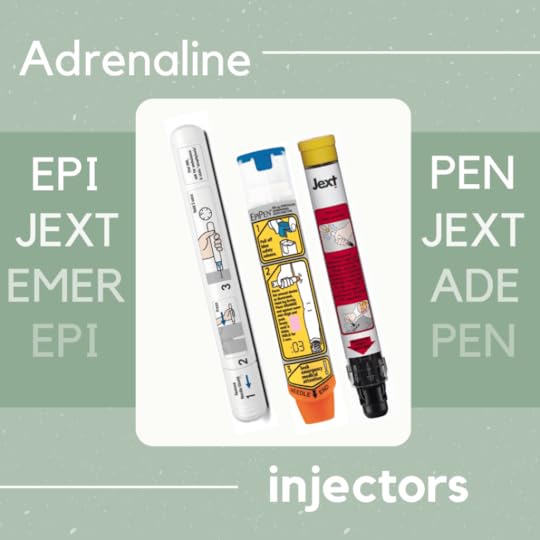
Here in the UK we have three different adrenaline autoinjectors on the market:
EpipenJextEmeradeOver the years there have been problems with supply and shelf life, with some devices only having months to go before expiry, when they should last a year. However they are a life saver and give those at risk of anaphylaxis some peace of mind and a fast acting medication should they need it.
But let’s look at other markets across the globe. I’ve just looked at two English speaking nations which also have a high prevalence of allergies: Australia and the USA.
Auto injectors in Australia Anapen Adrenaline Autoinjectors for adults and children
In Australia they have the Epipen (see images above for UK) and the Anapen. This works in a similar way, the black cap is removed and the white end is the needle end – clearly labelled in this image.
EpipenEpipen JrAdrenaline MylanAdrenaline Jr MylanAnapenAnapen Junior.Auto injectors available in AmericaAmerica has the Epipen, but interestingly they also have Auvi-Q, a pocket sized device with a needle inside that talks you through how to administer it. This is very innovative and would help people to use it. Panic can set in when using any needles and means people can make mistakes, inject their own fingers or lose the dose by removing the needle too fast.
 AUVI-Q®EpiPen® and EpiPen Jr®Epinephrine injection, USP auto-injector, authorized generic (AG) of EpiPen® and EpiPen Jr®Epinephrine injection, USP auto-injector, genericEpinephrine injection, USP auto-injector, authorized generic (AG) of Adrenaclick
Not surprisingly the AUVI-Q is the preferred adrenaline injector in the USA. I’d love to hear from Americans who have used it, is it effective and easy to use? It’s smaller pocket size makes it much more versatile and easier to carry and the voice activation really appeals to me.
Are the needles long enough on Jext and Epipens?There have been a few studies looking at the suitability of needle length of Adrenaline auto-injectors – ‘Longer needles needed to reach the muscle – by Rafael Ferrandiz, Ph.D. on March 17, 2016.’
Check out this article for more information Longer needles needed to reach the muscle
Summary: Intramuscular injection is recommended for fast adrenaline effect. The needles of some currently available auto-injectors are too short to reach the thigh muscle in many patients. Adrenaline auto-injectors with longer needles are needed.
I don’t want anyone to panic about this, there are simple practical things you can do. I got an ultrasound done on my own thigh and found my fat to fascia depth is border line. To get around this I would inject slightly lower towards the knee where there is less fat. You could also opt for the Emerade device (which I have myself) as this had a longer needle.
Experts will assert that the needle length is fine and we should not worry but having explored this in depth myself, if you are female I would consider injecting lower on the thigh. I’ve certainly had times when I’ve used an Epipen and not felt any benefit at all.
What size injector is suitable for children under 12?Epinephrine auto injectors – is needle length adequate? 2009
This study looked at a group of children and concluded: The needle on epinephrine auto-injectors is not long enough to reach the muscle in a significant number of children. Increasing the needle length on the auto-injectors would increase the likelihood that more children receive epinephrine by the recommended intramuscular route.
Make sure your child is moved up to the adult injector as soon as they a weigh 30 kg or more. Not all children are the same size at the same age!
I tried to find figures for the UK and will keep looking, but these stats from America show that it’s a huge market and also a growing one.
“The global autoinjector market reached a value of US$ 1.65 Billion in 2021. Looking forward, IMARC Group expects the market to reach a value of US$ 4.39 Billion by 2027, exhibiting a growth rate (CAGR) of 16.70% during 2022-2027.“
IMARC
It will be interesting to see which products we are using in ten or twenty years time, with the limitations of the devices we use today.
Current problems with adrenaline autoinjectorsThere are quite a few issues, not just their size, which discourages many younger people and adults from carrying one, let alone two:
Adrenaline autoinjectors are quite largeOften devices are not carried at all times, instead left at homeNot designed for purposeOften not used, even when carriedOften not even prescribed when requiredPotential problems and concerns with needle lengthLack of sufficient training in useMust be stored at appropriate temperaturesThese life saving devices need a revamp in my opinion, so what is the future for adrenaline autoinjectors?
Check out this excellent article which takes a deep dive into all of the above issues: Adrenaline Autoinjectors.
Could we expect needle free and smaller autoinjectors?From my research I think these much longed for devices are coming soon.
“What’s currently available is very effective, but we know it’s also underutilized,” says Dr. Jennifer Dantzer, a pediatric allergist and immunologist at Johns Hopkins School of Medicine in Baltimore.
Alternatives to the auto-injector may be on the way. Three pharmaceutical companies are developing new epinephrine delivery methods that are needle-free and potentially less cumbersome to carry.
This may encourage allergic patients to both carry epinephrine – and use it in a reaction. These are coming in the form of:
Nasal spraysAn epinephrine film that dissolves under the tongue.These both sound potentially really interesting and would be much smaller and easier to carry. Testing is currently underway with completion set for late 2023, but it could be a while before we see them being prescribed.
Read: Is needle free epinephrine coming soon?
Needle free adrenaline injectorI also found this article regarding a nasal spray product – Zeneo needle free adrenaline injector – I’m unsure how fast these nasal sprays work and how effective they are at delivering adrenaline to where its needed.
This product has also been reformulated to remove sulphites, one of the Top 14 allergens in the UK. This solves a huge problem for people with a sulphite allergy due to all the current devices having this ingredient as a preservative for the epinephrine.
Read Intra-nasal epinephrine takes a step forward with Bryn Pharma.
What’s the future for adrenaline autoinjectorsI’d love to hear your views on the future of AAIs. Do you carry two? Have you used them? Are you excited about the potential for some new more versatile products coming onto the market?
You may also be interested in reading:Anaphylaxis – The Essential Guide – Your must read book if you live with anaphylaxisWhy all women at risk of anaphylaxis should get an ultrasound20 life saving tips for using adrenaline auto injectorsThe post Adrenaline auto injectors – are they out dated? first appeared on What Allergy Blog.January 6, 2023
Top 14/19 allergens? Gluten free cereals & GF oats
Are there just 14 top allergens in the UK? Or are there actually 19? For people with allergies, there are six separate cereal containing grains that they could be allergic to.
In America they are now 9 allergens that must be labelled, a move that updated the list to add sesame in January 2023.
For coeliacs they will react to all of the gluten containing grains, whilst some coeliacs are able to tolerate gluten free oats. Oats contain avenin which is a similar protein to gluten; coeliacs can also react to gluten free oats.
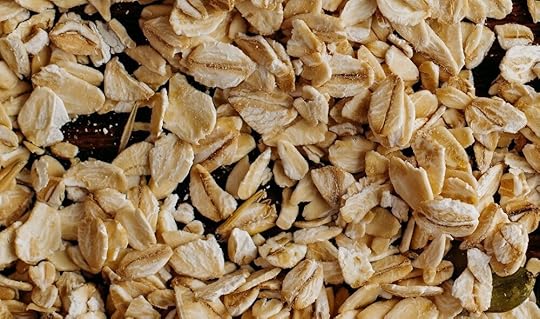 Should gluten free oats be included as an allergen in the Top 14 allergens?
The Top 14 allergens in the UK
Should gluten free oats be included as an allergen in the Top 14 allergens?
The Top 14 allergens in the UKIn the UK we have designated fourteen allergens that food production and food service companies must label on shop bought goods and on meals prepared at restaurants etc.
But it’s not just fourteen different foods that companies must avoid.
CeleryCereals containing glutenWheatRyeBarleyOats (even gluten free oats)KamutSpeltCrustaceansEggsFishLupinMilkMolluscsMustardNutsPeanutsSesame seedsSulphur dioxideSoyaVisit the Food.gov website for a detailed explanation of what’s included in the Top 14 allergens in the UK
Check out The cereals containing gluten in the Top 14 allergens here.
I’ve always been confused about why gluten free oats are included in this list of the Top 14.
Gluten free oats are still considered a cereal containing glutenI’m pretty sure most consumers are confused about this and I wouldn’t be surprised if food manufacturers were too.
Read Why Gluten Free Oats are a cereal containing gluten written by Alex Gazzola, who explains it better than I can. You’ll have to read his blog but this is the introduction:
“The ‘cereals containing gluten’ are defined to be wheat, rye, barley, oats and their hybrids. Some people interpret ‘cereals containing gluten’ in law to mean “cereals when they have gluten in them” — but ‘Cereals containing gluten’ does not mean that. ‘Cereals containing gluten’ means “cereals which are defined to be of a gluten-containing nature”, and the main four are named above.”
The top 9 allergens in the USAIn America their list of allergens is smaller but simpler. They list Wheat as one of their top 9 allergens but not all the other cereals containing gluten. Interestingly and helpfully sesame has just been added to this list, bringing the list up from eight allergens to nine.
Milk: Milk accounts for the highest occurrence of food allergy in infancy but is outgrown in up to 90 percent of cases by age 6, according to FARRP.Eggs: Respiratory, digestive system, and anaphylactic reactions after eating egg proteins have been reported, but mostly in children under age 6. Most of the problematic proteins are in the egg white.Fish: Common symptoms of fish allergy include skin and gastrointestinal reactions. The major fish allergen, parvalbumin, cannot be neutralized by heating.Crustacean Shellfish: Allergy to crustacean shellfish (like shrimp, and lobster) and to molluscan shellfish seems mostly to affect older children and adults. Gastrointestinal and respiratory symptoms are typical.Tree Nuts: People allergic to tree nuts must strictly avoid nuts because even a very small amount can trigger severe allergic reactions. Many different types of tree nut allergens trigger allergies.Peanuts: Peanut allergies are the most common food allergies in children (up to 2.5% of children have them). Peanuts are particularly dangerous for allergic individuals due to the low amount needed to provoke a reaction and the high frequency of fatal reactions.Wheat: Wheat and other cereals can cause allergic reactions, mostly in infants, but usually resolve within their first few years. Individuals who have celiac disease are gut-sensitive to gluten.Soybean: Allergic consumers find soybean difficult to avoid because, like glutenous flours, it is used extensively in processed foods.Sesame: Approximately 1.5 million people in the U.S. are allergic to sesame—even one or two sesame seeds can cause a reaction.Interestingly they also put Crustaceans and Mulluscs together under one category, something Alex suggests as a way of simplifying the Top 14 listing we have in the UK. We don’t want to make even longer!
So how is coeliac disease included in the UK Food Allergen regulations? The FDA handles gluten free claims separately and included the cereals containing gluten listed above for the UK. Read How does the FDA handle gluten free?
Check out The Top 9 allergens in America for the full details
Top 10 allergens in AustraliaIn Australia they have a different number of allergens again, just ten for them but they also have one category for shellfish and molluscs. This does make sense to me, having these together because they are very similar. I don’t if people can be allergic to shellfish but happily eat molluscs? I guess they can, but it seems to help by putting them together.
WheatPeanuts Tree nuts, or simply ‘nuts’, are one of the most common food allergies worldwide. Tree nuts include almonds, Brazil nuts, cashews, hazelnuts, pecans, pistachios, chestnuts and walnuts. Shellfish – Shellfish refers to aquatic shelled animals — especially those that are edible — like molluscs (e.g. oysters, abalone, cockles, octopus, squid) and crustaceans (e.g. lobster, crab, crayfish, prawns, shrimp)Eggs Milk Fish SoySesame seeds LupinThe Food Safety organisation in Australia lists it’s Top 10 Food Allergens here.
Food Allergen Regulations comparedEuropeAmericaAustralia1Celeryx2Cereals containing glutenxWheatWheat3CrustaceansxShellfish/MolluscsShellfish/Molluscs4Eggsxxx5Milkxxx6Fishxxx7Lupinxx8Molluscsx9Mustardx10Nutsxxx11Peanutsxxx12Sesamexxx13Sulphur dioxidex14Soyaxxx Allergens covered by Food Allergen Regulations in Europe, American and AustraliaInterestingly we have mustard, celery and sulphur dioxide in the European Food Allergen list, which don’t feature in the US or Australia. This is because the levels of people with these allergies are much higher in Europe.
How can we simplify confusion over these gluten free oats?In this instance I think that America and Australia have a simpler food allergen list, with gluten free (less than or equal to 20 ppm of gluten) under separate gluten free labelling regulations. Both things need to be labelled but they are quite different and the regulations are protecting different communities. Those with allergies and those with coeliac disease. The two groups have a lot in common but listing the Top 14, being the top most allergenic, makes sense to me that it’s wheat as that is a far more common allergen than rye, barley and oats.
Whether that solves the oat issue I’m not sure. Oats are oats and gluten free oats are still oats… gluten containing grains. Does this all make sense now?
I’d love to hear your views on this! How can we make it all simpler? Do you know any food manufacturers who are gluten free but label their oats in bold as an allergen? so confusing
You may also be interested in reading:Is gluten an allergen and do oats contain gluten?Wheat, dairy and nut free flapjackTwo thirds of Brits don’t know what gluten is!Images: Photo from Pexels by NastyaSensei
The post Top 14/19 allergens? Gluten free cereals & GF oats first appeared on What Allergy Blog.January 4, 2023
20 Resolutions for eczema & TSW people!
Another year has passed and I’m approaching four years in topical steroid withdrawal which is incredible really. I’m not healed completely yet but when I compare my skin to year three I’ve healed so much. I think last year started with my worst flare ever, but realising I’m still going through it so long after quitting is a bit heart breaking. We all dream of finding that cure, that instant fix, but that mentality is what got my skin into this situation in the first place.
 All I want is clear skin
So many companies offer a cure for eczema but this often feels like being preyed upon. Targeting people who are so desperate for a break is cruel because there isn’t a cure. How much have you spent on products that claim to fix your skin and heal you? A lot of money!
Perfect eczema free skin possibly not even achievable for some of us. But what IS possible is finding things that can help, bit by bit, to give you calmer skin,
What’s helped me heal and ways to stay positiveI wanted to use this blog to share what’s helped me and also share some positive advice for living with a chronic skin condition. A quick google showed that there is very little written about this, just lots of advice on how to cure your skin, get rid of eczema and maintain clear skin as if that’s always the ultimate goal. But what if we never achieve what we dream of, perfect skin? What if perfect healed skin is unachievable and a toxic message; that we are less than if we don’t have a porcelain complexion?
“To hate your skin is easy.
But to love it
When it hurts.
When every part of you feels swollen.
And you watch as life oozes out of your every pore.
That takes courage.“
From The shape of skin by Ruth Holroyd
Let’s ditch that mantra of perfection. Look instead for a functioning skin layer and explore simple skin care regimes. The industry built up around beauty, cosmetics and skin care is an expensive trap and in my opinion, entirely unnecessary in most cases. So here goes, my top 20 eczema and sensitive skin resolutions.
Accept your skin – This is a tricky one because you absolutely don’t have to like that’s it’s sore, open. dry, itchy and painful. It’s OK to not be OK with that part of it, but the present situation is what it is, so accepting that this is where we start and this is the way things are at the moment can be really helpful. If you spend your time feeling angry and in a fight and battle mentality that causes more stress, which in turn can compound the problem.Learn to bloody love it! – this takes time, to love yourself when your skin is in a flare or a melt down.Stop trying so hard to fix it – It’s easy to throw everything at healing, to try all the things you can but this can get very confusing, and you might be spending lots of money on things that just don’t work. Instead try to find someDon’t obsess over flares – if you’re in TSW it’s often just a sign of healing and even with eczema, it can be stress or worries that trigger a flare. It may also happen for seemingly no reason. Try to let of or always knowing what causes flares. Get to know your skin, sometimes it’s possible to pinpoint a culprit or trigger but it’s also important not to over analyse everything. People can often end up cutting out whole food groups if they get obsessed with what they’re eating being the cause of flares. Food can 100% be a skin flare trigger though but you need to be scientific. You might be interested to read Identifying skin triggers for eczema flare ups.Clean up your life – Think about everything you bring into your home, from food to skin care products, cleaning products and even luxuries like scented candles. You might be find with them, but it can be hard to separate causes when you seem to flare all the time. Consider swapping to natural skin care brands, eco cleaning products and switch from scented wax candles to beeswax or soya ones. Candles can be full of chemicals and artificial fragrances. If you start with just one thing and work your way through your life bit by bit it should help you reduce inflammation over time. Don’t get too stressed about this, just use up the stuff you have and slowly swap stuff out.Find the gratitude – this is a tough when you are really struggling, but honestly it was a game changer for me. At my worst times I could find so much gratitude even for the chance to heal, or try to heal myself. I have no dependents so being able to just dive into healing is a luxury not everyone has. Think about your surroundings and the safe home you have to heal in, the dead sea salts you can buy and the people who support you. There is so much to be thankful for as we allow our skin to heal.Report Medication – It’s now a simple process but I would urge anyone who feels that any medication has damaged them in any way should report it. Whether it’s topical steroids, protopic, dupixent, methotrexate or Tralokinomab. If you think it’s harmed and not healed please report it using the Yellow Card Scheme. Read Reporting medication using the Yellow Card Scheme.Be kinder to yourself – You are going through a really hard skin condition, so think about being as kind to yourself as you would be to a small child, or the child version of yourself.Become hardcore at self care – This is something I never learnt growing up and it’s one of THE best things to master. I used to find it so hard to rest, relax and do nothing. It felt like I ‘should’ be doing something, like exercise, cleaning, creating, working, socialising. But learning the power of silence and discovering what my body needs to tune out and relax has been so helpful. It’s different for everyone so you need to find out what recharges your batteries and work it into your daily life. For me it’s things like making time to read, listening to audio books, yin and restorative yoga, doing a jigsaw puzzle or adult colouring with no gadgets in sight. A long walk in the countryside or a trail run in the mud followed by a long soak in a dead sea salt bath. Get good at self care! It will help reduce anxiety and in turn reduce the itch and inflammation in your body.Is past trauma affecting your healing? – This is so important. Learning to forgive all the parts of me, the child version of me, the teenage version, all the different parts of me that I was either ashamed of, disappointed with, angry at or just sad about. I hadn’t worked through much, even with therapy. I found by unpacking trauma and sitting with it and letting it be OK that I did this or that. I was trying to keep myself safe and it was my body’s way of protecting me. Research Family Parts Trauma therapy and forgive all the parts of you that are holding onto tension, stress and pain. It might not work for everyone but I found it really eye opening and fascinating what came up for me.Stop apologising – You have nothing to be ashamed of. If you are apologising about having eczema or flaring, having dry flaky skin or oozing patches stop it right now. I find myself doing it myself. I apologise for having allergies when I order food. If there is one thing I’m going to try really hard to STOP it’s apologising for existing. If you want to forewarn friends you are struggling that’s fine, but don’t apologise for it. Letting people know does help because they can make allowances for you but there is nothing to apologise for. Would you feel you had apologise for having cancer, MS or diabetes? Or for being deaf, blind or a wheelchair user? See if you can pause when you feel like apologising and reframe the sentence.Stop saying, I have eczema, I have TSW – You are a person going through it but you are no it! you don’t own it and it doesn’t have you. It’s a subtle shift but for me, stopping saying ‘my eczema’ or ‘my TSW’ has actually been a bit of a game changer. This is not permanent and everything can heal. Think of it like part of a journey. It all changes all the time, so your skin can too. It knows how to heal scabs and it also knows how to heal eczema. Visualise it healing and see yourself in the future with clear skin. Think positively that you can heal and that your body knows how to heal all the time.Find Hope – A diagnosis with eczema can be incredibly cruel because if it isn’t simple and doesn’t heal easily with mainstream treatment people are told there is no cure, that they just have eczema and must take the medication for the rest of their life. The medication can and does then cause very serious and debilitating side effects. Compare this with a cancer diagnosis; whilst this can be fatal many patients do heal through treatment and also get a lot of support through their healing. They are encouraged to believe, given hope and time scales for their healing. Eczema is a life sentence for many of us and a horrible one at that. Topical Steroid Withdrawal is quite honestly the worst injustice and a shit show for people going through it, dismissed, gaslit and belittled by the professionals who should be helping us.Reduce the damage done by scratching – The reason that doesn’t say stop scratching is because that would be an impossible ask. Eczema and particularly the bone deep incessant itch of TSW is relentless and you can’t ignore it. However there are different types of itch and ways to reduce the damage you do. For instanceWearing cotton gloves or tubular bandages at nightUsing a Cosi Care star or ice pack on itchy skin to halt the itch.Keep nails short. Some people get acrylics or gel nails because they are blunt and do not rip the skin though I’ve never tried this myself. I use the blunt of my tweezers or a teaspoon and can scratch with breaking the skin.Read The 10 different types of itching, 30 tips to help you stop scratching and Mindful scratching for more insight.Let’s normalise different skin – What if your skin doesn’t heal. Many people live with permanent facial differences whether it’s a congenital condition they were born with or scars from burns. They are often also some of the happiest people you’ll ever meet. To read about one of my favourtite positivity experts Jono Lancaster and his Love your Face campaign, Read Let’s stop eczema bullying.Get your skin out! Don’t hide your skin, and certainly don’t feel you should have to. We often cover up what we think of unsightly eczema and psoriasis with long sleeves and trousers. You have just as much right to enjoy the feel of the sun on your skin. In face 20 minutes of direct sunlight on your bare skin is good for it. Try to embrace your scars, pigmentation and blemishes. They make you unique and tell the story of your life.Skin positivity – This is kind of linked to the above, but it needs its own bullet point. If you can love your skin while it’s at its worst, you can find deep empathy for yourself and what you’ve been through.Become an expert in your own skin condition – Read all the can from reputable sources, learn about the skin and the science behind why we itch, food for the skin etc. The more you can understand the more you can do to take back some of the control over your own body.Get the treatment you want – No matter what type of healing you choose and whether you are going all natural or seeing if other treatments can help, find out what’s out there. Do your research and decide what you’d like to be doing for your skin. Anything from getting allergy testing done, UVA and UVB light therapy and other immunosuppressant treatments. These come with side effects so be sure you understand and look out for them if you go down this route. Read Getting the most out of your dermatology appointment.Ditch the paraffin emollients – I know from bitter experience how hard this is. I used to use a 500g tub or Epaderm every week. I was a hardcore paraffin user. These emollients really did help me though for many years when nothing else was OK on my skin. However since going through TSW I have now given up paraffin emollients too. I did this 3 years ago and now hardly need to moisturise my skin. In fact, it doesn’t need much at all. I do use Lyonsleaf and Balmonds on sore areas that need help healing. Check out my discounts page for codes to try these two brands and others. And when it’s very dry it does help to apply some oil or balm. Read The problem with paraffin emollients. Don’t hate me, and take your time. It took me three years to build up courage to do this, I had used them solidly and intensely for so many years that I was terrified or letting go. I think I had a withdrawal from these emollients in October 2021 which lasted for 6 months but I will never know if that was just more TSW. Paraffin is also a huge fire hazard for anyone who smokes or has bare candles, it can be hard to wash out of clothes and bedding so if you do use them, wash clothing and sheets frequently and be very careful around fire. It is quite liberating now having to take that huge tub everywhere with me.Anyway I hope some or all of these help someone. Just choose one or two that resonate with you. Be brave, be strong, be kind and be gentle with yourself. You are stronger than you think you are. To get through all the days you already have with eczema makes you a super star, so keep going. It’s a journey to discover what works for you and I really believe that we CAN all heal, or at least get to a point where our skin isn’t in control and we have our lives back.
Apocalypse
“Once I never left home without Elocon.
Tubs of Epaderm.
To hold my skin together.
Protopic to paint on a smile.
But now the world could collapse.
And I would not need anything but my wits to survive.“
Poem from The shape of skin by ruth holroyd
I’d love to hear your resolutions! Please share them below.
You may also be interested in reading:Topical Steroid Withdrawal – Frequently Asked QuestionsTop 20 gift ideas for someone with eczema or topical steroid withdrawalFree Skin Conditions GuideGet the most out of your dermatology appointmentThe post 20 Resolutions for eczema & TSW people! first appeared on What Allergy Blog.January 1, 2023
Top 10 New Year resolutions for allergic people
Have you made any New Year’s resolutions this year? Here are a few ideas that could keep you safer with life threatening allergies!
Could being fitter mean fewer allergies? – If is well known that if you are fitter and healthier you may experience less and milder asthma and allergic reactions. If you have any fitness goals these may also affect your allergic health. If you struggle with your fitness, it doesn’t have to be hours of exercise. Just look at small goals, like a 20 minute yoga class or walk every day. If this sound unachievable, just try to do this a few times a week at first. If you need motivation, find a workout buddy to walk or practise with you. There are loads of free yoga lessons on YouTube – Yoga with Adriene offers a calendar you can follow which is completely free and I highly recommend.Try new foods– Finding new things that you CAN eat safely can be so exciting. Always check the ingredients and look for may contains to make sure, but there are new foods coming out all the time. Also keep an eye out when you go shopping for any new products on the “Free From” shelves. Check out the Free From Food Awards for inspiration!Experiment in the kitchen – Eating out is fraught with worries and potential disasters but eating in can get boring; cooking the same old bland meals and craving the very things you can’t have. Most recipes can be adjusted to accommodate allergies, and with a bit of practise and experimentation such as making your own pastry and Thai, Indian home cooking, you’ll be so amazed at what you can create. Trex, which is basically lard, is great for pastry and available in all major supermarkets. It’s even better than using butter.Reintroduce problem foods – Enjoying a varied and diverse diet is much better for your health than cutting out foods when you don’t need to. Sometimes our bodies develop intolerances to certain foods during times of stress and these reactions often recede, and with careful reintroduction can become part of your daily diet again. I reintroduced eggs (with specialist advice), and tomatoes, in that order, but if you have anaphylaxis don’t do this!. Speak to your doctor or dietician if you’re unsure of how to do this, or check out my previous blog post “Egg intolerance cured!”The early bird catches the worm – By setting the alarm clock for an hour earlier just think what you could achieve. That’s seven more hours a week, and more if you get up even earlier! Get the slow cooker on first thing so you have the rest of the day free, and return to the intoxicating aroma of a delicious cooked meal ready and waiting for you. Start the day with a run, build up from ten minutes to twenty, twenty five etc. then wallow in the virtuous feeling that vigorous exercise always leaves you with. It will set you up for the day.Renew your Epipens – It’s that time of year again when you get a new diary and transfer over all the birthdays, anniversaries and special dates. Make sure you know when your EpiPen expires and put a reminder in your diary to renew it. You can also get reminders from all the adrenaline autoinjector providers, make sure you register your pens online to get reminded. It’s a really good practise to do at the start of each year.Stop apologising for having allergies – I find myself often doing this, I start a conversation by say, Sorry, I’m allergic to dairy, nuts etc. I think we should all stop doing that! Immediately! We should not feel we need to apologise for anything. Own your allergies – Be confident and own your allergies. Linked to the previous point, if you struggle to articulate your allergies confidently, learn to use more positive, controlled language.Start advocating for allergy awareness – You can do tiny small things, just support other allergy advocates or get more involved. Check out 20 tips for being an allergy advocate.Get therapy – You might not even think you need any therapy, or you might be really struggling. It can be really hard finding the help you need. Make 2023 the year you take control, even if that’s just confiding in another allergy or trusted friend, or your doctor. Take that first step towards living a better happier life, despite living with the risk or anaphylaxis. The following blog might help: Do you need help with your mental health?My New Year’s resolution is to be prepared! It really does make living with allergies much easier; be prepared when eating out, going away, cooking at home, visiting friends, out shopping. Live your life to the full and enjoy it. Don’t sit at home feeling sorry for yourself. Get out there and make a difference.
You may also find the following interesting:Anaphylaxis – The Essential Guide – the must have book for anyone with anaphlyaxisFood on the go options if you have food allergies – do you eat out?Get yourself Food Allergen Eating out Cards from Equal Eats 10% offThe post Top 10 New Year resolutions for allergic people first appeared on What Allergy Blog.December 21, 2022
2 million missing Christmas due to allergies
Food allergies and rising costs leave 2 million households without a traditional Christmas dinner!
Research from Allergy UK today highlights how food allergies and the cost of living may prevent nearly 2 million2 households from enjoying traditional festive food favourites this year. This means a potential 4.8 million3 Brits will be settling down to their Christmas dinner without the likes of mince pies, pigs in blankets, stuffing, and Christmas pudding. The research was conducted to raise awareness of the impact that the rising incidence of food allergies and the cost of free-from foods is having on many families in the UK.
 Everything just costs so much
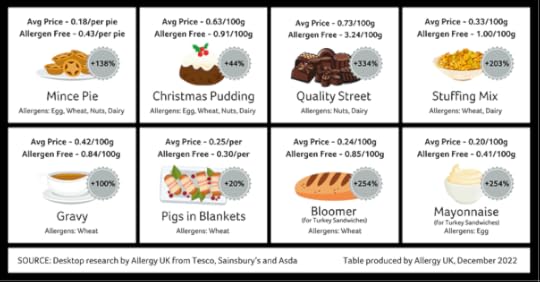
Ingredients and prices of festive favourites such as mince pies, pigs in blankets, Baileys, Quality Street, stuffing, gravy, and Christmas Pudding were analysed. All the items contained either egg, soy, dairy, wheat, or nuts rendering them off limits for the 2 million living with food allergies in the UK. Homes with someone with a food allergy usually avoid having any foods with the allergen even in the house, so this means that up to 4.8 million people could be passing on the pigs in blankets and Quality Street this Christmas.
 The rising cost of buying Free From Food and the ‘allergy penalty’Free From food just costs more
Despite the growth in free-from alternatives to enable people with food allergies to enjoy these foods, the higher price point makes it prohibitive for many families to do so, especially against a backdrop of the rising cost of living. Investigations by Allergy UK reveals an ‘allergy penalty’ paid by those who need to enjoy free-from foods this Christmas. For example, a free-from mince pie (four pack) costs £1.75 or 43p a pie compared to £1.09 or 18p for a standard six pack of mince pies, representing a 138% price increase per pie. When calculated across all nine items featured in the Christmas treat selection, this is equivalent to an average uplift of 157%4.
It also takes a lot longer shopping with allergiesA poll of those living with food allergies indicates that 44% of adults with food allergies always need to spend a lot of time reading food labels when shopping for food6. This is because current legislation on food labelling means that manufacturers can list the potential inclusion of an allergen on its label, even if the ingredient has not been used in the manufacture of the food. As well as making a shopping trip more time consuming, the ‘may contain’ labelling practice significantly limits the selection of foods available for those living with certain food allergies.
Are you paying the ‘allergy penalty’?Carla Jones, CEO of Allergy UK, explains, “It is a sad reality for many households with food allergies, that there simply is a financial – and a convenience – penalty which must be paid, simply to be able to access foods which are safe to eat. This year it will be felt even more keenly with the cost-of-living crisis. For these families and individuals, there is not a lower price point alternative for free-from foods, and current labelling practices significantly reduce the choices available to these people even more. It is a case of pay up or miss out on the favourite festive treats this year. Therefore, we are calling for labelling practices to be revised, especially with the cost-of-living crisis making free-from foods increasingly prohibitive.”
Food allergies are on the riseStatistics indicate that the prevalence of food allergies in the UK is on the rise, and recent research from a public survey by Allergy UK estimates that 8% of people in the UK are living with a food allergy7. Food abounds at Christmas, and for those living with a food allergy, the festive season brings heightened anxiety and exclusion. A survey conducted by Allergy UK in 2021 reveals that:
61% of children with food allergies have avoided social situations because of their allergy. 53% of children with food allergies feel isolated due to how much their allergies affect their life. 41% of parents would be anxious about their child with food allergies having an allergic reaction at a social event.A staggering 41 million people live with allergiesJones continues, “With our most recent research indicating that there are up to 41 million people in the UK who are living with allergic disease, it is the case that an allergy-free life is now the exception, not the rule.
It’s time to take allergy seriously!This year Allergy UK launched a new campaign, ‘It’s Time to Take Allergy Seriously’ to bring to life its mission for no one to die from allergy. The campaign’s themes confront the realities of living with allergic conditions and calls for improved healthcare provision, better awareness in service industries and improved care standards in education environments for adults and children whose lives have been impacted by allergy.
Thanks to Allergy UK for this content.
Images from Pexels and Allergy UK.
What are you doing for Christmas?I’m so fortunate to be going to my brother’s house for Christmas this year, so whilst I am contributing (we are all bringing food and drink) I don’t have the full cost of hosting. My family are also A * experts are keeping me safe. They completely understand my anxiety and fears and have always respected my need to check everything with them all the time. My brother and sister in law are both wonderful cooks too and I can usually eat almost everything. The one thing we agree on is that as chef, he can absolutely have his dairy laden cheeseboard! I will bring my own safe dairy free cheese for myself, although by that point I usually can’t fit in any more food!
Making your free from stuff from scratchIt might not be what you want to do, but embracing my allergies and learning to cook has meant I don’t feel like I’m missing out. I can make really tasty gravy, all the vegetables and meat and make it safe for me at the same price of a normal Christmas meal. What costs more is the processed ready made free from stuff. Like pigs in blankets (although Tesco do some amazingly good value free from Pigs in Blankets that cost less than making from scratch), mince pies, Christmas pudding, cakes, advent calendars, Panettoni… all these do cost a lot more.
What are you doing for Christmas? Are you hosting? Are you missing out on a traditional Christmas this year due to the cost? What do you think needs to happen? It really is a tough time right now for many but let’s hope 2023 is easier financially.