
Barbara Rainey's Blog, page 12
August 25, 2022
The Barbara Rainey Podcast: Dennis & Barbara Rainey’s Courtship and Engagement


Do you remember the moment you and your spouse moved from friends to “more than that”? For me, I didn’t think I was ready to move past the friends stage because I didn’t want to ruin the great friendship that Dennis and I had. When you ask Dennis… he was ready to move to the next stage much faster than I was!
As Dennis and I get closer to celebrating our 50th wedding anniversary, I thought it would be fun to share the story of our courtship and engagement! On this episode of The Barbara Rainey Podcast, Dennis and I talk about how we became friends and when our dear friend Don and Sally Meredith sat us down and to our surprise asked us what was going on between us because people were talking. We weren’t even dating! I hope you take a bit of time to listen to the full story. It was fun to talk about how we grew from friends to engaged, and the lessons we learned during that time. You can listen here or on any major podcast platform.
Ever His,
Barbara
P.S. There are still a few copies left of our newest book, Our Story, and we would love to send you a copy with your gift of $60 or more during the month of August. Click here to secure your copy today!

The post The Barbara Rainey Podcast: Dennis & Barbara Rainey’s Courtship and Engagement appeared first on Ever Thine Home.


August 22, 2022
50 Lessons from 50 Years of Marriage (Part 3): Still Learning After All These Years


As we approach our 50th anniversary, you might think we’re now in cruise control with our marriage. If so, you are mistaken! We’re still learning … often from our errors … and still growing in our relationship with God and with each other.
As a result, we decided to create a book, Our Story, for our six children and their spouses and our soon-to-be 27 grandchildren.
Our Story tells about our backgrounds, how we came to faith in Christ, how we met in college, our dating, engagement and marriage. The second half of Our Story contains 50 lessons from 50 years of marriage. We printed enough for our family and a small quantity to offer to you our friends. This limited print run is available for a donation to Ever Thine Home. To find out more click here!
This is the third in a four-part series presenting some of these 50 lessons. This week we’re featuring some practical ways to build oneness in marriage—lessons we’ve often learned the hard way! And if you’re interested in seeing the entire list, be sure to get Our Story, which will be available in September.
Here are a few lessons we’ve learned during what we call “Prime Time”—the years after our kids left home.
 Lesson #33: Understanding my wife is not a “one and done.”
The mystery of every woman is she continues to change through the years. He who made woman made her to be complex with multiple facets like a brilliant diamond. Hence the command from God to husbands to “live with your wives in an understanding way…” (1 Peter 3:7).
I (Dennis) have watched Barbara grow, develop, and change over the years, blossoming in many ways. She is not the same woman she was when we married. But she has also experienced a long list of challenges and hardships that have drained her even as they have, in the long run, deepened her. In those seasons of hardship, she needed a different kind and level of understanding than in our early, care-free years.
As I am called to be like Christ in our marriage, I’m called to seek to know and understand Barbara as He does … her relationships, aspirations, disappointments, and what nourishes her soul. That’s an impossible task, but with the Holy Spirit helping and guiding I can continue to grow in understanding. In some cases, I’ve even looked back over situations over the last 20 years and have understood more fully how Barbara had been hurt and overlooked in the crush of family and ministry needs.
As I pursue Barbara in love and seek to know her, I find myself living with her in an understanding way—thinking of her, of her well being … instead of thinking about myself.

Dennis, Barbara, Ashley Rainey Escue and Ben Rainey
Lesson #41: Losses are a part of life and multiply with age.
Over the course of our marriage we’ve experienced many losses together. Not just the loss of parents, family, and friends through death, estrangement or moves. But we have friends who have lost jobs, economic stability, or their health. Others have watched their houses burn to the ground, have been robbed, had their identity stolen, had their innocence taken by force or have lost mobility and independence.
The longer we live, the greater the accumulation of losses.
Losses have tested our faith and our bond in marriage, too. Losses prove the endurance of every marriage promise. A book that has helped us both immensely in dealing with losses of every kind is A Grace Disguised by our friend Dr. Jerry Sittser. It’s a compelling story of how one man dealt with the loss of his wife, mother and daughter in a car wreck. Buy it. You’ll need it someday. It’s one of our top 10 books we’ve read in our lifetimes.
Lesson #42. We aren’t focused on leaving a legacy, but on living our legacy.
The word “legacy” isn’t found anywhere in the Scriptures, but the concept is woven through the fabric of the Bible from Genesis through Revelation. Our legacy isn’t what we leave. It’s the memory of how we have lived.
Our mentor, Dr. Howard Hendricks said, “My fear is not that you will fail, but that you will succeed in doing the wrong things.”
We’ve concluded that our legacy is the sum total of all the decisions we make in our lifetimes. It’s determined by our worldview, which is seen in our choices. A legacy is the example of our lives. A model of our love for God and others, His Word, and His work for future generations and a time we will not see. We hope and pray our children and grandchildren will remember and want to imitate our faith and obedience to Christ.

Dietrich Bonhoeffer, the Christian martyr said with “20-20” insight, “It is the righteous man who lives for the next generation.”
Once upon a time we thought we would arrive at a place that was smoother sailing in marriage but we’ve learned that was fairy tale thinking. We are both learning to understand one another in new ways in this prime-time season as we face more losses than in our early years. And we are more focused than ever on passing on a faith-example to our grandkids that we hope they will want to continue in their lives. Living a legacy is indeed very different than leaving one.
May these thoughts challenge yours as you too live for the King!
Love this snippet from the Rainey’s new book, Our Story? Get your copy here!
The post 50 Lessons from 50 Years of Marriage (Part 3): Still Learning After All These Years appeared first on Ever Thine Home.
August 15, 2022
50 Lessons from 50 Years of Marriage (Part 2): Practical Ways to Build Oneness



Lesson #9: We learned how to be accountable to one another—to confess our struggles, temptations, and sins to each other.
A verse that became important early in our marriage was James 5:16: “Therefore, confess your sins to one another and pray for one another, that you may be healed.” We learned in year one that a healthy marriage is one where your spouse has access to the interior of your soul.
Dennis began hosting a weekly Bible study in our home. As the businessmen arrived before the study one of them always wanted to talk to me. After a few sessions I (Barbara) began to feel uncomfortable with and confused by his continual attention. I wondered if it was just my imagination; after all he was married with four kids.
My struggle was with transparency. Should I ignore this, deal with it alone, or share it with Dennis? I decided, fearfully, to share. I was greatly relieved that he believed me and didn’t ridicule me. He immediately moved the study to a restaurant. I felt validated and he felt grateful for my honesty and transparency. Our marriage grew deeper by that experience.
Over the years we became “accountability partners” for each other. I (Dennis) asked Barbara many times, “Will you pray for me? I’m struggling with betrayal, or lust, or envy, or comparison.”
We’ve found that our struggles and temptations are clarified as we bring them out in the open with the person who knows us best and loves us most. Forgiving a person or asking for forgiveness … experiencing temptations toward a coworker or neighbor … resisting bitterness toward someone who has hurt you deeply … are all better managed with the help of your spouse. When we risk transparency we can experience freedom, love, and greater oneness.

Lesson #14: Determine your core values as a couple.
In the second decade of our marriage, we went on a three-day retreat which, in hindsight, was one of the most significant weekends for our marriage and family. We took an hour alone to write down the top 10 values we each wanted to teach and nurture in our children. Values are intangible qualities like truthful, integrity, forgiveness and kindness … and also tangible activities like celebrating birthdays and holidays, serving the poor and homeless, or going to church every Sunday.
We looked together at our lists and talked about why we chose those values. We then collaborated and created a list of five core values that we both agreed upon. It was a challenge because each of us had to say no to some values we held dear. But over the remaining years of our parenting, our list of five values has called us away from adult peer pressure—what all the other parents were doing—to those things we agreed were most important for us and our family.
That project helped maintain our oneness as a couple when faced with decisions regarding our children’s activities and how we spent our time and money as a family. Our values—not comparison with other families—became our guidelines.

The 80’s were fruitful years!
Lesson #17: Lavishly forgive one another.
Forgiveness owes its value to its scarcity. It’s the missing ingredient in far too many families and marriages that profess to follow Christ. Ruth Bell Graham, wife of evangelist Billy Graham, once said, “A happy marriage is the union of two good forgivers.”
One of our top five values in our marriage and with our children was practicing forgiveness daily. We forgave each other often and sometimes out loud with the kids listening. We taught our children to do the same. Our kids will tell you we repeated instructions on forgiveness probably more than any other lesson we worked to teach. We instructed them to name the mistake or sin and then to say the words, “Will you forgive me for that?”
We also taught the offended person to then say, “Yes I forgive you for __________.” Saying, “Sorry if I hurt you” was not allowed. Vagueness wasn’t either. Sin is serious to God. He sent Jesus to die for our sin so we treated it seriously in our home with our children.
We also taught our kids Ephesians 4:32, and sang these words: “Be kind to one another … forgiving one another, as God in Christ forgave you.”
Forgiveness means giving up the right to punish the other person. If we don’t forgive bitterness can grow and bitterness creates isolation. They knew if they forgave they had to mean it and that retaliating was not allowed. Failing to forgive or ask for forgiveness kills oneness, unity, and life in marriage, family and all relationships.

It’s amazing to me how often we have to return to these lessons and relearn them! Repeat … repeat … repeat is the story of our lives, our marriage and yours too. These lessons have been learned but not mastered. And they won’t be on earth.
But God’s grace has become more precious over these 50 years as we’ve experienced His kindness in continually giving us repeated opportunities to confess, forgive and realign with His values. And though mastery isn’t possible, humility and eagerness to forgive quickly has grown with the years.
God is good. All the time.
May you too experience growth in humility and eagerness to forgive.
Love this snippet from the Rainey’s new book, Our Story? Get your copy here!
The post 50 Lessons from 50 Years of Marriage (Part 2): Practical Ways to Build Oneness appeared first on Ever Thine Home.
August 11, 2022
The Barbara Rainey Podcast: Lessons From 50 Years of Marriage
It’s hard to believe we are nearing the middle of August, and around here schools are starting back in the next week or so. When our kids started back to school, that always increased the busyness of our family, and when the busyness of our family increased, time for Dennis and me to focus on our marriage decreased.
That’s one of the lessons Dennis and I talk through on today’s episode of The Barbara Rainey Podcast. We are walking through several more of the lessons we learned over the past 50 years of marriage. We talk about keeping date night sacred, learning the importance of being each other’s “safe” person, and always being honest with each other, and so much more!
On this podcast we also talk a little about struggling marriages. If this is you, I encourage you to listen prayerfully. Lift up your marriage and the marriages of others you know to the only One who is our perfect Bridegroom: the Lord Jesus Christ. I know marriage is hard, and please know I am praying for you!
I hope you take some time to listen to this episode and I pray you are able to apply some of the lessons we have learned in your relationships. You can listen to today’s episode here or on any major podcast platform.
Ever His,
Barbara
P.S. As I mentioned a couple of weeks ago, if you would like to know our full list of 50 Lessons from 50 years be sure to snag a copy of our new book Our Story. To commemorate our 50th anniversary, which will happen September 2, 2022, we decided to write a book about some of the key lessons we have learned over our 50 years of marriage to share with our kids and grandkids. We would love to send you a copy at the end of September of Our Story with your gift of $50 or more in the month of August. There are only a VERY limited number of copies available, so be sure to make your gift TODAY to secure yours!
The post The Barbara Rainey Podcast: Lessons From 50 Years of Marriage appeared first on Ever Thine Home.
August 8, 2022
50 Lessons From 50 Years of Marriage: Learning About God’s Blueprints for Marriage


Fifty years ago when I (Dennis) married Barbara Ann Peterson I was a rookie, repeatedly failing to appreciate the dignity of the gifted woman, friend, partner, lover, and confidante God had brought me. Honestly, I barely even knew her.
Looking back, we both realize we had no idea what we were doing. We thought we knew each other so well and were so alike, but we were clueless. But God in His grace and kindness guided us because we were both committed to doing marriage His way. He helped us, orchestrated circumstances, provided generously for us in all our many inadequacies.
Even in the seasons when we felt helpless and hopeless, He was present and working on our hearts. We just didn’t always see His hand. Hindsight is clearer.
Now our 50th anniversary is coming up on September 2. After five decades of married life … after six children and (soon to be) 27 grandchildren … we’ve learned and relearned more than we can count. But we did come up with a list, and over the next four weeks we want to give you a selection. If you enjoy this, be sure to get the book, Our Story, that lists all “50 Lessons from 50 Years of Marriage.”
We hope this might encourage you in your life and marriage to keep on and never stop believing God, no matter what befalls you.

On our honeymoon near Steamboat Springs, CO
Lesson #1: The couple that prays together stays together.
In the first few months of our marriage, I (Dennis) asked a mentor this question: “You’ve been married 25 years. What’s the best piece of advice you can give me just starting my marriage?”
“Oh, that’s easy,” he replied. “Pray with your wife every day.”
I said, “That’s it? Pray with your wife?”
“That’s it.”
So I went home and Barbara and I started praying together. It worked really well for a couple of months … until the night we went to bed facing opposite walls. Although it wasn’t the most comfortable position physically, it expressed where we were spiritually and emotionally.
There seemed to be a tap on my shoulder that night and it wasn’t Barbara. God was speaking to me in my conscience saying, “Hey, Rainey! Aren’t you going to pray with her tonight?”
I said, “I don’t like her tonight!” God said, “Yes, but you made the commitment to pray every day with your wife.”
I faced a hard decision. Not praying would make me feel better but this was about more than satisfying myself. So I swallowed my pride, turned to Barbara, and said, “I’m sorry, will you forgive me?”
We’ve both gone to bed angry or hurt which led to late conversations until we resolved our impasse and then prayed. Sometimes we’ve agreed to table the discussion until the morning so we could pray and get some rest. Over 50 years we have learned we are two strong-willed, stubborn and at times rebellious people who continue to choose to surrender to God together every day in prayer.

This has saved and transformed our relationship. Inviting Him to keep changing our lives, our marriage, and our family has been a cornerstone of our 50 years of marriage.
Lesson #3: God’s pattern for marriage gave us security: leave, cleave, and receive.
Because we were serious about doing our marriage according to God’s patterns, we were intentional, sometimes to a fault in our youthful zeal, about three truths found in Genesis 2:24. That Scripture says: “Therefore, a man shall leave his father and his mother, and shall cleave (hold fast) to his wife, and they shall become one flesh.”
With these words, God led us to make our relationship a priority over all other relationships except ours with Him.
Leave: We shifted our loyalties from our parents to one another. We chose not to depend on Mom or Dad for emotional or financial support, but only on one another.Cleave: This word implies togetherness, keeping our covenantal promises, choosing to “stick like glue.” We learned to prefer one another, to involve each other in every aspect of our lives which resulted in growth in our unity.Receive: “Becoming one flesh” is what happens when we leave and cleave. But becoming one is so much more than physical. This idea, oneness, became a central theme to our marriage. It is what happens when we both receive and yield to God’s will and purposes in our lives over a lifetime. Continuing to welcome your spouse into your life yields a beautiful outcome.We have carefully guarded these three values God built into His marriage design even as we’ve made mistakes along the way. But as we return to Him and His patterns we’ve found increasing oneness and delight in our relationship.

At our first home in Boulder, CO
Lesson #4: Build your marriage from the same set of biblical blueprints.
What would our physical home look like if we had two different architects, two different sets of blueprints, and two different builders? We’d be living in a very strange and probably unsafe structure.
We learned the same would happen in our marriage if we weren’t building from the same plans. God’s plans. Building our marriage together from the same plans grows oneness. Loyalty to God’s ways over our own designs helps solve disputes over how to do our marriage.

As a result of sharing these biblical blueprints with others at Weekend to Remember marriage events for decades we learned to be more intentional in our own marriage. If you want to build from the same biblical blueprints for marriage, Barbara and I would encourage you to go to Weekend to Remember® marriage getaways. It’s the best marriage insurance you could ever buy. We promise. We spent most of our adult lives helping to create it!
I hope these three lessons have been good reminders or new ideas you might want to add to your marriage recipe! It’s a relationship that never surpasses the need to grow and be refreshed. Oh, that’s another lesson …
Till next week …
Love this snippet from the Rainey’s new book, Our Story? Get your copy here!
The post 50 Lessons From 50 Years of Marriage: Learning About God’s Blueprints for Marriage appeared first on Ever Thine Home.
August 1, 2022
For An Audience of One: Truth Stands Firm

 Just a few years after Jesus went back to heaven, those who followed Him began to be persecuted. In AD 202, the Roman emperor issued an edict against all Christians. Among those arrested was a young mother in her early 20s named Perpetua. Born in North Africa, Perpetua grew up in a prosperous family with the benefits of a good education and a happy childhood. Her mother was devoted to Christ and raised Perpetua and her brothers to love and follow Jesus.
Perpetua was tried and sentenced to execution, along with a group of other believers. Her father, who did not believe in Christ, begged her to renounce her faith. He reminded her that her baby boy would become motherless if she did not recant. She replied, “Father, do you see this water pitcher? Can it be called by any other name than what it is? So also I cannot call myself by any other name than what I am—a Christian.”
On the night before she was to be killed, Perpetua wrote of experiencing God’s comforting strength: “I saw that I should not fight with beasts but with the devil; I knew the victory to be mine.” The next day a group of Christians were marched into an arena. There before a crowd of cheering people, Perpetua and the others were killed by wild animals.
Perpetua, a beautiful young mother, knew that this life is only temporary and looked forward to the life that lasts forever in heaven. After her death, her chief jailer committed his life to Jesus Christ, so inspired was he by her confident faith. And the truth she died for became an example to her son that he, too, should stand firm in Jesus as she did.
Almost 2,000 years after Perpetua, there lived in the country of Germany a young pastor named Dietrich Bonhoeffer who also paid a great price for his faith. Dietrich was born into a prosperous family, and his godly mother taught him and his siblings to love and obey Jesus. Dietrich’s life was happy, safe, and secure until he reached his mid-20s. It was then that the ruling Nazi party under Adolf Hitler turned against those of the truth.
As Dietrich and his family and friends learned of crimes being committed against the Jews and the handicapped, they talked about what they should do. The majority of the Christians in Germany ignored the evil because they were afraid. But Bonhoeffer believed it was more important to obey God than men and that safety on earth was not as important as pleasing God.
After much prayer and careful study of the Bible, Dietrich came to the conclusion that he must help those who were trying to stop Hitler. And for this he was arrested and put in jail. In the period before his execution, he wrote about listening to God in difficult circumstances and then following God without reservation. He said that believers must be ready “to sacrifice all” and to be completely obedient and loyal to God alone.
Believing the truth may not always be easy. In fact, it will be extremely difficult at times. Knowing what God has for us is an individual matter. We cannot find God’s will by looking to what others are doing.
One day after the Resurrection, Jesus’ disciples went fishing in the Sea of Galilee. In John 21 we read that, after returning to the shore, they found that Jesus was there and had already built a fire to cook breakfast for them. After they all ate, Jesus asked Peter several times, “Do you love me?” Each time Peter answered yes, Jesus gave him a command: “Feed my lambs” … “Tend my sheep” … “Follow me.”
Peter turned his head and saw the disciple John and asked Jesus, “What about this man?” It is so like us humans to want to know what Jesus plans for someone else. We want to compare what God asks another person to do with what He asks us to do. But Jesus’ answer to Peter is also His answer to us: “… what is that to you? You follow me!”

Jesus asks each one who believes to stand firm in the truth, but He designs our circumstances uniquely. The faithfulness of believers like Perpetua and Dietrich Bonhoeffer cause us to ask ourselves, what will we believe when challenged by hard times? Will we stand firm in the truth as they did? Will we remember that it is God we must please?
Perpetua and Bonhoeffer knew they would stand before Jesus Christ one day and give an account (Romans 14:12). And so will we.
Questions about truth
What does it mean to stand firm for the truth? What kinds of things does God want to accomplish through those who obey Him courageously—including you?How can you stand strong when someone says that what you believe about Jesus is just a myth or a fairy tale?Dietrich Bonhoeffer faced terribly hard choices. Think about being taken to jail or even beaten as a result of your faith. What Bible verses would you read and follow? What would you do and say?Truth in action
Draft a “Family Statement of Faith.” In one or two paragraphs, briefly summarize the truths of God’s Word that your family believes and will stand on, no matter what anyone else says or does. Consider memorizing this statement of faith together. Or post it somewhere in your home where family members can see it often and be reminded of the truth of the Christian faith.To learn more about the timeless truths that provide clear direction—and hope—for our future, read The Family Manifesto. You can find it here.Praying together for truth
I pray that you, the One before whom we will stand, will help me remember the shortness of time and the nearness of eternity. May I never forget that Your eye always sees, Your ear always hears, and Your heart of love always seeks to save. May I fulfill that which You have created me to do and stand firmly in the truth until my last breath. Amen.
The post For An Audience of One: Truth Stands Firm appeared first on Ever Thine Home.
July 25, 2022
All the Children of the World: Truth Takes Action

 Thomas Bernardo was small in stature—he stood a mere five feet and three inches—but he towered with commitment to share the love of Christ with the street children of London.
Thomas was motivated by the truth of Scriptures like John 21:17, which calls us to “Feed my sheep,” and Matthew 25:40, where Christ says, “… as you did it to one of the least of these my brothers, you did it to me.” He began homes and schools for children, putting a sign on the door: “No destitute child ever refused admittance.”
As he cared for these little ones, he also started a church to reach the adults with the truth of Christ. Next he went to medical school so he could address the health problems of the children. His wife, a nurse, formed a nursing organization to care for the sick and poor.
As a result of Thomas’ ministry—along with the efforts of many other men and women—the plight of the homeless children in England was reversed. But today a similar crisis has fallen on other countries like China, El Salvador, Guatemala, and throughout the continent of Africa. The most recent statistics estimate more than 150 million orphans worldwide! Once again the world needs people who will believe God and will take action to rescue the children.
Meet Katie Davis Majors, a nice middle-class American girl. At the age of 18 she went on a mission trip to the country of Uganda in central Africa. There she fell in love with the people of Uganda, especially the children.
The next year she returned to teach kindergarten for a year. As she walked some of her students home, she was surprised to see children along the road. She wondered why they weren’t in school. As she began to investigate she learned that schools in Uganda, though government sponsored, still charged tuition. And most families in Uganda were too poor to afford schooling for their children.
Katie took action. By raising money from friends, she was able to place more than 40 children that year in school at $300 per year per child. (And hundreds more since then.) This modest amount of money paid for tuition, books, meals, medical care, and spiritual training.
Katie saw more needs and kept finding ways to meet them. She began a nonprofit organization called Amazima Ministries, which seeks to meet the needs of the poor in Uganda. (Amazima means truth in the Ugandan language.)
Then she adopted three little girls. Katie wasn’t hindered by being single or by being young. Instead she was moved by the needs of these orphan girls, and she knew she could love them.
Remarkably, Katie’s ministry has continued to do even more—initiating a feeding program for children, offering measles and polio immunizations, building a nurse’s clinic, starting a new school, and much more. She adopted 13 girls by the time she was 23, and since marrying her husband, Benji, she has added two biological children.
Katie says, “People tell me I am brave. People tell me I am strong. People tell me, ‘Good job.’ Well, here is the truth of it: I am really not that brave, I am not really that strong, and I am not doing anything spectacular. I am just doing what God called me to do as a follower of Christ. Feed His sheep, do unto the least of His people.” It is God who has made Katie brave and strong and who has supplied all her needs as she cares for so many.
In her blog and in her best-selling book, Kisses From Katie, Katie writes about the glorious journey she is taking with God. One month she wrote:
We sit in the dirt, not worried about the red stains, and serve 400 plates of food to sponsored children on Saturday. I look into these faces and remember them nearly 4 years ago, destitute and hopeless and starving. Afraid of my funny white skin. We feed them lunch and we feed them God’s Word and we watch them transform.
Our family sits on the street corner downtown sharing ice cream and laughter. My daughter bends low to offer a homeless man her popsicle and as he cries that no one cares about him she looks straight into his face. “We will be your family,” she asserts, and she means it. We kneel on the pavement and we pray and people stop to look but we hardly notice because we were made for this.
Orphans are not just found in Africa, but all over the world. In America most orphaned children are in our foster-care system. Most of them have their basics needs met but they still are orphans, alone without a family to which they belong.
When we see the truth, really see it, we are compelled to act as Jesus did. 1 John 3:17 tells us, “But if anyone has the world’s goods and sees his brother in need, yet closes his heart against him, how does God’s love abide in him?” We are truly His followers if we do what He did.

Questions about truth
In what specific ways can your family help the orphans in your town?Are you willing to go wherever God calls you? What do you sense God calling you to do that you may be resisting?How would you respond if your son or daughter chose to move to a foreign country to care for orphans?Truth in action
Go to Amazina.org to read more about Katie Davis Majors and the ministry she began. As a family, consider sponsoring one of the Ugandan children needing help. Or talk to your friends or church about sponsoring a child (or children).
Praying together for truth
Lord, there is greater joy, no deeper satisfaction, than to be fulfilling the purpose for which You made me. You are the Master, the Creator! To be about Your business … to be changing lives with Your love … is to display Your wonders to a broken world. May Your light shine, O Lord, through me today. Amen.
The post All the Children of the World: Truth Takes Action appeared first on Ever Thine Home.
July 18, 2022
A Mutineer and a Monk: Truth Brings Freedom
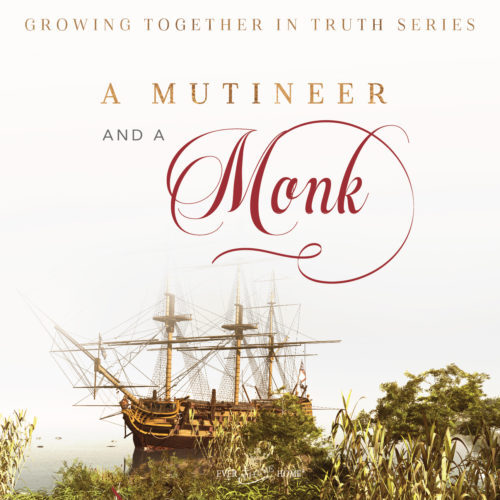 The book and film Mutiny on the Bounty tell the story of the notorious revolt that occurred aboard the English ship the Bounty. In 1789 the Bounty and her crew sailed across the Pacific Ocean on a voyage of exploration. After a six-month stay on the tropical island of Tahiti, many of the sailors decided they would not return to England, so they staged a mutiny, which is a rebellion.
Led by an officer on the ship, the sailors captured their captain and those who were loyal to him and set them adrift in a tiny lifeboat. Amazingly those men survived the 3,700-mile journey to civilization.
But the rebellion did not end well. The sailors kidnapped some women, took others as slaves, and then sailed the Bounty to the island of Pitcairn. There they lived lives of drunkenness and murder. Within two years, all the rebel Englishmen, except one, died by disease or fighting.
The lone survivor, Alexander Smith, was the only man left on Pitcairn with the Tahitian women and children. Then he found the Bible, a book that every ship carried on its long journeys. As he read it, he began to change. All else had failed him, but the truth of the Bible offered forgiveness and hope, something Alexander desperately needed.

Soon he was teaching the truth of the Bible to the women and children. Twenty years later when another ship finally landed at Pitcairn, those sailors were surprised when they found a community of Christians living together in peace and harmony.
Another man who was changed by the power of the Bible was Martin Luther. One day when he was 22, Martin was returning to his university when he was caught in a thunderstorm. Unable to escape, he was soaked to the skin and nearly killed by a lightning strike that took the life of his friend who was riding with him.
Martin was badly shaken. He was troubled that he survived and his friend had died. What did it mean? He began to think more about God and wondered, “How can I know God and have peace about life after death?”
For years after this event, Martin Luther worked hard to please God so he could get into heaven. He even studied to be a monk, someone who devotes his life to work in the church. But despite his good works, he felt no closer to God. Then Martin read a verse that changed him:
“The righteous shall live by faith.” Romans 1:17
Those two words, “by faith,” brought him the joy of discovery. “By faith” meant that having peace with God was not something he had to earn.
All of us know that it takes hard work to earn good grades in school. There are also rules to be obeyed in our communities, in the workplace, and in our homes. We can easily think that the way to please God is the same—keep the rules and work hard, and He will let you into heaven someday.
That’s what Martin Luther believed until he discovered “by faith.” The words mean that faith in God’s way of salvation through Jesus Christ was enough—no works, no report card, no “I hope I’m good enough.”
In the time when Martin lived, there was a very unbiblical practice in the church. Church leaders taught the people that not only did they have to obey all the church rules, but they also had to pay money to a priest to have their sins forgiven.
One day Martin had enough. The Bible did not teach that sins were forgiven for money! On October 31, 1517, Martin Luther made a list of reasons that this practice, called indulgences, was wrong and nailed the list on the wooden door of the church.
Everyone saw his list as they came to services the next day, All Saints’ Day. The church leaders were furious. They did not want to lose their money.
An order was given to burn all the books Martin Luther had written. The church leaders demanded that he sign a paper saying he had been wrong. He refused.
Sometime later he was taken before the emperor, who demanded that he recant. Instead Martin Luther replied, “Here I stand, I can do no other. May God help me!” He knew the Bible was the true Word of God. He would stand on the truth no matter what came as a result.
Today, those who believe as Martin Luther did are often called Protestants, a name that began with Luther as he protested against the lies of the church that day in 1517.
Questions about truth
Is there a verse or a phrase from the Bible that has changed the way you think about God and what you believe? Share it with your family.When Alexander Smith and Martin Luther discovered the truth of the Bible, they began to share it with others. How can you share the truth with others around you?Jesus taught that His followers were not to hide their light, or truth, under a bushel, but they were to let it shine so others could see and also believe (Matthew 5:15, KJV).Truth in action
As a family, create a list of at least 10 people—family members, coworkers, friends—who need to hear the truth of Jesus Christ. Discuss specific ways you can share the truth with them. Then pray together for each person on the list, asking God to give you the opportunity and boldness to share His truth.
Praying together for truth
I confess, Lord, that it is so easy to forget to read the Bible, Your divine words to me. I forget that every word is inspired, alive, eternal, powerful, and able to change my heart, any heart. Your Word, the unchanging truth, will never change or fade away. Help me to treasure Your truth, to read it eagerly, and to be careful with how I handle Your book—to hold it reverently, for it is holy as You are holy. Amen.
The post A Mutineer and a Monk: Truth Brings Freedom appeared first on Ever Thine Home.
July 11, 2022
Champion of the Cherokee


As children, we run into bullies who are often bigger and stronger, or at least like to think they are. They act powerful by saying mean things, pushing and shoving, hitting, or stealing.
Adults can be bullies, too. The hunger for power—seen often in adults through abuse of authority, angry speech, and manipulative behavior—is motivated by selfishness. The results are always hurtful.
It was a sad day in 1830 when the United States Congress passed a law forcing the Cherokee people and other American Indian tribes to move away from the land where they had lived for hundreds of years. The path of their exodus became known as the “Trail of Tears.”
The Cherokee and many other tribes—the Creek, the Seminole, the Choctaw, and the Chickasaw—lived in the southeastern portion of the United States. Many of them were farmers and cattle ranchers. They built towns, schools, and churches and published a newspaper. Many of them were Christians. In the early 1800s these American Indian communities were not bands of criminals who raided homes and killed innocent people; rather they were very much like their new white neighbors who were moving south by the thousands to establish their own farms and ranches
But there were powerful men who wanted the Cherokee land. Some held positions as governors or congressmen. They were not content with what God had given them and chose to ignore the 10th Commandment—“You shall not covet (Exodus 20:17)—and the Golden Rule, which tells us, “Treat others the same way you want them to treat you” (Luke 6:31). These leaders manipulated laws to force the Indians to give them what they wanted. They were bullies.
Jeremiah Evarts, on the other hand, was the champion of the Cherokee. A godly man, Jeremiah was troubled that these people, made in God’s image just as he was, were being forced to abandon their ancestral homes.
The truth of the Bible was Jeremiah’s guide, and the Bible spoke clearly about living in harmony with one another. So how could he be silent while the Cherokee were being threatened?

God has children all over the world, and He has a plan for each one. The Bible tells us, “For we are His workmanship, created in Christ Jesus for good works, which God prepared beforehand so that we would walk in them” (Ephesians 2:10). Jeremiah Evarts was created with the gifts and talents to fight for the Cherokee. He was trained as a lawyer, so he understood how to debate using facts and logic. He was a Christian, so he knew God’s truth. And God orchestrated his birth at the right time and in the right place for this work to be accomplished.
Those who live by the truth of the Bible, who do as Jesus would do, will not bully others. They will follow what God has given them to do and find contentment in doing God’s will. They will seek to live in peace with their neighbors, classmates, and family members. That is what Jesus taught.

Sadly, Jeremiah Evarts’ fight to protect the Cherokee failed. The Indian Removal Act, which passed by only one vote, was signed into law by President Andrew Jackson in 1830, giving him the power to negotiate the Cherokee exodus to new territory in what is now Oklahoma. The Trail of Tears began in 1838 as the states of Georgia, North Carolina, Tennessee, and Alabama gathered militia to force the Indians to move.
Without compassion, without any love for “the least of these” (Matthew 25:40, NKJV), soldiers burned homes and destroyed and looted property. The Cherokee people were then forced to begin walking west. And it was winter. Thousands died from the cold, from starvation, and from disease. Some were murdered.
Though this story does not have a happy ending, faith in God calls us to hope again. Jeremiah Evarts wrote near the end of his life, “At times I am exceedingly cast down as to the result. … It seems a most remarkable Providence, that the bill should pass, when a majority present showed themselves to be … opposed to it. This strange state of things should make us stand astonished at the ways of Providence … My comfort is that God governs the world.”
The truth of the Bible promises that God will make all things right one day. That is what Jeremiah Evarts believed when his battle to defend the oppressed Cherokee ended in failures. Though the truth does not guarantee success every time, there is a God in heaven who sees all and who is pleased when His children intervene for the defenseless.
Questions about truth
Have you ever been bullied or watched someone else suffer from a bully’s behavior? If so, what did you want to do? If you had to do it over again, what would you do differently?Think about the Golden Rule—“Treat others the same way you want them to treat you” (Luke 6:31). How does this truth change the way you act toward others?When God doesn’t make things work out the way we think He should, what are some truths that we can still believe?Truth in action
Consider specific ways that your family can show compassion for “the least of these” in your community. For example, you could volunteer at a soup kitchen, donate items to a food pantry, or sign up to help at a local charity. Talk to your pastor to learn if you can participate in a church-sponsored mission or community outreach.
Praying together for truth
You have made me as I am, Lord. Every detail of size and intellect and talent matters to You. Nothing was by chance. Even my day of birth, my country, and my family were chosen by You—all for reasons I will never fully comprehend. But to know that You ordered it all is enough. As the Artist of my life, may You be pleased with how I use the colors You have given me. For the good of Your kingdom, I pray. Amen.
The post Champion of the Cherokee appeared first on Ever Thine Home.
July 7, 2022
The Barbara Rainey Podcast: Growing Together in Truth
It’s hard to believe summer is nearly halfway over! At least…for those of us in Arkansas, and probably the majority of the South. Dennis and I loved to use the summer as a time to teach our kids foundational biblical truths that were sometimes hard to teach during a busy school year.
A question Dennis and I get asked quite often is, “How do you teach the truth to your children?” That is the topic of today’s podcast, “Growing Together in Truth.” I tell a remarkable story of a woman named Elizabeth Payne. Standing up for truth cost her both of her parents during World War I. The astonishing part was she never questioned or blamed God. Her parents instilled in her a love for Christ and a commitment to stand up for Him, no matter the cost.
We also talk about two other stories of people who stepped into the light after being trapped in darkness. Learning the stories of those who have gone before us can greatly impact our own story! I encourage you to listen to the full episode here or on any major podcast platform. I hope you enjoy and are challenged to teach God’s truth to your children or grandchildren!
Ever His,
Barbara
The post The Barbara Rainey Podcast: Growing Together in Truth appeared first on Ever Thine Home.
Barbara Rainey's Blog

- Barbara Rainey's profile
- 24 followers

