Teer Hardy's Blog, page 8
April 12, 2021
Values-Driven Leadership in a Success-Driven World

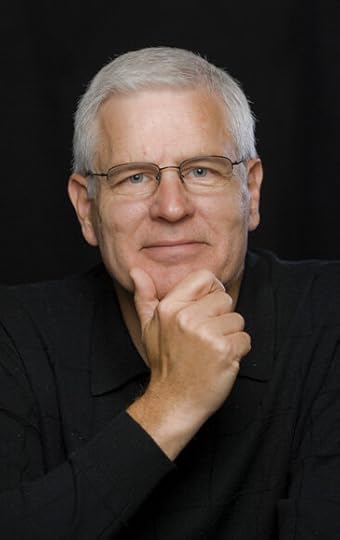
Richard Stearns is a leader who has been tested as a CEO in both secular companies and also as the head of one of the world’s largest Christian ministries. After stints as CEO of Parker Brothers and then Lenox, Stearns accepted the invitation to leave his corporate career to become the president of World Vision US, where he became the longest-serving president in their seventy-year history. During his tenure there he implemented corporate best practices, lowering overheads while tripling revenues. His leadership in calling the American church to respond to some of the greatest crises of our time, notably the HIV and AIDS pandemic, and the global refugee crisis, challenged Christians to embrace a bold vision for compassion, mercy, and justice.
In Lead Like It Matters to God, Stearns shares the leadership principles he has learned over the course of his remarkable career. As a leader who has navigated both secular and sacred spaces, Stearns claims that the values Christian leaders embrace in their workplaces are actually more important than the results they achieve―that God is more concerned about a leader's character than a leader's success. With wisdom, wit, and biblical teaching, Stearns shares captivating stories of his life journey and unpacks seventeen crucial values that can transform leaders and their organizations. When leaders embody values such as integrity, courage, excellence, forgiveness, humility, surrender, balance, generosity, perseverance, love, and encouragement, they not only improve their witness for Christ, they also shape institutions, influence culture, improve team performance, and create healthy workplaces where people can flourish. Through this book, Stearns will inspire a new generation of Christian leaders to boldly take their values into their workplaces to tangibly demonstrate the character of Christ, the love of Christ, and the truth of Christ as they live out their faith in full view of others.
Before you listen, do us a solid and help out the podcast.
Head over to http://www.crackersandgrapejuice.com.
Click on “Support the Show.”
Become a patron.
For peanuts you can help us out....we appreciate it more than you can imagine.
Follow us on the three-majors of social media:
https://www.facebook.com/crackersnjuice


April 5, 2021
Power in Weakness
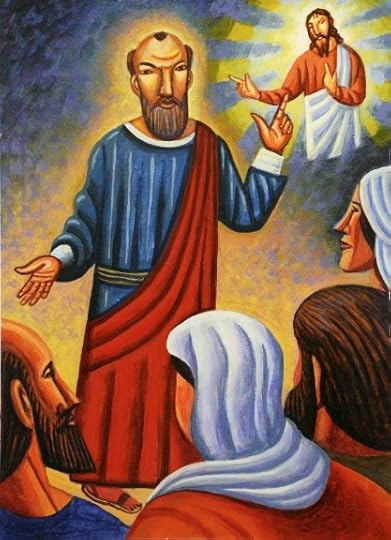
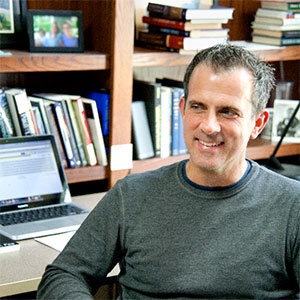
Tim Gombis joins the pod to talk about his newest book, 'Power in Weakness: Paul’s Transformed Vision for Ministry.' Tim and Teer explore a model for church leadership as old as Paul's letter to the Romans.
From the publisher:
After Paul’s encounter with the risen Christ on the road to Damascus, he turned from coercion and violence to a ministry centered on the hope of Christ’s resurrection. In earthly terms, Paul had traded power for weakness. But—as he explained in his subsequent letters—this “weakness” was actually the key to flourishing community that is able to experience God’s transformation, restoration, and healing. What would it mean for pastors today to take seriously Paul’s exhortation in 1 Corinthians 11:1 to “imitate me as I imitate Christ” and lead their congregations in this way?
Instead of drawing leadership principles and practices from the worlds of business, education, and politics—which tend to orient churches around institutional power and image maintenance—Timothy Gombis follows Paul in resisting the influence of the “present evil age” by making cruciformity the operating principle of the church. Gombis guides the reader through practices and patterns that can lead a congregation past a focus on individual salvation, toward becoming instead a site of resurrection power on earth.
https://www.eerdmans.com/Products/712...
Before you listen, do us a solid and help out the podcast.Head over to http://www.crackersandgrapejuice.com.
Click on “Support the Show.”
Become a patron.
For peanuts you can help us out....we appreciate it more than you can imagine.
Follow us on the three-majors of social media:
https://www.facebook.com/crackersnjuice
March 30, 2021
The Gravity of Joy


“My vocation was supposed to be joy, and I was speaking at funerals.”
Shortly after being hired by Yale University to study joy, Rev. Dr. Angela Gorrell got word that a close family member had died by suicide. Less than a month later, she lost her father to a fatal opioid addiction and her nephew, only twenty-two years old, to sudden cardiac arrest. The theoretical joy she was researching at Yale suddenly felt shallow and distant—completely unattainable in the fog of grief she now found herself in.
But joy was closer at hand than it seemed. As she began volunteering at a women’s maximum-security prison, she met people who suffered extensively yet still showed a tremendous capacity for joy. Talking with these women, many of whom had struggled with addiction and suicidal thoughts themselves, she realized: “Joy doesn’t obliterate grief. . . . Instead, joy has a mysterious capacity to be felt alongside sorrow and even—sometimes most especially—in the midst of suffering.”
This is the story of Angela’s discovery of an authentic, grounded Christian joy. But even more, it is an invitation for others to seize upon this more resilient joy as a counteragent to the twenty-first-century epidemics of despair, addiction, and suicide—a call to action for communities that yearn to find joy and are willing to “walk together through the shadows” to find it.
Rev. Dr. Angela Williams Gorrell joined Baylor's George W. Truett Theological Seminary in fall 2019 as Assistant Professor of Practical Theology. Prior to joining the faculty at Baylor University, she was an Associate Research Scholar at the Yale Center for Faith & Culture, working on the Theology of Joy and the Good Life Project, and a lecturer in Divinity and Humanities at Yale University in New Haven, Connecticut. She is an ordained pastor with 14 years of ministry experience. Rev. Dr. Gorrell is passionate about finding issues that matter to people and shining the light of the Gospel on them. She is the author of always on: practicing faith in a new media landscape and a new book, The Gravity of Joy: A Story of Being Lost and Found, which shares findings of the joy project while addressing America’s opioid and suicide crises. Rev. Dr. Gorrell’s expertise is in the areas of theology and contemporary culture, education and formation, meaning-making, joy, new media, and youth and emerging adults. Rev. Dr. Gorrell regularly consults, speaks, and leads workshops and retreats on her research and areas of expertise.
Before you listen, do us a solid and help out the podcast.
Head over to http://www.crackersandgrapejuice.com.
Click on “Support the Show.”
Become a patron.
For peanuts you can help us out....we appreciate it more than you can imagine.
Follow us on the three-majors of social media:
https://www.facebook.com/crackersnjuice
March 28, 2021
Borrowed Burro Messiah
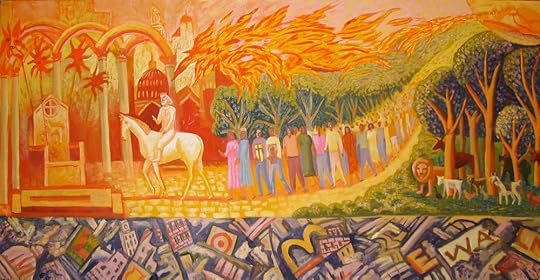

Beginning at the Mount of Olives, the place from where the prophet Zechariah promised God would send the Messiah to deliver the people of God from their enemies and occupiers, Jesus began his triumphant procession into the seat of the region’s political and religious power. Jesus had been making this journey, stopping in town after town along the way teaching, preaching, and revealing that in and through him the Kingdom of God was present. The disciples following along had been accustomed to seeing miracles and healings along the way but ever since Jesus faced toward Jerusalem to focus, Jesus’ focus has been the Kingdom of God.
Every year, around this time, Jerusalem would fill with Jewish pilgrims gathering for the Passover Festival. They would recall how they were once under the rule of a different empire and how God had sent someone to say them. Throughout the week shouts of, “Hosanna!” and, “Save us,” quoting Psalm 118 would be heard throughout the city. This created the potential for a flashpoint. In recalling how God delivered them from one conquering empire Israel worried their new conquerors, the Roman Empire, so much so that the Roman Governor of the region - Pontius Pilate - would flex the might and power of the empire by entering Jerusalem from his seaport home in the west, opposite the Mount of Olives. The Mount of Olives being the spot Zechariah had foretold the Messiah would gather his forces on, taking back Jerusalem, the spot where Jesus’ Palm Sunday journey began.
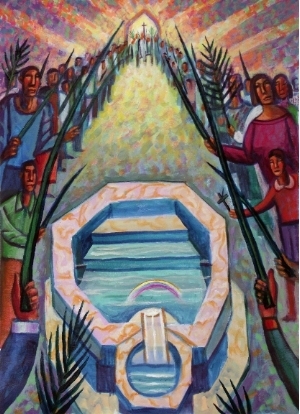
As Pilate and the Roman army assembled their gaudy yet unmistakable display of power for their entrance to Jerusalem Jesus had instructed his follower to prepare for their entrance into the city for the Passover Festival. Jesus told two disciples, “Go into the village ahead of you, and immediately as you enter it, you will find tied there a colt that has never been ridden; untie it and bring it. If anyone says to you, ‘Why are you doing this?’ just say this, ‘The Lord needs it and will send it back here immediately.’”[1] These two disciples did as they were told and procured the underwhelming colt or donkey for Jesus to make his empire-overthrowing entrance into Jerusalem. Jesus had called the disciples away from the security of their families and paying jobs. As they followed him they had been witness to healings, feedings, miracles, and saw with their own eyes the power of the kingdom Jesus promised them. The church has as the disciples looked to the healings and miracles of Jesus ahead of his teachings which often leads us, like the disciples, looking to the power of the Kingdom of God, not expecting the final procession to be on the back of a borrowed burro.
This must not have been the beginning of the climatic ending to the story that the disciples envisioned. Teacher of preacher Thomas Long suspects that, though Mark does not explicitly name the two disciples assigned to donkey duty, the two disciples sent to procure Jesus’ barnyard chariot were James and John. You see, James and John, were the two disciples who had just a few hours earlier requested special seating in Jesus’ kingdom - at his right and left hand, in his glory.
Jesus is preparing for a confrontation with the principalities and powers of the world, a moment of vindication for his disciples for sure, and these two disciples in this mighty moment are not sent to find a warhorse and chariot or arming to fight alongside the soon-to-be conquering messiah. No, they are dispatched, perhaps being humbled along the way, to procure the most humble of transportation accommodations for Jesus.
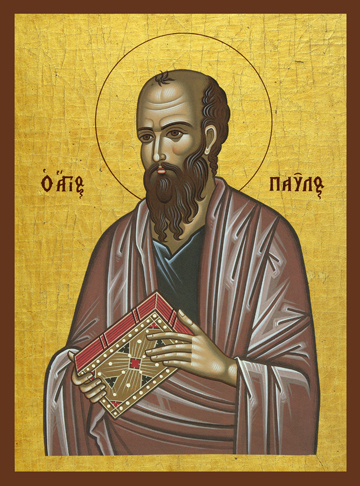
Along their journey with Jesus, the disciples had been told exactly what the Kingdom of God would be like, and never once did Jesus detail or outline a kingdom that would be able to go toe-to-toe with the might of the Roman Empire. My mentor Bishop Will Willimon likes to point out that while many of the disciples expected that as the crowds grew and the teachings and preaching of Jesus took root, perhaps with the nudging of the Holy Spirit, that the powers of the world - Caesar - would recognize Jesus’ authority and yield to the Kingdom of God. But the triumphal procession that was to begin this reordering of the world began two disciples sent to wheel and deal with a local donkey dealer. A humble way for the Savior of the world to take his reign. Such is the Kingdom of God.
The Apostle Paul wrote to be a disciple of Jesus we, each of us like the original 12, should, “Let the same mind be in you that was in Christ Jesus.”[2] That is as Paul continues being like Jesus who, “humbled himself and became obedient to the point of death—even death on a cross.”[3]
The cross.
The cross is ultimately where the Palm Sunday procession leads. While the might and power of Pilate’s procession would lead to the seat of power, Jesus, the donkey riding Savior, would ultimately end up being put to death. Jesus, riding a borrowed colt, is making clear that he is not the Messianic king the crowds expected. There would be no violent overthrow of the Roman Empire. His disciples still, even after this parade did not get it, so much so that Peter would bring a sword with him to Gethsemane. Jesus, entering Jerusalem on a borrowed burro opposite Pilate and the might of Rome is the modern-day equivalent of borrowing a 1976 Ford Fiesta and entering DC opposite a Presidential motorcade entering the city from Joint Base Andrews. And yea, throughout the Gospels and affirmed by Saint Paul, this is exactly how God will upend the principalities and powers that stand opposite the Kingdom of God.
Paul continued in his letter to the Philippians, “Therefore God also highly exalted him and gave him the name that is above every name, so that at the name of Jesus every knee should bend, in heaven and on earth and under the earth, and every tongue should confess that Jesus Christ is Lord, to the glory of God the Father.”[4] The Good News of the Gospel in three verses.
To be of the same mind as Christ, to build a life that does not fall into the fallacy of thinking six weeks Lenten of intentionality and introspection are enough for a lifetime of discipleship means that we are of the same mind as Jesus, as suggested by Saint Paul. And we see this clearly on Palm Sunday as Jesus is humble, obedient, and still to be exalted by God. Life as a disciple of Jesus begins as John the Baptist did and our two unnamed, potentially glory-seeking disciples continued - preparing the way. Preparing the way of the Lord.
Will Willimon likes to point out that we, disciples of Jesus are not the Messiah. Yeah, Will, duh. We are not even close and yet the mission and ministry of Jesus’ church rest in our hands. Two thousand years later we are the ones - with a little bit of help from the real presence of Christ and the power of the Holy Spirit - sent to procure the money and prepare the way for the Messiah’s triumphant return. Preparing for that moment when the principalities and powers of this world will yield, bowing and acknowledging the reign of God in Christ.
As we enter Holy Week it will b the disciples who secure the room required by Jesus for the Last Supper. For generations, disciples have been doing the mundane, unremarkable tasks of the church. Tasks that often go overlooked - taking groceries to someone with health conditions to precarious to be out in a pandemic, calling someone in need of prayer, learning to use Zoom to teach Sunday school, I could go on - these things are not done for fanfare or glorification. These are the things that have got to be done to, like the disciples and John the Baptist, prepare the way of the Lord.
At its best, this is what we do - humbly, obediently preparing the way of the Lord so that the Lord may be exalted. And yet, when we miss the mark - asking for a seat at Jesus’ right or left hand, abandoning him as his arrested or fleeing to a nondescript room after his death - the tomb will still be empty and the Lord, Jesus, is still exalted.
Subscribe
[1] Mark 11:2-3
[2] Philippians 2:5
[3] Philippians 2:8
[4] Philippians 2:9-11
March 19, 2021
Episode 300: Brian Zahnd - How I Read the Bible
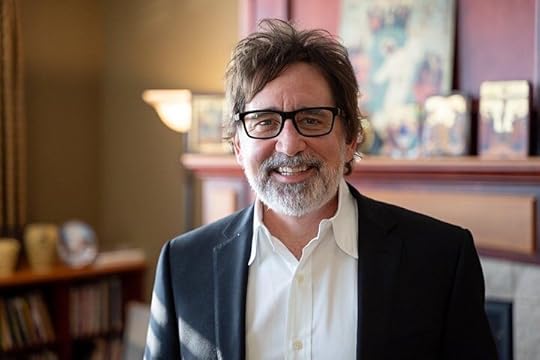
“We’ll look back and say that Donald Trump hastened the end of evangelicalism….Moving forward there will be no distinction between evangelism and discipleship.”
Our friend and mentor, Brian Zahnd, is the founding pastor of Word of Life Church in St. Joseph, Missouri. He’s also the author of many wonderful books, including, Water into Wine, Beauty Will Save the World, and most recently, Unvarnished Jesus. Brian was our first guest five years ago so we invited him to join us for our 300th episode. He talks about his incredibly successful Prayer School, his upcoming corollary, How I Read the Bible, and how the Church muddles through the post-Trump years.
March 14, 2021
It Doesn't Have to Be This Way


Robert Jenson, the man whom Duke Divinity Professor Stanley Hauerwas calls America’s Best Theologian – and TIME Magazine called Stanley the same – said the vision God laid before the prophet Ezekiel is the whole ball of wax when it comes to whether or not Christianity is true or utter malarky. The prophet Ezekiel began by avoiding the obvious answer to the Lord’s question. The Lord asked, “Can these bones live?” Well, the Sunday School answer is, “of course God, you above all can do anything.” Instead, Ezekiel, perhaps because of a sense of doubt, said, “Lord God, you know.” Or better translated,” I don’t know Lord, you tell me.”
The Lord told Ezekiel to speak to the bones. Speak to the bones?
A valley full of bones, human remains, piled upon one another. Bones that had been long forgotten and scavenged over by animals and insects. Nothing remained but dry and brittle bones. All evidence of the lives once present was gone.
At Robert Jenson’s funeral Victor Lee Austin, the theologian-in-residence of the Episcopal Diocese of Dallas said that the act of prophesying to the bones, “is a tiny movement, but it is the pivot upon which a vast future creaked into being.”[1]
Ezekiel said, “Thus says the Lord God to these bones: I will cause breath to enter you, and you shall live.”[2] After Ezekiel had done as the Lord commanded the bones rattled, they began to come together and were remade as though the physical signs of life had never been stripped away by the pains of death. That was not enough for God. The Lord commanded Ezekiel to prophesy again, calling breath to enter the newly reconstructed bodies. Once the breath of the Lord had entered their bodies the "vast multitude"[3] was able to live.
Even in a place where despair was present the Lord tells us there is hope.
The Lord says it does not have to be this way.
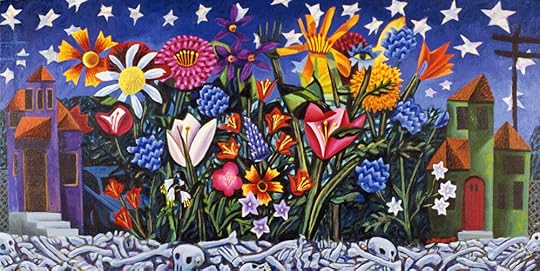
Bones and Flowers - James B. Janknegt
Our ever-changing new normal began one year ago. And it has been anything but normal. It was one year ago that parents received text messages from school systems informing them that Spring Break would begin earlier than expected. We began hearing more and more about a rapidly spreading virus that had not quite touched our lives yet but was getting closer than was comfortable.
Overnight we began keeping our distance from one another – from extended family, friends, and strangers at the grocery store. We made masks from bandanas and rubber bands. We hoarded toilet paper (some haven’t needed to buy TP in the past year) and stocked up on any of the essentials we could find. We sat in front of our televisions and scrolled endlessly online looking for information about the virus, determining what we needed to do to protect ourselves and our loved ones.
We were frightened. Many of us did not know what a coronavirus was. We had never lived through a pandemic and what we discovered online about the Spanish flu of 1918 told us that the valley we were entering into would not be easily traveled. What many took for granted – barbershop visits, attending church in a church, dining outside of our homes, visiting our grandparents or grandchildren, summer vacations, and much much more – became high-risk activities without notice.
The three-week extended Spring Break became a month, then three, and before we knew it a year had passed, and we are not sure how much longer we have to go. Even with a vaccine rolling out, coming to a pharmacy or parking lot near you, we are not quite out of this yet even as it feels like we can’t take anymore. Phrases like, “when COVID is over I’m going to…” are becoming part of our common vernacular.
It didn’t have to be this way.
For the last two months, I have been serving as a hospital chaplain at Mary Washington Hospital in Fredericksburg. I am enrolled in a program to help pastors learn how to provide better pastoral care. I am assigned to two units within the hospital, one of which is an Intensive Care Unit where patients are being treated for COVID-19. If there was a 2020/2021 equivalent of the valley of dry bone 2 South and West of Mary Washington Hospital is it. Patients are in isolation with their medical teams dressed in equipment that could double as astronaut suits with visits from a chaplain most likely happening over the phone. Elsewhere in the hospital patients are isolated as well. Visitors are limited to one person. One person per patient per admission. Families must decide who will be the one to visit a parent or child while they're admitted. Tensions are high. Morale is low. And the end, well, we can see that the end may be in sight but with too many variables and past experiences looming overhead, staff and patients are not getting their hopes up.
The same conditions can be found in hospitals around the world.

A few weeks ago, I was asked by an educator at the hospital how it was going, how my experience had been visiting with patients and families, providing pastoral care during a global pandemic. Unexpectedly, I broke down, blurting out, “It didn’t have to this way!” The educator asked do you mean practically or theologically? “Teer,” she asked, “are you referring to the death toll of the pandemic or death in general?” I shrugged my shoulders and said, “both I guess.”
Over 500,000 Americas, 2.5 million people worldwide did not have to die. We did not have to lose the things we took for granted. We did not have to miss birthday parties. We did not have to fight with one another over toilet paper or argue about the use of masks and the need for shutdowns. A year later, we find ourselves in the valley of dry bones, in a place where we did not have to be. And yet, ever since sin and death enter creation we have been wandering in and out of the valley. Given the invitation from God to choose new life, we turn away, turning towards sin and death. We can repent and turn back towards God, yet, inevitably we will turn back towards sin and as a result, death.
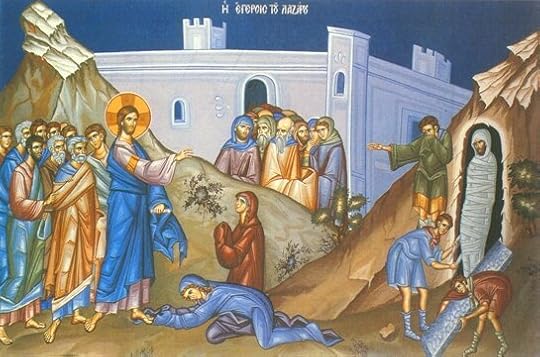
The Gospel of John tells us about Jesus arriving at the grave of his friend Lazarus. Lazarus had been dead for four days. His bones may not yet have been dry, but life had left Lazarus’ body and he had been placed in a tomb. When Jesus arrived, he was overcome by the death of his friend. Jesus was confronted with the consequences of our proclivity for sin. This is where we find the shortest, yet one of the most profound verses in all of scripture: “Jesus wept.[4]
When faced with death, Jesus – the Son of God, Emmanuel, the loquacious Logos – had a bodily reaction. No single Hollywood-style tear streamed down his face. No, Jesus had a gut-wrenching response. The response many of us have had over the past year when we have been confronted by death and have not been able to say goodbye. Many of us know this feeling, and when death was laying in front of him, being wrapped four days prior in burial clothes, Jesus wept.
Then Jesus called out, "Lazarus, come out!" Leaving his burial cloths in the tomb, Lazarus exited the tomb and those gathered witnessed Ezekiel's vision in the valley for dry bones for themselves. They saw life return. Breath entered a man they knew to be dead.
It didn’t have to be this way.
God does not delight in suffering and death. When face-to-face with the condition we call carry, God became angry. God wept, was unnerved.
Disease and affliction are not God’s punishment doled out to humanity for _______ reason.
Disease and affliction are signs of an enemy named Death – a condition that entered into creation when humanity chose to turn away from God, the church calls this sin – and standing at his friend’s tomb, face-to-face with this enemy God is angry. So angry that he had a bodily response.
Lazarus carried a disease more widespread than any pandemic the world has ever faced - Death.
We are all afflicted by sin and as a result, afflicted by Death – not because of you as an individual rather because creation has turned away from God. Even when we name this affliction, we find it hard, nearly impossible to turn away from it. None can escape it.
No number of cancellations or changes in plans, social distancing cannot cancel or change this condition we all face. But in Jesus Christ, God Incarnate, the One who came down from on high and took on our earthly existence we are the recipients of the promise that sin and death do not get the last word.
We walk into the valley of the dry bones each time we choose sin and death over the sustaining love and freedom offered to us, freely and without cost, by God our creator in Jesus Christ.
Where hope seems lost and the dryness of sin and death is all that remains – in dust, in ash, and in the grave, the Lord is going to shout, the Lord is shouting, “Come out, follow me. It does not have to be this way. It will not be this way.”

Regardless of where we have been worshiping over the past year, we, the church, Christ’s called and gathered body, are resurrection people. We do not believe that sin and death and the hopelessness of the valley of dry bones hold the last word. This has been difficult to remember of the past year, because, frankly, death and dry bones have been part of our everyday life.
Even if you have somehow managed to avoid the virus over the past year you have still had your life turned upside down. You might be working from home. Maybe you lost your job. Maybe you've been separated from family – physically because of the virus and socially as well because of disagreement over the need for masks, distancing, and new protocols. Maybe you're coming off a shift where you were wearing one of those astronaut-like suits only to see people at the grocery store ignoring the practices that would keep them from needing your care. This past year has proved to us, whether we wanted it to or not, that no matter how hard we try, no matter how much we want it to be different, sin and death, and the valley of dry bones, are ever around us.
Week after week and day after day, the church being the same broken record that it has been since God called Christ out of a borrowed grave on the third day has proclaimed hope and promise. It didn't have to be like this, sin and death did not have to have a grip on creation. And church, we say it will not be like this. There is hope. We have been assured through the faithfulness of Jesus Christ, promised that sin and death do not hold the last word. There is hope. Every time we proclaim Christ resurrected we are telling the world that what we see before us will not last and that the same God who can fill the driest of bones with breath, with life, can call a dead man from his eternal slumber, and raise a crucified Son will do the same to for us.
Subscribe
[1] https://www.firstthings.com/web-exclu...
[2] Ezekiel 37:5, NRSV
[3] Ezekiel 37:10, NRSV
[4] John 11:35, NRSV
March 2, 2021
The Gospel for the Person Who Has Everything
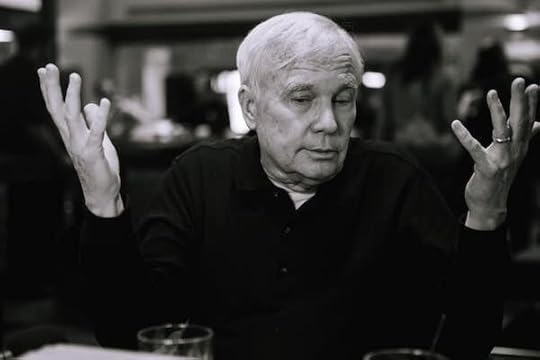
Friend of the podcast, mentor, friend, and all-around Gandalf to the gang, the irascible Will Willimon returns to talk about meeting the Risen Jesus, fighting in church, Karl Barth, preaching, and the new edition of his first book, The Gospel for the Person Who has Everything.
Before you listen, do us a solid and help out the podcast.
Head over to http://www.crackersandgrapejuice.com.
Click on “Support the Show.”
Become a patron.
For peanuts you can help us out....we appreciate it more than you can imagine.
Follow us on the three-majors of social media:
https://www.facebook.com/crackersnjuice
February 14, 2021
Hope of the World | Hope Ascended, February 14, 2021
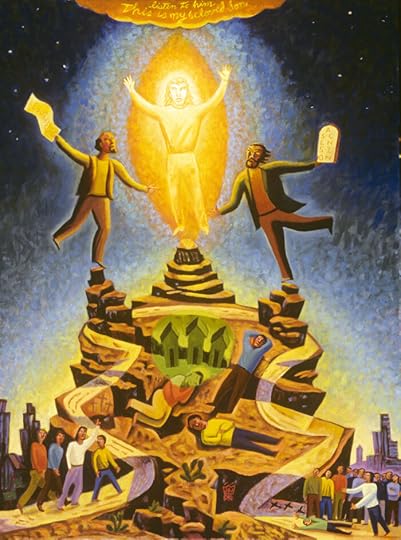

“Six days later, Jesus took with him Peter and James and John, and led them up a high mountain apart, by themselves. And he was transfigured before them, and his clothes became dazzling white, such as no one on earth could bleach them. And there appeared to them Elijah with Moses, who were talking with Jesus. Then Peter said to Jesus, "Rabbi, it is good for us to be here; let us make three dwellings, one for you, one for Moses, and one for Elijah.
And then Jesus said….
Wait— no, nothing.
There’s no “Get behind me, Satan!” There’s no alpine equivalent of Jesus chastising overeager Peter for thinking he too could walk on water. Jesus doesn’t say anything in response to what we take to be another example of Peter sticking his apostolic foot in his mouth and getting Jesus all wrong.
Every year the liturgical calendar and the Revised Common Lectionary conclude the season of epiphany with this penultimate epiphany of Jesus who is the end of the law and the prophets and, like the burning bush, afire with the glory of God but not consumed by it.
For three out of the last four years, I have not figured out a way to stick Pastor Jeff with preaching the Transfiguration, so I’ve been left trying to make sense of it for you. Or rather, you’ve been left— stuck— with me making a muck of it.
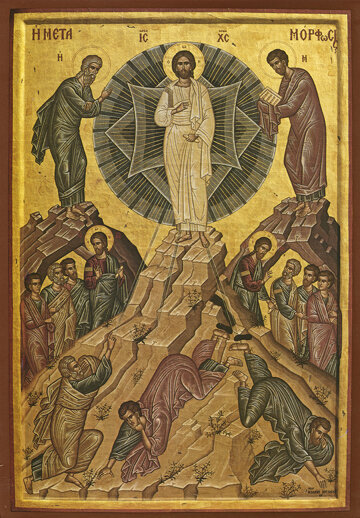
Icon of the Transfiguration of the Lord (Athos)
Matthew, Mark, and Luke all testify to the Transfiguration of Jesus. It’s a primary icon in Orthodox Christian worship. It’s a story we should all know, and every preacher should be able to preach. Yet perhaps because I’m addicted to coming to a biblical text for its utility— asking how this scripture can apply to my practical, everyday life— I’m left scratching my head when I come to a lesson like the Transfiguration.
I wonder if it’s that way for you too. To be transfigured is to be transformed into something more beautiful or to be elevated. In Eugene Peterson's paraphrase of the Bible, he describes what happened on this high mountain as Jesus had, "His appearance changed from the inside out, right before [the disciple's] eyes.”
Mark begins with Jesus calling three disciples and bringing them with him up a mountain. In the previous scene, the disciples answered a question asked by Jesus, "Who am I?" “The Messiah,” Peter replied. Jesus had just fed the 5,000. Both of these encounters declared his divinity, his messiahship, and pointed to the presence of the Kingdom of God. From the beginning of the gospels to the end the focus is on Jesus, and yet, time and time again preachers (color me guilty) use the Transfiguration of Jesus to point to the actions of the disciples instead of the glory of God. Looking to make sense of the oddness of this scene we, I, look to it for utility.
Two years ago, I pointed out that Peter, James, and John were standing in the midst of divine revelation. God, throughout the history of Israel, had a habit of revealing God's self and making a divine scene on mountains. God made a covenant with Israel through Moses on two mountains.
The theophanies – visible manifestations of God to humanity – of the Old Testament were terrifying experiences. There was fire and rushing wind, to say nothing of voices coming from places voices don’t belong coming from. Moses went up to Mt Sinai on behalf of the people— and even then, his appearance was so altered by the glory of God he had to wear a veil for the rest of his life. And when Uzzah accidentally touched the ark to keep it from falling, he was struck dead. Such is the glory of God.
But here in Mark, in this theophany, not only does Jesus show forth the full glory of God – bleached teeth, jeans and all – and the disciples survive. Like Harry Potter, they’re the boys who lived.
And that’s all correct.
Still, two years ago I said Peter, James, and John, Peter especially, missed the bigger picture because they, Peter, wanted to memorialize the event by erecting tabernacles on the mountain. I reminded the congregation that Peter, James, and John, led by Jesus, had to come back down the mountain. I chastised Peter for wanting to stay on the mountain because there was ministry to be done. The Gospel of Luke tells us a boy needed to be healed as Jesus and the disciples left the Transfiguration. “There is work to be done,” I said, and “there is no time to be wasted.”
Last year, I pointed out, very cleverly I thought, that Jesus was constantly on the move and thus we should be as well. Missing the point of the Transfiguration of Jesus, explaining away stained-glass language I do not fully understand, I implied that discipleship – actively living in accordance with the teachings of Jesus – was about gritting down, putting our noses to the grindstone to feed the hungry and clothe the naked, doing as my friend put it, "everything upper-middle-class Christians aren't embarrassed to affirm."
The problem here is that the focus is not on Jesus. It is on us. Maybe Peter wasn’t so wrong after all.
Putting our noses to the grindstone, gritting down, and saving the world by ourselves cuts Jesus out of the picture, and nowhere in the gospels is Jesus cut out of the picture.
If the Transfiguration of Jesus is about our actions and our good deeds, then what is the point of the gospel writers connecting Jesus with Moses, the one God gave the Law through, or the prophet Elijah? In focusing on the actions of Peter at the Transfiguration of Jesus we make ourselves the focus of the story. Peter may not have known exactly what was happening, but he knew what was being revealed – he admitted as much 11 verses earlier – and so he knew how to respond. Peter responded with an act of worship instead of a vain attempt of explaining away what he did not know.
Jesus never rebuked Peter’s act of worship.
Peter saw, even if just for a moment the fullness of the humanity of Jesus alongside the fullness of Jesus’ glory, his divinity. Peter had a glimpse into the mystery of our faith: that God became fully human so that humanity might become righteous. The Good News, the hope contained in the Transfiguration of Jesus is not the message to come down the mountain and serve the poor – a message of utility that many would affirm without ever knowing Jesus. No, the Good News is that God became like us, like you and me.
The light that beamed from the transfigured Christ is the same light that said, "Let there be…" The same Light that the creation waits for with sighs too deep for words. The same Light that will one day make all of creation ablaze like a bush with God's glory, but not consumed.
As the United Methodist Church’s communion liturgy states, suggesting Peter was right, “It is a good and joyful thing always and everywhere to give to give thanks,” to give praise to God. That is to give praise to God in Christ.
What we see here in this theophany, is that Christ is the Maker of heaven and earth, the second person of the Trinity, the Son of God, and that same one has promised that his yoke is light, and his burden is easy. His yoke is light, and his burden is easy because, as we see today, he is the end of the law and the prophets. Therefore, we can show up like Pastor Jeff said last week by being present and doing X, Y, and Z without the burden of expectations or performance. The one God tells us to listen to today promises “Behold, I make all things new!”
And that includes you.
He has and he is and he will do it.
The good news is not that we must ascend up to God by our own good deeds or spiritual striving; the good news of the Gospel is that the one who met Moses in a burning bush and spoke through Elijah has come down to us in Jesus Christ and will come again to….
Howard Thurman wrote of the glad surprise, describing it, “as if a man stumbling in the darkness, having lost his way, finds the spot at which he falls is the foot of a stairway that leads from darkness into light.” This is precisely what Peter did. He worshiped. The goal of discipleship is to be transformed, ourselves transfigured, not by our own hands rather through the one who to whom the law and all of the prophets pointed to. If not, what is the point of going up the mountain with Jesus?
We can try to contain the hope of the Good News revealed to us on the mountain but the Good News for us, revealed by the faithfulness of Peter, is that as Jesus’ humanity was transfigured so too will our humanity be called into perfect union with God, and not because of what we do when we come down from the mountain. Rather, because of the one who invites us to ascend, to worship, and to be transformed, and there is no containing that news.
February 11, 2021
Preaching Ash Wednesday with Fleming
 “I don’t think most preachers are doing anything prophetic at all.”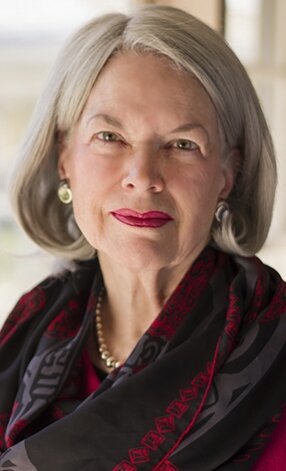
Four years ago the crew at Crackers & Grape Juice kicked off a new podcast. Strangely Warmed is our attempt to help preachers, every week, explore the great narrative of the Christian scriptures, revealing the Good News of Jesus Christ, without using stained-glass language.
Our first episode featured a friend of the podcast and preaching mentor, Rev. Fleming Rutledge. We chose to begin the podcast on Ash Wednesday and Fleming walks us through how to approach the texts for Ash Wednesday and faithfully proclaim the Good New contained on Ash Wednesday.
Fleming Rutledge, having spent twenty-two years in parish ministry, now has an international preaching and teaching vocation. Her most recent book, God Spoke to Abraham: Preaching from the Old Testament (Eerdmans), has received praise from many leading Old Testament scholars as well as preachers. Her previous books have met with wide acclaim across denominational lines and national borders. She is also author of The Battle for Middle-earth: Tolkien’s Divine Design in The Lord of the Rings (also Eerdmans), which has a fan base in Europe as well as the US. She received a grant from the Louisville Institute to write a book-length treatment of the contemporary meaning of the Crucifixion. Having divided this 800-page work into two volumes, she is presently on her way to submitting the first volume to Eerdmans for editing within the next six months.
Mrs. Rutledge served as interim rector of St. John’s, Salisbury, Connecticut (1996-7), and has twice been a resident Fellow at the Center of Theological Inquiry in Princeton. During the 2008 fall term, she was resident at Wycliffe College in the University of Toronto School of Theology, where she taught preaching. Most recently, she was a Visiting Scholar at the American Academy in Rome (April 2010).
Mrs. Rutledge is widely recognized in the United States, in Canada, and in the UK not only as a preacher and lecturer, but also as one who teaches other preachers. Her particular expertise is the intersection of Biblical theology with contemporary culture, current events and politics, literature, music and art. She has often been invited to preach in prominent pulpits such as the Washington National Cathedral, the Duke University Chapel, Trinity Church in Boston, and the Harvard Memorial Chapel.
Ordained to the diaconate in 1975, Mrs. Rutledge was one of the first women to be ordained to the priesthood of the Episcopal Church (January 1977). She matriculated at General Theological Seminary and received her Master of Divinity degree from Union Theological Seminary in New York in 1975.
For fourteen years Mrs. Rutledge was assistant and then Senior Associate at Grace Church in New York City, a parish celebrated at that time for its youthful congregation and evangelistic preaching. She was actively involved in the renewal there. Her previous position was at Christ’s Church, Rye, New York, where she was known for her creation and leadership of an extensive Christian program for high-school youth.
A native of Franklin, Virginia, Mrs. Rutledge graduated from Sweet Briar College in 1959, magna cum laude with highest honors in English. She was elected to Phi Beta Kappa. She has received two honorary Doctor of Divinity degrees, from Virginia Theological Seminary and Wycliffe College in the University of Toronto.
Fleming and her husband, Reginald E. (Dick) Rutledge, celebrated their 60th anniversary in October 2019. They have two grown daughters and two grandchildren.
Before you listen, do us a solid and help out the podcast.
Head over to http://www.crackersandgrapejuice.com.
Click on “Support the Show.”
Become a patron.
For peanuts you can help us out....we appreciate it more than you can imagine.
Follow us on the three-majors of social media:
https://www.facebook.com/crackersnjuice
January 25, 2021
Following Hope

Standing along the banks of the Sea of Galilee, organizing their fishing gear, repairing nets, and preparing to go fishing again after completing a day on the water two sets of brothers dropped what they were doing to follow and unknown Rabbi who told them he would, "make them fishers of men."[1] We know they had a profession. Simon Peter and Andrew, James and John were not seeking out a new vocation or way of life. As Jesus moved along the shoreline the two groups of brothers may not have even noticed Jesus before he approached them, offering them a chance to upend their lives and the lives of their families.
The four disciples acted immediately. The gospel-writer does not tell us why the disciples acted without haste. We have received very little of the backstory. This is one of those moments when I wish we had just a sentence or two more so that we might have a better understanding of why these four disciples and the remaining eight were so compelled to stop, drop their nets, and follow Jesus. The disciples were not offered a prophetic mantle. Instead, Jesus commanded their attention.
Over the Christmas holiday, I had multiple moments to shine as a father. It seems that as kids get older the instructions for assembling toys become more and more complicated. As a former engineer, I am a pro when it comes to assembling IKEA furniture. I have faith that the illustration-only instructions provided by IKEA can guide me to build a dresser, desk, or chair. I love step-by-step instructions, schematic drawings, and how-to manuals. As a teenager, I loved reading the Haynes manual for my 1994 Dodge Spirit and later my 2001 Chevy Camaro. Step-by-step, piece-by-piece, a good set of instructions can guide us to the desired outcome in most situations. Any project is less burdensome, less intimidating with a good set of instructions, something to follow without ambiguity, and even a few pictures.
As Jesus called his disciples, he told them, “Follow me, and I will make you become fishers of anthropoid."[2] Fishers of men and women. Fishers of people. We don’t have an account of Jesus telling Simon Peter and Andrew, or James and John how this would happen. He did not give the disciples a guide to consider before they walked away from their old lives to begin a period of what we in the church call discipleship. The four men left their nets, left their boats, and followed Jesus.
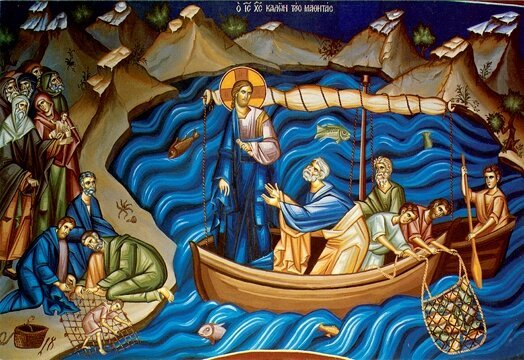
Jesus gave the men very simple instructions. The men and women who would join them on this journey had no idea where this journey would lead them, a journey that would seemingly end on a Roman cross but ultimately culminate on Easter in an empty grave. Those who first followed Jesus may not have expected the miracles and signs they would see but still, they followed.
Discipleship means to follow Christ. It means to become an ambassador of Christ and his kingdom. The invitation to follow shows that God has chosen to not work alone. Jesus is not interested in the intellectual. He didn’t ask, “does my teaching make sense.” Instead, he commanded the vocational, “Follow me.”[3]
Discipleship can take many forms. At Mount Olivet, we have identified key areas that we feel are critical to being answering Jesus' invitation to follow him: worship, being part of a community of grace, spiritual and Christ-like practices, and service and generosity. No matter where you are or how long you have been following Jesus, we believe that these four areas – identified and guided by scripture – are how we begin to respond to Jesus’ invitation to follow.
Jesus Christ is the Hope of the world.
Every day we place hope in one another to get through the day, live as a community, and care for one another, and yet, Jesus tells us, and we see in his ministry that to follow him means our hope rests in him and nowhere else. This may sound lofty or church of me to say, but when we proclaim Jesus Christ to be Lord, placing our whole trust in his grace, we are saying that the ways of the world, those who ask for our allegiance and fidelity must take a backseat because have been called by the One in who God chooses to redeem the world.
Jesus Christ is the Hope of the world.
In and through him God reconciled the world. When we choose the ways of this world over the ways of God the faithfulness of Christ stands. The Hope of Christ remains. When our love for one another, when our love for God fails the love of Christ stands. In Christ the Kingdom of God was at hand, inaugurated by his life, death, and resurrection. The invitation given to his first disciples is an invitation to us to be part of the kingdom-building work that began on the banks of the Jordan River and Sea of Galilee.
Jesus gave a simple instruction, “Follow me.”[4] Two words, without much explanation and yet those words have set the course for the church, for generation upon generation of Christians to do one of two things: get it right or get it wrong.
When we get it right, when we drop our nets, reorienting our lives to follow Jesus miraculous things occur. The hungry are fed. The lost are found. Healing begins as divisions are cast aside. Our focus moves towards God and away from others who ask us to follow them.
Jesus gave a simple instruction, but when the church gets that instruction wrong, the results are anything but miraculous or a sign that the Kingdom of God is at hand. What we get wrong is thinking that the Kingdom of God has anything to do with our actions. The church has proven this time and time again, that we cannot follow the simplest instruction- to follow.
To follow Jesus as he fed the hungry on the side of a hill.
To follow Jesus as he stood beside a woman at a well.
To follow Jesus as he healed the sick and invited the marginalized into his Kingdom as honored guests.
To follow Jesus’ call to put our weapons down.
To follow Jesus is to follow the Hope of the world, not storm the castle, secure our own rights, or make anything great. To follow Jesus is to live in the Kingdom of God that is present now and work alongside other disciples as we await the fulfillment of Christ's kingdom.
I do wish the gospel-writers had given us more than “Follow me.”[5] Part of being a disciple is to ask questions. The first disciples certainly asked their fair share of questions. To follow Jesus is not to have everything figured out. Rather, to follow Jesus Christ is to have faith, faith that in Jesus the fullness of God has been revealed. When we realize this, seeing the hope present in Christ, we are able to follow not our own agenda. We are able to follow Jesus and proclaim the arrival of the Kingdom of God; here and now. Swiss theologian Karl Barth wrote, "The command of Jesus… is issued with all the freedom and sovereignty of grace against which there can be no legitimate objections, of which no one is worthy, for which there can be no preparation, which none can elect, and in the face of which there can be no qualification."[6]
United Methodist Bishop Will Willimon reminds us that following Jesus Christ, discipleship, “is the way God rescues us from vain attempts to make something of your life by giving you a job that’s more important than you. Faced with a broken world, Creation gone awry, God doesn’t ‘send the Marines.’ God casts forth the meek, foolish, and weak.”[7] God calls us, even with our limitations, we, the church, the gathered collection of Christ’s body are “God’s way of turning the world upside down so God can put things right side up.”[8]
The kingdom where the instruction manual is simple – not as many pictures as I would prefer – and the outcome is assured to us because no matter how many times we get it wrong, skip a step, or lose track of what we are supposed to be going the invitation remains.
Follow me.
Follow Christ.
Follow Hope.
Subscribe Today [1] Mark 1:17
[2] Ibid.
[3] Willimon, Will. God Turned Toward Us – The A, B, C’s of Christian Faith. Pg. 22
[4] Mark 1:17
[5] Ibid.
[6] Barth, Karl. Call to Discipleship.
[7] Willimon, Will. God Turned Toward Us – The A, B, C’s of Christian Faith. Pg. 22
[8] Ibid.