Teer Hardy's Blog, page 5
October 31, 2021
Dependently Free
The red, white, and blue flying high, apple pie, and NASCAR are just a few of the things that have been running through my mind this week after reading our scripture reading. We live in the epicenter of freedom. Even if you do not live in Arlington, VA, if you live within the borders of the United States, you most likely have lived under the banner of American freedom. We mark the annual celebration as fireworks fill the night skies with bright lights and loud booms. And many of us drive past the perfectly aligned tombstones of Arlington National Cemetery, being reminded that the freedoms we enjoy – one of them being the ability to gather for worship without fear of persecution – do not come free. Ask any diplomat who has served in a nation where the freedoms we enjoy in the United States are not guaranteed, and they will tell you what we often take for granted, which is something others are willing to risk their lives to obtain.
The freedoms we enjoy as citizens of the nation with the world's strongest military are not the freedoms Jesus talked about with a group of Judeans.
Our scripture reading is a snippet of a larger conversation Jesus was having with a group of Jewish interlocutors. Before I go on, I want to clarify that "the Jews" mentioned in verse 31 did not stand for all Jews – neither in Jesus' time nor anytime – nor an abstract notion of Judaism. Any attempt to imply that Judaism is an enslaving religion or that Jesus stood outside Judaism is to do exegetical-malpractice and is outright anti-Semitic.
Jesus was engaged in a conversation about truth and freedom. This conversation was between Jesus and a crowd in which "many believed in him." They had heard what he said to them when he said the One who sent him was "true." And because the One who sent him was "true," to follow Jesus is to know the truth. The truth revealed in the blood and flesh of Jesus Christ is not referring to a philosophical ideal or the opposite of falsehood, and this truth is not about an agenda or deciphering fake news from real news. Rather the truth Jesus reveals is knowledge of God. The churchy word for this is revelation, found in the entirety of the life, death, and resurrection of the revealer.
This truth cannot be quantified or tabulated, and it is not a truth to learn rather a truth that has been and continues to be revealed to the saints of the church – past and present. This is the truth experienced in the waters of our baptism and in the bread and wine at Christ's table.
To know the truth of God revealed in Jesus Christ is to know Jesus. And to know Jesus is to follow him. This is relational knowledge, trusting in his grace rather than a set of beliefs. To know someone requires that we spend time with them, listen to them, and share ourselves with them, our whole selves and not a carefully curated version of ourselves.
So, what does the truth of God revealed in Jesus Christ have to do with freedom? I am glad you asked.
In the church, we believe that humanity has been enslaved to sin. Simply put, this means that we often lean towards and do the things we know we should not do and, in the process, harm one another and turn away from God. In the church, we call this sin and, in the church, we have difficulty talking about the very thing Christ has set us free from. Even though we may confess our sins, we still do not like to be called sinners.
While we may live free to do as we please because of geography, our condition as sinners does not change. There is no amount of flag-draped apparel, apple pie, or fireworks that can undo this condition.
In following Jesus, we have been sent from the consequences of our sin. All of them. That is what we mean when we declare our sins to be forgiven. That very declaration of forgiveness is our declaration of freedom, a declaration of dependence, not independence, upon One in who we find freedom. Freedom has little to do with our ability to deserve or earn it, and instead, freedom extended to all of creation, regardless of geography or birthright.
Freedom in Jesus Christ is more than forgiveness. Freedom in Jesus Christ is liberation from what we have turned toward at the expense of our relationship with our creation. And this freedom was not bought with military might or thoughtful diplomacy. It is freely offered to us through the righteousness of the One whose righteousness we clothe ourselves in when we are baptized. The freedom transforms us from the inside out when we listen to Jesus and place our whole trust in his grace. In the church, we call this new life. It is what Bartimaeus pleaded for, what the rich young man could not imagine, and what the saints of the past have placed their trust in.
The truth revealed in and through Jesus Christ and the subsequent freedom from sin that is ours, we can, like the saints before us, walk in his way of love in the world that others might know that freedom is theirs.
Subscribe


October 20, 2021
Tripp Fuller Goes Before the Board
The host of Homebrewed Christianity, Tripp Fuller, shares his answers to a few of the questions Teer is considering for ordination in the United Methodist Church.
Tripp is a proud nerd, but not just a Star Wars and Battlestar Galactica type of nerd, he is a theology nerd who is committed to bringing theology to the people. With a Ph.D. in Philosophy, Religion, & Theology, Tripp is a special kind of theology nerd.
Before you listen, do us a solid and help out the podcast.
Head over to http://www.crackersandgrapejuice.com.
Click on “Support the Show.”
For peanuts, you can help us out….we appreciate it more than you can imagine.
Follow us on the three-majors of social media:
https://www.facebook.com/crackersnjuice
October 12, 2021
Keep your Money

Jesus and his disciples were a few miles outside of the nation’s capital. Jesus had been teaching about how one might enter the kingdom of God. As a child, Jesus told his followers.[i] To enter the kingdom of God, you must approach as a child, as in having nothing, as children apart from birthday cards and allowances have nothing.
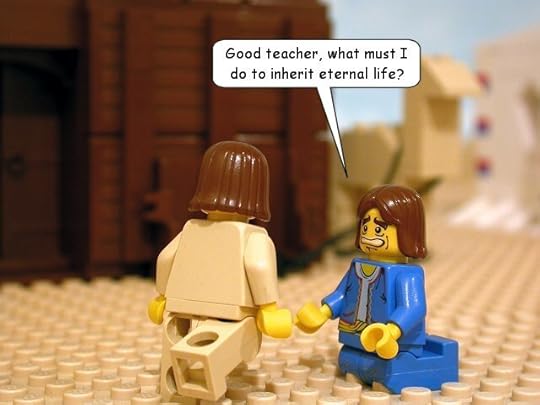
Then a man kneeled before Jesus and asked the very question Jesus had just answered. Jesus’ words were still lingering in the air. This man appears in all three of the Synoptic Gospels – Matthew, Mark, and Luke. You might know him as the rich young man.
“What must I do to inherit eternal life?”[ii] The man wanted to know which boxes must be checked to enter the kingdom of God. Jesus rattled off a few boxes, the easier of the commandments to remember and keep.
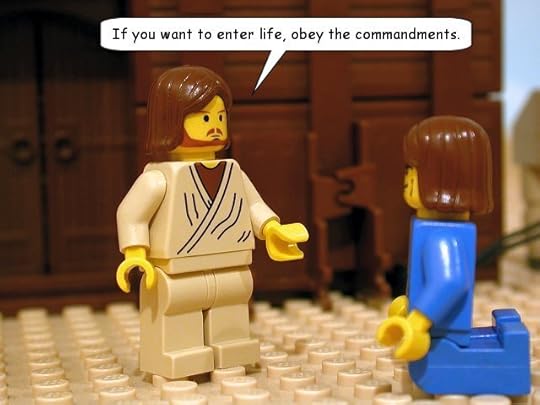
Don't murder, don't commit adultery, don't steal, lie, or covet or cheat or dishonor. The young man bragged that he had not done any of those things since he was a child. In his opinion, the young man had a spotless record.
But notice, which I am sure you've already done, Jesus left out the first two commandments. The rest of the commandments were written on these first two: I am the Lord your God, and you shall worship no other gods before me.
Jesus did not ask the man how he was keeping the first two of God's top ten. Jesus asked the question with a lesson, a lesson that we today try to avoid, by telling the man to give it all away, all the stuff, sell it and give the money to the poor. Sell everything you have so that you have me, Jesus told the man.
This week we are beginning our annual stewardship campaign. This is the time of year when we plan for what lies ahead for our shared ministry. We dream, and then we develop a plan to make it all happen. Things like Bibles for third graders and books for families after a child is baptized, food for the Arlington Food Assistance Center, and continuing to support La Cocina's mission of job and entrepreneurship training for low-income families, toilet paper in the bathrooms, salaries, and health insurance for the church staff, and being able to continue stop-gap ministries like Community Assistance and the Pastors’ Discretionary Fund. Your generous giving has made this happen in the past, and we pray that it will happen again. In two weeks, you will be invited to make a financial commitment for the coming year. Between now and then, we will be exploring what Jesus has to say to us about generosity and generous giving. This is like an NPR pledge drive, but rather than cool gifts for you, we get to be in ministry together, being part of God's mission in Arlington and around the world.
Now back to Jesus.
You might be expecting one of two things to happen next: I could try to convince you to sell all you have, taking the proceeds and giving them to the church, or Brent is going to lead a camel into the room, and we will get that big boy to fit through the eye of a needle. Well, Jesus did not tell the rich young man to sell it all and give the money to the church, so that's off the table. I considered the camel bit but thought better of it, realizing spending $2,000 for a sermon illustration would be in bad form on the same day we began a stewardship campaign.
[image error]Eternal life, salvation, and the kingdom of God are not things to be bought or earned. The rich young man did not expect Jesus to tell him to sell everything. The rich young man wanted to talk about social morality, practical ethics, or have Jesus say to him after bragging about his righteousness that he was good to go, nothing else to be done. Go young rich man, and enjoy your eternal life.
The rich young man "lacked one thing.”[iii] This one thing was beyond conventional morality or practical ethics. This man needed to repent and turn away from the one thing preventing him from being all-in with God. The man's conversion was the other of the day, not an impromptu yard sale. This is where we appear in the story.
The man’s question, “What must I do to inherit eternal life?”[iv] was faulty from the beginning. You see, eternal life, salvation, and the kingdom of God are not things we receive by doing. There is nothing to be done because to inherit something, as the young man incorrectly stated, is to receive something. The thing you receive is yours, end of the story. The only people who inherit eternal life, or are saved, are those who realize salvation, for all people, is an impossible miracle.
Salvation is an act of God, and the ultimate inheritance and a gift we do not deserve, could never buy, and did not see coming.
A gift paid for at a great price.
Once realized, this gift transforms our hearts, becoming the thing we cherish most so that we do not have any other gods, idols before the Lord.
This good news transforms the entire way we live and view the world in such a generous way that we do not ask questions like, “what must I do to inherit eternal life?”[v]
What percentage do I give?How much do I have to give?Do I really have to give at all?The generous giving we, you, do is not an obligation required to earn favor with God.
We give generously, all that we can because Christ has already given everything away for us.
A religious person, like the rich young man, may ask, “well, how much is the right amount?” but those who have experienced the amazing grace of God in Jesus Christ know generous giving is not about percentages or tax write-offs.
This is not a money issue. It is a Gospel issue.
Life as a disciple of Jesus Christ is about having your attitude about money, along with everything else, shaped by the good news that Christ has already accomplished all that was required for you to inherit eternal life.
Nothing competes for your love of God and neighbor more than money.
Nothing works against us growing in faith, following Jesus, maturing as disciples, and surrendering all that we have to God more than money, the pursuit of wealth, and the management of a lifestyle.
Jesus did not want the rich young man’s money, and God does not want yours. Like the young rich man, God wants your heart, and Jesus has already paid a lot for it.
In giving ourselves over to God, our whole selves, we care less about percentages and numbers, knowing that what we generously give pales in comparison to what has already been given for us.
SUBSCRIBE
[i] Mark 10:15
[ii] Mark 10:17
[iii] Mark 10:21
[iv] Mark 10:17
[v] Mark 10:17
October 1, 2021
Round 2 with Tony Robinson and Will Willimon

Tony Robinson and Will Willimon reunite for round 2 of Q&A with the Crackers and Grape Juice Nation. The Hauerwas Mafia submitted questions Tony and Will to consider.
To get the episode started Will responds to critique he and Stanley Hauerwas received for an article published in Christian Century (https://www.christiancentury.org/arti...).
Tony follows up his perspective on pastoral care in the middle of a pandemic.
Then the two friends field questions from the Hauerwas Mafia.
Before you listen, do us a solid and help out the podcast.
Head over to http://www.crackersandgrapejuice.com.
Click on “Support the Show.”
For peanuts, you can help us out….we appreciate it more than you can imagine.
Follow us on the three-majors of social media:
https://www.facebook.com/crackersnjuice
September 27, 2021
Franchised Gospel

Back in 2014, I was part of a team that planted a new church near Fort Belvoir. For nearly a year before our first community event or worship service, we prayed, discerned, studied the Bible and demographics of the area, and planned. Then we prayed some more. Our first event was going to be a food packaging event for Stop Hunger Now. Over four hours, we planned to pack at least ten thousand meal kits. We called the event "Serve with Saint Nick" as the event took place days before Christmas. Santa was in attendance, taking a break from his pre-Christmas Eve duties. We purchased Facebook ads, sent out postcards, and put signs out throughout Fort Belvoir's neighborhoods.
As we got closer to the event, we noticed the physical signs we had put out began to disappear. This happened again as soon as we started advertising our Christmas Eve service at the neighborhood fire station. And it happened again as we began to hold regular worship services and community events in a local elementary school cafeteria. We figured either the Holy Spirit was trying to tell us something or a more sinister plot was at hand.
So, we did was any sane/rational church planting team with members who work in the military intelligence field would do – we purchased tracking devices and secretly hid the devices inside the signs. Then we sat by our laptops on a 24-hour rotation, waiting for something to happen.
All I can say about these disciples is that one minute they got it – they heard and saw what Jesus was teaching and doing – and the next, they were shoving their apostolic feet into their mouths. They had seen people healed (they had not yet healed anyone). They had heard Jesus speak about the cross and the cost of seeking after him (they did not quite understand, but they were still rolling with Jesus). They learned what the cost of discipleship meant – namely, setting aside aspirations of greatness for themselves. And in our scripture reading, the disciples decided to rat out a person casting out demons in Jesus' name.
The disciples' issue with this exorcist was not their ability to heal people or the exorcist doing these acts in Jesus' name. No, the disciples' issue was that this exorcist in their minds had gone rogue because, the disciples' said, the exorcist was "not following us." The disciples' chief complaint had nothing to do with the exorcist's actions, and instead, they were upset because this person casting out demons was outside what they believed to be the establishment.
This person is no one of "us" the disciples complained to Jesus, implying there is no way this person could do what they said they were doing in Jesus' name because the disciples had been cut out of the picture. This exorcist had influence, in Jesus' name, outside the disciples' sphere of influence.
The disciples were the ones called away from their boats and families, not this random person.
The disciples were the ones who had been walking, following Jesus, and listening to his vague, confusing, and at times scary lessons about what his ministry would lead to, not this random exorcizing do-gooder.
"We've tried to do the same thing in your name, Jesus," the disciples were thinking, "and along comes some new person stealing our thunder?! Plus, this person is not even following us!"

It did not take long for our covert GPS tracking chips to begin relaying alerts that our bugged signs were on the move. Quickly our crackerjack investigative team was on the move, tracking the stolen Jesus signs to a random VDOT staging area off I-95. As our team moved in, they discovered a man placing multiple church signs from numerous congregations in a trashcan. With smartphone cameras rolling, the team confronted the man.
"What are you doing?" they shouted over the noise of idling dump trucks.
It turns out this was not a man cleaning up what he believed to be litter along Telegraph Road. No, this man was a local church vigilante who was seeing that "his church," as he put it, would not have any competition. No matter how many signs we or others put up, the man said, he would be sure to take them down and put them where they belonged as he motioned toward a roll-off dumpster.
"His church."
"Not following us."
Like the disciples snitching on a first-century exorcist, the vigilante church sign stealer of Northern Virginia lost sight of what Jesus calls his disciples to do. In seeking Christ, we point away from ourselves, becoming part of a community, a body, that becomes part of Christ's continued presence in a world in desperate need of his saving grace.
The methods we follow, proclaim, and serve in Jesus' name may work for us, but the truth is that we do not get to put a trademark on Jesus, and we do not get to copyright the amazing grace we proclaim week after week.Jesus was (is) not interested in squabbling over team affiliation or franchising rights. Instead, Jesus redirected the disciples' attention to something more important than claiming credit for the redeeming work he would accomplish through his life, death, and resurrection. Namely serving the least, lost, and lonely. Do that Jesus tells his disciples, and us today, and we will "by no means lose the reward?"
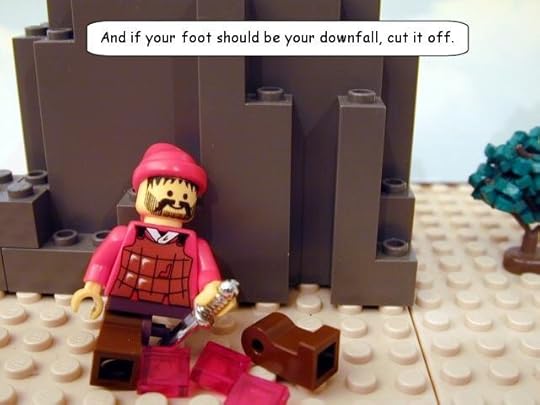
The stumbling blocks Jesus pointed to are all the things we do, all the barriers put in place by the Church, that prevent the "little ones," those pushed out by the establishment, from experiencing the fullness of life extended to all of creation by the redeeming work of Christ. If we insist that we are the only ones in town, the only means by which the world can approach Jesus, then we should, as Jesus put it tie heavy objects around our necks and go for a swim or begin cutting off appendages.
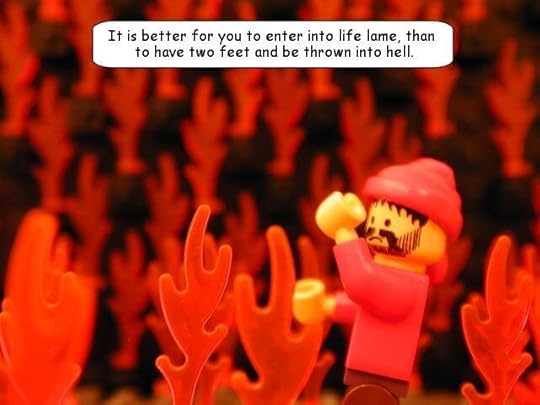
A theatrical demand from Jesus. It's impossible, really, because ultimately, we are just like the sign-stealing guy, just like the disciples snitching on an exorcist. Every time I receive a mailing or social media ad about a new church coming to the area, I roll my eyes. Along North Glebe Road, there are at least six churches in a two-mile stretch, and that is more churches than traffic lights. "Surely," I say to myself, "one of them can fit the needs of everyone in the community. Do we really need another church to draw people away from the amazing things I am doing at Mount Olivet? Why can't they just join us?"
Then I am drawn back to the truth of today's gospel reading: in Christ Jesus, all are welcome at his table of grace. The love of God in Jesus Christ is not mine or even ours to distribute. The Church received its saltiness by the grace of the One who was nailed to the cross and three days later left his burial clothes behind.
I often wonder if the random sign-stealing guy with a truck is still wandering up and down Telegraph Road attempting to squash out what he believes to be barriers to following his Jesus. The Good News for him, for me, for us is that in our submission to seek first, following the One who first sought us out, is that the redemption of creation, the salvific work of God in Jesus Christ is not dependent on us.
The work is done. Finished.
And should we stumble, or cause others to stumble, the amazing grace of God pulls all of us in. Again, and again.
September 22, 2021
Confusing. Disorienting. Abrupt. Amazing.

I recall a trip I took to the Pentagon City Mall back in the '90s as a kid. My grandmother and I were meeting my uncle for lunch. We rode an escalator down to the main level, the three of us together, to return to our car after eating when without warning the escalator halted. My uncle and I along with all the other passengers were jolted forward, and my grandmother was thrown from her feet and into the arms of a soldier returning to the Pentagon after meeting his own family for lunch. He was as surprised as my grandmother. You could say that was the first disciples' experience with Jesus. Up to this point in the Gospels, the disciples' experience following Jesus sounds as though they were riding on an escalator that changed speeds, directions, and at times shut off altogether, without much warning.
One minute the disciples were watching feedings and healings, and the next, Jesus is talking about suffering, rejection, and death. One minute they were walking alongside Jesus, hearing about the glories of the Kingdom of Heaven, and the next they were being chastised because they did not listen closely enough. Their experiences in the world were etched into their brains, and often contradicted what Jesus told them.
Giving up the ways of the world was easier said than done.
Giving up the ways of the world is easier said than done.
Every time Jesus’ teachings and actions contradicted what the disciples thought they knew they experienced the jolting of an escalator slamming to a stop and then changing directions.
Confusing. Disorienting. Abrupt.
Our scripture reading is the second time the Gospel of Mark records Jesus delivering the confusing, disorienting, and abrupt news that the culmination of his ministry would be on a cross, preceded by suffering, humiliation, and rejection. Just a chapter earlier Jesus said that he, “must undergo great suffering, and be rejected by the elders, the chief priests, and the scribes, and be killed, and after three days rise again.”[1] Jesus echoed his own words saying he would, “be betrayed into human hands, and they will kill him, and three days after being killed, he will rise again."[2]

The disciples were afraid to ask for clarification in both instances. Peter was called Satan and this time the disciples kept quiet. Living under the rule of Pax Romana, Roman Peace, the disciples knew exactly what Jesus meant when he said he would suffer, and experience humiliation and rejection, and then threw in a reference to the cross. Roads throughout the empire were lined with crosses with dissenters and troublemakers nailed to them, slowly dying, made an example of in their final moments. Their clothing and humanity were stripped away. This is the fate Jesus pointed toward.
As jolting – confusing, disorienting, and abrupt – Jesus’ declaration was, he did not leave the disciples to reorient themselves. In their declaration to seek first, after Jesus had sought them out, Jesus invited them to a new way of living. The disciples were told that if they wanted to be first, the greatest, they must become a servant of all, they must welcome the children. Those two things make sense, not perfect sense, but hey, there’s more clarity provided by Jesus in this statement than most of his parables. Yet, to be the servant of all and welcoming of children, in the first century, was confusing, disorienting, and abrupt. In order to undomesticate the gospel, we must know that the servant of all in the first century was the one who ate, received the daily bread required for survival AFTER everyone in the home including the other servants had received their fill. The servant of all is the recipient of the leftovers and scraps wanted by no one else. These servants, along with children, were people of no, zero, social standing. Sorry kids, it did not matter how cute or well-mannered you were. Your social standing added up to a big goose egg.
Jesus told his disciples that was the cost of being the greatest and the cost is confusing, disorienting, and abrupt when compared to the ways of the world – then and today.
The disciples could not catch a break. We read the gospels and at times it appears the disciples just did not get it. They would say the wrong things at the wrong time. After seeing Jesus take a child into his arms, they would try to prevent other children from coming to him. They were anxious and afraid while at sea when they should have been asleep, maybe leaving one awake to steer the boat. The disciples continually misunderstood Jesus’s actions and teachings, resulting in them placing their apostolic feet in their mouths.

We might roll our eyes or scoff at their inability to seek first and ask questions later, and yet the disciples are the apostolic mirror through which we locate ourselves in the story. Their missteps are our missteps. Their feet in the mouth moments of embarrassment are our moments. Their confused, disoriented, and abrupt mistakes and misreading of Jesus based on their experiences of the world mirror the confusion, disorientation, and abruptness we feel when Jesus calls us away from the ways of this world and invites us, after seeking us first, to seek him, to follow, just as the first disciples did, just as disciples have for centuries.
And this is where we find Christ’s Good News.
If the disciples are a mirror to us, if their mistakes and missteps mirror our own, we can take heart, we do not have to live in fear, because through the life, death, and resurrection of Christ we, just like the first 12, have been claimed and redeemed. Like them, called away from their families and occupations, we have been set to a new task.
We have been set to follow.
Follow Jesus where he leads us – individually and as a community. As individuals we cannot follow Jesus without the community he has called us to and as a community, we cannot follow Jesus without welcoming everyone he has sent to us.
Jesus blew the first disciples’ understanding and expectations of the Messiah out of the water. They expected someone who would overthrow the empires of the world. And like the first 12 Jesus has blown our expectations of the Messiah out of the water. In doing so an invitation to seek him out has been extended to all of us, regardless of our ability to always make sense of him or where we are sent. In the church, we call this Grace, and Grace is as confusing, disorienting, and abrupt as an escalator jolting to a halt but, that very same Grace is also AMAZING.
[1] Mark 8:31
[2] Mark 9:31
Click & Subscribe
September 12, 2021
Denying to Love
 Audio Block Double-click here to upload or link to a .mp3. Learn more Subscribe
I threw my sermon manuscript out the window this morning. Below is the transcript of my sermon. Our modern worship service gathered for the first time in 18 and what I had prepared, I guess I’ll save for a rainy day.
It's so good to see you all. It's been a while, six months shy of two years. Since we last gathered in the space, the last time we were all in this room together, which I until this past week, turned into my personal recording studio was March 5 2020.
Let that sink in for a moment, I'm gonna do an abbreviated sermon, I've got a whole thing here, the church will post it on the website, or somewhere if you really want to read it. But the heaviness of this past year, 18 months, almost two years, and the heaviness of what is ahead of us as we try to navigate coming out of a pandemic, I think has gotten lost. As we begin to gather again, as we begin to, whether it's going to restaurants and bars, or college football games or church on Sunday morning, all of those can be a communal religious experience. They all have their own liturgy that go along with them.
But I don't want us to miss that we're not quite there yet. We've made a lot of progress. And we still have some work to go.
Which is exactly what Jesus was talking about. Jesus asked, Peter asked the disciples, who do you say that I am after the crowds and said that Jesus was a reincarnation of John the Baptist or the prophet Elijah or any of the other prophets of the Hebrew Bible?
And Peter responded by saying you are the Messiah, not an incorrect answer for Peter to say, as Peter is he's usually right. He's just doesn't have the entire answer. The Messiah that Peter expected, wasn't a kicking Messiah, someone that was going to come into town and throw off the chains in the pains of occupation that Israel had experienced for most of its existence, whether it was while they were in Egypt, under while they were enslaved, or during the exiles are now under Roman occupation. That is what the Messiah Peter is talking about is supposed to do. But then Jesus says, hang on, this messianic secret is not ready for the masses. Hold on, Peter, I haven't even told you what I'm all about. All you've seen me do is walk on water healed the blind, heal those who had been assaulted by demons. And then so Jesus goes into this whole thing about what it means to follow Him, you have to take up your cross, you have to deny oneself, in order to follow Him, will deny oneself.
We've been doing that for the past 18 months, some of us better than others. And I'm reminded on the 20 year anniversary of 9/11, about how well so many of us so many of you denied yourselves for the sake of someone else in the aftermath of that tragedy, but attack and the way we've denied ourselves coming, going into a pandemic. You stayed home. You were very, very patient with me and pastor Jeff, and the church as we navigated how do we do church? online, it was this thing we always talked about that maybe we should figure out how to do online church, but we'll get to that one day. It was forced upon us and we had to figure it out in less than 48 hours and we're still figuring it out.
We stayed home all of us. We ate stuff that was in the back of the pantry. members of the congregation helped us La Cocina helped us by allowing us to send them
Hey, I've got this random assortment of orzo, tomato paste, soy sauce, and canned mushroom soup. What can I have for dinner? Oh, just do this, this, this, and this, we've helped one another.
To deny one's self as Jesus instructs us is to put ourselves second, plain and simple, it's to put ourselves second for the sake of the gospel for the sake of the two commands that Jesus will give His disciples. Those are to love God, first and foremost, and to love our neighbors.
But what happens when we don't do that quite well.
Because it will happen, we did a great job at the beginning of the pandemic, I remember going to Costco at the very beginning, like when it was like, Alright, something's about to hit the fan, like, maybe I should stop stock up on what we call mommy and daddy juice, like, we're gonna be locked in the house with two kids for a while, we need to have provisions.
So I went to Costco, over in Crystal City, Pentagon City, which is, you know, if you want to know where hell on earth is, it's Costco and Pentagon City any time of the day, really. But you add in the mix of a pandemic, and I said to Allison, I was as I was leaving the house, you know, where all the paperwork is if I don't make it back.
But as I got there, it was the most pleasant experience I've ever had in a mass distribution center. People were acting as neighbors in Northern Virginia, inside the beltway. That doesn't happen. We don't do that. We don't allow people to take parking spaces from us, we cut them off, we give them the bird, and then we don't look back. That's how we operate. And yet at the beginning of this pandemic, we said, You know what, we're going to do things a little different.
And so for the church, that difference is what we have been called to do our entire existence. Peter, the guy who always got it wrong, the point to shoot aim disciple is the rock upon which the church has been built. Christ has built his church upon the one who never got it right, who is constantly being rebuked. And so for us, to follow him, for us to take up our cross. And to follow him is to know that Christ is still going to be at work. Christ is still at work during this pandemic, Christ is still at work as we try to figure out how to get out of this thing when our neighbors don't want to act as our neighbors when loving one another has been set aside for the sake of my own comfort, all of that stuff that we did 18 months ago, 16 months ago, 14 months ago. That's the stuff the church has been called to do since the very beginning.
And we haven't always got it right.
But what Jesus told his disciples was not to get it right 100% of the time. It was just follow. Follow my example. Because guess what, when you do get it wrong, Peter, when I am on my way to the cross, and you deny me three times, Peter, I'm still going to do amazing things through you. So the good news for us is that while we may not always get it, right, Christ is going to work through us, whether we like it or not. Christ is going to get it right. When we choose to look the other way. And praise be to God, but it's not up to us.
Subscribe
September 5, 2021
Peace Out!


Peace upon Israel.
Peace upon all the nations.
Peace upon you and me.
Peace upon those in harm’s way.
Peace upon peace upon peace.
Peace is a word that gets thrown around by all-types of people.
Politicians will talk of peace among nations and communities. Activists will speak of peace through equitable justice. College fraternity brothers and dads who are trying desperately to hang on to their youth as 40 comes closer and closer will end a conversation with “peace out.” In hospital rooms and living rooms chaplains and clergy of all stripes pray for peace, for the presence of peace in the face of a difficult situation or diagnosis. In the church, at the end of most worship service, the peace of the Holy Spirit is prayed upon the gathered congregation. I am sure I have missed a few examples that you maybe thinking of but the point is that we as humans have been seeking peace – among one another and within ourselves – for centuries and yet there has rarely been a time when peace was present across all of creation, experienced by all of creation.
For the past two months our scripture readings have been following Israel as they went from being a people on the move to settling down and establishing their roots in Jerusalem. We followed along as our scripture readings told to the story of a young giant-slaying king who rose to power. Peace was rarely present throughout David’s rule. His grand procession into Jerusalem, delivering the ark of the covenant to it’s new home, was marred by the dramatic, unpeaceful death of Uzzah after Uzzah touched the ark. Peace was out of the reach of David as the result of his abuse of Bathsheba and betrayal of Uriah. When God told Nathan the sword would not depart from the House of David the Lord was stating that peace would remain beyond the reach of the king. David’s daughter was raped, a son killed, and when another son usurped David’s throne the unfaithful son was killed as David retook his kingdom.
But life without peace was nothing new to Israel. Israel had been a nation used by other nations to secure the peace of the exploiting nation. Peace at the expense of Israel. Peace at the expense of the other. Peace at the expense of a person or group of people made to be the “other” so that their humanity could be stripped away so that the person or group of people becomes expendable. This had been Israel’s reality while in bondage in Egypt – enslaved to be the muscle behind the Pharoah’s building projects – and while exiled from their homes, all the way up to when Jesus arrived on the scene and peace for Israel meant Pax Romana, Roman Peace, typically achieved with the pointy end of a sword.
Peace was as illusive for Israel as it seems to be for us today.
Psalm 125 is part of a collection of psalms titled “Songs of Ascent.” These songs and prayers were recited reminding the community or the individual praying to trust in the righteousness of the Lord so that they would be shielded from opponents, the “wicked” who are unrighteous and had “set their hands to wrongdoing.” This prayer is broad, petitioning shielding from the “wicked” inside and outside of the community. Protection from anyone or any group opposed to the righteousness of God. Anyone opposed to the standards and expectations established by God.
To trust in the Lord is to have complete confidence in the protection and sustenance extended to all of creation by the Lord, and that protection aligns with the reality that God stands in solidarity with God’s people.
And who are God’s people?
I’m glad you asked.
We believe that all of creation – every human – is the Lord’s. There’s no caveat, no asterisk to this. All people, full stop, no exceptions are God’s people. That would be you and me, our families, and our neighbors. But also the person at the office who drives you nuts and the person you believe to be unlovable, unforgiveable, and irredeemable. Dad’s who continue say “peace out” and everyone in between. If I left someone out, they are God’s as well. No exceptions.
This psalm is a reminder, rather a proclamation, that God will and does protect the righteous by extending peace to the righteous.
But Pastor Teer, you just said the people we believe the be irredeemable, unrighteous, are God’s people, how can it be both ways?
I’m glad you asked.
I can have it both ways because Jesus Christ is the Prince of Peace, extending peace that surpasses all understanding to the righteous – the people who follow God’s law, loving God and neighbor perfectly – but also to those of us who depend upon grace being extended to us. Through his life, death, and resurrection not only did Jesus display what peace looked like among the nations and neighbors but by taking our unrighteousness upon himself on the cross we have been made righteous. The righteousness of God in Jesus Christ became our righteousness not because of anything we have done or ever could do, not because of our ability to secure peace for ourselves or others, rather because of Christ’s insistence that Pax Romana, peace by the sword, would not continue to hold a grip over creation.
In the Kingdom of God peace is not the result of the sword or a world at war with itself, or human accomplishment. The peace of Christ, extended far and wide, extended indiscriminately, is the result of Christ’s faithfulness.
Because the peace of God is already ours to grab hold of, the church along with all of creation is free to acknowledge our own unfaithfulness, our own unrighteousness, and strive toward peace for all people. Peace for all of creation.
Peace upon those who voted differently from you.
Peace upon those who view God differently.
Peace upon the flood victim.
Peace upon the refugee.
Peace upon the nations at war with one another and with themselves.
Peace upon the abused and peace upon the forgotten.
Peace upon the other.
One of my favorite hymns to become snarky over at clergy meetings is Let Their Be Peace On Earth. I become snarky because we rarely listen to the words we sing. The hymn opens and closes with “Let there be peace on earth, and let it begin with me.” The peace we seek does not begin with you or with me. The peace we seek begins with Jesus Christ making the unrighteous righteous and extending peace that surpasses all understanding to all of creation. We are extensions of Christ’s peace to be sure but as with all things, we are not the source. Everything in all of creation has come into being through Christ – you and me, the bird, and the cicadas – but also peace. Peace, the psalmist states, is of God.
In Jesus Christ, God has turned toward all of creation, choosing all of Creation as God’s beloved and flipping our notions of righteousness and faithfulness, flipping notions of peace, bringing the outsider in, no longer the other and welcomed at Christ’s table of grace. Extending peace, Pax Christe, the peace of Jesus Christ, and stamping out peace by any other means.
Subscribe
September 3, 2021
The Adventure of a Lunchtime
 Register Now
When Christianity Today selected Jack Levison’s A Boundless God: The Spirit According to the Old Testament, as one of two books focusing on the Bible to read in 2021, they asked, “Who knew that a word study could read like an adventure story?” If you yearn to have your own Bible study feel like an adventure, join Jack, W. J. A. Power Professor of Old Testament Interpretation and Biblical Hebrew at Southern Methodist University, for an exciting hour of discovery.
Register today to learn how to do your own exhilarating word searches based on the original Hebrew and Greek of The Bible. Attendance at this lunchtime webinar is FREE, but Zoom registration is required.
In preparation, grab a copy of A Boundless God from your favorite bookseller and read the introduction and first chapter.
Past episodes of Crackers & Grape Juice with Jack and Priscilla Levison
Before you listen, do us a solid and help out the podcast.Head over to http://www.crackersandgrapejuice.com.
Click on “Support the Show.”
Become a patron
Subscribe to CGJ+
For peanuts, you can help us out….we appreciate it more than you can imagine.
Follow us on the three-majors of social media:
https://www.facebook.com/crackersnjuice
https://twitter.com/crackersnjuice
https://www.instagram.com/crackersand...
Register NowAugust 29, 2021
Back to School
If your parents are like me then they might be getting a little bit excited about what is going to happen in Arlington tomorrow morning. If you don’t live in Arlington then maybe they’ve been a little too excited over the past week.
And if you are like my kids then you might be getting a little bit excited about what is going to happen in Arlington tomorrow morning. If you don’t live in Arlington then maybe you’ve been a little too excited over the past week.
Students, teachers, and school staff are heading back to buildings, some for the first time in over 18 months. That makes this back-to-school season different than others.
What are some of the emotions you’ve been feeling as you’ve been preparing to head back to school?
Anxious? Nervous?
Excited?
For the two weeks, our scripture readings have been from the Psalms. The Psalms are a collection of prayers and songs that people have been using for centuries. And in the Psalms, we are reminded that not only did God create you and me, and everything around us, but that God is also always with us.
In the church we believe that God sent his Son, Jesus, have you heard of him, to be with us and to help us live with one another. Jesus showed us how to love one another by showing us how God loves us.
And God loves us so much, God loves you so much, that when you head back to school God is going to be with you. There is nothing special you have to do to make this happen.
God is with you in math or science class.
God is with you during gym class and recess.
God is with you on the bus or in the car.
God is with you, sharing your nervousness and excitement. And if any of those feelings feel like they’re too much God is there to help you. God works through your friends, your teachers, the cafeteria workers, your bus driver, and though everyone who helps make school a safe place for you to learn and grow.
Let’s pray together, asking God to be with us, ensuring that while this school year may be a bit different, it is still a great year.
God, our friend who is always with us, be with us through it all. Be with us as we ride the bus. Be with us as we walk. Be with us as we buckle seat belts, zip-up jackets, and tie shoes. However we get there, and whatever we wear, bless this journey into something new. For the grown-ups going back to school, With-Us God, be with them too. Thank you for our teachers, helpers, caregivers, and leaders, and for all they do to help us learn and grow. God, our friend who’s full of wonder, fill their hearts and bless their hands. Amen.Have a great school year!
Prayer was adapted from Illustrated Ministry .