Teer Hardy's Blog, page 20
December 10, 2019
Are You Afraid of the Dark?

Photo by Stefano Pollio on Unsplash
I truly believe I grew up in the golden age of kids’ television programming. As a young child, Mister Rogers made weekly visits to our home. As adolescence peeked its head into our home I transitioned to Nickelodeon. Hey Dude, Salute Your Shorts, and Guts helped me pass the time during rainy weekends and snow days. By far, my favorite program on Nickelodeon was Are You Afraid of the Dark.
Are You Afraid of the Dark provided pre-adolescent viewers with just enough scary to freak us out but not prevent us from falling asleep at night. Of course, there were a few episodes that kept me up at night but at the time I would not have told my parents.
Advent has turned our attention toward the darkness we find around us. The shiny lights of Christmas can distract us from the shadows within our own communities and homes. Do not misread this, I love the shiny lights of Christmas as much as the next person. In fact, just ask my wife, I think our yard and home require more lights and inflatables than our electric panel can handle.
Last week I led a small group at our church in examining the darkness Advent begins with. We came to the conclusion (with the help of Rev. Fleming Rutledge) that we, even as grown-ups, are afraid of the dark. The unknown we find ourselves confronting scares us as much as the hit Nickelodeon show. While we know those shadows exist, following us daily, if we don’t shine a light into them what hides in the darkness won’t (we think) be revealed to us.
“Advent begins in the dark and moves toward the light—but the season should not move too quickly or too glibly, lest we fail to acknowledge the depth of the darkness. As our Lord Jesus tells us, unless we see the light of God clearly, what we call light is actually darkness: ‘how great is that darkness!’ (Matt. 6:23). Advent bids us take a fearless inventory of the darkness: the darkness without and the darkness within.”
― Fleming Rutledge, Advent: The Once and Future Coming of Jesus Christ
When I was in high school and college, well beyond the years of watching Are You Afraid of the Dark, I found myself immersed in the darkness each night. For six summers I lived in an 8’x8’ tent without electricity. The shower house/bathrooms were a 1/4 mile walk. This walk was no problem in the morning but at night, should you happen to knock your flashlight off its perch in the tent the 1/4 mile walk was more treacherous. Roots, branches, and holes littered the path from our campsite to the shower house/bathrooms.
By the end of the summer, I could navigate my way from the tent to the shower house/bathrooms without a flashlight with ease. I could navigate the entire camp at night, without a flashlight because I allowed myself to become more comfortable in the darkness surrounding me rather than trying to shine my measly AAA battery Maglite into the vast darkness of the Goshen mountains.
Shadows created by the moonlight bouncing off the white pine trees were creepy for sure but by the end of each summer, I embraced the shadows knowing not only was there nothing to be afraid but also that the shadows revealed parts of the forest I would miss during the day.
So much of what we do during our preparations for Christmas miss that Christ entered the shadows of creation as a baby. The shiny object at the manger was the star in the sky. Jesus entered the world to a poor family and shortly after his birth fled to Egypt as a refugee. During his ministry, he regularly spent time with those forced into the shadows of the community by local religious and political leaders. Christ confronted the darkness of pain and humiliation on the cross and then descended into the darkness of death.
Jesus did not shy away from the darkness. He entered into the dark. He allowed his light to reveal the hurt, pain, and suffering. Once what was hidden by the darkness was revealed, Jesus acted. Jesus stepped into that which we pretend did not and does not exist.
While it is easy to celebrate the Light entering the world at Christmas the light of Christ reveals the parts of creation we wish we had not participated in and as a result, reveals to us the dark side of ourselves we try to hide from the world. The Light of Christ entering the world makes many realities we wish were not present more visible, making that which we may be afraid of more visible.
When confronted by darkness God did not shy away and God continues to enter into the places in our community we wish did not exist. When we find ourselves in the darkness we know Christ is there with us. We do not have to be afraid. In the shiny lights and in the dark, we are not alone.


December 6, 2019
The Bond Between Trump and White Evangelicals
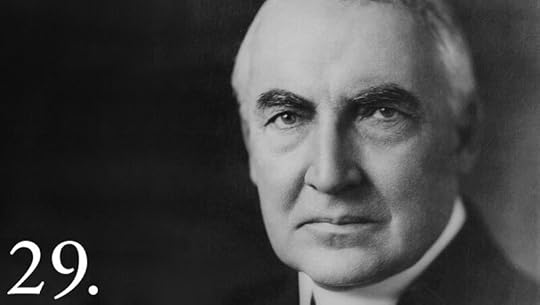
Listen to "Episode 237: Dr. Matthew Sutton— Explaining the Bond Between Trump and White Evangelicals" on Spreaker.
As it turns out, the Donald isn’t the OG when it comes to corruption in the oval office.
Harding and Trump have much in common. They are among the most allegedly corrupt presidents in U.S. history. Their Cabinet teams have been racked by scandal. Like Harding, Trump’s personal morals are the antithesis of what religious Christians profess to demand.
But, like Harding, Trump maintains the support of the faithful because of his policies and the attention he lavishes on Christian voters and their faith leaders. Both presidents sought religion-based immigration bans. They criticize international organizations, avoid broad alliances and insist on America first, last and only.
And they use the Bible to justify their policy proposals. Trump, like Harding, praises the devout, advocates policies consistent with evangelical readings of the Bible and seeks to use his office to advance evangelicals’ theological agenda.
Donald Trump isn’t the first President with whom Christians went all in, using their mutual fear of the other to justify and excuse all manner of corrupt behavior. Before there was The Donald, there was Warren G.
Dr. Sutton recently wrote an article in the Washington Post that got our attention for this episode.
You can find it here:
https://www.washingtonpost.com/outloo...
Matthew is the Edward R. Meyer distinguished professor of history at Washington State University. The author of award-winning books, including American Apocalypse, and the recent book, Double Crossed: The Missionaries Who Spied for the United States During the Second World War, he lives in Pullman, Washington.
Listen to "Episode 237: Dr. Matthew Sutton— Explaining the Bond Between Trump and White Evangelicals" on Spreaker.Before you listen, do us a solid and help out the podcast.
Click over to http://www.crackersandgrapejuice.com. Click on “Support the Show.” Become a patron.
For peanuts you can help us out....we appreciate it more than you can imagine.
December 1, 2019
Hope | Keeping Watching in the Dark
Listen to "Hope | Keeping Watch in the Dark" on Spreaker.
Referring to his own return, Jesus remarked to the disciples, “nobody knows when that day or hour will come, not the heavenly angels and not the Son. Only the Father knows.” We are beginning the season of Advent not with a prophecy from Isaiah or the story of an angel visiting Mary but instead towards the end of the story with Jesus explaining to the disciples when he will return.
Advent is a season of preparation within the Church. Beginning in the 7th century, the season of Advent was “observed as a penitential season, not unlike Lent, in preparation for Christmas.”[1] Advent is a season of preparation and anticipation. The next four weeks will be full of hope, joy, love, and peace as we anticipate the birth of the Christ child and at the same time, we begin the season recalling Jesus’ promise to come again. The promised return of Christ is something Christians have proclaimed since the beginning of Christ’s church. In the middle of the Apostles’ Creed we remember the life, death, and resurrection of Christ but also Christ’s return when we say:
I believe in Jesus Christ, his only Son, our Lord,
who was conceived by the Holy Spirit,
born of the Virgin Mary,
suffered under Pontius Pilate,
was crucified, died, and was buried;
he descended to the dead.
On the third day he rose again;
he ascended into heaven,
is seated at the right hand of the Father,
and will come again to judge the living and the dead.
“And (he) will come again to judge the living and the dead.”
This morning there is no Isaiah 9:
“The people walking in darkness have seen a great light…
A child is born to us, a son is given to us,
and authority will be on his shoulders.
He will be named
Wonderful Counselor, Mighty God,
Eternal Father, Prince of Peace.
There will be vast authority and endless peace
for David’s throne and for his kingdom,
establishing and sustaining it
with justice and righteousness
now and forever.”
While you may have decked your halls this weekend in preparation for the Christ child in the manger, we are beginning the season of Advent in what seems to be an odd place. All week I have had an 11’ tall inflatable Olaf and a new shiny tinsel tree on the mind but our reading pushes us towards an apocalyptic day and away from oversized inflatable yard decorations and tacky trees.
Jesus told his disciples to “stay alert,” keep awake because when the day comes no one will see it coming - the “it” being Jesus’ return. Just as the flood back in Genesis, back when they were eating, drinking, and marrying one another - a better reading here would be “going through their daily routine” - Jesus’ return will be sudden and without warning, in the midst of our daily grind. All there is to do is to be on watch as we wait. Regardless of what you have read on the internet, or heard shouted from the street corner, there are no tea leaves to read when it comes to the second coming of Christ. There is no way for us to know when that day will be or what we will be doing when it happens.
What I am about to say may come as a shock to many or even offend some but as we move toward December 24th and 25th, it is easy to overlook the season of preparation we find ourselves beginning and skipping ahead to the bright lights and tinsel of Christmas. Advent is not Christmas.
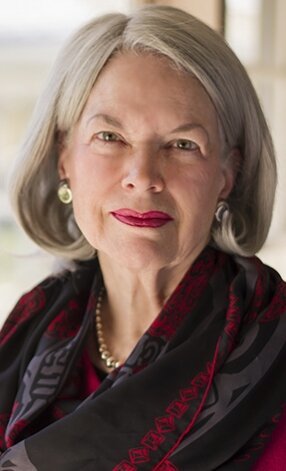
Rev. Fleming Rutledge often described as the Beyonce of the Episcopal Church, put it like this, “Advent teaches us to delay Christmas in order to experience it truly when it finally comes. Advent is designed to show that the meaning of Christmas is diminished to the vanishing point if we are not willing to take a fearless inventory of the darkness.”[2]
On Christmas, we will recall how Jesus entered into the darkness of this world, the darkness created by sin, as the great Light. Yet, we allow the bright lights of Christmas to overtake the darkness of Advent begins with. Standing in the Light of the Christ child in the manger is more comfortable than waiting in the shadow of what is to come because in waiting we relinquish control of the agenda. In our waiting during Advent we are acknowledging the limitedness with which we can predict and control G-d’s acts of grace.
I understand if this is not what you expected to hear in church on December 1 because as Rev. Rutledge says “The uniqueness of Advent is that it really focuses on us, more than any other season” to look into the shadows of ourselves. “Advent begins in the dark… we would rather build fancy castles around ourselves, decked out with angles and candles.”[3]
This is where our reading this morning becomes less puzzling and I stop scratching my head and begrudgingly admit that our reading from the end of Matthew’s gospel makes sense. Last Sunday we closed out the church year by proclaiming Jesus’ lordship over everything - Jesus is Lord and everything else is bullshit. Today we begin a new church year with the same proclamation - Jesus is king - as we look forward to Christ’s promised return. This is what changes the focus of Advent from shinny lights and guaranteed two-day delivery to the unexpected in-breaking of G-d’s grace into our darkness.
Listen to "Hope | Keeping Watch in the Dark" on Spreaker.We begin a new year within the church waiting, not for an infant but rather we are waiting for Christ’s return. Rev. Chenda Lee said it like this in a recent Facebook post, “In the Season of Advent, we await the celebration of the incarnation and anticipate the fulfillment of a promise, to come again and restore the broken creation from the bondage of sin and death.
The beginning of the end begins with Jesus and really is not the end.
Like Noah, we find ourselves waiting for G-d to act but rather than waiting for floodwaters to rise we are waiting for the reign of grace and mercy to be fully realized. Jesus is instructing us, his disciples, to as Stanley Hauerwas put it, “be ready and prepared… even if it's not raining.”[4] Jesus has called us to patient endurance while it may appear the world may be coming apart at the seams. And, patience, it is not an easy task. We are living between times and it can seem like G-d has forgotten about the promise to send Jesus again. But our (patient) waiting is “made possible by the hope made real”[5] in Christ.
Stay awake and keep watch.As we wait to remember Jesus’ entry into the world in the lowly manger and for his coming in final victory it can feel as though preparations must be done. We can feel like Noah and begin feverishly working on an ark, building something to sustain us in the time between. We do not know when Jesus is coming but we think to ourselves we better get to work doing something. Do something, do anything either to prepare the way of the Lord or to distract us from the darkness we find surrounding us. This is where we become bogged down with the busyness of Christmas instead of allowing the season of Advent to be a season of preparation and waiting.
The Good News is while we wait, our ark has already been created. Through Christ’s death and resurrection, the Church was born. This community and the Body we are a part of were created to be a refuge from the inflatable Disney characters and shinny lights, and to be a place where the weary can find rest. We can be a community keeping watch and waiting for Jesus because all that was required has been done, leaving us to be on watch and at the ready because Jesus is coming.
[1] Rutledge, Fleming. “Advent: The Once and Future Coming of Jesus Christ.” Advent: the Once and Future Coming of Jesus Christ, William B. Eerdmans Publishing Company, 2018, pp. 3.
[2] Ibid., 252.
[3] Ibid., 252.
[4] Hauerwas, Stanley. Matthew, Brazos Press, 2018, pp. 206.
[5] Ibid., 207.

Hope | | Keeping Watching in the Dark
Listen to "Hope | Keeping Watch in the Dark" on Spreaker.
Referring to his own return, Jesus remarked to the disciples, “nobody knows when that day or hour will come, not the heavenly angels and not the Son. Only the Father knows.” We are beginning the season of Advent not with a prophecy from Isaiah or the story of an angel visiting Mary but instead towards the end of the story with Jesus explaining to the disciples when he will return.
Advent is a season of preparation within the Church. Beginning in the 7th century, the season of Advent was “observed as a penitential season, not unlike Lent, in preparation for Christmas.”[1] Advent is a season of preparation and anticipation. The next four weeks will be full of hope, joy, love, and peace as we anticipate the birth of the Christ child and at the same time, we begin the season recalling Jesus’ promise to come again. The promised return of Christ is something Christians have proclaimed since the beginning of Christ’s church. In the middle of the Apostles’ Creed we remember the life, death, and resurrection of Christ but also Christ’s return when we say:
I believe in Jesus Christ, his only Son, our Lord,
who was conceived by the Holy Spirit,
born of the Virgin Mary,
suffered under Pontius Pilate,
was crucified, died, and was buried;
he descended to the dead.
On the third day he rose again;
he ascended into heaven,
is seated at the right hand of the Father,
and will come again to judge the living and the dead.
“And (he) will come again to judge the living and the dead.”
This morning there is no Isaiah 9:
“The people walking in darkness have seen a great light…
A child is born to us, a son is given to us,
and authority will be on his shoulders.
He will be named
Wonderful Counselor, Mighty God,
Eternal Father, Prince of Peace.
There will be vast authority and endless peace
for David’s throne and for his kingdom,
establishing and sustaining it
with justice and righteousness
now and forever.”
While you may have decked your halls this weekend in preparation for the Christ child in the manger, we are beginning the season of Advent in what seems to be an odd place. All week I have had an 11’ tall inflatable Olaf and a new shiny tinsel tree on the mind but our reading pushes us towards an apocalyptic day and away from oversized inflatable yard decorations and tacky trees.
Jesus told his disciples to “stay alert,” keep awake because when the day comes no one will see it coming - the “it” being Jesus’ return. Just as the flood back in Genesis, back when they were eating, drinking, and marrying one another - a better reading here would be “going through their daily routine” - Jesus’ return will be sudden and without warning, in the midst of our daily grind. All there is to do is to be on watch as we wait. Regardless of what you have read on the internet, or heard shouted from the street corner, there are no tea leaves to read when it comes to the second coming of Christ. There is no way for us to know when that day will be or what we will be doing when it happens.
What I am about to say may come as a shock to many or even offend some but as we move toward December 24th and 25th, it is easy to overlook the season of preparation we find ourselves beginning and skipping ahead to the bright lights and tinsel of Christmas. Advent is not Christmas.
Rev. Fleming Rutledge often described as the Beyonce of the Episcopal Church, put it like this, “Advent teaches us to delay Christmas in order to experience it truly when it finally comes. Advent is designed to show that the meaning of Christmas is diminished to the vanishing point if we are not willing to take a fearless inventory of the darkness.”[2]
On Christmas, we will recall how Jesus entered into the darkness of this world, the darkness created by sin, as the great Light. Yet, we allow the bright lights of Christmas to overtake the darkness of Advent begins with. Standing in the Light of the Christ child in the manger is more comfortable than waiting in the shadow of what is to come because in waiting we relinquish control of the agenda. In our waiting during Advent we are acknowledging the limitedness with which we can predict and control G-d’s acts of grace.
I understand if this is not what you expected to hear in church on December 1 because as Rev. Rutledge says “The uniqueness of Advent is that it really focuses on us, more than any other season” to look into the shadows of ourselves. “Advent begins in the dark… we would rather build fancy castles around ourselves, decked out with angles and candles.”[3]
This is where our reading this morning becomes less puzzling and I stop scratching my head and begrudgingly admit that our reading from the end of Matthew’s gospel makes sense. Last Sunday we closed out the church year by proclaiming Jesus’ lordship over everything - Jesus is Lord and everything else is bullshit. Today we begin a new church year with the same proclamation - Jesus is king - as we look forward to Christ’s promised return. This is what changes the focus of Advent from shinny lights and guaranteed two-day delivery to the unexpected in-breaking of G-d’s grace into our darkness.
Listen to "Hope | Keeping Watch in the Dark" on Spreaker.We begin a new year within the church waiting, not for an infant but rather we are waiting for Christ’s return. Rev. Chenda Lee said it like this in a recent Facebook post, “In the Season of Advent, we await the celebration of the incarnation and anticipate the fulfillment of a promise, to come again and restore the broken creation from the bondage of sin and death.
The beginning of the end begins with Jesus and really is not the end.Like Noah, we find ourselves waiting for G-d to act but rather than waiting for floodwaters to rise we are waiting for the reign of grace and mercy to be fully realized. Jesus is instructing us, his disciples, to as Stanley Hauerwas put it, “be ready and prepared… even if it's not raining.”[4] Jesus has called us to patient endurance while it may appear the world may be coming apart at the seams. And, patience, it is not an easy task. We are living between times and it can seem like G-d has forgotten about the promise to send Jesus again. But our (patient) waiting is “made possible by the hope made real”[5] in Christ.
Stay awake and keep watch.As we wait to remember Jesus’ entry into the world in the lowly manger and for his coming in final victory it can feel as though preparations must be done. We can feel like Noah and begin feverishly working on an ark, building something to sustain us in the time between. We do not know when Jesus is coming but we think to ourselves we better get to work doing something. Do something, do anything either to prepare the way of the Lord or to distract us from the darkness we find surrounding us. This is where we become bogged down with the busyness of Christmas instead of allowing the season of Advent to be a season of preparation and waiting.
The Good News is while we wait, our ark has already been created. Through Christ’s death and resurrection, the Church was born. This community and the Body we are a part of were created to be a refuge from the inflatable Disney characters and shinny lights, and to be a place where the weary can find rest. We can be a community keeping watch and waiting for Jesus because all that was required has been done, leaving us to be on watch and at the ready because Jesus is coming.
[1] Rutledge, Fleming. “Advent: The Once and Future Coming of Jesus Christ.” Advent: the Once and Future Coming of Jesus Christ, William B. Eerdmans Publishing Company, 2018, pp. 3.
[2] Ibid., 252.
[3] Ibid., 252.
[4] Hauerwas, Stanley. Matthew, Brazos Press, 2018, pp. 206.
[5] Ibid., 207.
November 22, 2019
Parker Haynes: Is the Future of Methodism, Anglican?

Listen to "Episode 235– Parker Haynes: Is the Future of Methodism, Anglican?" on Spreaker.
Our guest this week is United Methodist pastor Parker “Under Par” Haynes who joins us to talk about his essay “Remember Our Story: Is the Future of Methodism, Anglican?” in which he argues that United Methodism has run aground not because of disputes over sexuality but because, in many core ways, the story of Methodism has come to an end. Our reason for being, that is, is no longer a reason to be a distinct set apart from the Church whence we came.
Here’s Parker’s piece here:
Does our future as United Methodists lie in returning to the global Anglican communion whence we came?As The United Methodist Church has been consumed by an idolatrous focus on sex over the past decade, the Church has failed to see that in a few years this conversation will be null and void. The future of The United Methodist Church is in doubt, not because it is considering moving from an orthodox position of sexuality to a heretical one (the traditional view), or because it has oppressed LGBTQIA Christians and its position on sexuality is antiquated, patriarchal and heteronormative (the liberal/progressive view). Instead, I offer that the future of our Church is in doubt because we have forgotten who we are. That seems like an overly simplistic and naive statement that cannot possibly get at the heart of the issue. But let me suggest that the central reason we are where we are is because we can no longer identify what it means for any of us to be a distinctly United Methodist Christian. What is at stake in the 2020 General Conference and beyond is not whether we will take a traditional or progressive position on sex, but whether or not we can reclaim our story as United Methodists.
The Church in the Modern Age: A Story ForgottenPerhaps the most significant reason we have forgotten our story is because of the rise of modernity. Former United Methodist and now Episcopalian theologian, Stanley Hauerwas, has said that the project of modernity is an attempt to produce a people who have no story except the story they chose when they had no story. In other words, modernity is an attempt to convince people that since we are rational, enlightened and autonomous individuals, there is no story, no narrative and no tradition that determines our lives except the one we choose for ourselves. Yet despite modernity’s attempt to be story-less, it too is a story. Modernity did not arise out of darkness ex-nihilo; it is a tradition that traces its roots to Christendom. But it is a story and a tradition that is false because human beings do not get to make up their own story; we have been “storied” through being formed as a community called the Church. We have been created, redeemed and sustained by the Holy Trinity. Our past, present, and future have already been decided for us.
Ronald Beiner has sought to articulate the way liberalism, which is produced by modernity, has been able to convince us that we are a story-less people whose only identity is the one we create for ourselves. In his book “What’s The Matter With Liberalism?” he argues that in liberalism, we cannot distinguish between what is good and what is bad because human beings are reduced to individual consumers in which the freedom to choose is itself “the good,” meaning the true way of living our lives to the fullest. Therefore, nothing should restrict my freedom to choose how I live my life, including my own sexual preferences.
At first glance, this seems to be a traditionalist victory in the opening skirmish. But the problem is that liberalism is the air we breathe; we are all liberals. We all make up our lives believing we can define for ourselves what it means to be Christian. Conservatives, traditionalists, progressives, and liberals all live in what Charles Taylor calls “The Age of Authenticity.” No one can tell me how to live my life or what to believe. In order to be authentic to who I am, I must figure those things out on my own. Even those of us who claim orthodoxy and submit to the Church’s teachings and the Book of Discipline first came to this understanding through a liberal trajectory. Traditionalists, like progressives, choose the ethics and biblical interpretations that fit their narrative rather than a wholesale subscription to historic orthodoxy. The reality is that we cannot go back to the pre-liberal, pre-modern era. To believe that we can defeat liberalism and reestablish the traditional values of the premodern church is exactly to believe the lie of modernity. We are not in control, we do not make up our lives and we cannot go back in time.
Virtue As A Way to Remember StoryThis is not to say that all is lost. The true liberation of our enslavement to liberalism is not tighter restrictions or more rules about who can do what as the Traditional Plan lays out. Liberation will only come through a return to the practice of virtue in the Church. As Christians, it is Jesus Christ through the Holy Spirit who unites us into a common life and has given us shared practices that compose our fundamental identity as a whole, which we call the Church. The penalties and restrictions of the Traditional Plan cannot form us into a common life because we no longer acknowledge or render authority to the Church as our common life. One of Methodism’s best theologians, Stephen Long, professor of ethics at Perkins School of Theology, has done much critiquing of liberalism but has also noted that the Traditional Plan turns the Church into a nation-state that attempts to enforce laws, which are then enforced by authorities. However, the Gospel of Jesus is not a coercive message that forces others to believe in God; it is a persuasive one that seeks to articulate God’s love for the world. We cannot participate in a common life together through coercion. Relearning virtue, on the other hand, can reconstitute us as a community with shared practices that united us as the Body of Christ.
Aristotle first articulated the idea of virtue thousands of years ago in Athens. For Aristotle, the virtues were the practices that held together the common life of all Athenians. Rather than trying to determine how you would act in a certain situation (the starting place for most modern ethics), Aristotle believed you should focus on developing character through habituated excellence (virtue) that would give you the skills necessary to act rightly in that situation. Furthermore, this character would help you to lead a truly good life, good not only for yourself as an individual, but good for the community as a whole. For Aristotle, the individual and the community did not have a different telos, as if what is good for me is not necessarily good for all, but rather what is good for me is good for all and vice versa. Thus, our chief end is to develop the kind of character through the practice of the virtues so that, rather than competing against one another through violence, we might engender a common life together.
In modernity, we do not live in a world that values virtue, much less one that cultivates it. Such a statement is proof since Aristotle had no conception of “value” as we use it today. That we use the word “value” to describe the things that are important to us demonstrates that modernity has created a world in which everything can be seen as an investment that has a price and can be bought and sold as a commodity in a liberal market economy. Thus we cannot even begin to return to virtue unless we, The United Methodist Church as a whole, can form the kind of habits that will produce people who can articulate that rather than being creators of our own story, we have been storied through the tradition of the Church of Jesus Christ. We did not make ourselves Christians, we were made by others. We did not make up the tradition, we received it from others. Our belief in God is not an individual choice that gives meaning and value to our life. Instead, since God raised Jesus from the dead, we cannot do anything but believe and live in the community of saints.
Formed Through LiturgyIn order for us to cultivate virtue that will allow us to engender a common life as the community of saints, we need to first develop habits that will lead to the development of virtue. I suggest that these habits must be most significantly developed through our worship. James K. A. Smith has written extensively on worship as the arena through which our desires are properly shaped and directed toward God. There is no more effective habit-producing mechanism than liturgy. Liturgy is not only found in the Church’s worship but everywhere from an NFL football game to a presidential address at a U.S. military base to a concert of a popular rock band. The liturgy found in the Church’s worship as the gathered Body of Christ centers around the eucharistic table to consume the Lord Jesus must be the liturgy that habituates us, shapes our desires, and lays the foundation for our story as United Methodists.
Unfortunately, in The United Methodist Church today, a majority of us have forgotten why the celebration of the Eucharist is central to our community. Liturgy is a bad word in some congregations and at the very least an outdated term that will hinder church growth. It is argued that today our worship needs to be relevant, entertaining, or a “fresh expression,” not boring, old or traditional. Most of our churches continue to celebrate the eucharist only once a month even though modern transportation has long allowed ordained clergy to lead worship every Sunday. When we shape our worship to be exciting, entertaining and only occasionally include the eucharist, we are creating habits that shape our story as people who worship the god of modernity who caters to individualistic desires and provides optimism in a world of suffering.
One possibility of cultivating the kinds of habits through worship that would develop virtue might be to emphasize the services of Word and Table with weekly communion. I would also suggest an emphasis on the Book of Worship or the Book of Common Prayer as a whole as a way to pattern our worship. Although it has been argued that one of the beauties of Methodism is our diversity in worship and style, I would argue that is an attempt to allow entertainment or excitement to form us. In actuality, there is much flexibility and room in the liturgy and a service of Word and Table can be adapted to appropriately reflect culture or the season of the year.
A counter-argument might be that more liturgical traditions like Catholicism or Anglicanism are suffering decline similar to The United Methodist Church, and we must not be foolish enough to think that we will instantly be sucked out of our denominational struggles. Modernity and liberalism have formed us so deeply that it will be a long and difficult journey home and we will lose many along the way. But if we can develop the habits and virtues the early Church once had, maybe when we get to the end of all this chaos, we will at least be formed enough to know how to move forward and where the God of Jesus Christ is calling us.
The Future of Methodism: Returning to the FoldAs Methodists, we rightly celebrate John Wesley as the leader of our movement. Despite the number of references to Wesley today among Methodists, we forget many of the most important aspects of his ministry. Wesley remained an Anglican priest until he died and never wanted to start a new church outside of the Church of England. His intent was to reform the Church and reinvigorate it with the Holy Spirit. The question must be asked: When will the reformation be over? Where we stand today, we have lost more than we have gained. For most of our Methodist Christians in America, our Anglican heritage is unknown. Our distinctive theological emphases, worship practices, ecclesiology, and social ethics are so muddled that most of our seminary students should not pass board examinations, but they do because of our growing need for clergy. How many of us can articulate what is it that makes Methodists distinct from Anglicans? In what ways are we more aligned with the Spirit, faithful to God’s call or ethnically pure? We have lost sight of Wesley’s vision and forgotten our story as Methodists.
Our future lies in returning to the fold of the Anglican Communion. This does not mean that we must abandon all Methodist distinctives or emphases; we can seek ways to rejoin the family that allow us always to remember our heritage. But we can no longer remain separated and divorced from the Church that birthed us. We have forgotten our story because in many ways it has come to an end. Many of our protests against the Church of England have been heard and acted upon. There is no reason to continue protesting when the reforms have been conceded. Wesley never desired for us to exist as an end unto ourselves. It may be argued that the Episcopal Church has suffered a church split and declining membership so why would a move toward liturgy and unity better our chances? If our greatest need is numbers and increased church membership, then unity will not help. But if our greatest need today is remembering our story, who we are and why we began, then unity is the only answer.
Before you listen, do us a solid and help out the podcast.
Click over to http://www.crackersandgrapejuice.com. Click on “Support the Show.” Become a patron.
For peanuts you can help us out....we appreciate it more than you can imagine.
November 17, 2019
Grateful | Storytelling

Listen to "Grateful | Storytelling" on Spreaker.
I spent the better part of this week (quality not quantity) in Nashville, TN. I did what one does when their spouse is a featured speaker at a conference in on of your favorite cities - I tagged along, carried a suitcase from the Uber to the Airbnb, made dinner reservations, and was prepared to be arm candy when called upon. I was able to see the statue dedicated to a (very) distant relative who was credited with helping to found the city of Nashville and eat food we only dream about in the DMV.
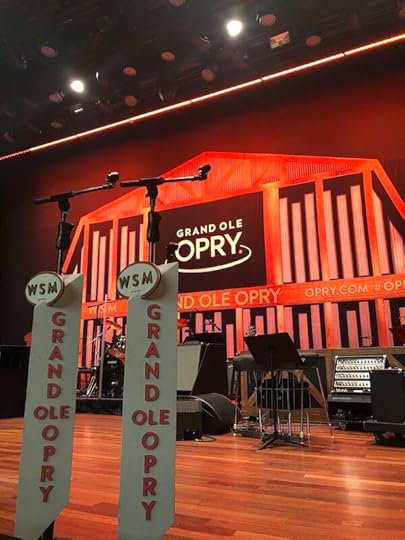
Nashville is truly known as the home of country music. It is impossible to move through Nashville without hearing the twang and bending of guitar strings, no matter what time of day. On Friday, while Allison was sitting in a business conference, I had a chance to tour the Country Music Hall of Fame. Country music is central to the story of Nashville’s economic revival after the Civil War.
I grew up listening to country music, especially the classic artists of the genre - Hank, Willie, and Johnny. Later, as my mom began to trust me with the car radio (and because our 1994 Dodge Spirit had a CD player) I began to hear Garth, Faith and Shania, and George. Living in the shadows of DC country music sounds more poppy than the country-y tunes I remember from my childhood. Regardless of how you feel about country music, or which category you prefer within the genre (team Taylor or team Kacey), you have to admit that the stories buried within the Southern draws and lyrics of country music draws the listener in.

Storytelling is central to country music’s longevity. All music, at the end of the day, is about telling a story. Songs celebrating triumph, lamenting over heartbreak, commemorating the singer’s favorite dog or broken down truck, as I moved from exhibit to exhibit or honky-tonk to honky-tonk the stories drew me in. An artist’s ability to connect with the listener through a story is what keeps us toe-tapping or causes us to move down Broadway to find a storyteller we better connect with. A good storyteller can make lyrics dance off the page, drawing us in because can’t help but want more.
The glory days of Israel were long behind them. The great kingdom of David had fallen and now Israel found itself, again, in exile. Aliens in a foreign land, Israel found itself immersed in someone else’s story. A people who worshiped a sovereign G-d now found itself in a society where multiple gods were worshipped. As aliens in a distant land, Israel’s story of covenant seemed as lost as their homeland. Israel’s story of blessing seemed more distant and covenant faded as the pains of exile became more real.
Away from home, separated from family and friends, the loss of what was known - the song practically writes itself.
This would be a song that even if you have not experienced deep loss in your life you would still be drawn into the life and lament of those who had lost it all.
It was in the midst of exile - loss of home, family, friends, and the familiar - that this Psalm was the call to worship as the community entered the synagogue:
“Come, let’s sing out loud to the Lord! Let’s raise a joyful shout to the rock of our salvation! Let’s come before him with thanks! Let’s shout songs of joy to him! Come, let’s worship and bow down! Let’s kneel before the Lord, our maker!”
The picture was bleak. Lament would not be unreasonable. Hope, it may seem, is lost but “The Lord is a great God, the great king over all other gods.”
You may have lost hope because of your current circumstance but remember, “The earth’s depths are in God’’s hands; the mountain heights belong to him; the sea, which he made, is his along with the dry ground, which his own hands formed.”
Listen to "Grateful | Storytelling" on Spreaker.Our Psalm this morning is a call to Israel to remember that the G-d who created the cosmos, the G-d of Abraham, Moses, and David is sovereign and while many may doubt, having lost in G-d’s promise, the covenant where they found their identity, the people of G-d are called to give praise because of G-d’s mighty acts. This Psalm is a reminder that while our circumstance may change, G-d created and sustains us and because of G-d’s mighty acts and sovereignty is still worthy to be praised.
Our circumstances may give us pause, distracting us from the larger story we are a part of, but the Psalmist is reminding us that our response to G-d’s mighty acts is a posture of worship - praise and thanksgiving - aka a posture of gratitude. Gratitude because today, regardless of the affairs in your life, the moment your feet hit the ground and you took a deep breath of a new day it was the divine breath of life that filled your lungs. While chaos may be swirling around us and the melodies we find ourselves singing sound anything but grateful, the sound of praise and gratitude, worship, is our default, because G-d is in the business of creating order out of the chaos of this world. We are grateful for what G-d has done because what G-d has done and what G-d continues to do is bigger than anything we can imagine or do on our own.
Diana Butler bass, who will be here next Sunday (sidebar - next week is one of those Sundays to invite someone, you’ll want to bring a friend), mentions in her book that this Psalm is part of what is known today as the “Daily Office.” The “Daily Office,” found in the Book of Common Prayer, is a practice within the Episcopal tradition where three times in the day are marked by a call to worship and prayer. The Daily Office for the morning opens with this call to worship, “Come, let’s sing out loud to the Lord! Let’s raise a joyful shout to the rock of our salvation! Let’s come before him with thanks! Let’s shout songs of joy to him!” DBB points out that when our day begins with not what we need or want but instead with gratitude for what G-d has done the story we tell changes. We move from telling a story of despair to a story of joy, even when hope seems to be gone.

Photo by Nong Vang on Unsplash
This practice - grateful worship - requires that we change the posture with which we approach G-d altogether. Rather than using the sound of bells or gongs to draw us into a posture of worship, we use words of thanksgiving. The sounds of worship can center us but it is the words we approach G-d with that change our posture. When we approach G-d with thanksgiving, knowing that what was needed has been done by Christ, and all left to do is to be a part of the Kingdom Christ inaugurated when he left the grave empty, we realize the story we’ve been trying to write has been written. It is through G-d’s grace that we gave been incorporated into G-d’s great story regardless of the lyrics (or instruments) we have been trying to perfect so that we might be worthy of the grace we have already received. Worship begins not with the list of what we want or need but instead gratitude. We are called to lives of worship, meaning that we are called to lives to gratitude for the mighty acts of God, the work Christ has accomplished on our behalf.

November 13, 2019
Advent Devotional - A Review
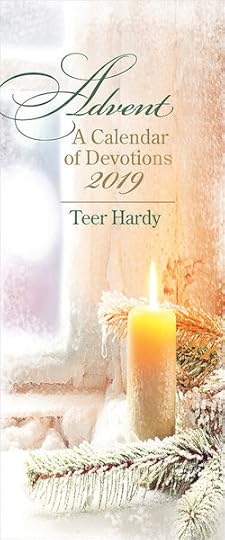
We are just weeks away from the first week of Advent. If you haven’t done so already order yourself my Advent Devotional for 2019. Author’s always praise their own work, so here’s a review for your consideration:
“Fleming Rutledge famously noted that Advent begins in the dark - it is a season of strange proclamations, mysterious movements, and ultimately ends in a place unexpected. In Teer Hardy's Advent devotional he carries the mantle of Rutledge in his willingness to point toward the movements of the Spirit in ordinarily extraordinary places. I am grateful for his faithfulness made manifest in this volume and I look forward to giving everyone at my church a copy this season to help them (re)connect with the Word made flesh.”
-Rev. Taylor Mertins
Taylor Mertins is a United Methodist pastor in Woodbridge, Virginia, having earned degrees from James Madison University and Duke Divinity School. He regularly posts sermons, devotionals, and other theological reflections at Think and Let Think and you can follow him on Twitter.
Buy the devotional as an e-book or a pack of ten. Share the devotional with your faith community, in-laws, neighbors, and barber. Order now to ensure you are able to begin the devotional on December 1!COKESBURYAMAZONCONCORDIA SUPPLYTARGETB&NAfter you buy a few packs to hand out to your friends and family, leave me a review on Amazon. Your review will help ensure others find the Devotional through Amazon’s algorithms.November 10, 2019
Gratitude | Rejoice, Pray, Give Thanks

Listen to "Gratitude | Rejoice, Pray, Give Thanks - November 10, 2019" on Spreaker.
Having lived in Arlington for over two years now, I can tell you with confidence that you (well, we) are not patient people. I would like to believe I had the patience of a saint before I moved here and that my lack of patience is somehow your fault but I am fairly certain my impatience would be diagnosed as a pre-existing condition. Waiting - to back out of the driveway, make a right on red at 16th Street, in line at Philz Coffee, for Metro, or for Uber - puts me in a mood I do not like to be in. I become uncomfortable, and when I become uncomfortable I begin to find fault not just in that which I am waiting for but all in things and people around me as I am being forced to wait.
[image error]
November 5, 2019
Advent is Coming
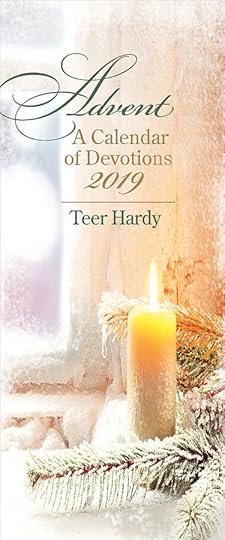
It is had to believe but before we know it Advent will be here. You remember Advent, right?
Advent is the time of year many of us skip over as we transition from Thanksgiving to Christmas. The church calendar gives us four short weeks to prepare for the Christ child’s birth. I often find myself looking back on Advent and thinking, “Where did the time go?”
I observe a pretty predictable routine during Advent. The routine goes something like this:
(Week 1) Plan to follow a pattern of holiness for Advent and encourage others to follow a pattern of holiness for Advent.(Week 2) Forget all the plans I had for myself as the busyness of Christmas takes over.I am fairly certain you can relate to this pattern.
We are just a few short weeks away from December 1, the first Sunday in Advent. I invite you to join me on a daily journey through this season of anticipation and yearning. I wrote Advent: A Calendar of Devotions (2019) to be a respite from the busyness of Christmas and a daily opportunity to reflect on God’s promises and love for the world.
In the birth of Christ (and his promised return) change is coming, and during the season of Advent, we have the opportunity to consider how Christ’s reign will not only change the world but how we will be invited to participate.
Buy the devotional as an e-book or a pack of ten. Share the devotional with your faith community, in-laws, neighbors, and barber. Order now to ensure you are able to begin the devotional on December 1!CokesburyAmazonConcordia SupplyTargetB&NAfter you buy a few packs to hand out to your friends and family, leave me a review on Amazon. Your review will help ensure others find the Devotional through Amazon’s algorithms.November 3, 2019
The Grateful Dead

Listen to "Grateful | The Grateful Dead - All Saints 2019" on Spreaker.
All Saints - Ephesians 1:11-23 & Luke 6:20-31
In Jesus’ listing of who will be blessed and who shall be woe’d, he leaves little room for doubt or question from his audience.
Jesus’ words are without a doubt Good News the poor, the hungry, the weeping, and the despised. Relief is here for those who have traveled the rough roads of life. Yet, for those on the receiving end of Jesus’ woes, Good News is hard to find. For those of us who Jesus would classify as rich (and that is the overwhelming majority of us), Jesus’ words can leave us wondering where the lives we live fit in the Kingdom Jesus came to inaugurate.
This is not one of those teaching moments in Jesus’ ministry where we can read something into Jesus’ words to make us feel better or to let ourselves off the hook for our (knowing or unknowing) participation in the margination of those who have been told they will receive the divine blessing. There are no theological backflips we can do to avoid the bluntness with which Jesus speaks. While Jesus is not issuing a curse upon the woe’d, he was calling them to pay attention as a new ordering of society was taking shape in his ministry.
Jesus turned the idea of diving blessing upside down, flipping the notion that one’s favor with G-d could be seen in their prosperity and wealth. Better known today as the “prosperity gospel,” if you are only faithful enough to G-d then you will be rewarded with wealth and prosperity by our Creator. With the the mindset of divinely appointed prosperity for a few, those who find themselves on the margins or without are receiving their just reward for their lack of faithfulness or because of the sins they or the saints before them committed. Jesus is proclaiming that the Kingdom he has come to inaugurate will leave those on the margins grateful while those who ignored the needs, profited, or exploited those on the margins will be left to reconsider their lives in light of G-d’s unfolding reign in Christ.
Since September, we have been considering all the ways G-d has blessed us and how G-d has used us to be a blessing to others. Now, with November being the month where many of us focus on giving thanks, we are extending the practice of counting blessings into a space of countless, or unlimited gratitude.
As children, we were taught to be grateful for what we had. Many can remember going around the table to start the family Thanksgiving dinner and naming one thing for which we were thankful - family, a bicycle, or no school. Being given 30 seconds to ponder the grateful question, little effort was usually given during this annual exercise.
If celebrating gratitude is a good thing, why, asks author Diana Butler Bass asks, “is it so hard to do?” Why is gratitude given its own month, its own holiday with a parade, and often ignored or forgotten for the rest of the year?Are we part of the 78 percent of people who feel a strong sense of gratitude or are we part of the 22 percent left to figure out why gratitude escapes us? Is our lack of gratitude as adults the bi-product of having gratitude forced upon us during thanksgiving proclamations as children?
Over the next four weeks we will consider what it means to reclaim lives of gratitude, being grateful for the world around us, the relationships we have, and for the promised blessing assured to us by Christ’s ultimate reign.
To accompany the sermon series, as a church, we will be studying the book Grateful by Diana Butler Bass in Sunday school classes and small groups. This will culminate with Diana joining us in worship on November 24.
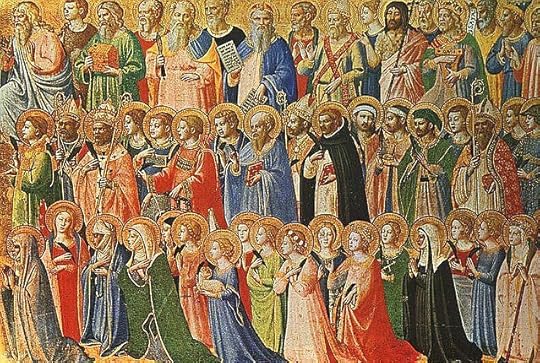
Today, on All Saints Sunday, we are grateful for the Great Cloud of witnesses, the saints who have gone before us, who now find rest from their earthly labors in Christ. We remember those whose race was finished over the past year and those who have left their earthly bodies years or even generations ago.
Listen to "Grateful | The Grateful Dead - All Saints 2019" on Spreaker.Today is not a one-time remembrance, as the beloved saints of G-d are ever on many of our hearts, rather today is an intentional day set aside within the life of the church. This is a day of intentional song, prayer, and sacrament to remember the Great Cloud with gratitude.
When we look at the saints of the church, past, and present, we can often be left with a feeling of debt. Their contributions to the lives we live were/are so rich, blessing us beyond our wildest dreams, that we often feel as though there is a debt we cannot repay. Their lives of holiness have impacted us in ways we can never repay. With this realization, we transition from a posture of gratitude to a feeling of required transaction. We seek out reciprocity as a moral obligation because if we do not we fear, our lack of response will be viewed as ingratitude.
The idea of quid pro quo, something for something, is at the heart of Jesus’ words in his sermon of blessing and woe. Not unlike today, Jesus’ audience lived in a time where the rich and powerful prospered at the expense of those living on the margins. Those outside the sphere of prosperity and wealth were deemed, at times, as less than deserving of the divine blessing that had obviously (it was thought) had been bestowed upon the rich and powerful. The marginalized, in the eyes of those on the woeful end of Jesus’ words, should be grateful for what they had as the lack of divine blessing was though to be the quo for their quid.
We despise being in debt to others. We do not mind if others are indebted to us but repaying something we can never repay - giving back to the saints for all they have given us - leaves us as uncomfortable at times as those Jesus named as woe’d.
It is easy for us to keep score of how we have been a blessing to others because it keeps them in need of us, and us the woe’d feeling blessed.On this All Saints’ Sunday, we express our gratitude for those saints who’ve lived lives that correspond to the beatitudes - that list Jesus left for us after he blessed and woe’d. Without their witness, we would only be able to believe we can live lives that deserve Christ’s woe.
As we celebrate the saints and the community we find ourselves in with them, for all the saints - past and present - the price owed has always been greater than we could ever pay, regardless of how grateful we are. And while we may feel as though we cannot pay the debt owed know that the something for something requirement of this world ended with the inauguration of Christ’s Kingdom, when Jesus paid for us that which we could not repay.
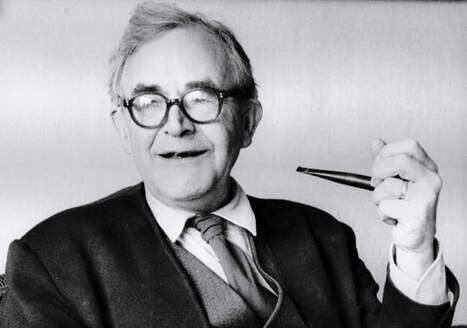
Karl Barth put it best, “Grace and gratitude belong together like heaven and earth. Grace evokes gratitude like the voice an echo. Gratitude follows grace like thunder lightning.” It is the grace of G-d that frees us from the feeling of unplayable reciprocity and moves us to a posture of gratitude. Gratitude for the great cloud of saints and for the saving grace of G-d.
Jesus’ ministry was and is about the fulfillment of promised compassion and mercy to everyone who has been told or felt there was something owed that could not be repaid. We are the recipients of a great inheritance, not a great debt. We have received this legacy with gratitude and cherish it as we await our opportunity to hand it to our children in the same way we received it from the great cloud.
The Good News is that the debt we may feel is owed for the gratitude we feel toward the Great Cloud of saints has been paid, and we can now freely letting down the guard we have built up and allow a posture of gratitude to spread throughout the community of G-d’s beloved saints as we become more aware of just how great the cloud is.
Listen to "Grateful | The Grateful Dead - All Saints 2019" on Spreaker.