Teer Hardy's Blog, page 17
March 13, 2020
Preparing Your Church for COVID-19

To help your church plan and prepare for the impact of COVID-19, we talked with Kent Annan of Wheaton College’s Humanitarian Disaster Institute about their new manual, Preparing Your Church for Coronavirus (COVID-19): A Step-by-Step, Research-Informed and Faith-Based Planning Manual. This manual offers faith communities a 6-step guide for preparing, planning, and facing a public health threat like coronavirus.
With biblical wisdom, research insights, and quick, actionable steps, this manual equips all traditions and denominations with practical ways to address the coronavirus threats and potential emergency.
You can get it here: https://www.wheaton.edu/academics/academic-centers/humanitarian-disaster-institute/covid-19/
Before you listen, do us a solid and help out the podcast.
Click over to http://www.crackersandgrapejuice.com. Click on “Support the Show.” Become a patron.
For peanuts you can help us out....we appreciate it more than you can imagine.
Check out our latest book, Crazy Talk: Stories Jesus Told, as well as our swag store. We have a lot of exciting guests and events lined up for 2020. Until then, Grace & Peace.


March 12, 2020
Buzzing Questions and Unknowns
As questions and unknowns about the coronavirus continue to spread my phone has not stopped buzzing. My phone usually buzzes regularly throughout the day - people from church with a question about Bible study, my podcast partners sending me a joke you wouldn’t believe pastors send one another, and my wife telling me how great I look (OK that one is a stretch). Since Tuesday morning, my phone has not stopped buzzing.
The buzzing began as I left our church staff meeting. We had a lengthy discussion about our plan to respond to the concerns of the community, our own concerns, to inventory our supply of toilet paper and hand sanitizer, and figure out what pastoral care looks like with vulnerable people in our community.
The running joke among clergy is that seminary never prepares you for ministry. You would think 90 credit hours and tens of thousands of dollars would prepare someone for ministry, but the truth is, we often arrive at churches with no idea what we are doing. Seminaries do not offer classes on how to unclog a toilet or manage a church membership database. I have had no formal training on sump pumps but in the last two years I have learned how to unclog, prime, and restart a sump pump.
Here’s the thing, all the buzzing this week - “Hey pastor, when will worship services be canceled?” “Pastor, the church needs to do X, Y, and Z.” - are outside of my scope of expertise.
These buzzes come from a place of genuine concern and desire to help. But like many of the people texting, emailing, and calling, we have no formal training in what to do in a pandemic.
I am trained in theology.
I am trained in pastoral care.
I am not trained in infectious disease control.
I have two degrees - a Master of Divinity and a Master of Theological Studies, focusing on missional theology. Neither of those fields has prepared me for the buzzing this week.
At the suggestion of my friend Steve, I listened to the latest episode of Rob Bell’s podcast. Here’s how Rob opened up his latest episode, I’m Calling You to Talk About the Coronavirus:
“We are all going through this at some level. This is the moment before the moment. We are all intimately connected. There is an endless web.”
This is what I am trained in. I am trained in our connectedness. Our connectedness as of late has been relegated to the cloud, to systems created by servers, fiber optic cabling, and smart devices. There are days when we can have little to no interaction with other living, breathing human beings. Two days in a row this week I had the opportunity to see one of my best friends. What a treat that time was.
In a world where our physical connectedness has been forgotten the past month has been a rude awakening for many. The Coronavirus does not care about race, gender, politics, sexual identity, or any other dividing line we create for one another.
I am trained in the connection we have with another and how that connection part of a larger connection to our Creator. God did not create us independent of one another. We have a responsibility to one another. To care for one another. To lookout for the best interests of all people, not just ourselves or those we share a home with.
Early Christians knew this well. The author of Acts wrote, “All the believers were together and had everything in common. They sold property and possessions to give to anyone who had need. Every day they continued to meet together in the temple courts. They broke bread in their homes and ate together with glad and sincere hearts.”
It is in the DNA of Christianity to be in community with one another. To be connected to one another. But as Rob points out in this podcast episode, there has been a disruption in our connectedness. It is impossible to not feel this disruption. I sat down this morning to write a sermon for Sunday morning and ended up writing this blog post because my phone keeps buzzing.
“Something is off, something is shaking, it’s wobbly.”
It’s not that I am feeling dread or as though God is not with us. After all, Jesus said, “where two or three are gathered in my name, there am I with them.” I have to believe this is true whether we are in a hospital room, around the kitchen table, or using video conference software to gather for Bible study.
There are many questions and unknowns about the coronavirus. There’s no way around it. What I do know, and I’m trained in this, is that as the church, as the body of Christ, we are positioned to reach into the storm of questions and unknowns and extend peace. The questions and unknowns about the coronavirus are stirring up memories, anxiety, and dread for many in our communities. My son, yesterday, got off the bus and he and his friends looked shaken because their teacher had given them a packet of schoolwork in case school is canceled for an extended period of time. When the day-to-day grind of life is altered the questions and unknowns have a way of sneaking in and consuming us.
Buzz, buzz, buzz.
We are being thrown headfirst into the deep end of the pool, and being expected to swim in waters we have never been in. Like most who are reading this, I am not an infectious disease expert. I am a pastor. I am a theologian. I am a father. I am a husband. I am a neighbor. I am a friend.
We are connected to one another. I can turn to you as a pastor, theologian, friend, father, husband, neighbor, or friend and extend peace. I can act as a calm presence in the swirl of questions and unknowns. But at the same time, I may need to you be my calm presence in the swirl of questions and unknowns.
We have been reminded of our connectedness to one another. Rob described this as being “intimately bound up with one another.”
We are not connected to one another through randomness. God created us, each of us to be dependent on each other. Not the markets, or economic trends as questions and unknowns continue. We are intimately connected to one another, and to our Creator.
As the Psalmist wrote, “I lift up my eyes to the hills—from where will my help come? My help comes from the Lord, who made heaven and earth. He will not let your foot be moved; he who keeps you will not slumber. He who keeps Israel will neither slumber nor sleep. The Lord is your keeper; the Lord is your shade at your right hand. The sun shall not strike you by day, nor the moon by night. The Lord will keep you from all evil; he will keep your life. The Lord will keep your going out and your coming in from this time on and forevermore.”
So, while questions and unknowns will continue to buzz around us, as the shaking and wobbling continue we are in this together. The feelings you feel are OK to feel. Take care of one another as you are able. Take care of me as you are able.
May the Grace and Peace of Christ be with you, now more than ever.
Because It’s True
The latest episode of You’re Not Accepted features Johanna, Jason, and yours truly discussing Dr Stanley Hauerwas’ sermon from the 2012 commencement service at Seminary of the Southwest.
“ Jesus is the heart from which the truth must be spoken. Thus the truth that must be spoken is known only through witness. Because he is the truth we can speak the truth. That speaking the truth takes the form of witness means we are confronted with this truth in a manner that does not allow us to distance ourselves from him. Any attempt to sunder truth from this the true witness, to make truth an idea about the relation between God and man, cannot be the truth. If the truth is thought to be but a symbol, no matter how exalted, it is but a falsehood. The true witness is this man of Gethsemane and Golgotha.Because the truth is this person, the one who endured Gethsemane and Golgotha, it is a truth that cannot resort to coercion to secure its status. The truth that is Christ, the truth that can only be known by witness, is a truth that must make its way in the world by refusing to use the desperate means of the world to force others to acknowledge what is claimed to be true. There can be nothing desperate about the witness that is Christ because what God has done through the Son cannot be undone. That is why the truth that is Christ is so compelling. It is compelling because those possessed by this truth are filled with joy.”
Here’s the link to the original address: https://ssw.edu/sermon/dr-stanley-hauerwas-sermon-for-2012-commencement-2/
The prayer we prayed at the of the episode is “The Truth That Reveals Lies.” and can be found in Prayers Plainly Spoken.
Before you listen, do us a solid and help out the podcast.
Click over to http://www.crackersandgrapejuice.com. Click on “Support the Show.” Become a patron.
For peanuts you can help us out....we appreciate it more than you can imagine.
https://crackersandgrapejuice.com/show/youre-not-accepted/
https://www.facebook.com/crackersnjuice
March 11, 2020
Finding Purple In a Changing World

Photo by Aaron Burden on Unsplash
I lift up my eyes to the hills — from where will my help come? My help comes from the Lord, who made heaven and earth.” - Psalm 121:1-2, NRSV
Was it hard to wake up this morning? This is my least favorite day of the year. Not because it's Sunday but because we have to get up earlier and it's a time of change. The sun will start setting later in the evening. That's right. I get the math right on that and we are getting closer and closer to what, what's coming up soon Easter. Have you noticed any changes in the sanctuary over the last couple of weeks? It's purple this past Thursday.
You all know I have a little girl named Nora. Right? She's like this tall smells funny. She makes a lot of noise. We are walking through the sanctuary and she noticed the change and you know what she yelled, she yelled PURPLE!!!
Nora noticed that changes are happening and the purple colors on the walls tell us that we are in the season of Lent. Do you know what lent means? We say that word a lot and us grown-up sometimes don't even know what we're talking about, but Lent is a time when we are journeying and we're getting ready for Easter. We're turning away from all of the things that distract us from God and we turn back towards God and towards Jesus.
That is kind of what that Psalm was telling us about Psalms are our prayers that were prayed by Israel a long, long time ago. Back when Pastor ed and Pastor Jeff were still in seminary for a long, long time ago. In that prayer, David prayed that God would always be our protector.
So, here's the cool thing about it - things can and will change around us. The time on the clock can change. The colors on the walls can change, the seasons can change. We can be learning about math and then be learning about science and then go back to history and then go to music. And then go to recess.
We can have change everywhere in the world. We can eat different things for dinner and different things for breakfast, but one thing always stays the same. Do you know what that is? God will always watch out for us and God will always protect us no matter what.
Let’s pray: Hey God, it's your friends at Mount Olivet. Thank you for always watching over us. Thank you for always loving us even as things around us change. Thanks for always being there to listen and we'll talk to you later. Amen.
March 10, 2020
The Only Must That Means Anything

audio Block
Double-click here to upload or link to a .mp3.
Learn more
Word associations can be a fun exercise to measure a group. Let’s try a few.
When I say “tomato,” you say, ________.
When I say “star-light,” you say, ________.
When I say, “Super Tuesday,” you say, ________ (just kidding, we’re not going there this morning!).
When I say “that team from Texas who cheated to win the World Series,” you say, ________. (OK that might be a stretch to be considered a word association)
Last one, when I say “born again,” you say, ________.
Jesus answered Nicodemus the Pharisee saying, “Truly I tell you, no one can see the Kingdom of God without being born again.”[1] That is some serious word association. Born again and the Kingdom of God. Being born once was hard enough for me (I have an unusually large head), to be born again as Jesus told Nicodemus, well that sounds like something that might be outside my scope of expertise or comfort.
To be “born again” from a mainline Protestant, not wanting to rock the theological boat (too much) is something we Methodists reserve for Christians of a different flavor. People like us, sensible United Methodists, do not know what to do with Jesus’ response to Nicodemus, “Truly I tell you, no one can see the Kingdom of God without being born again.”[2]
If we knew what to do with this impossible command from Jesus we would most likely be in another congregation, part of a different community where the language of accepting Jesus into our hearts - knowing the date of said declaration, marking our born again-aversary on the calendar - is the common vernacular and practice. This would be a community when prompted with a word association exercise of “when I say ‘born again,’ you say, ________” the response would be confident, unified, and not one leaving many to look for the nearest exit.
Having compartmentalized his faith Nicodemus missed the spiritual reality spoken by Jesus and opted for the impossible logistical feet of physically being born again.
We would like to skip over Jesus’ born again - the Greek word is anothen - response to Nicodemus. After all, it was Nicodemus who asked the question with the impossible response. I did not ask the question. Pastor Ed did not ask the question. You did not ask the question.
Jesus’ response was directed to Nicodemus, so it would be great to leave the logistical nightmare of being born anothen at Nicodemus’ feet. Leaving verses three and five to Nicodemus would allow us to jump ahead to verse 16 - “for God so loved the world” - a favorite of college football players and modern Christian interior decorating.
Jesus did not tell his disciples, called away from their nets and their families to be born again. This word association conundrum is Nicodemus’ problem. Can’t we just end the sermon now and head home?
The word we and Nicodemus trip over like a child’s shoe left on the floor in the middle of the night is what separates Christians into born anothen tribes. To be born anothen, as instructed by Jesus is to be born “anew,” “again,” or “from above.” Three definitions each slightly different.
Nicodemus is the only person in the gospels Jesus spoke these words to, except, the “you” in you must be born anew, you must be born again, you must be born from above is plural.
You all must be born again. We, all of us, everyone must be born again.
Nicodemus was a Pharisee. His midnight meeting with Jesus made him a representative of an entire people. This midnight encounter is not about Nicodemus seeking information for his own salvation, which is why Jesus replied with a “you all” you.
We’ve been lumped in, many of us unwillingly, into Nicodemus’ middle of the night encounter with Jesus, but for as long as I can remember to be born again was for those Christians and not for me.
Not us. Certainly not us United Methodist Christians, after all, we are the happy middle ground families find with a Roman Catholic marries an Evangelical.
To consider that we must be born again leads me to believe that we need to add a weekly altar call to the end of each service. But if that becomes the threshold for genuine faith, being a “real Christian,” we contradict everything Jesus told Nicodemus, everything Jesus is telling us.
To be born again - that is something God does; it is not something we do.
It is something - being born anothen - that we are incapable of doing for ourselves.
To be born anothen is something we can control just as easily as we can control the directions and speed the wind blows.
To be born anothen is not a notch on your spiritual belt.
To be born anothen is not a resume line you can accomplish for yourself to ensure your own salvation.
Jesus tells us as much - “what is born of flesh (that’s us) is flesh.” What is flesh is incapable of becoming God. Only God can become God. Only God can connect us with God. This is not something we can make on our own.
To be born anothen is not a journey we can accomplish on our own. To be born anothen - born anew, again, or from above - is not something we do. It is something God has done.
The life, death, and resurrection of Jesus is God’s invitation into God’s new creation through the faithfulness of Christ.
As we journey through Lent we see the shadow of the cross, the sorrow of Good Friday getting bigger and bigger. But after the sorrow of Good Friday, on Easter, the disciples received the Holy Spirit as Jesus breathed on them. This was not Jesus sharing his three-day-old death breath. Jesus said to them, “receive the Holy Spirit.”
Like Adam formed from dust and having new life breathed into his lungs, Jesus - the New Adam - takes away the stench our sin and death, breathing upon us new life in the Spirit.
Skipping over Jesus’ bit of being born anothen, preferring the safer-waters of John 3:16, we miss that we have been born anothen. We have been born again. We have been born from above, born anew.
Jesus’ resurrection sealed this for all us. Everyone. Even those of us who prefer John 3:16 over John 3:3 or 3:5.
This Lenten season we are considering what it means, as Saint Paul put it, to “adopt the mind of Christ.”[3]
To adopt the mind of Christ is to acknowledge that regardless if you have ever come forward during an altar call, regardless if you have your born again date circled on the calendar, regardless if you attend a “born again, Bible-believing” church or the happy middle ground of mainline Protestantism, you have already been accepted by God. The faithfulness of Christ to the will of God is what gives us life. This is something we could never do on our own.
So while you may have a date you can remember - confirmation as a teenager, an altar call way back when, or just a few years ago - the anniversary date on your calendar is a signifier of your recognition of something accomplished for you, whether you knew you needed it done or not, whether you wanted it done or not. Hold onto those dates and keep them circled but don’t forget that the sorrow of Good Friday does not last indefinitely.
We are Easter people and when the stone was rolled away and Mary found Jesus, she mistook the New Adam for the gardener, the caretaker on the first day of God’s new creation.
What Jesus accomplished for us remains the if/then of being born again - if you are born again, born from above, born anew, then you will see the Kingdom of God. What Jesus accomplished for us is true today, now and will always be true.
For all of us. Everyone.
This is not just Good News. This is Great News! Some might call it Awesome News!
This Awesome News we celebrate today, gathering around the baptismal font, we are reminded that each of us has been born anothen, through water and the Spirit, as we celebrate the baptism of Eliza Charlotte.
Being born anothen gives each of us new sight - to be able to see Jesus in the darkness of night, to see Jesus while the shadow-side of creation looms, to see him not as the gardener but rather the new Adam, the first of God’s new creation.
Seeing Jesus and trusting that his faithfulness is enough frees us to see all of creation with new eyes. The darkness does not seem so dark because the light of Christ - because of his faithfulness and love of God - shines on each of us, exposing our born anothen-ness to the world but more importantly, to those of us who doubt our enoughness.
[1] John 3:3
[2] John 3:3
[3] Philippians 2:5
Subscribe & Share
March 1, 2020
A Silly Question

A couple of days ago I was sitting in my office being interviewed for a podcast. The premise of the podcast is to provide preacher-types with entry points to aid them in their weekly sermon preparations. Believe it or not, preaching every week, having the most public part of your job also being the most difficult part of your job (at times) can be quite stressful week after week. To prove my credibility to the listeners the interviewer asked me to tell the listeners “who I am.”
Who am I?
Three words that stumped me.
For the purposes of the interview, I knew I was supposed to rattle off my professional and educational accolades. “I’m more, aren’t I, than my LinkedIn profile or latest sermon or blog post,” I began to think.
“The interviewer knows who I am,” I thought to myself. After all, we have known one another for nearly a decade and been friends for at least five years.
“This is a silly question,” I thought.
In my anxiety-induced, existential moment of crisis I stumbled through describing my family, the congregation I am privileged to serve, and that in our home Allison and I have three methods by which we can brew coffee.
As the words left my mouth I cringed.
“Really, Teer, that’s the best you could come up with,” I mumbled.
“Excuse me,” the interviewer said, clearly I had not mumbled under my breath enough to hide my growing discomfort.
The only thing sillier then the question was my three methods for brewing coffee response. Not to diminish my wife, kids, or all of you, I am more, way more than three ways to brew coffee. I would have been better off mentioning my great head of hair, my obsessions with Weber grills, or a knack for finding parking spaces near and around Nationals Park - I hope I didn’t just jinx myself for the coming baseball season.
The waters of his baptism barely had time to dry before Jesus was led by the Spirit of God into the wilderness for 40 days of testing. The gospel writers of Mark and Luke also give an account of the temptation of Christ in the wilderness but Matthew goes a step farther, reminding the reader that in addition to 40 days in the wilderness Jesus spent 40 nights in the wilderness as well.

James Janknegt - Temptation #1
These 40 days Jesus spent in the desert echo Israel’s time in the wilderness. When Israel was hungry, God provided mana from heaven and the devil, knowing who Jesus is, invites him to end his fast, ending his discomfort by turning the rocks around him into bread. Quoting Moses, the one called by God to lead Israel during their wilderness experience, Jesus rebuked his tempter saying, “It is written, ‘One does not live by bread alone, but by every word that comes from the mouth of God.’”[1]

James Janknegt - Temptation #2
The devil invited Jesus to prove God, to prove his own divinity and again quoting Moses, Jesus responded saying, “Again it is written, ‘Do not put the Lord your God to the test.’”[2]
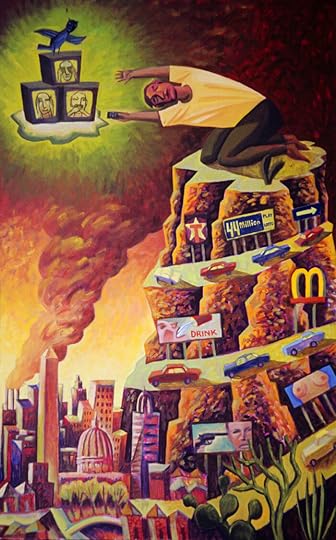
James Janknegt - Temptation #3
Finally having been invited to claim worldly success and prestige from himself Jesus said, “Away with you, Satan! for it is written, ‘Worship the Lord your God, and serve only him.’”[3]
Three times, Jesus was tempted and each time he chose not to use his own power and authority to dismiss his tempter. Instead, Jesus leaned into the word of God, the same word that was given to Moses in the desert. The same word that had sustained Israel during its time in the wilderness. Jesus refused to be who the devil invited him to be in the same way we tempt or petition God to prove God’s self to us so that then and only then we might believe and follow Jesus.
Temptation and sin are part of life. There is a longstanding history in the church of withholding certain things during this season as we approach Easter. Many of us will withhold intentionally from a sin or sins we’ve been participants in while others will choose to remove temptation or distraction from their lives and refocus, reorient themselves towards God. Even the best of us, at the best of times, has fallen to the temptation of sin. Maryetta Schultz, Founder of The Episcopal School of Los Angeles and the former Associate Dean of Berkeley Divinity School at Yale, put it like this:
“Temptation comes to us in moments when we look at others and feel insecure about not having enough. Temptation comes in judgments we make about strangers or friends who make choices we do not understand. Temptation rules us, making us able to look away from those in need and to live our lives unaffected by poverty, hunger, and disease. Temptation rages in moments when we allow our temper to define our lives or when addiction to wealth, power, influence over others, vanity, or an inordinate need for control defines who we are. Temptation wins when we engage in the justification of little lies, small sins: a racist joke, a questionable business practice for the greater good, a criticism of a spouse or partner when he or she is not around. Temptation wins when we get so caught up in the trappings of life that we lose sight of life itself. These are the faceless moments of evil that, while mundane, lurk in the recesses of our lives and our souls.”[4]
Instead of being spiritual fire for our own temptation to sin, Jesus’ time in the wilderness begins a “Gospel-long process of revealing the person of Jesus.”[5] This is just the beginning of revealing the fullness of God, in Christ, to us. These temptations faced by Christ reveal more to us about Christ than they do us. These temptations face by Jesus are just that, his temptations, not ours. This is a scene about what Christ has done and continues to do for us.
It is in learning who Jesus is, revealed to us through his life, death, and resurrection, that we are able to heed the words of Saint Paul and “adopt the attitude that was in Christ.”[6]
We cannot adopt the self-emptying obedience of Christ until we first see that his obedience to the will of God was unwavering. His obedience to the will of God fills in the gaps created by our disobedience.
Obedience to the will of God is not forced upon us. Every day when we respond to the question of “who am I?” we have the option to turn away from God and towards ourselves. The season of Lent is a time when we intentionally deny ourselves the temptations of this world and turn towards the faithfulness of Christ. We are crazy to think that this season of fasting will make us better people. A pastor once said, “The Church is not about learning how to become good (though you might become good in the process). We’re not here because we need to learn how to be good; we’re here, as Paul’s Letter to the Galatians puts it, to hear that we’ve been rescued from our inability to be good.”[7]
God is willing to risk our disobedience in hopes that we will freely turn towards God and proclaim that we are followers of Jesus Christ, that we have adopted the attitude of Christ.”[8]
Not followers up to a certain point.
Not followers with prerequisites - God must first prove something in hopes that we might repent and follow Christ.
Throughout our Lenten journey, we will turn towards Christ, turning away from the temptation of sin, and consider the question “Who am I?”
It can often feel as though we are people, who when presented with the discomfort of temptation will lean into the comforts of this world, through our own devices and means. But our Lenten journey is an invitation to lean into the faithfulness of Christ. Our faithfulness to our Lenten fasts will wane. We will be tempted to break our fast or to test God’s faithfulness as a way to ignore the suffering around us or to accept the trappings of this life. This journey we find ourselves on, a journey that will ultimately lead us to the cross, is an invitation to lean into the faithfulness of Christ when our own faithfulness wanes.
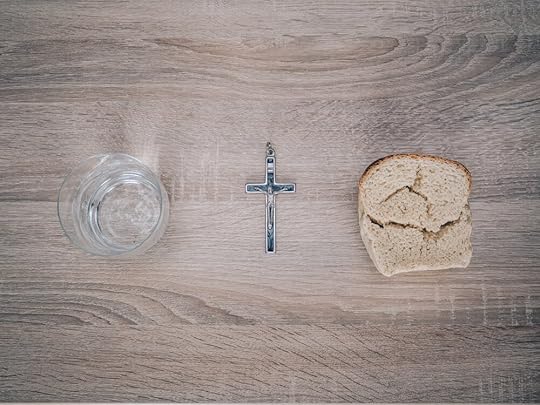
Photo by Kamil Szumotalski on Unsplash
The Good News is that the proclamation that echoed as Jesus exited his baptismal waters and began his journey in the wilderness - “This is my Son, the beloved, with whom I am well- pleased”[9] - is the same proclamation made by God to you at your baptism. Because by water and the Spirit, you are in Christ. His belovedness is yours.
So, back to the silly question I was asked by that interviewer, “Who am I?” I am a sinner. When push comes to shove I have fallen and will fall again to the temptation of sin. But more importantly, it’s not up to me or my ability to hold a fast during Lent or overcome my own sin. Regardless of what I have or have not given up for Lent, regardless of how well I hold that fast, I am God’s beloved, in whom, for Christ’s sake, God is well pleased.
Subscribe, Share, Connect
[1] Matthew 4:4
[2] Matthew 4:7
[3] Matthew 4:10
[4] Bartlett, David Lyon, and Barbara Brown. Taylor. Feasting on the Word. Preaching the Revised Common Lectionary. Westminster John Knox Pr., 2010. Pg 48.
[5] Matthew, by Stanley Hauerwas, Brazos Baker, 2015
[6] Philippians 2:5
[7] https://jasonmicheli.org/dont-sound-like-the-devil-this-lent/
[8] Ibid.
[9] Matthew 3:17
February 26, 2020
Happy Ash Wednesday?

Photo by Andre Hunter on Unsplash
I like to think of myself as a happy person.
I like to be happy. Being happy makes me feel good and I would guess, my happiness could rub off on others if they themselves are not having a happy day.
I love to sing Happy Birthday to family and friends on their birthday. It is not uncommon for me to leave an obnoxious voicemail for family and friends on their birthday. I love to share the happiness of the day with memes and GIFS on social media.
When Christmas comes to town I prefer to say “Happy Christmas” over “Merry Christmas.” This decision is twofold. First, saying “Happy Christmas” is something our friends on the other side of the pond do and well, it makes me feel more cultured. Second, I love the movie Love Actually and since it takes place in London during Christmas, saying “Happy Christmas” makes me feel as though I am in the movie.
Today we mark the beginning of Ash Wednesday by marking ourselves. More specifically, Christians around the world today are gathered together to worship - some in sanctuaries and chapels, others in coffee shops, parks, and subway stations. I am not here to re-litigate “ashes to go” or “drive-thru ashes.” This morning my social media feed began to fill, as I knew it would, with selfies of folks (mostly clergy) with well-placed and manicured crosses on their foreheads.
I’ll just leave this here - “Beware of practicing your piety before others in order to be seen by them; for then you have no reward from your Father in heaven.” - Jesus of Nazareth, Matthew 6:1 (NRSV)Captioned with many of the cross-selfies was this - “Happy Ash Wednesday.”
Happy Ash Wednesday? Really?
I am a happy person. I really am. I enjoy the song Happy by Pharrell Williams. But happy, on Ash Wednesday? Well, those words seem to go together like lamb and tuna fish.
My friend Brian put it this: “Today is a day to wake up to our lives. To remember that our days are numbered, and each one is a gift. Be alive today! For from dust you came, and to dust you shall return.”
Today is a day to wake up to our lives. To remember that our days are numbered, and each one is a gift. Be alive today! For from dust you came, and to dust you shall return. #AshWednesday
— Bryan Berghoef (@pubtheologian) February 26, 2020
To put it slightly more simplistic - Today is a day when we wake up, realize we will die one day, and that today, this day we are living right now is a gift.
Fleming Rutledge argues that Ash Wednesday, of all the days in the church calendar, should remain a private day. This is a day of withdrawal both the church corporately she argues, and I would add the Christians individually. Withdrawn reflection is different from happily boasting of ones piety.
For the time has come for judgement to begin with the household of God; if it begins with us, what will be the end for those who do not obey the gospel of God? - 1 Peter 4.17 (NRSV)
This is the day when the church stands first to confess our (individually and corporately) sins, submitting ourselves before the divine to await our judgment.
There are things we have done and left undone as communities for which we must offer repentance. Ash Wednesday offers the church gathered (however small a gathering it is) the opportunity to see how the church can really stand as a witness for the community. However small a gathering, the congregation is taking the sins of the community upon themselves. This is no easy task nor should it be undertaken flippantly.
We begin the season of Lent today, with repentance. The worship I will participate in today does not end with a happy charge or benediction. We will end with a confession:
Have mercy on me, O God,according to your steadfast love;according to your abundant mercy, blot out my transgressions.Wash me thoroughly from my iniquity and cleanse me from my sin.For I know my transgressions, and my sin is ever before me.Against you, you alone, have I sinned, and done what is evil in your sight,so that you are justified in your sentence and blameless when you pass judgment.Create in me a clean heart, O God, and put a new and right spirit within me.Do not cast me away from your presence, and do not take your holy spirit from me.Restore to me the joy of your salvation and sustain in me a willing spirit.
We begin the season of Lent not with the happiness of Easter morning but with repentance. Repentance does not have to be drudge we pull ourselves through. Repentance can be a time for celebration, for that in Christ’s faithfulness we are able to repent. We are able to turn back to God, and away from our sin not because of anything we have done or will do, but instead because of Christ's.
My podcasting partner and all-around happy buddy Taylor put it this way, “All of our navel-gazing during Lent is supposed to lead us to the cross, to the fact that Christ is on it and we are not, and if we can’t be happy about that then I don’t know what we’re doing.”
Live happy in that. Be happy that in Christ we have been reconciled with God and can now turn, repent - with or without ashes on our heads.
February 23, 2020
The Only Thing to Fear

“Anything that’s human is mentionable, and anything that is mentionable can be more manageable. When we can talk about our feelings, they become less overwhelming, less upsetting, and less scary. The people we trust with that important talk can help us know that we are not alone.” - Fred Rogers

This inauguration ceremony for Franklin D. Roosevelt on March 4, 1933, was the last ceremony to be held in March. All subsequent inaugurals have been held in January. This official Architect of the Capitol photograph is being made available for educational, scholarly, news or personal purposes (not advertising or any other commercial use). When any of these images is used the photographic credit line should read “Architect of the Capitol.” These images may not be used in any way that would imply endorsement by the Architect of the Capitol or the United States Congress of a product, service or point of view. For more information visit www.aoc.gov.
In his inaugural address, FDR said “(the) only thing we have to fear is fear itself.”[1] FDR was sworn in as President of the United States in 1933. At the time, there was much to fear. The Great Depression had reached its depth. Many Americans were surviving (barely) on breadline assistance and hope appeared to be gone. Nearly one in four working adults were out of work. Industrial production fell by 47 percent and the GDP had dropped by 30%.[2]
Now, I am not an economist. I did not study business in college but I do know those kinds of economic drops, so suddenly, would give many people a good reason to fear. So, with all due respect to the 32nd President, FDR, we’re going to have to disagree on this one.
Jesus is on the move. There is much to admire about Jesus - after all, he is the Savior of the World - but the guy did not stop. He would preach or teach and then heal someone, then teach some more, and then he was on the move again. Jesus did not shy away from interacting with those who were opposed to his teaching. Jesus was upfront and honest with what his ministry was about and what would happen to him.
Before our scene on a mountain, Jesus told the disciples he would, “go to Jerusalem and undergo great suffering at the hands of the elders and chief priests and scribes, and be killed, and on the third day be raised.”[3] Then, on a mountain, the fullness of Jesus’ identity and God’s faithfulness was revealed to a select group of disciples. If Jesus had favorites, these guys, Peter, James, and John, were it.

Transfiguration _ James Janknegt
The appearance of Moses and Elijah alongside Jesus confirmed and connected Jesus to Israel’s long history. This mountaintop moment confirmed Jesus’ promise of the resurrection on the third day and the fulfillment of an ancient promise and history. In Jesus, humanity, beginning with God’s chosen people would be redeemed. Jesus is the bearer of the in-breaking Kingdom of Heaven.
Smoke, clouds, and blinding light were the climax of the scene and in the middle of it all stood Peter, James, and John. Naturally, the disciples fell to the ground. Fear is a natural response when we experience something that we cannot explain, is startling, or is flat out dangerous. The disciples’ Transfiguration experience must have been all three.
The things we are afraid of cause us to respond like the disciples did at the Transfiguration.
I have a (very rational) fear of snakes and lizards - anything with scales. Snakes and lizards send me up on a chair or nearest piece of furniture. I refuse to go into the reptile house at the zoo. When I say at the blessing of the pets that Pastor Jeff or Pastor Ed will bless your reptile I mean it, because there is no way I will be anywhere in the vicinity.
What are you afraid of?
Fear causes us to freeze and either protect ourselves or retreat. Fear of the unknown causes us to want to freeze time or go back to a less-fearful place because it feels safer. Doing this, we avoid that which causes us great discomfort.
On the mountaintop, the disciples were afraid. Hit the dirt, hands over their heads, in the fetal position afraid. Like, a blue lizard running around your home just as you are getting ready to put your son to bed and all you can think to do is to grab up your precious baby, jump onto the bed, and let your wife deal with the lizard (hypothetically).
In that mountaintop moment, God – Jesus – was with them. “But Jesus came and touched them. He said, “Get up. Don’t be afraid.”[4] Jesus acknowledged their fear, he did not brush them off as being irrational or dramatic, and with a touch and a word brought peace.
Acknowledgment and presence.
Ignoring our fears, or the fears of others does little to help us live as a community of neighbors who are committed to the well-being of one another. In doing this, we side-step the whole loving our neighbor as ourselves bit Jesus causally glosses over.
Mister Rogers acknowledged the fears of his television neighbors. He never asked children to stop being afraid and there were times when his explanations of what was happening in a fearful situation did not alleviate our fears. But what Mister Rogers always did when addressing fear was model for us what Jesus did for the disciples when they hit the ground in fear at the Transfiguration. Mister Rogers was incarnational - he was present and acknowledged our fears and then helped explain what was happening to lessen the sting.
Jesus reached his hand out to the disciples like he did when he healed the man with leprosy and two blind men. His touch to the disciples offered freedom, it enabled them to respond to his invitation, “Get up and do not be afraid,”[5] and actually begin to move beyond their fear.
In God becoming human, in Jesus, the incredible grace of God is ours. The unmerited love of God, there is nothing you can do make God love you more and there is nothing you can do to make God love you less, is yours. This grace is yours every time you accept Christ’s invitation to gather around his table and it is yours as you move through the daily grind of life in the neighborhood. The grace of God is yours while you are in school, the office, the coffee shop, or barber chair.
In Jesus, God is participating, in a personal manner, in our human struggles and fears. We’ll see this during Lent as Jesus is tempted in the desert and when he weeps standing at the grave of a friend.
We are not isolated or alone. Better yet, when we acknowledge the fears of others and we offer a hand extended in grace, we are like Mister Rogers, able to be the hands of Jesus with others. Our hand may not alleviate the fears of others. Our hand may invite more questions than we were ready for. But that is the beauty of the Grace of God - it extends beyond us, reminding us and the person we have reached out to that in Jesus, God has not and will not abandon us. We do not have to live in fear because the one who is faithful has promised - confirmed at the Transfiguration and assured on the cross - to always be with us.
[1] “Inaugural Addresses of the Presidents of the United States : from George Washington 1789 to George Bush 1989.” Avalon Project - Documents in Law, History and Diplomacy, Yale Law School, Lillian Goldman Law Library, avalon.law.yale.edu/20th_century/froo....
[2] Romer, Christina D., and Richard H. Pells. “Great Depression.” Encyclopædia Britannica, Encyclopædia Britannica, Inc., 2 Dec. 2019, www.britannica.com/event/Great-Depres....
[3] Matthew 16:21
[4] Matthew 17:7, CEB
[5] Matthew 17:7

February 14, 2020
A Revolution of Values

“The way the world works is killing us all and that we need to be saved. The Kingdom of God is at hand, Jesus says, when he shows up and you can learn to be part of it. Anyone can be part of it. You can join it right where you are.”
Fresh off Donald Trump blaspheming at the National Prayer Breakfast and dismissing Christ’s Sermon on the Mount to nary a complaint from the evangelical pastors in attendance, we’ve got Jonathan Wilson Hartgrove on the podcast to talk about his latest book, A Revolution of Values: Reclaiming Public Faith for the Common Good.
Read More About Donald Trump and His Prayer Breakfast Blasphemy
The religious Right taught America to misread the Bible. Christians have misused Scripture to consolidate power, stoke fears, and defend against enemies. But people who have been hurt by the attacks of Christian nationalism can help us rediscover God's vision for faith in public life. Jonathan Wilson-Hartgrove explores how religious culture wars have misrepresented Christianity at the expense of the poor, and how listening to marginalized communities can help us hear God's call to love and justice in the world. He highlights people on the frontlines of issues ranging from immigration policy and voting rights to women's rights and environmental stewardship. Through these narratives, we encounter a recovery of values that upholds the dignity of all people. Rediscover hope for a faithful public witness that serves the common good. Join the revolution.
Before you listen, do us a solid and help out the podcast.
Click over to http://www.crackersandgrapejuice.com. Click on “Support the Show.” Become a patron.
For peanuts you can help us out....we appreciate it more than you can imagine.
Check out our latest book, Crazy Talk: Stories Jesus Told, as well as our swag store. We have a lot of exciting guests and events lined up for 2020. Until then, Grace & Peace.
February 12, 2020
Preaching as Though We Had Enemies
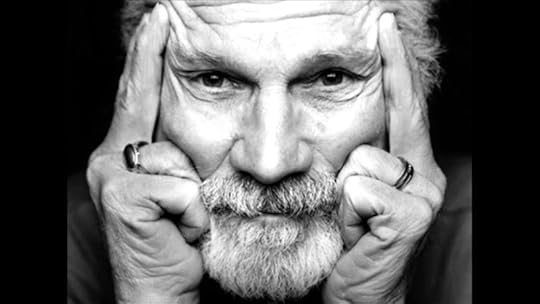
“God is using this time to remind the Church that Christianity is unintelligible without enemies. Indeed, the whole point of Christianity is to produce the right kind of enemies. We have been beguiled by our established status to forget that to be a Christian is to be made part of an army against armies. It has been suggested that satisfaction theories of the Atonement and the correlative understanding of the Christian life as a life of interiority became the rule during the long process we call the Constantinian settlement. When Caesar becomes a member of the Church the enemy becomes internalized. The problem is no longer that the Church is seen as a threat to the political order, but that now my desires are disordered. The name for such an internalization in modernity is pietism and the theological expression of that practice is called Protestant liberalism. “
In the latest installment of You Are Not Accepted, Johanna gets hot and bothered over Stanley’s address, “Preaching as Though We Had Enemies.” Originally delivered to the homiletics guild, this address is found in his collection, Sanctify Them in the Truth: Holiness Exemplified, and also at First Things: https://www.firstthings.com/article/1995/05/preaching-as-though-we-had-enemies
Before you listen, do us a solid and help out the podcast.
Click over to http://www.crackersandgrapejuice.com. Click on “Support the Show.” Become a patron.
For peanuts you can help us out....we appreciate it more than you can imagine.
https://crackersandgrapejuice.com/show/youre-not-accepted/
https://www.facebook.com/crackersnjuice