Teer Hardy's Blog, page 2
December 4, 2022
Storyteller | That's What She Said - December 4, 2022

Saint Luke’s account of the first Advent and Christmas is well-known in and out of the church. It is a story that has been read, sung, and talked about for generations. There is much to be said about these holy words.
Beginning with the announcement to Zechariah and Elizabeth that they will welcome a son into the world who will then prepare the way for the Son of Man, and culminating with the birth of Jesus and the shepherds watching their flocks by night, and would venture to say that if 1 Corinthians 13 is the preferred reading for weddings (but more appropriate for a funeral, but that’s a sermon for another day) then Luke 1 and 2 are the preferred readings for Advent and Christmas. If the readings are good enough for Linus and Charles Schultz, they’re good enough for us.
We are in the second act of the story.
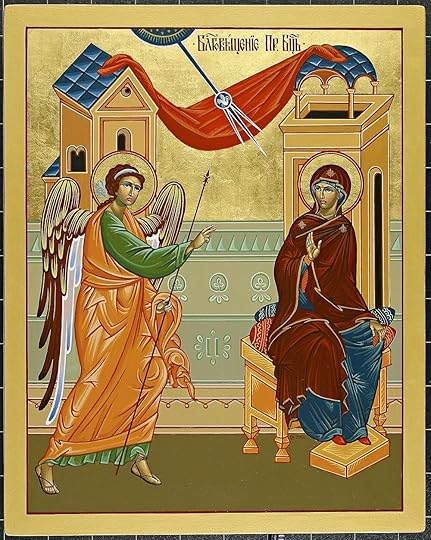
Mary, engaged to Joseph, is greeted by the Angel Gabriel, who says, “Greetings, favored one! The Lord is with you.”[i] “You will conceive in your womb and bear a son, and you will name him Jesus. He will be great and will be called the Son of the Most High, and the Lord God will give to him the throne of his ancestor David. He will reign over the house of Jacob forever, and of his kingdom there will be no end.”[ii]
God enters our lives in the most spectacular ways, disrupting our ordinary routines in the best possible ways. Susan Robb, the author of The Angels of Christmas – Hearing God’s Voice in Advent, notes that in last week’s Gospel lesson, the Angel Gabriel visited Zechariah “in the midst of his work, in the day-to-day routine of priestly responsibilities, although in the most spectacular and holy of places.” And Mary is no different. Catholic tradition suggests Mary was drawing water from a well. In the middle of her daily routine, the divine disrupter goes to work.
Gabriel tells Mary that through her, the Savior of the world will begin his reconciliation and healing work. And Mary’s response?
“Here am I, the servant of the Lord; let it be with me according to your word.”[iii]
“Let it be.”

That’s what she said.
Last Sunday, Pastor Sara suggested that pastors tend to talk more than they should. She said, “pastors can talk a lot.” Then, she turned and looked at me (I assume she did the same to Pastor Jeff). Pastor Sara is not wrong. I host a podcast where the show's premise is to talk about faith without using stained-glass language. Preaching and teaching are a large part of what I do as a pastor. And, before most meetings I attend with Pastor Sara, I send her a text message saying I will do my best not to talk more than I should during the meeting.
Mary does not have my lines of dialogue in our gospels.
Mary is front and center in this morning’s lesson. She has the lead role during Advent and, at Christmas, transitions to the lead supporting actor. During Jesus’ ministry, she is quoted in the Gospel of John at the Wedding in Cana, noticing the party was in trouble. “They have no wine.”[iv]
Then, as Jesus is preparing to draw his last breaths, Mary’s presence is noted at the base of the cross. Her words are not recorded as Jesus says, “Woman, here is your son,”[v] gesturing to John.
In the gospels and the New Testament, the majority of the Christian Bible is written by men, using male voices.
It was noted this past week in our Wednesday Night Advent study that a not so good by-product of the Protestant Reformation is that we – Protestants – fail to give Mary the airtime she deserves.
So, yes, pastors talk a lot, and I will add the point that male pastors tend to be guiltier than others. And if not for women, we would not have the good news that the tomb was empty on Easter. Female preachers, pastors, and teachers are indispensable in the church.

I was thinking about Pastor Sara’s words this week as I reflected on our gospel lesson, and I decided to look to pastors and theologians who are not male. Pastors like Susan Robb and Fleming Rutledge because if we are to heed the words of the holy scriptures, then there are times when people like me, people who are privileged in the empire, we need to listen.
“Let it be with me according to your word.”[vi]
“Let it be.”
Mary spoke three words in response to the Angel Gabriel.
“Mary, the in-breaking of the Kingdom of God is at hand, and through you the Savior of the world will take center stage. Mary, through you God’s grand story of salvation will take shape”.
“Let it be.”

That’s what she said.
“Let it be with me according to” the will of God, according to the grand plans of God’s earth-shaking in-breaking. “Let it be with me according to” the Creator of Heaven and Earth.
That’s what she said.

Rev. Rutledge notes that at the first Advent God, through Mary, is moving toward us. Rev. Rutledge wrote Mary’s response is “not about human hopes and human wishes and human dreams, but about God. What is happening at Christmas is not of man but from God.”[vii]
The salvific work of God is not dependent of humanity for its completion. What happened in the first Advent, at Christmas, and what will happen at the second Advent is from God.
Rev. Rutledge wrote, “The mercy and grace of God do not depend on human virtue for its fulfillment. The mystery of the Advent season lies precisely in its location as it is between the now of human failure and disappointment and the not-yet of God’s coming kingdom.” [viii]
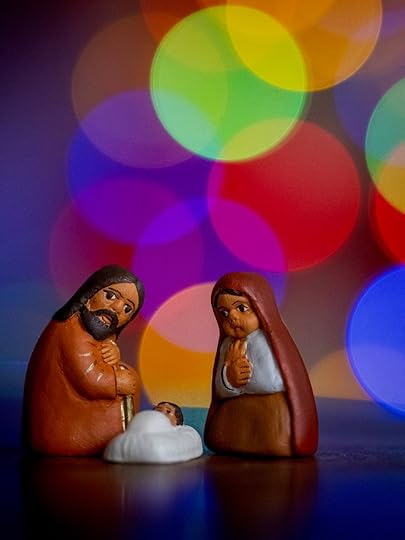
With Mary’s response, “Let it be,” Mary joins the ranks of the who’s who of the Hebrew Bible.
Jacob in Genesis when he is approached by an angel in a dream and is told to go to Egypt.
Moses in Exodus when he was called by God through a burning bush.
The prophet Samuel was called by God while lying in the temple.
While the prophet Isaiah was called and sent, responding with, “Here I am, Lord.”
If you had been reading the story from the beginning with Genesis 1 and came to Luke 1 to find Mary saying, “Let it be,” you might scratch your head and wonder what happened to shift the central focus of God using men to accomplish God’s will. But when we stop and listen to what Mary said, we find that finding favor with God has nothing to do with the favor we find in society. God’s favor upon Mary, God’s presence with Mary through Gabriel and in her womb, is a gift from God. Mary is favored not because of her status in society but because God is with her; in the same way, you are favored not because of what you’ve done or left undone. You are favored because of the faithfulness of God.
With three words, “Let it be,” Mary reveals to the world that the way things are is not how things will be when the will of God is followed when the Kingdom of God is fully realized.
Let it be.
That’s what she said.
And in Mary’s response, it’s not that God went to work; rather, Mary became a part of what God was already doing. The same is true for us. God is not waiting for humanity to begin God’s world. Each of us, during Advent and in the ordinariness of our lives, is invited, just as Mary and Elizabeth were, to be part of the story being told by God. The story says you are not who your sin says you are. You are beloved. You are favored. So, let it be.
[i] Luke 1:28
[ii] Luke 1:31-32
[iii] Luke 1:38
[iv] John 2:3
[v] John 19:26
[vi] Luke 1:38
[vii] Rutledge, Fleming. Advent the Once and Future coming of Jesus Christ. Eerdmanns. 2018.
[viii] Rutledge.


September 19, 2022
The Hardest Parable
Certain things separate life inside the Beltway from life outside the Beltway. Living in such proximity to the nation’s capital, so close to buildings made of marble and granite and full of leather-bound books, just down the street from firms with multiple names, there is a level of respectability and civility we are accustomed to. That is not to say people who live outside the Beltway are not respectable or civil, but come on, there is something different about living where we live; something different about being a church where we are.
After all, you expect your clergy to read theology books, leather-bound books, and the Washington Post. You expect your clergy to connect with what is happening around you to what God is doing in the thick of our mess. Even if you don’t live inside the Beltway, living in DC or Northern Virginia carries a level of status that cuts through social and economic statuses. Our below-the-fold stories, even the stories on page A9, are front and center in newspapers elsewhere.
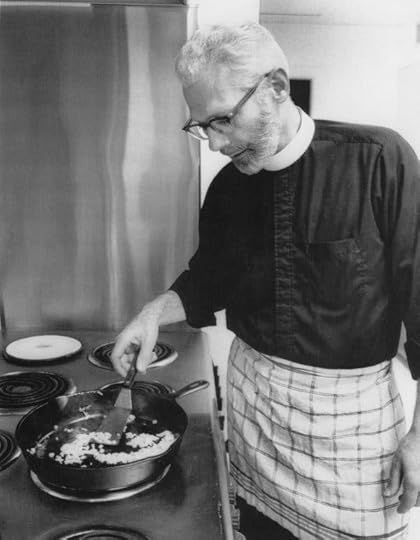
That is why last week, when Pastor Sara quoted Robert Capon, saying, Jesus “saves losers and losers only,” I was taken aback.
Losers? Doesn’t Capon know who we are? Doesn’t he know the connections and influence we have?
We are in the second week of our Story Teller | Parables sermon series.
The stories we tell, in and out of the church, form us, communicate who we are to others, and reveal to us the beauty and sorrow of the world.
The stories told by Jesus can leave us scratching our heads, bawling our fists in frustration, crying, and full of laughter. Most of the stories told by Jesus are parables. Parables are stories using illustrations familiar to the original audience that reveal a Biblical truth. Jesus began each parable by saying, “The Kingdom of God is like….” Like a lost sheep, coin, or son.
The Kingdom of God is like a fig tree, a Samaritan walking a dangerous road, or an unjust steward or crooked manager in today's lesson.

A rich man made a living off the backs of tenant farmers leasing land on the rich man’s estate. Tenant farmers had to purchase supplies from the company store for their farms and daily living. These purchases were made after paying exorbitant rent. But the harvest was never enough, resulting in debt yearly owed to the rich man. Year after year, the rich man got richer, and the farmers went further and further into debt.
The unjust steward or manager is a step above the farmers. He is the enforcer and collector working on behalf of the rich man.
Times were tough, and somewhere along the way, the manager decided to cut corners or keep some of the estate’s profits for himself. A Bible-time Robin Hood had Robin Hood decide to keep what he stole from the rich for himself.
The rich man is ready to fire the manager of his estate.
‘What is this that I hear about you? Give me an accounting of your management because you cannot be my manager any longer.’[i]
The manager knows what is about to happen, so he sets himself up for a post-employment life by forgiving the farmers' debts and garnering support for himself by forgiving impossible debts.
At this point in Jesus’ parable, most respectable people, people like you and me, can’t believe the manager’s actions.
“Yeah, fire his butt,” we think to ourselves. “He’s not unjust; he’s a thief.”
This parable goes off the rails for respectable people – people who are formed by the ways of the world when the rich man forgives and commends the manager.
The man stole from his employer. He cost his employer money, and he was commended?
But because Jesus is telling the story, such is the Kingdom of God.

Jesus has been preaching about grace for the last six chapters of the Gospel of Luke. That is six chapters of Jesus saying God loves you, and there’s nothing you can do to change that. Jesus is in the business of saving losers because, according to Capon, Jesus is a loser himself.
The parable of the unjust steward is a story of Jesus’ life. Jesus was not respectable by our standards. He broke the rules set by the establishment. He spent more time with the “wrong” people than he did with the “right” people .”And ultimately, Jesus died a criminal’s death.

Respectability tells us forgiveness is a top-down affair; only the rich man could forgive the debts of his tenants. But, as Jesus tells us in our lesson, forgiveness in the Kingdom of God is bottom-up.
The soon-to-be fired manager realized he had no life outside the rich man’s estate. Because he was a dead man walking, he was free to view the world as he never could; from the bottom. And in the Kingdom of God, new life comes from the bottom up. New life for the manager, the tenant farmers, and even the rich man.
One of the difficulties with Jesus’ stories is that we misplace ourselves in the story. We like to think that we are the shepherd seeking the lost sheep, but we’re really the sheep. We want to think of ourselves as the Good Samaritan, but really, we are the person in the ditch.
The unjust steward in our lesson is none other than Jesus himself. Jesus is telling a story about the Kingdom of God, his kingdom, where debts are forgiven, contrary to what respectability says.
Capon wrote, “Respectability regards only life, success, winning; it will have no truck with the grace that works by death and losing – which is the only kind of grace there is.”[ii]
Through Grace, Jesus saves those respectability says are beyond saving. This parable is not about finances or management. It is a parable about new life.
New life free from the weight and guilt and consequences of our sin.
New life that comes to us by way of the unjust steward’s death to self.
New life that is a gift from God, given to respectable people but also to the people ignored, exploited, and forgotten by the respectability our world demands.
The unjust manager is inviting us to love God where we love wealth, to love God where we love security by relying and trusting upon the Grace of God given at no cost to us.
Grace, love, and mercy for scoundrels like you and me.
[i] Luke 16:2, NRSV
[ii] Capon, Robert. Kingdom, Grace, and Judgment – Paradox, Outrage, and Vindication in the Parables of Jesus. Eerdmans 2002. Pg. 307.
August 15, 2022
Grapes Gone Wild

Our summer journey with the prophets of the Hebrew Bible has made me want to do anything but invite them along on my vacation. I was tempted to text Pastor Jeff on Friday morning and ask if we could skip the sermon this week. “Maybe an extra song or an earlier dismissal to brunch?” I thought to myself.
According to Professor Walter Brueggemann, the prophet has two tasks. This first is to critique dominant thought and structures and, in doing so, announce God’s destruction of that which is unjust and oppressive. The second task is to use the “prophetic imagination” to energize and proclaim the good news of God’s justice and new creation. They are building up after tearing down.
The prophet Isaiah does the first part of his task with his love song turned parable of judgment. The Lord “expects justice but instead saw bloodshed; righteousness but heard a cry.” The prophet calls attention to Israel’s failure to live up to their expected standards.[i]
Isaiah drew his audience in with the smooth notes of a love song. Subtle. Inviting. But as the story unfolds, the prophet prepares a sledgehammer.
“Let me sing for my loved one
a love song for his vineyard.
My loved one had a vineyard on a fertile hillside.
He dug it,
cleared away its stones,
planted it with excellent vines,
built a tower inside it,
and dug out a wine vat in it.
He expected it to grow good grapes—
but it grew rotten grapes.
What more was there to do for my vineyard
that I haven’t done for it?
When I expected it to grow good grapes,
why did it grow rotten grapes?
Now let me tell you what I’m doing to my vineyard.
I’m removing its hedge,
so it will be destroyed.
I’m breaking down its walls,
so it will be trampled.
I’ll turn it into a ruin;
it won’t be pruned or hoed,
and thorns and thistles will grow up.”[ii]
In the Lord’s eyes, remember the prophets are the earthly spokesperson for the Lord God, Judah, and Jerusalem – Israel – had been well-cared for and set up to be a fruitful people. The Lord looked after them. The Lord had cleared away any stones that might prevent the fruit from growing. The nation was to be sweet fruit while the world around them turned to wild grapes.
Grapes of the vintner versus grapes gone wild.
The Lord expected justice – the marginalized would be cared for, not exploited.
The Lord expected righteousness – the people of Judah and Jerusalem are to live into the Law they received from Mount Sinai after the Lord led them to freedom from bondage in Egypt through the Red Sea.
The people forgot who they were. The people forgot whose they were.
It can be easy to look back on the words of the prophets of the Hebrew Bible and think their words, Isaiah’s, were for the people of the 8th century. But the truth is that the words of the ancient prophets continue to speak a word of judgment and grace to the people of God today and will speak a word tomorrow as well.
Five years ago, this week the Unite the Right rally ripped through Charlottesville, VA. White Supremacy has been front and center – no longer under the whispered breath by relatives we see once a year – and acceptable by many ever since the polo shirt-wearing and tiki torch-carrying mob paraded through Charlottesville in the summer of 2017. The rhetoric and violence in Charlottesville in August of 2017 showed a light on what White Supremacy truly looks like; what their motives and agenda are. The rhetoric and violence in Charlottesville in August of 2017 showed light on how we are guilty participants – active and passive – in a system that props up White Supremacy; by the purchases we make, the jokes we tell under our breath, the people we choose to involve in our lives, and so much more.
Thanks for reading Brewing Theology! Subscribe for free to receive new posts and support my work.
In the rhetoric shouted in Charlottesville back in 2017 and in the political rhetoric shouted today, there is little focus on what the Lord would define as justice; righteousness for many in Charlottesville in 2017 and still today has less to do with what the Lord expects of us and more to do with pandering to a certain political base or certain individual.
The Lord expects justice but instead sees an idolatrous addiction to weapons of war; righteousness but instead sees a pro-life movement that does not have the stomach to ensure a sustainable quality of life or dignity for all people.
You might think, “Pastor Teer, that’s a biased analysis. You have oversimplified complex issues, reducing them to a one-sentence sermon illustration.”
Okay, let’s look for another illustration.
Throughout the pandemic, we heard, even said, “We’re All in This Together.” Was that a statement of fact or a cheap slogan to help hide the fact that the economic divide in our nation, in our community, grew wider? Many of us were happy to stay at home and allow those who could not do so to deliver our groceries, Amazon orders, and takeout dinners. While I huddled behind a door secured with a fresh layer of disinfecting spray, it was easy to set a delivery timeline and click deliver.
The lower-middle class and low-income workers bore the brunt of the pandemic's economic consequences, if not the health consequences. In contrast, others grew their income and wealth, furthering the divide within our community. Pushing people out of communities because the cost required to barely get by is too high.
The Lord expects justice but instead sees portions of the community exploited or forgotten; righteousness but instead sees neighbors forgetting one another.
Parables of judgment always feel like a smack on the nose. Like a teammate, launch a firm chest pass your way when you are not ready, and instead of a quick layup, you have a broken nose and blood on your new sneakers.
But the Good News in the doom and gloom of the parables of judgment is that judgment does not equal punishment. God does not tear down the walls of the vineyard and allow the beasts of the wild to trample the vineyard.
Isaiah does not forget the second part of his prophetic task – to energize and announce the good news of God’s justice and new creation. Building up after tearing down.
The prophet tells another vineyard story.
“Sing about a delightful vineyard!
I, the Lord, am its guardian.
Every moment I water it;
night and day, I guard it from attack.
I’m not angry,
but if it yields thorns and thistles for me,
I will march to battle against it;
I will torch it completely.
Or let them cling to me for refuge;
let them make peace with me;
let them make peace with me.
In coming days,
Jacob will take root;
Israel will blossom and sprout
and fill the whole world with produce.”[iii]
Grace is getting the exact opposite of what we deserve. What we deserve for our idolatrous obsession with guns differs from what we get. What we deserve for our failure to live up to the expectation that we love our neighbors as ourselves, caring for the marginalized and forgotten, is different than what we get.
Judgment does come our way but is followed quickly behind, if not, a step ahead is the grace of God. The love of our Creator cannot be erased, forgotten, or undone no matter what they have done, no matter what we have done.
Jesus told a story about a vineyard.
He said, “I am the true vine, and my Father is the vineyard keeper. He removes any of my branches that don’t produce fruit, and he trims any branch that produces fruit so that it will produce even more fruit. You are already trimmed because of the word I have spoken to you. Remain in me, and I will remain in you. A branch can’t produce fruit by itself but must remain in the vine. Likewise, you can’t produce fruit unless you remain in me.”[iv]
There is nothing that can undo the fruit already produced in you. Clothed in the righteousness of Jesus Christ, new life because of the life, death, and resurrection of Christ, we have been set free from the ways we miss the expectations of God. Free to seek justice, to live righteously, not because of our ability to do so, but rather because of Christ.
This is not a free pass to create a theocracy or to exploit our neighbors. No, this is an invitation to seek justice and righteousness in all we do. Not for the sake of ourselves but because we have been judged and found guilty when our grapes went wild. But Jesus assures us that the gardener is not done with us and has not given up on us.
[i] Isaiah 5:2-6
[ii] Isaiah 5:1-2, 4-6
[iii] Isaiah 27:2-6
[iv] John 15:1-4
July 31, 2022
Harmonized Tension

“If someone has a stubborn and rebellious son who will not obey his father and mother, who does not heed them when they discipline him, then his father and his mother shall take hold of him and bring him out to the elders of his town at the gate of that place. They shall say to the elders of his town, “This son of ours is stubborn and rebellious. He will not obey us. He is a glutton and a drunkard.” Then all the men of the town shall stone him to death. So, you shall purge the evil from your midst; and all Israel will hear, and be afraid.”[i]
The Hebrew Bible has particular instructions for particular situations. Deuteronomy 21 details how parents – mother and father – are to deal with a "stubborn and rebellious" child.
The Hebrew Bible gets a bad reputation among Christians as the testament with a different type of god than the God of the New Testament, and texts like Deuteronomy 21 do not help prevent this heretical train of thought.
The truth is that our misconceptions about the Hebrew Bible, while it would be easy to blame God, are no one’s fault but our own.
We do not study the Hebrew Bible with the same regularity or urgency as we do the gospels and epistles. Less than 20% of my preaching over the past five years has been from texts found in the Hebrew Bible. Sure, I sprinkle a few references from the Hebrew Bible into my sermons, but that is to remind you that I spent two presidential administrations in seminary on your behalf.
The Hebrew Bible is complicated because we do not fully understand the context as we are thousands of years separated from the original events. There are names and cities we cannot pronounce. Our Sunday School classes and Wednesday night studies focus on the gospels. Most DIY devotionals focus on the gospels or the epistles. If they venture into the Hebrew Bible, they stay within the safe confines of the Psalms.
I mean, look to last Sunday if you do not believe me. Pastor Sara had to find a "church-friendly" translation for the scripture reading because what the prophet Hosea had to say was closer to Rated-R than PG-13. Had Pastor Sara not found a softer translation, the online recording of the worship service and the podcast of her sermon might have received an "Explicit" rating from the powers of the internet.
Because we so infrequently read the Hebrew Bible and because many do not fully understand the backstory, we often miss that the God of the Hebrew Bible is the God of the New Testament. The same God who ministered in Galilee, ate with his closest friends and sinners, and who seeks us today.
After presenting imagery of God’s forgiving love (1-3), and then a series of accusations and pronouncements of punishment (4-10), the Lord concludes the work of Hosea with a picture of the parental nature of God: loving and nurturing. God is the parent, and Israel is the child.
Out of Egypt, the Lord rescued Israel from slavery, but like many of us and people know, when God does something for us, it is not enough.
After escaping through the Red Sea and receiving the law at Mount Saini, many Israelites questioned God’s provision. They worshiped false gods, forgetting what the Lord had done for them, and promised to continue doing.
It is easy to point out the spiritual faults of others – thousands of years ago and today (some might consider this to be their fruit of the Spirit) – but the truth is that all of us do the same thing at one point or another throughout our lives.
But that is not the point of what the Lord is saying through the prophet. The point is not the spiritual shortcomings of ancient Israel or modern-day you.
Notice the “I” statements in verses one through four.
Verse one, “When Israel was a child, I loved him,
and out of Egypt I called my son.”
Verse two, “The more I called them,
the more they went from me;
they kept sacrificing to the Baals,
and offering incense to idols.”
Verse three, “Yet it was I who taught Ephraim to walk,
I took them up in my arms;
but they did not know that I healed them.”
Verse four, “I led them with cords of human kindness,
with bands of love.
I was to them like those
who lift infants to their cheeks.
I bent down to them and fed them.”
While we can focus on how we and others turn away from the Lord, the Hebrew Bible, the gospels, and the epistles emphasize God's actions. The focus of the entire Bible, from Genesis 1:1 to Revelation 22:21, from “When God began to create the heavens and the earth,” to “The grace of the Lord Jesus be with all the saints. Amen.” is on the actions of God. And the point of the prophet’s words today is that no matter the turning away of humanity, the Lord will not execute the justice we are all too willing to execute upon one another. The compassion of the Lord is never ending rather is continually increasing.
Through the prophet, the Lord is pointing out the reality that we proclaim weekly when we confess our sins but too often forget as we move about our week; when we turn away and our love fails, the love of God is forever steadfast. Contrary to what the world says and how many have been treated by their biological parents, the love of our heavenly parent – mother and father – only becomes more intense as we suffer the effects of sin, the sin we commit, and the sin committed against us.
The tension between texts like Deuteronomy 21 and Hosea 11 is undeniable.
We often turn toward God’s love or God’s justice. This leads us to the thought that the God of the Hebrew Bible and the God of the New Testament are somehow different – the God of the Hebrew Bible is focused on justice and vengeance, while the God of the New Testament is concerned with love.
Ignoring this tension ignores that tension reveals even more to us about God than we imagine. We know that God does not seek justice at the expense of love, nor love at the expense of justice.
Jesus holds this tension in perfect harmony.
He invites himself to dinner at the home of tax collectors who cheats their neighbors, extending grace and an invitation to repentance.
He drew in the dirt to disperse a rock-wielding mob and then told a woman to go and sin no more.
As he took his last breaths on the cross, Jesus extended forgiveness to the man next to him and invited the man to be with him in paradise.
That is gospel Good News. That is the good news revealed from Genesis 1:1 through Revelation 22:21.
From our human, sin rot point of view, we cannot believe the prophet’s words. How could God ever be justice-seeking and loving? We look for exceptions and asterisks beside the words of Jesus. We check for footnotes hoping to find something that is not there. But the prophet tells us God's justice and love are perfect, and God promises never to destroy God's people to seek vengeance or restitution. Bishop Ken Carter wrote, “Holiness does not destroy sin; through compassion and grace, it saves. Perfection does not destroy imperfection; through love, it heals."[ii]
We have been healed, and we are loved – for lives of justice and lives of love. For lives of mercy and grace.
Thank you for reading Brewing Theology. This post is public so feel free to share it.
[ii] https://www.ministrymatters.com/preach/entry/3249/sermon-series-vital-elements-of-worship
July 17, 2022
Bad Batch
Amos 8
The prophet Amos is not usually classified as a cheerful prophet. His words are not full of what could be described as good news. If you were not here last Sunday, our reading from Amos 7 ended with, “Your wife will become a prostitute in the city, and your sons and your daughters will fall by the sword, and your land will be measured and divided up; you yourself will die in an unclean land, and Israel will surely be taken away from its land.”[i]
The prophet has two main jobs, what the Old Testament scholar Walter Brueggeman refers to as the prophetic task: that is to critique dominant thought and structures and in doing so, announce God’s destruction of that which is unjust and oppressive. The second task then is to the “prophetic imagination” to energize and announce the good news of God’s justice and new creation. Building up after tearing down.
Amos does the first one really well. The tearing down and criticizing, the message of doom and gloom.
He doesn’t really do that second part of reimagining a new, hopeful future.

We do not often hear from the prophets. Three weeks into my sixth year at Mount Olivet, I have already preached more from the Hebrew Bible prophets that in the previous five years combined. The prophets challenge us in ways that make us uncomfortable and use imagery that confuses us. I will be honest with you, between last week’s promise of exile, death, and prostitution and this week’s darkened earth, mourning, spiritual famine, and perhaps worst of all baldness, delivering a word of good news, Gospel Good News, seems to be an impossible task.
If you were not here last Sunday and missed Sunday school the week your teachers covered Amos, here is what you need to know.
Amos was an unlikely mouthpiece for the Lord, but isn’t that how the Lord operates?

Moses was – a terrible speaker.
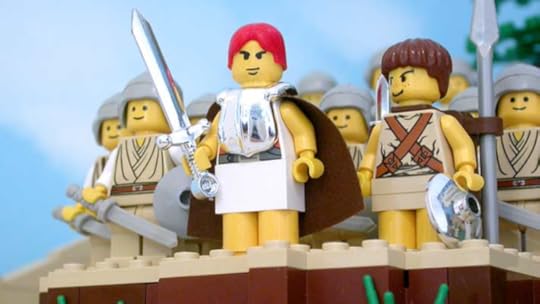
David – flawed king and all-around human.
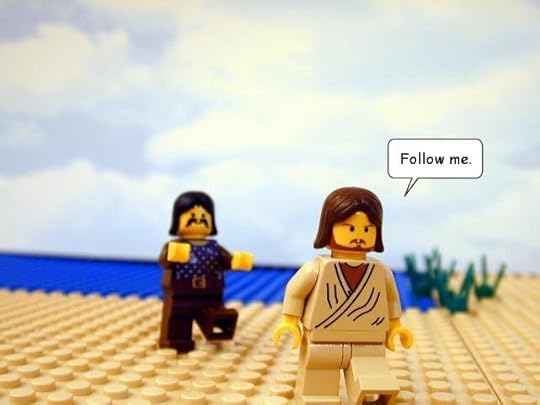
The first disciples called by Jesus – some uneducated, a cheating tax collector, and one who will betray him.
The person chosen by God to spread the Good News of the gospel to the Gentiles, the Apostle Paul – was at one time the lead persecutor of the followers of Jesus.
God is in the business of calling the unlikely and equipping them for seemingly impossible tasks.
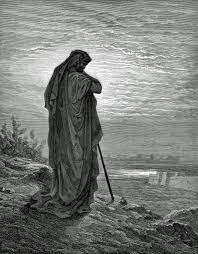
[Image 5 – Amos] Amos was not a descendant of the priestly class. His father and his father’s father were not prophets. Amos was a herdsman, meaning he cared for animals in the field. He was an outsider to the royal court, hailing from the southern kingdom of Judah. Amos traveled north when the northern kingdom was experiencing nation security and material wealth. Israel’s enemies were at bay, and the nation found itself comfortable; security and wealth for a few at the expense of many.
The vision laid before Amos appeared to be great.

First of the season fruit? Who does not love summer fruit? We had a first-of-the-season watermelon two weeks ago and ate that bad boy in less than two days.
There is nothing on the surface to suggest anything wrong with the fruit before Amos. When the Lord said, “The end has come upon my people Israel; I will never again forgive them.”[ii] the tone of the conversation changed. But this is the trajectory Amos and the Lord have been on since chapter one, and since we rarely visit the words of this prophet, it can be easy to miss the buildup the Lord has been working toward.

Amos declared that the superficial religion of many – their Sunday morning best while not caring for the poor, going so far as to make a profit off the backs of the poor – was about to end. Resulting in their destruction. While it may not seem like it, the sending of Amos by God to the northern kingdom was an act of compassion and grace.
God was all out of patience, and the summer fruit represented Israel’s end, looking delicious and inviting on the surface but rotting from the inside out.
Their temple praise – their Sunday morning songs – would turn to wailing and sadness.
Reading like Amos eight makes us, or at least me, uncomfortable because we do not like to think of God being anything but patient, loving, and kind; full of grace, and slow to anger. A critique of me is that, as a preacher, I lean too much into the grace of God at the expense of holiness. I do not like the critique, but it is probably fair.
The problem Israel faced is similar to one we wrestle with daily – trampling on and taking advantage of the poor instead of with the people God sends to us; instead of being the people God has called us to be.
Patient.
Loving.
Kind.
Full of grace.
Slow to anger.
But Amos reveals that when we fail to care for the poor, when we fail to treat the marginalized with respect and care, or when we neglect those who cannot care for themselves, the Lord, the one who has called you and me to be bearers of God’s amazing grace, is angry, disappointed, and will set things right with or without us.
Throughout the pandemic, we heard the phrase, “we’re all in this together.” It was a catchy song in Highschool Musical and made a great sound bite for politicians who need something to say in a dire situation. The phrase is an excellent filler during a press conference and an even better tweet.
On the surface, the phrase sounds great, but like the summer fruit placed before Amos, there is more under the surface.
As we debate (argue?) about masks, vaccines, and anti-virials that are now stockpiled throughout our nation, many worldwide are desperate for the first dose of a Fauci-ouchie.
While we lamented and complained that supply chain disruptions forced us to change our daily eating habits, children worldwide were going to bed hungry because the rich (that would be us) have forgotten them.
We live in a nation that sends over $778 billion per year on national defense, spending more than the following nine nations combined, and seven of those nations are considered allies. Yet, we lament that there is not enough money to make our schools into palaces of education, ensure all people around the world have access to clean water and safe food, or that we cannot commit to caring more intentionally for our fragile planet.

There is something rotten in the basket of summer fruit.
Amos was clear – you cannot compartmentalize your life.
Religion over here. Work there. Family there.
Religion is concerned with your whole life. This is what we mean in the church when we are baptized into the life, death, and resurrection of Jesus Christ.
New life in Christ cannot be compartmentalized.
What we do Sunday afternoon through Saturday night is an extension of the declaration made here on Sunday morning. There is no separation, as there is no separation for us from the love of God in Jesus Christ.
Decompartmentalizing our lives and seeing the places where we have benefitted off the backs of others is difficult work. It is holy work that can take a lifetime, even generations, to fully grasp and begin to correct.
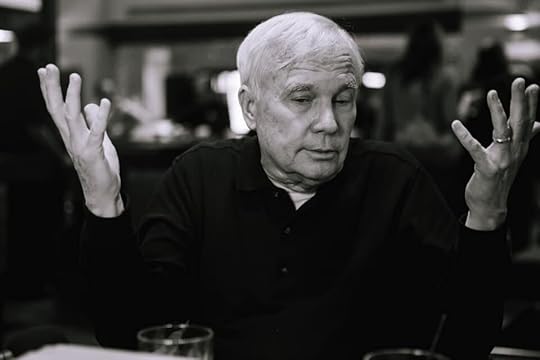
Friend and mentor, retired United Methodist Bishop Will Willimon likes to say, “One way you can tell the difference between a true and living God and a dead and fake god is that a false god will never tell you anything that will make you angry and uncomfortable.”
As we contemplate our hand and witness all that is happening around the world, as well as in our community: the growing divide between rich and poor, a missing middle, violence among nations and neighbors, nationalism, unequal treatment within our criminal justice system, environmental destruction, idolatrous addiction to weapons of war, an unwillingness to care for the vulnerable – there is a word of hope.”

God is in that city. It will never crumble.
God will help it when morning dawns.
Nations roar; kingdoms crumble.
God utters his voice; the earth melts.
The Lord of heavenly forces is with us!
The God of Jacob is our place of safety. [iii]
God has not abandoned us. God is committed to the work of reconciling the world to God and us to one another. This is the work that Christ began through his life, death, and resurrection.
This work is not easy. But it is not work we do alone.
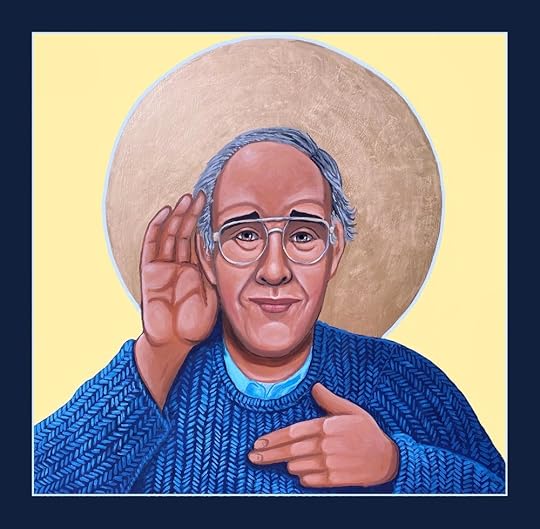
Henri Nouwen wrote, “All Christian action—whether it is visiting the sick, feeding the hungry, clothing the naked, or working for a more just and peaceful society—is a manifestation of the human solidarity revealed to us in the house of God. It is not an anxious human effort to create a better world. It is a confident expression of the truth that in Christ, death, evil, and destruction have been overcome. It is not a fearful attempt to restore a broken order. It is a joyful assertion that in Christ all order has already been restored. It is not a nervous effort to bring divided people together, but a celebration of an already established unity. This action is not activism. An activist wants to heal, restore, redeem, and re-create, but those acting within the house of God point through their action to the healing, restoring, redeeming, and re-creating presence of God.”
This work is not easy. But it is not work we do alone.
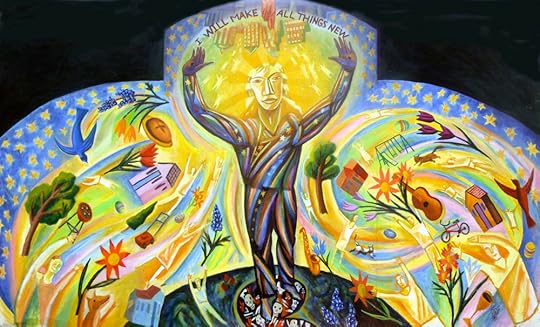
Christ told his followers, “I myself will be with you every day until the end of this present age.”[iv]
It would make sense to throw out the bowl of summer fruit, but that is not how our Lord operates.
The Lord is with us. The Lord is setting things right, and we get to be part of that work. We give thanks and praise to God for the fulfillment of the Kingdom of God and the righting of the wrongs we have had a hand in or failed to see.
“The Lord of hosts is with us; the God of Jacob is our refuge.”[v]
Subscribe[i] Amos 7:17, CEB
[ii] Amos 8:3, CEB
[iii] Psalm 46:5-7, CEB
[iv] Matthew 28:20, CEB
[v] Psalm 46:7, NRSV
June 6, 2022
Pentecost After Babel
In a May 2022 article in The Atlantic titled “After Babel,” author Jonathan Haidt details how, since 2011, we have been living in a “post-Babel era.”[i]
If you are unfamiliar with the original story of Babel and the namesake tower, here’s what you need to know. First, open your Bible (print or smartphone) to Genesis, chapter eleven.
The Book of Genesis records the Tower of Babel after God instructed Noah and his descendants after the flood waters had dried up: “Be fertile, multiply, and fill the earth; be fertile and multiply.”[ii]
Instead of inhabiting all the earth, the descendants of Noah settled in the area that we know to be Bagdad.
Instead of inhabiting all the earth and speaking many languages, the descendants of Noah shared a common language. They then attempted to build a tower that they might ascend to God.
Instead of scattering and sharing the covenant established by God with Noah, Babel took shape with its residents and attempted to reach up to God. Reaching up and not out.
“All people on the earth had one language and the same words. When they traveled east, they found a valley in the land of Shinar and settled there. They said, “Come, let’s make bricks and bake them hard.” They used bricks for stones and asphalt for mortar. They said, “Come, let’s build for ourselves a city and a tower with its top in the sky, and let’s make a name for ourselves so that we won’t be dispersed over all the earth.”[iii]
Haidt argues that the story of Babel is not about tribalism. Instead, he writes Babel is “a story about the fragmentation of everything.”
Anyone with a Facebook or Twitter account will affirm Haidt’s hypothesis. Social media platforms morphed from the place where we share updates about our lives and pictures of cats to a space where users are more adept at performing and managing their social brand than they are at connecting with family, old friends, or strangers. While there may be three billion users worldwide, we often speak and listen to only one of a handful of “languages” or ideologies.
Haidt contends the lead-up to the 2016 election cycle was the catalyst that cemented our fragmentation, entrenching us into ideological groups that cannot listen to one another or acknowledge our shared history or values. It’s not that we are choosing not to listen to one another. Instead, it’s that we are no longer able to do so. Just as the Lord came down in Genesis 11 to “confuse”[iv] the language of the citizens in Babel, - “5 The Lord came down to see the city and the tower, which mortals had built. 6 And the Lord said, “Look, they are one people, and they have all one language; and this is only the beginning of what they will do; nothing that they propose to do will now be impossible for them. 7 Come, let us go down, and confuse their language there, so that they will not understand one another’s speech.”[v] What had the people of Babel planned to do? “To make a name for” themselves “so that we won’t be dispersed over all the earth.”[vi]
The past month of headlines has proven Haidt’s point that we no longer understand “one another’s speech.”[vii] Between the debates over abortion and gun violence in our nation, amid conversations about what it means to be “pro-life,” we are talking past one another at best. We have moved beyond debate to siloed echo chambers. This has set the stage, Haidt argues, for the modern post-Babel scattering we are experiencing today. A place where “nothing really means anything anymore – at least in a way that is durable and on which people widely agree.”
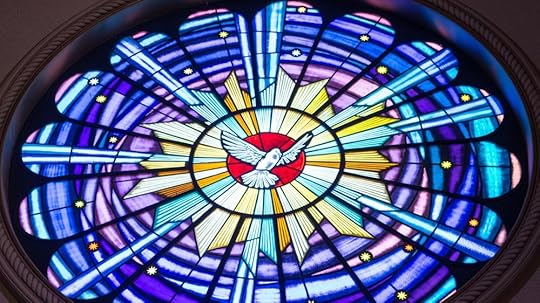
[Pentecost]You are probably wondering what this has to do with our scripture reading. No, we did not read the wrong passage. Today is Pentecost, and we correctly read the Book of Acts account of Pentecost. Let’s begin to connect the dots and see where we end up.
“When Pentecost Day arrived, they were all together in one place.”[viii]
“They” were all gathered in Jerusalem for a festival where Israel remembers the gift of the Law to their ancestors. A moment on Mount Saini, where wind rushed, and a bush was engulfed in flames but not consumed by the fire.
“Jews from every nation (the nations that are difficult to pronounce)” were in Jerusalem. This is a reminder that after Babel, God scattered the people. While they held the Law in common, they spoke their own languages. They had their own customs. They had their own interpretations of the Law. They lived fragmented lives because of being sent in every direction from Babel.
All these people, representing all the known world, heard the followers of Jesus speaking “mighty works of God”[ix] in their own languages.
[Pentecost Coptic Icon] At Pentecost, through the power of the Holy Spirit, the Advocate the disciples had been waiting for, and the proclamation of the Gospel, God reversed the scattering of Babel and continues the work of defragmenting the compartmentalized lives of all humanity. Through Jesus Christ, the Apostle Paul writes, “There is neither Jew nor Greek; there is neither slave nor free; nor is there male and female, for you are all one in Christ Jesus.”[x]
All the nations represented at Pentecost are one because of the “mighty works of God;” because of the faithfulness of Jesus Christ.
Just as God reached down in Genesis, at Pentecost, God continues the work of reaching down to humanity. Reaching down, reaching to us, is a hallmark of Jesus’ ministry.
Jonathan Haidt asks, “what would it be like to live in Babel after its destruction?”
Confusion, loss, and despair in the acknowledgment and loss of what could have been. But in the Church, we hold onto the promise that God is at work amid confusion, loss, and despair. We do not have to search or reach up to the heavens hoping that we might find the Messiah because God is continually reaching down to us. Through the life, death, and resurrection of Jesus Christ, we have been freed from being our own saviors. Being their own savior is one of the things that got the citizens of ancient Babel in trouble.
God takes the most fragmented parts of our modern “post-Babel” lives and makes them whole. This is part of God making all of creation whole. We bear witness to this when we gather around Christ’s table. This is our witness in our worship, mission, and teaching. The unification of the Church is the work of the Holy Spirit – bringing people who speak different languages or only listen to siloed voices together to speak the one language of the Holy Spirit, the one language of God. The language of Grace.
You probably think this does not leave much for us to do. And you’re right. We are free from having to do anything to earn favor with God. That is the good news of the Gospel.
If we can learn anything from Babel and our modern post-Babel era, it is that doing too much is often the way we opt to ignore the work God has already done and is continuing to do.
But if you absolutely need something to do, let’s look to the advice of Dr. Jack Levison, Professor of Old Testament Interpretation and Biblical Hebrew at Perkins School of Theology, and look to the first disciples who stayed put and waited.[xi]
After the Ascension of Jesus, the disciples went back to Jerusalem, where they waited. Jesus had only told the disciples to wait. Still, the disciples had spent enough time with Jesus to know that staying and waiting meant praying. If you need something to do, pray.
The Pentecost outburst was a proclamation of God’s deeds, i.e., what God had done in Jesus and what God had done throughout the history of Israel, so if you need something else to “do,” study those deeds.
Do not be caught by surprise. The first disciples waited, prayed, studied, and expected.
At Pentecost, God reached down and began the work of forming the Church. The Church is the body of Christ, the vessel through which God has promised to work to bring the Kingdom of God to full reality. And while it may seem that the Church is more fractured than ever, more scattered from one another than ever before, we know that it is the work of Christ, through the power of the Holy Spirit, that God will continue to reach to humanity, despite our desire to turn away from God and one another.
Join me on Substack
[i] https://www.theatlantic.com/magazine/...
[ii] Genesis 9:1, CEB
[iii] Genesis 11:1-4, CEB
[iv] Genesis 11:7, NRSV
[v] Genesis 11:5-7, NRSV
[vi] Genesis 11:1-4, CEB
[vii] Ibid.
[viii] Acts 2:1. CEB
[ix] Acts 2:11, CEB
[x] Galatians 3:28, CEB
May 26, 2022
Thoughts and Prayers Are Not Enough
A letter and prayer to the congregation I serve.
Here we are again, hiding in the bathroom, so our children and grandchildren do not hear us weeping, hugging them longer and tighter than usual, and asking ourselves how long we will continue to allow our children to be slaughtered due in part to our refusal to wade into the waters of gun rights.
Here we are again rewriting the prayers for Sunday morning, not knowing what to say in the same way we did not know what to say last time or the times before that.
Here we are again looking at one another, trying to hide our exhaustion and sadness.
Here we are again looking up to Heaven, asking why.
Here we are again saying “thoughts and prayers” are not enough.
The prophet Isaiah wrote that the nations “shall beat their swords into plowshares, and their spears into pruning hooks” (Isaiah 2:4). Yet we continue to live in a nation that tolerates the killing of children without addressing limits on gun ownership. The Second Amendment did not come down from Mount Sinai. The Second Amendment does not supersede Jesus’ command to love one another. The Second Amendment will never be more important than human life; the lives of our children.
It might sound odd for your pastors to make such a political statement. Still, it is even odder that we have not demanded action by our elected leaders nearly ten years after the Sandy Hook massacre and over twenty years since the Columbine massacre. Yet, the Church cannot remain silent in the face of an idolatrous addiction to guns.
Today and in the days ahead, we will grieve what has been lost and mourn alongside families with empty beds in their homes.
Today and in the days ahead, we will hug our children tighter and pray more fervently that they are safe while outside of our care.
Today and in the days ahead, we will pray for the moral courage to demand action so that we do not have to write this letter ever again.
We call on the Mount Olivet community, as a community of grace, to join us in praying for the students, families, teachers, and community of Uvalde, Texas, and all communities where children are not permitted to attend school free of the fear of violence.
“A Prayer for Gun Violence in School” by Kayla Craig, from To Light Their Way: A Collection of Prayers and Liturgies for Parents:
O God of protection and peace,
We come to You weary,
Heartbroken, and afraid.
How do we explain to our child
What it means to practice an active shooter drill at school
When we ourselves don’t have the words?
When we ourselves barely understand?
How has it gotten this dangerous
To be a child
In a desk
In a classroom?
We grieve for innocence lost by way of violence.
Lord, hear our prayer.
We ache for teachers who must prepare for the unthinkable.
Lord, hear our prayer.
We pray for every mother and father
Who is forever changed by the unimaginable–
The death of a child
At the hand of gun violence.
Lord, hear our prayer.
We rub our eyes and will our minds to stop the imagery,
For it is too much to hold.
And yet, some must hold it.
Lord, hear our prayer.
O Lord who said let the children come to Me,
We have sent out teachers to first-aid seminars
But have not cried out to You to stop the bleeding.
Give us the imagination to see a world
Without violence.
Give us a Kingdom imagination to create a better future
For our children and their children.
We are scared, Lord.
We even wonder how you can allow
Mass shootings to happen.
When we walk our children to their classrooms,
We lament that we quietly assess
How close their tiny cubbies are to the front door.
But we know this is not Your way, O Lord.
Help us beat our swords into plowshares.
Help us put down our swords,
Collectively and individually.
Speak peace into our children’s hearts
As their little minds try to comprehend
The possibilities of what they’re practicing for.
Our job as parents is to keep our children safe–
How do we do so?
Give us eyes to see.
Give us new vocabularies.
And courageous hearts to champion.
Our children.
Lord, heal our collective wounds.
Lord, heal our individual hearts.
That crack into pieces
Every time our kids step onto the bus.
Lord, may we see into Your upside-down Kingdom.
Give us courage and boldness
To plead the case of our children.
Deliver us from the evil one,
And may our action for a more peaceable world
For our children
Be a prayer of its own.
Lord, hear our prayer.
– Pastor Ed Walker, Pastor Jeff Goodman, Pastor Teer Hardy
May 22, 2022
The Same Old Song
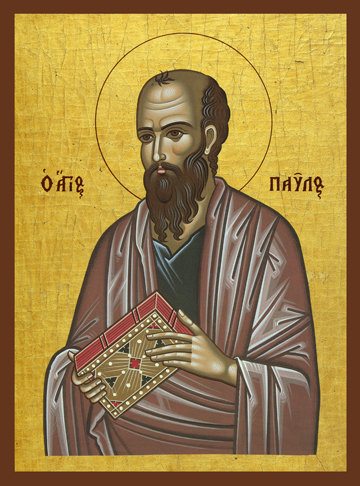
The Apostle Paul, in a reminder that ministry cannot be done alone, enlisted the help of Timothy as a travel companion, and together they set off on a missionary journey. Paul has a vision in the middle of the night during their travels.
I do not use “dream” because “dream” underplays what happened to Paul. A few nights ago, I dreamed I was playing third base for the Baltimore Orioles in a playoff, winning this game and heading to the World Series. I know that is a dream and not a vision from the Lord because the Baltimore Orioles would first need to have a winning season before heading to the World Series, I would need to be at least ten to twenty years younger, and perhaps, at an even higher peak of physical fitness.
You will remember from last Sunday that visions from God alter the course of the person’s life on the receiving end of the vision, often taking well-laid plans we make for ourselves and turning them obsolete.
Paul was no stranger to encounters with God. From a few more weeks back, you will also remember that Paul had a life-altering encounter with Jesus along the side of a road near Damascus as he, Paul, was preparing to arrest followers of Jesus.
So, Paul receives a vision “of a man of Macedonia pleading with” him.
The man says, “Come over to Macedonia and help us.”
Having experienced a course-altering encounter with the divine, Paul sets his site on Macedonia as the next stop on his good news of the gospel preaching tour.
Paul and his companions arrive in Philippi, described as “the main city in that part of Macedonia.” Paul and his companions are not in the backwoods, looking to convert a handful of people. No, Paul and his companions are in the heart of Macedonia.
The city of Philippi was also a Roman colony. The author of Acts, St. Luke, reminds us that Paul has left the friendly confines of the Jewish territories and is now spreading the gospel to Gentiles. Gentiles were the people outside of the Abrahamic covenant held by Israel, and during this time, Jews and Gentiles did not mix.
Paul goes outside the city gates on the Sabbath, i.e., outside the establishment, to pray and worship. Beside a river is where he finds not the man of Macedonia from his vision but instead a group of women. One of the women, Lydia, as having had her heart opened by to Lord. Lydia listened “eagerly to what was said by Paul.”
Lydia listened so eagerly that she and her household were converted, moved to faith, and baptized by Paul. Paul then stays in Philippi, in Lydia’s home at her invitation.
If you are scratching your head thinking this story sounds familiar, that is because it is.
It would not be unreasonable to experience the feeling of déjà vu right now if you attended services in-person or online last week. The Bible is, after all, really the same old song week after week.
In a nearly identical story to that of the conversion of a Roman Officer named Cornelius, the Lord has once again sent his followers to the places and people they should not be interacting with. Peter got in trouble for sharing a meal with Cornelius in the same way that many first and second-century hearers of this story would question whether or not Paul should have done what he did.
Lydia, along with her prayer group, being prompted by the Holy Spirit to open their hearts to the preaching of Paul, further illustrates how God is in the business of breaking down the barriers we build.
What’s more, Peter got in trouble for sharing a meal with Cornelius in the same way that many first and second-century hearers of this story would question whether or not Paul should have done what he did. In both instances, the Apostles were invited, persuaded to receive the hospitality extended to them by “the wrong people.”
It’s not just the Lord opening Lydia’s heart that makes this story important for the church today.
Lydia’s conversion began with her and Paul’s hearts being opened by the Lord. Paul knew too well that faith is not something we can produce on our own. Remember, he had been blinded along the Damascus Road, thrusted into the care of the very people he intended to harm. To the church in Ephesus, he wrote, “For by grace you have been saved through faith, and this is not your own doing; it is the gift of God—not the result of works, so that no one may boast.”[i]
There is no such thing as a “self-made Christian.” A heart opened to the works of God, along with our conversion or faith, are acts initiated by God. This is why when the church speaks of repentance, we remember that we have been repented, that it is the inward working of the Holy Spirit that enables us to turn toward God.
Jesus’ life and ministry testify to this.
Jesus called his disciples. They did not seek him out. People would come to him only after he began his ministry and word spread.
In situations and places where hope and the presence of God seemed to be surely gone – a possessed man chained up among the tombs or at the grave of Lazarus – Jesus, the Lord, imitates what is needed for us to be open to the good news of new life that can only be found in him.
New life that calls us beyond the city gates. Moving us away from the safety of our comfort and into the lives of the people we least expect.
New life that opens our hearts and minds to receive the good news of the gospel. And in turn, we hear, once again, the good news of our salvation.
New life that breaks through the barriers of race, gender, identity, and more! Remember, Lydia was a dealer in purple cloth, meaning she was a rich woman. While just a few weeks ago, Tabitha or Dorcas was caring for the poor and forgotten. There is no one outside the reach of the movement of God.
So often, in the church, we forget that coming to faith does not begin with the markers we prescribe – attendance in worship or Sunday school, financial giving, or joining a committee. While these actions can be markers of a response to a person’s faith – similar to the hospitality shown by Lydia to Paul – the beginning steps of a faithful witness to the gospel come when the Lord opens our hearts, just enough for us to catch a glimpse of the Holy Spirit, even while we are sound asleep.
SubscribeMay 15, 2022
Rule Breakers

Peter was in hot water. While he was in Joppa, just after he raised Dorcas, he had a vision, one of those Holy Spirit prodding, life will not be the same after this vision kind of vision.
Peter observed the dietary laws of the Jewish people. These practices were so ingrained into his reality that he did not have a choice to think of the consumption of food in any other manner. He knew, deep down in his bones, that not only were the dietary laws he had followed his whole life rooted in the Holy Scriptures but that these laws were a matter of life and death for his community. Israel, for centuries, had been on the receiving end of mocking and persecution by their occupiers (in and out of exile) for adhering to these laws. These laws provided constancy and assurance to a group of people who had been on the receiving end of change at the hands of their oppressors over the course of multiple generations.
It would take a monumental vision, a burning bush, transfiguration, orJesus walking on water-like moment for Peter to budge.
“Peter went up on the housetop about the sixth hour to pray. 10 And he became hungry and wanted something to eat, but while they were preparing it, he fell into a trance 11 and saw the heavens opened and something like a great sheet descending, being let down by its four corners upon the earth. 12 In it were all kinds of animals and reptiles and birds of the air. 13 And there came a voice to him: “Rise, Peter; kill and eat.”[1]
Thank you for reading Brewing Theology. This post is public so feel free to share it.
After the vision, Peter went to an officer's home in the Roman Army. Peter went to the house of a Gentile – someone who is not Jewish. He would enter the home of a man responsible, in part, for enforcing Rome’s occupation of Israel. The officer, Cornelius, and his household were baptized by Peter after receiving the Holy Spirit.
“The Holy Spirit fell on all who heard the word. 45 And the believers from among the circumcised who had come with Peter were amazed because the gift of the Holy Spirit was poured out even on the Gentiles. 46 For they were hearing them speaking in tongues and extolling God. Then Peter declared, 47 “Can anyone withhold water for baptizing these people, who have received the Holy Spirit just as we have?” 48 And he commanded them to be baptized in the name of Jesus Christ. Then they asked him to remain for some days.”[2]
The Church is never quick to change, and that is by design. We cannot be all things to all people. All people are welcome, to be sure, but the lordship of our risen Lord and the Kingdom of God is our primary focus in worship, study, and mission. Orthodoxy – the beliefs held by the Church – along with Orthopraxy – how we do what we do; our physical movements – help us keep our focus on Jesus and not the celebrity of the person making the proclamation or the latest trends on social media.
Yet, Peter’s vision and his response to the work of the Holy Spirit throw a wrench into the neatly curated doctrines and discipline the church holds onto.
You see, it is not that Peter baptized the wrong people that got the folks in Jerusalem in a tizzy. Did you notice their grievance? They said to Peter, “You went to uncircumcised men and ate with them.”[3]
Peter ate at the wrong table.
Peter ate with the wrong people.
Peter, eating in the home of Cornelius, violated the dietary laws Peter had held onto his entire life up to this point. Remember, Peter said to the Lord during his vision, “By no means, Lord; for nothing common or unclean has ever entered my mouth.”[4]
Eating a meal with the wrong people is what brought questioning upon Peter, just as it did to Jesus when he dined at the home of Zacchaeus.
A vision from God and the prodding of the Holy Spirit upended the constancy Peter and his Jerusalem-based Christian contemporaries had held onto (for a good reason) for generations.
You see, it’s not just that Peter was released from the dietary laws of the Torah. The Lord said, “What God has made clean, you must not call profane.”[5]
It was not just food that was considered unclean. Gentiles were unclean as well. And with the new opening of the tomb, Jesus’ Easter morning victory over Sin and Death, our uncleanliness caused by that which Christ is victorious over has been washed clean. Creation, all of it, is what God has made clean. This is what John is writing about in Revelation when God said, “See, I am making all things new.”[6]
This story leaves us with a lingering question.
Retired United Methodist Bishop and all-around church curmudgeon Rev. Will Willimon asks, “Will we allow the Holy Spirit to prod us today, to give us a vision, to drag us, as it dragged our apostolic forebearers before us, kicking and screaming, all the way toward the wideness of God’s mercy?”[7]
In just a few minutes, we will pray that Charlie is so filled with the same Holy Spirit that moved the home of Cornelius that he is never the same. And because he will not be the same, we pray that we will not be the same. The work of the Holy Spirit moves us beyond our bolted down pews, and our Orthodoxy and Orthopraxy toward the fulfillment of the Kingdom of God, toward the wideness of God’s mercy.
Do not misunderstand. Doctrine, disciple, and practice are necessary for the church, just as the law was necessary for Peter and Israel. But our attachment to constancy in doctrine and practice puts us at a disadvantage when it comes to the work of God because we often see the way things are (or the way things were) to be more powerful than what God is doing before our very eyes.
Still, the witness we bear to the world is to the One who does not see our comfort in constancy as a hurdle to the wideness of God’s mercy.
This was the case when Peter received a vision, and Holy Spirit descended upon the home of Cornelius.
It was the case when Jesus dined with Zacchaeus, extending grace to a man who had cheated his neighbors.
It was the case when the power of Sin and Death could not hold back the gravestone.
And it will be the case in just a few moments when the waters of baptism clothe Charlie in new life. And oddly enough, new life that all of us have been clothed in as well because of the wideness of God’s mercy.
Subscribe[1] Acts 10:9-13, ESV (https://www.biblegateway.com/passage/...)
[2] Acts 10:44-48, ESV (https://www.biblegateway.com/passage/...)
[3] Acts 11:3, ESV (https://www.biblegateway.com/passage/...)
[4] Acts 11:8, ESV (https://www.biblegateway.com/passage/...)
[5] Acts 11:9, NRSV (https://biblia.com/books/nrsv/Ac11.9)
[6] Revelation 21:5, NRSV (https://biblia.com/books/nrsv/Re21.5)
[7] Willimon, Will. “When the Outsiders Become Insiders.” May 10, 1998. Duke University Chapel.
May 8, 2022
An Extraordinarily Ordinary Story
The beginning of Tabitha’s story is extraordinarily ordinary. All of us have been touched by someone like Tabitha or know someone who has. We all know people who “overflowed with good works and compassionate acts on behalf of those in need.”[i]
There are people, like Tabitha, who give life and dignity to those overlooked and forgotten in a world that favors the haves over the have-nots. This is why Pastor Jeff’s reading of Tabitha’s story was probably the first time you’ve heard her name.
The extraordinarily ordinary stories in our lives are often overlooked, even forgotten, when sandwiched alongside extraordinarily extraordinary stories. This is the case for Tabitha and even Aeneas four verses before Tabitha’s story. We are drawn to the bright light of Saul’s encounter with Jesus on the Damascus Road and Paul’s subsequent ministry, along with Peter’s conversion of Cornelius – both stories I am sure you have heard of, maybe even studied in a Sunday school class or Bible study.
Thank you for reading Brewing Theology. This post is public so feel free to share it.
Tabitha dies and two disciples in Joppa send for Peter who was in a nearby town. If anyone could do anything in this moment of death and sorrow, it would be Peter. Peter, the guy who denied Jesus at Jesus’ lowest hour is now the rock upon which the Church is being built.
Peter is the one for the job because of one of the things Saint Luke recorded in his namesake gospel.
“Jesus called the Twelve together and he gave them power and authority over all demons and to heal sicknesses. He sent them out to proclaim God’s kingdom and to heal the sick.”[ii]
When Peter arrives in Joppa, the sting of death has set in and the widows once cared for by Tabitha are beside themselves.
As Peter entered the room where Tabitha’s body lay, the widows were “crying as they showed the tunics and other clothing Tabitha made when she was alive.”[iii]
Elisabeth Schüssler Piorenza, a Romanian-born Roman Catholic feminist theologian who teaches at Harvard Divinity School notes, “in the first-century – as today – the majority of the poor and starving were women, especially those women who had no male agencies that might have enabled them to share in the wealth of the patriarchal system.”
In the first-century widows had no one to advocate for them or protect them in a societal structure that gave deference to men.
Tabitha had given agency to women who were at the bottom of the rung of societal power.
Tabitha’s life had given light to those who lived in their community's dark corners, and her death has caused a crisis.
We live within fixed structures and arrangements. Our nation is governed by a fixed document that at times has been amended. Laws can change but the overall structure is fixed. On paper, our fixed structures are to be applied or enforced equally.
“Equal Justice Under Law” is engraved on the West Pediment of the United States Supreme Court. In a unanimous decision back in 1891, in Caldwell v. Texas, Chief Justice Melville wrote, “the powers of the States in dealing with crime within their borders are not limited, but no State can deprive particular persons or classes of persons of equal and impartial justice under the law.”[iv]
On paper, yes, equality under the law, but when we step outside of what’s on paper and step beyond the fixed expectations for how we behave the degree to which we are punished varies depending on markers like gender, race, and economic status.
Joppa was a port-town in Judea, a mixing pot of religions and cultures. An area that did not adhere to Jewish Law as let’s say, Jerusalem. Under Jewish Law, and on paper the widows Tabitha cared for those who were to be cared for by the community, and not mistreated.
“Don’t treat any widow or orphan badly. If you do treat them badly and they cry out to me, you can be sure that I’ll hear their cry. I’ll be furious, and I’ll kill you with the sword. Then your wives will be widows, and your children will be orphans.”[v]
The system was broken, and Tabitha stepped in to care for those who were forgotten.
Even within our fixed systems, with clear guidelines, we sin against one another. The churchy way of saying this is we turn away and our love fails. We forget the widow, lie to the person asking for a buck, and sit on our hands when we see others mistreated or exploited. We do it over and over again.
Tabitha was the source of hope for the widows of Joppa and when she died so did their hope.
On needing one another for hope, Christian ethicist Dr. Stanley Hauerwas writes, “We need each other because we cannot hope alone. We learn to hope by trusting others who have learned to hope by doing the same... hope is the virtue that takes pleasure in our need for others.”[vi]
We need one another, and Tabitha gave others another to hold on to.
Luke tells us that after Peter said, “Tabitha, get up,” and all saw that she was alive, “many put their faith in the Lord.”[vii]
“Faith in the Lord.”
Not faith in Peter.
Not faith in Tabitha.
“Many put their faith in the Lord.”[viii]
The Lordship of Jesus Christ and the Good News of his Grace subverts the present order by announcing a new age where reality is not based on our fixed structures but upon God’s promise to make all creation new – God’s promise to restore all of creation by reconciling us to God and one another.
Our fixed structures often lead to paralysis and death for those on the margins or lower rungs of the social ladder. But the One who ordered the chaos of creation, was worshiped in a manger, and carried a cross telling fishermen to drop their nets, and the ill and dead to get up.
In Aeneas’ healing and Tabitha’s rising these social systems have been rendered null and void.
And church, we bear witness to this. We are witnesses to how Jesus Christ has overcome the power of Sin and Death. In the empty tomb, leaving his burial clothes behind, Jesus tells the world no more with we be separated from God or one another.
It is not that the last shall be first; they are.
It is not that the dead shall live; when we were dead to our Sin Jesus offers us new life.
In Christ no one stays in their place: fishermen will preach, the paralyzed walk, and the dead live again.
From death in Sin to new life through Grace.
Subscribe[i] Acts 9:36
[ii] Luke 9:1-2
[iii] Acts 9:39
[iv] Caldwell v. Texas, 137 U.S. 692 (1891).
[v] Exodus 22:22-24
[vi] Hauerwas, Stanley. The Character of Virtue: Letters to a Godson. Pg. 97.
[vii] Acts 9:42
[viii] Acts 9:42