Teer Hardy's Blog, page 3
May 1, 2022
No Superheroes Here
“Now, as he was going along and approaching Damascus, suddenly a light from heaven flashed around him. He fell to the ground and heard a voice saying to him, ‘Saul, Saul, why do you persecute me?’”[i]
You will remember from Sunday school that we first met Saul in chapter seven of the Book of Acts, where Saint Luke tells us Saul was the person who watched over the garments of those who were stoning Stephen. Saul may not have thrown a rock at Stephen, but this scene would be the event that moved Saul from observer to Enemy-Number-One of the church.
Luke writes, “Saul was ravaging the church by entering house after house; dragging off both men and women, he committed them to prison.”[ii]
We meet up with Saul today as he secured arrest warrants for followers of The Way residing in Damascus.
Saul’s plan?
Arrest followers of The Way and take them before the same religious leaders in Jerusalem who colluded with Judas and insisted that Jesus be crucified.
So, with official letters in hand from the synagogue, Saul is ready to stamp out the church in Damascus and then throughout Israel.
“Suddenly, a light from heaven flashed around him. He fell to the ground and heard a voice saying to him, ‘Saul, Saul, why do you persecute me?’”[iii]
Bam!
Saul does not know who or what has knocked him to the ground.
“Who are you, Lord?” Saul asks.
This voice has intruded on and devastated Saul’s self-righteous journey to stamp out followers of the crucified and risen Jesus. Until this moment, Saul, it seemed, knew more about religion, and learned more about God than God. Saul was sure of who he was, who God was, and what he was to do in God’s name once he arrived in Damascus.
“Who is this?” he asks.
“I am Jesus, the one you are persecuting.”
Bam!
Thank you for reading Brewing Theology. This post is public so feel free to share it.
Luke tells us Ananias, a follower of The Way in Damascus, had a vision.
While Saul had intended to lay hands of persecution on Ananias and his friends, the Lord instructed Ananias to lay hands on healing on Saul.
Ananias needed to be convinced of this by Jesus, as I imagined many of us would need to be.
“That Saul, of Tarsus? Are you sure?”
Saul’s conversion and the work of Ananias make for stories used in the church to point to how individuals shape the church. Without the conversion of Saul, we do not have the letters of Paul. Maybe you have been told that you need to see the light, just as Paul did – a life-altering encounter that if you do not have it, you cannot be a “true follower” of Jesus.
Or, perhaps you have been told to be obedient just as Ananias was, caring for someone who had it out for you without the proper theological context.
This conversion is full of material that can easily be used to pressure, persuade, or manipulate us to act or move in certain ways.
This past Thursday, Pastor Ed and I, along with our Arlington and Alexandria clergy colleagues, filled the sanctuary at Floris United Methodist Church for what I like to call “required clergy fun.” During this meeting, we were invited to consider our superpower for ministry. If I were to have a superpower it might be my ability to properly use the word “awesome” as many times as possible, walking the fine line of irritating Pastor Ed’s last nerve.
Maybe it is because being contrary is a hobby of mine but the more I thought about the question, “what is your superpower for ministry?” I became uncomfortable. While I understood the point of the question, the reality is that the question edged on the ways the Church can pressure, persuade, or manipulate us to have stories like Saul or Ananias.
So, I’m outing myself. I have no superpowers for ministry. While this may disappoint a few of you, I will not be leaping over the church steeple in a spandex bodysuit holding a Bible in one hand and communion elements in the other.
As a pastor, I do have things I favor doing and one of those things is listening to you as have shared your stories with me over the past five years, and together we have looked for where God has been at work in your lives. And every time I hear one of your stories and together we see where God is at work, I think to myself, “Wow, now that is awesome!
Your stories of coming to faith and God’s movement in your lives are special because they have not been stories of pressure, persuasion, or manipulation. If anything, these stories have been examples of how to push back against the pressure, persuasion, or manipulation many feel at the hands of the Church.
Over the past five years, your stories of coming to faith and God’s movement in your lives are special to me because, like Saul and even Ananias, your experiences point to the movement and work of God.
Our stories of encountering the risen Lord are how we bear witness to Mary’s Easter morning discovery of the empty tomb.
We are witnesses to the very voice that knocked Saul on his behind, who spoke to Ananias, who overcame the power of Sin and Death, and who continues to speak to us today.
Luke tells us Saul was completely changed – from Enemy-Number-One to being the person who would carry the Good News of God in Jesus Christ to the Gentile world. To people like you and me.
We stand today as witnesses to the awesome work of God along the Damascus Road.
It would have been easy, maybe even justified, for God to write off Saul. After all, Saul was Enemy-Number-One of the Church. But as we read each year on Good Friday, God is not in the business of writing people off. When Jesus was nailed to the cross, he prayed for the forgiveness of the very people who killed him.
And that is Grace – the nothing you can do to earn or lose it love and forgiveness of God.
Right now, it is yours, just as it is Saul’s and Ananias’.
Right now, it is yours, just as it was extended to the soldiers who put the nails in Jesus’ hands and who mocked him.
Right now, this amazing Grace is yours just as it is for the person you might believe deserves it the least.
The conversion of Saul is a story of God’s Grace before it is the story of Saul being converted or changed. A story of the work of God in the people and times we least expect.
As resurrection people, this is what we bear witness to – the work of God.
To one another.
To the world.
[i] Acts 9:2-3
[ii] Acts 8:3
[iii] Acts 9:3-4


March 22, 2022
Visio Divina
A Visio Divina is a method of prayer that uses art to lead you towards God’s presence and movement within. Similar to the practice of Lectio Divina, Visio Divina is a guided, step-by-step process that aids participants in seeing, hearing, and experiencing God.
Become present. Breathe. Close your eyes. Ask for God’s blessing.
Open your eyes and gaze at your selected image. Welcome the image, let your eyes roll over it and take it all in. What strikes you? What does your eye want to drink in? Use a journal to write down your first thoughts. Then rest your eyes for a few minutes and breathe
Open your eyes and observe your piece a second time. Let your eyes lead you. What are you drawn to? What are you starting to uncover? Write about this deeper sense. Close your eyes again and breathe.
Open your eyes and gaze for a final time. Allow Spirit to bring forward a message for you; a word, a phrase, or an emotion. Don’t judge what comes up, just allow. What does this communicate to your life today? Write about this emergence in your journal.
Spend time with God. With all this revealed, leave your heart open to God for just a bit longer. Let God roll around in all that has been exposed. Experience God’s engaged healing response to your heart opening with thankfulness. Take what you have learned into the world.
And that’s it! Like Lectio Divinia, this is a spiritual practice that requires practice. The more often you use Visio Divina the easier it will be to sit longer with a piece of artwork. Give yourself grace and be patient. While we all wish God would speak with immediacy that is not always how God works.
Give Visio Divia a try using this piece by Ivanka Demchuck.

March 13, 2022
No Puppets Here

Thanks to the work of Jim Henson and Fred Rogers, generations of children have grown up with friendly puppets teaching, encouraging, and being a friend on days when the world feels lonelier than it should for a child. Henson’s puppets we know were more exciting, larger than life, while Rogers used softness and empathy to connect with audiences of children (and their parents listening from the next room over).
Bert and Ernie, King Friday, Kermit, Big Bird, Daniel Tiger, Fozzie Bear, Mr. Snuffleupagus, Henrietta Pussycat, and Oscar the Grouch were vehicles through which educational lessons and mantras for living could be transmitted with tenderness and grace.

Even Statler and Waldorf were able to show tenderness and grace while retaining their unique personality. Wait, those guys look familiar.
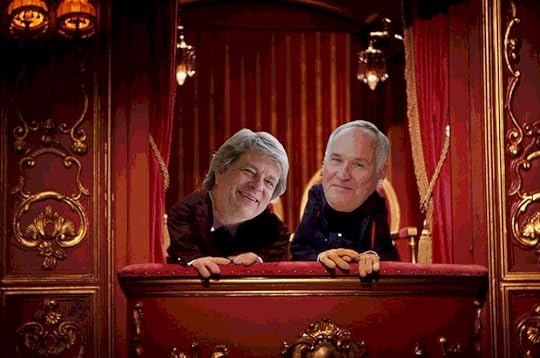
The use of puppets to teach and entertain is not limited to children. In comedy, puppets say the things well-adjusted and good-mannered people would never say in front of company, or at the least, in front of their dear sweet granny. Comic Jeff Dunham, depending on your perspective, entertains or annoys his audiences with the help of puppets.
We have jumped from where we were last Sunday, in the 4th chapter of the Gospel of Luke, to the 13th chapter. Much has happened in Jesus’ ministry throughout the chapters we have skipped over, but I will not recap them for you today because I know you have brunch reservations in 40 minutes. What you need to know is that Jesus has been teaching, healing, and irritating the Pharisees. Today, Jesus is looking over Jerusalem, David’s city, when the Pharisees warned Jesus that Herod wanted to have Jesus killed. Herod, the hand-picked puppet ruler, regional middle-management, according to the Pharisees, wants Jesus dead.
This is the same Herod that had John the Baptist beheaded.[1]
Were the Pharisees giving Jesus a fair warning? Are the Pharisees doing Jesus a solid by letting him know that Herod wanted him dead?
Maybe.
Luke does recount Herod questioning who and what Jesus was doing.
Herod the ruler heard about everything that was happening. He was confused because some people were saying that John had been raised from the dead, others that Elijah had appeared, and still others that one of the ancient prophets had come back to life. Herod said, “I beheaded John, so now who am I hearing about?” Herod wanted to see him.[2]
I’ll leave that you to figure out.
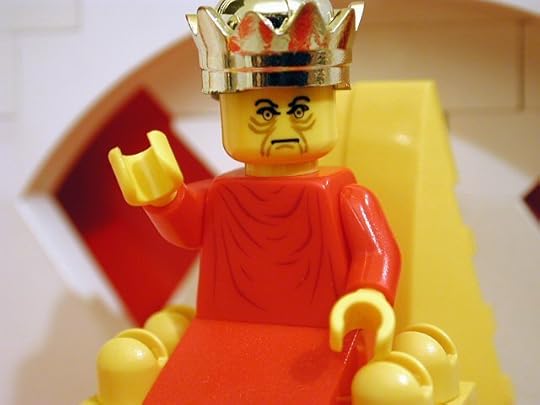
Today, I want us to look at Herod of Antipas, the puppet ruler of first-century Galilee. You might remember Herod from Christmas, well the Sunday after Christmas when the scriptures tell us he ordered the slaughter of every newborn male in Bethlehem, infanticide, in an attempt to stop the in-breaking of God in a Bethlehem manger.
Herod began his career/reign as an aspiring administrator and was eventually named “King of the Jews” by Rome in 37 BC. Herod’s title will be problematic for Jesus as we approach Good Friday.
Herod’s building projects may have won over some of the citizenry living under his rule but at the end of the day, it was Herod’s job to do the bidding of the Roman Empire. He was the puppet of Mark Anthony and Augustus.
Luke places two kings before us – one, the puppet king who build for his own glory and gain, and Jesus, the king of kings who continually pointed to the One who had sent him to reveal the goodness of God’s grace and would save a world who had turned away from God.
The puppet king and the king who laments Jerusalem because Jerusalem is no longer the city it was established to be.

“Jerusalem, Jerusalem, you who kill the prophets and stone those who were sent to you! How often I have wanted to gather your people just as a hen gathers her chicks under her wings. But you didn’t want that. Look, your house is abandoned. I tell you, you won’t see me until the time comes when you say, Blessings on the one who comes in the Lord’s name.” [3]
Jesus is lamenting what might have been. He is grieving what Jerusalem could have been.
He laments the people and rulers, including Herod, who have, as Bishop Will Willimon puts it, “sunk to replication of the worst aspects of their history rather than following their better angels.”[4]
Jesus is told Herod wants to have him killed, and instead of running away to hide, Jesus laments because, as Jesus sees it, Jerusalem has lost its way. The hand-picked, empire-colluding king is the least of Jesus’ problems. This moment is enough to bring Jesus to the brink of tears.
Jesus wanted to gather all of Jerusalem under his wing, all of creation under his wing. Yet, we responded to his love with cries of “Crucify him!”
It is easy to criticize Herod, the puppet king, in 2022 because hindsight is nearly 20/20. Let's take a deeper look, a moment of self-reflection. There are times in our lives when we are followers of a puppet, someone propped up to do the dirty work of another, or worse, we prop someone else up to do our dirty work because we know what we have asked them to do is wrong. We want to keep our hands clean even if our conscience will not be.
In a world of Herods, Jesus is offering us an alternative.
In a world of mouthpieces and actors doing the bidding of those who wish harm on others or to advance an unjust agenda, Jesus is extending an invitation to a new way of living. This invitation does not have an expiration date.
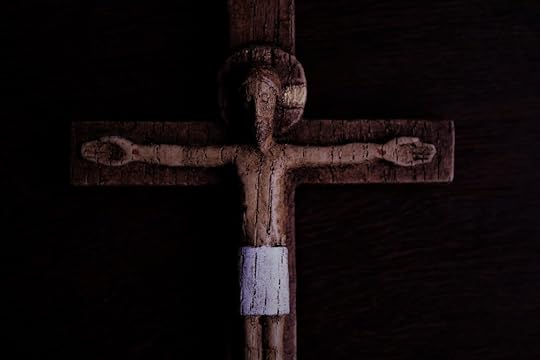
Lent is a forty-day season to mourn the ways we have disappointed not just ourselves but also God with the things we have done and left undone. In Lent, we remember that as we lament and repent, Jesus is gathering us up and preparing us to be sent out, not to do his dirty work but to transform the world together. The mission of our church is to transform the world through discipleship.
The transformation of the world through our transformation.
Transformation through grace.
Transformation through transformation.
Not through puppetry.
Not through dirty work.
[image error]Transformation through the faithfulness of the One who did not turn his back on us after lamenting that we had turned our backs on him.
And the good news is that as you have been gathered and sent, you are not sent out covered in the dirt the world has smeared on you by puppets who would like to think they can leave a lasting impact on your life.
In Jesus gathering us up, we are made clean.
The cause of Jesus’ lament, our sin, does not hold the final word. Jesus has invited us to stop the puppet show and to step into his grace under his wing of love, protection, and transformation.
Subscribe
[1] Mark 6:14-29
[2] Luke 9:7-9
[3] Luke 13:34-35
[4] Willimon, Will. “What Makes Preachers Cry.” March 17, 2019. https://asermonforeverysunday.com/wp-content/uploads/2022/03/Will-Willimon-2nd-Sunday-in-Lent-2019.pdf
March 6, 2022
The If/Then Temptation
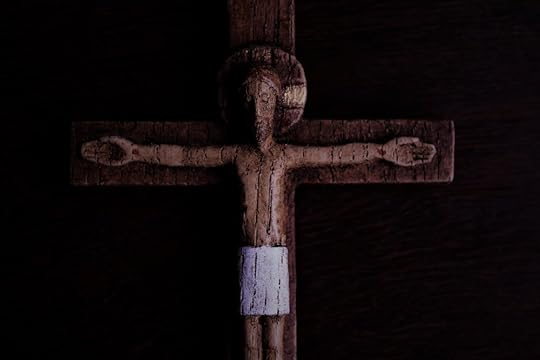
Photo by Rui Silva sj on Unsplash
Our world is set around if/then propositions. From cradle to grave, behavior is corrected or encouraged based on how you respond to the if of the proposal. The then that follows is intended to elicit a specific behavior of the if.
As a kid, how many times were you told something like, "if you want dessert, then you had better eat all of your dinner."?
Teenagers throughout our community are cashing in on the if/then statements they have been told their entire adolescence: if you want to get into college, then you had better study, take as many AP classes as possible, and score a ten trillion on your SATs.
Adults, we are not immune to this order of our lives. We have been told that if we do better at our jobs – work longer (usually unpaid hours), producing more of whatever we are making for someone else, then a promotion or pay raise might be waiting for us.
Not all if/then propositions are bad.
If you want to lower your A1C3, then there is a pill for you.
If you exercise regularly, then you are less likely to deal with health-related issues later in your life.
If you subscribe to my podcast, then you will be blessed with conversations that can help you grow in faith without using stained glass language.
Not all if/then propositions are bad, but from where I am sitting, it seems as though if/then statements, more often than not, are used to control our behavior, our worse, are used by us to control the behavior of others.
Fresh off his baptism, after being filled with the Holy Spirit, after being declared beloved by God, Jesus left the banks of the Jordan River and went into the wilderness. Luke tells there the Devil tempted Jesus and that Jesus fasted for 40-days.
"If you are the Son of God, command this stone to become a loaf of bread." [1]
"To you, I will give their glory and all this authority; for it has been given over to me, and I give it to anyone I please. If you, then, will worship me, it will all be yours." [2]
"If you are the Son of God, throw yourself down from here, 10 for it is written, 'He will command his angels concerning you, to protect you,' and 'On their hands they will bear you up, so that you will not dash your foot against a stone.'" [3]
Mainline, well-educated, enlightened Christians get squirrely when we get to this story in the Gospels. The temptation of Jesus by the Devil, Satan, appears in all three Synoptic gospels. Matthew, Mark, and Luke agree that Jesus went into the wilderness for 40-days at the beginning of his ministry, where he fasted, and on day 40, the tempter laid out three if/then propositions for Jesus to consider. Each of the if/then propositions offered by Satan would have made Jesus wildly popular, so famous he might not have been run out of his hometown after declaring "the Spirit of the Lord" was with him and that his ministry was to bring good news to the poor, release the captives, give sight to the blind, free the oppressed, and proclaim the year of the Lord's favor.[4]
Temptation of Christ - James Janknegt
Had Jesus taken Satan up on the offer of turning rocks into bread, the feeding of the five thousand might have been a bit easier. Offering food to the hungry from the stone on the ground certainly would have given Jesus a boost in the polls.
At stake in our scripture reading is an issue of the most serious concern for Jesus' ministry and the church throughout the centuries.
Who is to be trusted, Satan or God?
Who is to be worshiped, Satan or God?
Before entering the wilderness, Jesus was baptized and declared to be God's beloved, and had Jesus given into the temptations presented to him. He would have been thumbing his nose at the One who sent him. Jesus would have been erasing the salvific work that began in his mother's womb.
The if/then of Satan would have derailed the ministry of Jesus just as he was kicking it off.
Chapter five of Fydor Dostoevsky's novel, The Brothers Karamazov, is an updated examination of the temptation of Jesus. Titled "The Grand Inquisitor," Dostoevsky explores Jesus' rejection of the offers made by Satan. Set in 16th century Spain during the inquisitions, Jesus returns and is arrested nearly immediately after he healed the sick – Jesus doing what Jesus does best. Jesus, Dostoevsky writes, opts for freedom.
Pressing Jesus after being arrested, the Grand Inquisitor states Jesus should have accepted the offer made by Satan in the wilderness. Because Jesus did not take the offer, the church now assumes the role offered by Satan. The church assuming this position assures humanity will experience happiness and security, and all we had to forfeit was our free will.
Satan's temptation in the desert and Dostoevsky's Grand Inquisitor seek to undermine the gospel by confusing the church's message, the basis upon which the church was built, about who Jesus is and what Jesus has done.
Namely, Jesus, the Son of God, firstborn of all creation, who once and for al cleared the balance sheet of our wrongdoing, and is now gathering all of humanity, all of creation in his grace.
Church historian Joseph Ratzinger, aka Pope Benedict, the retired pope, wrote, "At the heart of all temptations, as we see here, is the act of pushing God aside because we perceive God as secondary, if not actually superfluous and annoying, in comparison with all the apparently far more urgent matters that fill our lives. Constructing a world by our own lights, without reference to God, building on our own foundation; refusing the acknowledge the reality of anything beyond the political and material, while setting God aside as an illusion – that is the temptation that threatens us in many varied forms."[5]
What's more, we are often tempted, as Jesus was, to deny God as God, placing ourselves above God.
We are often tempted to deny the Gospel as good news, replacing it with if/then prerequisites. We are placing ourselves in a role within the church that does not belong to us.
The Good News of the gospel of Jesus Christ declares you unconditionally forgiven, loved, and saved while it is Satan who speaks in if/then conditions. We attach if/then strings to the Gospel all the time. And the church today often continues to repeat the words offered to Jesus in the wilderness.
If you repent, God will love you.
If you believe, God will have mercy on you.
If you do good, then God will bless you.
And when we, the church, when we add if/then prereq’s to the gospel, we’re wrong. We become like the Grand Inquisitor, stepping in where we believe Jesus was wrong. We’ve missed the point. We have failed to learn from Jesus’ own temptation.
We have begun our journey through Lent in the wilderness because Lent is a time of being in the desert, being in the wilderness. We live in the wilderness. We live in a world where the temptation to assume Christ's throne as our own is always present. We opt for the most reasonable decision, planned entirely, leaving nothing to chance, and in doing so, push God entirely out of the picture. God, relegated to the private, while we wander the wilderness seeking ways to ascend when the truth is that God has already descended to us.
Jesus Christ has descended to us, bring the divine gift of grace: unmerited, nothing you can do about it, no if/then's attached love, forgiveness, and mercy.
Many people view Lent as a season to get better through piety. So often, our Lenten practices are laden with the same temptations presented to Jesus in the wilderness – if you do this, then you will ascend, you will achieve, you will be blessed. And if you don't, then you are less than, not worthy of ascension or achieving.
The good news for us, during Lent and year-round, is that the One tempted in the wilderness is also the crucified One, sacrificing himself in your place, and the one who rose on the third day. The One in whom new life is made available, without prereq, no if/then's, for those who cannot resist the temptation. He gathers us up in his grace.
Subscribe on Substack[1] Mark 4:3
[2] Mark 4:6-7
[3] Mark 4:9-11
[4] Luke 4:18-19
[5] Ratzinger, Joseph. Jesus of Nazareth. Pg. 28.
February 27, 2022
Listen Up!


It was not until I became a father that I realized how poorly we listen to one another. A day does not go by where someone in my house says something like, “Listen to me,” “listen to her,” “listen to him.”
“Let them speak!”
“Don’t interrupt me, her, him, or them.”
Talking over people – teachers, classmates, one another, their mother, me – is one of the many talents I have tried to avoid handing down to my children. So, when a note came home from school a few weeks ago outing one of my children with an “unsatisfactory” ability to listen and follow directions, I immediately blamed their mother. “It couldn’t be my fault,” I blurted out over Allison as she was reading the note aloud.
“Oops!” I thought to myself.
At first, I thought this was a poor reflection of my parenting. “Maybe,” I said to myself, “I need to do better. I should be a better example. I’ll try harder to let the kids talk more, not being so quick to offer advice or direction.” I had the problem figured out.
As a pastor, I am in the listening business.
I listen to the Bryan rehearse on the organ on Wednesday afternoons and the choir rehearse on Wednesday evenings.
I listen to Pastor Jeff ask where he left his keys.
I listen to you all as you share your dreams and fears with me.
A few days later, I remembered an observation I had made a few weeks earlier. I realized how often adults should receive an “unsatisfactory” checkmark for our ability listening. How many times do we talk over our spouse or partner at home? How often do we fail to listen to a friend or mentor when they are offering advice, consolation, or critique? How often do I, how often do you walk past someone on Sunday morning asking, “how are you this morning?” without stopping to listen to the person’s answer?
So, contrary to what my kids will tell you, my parenting is not the issue. We are all terrible listeners. I feel so much better.
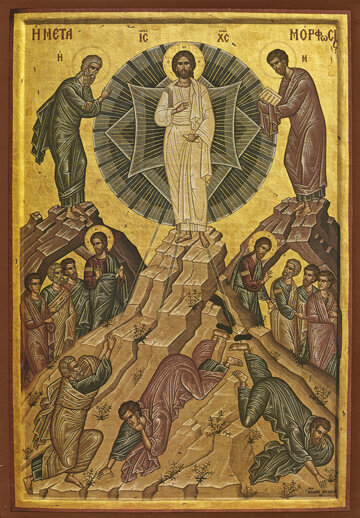
Today is a turning point in the Church’s year. The Transfiguration of Jesus signals a transition away from the light of Epiphany to the shadows of Lent. The bright light of Epiphany will soon give way as the shadow of the cross grows larger as we journey through Lent, toward Jesus entering Jerusalem to shouts of “Hossana!” on Palm Sunday followed by shouts of, “Crucify!” on Good Friday. According to Rev. Fleming Rutledge, only Palm Sunday can compete with the drama of the Transfiguration.
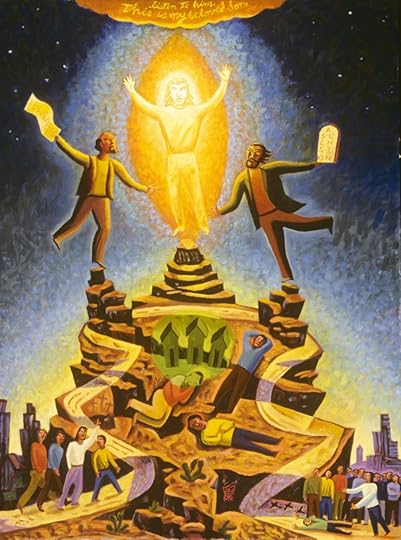
Transfiguration - James B. Janknegt
On the mountain top, alongside Jesus, Moses and Elijah appear. Their presence at the Transfiguration confirms Jesus as the Messiah and as the Son of God, the chosen One of Israel, of all creation. In Jesus, the hopes of all creation have been realized.
Eight days before Jesus and his three trusted disciples trekked up the mountain, Jesus foretold of his death. Jesus said he, “must undergo great suffering, and be rejected by the elders, chief priests, and scribes, and be killed, and on the third day be raised.”[1]
What Jesus told his disciples before their climb is precisely what Jesus, Moses, and Elijah discussed as the disciples drifted off the sleep. The disciples were asleep on the job as they will be when Jesus prays in the garden, hours before his arrest and execution.
What is to happen in Jerusalem will be the sacrifice to end all sacrifices required by the Law and the turning point the prophets pointed toward. In the Church we believe Jesus’ life, death, and resurrection fulfill the ministry of Moses and Elijah.
Jesus’ disciples knew the Law and the words of the prophets. The disciples would have known full-well who Jesus was colluding with as the disciples rose from their slumber. Just as the disciples had listened to Jesus teaching, the disciples listened as the words of Moses and the prophets were spoken in the synagogues and in the Temple.
After the cloud-filled mountain top scene, Moses and Elijah depart, and Jesus is alone with his three disciples. Jesus alone is the fulfillment of the Law and the prophets – the fulfillment of the ministries of Moses and Elijah.
“This is my Son, my Chosen; listen to him!”[2] instructed a voice as the clouds lifed.
Listen to him.
Listen to Jesus.
Christians are not usually lauded for their ability to listen.
I have heard Christians described as grace-filled and hate-filled, loving and withholding, merciful and judgmental, but never have I heard someone say, “Those Christians, they are great listeners.” Church meetings have taught me we love to hear ourselves talk about what is important to us but often we drift off to something more interesting as someone else begins to speak. Color me guilty.
Listening is an essential function of living, necessary for our survival

We listen for danger. Citizens across Ukraine are listening right now for the sound of sirens, tank tracks, and the silence of momentary peace.
Parents listen for the cries of newborns in the middle of the night or the footsteps of a teenager sneaking back inside the house after curfew.
We listen for the sounds of footsteps and the doorknob turning as we await the homecoming of a family member or friend who is closer than family.
In her book Freeing Jesus, author Diana Butler Bass recalls when she was praying and listening. Kneeling at a chapel altar inside the Nation Cathedral, Diana lifted up a simple four-word prayer. “Where are you, God?” she asked.
Silence.
She raised the same prayer again.
“Where are you, God?”
Silence.
God?” she asked.
“Get me out of here,” a voice replied.
No one, Diana writes, was in the chapel with her. No docent. No hovering priest. No tourists snapping pictures.
“Get me out of here,” she heard again.
Diana did what most of us would do at that moment: she bolted out of the cathedral.
Listen to him.
So much of what we do in the Church is not listening. We talk, and talk, and talk, but rarely do listen. We talk and create theology to try to explain and often create more noise that we in turn must sift through to hear God calling out to us. And in our talking, we create more of that which Jesus fulfilled – Law, things we think must be done, usually by other people, to hear a word or experience the grace of God. We create new ways people must ascend up the mountain to obtain the grace of Christ when the reality is that Jesus has descended to us. In word. In sacrament. In his real presence.
Jesus has come to save us, and in the process of trying to make sense of this on our own – talking and talking instead of listening – we lock him up, or attempt to, behind doctrine, church law, and politics.
Listen to him.
Jesus comes down from the Transfiguration. He heals a demon-possessed boy. He predicts his own death for a second time. He visits a Samaritan village (he went on the wrong side of the tracks). He details for the disciples the cost of following him. None of these things were done on the mountain. No one needs to ascend to him.
In each of the scenes that follow the Transfiguration, Jesus points to the fulfillment of what had been revealed while on the mountain top.
Listen to him.
Though we are shaped by social, cultural, and economic pressures that tell us we must ascend, if we listen, if we set aside our own noise, we hear words of grace. A word that tells us God will not be confined to the mountain-top, theology, or Law. A word that tells us God is present with us now, in this sanctuary, in our homes, in the places we feel most alone.
God has come down, dwelling among us in flesh and blood, a holy and living tabernacle, and is not set apart from us. God is seeking us, giving us something different from G-law-spel – a law-filled list of you must X, Y, and Z to receive the gospel good news.
Jesus is speaking to the church today.
Listen to him.
Set aside the Law and follow, for the Law of Moses and the words of the prophets have been fulfilled. God has come to us. God continues to come to us. Because God is continually seeking us out, the love of God, the amazing grace of our Lord and Savior is always yours. It never ends.
[1] Luke 9:22
[2] Luke 9:35
February 13, 2022
Rumor Has It

Last Sunday, when Camden wanted to talk about baseball during the children’s moment instead of talking about my favorite theologians, you might have thought I was disappointed. On the contrary, last Sunday was one of the proudest dad moments I have had over the past 8.5 years. You see, baseball is part of our family’s DNA. If you were to take out a part of our genetic code, you would find it bound together by red stitching, peanuts, and Cracker Jacks.
Allison and I went on more dates than I can count to Oriole Park at Camden Yards.
Camden Yards, that’s right, we named our firstborn not after the county seat of Camden, New Jersey. No, we named our firstborn after the greatest baseball stadium in the world.
Our kids will choose an afternoon at the ballpark over a movie theater or video games when given a choice.
Opening Day for the Baltimore Orioles and Washington Nationals are holidays in our home.

Like many, I grew up idolizing Cal Ripken, Jr.

The night Cal Ripken, Jr. tied, along with the night he broke Lou Greig’s record for consecutive games played, my parents allowed me to stay up late to watch the games. I still have the VHS recordings of both games.
I went to Cooperstown when he was inducted into the Baseball Hall of Fame. I sat in the section reserved for family members and VIPs as he and Tony Gwinn gave their speeches.
There is just the right amount of signed memorabilia in our home to keep us on the right side of the first commandment.
So, when a member of Mount Olivet told me about a podcast investigating a rumor of a possible cover-up of to extend the consecutive games played record, one of the greatest moments of my childhood, I had to listen.
Our scripture reading today is a continuation of Paul’s larger systematic theology of the resurrection of Jesus Christ and the resurrection of the dead. There were doubts - rumors - about whether Jesus was raised from the dead after he was nailed to the cross.
There was another side to this Corinthian controversy.
Doubts. Rumors.
While they believed Jesus to be risen, some within the Corinthian church doubted their own resurrection or the resurrection of those who would die before Jesus’ return.
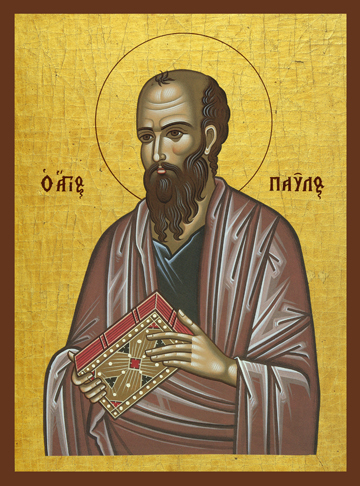
Paul wrote, “Now if Christ is proclaimed as raised from the dead, how can some of you say there is no resurrection of the dead? If there is no resurrection of the dead, then Christ has not been raised… For if the dead are not raised, then Christ has not been raised… If for this life only we have hoped in Christ, we are of all people most to be pitied.”[1]
The resurrection of Jesus was not open to negations for Paul. Paul had a life-altering encounter with the risen Messiah along the road to Damascus. Paul’s life changed along the road. He would never be the same. Because of his Damascus Road encounter, Paul had a sense of urgency – the same urgency that lives in the Church today – because, as he put it, if the resurrection of Jesus, if the resurrection of the dead were not true, then the proclamation of the church is in vain.
If the resurrection of Jesus were not true, if the resurrection of the dead were not true, then our “faith has been in vain”[2] and “we are of all people most to be pitied.”[3]
For Paul, everything stands and falls on the resurrection of Jesus Christ and the general resurrection of the dead.
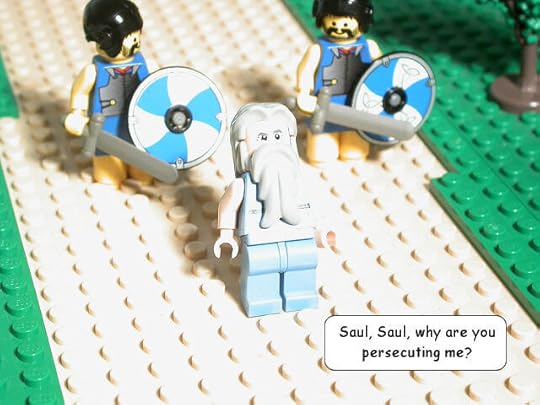
The disbelief, the rumors or doubts, among the Corinthian church runs contrary to Paul’s Damascus Road experience. The disbelief within the Corinthian church is a thumb to the eye of Paul’s witness and proclamation.
Central to Paul’s argument is that if Jesus has not risen, if the resurrection of the dead is not God’s promised victory over the pain and power of death, we, the church back then in Corinth and the Church today, are pitiful sinners with nothing to believe in. Without the resurrection of Jesus Christ and the resurrection of the dead, the Church’s witness – 20 years after Jesus’ resurrection in Corinth and 20 centuries later in Arlington, Virginia and around the world – becomes an attempt to preach moralism by people doing good things for their community with no Good News that God so loved the world that he gave it all, to his last breath on the cross, for us.
Without the resurrection of the dead, the witness of the Church, according to Paul, is dead.
I have listened to 4/6 episodes of what could be a childhood crushing podcast that is one-part true crime investigation and one-part Jerry Springer episode. The domino effect that could result from this podcast is catastrophic.
I fell in love with baseball just before the height of the steroid era. Players like Mark McGwire, Sammy Sosa, Barry Bonds, and Jose Canseco looked more like professional WWF wrestlers than outfielders. They cheated to obtain records, money, and notoriety.

But I have always had Cal Ripken, Jr.
The Iron Man.
A legend described as a “lunch pail player” – he showed up every day to the ballpark because it was his job, because he loved the game, and because there was nothing else he would rather do. This is how the legend of The Iron Man grew.
We are able to connect with The Iron Man. All of us are trying our best to work, support ourselves, and maybe a family. We strive to love our neighbors even though our neighbors drive us nuts.
At the time, even if you did not like baseball and wrongfully thought it is a ridiculous game, people found themselves stopping to tip their hats to The IrIron Mannman. And if the streak is not valid, then the dominos fall. A heroic story is for nothing, in vain. Fans to be pitied.
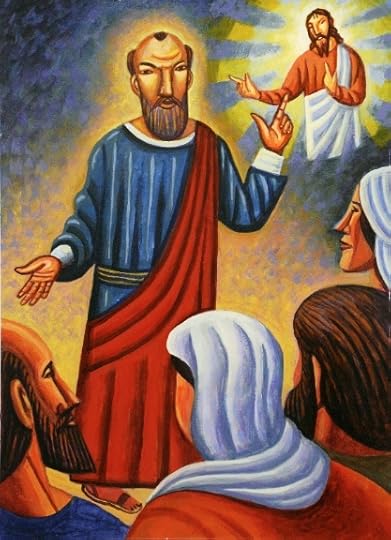
Paul Preaching - James Janknegt
“But in fact Christ has been raised from the dead, the first fruits of those who have died. For since death came through a human being, the resurrection of the dead has also come through a human being; for as all die in Adam, so all will be made alive in Christ… the last enemy to be destroyed is death.”[4]
The resurrection of Jesus Christ and the resurrection assured to us is an affirmation of the whole life of Jesus.
The resurrection of Christ offers us hope when we cannot see the fruits of our labors today.
An affirmation of the significance of every human life.
An affirmation of our hope placed in the news that our sins are forgiven, a place at Jesus’ table is prepared for us, and that the anxieties of this life caused by pain and death do not hold the final word.
Paul is making an argument. He is not relying on testimony from the tomb, that will come later from the gospel writers. For Paul, not having seen the empty tomb himself, Paul did Jesus on the Damascus Road must be empty, and because of the FACT that Jesus is resurrected. And because Jesus is risen, we too can live with the hope given in the FACT that the same resurrection is assured to all of creation through the grace that goes before us. The grace that overcomes rumors to the contrary. The grace that forgives.
The rumors, according to Paul, are false. Christ is risen, and so shall we.
Subscribe Today
[1] 1 Corinthians 15:12-13, 16, 29
[2] 1 Corinthians 15:14
[3] 1 Corinthians 15:19
[4] 1 Corinthians 15:20-22, 26
February 7, 2022
Unreasonably Reasonable
Swiss theologian Karl Barth famously said, “Take your Bible and take your newspaper, and read both.” Many preachers stop there when it comes to this instruction given to the greatest theologian of his day. But there is more to the quote: “Take your Bible and take your newspaper and read both. But interpret newspapers from your Bible.” This morning we will attempt to heed the words of Karl Barth.
Three days after Easter in 2019, the New York Times ran an opinion piece featuring a conversation between New York Times writer Nicholas Kristof and, at the time, the newly minted President of Union Theological Seminary, Rev. Dr. Serene Jones. The conversation was edited to save column inches, so Kristof begins the conversation with a doozy of a question in the published interview.
Kristof asked, “Do you think of Easter as literal flesh-and-blood resurrection?”
Rev. Dr. Jones first answered the question without answering, so Kristof pushed her on the point.
Kristof asked, “Without the physical resurrection, isn’t there a risk that we are left with just the crucifixion?”
Rev. Dr. Jones skirted the question two more times, but Kristof was persistent.
Kristof asked, “Isn’t a Christianity without a physical resurrection less powerful and awesome?”
Rev. Dr. Jones answer Kristof’s question.
Rev. Dr. Jones responded, “For Christians for whom the resurrection becomes sort of an obsession, that seems to me to be a pretty wobbly faith.”
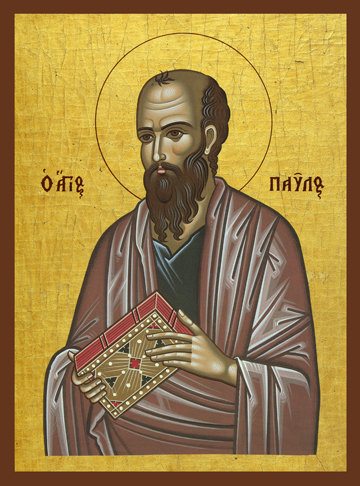
The interview published by the New York Times is precisely the conversation occurring within the Corinthian church that the Apostle Paul is addressing in our scripture reading.
“Christ died for our sins in line with the scriptures, he was buried, and he rose on the third day in line with the scriptures.”
And Paul continues in next week’s reading saying, “If Christ hasn’t been raised, then our preaching is useless, and your faith is useless… If we have a hope in Christ only in this life, then we deserve to be pitied more than anyone else.”
Paul addresses what is perhaps the oldest and longest-running question the Church has wrestled with since Jesus’ body was placed in the tomb and a stone rolled to lock his body inside.
Paul does not hold up the burial clothes left behind by Jesus as evidence, and Paul does not quote Matthew, Mark, Luke, or John. When Paul penned this letter, the gospels had yet to be written. Paul does not tell a story with angles as the gospels of John and Luke will. Paul does not recount a “great earthquake” as the Gospel of Matthew will.
Paul gives an argument.
Avoiding cliches about love being stronger than the grave, Paul puts forth evidence that Jesus Christ is in FACT – not hypothetically or theoretically – raised from the dead. According to Paul, the tomb IS empty, and because of this FACT, nothing else matters.
Throughout Paul’s letters, he points to the FACT that Jesus Christ is risen. Paul does not point to parables and miracles. Instead, Paul points to that which is entirely beyond reason yet is entirely not unreasonable to believe.
The Church is full of people with unorthodox beliefs and practices. This has been the case, is the case, and will be the case until the resurrected Christ returns and his kingdom is fully realized. To people like Rev. Dr. Jones, to those who cross their fingers or toes when reciting the creeds, you are not devoid of a spiritual connection with God because that is not how God operates. God does not punish us for our beliefs or lack of belief. For that matter, God does not reward us for our beliefs either. So, if you chalk Easter up to a fools’ day or the Sunday on the calendar when it is impossible to get a last-minute brunch reservation, that’s fine. You do not have to believe the resurrection happened.
Your disbelief, along with your belief, does not change that the entirety of the New Testament, corroborated by the witness of Cephas, the twelve disciples, 500 people – actually more than 500 people because, according to Jewish custom, Paul only mentions the men – and included in that 500 is Jesus’ half-brother who had not been a disciple because he thought his brother was a total nut job while Jesus was alive, understands the resurrection of Jesus Christ as an event in history.
The resurrection of Jesus Christ, according to the New Testament, is not a myth or moral metaphor.
The resurrection of Jesus Christ, according to the New Testament, is FACT.
Christianity, Paul tells us, is not a set of moral teachings or a group of practices you must master before the salvific work of God is yours. Christianity is news. It is news of what Jesus Christ has done with you not having to do anything yourself.
This news is the Gospel – news of what God has done for you despite your failures, no matter how hard you have tried, to love God or your neighbor as much as your love yourself.
The Gospel is not how to build a better you.
The Gospel is not how to build a better world.
The Gospel is not telling someone who they are allowed to love.
This Gospel is not spirituality, service projects, or political influence.

The Gospel is news that the tomb is empty.
The Gospel is news that a better world has been built.
The Gospel is news that Jesus Christ is risen.
And this is the most urgent endeavor of the Church as this news is what separates the Church from secular liberal do-gooders and those who might attempt to prescribe legislative morality.
The news of the resurrection of Jesus Christ comes to us as a surprise because conventional wisdom tells us the news we have received is incomprehensible, implausible, and is downright BS.
[Howard Thurman Image Slide]Rev. Dr. Jones’ predecessor theologian Rev. Dr. Howard Thurman said this of the surprising news the church bears witness to:
“It carries with it the element of elation, life, of something over and beyond the surprise itself… This meaning has to do with the very ground and foundation of hope about the nature of life itself… It is as if a man stumbling in the darkness, having lost his way, finds that the spot at which he falls is the foot of a stairway that leads from darkness into light.”
The Gospel Good News of the resurrection of Jesus Christ is God’s vindication over the power of sin and death in this life.
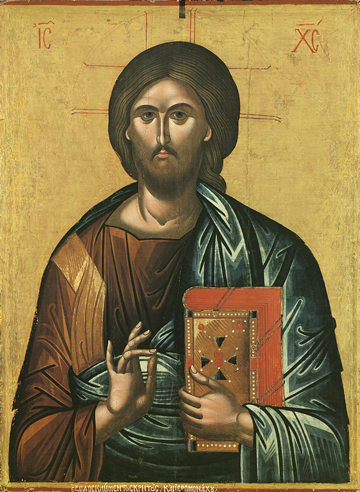
It is Good News.
It is Good News because what happened on the cross and because Jesus Christ is risen, all of your failures to adequately answer the question “What Would Jesus Do?” are forgiven. Once-for-all forgiveness for you.
The tomb remains empty so that you will remember that all of your sins – the ones they will not let you forget and the ones you cannot forgive yourself for – are forgotten. Buried with Jesus Christ in his death were all of your sins. And in the light of the Good News of his resurrection, his perfect righteousness is now yours.
The best news.
Good News.
This Good News is the news that is proclaimed week after week, the best kind of broken record because it does not matter if you are an orthodox stick in the mud or an unorthodox heretic. It does not matter if you cling to the resurrection news or find it impossible to believe because you are not who they say you are, what you do, or what you believe.
Because of the Good News encountered by the Apostle Paul on the road to Damascus – Jesus Christ, resurrected – witnessed by the Church for over 2000 years, you are who Jesus is – a beloved child of God. You are what he has done. You are perfect – made perfect by his righteousness and unwavering love.
Subscribe
January 28, 2022
A Tale of Two Epiphanies

On the anniversary of the January 6 insurrection at the U.S. Capitol, Teer, David, and Jason reflect on the ignominious event from the perspective of the Feast of the Epiphany.
Before you listen, do us a solid and help out the podcast.
Head over to https://www.crackersandgrapejuice.com.
Click on “Support the Show.”
For peanuts, you can help us out….we appreciate it more than you can imagine.
Follow us on the three-majors of social media:
https://www.facebook.com/crackersnjuice
January 18, 2022
Gifting Spirit
Paul’s first letter to the Corinthians was not a cold-call letter. He knew their situation, namely a community made up of Gentile converts – those outside of the original Abrahamic covenant – still living in a primarily pagan part of the world. Paul founded this community. He knew these people. Paganism reigned supreme, and the early church would navigate living as the minority religion in the Roman Empire until the Roman Emperor Constantine converted to Christianity in 312 A.D.
You might be asking yourself why I am beginning this sermon with a crash course on Christian life in first-century Corinth. Well, over the coming weeks, we will be spending time with the church in Corinth using their experiences to reveal the goodness of God’s everlasting love and mercy. Some of Paul’s most famous words were written to the church in Corinth, “Love is patient, love is kind.” But there is always more to the story when it comes to God, the church, and us.
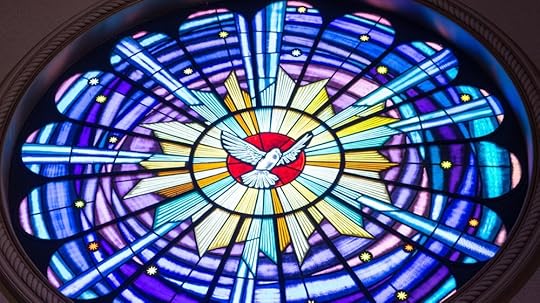
We find ourselves in the season after Epiphany. Epiphany comes from the Greek epiphaneia and can be translated as “the light shines,” referring to the manifestation of light that causes knowledge, understanding, or a relationship. In the church, the season after Epiphany refers to the time after the manger when the light of the world, the fullest revelation of the love of God, Jesus Christ, was received outside of Israel by the magi. So, we will be exploring the never-ending love of God, the love that shines beyond the manger, over the coming weeks with the help of the Corinthian church.
The issue at hand in the Paul’s first letter to the church in Corinth is disunity – inside and outside of the church – and we will get to that in a few weeks. Before Paul addresses the conflict that divides the church, he looks to what unites the church, the things, the persons that run common through our shared lives that span generations – the giftedness of the church, through the Holy Spirit. You might know these gifts as “gifts of the spirit.” These are the things that we do and make us who we are, that, outside of a gift from God, it is hard to tell where or how the gift made its way in your life. In our reading today, Paul lists the gifts of wisdom, knowledge, faith, healing, miracles, prophecy, tongues, and interpretation. In the twelfth chapter of his letter to the church in Rome, Paul adds serving, teaching, exhortation, giving, leadership, and mercy.
Individually, these gifts may not seem like much. Maybe a resume line you could build on in a pinch if you needed to fill dead air during a job interview. But together, these gifts have the power to do more than we could ever imagine.
Paul is explicit in stating these gifts are not something we can conjure up on our own. Paul is not talking about a Myers-Briggs assessment or your Enneagram type. Paul tells us the gifts of the Spirit are allocated by God among diverse members of the one body of Christ. Spirituality is not an innate human capacity. These gifts are not a natural endowment we carry with us like great hair or height.
These gifts, Paul tells us, are also not hierarchical. Paul does not list these gifts in order of significance or priority as the significance and priority is the source of the gifts, the Holy Spirit, which we believe is at work in each of our lives. Ever since the waters of baptism hit our brow, we have been filled with God’s Spirit. This Spirit moves and shapes our lives of faith, pushing, nudging, and at times dragging us to the people and places God has called us to be in ministry alongside. No matter how great the gift may be, spiritual gifts can only be ascribed to God’s initiative. We should not take credit for these gifts.
Take, for example, hypothetically, you are the organizer of many church committees or groups. When you walk in the room, there is a collective sigh of relief as the group knows that you will organize, lead, and ensure the group stays on task – completing a study on schedule or ensuring the church's work is done. It seems like every interaction you have in the church is an opportunity to shine your administrative skills. Yeah, that is less about your ability to organize and lead and more about the work of the Holy Spirit in your life.
Let’s try another one. Say, hypothetically, you an amazing prayer. When you are around the holiday table at a family gathering, your sweet granny nods to you to deliver the blessing over the meal. Year after year, you nail it better than a two-time seminary graduate. Year after year, a single tear stream down your mother’s face, and she beams with pride. That, too, is less about your ability to string together a few words of blessing and more about the work of the Holy Spirit in your life.
Do you see where this is heading?
These gifts are more than administrative skills and public speaking. The gifts of the Spirit are God’s way of reminding the church that there is more going on than we know. These are gifts given by the grace of God. We did not do anything to earn these gifts, but you better believe God is going to use those gifts in your life to further God’s redemptive work. This work began in the waters of your baptism and will continue to grow as we, the church, Christ’s body, continue to attune our collective attention to God’s will. These gifts are not a product of birth, instead are gifts of rebirth.
These gifts, Paul reminds the church, are intended to unite the community of faith for God’s common good. God’s common good, not the common good of the pastors, church council, or any individual – no matter who that individual may be. The gifts of the Spirit are intended to position the church, then and now, to share the good news of Jesus Christ across generations and geography. It is a gift of the Spirit for the church in Corinth and the church in Arlington to declare Jesus to be lord. The lordship of Christ is not a declaration the church can make on its own or a declaration the church can sustain over generations without the help of God. And this is where we find the gospel good news – regardless of what gifts the Spirit has given you, regardless of whether you think you are worthy of such a gift, and regardless of the priority others might place on those gifts God is going to use you to further God’s kingdom. Buckle-up because God promises to use the gifts God has given to individual members of Christ’s body to build up the entire body, and in building up the whole body, the Kingdom of God is advanced, revealed a bit more as we await Christ’s promise to return, and the Kingdom of God is fully revealed.
Christ has leveled the field. He is Lord, and there is no hierarchy. No one higher than the other because the lordship of Jesus Christ, a gift to all of creation, refocuses the attention of the church away from division and conflict, pointing us toward the salvific work that began in the manger, was revealed in a star, and was realized when Mary and Mary found the tomb to be empty.
Subscribe
January 10, 2022
Patterns and Milestones

Patterns and milestones help establish the routines of our lives.
The pattern of seasons organizes our annual routines – fall, winter, spring, and summer, repeat.
Within the routine established by seasons, patterns of life are then arranged – vacations, reunions, the start and end of the school year, snow days, more snow days, holidays, and more.
Then there are the milestones. No matter your age milestones – baptisms and confirmations, birthdays, graduations, anniversaries, and promotions – take the annual pattern of our lives and spice it up a bit.
Without these patterns and milestones our lives would be less interesting, completely unorganized, and lack any sort of trajectory or purpose.
The Church calendar – the festivals we celebrate, the colors on the altar paraments, and the scriptures we read – shape our shared lives forming a pattern. The pattern forms the Church’s shared life, a life of ministry to and with one another following the milestones of Christ’s life. The milestones of Christ’s life set the pattern for us today.
Each year we begin with Advent – looking back and forward. We then move to Christmas and Epiphany. Then, it is onto Lent, Easter, Eastertide, Pentecost, and finally ordinary time. For generations the church has followed this pattern mirroring the pattern established by Christ’s life, death, and resurrection.
This past week we entered the season of Epiphany marking the visit of the Magi to the Christ child. This season is particularly important to us because the Church believes this was the moment when Gentiles, us, those outside of the original Abrahamic covenant were pulled into the salvific work of God, through Jesus Christ.
On this first Sunday of the season of Epiphany, continuing to follow the milestones of Christ’s life, we remember Christ’s baptism and consider what our baptism into this his life, death, and resurrection means. The gospels disagree on a lot of things. Details of events - location and timing - do not match from book to book. Entire events are contradicted or worse, omitted altogether. All four of the gospels do tell us Jesus was baptized by John alongside empire colluding tax collectors, thieves, and religious hypocrites.
The Gospel of John leaves out the Nativity and Mark leaves out Easter. Matthew and Luke add to what Mark left out while John is off doing his own thing. But all four of the gospels agree on Jesus’ baptism and crucifixion.
As Jesus entered the water, as the water streamed down his hair, onto his face, into his eyes, and off his body he assumed the sins of the world upon himself. John had been calling people to repent - to turn away from their sin and towards the righteousness of God. John’s invitation was to a human act. John’s offering of baptism in the Jordan River was a symbolic act and would not make you righteous before God. As the waters of John’s baptism washed over the recipient the weight and guilt of their sin remained. As Christ exited the waters the weight and guilt of their sin, of our sin, exited with him, eventually going with Christ to the cross.
Through the manger Jesus entered the messiness of this world and at his baptism he took that messiness upon himself to sort out on our behalf because sorting out the weight and guilt of our sin is something humanity cannot do on our own.
All of us are born into a world not of our own making. The mess I inherited from my parents is not something I sought out for myself and still, the mess is now mine. The mess my kids will inherit from their parents is not something they will seek out for themselves and still, the mess will be theirs.
Inheriting the mess, a byproduct of sin, is a pattern of our lives that we cannot outrun and as best I can tell is not something we will rid ourselves of anytime soon. And here is where we find the gospel Good News of this Sunday, as best put by retired Episcopal priest, the Reverend Fleming Rutledge. “Jesus swoops down in our miserable condition, bringing the gifts of new life. He does not ask us what we are doing to make ourselves better; he just gives us the gift. He does not ask if we are working to turn ourselves around; he does not ask for a receipt; he puts redemption into”[1] our lives.
Assuming the sin of humanity on himself Jesus does what I did not want to do and what I could not correct for my parents, what my kids will not want to do for me, and that which I will never be able to do for myself. We cannot course correct our sinful nature.
In Jesus’ baptism, in his life, death, and resurrection, a pattern no one can replicate, Jesus has secured salvation for all of creation. Every person, because believe it or not, God loves you, God has always loved you, and there is nothing you could ever do to undo the love God has for you.
Words have power. No matter if they are carefully typed out in a sermon manuscript or quickly sent out in 140 characters or less, words have more power than we can imagine. The only words spoken at Jesus’ baptism were words of affirmation and love. There were no words of institution, or a liturgy crafted by generations of clergy-theologians. "You are my Son, the Beloved; with you I am well pleased"[2] echoed down from the heavens, and when an echo comes from Heaven, you better look out because the patterns of our lives are about to be upended.
The psalmist wrote “The voice of the LORD is over the waters... The voice of the LORD is powerful; the voice of the LORD is full of majesty... The voice of the LORD breaks the cedars... The voice of the LORD flashes forth flames of fire... The voice of the LORD shakes the wilderness... The voice of the LORD causes the oaks to whirl, and strips the forest bare.[3]
The beloved ness of Jesus was not a lullaby coming down from above. The voice of God is a disruptor that upsets the patterns of our lives, turning over the complacency we establish for ourselves because we favor our comfort over what is unknown.
When we enter the waters of baptism we are, as the Apostle Paul wrote clothed in the righteousness of Christ and beloved children of God.[4] As the waters move across your head a voice cries down from Heaven, “You are my son, you are my daughter, you are my child, the beloved.” This holy declaration cannot be taken away. It is this holy declaration that overturns the lives, the patterns and routines we establish for ourselves, inviting us to a life of discipleship.
Discipleship is, as retired United Methodist Bishop and teacher of preachers at Duke Divinity Will Willimon puts it, “the way Christ rescues you from vain attempts to make something of your life. God gives you a job that’s more important than you. Faced with a broken world, creation out of kilter, God doesn’t ‘send in the Marines.’ God casts forth the meek, foolish, and weak. Us.”[5]
A new job. A new pattern for your life.
You are loved and through baptism you have been made clean, called to a new life, a new task. The baptized life calls us to a new way of living that may seem odd to your family, friends, and neighbors.
A life of leaving 99 in search of the 1.
A life of welcoming the stranger, the outcast, and the forgotten.
A life of seeking and finding, finding and seeking.
A life of following the Messiah who overturned the ways of the world through generosity, compassion, and grace.
We live in a time where the patterns of our lives are different. Milestones are observed differently than they were just a few years ago.
Birthdays are celebrated with smaller gatherings
Promotions are recognized in zoom calls without cake in the break room
Anniversaries are celebrated with dinners in with takeout or in my case, dinner cooked by the kids
Baptisms and confirmations have been delayed and when they do happen often, they are done differently than the community wishes they could be done
Patterns are changing whether we want them to or not.
We observe the patterns of life in the church differently. But because Jesus is lord and because what happened in the Jordan cannot be undone just like what happened at your baptism cannot be undone even though the patterns of our lives may change the call to discipleship and the pattern of following Christ’s example does not. We may gather online or at home for worship, we may have small gatherings in sanctuaries, and what we do today might shift in the weeks to come and our call to follow is the same. This is why the patterns of the church; the liturgy of our shared life is so important. These things give us an unmovable guidepost by which we can keep moving onward toward what John Wesley called Christian perfection, perfecting our lives in Christ because by Christ’s actions we have been right before God.
I do not remember my baptism. I have been told I was baptized on August 19, 1984, at Faith United Methodist Church in Rockville, Maryland. Maybe you remember yours. But if you are like me, do not worry about remembering your baptism because remembering is not the point. And if you have yet to enter the waters that is OK too. The invitation has been extended by Christ to all of creation, including you. The water is waiting for you. Because of Christ’s baptism, because of his life, death, and resurrection, we have been raised to new life. The old sinful part of our lives has been put to death, and as Bishop Willimon puts it this new pattern “takes your whole life to finish what was begun when the church doused you ‘in the name of the Father, the Son, and the Holy Spirit’ and called you Christian.
Professor James Torrance put it best: “But it is not the water, not the church, not the minister, not my faith, not my dying and rising, which forgives and heals. It is Christ who has done this for us and in us by the Spirit. So, we are baptized ‘in the name of Christ’ - not our own name - and we are baptized into a life of union with Christ, of dying and rising with Christ, in a life of communion.”
A new life. A new pattern. A new routine of calling the who called and continues to call today.
Amen.
Subscribe
[1] Rutledge, Fleming. Means of Grace. Pg. 42
[2] Luke 3:22
[3] Psalm 29:3-9
[4] Galatians 3:26-27
[5] Willimon, Will. God Turned Toward Us. Pg. 40.