Teer Hardy's Blog, page 4
December 25, 2021
Everything Has Changed

Joyful Mystery #3: Nativity by James B. Janknegt , Copyright of James B. Janknegt. www.bcArtFarm.com Used with artist's permission
This devotional was written to be shared with my congregation, Mount Olivet United Methodist Church. We abruptly had to cancel all in-person worship services, beginning with Christmas Eve 2021, due to the rising COVID-19 infection rates in our area.
The light shines in the darkness, and the darkness did not overcome it.—John 1:5
Christ has come and the world may not feel any different than it did yesterday. The build-up to Christmas can almost be too much and this year, well the build-up may have left you feeling let down because we are at home, again, because of a virus we cannot see continues to spread. For some of us today is a day off of work to sleep in, rest, and spend time with our families. For others, it is business as usual working in hospitals or restaurants, being home by yourself, or maybe you're sitting in the same fireside chair as you were last year wondering how much longer the pandemic will last.
The Great Light shines in the darkness, and it does not feel any different than it did yesterday or last week. However, the world has been forever changed. Christ has come, and the lowly shepherds and travelers from the East will come to pay him homage. Time will now be marked differently. The world may not seem any different but what happened 2000 years ago in a manger continues to change the world.
The light of Christ is an invitation to the world, stretching beyond borders and inviting the world into a new covenant.
The light of Christ shines into the darkness we have been living in since March 2020.
The light of Christ cannot be overcome by the darkness, we cannot outrun it, and it is always with us.
Entering the world through the manger and not the palace of Caesar, Christ signals the priorities of the Kingdom of God, priorities that look different from the world in which he was born. The meek will be strong, and the first shall be last. The darkness will not over the Light, for the light will always shine into the darkness.
The birth of Christ is an invitation to each of us to step out of the darkness created by the systems that keep the meek meek and the first first. The birth of the Christ child is an invitation to each of us to step out of the darkness and in the grace of God, love given to each of us freely regardless of where we fall on the social pecking order. Love that stands with us during pandemics, strife, and the unknown.
Everything has changed. Nothing will be the same. Christ is here. The Messiah has come, and the Kingdom of God is at hand. Today we celebrate the incomprehensible inbreaking of the holy God getting physical with creation. As present then as he is now.
A great light is shining and the darkness we lived in will never overcome it.
Prayer
Thank you, Lord, for the gift of Emmanuel. May the light shining from the manger shine brightly in me. Let today be a new day in which I step out of the darkness of my own life and into the light of your grace. Amen.


December 19, 2021
A Small-Town Messiah
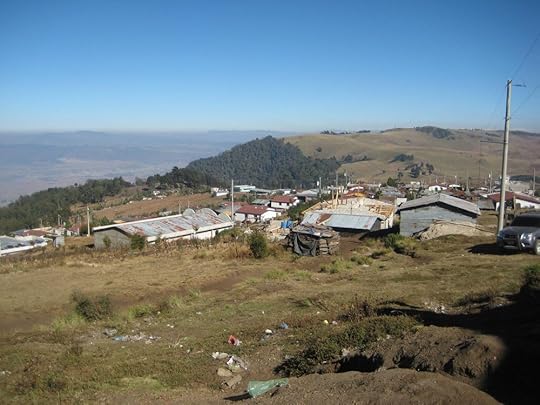
It was Advent 2012, the week before Christmas. Allison and I joined a mission team from the church I was working at and headed to the Highlands of Guatemala. Over the previous year our congregation raised $250,000 to help the village build a community center and water sanitation station. Because of the four-plus-hour bus ride to this village for Guatemala City, mission teams rarely spent more than a few hours in this village and villages like it. There was typically only enough time to build a stove before snapping a virtue-signaling selfie before the teams needed to head down the mountain and return to their hotel.
Our team was staying in the village, in homes given up by their owners so that a bunch of good-doing Christians had a place to lay their heads. The floors in these homes were barely poured concrete. I park my car on better surfaces than the owners of these homes parked themselves after a day of back-breaking work. Speaking of back-breaking work, we worked alongside the tradesmen of the village and neighboring villages. We, their day-laborers, outfitted from head to toe in new gear from REI while our local supervisors wore shoes that had been donated, used, used again, and eventually made their way up the mountain. While this community lacked access to modern medical care, our entire team arrived with prescriptions of Cipro, napalm-grade antibiotics to destroy whatever might ail us during our trip.

After a day of digging footers by hand and mixing concrete in buckets, when the missionaries ended their day of labor, our hosts kept working, making meals, pouring baths for their out-of-town guests, and correcting the work we had messed up on the job site. We ate more food at each meal than our hosts would eat in a day. A tiny village, like the thousands of tiny villages like it around the world, would be the place I first felt the hospitality of the gospel and see for myself the place where God chose to enter human history in flesh and blood.
“O Bethlehem from you shall come forth for me one who is to rule in Israel.”
Before the birth of Christ, Bethlehem was a town of little consequence, another village you might pass as you made your way north, toward Jerusalem. Bethlehem was a “one donkey town” that had its time to shine – Ruth, Naomi, and Boaz all walked the streets of Bethlehem. David, the giant-slaying hero-king, hailed from downtown Bethlehem. This town five miles south of Jerusalem had its places in Israel’s history, but now the prophet Micah declares the Messiah will come from a town many had not thought of since David’s death.
How could it be realistic to think the Messiah would hail from David’s hometown when the Davidic dynasty came crashing down?
For Israel, the peace Micah spoke of would come through the sword of the occupying Roman Empire – Pax Roma. For God to do what the prophet promised God would do, in the place the prophet said God would do it, can leave us scratching our heads.
Then, there is the one through whom the Messiah would come. Mary, a woman of minor status in her day, would be the one to bring God’s earth-shaking Good News into the world. God’s great turning-point in history is near, and ground-zero for the event is the womb of a woman no one had heard of in a town no one had thought of for generations. Elizabeth’s son knew what was going on as he “leaped for joy.” And Mary’s Magnificat – a lyrical poem full of Hebrew Bible prophecy and praises for God – signals the fulfillment of all God’s promises.
During my Advent trip to Guatemala, I realized that while the Good News of Christ’s embodied life fills me with joy, it is even better news for the people of a nowhere village than those living in an empire like, well, us. For people who live in the empire, with all the privileges of Pax Romana, those same privileges can blur our vision and prevent us from seeing that Christ would not be born and Virginia Hospital Center. Mary’s Magnificat was not sung in the Temple or National Cathedral. No, her song of praise and servanthood was sung in the backwoods as she and her cousin lived under the boot of the empire. We often say that God does not take sides, but God has done just that in Bethlehem and through Mary. In flesh and blood, God has taken the side of those on the margins.
With those pulling a double-shift only to be barely able to put food on the table.
With those working in the fields, feeding the empire while not being able to come out of the shadows.
Mary’s boy with a birth certificate stamped in a one-donkey town takes the tidings of comfort and joy we sing of and amplifies them to those who are overlooked, forgotten, and ignored.
God is revealed in the places, and in the people we least expect. We might expect God to be announced in grand or ornate spaces, and God is revealed in these spaces, but, as the prophet Micah said, and Mary and Elizabeth reveal the embodied presence of God, God in flesh and bone, will take place in a town of little consequence and through a person that many might overlook. This is what makes the Good News of the Gospel good news for all creation: God did not enter human history through power and influence as we describe those terms. Mary’s song of faithfulness, along with the words of the prophet, invites us to look for the hospitality, love, and redemption of God in the people and places we least expect.
Off the map places.
People overlooked.
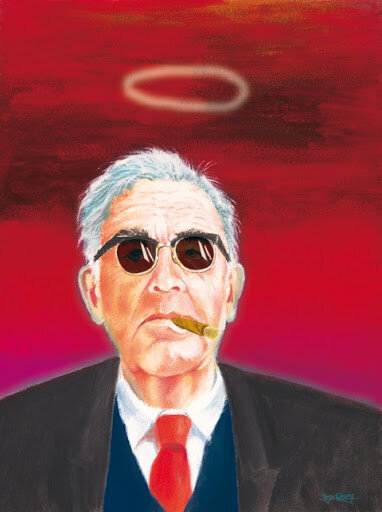
Swiss theologian Karl Barth notes that God did not choose the pride-filled, the historically strong, or influential at the first Advent. Instead, God chose Mary, whose response was faithfulness, thanksgiving, and praise. Mary is the example for the church today for what we are to embody as we prepare the celebrate the birth of Christ and as we await Christ’s second coming: expecting God to be revealed in grand sanctuaries but also in one-donkey towns the rest of the world has forgotten.
The one born in the place we least expect is good news for us because the child born into a village with barely poured concrete floors was born for us, in our matching REI outfits, with our Cipro prescriptions and hole-less shoe. This is good news for us because while we might have properly poured concrete, we have hearts that need mending. This is good news for us because while we might live in the center of the map, we still struggle to love our neighbors as we love ourselves. After all, we still struggle to love ourselves. And where we struggle, God steps in because, after all, God has always loved us, loves us now, and will always love us. In Mary’s womb, causing others to leap for joy, Christ came, and Christ promises he will come again.
December 13, 2021
When Everything is on Fire
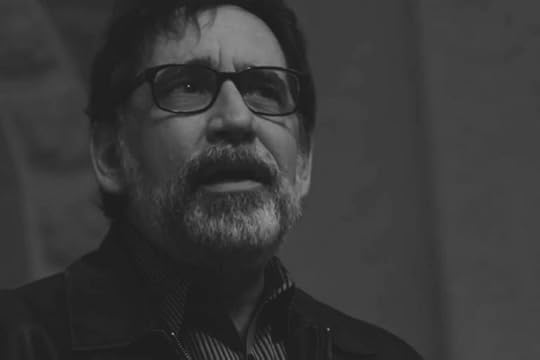
Pastor Brian Zahnd joins the podcast to talk about his newest book, "When Everything's on Fire: Faith Forged from the Ashes."
About the book --
Is it possible to hold on to faith in an age of unbelief?
Intellectual certainty has long been a cornerstone of the Christian faith. But in an age of secularism, skepticism, and cynicism, our worldviews have been shaken. Various solutions exist―some double down on certainty, while others deconstruct their faith until there is nothing left at all. But Brian Zahnd offers a third way: what is needed is not a demolition but instead a renovation of faith.
Written with personal and pastoral experience, Zahnd extends an invitation to move beyond the crisis of faith toward the journey of reconstruction. As the world rapidly changes in ways that feel incompatible with Christianity, When Everything's on Fire provides much-needed hope. A stronger, more confident faith is possible when it is grounded in the beauty and truth of Christ. Zahnd permits us to risk the journey of deconstruction so that God can forge something more beautiful in its place.
https://twitter.com/BrianZahnd
https://www.amazon.com/When-Everythin...
Before you listen, do us a solid and help out the podcast.
Head over to http://www.crackersandgrapejuice.com.
Click on “Support the Show.”
For peanuts, you can help us out….we appreciate it more than you can imagine.
Follow us on the three-majors of social media:
https://www.facebook.com/crackersnjuice
December 5, 2021
Spoiler Alert
The Beatles have George, Paul, John, and Ringo.
The Grateful Dead have Jerry, Bob, Phil, and a list of people too long for a sermon,
Green Day has Billie Joe and Mike.
God, in the Gospel of Luke, has Mary, Zechariah, and Simeon.
Mary’s song is widely known throughout the church thanks to songs like “Mary Did You Know?”. Spoiler alert, she knew. The angel Gabriel visited Mary shortly after visiting Zechariah and Elizabeth. Simeon’s song of praise occurs in our church calendar a few weeks from now after Jesus is born and is then presented in the Temple.
Today we have Zechariah's hymn of Holy Spirit-inspired prophecy: praise, a horn of salvation, mercy, and rescue, all leading to "the path of peace."
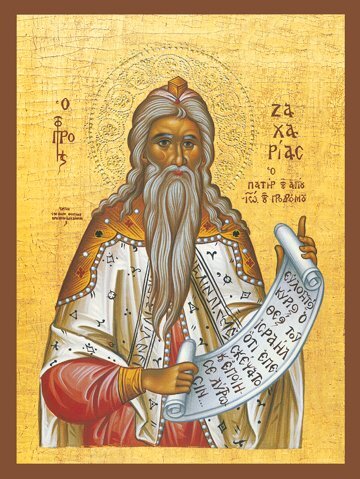
If you skipped Sunday school the week they covered Zechariah, here is what you need to know. Zechariah was a Temple priest. He and his wife, Elizabeth, were "righteous before God, blameless in their observance" of God's "commandments and regulations." This guy knew the Law and followed it. His wife, Elizabeth, had been unable to become pregnant, "and they both were very old." When the angel Gabriel tells Zechariah his old lady wife would bear a child, he did the one thing you do not do if you are a Temple priest, and the angel Gabriel brings you good news. He asked a doubt-filled question; "How can I be sure of this? My wife and I are very old."
Oops! Muted until this son, John the Baptist, who will prepare the way for Mary and Joseph's son, is named—muted until his hymn of prophecy and praise.
Zechariah and Elizabeth's son will be the voice calling out in the wilderness. The voice calling the people of God to repent – turn away from the sin and back to God – so that as the Prince of Peace comes, they, the people of God, will be ready. Zechariah and Elizabeth’s son is the voice calling out to the church today.
We find ourselves between two Advents – Christ has come; Christ will come again.
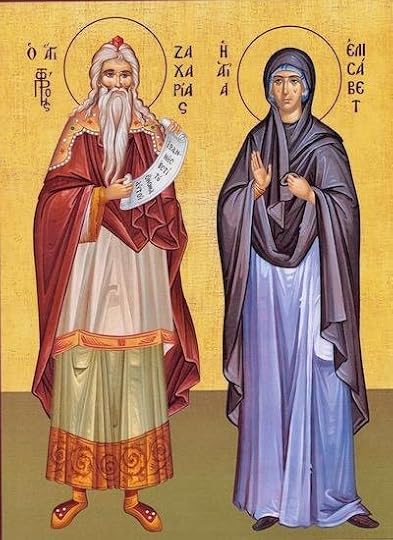
Zechariah and Elizabeth’s boy, by way of his naming (John means the Lord is gracious or the Lord has shown favor) and his father’s Holy Spirit-filled prophecy, will pave the way for the first Advent. The church yesterday, today, and tomorrow embodies Zechariah and his son’s prophetic work ahead of the second Advent as we await Christ’s peace-filled and peaceful return.
The church does not hold the market when it comes to words like justice and peace. Peace is something humanity has strived toward for generations, and for generations, peace has eluded us. In my lifetime, "peace" among nations has been sold to the masses through wars and violence. Violence is rationalized when executed in the name of justice and peace. Selective violence, the purposeful breaking of peace, becomes permissible when done in the name of justice and peace. We tell ourselves that the fruit of our violence is that after the fighting has ended, once we've won and they have lost, once we have one justice, we will have peace. Except, that human history proves this is not the case. Humanity has been at war with itself since two Hebrew Bible brothers went to battle with one another.
Then there is peace through politics. A charismatic politician promises us they are different. They can bring about the thing their predecessors failed to do, and they can do it quicker than any other candidate. We repeat this cycle nearly every year and somehow expect a different outcome.
The peace Zechariah prophesied has no meaning apart from the will and purpose of God. Let me repeat it; the peace Zechariah prophesied has no meaning apart from the will and purpose of God. The church cannot make sense of peace and pursue justice in the name of peace, apart from the peace of God embodied in flesh and blood and laid in a manger. The peace of God was proclaimed and prophesied by Zechariah and Elizabeth, "an old couple, an old, hopeless, powerless, futureless couple.” The peace of God was embodied by a “helpless child, dependent on his poor parents,” not born into a politically influential family.
Jesus was born into a world where the sword achieved the peace of an empire. Peace by the pointy end of a sword, gun, or any instrument of violence exemplifies how well we do not understand the very thing we all want for ourselves generations to come. Humanity was and continues to be unable to save itself or secure its own peace, so much so that God broke into human history in a manger in Bethlehem, "among the poor, lonely, old and impotent" and saved us from ourselves.
The prophetic hymn of Zechariah and his son’s voice crying from the wilderness calls into question whether we know what we are talking about when we use words like justice and peace. The word “peace” appears 329 in the Christian Bible; 91 times in our New Testament. Each New Testament reference to peace points toward the salvific word of God in Jesus Christ – explicitly or implicitly by pointing to humanity’s inability to secure peace on our own.
God did not enter human history through the door of Caesar or influential politicians, and this is where we find the Good News of Zechariah's hymn, Advent, and the gospel. Peace is something God makes, something God has done. Peace, is a gift to all creation to be sure, and something God promises is coming again. And in the church, we live as a viable alternative to peace through any means apart from God. That we might be saved from the consequences of our attempts to take matters into our own hands, creating justice and peace through means that lead us to anywhere but the peaceful life we desire.
Through the tender mercy of God, giving light to all who are in darkness, and guiding our feet on the path of peace. Christ is coming. Amen.
Subscribe
December 2, 2021
Coming Home
Throughout Advent, Virginia Methodists for a New Thing is sharing stories exploring what it means to be able to come home for Christmas. The stories are anonymous because the United Methodist Church continues to be an unsafe space for the LGBTQ+ community. I found the latest story to be quite powerful.
I have never doubted who I am and even more so, whose I am. From a young age, I had always been taught that God loved me for my authentic self, for all my flaws and imperfections. In recent years, as I have grown more comfortable with every piece of myself, including my sexual orientation identifying as bi, I can’t help but dwell on this notion of coming home. It’s one thing to come out, but another to come home. Neither are easy. Neither do not involve some degree of anxiety or fear. For many, it can be a profoundly beautiful and reassuring moment, but for some of us, there will always be those in our lives who begin to distance themselves. I think of both coming out and coming home as dynamic and theological moments. I say this as someone who has not come out to everyone, but who also recognizes that I’m making my way home every day. For me, coming out has been an experience of holding precious the image God has imprinted on my life.
It’s the recognition that God has searched my heart and called me beloved. If I didn’t believe this, I probably would not have responded to a call in the life of the church in the first place. Which brings me to coming home… I find myself in a peculiar space because I believe I can come home to the Church, but I don’t feel I can be welcomed home…yet. The church is both a fragile and vulnerable place to be when you live in a narrative that will wax poetic for you to come home all the time because they don’t want to be called hateful, but once you walk through the door past a “sacred worth,” facade and under the harmful and sanitized arch of the failed and hypocritical “Open hearts…”, you soon discover that you are not welcome home because you are “incompatible.” Not to mention, our denomination has projected a narrative onto this space that a lot of times, feels debilitating. And while I can only speak as a member of the LGBTQ+ community, we collectively cannot remain ignorant to the intersectional effects that come with how this space to which we all belong has been defined for us.
We can’t come home to the Church, until the Church repents of what it has so long called “home” on its own terms. A home they like to cater to their own needs, wants, and people. I have been grateful to have come home to my parents and sister; they affirm me, they see me, and they love me for me. I knew it was time to come home to myself and to the Church when a movement of the Holy Spirit was present when our Conference stood in holy resistance to the events of February 2019. My tears that day were raw, but filled with hope. And I have that faith that one day I can feel welcomed home by the Church. This faith is rooted in the one who comes home.
We like to make Advent about us, tossing around language of journeying and approaching the manger; however, I would challenge us to shift away from this and toward an understanding that it is Christ who comes home to us. The incarnation, Christ’s in-breaking into chaos, welcomes me—welcomes us—home in a world, dare I say a Church, that is unwelcome. Might we challenge the Church—the United Methodist Church—to view the Advent narrative as one in which the loving and embracing welcome of Christ overwhelmed all that the world calls unwelcome. Christ comes home to a couple living in fear of being shamed, who are refused welcome. Christ comes home to a meager cattle trough and barn labeled dirty and insignificant. When I look at Advent, I experience a Christ who welcomes me home without shame, with a place to rest my head and heart, and tells me I matter. Christ will continue to come home, but will the Church welcome us home as they have welcomed Christ home?
Virginia Methodists for a New Thing is a grassroots movement of members in the Virginia Annual Conference of the United Methodist Church. This group of laity, clergy, and retired clergy seek the next faithful step for United Methodists in Virginia as we live into being a church for all of God’s people.
The movement is a broad coalition of people from a variety of backgrounds all seeking to increase the representation of voices at God’s table. We view the issues facing the United Methodist Church as complex, intersectional, and multifaceted. We also know that despite the audacious goals and difficult road ahead, it is Christ that leads God’s church forward into a new future. We covet your participation, your prayers, and your feedback.
Ready to join this New Thing? You can become a part of the movement here.
November 30, 2021
Wait, Anticipate, and Trust

Today, the church begins a new year. Last week we proclaimed the reign of Jesus Christ, Lord, and Savior over all creation. Today, with the beginning of a new church year, we enter the season of Advent. Advent, rather than beginning with sweet baby Jesus, barely 8 oz., and wearing golden fleece diapers, starts with the voice of the prophet Jeremiah calling the people of Israel to wait, anticipate, and trust in the promised future of God's reign and the restoration of the house of David. You will remember from Sunday school that the good ole days of Israel were found during the reign of King David. Despite his faults, King David, the giant-slaying king, was God's anointed, the leader of God's chosen people. After David's rule, Israel was conquered by the Babylonian empire. Part of the population was taken hostage in their homeland while others were forced to live in exile. A chosen people, once united, now divided and scattered.
The prophet Jeremiah was one of those held captive in his homeland.
" The days are surely coming, says the Lord, when I will fulfill the promise, I made to the house of Israel and the house of Judah. In those days and at that time I will cause a righteous Branch to spring up for David; and he shall execute justice and righteousness in the land. In those days Judah will be saved, and Jerusalem will live in safety. And this is the name by which it will be called: "The Lord is our righteousness."[i] This branch would be Jesus.
Jeremiah spoke to hostages who had been unable to leave but were forced to live as a conquered people and had begun to be seduced by the ways of their captors. Many during this time were making the best of a terrible situation by bending to the changing cultural norms. Jeremiah says that turning to these new norms will not bring about God's promised redemption of the nation. The shoot out of the stump of David will be the result of the faithfulness of God and not Israel's pressure to conform to Babylonian society.
This is our second Advent living under the weight of a global pandemic. Another year apart from ones we love, hoping our holiday cheer will be enough to dull the pain and sadness of a still-spreading virus Like Israel looking back and remembering the good ole days of the reign of King David, I find myself looking back to this time two years ago, longing for an Advent and Christmas free of masks, illness, and sadness and despair.
Are you feeling the same? Are you looking back because, from your vantage point, life going forward without a global pandemic or endemic seems unrealistic? I find myself lying awake at night wondering if our new normal, masked with infection surges, will continue. Would it be easier to simply accept the way things are in the new normal? Are the way things are going to be the way things will be?
While sitting in a Starbucks in Clarendon, I wrote this sermon where employees and patrons were separated by plexiglass. If not for the sounds of espresso machines and milk being steamed, I could have mistaken the coffee shop for a bank. My fellow customers and I were spaced further apart than most kids at school, glancing, really glaring at one another to see who was going to wear a mask between sips of overpriced lattes.
Is this how things are going to be? I long for the days when I was interrupted to answer a not-so-quick question about the Bible while writing or reading. What do I need to do to right the course it seems we are determined to continue along?
Rev. Kathleen O'Connor describes Israel's state during the Babylonian hostage crisis as people "taken captive, dragged from the land and deprived of their temple. They are beaten, imprisoned, and faced death as a people, and like Jeremiah, they cried out to God in despair."[ii] God's promise to never abandon or forsake and raise a Righteous Branch is not a quick fix for the condition the world found and finds itself in. Jeremiah calls God's people to trust in God's provision in the past as they, as we, imagine what the shape of God's fulfillment of promises made will take in the future.
The good ole days always seem, well, good, and the temptation that if you can't beat them, you might as well join them is a constant in our lives. Jesus told his disciples that his return would bring the fulfillment of his Kingdom, the Kingdom of God. The world will "see the Son of Man in a cloud with great power and glory." What began in a manger in Bethlehem will be fully realized, embodied to the fullest because God is, as God has promised, coming to us. Like it or not, the redemption of creation that began in the manger, longed for by Israel and proclaimed by the prophets, is coming. While we may long for the good ole days or bend to the new norms, God tells us to wait, anticipate, and trust.
Wait, anticipate, and trust because we cannot make things turn out the way God wants them on our own. We are unable to embody the righteousness required to course correct a sin-filled world.
So, what are we to do? What steps need to be taken to speed things up, so the good old days no longer seem like a distant memory?
The good ole days and even the status quo may be OK or even great for us, but for many, the fulfillment of the Kingdom of God, Christ's return cannot come quickly enough. What we may long for could be a return to pain and suffering for others.
So, what are we to do? What is to be done? This is the rub; there is nothing for us to do. The prophet Jeremiah did not leave a checklist. I checked the gospels, and Jesus did not leave five easy steps to the second coming. All we can do is look forward, not backward, waiting, anticipating, and trusting the coming reality embodied in the promise of Chris's return, proclaiming the reign of Christ.
We are living between two Advents. Christ has come; Christ will come. The tension can be unbearable, and this is the life the Church lives. Between the two Advents, we find ourselves between the good ole days and what has been promised by God.
The good ole days and status quo are not good news, but because of the righteousness of Jesus Christ, we can be proclaimers and a community that embodies the reign of Christ, the Righteous Branch, here and now. A community of people committed to waiting, anticipating, and trusting, all the while knowing that we may look odd or seem out of place in doing so. But our oddness points away from ourselves, and toward the new normal the Christ promises is coming.
Subscribe [i] Jeremiah 33:14-16, NRSV
[ii] Women’s Bible Commentary
November 17, 2021
Do we Need Original Sin?
Last week a conversation during a Bible study led to a discussion on Original Sin. I have found conversations about this doctrine are more complicated than A+B=C and thus conversations go one of two ways: deep into the weeds or barely glossing the surface.
Instead of reinventing the wheel, I thought I would share what my friend and mentor wrote on the topic.
You can Jason’s find the previous posts here.
Do You Have to Believe in Original Sin to be a Christian?
Of course.
We can’t intelligibly consider ourselves Christian and not believe in original sin.
Of course, by calling it ‘original sin’ we do not refer to the origin of humanity- as though we believed Adam was a real, historical person or as though we failed to realize that mythology was the methodology of the first authors of scripture.
Instead by calling it original sin we name the sin in which we are all implicated, by which we are impaired from our very beginnings as creatures and from which we could not hope to be immune even were we raised by angels.
In other words, the term original sin characterizes the sinfulness we have by virtue of being persons in the world.
From the start.
Making sin not so much something we do but, firstly, something we are all in.
Original sin, then, points not to something chronological or biological but existenstial; that is, the human condition within which we come into being but also the precondition for our individual sinful acts and choices and they damage they incur.
As it is written: “None is righteous, no, not one; no one understands; no one seeks for God. All have turned aside; together they have become worthless; no one does good, not even one.” “Their throat is an open grave; they use their tongues to deceive.” “The venom of asps is under their lips.” “Their mouth is full of curses and bitterness.”
– Romans 3.10
14. Do We Believe in a Literal, Historical Date for Original Sin?
Absolutely.
Christians call it Good Friday.
For if ‘sin’ refers to our deprivation of the divine life through our rejection of God’s love and goodness then- obviously- the occasion sin on which original was committed was the crucifixion of Jesus.
Good Friday marks the occasion of original sin not in the sense that sin did not exist prior to the incarnation but in the sense that sin had no meaning before it.
The crucifixion of Jesus finally gave meaning to what we mean by the word ‘sin.’ The crucifixion of Christ is not just another of humanity revealing its inhumanity; the cruficixion is humanity making the most ultimate sort of rejection and, in doing so, rejecting itself.
“They are darkened in their understanding, alienated from the life of God because of the ignorance that is in them, due to their hardness of heart.”
– Ephesians 4.18
November 15, 2021
Kingdom | Apocalyptic Jesus, November 14, 2021

Today’s scripture from Mark can be difficult to hear. There is purpose and rhythm to the church calendar - the church calendar has a noticeable pattern: Advent and preparations for the coming Messiah; Christmas and the birth of Christ; then we shift to Jesus' earthly ministry, his teachings, and healings, and before we know it, Lent has arrived; then Easter with the glorious celebration that the sting of death is no more, Hell has lost its victory. But the year is not over at Easter. We continue through what is known as ordinary time until we take a distinguished shift on All Saints Day and look to the eschatological – the cosmic, end of times – the reign of Christ, what happens when this world as we know it ends. We are closing in on the end of the church calendar year. As we prepare for Christ the King Sunday, our scripture reading has taken a noticeable turn. The reign of Jesus Christ is what the church proclaims week after week, and it is what our confirmands will do next Sunday when they confirm their baptismal vows or are baptized.
It is hard not to become uncomfortable when we get to this time of year, with Jesus predicting the destruction of the temple and war among nations and kingdoms, earthquakes, and famine.
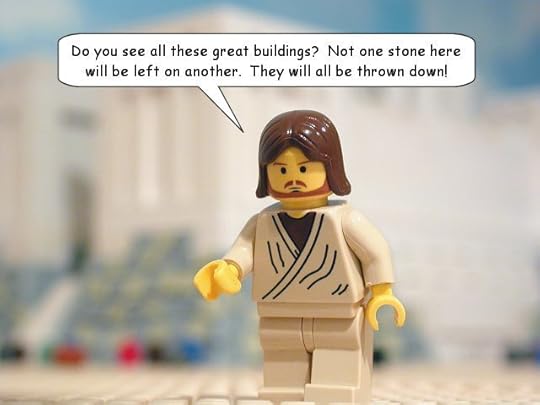
Suppose you are like me, then you get squirmy when Jesus talks apocalyptic when the gospels look beyond feel-good Jesus toward the eschaton. Many prefer Jesus to be a moral teacher, dispensing moral platitudes we can use to teach our kids to be good people. Many prefer Jesus as the example of how to care for the poor and the sick. At the same time, others prefer Jesus to be their weekly spiritual boost, not unlike an add-in at your local smoothie shop. A weekly shot of Jesu will cure what ails you.
Don't get me wrong, I much prefer Jesus' Sermon on the Mount to this sermon on the destruction of the temple. But suppose we continue to speak only of peace and love when Jesus clearly predicted conflict and catastrophe. In that case, retired Episcopal priest and theological Beyonce Rev. Fleming Rutledge is correct in her assertion that we are refusing to hear a substantial part of Jesus' message. It is hard for those of us who live relatively comfortable and privileged lives to find Good News in Jesus' words because Jesus' flipping of the world could mean loss of standing and comfort for us. Are Jesus' words in Mark 13 good news or bad? I guess it depends on where you are and when you receive Jesus' apocalyptic news.
My mentor recalls a mission trip to Honduras each time he hears Jesus' words in Mark 13. While running a makeshift health clinic in San Marco, a group of students had the idea to share their favorite Bible verses around the campfire after a day's work. I am sure you can imagine the passages that were shared over the sounds of wood crackling. "For God so loved the world…." John 3:16. "The Lord is my shepherd; I shall not want…." Psalm 23. The story takes a shift when a Honduran woman shares Mark 13: Not one stone left on stone, war, earthquakes, and famine. She said Mark 13 always brings her comfort.
Wait, what?!
Comfort?
You should have seen the way you squirmed after giving thanks to God for today's scripture reading. Mark 13 is a far departure from my mainline, educated, somewhat responsible view of Jesus. My mentor discovered this Honduran woman gave birth five times yet lost three children to malnutrition. To hear that Jesus is going to dismantle the world and preservation of the status quo is of no interest to God, frankly, gets me uncomfortable. After all, I have a roof over my head, the church pays me a fine salary with excellent health insurance, and my future looks to be reasonably bright. But what my mentor points out is that Jesus' talk of disruption is gospel good news because, for this woman in San Marco, her status quo has been hell.
The gospel's accounting for sadness and brokenness and the world's wickedness is one of the reasons the gospel makes sense. When the New Testament speaks of the Kingdom of God, the word often used is tribulation. Tribulation is ordinary suffering. Tribulation, in the biblical sense, points beyond itself to the coming triumph of the Lord. This is a kingdom reigned over by Christ, where the last things produce hope, not despair; confidence, not fear. Hope and confidence that the sadness and brokenness that we are pained to see with our own eyes, sadness and brokenness that we experience, sadness and brokenness that others live day in and day out, does not outlast God's kingdom.
Dismantling this world is frightening. But in Mark 13 Jesus describes a dismantling to realize God’s justice and love for all of creation. God’s redemption and transformation of this broken world is good news for all; the comfort and privilege for which we work and to which we cling instantly pale in the light of God’s justice and love.
Fleming put it best, "No suffering can be properly understood until the Lord comes – but he will come. God is accomplishing his purposes in spite of all appearances to the contrary. Nothing can lie beyond the power of God to redeem and transform. We believe this because we have been seized by the unique authority of the voice of Jesus Christ."
Knowing God will get the last word, our acts of mercy and justice, along with our communal acts of faithfulness, become signs of the God Kingdom – Queendom, Kin-dom – that is yet to come.
November 3, 2021
Rebuking the Jericho Road


Today, Jesus is in Jericho. The last stop a pilgrim would have made before making their way into Jerusalem for the Passover festival. This road Jesus and his followers traveled was packed, jam-packed with pilgrims, vendors, and folks like Bartimaeus. With so many pilgrims heading toward Jerusalem, the Jericho highway would have been an excellent spot for a blind beggar, for anyone in need like Bartimaeus, to have great odds at receiving alms – money for the poor from well-meaning religious people.
Bartimaeus sat alongside the road as Jesus, his disciples, and the growing crowd following Jesus approached. Above the noises of the busy highway, Bartimaeus shouted, "Jesus, Son of David, have mercy on me!" Over and over again, Bartimaeus' shouts fought against the sounds of the Jericho Road. "Jesus, Son of David, have mercy on me!" "Jesus, Son of David, have mercy on me!"
As Bartimaeus shouted out Jesus' name, "Jesus, Son of David, have mercy on me," he was rebuked, told to keep it down, be quiet, by a religious pilgrim, a fellow beggar, or maybe one of Jesus' disciples.
"What do you want me to do for you?" Jesus asked Bartimaeus.
"I want to be able to see," Bartimaeus humbly responded.
And he saw. And he followed.
If we are not careful, this interaction between Bartimaeus and Jesus becomes another healing story that demonstrates Jesus' power, another live-action teaching moment. But we have plenty of those moments. For the past ten chapters, Jesus has been healing his way toward the capital city: a leper in chapter 1, Jairus the General's daughter and a hemorrhaging woman in chapter 5, and a different blind man back in chapter 8. When Jesus wasn't healing, he was teaching. "My teacher," the title used by Bartimaeus after Jesus called him, is used three other times by Mark, all with the Aramaic root identifying Jesus as an authority of the. Healings and teachings, teachings and healings all lead to this moment. We are on the Jericho Road, and the next exit is Jerusalem. We are at the culminating moment of Mark's gospel.
"Jesus, Son of David, have mercy on me!"
"What do you want me to do for you?"
"Let me see again."
Jesus' question to Bartimaeus was not the first time Jesus asked this question. A few verses before his Jericho encounter with Bartimaeus, Jesus asked two of his disciples, James and John, the same question.
"What do you want me to do for you?"
The disciples said, "Grant us to sit, one at your right hand and one at your left, in your glory." [i]
James and John, two disciples who had been following Jesus since the beginning of his ministry, two disciples who were witnesses to healing after healing and teaching after teaching were asked what they wanted the Son of God to do for them, and they requested status and prestige. But when Jesus asks the very same question, word for word, to Bartimaeus, Bartimaeus asks that his sight be restored after declaring Jesus to be both Lord and teacher. Lord and teacher, the two statements begin a life of discipleship.
The story of the healing and response of Bartimaeus invites us to ask ourselves, "what do I want from Jesus?" Are we going to look at Jesus as James and John did as the eternal life status and prestige provider? Is Jesus to be our Lord or our errand boy?
As those who have declared Jesus to be Lord and those who have said yes to his invitation to follow, are we indeed his faithful followers, like Bartimaeus, or are we like James and John, looking for what we can get out of the deal? Faithful follower or pestering clients?
A mentor of mine suggests we flip Jesus' question, doing what Jesus did time and time again when asked a question, asking him, "Jesus, what do you want from me? What do you want from us?"
It is a fair question to ask; you could say it is a biblical question because just last week, the rich young man asked a similar question to Jesus, "what must I do."
"Jesus, I know who you are, and I have seen what you can do. What do you want from me?"
Telling the rich young man to sell it all, Jesus said he wanted all of him. Not the one hour a week convenient for his schedule version of him, no, Jesus wanted all of the man. This so grieved the rich young man that God would want all of him that he had no words in response for Jesus. But Bartimaeus threw off all that he had, his only source of income, the garment he had laid out day after day hoping a good-doing religious type could spare a buck or two, and he followed. He left everything from his life behind and followed Jesus.
At the moment of his calling, Bartimaeus abandoned every remnant of his old life to seek a new life with Jesus – Lord and teacher. The gospel tells us after Bartimaeus did this, his sight was restored, and he followed Jesus on the way. The way Jesus was following would lead him to the cross, to having his own life stripped away.
A couple of weeks ago, Pastor Jeff's message was that the kingdom of heaven is at hand, here now. We don't travel to heaven; God has traveled to us. We are living with God now, instructed to love God and love people. Knowing that, how do you, how will you live differently? Believing that heaven is truly at hand, that God has come to us – does that give you the freedom to live differently, sharing your time, your money, yourself, your love, your prayers, your gifts, your service, and your witness?
Generous living as a disciple of Jesus Christ is to be like Bartimaeus, like the saints of the past, to give our whole selves over to being formed, shaped by the one who calls out, over the noise of the world that rebukes us, telling us we are insignificant and not enough, not worthy of someone else's time. Our time, our generosity, our love joins us with Christ. This is what it means in our communion liturgy when we pray that we may be for the world the body of Christ redeemed by his blood in transforming this world, as we work together to ensure all are loved, cared for, and heard. In giving our whole selves to Jesus, we can do what the rich young man could not do and live as James and John could not imagine, but what Bartimaeus the blind beggar did without hesitation. Namely, allowing the establishing and maintaining of wealth and status and prestige to take a backseat to follow the extravagant grace of God in Jesus Christ.
Faith in Christ is not simply the conviction that Jesus is our divine errand boy or healer, but instead that Jesus wants us to follow. All of us. Every part of us. Because Bartimaeus followed, his story stands as a rebuke to the world and an invitation to us who may not be as energetic or even as faithful in our following of Jesus. But in following, like Bartimaeus, like James and John, the extravagant generosity of God in Jesus Christ belongs to you, to me, to all of creation. And in that generosity, we are free to live a new life in Jesus Christ, throwing off the garments of this life. A life of sharing our time, our money, our love, sharing our whole selves.
[i] Mark 10:37
Subscribe
November 2, 2021
Election Day With Crackers & Grape Juice and Gretchen Purser

Gretchen Purser is the host of the podcast, The Mess is Mine.
Gretchen is a recovering evangelical, former political hack, and a Republican refugee. She built a 20-year career working for national Republican campaigns, candidates, and committees and their adorable baby brother, the religious right. She’s seen a lot of sh!t. She joins us to talk faith and politics on Election Day 2021.
Before you listen, do us a solid and help out the podcast.Head over to http://www.crackersandgrapejuice.com.
Click on “Support the Show.”
For peanuts, you can help us out….we appreciate it more than you can imagine.
Follow us on the three-majors of social media:
https://www.facebook.com/crackersnjuice