Teer Hardy's Blog, page 13
July 1, 2020
The Good Life
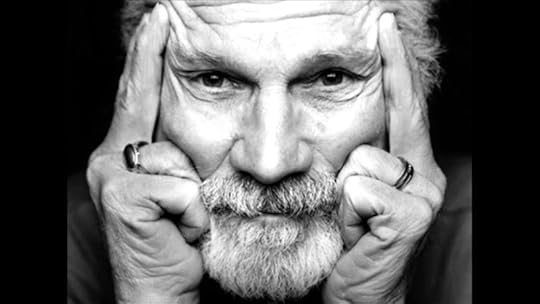
"If any people should know what it means to have a good life surely Christians ought to have something to say. Yet I do not think Christians have emphasized sufficiently why we think it so important to have a life well lived and, perhaps, even more significant what living well looks like. I am, of course, not suggesting that what it means to live a good life will be the same for everyone. But I do believe to have lived well makes it possible to want no other life than the life you have lived. To want no other life than the life we have lived, a life that often has moments of failures and betrayals, is made possible for Christians because our lives can be located in a determinative narrative that makes it possible for us to make sense even of those aspects of our life about which we are not sure we can or should make sense."
Next up on You're Not Accepted, Johanna is joined by myself and Jason to discuss "The Good Life" and where/how we might find it. This essay can be found in Minding the Web.
Before you listen, do us a solid and help out the podcast.
Click over to http://www.crackersandgrapejuice.com. Click on “Support the Show.”
Become a patron.
For peanuts you can help us out....we appreciate it more than you can imagine.
https://crackersandgrapejuice.com/show/youre-not-accepted/
https://www.facebook.com/crackersnjuice


June 28, 2020
The Gospel in Short Shorts

“Whoever welcomes you welcomes me, and whoever welcomes me welcomes the one who sent me. Whoever welcomes a prophet in the name of a prophet will receive a prophet’s reward; and whoever welcomes a righteous person in the name of a righteous person will receive the reward of the righteous; and whoever gives even a cup of cold water to one of these little ones in the name of a disciple—truly I tell you, none of these will lose their reward.” - Jesus of Nazareth (Matthew 10:40-42, NRSV)
A pastor friend of mine tells a story (the same story as if he is telling it for the very first time) when a discussion at a church council meeting or Sunday school groups turns toward hospitality in the church and welcoming strangers. Eight years ago he went out of town for a holiday weekend and did something most clergy would never dream of doing on one of their four Sundays off per year. He went to church.
He was curious.
What would it be like, he wondered, to be welcomed as a newcomer in a congregation where not a single person knew he was an ordained elder serving a large United Methodist Church is a well-to-do neighborhood in Northern Virginia?
As he finished up his Sunday morning run, still wearing his too-short running shorts, he opened the red doors of the local United Methodist Church and made his way toward the sanctuary for the 11:00 service. Still wearing the sweaty bandana on his head and a shirt that had obviously been worn more than it had been washed, he held his hand out to the usher standing in the Narthex (the area just to the back of the sanctuary) expecting to be handed a bulletin and receive a cheerful greeting.

The usher stood next to the entrance to the sanctuary, as my friend describes it “like a member of the Queen’s guard” and scoffed at my friend’s Sunday morning best.
Then, as it seemed things could not get any worse, another usher approached the two men and invited my friend to use a separate entrance to the sanctuary that was to the far side of the Narthex. There were no signs for what laid ahead at the end of the hallway but my friend was assured he’d find a seat. He knew he was not being invited to sit with the regulars, the Sunday morning folks who had their assigned seats. As he walked through the narrow hallway and up the narrow staircase he knew he had been ushered up the balcony.
As he made his way to a seat he was greeted by a regular who had made his regular spot in the cheap seats.
“We don’t get many of you around here.”
“What do you mean, many of what” my friend replied.
“Visitors,” the balcony welcome committee of one said.
“Oh, and with the welcome I received downstairs I’m surprised they don’t come back” he sarcastically replied.
Jesus’ words in our reading today are the culmination of a larger dialogue he was having with his disciples. Being sent by Jesus, to speak God’s truth to the world would not be an easy task, and this continues to be true today. No one, especially Jesus said discipleship would be easy. Following the example of Jesus is hard work. There are times when this means we will rely on the Holy Spirit for what to say or do. Families will be disrupted - the disciples James and John left their father Zebedee standing next to a boat with fishing nets in his hands as they left to follow Jesus. The call placed on the life of a disciple is not easy.

We will be called to stand with people in distress, people who look different from us, and people who live in places we would never imagine living. But in our reading today we hear Jesus say that those who welcome the ones He calls, well, “none of these will lose their reward.”
Jesus is telling us that acts of compassion and hospitality reveal not just a glimpse of who He is but also that these acts, they are a foretaste of the fulfillment of the Kingdom of God because in welcoming the ones sent by Jesus we are not just welcoming the stranger in too-short running shorts. We are welcoming Jesus himself. And because Jesus cannot be separated from the One who sent Him, we are also welcoming God, our Creator.
We have all heard stories of people not being welcome they arrive at a church or some other Christian gathering.
Perhaps they were like my friend, not “properly dressed” for the service - and to be fair, he knew he’d be pushing someone’s buttons that Sunday morning.
Perhaps you have been ushered to the balcony, or worse, invited to attend a church down the street where you “might be more comfortable.”
Maybe you did not feel welcomed because stained-glass language was used, insider language that most people outside of the church never hear, let alone use.
Maybe it was the color of your skin that prevented you from being allowed to sit down, or it was that you were holding the hand of a person someone else didn’t think you should be holding.
Stories of the church, the body of Jesus Christ, being less than hospitable to those Jesus has called to the church are reported more often than our scripture reading suggests they should be. And please, do not get me wrong, as a teenage I was an usher, the few and the proud entrusted by the worship committee to ensure an orderly worship service was maintained. I’m not throwing rocks in a glasshouse. But there are times when people are intentionally turned away or led to a place in the sanctuary, being told they will be more comfortable there, to a place or community where they will find more in common with the people in attendance.
The truth though, the truth is that we do turn people away from the church.
We turn a blind-eye when Jesus is standing in front of us because we are uncomfortable.
And in turning others away we are able to ignore, we think, who God has called not just into our lives but into the body of the One whom God sent.
When we reject a stranger whether in the building on Sunday morning or at the intersection of Glebe and Fairfax we are rejecting Jesus. Jesus showed his disciples that discipleship requires compassion and mercy. He did this in healing the blind and lame instead of telling them their sins or the sins of their family were too many to be made right. Jesus stood beside a woman about to be stoned. After all, he called an unlikely group of disciples and followers - a tax collector down from a tree, a person who had cheated and stole from his neighbors. Jesus did these things extending compassion and mercy. Jesus offered grace and not directions to a place where the community gathered would look more like the one standing before Him.
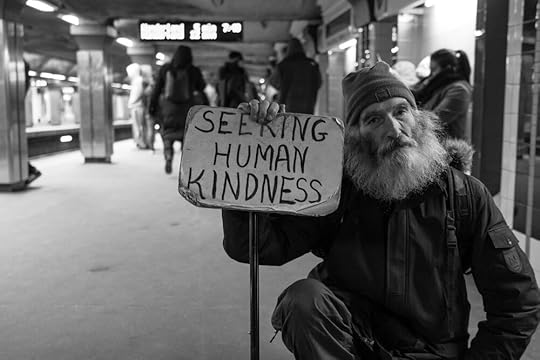
Compassion and mercy are the model given to us by Jesus for loving and welcoming every person who comes to us in His name.
The difficult task is that it will take more than a little bit of grace to open the doors of the church that have been closed to so many people - the LGBTQ+ community, single or divorced adults, those who haven’t opened a Bible in decades or ever. Then there are the doors of the church that have been used to segregate Christ’s body simply because the color of someone’s skin does not match ours.
The task before us is monumental, and frankly long overdue in being addressed. But the Good News in Jesus’ words is not only for the ones being welcomed or ushered to the balcony. The Good News also is for the church where people are sent to the balcony to make us more comfortable, the church where a hand of welcome is not extended to someone whose hand looks different from our own, and the church where we may not participate in such actions but we certainly are not doing anything to address the actions of the larger body. The Good News is for them and for us is that we are not the Queen’s guard. We are not the gatekeepers of Christ’s body and we certainly are not the gatekeepers of the Kingdom of God!
Praise be to God that we are not!

Our work is monumental and yet it is simple: to offer welcome. To extend a hand of invitation to experience the same amazing grace that changed our lives when we ourselves were once lost and hoping to be found. The work ahead of us is to offer an embrace when an embrace is invited and to give a cool cup of water in the sweltering humidity of a Virginia summer. God will take care of the rest, even when a button-pushing pastor shows up on Sunday morning wearing too-short running shorts.
Subscribe!!!
June 26, 2020
Anger, Tears, and Grief

Photo Credit: Tommie Marshell Photography
As we explore the new normal we find ourselves in during the COVID-19 pandemic the Mount Olivet community has been sharing devotionals to keep our community connected. Here’s my offering for Monday, Friday, June 26, 2020.
“Because of the Lord’s great love we are not consumed, for his compassions never fail. They are new every morning; great is your faithfulness.” Lamentations 3:22-23 (NIV)
School is out and the second official week of summer break is almost complete. This time last year my son was getting ready for a week at baseball camp (new grip on his bat, a new water bottle, and some of that stuff ballplayers put under their eyes), to be followed by a week at Grandma’s house. Summer vacation is a time to unwind, attend weddings, and pause from the busyness of life. Summer is my favorite time of the year. I spent every summer as a teenager in the woods of Goshen, Virginia. I worked for the Boy Scouts of America as a lifeguard and medic. I have fond memories of those summers and still keep in regular contact with my fellow camp counselors. Childhood summers truly are one of the best times of my life.
Yesterday morning was a train wreck in our house and not the start of summer vacation we had hoped for. Just a few days into summer vacation Camden, our 6-year-old son, realized that with school now completed he was not going to receive his “birthday bag” from his teacher. Mrs. Mehrnama would send each child whose birthday was over the summer break home with a bag full of books and goodies. The hastened departure from school in March along with no opportunity for students to gather together at the end of the year meant Camden did not receive a bag he had been looking forward to receiving since September.
Yesterday morning was full of anger, tears, and questions. We moved through each of these until we got the root of Camden’s grief.
In the middle of the Bible, there is a book of writings that are easy to skip over as you thumb your way from Leviticus to the Gospels. Lamentations is a book full of poems about grief, loss, pain, and heartache.
Learning to lament is not something I recall doing as a child. I did not take a course in lamenting while in seminary. A brief look back at my class notes shows that we spent all of a few minutes on Lamentations while I was studying the Hebrew Bible. Author Rob Bell notes to lament is an “art form” that “many people weren’t ever taught.” Lamenting though is “necessary to be health, whole, and fully alive.”
Lament is something we do individually and as a community. To lament is to turn towards our Creator, asking and wrestling with difficult questions knowing the answers we seek may not always be apparent.
Yesterday morning Camden realized that with the conclusion of the school year his summer was going to look very different from last year.
Baseball camp. Canceled.
EverWonder camp. Canceled.
Orioles and Nationals baseball games. Only viewable on television.
Waterslide at the pool. Closed.
Your list might look similar or completely different, but in the midst of a global pandemic, we all are finding ourselves with anger, tears, and questions. It can feel like the grief, loss, pain, and heartache we are experiencing is isolated to our own experience, but we worship a God who understands our anger, tears, and questions. In the fullness of Christ, the anger, tears, and questions of our lives did not remain here with us, rather the emotions we feel, the lament we lift up is heard, it is received by the One who created each of us.
Today was a better morning. We mapped out our day and our weekend. We filled up an inflatable pool in the backyard and put air in our bike tires. While an inflatable pool and bike ride cannot erase the grief, loss, pain, and heartache we all are feeling, the pool and bike will serve as an escape so that when the anger, tears, and questions return, we will be prepared to turn towards God. God is ready to receive the prayers of a 6-year-old boy missing his baseball teammates and 36-year-old dad who is missing watching his son hit dingers.
Bad Theology Kills

Rev. William H. Lamar IV joins Crackers & Grape Juice to talk about his latest piece featured in Faith & Leadership: 'It's not just the coronavirus -- bad theology is killing us."
The Rev. William H. Lamar IV is pastor of Metropolitan African Methodist Episcopal Church in Washington, D.C. He previously served Turner Memorial AME Church in Maryland and three churches in Florida: Monticello, Orlando and Jacksonville. He is a former managing director at Leadership Education at Duke Divinity. Lamar is a graduate of Florida Agricultural and Mechanical University and Duke Divinity School. He is the co-host of "Can These Bones," the Faith & Leadership podcast, and can be reached on Twitter.
Before you listen, do us a solid and help out the podcast.
Click over to http://www.crackersandgrapejuice.com. Click on “Support the Show.” Become a patron.
For peanuts you can help us out....we appreciate it more than you can imagine.
https://crackersandgrapejuice.com
https://www.facebook.com/crackersnjuice
https://twitter.com/crackersnjuice
https://www.instagram.com/crackersandgrapejuice
June 23, 2020
Out of Control

As we explore the new normal we find ourselves in during the COVID-19 pandemic the Mount Olivet community has been sharing devotionals to keep our community connected.
“Don’t let anyone who wants to practice harsh self-denial and worship angels rob you of the prize. They go into detail about what they have seen in visions and have become unjustifiably arrogant by their selfish way of thinking. They don’t stay connected to the head. The head nourishes and supports the whole body through the joints and ligaments, so the body grows with a growth that is from God.” - Colossians 2:18-19, CEB
As we settle into the first week of summer, if you’re like me, you might be longing for a return to normal. Now, what normal is is up for debate. For some, the slowed routine caused by COVID-19 is the same routine they had been following for months, maybe years. For others, the slowness has been a grinding halt. And for some, this time has been anything but slow.
The slowed pace of life we are experiencing now is beginning to grind on me.
Being busy and staying busy provides me with a sense of control. If I jam my schedule with things to be done, there is little time for idleness which means there is little time for things to go wrong.
The busyness I create for myself is my coping mechanism for lack of ability to maintain control.
Church life dictates a large part of my weekly routine.
My kids do not care what is on my calendar. They’re more interested in front yard baseball games and backyard pool parties.
Viruses do not check our collective calendars to determine the best time to unleash havoc on our collective lives.
Busyness keeps us busy (duh!).
Busyness allows us to pretend injustice does not exist in our lives.
Busyness can be an attempt to control our lives, beyond the scope of what we are truly able to control.
Busyness tricks us into thinking that there is a quick fix when life appears to be out of control.
Busyness invites us to create new gods for ourselves.
Busyness invites us to ignore that in Christ we are closer to God than humanity had ever been before and there is no quick fix, DIY improvement that will give us different results. There is no easy three-step process.
Author and pastor David Zahl refers to this desire for a quick fix, as seculocity. “Yes, you have faith but what about _________?” Zahl contends that in our chase for enoughness, in the eyes of God and the eyes of “them,” we default to moralistic performances (eating, dating, parenting, voting) to find fulfillment and righteousness.
We allow worship of busyness (or control) to replace the enoughness given to us by Christ.
St. Paul wrote to the Colossians addressing concerns he had with the church, mainly the influence of philosophy or human tradition on the life of the church.
Paul’s critique of ancient philosophical thinking centered on the idea that living a blessed life meant being at peace with creation through moral mediators like wisdom or the law. It had been suggested to the Colossians that if they fell out of peace with creation (ie. Not adhering to moral law) then they would fall in the category of evil/wrong, which would then bring them out of favor with God.
Christianity is not DIY.
Busyness for the sake of control is contrary to the work of Jesus Christ.
Christianity is discipleship, meaning in following Christ we acknowledge and hold onto Christ’s reconciling work that we, us and them, are unable to accomplish for ourselves.
In saying “it is finished” Jesus told the church that everything necessary to be done had been done.
There is no lacking in the relationship between God and humanity - nothing else need be done. There is no amount of busyness that can add to the control we think we need.
What was required for the best life possible has been done. There is no amount of circumcision, adhering to the law, based on scripture or based on moralism, necessary.
Because of Christ and through Christ our sins have been forgiven.
We have been made righteous by Christ’s faithfulness and all that is left to do is to enjoy the extravagance of God’s grace, compassion, and mercy. The control we seek is seated at the right hand of our Creator and in our quest busyness and control, He is with us.
June 19, 2020
Strange Rites
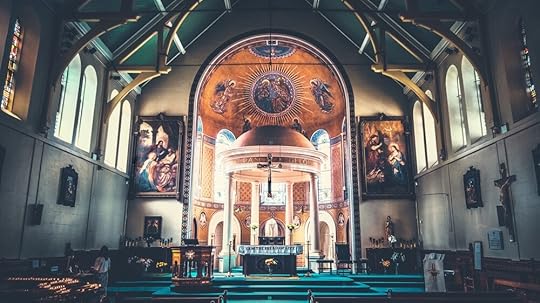
The latest from Crackers & Grape Juice - Jason and I are joined by author Tara Isabella Burton to discuss her latest opinion piece in the New York Times and new book, 'Strange Rites: New Religions for a Godless World.'
From the publisher: "In Strange Rites, religious scholar and commentator Tara Isabella Burton visits with the techno-utopians of Silicon Valley; Satanists and polyamorous communities, witches from Bushwick, wellness junkies and social justice activists and devotees of Jordan Peterson, proving Americans are not abandoning religion but remixing it. In search of the deep and the real, they are finding meaning, purpose, ritual, and communities in ever-newer, ever-stranger ways."
Before you listen, do us a solid and help out the podcast.
Click over to http://www.crackersandgrapejuice.com. Click on “Support the Show.” Become a patron.
For peanuts you can help us out....we appreciate it more than you can imagine.
https://crackersandgrapejuice.com
https://www.facebook.com/crackersnjuice
June 17, 2020
The Story of the Kingdom
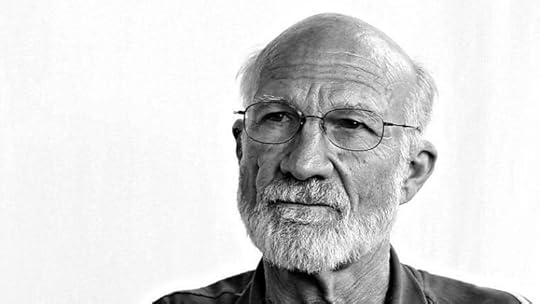
On the Latest episode of You’re Not Accepted we discuss 'Jesus the Story of the Kingdom,' one of the concluding chapters from 'The Peaceable Kingdom' (1983).
Christian ethics is about being schooled in the narrative of Jesus and discipleship. It is not about what you would do in a hypothetical situation, it is about forming people who will act in a particular way when those situations come up.
Before you listen, do us a solid and help out the podcast.
Click over to http://www.crackersandgrapejuice.com. Click on “Support the Show.” Become a patron.
For peanuts you can help us out....we appreciate it more than you can imagine.
https://crackersandgrapejuice.com/show/youre-not-accepted/
https://www.facebook.com/crackersnjuice
June 12, 2020
Who Will Be a Witness
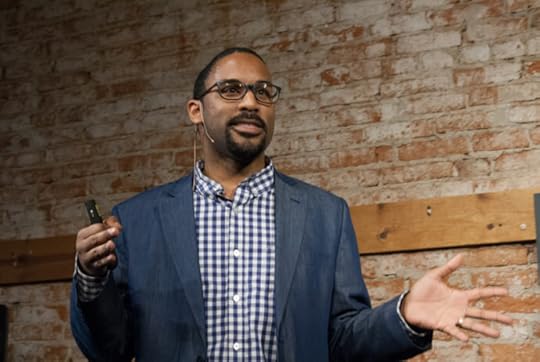
Drew Hart joins the podcast to discuss his forthcoming book, 'Who Will Be A Witness ' (September 2020), the ghosts of America's racist past, and what the Gospel says to us in a moment of pandemic, protest, and movement.
Drew G. I. Hart is a public theologian and professor of theology at Messiah College. He has ten years of pastoral ministry experience and is the recipient of multiple awards for peacemaking. Hart attained his MDiv with an urban concentration from Missio Seminary and his Ph.D. in theology and ethics from Lutheran Theological Seminary at Philadelphia. He is a sought-after speaker at conferences, campuses, and churches across the United States and Canada. His first book, Trouble I've Seen: Changing the Way the Church Views Racism, utilizes personal and everyday stories, theological ethics, and anti-racism frameworks to transform the church's understanding and witness.
June 9, 2020
Hold My Beer

Taylor Mertins is scraping the bottom of the barrel this week - I’m your featured guest on Strangely Warmed.
Proper 6 is on the horizon and I’ve got all the answers to your questions are you get ready to proclaim the Word of God this coming Sunday.
Genesis 18.1-15, Psalm 116.1-2, 12-19, Romans 5.1-8, and Matthew 9.35-10.8
What does it look like to be a sheep without a Shepherd?
Why is God so obsessed with impossible possibilities?
Is there a Pauline Gospel?
Before you listen, do us a solid and help out the podcast.
Click over to http://www.crackersandgrapejuice.com. Click on “Support the Show.” Become a patron.
For peanuts you can help us out....we appreciate it more than you can imagine.
https://crackersandgrapejuice.com/show/youre-not-accepted/
https://www.facebook.com/crackersnjuice
https://twitter.com/crackersnjuice
https://www.instagram.com/crackersandgrapejuice
June 5, 2020
Exactly As You Are
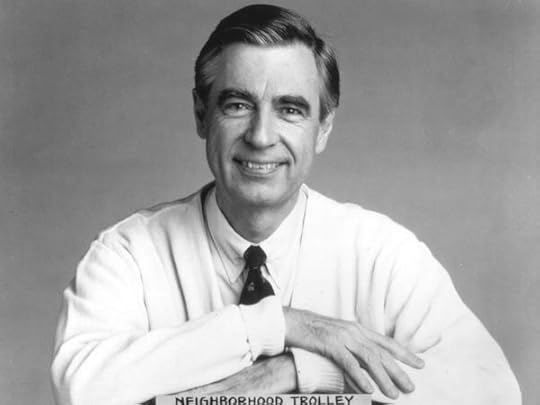
We could all use the comfort of Fred Rogers right about now. Joining this episode of the podcast is author Shea Tuttle, the author of Exactly as You Are: The Life and Faith of Mister Rogers. Mister Rogers touched the lives of many, and that is an understating of his impact. A Presbyterian minister, Fred Roger ensured that the Grace of God was shared with everyone he met, whether in person or in The Neighborhood. Yet, while extending Grace Mister Rogers also expected us to grow. Growth is what we need now, to grow out of the hate, bigotry, racism, and nationalism that plagues us today.
Shea Tuttle is the author of Exactly as You Are: The Life and Faith of Mister Rogers and co-editor of Can I Get a Witness? Thirteen Peacemakers, Community Builders, and Agitators for Faith and Justice. Her essays have appeared at Greater Good Magazine, The Toast, The Other Journal, Role Reboot, and Jenny. She holds an M.Div. from Candler School of Theology at Emory University in Atlanta. Shea lives in Virginia with her family.

Before you listen, do us a solid and help out the podcast.
Click over to http://www.crackersandgrapejuice.com. Click on “Support the Show.” Become a patron.
For peanuts you can help us out....we appreciate it more than you can imagine.
https://crackersandgrapejuice.com/show/youre-not-accepted/
https://www.facebook.com/crackersnjuice