Teer Hardy's Blog, page 12
August 10, 2020
The Holy Spirit and Christian Experience
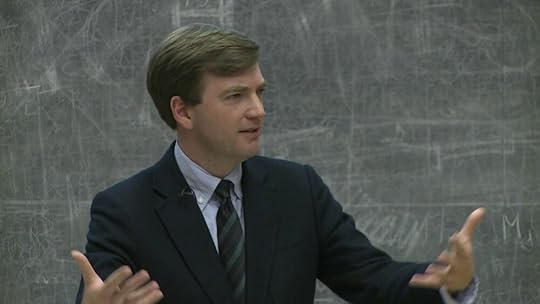
“It is true that theological doctrines and religious practices do shape and form religious experience, but it is no less true that experience tends to resist such shaping and forming. Attention to the complex interaction of these two insights is a key dimension of the account of “grace as experience” that follows below.”
Our latest guest on Crackers & Grape Juice is a Simeon Zahl, University Lecturer in Christian Theology at the University of Cambridge. Simeon’s new book, which ranges from Martin Luther to Karl Barth, Sarah Coakley to queer affect theory, is The Holy Spirit and Christian Experience.
Before you listen, do us a solid and help out the podcast.
Head over to http://www.crackersandgrapejuice.com.
Click on “Support the Show.”
Become a patron.
For peanuts you can help us out....we appreciate it more than you can imagine.
Follow us on the three-majors of social media:
https://www.facebook.com/crackersnjuice


July 27, 2020
God is Like Jesus?

Paul asks a lot of questions. In our reading today, Paul asked seven questions in 14 verses. I was never one for math but you that seems like five or six questions too many. If a student were to ask that many questions in an essay or letter of explanation, the student would receive an incomplete and be asked to try again. It would be above my pay grade to ask Paul, Saint Paul to re-write his letter. So we are, stuck with seven questions spread over 14 verses, that’s 18 sentences.
Paul is asking rhetorical questions but come on Paul, we’re turning to you for answers, not more questions leading to a new rabbit hole to follow as we try to lean into the Holy Scriptures.
“Who will condemn us?
Who is against us?
Who can separate us from the love of Christ?”
As a parent, I have a love/hate relationship with questions. Our youngest, Nora, has just entered the two-year-old stage of asking questions, well one question: Why?
Nora, you can’t use the chef knife to help make dinner. Why?
Nora, you can’t use the vinyl records as plates for your tea party? Why?
Nora, stop throwing your brother’s baseballs in the house! Why?
Then there are the rhetorical questions I deploy to prove a point or correct a behavior.
Do you think it is a good idea to look into the hose as you turn the water faucet on?
Should you encourage your sister to ride the 17-pound dog like a horse?
Paul’s use of rhetorical questions is an attempt to imply, to make crystal clear to his audience that if they, if we, sense any ambiguity about the answers to his questions - “Who will condemn us? Who is against us? Who can separate us from the love of Christ?” - then we need to go back and begin his letter again.
On first glance the answer to two of Paul’s questions - Who will condemn us? Who is against us? - is, “everyone.” It is easy to make our default response to Paul’s questions an individual response. Common sense, our experience living tells us there may be people who are against us. But this is not a rhetorical exercise design to encourage us into list making, naming all of the people we have wronged or who hold a grudge against us. Fleming Rutledge said, “Paul’s message, for which he lived and for which died was the exact opposite of common sense.”[1] Paul is talking about something bigger. What appears to condemn, be held against, or separate us are things like “hardship, or distress, or persecution, or famine, or nakedness, or peril, or sword.”[2]
While Paul might be asking questions, he also laid out his answers. Paul’s answers are crystal clear.
No one is against us.
No one will condemn us.
No one, nothing, there is nothing that can separate us, separate you, from the love of Christ.
No one.
The answers are obvious. The answers make perfect sense when in the Light of Jesus Christ’s life, death, and resurrection. But while the answers make perfect sense there is always the risk that we overthink, over-analyze the situations around us creating grey spaces that invite us to come to a conclusion that is the exact opposite of the obvious answers intended by Paul.
Last Sunday a pastor friend of mine listed all of the catastrophes that have happened so far in 2020. To get things started, back in January (which seems like forever ago) 46 million acres burned in Australia as wildfires ripped across the continent. A 46 million acre wildfire, that is a fire size of Syria. While we’re talking about fires, Chernobyl, the abandoned nuclear site in Russia caught on fire. There have been two swarms, not just one, of locust in East Africa devouring everything in their path. It is not just the pandemic - 14 million-plus cases and 610,000-plus deaths worldwide, 141,000-plus deaths in the United States.
It is not difficult to open the morning paper or your web browser and begin to think that maybe Paul was wrong. Paul asked, “Who will condemn us? Who is against us? Who can separate us from the love of Christ?” 2020?
We are halfway through the year and I worry that the murder hornets of June are going to resurface in August or worse, that Vanilla Ice really will begin touring again.
We all know the answers to Paul’s questions - because God is for us, because our God is our Creator and Sustainer, nothing, no one can separate us from the love of Christ.
No one is against us.
No one can condemn us.
We know the answer to Paul’s question and yet when we read headlines about the temperature in Siberia, Russia - that place where political opponents and governmental dissidents are sent - temperatures in that place being hotter that Siberia, Indiana or Washington, D.C. we allow what is happening around us and around the world to create the grey space necessary for the answer, “No one,” to transform into “Everyone and everything, including (maybe) God.”
In 1741 Johnathan Edwards - a Protestant theologian, philosopher, and revivalist preacher - preached a sermon titled Sinners in the Hands of an Angry God. Using the imagery of Hell, combined with observations of the world - headlines of the day - and citing scripture Edwards preached it is the will of God that keeps the wickedness of humanity from the depths of Hell. At one point Edwards depicted God “as a sadistic juvenile dangling spiders over a fire.”[3]
In his book Sinners in the Hands of a Loving God, a rebuking of Johnathan Edwards, Pastor Brian Zahnd asked the question, “Does God abhor sinners (that’s us) and view them as worthy of nothing else than to be cast into hellfire? Is God accurately represented when depicted as a faceless and remorseless white giant whose anger fuels the raging flames of hell?”[4] To put the question another way, does God so detest sin, and those who commit sin, that God is willing to turn a divine blind-eye on creation or worse, send the plagues again to East Africa while raising the temperatures in Siberia to 100+ degrees, or send a catastrophic worldwide pandemic?
While it may be easy to nod to Edwards when reading the latest headlines, Saint Paul and Jesus himself tell us otherwise.
“Who will condemn us?
Who is against us?
Who can separate us from the love of Christ?”
Paul continues, “If God is for us, who is against us? He who did not withhold his own Son, but gave him up for all of us, will he not with him also give us everything else?”
Jesus told his followers that the extravagance of God’s love, manifested in the Kingdom of God, is like that of a tiny mustard seed. It can appear small or insignificant, but when the mustard seed grows, the seed becomes a tree. “It is the greatest of shrubs” with room for the birds of the air to come and nest.
The truth is, it is cheap theology to look a the happenings of the world and to assume that God is in some way asleep at the wheel or worse punishing creation. To do so ignores not only what Saint Paul wrote to the church in Rome but also the life, death, and resurrection of Jesus Christ. Paul’s rhetorical questions leave the gate open and open the possibility for us to grossly misinterpret, running amuck with the Amazing Grace, the Amazing love of God in Christ that has and continues to be freely given to all people, all of creation.
Pastor Brian Zahnd continued, “God has a disposition towards sinners and it’s the spirit of Jesus. This is the beautiful gospel… God is like Jesus. God has always been like Jesus. There has never been a time when God was not like Jesus; we haven’t always known this, but now we do. God is like Jesus! God is not a sadistic monster who abhors sinners and dangles them over a fiery pit.”[5]
“For I am convinced that neither death, nor life, nor angels, nor rulers, nor things present, nor things to come, nor powers, nor height, nor depth, nor anything else in all creation, will be able to separate us from the love of God in Christ Jesus our Lord.”
The beautiful gospel of Jesus Christ, the Good News for those who gather to worship and those who have not been in quite some time, if ever, is that the love of God in Christ is ours. There is nothing we can do to earn this love and better yet, there is nothing we or anyone or anything can do to separate us from this amazing love.
Subscribe Today
[1] Rutledge, Fleming. Lord Help My Unbelief. Pg.135.
[2] Romans 8:35
[3] Zahnd, Brian. Sinners in the Hands of a Loving God. Pg 3.
[4] Zahnd, Brian. Sinners in the Hands of a Loving God. Pg 9.
[5] Zahnd, Brian. Sinners in the Hands of a Loving God. Pg 11.
July 23, 2020
Flannery O'Connor and a Christian Reading of American Literature
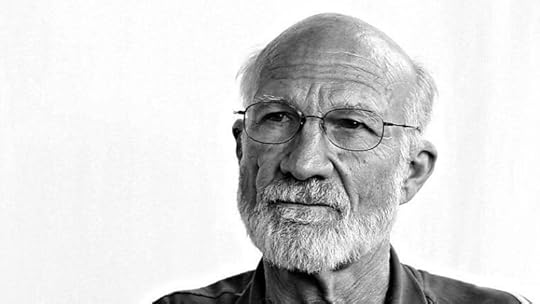
“Moralistic liberalism and individual pietism are mirror evils that have made the church understood as the distinctive Body of Christ virtually invisible in America.”
In this episode of You’re Not Accepted, the podcast posse discusses an essay Stanley wrote with Ralph Wood, “How the Church became Invisible: A Christian Reading of American Literature,” along with Flannery O’ Connor’s short story “The Displaced Person.”
Before you listen, do us a solid and help out the podcast.
Click over to http://www.crackersandgrapejuice.com. Click on “Support the Show.”
Become a patron.
For peanuts you can help us out....we appreciate it more than you can imagine.
https://crackersandgrapejuice.com/show/youre-not-accepted/
https://www.facebook.com/crackersnjuice
July 22, 2020
Come On Tomatoes
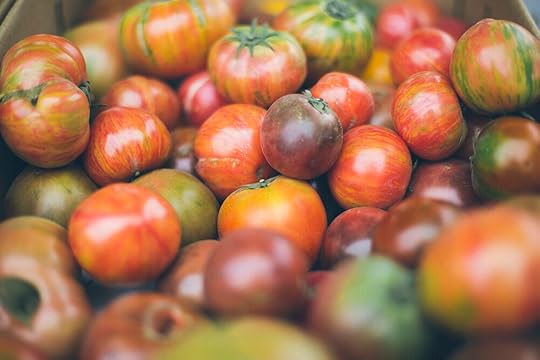
As we explore the new normal we find ourselves in during the COVID-19 pandemic the Mount Olivet community has been sharing devotionals to keep our community connected. Here’s my offering for Wednesday, July 22, 2020.
We bought our tomato plant months ago. It’s not summer without sliced tomatoes sprinkled with a little salt and (because of my grandfather) with a dab of Miracle Whip. For as long as I can remember, regardless of where we were living our family has grown tomatoes each summer. A few months into the tomato season and I’ve got not tomatoes.
The lectionary readings for last week and this week have me thinking about growing plants. Using mustard seeds and a sower sowing seeds, Jesus points towards the Kingdom of God using language his audience would have at least been familiar with hearing.
“The kingdom of heaven may be compared to someone who sowed good seed in his field” – Matthew 13:24
“He put before them another parable: "The kingdom of heaven is like a mustard seed that someone took and sowed in his field; it is the smallest of all the seeds, but when it has grown it is the greatest of shrubs and becomes a tree so that the birds of the air come and make nests in its branches." – Matthew 13:31-32
When was the last time you used a mustard seed? Me? I use ground mustard seeds when making my family’s secret meatloaf sauce.
When was the last time you sowed something? Wild oats? Seeds?
Jesus uses language about seeds and growing and frankly, I’m having a hard time tracking with what he’s saying. You’d think after nearly a decade in seminary I’d be following along just fine but when it comes to Jesus and his seeds the tomato plant (and basil, I just check that one and things aren’t looking good) tell me I should’ve paid better attention to first-century agricultural practices.
I can’t blame the tomato plant (or basil) for my inability to effectively sustain their growth. I could set an alarm on my phone, reminding me to water and rotate the plants each evening. I could outsource this task to my son and then blame him.
I could blame the lack of growth on the Virginia summer. There are a lot of ways to spin my inability to effectively sustain plant growth but at the end of the day, I’d be doing what we do best in DC - spinning a positive tale on a negative reality.
In each of the parables, Jesus told he was using earth examples to point a biblical truth. The truth in the parables is that when we look to the Kingdom of God we are looking beyond our own abilities and shortcomings, refocusing our attention on the possibility present in Jesus. The Kingdom Jesus spoke of is beyond our ability to grow on our own. No matter how much we water, rotate, till, or fertilize (maybe I should fertilize the tomato plant) of efforts always fall short. It’s no fault of our own. The Kingdom of God is God’s to inaugurate and that is where the Grace of God in Christ steps in, on our behalf, when our efforts fall short.
I don’t know what will come of our tomatoes. Lucky for me there is a farmer’s market in Westover every Sunday morning. There are others whose watering, tilling, rotating, and fertilizing expertise far out exceed my own. And then there’s the work done on my (our) behalf by God in Christ and through the Holy Spirit. Every time I attempt to advance God’s Kingdom on my own, God is ready to step in and correct my missteps or better yet, take over when my expertise lacks or is non-existent.
July 15, 2020
Enough

As we explore the new normal we find ourselves in during the COVID-19 pandemic the Mount Olivet community has been sharing devotionals to keep our community connected. This devotional was written by Holly Fletcher.
I've always struggled to push away a low-humming, background noise of anxiety that whispers, "MORE." There's more I could be doing, more I could achieve, more miles to run, more books to read, more pounds to lose, more activities and household effects to organize, more crafts and baking to do with my kids (according to the internet, if you are a mom, you MUST do the crafts and the baking).
We live in The Land of More. There's an app or a cream or a product or a solution for that. At its best, America is possibility, opportunity, freedom, choice. But it can also be a trap, a maze, an endless labyrinth of dead-end mirrors of always striving, never resting, go, go, go.
Punctuating the quiet, steady drumbeat of "more" is another, louder rhythm of fear, that if I try to do more, I will fail. My inadequacies and faults will conquer me. Whatever I produce will only demonstrate how much I fell short of the task. And more menacing still, beneath it all, there is a BOOM BOOM BOOM that rattles my deepest parts—If I fail, I am worthless. I am my performance and nothing else.
"In these unprecedented times" (is anyone else really sick of that phrase? Just asking), when so much of life has been contained and restricted, so many opportunities shut down, schedules emptied and paces slowed, I was at first relieved. Suddenly there were fewer choices to make, fewer chances to be blown, fewer possibilities to pursue. There was an automatic excuse for being and doing less. I could just drink wine and watch Netflix and not even feel guilty. But as the weeks turned into months, the anxiety resurfaced and the rest proved short-lived. Sure, I don't have as many opportunities outside the house, but am I really making the most of the ones inside the house? I could have written three novels by now or at least mastered sourdough baking like every other middle-aged white woman out there.
Based on my interaction with and observation of other human beings, I'm not alone in my angst. While there are some people who seem sublimely content to marinate in leisure and mediocracy, most of us have a drive to do and be more. At its core, it is our innate, primal need for self-preservation. In caveman times, drinking wine and watching Netflix all day was a good way to be killed by someone/thing. We human beings have persisted, overcome, created, invented, built nations, cured diseases, and ventured to space spurred on by the survival instinct. But we've also destroyed, betrayed, cheated, killed, and abused ourselves and others according to its insatiable demands. It's the reason middle-school girls are so mean to each other, why racism remains a scourge, why so many people can't bring themselves to apologize.
God offers us an exit ramp off this tortuous merry-go-round and onto a higher way of living in which we work and do and strive not as a way to save ourselves or prove our worth but as an expression of love, joy, God-given purpose and connection to something larger. The gospel of Jesus operates from a starting point of our fundamental, inalterable worth. If we can breathe in this truth, even a little bit, it begins to free us from ourselves. It prevents us from being consumed by our inadequacies or enraptured by our successes. It allows us to truly love others because we no longer fear them and their success doesn't threaten our own.
To our anxious chanting of MORE, God says, "ENOUGH. What exactly are you trying to prove? You literally need to get over yourself. We've already established you are amazing, just having been created. Now that we've gotten that out of the way, go in peace and do what fills you with life."
OK, so he doesn't use those words exactly. He uses these words (via Paul), which are also pretty good:
“In all these things we are more than conquerors through him who loved us. For I am convinced that neither death nor life, neither angels nor demons, neither the present nor the future, nor any powers, neither height nor depth, nor anything else in all creation, will be able to separate us from the love of God that is in Christ Jesus our Lord.” - Romans 8: 37-38
July 14, 2020
The Gospel Isn't a Country Song
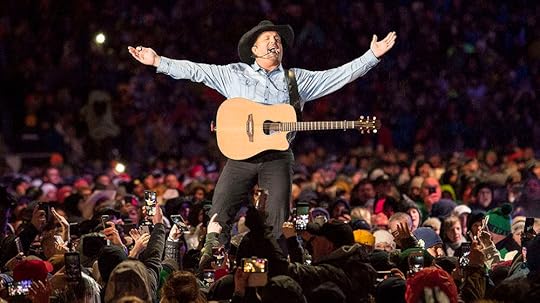
Garth Brooks performs in Notre Dame Stadium
Audio Block
Double-click here to upload or link to a .mp3.
Learn more
According to Saint Paul, there are two ways of life, and these two ways are divergent ways of seeing and living. There is the way of the world - the way of flesh - and there is the way of God. Paul writes the way of this world will ultimately lead to death while the way of God leads to life. These two ways of living came to a head when Jesus was killed by the state, tortured, and then hung on a tree only to then three days later walk out of the tomb leaving his grave clothes behind.
The way of life found in God was the quintessential teaching of Jesus. In everything he taught and did he pointed towards the life and freedom we have when we are filled with the Spirit. A life possible when we are oriented towards God and away from the power of sin that has corrupted our world, setting the values of this world -the values of the flesh - against the ministry and teaching of Jesus.
Paul is beginning to build his argument for how we, Christ’s body, are to live according to the Spirit - according to Christ’s Spirit. Paul’s point is that a way of living that is focused on life and not condemnation comes from the work of the Holy Spirit, not through anything we do. The work of the Spirit is to conform us into the image of Christ so that we can then live a life according to the Spirit, living in the Kingdom of God that is present now, and not being ruled by a world engulfed in sin.
From what I have been told 1992 was a big year. I was eight years old and living my best life on a black and gold single-speed Huffy bike while technology was booming - IBM released the first ThinkPad and CD sales had surpassed those of prerecorded cassette tapes. The global economy changed with the signing of the North American Free Trade Agreement. Pop culture and entertainment were changed forever, improving the quality of life for kids on Saturday mornings when The Cartoon Network debuted. The Winter Olympics were held in Albertville, France and The Mall of America opened in Bloomington, Minnesota.
While 1992 might have been the beginning of the greatest cultural decades, sin was still present.
In 1992, country superstar Garth Brooks was at the top of his game and he was the Academy of Country Music’s Entertainer of the Year. On the same night he received that award at the Universal Amphitheater in Los Angeles, he watched, along with people all around the world, as the city of Los Angeles erupted as protests turned into riots after the acquittal of four police officers.[1] These officers had been charged with assault and use of excessive force after a video surfaced of them beating Rodney King.[2] This case took the national stage because it was one of the first times assault and use of excessive force by police had been caught on camera. Movie director John Singleton described the acquittal as the lighting of “the fuse to a bomb.”[3]
After receiving his award Brooks boarded his tour bus, along with bandmates, family, and friends, and left the Amphitheater as flames and smoke began to peek over the city skyline. People on the bus were unnerved and scared. Later that night Brooks picked up the phone and called friend and songwriter Stephanie Davis.
“Are you seeing what’s happening out here,” he asked Stephanie.
She said, “I’m way ahead of you Brooks.”[4]
While watching the riots, being moved by what she saw on her television Stephanie Davis wrote We Shall Be Free.
“When we all walk hand in hand.
When the last child cries for a crust of bread,
When the last man dies for just words that he said,
When there's shelter over the poorest head…
When the last thing we notice is the color of the skin,
And the first thing we look for is the beauty within;
When the skies and the oceans are clean again…
When we're free to love anyone we choose,
When this world's big enough for all different views,
When we all can worship from our own kind of pew.
Then we shall be free.”
The beating of Rodney King and violence in Los Angeles after the acquittal of the officers who beat him may have taken center stage but the grip of sin was still shaping the way of life in the flesh.
2000 people were killed in India after the burning of a Mosque in India.
In 1992 a violence began in Bosnia as Muslims, Serbians, and Croatians found themselves consumed by civil war.
While we can look back, remembering musicians of the time - Pearl Jam, Nirvana, Michael Jackson, and the Dead - or we can recall movies we loved - Lethal Weapon 3, Wayne’s World, and Sister Act - the truth then and today is that while we may feel free for a moment from sin - the despair of the world - we cannot free ourselves from that which has held and continues to hold a grip on us.
It would be great if we could look back on history and saw the sins of the past as sins that we have not continued to commit today. In the world of the flesh, Sin, whether by commission or omission, leads to condemnation by others and by ourselves.
But Saint Paul writes that for those who are in Christ Jesus there is no condemnation.
For those who are filled with the Spirit of the One who overcame the power of sin and death, there is no condemnation.[5]
As the riots continued in Los Angeles Rodney King famously asked, “can’t we all just get along?” The short answer, no. This is why Garth Brooks and Stephanie Davis, as much as it pains my country music, Garth Brooks blaring self to say, they got it wrong.
It’s not that “then we shall be free.” We are free.
What Brooks and Davis missed is that in the struggle of us versus them, a world full of inequality and injustice and hatred and fear, we are out of our league to think we can course-correct on our own. We’re misguided if we think we can “just get along” on our own.
Paul’s point is that sin - manifested by “peril…famine...sword...” - has been defeated by the cross of Christ. To live according to the Spirit is to live with the free confidence and joy that all that stands against God has already been defeated. By the Grace of God, we are free to set aside the agenda of life in the flesh - life consumed by us verse them, inequality and injustice, hatred and fear - and instead, being filled with the Spirit of Christ live life in a realm ruled by God. A world where Jesus is indeed Lord and the ways of the flesh fall by the wayside.
Life in the Spirit moves us from condemnation and guilt to a life that is not our own. This is the life we put on as we emerge from the waters of our baptism.
A life we cannot earn for ourselves, rather a life of freedom received by Grace.
A life that makes it possible for us to set aside rebellion and to be swept up in the Spirit of Christ.
A life free from what separates us.
A life that frees us to just get along.
A life free from condemnation and guilt.
We are free, in Jesus Christ, to go beyond our limitations and to live fully in this world, working as we are moved by the Spirit of Christ to share that freedom in a world that is better positioned to condemn and convict. In Jesus Christ, in the power of his resurrection, and by the power of the Spirit of God we have been made free, no longer condemned, no longer guilty, and now invited, all of us, to live according to God’s Grace.
Subscribe to the Podcast[1] Szymanski, Al, director. Garth Brooks: The Road I'm On. Netflix, A&E, 2 June 2020, www.netflix.com.
[2] “After the Riots; A Juror Describes the Ordeal of Deliberations.” The New York Times, The New York Times, 8 July 2020, www.nytimes.com/1992/05/06/us/after-t....
[3] CNN Documentary Race + Rage: The Beating of Rodney King, aired originally on March 5, 2011; approximately 14 minutes into the hour (not including commercial breaks).
[4] Szymanski, Al, director. Garth Brooks: The Road I'm On. Netflix, A&E, 2 June 2020, www.netflix.com.
[5] Romans 8:1
July 10, 2020
Solitude

As we explore the new normal we find ourselves in during the COVID-19 pandemic the Mount Olivet community has been sharing devotionals to keep our community connected. This devotional was written by Amanda Holmes
“Step out of the traffic! Take a long, loving look at me, your High God, above politics, above everything.” Psalm 46:10
Solitude- an oft not practiced spiritual discipline and yet one that has been thrust upon us in an unwilling fashion. Solitude is an outward spiritual discipline with inward ramifications and is defined as “the state or situation of being alone,” but it does not have to be synonymous with loneliness. As an extrovert who lives alone in a new city far from home, I was terrified at the prospect of being alone when the stay-at-home orders were announced back in March. Instead of living into that fear, I began to accept this forced time of solitude as a spiritual discipline and made the active choice to live into it joyfully. In making that mental switch, I looked at it as an invitation to take a break and rest, to step out of the busyness of the world and to somehow learn how to be still and remember that God is above all of this, above everything.
In first engaging in this period of solitude, I thought I was destined to be lonely, not realizing that this period of solitude would actually cause me to create a deeper community. Richard Foster writes in his book Spiritual Classics, “...being completely alone in solitude can often heighten our understanding of those we love most. A companion to solitude is silence, and together they enable us to value people for who they are, not what they say.” In this new virtual reality of Zoom meetings and FaceTime and suddenly and unexpectedly switching to online learning, I have come to realize that the blessing of this time of solitude is the necessity of intentional engagement. I have to be proactive in scheduling time with those I value and love because our time is no longer a fungible commodity, but something that must be pursued with purpose. It is through this heightened understanding of those we love most that I have been able to reconnect with friends and family and my church family in Arlington. I value my time and relationships so much more deeply than I did before and while I mourn the former spontaneous nature of interactions on campus and in my neighborhood, I am that much more grateful when I have set aside time to commune with someone I love, even if it is only virtually, because I know it is what is needed right now.
“There’s an opportune time to do things, a right time for everything on the earth.” Ecclesiastes 3:1
Solitude as an outward spiritual discipline creates community by respecting it. This period of solitude is what is required of us and is needed to protect our communities right now and by engaging in it with an attitude of intention, we can care for the community that you may not physically be able to be a part of right now. It has not erased our need for community, but by living into this period of solitude, we can learn what we value most and hopefully, continue to set aside time to “be still” and to “step out of the traffic” when this period of forced solitude is over. Do not forget this time and do not be dismayed. Take joy in the invitation of a spiritual discipline and remember that we are still the Church, even though the building might be closed.
July 9, 2020
Quarantunes

“Sing lustily and with good courage.” John Wesley wrote those words in the Hymnbook for Methodists in 1761. The team at Crackers & Grape Juice take those words seriously!
We decided to bring you some of our current “Quarantunes” for our latest podcast. They are the songs that have inspired, enlightened, and even enraged us as of recent. Here’s the playlist:
Thoughts And Prayers – Drive-By Truckers (Jason Micheli)
Sea of Love – Langhorne Slim & Jill Andrews (Teer Hardy)
What If I Never Get Over You – Lady A (Johanna Hartelius)
Cowboy Take Me Away – The Chicks (Tommie Marshell)
Moon River – Jacob Collier (David King)
Beautiful Strangers – Kevin Morby (Taylor Mertins)
Before you listen, do us a solid and help out the podcast.
Click over to http://www.crackersandgrapejuice.com.
Click on “Support the Show.”
Become a patron.
For peanuts you can help us out....we appreciate it more than you can imagine.
https://crackersandgrapejuice.com
https://www.facebook.com/crackersnjuice
July 6, 2020
God Works With Manure
I’m the featured guest on Strangely Warmed this week! Taylor invited me to discuss my thoughts on the Revised Common Lectionary readings for 6th Sunday After Pentecost. The texts are Genesis 25.19-34, Psalm 119.105-112, Romans 8.1-11, and Matthew 13.1-9, 18-23. We discussed the best biblical story for VBS. whether or not we should look to the Bible to help with our family problems and what Paul’s letter to the Romans tells us about the Gospel.
I’d love to hear what you’re preaching about this week (or what your preacher preached). Leave a comment or send me a message.
Before you listen, do us a solid and help out the podcast.
Click over to http://www.crackersandgrapejuice.com. Click on “Support the Show.” Become a patron.
For peanuts you can help us out....we appreciate it more than you can imagine.
https://crackersandgrapejuice.com
https://www.facebook.com/crackersnjuice
https://twitter.com/crackersnjuice
https://www.instagram.com/crackersandgrapejuice
July 3, 2020
Growing Up in The Lost Cause
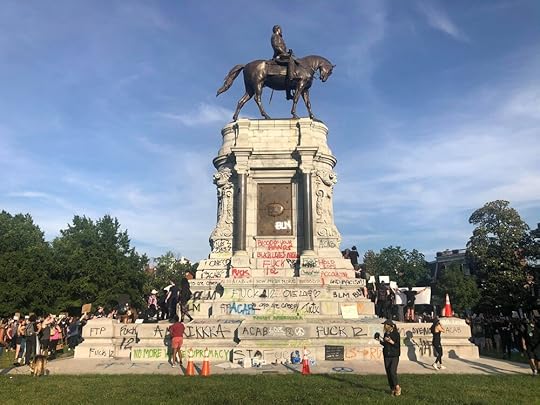
"The Lost Cause had taught me that faith, particularly faith in Jesus and going to church, was an indispensable part of what it meant to be a good person. But now that very same faith which The Lost Cause had commended was forcing a decision which would impact my past, present, and future. If I kept my faith in The Lost Cause, I would be unable to preach the gospel to the woman sitting next to me. If I wanted to share the gospel with anyone who wasn’t white, I would have to abandon the secular faith of my ancestors. The two were irreconcilable." - Bryan Jarell, Growing Up in the Lost Cause
Rev. Bryan Jarrell joins Jason and Teer to discuss the Lost Cause, statues in Richmond, and the moment his evangelical world was flipped upside down when he met the real-life consequences of the Stars and Bars.
Before you listen, do us a solid and help out the podcast.
Click over to http://www.crackersandgrapejuice.com.
Click on “Support the Show.”
Become a patron.
For peanuts you can help us out....we appreciate it more than you can imagine.
https://crackersandgrapejuice.com
https://www.facebook.com/crackersnjuice