Teer Hardy's Blog, page 11
October 6, 2020
The Condition Our Condition Is In
Once again I am gracing the internet with my presence on an episode of Strangely Warmed. Taylor Mertins invited me to share my thoughts on the passages assigned on the 19th Sunday After Pentecost, Proper 23, Year A.
Some of the themes for your consideration:
What's so good about fall?
Is God *really* immutable?
What should we wear to weddings?
Before you listen, do us a solid and help out the podcast.
Head over to http://www.crackersandgrapejuice.com.
Click on “Support the Show.”
Become a patron.
For peanuts you can help us out....we appreciate it more than you can imagine.
Follow us on the three-majors of social media:
https://www.facebook.com/crackersnjuice
https://twitter.com/crackersnjuice
https://www.instagram.com/crackersandgrapejuice


October 4, 2020
Gotta Have Swagger

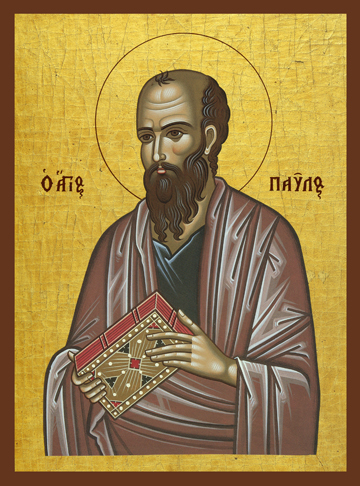
The Apostle Paul, oh boy, that guy had a lot of swagger. The writer of Acts and even Paul in this letter do not use the word swagger but Paul sure had it – confidence and pride. Me, when I am sitting behind my desk with pen and paper in my hand or if I am preparing to send what I believe to be an epic tweet I may resemble Paul. Confident, swagger that with the stroke of my pen or click of a mouse I am prepared to win any argument and convert the world regardless if I’m correct. Now, put me in the position Paul found himself in as he wrote this letter, under house arrest and charged with sedition, and my confidence and swagger would disappear.
Before he was locked away Paul had confidence and swagger to spare. Pastor Jeff read from chapter three of Paul’s letter to the Philippians, where Paul explained the source of confidence, his swagger. He wrote, “If anyone else has reason to be confident in the flesh, I have more: circumcised on the eighth day, a member of the people of Israel, of the tribe of Benjamin, a Hebrew born of Hebrews; as to the law, a Pharisee; as to zeal, a persecutor of the church; as to righteousness under the law, blameless.”[1] Paul’s confidence came from his Jewishness. He was a Pharisee, a member of the prestigious tribe of Benjamin. He was prepared to do whatever it took to stomp out the newly formed Christian movement taking root in synagogues throughout Israel.
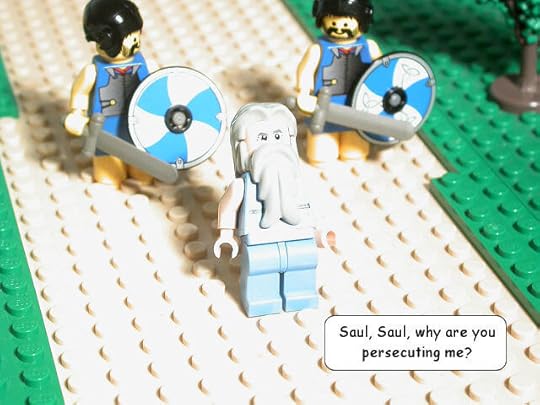
In the book of Acts, we were introduced to Paul. As he traveled from Jerusalem to Damascus, Paul had an encounter with the resurrected Lord. Paul was traveling to Damascus to capture “any who belonged to the Way – followers of Jesus – men or women that he might bring them bound to Jerusalem.”[2] Along the road to Damascus Jesus said to Paul, “Saul, Saul – before Paul was Paul, Paul was Saul – Saul, Saul why do you persecute me?”[3]
Before Jesus asked Paul this question Paul was confident in his efforts, he knew how to root out Christians and he knew how to do it efficiently. But on the road between Jerusalem and Damascus Paul’s confidence and swagger changed.
Confidence in our own abilities is a trait highly favored by employers, friends, and parents.
No one wants to hire an employee to complete a job who is not confident in their ability to complete the job they were hired to do.
We prefer to surround ourselves with people who are confident. We see arrogance as a bad character trait but at the same time do not want to be around people who are a pushover.
We teach confidence to our children – firm handshake, look adults in the eyes, stand up straight, and speak like you mean what you are saying.
Being confident in our skills, in our ability to conquer to tackle whatever task is placed before us is a hallmark of the society we have built for ourselves.
When I go to the doctor I want the doctor to ooze confidence in their ability to diagnose and fix whatever ailment I am presenting.
Confidence and swagger are so much a part of our daily interactions we may not even notice the trait but when they are missing, when the person we are interacting with lacks these two traits we notice.
Paul’s confidence changed when he was changed after meeting Jesus on the road to Damascus. The things Paul found confidence in – his ability to follow the Law, his lineage, his vocation, his blameless righteousness – all of those things were what he called “rubbish,” “a loss because of the surpassing value of knowing Christ Jesus.”[4] To be clear, Paul was not implying that being Jewish is rubbish, rather Paul is explaining to the church that the gains he held onto, the gains that gave him his standing and thus his confidence and swagger to persecute the church were a loss because of the surpassing value of knowing Jesus Christ.
Prior to his conversion the kingdom of human flesh was Paul’s focus. This is why his list of why he could be “confident in the flesh”[5] was so detailed. He could name the reasons because others valued these fleshly markers.
Notice verses 5-7, the list Paul laid out for his confidence, these were all focused on him, his ability, and were not pointing towards God.
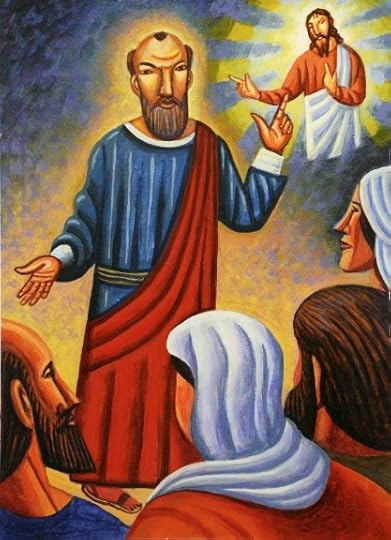
The pivot in Paul’s life, the moment he turned away from his abilities in the flesh and turned towards God, this reorientation towards the faithfulness of Christ is the same pivot we make as the waters of our baptism fall down our face and when we share a meal around Christ’s table of grace. In this moment of reorientation, this moment of repentance we are no longer reliant upon our CV or LinkedIn profile and instead we turn toward the one who met Paul in a moment we may believe Paul least deserved grace and changed his life.
Paul realized his holiness, his righteousness did not come from being blameless under the Law, but simply through faith in Jesus Christ. Paul did not need to, we do not need to be anything other than a beloved child of God.
God promises to meet us, changing our lives. We may not be knocked off a horse and blinded like Paul was but Christ will meet us. The faithfulness of Jesus Christ is an invitation to set aside the gains of this life, leaving behind the old markers of confidence and swagger, and now lean into the amazing grace of God in Jesus Christ.

This Sunday we celebrate World Communion Sunday. This is a day when Christians around the world choose to set aside our theological and doctrinal differences, gathering around Christ’s table, and share in a meal. A meal where we are the guests and the guest list includes those we least expect or believe deserving of an invitation.
Every time we choose the faithfulness of Jesus Christ – in bread and wine or in water – we are proclaiming to the world the truth that whatever accolades we seek or gain pail in comparison to the accolades and confidence we find in the faithfulness of God in Jesus Christ.
We have every reason to be confident. We have every reason to be filled with swagger and the Good News is this – there’s nothing you need to do to earn or obtain it. Everything has been accomplished through the faithfulness of the one who invites all of us to gather around his table. We can live confidently because God has and God continues to be faithful. We press on because Christ made us and makes us his own and in him, we are made one.
Subscribe Now
[1] Philippians 3:4b-6, NRSV
[2] Acts 9:2, NRSV
[3] Acts 9:4, NRSV
[4] Philippians 3:8, NRSV
[5] Philippians 3:4b, NRSV
September 30, 2020
Preaching Like God Is Speaking

This week I graced the airwaves on Strangely Warmed, the lectionary podcast produced by Crackers & Grape Juice, hosted by Rev. Taylor Mertins.
A few of the topics Taylor and I tiptoed around - Is there such a thing as too much coffee? Are clergy allowed to sin? Why does Paul have so much swagger?
Take a listen as you prepare to preach on Proper 22 of Year A - Exodus 20.1-4, 7-9, 12-20, Psalm 19, Philippians 3.4b-14, Matthew 21.33-46.
Before you listen, do us a solid and help out the podcast.
Head over to http://www.crackersandgrapejuice.com.
Click on “Support the Show.”
Become a patron.
For peanuts you can help us out....we appreciate it more than you can imagine.
Follow us on the three-majors of social media:
https://www.facebook.com/crackersnjuice
September 29, 2020
The Path to a New Christianity
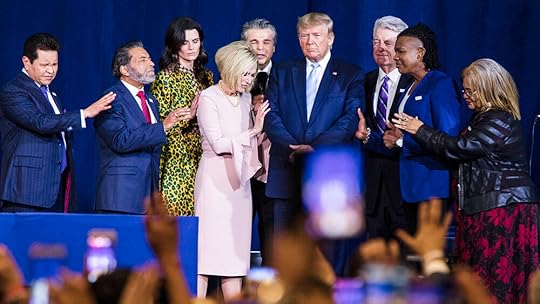
“What the word evangelical has come to mean in America circa 2020, such that a majority of Americans say ‘yuck’ when they hear the word, is politically and socially conservative Republicans who have confused the policies of the Republican Party and now Donald Trump with Christian faith in conjunction with a heavily white, male movement of cultural reactionaries– that’s a mighty long way from Luther.”
David Gushee is our guest on Crackers & Grape Juice. His new book is After Evangelicalism: The Path to a New Christianity.
Dr. David P. Gushee (BA, College of William & Mary; Master of Divinity, Southern Baptist Theological Seminary; Master of Philosophy and Doctor of Philosophy, Union Theological Seminary in New York) is Distinguished University Professor of Christian Ethics and Director of the Center for Theology and Public Life at Mercer University, where he has served for eleven years.
Widely regarded as one of the world's leading Christian ethicists, he is the author, co-author, editor or co-editor of 25 books and approximately 150 book chapters, journal articles, and reviews. His most notable books include Righteous Gentiles of the Holocaust, Kingdom Ethics, The Sacredness of Human Life, Still Christian, Moral Leadership for a Divided Age, and the new After Evangelicalism.
Dr. Gushee was elected by his peers to serve as President of the American Academy of Religion and the Society of Christian Ethics, a very rare combination for any religion scholar.
A devoted teacher, Professor Gushee offers courses to seminary students at Mercer's McAfee School of Theology, and to college students in Macon. Over a busy 27-year career, he has written opinion pieces or given interviews to almost all major national and religious media outlets in the United States and many around the world. He has also been heavily involved in numerous activist efforts for peace, justice, human dignity, and the integrity of God's creation, most notably in addressing torture, climate change, and the continued harm being inflicted on LGBTQ persons by Christian churches and families.
Along with his friend Jeremy Hall, David runs a popular podcast called "Kingdom Ethics."
Dr. Gushee and his beloved wife Jeanie live in Atlanta, where they are happily surrounded by four generations of family members, including his father, sister, three children, and two grandchildren.
Before you listen, do us a solid and help out the podcast.
Head over to http://www.crackersandgrapejuice.com.
Click on “Support the Show.”
Become a patron.
For peanuts you can help us out....we appreciate it more than you can imagine.
Follow us on the three-majors of social media:
https://www.facebook.com/crackersnjuice
September 23, 2020
Searching for Words
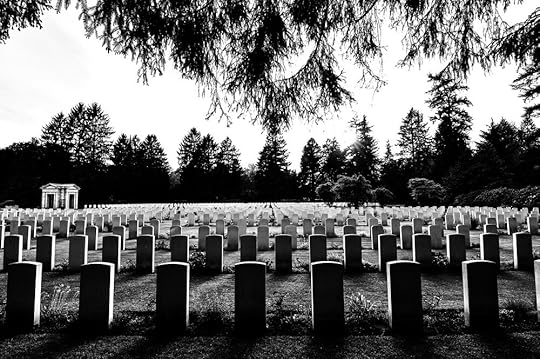
As we explore the new normal we find ourselves in during the COVID-19 pandemic the Mount Olivet community has been sharing devotionals to keep our community connected. Here’s my offering for Wednesday, September 23, 2020, the day after The United States’ COVID-19 death toll surpassed 200,000 people.
Yesterday the United States’ COVID-19 death toll surpassed 200,000 people. In the coming days, we will surpass 1 million deaths worldwide. COVID-19 has killed more people in the United States than Americans killed in battle during the five most recent wars combined: the Korean War, the Vietnam War, the Iraq War, the War in Afghanistan, and the Persian Gulf War. It is difficult to put into words the anguish we feel for this amount of life that has been lost.
In times like these we turn to the Psalmist:
Save me, God, because the waters have reached my neck!
2 I have sunk into deep mud.
My feet can’t touch the bottom!
I have entered deep water; the flood has swept me up.
3 I am tired of crying.
My throat is hoarse. My eyes are exhausted with waiting for my God.4 More numerous than the hairs on my head are those who hate me for no reason.
My treacherous enemies, those who would destroy me, are countless. Must I now give back what I didn’t steal in the first place?
5 God, you know my foolishness;
my wrongdoings aren’t hidden from you.6 Lord God of heavenly forces!— don’t let those who hope in you
be put to shame because of me.
God of Israel!— don’t let those who seek you be disgraced because of me.
7 I am insulted because of you.
Shame covers my face.
8 I have become a stranger to my own brothers,
an immigrant to my mother’s children.
9 Because passion for your house has consumed me,
the insults of those who insult you have fallen on me!
10 I wept while I fasted—
even for that I was insulted.
11 When I wore funeral clothes,
people made fun of me.
12 Those who sit at the city gate muttered things about me;
drunkards made up rude songs.13 But me? My prayer reaches you, Lord, at just the right time.
God, in your great and faithful love, answer me with your certain salvation!
14 Save me from the mud!
Don’t let me drown! Let me be saved from those who hate me and from these watery depths!
15 Don’t let me be swept away by the floodwaters!
Don’t let the abyss swallow me up! Don’t let the pit close its mouth over me!
16 Answer me, Lord, for your faithful love is good!
Turn to me in your great compassion!
17 Don’t hide your face from me, your servant,
because I’m in deep trouble. Answer me quickly!
18 Come close to me!
Redeem me! Save me because of my enemies!19 You know full well the insults I’ve received; you know my shame and my disgrace. All my adversaries are right there in front of you.
20 Insults have broken my heart.
I’m sick about it.
I hoped for sympathy, but there wasn’t any; I hoped for comforters, but couldn’t find any.
21 They gave me poison for food.
To quench my thirst they gave me vinegar to drink.22 Let the table before them become a trap, their offerings a snare.
23 Let their eyes grow too dim to see;
make their insides tremble constantly.
24 Pour out your anger on them—
let your burning fury catch them.
25 Let their camp be devastated;
let no one dwell in their tents.
26 Because they go after those you’ve already struck;
they talk about the pain of those you’ve already pierced.
27 Pile guilt on top of their guilt!
Don’t let them come into your righteousness!
28 Let them be wiped out of the scroll of life!
Let them not be recorded along with the righteous!
29 And me? I’m afflicted.
I’m full of pain. Let your salvation keep me safe, God!30 I will praise God’s name with song; I will magnify him with thanks
31 because that is more pleasing to the Lord than an ox, more pleasing than a young bull with full horns and hooves.
32 Let the afflicted see it and be glad!
You who seek God— let your hearts beat strong again
33 because the Lord listens to the needy
and doesn’t despise his captives.34 Let heaven and earth praise God, the oceans too, and all that moves within them!
35 God will most certainly save Zion
and will rebuild Judah’s cities so that God’s servants can live there and possess it.
36 The offspring of God’s servants will inherit Zion,
and those who love God’s name will dwell there.-Psalm 69
I invite you to pray this prayer throughout the day today, and in the days to come:
Almighty God, in Jesus Christ You showed Your power and glory by caring by healing people of all ages and stations of life from physical, mental, and spiritual ailments. Be present now to people who need Your loving touch because of COVID-19. May they feel Your power of healing through the care of doctors and nurses, technicians, hospital workers, social workers, and everyday people.
Take away the fear, anxiety, and feelings of isolation from people receiving treatment or under quarantine. Give them a sense of purpose in pursuing health and protecting others from exposure to the disease. Protect their families and friends and bring peace to all who love them.
We pray this in the name of Jesus Christ, our Great Healer. Amen.
Grace & Peace,
Teer
September 14, 2020
Already Sanctified

"In many cases, particularly in the case, Wesley, teaching on sanctification leads to versions of piety that border on individual narcissism...renditions of sanctification as a process or journey of the believer moving towards ever-ascending degrees of holiness, of the Christian life as defined by growth or transformation, cannot be supported by the biblical texts, all of which testify that God's work in Jesus is finished and perfect, that on account of it we are already justified AND sanctified, and that God is the one who sanctifies- God can sanctify even inanimate objects. Because of God's completed work, we are already IN Christ and on that basis, not on the basis of our growth or transformation, we are saints."
On the podcast this week, is Dr. Don Payne, Professor of Theology at Denver Theological Seminary, on his new book, Already Sanctified: A Theology of the Christian Life in Light of God's Completed Work.
Before you listen, do us a solid and help out the podcast.
Head over to http://www.crackersandgrapejuice.com.
Click on “Support the Show.”
Become a patron.
For peanuts you can help us out....we appreciate it more than you can imagine.
Follow us on the three-majors of social media:
https://www.facebook.com/crackersnjuice
September 12, 2020
The Cross and The Lynching Tree
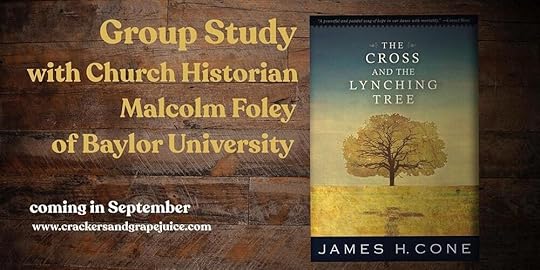
I was a study group at Mount Olivet last month in reading The Cross and The Lynching Tree by James Cone. It’s been said that this book is the capstone of Cone’s work. Prior to this reading group, I had not read The Cross and The Lynching Tree. I knew of Cone’s work. I had read Cone’s work in seminary.
I was not prepared for how much The Cross and The Lynching Tree would touch me. I love systematic theology. Systematic Theology was my favorite class at Wesley Theological Seminary (shout out to Dr. Kendal Soulen). I love studying atonement theory. But what I understood of the cross was limited and as I read Cone’s work I wanted to read more, consider more, and write more.
This is a book that should be required reading for all Christians, especially Christians living in the United States in 2020.
The study group I led was inadequate in studying such a book. I imagine this is the case in most predominately white congregations led by white (male) clergy. This has more to do with the way in which the church remains segregated and less with the people (or leader) in this group.
Shortly before we began this study at Mount Olivet the Crackers and Grape Juice team hosted a Thursday evening virtual pub theology with Malcolm Foley. Malcolm is a fifth-year Ph.D. candidate in Baylor’s Department of Religion, studying the history of Christianity. His dissertation investigates African-American Christian responses to lynching from the late 19th century to the early 20th century. Malcolm earned a BA in religious studies with a second major in finance and a minor in classics from Washington University in St. Louis. He subsequently completed a Master of Divinity at Yale Divinity School, focusing on the theology of the early and medieval church. During his time there, he served Trinity Baptist Church in New Haven as a pastoral intern. He is currently the Director of Discipleship at Mosaic Waco in Waco, TX.
Talking with Malcolm is what inspired me to lead this study at Mount Olivet.
After the Thursday evening conversation with Malcolm, I was convinced Crackers and Grape Juice needed to host another conversation with Malcolm, this time focused on Cone’s work.
Beginning Monday evening and continuing over six weeks the podcast will be joined by Malcolm Foley to discuss The Cross and The Lynching Tree. I want you to join us. Honestly, you need to join us.
Here are the details and how to register:
September 2, 2020
Grace is a Pumpkin Spice Latte in August

As we explore the new normal we find ourselves in during the COVID-19 pandemic the Mount Olivet community has been sharing devotionals to keep our community connected. Here’s my offering for Wednesday, September 2, 2020.
Last Thursday I was in Clarendon picking up a new suit. I was officiating a wedding the next day and I had waited until the last minute to get myself together (really, I forgot I needed a suit). As I walked backed to my car along Clarendon Boulevard I made a split-second decision that would change the rest of my week. A decision that would change my outlook for days to come. I walked into Starbucks, on one of the last days of August, and ordered a Pumpkin Spice Latte.
Over the past few weeks, I have been reading more than usual. Maybe it is because I know once the kids go back to school, I won't have the time for leisurely reading in the afternoon or perhaps I am in the middle of a stack of engaging books. Either way, I am loving what I am reading. My favorite author right of late has been Robert Farrar Capon. Capon was an American Episcopal priest, author, and chef.
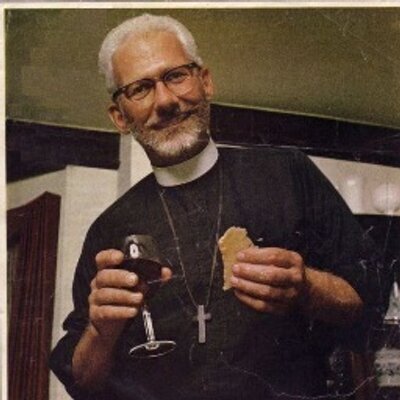
Capon wrote, “The life of grace is not an effort on our part to achieve a goal we set ourselves. It is a continually renewed attempt simply to believe that someone else has done all the achieving that is needed and to live in relationship with that person, whether we achieve or not. If that doesn't seem like much to you, you're right: it isn't. And, as a matter of fact, the life of grace is even less than that. It's not even our life at all, but the life of that Someone Else rising like a tide in the ruins of our death.
There's something you should know about me: I absolutely love pumpkin-flavored coffee, and, in my opinion, the Pumpkin Spice Latte is the pinnacle of pumpkin-flavored beverages. The coffee I am drinking as I write this is dishwater when compared to the glory that is the Pumpkin Spice Latte.
Last Thursday I did not set out to find a Pumpkin Spice Latte. I did not down the hill in Clarendon knowing I would find the holy grail of fall-themed beverages. But when I put my mask on and opened the Starbucks door that is exactly what happened.
And Grace works the same way. We can seek out the Grace of God through prayer, meditation, worship, and the reading of scripture. We can climb mountains, thinking that if achieve a pre-set goal we will obtain a predetermined Grace-filled outcome.

Grace comes to us in the ordinary - in bread and wine, and in water. The Amazing Grace of Jesus Christ catches us with our guard down and we are never the same. It is the Grace of God that injects a spark of joy into our lives, changing us from the inside out and we cannot help but be changed. We view the world differently. We engage our neighbors and community differently.
The Gospel writer penned that “From his fullness, we have all received grace upon grace.” Grace is not something we have to seek out. Grace is yours now. It is yours now in bread and wine, and in water but also in the ordinary of our daily routines – in a new suit, in a book, or in a Pumpkin Spice Latte before the first day of fall.
September 1, 2020
The Love That is God: An Invitation to the Christian Faith

"God is love, Who's he kidding?"
Fritz Bauerschmidt is a Catholic deacon and a professor of Theology at Loyola University in Baltimore. His newest book, in the tradition of Lewis and Chesterton, is a treasure.
“God is love is the radical claim of Christianity,” writes Frederick Bauerschmidt at the beginning of this little meditation on the essentials of Christian faith. Throughout The Love That Is God, Bauerschmidt goes to work breathing life back into that claim, drawing from Scripture, great Christian and non-Christian writers of the past, and his own lived experience to show just how countercultural and subversive Christianity is actually meant to be.
Fritz Bauerschmidt is a Professor of Theology at Loyola University Maryland and a permanent deacon of the Archdiocese of Baltimore, assigned to the Cathedral of Mary Our Queen. He holds a BA from the University of the South (1984), a MAR from Yale Divinity School (1989), and a Ph.D. from Duke University (1996). He has worked in a seafood processing plant in Alaska, hitchhiked from British Columbia to east Tennessee, and once slept under a bridge in Germany. In more recent years he has led a quite life.
Before you listen, do us a solid and help out the podcast.
Head over to http://www.crackersandgrapejuice.com.
Click on “Support the Show.”
Become a patron.
For peanuts you can help us out....we appreciate it more than you can imagine.
Follow us on the three-majors of social media:
https://www.facebook.com/crackersnjuice
August 25, 2020
The Real(er) World

Having been born in the mid-'80s and growing up in the 90's you could say that I, along with my fellow millennials are the product of, the original consumers of reality television. Reality T.V. began in May of 1992 with the airing of the first episode of Real World. Each season the location of the show would change – New York, Miami, San Francisco, Los Angeles, London, Seattle – but the premise of the show would not: “This is the true story…of seven strangers…picked to live in a house…(work together) and have their lives taped…to find out what happens…when people stop being polite…and start getting real.”
Real World exposed topics that for the time had been considered taboo in front of company: sex, prejudice, religion, abortion, sexuality, AIDS, death, politics, and substance abuse. With these topics on the table what would happen when 7-8 strangers set aside the norms of politeness while being filmed 24/7?
The truth Paul is speaking in Romans 12 is that living in God's love is the only true reality, unblemished by the brokenness of this world. The good news in this truth is that God's love will transform us, and we can in turn transform the world.
For 11 chapters Paul has been petitioning the Roman Church to get their heads on straight. Paul had been making the argument that if only the church, disciples of Jesus Christ who had banded together, sharing life, if only those people could learn to accept the "real world" they would see things differently. In seeing things differently, they would live differently. They would be different. The problem for the Roman Church and us today is that Paul's demand for us to "not be conformed to this world," a world marred and contaminated by sin, raises the question – to what world are we to conform?
“I appeal to you therefore, brothers and sisters, by the mercies of God, to present your bodies as a living sacrifice, holy and acceptable to God, which is your spiritual worship. Do not be conformed to this world, but be transformed by the renewing of your minds, so that you may discern what is the will of God—what is good and acceptable and perfect.”[1]
Paul is pointing us towards a way of living that contrasts the arrogance, division, hatred, violence, and lack of empathy of the world that will consume us if we are not careful. Paul is extending an invitation to the church, he is pleading with the church to engage in a debate over what is real and what is normal.
We live in a world that wants to convert us. This past week the Democratic National Convention did it’s best to convince us that their vision of the real world will save us from ourselves, and next week the Republican National Convention will do the same. Prime-time speeches, flashy advertisements that make us wonder if Siri or Alexa are listening to us 24/7, and perfectly curated video montages are intended to convert us to their reality.
Political conventions are low-hanging fruit. Every day there are powers in our world, lesser gods that we lean towards, that attempt to convince us that their way of seeing the real world is the best for us. Their real-world will make our lives easier, less stressful, and more enjoyable they tell us.
That may sound manipulative and that is because it is! The world is seeking to co-opt you, to manipulate you into a cheap, false existence while God is offering an authentic reality based on love. Through worship, scripture, prayer, fellowship - through the church, just like this - we learn to experience God's reality, we are allowed to see behind the veil in a way impossible for the worldly co-opters.
Every time we gather to worship, proclaiming and receiving God's word we are attempting to convert, to convince you that the reality of life in Jesus Christ, a life that begins at the waters of Baptism and a life that cannot be contained by the grave, is the only reality that can course correct the arrogance, division, hatred, violence, and lack of empathy of the world.
Every week we gather for worship, whether we are gathering in-person or in the cloud, we are laying ourselves before the altar as a living sacrifice – mind, body, and soul. We do this together as a community living in a world that believes arrogance, division, hatred, violence, and lack of empathy to be marks of the real world when the reality of Jesus, the reality that we proclaim week after week, speaks a truth that few want to hear but once they have heard it, once they have experienced it they cannot look back: in the life, death, and resurrection of Jesus Christ, God has flipped the world on its head. Before a world conforming to sin could establish itself as the real-world Jesus countered it – “for those who find their lives will lose them and those who lose their lives because of me will find them.”[2]
The way of Jesus, the real-world life of a disciple is consumed more by healing the sick, proclaiming God’s truth, feeding the hungry, loving our enemies and praying for those who persecute us and less by patronizing the poor, sustaining disdain for our enemies, and not being willing for pray for those who are against you.
This is the real world, Christ’s reign – healing, truth, empathy, love, and prayer – that we proclaim week after week, Sunday after Sunday. It is a proclamation that transforms us through the power of the one who overcame everything that has and everything that will continue to attempt to separate us from one another.
“Do not be conformed to this world, but be transformed.”[3]
The transformation that Paul speaks of is something we both look forward to and recognize that it has already happened. The advent of Christ in the world, his death, and resurrection have already transformed the cosmos. The world was not real until Christ upended the powers and principalities on the cross and in the tomb.
We now live in the realest world, already transformed by Christ. Church, at its best, is just renewing our minds once a week to realize what Christ has already accomplished in spite of, and for, us.
The transformation we seek and the transformation we experience does not come as the result of our greatness or ability to transform ourselves. To not be conformed to this world and instead of being transformed means we rely on the greatness and the ability of God.
We are transformed, the world around us is formed by what has happened in Christ, and by what is happening here today in worship. What we do tomorrow, through the rest of the week is a direct result of the collision that has happened here in worship. A collision between the world as we know it – broken and in need of rescue – and the real world, established in the truth and power of Christ's ultimate reign. This is the world when Christ reigns over all of creation when the sick are healed, division mended, and enemies forgive one another.
The drama of MTV’s Real World set the stage for our obsession with reality T.V. and it’s consequences. Once the participants in the shows realized stardom was just around the corner the reality of reality T.V. took a backseat. As much as we try to create a real-world for ourselves, leaning into whatever reality most benefits us at the time, Christ invites us to something more. Paul is urging us to lean into a world – this world that we are a part of – that has shifted and to open our eyes to the reality of God's ultimate reign in Christ. Rather than offering ourselves to lesser altars with shallow promises, we are invited to be active participants in the Kingdom of God, a real-world that is present now, initiated by God's love, and sustained by God's power and grace.
Subscribe Today
[1] Romans 12:1-2, NRSV
[2] Matthew 10:39, CEB
[3] Romans 12:2, NSRV