Teer Hardy's Blog, page 10
November 25, 2020
Give Thanks, Every day, and All Day

The sounds and smells of Thanksgiving began early this year. We have been preparing a feast for four since Monday and we will be preparing until it is time to sit and eat on Thursday afternoon. While the number of people gathered around our table this year will be fewer than in years past, the motions, prayers, and activities of the day will not be all that different.
The Apostle Paul exhorted the Thessalonian church to rejoice in all things, pray without ceasing, give thanks in all circumstances. To me, especially in 2020, Paul’s words seem easier said than done. And yet, giving thanks is part of the DNA for the Church.
Rejoice always,
pray without ceasing,
give thanks in all circumstances. - 1 Thessalonians 5:16-18 (NRSV)
When we pray at home, we give thanks – when our feet hit the floor in the morning, around the table, after meeting with an old friend in the backyard for a beer (socially distanced of course).
We give thanks when joys enter our lives – the birth of a child, being reunited with an old friend.
We give thanks at milestones, graduations, birthdays, weddings.
We give thanks when we are in need of help.
Blessed be the Lord,
for he has heard the sound of my pleadings.
The Lord is my strength and my shield;in him my heart trusts;
so I am helped, and my heart exults,and with my song I give thanks to him. - Psalm 28:6-9 (NRSV)
All of life is an opportunity to worship God with a thankful heart. Like any discipline, lives of rejoicing, prayer, and thanksgiving take disciplined practice and patience. There will be days when we are rockstar exemplars of Paul’s words when we live out the actions of the Psalmist to the fullest, and then there will be days when gratitude for God and Christ are everywhere but on our minds.
2020 has left many of us with our hands in the air, wondering if the despair of the past nine months has left us without reason to give thanks. And yet, we will pause to do just that. We will pause with guests absent - either to try and slow a virus or because they now rest for their labors.
There has been much this year to leave us feeling as though being thankful, assuming a posture of gratitude is beyond what this year has done to us. And still, we will pause and give thanks.
We are able to rejoice, pray, and give thanks because we know, through the power of Christ’s resurrection, that the evil, suffering, and death we see in this world do not get the last word. The help that we need has come and promises to come again. God has not abandoned us and we can look to the full realization of the Kingdom of God with hope because through the Church, through one another, and through sacrament, we are opening ourselves to experience the means of grace Christ left for us, and we cannot think of anything to do but rejoice, praise, and give thanks.


November 15, 2020
Unity Isn’t Uniformity

Like many of you, that past few months have kept me physically separated from my family. My grandmother, dad, and uncle all move to Texas within the past year. I have not seen them since March. This is the longest stretch I have gone without seeing my grandmother, dad, or uncle in my family. Then, on top of that, this year’s Presidential election and has divided my family along political and ideological lines. If I can level with you, it’s been a difficult few months but I have a hunch my family is not alone in its physical and ideological separation.
You know, maybe we are made for this moment: division is not anything new for United Methodists, for Christians. In fact, most of the New Testament was occasioned either by conflict the church had with itself or conflict the church had with the empire.
The letter to the church in Ephesus was written to a church that found itself in a “precarious”[1] situation. Gentile Christians, Christians who were not Jewish converts had ignored the place Israel held in God’s saving history. These Gentile Christians were dismissive of the history, traditions, and rituals of Israel. It was as though what had brought the church into existence no longer mattered to this growing group within the church.
Jesus was an Israelite. Throughout his life, he never held citizenship within the Roman Empire. He did not have the same rights a Roman citizen would have had. Roman citizens were Gentiles. To ignore the history, traditions, and rituals of Israel would have been to ignore the very community that Jesus existed in.
The problem with this mentality - casting the history, traditions, and rituals of the very community that Jesus was born in, lived in and died in - the problem with this mentality as pointed out by theologian Stanley Hauerwas is that without Israel they, the church in Ephesus, and we would not have Jesus.
To ignore or dismiss the history, traditions, and rituals of Israel created a division within the church in Ephesus.
The Apostle Paul was a Jewish Christian. He wrote to the Philippian church that he had confidence in his Jewishness. Paul wrote, “If anyone else has reason to be confident in the flesh, I have more: 5 circumcised on the eighth day, a member of the people of Israel, of the tribe of Benjamin, a Hebrew born of Hebrews; as to the law, a Pharisee; 6 as to zeal, a persecutor of the church; as to righteousness under the law, blameless.”[2]
Because of the confidence, Paul had it would have been easy for his letter to the church in Ephesus to take a different turn as chapter four begins. Instead of begging the Ephesian church to lead a life worthy of the call to which they had been called, this letter could have been a Twitter-like attack, a theological and rhetorical wood-shed moment for the Gentile converts. Instead of speaking of “humility and gentleness, with patience,” bearing one another in love”[3] the Gentile Christians could have been rebuked, or told to go back to whoever it was they came from.
This letter of ethics and praxis has a singular focus - the One, the source, and example of the “humility and gentleness,” the “patience,” and the love[4] the church has been called to live - Jesus Christ.
Christ is the One that we the church, his body on earth, fix our eyes on. And to be the church, whether we are gathering online, in a physical church, or a local park the lordship of Jesus Christ over all of creation is what we proclaim each time we gather for worship.
“One Lord, one faith, one baptism, one God and Father of all, who is above all and through all and in all.”[5]
We are one, held together by the One who “all things came into being through.”[6]
And yet, the church today is even more fractured and divided than it was when this letter was written
Before Martin Luther nailed his 95 theses on a door at the University of Wittenberg the church was divided. Gatherings of church councils led to divides of theology, doctrine, and practice. And today while great strides have been made to unify the Church we remain divided.
Evangelical.
Progressive.
Bible-believing.
Mainline.
Independent.
Catholic.
Middle of the road.
These labels can be applied to any Christian community within the 200+ distinct denominations in the United States. The dividing lines within Christ’s body have prevented us from leading lives “worthy of the calling to which”[7] we have been called.
Church, setting aside the political mess swirling around us, we are not united among ourselves. We have allowed disagreements over sacraments, church law, doctrines (that few people outside of academia care about), sanctuary carpet colors, and the brand of coffee to serve on Sunday morning to divide the Church.
Unity is not uniformity. We can have our differences. We can have rich, meaningful discussions and debates about theology, doctrine, and practice. We should be having these conversations. We can do the things Christ called his Church to do - feed the hungry, heal the sick, care for the least, search out the lost, proclaim God’s reign - and at the same time disagree without threatening further division and fracturing of Christ’s body.
Speaking the truth, in love, is never easy and it requires fundamental trust that we in the church call faith. But unless someone is willing to be truthful with me I will never change. Unless I am willing to be truthful with someone else, they will never change. And, after all, Jesus is truth incarnate. Will it be easy? no. Will it hurt? Probably. But at least we’d be doing something worth our time.
We must continue to fight the destructive beliefs and practices within Christ’s body. We are obligated to work so that all people, regardless of the labels the divided world outside of the Church has placed on them, have a place within the body of Christ. The work is imperative. We have been called, all Christians, regardless of occupation to see to it that not a single person misses on the Grace of God in Jesus Christ.
Unity within the Church will never be a given. After all, we often choose the community we find ourselves in base on shopping around until we find a church that checks all of the boxes we need to be checked. Yes, you should find a church where you feel safe, a place where you can grow and “lead a life worthy of the calling to which you have been called.”[8]
It can feel like we will never be able to set aside the division and fractions that have split congregations, communities, and denominations, freeing us to focus on the oneness of God - “One Lord, one faith, one baptism, one God and Father of all, who is above all and through all and in all.”[9]
The unity we seek, the peace long for is not something achieved through church council votes or ecumenical gatherings.
The unity we see is already present.
The peace we long for is here.
The absence of division and fraction is here.
It is just like Jesus says it is, like a treasure hidden in a field, buried in your backyard. Just because you do not realize it’s there. Just because you refuse to believe it’s there. Just because you won’t risk looking like a fool and go digging up your yard it t doesn’t mean it’s not there. It does not mean it’s not real and true. It doesn’t mean you are not already sitting on a fortune and could be living out of those riches.
This realization can be a monumental, historic, scary, and angst-filled moment. The release of agency is not something we have been trained or formed to do outside of the church. And frankly, with the focus more on division as of late, the Church has allowed this monumental, historic, scary, and angst-filled shift to fall by the wayside, allowing us to become dismissive of the history, traditions, and rituals that have set the church apart from the political mess swirling around us.
Unity within the body of Christ begins and ends in the lordship of the One who has called us to not only be a place where the divine and human intersect in the amazing grace of Christ, but we have been called to also be recipients of that grace. Held together by Grace. Held together by the peace of Christ.
Unity is something we must realize and live into but rather to live by faith is to trust that it’s something God is doing, by Word and Sacrament, by the Holy Spirit. The bad news is, the lack of unity in our nation, the lack of unity in the Church is too great for us to repair it. The good news is, it’s too great for us to repair it...but the Living God is able to...
Subscribe Today
[1] Bartlett, David Lyon, and Barbara Brown. Taylor. Feasting on the Word. Preaching the Revised Common Lectionary. Westminster John Knox Press, 2009. Pg 305.
[2] Philippians 3:4b-6, NRSV
[3] Ephesians 4:2, NRSV
[4] Ephesians 4:2, NRSV
[5] Ephesians 4:5-6, NRSV
[6] John 1:3, NRSV
[7] Ephesians 4:1, NSRV
[8] Ephesians 4:1, NSRV
[9] Ephesians 4:5-6, NRSV
November 3, 2020
An Election Day Prayer From Fleming Rutledge
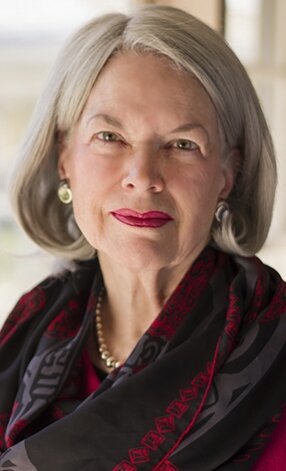
Our dear friend of the podcast and overall muse, Fleming Rutledge called in to offer a prayer for Election Day. As are all her prayers, this one is special.
Fleming is the author of many books including "The Crucifixion: Understanding the Death of Jesus Christ." You can find her at www.generousorthodoxy.org.
Before you listen, do us a solid and help out the podcast.
Head over to http://www.crackersandgrapejuice.com.
Click on “Crackers & Grape Juice +”
Become a paid subscriber to our bi-monthly newsletter.
For peanuts you can help us out....we appreciate it more than you can imagine.
Follow us on the three-majors of social media:
https://www.facebook.com/crackersnjuice
November 2, 2020
Not Her Party

“When you say you ‘don’t like Trump personally but you vote for his policy,’ THIS– almost 600 children intentionally orphaned at the border– is his policy. You call that Pro Life? If you are a Christian Trump supporter, I double dog dare you to tell me what you think Jesus would have to say. ’Trump says all the things we’ve always wanted to say.’ Really? Then what does it say about us as Americans if Trump’s outer monologue is our inner monologue?”

Our guest for episode #282 is a former Republican campaign operative and fundraiser, Gretchen Purser.
Raised a conservative Baptist in Oklahoma, Gretchen retired in 2009 from a 20-year career in politics, raising over a billion dollars for the Republican Party, candidates, and causes. She worked for the National Republican Senatorial Committee, the Christian Coalition during the 1996 Presidential Campaign, the President’s Dinner, George W Bush’s Inaugural. As an RNC consultant and finance director, Gretchen oversaw the McCain Victory finance team as well as the Bush finance team in the 2008 campaign.
Donald Trump’s Republican Party is NOT her party nor is it the Pro-Life, Character Counts, Christian Values party for which she worked for two decades, and she’s on the podcast to share her concern and righteous indignation.
Before you listen, do us a solid and help out the podcast.
Head over to http://www.crackersandgrapejuice.com.
Click on “Crackers & Grape Juice +”
Become a paid subscriber to our bi-monthly newsletter.
For peanuts you can help us out....we appreciate it more than you can imagine.
Follow us on the three-majors of social media:
https://www.facebook.com/crackersnjuice
October 29, 2020
An All Saints Reflection
As we explore the new normal we find ourselves in during the COVID-19 pandemic the Mount Olivet community has been sharing devotionals to keep our community connected. Here’s my offering for Wednesday, October 28, 2020,
“Which commandment is the first of all?”
Read Mark 12:28-34
All of us have had saints in our lives, those who have passed onto life eternal in Christ, who guided us in living out these two commandments. For me, two of those people are Carol Frank and Lori Shipley. These two women helped to see and experience the grace of God but they also helped me to learn to respond to that grace and share it with others.
The saints aid us in moving from what John Wesley referred to as justifying grace, when we accept the love and mercy extended to us by Christ, onto sanctifying grace, our own growing and maturing in faith, seeking to live just as Christ did. This is not a static, one, and done movement according to Wesley. Instead, this is an ongoing movement as we encounter the love of God through Jesus Christ.
So often though, we think that to move from justification to sanctification or holiness requires us to live out the greatest commandments – love the Lord your God with all your heart and with all your soul and with all your mind… You shall love your neighbor as yourself - before we do anything else. I’m not suggesting that we should not live those commandments out, after all, Jesus tells us point-blank that we should, but because I know that I continually fall short of the glory of God I know it can be a difficult journey. After all, so many gods are competing for our attention that we, at times, do not live into the prayer proclaimed by Christ. And loving our neighbor sounds easy enough but loving our neighbor includes:
“When you reap the harvest of your land, you shall not reap to the very edges of your field or gather the gleanings of your harvest. You shall not strip your vineyard bare, or gather the fallen grapes of your vineyard; you shall leave them for the poor and the alien.”
“You shall not render an unjust judgment; you shall not be partial to the poor or defer to the great: with justice you shall judge your neighbor.”
“You shall not go around as a slanderer among your people, and you shall not profit by the blood of your neighbor.”
“You shall not hate in your heart anyone of your kin; you shall reprove your neighbor, or you will incur guilt yourself.”
"You shall not take vengeance or bear a grudge against any of your people, but you shall love your neighbor as yourself.”
Loving our neighbor in the way Jesus told the scribe to, tells us today, is a tall task. While I hold Mrs. Frank and Lori in saintly esteem, I know there were times when they too fell short of the greatest of all the commandments. The first step though, to becoming a saint is not holiness, it is not loving “the Lord your God with all your heart, and with all your soul, and with all your mind, and with all your strength” or loving your neighbor. The first step in the sanctification John Wesley wrote and preached about is trusting that through the incarnation,
God donning human flesh and dwelling among us in Christ, God became our neighbor and loved us as himself to the fullest the law demanded. When the greatest of the commandments seems to be more than we can bear, we have Jesus who guides us by showing us first how to love one another. Repeatedly we see in Christ’s ministry how to love our neighbors.
With a woman at a well.
With a hungry crowd of people.
With his closest friends, around a table, sharing bread and wine together.
On the cross.
The saints of the past and us today have flaws. They, we, fell short of what Christ describes as the greatest of the things we are supposed to do. But in Christ loving us as himself, the saints and each of us are made righteous. What once was thought to separate us from the love of God is no more and Christ invites us to join him and the saints around His table. Clothed in the righteousness of Christ through our Baptism into His life, death, and resurrection, and not our own self-righteousness, we are declared holy.
The greatest commandments, loving “the Lord your God with all your heart, and with all your soul, and with all your mind, and with all your strength” and loving your neighbor is a little less daunting knowing that before we ever attempt to fulfill it, Christ first loved us. Christ fulfilled it for us.
October 22, 2020
Bonhoeffer for Troubled Times

The podcast posse at Crackers&Grape Juice has a new, timely online course slated for you this November, “Bonhoeffer for Troubled Times” with the irascible Dr. Jeffrey C. Pugh. This course will run the first four weeks of November 2020.
This course explores the roles, both good and bad, that Christianity played in one of the most horrific chapters of human history, the Shoah. Tracing the history of Christian anti-Semitism through two thousand years of history, this course shows how a majority of the church in Germany was prepared to support Hitler and embrace his call for racial purity. Drawing specifically on the German Church struggle between the "Deutsche Christen" and the Confessing Church, we explore why the church failed in the face of such a political onslaught, even though there were individuals, like Dietrich Bonhoeffer, who paid a high price for their resistance.
The recordings of these sessions, along with the audio, will not be publically available after the course. You’ll need to register and/or become a patron on the podcast. PSST, patrons of the podcast can take the course for free.
Register now and reserve your spot - https://crackersandgrapejuice.com/bon...
October 20, 2020
Can You Keep A Secret?

Today Crackers & Grape Juice is launching a new project - Crackers & Grape Juice +
A bi-monthly newsletter and podcast, the only way to read or listen is to be in the know, and subscribe.
Our first issue features Rev. Fleming Rutledge and Dr. David Bentley Hart, and the first episode features Rev. Kenneth Tanner.
Subscribe now and join us as we take our conversations about faith without using stained-glass language to the next level.
October 14, 2020
Striving Forward

As we explore the new normal we find ourselves in during the COVID-19 pandemic the Mount Olivet community has been sharing devotionals to keep our community connected. Here’s my offering for Wednesday, October 14, 2020,
“Beloved, I do not consider that I have made it my own; but this one thing I do: forgetting what lies behind and straining forward to what lies ahead.” – Philippians 3:13 (NRSV)
The Apostle Paul has a lot of nerve. Paul did not live through 2020. He did not live through a global pandemic, a nation coming to terms with it’s past and current racial injustices, murder hornets, wildfires, school at home, toilet paper shortages, or NOAA running through all of their planned storm names. “Straining forward to what lies ahead,” really Paul? Really?
A few weeks ago, at the outdoor worship service we watched, we participated in a service of Holy Baptism. Harper’s parents made vows and so did the congregation that was present. We will do the same this coming Sunday.
On behalf of the whole Church, I ask you:
Do you renounce the spiritual forces of wickedness,
reject the evil powers of this world,
and repent of your sin?
Do you accept the freedom and power God gives you
to resist evil, injustice, and oppression
in whatever forms they present themselves?
Do you accept the freedom and power God gives you
to resist evil, injustice, and oppression
in whatever forms they present themselves?
The vows made at our Baptism is what enables us to “forget what lies behind” as we die to ourselves and rise in a new life, clothed in the faithfulness and righteousness of Jesus Christ. The things of the past, the things that competed for our attention, and pulled us away from God no longer have a hold on our lives. And now, in the new life, we put on – whether it be two weeks or two decades ago – we find a new life, free from the things that competed for our attention, living in the fullness of the faithfulness of Jesus.
So, what then do are we look forward to? Frankly, I am not looking forward to another round of toilet paper shortages.
We look forward to the transforming (v 21) power of God in Jesus Christ. We are looking forward to that day when the Kingdom of God is fully realized here on earth as it currently is in heaven.
While the mess of 2020 continues, we do not look forward to the continued chaos of this world. No, we look forward, because “our citizenship is in heaven,” (v20) to the glory of Christ. Because we look forward to the good works of God in Jesus Christ we can “stand firm” (4:1) in the mess of a global pandemic, a nation coming to terms with it’s past and current racial injustices, murder hornets, wildfires, school at home, toilet paper shortages, or NOAA running through all of their planned storm names. We stand firm because we know that Christ had died, Christ is risen, and Christ will come again.
Prayer: Holy and merciful God, you stand beside us in times of celebration and chaos, happy anniversaries, and the helpless feeling of anxiety. Stand beside us now as we forget what lies behind, and as we lean forward, straining toward the glory that comes to us through your Son. Watch over us, we pray. Watch over the caretakers and community helpers. Heal the sick, provide for those in need, and give comfort to the grieving. Amen.
October 8, 2020
Remembering Martin Luther King Jr.
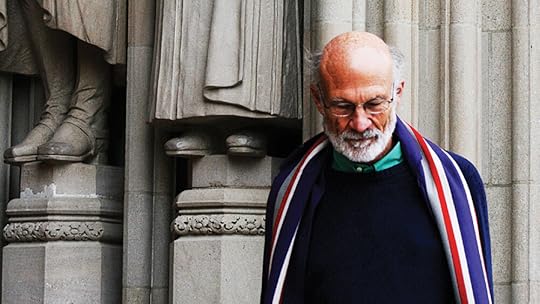
In the newest episode of You’re Not Accepted, a podcast produced by Crackers and Grape Juice exploring the works of Stanley Hauerwas we discuss Stanley's essay, 'Remembering Martin Luther King Jr. Remembering: A Response to Christopher Beem.' This essay was first featured in The Journal of Religious Ethics, Vol. 23, No. 1 (Spring, 1995).
The abstract:
The question of the relation of my work to that of Martin Luther King Jr. cannot be resolved with the theoretical tools Christopher Beem brings to the task. Stanley Fish has written that “those who detach King's words from the history that produced them erase the fact of that history from the slate, and they do so, paradoxically, in order to prevent that history from being truly and deeply altered." The vice of liberalism is not selfishness so much as a forgetfulness that spreads like a blight from the habit of abstraction. Martin Luther King Jr. remembered his people, his savior, and his church, and he called the rest of us to share those memories. Therein lay his strength.
Before you listen, do us a solid and help out the podcast.
Head over to http://www.crackersandgrapejuice.com.
Click on “Support the Show.”
Become a patron.
For peanuts you can help us out....we appreciate it more than you can imagine.
Follow us on the three-majors of social media:
https://www.facebook.com/crackersnjuice
October 7, 2020
The Saving Power of Politics
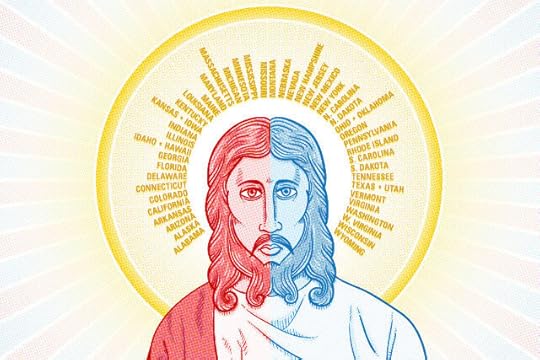
The saving power of Jesus Christ is the hallmark of Christianity. When Christians are baptized their act of repentance is at the forefront as they turn away from the gods of this world (money, power, fame, etc.) and turn towards the one whose faithfulness and righteousness is more than sufficient when their (our) faith is not.
There has been a lot of talk over the past year about how the 2020 presidential election is the most important election in this history of the United States. It probably is. In my lifetime I have never seen the nation so bitterly divided. There have been moments of unity in my lifetime - the Gulf War, 9/11, the Olympics - and yet int this movement where we could be unified against a central threat, the Coronavirus, we find ourselves in constant conflict with one another.
This conflict has been raging within churches around the nation. I have been on the giving and receiving end of the argument (discussion). Each side hoping the candidate they are supporting can guide us out of the mess we find ourselves in when in reality, the one election will not course correct the bitter divide we find ourselves in at the moment.
If there is anything that can course correct the bitter divide we find ourselves in at the moment it should be the saving grace of Jesus Christ. The grace afforded to all people - regardless of political affiliation, sexual orientation, gender, race, economic status, or whatever markers divided us - should be enough to turn the tide, at least within the church in the United States.
The problem though is that we have forgotten the vows we made or the vows made on our behalves when we were baptized. In baptism, we surrender our own lives and are given new birth through the grace of God.
On behalf of the whole Church, I ask you:
Do you renounce the spiritual forces of wickedness,
reject the evil powers of this world,
and repent of your sin?Do you accept the freedom and power God gives you
to resist evil, injustice, and oppression
in whatever forms they present themselves?Do you accept the freedom and power God gives you
to resist evil, injustice, and oppression
in whatever forms they present themselves?
Earlier this week Eric Trump, son of President Donald Trump, was interviewed on a North Dakota radio station.
Touting his father’s accomplishments while in office, Eric Trump said, “he (President Trump) literally save Christianity.”
Eric Trump speaking on North Dakota radio last week on his dad's accomplishments says of his father, "he literally saved Christianity."
— andrew kaczynski