Scott L. Smith Jr.'s Blog, page 7
June 13, 2022
Rebecca & The Virgin Mary: The 5 Promises of the Virgin Mary Based on the Holy Mother Rebecca According to St. Louis de Montfort
Did you know about all the connections between Rebecca and her son Jacob and the Virgin Mary and her Son Jesus? Rebecca is a type for the Virgin Mary. She prefigures Mary. St. Louis de Montfort wrote extensively on this in his True Devotion to the Virgin Mary.
St. Louis de Montfort's True Devotion to the Virgin Mary is an treasury of riches. One such treasure is St. Louis de Montfort's Consecration to Jesus through Mary -- the "Marian Consecration." The Marian Consecration is just a tiny part of True Devotion. An excerpt!
I have been writing about the Virgin Mary and researching Mariology for some time now. I have never seen such a lengthy and rich discussion of Rebecca and the Blessed Mother.

If you would like to read more about the Biblical connections to Mary, I have created an entire e-course and book on this! It's called What You Need to Know About Mary But Were Never Taught. Click below to enroll:

Here is the excerpt from Chapter 5 of St. Louis de Montfort's book, True Devotion to the Virgin Mary. I hope you find it as rich as I did. This book is a treasure trove of insights.
Enjoy!
True Devotion to the Virgin Mary, Chapter Five, Par. 183-212 Biblical Figure of This Perfect Devotion: Rebecca and Jacob
183. The Holy Spirit gives us in Sacred Scripture, a striking allegorical figure of all the truths I have been explaining concerning the Blessed Virgin and her children and servants. It is the story of Jacob who received the blessing of his father Isaac through the care and ingenuity of his mother Rebecca.
Here is the story as the Holy Spirit tells it. I shall expound it further later on.
184. Several years after Esau had sold his birthright to Jacob, Rebecca, their mother, who loved Jacob tenderly, secured this blessing for him by a holy stratagem full of mystery for us.
 Brugghen, Hendrick, Esau Selling His Birthright, c. 1627
Isaac, realizing that he was getting old, wished to bless his children before he died. He summoned Esau, who was his favorite son, and told him to go hunting and bring him something to eat, in order that he might then give him his blessing. Rebecca immediately told Jacob what was happening and sent him to fetch two small goats from the flock. When Jacob gave them to his mother, she cooked them in the way Isaac liked them. Then she dressed Jacob in Esau's clothes which she had in her keeping, and covered his hands and neck with the goat-skin. The father, who was blind, although hearing the voice of Jacob, would think that it was Esau when he touched the skin on his hands.
Isaac was of course surprised at the voice which he thought was Jacob's and told him to come closer. Isaac felt the hair on the skin covering Jacob's hands and said that the voice was really like Jacob's but the hands were Esau's. After he had eaten, Isaac kissed Jacob and smelt the fragrance of his scented clothes. He blessed him and called down on him the dew of heaven and the fruitfulness of earth. He made him master of all his brothers and concluded his blessing with these words, "Cursed be those who curse you and blessed be those who bless you."
Isaac had scarcely finished speaking when Esau came in, bringing what he had caught while out hunting. He wanted his father to bless him after he had eaten. The holy patriarch was shocked when he realized what had happened. But far from retracting what he had done, he confirmed it because he clearly saw the finger of God in it all. Then, as Holy Scripture relates, Esau began to protest loudly against the treachery of his brother. He then asked his father if he had only one blessing to give. In so doing, as the early Fathers point out, Esau was the symbol of those who are too ready to imagine that there is an alliance between God and the world, because they themselves are eager to enjoy, at one and the same time, the blessings of heaven and the blessings of the earth. Isaac was touched by Esau's cries and finally blessed him only with a blessing of the earth, and he subjected him to his brother. Because of this, Esau conceived such a venomous hatred for Jacob that he could hardly wait for his father's death to kill him. And Jacob would not have escaped death if his dear mother Rebecca had not saved him by her ingenuity and her good advice.
185. Before explaining this beautiful story, let me remind you that, according to the early Fathers and the interpreters of Holy Scripture, Jacob is the type of our Lord and of souls who are saved, and Esau is the type of souls who are condemned. We have only to examine the actions and conduct of both in order to judge each one.
Esau, the elder brother, was strong and robust, clever, and skillful with the bow and very successful at hunting. He seldom stayed at home and, relying only on his own strength and skill, worked out of doors.He never went out of his way to please his mother Rebecca, and did little or nothing for her. He was such a glutton and so fond of eating that he sold his birthright for a dish of lentils. Like Cain, he was extremely jealous of his brother and persecuted him relentlessly.Compare Esau's Conduct (1)-(5) with the Usual Conduct of Sinners: 186. (1) They rely upon their own strength and skill in temporal affairs. They are very energetic, clever and well-informed about things of this world but very dull and ignorant about things of heaven. 187. (2) And they are never or very seldom at home, in their own house, that is, in their own interior, the inner, essential abode that God has given to every man to dwell in, after his own example, for God always abides within himself. Sinners have no liking for solitude or the spiritual life or interior devotion. They consider those who live an interior life, secluded from the world, and who work more interiorly than exteriorly, as narrow-minded, bigoted and uncivilized. 188. (3) Sinners care little or nothing about devotion to Mary, the Mother of the elect. It is true that they do not really hate her. Indeed they even speak well of her sometimes. They say they love her and they practice some devotion in her honor. Nevertheless, they cannot bear to see anyone love her tenderly, for they do not have for her any of the affection of Jacob; they find fault with the honor which her good children and servants faithfully pay her to win her affection. They think this kind of devotion is not necessary for salvation, and as long as they do not go as far as hating her or openly ridiculing devotion to her they believe they have done all they need to win her good graces. Because they recite or mumble a few prayers to her without any affection and without even thinking of amending their lives, they consider they are our Lady's servants. 189. (4) Sinners sell their birthright, that is, the joys of paradise, for a dish of lentils, that is, the pleasures of this world. They laugh, they drink, they eat, they have a good time, they gamble, they dance and so forth, without taking any more trouble than Esau to make themselves worthy of their heavenly Father's blessing. Briefly, they think only of this world, love only the world, speak and act only for the world and its pleasures. For a passing moment of pleasure, for a fleeting wisp of honor, for a piece of hard earth, yellow or white, they barter away their baptismal grace, their robe of innocence and their heavenly inheritance. 190. (5) Finally, sinners continually hate and persecute the elect, openly and secretly. The elect are a burden to them. They despise them, criticize them, ridicule them, insult them, rob them, deceive them, impoverish them, hunt them down and trample them into the dust; while they themselves are making fortunes, enjoying themselves, getting good positions for themselves, enriching themselves, rising to power and living in comfort.Compare (1)-(5) with Jacob's Treatment of His Mother191. (1) Jacob, the younger son, was of a frail constitution, gentle and peaceable and usually stayed at home to please his mother, whom he loved so much. If he did go out it was not through any personal desire of his, nor from any confidence in his own ability, but simply out of obedience to his mother. 192. (2) He loved and honored his mother. That is why he remained at home close to her. He was never happier than when he was in her presence. He avoided everything that might displease her, and did everything he thought would please her. This made Rebecca love him all the more.

193. (3) He was submissive to his mother in all things. He obeyed her entirely in everything, promptly without delay and lovingly without complaint. At the least indication of her will, young Jacob hastened to comply with it. He accepted whatever she told him without questioning. For instance, when she told him to get two small goats and bring them to her so that she might prepare something for his father Isaac to eat, Jacob did not reply that one would be enough for one man, but without arguing he did exactly what she told him to do. 194. (4) He had the utmost confidence in his mother. He did not rely on his own ability; he relied solely on his mother's care and protection. He went to her in all his needs and consulted her in all his doubts. For instance, when he asked her if his father, instead of blessing him, would curse him, he believed her and trusted her when she said she would take the curse upon herself. 195. (5) Finally, he adopted, as much as he could, the virtues he saw in his mother. It seems that one of the reasons why he spent so much time at home was to imitate his dear mother, who was so virtuous, and to keep away from evil companions–who might lead him into sin. In this way, he made himself worthy to receive the double blessing of his beloved father. It is in a similar manner that God's chosen ones usually act. 196. (1) They stay at home with their mother - that is, they have an esteem for quietness, love the interior life, and are assiduous in prayer. They always remain in the company of the Blessed Virgin, their Mother and Model, whose glory is wholly interior and who during her whole life dearly loved seclusion and prayer. It is true, at times they do venture out into the world, but only to fulfill the duties of their state of life, in obedience to the will of God and the will of their Mother. No matter how great their accomplishments may appear to others, they attach far more importance to what they do within themselves in their interior life, in the company of the Blessed Virgin. For there they work at the great task of perfection, compared to which all other work is mere child's play. At times their brothers and sisters are working outside with great energy, skill and success, and win the praise and approbation of the world. But they know by the light of the Holy Spirit that there is far more good, more glory and more joy in remaining hidden and recollected with our Lord, in complete and perfect submission to Mary than there is in performing by themselves marvelous works of nature and grace in the world, like so many Esau's and sinners. Glory for God and riches for men are in her house. Lord Jesus, how lovely is your dwelling-place! The sparrow has found a house to dwell in, and the turtle-dove a nest for her little ones! How happy is the man who dwells in the house of Mary, where you were the first to dwell! Here in this home of the elect, he draws from you alone the help he needs to climb the stairway of virtue he has built in his heart to the highest possible points of perfection while in this vale of tears.
 Vale of Tears by Gustave Dore
197. (2) The elect have a great love for our Lady and honor her truly as their Mother and Queen. They love her not merely in word but in deed. They honor her not just outwardly, but from the depths of their heart. Like Jacob, they avoid the least thing that might displease her, and eagerly do whatever they think might win her favor. Jacob brought Rebecca two young goats. They bring Mary their body and their soul, with all their faculties, So that she may accept them as her own; That she may make them die to sin and self by divesting them of self-love, in order to please Jesus her Son, who wishes to have as friends and disciples only those who are dead to sin and self; That she may clothe them according to their heavenly Father's taste and for his greater glory, which she knows better than any other creature; That through her care and intercession, this body and soul of theirs, thoroughly cleansed from every stain, thoroughly dead to self, thoroughly stripped and well-prepared, may be pleasing to the heavenly Father and deserving of his blessing. Is this not what those chosen souls do who, to prove to Jesus and Mary how effective and courageous is their love, live and esteem the perfect consecration to Jesus through Mary which we are now teaching them? Sinners may say that they love Jesus, that they love and honor Mary, but they do not do so with their whole heart and soul. Unlike the elect, they do not love Jesus and Mary enough to consecrate them their body with its senses and their soul with its passions. 198. (3) They are subject and obedient to our Lady, their good Mother, and here they are simply following the example set by our Lord himself, who spent thirty of the thirty-three years he lived on earth glorifying God his Father in perfect and entire submission to his holy Mother. They obey her, following her advice to the letter, just as Jacob followed that of Rebecca, when she said to him, "My son, follow my advice"; or like the stewards at the wedding in Cana, to whom our Lady said, "Do whatever he tells you." Through obedience to his mother, Jacob received the blessing almost by a miracle, because in the natural course of events he should not have received it. As a reward for following the advice of our Lady, the stewards at the wedding in Cana were honored with the first of our Lord's miracles when, at her request he changed water into wine. In the same way, until the end of time, all who are to receive the blessing of our heavenly Father and who are to be honored with his wondrous graces will receive them only as a result of their perfect obedience to Mary. On the other hand, the "Esau's" will lose their blessing because of their lack of submission to the Blessed Virgin.
>> Read more about what's happening at the Wedding at Cana! Here are some articles I have written on the Wedding at Cana, one of my favorite subjects :)
199. (4) They have great confidence in the goodness and power of the Blessed Virgin, their dear Mother, and incessantly implore her help. They take her for their pole-star to lead them safely into harbor. They open their hearts to her and tell her their troubles and their needs. They rely on her mercy and kindness to obtain forgiveness for their sins through her intercession and to experience her motherly comfort in their troubles and anxieties. They even cast themselves into her virginal bosom, hide and lose themselves there in a wonderful manner. There they are filled with pure love, they are purified from the least stain of sin, and they find Jesus in all his fullness. For he reigns in Mary as if on the most glorious of thrones. What incomparable happiness! Abbot Guerric says, "Do not imagine there is more joy in dwelling in Abraham's bosom than in Mary's, for it is in her that our Lord placed his throne." Sinners, on the other hand, put all their confidence in themselves. Like the prodigal son, they eat with the swine. Like toads they feed on earth. Like all worldlings, they love only visible and external things. They do not know the sweetness of Mary's bosom. They do not have that reliance and confidence which the elect have for the Blessed Virgin, their Mother. Deplorably they choose to satisfy their hunger elsewhere, as St. Gregory says, because they do not want to taste the sweetness already prepared within themselves and within Jesus and Mary. 200. (5) Finally, chosen souls keep to the ways of the Blessed Virgin, their loving Mother - that is, they imitate her and so are sincerely happy and devout and bear the infallible sign of God's chosen ones. This loving Mother says to them "Happy are those who keep my ways", which means, happy are those who practice my virtues and who, with the help of God's grace, follow the path of my life. They are happy in this world because of the abundance of grace and sweetness I impart to them out of my fullness, and which they receive more abundantly than others who do not imitate me so closely. They are happy at the hour of death, which is sweet and peaceful for I am usually there myself to lead them home to everlasting joy. Finally, they will be happy for all eternity, because no servant of mine who imitated my virtues during life has ever been lost. On the other hand, sinners are unhappy during their life, at their death, and throughout eternity, because they do not imitate the virtues of our Lady. They are satisfied with going no further than joining her confraternities, reciting a few prayers in her honor, or performing other exterior devotional exercises. O Blessed Virgin, my dear Mother, how happy are those who faithfully keep your ways, your counsels and your commands; who never allow themselves to be led astray by a false devotion to you! But how unhappy and accursed are those who abuse devotion to you by not keeping the commandments of your Son!
"They are accursed who stray from your commandments."

The Five Promises of the Virgin Mary Based on Rebecca Services of our Lady to her faithful servants 201. Here now are the services which the Virgin Mary, as the best of all mothers, lovingly renders to those loyal servants who have given themselves entirely to her in the manner I have described and following the figurative meaning of the story of Jacob and Rebecca. Promise #1: She loves them "I love those who love me." She loves them: Because she is truly their Mother. What mother does not love her child, the fruit of her womb? She loves them in gratitude for the active love they show to her, their beloved Mother. She loves them because they are loved by God and destined for heaven. "Jacob I loved, but Esau I hated." She loves them because they have consecrated themselves entirely to her and belong to her portion, her inheritance. "In Israel receive your inheritance." 202. She loves them tenderly, more tenderly than all the mothers in the world together. Take the maternal love of all the mothers of the world for their children. Pour all that love into the heart of one mother for an only child. That mother's love would certainly be immense. Yet Mary's love for each of her children has more tenderness than the love of that mother for her child. She loves them not only affectively but effectively, that is, her love is active and productive of good like Rebecca's love for Jacob -and even more so, for Rebecca was, after all, only a symbolic figure of Mary. Here is what this loving Mother does for her children to obtain for them the blessings of their heavenly Father:
203. (1) Like Rebecca she looks out for favorable opportunities to promote their interests, to ennoble and enrich them. She sees clearly in God all that is good and all that is evil; fortunate and unfortunate events; the blessings and condemnations of God. She arranges things in advance so as to divert evils from her servants and put them in the way of abundant blessings. If there is any special benefit to be gained in God's sight by the faithful discharge of an important work, Mary will certainly obtain this opportunity for a beloved child and servant and at the same time, give him the grace to persevere in it to the end. "She personally manages our affairs," says a saintly man.
204. (2) She gives them excellent advice, as Rebecca did to Jacob. "My son, follow my counsels." Among other things, she persuades them to bring her the two young goats, that is, their body and soul, and to confide them to her so that she can prepare them as a dish pleasing to God. She inspires them to observe whatever Jesus Christ, her Son, has taught by word and example. When she does not give these counsels herself in person, she gives them through the ministry of angels who are always pleased and honored to go at her request to assist one of her faithful servants on earth.
205. (3) What does this good Mother do when we have presented and consecrated to her our soul and body and all that pertains to them without excepting anything? Just what Rebecca of old did to the little goats Jacob brought her. (a) She kills them, that is, makes them die to the life of the old Adam. (b) She strips them of their skin, that is, of their natural inclinations, their self-love and self-will and their every attachment to creatures. (c) She cleanses them from all stain, impurity and sin. (d) She prepares them to God's taste and to his greater glory. As she alone knows perfectly what the divine taste is and where the greatest glory of God is to be found, she alone without any fear of mistake can prepare and garnish our body and soul to satisfy that infinitely refined taste and promote that infinitely hidden glory. 206. (4) Once this good Mother has received our complete offering with our merits and satisfactions through the devotion I have been speaking about, and has stripped us of our own garments, she cleanses us and makes us worthy to appear without shame before our heavenly Father.
She clothes us in the clean, new, precious and fragrant garments of Esau, the first born, namely, her Son Jesus Christ. She keeps these garments in her house, that is to say, she has them at her disposal. For she is the treasurer and universal dispenser of the merits and virtues of Jesus her Son. She gives and distributes them to whom she pleases, when she pleases, as she pleases, and as much as she pleases, as we have said above.
She covers the neck and hands of her servants with the skins of the goats that have been killed and flayed, that is, she adorns them with the merits and worth of their own good actions. In truth, she destroys and nullifies all that is impure and imperfect in them. She preserves and enhances this good so that it adorns and strengthens their neck and hands, that is, she gives them the strength to carry the yoke of the Lord and the skill to do great things for the glory of God and the salvation of their poor brothers.
She imparts new perfume and fresh grace to those garments and adornments by adding to them the garments of her own wardrobe of merits and virtues. She bequeathed these to them before her departure for heaven, as was revealed by a holy nun of the last century, who died a holy death. Thus all her domestics, that is, all her servants and slaves, are clothed with double garments, her own and those of her Son. Now they have nothing to fear from that cold which sinners, naked and stripped as they are of the merits of Jesus and Mary, will be unable to endure.
207. (5) Finally, Mary obtains for them the heavenly Father's blessing. As they are the youngest born and adopted, they are not really entitled to it. Clad in new, precious, and sweet-smelling garments, with body and soul well-prepared and dressed, they confidently approach their heavenly Father. He hears their voice and recognizes it as the voice of a sinner. He feels their hands covered with skins, inhales the aroma of their garments. He partakes with joy of what Mary, their Mother, has prepared for him, recognizing in it the merits and good odor of his Son and his Blessed Mother. (a) He gives them a twofold blessing, the blessing of the dew of heaven, namely, divine grace, which is the seed of glory. "God has blessed us in Christ with every spiritual blessing," and also the blessing of the fertility of the earth, for as a provident Father, he gives them their daily bread and an ample supply of the goods of the earth. (b) He makes them masters of their other brothers, the reprobate sinners. This domination does not always show in this fleeting world, where sinners often have the upper hand. "How long shall the wicked glory, mouthing insolent reproaches?" "I have seen the wicked triumphant and lifted up like the cedars of Lebanon." But the supremacy of the just is real and will be seen clearly for all eternity in the next world, where the just, as the Holy Spirit tells us, will dominate and command all peoples. (c) The God of all majesty is not satisfied with blessing them in their persons and their possessions, he blesses all who bless them and curses all who curse and persecute them. Promise #2: She provides for all their needs 208. Our Lady's charity towards her faithful servants goes further. She provides them with everything they need for body and soul. We have just seen that she gives them double garments. She also nourishes them with the most delicious food from the banquet table of God. She gives them the Son she has borne, the Bread of Life, to be their food. "Dear children," she says in the words of divine Wisdom, "take your fill of my fruit, that is to say, of the Fruit of Life, Jesus, whom I brought into the world for you." "Come," she repeats in another passage, "eat the bread which is Jesus. Drink the wine of his love which I have mixed for you."
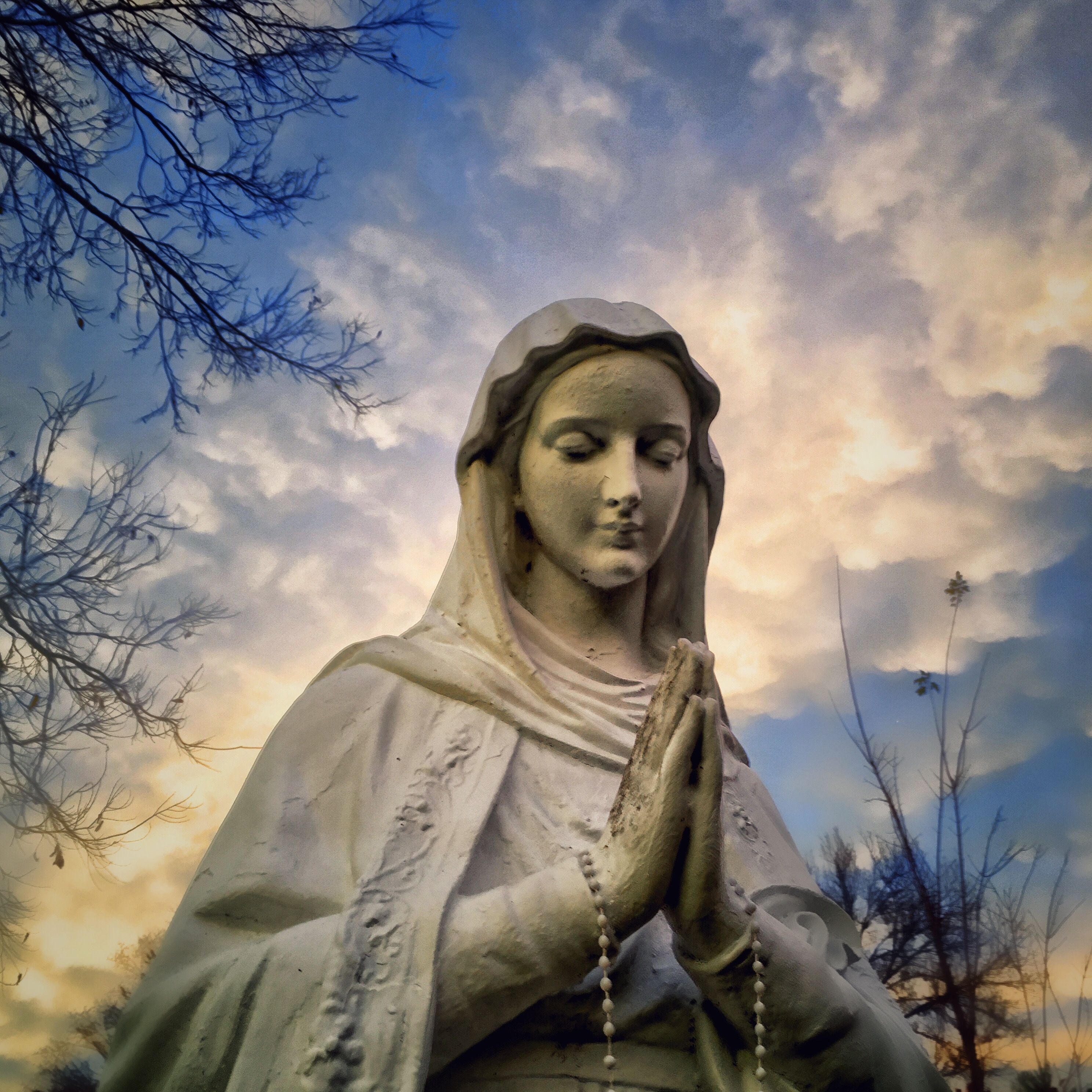
As Mary is the treasurer and dispenser of the gifts and graces of the Most High God, she reserves a choice portion, indeed the choicest portion, to nourish and sustain her children and servants. They grow strong on the Bread of Life; they are made joyful with the wine that brings forth virgins. They are carried at her breast. They bear with ease the yoke of Christ scarcely feeling its weight because of the oil of devotion with which she has softened its wood. Promise #3: She leads and guides them 209. A third service which our Lady renders her faithful servants is to lead and direct them according to the will of her Son. Rebecca guided her little son Jacob and gave him good advice from time to time, which helped him obtain the blessing of his father and saved him from the hatred and persecution of his brother Esau. Mary, Star of the sea, guides all her faithful servants into safe harbor. She shows them the path to eternal life and helps them avoid dangerous pitfalls. She leads them by the hand along the path of holiness, steadies them when they are liable to fall and helps them rise when they have fallen. She chides them like a loving mother when they are remiss and sometimes she even lovingly chastises them. How could a child that follows such a mother and such an enlightened guide as Mary take the wrong path to heaven? Follow her and you cannot go wrong, says St. Bernard. There is no danger of a true child of Mary being led astray by the devil and falling into heresy. Where Mary leads, Satan with his deceptions and heretics with their subtleties are not encountered. "When she upholds you, you will not fall."
Promise #4: She defends and protects them 210. The fourth good office our Lady performs for her children and faithful servants is to defend and protect them against their enemies. By her care and ingenuity Rebecca delivered Jacob from all dangers that beset him and particularly from dying at the hands of his brother, as he apparently would have done, since Esau hated and envied him just as Cain hated his brother Abel. Mary, the beloved Mother of chosen souls, shelters them under her protecting wings as a hen does her chicks. She speaks to them, coming down to their level and accommodating herself to all their weaknesses. To ensure their safety from the hawk and vulture, she becomes their escort, surrounding them as an army in battle array. Could anyone surrounded by a well-ordered army of say a hundred thousand men fear his enemies? No, and still less would a faithful servant of Mary, protected on all sides by her imperial forces, fear his enemy. This powerful Queen of heaven would sooner dispatch millions of angels to help one of her servants than have it said that a single faithful and trusting servant of hers had fallen victim to the malice, number and power of his enemies. Promise #5: She intercedes for them 211. Finally, the fifth and greatest service which this loving Mother renders her faithful followers is to intercede for them with her Son. She appeases him with her prayers, brings her servants into closer union with him and maintains that union.
Rebecca made Jacob approach the bed of his father. His father touched him, embraced him and even joyfully kissed him after having satisfied his hunger with the well-prepared dishes which Jacob had brought him. Then inhaling most joyfully the exquisite perfume of his garments, he cried: "Behold the fragrance of my son is as the fragrance of a field of plenty which the Lord has blessed." The fragrance of this rich field which so captivated the heart of the father, is none other than the fragrance of the merits and virtues of Mary who is the plentiful field of grace in which God the Father has sown the grain of wheat of the elect, his only Son.
How welcome to Jesus Christ, the Father of the world to come, is a child perfumed with the fragrance of Mary! How readily and how intimately does he unite himself to that child! But this we have already shown at length.
212. Furthermore, once Mary has heaped her favors upon her children and her faithful servants and has secured for them the blessing of the heavenly Father and union with Jesus Christ, she keeps them in Jesus and keeps Jesus in them. She guards them, watching over them unceasingly, lest they lose the grace of God and fall into the snares of their enemies. "She keeps the saints in their fullness" (St. Bonaventure), and inspires them to persevere to the end, as we have already said.
Such is the explanation given to this ancient allegory which typifies the mystery of predestination and reprobation.
Want More of This? Want a Richer Reading of the Bible?
I hope you enjoyed this article. I hope you're saying why wasn't I ever taught this about Rebecca and the Virgin Mary? The Bible is full of rich, but overlooked typology just like this.
I published a whole book and and e-course like this on the Virgin Mary: What You Need to Know About Mary But Were Never Taught. Click below to enroll:


May 30, 2022
What Does "The Stone Which the Builders Rejected Has Become the Cornerstone" Mean? Psalm 118:22; Matthew 21:42; Mark 12:11; Acts 4:11
You've heard this phrase many times: "The stone which the builders rejected has become the cornerstone (or the head of the corner)." It occurs several times in the Bible, including Psalm 118:22; Matthew 21:42; Mark 12:11; and Acts 4:11. I will cover each of these in turn.
The meaning seems pretty straightforward, right? The "builders" are the Jews, and the Jews "rejected" Christ. Now Christ has become the "cornerstone" of a New Temple and a New Kingdom, the Church.
Pretty easy to interpret, right? Not so fast!
I recently discovered that the meaning goes much, much deeper.
There is a particular reason that builders rejected stones for the Temple ... and it's fascinating!

Note the similarities between these three passages. There is more in common than just the repeated use of the phrase "The stone which the builders rejected has become the cornerstone."

Christ's Body is also the New Temple. Jesus makes this connection at John 2:19: "Destroy this temple, and in three days I will raise it up ... But he spoke of the temple of his body."
This is also a recurring theme. But, still, there's more. Look to the connection to salvation.
17 I shall not die, but I shall live, and recount the deeds of the Lord.18 The Lord has chastened me sorely, but he has not given me over to death.
19 Open to me the gates of righteousness, that I may enter through them and give thanks to the Lord.
20 This is the gate of the Lord; the righteous shall enter through it.
21 I thank thee that thou hast answered me and hast become my salvation.22 The stone which the builders rejected has become the cornerstone (head of the corner).23 This is the Lord’s doing; it is marvelous in our eyes.24 This is the day which the Lord has made; let us rejoice and be glad in it.25 Save us, we beseech thee, O Lord! O Lord, we beseech thee, give
Again, we see the Temple is Jesus' Body. Jesus is Himself the Gate, i.e. the "Gate of the Lord." "Open to me the gates of righteousness."

Note some of the phrases found in Psalm 118. Even though this is the Old Testament, look how it points to Christ's crucifixion, resurrection, and work of salvation.
Crucifixion: "The Lord has chastened me sorely."Resurrection: "I shall not die, but I shall live"; "the day which the Lord has made ... rejoice"Salvation: "Has become my salvation"
42 Jesus said to them, “Have you never read in the scriptures:
‘The very stone which the builders rejected has become the cornerstone (head of the corner); this was the Lord’s doing, and it is marvelous in our eyes’?
43 Therefore I tell you, the kingdom of God will be taken away from you and given to a nation producing the fruits of it. 44 And he who falls on this stone will be broken to pieces; but when it falls on any one, it will crush him.”
Right before this passage Jesus tells a parable. We can't understand Jesus' words without first understanding the parable.
It's the "Parable of the Wicked Tenants." Remember this one? The owner of the vineyard rents his land out to tenants. The owner sends his servants to collect the rent, and the tenants kill the servants. Then, the owner sends his own son. The tenants also kill the owner's son. Bad tenants!

Again, like Psalm 118, an obvious reference is made to Jesus' Crucifixion. The tenants of the vineyard are the Jews, who first kill God's prophets. Then God sends His Son, and they kill Him, too.
So why do all these passages involve the Crucifixion? Is it just because that's the Jews "rejecting" Jeuss, the cornerstone? Yes and no ...
8 Then Peter, filled with the Holy Spirit, said to them, “Rulers of the people and elders, 9 if we are being examined today concerning a good deed done to a cripple, by what means this man has been healed, 10 be it known to you all, and to all the people of Israel, that by the name of Jesus Christ of Nazareth, whom you crucified, whom God raised from the dead, by him this man is standing before you well. 11 This is the stone which was rejected by you builders, but which has become the cornerstone (head of the corner) 12 And there is salvation in no one else, for there is no other name under heaven given among men by which we must be saved.”
Again, reference is made to the Crucifixion. Why?

I have been reading through the Mishnah recently, as part of another writing project. The Mishnah is a book of all the Jewish oral traditions that the rabbis wrote down. If you're Catholic, you're probably thinking -- wow -- so that's the Jewish roots of Tradition. But I digress ...
Here is an excerpt from Mishnah Middot 2, as translated by Dr. Joshua Kulp:
The stones both of the ascent and of the altar were taken from the valley of Bet Kerem. They dug into virgin soil and brought from there whole stones on which no iron had been lifted, since iron disqualifies by mere touch, though a flaw made by anything could disqualify. If one of them received a flaw, it was disqualified, but the rest were not. They were whitewashed twice a year, once at Pesah and once at Hag, and the Sanctuary was whitewashed once a year, at Pesah. Rabbi says: they were whitewashed every Friday with a cloth on account of the blood stains. The plaster was not laid on with an iron trowel, for fear that it might touch and disqualify. Since iron was created to shorten man's days and the altar was created to prolong man's days, and it is not right therefore that that which shortens should be lifted against that which prolongs.So why did the builders reject stones? IRON. The stone cannot be touched by iron, "since iron disqualifies by mere touch." Nor can the stone have any other flaws.
Now, think about this -- as we did all the previous passages -- in terms of the Crucifixion.
Jesus is "the stone which was rejected by the builders." During the Crucifixion, when is Jesus' body "lifted" by iron? When is Jesus' body pierced and "flawed" by iron?
The IRON which nailed Jesus to the Cross and "lifted" Him into the air.

But WHY did iron "disqualify" the stone or cause a stone to be rejected?
Since iron was created to shorten man's days and the altar was created to prolong man's days, and it is not right therefore that that which shortens should be lifted against that which prolongs.Iron was created to "shorten man's days." This Mishnah means iron was created to reduce the burdens and toil of man.
But iron shortened the Son of Man's days in a different way. Iron killed Jesus, as an instrument of His Crucifixion. The instruments of Jesus' Crucifixion, the Arma Christi (depicted below), were all made of iron: the hammer, the spear, the nails, and more:

But Jesus', the rejected stone's, work of salvation on the Cross is "that which prolongs man's days." Jesus defeats Death, itself, on the Cross. Jesus prolongs our days on the Cross and, through His Resurrection, opens the "gates of righteousness" (Psalm 118:19) to eternity, the ultimate prolonging of days.
See? Wasn't that a much deeper meaning of "the stone which the builders rejected"?
Quick Note on the Virgin MaryDid you notice from where the "whole stones on which no iron had been lifted" are taken? "Virgin soil." Jesus, "the stone which the builders rejected," was taken from virgin soul and flawless.

Want More of This? Want a Richer Reading of the Bible?
I hope you enjoyed this article. I hope you're saying why wasn't I ever taught this about the fig tree? The Bible is full of rich, but overlooked images just like this.
I published a whole book and and e-course like this on the Virgin Mary: What You Need to Know About Mary But Were Never Taught. Click below to enroll:
May 23, 2022
Why Does Jesus Curse the Fig Tree? (Mark 11) What Was the Fruit of The Tree of Knowledge of Good and Evil? Holy Monday of Holy Week
Why does Jesus curse that poor fig tree at Mark 11? What did that fig tree ever do to Him? It's a mysterious event in the Gospels, right? It's also a significant event in the Gospels.
Unfortunately, most scholars sort of scratch their head at this passage. At best, they'll say the fig tree represents the Jewish people, who have also failed to bear fruit. But there's so much more to this story!
Why is this cursed fig tree so significant? Because this event happens during Holy Week. Holy Monday, to be specific.
Is Jesus just having a case of the Mondays? Cursing trees, kicking stumps, etc.? It is, after all, the start of the most brutal week of His life.

There is no insignificant detail in the days leading up to Christ's Passion, Death, and Resurrection. All salvation history has been leading up to these moments. So no, this incident with the fig tree is no minor detail.
This sad fig tree helps tie together the entire sweep of salvation history!
For a great resource on all this, check out Dr. Brant Pitre's The Jewish Roots of Holy Week. Here is a clip from Dr. Pitre's talk: (the section on the cursing of the fig tree isn't freely available on YouTube, though)
So ...
What actually happened between Jesus and this fruitless, hapless fig tree?
Let's turn to the Gospel of Mark.
Here is the account of Jesus cursing the fig tree at Mark 11:
[12] On the following day, when they came from Bethany, he was hungry. [13] And seeing in the distance a fig tree in leaf, he went to see if he could find anything on it. When he came to it, he found nothing but leaves, for it was not the season for figs. [14] And he said to it, “May no one ever eat fruit from you again.” And his disciples heard it.
Jesus was "hungry," went to the fig tree, and found nothing but leaves.
So Jesus curses the fig tree, because He was hungry and angry -- "hangry" -- and found no food ... right?
Wrong. Well, mostly wrong.

Look at the words of Jesus so-called curse: "May no one ever eat fruit from you again." What does this mean? Is this truly a curse? Or, is it the breaking of a curse? We have to ask what was this eating of fruit that Jesus is condemning and ending. Forever.
Also, this isn't all that's said about this fig tree. St. Peter tells us about the pitiful aftermath that befell this fruitless fig.
This occurs just a few verses later at Mark 11:20-25:
[20] As they passed by in the morning, they saw the fig tree withered away to its roots. [21] And Peter remembered and said to him, “Master, look! The fig tree which you cursed has withered.” [22] And Jesus answered them, “Have faith in God. [23] Truly, I say to you, whoever says to this mountain, ‘Be taken up and cast into the sea,’ and does not doubt in his heart, but believes that what he says will come to pass, it will be done for him. [24] Therefore I tell you, whatever you ask in prayer, believe that you receive it, and you will. [25] And whenever you stand praying, forgive, if you have anything against any one; so that your Father also who is in heaven may forgive you your trespasses.”
So, what just happened?? What is this curse all about?
What is the connection between the fig tree and Holy Week? Between this cursed tree and Jesus' work of salvation?
Proverbs 27:18 tell us that "He who tends a fig tree will eat its fruit, and he who guards his master will be honored."
Is this the answer? Nope! Jesus definitely did not find figs on Holy Monday, and woe to the fig tree.
So where else do we find figs described in the Bible?
There is on pre-eminent fig tree in the Bible. One Biblical fig tree absolutely towers above all the rest. Do you know which Tree it is?

The Tree of Knowledge of Good & Evil was an apple tree, right? That's how it's depicted in all the paintings. Plus, there's the Apple logo:

Surely this is a depiction of Adam and Eve's half-eaten apple, right?
Here is Genesis 3:6-7. It the description of the Fall of Man and Original Sin:
So when the woman saw that the tree was good for food, and that it was a delight to the eyes, and that the tree was to be desired to make one wise, she took of its fruit and ate; and she also gave some to her husband, and he ate. Then the eyes of both were opened, and they knew that they were naked; and they sewed fig leaves together and made themselves aprons. (Genesis 3:6-7)
Wait a tick! What kind of leaves did they sew together? You got it. Fig.
Remember that Jesus "found nothing but leaves" when he inspected the fig tree. And when God inspected the Garden of Eden after the Fall? God likewise found Adam & Eve clothed in nothing but leaves.
Fig Leaf Underwear? Ouch.By the way, fig leaves were not an ideal choice for undergarments. Have you ever picked figs? This Louisiana boy has. Fig leaves are scratchy. Fig sap is itchy. Adam & Eve's fig-based Fruit of the Loom underwear were basically the first hair shirts.
Therefore, Original Sin was followed by Original Confession was followed by Original Penance!
Here's a little comic I drew to illustrate this many years ago.

So, what kind of leaves did Adam & Eve sew together to make clothes? Fig.
So what? Adam & Eve sewed fig leaves together to make their clothes, AND Figs are the only fruit mentioned in Genesis' account of the Fall BUT that doesn't mean the Tree of Knowledge of Good & Evil was a fig tree. Right? Wrong.
The Tree of Knowledge of Good & Evil has long been held to be a fig. Not an apple. Read more about this HERE: Did You Know ... The Fruit of the Tree of Knowledge was NOT an Apple?
But there's more. More documentary evidence exists to show that the fig was the fruit of the Tree of Knowledge of Good and Evil.
There’s an ancient Jewish book. It's not part of the Bible. It’s called The Life of Adam and Eve. It's not nearly as ancient as Genesis -- it’s only from the First Century AD, from the time of Jesus. It is a collection of ancient Jewish traditions and beliefs.
In The Life of Adam and Eve, Eve says the following:
At the very moment my eyes were open, I knew that I was naked of the righteousness with which I had been clothed. I looked for leaves, so that I might cover my shame, but I did not find any from the trees of paradise, except those of the fig tree only. And I took its leaves, and I made for myself skirts. They were from the same plants of which I ate. (Life of Adam and Eve 20:1, 4-5)
There it is. This answers the ancient question: what kind of fruit was the Forbidden Fruit, the fruit of the Tree of Knowledge of Good and Evil? Fig.
You can probably see where this is headed, right? By this point, the answer might be speaking for itself.
Jesus is not cursing that one, poor, hapless fig tree. Jesus is cursing the death which came from disobeying God, from eating of the Tree of Knowledge of Good and Evil. The Tree of Death.
Jesus is cursing death, itself.
Why? This is Holy Week. Jesus is about to put death, itself, to death.
Remember Jesus' words. The words of Jesus' so-called curse: “May no one ever eat fruit from you again.”
Jesus is saying, "May no one ever eat of death again."
The reign of sin and death is quickly coming to death as Jesus approaches the fig tree. The withered fig tree is one of the first stops along Calvary and the Via Dolorosa.

Jesus is not cursing the fig tree. Jesus is announcing His coming victory over death!
So, thankfully, the fig is not cursed. The beautiful, tasty fig of my youth and life is not subject to Jesus' curse.
I hope you enjoyed this article. I hope you're saying why wasn't I ever taught this about the fig tree? The Bible is full of rich, but overlooked images just like this.
I published a whole book and and e-course like this on the Virgin Mary: What You Need to Know About Mary But Were Never Taught. Click below to enroll:
April 26, 2022
Can Eucharistic Ministers Give Blessings in the Communion Line?
My local church parish still has some holdouts from 1970s Kumbaya Catholicism. Sound familiar?
Most of our past priests haven't fought too hard to reign in these excesses. But finally ... finally! We have a pastor that wants to do the liturgy right. As in, just follow the instructions: the rubrics.
The latest hurdle? Eucharistic Ministers - Extraordinary Ministers of Holy Communion (EMHCs) - that were trained to bless people who come up with arms folded.
Are Extraordinary Ministers allowed to trace a cross on children's foreheads or lay on heads in the communion line?
The short answer is ...

No. If you're not ordained (or a Parent/Godparent at a Baptism), don't do it.
Here are several Church sources of liturgical norms and laws, plus some helpful advice from Archbishop Chaput, explaining this topic:
Are the EMHCs allowed to give blessings? According to the Canon Law of the Catholic Church, No.
Here is Canon 1169 of the Code of Canon Law which addresses this subject:
§1. Those marked with the episcopal character and presbyters permitted by law or legitimate grant can perform consecrations and dedications validly.
§2. Any presbyter can impart blessings except those reserved to the Roman Pontiff or bishops.
§3. A deacon can impart only those blessings expressly permitted by law.
There is simple no allowance whatsoever for a lay person or an Eucharistic Minister (EMHC) being allowed to impart blessings upon the faithful. Only the priest or a deacon (and only under certain circumstances) can give blessings.
From the Vatican's Congregation for Divine Worship: "On Giving Blessings During the Communion Rite"
In case you need another authority for this rule besides Canon Law, here you go:
Several sources online cite a private response from the Congregation of Divine Worship (CDW), but it's hard to find the full text. I have reproduced the full text below.
Before I give you the CDW's answer, I should first provide the question. Two men wrote to the Congregation for Divine Worship and the Discipline of the Sacraments (CDW). They asked if there are “particular guidelines or restrictions” concerning the practice of a minister or extraordinary minister giving the person a blessing.
What about giving blessings to people who come forward in the Communion line but who are not receiving Communion? Should a priest, deacon or an extraordinary minister of Holy Communion give the person a blessing instead?
What if a person who is not receiving Communion presents himself with arms crossed over the chest, during the regular administration of Communion?
The CDW's response is a letter (Protocol No. 930/08/L) dated November 22, 2008 and signed by Father Anthony Ward, SM, Under-secretary of the Congregation
The letter said that “this matter is presently under the attentive study of the Congregation”, so “for the present, this dicastery wishes to limit itself to the following observations”:
1. The liturgical blessing of the Holy Mass is properly given to each and to all at the conclusion of the Mass, just a few moments subsequent to the distribution of Holy Communion.
2. Lay people, within the context of Holy Mass, are unable to confer blessings. These blessings, rather, are the competence of the priest (cf. Ecclesia de Mysterio, Notitiae 34 (15 Aug. 1997), art. 6, § 2; Canon 1169, § 2; and Roman Ritual De Benedictionibus (1985), n. 18).
3. Furthermore, the laying on of a hand or hands — which has its own sacramental significance, inappropriate here — by those distributing Holy Communion, in substitution for its reception, is to be explicitly discouraged.
4. The Apostolic Exhortation Familiaris Consortio n. 84, “forbids any pastor, for whatever reason to pretext even of a pastoral nature, to perform ceremonies of any kind for divorced people who remarry”. To be feared is that any form of blessing in substitution for communion would give the impression that the divorced and remarried have been returned, in some sense, to the status of Catholics in good standing.
5. In a similar way, for others who are not to be admitted to Holy Communion in accord with the norm of law, the Church’s discipline has already made clear that they should not approach Holy Communion nor receive a blessing. This would include non-Catholics and those envisaged in can. 915 (i.e., those under the penalty of excommunication or interdict, and others who obstinately persist in manifest grave sin).
The Congregation’s clarification is very straightforward and helpful. Extraordinary Ministers of Holy Communion (EMHCs), who are always laity, cannot give sacramental blessings within Mass. Very simple.
This instruction is especially helpful to pastors in parishes where inappropriate blessings during Communion have crept in over the years and become common.
The CDW letter did not directly mention young children. They did answer the question, though.
Short Answer: Lay people cannot give blessings as part of the Mass.
It is common for little children who have not yet received First Communion to accompany their parents in the Communion line. Leaving little ones behind in the pew isn't a great idea, speaking from personal experience.

Little children cross their arms over their chests and walk in line with their parents. This is both a signal to the minister that they are not receiving Communion, and as an expression of the child’s reverence for the Blessed Sacrament.
This is great! This reverent gesture of a young child is good and appropriate.
However, sometimes the extraordinary minister interprets the child’s gesture as a request for a special blessing. This is done as a sort of “substitute” for Communion. Don't want anybody to feel left out! But ...
The CDW clarifies that there should not be separate blessings for any person during the Communion rite.
Why? The CDW provides a few reasons:
(1) "Lay people, within the context of Holy Mass, are unable to confer blessings." [and EMHCs are always lay people]
(2) The priest’s blessing at the conclusion of Mass includes everyone. The CDW emphasizes that the final blessing at the conclusion of the Mass occurs "just a few moments subsequent to the distribution of Holy Communion."
A little child comes up to you in the communion line and, with his or her sweet eyes, looks up to you expectantly. What do you do?
Ignore them? NO!
There are some good alternatives, but let's first negate the bad alternatives!
Can Eucharistic Ministers (EMHCs) Put Their Hands on the Child's Head in Blessing?NO!
The "Laying on of hands" carries quite a bit of weight. It is a significant liturgical gesture. This happens, for example, at the Sacrament of Confirmation and the Sacrament of Holy Orders ... and often by the Bishop.

Instead of pouring water on the fire, let's pour gasoline, instead! Or Napalm. Bad idea.
Instead of the little child receiving a blessing, a lay person looks like they're short-circuiting the child's path to Confirmation and Priesthood. Yikes.
This is obviously an impossibility and exaggeration, but hopefully it describes the absurdity of a lay person "laying on hands" during Mass.
So, EMHCs, don't do that.So What Can an Extraordinary Minister of Holy Communion Do for a Child in the Communion Line? Great Advice from Archbishop Chaput
What's an Eucharistic Minister to do? If an EMHC can't give a blessing, what do they do?
What should be done when someone approaches an EMHC with arms crossed? Some Churches have adopted the practice of smiling at the person, which seems either creepy or inadequate.
As is his style, Archbishop Chaput (then) of Denver, Colorado offered some practical, to-the-point advice in a 2003 EWTN article:Both children and adults can make a spiritual communion. They may come forward with their arms crossed and bow before the Eucharist. Then the priest, deacon or extraordinary minister could say to them kindly, 'Receive the Lord Jesus in your heart.' This is not a blessing, but an invitation to worship, so no gestures are made.This spiritual communion would more authentically carry out the spirit of the liturgy. Being faithful to the truths of the sacramental celebration allows all of us, young and old, to enter more deeply into worship.
Thanks, Archbishop Charles Joseph Chaput! (Wish you weren't Archbishop Emeritus)

Here is the full letter from Archbishop Chaput, if you're interested:
As members of the community move forward to receive holy Communion during Mass, parents will often bring their small children along. Over the years, it has become a custom in many parishes for these children to receive a blessing. I don't really know where this practice began, but it's worth some reflection.
Usually the children in line will look up expectantly at the person distributing holy Communion. The minister then responds by doing one of several things: He or she may pat the child's head, or touch the head in a sign of blessing, or mark the child's forehead with a sign of the cross. As warm and well intentioned as the gesture may be, in the context of the liturgy, the Communion procession really isn't the time for a blessing of children or adults who are unable to receive Communion.
There are times in the liturgical year when the laity assist in specific acts of blessing, such as the blessing of throats or the distribution of ashes. These are clearly indicated in the Book of Blessings. But extraordinary ministers of holy Communion do not ordinarily have a commission to bless in the name of the Church, as priests and deacons do. At this point in the liturgy, they have a very specific function: to collaborate with the clergy in the distribution of holy Communion.
As we'll explore in a later column, the blessing of the assembly properly occurs at the end of the Mass. As the body of Christ, the assembly is blessed together before we depart to live the fruits of the liturgy.
What would be appropriate for children to do who accompany their parents in the Communion procession, and adults who do not receive Communion?
The Communion procession is an opportunity for parents to begin to teach their children about the great gift of the Eucharist. First of all, children could learn to give reverence to the Lord hidden under the forms of bread and wine. Children can already learn from their parents, and others receiving holy Communion, to give honor to the Lord by bowing reverently.
Parents and catechists should start teaching the mystery of the Eucharist at an early age. Children will soon begin to desire to receive holy Communion. This earnest desire to receive our Lord sacramentally is traditionally called a 'spiritual communion.' Regrettably, we don't talk about spiritual communion as we once did. But Thomas Aquinas, Alphonsus Liguori and many other great saints strongly encouraged spiritual communion as a practice.
Both children and adults can make a spiritual communion. They may come forward with their arms crossed and bow before the Eucharist. Then the priest, deacon or extraordinary minister could say to them kindly, 'Receive the Lord Jesus in your heart.' This is not a blessing, but an invitation to worship, so no gestures are made.
This spiritual communion would more authentically carry out the spirit of the liturgy. Being faithful to the truths of the sacramental celebration allows all of us, young and old, to enter more deeply into worship.
Archbishop Chaput explains the issue in his characteristically lucid manner. His statement is not a formal liturgical norm, but it does provide practical guidance to pastors on this issue.
Just because lay people cannot bless children during Mass does not mean we can't bless children outside of Mass.
Liturgical laws and norms restrict the imparting of liturgical blessings to ordained ministers. This does NOT mean lay people are forbidden from using similar gestures in non-liturgical settings. Not at all.
I bless my kids every chance I get! I bless them when I tuck them in at night. I trace the sign of the cross on their heads as they leave for school. I bless my kids pretty much whenever they leave my sight.
... because it's awesome.

April 10, 2022
Ukraine, Russia, & The Virgin Mary: Why 9/11 Happened on 9/11, The Winged Hussars and History's Greatest Cavalry Charge, and The Miracle of the Vistula
What I found in my research was shocking. It was startling just how many times the Blessed Mother had interceded in history to prevent Europe (Christendom) from collapsing.
Now, for the ecumenical prayer vigil, I just referred to the Virgin Mary as a "Divine messenger" or "mysterious message in the sky."
However, all the non-Catholic pastors asked afterwards, "What was the in the sky?" I was happy to tell them, "The Blessed Mother!" They were very gracious to she, who is "Full of Grace."

Webinar Recording of Ukraine, Russia, & The Virgin Mary: Why 9/11 Happened on 9/11 and History's Greatest Cavalry Charge(s):Please share, if you think it's worthy of such.
In putting this together, I was also great inspired by this great video from Fr. Chris Alar, MIC.
Here is the text of the talk, if it helps.
Ukraine, Russia, and the Virgin Mary: The Last Charge of the Winged HussarsHere is the transcript, more or less, of the recording:
Let us pray in the name of the Father and of the Son and of the Holy Spirit. Amen.
Heavenly father we ask you send the holy spirit down upon us to renew this land and renew the world, Let the Holy Spirit come upon these lands especially of Ukraine and Russia and let there be peace
Jesus said that mankind will not have peace until man turns with trust to your mercylord please see all those here and around the world, we are turning to you with trust in your mercy please bring us peace
Ukraine was first consecrated to Mary in 1037 AD, a thousand years ago, One of the very first nations ever to be consecrated to the Mother of GodIn 1985, Ukraine’s church leaders consecrated the nation to Mary again,Pleading for God’s help and freedom from Soviet oppression,Shortly thereafter, in 1989, the Berlin Wall came down Shortly thereafter, in 1991, Ukraine was given its freedom and declared independent History has shown us that God moves, The Blessed Mother responds, when Russia and its neighbors, Ukraine and Poland, are involved,That much hangs in the balance when Russia tries to spread its evils
We pray for God’s help, the way he aided Ukraine and Ukraine’s neighbor, Poland,Poland, where even now Ukraine’s war refugees are fleeing,Poland, who, with Ukraine, are the two most religiously observant nations in all of Europe, Poland, who God aided in 1920 at the Battle of Warsaw, Or as it’s known to history, the Miracle of the Vistula River When a mysterious sign appeared in heavens And the Russians fled in terror.Poland and Ukraine were to be the first victims of Russian communism,But God prevented it
In 1917, Vladimir Lenin’s Red Army conquered Russia,But Lenin was not satisfied,Lenin looked upon the world and wanted more,A World Communist Revolution, As if the devil himself had spread out before Lenin all the nations and the principalities,If Lenin would just bow before the devil,And bow he did. Lenin knew if his world revolution could just spread to Germany,A great people, a proud people, Germany,bowed, disillusioned, humiliated following her defeat in WWI,Lenin knew Communism would take root in Germany,As it later did in Eastern Germany,And together Russia and Germany could conquer the entire world,Think about this,What if Russia had been Germany’s ally in WW2?What if Russia had been an Axis power, instead of an Ally? Hitler, Lenin, Stalin, and Mao – all fighting together?What power on earth could have stopped Russia, Germany, Italy, Japan, and Communist China all united? AND What if this possibility is still before us?
Lenin just needed to get to GermanyOnly Poland and Ukraine stood between Lenin and Germany,Between Lenin and a worldwide communist revolution …
So Lenin looked to the world And decided Poland and Ukraine would be Russian Communism’s first victims,Poland had so often been history’s victim, even history’s jokePoland had not even existed as a nation for 123 years. Since 1795 it had been divided among Germany, Austria, and Russia.Divided and conquered, divided and conquered throughout history,And yet enduring, Poland, the Poles, persevering, surviving,Because of her faith in God
So with the Red Army bearing down on Poland,On May 20, 1920, Outnumbered 10 to 1,No one came to help Poland, Britain sent Poland a telegram, encouraging her to surrender Prime Minister Lloyd George told the British Parliament that Poland had to accept “her fate.” Poland stands alone in 1920,Just as Poland stood alone at the Battle of Vienna on September 11, 1683,
>> Make no mistake, my friends,Islam attacked the World Trade Center, those towering symbols of Western Civilization on September 11, 2001,Because September 11, 1683 marked the furthest advance of Islam into Western Civilization,When the Muslims besieged Vienna, at the heart of Europe
In 1683 as in 1920, Poland stood alone,None of the other European countries could send aid,But Poland stood with God
King Jan Sobieski of Poland rode out with his Winged Hussars to save relieve Vienna, Sobieski rode out from the shrine of Our Lady of CzestochowaSobieski mounted his horse at the August 15, the Feast of the AssumptionThe Winged Hussars, The deadliest cavalry unit in world history,Were about to lead the greatest cavalry charge in world history, The same cavalry charge that would one day inspire J. R. R. Tolkien’s Ride of the Rohirrim.3,000 men arrayed in wings, like God’s own avenging angels,Leading 15,000 more men on horseback Sobieski and the Winged Hussars rode onto the battlefield on September 12th, Their battle cry was a hymn to the Mother of God, The hymn is the Polish national anthem, the most ancient national anthem in the worldA loose formation, that gradually tightened and tightened and tightenedSinging the name of the Blessed MotherThey routed an army of 150,000 MuslimsThe Muslims panicked and fled as their non-Christian worldview came crashing downAnd Islam never again threatened Europe. Pope Innocent credited the victory to MaryAnd established the Feast of the Holy Name of Mary to forever commemorate the Miracle at Vienna
Now, it’s 1920 …Poland is again outnumbered 10 to 1,200,000 Communists against 20,000 Poles,Poland again stands alone, But again Poland stands with God
The entire country turned to prayer and adorationEucharistic processions were being led through the streets of Warsaw Cardinal Achille Ratti, the future Pope Pius XI, himself led a procession, Heedless of the Soviet shells raining down on the city.
On August 15, the ragtag Polish army Again going to battle on the Feast of the AssumptionBacked by an entire country at prayer,Every man, woman, and child, who wasn’t on the battlefield was in church praying,Holding all night vigils History documents all this,An entire nation at prayer,Fasting, praying, prostrating themselves before God
The Red Army, like the blood-turned Nile,Streamed through the city of Warsaw, The keystone to all Eastern Europe, to Germany, was Warsaw And Warsaw was on the brink of collapse
But a whisper began to echo through the streets of Warsaw,Something was happening, A sign in the heavens, a divine sign,God’s own messenger was appearing above the city,And the Red Army was fleeing in terror,
The atheism of Communism, Where God is the state, The worldview of communism all came crashing down, When a woman appeared in the heavens Light was streaming from a formidable woman standing in the sky She was holding a shield in one hand The shield was deflecting the shells fired at the Poles back at the Bolsheviks! But the Blessed Mother was not alone, She was leading the last charge of the Winged Hussars The Winged Hussars stretched across the sky, flanking the Blessed Mother The Hussars had returned.
The Russian soldiers, the Bolsheviks, As they fled in terror, They told witnesses about the terrible woman in the skyEyewitness accounts were streaming in from across the battlefield, even ten miles apartOne Bolshevik said, “You we are not afraid of. But we will not fight with her.” History records all this, Hundreds of eyewitness accounts from both sidesLenin himself said that his army suffered an enormous defeat,Which he could not explain,Godless men can never explain God’s miracles - And Lenin stopped his plans for the world communist revolution
Now, again, the world is at the brink, Abortion, in some places up to birth; redefining marriage, divorceAgain, Russia is at war Again trying to get through Ukraine
We are told, if Russia continues to deny the Son of God, “If there is a not a return to Christianity for Russia,There will be a third world war and the whole world faces ruin”
We must pray and do penance We must make reparations for the sins committed by our brothers and sisters without ChristPray like you’ve never prayed beforeAs Mary said at Fatima“If we do this, Russia will be converted, and there will be peace,If not, Russia will spread her errors throughout the world,Causing wars and persecutions and creating martyrs”
What are the errors of Russia? Atheistic communism, materialistic Marxism,Totalitarianism that redefines Truth Communism tell us, there is no God,The state is godWithout God, there is no protection of human dignity,Without human dignity, We have abortion, euthanasia, suicide, pornography, sex trafficking, Without God’s Truth,We redefine marriageWe redefine gender, sex, manhood, fatherhood, motherhood
With God, There is peace
We pray to God that this wall of protection, Ukraine and Poland, will hold,Will hold as it held in 1920 and 1683,We pray for Ukraine as it now stands alone and outnumbered,We pray that God grant the Miracle at Kievas He once granted the Miracle of the Vistula and the Miracle of Vienna. We pray that Mary will lead one last charge of the Winged HussarsWe pray that the many setbacks and losses Russia is now experiencing are the first fruits of a new defeat,That this experience will humble Russia, that Russia will consecrate herself to Christ, and her people will turn to Truth.We pray to God for the world to desire Truth and Peace.We pray to God that the people of Russia That the people of the entire world Will convert to Christianity,Will do penance Will discover the Incarnate, absolute Truth, which is Christ.
For all these things, in Christ’s name, we pray. Amen.
March 31, 2022
Is Jesus Being Disrespectful to the Virgin Mary at John 2:4 “O woman, what have you to do with me?" [ti emoi kai soi, gynai]
Protestants will often tell us that Jesus is dismissive of his Blessed Mother. They even argue that Jesus rebuked the Virgin Mary at the Wedding at Cana when He said, "Woman, what have you to do with me?"
Ouch. That sounds harsh. But is it? What is Jesus really saying here? Is Jesus being disrespectful when He calls His mom, "woman"? And what about "what have you to do with me?" Surely, the combination is disrespectful. Right?
Nope.
I will demonstrate to you that these phrases convey enormous respect, even Queenly respect to the Blessed Mother.

Enjoy learning about the Blessed Mother and especially how to defend her? I've put together an entire e-course and book on the Virgin Mary in Scripture:
 [image error]

Why Does Jesus Address Mary as "Woman"?
First off, "Woman". Why does Jesus call his mother "woman" instead of "mother"? I want to focus on the second half of this -- "what have you to do with me?" -- so I will cut to the chase. By calling her "woman," Jesus is referring to His Mother as the New Eve.
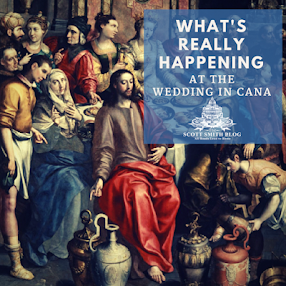
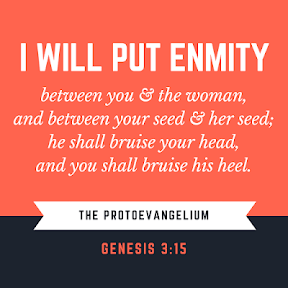
I have already written about this extensively. Check out these articles for more on the New Eve: "What's Really Going on at the Wedding at Cana?" and "What is the Protoevangelium?"
Where else is this phrase "What have you to do with me?" found in the Gospels?
The phrase "What have you to do with me?"[1][2] is found in five places in the Gospels, including the Wedding at Cana at John 2.
Just peruse the other four instances of "What have you to do with me?" What do they all have in common? Note that some of these are repeated across the synoptic Gospels
Jesus Heals the Gadarene Demoniacs [Matthew 8:28-32]
28 And when he came to the other side, to the country of the Gadarenes, two demoniacs met him, coming out of the tombs, so fierce that no one could pass that way. 29 And behold, they cried out, “What have you to do with us, O Son of God? Have you come here to torment us before the time?” 30 Now a herd of many swine was feeding at some distance from them. 31 And the demons begged him, “If you cast us out, send us away into the herd of swine.” 32 And he said to them, “Go.” So they came out and went into the swine; and behold, the whole herd rushed down the steep bank into the sea, and perished in the waters.

Jesus Heals the Gerasene Demoniac [Mark 5:1-7]
1 They came to the other side of the sea, to the country of the Ger′asenes. 2 And when he had come out of the boat, there met him out of the tombs a man with an unclean spirit, 3 who lived among the tombs; and no one could bind him any more, even with a chain; 4 for he had often been bound with fetters and chains, but the chains he wrenched apart, and the fetters he broke in pieces; and no one had the strength to subdue him. 5 Night and day among the tombs and on the mountains he was always crying out, and bruising himself with stones. 6 And when he saw Jesus from afar, he ran and worshiped him; 7 and crying out with a loud voice, he said, “What have you to do with me, Jesus, Son of the Most High God? I adjure you by God, do not torment me.”
The Man with an Unclean Spirit [Mark 1:23-24]
23 And immediately there was in their synagogue a man with an unclean spirit; 24 and he cried out, “What have you to do with us, Jesus of Nazareth? Have you come to destroy us? I know who you are—the Holy One of God.”
The Man with an Unclean Spirit [Luke 4:33-34]
33 And in the synagogue there was a man who had the spirit of an unclean demon; and he cried out with a loud voice, 34 “Ah! What have you to do with us, Jesus of Nazareth? Have you come to destroy us? I know who you are—the Holy One of God.”
So, what do all 4 of these have in common? They all involve demons submitting to the will of God. So, wait ... why is Jesus using the same phrase as the demons?
I especially like St. Mark's description of the Gerasene demoniac. Mark describes the local people as being completely unable to bind, fetter, and control this possessed man:
Mark 5:3-4: ... no one could bind him any more, even with a chain; for he had often been bound with fetters and chains, but the chains he wrenched apart, and the fetters he broke in pieces; and no one had the strength to subdue him.
Wow. This guy is wrenching apart chains. That's superhuman strength brought on by demonic possession. Yikes.

So, this possessed man that cannot be held by chains, ropes, manacles, whatever - what does he do? As soon as Jesus steps ashore, this man sees "Jesus from afar" and "ran and worshiped him." This man that cannot be contained by iron and chains throws himself down before Christ in obedience. This man, who would not submit to force of any kind, throws himself down before Jesus in supplication.
The demons have no choice but to bow down and (unwillingly) worship Jesus. Jesus' power over the demons is absolute. The demons have no choice but to submit to Jesus' will.
And Jesus uses the same words to answer His Mother.
What can this mean? It means that Jesus was being obedient to his mother. Jesus was following the Fourth Commandment, "Honor thy father and mother."
It means that Jesus was submitting His will to His mother's will.
It also means that Jesus was honoring Mary's role as the mother of the king, the Queen Mother of Israel. Read more on the Queen Mother of Israel here and how the Wedding at Cana connects to 1 Kings 2:
Look again at those four times "What have you to do with me?" is used in Scripture. Jesus' name is used each time, as well. Each time, the demon addresses Jesus by name:
Matthew 8:29, "What have you to do with us, O Son of God?"Mark 5:7, "What have you to do with me, Jesus, Son of the Most High God?"Mark 1:24, "What have you to do with us, Jesus of Nazareth?"Luke 4:34, "What have you to do with us, Jesus of Nazareth?"Only it's not just Jesus' name being used. Half the time, it's Jesus title that used: "Son of God" and "Son of the Most High God."
So, how does Jesus address the Virgin Mary when Jesus says "What have you to do with me?" at John 2? Jesus says, "Woman, what have you to do with me?"
Mary is also "Woman," as she is the New Eve, the New Mother of All Living (through Christ).[3]
But this isn't the only time the Virgin Mary is addressed with a royal title in Scripture ...

Think about how the angel Gabriel addresses Mary: "Hail, Full of Grace!" The Angel doesn't say "Hail, Mary, full of grace." Gabriel says "Hail, Full of Grace!"
Think about all the other times that "Hail!" is used in the Gospels. It's just a few more times.
Can you think of them? Almost every one follows the same formula: Hail + royal title.
"Hail, King of the Jews!"
Here's an article breaking down these "Hail" verses in detail:
So, Does that Flip the Script? From Disrespect to Complete ObedienceAt first blush, isn't it nuts how disrespectful this can sound? "Woman, what have you to do with me?" But just a little study on this phrase completely turns that around. Not only does it turn around, but it opens up whole new vistas of understanding. Suddenly, the role of Mary takes on new importance - even cosmically so.
Just a little digging into Scripture - that's all it took!
Next time somebody presents a Bible verse to you about why Catholics are wrong or why Mary isn't significant - just do a little digging! The Truth will amaze you. And ...
Jesus will never be outdone in love and respect for His Mother!

[1] In the Greek, Jesus says ti emoi kai soi, gynai, “What for me and you, Woman?”, with “Woman” directly following “you.” The New Testament offers even clearer illustrations of the rhetorical purpose of ti emoi kai soi. The demon who asks “ti emoi kai soi, Jesus, Son of the Most High God?” (Mark 5:7) Literal translation: “What does this matter to me and to You?”
[2] Alternate John 2:4 Translations:
BIBlId [1699-3225 (2008) 12, 103-133]
Ti/emoi\kai\soi/, gu/nai; (John 2:4) Philological, contextual, and exegetical arguments for the understanding: “What does this matter to me and to You?”
The English translations, apart from the New Revised Standard Version (NRSV), to which we shall return, all render this question in a more or less similar way. The Revised Standard Version (RSV) runs as follows: “O woman, what have you to do with me? My hour has not yet come”; likewise, the American Standard Version (ASV) has: “Woman, what have I to do with thee? mine hour is not yet come”. Other old versions are very similar, such as the King James Version (KJV): “Woman, what have I to do with thee? mine hour is not yet come”, the Darby Bible: “What have I to do with thee, woman? mine hour has not yet come”, and the Webster translation: “Woman, what have I to do with thee? my hour is not yet come”. Luther’s version, too, is entirely analogous: “Weib, was habe ich mit dir zu schaffen? Meine Stunde ist noch nicht gekommen”, just like the Italian CEI translation, “Che ho da fare con te, o donna? Non è ancora giunta la mia ora”, and the French Bible de Jérusalem version: “Que me veux-tu, femme?”. With a slight improvement, but also with a very free rendering, the God’s Word Version has: “Why did you come to me? My time has
[3] Also, notice that Jesus begins with this title. He says "Woman" before "what have you to do with me?" The demons do the opposite. The demons put the title at the end of their statement. Jesus is being respectful of his mother, while the demons are being disrespectful.
Of course, this is only in the English. In the Greek gynai still comes at the end: ti emoi kai soi, gynai.
March 7, 2022
Novena to St. John Berchmans for Miraculous Healings, Altar Boys, and Reverence Before the Altar and Blessed Sacrament
The shrine was just a short walk from my Jesuit seminary. This was special since I was a Jesuit novice, and St. John Berchmans died while still a Jesuit novice. It's only fitting that Berchmans is a patron saint of Jesuit novices.
My parish priest, Father Chris Decker, has been trying to restore reverence in our parish. Father Chris' patron saint is St. John Berchmans, so we will be undertaking the Novena to St. John Berchmans which follows.
Who was St. John Berchmans?
St. John Berchmans was a Jesuit seminarian (novice), who died while still a young man. "If I do not become a saint when I am young," he used to say "I shall never become one."
When John Berchmans was only seven years old, M. Emmerick, his parish priest, remarked that the Lord would work wonders in the soul of the child. John Berchmans was only nine years of old when his mother was stricken with a long and serious illness. He would pass several hours each day by her bedside and console her with a message of hope beyond his years.
Berchmans was very diligent in following the rules and Constitution of the Jesuit Order. "My penance," he would say, "is to live the common life [...] I will pay the greatest attention to the least inspiration of God."
When he died, a large multitude crowded for several days to see him and to invoke his intercession. The same year, Phillip, Duke of Aerschot, presented a petition to Pope Gregory XV to begin his beatification. John Berchmans was declared Blessed in 1865, and was canonized in 1888. His statues represent him with hands clasped, holding his crucifix, his book of rules, and his rosary.
Mary Frances di Monteils suffered from general paralysis. After having tried many remedies in vain, she made a Novena in honor of St. John Berchmans with some of her friends. The Novena began with a general Communion. She bound herself by vow to fast on the Vigil and to receive communion on the anniversary of his Feast (was November 26, now August 13). This she promised to do for ten years, if she obtained the favor asked for. The favor was granted on the first day of the Novena, and she was restored to perfect health.
[From the 1891 book about St. John Berchmans, Prayers in Honor of St. John Berchmans [1]]
LET US PRAY.
Oh Holy St. John Berchmans, who even from childhood did show extraordinary love for Jesus, Mary, and Joseph, grant us to be tenderly devoted to these three august persons, and like thyself, to be always generous in God's services, faithful to His Holy Law, and burning with zeal for His glory; obtain for us what we ask in this novena [name here the favor you desire], and impart to us, O loving Saint, thy spirit of obedience and humility, thy great hatred of sin, thy angelical modesty and purity, so that after having imitated thee on earth, we may enjoy with thee a happy eternity. Amen.
One Our Father, one Hail Mary, one Glory be to the Father.
Litany in Honor of Saint John Berchmans, S.J.
[This Litany is for private use only.]
Lord have mercy on us. Christ have mercy on us.
Lord have mercy on us. Christ graciously hear us.
God, the Father of Heaven, have mercy on us.
God, the Son, Redeemer of the world, have mercy on us.
God, the Holy Ghost, have mercy on us.
Holy Trinity, one God, have mercy on us.
Holy Mary, pray for us.
Holy Mother of God, pray for us.
Holy Virgin of virgins, pray for us.
St. John Berchmans, chosen son of Mary, pray for us.
St. John, venerator and defender of the Immaculate Conception of Mary, pray for us.
St. John, splendor and ornament of the Sodalities of Mary, pray for us.
St. John, faithful lover of heavenly things, pray for us.
St. John, constant adorer of the Most Holy Trinity, pray for us.
St. John, zealous promoter of the divine honor, pray for us.
St. John, devout worshiper of the Sacred Heart of Jesus, pray for us.
St. John, devout contemplator of the five sacred wounds of Jesus, pray for us.
St. John, true son of St. Ignatius, pray for us.
St. John, perfect imitator of St. Aloysius, pray for us.
St. John, steadfast upholder of thy holy vocation, pray for us.
St. John, true model of humility, pray for us.
St. John, exemplar of religious modesty, pray for us.
St. John, mirror of angelical purity, pray for us.
St. John, strict observer of holy obedience, pray for us.
St. John, ardent lover of holy poverty, pray for us.
St. John, true observer of the least rule, pray for us.
St. John, enlightened director in the choice of a vocation, pray for us.
St. John, perfect model of students, pray for us.
St. John, patron and model of servers at the altar, pray for us.
St. John, our powerful intercessor at the throne of God, pray for us.
Lamb of God who takest away the sins of the world. Spare us, O Lord.
Lamb of God who takest away the sins of the world. Graciously hear us, O Lord.
Lamb of God who takest away the sins of the world. Have mercy on us, O Lord.
Christ hear us. Christ graciously hear us. Lord have mercy on us.
Our Father.
Pray for us, St. John Berchmans. That Ave may be made worthy of the promises of Christ.
Grant thy servants we beseech Thee, O Lord, God, to imitate those examples of innocence and fidelity in thy service by which the angelic St. John consecrated to thee the flower of his youth, through Christ our Lord. Amen.
Our Father, Hail Mary, and Glory Be.
LET US PRAY,
O Glorious St. John Berchmans, I most earnestly beseech and implore thee, through the love thou didst bear to the Sacred Heart of Jesus, deign to be mindful of me, a miserable sinner, before the throne of God, that I and those for whom I offer this prayer (or this Novena), may through thy merits and powerful intercession be preserved from all evil of soul and body, may advance in all virtue and good works and obtain our special requests. Amen.
Our Father, Hail Mary, and Glory Be.
LET US PRAY.
O most devout Saint! Model of fervent prayer! I beg thee by thy tender devotion to the most Holy Mother of God, and to the Angelic St. Aloysius to obtain for me the grace to foster and to increase within myself a like devotion, that honoring the Blessed Virgin Mary and St. Aloysius here on earth, I may merit hereafter to praise and thank them forever with thee in Heaven. I also earnestly beg of thee to obtain for me through and with them the special grace that I ask in this Novena (name here the favor you desire), if it be for the Glory of God and the good of my soul.
Our Father, Hail Mary, and Glory be to the Father.
O admirable Saint! mirror of modesty, of purity, of regularity, of charity and devotion! I choose thee this day as my special advocate before the Throne of God.
''Holy Mary, Mother of God and Immaculate Virgin, I choose thee this day for my Queen, Patroness, and Advocate, and I firmly purpose and resolve never to abandon thee, nor say, nor do anything against the honor which is due to thee, nor suffer those under my charge to say or do anything against thee. Receive me, therefore, I beseech thee as thy servant forever, assist me in my actions and forsake me not at the hour of my death." Amen.
Footnotes for Novena to St. John Berchmans:[1] Full title of book: PRAYERS IN HONOR OF ST. JOHN BERCHMANS, PRECEEDED BY A SHORT SKETCH OF HIS LIFE, AND A BRIEF ACCOUNT OF SOME OF HIS MANY MIRACLES. FOR THE BENEFIT OF A CATHOLIC ORPHAN ASYLUM AND A CATHOLIC SCHOOL. CONVENT OF THE HOLY FAMILY. 17 ORLEANS STREET, NEW ORLEANS, 1891; link to full text of book
January 26, 2022
Exodus 90 Interview with Nathaniel Binversie
Are you ready to LIVE DIFFERENT?? Have you been hearing guys talk about Exodus 90? It's the ninety-day Catholic program for men. It's centered around three pillars of masculine spiritual formation: prayer, ascetism, and fraternity.
Also known as the "Cold Showers & Holy Hours" program!
"For men who want something more than the advertised Christian life."

The Catholic Nerds nerd-out about EXODUS 90 with a developer and author of Exodus 90, currently touring the country in the Exodus 90 tour bus ... Nathaniel Binversie! We go over the history and background of Exodus 90, how to reach men in their 20s and 30s using the "beer garden" approach and challenging men.
Would you rather listen to this article? Here is the full interview we did on the Catholic Nerds podcast:
Who dreamt up this idea of cold showers? Nathaniel talks about the spiritual originator of Exodus 90, Fr. Brian Door. Fr. Door developed the first list of disciplines as a formation program for seminarians.
Fraternity: Nathaniel shares some Exodus 90 tie-ins with The Chosen television show. The fraternity of apostles wasn't always smooth sailing. Thanks, St. Matthew!
 Why Center on the Exodus?
Why Exodus? Why not the Babylonian Captivity? Or riding on Noah's Ark? Nathaniel describes why the Exodus of the Israelites is especially powerful and relevant for the liberation and purification of men in today's world.
Every day of Exodus 90 brings a new reading and reflection from the Book of Exodus. Nathaniel wrote nearly all of these himself. He shares with us his insights into this slice of Scripture.

Where is the program going 3-5 years from now? From just the book, to the Exodus 90 App, to ... where? Nathaniel describes the 20 Spiritual Exercise programs that Exodus 90 has developed. And no ... the entire journey through salvation history does not require cold showers.
Already done Exodus 90 multiple times? Nathaniel Binversie describes the new, 2nd version of Exodus 90 for veteran retreatants.
Want to do Exodus 90 as father and son? Try the Truth of St. George program!
Is Exodus 90 strictly for Catholics? Exodus 90 doesn't actually include the word "Catholic" anymore, so to present a unifying message to non-Catholics ... without compromising on authentic Catholic masculinity.
Nathaniel's tour through Slovakia: Did you know Slovakia is 60% Catholic? Nathaniel was about to tour Slovakia and export Exodus 90 to our Catholic brothers over there. His also visited the Salesian Oratory of Saint John Bosco.
We love Don Bosco in our family. We even named our new baby, Jude Bosco.
Here is a video about another Salesian Oratory of Don Bosco. This one is in Ireland:
Last Questions with Nathaniel Binversie
And ... if Nathaniel had a billboard to put anything on it, what would he put? He said the following great line:
The gift of God's grace is being given to you. Receive it!
And ... what is the book Nathaniel most often gifts to other people, besides his own book, The Strongest Man I Know?
Check out the podcast episode to find out!
January 23, 2022
Virgin Mary E-Course: Mariology Class on New Eve, New Ark, and New Queen
Have you ever had trouble defending the Blessed Mother? Have you ever learned some amazing thing about the Virgin Mary asked, "Why wasn't I ever taught this?" Did you know the Virgin Mary is hidden all throughout the Old Testament?
I've collected all these "Why wasn't I ever taught this?" moments in one place. I have put together an e-course that will help you defend the Blessed Mother and show you all the places she is hidden in Scripture.
Here is the course I created to learn about the Virgin Mary, all the amazing things about her, and all the places she is hidden in the Old Testament:
Do you remember the main Covenants of the Old Testament? There were the covenants with Creation, Adam & Eve, Noah, Abraham, Moses, and King David. All these lead to Christ. What if I told you they all point to the Virgin Mary, too?
Adam & Eve - that covenant pair is pretty obvious, right? Like Adam, each of the above Patriarchs has its pair, too. Noah and ...? The Ark. Moses and ... Moses' Ark. Moses had the Ark of the Covenant. King David and ... the Queen. These all point to Mary!
Here is an introduction video that I made to help you realize that Mary is actually woven throughout Scripture and salvation history:
How to explain all the Marian Dogmas and Doctrines?This course helps Catholics understand key concepts about the Blessed Mother and how they are all Biblical:See how the Virgin Mary intercedes for us in HeavenDefend the Immaculate Conception with confidenceDiscover where in Scripture Mary is identified as "Queen of Heaven"Learn how to effectively defend all the Marian doctrines
I have packed a lot into this e-course. There are OVER SIX-HOURS OF VIDEO CONTENT! Plus, I'll send you the textbook and make myself personally available for your questions. We will cover all the following:The Virgin Mary is hidden throughout Scripture. How does her story connect to the rest of Scripture?If Christ is the Second Adam, who is the Second Eve?What was the Ark of the Covenant? What did it contain? Where is it referenced in the Gospel? What or WHO is the New Ark?What were the features of the Kingdom of Israel and how are these fulfilled in the Kingdom of Heaven?Each of these is explained in its own TWO-HOUR VIDEO.
Best enjoyed with a cup of coffee :)
Have you ever been stumped by any of these questions about the Virgin Mary? After extensive surveys, these are the most common questions that Catholics encounter talking to Protestants about the Virgin Mary:Do Catholics pray to Mary? Do Catholics worship Mary?What is Mary so important to Catholics? What's the big deal if she was just a human like you or me?What proof is there for the Assumption? Are we just "assuming" it happened?How could Mary physically remain a virgin if she gave birth?Didn't Christ have brothers?
ALL of these will be answered using the Bible, while opening the Bible to you in huge new ways.
I have already written extensively on all these topics on this blog, too. Here are a sampling of how to answer the questions above:
Question #1: Do Catholics Pray to Mary? Do Catholics Worship Mary?This is an easy question to answer if you know about the Blessed Mother ... of Israel. The Queen of Israel in the Old Testament was the king's ... wife? No! His mother. Read how the Jews knew how to go to the Queen Mother with their prayers.
Question #2: What proof is there for the Assumption? Are we just "assuming" it happened?First off, have you heard of all the other assumptions in the Bible? Several people (and things) were assumed into Heaven in the Bible ...
I created a whole four-part series about this, which includes a great adventure through the Bible. Here is Part One, which you can follow through to Part Four:
How did you like that taste test? Want more? Just click below and ENROLL NOW:

Virgin Mary E-Course Testimonials Want to hear what other people are saying about the course? Here are some course testimonials:
Free Virgin Mary E-Course TEXTBOOKIn addition to ALL the digital content, I will send you a printed copy of my book, What You Need To Know About Mary (But Were Never Taught). The book includes loads of supplementary material and can be used for Bible study groups! Plus, be prepared for surprise BONUS content!!
 So what are you waiting for? Enroll Now! And Behold Your Mother!
November 23, 2021
Catholic Attorney Legal Tips: Writing Your Religious Exemption Letter for the COVID-19 Vaccine Mandates
Your friendly, neighborhood Catholic attorney is here to help ... St. Thomas More, pray for us!
I am personally representing hundreds of doctors, nurses, and other healthcare professionals who are morally (and medically) opposed to the COVID-19 vaccine and/or vaccine mandate.
This article is not about the validity or invalidity of COVID-19 vaccine mandates. This is a guide to invoking your rights to religious freedom, as enshrined in the First Amendment of the U.S. Constitution. If you're wondering where these rights came from, I have also written this article on the Catholic origins of the Establishment and Free Exercise Clauses of the First Amendment - fascinating!
I pray this guide helps you and promotes the cause of religious freedom!
COMMENT BELOW with your questions, thoughts, and excerpts from your own exemption letters. Let's help each other craft new (legal) ways to connect this vaccine mandate to our religious convictions.
LEGAL DISCLAIMER: This article is for informational purposes only and does not provide legal advice. Please do not act or refrain from acting based on anything you read on this site. Using this site or communicating with Scott L. Smith, Jr., Attorney at Law, through this site does not form an attorney/client relationship. General Considerations for a Religious Exemption Letter for the COVID-19 Vaccine MandateWrite a Personal Statement; Do Not Just Sign a Form LetterThis is about your personal beliefs. I recommend a personally-written statement, not a form letter. A handwritten letter may even be a nice touch. This may depend on the quality of your handwriting, for better or worse. If you're handwriting is bad enough, you may be granted an exemption out of sheer frustration!
Be Concise!A short and sweet personal statement is best. Don't give your employer's attorneys any rope to hang you by. As I will describe below, you can be Dickensian (wordy) in your religious autobiography. Be especially brief when you are connecting your beliefs to the vaccine.
Avoid Letters Signed By Your Priest, Pastor, or Other Clergy (Except to Supplement Your Personal Statement) This is about you and what you believe. I do not believe in Moral Relativism, but the U.S. Constitution does!
Also, avoid letters signed by priest or other clergy because you don't want their positions or their boss' positions to change. The Pope or a bishop or the person or council to whom your clergy owes holy obedience may change their position. This might undermine the individual priest's position.
Nevertheless, feel free to supplement your personal statement with a letter signed by your priest or clergy. This clergy statement can be used to support your church participation or your argument as to why your religious beliefs are violated.
How to Write Your Letter: The Four Parts to a Religious Exemption Letter for the COVID-19 Vaccine MandateHere's the basic format of a Religious Exemption Letter for the COVID-19 Vaccine Mandate: Describe the depth of your religious practices to demonstrate that your religious convictions are deeply and sincerely held. How long have you been a practicing Catholic, born-again Christian, etc.? What religious activities have you undertaken, including weekly bible studies, pilgrimages, retreats, conferences, and volunteer activities? A longer history of religious practice is better for showing the depth of your convictions, but a recent conversion is acceptable, too. Your conversion, however, should not be conveniently just-in-time to request a religious exemption. That undermines your sincerity. Connect your sincerely-held religious beliefs to the COVID-19 vaccine. Why does the vaccine or other experimental treatment of COVID-19 violate your conscience and sincerely-held religious beliefs? There are many ways to approach this, some ways are more tested than others. I provide several examples below. Please comment below if you have successfully (or unsuccessfully) tried other reasons. The KEY here is to provide a reason which does NOT involve fear of bodily harm. Your fear of dying from the COVID-19 vaccine, unfortunately, is not protected by the U.S. Constitution - at least not under your First Amendment conscience protections. EX: "I believe the COVID-19 vaccines and experimental treatments violate my religious convictions, because __________."
Do NOT base your objections on the following: fear of bodily harm, objection to force being used to mandate vaccinationsThe following may have a purely religious basis, but it is unclear at this time: violation of bodily autonomy, harm to fertility Invoke your rights. EX: "I am hereby exercising my constitutionally-protected conscience rights and requesting a religious exemption from the vaccine mandate/requirement." Optional: Invoke your right to be represented by an attorney. EX: "I request that any additional questions or clarifications be submitted to my attorney, who can be reached at _____, or that such be asked of me in the presence of my attorney." You are not strictly guaranteed an attorney in this context, as you would be in a criminal context. Nevertheless, depending on the state, governing authority, etc., it is improper for an opposing attorney, like your employer's attorney, to contact you directly once they know you are represented. Optional: Request confidentiality. See example confidentiality statements below.
Examples of Religious Reasons for Declining VaccineTrying to find these on the internet is really hard right now. The social media giants and search engine gods are censoring this material right now - may God help you find the help you need.
Here are some examples to use for the second bullet above, "Connect your sincerely-held religious beliefs to the COVID-19 vaccine". These examples come from client letters who were granted their religious exemptions. I have edited them only enough to avoid legal error. I have tried to preserve my client's beliefs.
If you use this examples, Remember to put them into your own words: My body is a Temple & vaccines defile my body because of (1) aborted baby cell lines and (2) DNA alteration: 1 Corinthians 6:19 states “Don’t you know that your body is a temple of the Holy Spirit, who is in you, whom you have received from God?” It is my belief that my body is the temple of the Holy Spirit and that the COVID vaccines violate the sanctity of my body by altering my DNA. I am also deeply troubled by the use of cell lines developed from aborted babies, which violates the sanctity of another’s body, as well as mine.[Most frequently used and accepted] My body is a Temple & vaccines defile my body because of aborted baby cell lines: "My belief is the COVID-19 vaccine will defile my body, which according to the Holy Scriptures is the temple of the Holy Spirit. The COVID-19 vaccines either use or were developed using fetal stem cell lines. These fetal stem cell lines are derived from abortions. The Holy Scriptures teach that abortions are abominable to God."Romans 12:1-2 states "I beseech you, therefore, brethren, by the mercies of God, that you present your bodies as a living sacrifice, holy and acceptable to God." Complying with the COVID-19 vaccine mandate would substantially conflict with my sincerely held religious beliefs, because, according to the cited Scripture, my body is sacred. I cannot defile the body God gave me by adding to it products derived from or developed using cells from aborted babies, among other defilements."Defiling my body with substances corrupted by abortion would violate my sincerely held religious beliefs and the freedom to express those beliefs in a way that honors God.""I have religious objections to injecting myself with a product that used aborted fetal cell lines in its development or testing. The use of these COVID-19 vaccines, or any vaccines or experiment treatments for that matter, that use such products of abortion violate my deeply held religious beliefs in two ways. First, by honoring God by what I inject into my body. I believe that our body is a temple of the Holy Spirit and that I am called to honor God in how I care for my body as expressed in 1 Corinthians 6:19-20. Secondly, by advocating for the protection of sacred life. I strongly believe that we are all created in God’s image (see Genesis 1:26). My faith teaches that life in the womb is absolutely sacred (Psalm 139: 13-16). As a Christian, I wouldn’t knowingly use a product that was created, developed, or tested using aborted fetal cells."My body is a Temple & vaccines alter my immune system: I have been convicted by the Holy Spirit to defile my body no longer by altering my God-given immune system. I will not receive the COVID-19 vaccination for it will be a sin against my God to alter the immune system, which He designed, by the manipulation of my DNA or by other experimental treatments.My body is a Temple & vaccines alter my fertility: I believe that we are called to reproduce and to be "fruitful and multiply" (Genesis 1:28). Putting anything that may affect my fertility, such as oral contraception and the like, inside of my body is viewed as a sin, according to paragraph 2370 of the Catechism of the Catholic Church. I desire to stand true in my Catholic faith and decline the vaccination to honor my Church’s prohibitions regarding contraception, sterilization, and the like. NOTE: This argument is new, untested, and may stray too far into a "fear of bodily harm" argument. I advise this not be the only basis for your religious exemption. Morally speaking, this objection may also be dismissed through the Principle of Double Effect. The Holy Spirit instructed me not to take the vaccine: My objection to the COVID-19 vaccine requirement is based on the instruction of the Holy Spirit, Who lives within me and guides me to truth. The following Scripture verses detail the role of the Holy Spirit in my life: John 14:26 states “But when the Father sends the Advocate as my representative—that is, the Holy Spirit—he will teach you everything and will remind you of everything I have told you.” 1 John 2:27 states “But you have received the Holy Spirit, and he lives within you, so you don’t need anyone to teach you what is true. For the Spirit teaches you everything you need to know, and what he teaches is true—it is not a lie. So just as he has taught you, remain in fellowship with Christ.” John 16:13 states “When the Spirit of truth comes, he will guide you into all truth. He will not speak on his own but will tell you what he has heard. He will tell you about the future.” When the COVID -19 vaccines became available, I asked the Holy Spirit to guide me on the right path. Scripture instructs me to “Trust in the Lord with all [my] heart; do not depend on your own understanding. Seek his will in all you do, and he will show you which path to take” (Proverbs 3:5-6). As the Bible promised, the Holy Spirit instructed me and my conscience against taking the vaccines and other experimental treatments for COVID-19. Complying with the COVID-19 vaccination requirement would be in defiance against the word God gave to me and would prevent me from receiving His protection, His blessings, and eternal life.
Catholic Position on Use of Cell Lines Developed from Aborted Baby (Fetus) CellsHere is a statement on the Catholic principles and beliefs violated by the COVID-19 vaccine mandate, which were provided in a document published by the National Institutes of Health:
The most morally questionable issue regarding vaccination in Catholicism is using cell lines derived from a voluntary aborted fetus. The Moral Reflection On Vaccines published by the Pontifical Academy for Life (20) suggests that these vaccines should be avoided and proposes a search for alternatives. The examples of such vaccines are cell lines WI-38 (Winstar Institute 38) and MRC-5 (Medical Research council 5), several live vaccines against rubella (Meruvax, Rudivax, MR-VAX), and vaccines against hepatitis (A-VAQTA and HAVRIX), chicken pox (Varivax), smallpox (AC AM 1000), and poliomyelitis (Polivax) (20,21). In the case where no alternative vaccine is available, the use of the existing vaccine is morally acceptable in order to avoid serious risks for children and for the whole population (especially pregnant women). The moral acceptability of using this vaccine should be comprehended as “passive material cooperation” and “active material cooperation” too, which is cooperation with immoral action without evil intention, permitted only in the case of “extrema ratio,” that is in the case of extreme situations such as saving the lives of children.
Example Language for Freedom of Conscience:Protestant Statements of Freedom of Conscience:My religion acknowledges that “God alone is Lord of the conscience, and hath left it free from the doctrines and commandments of men, which are, in anything, contrary to his Word” (Westminster Confession of Faith, 20:2).
General Statements of Freedom of Conscience:For as long as I am of sound mind, it is my belief that I, under God, have the right to consent to or decline any medical procedure that violates my conscience.
Statements of Freedom of Conscience from American History: The U.S. Supreme Court stated in 1891: “No right is held more sacred, or is more carefully guarded by the common law, than the right of every individual to the possession and control of his own person, free from all restraint or interference of others, unless by clear and unquestionable authority of law.” George Washington, in a letter to the United Baptist Church of Virginia in 1789, penned, “Every man … being accountable to God alone for his religious opinions ought to be protected in worshipping the Diety according to the dictates of his own conscience.” In Virginia’s Declaration of Rights, George Mason stated the following: “... All men are equally entitled to the free exercise of religion, according to the dictates of conscience."
Example Requests for Confidentiality These requests for confidentiality and privacy, as described above, are useful in demonstrating the personal nature of your beliefs:I also request confidentiality, as this is a highly personal matter of deeply-held beliefs for me. I ask that this request for exemption be kept 100% confidential as it contains thought and sentiments not shared in casual conversation and deeply personal to meThe content of this letter is of an extremely personal natureThe only reason we share this with you is because the law dictates that we do I ask that this be shared on an as-needed basis only; that is, only those charged with approving the exemption request should read our words.’
Applicable Laws Governing Workplace Exemptions:The EEOC identifies four factors for an employer to consider when evaluating the sincerity of an employee’s religious exemption claim:Whether the employee has acted in a way that is inconsistent with the claimed belief;Whether the employee is seeking a benefit or an exception that is likely to be sought for nonreligious reasons;Whether the timing of the request is questionable; andWhether the employee has other reasons to believe that the employee is seeking the benefit for secular reasons.
References: Questions and Answers: Religious Discrimination in the Workplace | U.S. Equal Employment Opportunity Commission (eeoc.gov); plus additional reading
Court Cases on Religious ExemptionsExemption Cases Involving HospitalsIn Bridges v. Houston Methodist Hospital et al. , the hospital mandated vaccinations for its employees upon threat of termination. Although not specifically discussed in the case, the mandate apparently did not have a religious exemption. The plaintiffs were acting pro se and brought a wrongful termination action, not a claim under Title VII or the ADA, which the court dismissed and rejected.
Exemption Cases Involving Schools and StudentsThere are some cases involving students in which a religious exemption was upheld.
In Dahl v. Bd. Of Trustees of Wester Mich. Univ., the court granted an injunction against the WMU vaccine mandate for student athletes. The court ruled that, at least at the preliminary stage, WMU was prohibited from mandating vaccinations. WMU could, however, require plaintiffs to submit to weekly or more frequent testing and could require wearing of face coverings.
In Magliulo v. Edward Via College, a medical school mandated vaccinations, then changed its policy to allow for religious exemptions. The court prevented the school from mandating vaccination as a condition of enrollment. This was based in large part because of Louisiana state laws allowing for religious exemptions.