Scott L. Smith Jr.'s Blog, page 3
July 13, 2024
Mary is the Aqueduct: St. Bernard of Clairvaux Sermon on the Nativity of the Blessed Virgin Mary
Have you ever heard the Virgin Mary referred to as the "Aqueduct"?
St. Bernard of Clairvaux -- who once preached so well that the entire congregation left at once on a Crusade -- gave this sermon. I first heard about this sermon while reading the sermons of St. Alphonsus Liguori, a pretty great reference for a sermon.
St. Bernard of Clairvaux (1090 - August 20, 1153) was a co-founder of the Cistercian Order and the Knights Templar. Upon the death of Pope Honorius II in 1130, St. Bernard was called in to settle a schism that had arisen in the church, which he did by naming the successor pope, Innocent II. Multiple attempts to name him bishop and even pope could not overcome his great humility.
St. Bernard's legacy was so great that even the Freemasons tried hijacking it for themselves.


St. Bernard of Clairvaux (1090 - August 20, 1153) was a co-founder of the Cistercian Order and the Knights Templar. Upon the death of Pope Honorius II in 1130, St. Bernard was called in to settle a schism that had arisen in the church, which he did by naming the successor pope, Innocent II. Multiple attempts to name him bishop and even pope could not overcome his great humility.
St. Bernard's legacy was so great that even the Freemasons tried hijacking it for themselves.

1. Heaven embraces the fruitful Virgin's presence—earth reveres its memory of her. No wonder if there the Good appears in its fullness, here only a remembrance is found; if full satisfaction is there, here a sort of tasting of first fruits; there the thing itself, and here the name. Lord, says the Psalm, Your name is forever, and Your memory from generation to generation (Psalm 101:13)—generation to generation, not of Angels surely, but of men. How do we know that among us is a name and a memory, while full presence is on high? You shall pray like this, He says: Our Father, who art in Heaven, hallowed be thy name (Matthew 6:9). Faithful prayer, whose very first words remind us both of divine adoption and earthly exile, so that—knowing that as long we are not in Heaven we are exiled from God—we may groan inwardly, awaiting the adoption of sons, the presence, indeed, of the Father. The Prophet Jeremiah also speaks about Christ to the same effect, saying: The Spirit before our face is Christ the Lord; in His shadow we will live among the nations (Lamentations 4:20). For among the joys of Heaven we will not live in shadow—in splendor rather. Among the splendors of the Saints, the Psalm says, from the womb before dawn I begot you (Psalm 109:3)—in the voice, surely, of the Father.
2. His Mother, on the other hand, did not bear this same Son in splendor but in shadow—the very shadow with which the Most High overshadowed her. With good reason, then, the Church sings (not the Church of Saints in splendor on high, but she who wanders in earthly exile meanwhile): I waited in the shade of Him that I longed for, and His fruit is sweet to my throat (Song of Songs 2:3). She asked to be shown the noonday light where the Bridegroom pastures—but she was thrust back and received instead of the fullness of light, a shadow, instead of satisfaction, a taste. Moreover, she does not say, In the shade of Him that I longed for, but, I waited in the shade of Him that I longed for. And, surely, it was not His shadow she was after, but His very Self—His Noon, fullness of Light from the fullness of Light. And His fruit, she says, is sweet to my throat, as if she should say, to my taste. How long until you spare me, and let me swallow my spittle? (Job 7:19) How long that sentence delays!—Taste and see that the Lord is sweet (Psalm 33: 9). And indeed, He is sweet to taste, sweet to the throat, as the bride will break out in a cry of thanksgiving and praise over Him.
3. But when shall it be said, Eat, friends, and drink—and be drunk, my dearest ones (Song of Songs 5:1)? Let the just feast, says the Prophet, but in the sight of God, and not at all in shadow (Psalm 67:4). And about himself, I shall have my fill, he says, when Your glory appears (Psalm 16:15). And the Lord too says to His Apostles: You are those who have remained with me in my trials, and I bestow on you, as my Father has bestowed on me, a Kingdom, to eat and drink at my table (Luke 22:28-30). But where? In my Kingdom, he says. Blessed the man, clearly, who shall eat bread in the Kingdom of God. And so Hallowed be Thy name, by which meanwhile you are among us, Lord, dwelling in our hearts by Faith, since now we are called by Your name. Thy Kingdom come. Come indeed what is perfect, and what is in part pass away. You enjoy, says the Apostle, your fruit unto sanctification, the end, indeed, eternal life (Romans 6:22)—eternal life, the unfailing spring that waters all the plain of Paradise, and not only waters, but makes drunk; source of gardens, well of the living waters that pour in spate from Lebanon: and the rush of their stream gladdens the City of God. Who is the well-spring of life, if not Christ the Lord? When Christ your life appears, Paul says, then you too will appear with Him in glory (Colossians 3:4). Surely, Fullness Itself has emptied Itself, so that righteousness might be accomplished for you, and sanctification, and forgiveness—a life not yet appearing, a glory, a joy. The well-spring has been channeled all the way down to us, its waters have been channeled down among our streets—though the stranger may not drink of them (Proverbs 5: 16, 17). That heavenly stream comes down through an aqueduct, not yet displaying the abundance of its source, but spilling drops of grace on our parched hearts—more indeed to some, to others less. Full indeed is the aqueduct, so that all may receive from its fullness, but it is not fullness itself.

4. You have already guessed, I think, whom I wish to call an aqueduct—who, receiving from the heart of the Father the fullness of the Well-spring Himself, gave Him to us, if not as He is, at least according to our capacity. You know to whom it was said, Hail, full of grace! Or do we wonder that such an aqueduct could have been found, whose top—truly like unto that ladder which the Patriarch Jacob saw—touches the Heavens (Genesis 28:12), nay, climbs over the Heavens to tap that most lively spring of the waters above the Heavens. Solomon too wondered, and like to one despairing said: A steadfast woman who will find (Proverbs 31:10)? And no wonder: for the floods of grace withdrew from humankind so long a time—and this so dearly needed aqueduct, about whom we are speaking, was not yet spanning the gap between for us. Nor will you wonder at the length of the wait, if you recall how many years Noah, the righteous man, labored to construct the ark, in which a few souls—8 in all—were saved, and for a short enough time at that.

5. But how did this our aqueduct reach unto that so lofty source? How else but by a transport of longing, by the fervor of devotion, the purity of her prayer? As it is written, The prayer of a righteous man pierces the Heavens (Ecclesiastes 35:21). And who is righteous if not Mary, she from whom the Sun of Righteousness has risen upon us? How then did she reach unto the unapproachable Majesty, unless by knocking, asking, seeking? And what she sought, she also found—she to whom it was said, You have found grace before God (Luke 1:30). What? Is she full of grace, and still finds grace? She is thoroughly worthy to find what she seeks: she to whom her own fullness is not enough, who cannot be content with her own good, but instead—just as is written, Who drinks of me, will thirst (Ecclesiastes 24:29)—seeks waters overflowing to the salvation of all. The Holy Spirit, says the Angel, will come over you (Luke 1:35). In such abundance, in such fullness does that precious balsam flow over you, that it overflows from you most plenteously. All around you. It is so. We feel it now. Now our faces shine in the oil of gladness. Now we cry: Your name is oil poured forth, and your memory from generation to generation (Song of Songs 1:2). This is no waste—truly. Even though oil is poured out, it does not perish. Indeed, it is by this means that the young maidens, child souls, love the Bridegroom too (Song of Songs 1:2), and that is enough of a reason. Not only the beard, but even the hem of the garment has drunk of perfume running down from the head.
6. Gaze, O man, on the purpose of God, see the counsel of His wisdom, the design of His mercy. To water the ground with dew from Heaven, He first drenched a fleece through and through. To redeem humankind, he lavished on Mary the ransom of all. Why? Perhaps that Eve might be pardoned through her daughter, and man's quarrel with woman put to rest. Say no more, O Adam, The woman whom You gave me, gave me of the forbidden tree (Genesis 3:12). Say rather, The woman whom You gave me, fed me with her blessed fruit. A most merciful purpose, clearly—but more may still lie hidden, and this is not all. This indeed is true, but not enough, I think, to satisfy your longing. This is the sweetness of milk; if we press more boldly, we will draw forth the richness of butter as well. Gaze therefore more deeply, with as great a passion of devotion as He wanted her to win—He who set the fullness of all good in Mary, so that, if there is any hope in us, any grace, any salvation, we should know that it spills over from her who scales upward *with down-flowing channels. Surely, *a garden of delights which that divine South Wind not only breathed on in passing, but brooding over breathed through and through, so that its sweet smells might flow and overflow—the gifts, that is, of her graces. Take away the sun that lights the world—and where is day? Take away Mary, this star of the sea, yes, of a wide and open sea—and what is left but a blanket of gloom, the shade of death, and thickest darkness?
*Bernard's Latin is untranslatable, since deliciae may mean “channels” or “delights”—and here means both. deliciis affluens means both “flowing with channels” and “flowing with delights” and hortus deliciarum means both “a garden of delights” (Song of Songs 4:12) and “a garden of channels.”
7. From our heart's core, then, with all our heart's affections, with all our prayers, let us revere this Mary; since such is His will, who willed to possess us entirely through Mary. This, I say, is His will, but for our sake. Since indeed, providing for wretches in all things and through all things, he calms our anxiety, awakens faith, strengthens hope, drives out diffidence, cheers a coward heart. You were afraid to draw near to the Father. Terrified at the mere hearing of Him, you fled for the cover of leaves. He gave you Jesus as a mediator. What will such a Son not obtain from such a Father? He will surely be heard because of his reverence. For the Father loves the Son. Or do you tremble at Him too? He is your brother and your flesh, tried in all things without sin, so that he became full of mercy. This brother Mary gave to you. But perhaps in Him too you fear the divine Majesty, because, although He became man, He nevertheless remained God. You want to have an advocate to Him as well? Run to Mary. In Mary is pure humanity, not only pure of every stain, but also pure in the singleness of her nature. Let me speak clearly: She too will be heard because of her reverence. The Son will surely listen to His Mother, and the Father will listen to His Son. Little children, she is the stairway of sinners, she is my greatest confidence, she is the whole cause of my hope. What then? Can the Son refuse her? or can He be refused? Can the Son fail to hear her? or fail to be heard Himself? Neither, clearly. You have found, says the Angel, favor with God. Lucky for us! She will always find grace, and it is grace alone that we need. The prudent Virgin asked not—as Solomon—for wisdom, not for riches, not honors, not power, but grace. And no doubt it is by grace alone that we are saved.
8. Why do we desire other things, brothers? Let us seek grace, and let us seek it through Mary. Since that which she seeks, she finds—and she cannot be disappointed. Let us seek favor—but favor with God, for favor with men is treacherous. Let others seek their deserts, but us, to find grace. What then? Is it not by grace that we are here? Surely, it is by the Lord's mercy that we have not been destroyed. Who are we? We are perjurers, we are adulterers, we are murderers, we are robbers—the refuse of this world. Consult your own consciences, brothers, and see that where sin abounded, grace too overflows. Mary does not pretend to merit but seeks grace. Truly, she relies so much on grace and is so far from high-mindedness (Rom 11:20) as to fear the Angel's greeting. Mary, Luke says, was considering what sort of greeting this was (Luke 1:29). No wonder if she thought herself unworthy of an Angel's greeting. And perhaps her thought was something like this: Whence is this to me, that the Angel of my Lord should come to me? Do not fear, Mary, do not wonder at the coming of an Angel: one greater than an Angel has also come. Do not wonder at the Angel of the Lord: The Lord of the Angel is also with you. Why should you not look on an Angel, when already you live as Angels live? Why should an Angel not visit his fellow in that life? Why should he not hail a citizen of the Saints and a member of the household of God? Clearly, the life of Angels is virgin purity—and they who do not marry, nor are given in marriage, shall be as the Angels of God.
9. Do you see that in this way too our aqueduct ascends to its source, and pierces the Heavens—not only now with prayer, but also with purity, which makes one neighbor to God, as the Wise man says (Wisdom 6:20). For she was a virgin, holy in body and spirit, whose it was, in a particular way, to say: Our way of life is in the Heavens (Philippians 3:20). Holy, I say, in body and spirit, lest perhaps you should doubt about this aqueduct. Rising high indeed, it nonetheless remains entirely whole and unbroken: a garden enclosed, a sealed fountain, the temple of the Lord, the shrine of the Holy Spirit. For she is no foolish virgin—she, who has not only oil, but the fullness of oil stored up in her jar. She laid a stairway in her heart, climbing both by her manner of life, as we have already said, and by prayer. Moreover, she went up in haste to the mountains and greeted Elizabeth, and was her helper for almost three months, so that already then she could say as mother to mother, what so long afterward Son said to son: Allow it for now—it is fitting that in this way we fulfill all righteousness (Matthew 3:15). Plainly, she who went up into the mountains was one whose righteousness is as the mountains of God. For this was the Virgin's third mountaintop (so that a three-ply cord might not be quickly broken): since indeed (1) charity glowed in her search for grace, (2) virginity shone in her flesh, (3) humility stood tall in her humble service. Indeed, if everyone who humbles himself will be exalted, what is loftier than this lowliness? Elizabeth wondered that she had come and said: Whence is this to me, that the mother of my Lord should come to me (Luke 1:43)? But let her now wonder the more, since—in every way like to her Son—she came not to be served but to serve. With good reason, then, that divine Singer, singing in wonder at her, said: Who is this who ascends like the rising dawn, beautiful as the moon, matchless as the sun, dreadful as the ranks of an army encamped (Song of Songs 6:9)? Clearly she ascends above humankind, ascends even to Angels—and these too she surpasses and treads above every Heavenly creature. And no wonder, since it is necessary that from above the Angels she draw the living water that she pours out for men.
10. How, she says, shall this be, since I do not know man? Truly holy in body and spirit, maintaining both the purity of her flesh and her vow of purity. But the Angel said in answer, The Holy Spirit will come over you, and the power of the Most High will overshadow you (Luke 1:34-35). Do not question me, he says, He is above me—and I cannot answer. The Holy Spirit, not an Angelic spirit, will come over you. And the power of the Most High will overshadow you, not I. Do not pause even among the Angels, Holy Virgin. The parched earth waits for you to give it something loftier to drink. When you have passed a little way beyond the Angels, you will find Him whom your soul loves. A little, I say, not because He is not incomparably higher, but because between Him and them you will find nothing between. Therefore go up past Virtues and Dominions, Cherubim and Seraphim, so that you may come to Him about whom choir cries aloud unto choir: Holy, Holy, Holy, Lord God of Hosts (Isaiah 6:3). Since, indeed, that which will be born of you is Holy, and will be called Son of God (Luke 1:35), the Well-spring of wisdom, the Word of the Father on high. By means of you this Word will become flesh, so that He who says, I am in the Father and the Father is in me (John 14:10), may also say, because I have gone forth and come from God (John 8:42). In the beginning, says John, was the Word: Already the spring wells up, but, for now, only within itself. Indeed, the Word was with God (John 1:1), dwelling surely in unapproachable light—and the Lord said from the beginning, I am thinking thoughts of peace, and not of affliction (Jeremiah 29:11). But Your thought is hidden within You, and we do not know what You are thinking. For who has known the intention of the Lord? Or who was His counselor? And so His thought of peace descended to become the work of peace. The Word became flesh, and now is dwelling among us. Clearly, He dwells in our hearts through faith, He dwells in our memory, He dwells in our thought, and He has descended even into our imagination. For before this how should man have thought about God, except perhaps by fashioning an idol in his heart?
11. He was incomprehensible and unapproachable, invisible and altogether inconceivable. But now He wished to be understood, wished to be seen, wished to be thought on. In what way?, you ask? Lying in a manger, sleeping in a Virgin's lap, preaching on a mountain, praying through the night, hanging on a cross, growing pale in death, free among the dead, and issuing commands in hell—or indeed rising again on the third day and showing the apostles the nail marks, signs of His victory, and last of all ascending to the secrets of Heaven in their presence. Which of these things is not true, devout, and holy to think on? Whichever of these I think, I think on God. And through all these things He is my God. I have said that to meditate on these things is wisdom, and I judged it prudence to arouse the memory of the sweetness which the Priestly Rod put forth, budding in flowers like these—sweetness which, drawing from realms above, Mary pours out overflowingly for us. In realms above, clearly, and beyond the Angels is she who received the Word from the very heart of the Father, as is written, Day utters the Word to day. Surely, Day is the Father, since indeed, Day from Day is the Salvation of God (Psalm 95:2). Is not the Virgin also day?—and resplendent. The rose-light of morning, clearly, which goes forth like the rising dawn, beautiful as the moon, matchless as the sun.
12. Gaze therefore as though unto Angels in the fullness of grace—since, with the Holy Spirit coming over her, she passed beyond the Angels. There is in Angels charity, there is purity, there is lowliness. Which of these has not shone forth in Mary? Indeed, in her they appear more fully, as we have seen. Let us press on to the utmost peak. For to which of the Angels was it said at any time: The Holy Spirit will come over you, and the power of the Most High will overshadow you, and therefore also that which will be born of you is Holy, and will be called the Son of God? Truth at last has arisen—from the earth, and not an Angelic creature. He has not taken hold of Angels but the seed of Abraham. It is great for an Angel to be servant of the Lord, but Mary won something more lofty: to be His mother. And so the Virgin's fruitfulness is a surpassing glory: by her singular office she became as much higher than the Angels, as the name she received—of mother—is set apart from servants. Already full of grace, she found grace, such that—with glowing charity, unstained virginity, devoted lowliness—she grew with child without knowing man, without the labor pains of woman. All this is still too little—that which was born of her is called Holy, and is the Son of God.
13. About the rest, brothers, we must take the greatest pains ourselves, in order that the Word which went forth from the mouth of the Father to us by means of the Virgin might not return to Him empty. Through the same Virgin, rather, let us give back grace for grace without cease. Let us arouse the memory, until we breathe the presence—and let the floods of grace be returned to their source, thence to flow more richly. If, on the other hand, they fail to return to the well-spring, if they dry up; then we too, unfaithful in a small thing, will not merit to receive what is greatest. Small indeed is memory beside presence—small in comparison to what we long for, great in comparison with what we deserve. Far short of our longing, but just as far surpassing our desert. Wisely then the bride rejoices greatly over this little thing. For though she had said: Show me where you pasture, where you lie down at noon (Song of Songs 1:6); yet receiving little things instead of immensities, instead of the noonday pasture pouring out an evening offering—nay more, as often happens, grumbling or downcast, she nevertheless gives thanks, and in all things shows herself the more devoted. For she knows that if she is faithful in the shadow of memory, she will doubtlessly gain the light of presence. And so, you who remember the Lord, do not be silent, do not give Him silence. It is no wonder that those who have the Lord present with them are in no need of exhortation. And that which another prophet says—Praise the Lord, Jerusalem! O Sion, praise your God! (Psalm 147:1)—is more to rejoice with her than to instruct her. They who walk in faith, however, need to be warned not to keep silence, not to give Him silence. For He speaks, speaks peace to His people, and to His saints, and to those whose are turned in their heart. Indeed, You will be holy with the holy man, and to the man who does no harm You will do no harm (Psalm 17:26). And He will hear him who hears Him, and to him who speaks to Him He will speak. On the other hand, if you say nothing, you have given Him silence. But from what does your silence shrink? From praise. Do not be silent, Isaiah says, do not give Him silence, until He establishes and founds the praise of Jerusalem on earth—the praise of Jerusalem, a sweet and fitting praise. For do not imagine that Angels, the citizens of Jerusalem, take delight in mutual adulation, and delude themselves in the vanity of this very thing (Psalm 57).
14. Thy will be done, Father, on earth as it is in Heaven, that the praise of Jerusalem may be founded on earth. What then is this? Angel does not seek glory from Angel in Jerusalem—and does man covet praise from man on the earth!? Cursed perversity! There may be some who have no knowledge of God, who have forgotten the Lord their God. But you who remember the Lord, do not shrink from His praise, until it is established and perfect on earth. There is indeed a blameless silence, yes, even a very praiseworthy one. There is speech too that is not good. Otherwise the prophet would not have said that, It is good for a man to wait in silence for the salvation of God (Lamentations 3:26). Good is silence from boasting, from blasphemy, from grumbling and slander. For one man, raw from great labor and the weight of the day, grumbles at heart, and sits in judgment over those who keep watch for his soul's sake, as though they were not going to be held accountable for him! It is a noise, but more than any silence this noise of a hardened heart silences the sound of the word, and will not let it be heard. Another through weak-heartedness forsakes his hope: this is that worst word of blasphemy, forgiven neither in this age nor in the age to come. A third walks among the great, and among marvelous things that are above him, saying, Our hand is lifted on high, thinking himself to be something, though he is nothing. Why should he speak to Him who speaks peace? For he says, Because I am rich I am in need of nothing. But this is the judgment of Truth: Woe to you rich, for you have your consolation here (Luke 6:24). But on the other hand: Blessed, He says, are they who grieve, since they will be consoled (Matthew 5:5). Then may the cursing tongue fall silent within us, the blaspheming tongue, the vaunting tongue. Since it is good in this threefold silence to await the Salvation of the Lord, so that you may say, Speak, Lord, for your servant listens (1 Samuel 3:10). Cries of this sort, indeed, are not to Him, but against Him, just as the Lawgiver says to grumblers: For your grumbling is not against us, but against the Lord (Exodus 16:8).
15. So keep silent from these things, but do be not altogether silent, do not give Him silence. Speak to Him, against boasting, in confession, that you may obtain pardon for the past. Speak in thanksgiving, against grumbling, that you may find more abundant grace in what is at hand. Speak in prayer against diffidence, that you may win glory in the future. Confess the past, I say, and give thanks for the present, and finally pray earnestly for the future, so that He may not be silent from forgiving you, from bringing you in, from giving you His promise. Do not be silent, I say, and do not give Him silence. Speak, and He Himself will speak as well, and you will be able to say, My beloved is mine, and I am His (Song of Songs 2:16)—a pleasant cry, and a sweet utterance. This surely is not the sound of grumbling, but the call of a turtle. And do not say, How shall we sing the Lord's song in a strange land? (Psalm 136:4). For she will be thought a stranger no longer, of whom the Bridegroom says, The call of the turtle is heard in our land. For he had heard her saying: Catch us the little foxes, and an exultant cry broke forth from Him, so that he said: My beloved is Mine, and I am hers (Song of Songs 2: 12, 15). Clearly the voice of the turtle is that which perseveres in bridal chastity for her Spouse—for Him living, and for Him dead—so that neither death nor life may separate her from the love of Christ. Consider indeed, whether anything could turn this Beloved one away from His beloved, so that He would not cling to her even in her sin, even in her turning from Him. Thickening clouds strove to blot out His rays, so that our sins might make a divorce between us and God. But the sun blazed through and dispelled them all. Would you at some time have returned to Him, if He had not clung to you, if He had not cried: Turn back, turn back, O Sunamite, turn back, turn back that we may look upon you? Be you too therefore no less faithful to Him, so that lashes or labors may never turn you from Him.
16. Wrestle the Angel. Do not give in. For the Kingdom of Heaven suffers violence, and the violent bear it away (Matthew 11:12). Is it not a wrestling-match—my Beloved is mine, and I am His? He made His love known, let Him test yours too. For in many things the Lord your God is trying you. He often turns aside, turns away His face, but not in wrath. This is to prove, not reprove you. Your Beloved has borne with you. Now you bear with your Beloved. Bear with your Lord, do so manfully. Your sins did not defeat Him. Let not His lashes defeat you, and you will win a blessing. But when? When it is dawn, when day is fast approaching, when He founds the praise of Jerusalem on earth. Behold, it says, a man wrestled with Jacob until morning (Genesis 32:24). In the morning make me know Your mercy, since I have hoped in You, Lord. I will not be silent, I will not give You silence until morning. Oh that this fast were over. Then, no doubt, You too would deign to pasture—but among lilies, My Beloved is mine, and I am His, who pastures among lilies. You will not wonder at these things, if you recall that it is also clearly expressed in the same Song that the appearance of flowers will accompany the sound of the turtle. But look carefully at the passage—food does not seem to be mentioned, nor does it say on what he pastures, but among what: lilies. For, as it happens, he does not pasture on food, but on the company of lilies; nor does he eat lilies, but dwells with them. And no wonder, since lilies please rather by their smell than their taste—and are better to look on than to eat.
17. In this way, then, he pastures among lilies until day draw near, and the fullness of fruits supplant the beauty of flowers. Meanwhile, it is the time of flowers, not fruits, in which we are more in hope, than in reality. Walking by faith, not sight, we rejoice more in anticipation than experience. Think, moreover, of the delicacy of a flower, and remember the word of the Apostle, That we hold this treasure in jars made of clay (2 Corinthians 4:7). What great dangers hang over flowers! How easy to tear a lily on pricking thorns! With good cause, then, the Beloved sings: As a lily between thorns, so is my dear one among daughters (Song of Songs 2:2).Or was He not a lily between thorns, who said, With men who hate peace I was peaceful (Psalm 109:7). Though the just man blossoms as the lily, still the Bridegroom does not pasture beside one lily nor is He content with its singular excellence. Hear him lingering among lilies: Where, he says, two or three have gathered in my name, there am I between them (Matthew 18:2). Jesus always loves the betweens, always the Son of man reproves our little divorces and fallings off—mediator of God and men. My Beloved is mine and I am His, who pastures between lilies. Let us take care to have lilies, brothers, and to root out thorns and thistles, and let us hurry to sow lilies between us—if ever it may be that the Beloved deign to come down and pasture beside us too.
18. At Mary's house he pastured indeed, and the more richly for the host of her lilies. Are not the lilies of her purity fair, of her humility splendid, and of her charity surpassing? Still, we too will have lilies—and, though far lesser, yet the Bridegroom will not disdain to pasture among them; if only cheerful devotion shine in our acts of thanksgiving (as I mentioned above), if purity of intention brighten our prayer, if His kindness wash clean our confession, as it is written: If your sins are as scarlet, they shall be washed white as snow; and if they are red as scarlet-worm, they shall be white as wool (Isaiah 1:18). Whatever you are preparing to offer, remember to entrust it to Mary, so that—by that same channel from which it flowed—grace may return to grace's Lavisher. God indeed was not impotent—therefore, you too allow grace to flow from this aqueduct over you, according to the measure He wills for you; for He willed to provide a means of conveyance to you. It may indeed be that your hands are full of blood, or stained by bribes, because you have not shaken them free of every bribe. And because it is a small thing that you want to offer, be sure to give it over to Mary's hands to offer, hands most dear and worthy of acceptance—unless you want to suffer refusal! It is no wonder that some lilies are most radiant, nor will that Lover of lilies complain that anything which he finds between the hands of Mary was not found between lilies. Amen.


June 14, 2024
St. Charles Borromeo: Rubrics for the Design of Altar Rails, Ebook Download of Instructiones Fabricae et Supellectilis Ecclesiasticae (1577)
St. Charles Borromeo was a special kind of polymath. He was the kind that the Church needed, exactly when she needed it. It was the height and heat of the Protestant Revolution ("Reformation" is a misnomer for the Protestant movement, since a reformation doesn't break from that which it reforms).
St. Charles Borromeo was a genius in several fields: architecture, theology, liturgy, acoustics, and other fields. The skills combined perfectly in the construction of great church buildings. For it is in the Church and her great cathedrals, that we find the source and summit of all human intellectual pursuits.

St. Charles Borromeo wrote a text, Instructiones (or in full Instructiones Fabricae et Supellectilis Ecclesiasticae) that he intended as a complete guide for Church construction. A free ebook download of St. Charles Borromeo's Instructiones is provided below.

St. Charles Borromeo's Instructiones covers a vast array of topics, but this article is meant to highlight only those sections regarding altar rails. It's a special research topic for me, as I work to restore altar rails to my own and other churches. I hope this research will benefit you, as well.
St. Charles Borromeo's Instructiones -- Free Ebook/PDF Downloads
St. Charles Borromeo provided a blueprint for basically all church-related edifices and constructions in his Instructiones Fabricae et Supellectilis Ecclesiasticae, 1577, Book I and Book II, A Translation with Commentary and Analysis. You can download a free ebook of St. Charles Borromeo's Instructiones here in five parts:
St. Charles Borromeo's Instructiones: Title Page, Table of ContentsSt. Charles Borromeo's Instructiones: Book ISt. Charles Borromeo's Instructiones: Book IISt. Charles Borromeo's Instructiones: GlossarySt. Charles Borromeo's Instructiones: Bibliography
St. Charles Borromeo's Instructiones covers a vast array of topics. There is, literally, no Church stone left unturned. Much of this book, if not all, was elevated by various synods and authorities to the level of rubrics. (You might be asking yourself ... why has so much of this been ignored and abrogated?)
St. Charles Borromeo quotes another specialist in this field, Durandus. Guillaume Durand, or William Durand (c. 1230 – 1 November 1296), was also known as Durandus, Duranti or Durantis, from the Italian form of Durandi filius, as he sometimes signed his name. Durandus was a French expert in canon law and liturgy, as well as the Bishop of Mende.

Durand's principal work is the Speculum iudiciale of 1271. It is a wide-ranging legal text, a general explanation of civil, criminal, and canonical procedure, and also includes a survey of the subject of contracts.
Like the Code of Justinian, Durand's Speculum iudiciale is a remarkable encyclopaedic synthesis of Roman and ecclesiastical law. It was widely recognized for its clarity, method, and especially its practicality. For many centuries, it was highly regarded as an authority in court and schools of law. It won Durand the nickname of "Doctor Speculator", a pun on the title of his work.
St. Charles Borromeo quotes the following from Durandus (Book 1: The Site of a Church, p. 33):
2. Concerning the separation of the choir, Durandus writes that "the rail by which the altar is divided from the choir teacheth the separation of things celestial from things terrestrial."
This includes a very interesting turn of phrase. The altar rail "teacheth". That is, the altar rail's primary function of separation is inseparable from its teaching function. The altar rail is catechetical.
What does the altar rail teach? The altar rail "teacheth the separation of things celestial from things terrestrial."
What does this mean? The altar rail is not merely a fence. It is an instructional barrier. It is the border between the natural and the supernatural. The altar rail marks the point at which earth ends and heaven begins.
What should the altar rail look like? Is it just the picket fence surrounded the Garden of Eden? Will any fence-like decorative elements suffice? Or are there specific design elements needed in an altar rail?
St. Charles Borromeo, thankfully, gets very specific.
Reprinted below is the full section on the design of altar rails from St. Charles Borromeo's Instructiones:
Railings Enclosing Chapels and Altars (Book 1: The Site of a Church, p. 46)
On the front part at the entrance to every chapel, including the main chapel, iron railings will be set on the topmost step. They will be three cubits high, or even more where it is advisable that they be safer and more secure.
Where possible, all the railings must be decorated at the top and bottom and in the middle with ornamental motifs, such as small pillars or small vase-shaped swellings, well made, to obtain a nice aesthetic effect.
If the chapel is octagonal or hexagonal, so that it can be larger, there will still be railings on the topmost step, which are in keeping with the shape of the chapel. The rather artistic ironwork on the lower part, about a cubit high, will be compact so that dogs cannot enter.
There will be a double gate at the center of the railing. It will also be of iron and in the same style, and will close on both sides with bolt and lock.
Where finding the amount of iron needed for the chapel railings is difficult, then small columns in marble or solid stone, if that material is available, can be used. Called “balustrio” or balustrade, it is surmounted by a cornice, and is much lower than the railings, and will enclose and decorate the front part of the chapels.
In those churches, chapels or altars where the limited funds make it impossible to have either iron railings or balustrades in marble or stone to enclose and decorate as described above, and as the Bishop sees fit and with his permission, finely turned wood can be used. The wooden barriers must be much lower and simpler than the iron railings and will have a molding at the top as decoration.
Where the chapels of the minor altars are large enough to hold a certain number of faithful during Mass, even if they already have iron railings at the entrance, they must also be furnished with wooden barriers inside, near the altar. These barriers will enclose the altar and keep the crowd at a distance from the celebrating priest, leaving the space necessary for the assistant cleric.
First off, what is St. Charles Borromeo's fixation with dogs?
Is St. Charles Borromeo speaking in parables about "even the dogs" eating from the crumbs of the Master's table?
No, I think he's talking about actual dogs. Dogs that wandered into the church or followed their masters therein.
Apparently, based on my read, there was a problem with dogs trespassing into the sanctuary. St. Charles Borromeo resolved this by requiring the closing of church doors.
Regardless of the dog distraction, St. Charles Borromeo provides a preferred design for altar rails -- a design for altar rails that teaches the separation between heaven and earth. This is a very interesting solution to a sublime problem.
This is how St. Charles Borromeo advises us to design altar rails ...
Rubrics for Altar Rail Design According to St. Charles Borromeo Here is the design example, provided by St. Charles Borromeo, that "teacheth" the transition from earth to heaven:
Where possible, all the railings must be decorated at the top and bottom and in the middle with ornamental motifs, such as small pillars or small vase-shaped swellings, well made, to obtain a nice aesthetic effect.
First, there is significance to all levels: top, bottom, and middle. The nave, itself, the main body of the Church, includes the same design elements for bottom, middle, and top: column to capital, capital to architrave/entablature.
 This is a common design for altar rails. From bottom to middle rises a column. The middle is marked by an elaborate capital, crowning the lower column.
 The capital is typically the most elaborate of the Greco-Roman forms: the Corinthian column/capital, marked by scrolls and volutes of stylized acanthus leaves and stalks ("cauliculi" or caulicoles). This makes sense given the Corinthian focus of the early Church, and especially St. Paul.

From the middle, rising to the top is the "small vase-shaped swellings" which create an arch between adjacent columns. The series of arches create an arcade, the word for a series of arches, "to obtain a nice aesthetic effect."
What Material is Best for Altar Rails?
St. Charles Borromeo provides a hierarchy of materials for the altar rail:
Best Altar Rail Material: Iron Railings2nd Best Altar Rail Material: Balustrades in marble or stone3rd Altar Rail Material: Finely turned woodI wonder if the modern "stone" option can be satisfied by the many options available for cement/concrete, epoxy, and even urethane resins. Many fine architectural features can be preserved and reproduced by taking a mold of the entire piece. The original architectural piece, rooted in antiquity, can then be re-cast and reproduced for new generations.
St. Charles Borromeo's Instructiones refer to another source of rules promulgated regarding the design of altar rails, those of the Fourth Provincial Councils of Milan, which were presided over by St. Charles Borromeo, himself:
Other prescriptions concerning altar rails that separate the altar and the place reserved for the choir and the rest of the temple where the faithful stand are found in the decrees of the fourth Provincial Council of 1576 (AEM, 319-20)
The Fourth Provincial Council of 1576 states the following regarding altar rails:
To be continued ...
May 13, 2024
Catholic Church Fathers Quotes on Contraception and Abortifacients
Nancy Pelosi made headlines back in 2008 when she argued for abortion rights as a Catholic, saying the Church hasn't always opposed abortion and abortifacients. That statement made her, not only a bad Catholic, but a bad historian, as well.
You will also hear people say that Catholic Church hasn't always opposed contraception. That Catholic theology has changed over time with respect to abortion and contraception.
This is not true at all. This is all part of the modernist heresy that teaches that ancient people were backwards and uneducated -- that what they have to say is irrelevant to our advanced society. While we may be a technologically advanced society, we are not a morally advanced society. The Church Fathers' teaching on morality is just as relevant now as it was during the days of Rome.
To prove this point, here are some quotes from the early Church Fathers -- St. Jerome, St. Epiphanius, and St. John Chrysostom -- speaking knowledgably and vehemently against abortifacients and contraception.

The immorality of contraception and abortifacients is such a hotly debated issue in today's society. It may seem surprising that this moral question was just as relevant and widespread in the times of the Church Fathers.
The truth is most major forms of contraception were around in Roman times and the Church fathers were able to see with amazing clarity the moral implications of this practice.
Trade in herbal contraceptives and abortifacients -- pharmakeia -- were huge chunks of some ancient economies. You can read more about all this here, plus how the heart symbol came from an ancient contraceptive plant, silphium.
Table of Contents
St. Epiphanius (ca., 315-403) criticized the Gnostics saying:
They exercise genital acts, yet prevent the conceiving of children. Not in order to produce offspring, but to satisfy lust, are they eager for corruption” (St. Epiphanius, Panarion 26.5.2 [GCS 25:281]).
St. Jerome translated the Bible into Latin while in Bethlehem. For his creation of the Vulgate translation, Pope Benedict XIV declared him a Doctor of the Church in 1724.

St. Jerome wrote the following in the 4th century:
Others drink for sterility and commit murder on the human not yet sown. Some when they sense that they have conceived by sin, consider the poisons for abortion, and frequently die themselves along with it, and go to hell guilty of three crimes: murdering themselves, committing adultery against Christ, and murder against their unborn child. (St. Jerome, Epistle 22.13 PL 22.401)
Perhaps the most complete treatment on the matter is St. John Chrysostom’s Letter to the Romans from the fourth century:
Why do you sow where the fields is eager to destroy the fruit? Where there are medicines of sterility? Where there is murder before birth? You do not even let a harlot remain a harlot, but you make her a murderess as well. Do you see that from drunkenness comes fornication, from fornication adultery, from adultery murder? Indeed, it is something worse than murder and I do not know what to call it: for she does not kill what is formed but prevents its formation. What then? Do you condemn the gift of God, and fight with His laws? What is a curse, do you seek as though it were a blessing? Do you make the anteroom of birth the anteroom of slaughter? Do you teach the woman who is given to you for the procreation of offspring to perpetrate killing? That she may always be beautiful and lovable to her lovers, and that she may rake in more money, she does not refuse to do this, heaping fire on your head; and even if the crime is hers, you are the cause. Hence also arise idolatries. To look pretty many of these women use incantations, libations, philtres, potions, and innumerable other things. Yet after such turpitude, after murder, after idolatry, the matter still seems indifferent to many men - even to many men having wives. In this indifference of the married men there is greater evil filth; for then poisons are prepared, not against the womb of a prostitute, but against your injured wife. Against her are these innumerable tricks, invocation of demons, incantations of the dead, daily wars, ceaseless battles, and unremitting contentions. (St. John Chrysostom, Homily 24 on the Epistle to the Romans: PG 60: 262-27)
Hopefully, you see now how the issues of the modern day were very relevant and even gravely important for the early Christians. Despite less advanced pharmaceutical terms, the Church Fathers description of these acts may sound more morally advanced and more clear than what's provided in the moral fog and turpitude of modern culture.
Also note: The Church Fathers argued against contraceptives for the very same reasons the Church continues to condemn them today. The Church has been steadfast and unwavering in its teaching on these points. Despite all the storms of civilization and the ravages of the centuries, the Church's teaching remains undimmed and un-eroded.
I will continue to add to this collection of quotes as I continue my research. Stay tuned for more. Also, feel free to comment below with your own research from the Church Fathers. mbtTOC();May 3, 2024
A Step Back in Time? Or Forward? Associated Press (AP) Article on the Youth Traditionalist Movement in the American Catholic Church
The Associated Press recently published an alarmist article about the rising tide of traditionalism and orthodoxy, especially among young people, in the American Catholic Church. Here's the article: "A step back in time": America’s Catholic Church sees an immense shift toward the old ways.
They're finally noticing what's happening ... and it's too late to stop it.

Here's a quote from the AP article. It's amazingly on point, if a bit back-handed:
Across the U.S., the Catholic Church is undergoing an immense shift. Generations of Catholics who embraced the modernizing tide sparked in the 1960s by Vatican II are increasingly giving way to religious conservatives who believe the church has been twisted by change, with the promise of eternal salvation replaced by guitar Masses, parish food pantries and casual indifference to church doctrine.
This article has been batted around the last couple days on Twitter and elsewhere. Liberal Catholics are circulating it as a "See, I told you so."
The article focuses on interviews from a single parish in Madison, Wisconsin, St. Maria Goretti. It's treated as sort of a canary in the coal mine. Based on its Twitter activity, the parish seems incredibly active and vital, despite insinuations to the opposite.
Here is an example of the alarm bells being sounded in the article, in a somewhat mixed fashion:The 6:30 a.m. Friday Mass, Rouleau says, is increasingly popular among young people. But once-packed Sunday Masses now have empty pews. Donations are down. School enrollment plunged. Some who left have gone to more liberal parishes. Some joined Protestant churches. Some abandoned religion entirely.
This theme echoes, albeit softly, throughout the whole article: "increasingly popular among young people" and families.
This article is a success story dressed up like a tragedy. This AP article doesn't seem to understand it's own genre (read: gender).
Look at the odd, Whistler's Mother-style of the photograph below from the AP article. This is a beautiful thing! Young people turning and returning to the Church, waiting in line for the Sacrament of Confession. Why is being presented in such a stark style? Very odd.


The article quoted one former parishioner in particular. “I’m not a Catholic anymore,” said Hammond, the woman who left when the church’s school began to change. “Not even a little bit.”
Here is a list of the "bad" changes happening at the Wisconsin parish:
The choir director, a fixture at St. Maria Goretti for nearly 40 years, was suddenly gone. Contemporary hymns were replaced by music rooted in medieval Europe ... Sermons were focusing more on sin and confession. Priests were rarely seen without cassocks. Altar girls, for a time, were banned. At the parish elementary school, students began hearing about abortion and hell.
Sounds like a winning recipe, right? Here's your basic how-to for exorcising the hippie spirit out of a parish.
Here's a great interpretation of the article and this moment in American Catholic history, in general. It was provided by a leading Catholic priest on condition of anonymity:
This is the AP virtue signal so that those who actually want the Catholic Church to be Catholic will be seen as villains in the upcoming election season. Meanwhile, the "traditionalists" are simply offering what is good, true, and beautiful and the old and young are responding to God with no fanfare – only faith.
The loudmouth social media "traditionalists" simply want to bluster about a "brand" that may or may not be Catholicism.
It's like it's the 70s again ... the 1170s! (and the 1270s...and the 1470s...and the 1570s). In those days, the reformers were bold, but quietly did thier work and the Church reformed from within. Saints Francis, Charles Borromeo, Frances of Rome, Ignatius, Robert Bellarmine, Philip Neri.
All greats today, because they grabbed onto the Keys of Peter, no matter who Peter was at the moment, and continued to transmit The Faith with joy.
The above priest makes an excellent point. This is just the latest in a long series of Counter-Reformations within the Catholic Church.
The Church always returns to its true North. The barque of St. Peter is ever guided by "Our Lady, Star of the Sea."

The AP article interviewed several parishioners from St. Maria Goretti parish in Madison, Wisconsin. The article also quoted the parish priest of St. Maria Goretti, Fr. Scott Emerson. It was a potent quote and wonderful summation of the current movement, despite the article's bent:
“How many have laughed at the church, announcing that she was passe, that her days were over and that they would bury her?” he said in a 2021 Mass. “The church,” he said, “has buried every one of her undertakers.”
April 29, 2024
The Hidden Evil of the Heart Shape: The Suspicious History of Pharmakeia, the Heart Symbol, Contraceptives, and Abortifacients
Have you ever wondered why the heart shape doesn't really look like a real heart? If you slice a heart just right, maybe you get that typical heart shape. Still, that doesn't jive. Not exactly.
How did we go from heart to heart shape? What's the real story of the heart symbol?
And what's the connection between heart shapes, cupid's arrow, and St. Valentine's? That's a lot of symbolism without explanation. I'm not okay with that!
Unlike Cupid's arrow, Common explanations of this connection completely miss the mark.
TL;DR ... So, here's the skinny. The heart shape derives from ancient pharmacological contraceptives and abortifacients. Yikes. How's that for a "Happy St. Valentine's Day"?

The Evil Origins of the Heart Shape Symbol - Table of Contents Table of Contents
St. Paul's Epistle to the Galatians and Pharmakeia
You have probably heard St. Paul list out the sin of the flesh in his Epistle to the Galatians. This is at Galatians 5:19-24:
Now the works of the flesh are plain: immorality, impurity, licentiousness, idolatry, sorcery (Greek pharmakeia), enmity, strife, jealousy, anger, selfishness, dissension, party spirit, envy, drunkenness, carousing, and the like. I warn you, as I warned you before, that those who do such things shall not inherit the kingdom of God. But the fruit of the Spirit is love, joy, peace, patience, kindness, goodness, faithfulness, gentleness, self-control; against such there is no law. And those who belong to Christ Jesus have crucified the flesh with its passions and desires.
All these sins of the flesh are contrasted against the fruits of the Holy Spirit (love, joy, peace, etc.).
Let's zero in on the Greek word for sorcery: pharmakeia. Here is some etymology of pharmakeia from Strong's Greek lexicon:
†φαρμακεία pharmakeía, far-mak-i'-ah; medication ("pharmacy"), i.e. (by extension) magic (literally or figuratively):—sorcery, witchcraft.the use or the administering of drugspoisoningsorcery, magical arts, often found in connection with idolatry and fostered by itmetaphorically, the deceptions and seductions of idolatryPharmakeia is, of course, the origin for the words pharmacy, pharmacist, and even BIG pharma.
Quick NOTE: St. Paul lists "drunkeness" as a sin of the flesh, above. He does not say all drinking is sinful. Here's a cool article on the wine from the Wedding at Cana, and the meaning of "wine on the lees":

What is the Meaning of Pharmakeia in the Bible? The History of Contraceptives and Abortifacients
So, why are all these bad things associated with pharmakeia? Pharmacies and pharmacists aren't bad now. Why were they considered bad then?
That is to say, why did part of society see pharmakeia as a sinful and evil, like St. Paul, and other parts of society associate pharmakeia with romantic love and heart shapes? That's quite a contrast!
What's the source of this conflict? Specifically, what's the moral conflict? (Spoiler: Modern society has no new and innovative moral evils. We just keep repeating the same things)
Here's the skinny ...

Pharmakeia was frequently associated with drugs of an illicit nature, like contraceptives, abortifacients, and other kinds of poisons (and maybe a love potion or two). These drugs would also be blessed or cursed, according to their purpose, by whatever priestess or witch doctor was available, for good measure.
That's why pharmakeia can be translated as "sorcery" -- herbal poisons and potions were often associated with withcraft.
Revelation 18:23 also includes a reference to pharmakeia. All nations will be deceived by pharmakeia. Gulp.
But, there's no problem with the pharmaceutical industry in modern world, right? Where would we find pharmakeia in our culture of abortion, contraceptives, forced vaccines and immunizations, right? ... Right?

How is Pharmakeia associated with Contraception and Abortifacients? The Ancient Drug, Silphium (or Laserwort)
One of the most popular drugs in your ancient Pharmakeia's Shoppe or Apothecary was Silphium, also called Laserwort.
What was the best-selling drug of the ancient world? The Tylenol of Rome? The Humira of Sumeria? More accurately, the "pill" or "abortion pill” (mifepristone or misoprostol) or the ancient world? Silphium.
Silphium was so popular -- that is to say, the ancient world was so immoral -- that the unquenchable desire for this drug led to the extinction of the Silphium plant.
Silphium was the bulwark of the economy of Cyrene. It was one of chief commodities of northern Africa, other than slaves.
Silphium was so important to the Cyrene economy that it was featured on ancient coins from Cyrene:

This very rare coin is a silver hemidrachm (half-drachma) struck in Cyrene around 500 to 480 BC. Cyrene is in modern day Libya. It may sound familiar because of Simon of Cyrene, the man who helped Christ bear His Cross.
Anything look familiar on this coin? Anything ... heart-shaped?
That heart shape? It's the fruit of the silphium plant!
Both sides of the above coin show the heart-shaped silphium fruit. The silphium plant was a larger relative of the fennel plant. It was abundant in ancient Cyrene and a lucrative cash crop. This is why the heart appears as the symbol of the city, itself, on Cyrene's coinage.
Pliny the Elder, author of Naturalis Historia, one of the earliest encyclopedias, wrote that silphium was worth its weight in silver. Pliny also reported in his encyclopedia of Natural History that the last known stalk of silphium found in Cyrene was given to the Emperor Nero “as a curiosity,” because it was nearly extinct by then.

What's the difference between contraceptives and abortifacients? In case you're wondering, here's a handy infographic:

Also, are you wondering why the premise here is that human life begins at conception? Here are a few dozen citations from embryology textbooks showing that human life begins at conception.
Though some argue that silphium is not actually extinct, its properties remain a bit mysterious to us.
We do know that it was greatly prized for its adverse effects on a woman's reproductive capacity. No references are made to its culinary properties in the ancient literature. The only described purpose of silphium was as an herbal contraceptive and abortifacient, as noted by Dr. John M. Riddle in the New York Times and elsewhere.[1]
Silphium belonged to the Ferula genus. Plants of this genus contain a substance, ferujol, that in low doses is nearly 100 percent effective in preventing pregnancy in rats.[2]
There's actually a lot of medical literature about the effects of ferujol, some of which shows that it may have been a contraceptive, but not an abortifacient -- that is, ferujol may have actually helped with implantation of the embryo.
For example, in ovariectomized immature female rats, ferujol showed potent estrogenic activity at the contraceptive dosage (and even at 1/40th of the contraceptive dosage) and ferujol induced implantation of blastocysts.[3]
Whether effective or not, the widespread belief in the contraceptive and abortifacient properties of Silphium. led to its association with sex and sexual, if not romantic, love.
Even if silphium is forgotten and maybe extinct, the shape its fruit will forever be associated with sexual activity and thus, matters of the heart.

Multiple references in ancient writings associate silphium to sexuality and love. One such reference appears in Pausanias’ Description of Greece in a story of the Dioscuri staying at a house belonging to Phormion, a Spartan:[4]
For it so happened that his maiden daughter was living in it. By the next day this maiden and all her girlish apparel had disappeared, and in the room were found images of the Dioscuri, a table, and silphium upon it.
Sadly, it sounds like Phormium's story would be familiar even to many modern-day fathers and their teenage daughters.
[1] Parramore, Lynn, "Abortion Drugs Fundamental to Ancient Economies, Argues Historian," April 29, 2022, Institute for New Economic Thinking, LINK. See also New York Times article below.
[2] Kolata, Gina, "In Ancient Times, Flowers and Fennel For Family Planning," New York Times, March 8, 1994, LINK.
[3] "Contraceptive Efficacy and Hormonal Profile of Ferujol: a New Coumarin from Ferula jaeschkeana," 1 July 1985, Planta Medica 51(3):268-70, DOI:10.1055/s-2007-969478, PubMed LINK.
[4] Pausanias, Description of Greece, Paus. 3.16.3, .
mbtTOC();April 24, 2024
Alfred Joyce Kilmer, Catholic Poet of "Trees" - Conversion Story and Selected Catholic Poems
Have you heard of the Catholic poet, Joyce Kilmer?
First off, despite his name, Alfred Joyce Kilmer was a man. Second, he was a Catholic convert, along with the rest of his family. Kilmer described his conversion beautifully. See below.
Kilmer was probably most famous for his poem, "Trees" -- "I think that I shall never see a poem lovely as a tree."
There's a definite ecological/environmental beauty to "Trees," so this poem often gets promoted over Kilmer's more explicitly Catholic poems. I think it's time to showcase some of Kilmer's beautiful Catholic poetry and writing ...

Joyce Kilmer, Catholic Poetry - Table of Contents Table of Contents
Joyce Kilmer's Catholic Conversion
Joyce and his wife Aline Murray (also an author) had five kids together. The Kilmers converted to Catholicism in 1913, not long after one of their daughters, Rose, was diagnosed with polio. Rose's sickness had a profound effect on her family. Ultimately, this suffering led them to the Catholic faith.
Kilmer described this conversion beautifully in a letter to Fr. James J. Daly:
Faith did come, it came, I think, by way of my little paralyzed daughter. Her lifeless hands led me; I think her tiny feet know beautiful paths. You understand this, and it gives me a selfish pleasure to write it down. (Poems, Essays and Letters)
"Trees" by Joyce Kilmer
Kilmer's probably most famous for his poem, "Trees":
I think that I shall never see
A poem lovely as a tree.
A tree whose hungry mouth is prest
Against the earth’s sweet flowing breast;
A tree that looks at God all day,
And lifts her leafy arms to pray;
A tree that may in Summer wear
A nest of robins in her hair;
Upon whose bosom snow has lain;
Who intimately lives with rain.
Poems are made by fools like me,
But only God can make a tree.
The air is like a butterfly
With frail blue wings.
The happy earth looks at the sky
And sings.
It's with O'Leary in the grave."
William Butler Yeats
"Romantic Ireland's dead and gone,
It's with O'Leary in the grave."
Then, Yeats, what gave that Easter dawn
A hue so radiantly brave?
There was a rain of blood that day,
Red rain in gay blue April weather.
It blessed the earth till it gave birth
To valour thick as blooms of heather.
Romantic Ireland never dies!
O'Leary lies in fertile ground,
And songs and spears throughout the years
Rise up where patriot graves are found.
Immortal patriots newly dead
And ye that bled in bygone years,
What banners rise before your eyes?
What is the tune that greets your ears?
The young Republic's banners smile
For many a mile where troops convene.
O'Connell Street is loudly sweet
With strains of Wearing of the Green.
The soil of Ireland throbs and glows
With life that knows the hour is here
To strike again like Irishmen
For that which Irishmen hold dear.
Lord Edward leaves his resting place
And Sarsfield's face is glad and fierce.
See Emmet leap from troubled sleep
To grasp the hand of Padraic Pearse!
There is no rope can strangle song
And not for long death takes his toll.
No prison bars can dim the stars
Nor quicklime eat the living soul.
Romantic Ireland is not old.
For years untold her youth will shine.
Her heart is fed on Heavenly bread,
The blood of martyrs is her wine.
Now, carelessly we throw a rhyme to God, Singing His praise when other songs are done. But thou, who knewest paths Teresa trod, Losing thyself, what is it thou hast won? O bleeding feet, with peace and glory shod! O happy moth, that flew into the Sun!
They gave him a home in purple Rome And a princess for his bride, But he rowed away on his wedding day Down the Tiber's rushing tide. And he came to land on the Asian strand Where the heathen people dwell; As a beggar he strayed and he preached and prayed And he saved their souls from hell.
Bowed with years and pain he came back again To his father's dwelling place. There was none to see who this tramp might be, For they knew not his bearded face. But his father said, "Give him drink and bread And a couch underneath the stair." So Alexis crept to his hole and slept. But he might not linger there.
For when night came down on the seven-hilled town, And the emperor hurried in, Saying, "Lo, I hear that a saint is near Who will cleanse us of our sin," Then they looked in vain where the saint had lain, For his soul had fled afar, From his fleshly home he had gone to roam Where the gold-paved highways are.
We who beg for bread as we daily tread Country lane and city street, Let us kneel and pray on the broad highway To the saint with the vagrant feet. Our altar light is a buttercup bright, And our shrine is a bank of sod, But still we share St. Alexis' care, The Vagabond of God!
"St. Laurence" by Alfred Joyce Kilmer Within the broken Vatican The murdered Pope is lying dead. The soldiers of Valerian Their evil hands are wet and red.
Unarmed, unmoved, St. Laurence waits, His cassock is his only mail. The troops of Hell have burst the gates, But Christ is Lord, He shall prevail.
They have encompassed him with steel, They spit upon his gentle face, He smiles and bleeds, nor will reveal The Church's hidden treasure-place.
Ah, faithful steward, worthy knight, Well hast thou done. Behold thy fee! Since thou hast fought the goodly fight A martyr's death is fixed for thee.
St. Laurence, pray for us to bear The faith which glorifies thy name. St. Laurence, pray for us to share The wounds of Love's consuming flame.
"The Annunciation" by Alfred Joyce Kilmer For Helen Parry Eden
"Hail Mary, full of grace," the Angel saith. Our Lady bows her head, and is ashamed; She has a Bridegroom Who may not be named, Her mortal flesh bears Him Who conquers death. Now in the dust her spirit grovelleth; Too bright a Sun before her eyes has flamed, Too fair a herald joy too high proclaimed, And human lips have trembled in God's breath.
O Mother-Maid, thou art ashamed to cover With thy white self, whereon no stain can be, Thy God, Who came from Heaven to be thy Lover, Thy God, Who came from Heaven to dwell in thee. About thy head celestial legions hover, Chanting the praise of thy humility
"The Cathedral of Rheims" by Alfred Joyce Kilmer From the French of Emile Verhaeren
He who walks through the meadows of Champagne At noon in Fall, when leaves like gold appear, Sees it draw near Like some great mountain set upon the plain, From radiant dawn until the close of day, Nearer it grows To him who goes Across the country. When tall towers lay Their shadowy pall Upon his way, He enters, where The solid stone is hollowed deep by all Its centuries of beauty and of prayer.
Ancient French temple! thou whose hundred kings Watch over thee, emblazoned on thy walls, Tell me, within thy memory-hallowed halls What chant of triumph, or what war-song rings? Thou hast known Clovis and his Frankish train, Whose mighty hand Saint Remy's hand did keep And in thy spacious vault perhaps may sleep An echo of the voice of Charlemagne. For God thou has known fear, when from His side Men wandered, seeking alien shrines and new, But still the sky was bountiful and blue And thou wast crowned with France's love and pride. Sacred thou art, from pinnacle to base; And in thy panes of gold and scarlet glass The setting sun sees thousandfold his face; Sorrow and joy, in stately silence pass Across thy walls, the shadow and the light; Around thy lofty pillars, tapers white Illuminate, with delicate sharp flames, The brows of saints with venerable names, And in the night erect a fiery wall. A great but silent fervour burns in all Those simple folk who kneel, pathetic, dumb, And know that down below, beside the Rhine -- Cannon, horses, soldiers, flags in line -- With blare of trumpets, mighty armies come.
Suddenly, each knows fear; Swift rumours pass, that every one must hear, The hostile banners blaze against the sky And by the embassies mobs rage and cry. Now war has come, and peace is at an end. On Paris town the German troops descend. They are turned back, and driven to Champagne. And now, as to so many weary men, The glorious temple gives them welcome, when It meets them at the bottom of the plain.
At once, they set their cannon in its way. There is no gable now, nor wall That does not suffer, night and day, As shot and shell in crushing torrents fall. The stricken tocsin quivers through the tower; The triple nave, the apse, the lonely choir Are circled, hour by hour, With thundering bands of fire And Death is scattered broadcast among men.
And then That which was splendid with baptismal grace; The stately arches soaring into space, The transepts, columns, windows gray and gold, The organ, in whose tones the ocean rolled, The crypts, of mighty shades the dwelling places, The Virgin's gentle hands, the Saints' pure faces, All, even the pardoning hands of Christ the Lord Were struck and broken by the wanton sword Of sacrilegious lust.
O beauty slain, O glory in the dust! Strong walls of faith, most basely overthrown! The crawling flames, like adders glistening Ate the white fabric of this lovely thing. Now from its soul arose a piteous moan, The soul that always loved the just and fair. Granite and marble loud their woe confessed, The silver monstrances that Popes had blessed, The chalices and lamps and crosiers rare Were seared and twisted by a flaming breath; The horror everywhere did range and swell, The guardian Saints into this furnace fell, Their bitter tears and screams were stilled in death.
Around the flames armed hosts are skirmishing, The burning sun reflects the lurid scene; The German army, fighting for its life, Rallies its torn and terrified left wing; And, as they near this place The imperial eagles see Before them in their flight, Here, in the solemn night, The old cathedral, to the years to be Showing, with wounded arms, their own disgrace.
"The Robe of Christ" by Alfred Joyce KilmerFor Cecil Chesterton
At the foot of the Cross on Calvary Three soldiers sat and diced, And one of them was the Devil And he won the Robe of Christ.
When the Devil comes in his proper form To the chamber where I dwell, I know him and make the Sign of the Cross Which drives him back to Hell.
And when he comes like a friendly man And puts his hand in mine, The fervour in his voice is not From love or joy or wine.
And when he comes like a woman, With lovely, smiling eyes, Black dreams float over his golden head Like a swarm of carrion flies.
Now many a million tortured souls In his red halls there be: Why does he spend his subtle craft In hunting after me?
Kings, queens and crested warriors Whose memory rings through time, These are his prey, and what to him Is this poor man of rhyme,
That he, with such laborious skill, Should change from role to role, Should daily act so many a part To get my little soul?
Oh, he can be the forest, And he can be the sun, Or a buttercup, or an hour of rest When the weary day is done.
I saw him through a thousand veils, And has not this sufficed? Now, must I look on the Devil robed In the radiant Robe of Christ?
He comes, and his face is sad and mild, With thorns his head is crowned; There are great bleeding wounds in his feet, And in each hand a wound.
How can I tell, who am a fool, If this be Christ or no? Those bleeding hands outstretched to me! Those eyes that love me so!
I see the Robe -- I look -- I hope -- I fear -- but there is one Who will direct my troubled mind; Christ's Mother knows her Son.
O Mother of Good Counsel, lend Intelligence to me! Encompass me with wisdom, Thou Tower of Ivory!
"This is the Man of Lies," she says, "Disguised with fearful art: He has the wounded hands and feet, But not the wounded heart."
Beside the Cross on Calvary She watched them as they diced. She saw the Devil join the game And win the Robe of Christ
"The Rosary" by Alfred Joyce Kilmer Not on the lute, nor harp of many strings Shall all men praise the Master of all song. Our life is brief, one saith, and art is long; And skilled must be the laureates of kings. Silent, O lips that utter foolish things! Rest, awkward fingers striking all notes wrong! How from your toil shall issue, white and strong, Music like that God's chosen poet sings?
There is one harp that any hand can play, And from its strings what harmonies arise! There is one song that any mouth can say, -- A song that lingers when all singing dies. When on their beads our Mother's children pray Immortal music charms the grateful skies.
"The Visitation" by Alfred Joyce KilmerFor Louise Imogen Guiney
There is a wall of flesh before the eyes Of John, who yet perceives and hails his King. It is Our Lady's painful bliss to bring Before mankind the Glory of the skies. Her cousin feels her womb's sweet burden rise And leap with joy, and she comes forth to sing, With trembling mouth, her words of welcoming. She knows her hidden God, and prophesies.
Saint John, pray for us, weary souls that tarry Where life is withered by sin's deadly breath. Pray for us, whom the dogs of Satan harry, Saint John, Saint Anne, and Saint Elizabeth. And, Mother Mary, give us Christ to carry Within our hearts, that we may conquer death.
March 14, 2024
Joseph's Coat of Many Colors -- Is It Really a Technicolor Dreamcoat? The Mistranslation of Genesis 37:3 and the Hidden Meaning for St. Joseph
Genesis 37:3 is just one of those verses. The translations for it are all over the place:
According to the King James Version, Genesis 37:3 reads, "Now Israel loved Joseph more than all his children, because he was the son of his old age: and he made him a coat of many colours."
According to the New American translation, "Israel loved Joseph best of all his sons, for he was the child of his old age; and he had made him a long ornamented tunic."
According to Andrew Lloyd Webber's musical, it's the "Amazing Technicolor Dreamcoat"!
So which is it? Did Joseph have a "long ornamented tunic" or a "coat of many colors"?
And what would be the meaning of a "coat of many colors"? Is the Patriarch Joseph bedecked in a rainbow? That's kind of weird, right? Especially these days. Maybe that's why Joseph's brothers tossed him into a well.
No, there's is a deeper, much more important meaning, and better translation ...

In this article, I will take you through all the hidden and forgotten meanings for Joseph's coat. The last meaning may be the most fascinating and shocking of all, so make sure you read until the end (or just skip down to the end, it's that good).
All this talk about Joseph the Patriarch and his coat will ultimately point to St. Joseph, typologically.
Have you done the Consecration to St. Joseph by Fr. Donald Calloway? It was so good that I wanted to consecrate my whole family to St. Joseph.That's why Fr. Donald Calloway and I wrote the Consecration to St. Joseph for Children and Families:
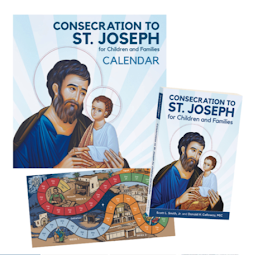
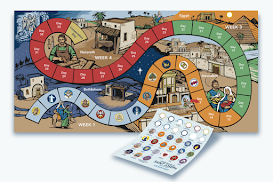
So St. Joseph can protect all families -- as he protected the Holy Family -- in this last great battle between Heaven and Hell over the family.
Here's a talk I recently gave about consecrating your families to St. Joseph:
Did Joseph Really Have a "Technicolor Dreamcoat"?Short Answer: No.

After the success of Andrew Lloyd Webber and Tim Rice's musicals, Jesus Christ Superstar and Joseph and the Amazing Technicolor Dreamcoat in the 1960s and multiple revivals to this day, the idea that Joseph had a "technicolor dreamcoat" is pretty well etched into our memories. Unfortunately.
But there's something much more important, much deeper at work here that's completely at odds with the "free love" spirit of these musicals.
Here, as usual, the RSV-CE translation of the Bible gives us a much closer translation of the original Hebrew:
Now Israel loved Joseph more than any other of his children, because he was the son of his old age; and he made him a long robe with sleeves [Hb. כְּתֹ֥נֶת ketonet + פַּסִּֽים׃ passim].
"A long robe with sleeves" or "a robe with long sleeves" is a much better translation of the Hebrew phrase ketonet passim than "coat of many colors".

But what's the significance of a long robe?
Did Jacob/Israel give Joseph a cloak that was too big? Did the father give his own, over-sized robe to his son? Interesting image, but no -- Joseph was a grown man at this time.
There at least two very important meanings here, both of which point to St. Joseph.
Translating ketonet is a straightforward matter. Ketonet means coat, cloak, tunic, etc.
Passim is a bit more mysterious while also seeming to be prosaic. Passim could come from the singular pas meaning the "palm" of the hand.
The singular “pas” appears in Aramaic, not Hebrew, in Daniel 5:5 (pas y’da) describing the hand that King Belshazzar saw writing on the wall. In that context, pas is understood to mean the palm of the hand.
Based on this, ketonet passim is interpreted to mean a long-sleeved garment. That is, a cloak so long that reaches all the way to the palm.[1]
And ... a long cloak reaching all the way to the ankle (Bereishit Rabbah 84:8;5 Da’at Zekeinim miBa’alei HaTosafot).[2]
Why would Joseph's cloak reference the palms and the ankles? What is this pointing to?
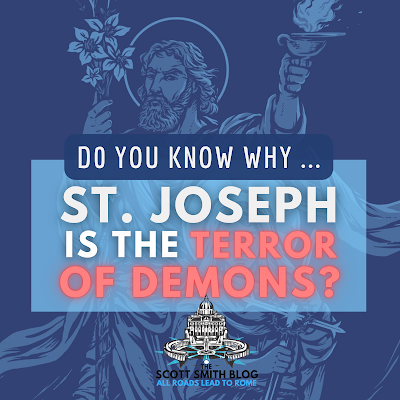
This tells us something about St. Joseph and his son. St. Joseph, too, had a cloak. St. Joseph's cloak was long enough to conceal Jesus and the Holy Family from the devil. Read more on how St. Joseph's cloak conceals and protects the Holy Family from Satan in this other article I've written, Why is St. Joseph Called the "Terror of Demons":
But there's more ...
Joseph's Cloak that Reaches to the Palms and Ankles >> Jesus' Palms and AnklesNot only was St. Joseph's cloak long enough to conceal the Holy Family from Satan, "palms and ankles" points to Jesus. Jesus inherited his father's cloak. What is significant about Jesus' palms and ankles?
What violence was committed against Jesus' most precious palms ...

and ankles?

This is a striking connection. But there's another, deeper level to this, as well.
The Hebrew phrase ketonet passim is found in only one other place in the Bible.
We see the phrase ketonet passim every time Joseph's cloak is described: Genesis 37:3, Genesis 37:23, Genesis 37:31, Genesis 37:32, and Genesis 37:33.
Outside of the context of Joseph's cloak, the phrase ketonet passim is found in only one other place in the Old Testament -- in the entire Bible, for that matter.
That one other place is 2 Samuel 13:18:
Now she was wearing a long robe with sleeves; for thus were the virgin daughters of the king clad of old.
This is a description of Tamar, whose virginity was forcefully and hatefully stolen by her brother Amnon. This is one of the more tragic scenes in the Bible.
Despite the darkness and shadows of this scene, this verse nevertheless illuminates our understanding of ketonet passim. We are told "for thus were the virgin daughters of the king clad of old."
The long cloaks were marks of virginity. The ketonet passim cloak was long for modesty's sake.
Josephus in Antiquities of the Jews (vol. II, 2:1) and the Book of Jubilees (chap. 34) omitted mention of this special paternal gift to Joseph, but when describing the garment worn by Tamar, Josephus says (Antiquities of the Jews vol. VII, 8:1): “for the virgins of old time wore such loose coats tied at the hands, and let down to the ankles.”

But that's not all. The long cloaks marked, not only virgins, but royal virgins.
Again, how does this point to St. Joseph?
The ketonet passim robe of Joseph the Patriarch points to great cloak of St. Joseph. This is the cloak that concealed and protected the Holy Family. Now, we are being given an insight into why St. Joseph's cloak had such power to conceal and protect.[3]
First and foremost, St. Joseph had this power from God. St. Joseph was chosen by God to be head of the Holy Family.

But with what gifts did God equip St. Joseph? These were many. Ketonet passim points to two gifts in particular:
Royalty: the Crown of IsraelVirginity: the Perpetual Virginity of Mary and JosephMore on these below ...
King Herod was the false, puppet king of Israel. St. Joseph was the rightful bearer of the crown of Israel.
St. Joseph isn't just described as being of David's family and lineage, St. Joseph is of the royal "house of David":
In the sixth month the angel Gabriel was sent from God to a city of Galilee named Nazareth, to a virgin betrothed to a man whose name was Joseph, of the house of David; and the virgin’s name was Mary. (Luke 1:26-27)
If you're described as being "of the house of Tudor" or "of the house of Windsor," it typically means you have a crown on your head.
More than that, it has been argued that St. Joseph had one of the greatest claims to the throne of Israel. St. Joseph Dr. Brant Pitre created an amazing Bible study on the St. Joseph, the Hidden King of Israel. I recommend you listening to it in full, but here's a teaser:
Also! The ketonet passim doesn't just point to Joseph and St. Joseph's royal lineage, but their lineage back to Adam, as well.
More on this below ...
St. Joseph, Most Chaste, and the Perpetual Virginity of Mary and JosephThe long cloak, the ketonet passim, points to St. Joseph being, not just royalty, but a member of the royal family set aside as a virgin -- consecrated as a virgin.
The Church has long taught that both Mary and Joseph had taken perpetual vows of virginity.
This is why Mary is surprised and troubled when the angel tells her she is to conceive:
And the angel said to her, “Do not be afraid, Mary, for you have found favor with God. And behold, you will conceive in your womb and bear a son, and you shall call his name Jesus.
He will be great, and will be called the Son of the Most High;and the Lord God will give to him the throne of his father David,and he will reign over the house of Jacob for ever;and of his kingdom there will be no end.
And Mary said to the angel, "How can this be, since I know not man?" (Gk. andra ou ginosko, ἄνδρα οὐ γινώσκω) ?” (Luke 1:30-34)
Why would a bride be startled to be told that she will soon conceive? To conceive -- that's the hope of every bride (or at least it used to be). It doesn't make sense unless Mary and Joseph had taken vows of virginity. It doesn't make sense unless the marriage of Mary and Joseph was a celibate marriage.
Why would Mary say "how can this be, since I know not man"? Are we to interpret this as Mary saying she doesn't understand the "birds and the bees"? No. Again, it doesn't make sense unless Mary took a vow of virginity. In fact, that specific phrase "I know not man" or andra ou ginosko (Gk. ἄνδρα οὐ γινώσκω) is understood as meaning a vow of virginity or consecrated virgin.[4]
There is a lot more material supporting the virginity of Mary and Joseph. But, for now, we will leave it at ketonet passim pointing to St. Joseph being a virgin.
But there's still more ...
The Priestly Meaning of the Ketonet PassimThere are at least two more meanings of the ketonet passim. This next one is amazing, but the last connection may be the most amazing of all.
The ketonet passim is clearly a bestowal of Jacob's (Israel's) favor on Joseph. Jacob-Israel will also later give Joseph a double portion of his inheritance. That's why Joseph is ironically not one of the twelve tribes of Israel, but Joseph's two sons, Ephraim and Manasseh are.
More than just Jacob-Israel's favor, more than just a double portion of his estate, the ketonet passim marked Joseph as Jacob-Israel's firstborn. But there's more than this, too!
The Bereshit Rabbah, a talmudic-era midrash on the Book of Genesis, states that Jacob told Joseph (48:22) that he assigned him as the firstborn (97:6). The Bereshit Rabbah further describes the ketonet passim as bestowing the status of a Kohen (or priest), whose role prior to the giving of the Torah was filled by the firstborn (also Shemot 28:2; Bereishit 37:3). The Bereishit Rabbah
The ketonet passim marked Joseph, not only as firstborn, but as a priest. It was like a priestly garment. See below for an example of priestly garments, post-Exodus. This context helps unite the various meanings of ketonet passim: long, colorful, priestly vestments.

But how does this priestly function point to St. Joseph?
Ketonet Passim Points to the Priesthood of St. Joseph, the Ark-Bearer & The Prototype of the Priesthood St. Joseph wasn't a priest, was he? How does this priestly function of the ketonet passim point to St. Joseph?
First off, only the priests were permitted to carry, much less touch, the Ark of the Covenant (cf. Deuteronomy 31:9; Joshua 3:3-6). This is why Uzzah was smote by God for "putting forth his hand to the Ark" even though it was about to fall (2 Samuel 6).[5]
 Transporting the Ark of the Covenant, gilded brass relief, Cathedral of Sainte-Marie, Auch, France
What does the Ark of the Covenant have to do with St. Joseph? St. Joseph never carried the Ark, right? The Ark had been lost for hundreds of years by the time of Jesus.
Right, but who was the New Ark of the Covenant? The Virgin Mary! I have written about this many times. There are many, many proofs of this in the Bible: Proof the Mary is the New Ark from Luke 1, the Visitation: What's Really Happening at The Visitation: The Ark Comes to ElizabethMary being the New Ark also supports her Assumption, as I've written about here (part 3) and here (part 4)Proof that Mary is the New Ark in Revelation 12 Here's a whole course I've put together on this, too: Virgin Mary E-Course, Mariology Class on New Eve, New Ark, and New QueenYes, but when did St. Joseph carry the Virgin Mary, the New Ark?
In 2 Samuel 6, King David brings the Ark to Bethlehem, where the Ark dwelled not in a palace or even a house, but a tent. When does St. Joseph bring the Blessed Mother to Bethlehem? At Christmas! And likewise, there was no room at the inn.
There are a ton of parallels between these two stories, including the real meaning of the Star of Bethlehem -- all of which I have written about here:

St. Joseph is also the prototype of the Catholic priesthood. Think about the virginity we discussed above, the consecrated, celibate marriage of Jesus and Mary, and the perpetual virginity of both Mary and Joseph.
The Virgin Mary represents the Church. Priests marry the Church, just as St. Joseph did. Priests profess a vow of celibacy, just as St. Joseph did. Despite their celibacy, priests are spiritual "fathers" of their flock, just as St. Joseph was foster-father of Jesus.
Together, in their celibate union, Mary and Joseph are still fruitful, infinitely fruitful, despite being virgins. They are the parents of the virgin-born, Jesus, and the spiritual parents of all those adopted into Jesus' family through Baptism. Likewise, priests can be extremely fruitful, despite their celibacy.
As amazing as all this is, there is still one more shocking meaning connected to the ketonet passim.
The Last Great Meaning of the Ketonet Passim: Adam's Robe & the New Adam What if I told you that the ketonet passim was not made by Jacob-Israel? What if I told you that the robe had been passed down to Jacob-Israel through many, many generations? What if I told you that Joseph's Coat was one of the greatest relics of the God's people?
The Mishnah Bereishit Rabbah also states that Jacob told Joseph that, not only had he assigned Joseph as his firstborn, but Jacob gave Joseph the special garments that God, Himself, had made for Adam, which had been passed to Nimrod, Abraham, Isaac, Esau, and Jacob (48:22, 97:6).
Take a moment for that to sink in. According to Jewish tradition, the ketonet passim was the robe of Adam, himself, made by God, Himself. These were the robes, not just of the firstborn of Israel, but of all mankind.
St. Joseph, the direct descendant of Adam and son of another Jacob, will bear a cloak to protect the New Adam, the new firstborn of all mankind, of all those who are reborn in Baptism.
Plenty more could be said about this connections between Adam's cloak, Joseph's cloak, and St. Joseph. This connection is simply mind-blowing.
Interestingly, according to Jewish tradition, this is not the only relic of Adam that survived the passage of vast sums of years. Adam's skull also survived through Noah. This connects to Mary being also the New Ark of Noah and Golgotha, the place of the skull. Also, just as the Jews made sure the patriarch Joseph was buried in the Promised Land, so, likewise, they honored Adam's bones. Read all about this in the articles below:

Much More than a Rainbow, Technicolor Dreamcoat?Did I make good on my promise that there is a great deal of meaning hidden beneath the odd translation of "coat of many colors"?
What do you think? Let me know in the comments below. I would love to hear and respond to your questions on this subject.
Footnotes for Joseph's Long-Sleeved Coat of Many Colors
[1] Following this, the Koren Tanakh (Jerusalem, 1986) translates ketonet passim as a “coat with long sleeves.”
[2] Rabbi David Zvi Hoffmann supports this translation of ketonet passim to mean “reaching the palms” or “reaching the ankles.” Rabbi Hoffmann notes that in the Mishnah (Challah 1:8) “pisat hayad” means the palm and “pisat haregel” means the bottom of the foot. Ketonet passim, therefore, refers to a garment that reached the pas hayad and the pas haregel. This has support in the use of “pisat” in Tehillim 72:16 to mean “a measure.” LINK
[3] Very similar to the original command given to Adam with respect to the Garden and the First Family, to guard and to keep (Hb. shamar + abodah).[4] The original Greek text reads andra ou ginosko (ἄνδρα οὐ γινώσκω) which literally translates as “man not I know” or in English “I know not man.” The Greek verb ginosko (Present Indicative Active) is in the continuous present which shows a permanent disposition to not know man. The original Greek translates what Mary says to the angel in her native tongue of Hebrew-Aramaic: 'ki enneni yodaat ish.' The Greek present tense used for Mary’s words in Luke 1:34 corresponds to the Hebrew Aramaic active participle (yodaat) indicating a permanent condition (cf. Manuel Miguens, The Virgin Birth: An Evaluation of Scriptural Evidence). LINK
[5] Uzzah was also a descendant of Kohath, who were strictly forbidden from touching the Ark, see Numbers 4:15: And when Aaron and his sons have finished covering the sanctuary and all the furnishings of the sanctuary, as the camp sets out, after that the sons of Kohath shall come to carry these, but they must not touch the holy things, lest they die. These are the things of the tent of meeting that the sons of Kohath are to carry.mbtTOC();
February 19, 2024
Did St. Paul Have a Near-Death Experience? NDEs of the Bible
Have you every thought about Near-Death experiences (NDEs) occurring in the Bible? I have! When you start looking, you realize they are all over the Bible.
I've been working on this a lot for a new book I have coming out through Sophia Institute Press entitled Catholic Near-Death Experiences: Accounts of Heaven, Hell, and Purgatory from Priests, Popes, and Saints.
This article explores the following questions: Did St. Paul actually die and resurrect in the Bible? If so, was St. Paul's account of the "third heaven" a description of his Near-Death Experience?

Near-Death Experiences (NDEs) of the Bible
There is so much unexplored territory when it comes to NDEs. First off, almost all books on this subject are not Catholic.
Second, most NDE books only describes recent, contemporary accounts of near-death experiences. There is a long history of Catholic NDEs that goes back to the first centuries of the Church and Biblical times, as well.
This will be the first in a series of posts about Catholic and Biblical NDEs, all fruit of my research for my new book :)
Now, let's return to the question of St. Paul's NDE ...
What if St. Paul's Near-Death Experience was connected to that of another disciple? One that St. Paul had a hand in killing ...
Did St. Stephen the Martyr have a Near-Death Experience?
One somewhatobvious NDE in Scripture, once you start digging, is that of St. Stephen, the first martyr.St. Stephen was stoned to death, but just before his death, he experienced atheophany. That is, he saw and spoke of God.
This is how St. Stephen’stheophany is described in the Book of Acts.[1]
But [St. Stephen], full of the Holy Spirit, gazed into heavenand saw the glory of God, and Jesus standing at the right hand of God; and hesaid, “Behold, I see the heavens opened, and the Son of man standing at theright hand of God.” But they cried out with a loud voice and stopped their earsand rushed together upon him.
Now, remember whoassisted in the stoning of St. Stephen? Saul, the future St. Paul.
Wouldn’t it beinteresting if St. Paul, who was so intimately involved in bringing St. Stephen“near” his death, also experienced a near-death experience? And, what if St.Paul’s NDE, like St. Stephen’s, occurred as a result of a stoning?
That level ofcoincidence and symmetry would really have to be the work of God, right?
 Figure 1: The Death of Stephen, Bible Illustration by Gustave Doré, 1866
Did St. Paul Survive Stoning? Or Not?
If St. Paul had a near-death experience, he would need to be near-death, right? St. Paul was actually frequently near death.
If the Bible recountedevery time St. Paul was killed, almost killed, going to be killed, or a crowdattempted to kill him, the zippers of our leather Bible carrying cases wouldburst. We would need wheelbarrows to carry around our Bibles.
That is to say, St.Paul was so often near-death that this near-death experience could havehappened at any point from the road to Damascus onward.
Nevertheless, St. Pauldoes provide a clue in this mysterious passage from the Book of Acts:
But Jews came there from Antioch and Iconium; and havingpersuaded the people, they stoned Paul and dragged him out of the city,supposing that he was dead. But when the disciples gathered about him, he roseup and entered the city; and on the next day he went on with Barnabas to Derbe. (Acts 14:19–20)
St. Paul survivedstoning. Wait a second, St. Paul survived stoning.
Let’s sit with this point for a moment. This is an incrediblestatement.

The act of stoning aperson is so monstrously violent that nobody survives stoning. In fact,St. Paul is the only person in the Bible known to have survived astoning.
Let’s say that again.
St. Paul is the onlyperson in the Bible that survived stoning.
It doesn’t take manylarge stones thrown or brought down on a person’s head to seriously injure them.The reason you keep going, the reason you keep throwing stones, is not to killthem. The reason you keep going is to kill them quickly, to end theirhideous suffering. The victim of a stoning is a dead man from the beginning.
Also note that St. Paulisn’t running out of Lystra in a hail of stones: “They stoned Paul and draggedhim out of the city, supposing that he was dead.”
First, they stoned him. Then,they dragged his lifeless body out of the city.
What Happened After St. Paul's Stoning? Was St. Paul Resurrected?That leaves us with aquestion. Did St. Paul survive stoning? Or did St. Paul actually die andthen resurrect?
How do we know? Theactions of the disciples give us an important insight. Look at this next versecarefully:
But when the disciples gathered about him, he rose up.
The “disciples gatheredabout him.” Why are the disciples gathering around St. Paul? Is it to gawk athis mangled body?
I will answer this question with an example from my own experience.
I Witnessed a Real-Life Stoning While a Missionary in Kenya While a missionary inNairobi, I once came upon the bodies of men who were stoned to death. It was agrizzly sight, one I will not soon forget. It was also a pitiable sight. Thepoor men!
These were not innocentmen, mind you. But after such a death, it is natural to pity the men’s poor,crumpled forms.
What did I do? Iimmediately stopped and began praying for them. It felt like the most naturalthing to do.


.jpg)

Why Did the Disciples Gather Around St. Paul's Dead Body? And What Happened?Praying also seems likethe most natural reaction for the disciples, too. Upon seeing the ruined bodyof their friend, Paul, the disciples prayed. I saw strangers, even violent criminals, and I prayed. The disciples saw theirbrother. You better believe they were praying!
The disciples formed a prayer circle around St. Paul's dead body. The disciples “gatheredabout him” either to pray for the repose of St. Paul’s soul or for his healing. And at this point, healing means resurrection.
What happens next iscritical to our understanding of this entire episode. Prayer is the cause—whatis the effect?

St. Paul "Rose Up" -- Does That Mean Resurrection?St. Paul “rose up.”Whatever the disciples were doing when they gathered around St. Paul’s body,the effect was that St. Paul “rose up.” This another interesting phrase: “roseup.”
Does this phrasesignify a resurrection?
Interestingly, thesetwo phrases “gathered about him” and “rose up” occur together only in one otherlocation in the New Testament. This is at Mark 5, the account of Jesus andJairus’ daughter.
Yes, thatJairus—the one whose daughter was resurrected by Jesus. These twophrases describing St. Paul’s resurrection also coincide at the resurrectionof Jairus’ daughter.[2]
At Mark 5:41, Jesustakes the girl by the hand and says to her, “Talitha cumi,” which means,“Little girl, I say to you, arise.” “Arise” or “cumi” is the word thatthe Word of God, Himself, uses to resurrect the twelve-year-old girl.[3]
This is not the only time that God uses this particular word for resurrection. This also occurred with Jonah -- this is the "Sign of Jonah" that Jesus references at Matthew 12:39-41. You can read all about that in this article I wrote on the Sign of Jonah:

What Happened to St. Paul When He Died? Did St. Paul Describe His NDE?
If St. Paul was indeed stoned to death, died, and wasresurrected, what happened in the intervening time? What did St. Paul see? Thatis to say, did St. Paul have a near-death experience? And if so, what did St.Paul see?
The above passage from the Acts of the Apostlesdoes not tell us much. As we just saw, if we read it too fast, we can easilygloss over the fact that St. Paul died and resurrected.
This must have been an important moment in St.Paul’s life, though St. Paul’s life was obviously filled with importantmoments. Nevertheless, even after two thousand years, St. Paul can count theamount of times he died and resurrected on only two fingers.

St.Paul relates the following experience at 2 Corinthians 12:2-4. St. Pauls seems almost bashful about his experience, at first ascribing it to a "man he knew":
I know a man in Christ who fourteen years ago was —whether in the body or out of the body I do notknow, God knows. And I know that this man was caught up into Paradise—whetherin the body or out of the body I do not know, God knows—and he heard thingsthat cannot be told, which man may not utter.
That’s straightforward,right? A man “caught up to the third heaven,” “out of the body,” and “heardthings that cannot be told.” That’s the basic formula for a near-deathexperience right in the middle of 2 Corinthians.
Let’s unpack theseverses a bit.
Who did this happen to?St. Paul says “I know a man in Christ” who had this experience. It is generallyaccepted that St. Paul is referring to himself. The “I know a man” paraphrasingwas a form of personal modesty in ancient times. St. Paul also confirms that heis referring to himself at verse 7, when St. Paul says “and to keep mefrom being too elated by the abundance of revelations, a thorn was given me inthe flesh.”
Not only does verse 7confirm that St. Paul is telling us about his own experience, it also tells usthat St. Paul was truly overwhelmed by the experience of Paradise and ThirdHeaven.

Does this mean there are three different Heavens?No.
The Hebrew word for heaven, shamayim, isactually a plural. Heavens, not Heaven. This would suggest at least two heavensor even a multiplicity of heavens. Some ancient sources speak of up to tenheavens.
There is even the expression “seventh heaven,”meaning a “state of extreme joy,”not to mention the television show, Seventh Heaven, about a family withseven kids.
What does all this mean? Are there multiplespiritual realms?
In Hebrew, the words for heaven are also the wordsfor sky or lofty. It may be that Paul’s count includes the physical heavens,the skies and clouds we can see. This would be First Heaven.
If First Heaven is the blue sky of white clouds,birds, and rainbows, what is Second Heaven? This would be the “celestial” heavenof stars and other planets.
The Third Heaven would then be the “empyrean”heaven, the dwelling place of God.
When St. Paul speaks of being “caught up to thethird heaven,” he is not describing multiple spiritual realms. He means heentered the presence of God.
St. Paul confirms this in the following verse,when he reiterates his experience. This time, he says he was “caught up intoParadise.” St. Paul describes “third heaven” and “Paradise” as synonymous.

The phrasing of Third Heaven indicates apassage through the Heavens, that St. Paul passes from earth to First Heaven toSecond Heaven to Third Heaven, sequentially.
This tracks with the“tunnel experience” of passing spatially from this place to the next. Even thephrase “caught up” indicates the rapid flight of the soul “out of the body.”
If not near-death, St.Paul’s Third Heaven experience was an out of-body experience. How do we knowthis? Because St. Paul said it himself in the passage quoted above from 2Corinthians 12. At verse 3, he says “whether in the body or out of the bodyI do not know, God knows.”
Butwas St. Paul’s out-of-body experience also a near-death experience?
Asdescribed above, St. Paul seemed to always be near-death. Look at St. Paul’sown account of his beatings and dangers, described at 2 Corinthians 11:23-29:
... with fargreater labors, far more imprisonments, with countless beatings, and oftennear death. Five times I have received at the hands of the Jews the fortylashes less one. Three times I have been beaten with rods; once I was stoned.Three times I have been shipwrecked; a night and a day I have been adrift atsea; on frequent journeys, in danger from rivers, danger from robbers, dangerfrom my own people, danger from Gentiles, danger in the city, danger in thewilderness, danger at sea, danger from false brethren; in toil and hardship,through many a sleepless night, in hunger and thirst, often without food, incold and exposure. And, apart from other things, there is the daily pressureupon me of my anxiety for all the churches. Who is weak, and I am not weak? Whois made to fall, and I am not indignant?
Did you catch that? St.Paul actually uses the phrase “near-death” (above in bold) to describe his manyviolent experiences, most of which happened multiple times … except stoning. Anordeal of such unique magnitude that he experienced it only once.
If that’s not enough,these two passages from St. Paul in which he describes being “near-death” thenhis “out-of-body” experience occur right next to another: 2 Corinthians,the end of chapter 11 and the beginning of chapter 12.
Given the proximity ofthese passages, we are left to understand that St. Paul had a “near death”“out-of-body” experience.

The term “near-deathexperience” was derived from a French phrase expérience de mort imminenteor “experience of imminent death.” The phrase was first coined by Frenchpsychologist and epistemologist Victor Egger the 1890s.
Nevertheless, itappears that both phrases—“out-of-body” and “near death” experiences—originatedin the Bible.
Yet the questionremains …
St. Paul, by his ownaccount—by his own words—had a “near death” experience. But do we haveany idea what he saw? Do we have any details or description of what heexperienced? Did St. Paul see a tunnel, too? Did he see just Heaven or otherplaces, too?
Fortunate for us, St.Paul did provide us with some description. It is not much, but it is poignant,nonetheless.
St. Paul describes hisnear-death experience at 2 Corinthians 12:4:
... and he heard things that cannot be told, which man may not utter.
St. Paul was asked to domore with the human language than perhaps any previous human to have everlived. He described the God-man to atheistic philosophers. He taughtChristianity to pagans. He wrote the most famous letters in human history.
And yet, what St. Paulsaw in Third Heaven “cannot be told,” even by him.
Why is this? Why doeseven St. Paul fall short of describing the glory of God and the ineffablebeauty of Heaven?
There is a clue in thesecond half of St. Paul’s description, above: “Man may not utter.” It isnot merely that he is at a loss for words. There seems to be some kind oflimitation placed on him from above.
The phrase “cannot betold” (arreta remata) means either (1) cannot be expressed because itgoes beyond human ability; or (2) cannot be expressed because it is holy. [5] The second meaning fits better with the second phrase “may not utter” (oukexon … lalesai) uses a word that means “unauthorized” or “not permitted”.[6]
Either man is forbiddenor not allowed to “utter” a description of the place, or he is simply incapableof describing it, due to the limitations of his human nature.

We may also look toother, similar statements in Scripture. Ezekiel, for example, describes God’svoice coming through the mediation of angels, in particular through the soundof their wings.[7]
Take, for example,Ezekiel 1:24-25:
I heard the sound of their wings like the sound of many waters, like thethunder of the Almighty, a sound of tumult like the sound of a host; when theystood still, they let down their wings. And there came a voice from above thefirmament over their heads; when they stood still, they let down their wings.
The sound of the angels’wings makes a distinctive sound, yet Ezekiel cannot describe it withoutlikening it something very un-feather-like: “many waters.” Ezekiel has a visionof God’s glory that he cannot explain, except by “likeness” and “appearance”. ThroughEzekiel’s visions, he hears God’s voice through the Cherubim’s wings, in the clappingof the wings together or passing through them.
St. Paul likewise sawsomething that he cannot explain or put to words. He may have heard the heavenlydialect in ways similar to Ezekiel, i.e. the language of wings.
What about the tunnelexperience? Did St. Paul enter Third Heaven by the tunnel?
He said he was“snatched up” and went to the “third heaven.” The language of snatching (Gk. arpagenta)and “up to the third heaven” (Gk. eos tritou ouranou) describe an upwardascent.

There's so much more to read about St. Paul's NDE and other Biblical Accounts of Near-Death Experiences!
My new book, Catholic Near-Death Experiences: Accounts of Heaven, Hell, and Purgatory from Priests, Popes, and Saints, will be out this Easter ... stay tuned!
Did St. Paul Have a Near-Death Experience (NDE)? Footnotes
Acts 7:55-57
These two phrases occur at Mark 5:21, “a great crowd gathered about him,”and Mark 5:41, “Taking her by the hand he said to her, ‘Talitha cumi’; whichmeans, ‘Little girl, I say to you, arise.’”
There is another interesting connection between the account of St. Paul’sresurrection and Mark 5 that involves the chronological span of twelve years.In Mark 5, Jesus heals two people linked by a span of twelve years, whichrepresents the duration of the woman’s illness (5:25) and the age of the younggirl (5:42). Like Jairus’ daughter, St. Paul is also something of atwelve-year-old when he is stoned to death. Depending on how you count theyears, St. Paul’s conversion to Christianity—his rebirth as a Christian—on theroad to Damascus occurred twelve years prior to his stoning at Lystra.
Merriam-Webster.
Bauer–Danker–Arndt–Gingrich(BDAG), English-Greek Lexicon, 134.
Ibid., 348.
Ezek1, 3, 10
February 12, 2024
What is the "Sign of Jonah"? Did Jonah Die in the Belly of the Whale, Resurrect, and have a Near-Death Experience? NDEs of the Bible
J
onah wasswallowed into the belly of a whale, right? He was spit onto the shore afterthree days, but he was alive the whole time.Wasn’t he? … Wasn’t he?
Actually, no.
But this helps explain Jesus' mysterious prophecy about the “Sign of Jonah” ...

Do you remember Jesus’mysterious prophecy about the “Sign of Jonah”? Here is Luke 11:29–32 (also Matthew 12:38-42):
When thecrowds were increasing, he began to say, “This generation is an evilgeneration; it seeks a sign, but no sign shall be given to it except the signof Jonah. For as Jonah became a sign to the men of Nin′eveh, so will the Sonof man be to this generation. The queen of the South will arise at thejudgment with the men of this generation and condemn them; for she came fromthe ends of the earth to hear the wisdom of Solomon, and behold, somethinggreater than Solomon is here. The men of Nin′eveh will arise at the judgmentwith this generation and condemn it; for they repented at the preaching ofJonah, and behold, something greater than Jonah is here.
“Jonah became a sign to the menof Nineveh.” Check. “So will the Son of man be to this generation.” Check?Jesus is the Son of man, but Jesus is never swallowed by a whale (or a greatfish). How, then, does Jesus provide the sign of Jonah?
This is a confusingpassage. When you first read it, it may seem like Jesus is being flippantor evasive and not providing relevant information.However,there are no empty phrases in Scripture. Sowhat is the deeper meaning of the sign of Jonah?
Jonah was in the bellyof the whale for three days. Jesus was in the belly of the earth for threedays. Is three days the sign of Jonah? This is getting us closer, but there’s stillmore.
Let’s look at the text ofthe Book of Jonah. Here is Jonah’s prayer to the Lord, his cry for help:[1]
I called out of my distress tothe Lord, And He answered me. I cried for help from the depth of Sheol;You heard my voice. You had cast me into the deep, Into the heart of the seas,And the current engulfed me. All Your breakers and billows passed over me. So Isaid, “I have been expelled from Your sight. Nevertheless, I will look againtoward Your holy temple.” Water encompassed me to the point of death. Thegreat deep engulfed me, weeds were wrapped around my head. I descended to theroots of the mountains. The earth with its bars was around me forever, But Youhave brought up my life from the pit, O Lord my God. While I was faintingaway, I remembered the Lord, And my prayer came to You, Into Your holy temple.Those who regard vain idols Forsake their faithfulness, But I will sacrifice toYou With the voice of thanksgiving. That which I have vowed I will pay.Salvation is from the Lord.
Notice that Jonah iscrying for help from the “depth of Sheol,” not from the depths of the ocean oreven the depths of fish. Jonah is crying to God from Sheol, which is the abodeof the dead. The dead.
Was Jonah in the Belly of a Whale? Or Did Jonah Die?Jonah also says “youhave brought up my life from the pit.” The “pit” is another OldTestament term for the realm of the dead.[2]
Jonah sinks down belowthe “weeds,” the “roots of the mountains,” and is “engulfed” by the great deep.Jonah’s soul is descending to the bottom of the ocean, but deeper. He sinksbelow the depths of the oceans, deep into the earth, way past the belly of anyfish or whale.

Also, the trip to theunderworld land of the dead was generally believed in the Near East to be a journeyof three days.[3]
Simply put, Jonah died.Jonah was dead.
How Long Was Jonah Dead For? The "Sign of Jonah" & Three Days Not only that, Jonahwas dead for three days. Being dead for three days, then rising from the dead—thatis the sign of Jonah. Christ provides the sign of Jonah by being really, trulydead for three days, then resurrecting.

Is the Sign of Jonah Resurrection After Three Days? So what is the Sign ofJonah?
Jesus is directly telling the crowds about Hisupcoming death and Resurrection. But Jesus is not going to rise like Jonah.Jesus says “something greater than Jonah is here.” Jesus is greater than Jonah.God resurrected Jonah, but Jesus is God. Jesus will resurrect Himself.
Also, look at thecommand wordGod uses when He speaks to Jonah’s lifeless body, Jonah’s corpse, whichthe fish vomits unceremoniously onto the seashore.
God says to Jonah, “Arise,go to Nineveh, that great city, and proclaim to it the message that I tellyou.”
Does this word choiceand phrasing sound familiar? “Arise” is the Hebrew word qum or קוּם.

This is the same wordJesus uses when He raises Jairus’s daughter from the dead.[4] According to Mark 5:41, Jesus “[takes] her by the hand, He said to her, ‘Talithacumi,’ which means, ‘Little girl, I say to you, arise.’”
Jesus uses this same command word as God, Himself, uses. God commandsJonah to “arise,” and Jesus commands the girl to “arise.” Jonah’s Near-Death ExperienceWait a second. Jonah died.Jonah went to Sheol, to the pit. God restored Jonah to life. Jonah alsoprovided us with an account of his experience. Check, check,check!
Jonah had a near-death experience. And Jonah’s prayer (Jonah 2:2–9, quotedabove) is the account of his NDE. Jonah’s effect on Nineveh, following his NDE,is also significant. Let’s now analyze Jonah’s account as a near-deathexperience.

Here again is Jonah’s prayerto God as he descends into the “depth of Sheol”:[5]
I called outof my distress to the Lord, And He answered me. I cried for help from the depthof Sheol; You heard my voice. You had cast me into the deep, Into theheart of the seas, And the current engulfed me. All Your breakers and billowspassed over me.
As alluded to earlier, the location of Jonah’snear-death experience is not Heaven or hell, but Sheol. This makes Jonah’s NDEunique among all those that describe visits to Heaven.“Sheol” is the Hebrew termfor the underworld.[6] Inthe Septuagint, the Hebrew term שְׁאוֹל(she'ol) was translated as the Greek term ἅδης(hadēs), which referred to both the netherworld and the Greek god of thenetherworld.[7] Apart from Jonah’s account, descriptions of Sheol are sparse, but it’sgenerally described as “a somnolent, gloomy existence without meaningfulactivity or social distinction.”[8]
Sheol is the equivalent of purgatory, or at leastits precursor. All the Biblical texts referring to Purgatory serve as proof-texts for the Catholic belief in Purgatory. There are a bunch more, all of which I have tried to assemble in this article, Biblical Proofs for Purgatory:
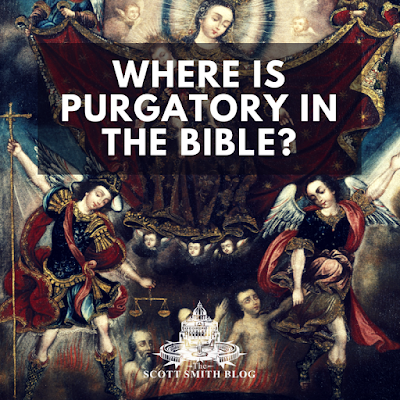
Sheol is a place of waiting, a place that ultimately leads toHeaven.
So I said, “I have been expelled from Your sight. Nevertheless,I will look again toward Your holy temple."[9]
Jonah describes being exiled or “expelled” fromGod’s presence. He is beyond the sight of God. Nevertheless, he remainsfaithful to God. He does not give in to despair. Jonah keeps his eyes fixed onHeaven. He yearns for God’s holy temple in Heaven.
This accurately describes the disposition of the soulsin purgatory, as well as Sheol. St. Margaret Mary was often beset by souls frompurgatory seeking relief from their torments. St. Margaret Mary said of these sufferingsouls:
Ifonly you knew with what great longing these holy souls yearn for relief fromtheir suffering. Ingratitude has never entered Heaven.
St. Faustina Kowalska provided a similar observation of thesouls in purgatory, tantamount to a near-death experience.

St. Faustina wastaken to “a misty place full of fire” by her guardian angel:[10]
I saw my guardian angel, whoordered me to follow him. In a moment I was in a misty place full of fire inwhich there was a great crowd of suffering souls. They were praying fervently,but to no avail, for themselves; only we can come to their aid. The flames,which were burning them, did not touch me at all. My guardian angel did notleave me for an instant. I asked these souls what their greatest suffering was.They answered me in one voice that their greatest torment was longing for God.
St. Faustina reveals here thatthe greatest torment of the souls in purgatory is not burning in the flames,but their “longing for God.”
Sheol, Like a PrisonLet’s return to Jonah’sprayer to God as he descends to the underworld. As you read, you may begin tofeel claustrophobic. Jonah is calling to God from a place like a prison:[11]
Waterencompassed me to the point of death. The great deep engulfed me, weeds werewrapped around my head. I descended to the roots of the mountains. The earthwith its bars was around me forever ...
The water “encompassed” Jonah. The deep “engulfed”him. Weeds encircled his body and “wrapped around his head,” choking him.Finally, the “bars” of the earth closed in on him “forever.”
 Jonah and the Whale by Dan Phyillaier
Another consistentcharacteristic of NDEs is the positive change it causes in the survivor’s life.This was consistently documented in the medical studies reviewed earlier.
After Jonah’s descent into the prison of the depths,he suddenly demonstrates the gratitude that St. Margaret Mary described above,as well as the longing and yearning for the sanctuary of God’s holytemple:[12]
But You havebrought up my life from the pit, O Lord my God. While I was fainting away, Iremembered the Lord, And my prayer came to You, Into Your holy temple. Thosewho regard vain idols forsake their faithfulness, but I will sacrifice to You withthe voice of thanksgiving. That which I have vowed I will pay. Salvation isfrom the Lord.
Jonah ends his prayer inthe “voice of thanksgiving.” He will repay God’s faithfulness to him with hisown faithfulness.
What is the "Sign of Jonah"? Did Jonah have a Near-Death Experience? Footnotes
Jon. 2:2–9.
Pitre, Brant, The Case for Jesus: The Biblical and HistoricalEvidence for Christ, Image Books, New York, Chapter 12: “The Resurrection,”150-152: The phrases belly of Sheol and the Pit are Old Testament terms thatrefer to the realm of the dead. (See Job 7:9, 33:18, Psalm 40:2, 49:14-15,89:48).
SeeRobert Chisholm, Handbook on the Prophets (Grand Rapids, MI: BakerAcademic, 2002), 411: “In ancient Near Eastern literature, the trip to theunderworld land of the dead was viewed as a three-day journey.” See also GeorgeM. Landes, “The ‘Three Days and Three Nights’ Motif in Jonah 2:1,” Journalof Biblical Literature 86 (1967): 246-50.
Jesus uses the same command to raise from the dead the Widow of Nain’s Son atLuke 7:14–15: “And he came and touched the bier, and the bearers stood still.And he said, ‘Young man, I say to you, arise.’ And the dead man sat up,and began to speak. And he gave him to his mother.”
Jon. 2:2–9.
Johnston,Shades of Sheol, 74–75.
Martin A. Shields, “Death,” ed. John D. Barry et al., The Lexham BibleDictionary (Bellingham, WA: Lexham Press, 2016).
Ibid., Johnston.
Jon. 2:4.
St.Maria Faustina Kowalska, Diary of Saint Maria Faustina Kowalska, 20.
Jon 2:5.
Jon. 2:6–9.
January 11, 2024
In Praise of Cold Showers (and Exodus 90)
For the record, spiritual directors and confessors have been recommending cold showers long before Exodus 90. Before it was "cool" ...

Exodus 90 just started again. This is my 4th year, so I've had some time -- a lot of time -- to reflect on cold showers. 281 days, to be exact.
Here's what I've noticed:
When you put your head under cold water, it feels so WRONG. Bad, yes, but unnatural. Like putting your hand in fire. You feel that impulse or survival instinct to pull away quickly.
And yet, sin can feel so natural ... so goooood. Why don't our survival instincts kick in then?
Do you see the problem? Or, better yet, the solution?
What if sin felt like a cold shower? What if avoiding sin felt like a warm shower? Would we so easily fall into sin? No.
It used to be this way. This is what it was like before The Fall. Satan tempted Adam and Eve in three ways -- through our bellies, our flesh, and our eyes -- and Adam and Eve committed Original Sin. Satan's plan of attack has not changed. Read more about this here:
Will Power is Mind Power: Mind Over Matter
Let's get metaphysical for a moment ...
As St. Thomas Aquinas (and Aristotle) teach us, the intellect provides the will with its object, its goal and end and final destination: "The intellect moves the will, because the good understood is the object of the will, and moves it as an end." [Summa Theologiae, Prima Pars, question 82, article 4 (ST Ia 82.4)].
What's that mean?
Our minds should reign over our will and our bodies like a king over his subjects, like a driver over a team of horses. If you think it, your body should follow. If you declare your will to yourself, your body should obey.
Is this what happens?
If you tell yourself, that's the last time I will ever eat raw cookie dough before bed. It's bad for me. It's makes me feel sick. Your body should stop craving the cookie dough.
But this is NOT what's happening.
Sin is death. Sin should feel like a cold shower, but it feels like a warm shower. Sin should taste like poison, but it tastes like cookie dough.
Sin darkens the intellect and breaks the mind's control over the body. The mind can no longer see the good, the light. Not only that, even if the mind does see the good, the body rebels against it. The subjects usurps the king. The cookie dough should feel like a cold shower ... but it feels like a warm shower.

So how do you restore your mind's control over your will and body? How do you restore the king to his throne?
You chastise the will. The king punishes his disloyal subjects. This is how the king restores order to the kingdom.
How do you chastise the will? Is this the part where we start whipping ourselves? No ... we're not tough enough for that.
You go against the will. The ancient spiritual term for this is agere contra (Latin, "to go against"). Do the opposite of what your will or your body wants. You desire a warm shower? Cold shower. You desire cookie dough? Fast. You desire riches? Give alms to charity.
You picking up on some Lenten themes here? YES. This is exactly the point of Lent.
It's time for the king to take back his kingdom.
This is what men do. We restore order.
Once order is restored, the kingdom can feast.
Incidentally, this is why Jesus describes the Kingdom of Heaven as a wedding feast :)

And ...