
Scott L. Smith Jr.'s Blog, page 9
July 13, 2021
The Circular Logic of the Pro-Abortion Pro-Choice Argument: James Franco Interviews Professor Liz Harman on Abortion
Have you seen the somewhat short-lived Philosophy Time series created by James Franco and his buddy, Eliot Michaelson? It's pretty great, if only for Franco's facial expressions.

Check out the following video, in which Princeton philosophy professor, Liz Harman, is interviewed by James and Eliot.
If nothing else, Professor Liz makes clear how circular the abortion argument becomes when there is no inherent dignity to human life.
So Professor Liz Harman's argument is pretty terrible, but why?
Let's break it down ...
There are two separate, independent errors. One error doesn't explain the other, as argued by Professor Harman.
Error 1a: The baby doesn't have moral status because he/she doesn't have consciousness ... (Error 1b) because the baby doesn't have experiences. We can argue that lots of people do not have experiences or consciousness. That doesn't mean we can kill them.
People under anesthesia. People in comas. People in a persistent vegetative state. But these are still people. All these people are experiencing very little, if anything, depending on how you define "experiences" or "consciousness".
Follow the rabbit hole a little further. What kind of experiences does a person need to have to be considered a person? What if a person is only having bad experiences? Can we kill them?
Speaking of James Franco and experiences, what if a person is being subjected to one of his movies - say Spider-Man 3 - on repeat? Are they being dehumanized to the point of losing their personhood? Can we kill them?


What about Franco's 127 Hours? Remember that one? A mountain climber, Aron Ralston, gets trapped under a boulder while canyoneering alone near Moab, Utah and resorts to desperate measures in order to survive. Long story "cut" short: Ralston amputates his own arm.
Ralston is experiencing 127 non-stop hours of bad experiences. Can we kill him? Or should we "deliver" him from his suffering?
Hopefully, you are seeing that all these arguments are terrible justifications for killing somebody.
This is, however, a useful strategy for testing and defeating pro-abortion arguments ...
When faced with an argument or reason for abortion, ask yourself whether it works to justify killing obvious examples of rights-bearing human beings, such as newborn babies, toddlers, teenagers and adults. If not, it assumes that the being killed by abortion, the unborn (i.e., the human embryo or “fetus”), is not an intrinsically valuable human being, like toddlers and teenagers—that is, it simply assumes the very conclusion it must defend
Here are some more tips for handling conversations with pro-abortion friends and family: A Pro-Life Conversation Guide.
Error 2a: The baby doesn't have moral status because the baby doesn't have a future ... (Error 2b) unless the baby does have a future, then it has moral status. Adding more errors doesn't help support the original error. This is the house of cards approach.
Also, it's a circular argument. It's basically this: having an abortion is okay because I had an abortion ... is okay because I had an abortion. And on and on and on.

The problem is that popular arguments, so long as they are popular, can be riddled with holes. So long as the argument supports a prevailing narrative, it won't be exposed to things like logic.
The error of circular logic should have killed this argument long ago. Instead, it's been allowed to live so that unborn children may be killed. Bad arguments can be lethal.


June 22, 2021
Why Are Jesus' Genealogies in Matthew and Luke Different? Was St. Joseph Adopted, too? Spiritual Insights into Adoption
St. Joseph is described as having two different fathers and two different grandfathers. Having two different grandfathers is normal, but two fathers? How could that be?
I'll give you a hint. St. Joseph wasn't the only one with two fathers. Jesus did, too.
This will provide us some amazing spiritual insights into adoption and God's elevation of adoption.
Looking for genealogy charts for Jesus and St. Joseph? Just scroll down. I have also provided some good visual depictions of the genealogies of Jesus.
While we're on the subject of St. Joseph ...
I was so inspired by Father Calloway's Consecration to St. Joseph ...
 [image error]
 ... that I was inspired to write a Consecration to St. Joseph for Children and Families, as well!
I'm excited to announce that Father Calloway and I will be publishing together the Consecration to St. Joseph for Children and Families. It will hopefully be released sometime during this year of St. Joseph.
Also, are you in need of extremely powerful prayers for your work, family, job, employment, or to sell a house? Pray the Novena to St. Joseph!
So let's get to those genealogies!
You will enjoy this explanation ...
Why is Jesus' Genealogy Traced through Joseph? First off, why is Jesus' genealogy traced through St. Joseph? This is a very important question.
The Answer: St. Joseph was the direct descendant of the kings of Israel. Specifically, St. Joseph was the great-great-great-(many greats)-grandson of King David. And St. Joseph's son would would one day be crowned, albeit in thorns, the King of the Jews.
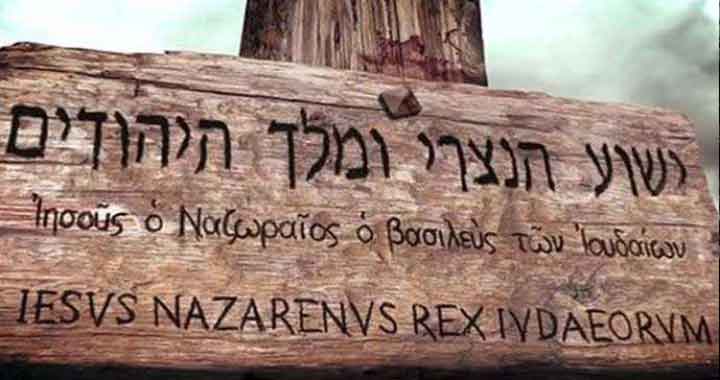
The last line above says "IESUS NAZARENUS REX IUDAEORUM", which translates as "Jesus of Nazareth, King of Judaeorum (or Judah)".
St. Joseph, the Hidden KingThe Gospels provide these genealogies to demonstrate that Jesus is the New King David. These genealogies prove that Jesus is part of the royal family and the line of kings.
If Jesus was part of the royal family, his father was royalty, too. St. Joseph was also a king. The Hidden King of Israel.
Why is St. Joseph called the "Hidden King"? This was King Herod's doing.
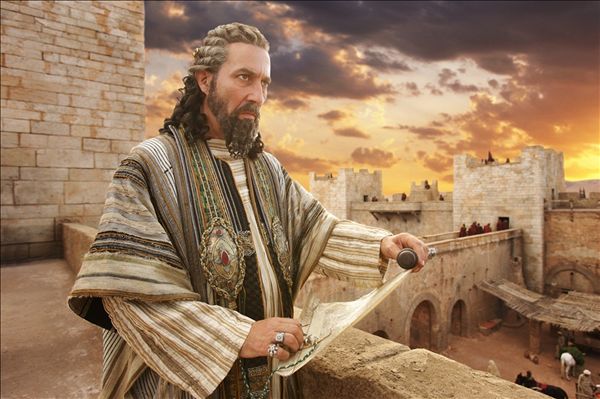
King Herod was the puppet King of Judea. The Roman Empire made him the King of the Jews, so they could control him. King Herod, however, was not part of the Jewish royal family. King Herod wasn't even a full-blooded Jew.
King Herod was an Idumaean. His family was from the Kingdom of Edom, south of Judah and Jerusalem. King Herod was basically a half-Jew. Edomites were the descendants of Esau. The Jews were all descended from Esau's brother, Jacob, who was renamed Israel. Jacob and Esau feuded, and so did their descendants.
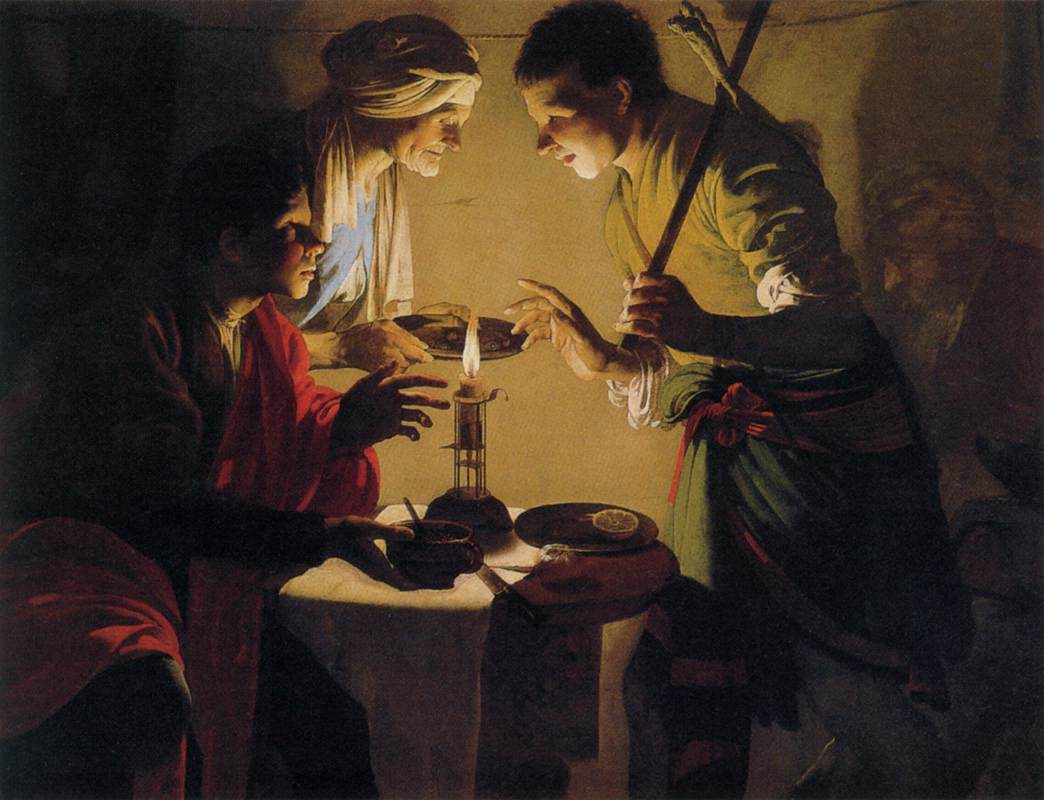 Esau Selling His Birthright by Hendrick ter Brugghen, c. 1627
Because of this, King Herod's kingship was not legitimate. King Herod was ashamed of his illegitimacy. If King Herod couldn't make a legitimate claim to the throne of the Jews, he was going to make sure that no one could.
So, what did King Herod do?
King Herod burned the library of genealogies in the Temple of Jerusalem. Herod destroyed all the official written records tracing the line of kings.
For more on all this, check out the following:
Dr. Brant Pitre recently put out a great Bible study about St. Joseph. It's called The Hidden King: The Jewish Roots of St. Joseph . You can check it out here.
The Genealogy of Jesus ExplainedWhy Would St. Joseph Have Two Fathers and Two Grandfathers? Three TheoriesLuke's genealogy (3:23-38) lists Joseph as the son of Eli (Heli), the son of Matthat. Matthew's genealogy (1:2-16) lists Joseph as the son of Jacob, the son of Matthan.
How do we reconcile this apparent contradiction? There is no definitive answer. The Catholic Church has not provided a ruling on this. Theory #1 - Luke's Genealogy is Mary's, Not Joseph's - Genealogy of Mary, Mother of JesusOne ancient theory and perhaps the most common is that Luke is providing Mary's genealogy, not Joseph's genealogy. This one is a bit of stretch, though, because Luke provides Joseph's name in the genealogy.
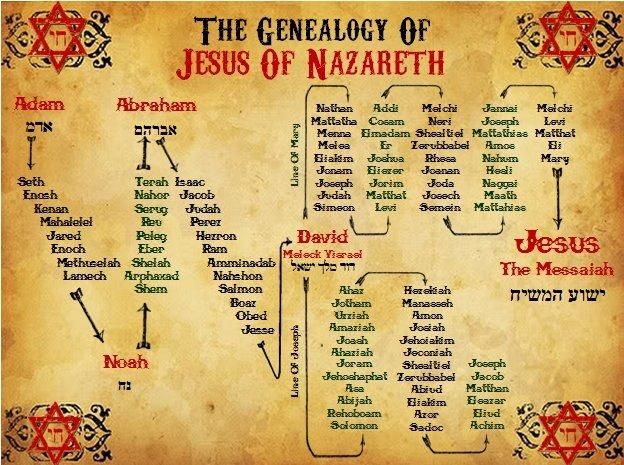 Is Luke's genealogy, a genealogy of Mary?
Nevertheless, Luke's Gospel was heavily inspired by one of its chief sources: Mary, herself. Let's examine the other theories, as well ... Theory #2 - Eusebius and Julius Africanus' Theory: Double Levirate Marriages Eusebius and Julius Africanus propose that both St. Joseph and his father were the sons of Levirate marriages. One genealogy provides the biological father and the other provides the legal father.
So, what is a "Levirate" marriage? Levirate marriage is a type of marriage in which the brother of a deceased man is obliged to marry his brother's widow. Levirate marriage is described at Deuteronomy 25:5-6. Levirate marriage was practiced by many ancient societies besides just the ancient Jews. Levirate marriage is common in societies with a strong clan structure in which exogamous marriage, i.e. marriage outside the clan, is forbidden.
The weakness of this theory is that a double Levirate marriage would be very rare, though not impossible. Two Levirate marriages in a row would be really uncommon.
Theory #3 - St. Augustine's Theory: St. Joseph was Adopted St. Augustine gave a whole sermon on "the agreement of the evangelists Matthew and Luke in the generations of the Lord." You can read the full sermon here.
St. Augustine proposes that St. Joseph was adopted. This is the simplest and most elegant theory.
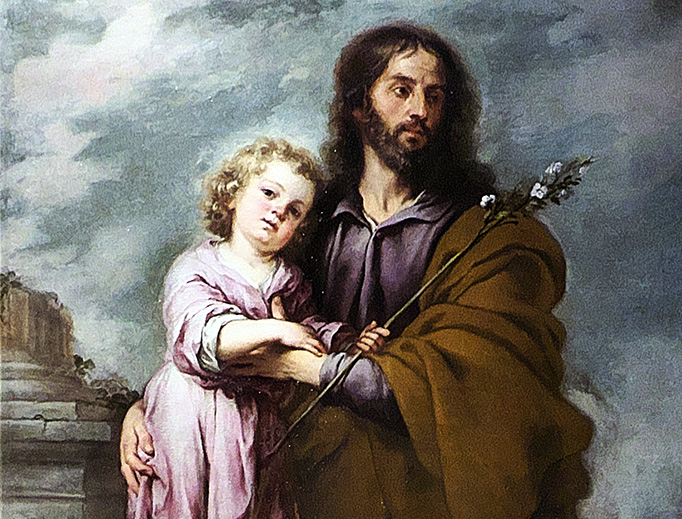
St. Augustine's adoption theory also explains the subtle change in the texts of the two Gospels regarding, not just who "begat" whom, but the absence of a "begat". St. Augustine helps us understand which father was St. Joseph's biological father and which was his adopted father:
For Matthew, who is understood to make mention of that father of whom Joseph was born, enumerates the generations thus: This one begot the other, so as to come to what he says at the end, Jacob begot Joseph. But Luke — because he cannot properly be said to be begotten who is made a child either by adoption, or who is born in the succession of the deceased, of her who was his wife — did not say, Heli begot Joseph, or Joseph whom Heli begot, but Who was the son of Heli, whether by adoption, or as being born of the next of kin in the succession of one deceased.
It appears St. Joseph's biological father, like the Patriarch Joseph, was Jacob. According to St. Augustine, St. Joseph's adopted father was Eli (or "Heli").
The Elevation of AdoptionThink about how beautiful this is! St. Augustine's theory tells us a lot about the Holy Family and adoption. Why was St. Joseph's heart so open to adopting Jesus? Because St. Joseph was an adopted son!
AND, Jesus had two fathers, an earthly and a heavenly father. Who better to be Jesus' earthly father, than a man who understood what it was like to have two fathers?
AND! This carries a spiritual message to all of us, as well. We are all the adopted children of God.
St. Augustine builds on this theme in his sermon. Augustine describes the mystery of how we become adopted into God's family through Jesus:
Yet the Apostle Paul does continually use this very word adoption, and that to express a great mystery. For though Scripture testifies that our Lord Jesus Christ is the only Son of God, it says, that the brethren and coheirs whom He has vouchsafed to have, are made so by a kind of adoption through Divine grace. When, says he, the fullness of time had come, God sent forth His Son, made of a woman, made under the law, to redeem them that were under the law, that we might receive the adoption of sons. And in another place: We groan within ourselves, waiting for the adoption, to wit, the redemption of our body. And again, when he was speaking of the Jews, I could wish that myself were accursed from Christ for my brethren, my kinsmen according to the flesh; who are Israelites, to whom pertains the adoption, and the glory, and the testaments, and the giving of the law; whose are the fathers, and of whom as concerning the flesh Christ came, Who is over all, God blessed forever. Where he shows, that the word adoption, or at least the thing which it signifies, was of ancient use among the Jews, just as was the Testament and the giving of the Law, which he mentions together with it.
AND, one last "and" ...
How blessed are they who become adoptive parents? Both Jesus and his earthly father, one of the greatest intercessors in all of Heaven, hold adoption very close to their hearts.
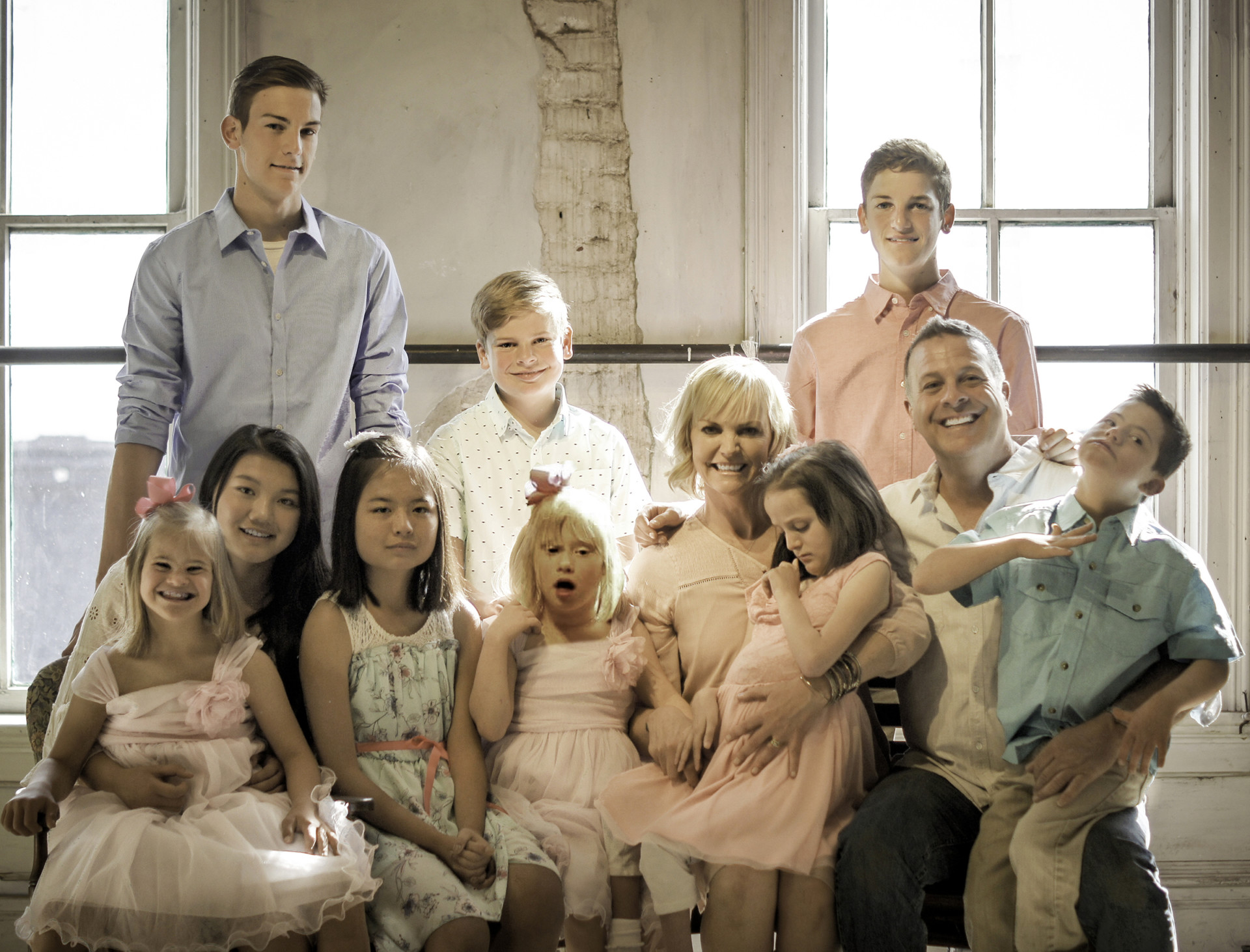
Genealogy of Jesus Luke vs. MatthewIf you're a visual person like me, charts are helpful. Here are some side-by-side charts comparing the Genealogy of Jesus found in the Gospel of Luke versus the Gospel of Matthew. That's Luke 3:23-38 versus Matthew 1:1-17. Genealogy of Jesus ChartHere is a nice, smaller chart comparing the Genealogies of Jesus found at Luke 3:23-38 versus Matthew 1:1-17. There's a bigger and longer one below, as well.
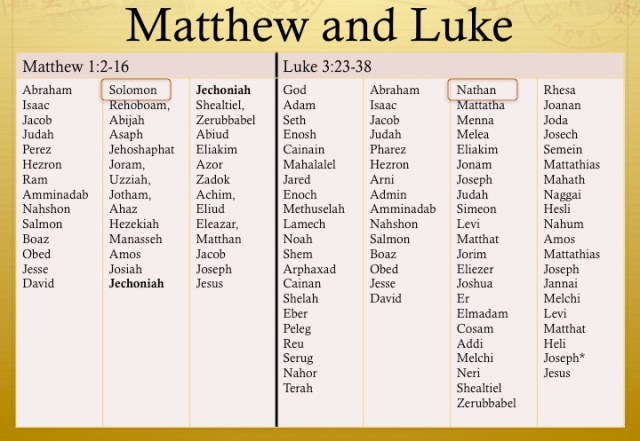
Genealogies of Jesus Side by Side: Here is a chart provided by Tim Challies:

May 18, 2021
Mary and Joseph's Wedding Ring: Santo Anello and Blessed Anne Catherine Emmerich's Visions
1. The Engagement Ring,2. The Wedding Ring,and ...3. Suffering
Mary and Joseph certainly knew suffering, as did their son, Jesus. In their poverty and persecution, they certainly knew the immense pain of suffering.
But did you know ... ?
Mary and Joseph also had a wedding ring?
And!
It still exists!
[image error]
I first learned about Mary and Joseph's wedding ring - it is called "Santo Anello" - from Father Calloway's Consecration to St. Joseph. I highly recommend the consecration, by the way!
I was so inspired by Father Calloway's Consecration to St. Joseph that I was inspired to write a Consecration to St. Joseph for Children and Families, as well!
I'm excited to announce that Father Calloway and I will be publishing together the Consecration to St. Joseph for Children and Families. It will hopefully be released sometime during this year of St. Joseph.
[image error] [image error]
The Wedding of St. Joseph and the Virgin Mary - Santo Annelo "Saint Anello? Who's that?"
Saint (or Santo) Anello is not a person. It's a thing. Santo Anello is the wedding ring St. Joseph gave to Mary on their wedding day.
Blessed Anne Catherine Emmerich saw the holy ring in her visions, but had no idea it had survived to the present day.
And neither did the rest of the world ...
 [image error]
Here's the incredible story:
Blessed Anne Catherine Emmerich's Visions of Mary and Joseph's Wedding Ring, Santo AnelloOver the course of a few days, Blessed Anne Catherine Emmerich experienced several visions of Mary and Joseph's wedding and wedding ring. She also witnessed "a double vision" - a contemporary scene overlaid on the scene of Mary and Joseph's wedding.
Here's what's amazing ...
Blessed Anne Catherine Emmerich never saw the wedding ring, Santo Anello, in person during her life. Though Emmerich saw the ring in her visions, as described below, she never knew where it was located.
The location of the ring, Santo Anello, was only revealed after Emmerich's death, when her journals were made available to the public.
This is how it happened:
Anne Catherine Emmerich's Visions of July 29th, 1821 - The Details of the RingOn July 29th, 1821, Blessed Anne Catherine Emmerich had a series of visions regarding Jesus' burial clothes and the miraculous images of Jesus imprinted on the cloths. Emmerich's visions took her to places where Jesus' relics were greatly venerated. Her visions took her also to places where the relics were all but forgotten, except by the angels.
Emmerich's visions came at the cost of great suffering:
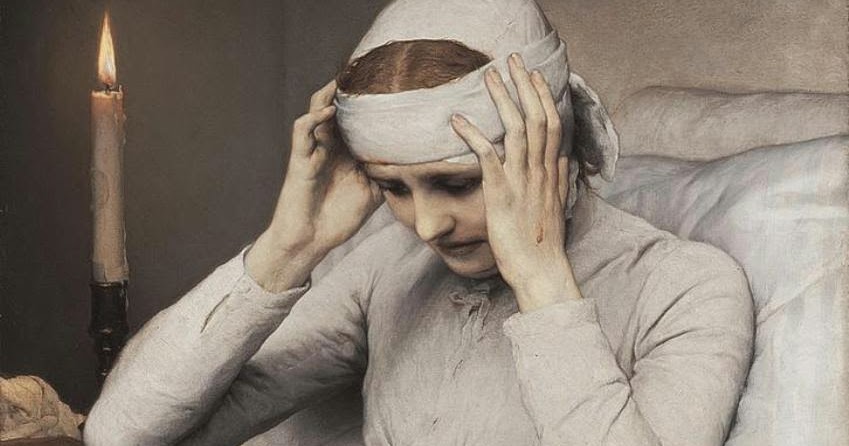
In the midst of these visions, Emmerich thought she saw the location of the Blessed Virgin Mary’s wedding ring. She wrote the following about what she saw:[1]
I saw the Blessed Virgin’s wedding ring; it is neither of silver nor of gold, nor of any other metal; it is dark in color and iridescent; it is not a thin narrow ring, but rather thick and at least a finger broad. I saw it smooth and yet as if covered with little regular triangles in which were letters. On the inside was a flat surface. The ring is engraved with something. I saw it kept behind many locks in a beautiful church. Devout people about to be married take their wedding-rings to touch it.
A few days later, Anne Catherine Emmerich saw Mary and Joseph's wedding again ...
Anne Catherine Emmerich's Visions of August 3rd, 1821 - A Double Vision On August 3rd, 1821, in the midst of her pain and suffering, Anne Catherine Emmerich received the following vision of Mary and Joseph's wedding.
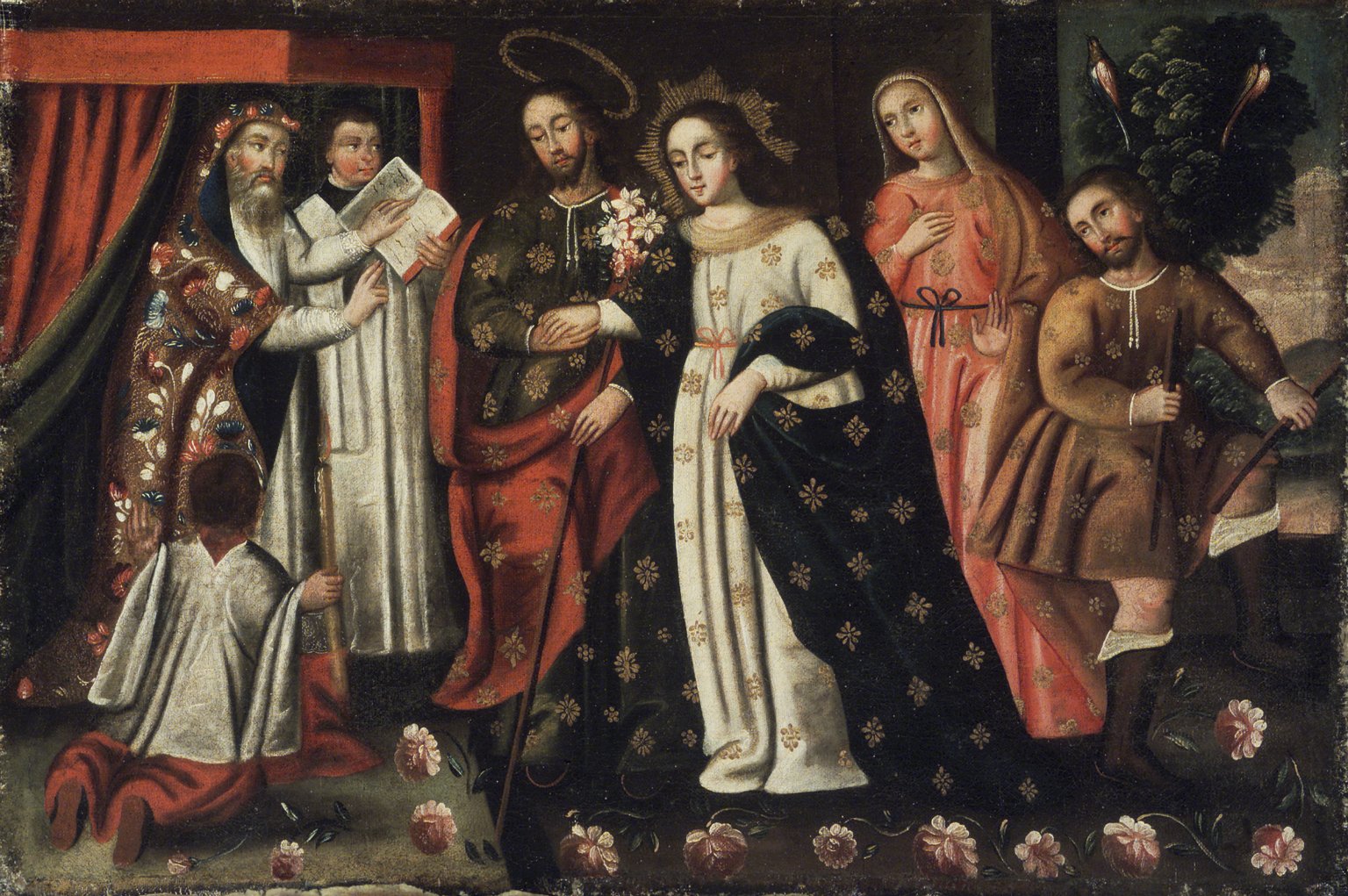
Interestingly, Emmerich doesn't completely understand her vision. She seems to be describing two events overlaid on top of each other, Mary and Joseph's wedding and a contemporaneous church celebration. It's very mysterious:
In the last few days I have seen much of the story of Mary’s wedding-ring, but as the result of disturbances and pain I can no longer give a connected account of it. Today I saw a festival in a church in Italy where the wedding-ring is to be found. It seemed to me to be hung up in a kind of monstrance which stood above the Tabernacle.
There was a large altar there, magnificently decorated, one saw deep into it through much silverwork. I saw many rings being held against the monstrance. During the festival I saw Mary and Joseph appearing in their wedding garments on each side of the ring, as if Joseph were placing the ring on the Blessed Virgin’s finger. At the same time I saw the ring shining and as if in movement.
Incredibly, Blessed Anne Catherine Emmerich goes on to describe more details of this church she has never been and knows nothing about:
To the right and left of this altar I saw two other altars, which were probably not in the same church, but were only shown to me in my vision as being together. In the altar to the right was an Ecce Homo picture of Our Lord, which a devout Roman senator, a friend of St. Peter’s, had received in a miraculous manner. In the altar to the left was one of the grave-clothes of Our Lord.
You might be asking yourself, is Blessed Anne Catherine Emmerich describing an actual place?
Remember, Emmerich had no idea that the ring of St. Joseph had given Mary was still in existence.
The Discovery of Mary and Joseph's Wedding Ring, Santo AnelloThe visions revealed to Blessed Anne Catherine Emmerich that Santo Anello was located somewhere in Italy. Emmerich died without finding out more.
Emmerich's mystical visions became popular across the world. So, a few years after Emmerich's death, the hunt was on! People began searching for the location of the church and altar described in Emmerich's visions.
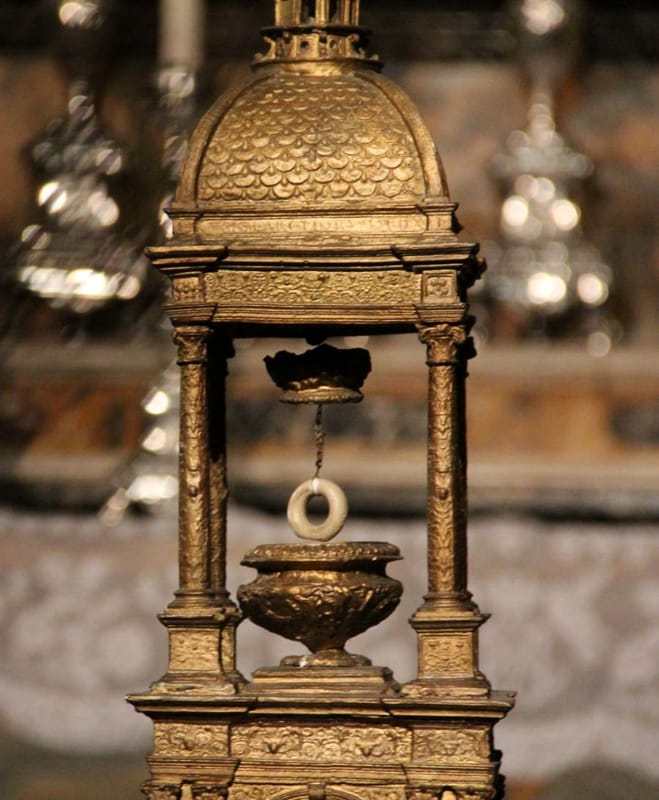
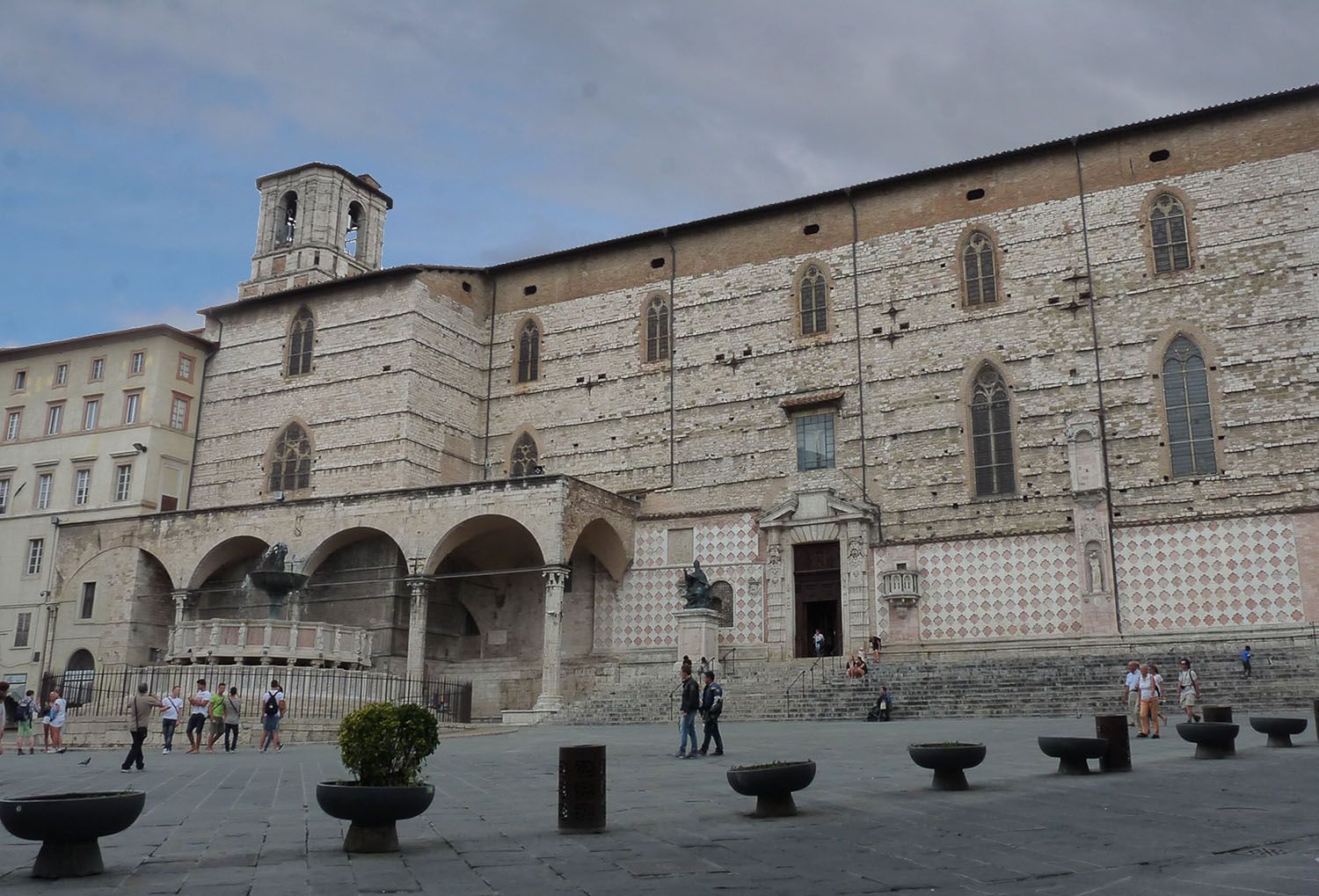
The ring and its location were soon discovered. Santo Anello was found in the Cathedral of San Lorenzo in Perugia, Italy. The ring was found in a beautiful reliquary resembling a monstrance, exactly as Emmerich had described.
Amazingly, the ring was no secret, but basically nobody beyond Perugia knew about it. It had likely been dismissed as a fake long ago.
Is it just me being the Catholic Nerd, or does this sequence of forgetting remind you of another lost ring?
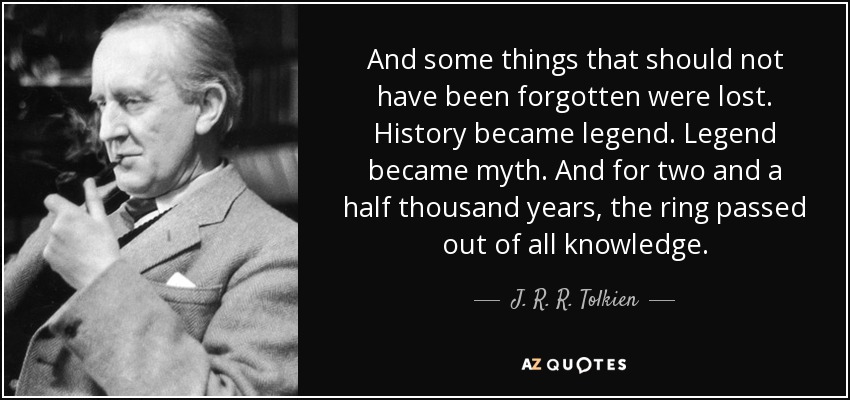 And some things that should not have been forgotten were lost. History became legend. Legend became myth. And for two and a half thousand years, the ring passed out of all knowledge.
And there's more: Emmerich's description of the ring was also spot on. The ring appears iridescent and dark in color. As you can see, it's a dark amber or yellow color:
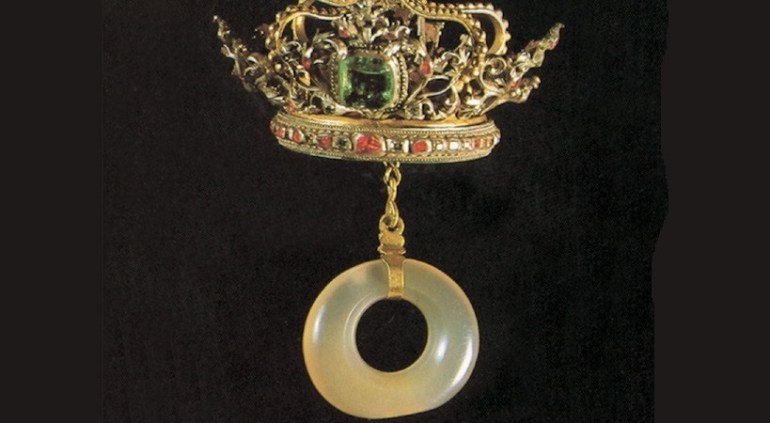
Santo Anello may even appear milky white when there is a lot of sunlight in the cathedral.
Santo Anello is also housed in a beautiful reliquary that resembles a monstrance, as you can see below. A monstrance, by the way, is the special type of reliquary used for displaying the Eucharist during Benediction or other times of Adoration.
 [image error]
This reliquary is really impressive. Look at the size of it. And the decoration on top of the massive reliquary looks exactly like a monstrance.
But there's still more ...
Why did Blessed Anne Catherine Emmerich have visions on those specific days?
Blessed Anne Catherine Emmerich's Visions of Santo Anello Occurred on Significant Days of PilgrimageBlessed Anne Catherine Emmerich's visions of Santo Anello were startlingly accurate in there descriptions of the church, the ring, and the reliquary, but there's still more.
Emmerich's visions occurred on July 29 and August 3. Emmerich had no idea, but these dates corresponded with the time of year when pilgrims visit the Cathedral of San Lorenzo in Perugia. Pilgrims stop at the Perugia Cathedral on their way to Assisi, which is just a short distance away. Pilgrims are headed to Assisi for the Feast of the Holy Angels of the Portiuncula on August 2.
There's a neat temporal coincidence, but there's more. It's what the pilgrims do as they pass through Perugia on their way to Assisi.
Married and engaged couples stop in Perugia to venerate Santo Anello and receive a special blessing on their marriage. On just this special occasion, couples are allowed to touch their wedding rings to Santo Anello!
This is what Emmerich must have seen in her visions! Remember what she said?
I saw many rings being held against the monstrance. During the festival I saw Mary and Joseph appearing in their wedding garments on each side of the ring, as if Joseph were placing the ring on the Blessed Virgin’s finger. At the same time I saw the ring shining and as if in movement.
Isn't that mind-blowing? Emmerich was seeing in her visions the pilgrims touching their rings to the ring St. Joseph gave to Mary, while St. Joseph was also placing the ring on Mary's finger.
What amazing way to connect your family to the Holy Family. I know where I want to go for my and my wife's next wedding anniversary ...
... which happens to be Thursday! Happy Anniversary, Ashton!
Footnotes for Mary and Joseph's Wedding Ring, Santo Anello:[1] All the quotations from Blessed Anne Catherine Emmerich's journals are from The Life of the Blessed Virgin Mary by Catherine Emmerich, Chapter 7. VII. MARRIAGE OF THE BLESSED VIRGIN TO JOSEPH, which is available online here: https://www.ccel.org/ccel/emmerich/li...

May 10, 2021
The First Novena: The Novena to the Holy Spirit, Act of Consecration to the Holy Spirit
Do you know where the "Novena" comes from? Novena means the recitation of prayers for nine days, but where did it come from? Where in the Bible is the first Novena?
I mention all this now because the annual celebration of the first Novena is this week!
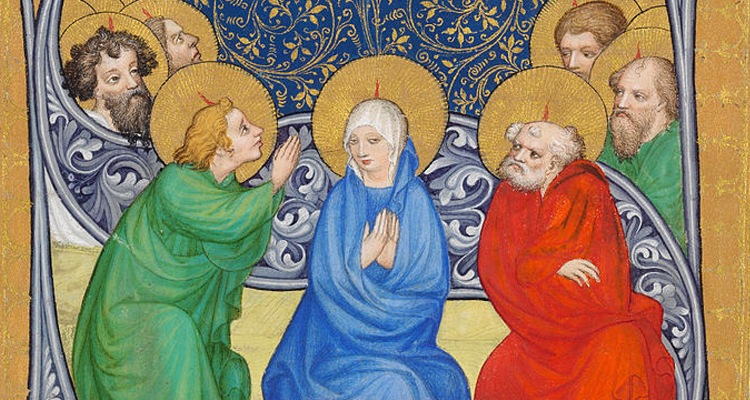
Jesus was with His Apostles and disciples for 40 days following His Resurrection on Easter, right? On the 40th day, Jesus ascended into Heaven. The Apostles were frightened and along until Pentecost, the 50th day after Easter.
So what did the Apostles do between the 40th and 50th days, between the Ascension and Pentecost? They started praying for the Holy Spirit to come, as Jesus had directed.
Let's do the math. The 41st day to the 50th day is NINE days. Those nine days, THAT was the First Novena.
This is why the Church prays the Novena to the Holy Spirit every year on the nine days between Ascension Thursday and Pentecost Sunday. It is the only novena officially prescribed by the Church.
Check out the Novena to the Holy Spirit below:
Here are some links to the most powerful Novena prayers:
Novena to St. Joseph for Jobs and Employment, to Sell Home, and Resolve Family ProblemsNovena to Our Lady, Undoer (or Untier) of KnotsNovena to St. Jude for Impossible Tasks, Desperate Situations, and Hopeless TasksSt. Roch Novena for the Covid-19 Coronavirus PandemicHere is also a book of Novenas, plus other handy prayers and guides: Guide to Confession and Confession Script, Guide to Praying the Rosary, Guide to Adoration, and more.
[image error] [image error]Novena to the Holy Spirit Table of Contents Act of Consecration to the Holy Spirit Prayer for the Seven Gifts of the Holy Spirit Novena to the Holy Spirit: Day One Novena to the Holy Spirit: Day Two Novena to the Holy Spirit: Day Three Novena to the Holy Spirit: Day Four Novena to the Holy Spirit: Day Five Novena to the Holy Spirit: Day Six Novena to the Holy Spirit: Day Seven Novena to the Holy Spirit: Day Eight Novena to the Holy Spirit: Day Nine
Novena to the Holy Spirit
When does the Novena to the Holy Spirit begin? The Novena begins on the day after the Solemnity of the Ascension, Friday of the 6th Week of Easter, even if the Solemnity of the Ascension is transferred to the 7th Sunday.

To be recited daily during the Novena:
On my knees I before the great multitude of heavenly witnesses I offer myself, soul and body to You, Eternal Spirit of God. I adore the brightness of Your purity, the unerring keenness of Your justice, and the might of Your love. You are the Strength and Light of my soul. In You I live and move and am. I desire never to grieve You by unfaithfulness to grace and I pray with all my heart to be kept from the smallest sin against You. Mercifully guard my every thought and grant that I may always watch for Your light, and listen to Your voice, and follow Your gracious inspirations. I cling to You and give myself to You and ask You, by Your compassion to watch over me in my weakness. Holding the pierced Feet of Jesus and looking at His Five Wounds, and trusting in His Precious Blood and adoring His opened Side and stricken Heart, I implore You, Adorable Spirit, Helper of my infirmity, to keep me in Your grace that I may never sin against You. Give me grace O Holy Spirit, Spirit of the Father and the Son to say to You always and everywhere, "Speak Lord for Your servant heareth." Amen.
To be recited daily during the Novena:
O Lord Jesus Christ Who, before ascending into heaven did promise to send the Holy Spirit to finish Your work in the souls of Your Apostles and Disciples, deign to grant the same Holy Spirit to me that He may perfect in my soul, the work of Your grace and Your love. Grant me the Spirit of Wisdom that I may despise the perishable things of this world and aspire only after the things that are eternal, the Spirit of Understanding to enlighten my mind with the light of Your divine truth, the Spirit on Counsel that I may ever choose the surest way of pleasing God and gaining heaven, the Spirit of Fortitude that I may bear my cross with You and that I may overcome with courage all the obstacles that oppose my salvation, the Spirit of Knowledge that I may know God and know myself and grow perfect in the science of the Saints, the Spirit of Piety that I may find the service of God sweet and amiable, and the Spirit of Fear that I may be filled with a loving reverence towards God and may dread in any way to displease Him. Mark me, dear Lord with the sign of Your true disciples, and animate me in all things with Your Spirit. Amen.
The Novena begins on the day after the Solemnity of the Ascension, Friday of the 6th Week of Easter, even if the Solemnity of the Ascension is transferred to the 7th Sunday.
Holy Spirit! Lord of Light! From Your clear celestial height, Your pure beaming radiance give!
Only one thing is important -- eternal salvation. Only one thing, therefore, is to be feared--sin? Sin is the result of ignorance, weakness, and indifference The Holy Spirit is the Spirit of Light, of Strength, and of Love. With His sevenfold gifts He enlightens the mind, strengthens the will, and inflames the heart with love of God. To ensure our salvation we ought to invoke the Divine Spirit daily, for "The Spirit helpeth our infirmity. We know not what we should pray for as we ought. But the Spirit Himself asketh for us."
PrayerAlmighty and eternal God, Who hast vouchsafed to regenerate us by water and the Holy Spirit, and hast given us forgiveness all sins, vouchsafe to send forth from heaven upon us your sevenfold Spirit, the Spirit of Wisdom and Understanding, the Spirit of Counsel and fortitude, the Spirit of Knowledge and Piety, and fill us with the Spirit of Holy Fear. Amen.
Our Father and Hail Mary ONCE. Glory be to the Father SEVEN TIMES.
Act of Consecration, Prayer for the Seven Gifts
Come. Father of the poor. Come, treasures which endure; Come, Light of all that live!
The Gift of FearThe gift of Fear fills us with a sovereign respect for God, and makes us dread nothing so much as to offend Him by sin. It is a fear that arises, not from the thought of hell, but from sentiments of reverence and filial submission to our heavenly Father. It is the fear that is the beginning of wisdom, detaching us from worldly pleasures that could in any way separate us from God. "They that fear the Lord will prepare their hearts, and in His sight will sanctify their souls."
PrayerCome, O blessed Spirit of Holy Fear, penetrate my inmost heart, that I may set you, my Lord and God, before my face forever, help me to shun all things that can offend You, and make me worthy to appear before the pure eyes of Your Divine Majesty in heaven, where You live and reign in the unity of the ever Blessed Trinity, God world without end. Amen.
Our Father and Hail Mary ONCE. Glory be to the Father SEVEN TIMES.
Act of Consecration, Prayer for the Seven Gifts
Thou, of all consolers best, Visiting the troubled breast, Dost refreshing peace bestow.
The Gift of PietyThe gift of Piety begets in our hearts a filial affection for God as our most loving Father. It inspires us to love and respect for His sake persons and things consecrated to Him, as well as those who are vested with His authority, His Blessed Mother and the Saints, the Church and its visible Head, our parents and superiors, our country and its rulers. He who is filled with the gift of Piety finds the practice of his religion, not a burdensome duty, but a delightful service. Where there is love, there is no labor.
PrayerCome, O Blessed Spirit of Piety, possess my heart. Enkindle therein such a love for God, that I may find satisfaction only in His service, and for His sake lovingly submit to all legitimate authority. Amen.
Our Father and Hail Mary ONCE. Glory be to the Father SEVEN TIMES.
Act of Consecration, Prayer for the Seven Gifts
Thou in toil art comfort sweet, Pleasant coolness in the heat, solace in the midst of woe.
The Gift of FortitudeBy the gift of Fortitude the soul is strengthened against natural fear, and supported to the end in the performance of duty. Fortitude imparts to the will an impulse and energy which move it to under take without hesitancy the most arduous tasks, to face dangers, to trample under foot human respect, and to endure without complaint the slow martyrdom of even lifelong tribulation. "He that shall persevere unto the end, he shall be saved."
PrayerCome, O Blessed Spirit of Fortitude, uphold my soul in time of trouble and adversity, sustain my efforts after holiness, strengthen my weakness, give me courage against all the assaults of my enemies, that I may never be overcome and separated from Thee, my God and greatest Good. Amen.
Our Father and Hail Mary ONCE. Glory be to the Father SEVEN TIMES.
Act of Consecration, Prayer for the Seven Gifts
Light immortal! Light Divine! Visit Thou these hearts of Thine, And our inmost being fill!
The Gift of KnowledgeThe gift of Knowledge enables the soul to evaluate created things at their true worth--in their relation to God. Knowledge unmasks the pretense of creatures, reveals their emptiness, and points out their only true purpose as instruments in the service of God. It shows us the loving care of God even in adversity, and directs us to glorify Him in every circumstance of life. Guided by its light, we put first things first, and prize the friendship of God beyond all else. "Knowledge is a fountain of life to him that possesseth it."
PrayerCome, O Blessed Spirit of Knowledge, and grant that I may perceive the will of the Father; show me the nothingness of earthly things, that I may realize their vanity and use them only for Thy glory and my own salvation, looking ever beyond them to Thee, and Thy eternal rewards. Amen.
Our Father and Hail Mary ONCE. Glory be to the Father SEVEN TIMES.
Act of Consecration, Prayer for the Seven Gifts
If Thou take Thy grace away, nothing pure in man will stay, All his good is turn'd to ill.
The Gift of UnderstandingUnderstanding, as a gift of the Holy Spirit, helps us to grasp the meaning of the truths of our holy religion BY faith we know them, but by Understanding we learn to appreciate and relish them. It enables us to penetrate the inner meaning of revealed truths and through them to be quickened to newness of life. Our faith ceases to be sterile and inactive, but inspires a mode of life that bears eloquent testimony to the faith that is in us; we begin to "walk worthy of God in all things pleasing, and increasing in the knowledge of God."
PrayerCome, O Spirit of Understanding, and enlighten our minds, that we may know and believe all the mysteries of salvation; and may merit at last to see the eternal light in Thy Light; and in the light of glory to have a clear vision of Thee and the Father and the Son. Amen.
Our Father and Hail Mary ONCE. Glory be to the Father SEVEN TIMES.
Act of Consecration, Prayer for the Seven Gifts
Heal our wounds--our strength renews; On our dryness pour Thy dew, Wash the stains of guilt away.
The Gift of CounselThe gift of Counsel endows the soul with supernatural prudence, enabling it to judge promptly and rightly what must done, especially in difficult circumstances. Counsel applies the principles furnished by Knowledge and Understanding to the innumerable concrete cases that confront us in the course of our daily duty as parents, teachers, public servants, and Christian citizens. Counsel is supernatural common sense, a priceless treasure in the quest of salvation. "Above all these things, pray to the Most High, that He may direct thy way in truth."
PrayerCome, O Spirit of Counsel, help and guide me in all my ways, that I may always do Thy holy will. Incline my heart to that which is good; turn it away from all that is evil, and direct me by the straight path of Thy commandments to that goal of eternal life for which I long.
Our Father and Hail Mary ONCE. Glory be to the Father SEVEN TIMES.
Act of Consecration, Prayer for the Seven Gifts
Bend the stubborn heart and will, melt the frozen warm the chill. Guide the steps that go astray!
The Gift of WisdomEmbodying all the other gifts, as charity embraces all the other virtues, Wisdom is the most perfect of the gifts. Of wisdom it is written "all good things came to me with her, and innumerable riches through her hands." It is the gift of Wisdom that strengthens our faith, fortifies hope, perfects charity, and promotes the practice of virtue in the highest degree. Wisdom enlightens the mind to discern and relish things divine, in the appreciation of which earthly joys lose their savor, whilst the Cross of Christ yields a divine sweetness according to the words of the Saviour: "Take up thy cross and follow me, for my yoke is sweet and my burden light.
PrayerCome, O Spirit of Wisdom, and reveal to my soul the mysteries of heavenly things, their exceeding greatness, power and beauty. Teach me to love them above and beyond all the passing joys and satisfactions of earth. Help me to attain them and possess them for ever. Amen.
Our Father and Hail Mary ONCE. Glory be to the Father SEVEN TIMES.
Act of Consecration, Prayer for the Seven Gifts
Thou, on those who evermore Thee confess and Thee Adore, in Thy sevenfold gift, Descend; Give Them Comfort when they die; Give them Life with Thee on high; Give them joys which never end. Amen.
The Fruits of the Holy SpiritThe gifts of the Holy Spirit perfect the supernatural virtues by enabling us to practice them with greater docility to divine inspiration. As we grow in the knowledge and love of God under the direction of the Holy Spirit, our service becomes more sincere and generous, the practice of virtue more perfect. Such acts of virtue leave the heart filled with joy and consolation and are known as Fruits of the Holy Spirit. These Fruits in turn render the practice of virtue more attractive and become a powerful incentive for still greater efforts in the service of God, to serve Whom is to reign.
PrayerCome, O Divine Spirit, fill my heart with Thy heavenly fruits, Thy charity, joy, peace, patience, benignity, goodness, faith, mildness, and temperance, that I may never weary in the service of God, but by continued faithful submission to Thy inspiration may merit to be united eternally with Thee in the love of the Father and the Son. Amen.
Our Father and Hail Mary ONCE. Glory be to the Father SEVEN TIMES.
Act of Consecration, Prayer for the Seven Gifts

April 27, 2021
St. Joseph, Hammer of Communists: The Anti-Communist Origins of the Feast of St. Joseph the Worker
The first of May is the Feast of St. Joseph the Worker. It's also May Day.
Did you know that these two have much more than a day in common?
One was established as a Communist holiday. The other was established to help stop the spread of Communism.
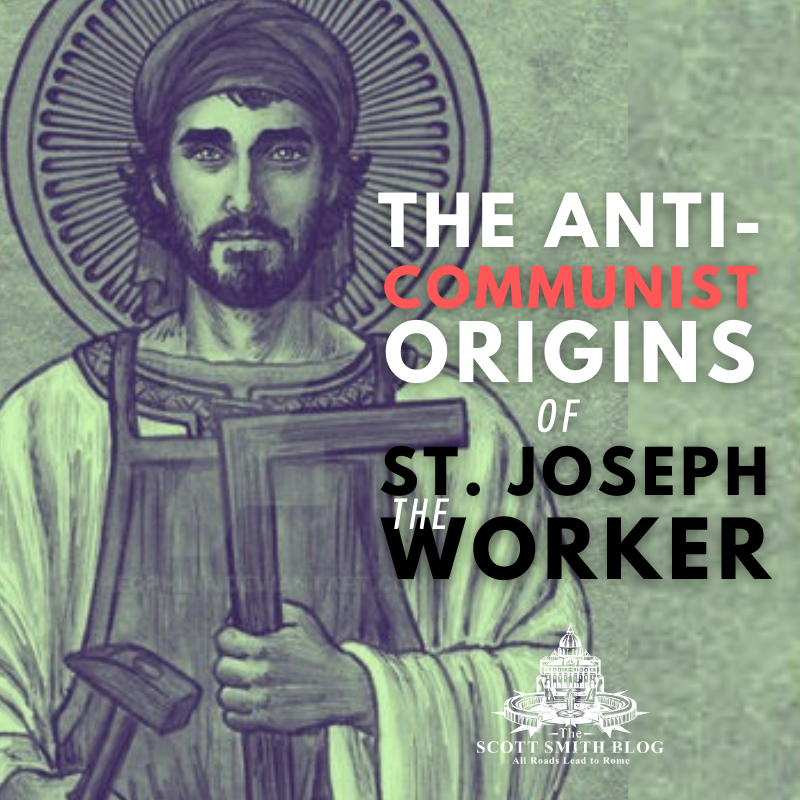
St. Joseph, Hammer of Communists
In 1937, Pope Pius XI recognized the serious threat communism posed to the common good. In response, Pope Pius called upon St. Joseph to protect the Church from the many evils and errors of communism. Pope Pius wrote the following:
We place the vast campaign of the Church against world communism under the standard of St. Joseph, her might protector.[1]
Pope Pius wrote this in an encyclical titled Divini Redemptoris. The English title for which is On Atheistic Communism.
Pope Pius explains why communism is such a problem in this one line.
Why was/is communism such a threat? Pope Pius provides the answer in the title. Communism is inherently atheistic.
Not just that, it's anti-Church. Communism requires complete or "total" control over government and society, i.e. totalitarianism. The results in a government opposed to the freedom of religion.
Why is communism inherently atheistic? I have written a whole book on this subject - now also an audiobook!


Here's the short answer:
Communism is inherently atheistic, because Marxism is inherently materialistic. Materialism tells us just the material world exists. That's it.
Marxism includes historical materialism, the reinterpretation of all history in terms of economic power. Not truth.
Nearly every pope for the last hundred years has warned us about S.C.A.M. -- Socialism, Communism, and Marxism -- and written extensively about it. Here is a selection of writings from Pope St. John Paul II on S.C.A.M.

May Day did not begin as a communist holiday. May Day was neither a religious nor a political holiday in the 1800s.
Communists decided to take over the holiday in the mid-1900s. Communists wanted to "re-christen" May Day as "Communist Worker's Day."
The Communists wanted a day to celebrate the communist idea of work. The Church decided to declare a feast celebrating the great dignity of the worker. The Church did this by celebrating the most dignified of all workers: St. Joseph.
Pope St. John Paul II knew all too well the horrors of Communism. He served in communist forced labor camps while a seminarian in Poland.

In his encyclical Laborem Exercens, John Paul II stated: “the Church considers it her task always to call attention to the dignity and rights of those who work, to condemn situations in which that dignity and those rights are violated, and to help to guide [social] changes so as to ensure authentic progress by man and society.”
So, on May 1, 1955, the next Pope Pius -- Pius XII -- dedicated May 1 to St. Joseph the Worker.
We are happy to announce to you our determination to institute -- as in fact we do institute -- the liturgical feast of St. Joseph the Worker, assigning it as the first day of May. Are you pleased with this our gift, beloved workers? We are certain that you are, because the humblest workman of Nazareth not only personifies before God and the Church the dignity of the man who works with his hands, but is always the provident guardian of you and your families.[2]
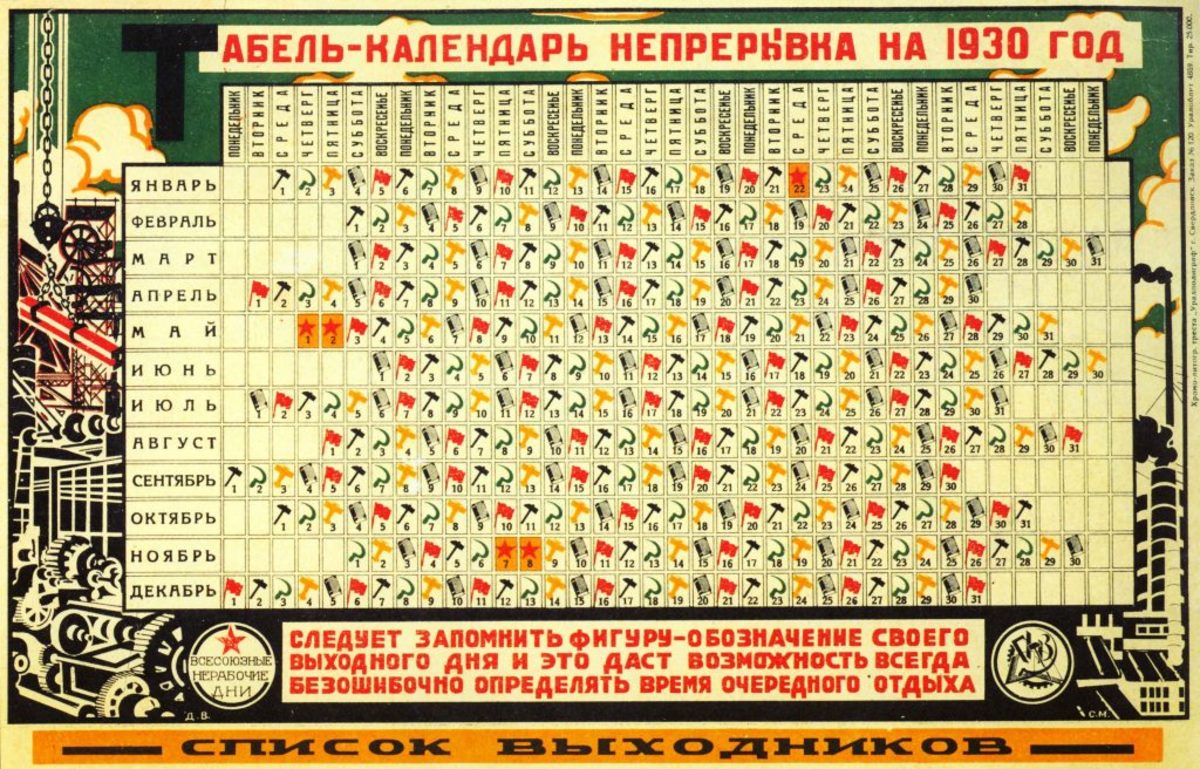
St. Joseph is rightly invoked to defend families against the evils of communism here. Soviet Communism besieged and attacked the family, not just the Church and the dignity of the worker. The Soviets even assigned each family members a different day off to both attack the Sabbath and family time.
Here is the proof of this Soviet policy. For eleven years, the Soviets had no weekends, no Sabbath:
St. Joseph, Hammer of Communism & Terror of DemonsWhether he is confronting Socialism, Communism, Marxism (S.C.A.M.), or any other kind of political or economic ideology, St. Joseph is the protector of human dignity. He is the Hammer of Communism and the Terror of Demons!
Here is the Opening Prayer for the Memorial of St. Joseph the Worker:
God our Father, creator and ruler of the universe, in every age you call man to develop and use his gifts for the good of others. With St. Joseph as our example and guide, help us to do the work you have asked and come to the rewards you have promised.
Consider Consecrating Yourself and Your Family to Jesus Through St. Joseph Want to protect yourself and your family from the evils of Socialism, Communism, and Marxism (S.C.A.M.)? Consider consecrating yourself and your family to Jesus through St. Joseph.
I was so inspired by Father Calloway's Consecration to St. Joseph that I was inspired to write a Consecration to St. Joseph for Children and Families, as well!
I'm excited to announce that Father Calloway and I will be publishing together the Consecration to St. Joseph for Children and Families. It will hopefully be released sometime during this year of St. Joseph.
[image error] St. Joseph the Worker, Hammer of Communists - Footnotes
[1] Pope Pius XI, Encyclical Letter Divini Redemptoris (On Atheistic Communism), March 19, 1937.
[2] Venerable Pope Pius XII, Allocution to the Christian Association of Italian Workers, May 1, 1955.

April 9, 2021
The Father's Impact on Their Children's Faith: Recent Study Shows Dad's Dramatic Influence
A recent Swiss study revealed the following: “It is the religious practice of the father of the family that, above all, determines the future attendance at or absence from church of the children.”
Fathers, it's time to step up!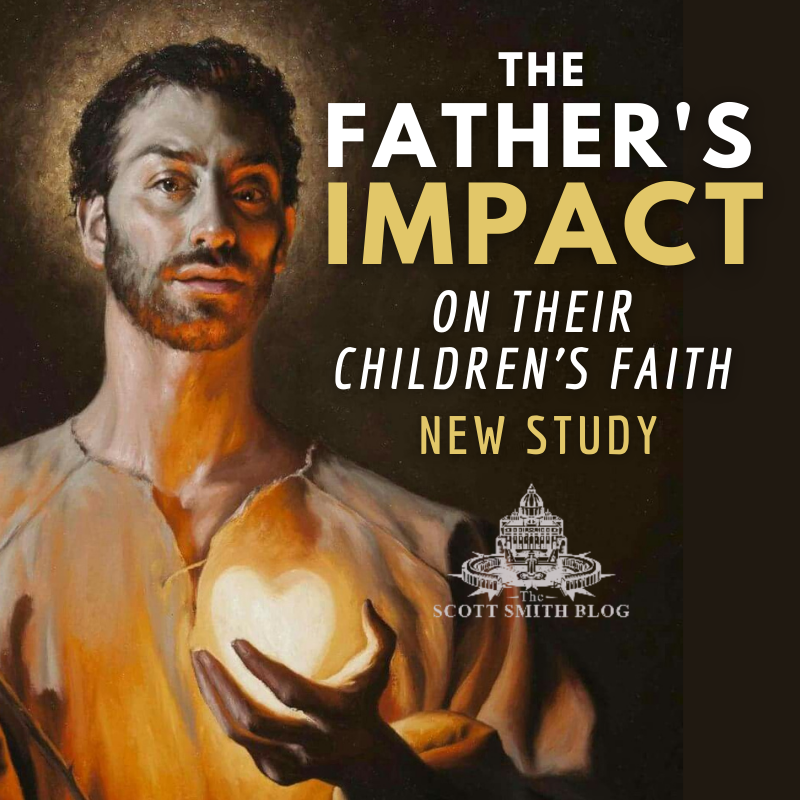
I am certainly not denying the pivotal role of the mother in the spiritual upbringing of their children.
However, it is the example of the Father, sine qua non, that determines whether the children will be members of the Body of Christ.
This is because of the natural priesthood of the father. The father is the priest of the domestic church.

A recent Swiss study confirms this ...
Swiss Study Measures the Impact of Mom and Dad's Involvement in Religion on Their Children's FaithThe study was conducted by the Swiss government in conjunction with other European nations to study demographic changes. Its discoveries involving religion were just a by-product of the research.
The study is entitled “The Demographic Characteristics of the Linguistic and Religious Groups in Switzerland” by Werner Haug and Phillipe Warner of the Federal Statistical Office, Neuchatel (1). Sounds like pretty hot stuff, right?
The study provides the following table (p. 124):
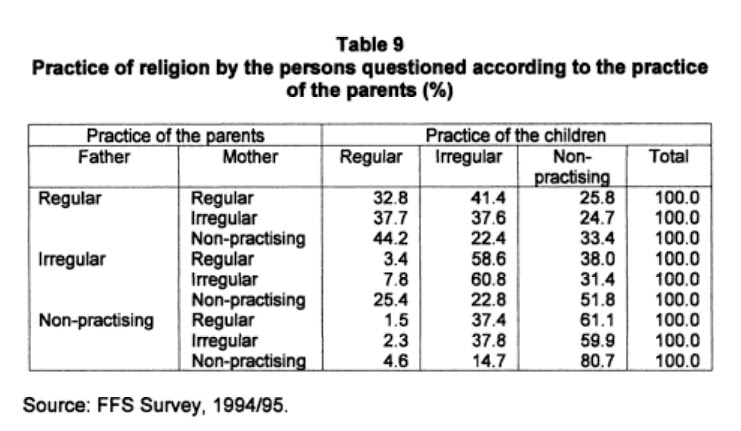
This is incredible! Here is a summary of the data presented above:
1. Dad & Mom regular churchgoers >> 32.8% of children regular churchgoers
2. Dad regular, Mom irregular >> 37.7%3. Mom regular, Father irregular >> 3.4%4. Dad regular, Mother non-practicing >> 44.2%5. Mom regular, Dad non-practicing >> 1.5%
Those numbers are staggering. Children are TEN TIMES More Likely to be Regular Churchgoers When Dad Takes an Active Part in His FaithYou heard that right! Ten times more likely.
Otherwise-stated, if Dad is a regular churchgoer, the child is 10 times more likely to become a regular churchgoer compared to Mom's influence.
Clearly, the weight falls on the father's shoulders.
Men, take up your Cross! Be a Man. Your child's faith life depends on it.

The Natural Priesthood of the Father Why is this?
The Natural Priesthood of the Father.
The priesthood was limited to just the Levites because of the sins and apostasy of the other tribes of Israel. But in the beginning, it was not so!
The priesthood of the father goes all the way back in Scripture past Melchizedek and to Adam, himself.
Do you remember that line from Scripture? "You are a priest forever in the line of Melchizedek" (Hebrews 7:17)
We are all baptized as "priest, prophet, king".
The membership of the priesthood was restricted to the tribe of Levi at Mount Sinai due to the transgressions of the Wilderness Generation. God did not intend it to be this way.
The complete imbalance of religious influence revealed in this study is merely statistical proof of the great responsibility borne by the Father. Our humanity bears the imprint of God the Father.

(1) Population Studies No. 31, Volume 2; The Demographic Characteristics of National Minorities in Certain European States, ed. Werner Haug, Paul Compton, and Youssef Courbage, published by the Council of Europe Directorate General III, Social Cohesion, Strasbourg, January 2000.

March 26, 2021
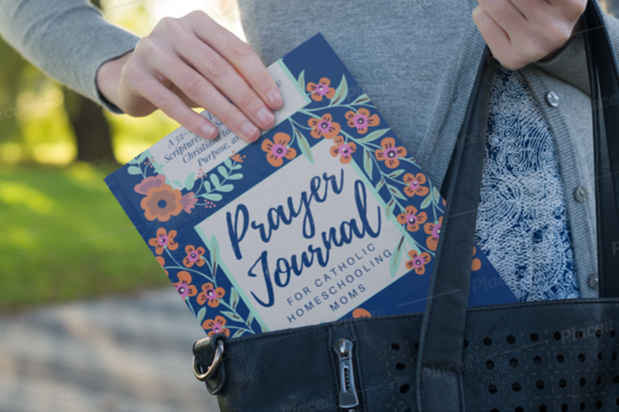
Catholic Prayer Journal for Homeschooling Moms: A 52-week Guided Devotional with Scripture, the Saints, and fellow Christians towards Peace, Purpose, and Clarity
Veteran homeschooling mom and theologian, Mary Nadeau Reed, has compiled this prayer journal to help other moms achieve peace, purpose, and clarity.

It's available right now. Get your copy below:
[image error]

Mary guides you through the book below ...
Here's some bonus content about Catholic Prayer Journals and prayer journaling in general: 7 Reasons to Keep a Prayer Journal Infographic: How to Keep a Catholic Prayer JournalPrayer Journal for Catholic Women to Overcome Anxiety, Stress, and Fear
Dear friends,
We hope that this journal will provide a space for you to be nurtured and filled, so that you can better bring life and joy to your family! We pray you encounter the Lord in these pages, and draw closer to His heart.
Though this journal is designed for 52 weeks of guided prayer, it could be used in numerous other ways. You could use it for a continuous 52 day retreat, or work your way through it at any other pace. You can go through all the components for the week in one day, or divide them for prayer throughout your week.
You can also utilize this text as a more traditional prayer book, looking up prayers specific to your present circumstances in the table of contents. All that matters is that you are using it in the way that enriches your prayer life, so that you may feel refreshed and commissioned as you educate and inspire your children.
Each of the 52 weeks (or days, if you prefer) includes a seven-step prayer sequence modeled after the Examen prayer of St. Ignatius:
1. The first step, Breathe, guides us through a breathing exercise. Such exercises are commonly used to work through occasions of anxiety or stress, and can be a great resource at other times during your day.
Note: If the number of seconds of breathing in and out don’t work well for you, feel free to alter the protocol, e.g. breathing in for 5 seconds instead of 7.
2. We take time to become aware of God’s presence. We remember that He is closer to us than we are to ourselves. With us right now, in the now. As St. Augustine says, “Our hearts were made for You, O Lord, and they are restless until they rest in You.”
3. Thanksgiving is key to finding peace and purpose, and overcoming daily stressors. We reorient ourselves to gratitude, focusing less on our fears and more on God’s gifts.

4. We Reflect on a Scripture verse and a quote of a saint, fellow christian, or other insightful individual. We chose these quotes and verses specifically to help gain perspective and peace as we educate our children. When reading the scripture verse, we consider what words stand out to us. Ask yourself what comes into your mind or how do you feel as you reflect on the words, and speak to the Lord about those feelings and thoughts.
This is the meditative practice of lectio divina. We sit with these passages for five minutes or more, rereading slower each time, observing which words stand out to us. We plant these words in our minds, water them daily with reflection, and let them take root.
5. We ask the Lord to guide our reflection upon your day and week. Jesus takes us by the hand to Examine the moments and experiences of your life. Wait and see what bubbles up in your memories. What is Jesus trying to reveal to you? He may show us the way He was present in our moments, even if we did not see Him there.
Over time, this exercise helps us have confidence that Jesus never leaves our sides; to sense His constant presence.

6. We embrace Contrition. We consider the ways that sin creeped into our day, the ways we did not love as we should have. Recognizing our own triggers, temptations, and patterns can be a wonderful opportunity for us to refashion our habits into virtues. We express our trust and gratitude for God’s mercy, and ask for grace to transform our habits.
7. We learn to prayerfully anticipate the future in Hope, expressing our firm trust that God is working all things out for our ultimate good.

Catholic Prayer Journal for Homeschooling Moms: Weekly Prayers

Prayer Intentions: This is an opportunity to give everything to the Lord. Journaling the things that occupy our heart helps us to leave them in Jesus’ outstretched hands. We can pray for loved ones, and for those people who have cause us or a loved one sorrow. This is an amazing way to find healing and freedom.
Goals Checklist: Modify this list as needed. It helps us to track our progress in entering more deeply into the sacramental life of the church.
Small Things with Great Love: We take note of times that we recently engaged in an act of charity or courage. When we went above and beyond, or simply did what we had to, but with joy. By journaling these acts of love and sacrifice, we make these acts a more overt gift to the Lord, and we can be better aware of opportunities to do so in the future.
We hope you allow this journal to serve you. That you utilize the aspects that expand your heart and give you peace. Disregard anything that does not. Be assured of our prayers for you, as you endeavor to bring truth, goodness, and beauty into the lives of your children. Ad majórem Dei glóriam! (For the greater glory of God!)
In Christ through Mary and Joseph,Mary Nadeau Reed
P.S. This Catholic Prayer Journal is best served with coffee :)


March 14, 2021
Laetare Sunday: What is that Pink (or Rose) Sunday in Lent Called Again?
But why is it called Laetare Sunday?
And ...
Why do the priests wear pink? Or coral? Or rose? Or whatever?
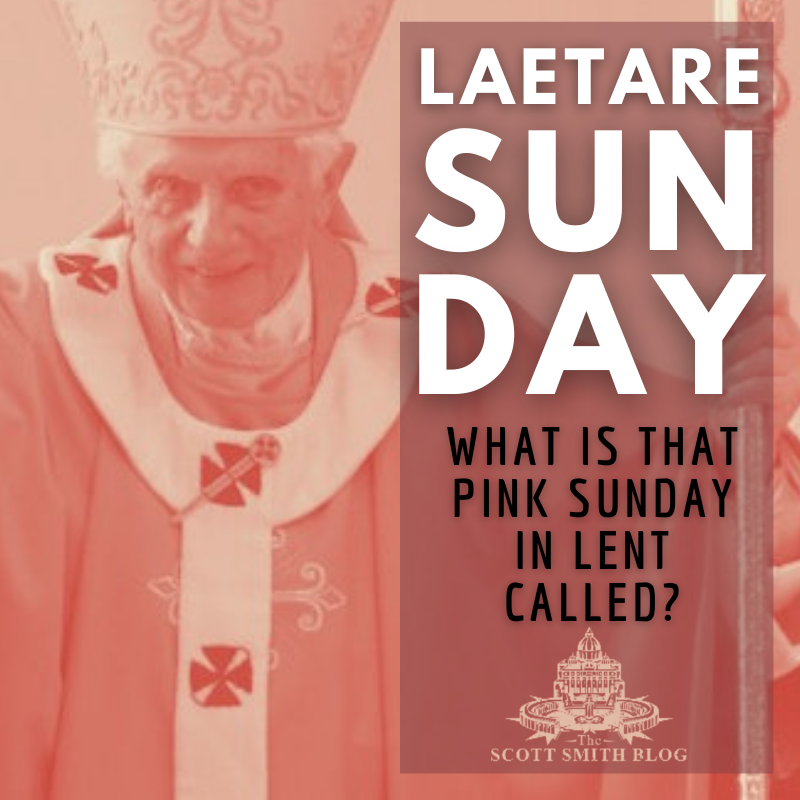
The fourth Sunday of Lent is known as "Laetare Sunday". It's the Sunday when priests wear "pink" or, as many a fine masculine priest has corrected me, "coral".
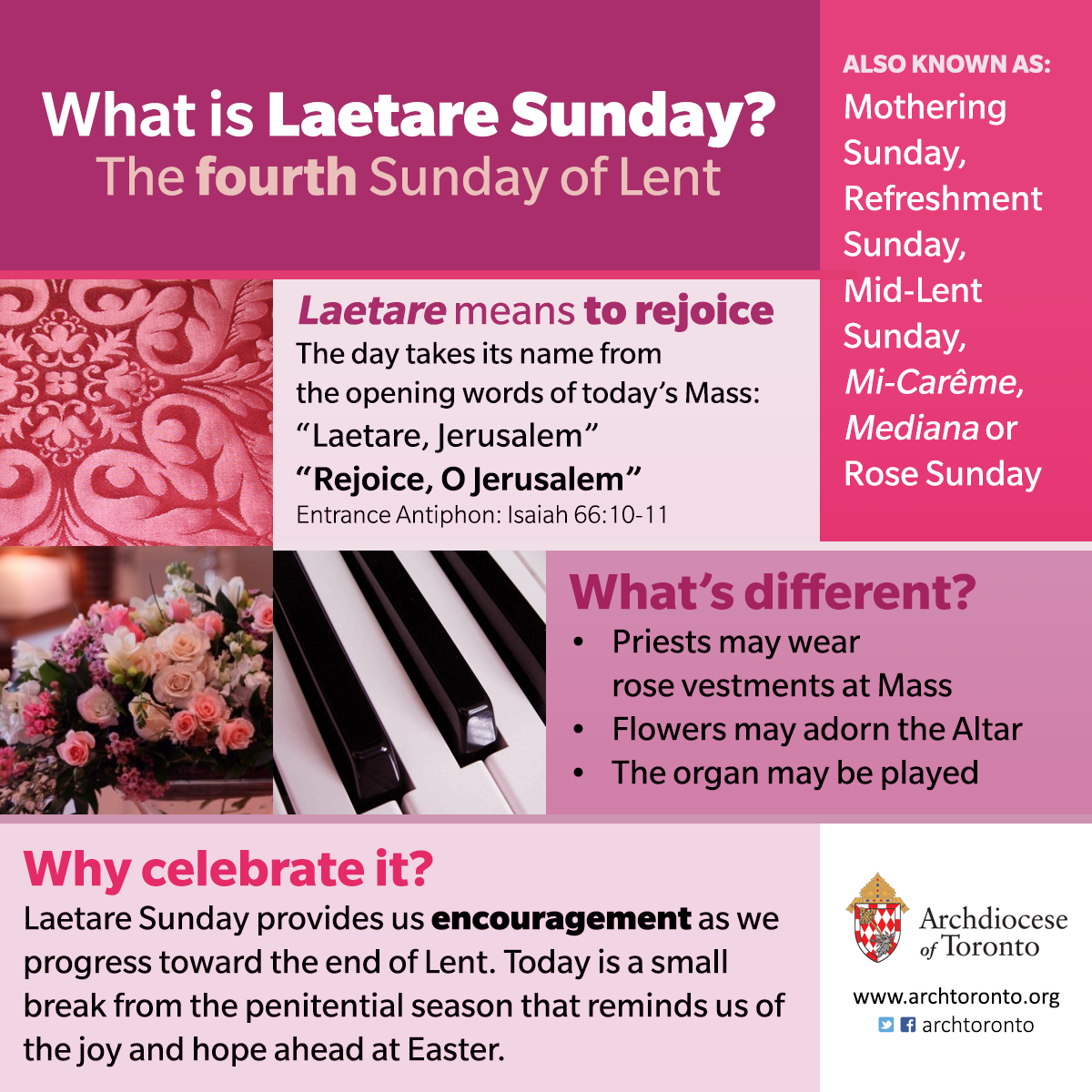
What is that Pink Sunday in Lent called Laetare Sunday?The name "Laetare Sunday" is taken from the Introit at Mass, Laetare Jerusalem which means "Rejoice, O Jerusalem." This Scripture comes from the Prophet Isaiah, specifically Isaiah 66:10-11.
Laetare Sunday marks the halfway point of Lent. All that beautiful prayer, fasting, and almsgiving - you are halfway through keeping your commitments! Or, you need to redouble your efforts.
"Rejoice, O Jerusalem!" because this is a day of joy! We are so close to Easter and Jesus' Resurrection. The day of our resurrection, too!
If you're still asking yourself why "prayer, fasting, and almsgiving", here is a great article to read over about our threefold sacrifice correlating with Jesus' three temptations:
But Why Pink? Why does the priest wear rose colored vestments on the fourth Sunday of Lent?The priests only wear rose vestments twice during the liturgical year. Priests wear pink for the third Sunday of Advent and the fourth Sunday of Lent.
Pink or Rose is worn on these days to show joy and love as we anticipate Christ's coming, both His birth and His Resurrection. This bright pink color reminds Catholics of joy in the midst of penance and anticipation.
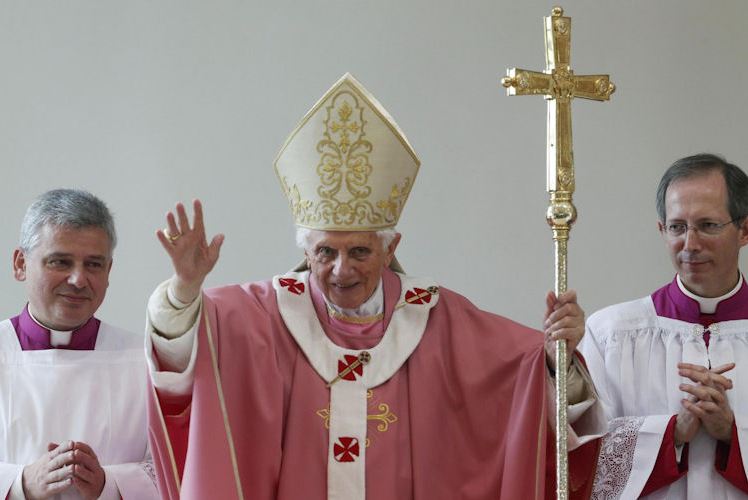
Laetare Sunday or Gaudete Sunday?Laetare Sunday also corresponds with Gaudete Sunday. Gaudete Sunday is the halfway mark of the Advent season. The priests wear rose-colored liturgical vestments on Gaudete Sunday, as well. The altar, too, is often decorated with roses.
Laetare Sunday InfographicWant more information about Laetare Sunday? Here is a nice infographic about Laetare Sunday:
Did you know Laetare Sunday is also called "Mothering Sunday"? Pretty awesome!

February 16, 2021
What are You Giving up for Lent? What is the Significance of Prayer, Fasting, and Almsgiving?
Thinking about what to give up for Lent? Wondering why we fast during the season of Lent? Why do Catholics (1) pray, (2) fast, and (3) give alms during Lent? What is traditional Catholic fasting and where does this tradition come from?
Also, did you know prayer, fasting, and almsgiving directly correlates to Jesus' three temptations in the Desert?
The basis for all this will amaze you!
"Give alms...Pray to your Father...Fast without a gloomy face..." (Matthew 6:1-18)So why do Catholics (1) pray, (2) fast, and (3) give alms during Lent?
I think, if asked, most savvy Catholics would be able say something along the lines of "well, it comes right out of the Bible." Maybe not chapter and verse - specifically, Matthew 6:1-18 as provided above. I think most Catholics realize the tradition is rooted in Scripture.
But there's SO MUCH MORE to it!
These three practices - prayer, fasting, and almsgiving - are hidden throughout Scripture.
They correspond to the three temptations Christ experienced in his 40 days in the desert, and ...
They correspond to the three temptations Eve experienced in the Garden of Eden, and ...
They correspond to Jesus' second round of temptations, which occur in the Garden of Gethesemane ...
They are everywhere! But why?
Introduction: Dr. Brant Pitre and the Biblical Roots of Ash Wednesday and LentDr. Brant Pitre provides a great overview of the connections embedded throughout Scripture to prayer, fasting, and almsgiving:
The Three Kinds of Sin & The Three Remedies to SinHere's the bottom line: The three temptations experienced by both Christ and Eve are called the "Threefold Lusts" and the three Lenten practices are the REMEDY to these lusts or temptations. The "Threefold Lusts" are described in the First Letter of St. John:
"For all that is in the world, the lust of the flesh and the lust of the eyes and the pride of life, is not of the Father but is of the world." (1 John 2:16 RSV-CE)
So, here are the Three Lusts (or Three Concupiscences):Lust of the Flesh -- the desire which comes from our bodies, such as for food, sexual gratification, sleep, etc.Lust of the Eyes -- the desire to possess what we see, such as money, objects, the flesh of another, etc.Pride of Life -- the desire for power, esteem, false glory, etc.
But why do these three affect us so deeply? Why are we so vulnerable to these three specific attacks from the Devil? Why this pattern?
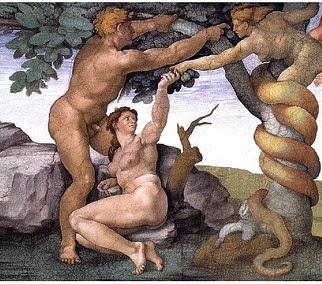
Original Sin & The Connection to Prayer, Fasting, and AlmsgivingBecause it's the same pattern of attack the Devil took against our first parents to bring about the first sin: Original Sin.
Compare the Three Lusts above with the following verse from Genesis:
"So when the woman saw that the tree was (1) good for food, and that it was a (2) delight to the eyes, and that the tree was to be (3) desired to make one wise, she took of its fruit and ate; and she also gave some to her husband, and he ate." (Genesis 3:6)
Isn't that amazing? They are right there in text.
Before we start blaming Eve ...
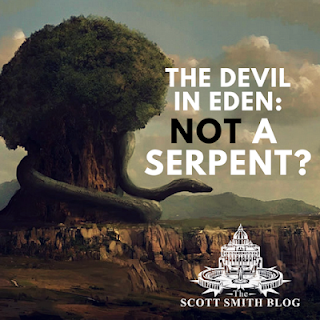
Adam was at her side the entire time. The devil was bearing down on Eve in the form of a serpent, but not just any serpent. The Hebrew word is nahash, which translates to Greek as leviathan. This a huge, monstrous dragon, not some benign garter snake, and Eve was a damsel in distress.
>> You can read more about the dragon of Genesis here in this article.
And where was Adam when all this was taking place? Adam's position is provided by the Hebrew word imo in the account, which translates as "at her elbow."
This should be a lesson to all men...
Not only did Adam also succumb to the Three Lusts in eating the fruit, but he also succumbed to another sin: cowardice in not defending Woman.
The Fourth Sacrifice of Lent for MenTherefore, we see with men, even today, a fourth component to Satan's attack. I would recommend for men, therefore, a fourth component to their Lenten observance: abstaining from pornography or other forms of degrading and objectifying women.
Bringing it full circle: How does Jesus respond to the Threefold Lusts in his 40 Days in the Desert?
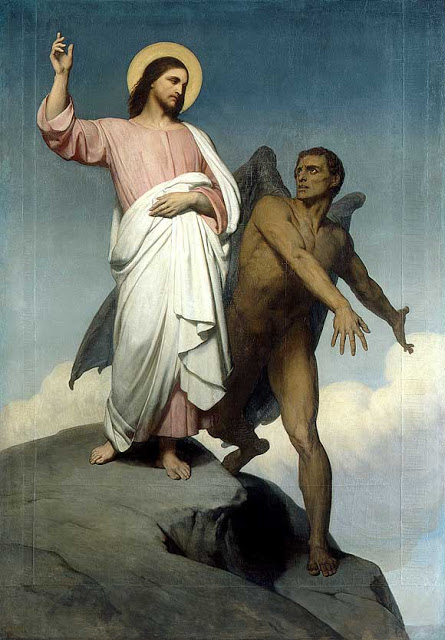
How does Jesus Conquer the Threefold Lusts in his 40 Days in the Desert?This is also why Lent is 40 days, right?
We are following Christ into the desert for a period of purification: purification from sin. Of course, Jesus went into the desert, not to purify himself of sin, for he was sinless, but to throw down the Devil.
Let's go through the Gospel account verse-by-verse:
(1) Lust of the FleshFASTING: "Then Jesus was led up by the Spirit into the wilderness to be tempted by the devil. And he fasted forty days and forty nights, and afterward he was hungry." (Matthew 4:1-2)
TEMPTATION: "The tempter came and said to him, 'If you are the Son of God, command these stones to become loaves of bread.'" (Matthew 4:3)
RESPONSE: "But [Jesus] answered, 'It is written, 'Man shall not live by bread alone, but by every word that proceeds from the mouth of God.'" (Matthew 4:4)
(2) Lust of the EyesThe Devil takes Christ to the most visible place on the planet to the Jewish people: the "pinnacle of the Temple." Here, the Devil tells Jesus to perform a miracle, so that all may see it. If Jesus did this, he would be acclaimed as Messiah and what? Jesus wouldn't have to die on the cross. The cross is the most awful sight to the Devil.
TEMPTATION: "Then the devil took him to the holy city, and set him on the pinnacle of the temple, and said to him, 'If you are the Son of God, throw yourself down; for it is written, 'He will give his angels charge of you,' and 'On their hands they will bear you up, lest you strike your foot against a stone.'" (Matthew 4:5-6)
RESPONSE: "Jesus said to him, 'Again it is written, 'You shall not tempt the Lord your God.'" (Matthew 4:7)
What is the Devil quoting above? It's Psalm 91, which just happens to be an ancient exorcism Psalm! I wonder where Satan has heard this verse before?
Also, the Devil skips the next verse: "You will tread on the lion and the adder, the young lion and the serpent you will trample under foot." Jesus is about to trample the serpent under his foot, as was prophesied in Genesis 3:15, the Messiah will crush the serpent's head. Satan doesn't like this too much.
>> To read more about Genesis 3:15, the Proto-Evangelium or "First Gospel", and the prophesy of Christ killing the serpent and the Passion and Death of Christ, check out this article:

(3) Pride of LifeTEMPTATION: "Again, the devil took him to a very high mountain, and showed him all the kingdoms of the world and the glory of them; and he said to him, 'All these I will give you, if you will fall down and worship me.'" (Matthew 4:8-9)
What is Christ's mission? To restore all the nations and kingdoms of the world to His Father. BUT, if Jesus just bows down to the Devil, Satan will just give him the world, and there will be no need to die on the Cross.
RESPONSE: "Then Jesus said to him, 'Begone, Satan! for it is written, 'You shall worship the Lord your God and him only shall you serve.'" (Matthew 4:10)
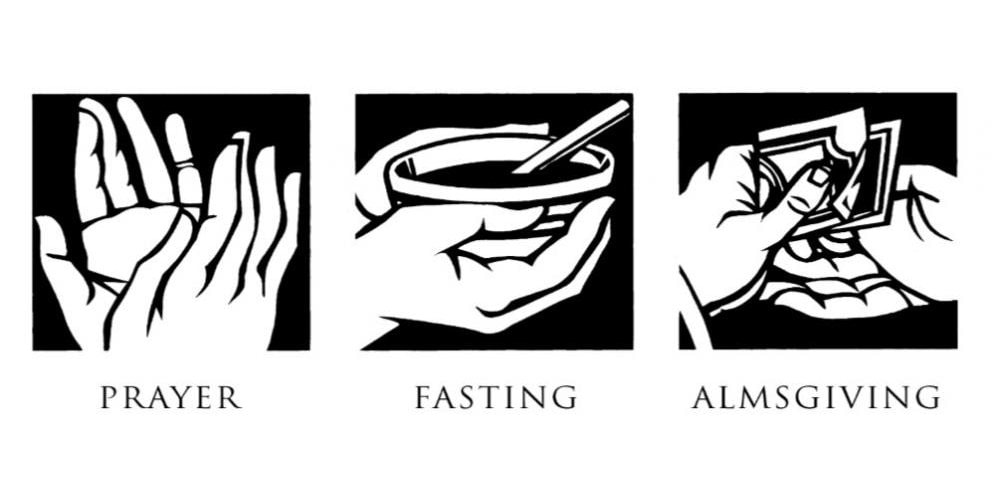
RECAP: Why Do We (1) Pray, (2) Fast, and (3) Give Alms?Here is a breakdown of how prayer, fasting, and almsgiving defeats the Threefold Lusts:
(1) Pray: We pray to defeat the Pride of Life: "Fall Down and Worship" Pride of Life was the "desire to make one wise". This is the desire to be wise like God. In short, to be gods ourselves, instead of bowing to God. That's why we pray. We pray to humble ourselves before God and hear God's wisdom, not to desire our own.
(2) Fast: We fast to defeat the Lust of the Flesh: "Man does not Live by Bread Alone"If you fall prey to the deadly sin of gluttony, fast from food. If you fall prey to the deadly sin of sloth, fast from sleep or idleness or entertainment. Break the chains of all that binds you, so that you're entirely dependent on Christ, alone.
(3) Give Alms: We give alms to defeat the Lust of the Eyes: "The Pinnacle of the Temple"We experience the Lust of the Eyes any time we are dazzled by sights - like money/gold/treasure, pornography, our image in a mirror - that provoke Greed, Lust, Vanity, etc.
"Turn your eyes upon Jesus." When tempted by "pleasing" sights, turn your eyes to the Cross.
We give away money to the poor, because (a) giving away money teaches us not to worship it, and (b) to help those in need. Whatever it is that you worship, practice giving it away during Lent. If it's money, give it away. If it's nice clothes, give them to a charity, like St. Vincent de Paul, and clothe a poor person. If it's electronics or social media, turn them off. Turn off your iPhone for family time.
I hope this helps you dig deeper into your Lent! I hope we can all learn the joy of giving away our pleasures.
God bless!

February 15, 2021
El mal oculto tras el logo de Starbucks - The Hidden Evil of Starbucks [Spanish Translation]
Me gusta el café. Muchísimo. Aun así, intento evitar el del Starbucks como la peste. Aunque hay que reconocer que su café está delicioso —casi rozando el pecado—,la relación de esta marca con clínicas abortistas es repugnante.

Here's the English version of the article, too.
¿Prefieres ver el video? Perdón! Esta en ingles: [Rather watch the video? Sorry, it's still in English:]
Pero esto no acaba aquí. De hecho, de acuerdo con 2nd Vote, es solo el principio de la lista de crímenes que se le atribuyen a Starbucks.
Movido por mi interés en llegar hasta el fondo de las cuestiones de la vida, el matrimonio, la familia y la religión, empecé a preguntarme por el logotipo de Starbucks...
(Si buscas alternativas al café de Starbucks, cuando termines de leer puedes echarle un vistazo a este artículo que he escrito sobre empresas de café cristianas y provida).
A continuación, un vídeo que he preparado para investigar todas las cuestiones que rodean al logotipo de Starbucks: ¿cómo fue evolucionando hasta su forma actual? ¿De dónde procede? ¿Es una sirena? ¿Dagón? ¿Lilith?
El significado del logo de Starbucks: ¿Qué criatura es esta?
La mayoría de la gente sabe que el nombre "Starbucks" proviene de la obra Moby Dick de Herman Melville. Starbuck se llamaba el primer oficial del barco del capitán Ahab, el Pequod. Por cierto, Pequod fue el primer nombre elegido por los fundadores de Starbucks —Jerry Baldwin, Zev Siegl y Gordon Bowker—, pero finalmente lo descartaron por ser demasiado extraño.
El personaje Starbuck era cuáquero y especialmente conocido por su bondad, lo que resulta irónico teniendo en cuenta el significado oculto del logotipo de Starbucks.
Pero, entonces, ¿qué es este logo? ¿Cuál es el significado simbólico de la imagen que aparece? ¿Está relacionado con Isis? ¿La criatura que aparece es Dagón, un maligno y lovecraftiano dios pez filisteo? ¿Es todo una teoría conspirativa?
Descubrámoslo a continuación.
¿De dónde procede el logotipo original de Starbucks? ¿Cómo ha ido evolucionando hasta su versión actual?
Esta es la historia oficial del logo de Starbucks que encontramos en la sección de preguntas frecuentes de su página web:
Cuando en 1971 buscábamos un logotipo para Starbucks, teníamos claro que queríamos plasmar la tradición marinera de los primeros comerciantes de café. [...] Estuvimos revisando libros náuticos antiguos hasta que se nos ocurrió un diseño basado en un grabado sobre madera nórdico del siglo XVI: una sirena de dos colas rodeada por el nombre original de la tienda, “Starbucks Coffee, Tea, and Spice”.
El cofundador Howard Schultz explica un poco más la historia en el siguiente pasaje de su libro sobre la creación de Starbuck publicado en 1997 bajo el título Pon tu corazón en ello:
Terry [Heckler, otro cofundador de Starbucks] estuvo también revisando libros náuticos antiguos hasta que se le ocurrió un diseño basado en un grabado sobre madera nórdico del siglo XVI: una sirena de dos colas rodeada por el nombre original de la tienda, “Starbucks Coffee, Tea, and Spice”. Esta primera sirena, con los pechos al descubierto y de estilo Rubens, debía ser tan seductora como el propio café.
Pero hay un problema: no existe ningún grabado sobre madera nórdico del siglo XVI.
Los nórdicos dejaron de existir como tal en torno al año 1300 y la xilografía no llegó a Europa hasta el 1400 aproximadamente.
Por lo tanto, encontrar un grabado en madera nórdico del siglo XVI sería como encontrar una fotografía de Leonardo da Vinci. O un selfie de Abraham Lincoln. Simplemente, no pudo ocurrir.

Entonces, ¿cuál es la verdadera historia? ¿De dónde viene esta imagen? ¿Y qué es esa extraña sirena?
Supongamos que los fundadores de Starbucks no pretendían nada raro con este anacronismo. Lo más probable es que simplemente hayan olvidado dónde encontraron la imagen, algo que resulta un poco extraño teniendo en cuenta su firme protección de la propiedad intelectual, pero bueno.
Así que, ¿de dónde viene realmente el logotipo de Starbucks? ¿Cuál ha sido su evolución?
Parece que Michael Krakovskiy, de Dead Programmers Cafe, fue uno de los primeros en descifrar el misterio...
En "How the Starbucks Siren Became Less Naughty", Krakovskiy revela que el logotipo original de Starbucks (en la foto de abajo, a la derecha) tiene un extraño parecido con una entrada (abajo, a la izquierda) del Diccionario de símbolos de J.E. Cirlot, que se publicó por primera vez en inglés en 1962.

Pero hay algo que no cuadra en la forma en que la sirena con corona sujeta su doble cola de pez. Hablando en plata, esta sirena con el torso desnudo se nos muestra de manera bastante provocativa.
Desde entonces, el logotipo de Starbucks ha ido evolucionando a través de varias etapas en las que se ha intentado simplificar y hacer más abstracto.
La evolución del logo de Starbucks
Parece que Starbucks se dio cuenta de que su logotipo original no era exactamente para todos los públicos, sobre todo cuando empezó a convertirse en una gran empresa. Aquí se muestran las transformaciones de su logo desde la década de 1970:

Afortunadamente, Starbucks acabó otorgándole cierta modestia a su imagen pública. La sirena se cubre un poco para evitar mostrar su torso desnudo —buena decisión—. Además, se ha redirigido el enfoque del logotipo hacia la cara de la sirena alejándolo —gracias a Dios— de lo que fuera que estuviera haciendo con esa doble cola de pez.
Pero todavía queda una gran pregunta...
¿Quién es esta sirena de Starbucks y por qué lleva una corona?
Según el Diccionario de símbolos, la sirena de dos colas es Melusina o Melisande, una sirena con serpientes en lugar de piernas, que es además un elemento simbólico dentro de la alquimia.
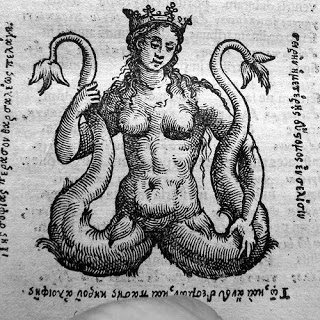
La leyenda de Melusina se remonta a la historia de Francia, incluso a la época de Carlomagno. Varias casas reales hunden sus raíces en la familia de Melusina, entre ellas las de Plantagenet, Angevin y Anjou.
Muchos gobernantes de origen francés a lo largo de la historia, incluido Ricardo I Corazón de León, se han autoproclamado descendientes del diablo.
Según recoge el historiador Flori, el cronista Giraud le Cambrien relataba que al rey Ricardo le gustaba mucho narrar una historia en la que aseguraba que era descendiente de una condesa de Anjou que se trataba, en realidad, del hada Melusina, concluyendo que toda su familia "venía del diablo y volvería al diablo"[1].
El duque de Berry encargó a Jean D'Arras en 1393 la tarea de escribir un relato que recogiera la historia de Melusina, la Chronique de Melusine[2]. Según el libro The Serpent And The Swan: The Animal Bride In Folklore And Literature, D'Arras abrevió "Mère des Lusignan" (Madre de los habitantes de Lusignan) para formar el nombre de "Melusina".
¿Cuál es la leyenda de Melusina, la señora de Starbucks?
Melusina era la hija de Pressina —un hada del agua— y de un hombre mortal, el rey Elinas (o el rey Helmas). Sin embargo, Melusina no nació como sirena. Fue una maldición que su madre lanzaría después sobre ella como castigo por lo que le haría a su padre.
El rey Elinas conoció a Pressina en la fontaine de la soif (la fuente de la sed —¿quizás la sed de café?—) y se enamoró al instante. Pressina aceptó casarse con el rey con una condición: nunca debía entrar en sus aposentos al dar a luz o poco después.
Al cabo de poco tiempo, Pressina dio a luz a tres hijas: Melusina, Melior y Palatina. Como era de esperar, el rey Elinas pronto rompió la promesa que le había hecho a su esposa vencido por la curiosidad. Inmersa en un profundo dolor, Pressina huye con sus bebés a una isla oculta, Cefalonia.
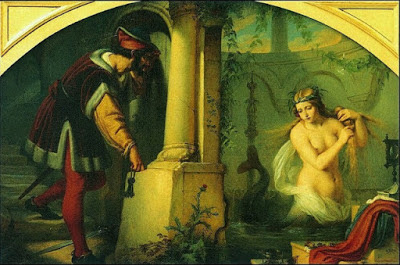
Un día, varios años más tarde, Pressina se lleva a sus hijas a ver el reino de su padre y es allí donde les habla de la promesa que él rompió. Melusina decide entonces vengarse de su padre y, con la ayuda de sus hermanas, lo secuestra y encarcela en una montaña. Sin embargo, Pressina se enfurece cuando descubre la traición de su hija y lanza sobre ella una maldición. A partir de entonces, todos los sábados la mitad inferior de Melusine se transformaría en una cola similar a la de un pez o una serpiente.
El tiempo transcurre y Melusina, que vive sola en el bosque, crece y se convierte en una mujer adulta.
No es más que una extraña señora de Starbucks que vive sola en el bosque (bebiendo café), ¿qué tiene eso de especial?Al bosque donde vive Melusina llega Raimundo, conde de Anjou o duque de Aquitania según el relato. Este se siente afligido tras haber matado accidentalmente a su tío durante una cacería de jabalíes. Melusina le aconseja sobre la manera en que debe explicar aquella muerte fortuita. Por otra parte, también le promete riqueza y poder, como si de un genio que concede deseos se tratase. Poco después, Raimundo le propone matrimonio a la extraña señora del bosque.
Riqueza, poder, asesinatos accidentales... ¿qué puede faltar? Sin duda, todo parece llevar a un matrimonio próspero. Pero espera, que hay más.
Al igual que su madre, Melusina acepta la propuesta de matrimonio con una condición: la prohibición de que Raimundo la vea en sus aposentos durante el sábado.
Se queda en su habitación todo el día en el shabat: ¡esta señora sí que cumple los mandamientos!
Sin darle mucha importancia a la petición, se casaron de inmediato. Melusina cumplió su promesa, el reino de Raimundo creció rápidamente en poder y tamaño. Así construyeron las ciudades de Poitou y Lusignan, convirtiéndose Melusina en la madre del linaje de Lusignan, donde edificó un castillo y se ganó la fama de ser una reina atenta y servicial.
Tras años de matrimonio y diez hijos, en su mayoría con malformaciones, Raimundo empezó a cansarse de su promesa. Curiosamente, al mismo tiempo Melusina se mostraba cada vez más reacia a asistir a la misa en su catedral.
Finalmente, en un ataque de celos, Raimundo se adentra en los aposentos de Melusina y la descubre bañándose.
Melusina sigue siendo tan bella como siempre de cintura para arriba, pero …
Al observarla de cintura para abajo, se encuentra con sus sus dos colas de pez o de serpiente —o lo que quiera que sean— moviéndose en el agua. Un poco desagradable todo.
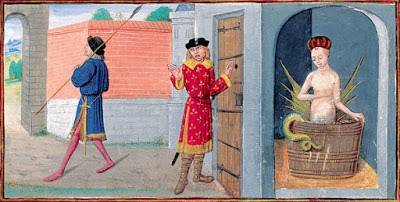
Raimundo nunca le contó a nadie lo que había visto. Nunca, hasta que llegó aquel día.
Raimundo intentaba convencerse de que no pasaba nada. “¿Y qué si es medio serpiente? Es una gran madre, ¿verdad? Además, es preciosa —al menos la mayor parte del tiempo—”.
Pero todo se complicó cuando sus hijos empezaron a hacer cosas malas —al igual que cuando el joven Geoffrey quemó algunas iglesias—.
Finalmente, Raimundo acusó a su mujer de ser una Faulse Serpente.
Melusina no se lo tomó muy bien. Para ella lo más grave no era que su marido la acusara de ser un engendro de Satanás. Lo que de verdad le dolía era que él hubiera roto su promesa. Movida por ese sentimiento, Melusina reacciona haciendo lo que cualquiera de nosotros haría en una situación como esa...
Melusina se transformó en un dragón y salió de allí volando.
Se cuenta que durante los siguientes años iba a visitar a sus hijos por la noche adoptando su forma humana. Sin embargo, la mayoría de las veces que aparecía era un mal presagio. Si la veías volando, llorando como una banshee, era porque esa noche la muerte llegaría para llevarse a alguien.
Estupendo. Creemos una empresa de café con su imagen.
¿Qué significa entonces el logotipo con la mujer-dragón de Starbucks?
Una imagen de Starbucks ubicada en una catedral del siglo VIII
Esta criatura con forma de dragón ha aparecido en múltiples ocasiones en la iconografía, al igual que en la historia. La imagen más antigua que se conoce de Melusina, la sirena de dos colas, se encuentra en el suelo del mosaico de la catedral de Otranto[3].
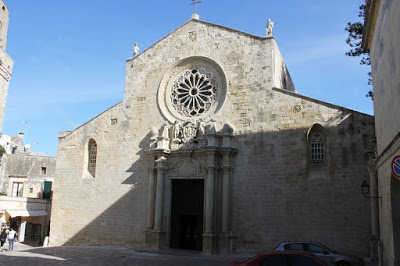
El mosaico de la sirena de dos colas en la Catedral de Otranto.
(Foto: Angelica Calabrese para Atlas Obscura)
Una zona del suelo representa imágenes del Edén, junto con el Árbol de la Vida que nace en la espalda de dos elefantes. Otra parte representa el Infierno, las virtudes que hay que adoptar y los vicios que hay que evitar. Y aquí es donde encontramos a Melusina:
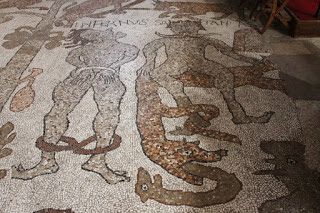
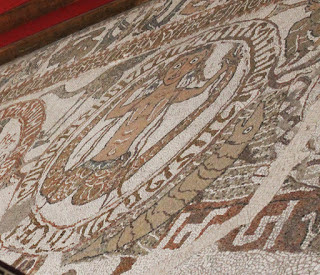
Otranto, el lugar donde se encuentra esta catedral, perteneció a varios imperios de la historia, como el griego, el romano, el bizantino y el normando. Por encargo de los gobernantes normandos de la ciudad, los monjes greco-italianos locales finalizaron la construcción de la catedral.
Por si esto no fuera ya suficiente mezcla de símbolos e iconos, hay que tener en cuenta que Otranto albergó también una importante comunidad judía. Hay quien plantea la hipótesis de que la Cábala, una variante del misticismo judío, pueda ser la clave para entender el insólito mosaico.
Mmm... El Edén, la Cábala, el misticismo judío y una malvada mujer-serpiente. ¿Estáis pensando en lo mismo que yo? Lilith.
La mujer-dragón de Starbucks es, sin duda, LilithYa he escrito anteriormente aquí sobre Lilith y cómo las feministas radicales y los grupos pro-aborto se han apropiado de su nombre y su imagen, como podemos observar en el caso de Lilith Fund, que recaudó dinero para los llamados abortos de emergencia tras el huracán Harvey en 2017.
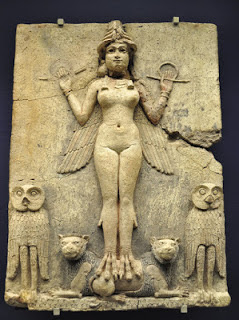
Lilith es conocida como "la diosa de las mil caras", aunque de diosa no tiene nada. En ocasiones, sus defensores la presentan como la primera esposa de Adán, mientras que en la literatura suele aparecer como la propia esposa del diablo y una devoradora de niños. Sin embargo, es en realidad toda una categoría dentro del mundo de los demonios. Cuando hablamos de Lilith nos referimos a un demonio caracterizado por su gran deseo sexual que aparece por la noche para secuestrar a bebés recién nacidos. Se han encontrado antiguas oraciones sumerias que pedían por la protección de las mujeres y recién nacidos frente a esta criatura. Además, Lilith aparece incluso en las Escrituras. Descubre más información aquí.
En su libro La diosa blanca, el poeta Robert Graves describió a Lilith:
«La Diosa es una mujer bella y esbelta con nariz ganchuda, rostro cadavérico, labios rojos como bayas de fresno, ojos pasmosamente azules y larga cabellera rubia; se transforma súbitamente en cerda, yegua, perra, zorra, burra, comadreja, serpiente, lechuza, loba, tigresa, sirena o bruja repugnante. Sus nombres y títulos son innumerables. En los relatos de fantasmas aparece con frecuencia con el nombre de «La Dama Blanca», y en las antiguas religiones, desde las Islas Británicas hasta el Cáucaso, como la «Diosa Blanca». No recuerdo poeta auténtico alguno, desde Homero en adelante, que no haya registrado independientemente su experiencia de ella. Se podría decir que la prueba de la visión de un poeta es la exactitud de su descripción de la Diosa Blanca y de la isla en la que gobierna. El motivo de que los pelos se ericen, los ojos se humedezcan, la garganta se contraiga, la piel hormiguee y la espina dorsal se estremezca- cuando se escribe o se lee un verdadero poema, es que un verdadero poema es necesariamente una invocación de la Diosa Blanca, o Musa, la Madre de Toda Vida, el antiguo poder del terror y la lujuria, la araña o la abeja reina cuyo abrazo significa la muerte».
Como se ha mencionado anteriormente, Lilith aparece con frecuencia entre los arquetipos de las culturas del mundo. Es la sirena, la Dama de Blanco, Duessa en La reina de las hadas, incluso Úrsula en La sirenita de Disney y, por supuesto, la mujer-dragón Melusina. Su origen se remonta al año 2000 a.C. y su imagen se encuentra en antiguas tablillas sumerias.
(Insertar escalofríos aquí)
Lilith suele ser representada como una mujer hermosa de cintura para arriba y como una serpiente de cintura para abajo. ¿Os resulta familiar?
¿Existe la posibilidad de que el logo de Starbucks no sea una sirena diabólica, sino Dagón, el malvado dios pez de los filisteos?
Dagón era un dios pez adorado por los filisteos. El logotipo de Starbucks es claramente una especie de criatura con rasgos semejantes a los de un pez. Pero ¿puede realmente tratarse de Dagón?
Este es un meme de Starbucks que circula por internet y que describe el logo de Starbucks como una imagen derivada del dios pez Dagón:
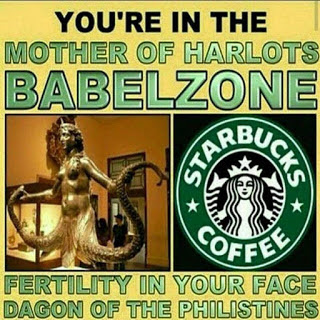
El argumento esencial aquí es que el ídolo de oro de la izquierda es Dagón, pero ¿es esto cierto?
De entrada, probablemente no. El logotipo de Starbucks es un personaje femenino con corona y dos colas. Esto no coincide con Dagón, que suele aparecer como una criatura masculina con una sola cola. De todas maneras, analicemos las pruebas.
Estas son algunas de las representaciones más frecuentes de Dagón:
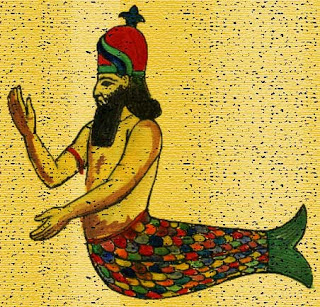
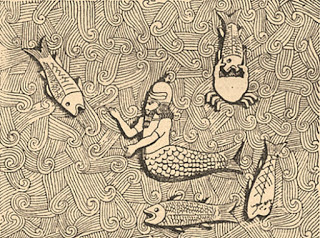
O, al menos, son representaciones del ser mitológico babilónico Oannes (Ὡάννης) del que habló Beroso en el siglo III a.C. Oannes solo fue relacionado con Dagón en los siglos XIX y XX. La investigación de la que he extraído esta conexión ha sido minuciosamente estudiada.
Iconográficamente, no estamos seguros de cómo era Dagón. El meme del ídolo dorado anterior representa probablemente una falsa comparación.
El dios pagano Dagón descrito en la Biblia
Esta es un extracto del libro Manners and Customs of the Bible:
Dagón es el diminutivo de dag y significa “pez pequeño”, no tanto por el tamaño, sino por el afecto que se le tiene, por lo que algunos lo podrían traducir como "querido pez pequeño". Los babilonios creían que un ser, que era en parte hombre y en parte pez, surgió del Mar Eritreo y apareció en Babilonia en los primeros días de su historia, enseñando al pueblo varias habilidades necesarias para alcanzar su bienestar. Se han encontrado representaciones de este dios pez entre las esculturas de Nínive. El Dagón filisteo tenía unos rasgos similares a los de este ser[4].
De nuevo, Dagón es un pez de sexo masculino, no el pez con rasgos femeninos del logotipo de Starbucks. ¿Quedará alguna otra justificación para seguir comparándolos?
¿Qué o quién era el dios Dagón? Dagón aparece en la Biblia varias veces, pero seguramente las más conocidas sean estas dos:
Sansón derriba el templo de Dagón
Jueces 16:23 describe cómo el templo de Dagón en Gaza es destruido por Sansón. Este se encontraba encadenado a las columnas que sostenían el santuario y, como último acto tras recuperar las fuerzas, las derribó y destruyó el templo pagano.
Este es el escenario construido para representar el templo de Dagón en la película Sansón y Dalila. Según parece, Hollywood tampoco consideró que Dagón fuera un dios pez, o al menos no se esforzó mucho en ocultar sus pies.
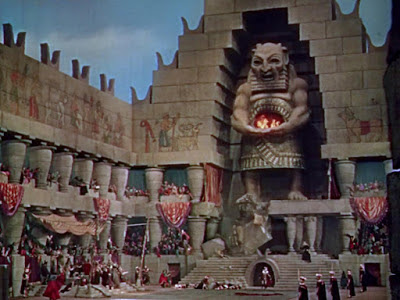
Otro templo de Dagón, situado en Asdod, aparece mencionado en 1 Samuel 5:2-7 y 1 Macabeos 10-11. Por otro lado, según se describe en 1 Crónicas 10, la cabeza del rey Saúl fue expuesta también en un templo de Dagón.
El Arca de la Alianza destruyendo a Dagón
En 1 Samuel 5 se relata cómo el arca de la alianza fue capturada por los filisteos y llevada al templo de Dagón en Asdod. A la mañana siguiente, los asdoditas descubrieron que la imagen de Dagón se había caído y estaba postrada ante el arca. Devolvieron la imagen a su posición original, pero al día siguiente encontraron de nuevo a Dagón postrado ante el arca. Esta vez, sin embargo, su cabeza y sus manos habían sido mutiladas.
¡Toma esa, Dagón! No suele ser muy buena idea colocar un falso ídolo junto al arca de la alianza. Si no, que se lo pregunten a los nazis:
Indiana Jones: En busca del arca perdida.
Lo que sucede cuando los nazis intentan abrir el arca de la alianza
Conclusión: ¿Es el logo de Starbucks Dagón, el dios pez?
No, seguramente la mujer con corona y doble cola de pez no sea Dagón, el dios pagano de los filisteos. Además, ni siquiera está claro si Dagón tiene una parte de pez o esta característica pertenece solamente al otro dios babilónico y fenicio Oannes. En cualquier caso, incluso si Dagón es mitad pez, la otra mitad es un hombre y no una mujer.
Existen muchas más pruebas que sostienen la teoría de Melusina en relación con el logotipo de Starbucks
Aún así, en cualquier caso, el simbolismo del logo de Starbucks está relacionado con el mal.
¿Qué aparece entonces en los vasos? El logo de Starbucks no es un error
No creáis que toda esta iconografía de Starbucks es pura casualidad. No es la primera vez que se produce una polémica en torno a algunos vasos de esta marca que presentan mensajes oscuros.
Starbucks lanzó una campaña en 2007 en la que grabó en sus vasos The Way I See It(como lo veo yo) además de breves reflexiones que habían redactado sus clientes.
Una mujer de Ohio descubrió el siguiente mensaje ateo impreso en un lado de su vaso de café:
¿Por qué en momentos de dificultad pedimos a Dios fuerza y ayuda? Como seres con capacidad de pensar, ¿por qué pedimos auxilio a algo que fácilmente podría ser un invento de nuestra imaginación? ¿Por qué no buscamos en nuestro interior el poder de superación? Al fin y al cabo, somos lo suficientemente fuertes como para provocar la mayoría de las catástrofes a las que nos tenemos que enfrentar.
Cualquiera podría decir que este comentario surgió tras mirar a los ojos del propio logotipo.
Así que la próxima vez que los simpáticos empleados de Starbucks empiecen a cuestionar tu religión, pregúntales por qué trabajan para una empresa que tiene un demonio en su logotipo. Si encuentras alguna respuesta interesante, no dudes en compartirla en los comentarios.
P.D.
Ahora entiendo por fin por qué Austin Powers y el Dr. Maligno decidieron comprar Starbucks:


Y por si te lo estás preguntando —quizás con el fin de llevar a cabo un boicot—la corporación de Starbucks también incluye, según su página web, a las siguientes marcas: Teavana, La Boulange, Evolution Fresh, Seattle's Best Coffee y Tazo Tea.
[1] Flori, Jean (1999f), Richard Coeur de Lion: le roi-chevalier (en francés), Paris: Biographie Payot, ISBN 978-2-228-89272-8, p. 465-6.
[2] Sucediendo a William de Portenach en su investigación sobre Melusina, la obra de D'Arras se prolongó durante la mayor parte de su vida. En 1478 se publicó de manera póstuma la última obra de Jean bajo el título Le Liure de Melusine en Fracoys. Más información en ¿What does History say?
[3] Para más información sobre la imagen de Starbucks que aparece en la catedral de Otranto, haga clic aquí.
[4] Rev. James M. Freeman, Manners and Customs of the Bible (Plainfield, New Jersey: Logos International, 1972; escrito originalmente en torno a 1874), p. 126, 236.




![[image error]](https://1.bp.blogspot.com/-XB1aX9AgL8I/YIXXpw5r-QI/AAAAAAAAKPk/T-MrGQ6o2i8KFtlSNdZAMPmMPxedGpfAQCLcBGAsYHQ/s800/Mary%2Band%2BJoseph%2527s%2Bwedding%2Band%2Bwedding%2Bring%252C%2Bwww.thescottsmithblog.com%252C%2BSanto%2BAnello%2Bheader.png)
![[image error]](https://1.bp.blogspot.com/-KohvUKy4FM4/YIXej1HcIPI/AAAAAAAAKP0/m25nLn22ZTMLG4Ib3hrs-i_KU4A-IBWJgCLcBGAsYHQ/s770/Mary%2Band%2BJoseph%2527s%2Bwedding%2Band%2Bwedding%2Bring%252C%2Bwww.thescottsmithblog.com%252C%2BSanto%2BAnello%252C%2Bil%2BSanto%2Banello%2Besposto%2Bnella%2BCappella%2Bal%2Bduomo%252C%2Bclose-up.jpg)
![[image error]](https://1.bp.blogspot.com/-dIe24xWHTR0/YIXpZE2vNFI/AAAAAAAAKQg/2rxXFh1w8Qc_rg7Aeo07_hJREQMaSuG5gCLcBGAsYHQ/s484/Mary%2Band%2BJoseph%2527s%2Bwedding%2Band%2Bwedding%2Bring%252C%2Bwww.thescottsmithblog.com%252C%2BSanto%2BAnello%252C%2Bfull%2Breliquary.jpg)