K.E. Garland's Blog, page 8
July 29, 2024
Monday Notes: Election 2024
When former President Trump was elected, I was just as sad about the political and social direction of the country as others. But the one positive effect his presidency had on me is that I have become a more informed citizen and voter. From his January 2017th inauguration to the January 6, 2021st Capitol Attack, I have learned more about what US presidents can and cannot do; how state elections can be more integral than the country’s; and how choosing a Supreme Court can affect everyone’s lives and rights.
Consequently, unlike years’ past, for this election year, I know exactly what matters to me.
One thing I have educated myself on is this document: Mandate for Leadership: The Conservative Promise: Project 2025. Though I have not read the entire 1000-page document, I have read the “Education” section, which in the first sentence proclaims, Federal education policy should be limited and, ultimately, the federal Department of Education should be eliminated. The remainder of this section explains, in detail, how conservatives plan to do that. The primary way is through a return to states’ rights.
I’m all for states’ rights. Really, I am. However, I also live in Florida, a state, where the government has passed legislation without a public vote. For example, the Florida government seemed to have assumed that the entire state wishes to be conservative, and as a result, passed HB 241–Parents’ Bill of Rights. Among other things, this “Bill of Rights” has allowed K-12 parents to challenge so-called inappropriate literature, like Amanda Gorman’s book, The Hill We Climb, which was based on the poem she read at President Biden’s inauguration. As of today, it can longer be read or taught in Florida’s public schools due to one parent’s complaint.
As a teacher educator, I have heard the firsthand effects of challenging books. It seems small. It isn’t. It requires teachers to complete a disruptive process of inputting and explaining each book they plan to teach, giving parents a “right” to contest it, and then removing it from the classroom, library, and school if parents disagree. This is no easy feat for teachers or librarians.
I hope this chain of events is clear. I’m suggesting that what’s happened here in Florida is poised to happen nationwide. Not book banning, per se. But rather, a nationwide return to states’ rights, where each state can decide what they think is “right” for their citizens, whether they’ve asked the citizens of that state or not.
The second issue I’ve been thinking deeply about is how the Supreme Court reversed Roe v Wade in 2022. I’ve been following the consequences in my and other states. Similar to the overall goal of Project 2025, the idea seemed to be to return reproductive rights to the states. Again, I’m all for states’ rights; however, in Florida, no one asked me to vote on if women should or should not have reproductive rights. Instead, the government enacted a six-week ban. This matters to me, not because I’ve had abortions in the past and not because, even as 51-year-old married woman, I could have an unwanted pregnancy. It matters because I care deeply about rights that impact all women and girls, who can reproduce, no matter their race or ethnicity. If most of the state wanted this, I would acquiesce, but we don’t know for sure, because we didn’t vote on it.
To be clear, I am concerned that should conservatives have complete control, the direction of the country would be to pretend to “return to states’ rights,” while states enact a nationwide conservative agenda much of the citizenry hasn’t asked for. This is not some crazy conspiracy theory I’ve conjured. If you have time, you should probably read a part of Project 2025 that interests you, whether it’s because you used to work or currently work in that sector. If you agree, then cool. I trust it’s because you believe the United States is on the right path. If not, well, consider how your vote could impact specific social issues.
I like to think about things in threes, so to round this off, I’ll add this: When former President Obama ran in 2007, I wasn’t very politically savvy. He was Black. I’m Black. Wouldn’t it be cool if we had a Black president? was the sentiment. Today, I would never vote for a president based on race, gender, or sexual preference. Today, I’m less interested in being a part of the masses who are excited to shape history in that way. This year, I’ll be voting for someone who understands the pluralistic demographics of our citizenry, whose rhetoric is inclusive of all our rights, and who recognizes an appropriate level of the federal government’s role in our everyday lives.
Monday Notes: Election 2024In Search of a Salve: Akilah’s ReviewInspiring Image #154: PedanticSunday Shorts: I Have LearnedInspiring Image #153: Wytheville, VA

July 26, 2024
July 24, 2024
Inspiring Image #154: Pedantic
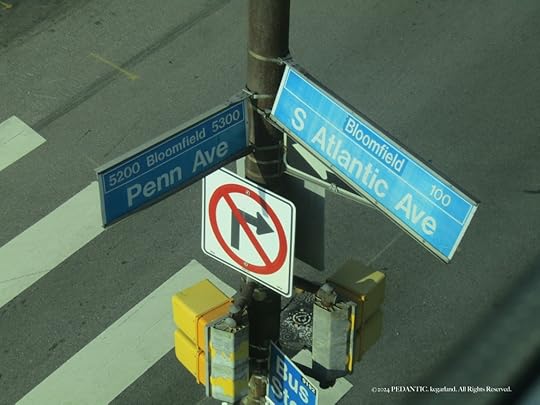
Here is where I was in residence for four weeks, the corner of Penn and Atlantic: Pedantic.
July 21, 2024
Sunday Shorts: I Have Learned
I have learned not to take it personally if I share a vulnerable moment with someone, and they dismiss it. The people who are meant to understand me do.
I have learned I cannot battle folks’ skewed perceptions. Tis better to let them believe what they’ve conjured in their minds as truth than to convince them otherwise.
I have learned I can drive below the speed limit and allow others to whiz past. Maintaining the pace of traffic is not a requirement.
I have learned to integrate the so-called shadow sides of my personality. Trying to eliminate them is futile. They exist. They are what make me me. The key is to not let the shadows drive the bus.
I have learned that it is no one else’s job but mine to state and maintain my boundaries. If I engage in something I didn’t want to, stay longer than I planned to, or discuss more than I cared to, I can blame only me.
I have learned that it is okay to be different. That’s called human beingness. If, as some believe, we are all parts of a whole, what sense does imitation make? The sun is the sun. The ocean is the ocean. Both are different, but necessary for existence. People and their personalities are similar.
I have learned to stay in my own lane. When I meander into someone else’s, there is suffering; that lane is meant for them. If I maintain awareness, my path is clear. And if you’re conscious enough, you, too, will see the journey that is yours.
Sunday Shorts is a series that is fewer than 300 words and prompted from a brief interaction or thought I’ve had, while speaking with someone.
Sunday Shorts: I Have LearnedIn Search of a Salve HYBRID Q&AInspiring Image #153: Wytheville, VAMonday Notes: What it Means to be in Community: A Recap of Pedantic ResidencyIn Search of a Salve: Jo’s ReviewJuly 18, 2024
In Search of a Salve HYBRID Q&A
If you’ve read In Search of a Salve, first of all, thank you! Guess what? On July 20th, from 1:00-3:00 p.m. (ET), I’ll be holding a Q&A for anyone who has read the book and has questions. For the in-person option, I’ll be interviewed by a former Jacksonville TV personality, Henny. So, if you live in or near Jacksonville, Florida, please pop in and say, “Hey!” For the virtual option, my friend, Tarcia, and host of the Adoption Journey Podcast, will be fielding and moderating questions/comments. Either way, I hope you’ll consider attending. Here are some details and the link:
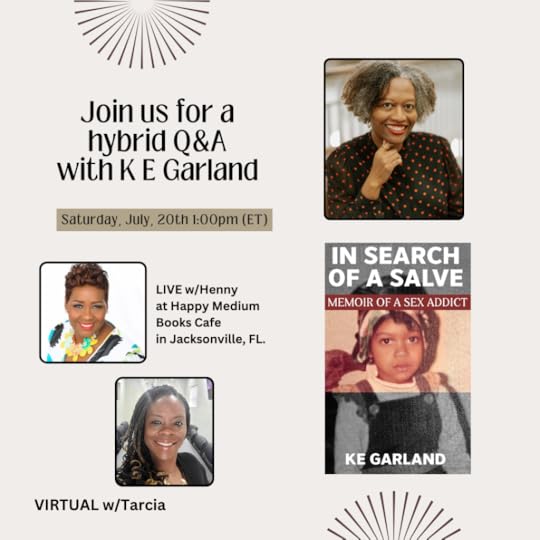 If you’re in Jacksonville, I’ll be in person at Happy Medium Books Cafe. If you’re not in Jacksonville, you’ll be able to
participate virtually
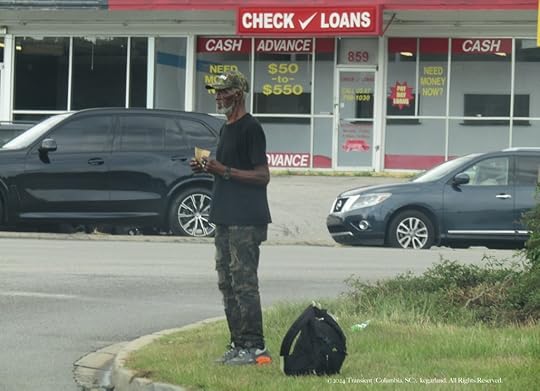
. It’s a FREE event, but, you’ll have to register to attend, whether for in-person or virtual attendance.As a secondary part of the event, I’m raising funds for Family Support Services of Northeast Florida, an organization that helps adoptees and children who live in foster care. To donate, please use the same link.REGISTER HERE! In Search of a Salve HYBRID Q&AInspiring Image #153: Wytheville, VAMonday Notes: What it Means to be in Community: A Recap of Pedantic ResidencyIn Search of a Salve: Jo’s ReviewInspiring Image #152: Transient (Columbia, SC)
If you’re in Jacksonville, I’ll be in person at Happy Medium Books Cafe. If you’re not in Jacksonville, you’ll be able to
participate virtually
. It’s a FREE event, but, you’ll have to register to attend, whether for in-person or virtual attendance.As a secondary part of the event, I’m raising funds for Family Support Services of Northeast Florida, an organization that helps adoptees and children who live in foster care. To donate, please use the same link.REGISTER HERE! In Search of a Salve HYBRID Q&AInspiring Image #153: Wytheville, VAMonday Notes: What it Means to be in Community: A Recap of Pedantic ResidencyIn Search of a Salve: Jo’s ReviewInspiring Image #152: Transient (Columbia, SC)
July 17, 2024
July 15, 2024
Monday Notes: What it Means to be in Community: A Recap of Pedantic Residency
Earlier this year, I was accepted as a Pedantic Arts Resident (in writing). From June 7th to July 5th, I lived in Pittsburgh with two other people: Arinitwe, an artist from Uganda and Maritza Bautista, a curator from Laredo, Texas. For four weeks, I was steeped in Pittsburgh’s thriving arts culture. Here, I learned what it truly means to be in community with other people, who create professionally and consistently and other writers, who publish professionally and consistently.
A Community Provides Networking Opportunities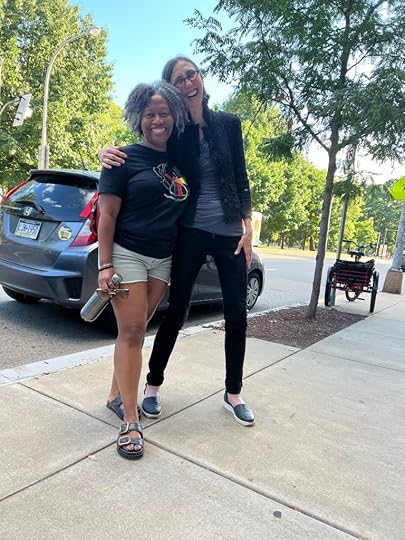
Unlike traditional residencies where you spend copious amounts of time in a secluded area creating art, Pedantic’s focus is networking. When I asked the co-founder, Henry, what his vision was, he explained that he’d modeled it after a Master of Fine Arts (MFA) program. This was logical. I’ve heard MFA graduates reflect on their degrees. Above all else, they praise the networking piece. Henry thought it would be cool if there was a residency where artists were introduced to people who do similar work. I’m not sure I need to extol the virtues of networking. It’s not what you know; it’s who you know is a phrase for a reason. However, I’ve never really experienced the benefits of networking. Even as a doc student and professor, I’ve never been mentored and introduced to people in a way that boosted my career. But this changed while I was in Pittsburgh. I met and had conversations with the following: Danielle Obisie-Orlu, a former youth Poet Laurette, Doralee Brooks, a former Poet Laurette, Damon Young, author of What Doesn’t Kill You Makes You Blacker, Brian Broome, author of Punch Me Up to the Gods, Hattie Fletcher, editor of Creative Nonfiction, Gwendolyn, former editor of Third World Press, Diane Samuels, the woman who co-founded City of Asylum, Henry Samuels, the man who interviewed Salman Rushdie, when he was attacked on stage, and many more. These experiences were invaluable for several reasons that I cannot fully share. Just know that spending hours with these folks has not only widened my scope of who I can be and what I can do as a writer, but it also opened up opportunities.
A Community Provides Support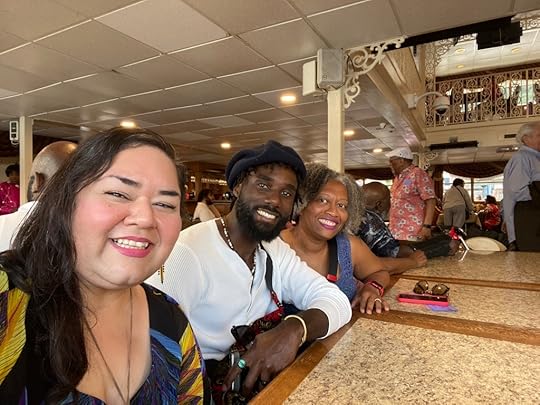
Part of this residency required that I be paired with a guide who is a writer. My guide was a poet and fiction writer named Sherrie Flick, who has a myriad of publications, and who is also a senior lecturer at a university. Before I could unpack my bags, Sherrie invited me to an open mic, where she was on the roster to read. While I have read my work aloud before, I had never participated in an open mic…in a foreign city…with strangers. I was nervous. I’ll spare the details of how I attempted to squirm out of reading from my memoir. But I do want to share that Sherrie gently encouraged me. She assured me it would be okay. And she was right. Encouragement is a type of support. After reading, the emcee approached me and said, what I read was “powerful.” Another woman, Sheila, reiterated that I was “brave” to have read about losing my virginity. Sherrie affirmed the excerpt was appropriate and that it gave just enough detail so that people would be interested in reading more. Affirming someone’s writing is another type of support. Then, two people (a filmmaker and a marketer) bought copies of In Search of a Salve. Buying someone’s book is also a kind of support. Afterwards, Maritza suggested the three of us go have a drink to celebrate my doing a thing I’ve never done before; Celebrating accomplishments is another type of support. The support was seamless. I didn’t have to beg or fight for it. It just existed as part of the community.
A Community Provides a ServiceThe open mic was a part of Hemingway’s Poetry Series, which was created 50 years ago, specifically for poets to read their work. From what I can tell, these people simply enjoy providing a platform for local poets. Sherrie Flick hosts something called Walk & Write, where people pay $10 to tour a different Pittsburgh neighborhood, talk about the area, and then write based on a prompt. This is Walk & Write’s third year. Sheila Carter-Jones hosts (sub)Verses, a poetry reading and writing workshop for BIPOC women; they meet every other Saturday. Participating in these community events showed me two things. The first is that sometimes, one should do something just because they want to. Period. Full stop. Whether it’s five people or 50, it is okay to create a group where people like doing fill-in-the-blank thing. The second is that if you follow your heart’s desire, you will probably provide a service for others as well. In this capitalistic society we’ve been born into, many of us believe we must find something that will make us millionaires. Maybe. Maybe the idea will grow. Or maybe, the most important thing that will happen is that you will have found a way to serve the community in which you live just by manifesting from your heart center.
Overall, I’m grateful I had this experience. Although it was not the kick back on the mountains and write kind of residency, it did afford me the kinds of opportunities I wouldn’t have had pontificating from my home office. I’m thankful because my writers’ network is a bit wider and I now understand how to be in community where I live.
Monday Notes: What it Means to be in Community: A Recap of Pedantic ResidencyIn Search of a Salve: Jo’s ReviewInspiring Image #152: Transient (Columbia, SC)Monday Notes: 24 Hours of White Wealth and White PrivilegeInspiring Image #151: Transient (Savannah)July 12, 2024
July 10, 2024
July 8, 2024
Monday Notes: 24 Hours of White Wealth and White Privilege
3:00 PM: We arrive at his mother’s weekend/summer home: an African man, Fronteriza (Border Woman), and me, a Black American. We are greeted by a small house at the foot of a hill. The remaining three homes sit on top. “You’ll be staying at the shanty house,” we are told.
Shanty is unfamiliar, so I google it. It is a small, badly built house, usually made from pieces of wood, metal, or cardboard, in which poor people live. This shanty house holds three bedrooms, one bathroom, a full-sized kitchen, and a living room. On the living room’s windowsill sits a petite shadow box frame that holds two cotton bolls.
The discomfort begins where it always does—in the pit of my stomach.
6:00 PM: We are invited to dinner as artists: the African, a visual artist; Fronteriza, a curator; and me, a writer. Yet, we are not centered. Instead, a long, sliver of paper filled with sans serif outlines the meal and serves as the focal point: mixed salad, spicy cauliflower, lamb lollipops. As we wait for instructions, a white woman whispers, “This is a very conservative area. Not far from here, you’ll see Trump signs.”
My stomach signals an alarm.
7:00 PM: We thought we’d be introduced to the 25 or so guests who’d convened. Instead, we introduce ourselves and hold awkward conversations of varied interest, while swallowing the privilege of lamb lollipops.
8:45 AM: “How did you sleep?” the owner of the property asks.
“Not well,” I reply. “I awoke every two hours.”
“Oh yeah?” she says. “Why?”
I want to tell her it was the cotton bolls and the twin sized bed crafted for a child. I want to tell her it was the unease I felt not knowing what kind of white person she or her family were. Life has shown me there are types. I want to tell her it was because how did you sleep are the only words she has spoken to me, since her flaccid hello of yesterday.
Instead, I say, “For many reasons.”
Her humph clearly conveys confusion: How could I possibly not have been comfortable on her estate? I want to tell her the Ugandan man didn’t sleep well either, but I decide it is not my story to tell.
I am hungry. But breakfast does not satisfy me. I want to know if the cotton bolls are symbolic of her ancestors’ lived experience or a souvenir from a place that extolled American slavery. I hold my tongue.
8:50 AM: I am exhausted and so are Fronteriza and the African. We are scheduled to tour several Frank Lloyd Wright houses. It will monopolize much of our day. And I am no longer here for the bullshit.
“I studied Frank Lloyd Wright in elementary school,” I announce. “I attended a classical magnet school, and it was pretty much a part of the curriculum. And,” I add, “I lived steps away from Oak Park. I know what Lloyd’s houses look like; I understand the concept.”
He stuffs sausages in his mouth, swallows my statement, and says nothing. I hear what is unspoken. His curriculum will supersede my magnet education. Today, he intends to teach me something.
My stomach tightens.
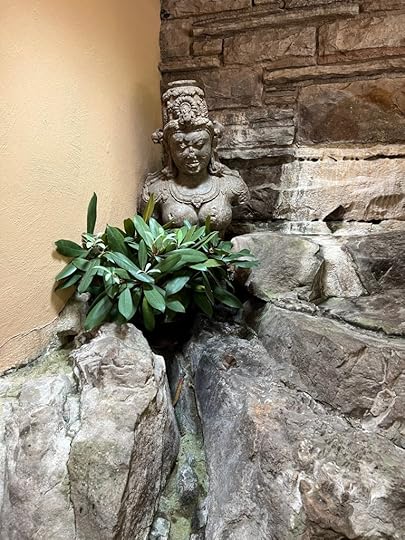
10:56 AM: We have seen two replications of Frank Lloyd Wright’s houses and two reconstructed ones. Amid Buddha busts and plastic cherry blossoms, I ask the tour guide, “What is the influence of Japan on Frank Lloyd Wright’s work?”
“Well,” she smiles slyly, “he’d visited, but he denied it having any influence.”
I quieted. No one here knows my family and I visited Japan in 2015. Kyoto, Tokyo, and Enoshima Island are distant memories, but close enough for me to recognize the lines and colors of Japanese temples and the integration of nature. Kyoto embodies a religion called Shinto.
12:34 PM: He decides we will skip the second tour.
“What did you tell them?” Fronteriza asks.
“That I have a group of unintellectual people who don’t want to see Kentuck Knob,” he jokes.
I laugh, so he doesn’t feel uncomfortable, but my insides fire.
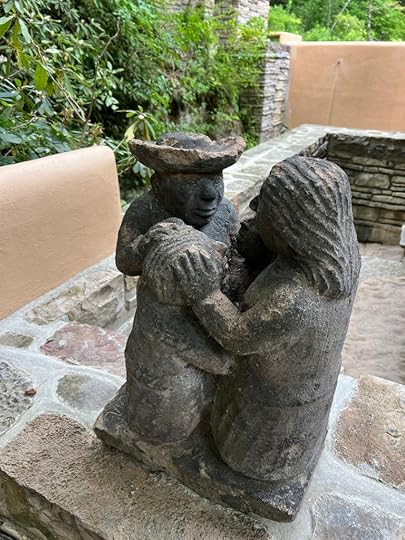
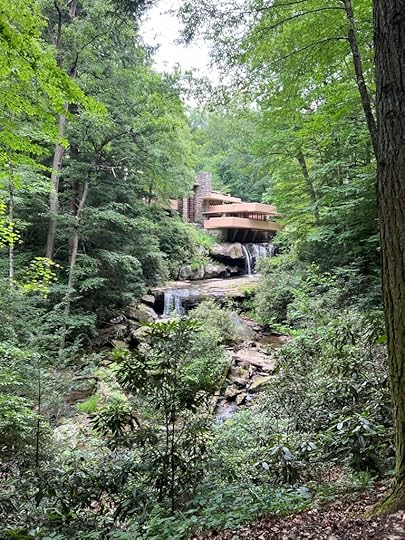
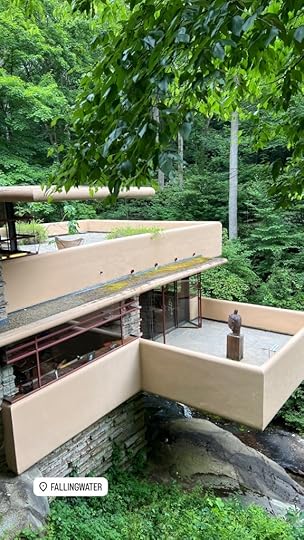
1:51 PM: We begin a tour of Fallingwater. The Kaufmanns, a wealthy, white couple, commissioned Wright to create it—a weekend home. The concept feels familiar, except their guests slept in a guest house, not a shanty.
1:56 PM: A creek, reminiscent of Hakone Ashigarashimo-Gun, smaller and less assuming, snakes around the home and fascinates me.
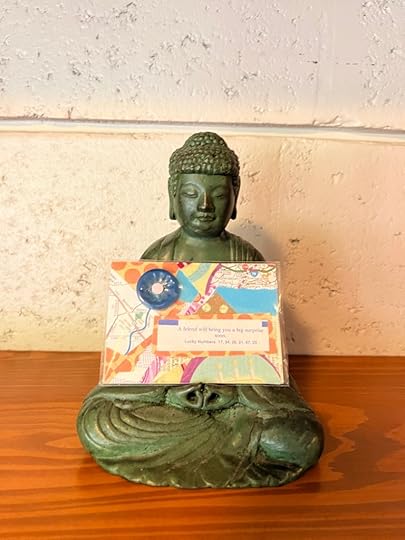
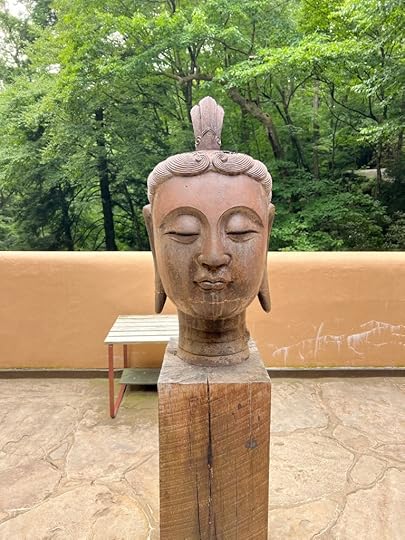
2:01 PM: Another Buddha head, representing Japan’s and Buddhism’s progression is the focal point.
Wife’s quarters, husband’s quarters, son’s quarters. Unlike August Wilson, whose family of five slept between two rooms, it was common for wealthy people of a similar era to have their own space, complete with bathrooms and terraces; we visit each.
2:20 PM: Diego Rivera’s “Profile of a Man Wearing a Hat” hangs above the son’s bed.
“You recognize him, riiiight?” he asks Fronteriza.
I can’t decide if this question is racist or not.
2:27: We pass another Rivera painting. The tour guide explains that “At the time, this was considered unimportant art. The important art hung in their city home.”
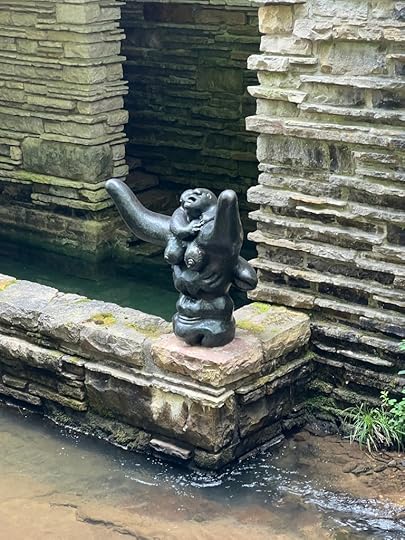
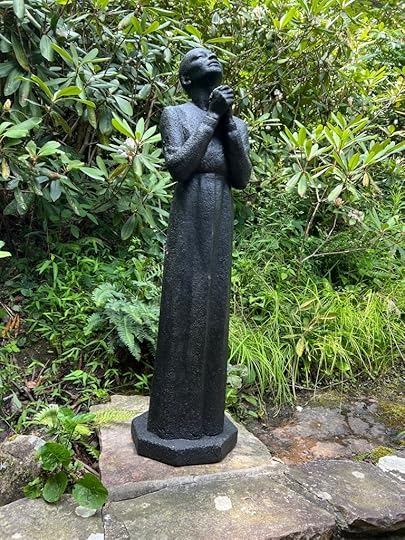
2:29 PM: We saunter by Barthé’s Serena, a sculpture named after Rose McClendon, a Black actress who played in Porgy.
2:40 PM: The tour guide describes the Kaufmanns’ cook, Elsie, a Black woman who kept them well-fed and comfortable. On Sundays, when the Kaufmanns left, she and her staff stayed an extra day to clean the weekend they’d left behind. I’m grateful we don’t have to clean the shanty; they have someone else to do that.
“Thank you for mentioning her,” I say. “Many times, people like Elsie are marginalized. We rarely hear their stories.”
2:51 PM: The tour closes, and I cannot wait to leave this space, where people have enough money to commission artists and architects to build a secluded world for themselves, a world where folks feign ignorance about the influence of the Japanese on Frank Lloyd Wright, a world where a white middle-aged man’s knowledge trumps a middle-aged Black woman’s, a world where an older white woman can send her Black and brown guests to sleep in a shanty, among framed cotton bolls. I cannot wait to return to my own world and pretend none of this exists.
5:00 PM: We pile into the car and head back to Penn Ave and Atlantic—Fronteriza, the African, and me. My stomach loosens. I return to the safety of false security.
 Monday Notes: 24 Hours of White Wealth and White PrivilegeInspiring Image #151: Transient (Savannah)Sunday Shorts: Respect RealityInspiring Image #150: Detroit Mural #2: StevieMonday Notes: In Search of a Salve HYBRID Q&A