K.E. Garland's Blog, page 3
July 7, 2025
Monday Notes: What to Focus on During Unprecedented Times
Here we are, fraught with worry, wondering how we arrived in this wild simulation. I know it’s easy to either ignore what’s going on altogether or to be so consumed with daily occurrences that you begin to live in a space of fear and despair. However, I am here to present a third option—create the type of world you’d want to live in, beginning with yourself and the people nearest and dearest to you.
adrienne maree brown once wrote that “confusion is a colonial tactic,” and it is no secret that some countries are master colonizers.1 Historically, colonialism has been the so-called western world’s modus operandi—just ask people indigenous to their country, as well as any African or descendants who are African. The practice hasn’t changed, but tactics have. In an information age, with a 24-hour news cycle and where most of us are consumers and not creators, it is easy to remain perpetually confused and hopeless. Smoke and mirrors blind us to sweeping changes made in plain sight as well as behind closed doors. Add to that a myriad of ways to check out, and I understand how easy it is to become apathetic.
But we must resist the urge to disassociate completely not only from current events, but also ourselves.
Clarity remedies confusion. And clarity begins with self. Political events matter, and we should educate ourselves on basic intended and unintended consequences. However, you know what else is important? Clarity of one’s life. Everything we do as individuals impacts others. So, let’s start with these questions:
What do you value? How do you see your role in the country, in the world? How do you want to contribute to the collective?If you are clear about these answers, then you’ll know what deserves your attention. You’ll know how to proceed, how to be productive. If you don’t, you’ll be manipulated by 21st-century colonial tactics.
Next, we should consider what it means to be in community. Well before 2025, many social justice activists and histofuturists have advocated for a more community-centered approach to living that included a plan for how to survive the so-called end times. Some of this advice sounded fear based to me; however, whether we are facing mass destruction or not, it will always be important to care about the communities in which we live: the people who live next door, those with whom we work, and those with whom we fellowship. But you know what else is important? How you care for yourself and your family, that’s what.
So, my advice here is two-fold. First, it is imperative, especially now, to turn inward. Advice to focus on oneself may seem counterintuitive, but I am not referring to the negative attributes of individualism that so-called western countries have mastered. Instead, we should learn and practice small and relevant ways to be better versions of ourselves today, so that we can create a different future for ourselves and others tomorrow. This is possible. I know because the behavioral changes I made over a decade ago have significantly altered how my husband, daughters, and I relate to one another today. Furthermore, I know my actions effected each of their lives in a way that rippled outward to those with whom they are intimately connected because I’ve witnessed it. This type of focus on self can shift what it means to “change the world.”
Secondly, how we interact in families matters. This isn’t tied to calls for a return to so-called traditional family values rooted in patriarchy, but rather a new vision for changing how you love your family—a structure that represents our first communities. Today, we know that past relationships shape future ones. And while we can’t return to the past, we can interact in healthier ways today, which is bound to change the future. With that said, we should constantly be considering ways to treat our family members better. I suggest pondering these questions:
How do you currently treat the people with whom you are related? Are you inclusive or exclusive? Do you offer compassion and grace or indifference and insolence?Your answers can determine next steps, but only if you want to do better.
I do not offer this advice from a high horse. Oftentimes, I wonder how and if I need to extend olive branches to those who continue to act indifferent towards me. Either way, figuring out this balance seems integral. It is unrealistic to expect cultural and global shifts, while relating in pockets of dysfunction with those whom we share a familial connection. After all, the world is a macrocosmic mirror. How can we care about immigration more than we care about the sibling we refuse to speak to due to a childhood grudge?
I hope what I’ve proposed makes sense. I know it easier to watch the pettiness of billionaires than it is to be introspective and to become a better person. It seems more useful to fret over political theater than it is to improve one’s life. I get it. But at the end of the day, even if all structures crumble and fall and the world you once knew ceases to exist, the sole thing you can control will always be…you.
Brown, Adrienne Maree. Loving corrections. Emergent Strategies Series (2024).Harvard
 ︎
︎


June 18, 2025
June 9, 2025
Writer’s Workshop: Indie Korner: The Basics of Self-Publishing
Hey everyone!
I’m very excited to share that I, along with Yecheilyah, a friend of mine (and WordPress blogger) will be presenting a workshop focused on how to self-publish.
This workshop is separated into two parts:
PART I is focused on writing.You wouldn’t believe how many people tell me they want to publish a book, but they haven’t written a book, or they’ve written something, but it is a rough draft that hasn’t been edited. So, in Part I, I will share how to write an ah-mazing book. I’ll walk everyone through the difference between first drafts, revisions, and professional editing. We’ll even talk about how to choose an appropriate genre.
PART I is Sunday, June 22, 2025, 2:00–3:00 PM (EST).
REGISTER for PART IPAY for PART IPART II is focused on publishing.Due to the influx of self-publishing, people tend to think that anyone can write a first draft and then upload it to Amazon or Lulu, and this just isn’t true. Well, it’s true, but it’s not right lol In fact, it’s one of the reasons Yecheilyah and I believe independent publishing gets a bad rep.
So, in Part II, Yecheilyah will explain the difference between traditional, vanity, hybrid, and self-publishing. She’ll also share how to avoid publishing scams, and she’ll outline the foundational steps you need to move closer to publishing your manuscript at the highest professional level.
PART II is on Monday, June 23, 2025, 7:00–8:00 PM (EST).
REGISTER for PART IIPAY for PART IIRegister for Part I, Part II, or both by Sunday, June 15th.
Related PostsJune 4, 2025
May 19, 2025
Mental Health Matters: How I Healed Myself: What the Experts Have Told Me (PART III)
Sometimes, I get pushback from lay people about the idea of self-healing/self-therapy. There are a few implications:
Everyone needs a mental healthcare professional to guide them through a process of healing or life, in general.I am not equipped to figure out how to resolve my childhood trauma (i.e., I may be able to read, but I am not licensed to heal myself).Paying for a therapist is the only way to heal unresolved trauma.But licensed mental healthcare professionals have said the opposite.
MARNIE FERREE, LMFT, CSATMarnie Ferree retired as the leading female-sex addiction specialist in the country in 2023. She’d worked as a certified sex addiction therapist (CSAT) for 30 years. A few months prior to publication, I cold emailed her to review Salve. After some hesitancy, she agreed. And then, she texted me throughout the weekend as she read in disbelief that my words matched her experiences as a clinician and a recovered sexual addict. She not only validated what I’d shared about my life, but also my healing practices.
However, Marnie still struggled with writing the review and wanted to speak with me. During our two-hour convo, she said this: Over the past 30 years, she’d consistently told clients there was no way they could do this work on their own. Sexual addicts need professionals. I’m summarizing, but in essence, she wanted to speak with me to see if I really did what I said I did. By the end of our convo, she was convinced.
“You, my dear, are a unicorn,” she said.
Then, she sent the glowing blurb that is located on the back of Salve.
ROY KIM, LMFT, CSATRoy Kim is a licensed family and marriage therapist (LMFT) and a CSAT. He is also the host of SA Speakeasy, the first podcast interview I did. After reading Salve, Roy also validated my experiences and healing practices. At the end of our interview, he gave one of the best compliments I’ve received about my journey.
“I can tell that from what you’re sharing with me that your brain is changing in a really healthy way,” he said. “I really believe in how good the brain is at adapting to things, especially adapting to healthy routines and health, in general. It really does sound like your brain is adapting well over these years. So, good for you!”
Even though the social stigma of addiction has decreased, what happens during the addiction cycle is not always common knowledge. Many do not realize that addiction develops when the pleasure circuits in the brain get overwhelmed. No matter if it’s substances or behavior, an addict’s brain becomes wired differently. If you’ve ever wondered why your loved one won’t just stop doing fill-in-the-blank activity, it is probably because they literally cannot. Your healthy brain tells you to stop eating the cookies; the addict’s brain seeks to continue the habit, no matter how detrimental. When Roy said he could tell I’d changed my brain, it meant a lot. It confirmed that the process I’d used for self-therapy had worked in ways recognizable to a professional.
ANDREA DINARDO, PhDDr. Dinardo, or as I call her, Dr. D., is a positive psychology expert and psychology professor at St. Clair College of Applied Arts & Science in Windsor Ontario Canada. She also has a popular TedTalk about how to turn stress into strength. Dr. D. and I met via WordPress, recorded a popular video about situational anxiety, and presented together at St. Clair during my 2023 healing/book tour.
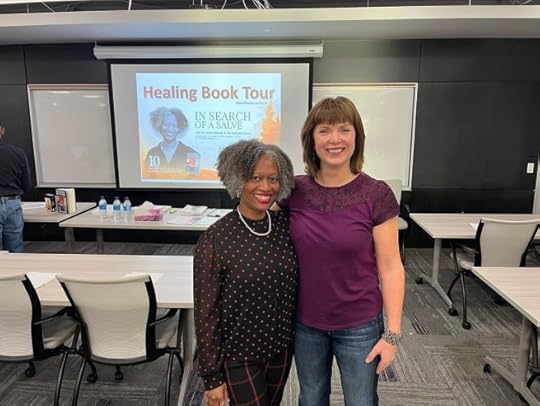
Dr. D. was in awe of Salve’s contents. She told my family and me that the world has the most psychologists and healthcare professionals ever and the most mentally unhealthy people ever.
“There’s a disconnect,” she said. Later, she praised Salve for doing what the mental health field should be doing—helping people to dig deep into their past, in order to provide a pathway for healing in the present.
ANNA LINDE, Msc, Certified Sex Coach, Somatic Sex Educator, SexologistAnna is a sexologist and certified sex coach, and she specializes in somatic sex education. She helps people learn to have healthier sex lives, specifically if they have trauma in their backgrounds, including, but not exclusive to being an adoptee.
Anna and I spoke once a week for three months, primarily because we were planning a workshop centered on adoptees and sexual health. In our second Instagram live, I confided that “people give me a lot of flak about self-therapy,” and then I told her about the disclaimer I share before speaking in public. Anna smiled and said:
This is also why this conversation is so important because I am a licensed mental healthcare practitioner. But that doesn’t mean that we know how to explain these things…so the person needing the information actually understands what it means for them. Because if I know how to diagnose the trauma, that doesn’t mean that that’s helping a person, really, which is also why I think this conversation is a way to bridge two worlds that are separately important: the personal experience and the professional side of healing. (IG Live, 4/10/25)
She also affirmed that writing a book—as well as engaging in other types of art (i.e., painting, dancing, singing, sculpting, creating music, etc.)—is a valid way to heal and integrate trauma. According to Anna, the point is to get the thoughts out of your head in a way that works for you.
Anna’s words are the perfect ending for this post and series. There is a place for licensed clinicians in some folks’ healing journeys. But whether you are a wounded healer or not, you are central in your healing. While some people need psychotherapy, others can use alternative methods to achieve the same goal. Neither is more valid or worthy. Finally, I don’t want to be irresponsible in my message. Some mental illnesses cannot be resolved independently and require professional guidance and medication; however, self-therapy should not be discounted as a valid method for many mental health issues. It is possible to take your mental health into your own hands.
Postscript: Shout out to Brooke James, LCAS, LMFT, who said that I “nailed it” with Salve and David B. Bohl, MA, CSAC, MAC, an adoptee who also self-therapized because the religiosity of Alcoholics Anonymous wasn’t helping him to achieve sobriety. He was happy to know someone else had successfully used non-traditional methods for healing.
RELATED POSTSMental Health Matters: How I Healed Myself: Years of Self-Therapy Strategies (PART II)Mental Health Matters: How I Healed Myself: Chiron and the Concept of the Wounded Healer (PART I)Acknowledging the Primal Wound: How Relinquishment Can Lead to an Intimacy Disorder3 Things I Hoped to Accomplish with In Search of a SalveMonday Notes: Guest Interview on SA SpeakeasyMay 12, 2025
Mental Health Matters: How I Healed Myself: Years of Self-Therapy Strategies (PART II)
“But you didn’t know you were doing self-therapy, right?” someone asked at a book reading.
The answer is no.
When a memoirist writes a book, they are not only curating information, but they are also writing events in a specific way to tell a compelling story. Narration could give the illusion that I knew exactly what I was doing. I did not. I just knew that I had hit rock bottom, and if I wanted to be a different person, preserve my marriage, or live with dignity and self-respect, then I had to figure something out. And because I was born in 1973, raised as an only child, and labeled gifted at five years old, it never crossed my mind to seek help from someone else. I had not only been conditioned to figure shit out on my own, but I also life had showed me that I could.
In 2014, my healing journey began with learning to listen to my intuition.
YOGAAt the time, I was holding on to a secret that tormented me. Many times, I wanted to blurt out details of what had happened to anyone who would listen, especially my husband. But I didn’t have the courage. Plus, I was raising two daughters and working at a research institution. I didn’t have the privilege to fall to pieces. So, I did the one thing that seemed to calm me down—YOGA.
Yoga had been a part of my life prior to 2014. I didn’t know why, but when I practiced, I relaxed. While yoga can serve as an exercise in flexibility, some poses do more than help you to stretch. I suspected this early on. Different ones mirrored how I functioned in life or matched my personality. For example, I used to boo-hoo cry every time I was in kapotasana (pigeon pose). While everyone else held their legs steady, I used to silently berate myself if I fell out of vrikshasana (tree pose). Each time I practiced, I learned more about who I was, but I could only learn about myself because I was open to learning about myself.
So, no. I didn’t explicitly begin a self-healing journey the way some announce therapy visits. Instead, I tried any and everything that seemed to help me feel better. It wasn’t until I was editing my memoir that I learned about how yoga decreases stress and calms your nervous system. In the moment, I intuited these facts.
OCEANNext, intuition led me to the ocean. Luckily, I live in Florida because in this state, you are never more than 60 miles away from a beach. Similar to yoga, the beach can serve as a place to play, or it can offer healing. Consistently being on my mat had helped me to become more attuned to my body, so by the time I was submerged in water, I recognized its calming effect. Like yoga, the ocean was a safe place where I could exhale. Whether I was digging my toes in the sand, or wading in waves, I was physically at peace.
Here are a couple of facts about ocean water:
Spending time at the beach can lessen anxiety and nervous system arousal.The color blue and the ebb and flow of the ocean activate your parasympathetic nervous system.At the time, I didn’t know any of this, I sensed it. Later, I read studies that proved how effective the beach is in decreasing mental health issues, such as depression, and I added this information to my memoir.
READINGAs a literacy scholar, I respect others who’ve achieved in their different fields and never want anyone to think I am posing as a licensed mental healthcare worker. It’s unethical.
However, I have always been, and continue to be, quite curious. Since I was a child, I have had the ability to read, process, and apply information in a practical way.
Therefore, before I speak to an audience, I give this disclaimer: I am not a licensed mental healthcare professional. I’m just a person who reads a lot and knows how to apply concepts to her life.
Since 2015, intuition has led me toward the scholarship I needed to heal. In searching for any and everything, I also sought out literature that explained how my perceived “personality flaw” had gotten out of hand. No one suggested books to me because no one knew I was delving into self-exploration. I literally used Google Scholar and my institution’s library. Here are titles that helped:
Melody Beattie’s Codependent No More Louise Hay’s Mirror Work: 21 Days to Heal your LifeIyanla Vanzant’s Get Over It!: Thought Therapy for Healing the Hard Stuff Dr. Elaine N. Aron’s The Highly Sensitive Person: How to Thrive When the World Overwhelms You Kelly McDaniel’s Mother Hunger Gregg Braden The 7 Essene MirrorsSex Addiction 6 Types and Treatment (Those in the sex-addiction field call this person “a fraud,” so I won’t cite, but it was helpful)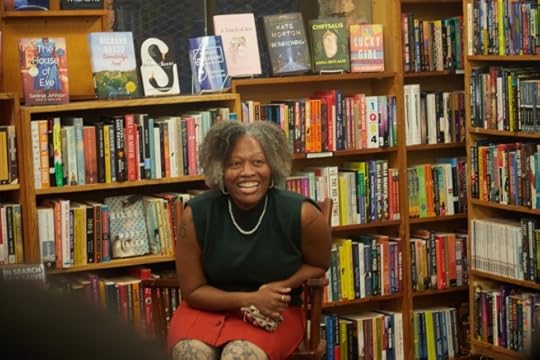
Because I am a lifelong learner and will be on a healing journey for the entirety of my life, I’ve read more books since publishing Salve:
Nancy Newton Verrier’s The Primal Wound: Understanding the Adopted Child Sharon Kaplan Roszia and Allison Davis Maxson’s Seven Core Issues in Adoption and Permanency Deepak Chopra, Jack Tuszynski, and Brian Ferig’s Quantum Body: The New Science of Living a Longer, Healthier, More Vital Life Marnie C. Ferree’s No Stones: Women Redeemed from Sexual Addiction Mary Elaine Jacobsen’s The Gifted Adult: A Revolutionary Guide for Liberating Everyday GeniusI don’t share these to brag. Unfortunately, no one is passing out gold stars or pizza coupons for the most self-healed. I’ve written this to clarify what I mean when I say self-therapy. It doesn’t mean I watch 30-second reels, self-diagnose, and then proclaim victory. In my process, I have the ability to see myself from a distance, intellectualize an unresolved issue, integrate experts’ ideas into my life, and then share information with others, so they can gain perspective in their own lives.
It’s giving Chiron personified.
SELF-THERAPYIn summation, here is my process:
I’ve lived with undiagnosed anxiety and depression for decades, so the first step was to calm tf down. A healing process is challenging if you are in fight, flight, freeze, or fawn mode. Yoga and the beach helped with that. So did meditation.I read about and studied a singular concept for six-to-twelve months.I practiced what experts said. For example, if one way to enact time boundaries is to tell someone you only have an hour for a phone conversation, then I tried that for months until it felt natural and worked.Then, I wrote about curated topics for public consumption. Sharing about my life and engaging in appropriate and authentic conversations is a way to process and integrate trauma. This is also the wounded healer part.In Search of a Salve: Memoir of a Sex Addict represents nine years of the above process.
EQUALLY IMPORTANT STRATEGIES I’VE LEARNED AND INTEGRATEDRadical self-loveRadical self-acceptanceGratitude3-2-1 MeditationWriting to process, not for public consumptionNext week, I’ll share what licensed mental health professionals have said to me about self-therapy, my memoir, and my personal journey. Until then, let me know what you’re thinking.
RELATED POSTSMental Health Matters: How I Healed Myself: Chiron and the Concept of the Wounded Healer (PART I)Mental Health Matters: Curated Resources for Mental Health Awareness MonthMental Health Matters: ResourcesMonday Notes: The One Thing Publishing In Search of a Salve Taught MeMay 5, 2025
Mental Health Matters: How I Healed Myself: Chiron and the Concept of the Wounded Healer (PART I)
I have been studying astrology and using it in my life way before Gen Z normalized it, way before knowing your Big 3 became common knowledge, and way, way before astrology apps and social media reels made it easy for the masses to tap in. However, I’ve rarely shared this due to fear of being shamed. But we’re living in a different time now, and I’m semi-confident no one will call me a witch or burn me at a stake.
So, prior to talking about how I self-healed, it’s necessary to begin with a small dive into my birth chart.
In 2019, my sister introduced me to her astrologer, David. Since then, I’ve received two one-and-a-half-hour birth chart readings. Within 20 minutes of my first reading, David highlighted a significant section: my Chiron placement. It is important to understand Chiron as a planet and as a Greek mythical creature before moving on.
Chiron orbits between Saturn and Uranus and was found in 1977. Initially, it was classified as a comet, later, a minor planet/asteroid (source). This planet was named after a centaur in Greek mythology.
According to mythology, Chiron, the centaur was different than his counterparts because he wasn’t violent and savage. Instead, he was known for his wisdom and knowledge of medicine. He also lived with a wound that wouldn’t heal; as a result, he would heal everyone, except himself.
Astrology combined knowledge of the two and assigned meaning to it in birth charts. Everyone has a Chiron placement, but it means something different for each of us. Overall, this is the gist:
Chiron’s placement in the chart can reveal a core wound that may take a lifetime to work through. As we grapple with pain, we gain wisdom that we can pass on to others like a magical salve. In fact, the symbol for Chiron is shaped like a key since unlocking his powers opens up a portal to deep, inner peace. (Astrostyle)
Carl Jung, who we respect for creating archetypes, calls Chiron the wounded healer, and so do astrologists.
My Chiron placement is in Aries in the 9th house. What follows is a combination of notes from my 2019 reading with David and the website, Mastering the Zodiac.
Chiron in Aries:Your sense of being has been violated in some way and you may fear asserting yourself.You may also over-compensate by attempting to be the first at everything.Physically you may suffer head wounds.You may become a pioneer in a way which will be of service to humanity.Characteristics of Chiron in the 9th house:Potential for deep self-awareness and healingAn opportunity to heal emotional wounds through spiritual exploration, philosophical understanding, and broadening of horizonsA chance to transform ‘lower’ aspects of self and ascend to ‘higher’ states of consciousnessAnother strength is the potential for communication skills, especially in matters of spirituality and philosophyFurthermore, David said that I would have to “release the bondage I had with my family,” and to reach a higher spiritual level, my career should be focused on “some type of healing work.” He reiterated multiple times that if I wanted to attain enlightenment, then I should be doing work that heals people.
I was given this information five years after I’d begun a healing journey and four years after I began this blog. I mention this timeline because I never use astrology to predict the future. After all, we do have free will, and it seems silly to me that my entire life would be laid out, while I just perform as a human being. Typically, I use astrology to understand what happened in the past or to confirm the present.
At the 50-minute mark, David stopped to ask if anything he’d said made sense. “What do you do for work?” he asked.
I told him about my degrees and being a professor. Then, I talked about writing. By 2019, this blog had become an intentional space for inspiration, I had written/published The Unhappy Wife (a book to help women heal from misaligned unions), and I’d edited/published Daddy: Reflections of Father-Daughter Relationships (an anthology designed to help women heal from dysfunctional parental ties).
David was shocked. So, was I.
Learning about my Chiron placement affirmed writing decisions I’d made up to that point. Understanding that my healing journey is closely tied to the themes of identity, belief, and the quest for meaning justified every published word. And knowing that I may be drawn to guiding others through their own journeys of self-discovery, and by extension, healing my own wounds, demonstrated that astrology was more than just a hokey personality test.
Finally, because I don’t use astrology to predict events, I seemed to have ignored and forgotten everything David had explained years ago. When I re-watched the recording for this post, he mentioned that I would have to reckon with my marriage in some way. He also said 2024 would be a big year where everything he’d outlined would come together. At the time, I had no idea what in the who-hay hell he was talking about. Of course, I do now.
Next, I’ll explain explicit processes I used to heal myself. Until then, feel free to leave a comment. I’m on summer break, so I have time to engage 
April 16, 2025
March 31, 2025
Monday Notes: So, I Was on a Radio Show (and Other Updates)
Life has definitely been moving forward for me. And this is how I like it. In the past, I stayed busy to avoid emotions. In a healthier state, I’m more discerning about what I want to do and why. Here’s what’s been going on:
FRONT PAGE JACKSONVILLEOctavius Davis is a man I met while giving to Florida Support Service of Jacksonville. I reached out because I wanted him to host a virtual game night, but he couldn’t. Instead, he asked me to be a guest on his weekly radio show.
“You can come talk about your book and anything else you’ve got going on,” he said. “There are just two things: you have to come to the studio, and it’s on Sunday mornings…at six.”
Y’all. I almost said no, but I figured I could lose a couple hours of sleep to be on the #3 radio show in the city. So, on Sunday, February 23rd, that’s what I did. Gratefully, my husband drove me there. The whole experience is a blur. I don’t remember what I said. But this is how I know I’m moving in the proper direction. The right words come when they need to, whether I’m fully awake or not. You can watch/listen here: Front Page Jacksonville.
CHICAGO LITERARY HALL OF FAME INTERVIEWIn January, I received this email:
On behalf of the Chicago Literary Hall of Fame, I’m thrilled to invite you to participate in Writuals, a monthly micro-interview series celebrating Chicago writers and their creative processes. This series explores how our city’s rich literary heritage, cultural diversity, and iconic spaces inspire routines and rituals that fuel local authors’ work.
We’d be honored to feature your voice and hear about Chicago’s role in your craft and the “writers” that fuel your creativity. Let me know if this resonates with you, and I’ll send you five questions.
Listen. Although I have been more discerning about how to proceed, flattery will get you everywhere with me. I was super excited that anyone would even reach out to ask me to do this. And I’m pleased to be in a space where I don’t have to seek out ways to promote my work.
The Chicago Literary Hall of Fame’s mission is to honor and preserve Chicago’s great literary heritage. As a native, I was also honored by the invitation. The micro-interview offered me the opportunity to pay homage to the family who adopted me, the school that educated me, and the artists who influenced me. You can read the interview here: Writuals: K E Garland.
COMING TO OUR SENSES | SEXUAL LIBERATION FOR ADOPTEESOver the last year, I’ve been immersed in the adoption community, which has been rewarding on a personal and professional level. One day, I was scrolling my little heart away, as I am often wont to do. I liked and commented on a post by the @theadoptedsexologist. Later, I found out her name is Anna Linde. From that day forward, Anna and I have spoken weekly about our shared interests. We even did an IG live, which was scheduled to be 20 minutes but ended up being 50. During that hour, we discussed how one can know if they are using sex in healthy ways, eight-year-old boys and porn, and more. You can watch here: Let’s Talk About S X.
X.
Anna holds an Msc in sexology, and she is a somatic sex educator; likewise, I’ve written a book about my experience with a behavioral addiction centered on sex. Together, we’ve created a series of sexual liberation workshops for different demographics. Because we’re both adoptees, we’re beginning with sharing ways people in this community can heal from issues with intimacy, sex, and shame, issues adoptees have in higher rates than people raised by their biological families. Later, our workshops will cater to women, men, and whoever else needs this information for a healing journey. If you know of an adoptee, who has challenges with intimacy, sex, or shame, then please send them this information. They can register here: Coming to Our Senses.
I hope you find something useful for you or someone you know in any one of these updates!
Also, I hope you see why I’ve been blog bombing some of you lol Although I have less time to read your words, the WordPress community remains near to my heart. So, I make time to immerse myself for a few hours to catch up. No matter how much I read, I continue to be “behind” by a couple months. But still, I persist cause I like y’all
Until next time…
Monday Notes: So, I Was on a Radio Show (and Other Updates)Monday Notes: Balance and Symbiosis in RelationshipsInspiring Image #157: Black JoySunday Shorts: Séduire: Serial Tales & Flash Fiction by Tremaine L. LoadholtMonday Notes: A Love Letter to Myself
March 24, 2025
Monday Notes: Balance and Symbiosis in Relationships
The vernal equinox occurred on March 20th. Scientifically, it’s how we know it is spring in the Northern Hemisphere and fall in the Southern Hemisphere. It is also when the length of day and night are equal. Astrologically, it symbolizes a time to enact balance in our lives, and because Venus is in retrograde this year, it’s also an ideal time to examine and maybe practice this equilibrium, specifically in relationships. Part of my life’s purpose seems to be experiencing, recovering from, analyzing, and discussing relationships of all types. So, I’m pleased that this season seems to be designed for me to do what I do best—overanalyze how we relate to one another.
Symbiosis is my favorite thing to explore. The idea originated in science to describe how two or more organisms interact with each other. There are different types of symbiosis, but the two most talked about are mutualistic, where both parties involved benefit from the interaction, or parasitic, where one party benefits, while the other is harmed. For example, a plant may provide nutrients to an insect, and the insect may provide protection for the plant, thus creating a beneficial relationship. Conversely, there are some insects that only take from plants, causing the plant to decay; those would be parasitic.
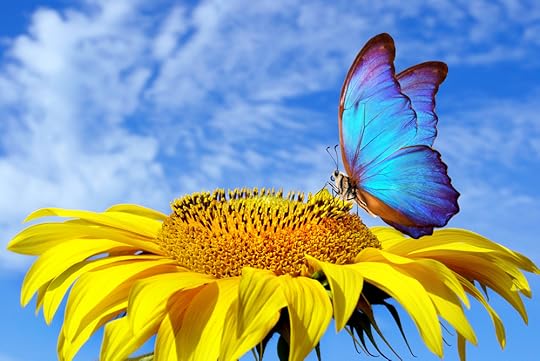
In recent years, symbiosis has also been used to describe relationships between people. The explanations remain the same. A relationship can be parasitic, where one person is always taking from or using another person, while offering nothing, or it can be mutually beneficial, where both people thrive due to the interaction. Having engaged in several codependent relationships in the first four decades of my life, I’ve become adept at recognizing when a partnership is skewed. At this phase, I’m quite clear that I prefer mutuality. Therefore, I’ve spent the last ten years or so cultivating as many of these as possible. Whether it be with a business partner, family member, or friend, here’s what symbiosis looks like for me.
In business, I’ve begun planning a workshop with a fellow adoptee, named Anna Linde, who is an MSc, a sexologist, and a somatic sex educator. Our connection began with a shared goal: to educate people on how to live a healthier sex life. She’s an expert in her field and qualified to discuss this topic; I have lived experiences that complement her academic knowledge. Together, we divide duties based on one another’s education and skillsets. Whereas she loathes social media and can’t bring herself to participate and post; I love it, and look forward to engaging with people, so we compromise in a way that allows for us to co-create and benefit from our combined work.
It is common to find mutualistic relationships in family structures. For example, if you cook and your spouse cleans, that’s a type of symbiosis. Outside of my immediate family, my sister and I have also developed mutuality that is based on a common goal—we both desire a close familial bond. Because we live in different cities, we make time to visit each other one or two times a year. What’s symbiotic is that we share the burden of these visits. For example, sometimes I visit her, and sometimes, she visits me. Other times, we’ve met in another country. During these visits, neither of us depends on the other to pay for everything; we split food and lodging. When we’re not visiting one another, we text or send voice notes to catch up on our day. If one of us hasn’t heard from the other, the other will reach out. Our relationship is intentional, and our love and care for one another is mutually beneficial.
I have many friends, but each relationship isn’t equal. All are symbiotic, but each is not mutualistic. Though the connotation of a parasite seems negative, I’ve accepted that’s what a few of these friendships are. Most of the time, these friends need something from me: time, mentoring, advice. In those instances, I don’t receive anything beneficial from the other person. This isn’t bad. It just is. Just like it isn’t bad that a tree begins to die if ants take over. The difference is, I’m not a tree. I can enact boundaries. Instead of staying on the phone for two hours, I can end the convo after 20 minutes. As the definition shows, if I don’t, I may end up harmed.
On the other hand, there are many friendships I’ve found mutually beneficial. They are typically the ones where there is an equal exchange of energy over time. In these relationships, we are emotionally attuned to one another’s wants and needs, and there is a balance of give-and-take. A rule isn’t explicitly stated. Like the parasite, it just is.
Mutually beneficial relationships are ideal for me, and I’d argue they are for you, too. According to Dr. Bruce Wilson, equality promotes a more balanced contribution to any relationship, and balance can be found through mutuality. Don’t get me wrong, in the natural world, parasitical (and other types of symbiotic relationships, such as predation) are necessary. After all, sharks gotta eat. My point, though, is that if you find yourself in a lopsided relationship, meaning, you are giving too much or not receiving enough, then you may want to assess the symbiotic nature of it. I mean, none of us wants to be the plant that rots because insects are taking all the nutrients, right?
Monday Notes: Balance and Symbiosis in RelationshipsInspiring Image #157: Black JoySunday Shorts: Séduire: Serial Tales & Flash Fiction by Tremaine L. LoadholtMonday Notes: A Love Letter to MyselfMonday Notes: 3 Ways to Survive 47’s Return to Office