K.E. Garland's Blog, page 2
September 15, 2025
Monday Notes: Blueberries
I moved to Covert, Michigan to live with my grandparents the summer of 1990, June to be exact. I was seventeen. My grandmother had tasked me with finding a job for the summer, and when I wasn’t successful, she decided I would make money working on her friend’s blueberry farm.
I’d like to remind you that I was born and raised on the West Side of Chicago. I had never seen a fruit farm. However, my grandmother has also never been the type of person with whom you argue, especially not at seventeen. So, I put on my designer jeans and the kind of straw-brimmed hat you wear by a pool, and I rode with her to the farm.
Someone had decided it was a great idea for me to actually pick the blueberries. I grew more miserable as I rolled each blue ball between my fingers and dropped it into the pail. How did I get here? What can I do to not be here? That’s all I kept thinking.
Around noon, my grandmother’s friend came to get me. Apparently, I wasn’t picking fast enough for a profit margin. She thought it best to move me inside, where her family worked to check for bad fruit and pack the good ones. Although I was no longer picking, I still lamented my current position. What am I doing sitting in this shed packing blueberries? I should be home. I should be hanging out with my friends at the Water Tower.
I don’t remember why, but I didn’t have to return the next day. I’m assuming it’s because I wasn’t very good at it or maybe someone noticed I did more daydreaming than packing.

Decades went by, and I refused to eat blueberries. No blueberry pie. No blueberry jam. No blueberry muffins. You know how they give you a fruit cup at a restaurant? I’d eat everything, except the blueberries. It wasn’t that blueberry picking was so horrible. It was more that the circumstances surrounding how I ended up living in Covert (i.e., my mother dying and my father kicking me out of the house) and completing senior year there incensed me to my core. Blueberries reminded me of that year and the one before it, and for a long time, that experience was something I didn’t want to even think about, let alone eat.
I want to be super clear here. I didn’t consciously stop eating blueberries.
One day someone asked, “You want some blueberries?”
And I said, “Nope. No, thank you.”
I didn’t offer an explanation or biographical context. No one would ever know that I avoided this small, blue fruit because it triggered me in inexplicable ways. It’s something I unconsciously chose.
Today, I am fully aware that I made blueberries the issue, instead of recognizing the issue as the issue. People do this all the time, though. I don’t want to get all psychology here, but it is related to our amygdala and triggers, which can range from seeing blueberries to seeing someone raise their fist in anger.
There is always hope, though. As I began to heal from each phase of abandonment, I no longer avoided blueberries. First, I used frozen ones for smoothies. I mean, baby steps, right? Recently, I’ve begun buying them fresh from the store and popping them in my mouth for a snack. They’re not so bad. I see why they’re popular.
I suppose we all have our own “blueberries.” The key is when you realize what they are, to seek help as soon as possible. Otherwise, the next thing you know, you’re out here avoiding blueberries and missing out on delicious fruits 


September 8, 2025
Mental Health Matters: Resources
Thank you for indulging in my year of discussing how mental health issues showed up in my life and how I’ve managed to become a healthier version of myself. I wanted to close out the year with a few resources that supported me over the past six years just in case you planned on working on yourself in the future. *
[image error]Pexels.com" data-medium-file="https://kwoted.wordpress.com/wp-conte..." data-large-file="https://kwoted.wordpress.com/wp-conte..." src="https://kwoted.wordpress.com/wp-conte..." alt="" class="wp-image-7081" width="191" height="286" srcset="https://kwoted.wordpress.com/wp-conte... 191w, https://kwoted.wordpress.com/wp-conte... 382w, https://kwoted.wordpress.com/wp-conte... 100w, https://kwoted.wordpress.com/wp-conte... 200w" sizes="(max-width: 191px) 100vw, 191px" />Photo by Vlad Bagacian on Pexels.comOprah & Deepak Miraculous Relationships 21-Day Meditation: I remember doing this meditation like it was yesterday. I’d sat down to figure out how I could have better relationships with everyone in my life. At that time, I wasn’t speaking to one of my favorite cousins because he hadn’t introduced me to his then fiancée, had missed my doctoral graduation, and had begun drifting away from me. Two of my goddaughters hated me; one of them, according to their father, didn’t even want to vacation in Florida because then, they’d “have to visit Kathy.” And my marriage was a hot mess. When I sat down to do this meditation, I thought for sure it was going to offer a prescription for how to be better at relationships. Instead, it focused on the relationship I had with myself. It truly was miraculous, and I recommend it for anyone who has so-called relationship issues.
Mindvalley: It’s hard to explain what Mindvalley is, and I don’t even remember how I stumbled across it, but many of the videos and podcasts that the founder, Vishen Lakhiani offers have helped me develop a new perspective of the world and everything in it. For example, Lakhiani created a term called brules, which stands for bullshit rules. In short, these are cultural norms that we all learn that limit who we can become. One brule is “your success should look like someone else’s success,” something that I think we can all agree isn’t true. Mindvalley offers information from people you may (or may not) have heard of, such as Lisa Nichols, Michael Beckwith, Jim Kwik, Marisa Peer, or Neale Donald Walsch. Each person has a specific message about a topic intended to increase your personal growth. I especially suggest listening to the podcast whenever you can.
Mirror Work: 21 Days to Heal Your Life: Louise Hay, the author of this book, is an internationally and well-known healer. But before I praise the contents, I do want to say, that of course, no one can heal themselves, no matter the issue, in twenty-one days. However, this book is a great example of something that can jumpstart the process. I enjoy it because it provides you with four things: 1) a short explanation of the day’s concept, 2) the day’s mantra and mirror work, 3) a journal prompt, and 4) a free meditation you download from Hay’s site. With the exception of two, I spent approximately fifteen minutes per day doing this mirror work. Even though I’d done a lot of introspection and healing over the course of six years, this book was very helpful in showing me where I still needed to heal and grow. It highlighted people with whom I still held resentment and anger and provided me with healthy ways to acknowledge, accept, and move forward in processing these emotions.
Other resources that I won’t explain in great detail:
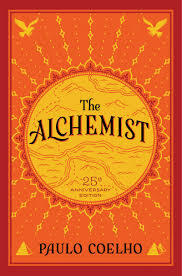
The Alchemist by Paulo Coelho is like a self-help book masked as literature. The overall message (for me) seemed to be that all of our lives are spiritual journeys and how we walk them is up to us. Essentially, we can do what we want here on this earth.
“The 7 Essene Mirrors” explained by Gregg Braden shows how we’re all, essentially, mirrors of one another. Everyone with whom you’re close to is showing you something about yourself. This video is two long hours, with no glitz or glam, but it helped me process possible reasons for why I judged those close to me.
Get Over It!: Thought Therapy for Healing the Hard Stuff is a self-help book that is a little woo-woo. If you believe that perhaps your mother’s mental state and overall health condition during the time you were floating around in amniotic fluid impacted you in some way, then this book is for you. It’s mostly centered on cognitive behavioral therapy concepts, which loosely explained, demonstrates how thought processes can lead you to a better way of dealing with past trauma.
As we enter 2021, I hope we remember that no matter what’s going on around us, we still have a responsibility to name, heal, and process what’s going on inside of us. Each of these resources have helped me to deal with my mental health in some way, which has also shifted how I function in most relationships.
Please feel free to add anything in the comments as I believe you never know what may support someone else.
*Disclaimer: I have not been paid to market any of these resources. Statements are my personal opinion.
September 1, 2025
Monday Notes: Shows About Women in Midlife Through the Lens of And Just Like That
And just like that, I’m a woman in midlife complaining about how media portray women who are in midlife. Part of this was prompted by watching three mind-numbing seasons of And Just Like That (AJLT). I do not recommend it. Another part of this essay is due to having a couple of conversations with LA over at Waking Up on the Wrong Side of 50. In one of her blogs, she specifically asked what we would want to see in a show or book that centered women in midlife. So, here goes:
DIVERSITYI loathe tokenism in a series. On AJLT, Nicole Ari Parker’s character, Lisa, was unequivocally a token. Yes, she had a subplot, but was it developed? I knew more about Aidan’s son’s mental health and secret prescription drug use than I did about Lisa. Another characteristic is she rarely had scenes where she was doing friend things with one other character, which when you’re in a group of friends in real life, is normal. Friends typically pair off or gather in smaller groups to have solo friend time, like many of the other characters did. Also, I have a good friend who is white. I’ve written about her before. We do things like talk on the phone, Zoom, and visit each other’s houses. I would venture to say that other people have diverse friendships, where they, too, interact in friend-like ways. So, if I had a TV show, I’d create scenarios where women who are different races/ethnicities function in authentic ways.
MENOPAUSEAs long as the media continues to treat perimenopause, menopause, and post-menopause as if it’s a one-off situation, women and men are going to think it’s a one-off situation. It is not. It’s literally a life transition. Initially, I thought AJLT was going to be groundbreaking and delve into all things menopause via Kristin Davis’s character, Charlotte. I was excited when she had a flash period in Season 1. This is it, I thought. Charlotte’s going to keep having menopausal situations or maybe she’ll go to her gynecologist, who will blow her off and tell her she’s fine. Perhaps, she’ll spend two years, or at the least, the next two seasons trying to figure out if she’s perimenopausal, menopausal, or post-menopausal. Menopause is a worthy side story for a series where women in their 50s are central characters. Instead, she had less than five minutes of one episode to be embarrassed and move on with life. On my series, we’d watch one character do as many women have: try teas, tinctures, and meditation, and perhaps, settle on a nice cocktail of hormones.
SEXLA shared this Vogue article, which does a pretty good job of explaining where AJLT could’ve done better. One topic is sex. Most women in this phase of life have had some shifts in the sheets, no matter if they’re in a committed relationship like Charlotte and Lisa or bed hopping like Sophia was on the Golden Girls. Warning: this is about to get explicit, so if you keep reading, that’s on you. Still here? Great. Many midlife women need lube and some form of hormone if they are going to be having sex as freely as the media would like you to believe. There’s a show called The Hunting Wives that I’m way too into, and Margo (Malin Akerman) has so much mind-blowing sexy, McSexy sex that you’d think she was dropping two eggs per month. I’m not sure how old any of the women on this show are supposed to be, but some have teenage children, and a couple of husbands have gray hair, so I’m guessing 40 or so. And if that’s the case, I’m not buying this portrayal of Margo’s sex life. If I was directing a show, we’d do a close-up of the KY on the nightstand and include an offhand comment about testosterone cream.
GRAY HAIRFinally, it’s disappointing that even in 2025, only male characters get to be good looking while aging. I thought we would have evolved by now, but I guess not. Wouldn’t it be nice if there was a series where at least one woman wore her hair the way it grew out of her head? Wouldn’t that be inspiring? Think of all the younger women who may watch and think, well, I guess it is possible to age, just be, and love myself, simultaneously! I thought AJLT was going to be that show. Miranda (Cynthia Nixon) started off with gray hair, but by the end of Season 1, she’d decided it was too hard. Well, damn. Anecdotally speaking, she represents many women I know. They just can’t take commit to aging naturally. I’m not on a high horse. It is hard. But I keep thinking if media showed more women with varied gray-hairstyles, then maybe, the visual would be normalized, and maybe it would motivate other women to ditch their Clairol.
Welp. I wanted to also add that we should end the mean-girl trope by the time women are in midlife and that more women need to visibly wear readers, while viewing the brunch menu, but I’ve said enough. I can’t believe we’re still discussing something like this in the 21st century. You’d think by now the media would stop portraying stereotyped and unrealistic versions of midlife women. But here we are.
Monday Notes: Shows About Women in Midlife Through the Lens of And Just Like ThatInspiring Image #164: ParadoxInspiring Image #163: Commodity (Saint Lucia)Sunday Shorts: The Beach LecturerInspiring Image #162: Learning (Saint Lucia)August 27, 2025

August 18, 2025
Monday Notes: Words as Lifelines: BIPOC Adoptee Voices for Gaza
A few months ago, I was invited to participate in a read-a-thon called, “Words as Lifelines” to raise funds for three families in Gaza. I agreed and will be reading alongside Nicole Chung and Matthew Salesses on Sunday, August 31st.
What I am asking of you:I hope that you will do two things: (1) register for the event, which includes donating at least five dollars, and (2) attend on August 31st at 3PM (PST) / 5PM (CST) / 6 PM (EST).
REGISTER HEREWhat will I read?I wrote something new called “Displaced,” which shows the similarities of being displaced as an adoptee to being displaced as a Palestinian who was forced out of their homeland. What follows is the beginning of my 1700-word essay.
DISPLACEDWhen I was a five-month-old baby, my mother, who was diagnosed with schizophrenia, left me in our apartment. I’ve read the Illinois Department of Children and Family Services report so much that I don’t need to review it to share what I’m reading today. I’ve spent decades reconfiguring the circumstances that led to her decision. I attribute her actions to a mental illness that allowed her to leave me for five-to-seven days unattended. But when I ponder the details, time slows. I imagine myself as a hungry five-month-old baby, my diaper heavy with urine and feces. I envision myself crying, the universal signal for a mother to pick up her child. I see my cry decrease to a whimper, my whimper slow to a stop, my tears crystallize on my pallid cheeks as I realize no one is coming. Well, not my mother. I was five pounds when the janitor of the building called the police, who took me to the appropriate social service agency, who placed me in foster care. A baby born to a mother who is schizophrenic is presumably unsafe. A baby left in an apartment is, indeed, a dangerous event. However, this is my origin story, which my body stored as a somatic core memory of displacement.
Displacement: the enforced departure of people from their homes, typically because of war, persecution, or natural disaster.1
The internet provides facts about Palestinian displacement. But facts are not enough. Oftentimes, the truth of war is blurred by those who control the dominant narrative. Who is in danger and who is dangerous lingers in between the smoke of bombs. They’ve said, history is written by the victors, but today I seek answers focused on those who lost: the oppressed, the persecuted, the silenced. It is not enough to know about the UN’s Partition Plan or the Arabs’ rejection of it.2 People are not bullet points on a timeline. Government sanctions come with deleterious effects. And the past will always be inextricably linked to the present. So, I watch a documentary to absorb the Palestinians’ perspective, and I listen intently to people who lived through Al Nakba—the Arabic word for catastrophe. Here is what I heard.
REGISTER HEREIt was 1948. The Arabs knew something was coming but were unaware of the magnitude. Their ancestors had peacefully lived on their land for centuries. While the world discussed Judaism and the Land of Israel over cups of coffee, Christians, Jews, and Muslims cohabited in common areas, like markets. Peace existed. In my imagination, weekends bustled; people passed one another, with knowledge of, but without serious thought to religious affiliation or conflict.3
Hebrew and Arabic intermingled in third spaces. The Arabs were unaware, and thus, confused when pride and power swelled within their neighbors’ chests as word spread that this was now their God-given land, the land where hands had exchanged pounds and lira for olive oil and herbs weeks prior. An elder Arab in the documentary explains the lack of understanding: “The Jewish conflict” he says, “is a European conflict.” He describes his lived memory of the 1948 Arab-Israeli War: “There is no Jewish conflict in Arab history. They brought the conflict over here.”4
I hope that you will register and attend to hear the rest. Sending peace and love to everyone as we continue to traverse these unprecedented times.
REGISTER HEREMonday Notes: Words as Lifelines: BIPOC Adoptee Voices for GazaInspiring Image #163: Commodity (Saint Lucia)Sunday Shorts: The Beach LecturerInspiring Image #162: Learning (Saint Lucia)Monday Notes: When AI Takes Control, Don’t Blame the “Tech Bros.” Blame Ourselves.“Displacement,” Oxford languages. ︎“Israeli-Palestinian Conflict Timeline,” Council on Foreign Relations, June 24, 2025, https://education.cfr.org/learn/timeline/israeli-palestinian-conflict-timeline. ︎Benny Brunner and Alexandra Jansse, “Al Nakba: The Palestinian Catastrophe 1948,” YouTube, 1997, https://youtu.be/sov7PZME1Cw?si=O08RpT_hHJPv9N27. ︎Benny Brunner and Alexandra Jansse. ︎
August 13, 2025

August 3, 2025
Sunday Shorts: The Beach Lecturer
I sat in the lobby, waiting for my friend. Two colorful beach chairs beside me. One cooler, large enough to hold fourteen cans, sat nearby. My black-and-white swimsuit peeked through my white coverup.
“Going to the beach?” she said.
My former life flashed before me, the one where I would have said, how’d you guess that? But I’ve grown. Now, I use sarcasm sparingly, so as not to seem standoffish.
“I ammmm!”
“What beach are you going to?” she asked.
I wished the elevator would hurry. Small talk annoys me.
“St. Augustine,” I obliged.
“So, Anastasia State Park or ST…AUG…U…STINE?”
Where was the damn elevator?
“We go to Butler Beach.”
“You should take A1A,” she suggested.
“We’ve taken A1A five billion times. We’re taking 95.”
“It’s fifteen minutes outta the way,” she advised.
Ask Ms. Beach Guide why she wants to order your steps on this beautiful day, old KG whispered.
Instead, I repeated, “We’ve taken A1A five billion times.”
“Well,” her wheels turned, conjuring more beachy knowledge. “Hanna Park is great for meditation.”
“Yes. I go frequently.”
Old KG wanted me to list the fifteen Florida beaches I’d visited coast-to-coast.
“I don’t like the Atlantic because it’s…for lack of a better word…violent,” she shared.
“I like violent.”
She described her love of the Gulf and the West Coast because it’s soooo peaceful. My eyes glazed.
We can end this old KG reminded:
Tell her you’ve dipped your toes in the Adriatic, held conversation off Sagami Bay, seen parts of the Caribbean, dove off catamarans, touched underwater ships. You know peace, and it’s not at Hanna Park; it’s beyond the shoreline of Saint Lucia.
I wondered why I was the object of her oceanic lecture. There was no reason for her to bypass regular pleasantries, and instead, choose condescension.
But Don Miguel Ruiz’s words reverberated: “Do not take anything personally.”
The elevator came.
I exhaled.
Tests come in many forms. And I’d passed that one. But the old KG? She’s always there, ready to drive the bus. Luckily, it’s rare that she needs to.
SUNDAY SHORTSSunday Shorts: Séduire: Serial Tales & Flash Fiction by Tremaine L. LoadholtSunday Shorts: I Am My Mother, My Mother Am ISunday Shorts: I Have LearnedSunday Shorts: Respect RealityJuly 30, 2025

July 21, 2025
Monday Notes: When AI Takes Control, Don’t Blame the “Tech Bros.” Blame Ourselves.
Disclaimer: These thoughts are a combination of recent experiences, observations, and conversations. Please do not take it personally if you see your reflection.
The other day, I was listening to my favorite podcast, Hidden Brain. The episode’s artwork—an elderly Black woman—was obviously AI. Her gray tresses too perfectly wisped in the wind; the creases on her forehead ventured in two different directions. Her breasts, while not perky, were a bit too smooth for a woman her age. And I wondered why the show had chosen this route, instead of employing an artist or a photographer. I can’t say for certain, but the answers are probably in step with what I’ve heard and experienced: (1) AI is easier, (2) AI is cheaper, and (3) AI is quicker.
AI IS EASIEREverything that society has done in the name of progress has become widely accepted because it is easier. From the cotton gin to the computer, innovation that eases our burdens is an initial win-win that we are quick to adopt. I’ve worked with several millennials over the last year, and each time, there comes a point in the conversation where they say, Ima just ask AI. Efficiency is not bad. We should work smarter, but there is evidence of what happens when we take an “easier” route; we lose something every time. For example, farming technology created a more sedentary society, and sitting for long periods of time (in front of a computer) advanced obesity.
It’s easier to just ask AI, but Royce and Bennett said that over reliance on these tools can potentially decrease critical thinking skills.1 They also cited a popular Microsoft study that explained the disconnect: The more confident a user feels in using AI, the lower their critical thinking skills are; however, the higher a user’s self-confidence is, the higher their critical thinking skills are.2 Put simply, if you think AI knows more than you do, you’re not going to use your noggin. Add the ease of asking AI to summarize information, as opposed to reading and synthesizing a couple of articles yourself, and well, you see where we’re headed, right?
AI IS CHEAPERA few years ago, I used Lensa to participate in a social media trend: creating AI photos of myself. I wrote here about how I almost cancelled my photoshoot because it made more financial sense to spend $19.99 on an app, instead of $400 for headshots. How could that one decision hurt anyone? Well, had I canceled, the photographer wouldn’t have made money, and as of today, money is how we survive in a capitalist society.
But everyone doesn’t think like that.
Recently, my GenZ daughter worked with an after-school program and a farmer (who is a millennial) to show teenagers how to farm. For weeks, she met with the farmer and the school’s leadership to create on-the-fly plans. I offered my expertise in curriculum and instruction. I mean, I do have a whole-ass doctorate in the field, and I’ve taught for nearly 30 years at the secondary and post-secondary level. I know things. But someone of my caliber is costly.
“I can just use AI,” he told my daughter.
He’s not wrong. Generative AI can create a curriculum. If he used the ChatGPT Pro Plan for a year, that would still be less than paying me. However, it is not advisable at this stage because it will, more than likely, be an incomplete template designed for a stereotyped diverse student, not the ones they interacted with each day. Someone would still have to review the plans, but I suspect they won’t.
Like ease, I wonder what we will lose in order to save a few dollars.
AI IS QUICKERIs doing something quickly a white supremacist characteristic? That’s what I asked Google Gemini. I already knew the answer was yes, because I have a social justice background, but I didn’t feel like searching for the articles that prove it. See how that works? Even the best of us will succumb to the pressures of contemporary times. But I digress.
Doing something quickly is tied to having a “sense of urgency,” which we seemed to have mastered here in the so-called western world. Everything has to be known, understood, and mastered right now. But that’s not how progress works. Meaningful work, whether related to social justice or not, takes time. Reading a book, processing information, and learning takes time.
I also find it paradoxical that we are in an era where some thought leaders are calling for women and those in diverse communities to slow down and rest to this type of system, while others are advocating for the use of AI to do quick work. The hope is that AI will become the work horses that companies once tried to make people into. The premise is that with the latter, human beings can offload menial tasks, leaving more time to be productive in other ways.
I’m not buying it.
I am an observer. I’ve seen what many do with free time. They scroll social media. They isolate because engaging with an app is more comfortable. They avoid conversations that will improve their lives. Many do not use their current time to think critically or to be more productive for their own wellbeing. I suspect many will not use their free time to make the world a better place, as proponents of AI want us to believe.
Instead, I foresee a world where AI is running varied facets of our lives that we’ve deemed to be just too hard, too stressful, and too time consuming. Today, Copilot is writing a harmless email. Tomorrow? Another AI will do something more high-stakes, like interact with your children. Cause who wants to do that? And when that happens, please do not blame the “tech bros.” Remember how you used it in its infancy because it was easy, cheap, and quick. Remember, whether conscious or not, we are always complicit in the unintended consequences of our past actions.
https://www.nsta.org/blog/think-or-not-think-impact-ai-critical-thinking-skills#:~:text=Despite%20the%20potential%20benefits%2C%20there,analytically%20and%20solve%20problems%20independently.︎Lee, Hao-Ping, Advait Sarkar, Lev Tankelevitch, Ian Drosos, Sean Rintel, Richard Banks, and Nicholas Wilson. “The Impact of Generative AI on Critical Thinking: Self-reported Reductions in Cognitive Effort and Confidence Effects from a Survey of Knowledge Workers.” In Proceedings of the 2025 CHI Conference on Human Factors in Computing Systems, pp. 1–22. 2025. ︎RELATED POSTS