
Find & Share Quotes with Friends
Liberal Quotes
Quotes tagged as "liberal"
Showing 1-30 of 211

“If by a "Liberal" they mean someone who looks ahead and not behind, someone who welcomes new ideas without rigid reactions, someone who cares about the welfare of the people-their health, their housing, their schools, their jobs, their civil rights and their civil liberties-someone who believes we can break through the stalemate and suspicions that grip us in our policies abroad, if that is what they mean by a "Liberal", then I'm proud to say I'm a "Liberal.”
― Profiles in Courage
― Profiles in Courage

“The preachers and lecturers deal with men of straw, as they are men of straw themselves. Why, a free-spoken man, of sound lungs, cannot draw a long breath without causing your rotten institutions to come toppling down by the vacuum he makes. Your church is a baby-house made of blocks, and so of the state.
...The church, the state, the school, the magazine, think they are liberal and free! It is the freedom of a prison-yard.”
― I to Myself: An Annotated Selection from the Journal of Henry D. Thoreau
...The church, the state, the school, the magazine, think they are liberal and free! It is the freedom of a prison-yard.”
― I to Myself: An Annotated Selection from the Journal of Henry D. Thoreau

“The state is that great fiction by which everyone tries to live at the expense of everyone else.”
―
―

“We cannot have a world where everyone is a victim. "I'm this way because my father made me this way. I'm this way because my husband made me this way." Yes, we are indeed formed by traumas that happen to us. But then you must take charge, you must take over, you are responsible.”
―
―

“Political tags — such as royalist, communist, democrat, populist, fascist, liberal, conservative, and so forth — are never basic criteria. The human race divides politically into those who want people to be controlled and those who have no such desire. The former are idealists acting from highest motives for the greatest good of the greatest number. The latter are surly curmudgeons, suspicious and lacking in altruism. But they are more comfortable neighbors than the other sort.”
―
―

“The essence of Christianity is told us in the Garden of Eden history. The fruit that was forbidden was on the tree of knowledge. The subtext is, 'All the suffering you have is because you wanted to find out what was going on. You could be in the Garden of Eden if you had just kept your fucking mouth shut and hadn't asked any questions.”
―
―
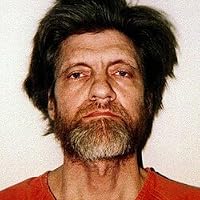
“The conservatives are fools: They whine about the decay of traditional values, yet they enthusiastically support technological progress and economic growth. Apparently it never occurs to them that you can't make rapid, drastic changes in the technology and the economy of a society without causing rapid changes in all other aspects of the society as well, and that such rapid changes inevitably break down traditional values.”
― Industrial Society and Its Future
― Industrial Society and Its Future

“I think being a liberal, in the true sense, is being nondoctrinaire, nondogmatic, non-committed to a cause - but examining each case on its merits. Being left of center is another thing; it's a political position. I think most newspapermen by definition have to be liberal; if they're not liberal, by my definition of it, then they can hardly be good newspapermen. If they're preordained dogmatists for a cause, then they can't be very good journalists; that is, if they carry it into their journalism."
[Interview with Ron Powers (Chicago Sun Times) for Playboy, 1973]”
―
[Interview with Ron Powers (Chicago Sun Times) for Playboy, 1973]”
―

“Liberals seem to assume that, if you don’t believe in their particular political solutions, then you don’t really care about the people that they claim to want to help.”
―
―

“I regard the Klan, the Anglo-Saxon clubs and White American societies, as far as the Negro is concerned, as better friends of the race than all other groups of hypocritical whites put together.”
―
―

“Conservatives are not necessarily stupid, but most stupid people are conservatives...
I never meant to say that the Conservatives are generally stupid. I meant to say that stupid people are generally Conservative. I believe that is so obviously and universally admitted a principle that I hardly think any gentleman will deny it. Suppose any party, in addition to whatever share it may possess of the ability of the community, has nearly the whole of its stupidity, that party must, by the law of its constitution, be the stupidest party; and I do not see why honorable gentlemen should see that position as at all offensive to them, for it ensures their being always an extremely powerful party . . . There is so much dense, solid force in sheer stupidity, that any body of able men with that force pressing behind them may ensure victory in many a struggle, and many a victory the Conservative party has gained through that power."
John Stuart Mill ( British philosopher, economist, and liberal member of Parliament for Westminster from 1865 to 68 )”
―
I never meant to say that the Conservatives are generally stupid. I meant to say that stupid people are generally Conservative. I believe that is so obviously and universally admitted a principle that I hardly think any gentleman will deny it. Suppose any party, in addition to whatever share it may possess of the ability of the community, has nearly the whole of its stupidity, that party must, by the law of its constitution, be the stupidest party; and I do not see why honorable gentlemen should see that position as at all offensive to them, for it ensures their being always an extremely powerful party . . . There is so much dense, solid force in sheer stupidity, that any body of able men with that force pressing behind them may ensure victory in many a struggle, and many a victory the Conservative party has gained through that power."
John Stuart Mill ( British philosopher, economist, and liberal member of Parliament for Westminster from 1865 to 68 )”
―

“If you want government to intervene domestically, you’re a liberal. If you want government to intervene overseas, you’re a conservative. If you want government to intervene everywhere, you’re a moderate. If you don’t want government to intervene anywhere, you’re an extremist.”
―
―

“The central conservative truth is that it is culture, not politics, that determines the success of a society. The central liberal truth is that politics can change a culture and save it from itself.”
―
―

“This is my country, that is your country; these are the conceptions of narrow souls - to the liberal minded the whole world is a family.”
―
―

“The government cannot love you, and any politics that works on a different assumption is destined for no good.”
―
―

“I wished that well-meaning white liberals would think before they said things that they thought were perfectly innocent.”
― Queenie
― Queenie

“When the focus becomes ‘What would Jesus do?’ instead of ‘What has Jesus done?’ the [conservative/liberal] labels no longer matter.”
―
―

“Both political parties have moved to the right during the neoliberal period. Today’s New Democrats are pretty much what used to be called “moderate Republicans.” The “political revolution” that Bernie Sanders called for, rightly, would not have greatly surprised Dwight Eisenhower.
The fate of the minimum wage illustrates what has been happening. Through the periods of high and egalitarian growth in the ‘50s and ‘60s, the minimum wage—which sets a floor for other wages—tracked productivity. That ended with the onset of neoliberal doctrine. Since then, the minimum wage has stagnated (in real value). Had it continued as before, it would probably be close to $20 per hour. Today, it is considered a political revolution to raise it to $15.”
―
The fate of the minimum wage illustrates what has been happening. Through the periods of high and egalitarian growth in the ‘50s and ‘60s, the minimum wage—which sets a floor for other wages—tracked productivity. That ended with the onset of neoliberal doctrine. Since then, the minimum wage has stagnated (in real value). Had it continued as before, it would probably be close to $20 per hour. Today, it is considered a political revolution to raise it to $15.”
―

“An imaginary circle of empathy is drawn by each person. It circumscribes the person at some distance, and corresponds to those things in the world that deserve empathy. I like the term "empathy" because it has spiritual overtones. A term like "sympathy" or "allegiance" might be more precise, but I want the chosen term to be slightly mystical, to suggest that we might not be able to fully understand what goes on between us and others, that we should leave open the possibility that the relationship can't be represented in a digital database.
If someone falls within your circle of empathy, you wouldn't want to see him or her killed. Something that is clearly outside the circle is fair game. For instance, most people would place all other people within the circle, but most of us are willing to see bacteria killed when we brush our
teeth, and certainly don't worry when we see an inanimate rock tossed aside to keep a trail clear.
The tricky part is that some entities reside close to the edge of the circle. The deepest controversies often involve whether something or someone should lie just inside or just outside the circle. For instance, the idea of slavery depends on the placement of the slave outside the circle, to make some people nonhuman. Widening the circle to include all people and end slavery has been one of the epic strands of the human story - and it isn't quite over yet.
A great many other controversies fit well in the model. The fight over abortion asks whether a fetus or embryo should be in the circle or not, and the animal rights debate asks the same about animals.
When you change the contents of your circle, you change your conception of yourself. The center of the circle shifts as its perimeter is changed. The liberal impulse is to expand the circle, while conservatives tend to want to restrain or even contract the circle.
Empathy Inflation and Metaphysical Ambiguity
Are there any legitimate reasons not to expand the circle as much as possible?
There are.
To expand the circle indefinitely can lead to oppression, because the rights of potential entities (as perceived by only some people) can conflict with the rights of indisputably real people. An obvious example of this is found in the abortion debate. If outlawing abortions did not involve commandeering control of the bodies of other people (pregnant women, in this case), then there wouldn't be much controversy. We would find an easy accommodation.
Empathy inflation can also lead to the lesser, but still substantial, evils of incompetence, trivialization, dishonesty, and narcissism. You cannot live, for example, without killing bacteria. Wouldn't you be projecting your own fantasies on single-cell organisms that would be indifferent to them at best? Doesn't it really become about you instead of the cause at that point?”
― You Are Not a Gadget
If someone falls within your circle of empathy, you wouldn't want to see him or her killed. Something that is clearly outside the circle is fair game. For instance, most people would place all other people within the circle, but most of us are willing to see bacteria killed when we brush our
teeth, and certainly don't worry when we see an inanimate rock tossed aside to keep a trail clear.
The tricky part is that some entities reside close to the edge of the circle. The deepest controversies often involve whether something or someone should lie just inside or just outside the circle. For instance, the idea of slavery depends on the placement of the slave outside the circle, to make some people nonhuman. Widening the circle to include all people and end slavery has been one of the epic strands of the human story - and it isn't quite over yet.
A great many other controversies fit well in the model. The fight over abortion asks whether a fetus or embryo should be in the circle or not, and the animal rights debate asks the same about animals.
When you change the contents of your circle, you change your conception of yourself. The center of the circle shifts as its perimeter is changed. The liberal impulse is to expand the circle, while conservatives tend to want to restrain or even contract the circle.
Empathy Inflation and Metaphysical Ambiguity
Are there any legitimate reasons not to expand the circle as much as possible?
There are.
To expand the circle indefinitely can lead to oppression, because the rights of potential entities (as perceived by only some people) can conflict with the rights of indisputably real people. An obvious example of this is found in the abortion debate. If outlawing abortions did not involve commandeering control of the bodies of other people (pregnant women, in this case), then there wouldn't be much controversy. We would find an easy accommodation.
Empathy inflation can also lead to the lesser, but still substantial, evils of incompetence, trivialization, dishonesty, and narcissism. You cannot live, for example, without killing bacteria. Wouldn't you be projecting your own fantasies on single-cell organisms that would be indifferent to them at best? Doesn't it really become about you instead of the cause at that point?”
― You Are Not a Gadget

“Good for you, you have a heart, you can be a liberal. Now, couple your heart with your brain, and you can be a conservative.”
―
―

“Liberalism is the ideology of Western suicide. When once this initial and final sentence is understood, everything about liberalism - the beliefs, emotions and values associated with it, the nature of its enchantment, its practical record, its future - falls into place.”
― Suicide of the West: An Essay on the Meaning and Destiny of Liberalism
― Suicide of the West: An Essay on the Meaning and Destiny of Liberalism


“It turns out that indecision is a path itself; but figuratively, a vertical path - up or down - meaning it isn't always a fruitless path. One is forgotten, but the other is glorified. To be what they call 'middle-of-the-road' in most cases just means you have a hard time figuring out who between options is dumber. So quite often those who refused to decide were, after all, the bold individuals, the influential ones, the creative ones, those who snatched their own authority.”
― Killosophy
― Killosophy
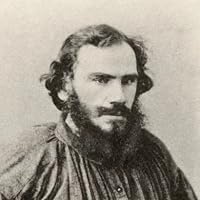
“If there was a reason why he preferred the liberal tendency to the conservative one (also held to by many of his circle), it was not because he found the liberal tendency more sensible, but it more closely suited his manner of life.”
― Anna Karenina
― Anna Karenina

“If Americans simply choose to vote for the person who has a D or an R by their name, we will get what we deserve, which is what we have now.”
― One Nation: What We Can All Do to Save America's Future
― One Nation: What We Can All Do to Save America's Future

“It does strange things to you to realize that the conservative establishment is forcing you to be a progressive liberal fighter for universal rights.”
― Perfect State
― Perfect State

“We are all familiar with intellectuals who speak only on behalf of their country, class, religion, 'race,' 'gender,' or 'sexual orientation,' and who shape their opinions according to what they take to be the interest of their affinity of birth or predilection. But the distinctive feature of the liberal intellectual in past times was precisely the striving for universality; not the unworldly or disingenuous denial of sectional identification but the sustained effort to transcend that identification in search of truth or the general interest. . . . In today's America, neoconservatives generate brutish policies for which liberals provide the ethical fig leaf. There really is no other diifference between them.”
― Reappraisals: Reflections on the Forgotten Twentieth Century
― Reappraisals: Reflections on the Forgotten Twentieth Century

“That liberty [is pure] which is to go to all, and not to the few or the rich alone. (to Horatio Gates, 1798)”
―
―

“There is danger in speaking so generally about "liberalism," a danger that has often plagued feminist debates. "Liberalism" is not a single position but a family of positions; Kantian liberalism is profoundly different from classical Utilitarian liberalism, and both of these from the Utilitarianism currently dominant in neoclassical economics.”
―
―

“Paradigma sekular dan liberal yang mencirikan peradaban Barat hari ini telah meruntuhkan semua kebenaran mutlak. Setiap dakwaan kebenaran telah menjadi relatif dari segi masa (historicization of truth); relatif dari segi geografi, budaya dan status sosial (sociology of knowledge); relatif dari segi sifat bahasa manusia yang terbatas (the limits of language); relatif dilihat dari perspektif hermeneutika kerana setiap pemerhati adalah juga pentafsir. Oleh yang demikian, dilihat dari sudut yang pelbagai itu, pemaknaan tentang sesuatu perkara selamanya bersifat sementara, terbatas, maka untuk mengatasi keterbatasan ini perspektif yang lain harus diambil kira. Di sinilah faham pluralisme dianggap penting untuk menghalang manusia dari kecenderungan mengabsolutkan yang relatif.”
― Islam dan Pluralisme Agama: Memperkukuh Tawhid di Zaman Kekeliruan
― Islam dan Pluralisme Agama: Memperkukuh Tawhid di Zaman Kekeliruan
All Quotes
|
My Quotes
|
Add A Quote
Browse By Tag
- Love Quotes 102.5k
- Life Quotes 81k
- Inspirational Quotes 77.5k
- Humor Quotes 45.5k
- Philosophy Quotes 32k
- Inspirational Quotes Quotes 28.5k
- God Quotes 27k
- Wisdom Quotes 25k
- Romance Quotes 25k
- Truth Quotes 25k
- Poetry Quotes 24.5k
- Life Lessons Quotes 23k
- Quotes Quotes 21.5k
- Death Quotes 21k
- Happiness Quotes 19k
- Hope Quotes 19k
- Faith Quotes 18.5k
- Inspiration Quotes 18k
- Relationships Quotes 16k
- Spirituality Quotes 16k
- Motivational Quotes 16k
- Religion Quotes 15.5k
- Life Quotes Quotes 15.5k
- Writing Quotes 15k
- Love Quotes Quotes 15k
- Success Quotes 14.5k
- Motivation Quotes 14k
- Time Quotes 13k
- Science Quotes 12.5k
- Motivational Quotes Quotes 12k