Blair Bancroft's Blog, page 57
April 14, 2013
A Different Mosaic - Recipes
I have to admit to an addiction - I have trouble saying no to a recipe book, almost any recipe book, any time, anywhere. I could not cook up a tenth of the recipes I own, given two or three lifetimes. And still, even after swearing "not one more," I can't resist. On the plus side - there's always something in the freezer, waiting to be eaten. On the negative - mass confusion on where to store all those books, magazines, and clippings. Sigh.
Today, in keeping with my theme of Mosaic Moments (a little bit of everything), I'm presenting three recipes. Two are not mine, but they stood out among the hundreds of recipes I've tried, and I felt they deserved more exposure. The third is my own version of how to make a package of fake crabmeat taste like a gourmet treat in under ten minutes.
BACON-CHICKEN CRESCENT RING*
2 tubes (8 oz. each) refrigerated crescent rolls
1 can (10 oz.) chunk white chicken, drained & flaked
1-1/2 cups (6 oz.) shredded Swiss cheese
3/4 cup mayonnaise
1/2 cup finely chopped sweet red pepper
1/4 cup finely chopped onion
6 bacon strips, cooked & crumbled
2 tablespoons Dijon mustard
1 tablespoon Italian salad dressing mix
Grease a 14-inch pizza pan (or pizza stone). Unroll crescent roll dough; separate into 16 triangles. Place wide end of one triangle 3 inches from edge of prepared pan with point overhanging edge of pan. Repeat with remaining triangles along outer edge of pan, overlapping the wide ends (dough will look like a sun when complete). Lightly press wide ends together.
In a small bowl, combine the remaining ingredients. Spoon over wide ends of dough. Fold points of triangles over filling and tuck under wide ends (filling will be visible). Bake at 375° for 20-25 minutes or until golden brown. Yield: 8 servings.
* Recipe from Taste of Home's Bacon Recipe Cards
Note: The above recipe is a tad fussy, but the taste is incredible.
STAINED GLASS COOKIES*
1 cup (6 oz.) semisweet chocolate chips
2 tablespoons butter
1 egg, lightly beaten
3 cups pastel miniature marshmallows**
½ cup chopped pecans or walnuts
1 cup flaked coconut
1. In a heavy saucepan, melt chocolate chips and butter over low heat, stirring occasionally. Stir a small amount into the beaten egg, then return all to pan. Cook and stir over low heat for 2 minutes. Pour into a bowl; let cool for 15 minutes. Gently stir in marshmallows and nuts. Chill for 30 minutes. (I stirred the chocolate mix into the marshmallow mix - no difference.)
2. On a long sheet of waxed paper, shape dough into a 1½-inch-diameter log. Place coconut on another sheet of waxed paper. Gently roll log over coconut to coat sides. Wrap up tightly, twisting ends to seal. (I twisted & clipped with plastic clothes pins.)
3. Freeze for 4 hours or overnight. Remove waxed paper. Cut into 1/4 - 3/8" slices. Store in an airtight container in the refrigerator.
TIP: Stash a batch of cookies in a plastic container in the freezer for use anytime. They unfreeze very quickly.
*Originally, “Cathedral Cookies” - recipe from Taste of Home’s Best-Loved Cookies, December 2012.
**The only place I was able to find colored mini-marshmallows was a Wal-Mart Superstore.
Note: the above recipe is easy enough for a child to do much of the work (except melt the chocolate). It becomes fussy only because of the "wait" times. The result, however, is worth every bit of the fuss. An amazing confection.
IT ALMOST TASTES LIKE CRABMEAT
1 8-oz. refrigerated pkg. of fake crabmeat, cut into bite-size chunks
2-4 tablespoons butter or margarine, melted
juice of 1/2 to one whole fresh lemon, to taste*
6-10 capers, to taste
fresh dill, chopped**
*yes, you can use canned lemon juice, if you don't mind the chemicals
**yes, you can use dry dill weed - again, to taste. But I advise picking up a dill plant at your local plant source - it's worth the extra effort.
Melt butter, add lemon juice & crabmeat; heat, adding capers & dill to taste.
~ * ~Thanks for stopping by.
Grace
Click here for a list of Grace's books as Blair Bancroft


April 7, 2013
DICTIONARY FOR WRITERS, Part 5
Romance and Related Genres
Note: "Romance Genres" require an HEA ending. (HEA = Happily Ever After.)
In “Related Genres” a satisfactory wrap-up to the story is expected, but an HEA ending is not required.
ROMANCE GENRES
Contemporary - Category*
Books, usually 50,000-70,000 words, written to a certain “style” and “rules..”
Example: books published by Harlequin & Silhouette. See their guidelines H/S Guidelines for the many sub-genres they publish, featuring a wide variety of themes, from cowboys to doctors to hot sex. View points beyond Hero, Heroine & Villain (if appalicable) are usually frowned on. Sex varies from none to graphic. [Harlequin/Silhouette are known for giving many beginners their start in the writing profession.]
*It’s a bit tricky when “Category” refers to short Harlequin/Silhouette-style books but is also applied, particularly by contest coordinators, to each sub-genre of romance: i.e., "Select a Category," referring to Contemporary, Romantic Suspense, Historical, etc. It’s a double use of the word “category” to which every author needs to adjust.
Contemporary - Single Title*
A work, usually of 85,000-100,000 words, with a contemporary setting. The plots are more complex than "Category," multiple points of view are allowed. Sexual content varies from little to lots. Example: books by Susan Elizabeth Philips
*Because so many Contemporary romances are aimed at the Harlequin/Silhouette “category” market, “Single Title” is used to distinguish longer books aimed at a somewhat more “mainstream” market.
Contemporary - Series
Books, often a triology, connected by a single theme. Each book has its own hero & heroine, plus HEA, but one major problem runs through all three books and is not solved until the end of Book 3. Length - c. 80,000- 95,000 words. The style usually lies somewhere between Mainstream and Category. The books are often anchored around one special setting. Nora Roberts writes a lot of these, while also writing heavier “Mainstream” style Contemporaries. The level of sexual details varies, but characterization, romantic tension, and general ambiance are usually more important.
Contemporary - Mainstream
Authors are usually expected to work up to writing “Mainstream.” Mainstream novels are mostly 95,000+ words. They have many characters, complex plots & subplots, even secondary romances. Multiple viewpoints are common. They frequently involve extensive background research, specialized information, including technical vocabulary. Romance, including sex scenes, may be secondary to the complex plot.
Romantic Suspense
A very popular sub-genre of romance, these stories feature both a love story and a suspense plot. It is generally expected that the hero and heroine will work together to solve whatever the problem is. Basically, the divisions are similar to Contemporary - Mainstream, "Mid-stream," & Category. Harlequin Intrigue (55-60,000 words) is the best-known “Category” Romantic Suspense. In Category RS, the emphasis is expected to be about 50-50 between the romance and the suspense. Most mainstream RS authors, however, tend to emphasize the suspense plot over the sex scenes. Examples of Mainstream RS: books by Tami Hoag & Suzanne Brockman (100,000+).
Historical Romance
When I first began to write, “Historical” stopped c.1900. Fortunately, that is no longer true. The Edwardian era, the 20s & 30s, World War II are now acceptable. But I’d be leery of submitting anything after that as an “Historical.” Readers probably don’t care to have the well-remembered days of their youth described as “historical”!
Historical Romances range from the squeaky clean to flat-out hot sex. The Regency era has been super popular for quite a while now, but any era from ancient times to the mid 20th c. is acceptable. “Traditional Regencies,” some Harlequin/Silhouette Westerns,” and Inspirational Historicals put sex behind closed doors. Almost all other Historicals have sex scenes which range from PG right through X.
Historical Romances can range from 75,000 words for a Harlequin Historical to around 100,000 words for non-category publishers. The most popular historicals extend over a whole series, with recurring characters in each new book. Examples: Jo Beverly, Mary Balogh, Joanna Bourne. Blair Bancroft (that's me) writes both trad Regencies and Regency Historicals.
Paranormal
Paranormal encompasses a variety of sub-genres. In contests with no SF or Futuristic category, for example, these entries get lumped into Paranormal; i.e., anything that is not of our normal world on Earth. The most common sub-genres are: vampires, werewolves, psychics, ghosts, and witches. Examples: Charlaine Harris and Kim Harrison. Length depends on whether you are writing for an H/S series with a strict word count or aiming at publishers who are looking for longer novels.
Fantasy
Fantasy sub-genres can range from relatively simple tales of fairies, elves, etc., to complex series, such as the Ring stories. Two personal favorites are the dragon fantasy series of C. L. Wilson and the more “mainstream” dragon tales by Naomi Novik. And then there’s Anne McCaffrey’s classic, and extensive, series, The Dragonriders of Pern. (See also Urban Fantasy below.)
Urban Fantasy
Urban Fantasy not only must take place in a city, it is generally “darker” and “grittier” than the Fantasy genre above. Humans and “not humans” wage wars in an urban setting, usually in a contemporary or vaguely alternative universe, although historical settings do occur. The “not humans” can be allies or adversaries of the humans, depending on the plot. Characters, such as vampires and werewolves, may be drawn from the Paranormal also. Urban Fantasy tends to extend over a series of books with recurring characters. Length tends to be toward longer books, 85-100,000 words.
Steampunk
Many Steampunk novels could also qualify as Urban Fantasy - dark, coal-smoked cities suffering from invasion by dread diseases, mutants, robots gone wild. But Steampunk requires an emphasis on machines powered by steam. Clockwork mechanisms are also big for powering a wide variety of good and evil machines. The “punk” part simply means that although clothing tends to be exaggerated late-19th c., the alternative history of the Steampunk era allows creative genius from robots to atom bombs to computers, which did not actually exist during the age of steam. Another requirement of Steampunk is the airship as the major means of long-distance transportation. Steampunk novels range from dark, serious, even "downer," to the romance version which may have lots of drama but still manage some kind of HEA ending. Steampunk, like Urban Fantasy, also tends to extend over several books with recurring characters. For examples of Steampunk Romance, see books by Meljean Brooks and Kate Cross. For Steampunk Futuristic, Lindsay Buroker
Futuristic
Futuristic is simply Science Fiction which emphasizes Romance. For example, Heinlein, Bradbury, and Azimov are renowned for their ability to add true science to the stories they tell. Less scientifically oriented people who want to write about romance in a setting far in the future write the genre called “Futuristic.” Having said that, my example is an author who gets her technical information so correct, she is often shelved in Science Fiction instead of Romance. Nonetheless, she herself told me she writes “Futuristic.” Check out books by Linnea Sinclair. Jayne Ann Krentz, writing as Jayne Castle, is also an excellent example of “Futuristic.”
Erotica
Books written with a strong emphasis on graphic sex are usually described as Erotica. The best have a plot, but most of the book is devoted to sexual details in a variety of forms. Erotica also includes multi-partner sex, bondage, sado-masochism, and GLBT sex. Why people got so excited about Fifty Shades when Ellora’s Cave and other major e-publishers have been presenting Erotica for years is beyond my comprehension.
Cross Genre
When an author combines two or more genres in a book, it’s called writing “cross genre.” It used to be really difficult to get an editor to accept these books - “Where are they going to shelved?” the Marketing departments would wail. But publishing is gradually growing up, and e-publishers can be more liberal about cross-genres. My favorite example: Gail Carriger’s Parasol Protectorate series, a superb blend of Steampunk, Vampires and Werewolves, with a goodly dollop of Gay.
Serials
Back in the 19th c. serials were common in magazines - many of Dickens’s books were introduced this way. Amazon Kindle has recently brought back the Serial genre. Whether or not it will catch on is still up in the air. As presented by Amazon, a story is divided into c. 8 parts, with a hook at the end of each part. [Classic hook - heroine tied to the RR tracks with a train coming]. If this revival catches on, another genre has entered the romance market. (And perhaps the general fiction market, as well.)
RELATED GENRES
Young Adult
Since books for Young Adults often include a romance, YA is frequently included in RWA (Romance Writers of America) contests. Again, there are broad varieties within this category, which ranges from Tween fiction, often humorous, to more hard-edged fiction aimed at fifteen and up. Even sex scenes are longer no-no’s in some YA titles. With the glaring exception of the Harry Potter series, most YA books are in the 40-75,000-word range.
Mystery
Although Mystery/Suspense is considered a legitimate category by the Romance Writers of America, the emphasis is primarily on Romantic Suspense (see above), with the so-called “cozy” mystery allowable. Mainstream, hard-core mysteries don’t seem to fit too well into the Romance genre. Cozy Mysteries feature an amateur sleuth, like Miss Marple. They tend to have a cutesy theme - the heroine runs a knick-knack shop, a cupcake bakery, etc. Cozies are shorter than most Romantic Suspense, c. 70-80,000 words. They can be written in first or third person. (First person is definitely more acceptable in mystery than it is in Romantic Suspense. The reason? Probably because romance readers want to see inside the hero’s head as well as the heroine’s.) Cozies seldom have blood “on the page.”
Mainstream mysteries feature professional sleuths, police, PIs, etc. They can be, and often are, violent, with multiple bloody acts happening right before the readers’ eyes. These books range around the 100,000-word mark. Although an HEA ending is not necessary, the murder(s) must be solved by the end of the book. Other, perhaps more personal, problems can extend over a series of books. Examples of outstanding Cozy authors: Rhys Bowen, Blaize Clement, Julie Hyzy. Example of Mainstream Mystery: James Lee Burke and the Regency mysteries of C. S. Harris.
Suspense
Darker, often longer version of the Romantic Suspense mentioned above. The action is front and center, although there is often a romance on the side. The word count is usually c. 100,000 words. In Mainstream Suspense - often written by men - there may be no romance at all. Examples of Mainstream Suspense written by a female - Tami Hoag’s Ashes to Ashes series and the almost agonizing suspense of books by Karen Rose.
Thriller
A Thriller is similar to Suspense, but the problem to be solved is much bigger - widespread annihilation of some kind, whether by bomb, biological weapon, superstorm, etc. Romance is not a given. Example: the works of Jack Higgins.
Historical
An Historical novel emphasizes the historical aspect of the book, not the romance. Since history does not always turn out the way a reader might wish, an HEA ending is not guaranteed. Historicals are usually 100,000+ words, well-researched, and aimed at those who want their history correct instead of bent to fit a romantic plot.
Alternative History
Steampunk, even Paranormal, can be Alternative History, but a more strict definition is a story set on our own earth but with some basic ingredient altered. The author makes that one drastic change to history, then writes about what our world might have been like if this change actually occurred. For example, in my Steampunk Romance, Airborne - The Hanover Restoration, I have the Duke of Wellington seize the British government in 1830.
Chick Lit
A bright, breezy, first-person style of writing, featuring mostly girl-talk, fashion, and female crises. Although a novelty popular for a short length of time, the writing style of this sub-genre is now mostly used to spice up other genres. Example: Janet Evanovich’s Stephanie Plum mysteries.
Women’s Fiction
Women’s Fiction defines itself. These are books which tell women’s stories to other women. They involve romance only peripherally, recounting women’s joys and sorrows, anxieties and tragedies. They do not have to have a Happily Ever After ending. These books seem to vary considerably in length.
Romantic Fiction
I came across this genre only recently. Evidently, some people use it to describe contemporary novels that describe the details of a woman’s life (as in Women’s Fiction) but allow more room for romance. The emphasis is still more on the female in the story than on the male.
~ * ~
This is the last installment in the DICTIONARY FOR WRITERS series. Please don't hesitate to contact me about omissions. Adding another definition is never a problem.
Thanks for stopping by.
Grace
Click here for a list of Grace's books as Blair Bancroft
Note: "Romance Genres" require an HEA ending. (HEA = Happily Ever After.)
In “Related Genres” a satisfactory wrap-up to the story is expected, but an HEA ending is not required.
ROMANCE GENRES
Contemporary - Category*
Books, usually 50,000-70,000 words, written to a certain “style” and “rules..”
Example: books published by Harlequin & Silhouette. See their guidelines H/S Guidelines for the many sub-genres they publish, featuring a wide variety of themes, from cowboys to doctors to hot sex. View points beyond Hero, Heroine & Villain (if appalicable) are usually frowned on. Sex varies from none to graphic. [Harlequin/Silhouette are known for giving many beginners their start in the writing profession.]
*It’s a bit tricky when “Category” refers to short Harlequin/Silhouette-style books but is also applied, particularly by contest coordinators, to each sub-genre of romance: i.e., "Select a Category," referring to Contemporary, Romantic Suspense, Historical, etc. It’s a double use of the word “category” to which every author needs to adjust.
Contemporary - Single Title*
A work, usually of 85,000-100,000 words, with a contemporary setting. The plots are more complex than "Category," multiple points of view are allowed. Sexual content varies from little to lots. Example: books by Susan Elizabeth Philips
*Because so many Contemporary romances are aimed at the Harlequin/Silhouette “category” market, “Single Title” is used to distinguish longer books aimed at a somewhat more “mainstream” market.
Contemporary - Series
Books, often a triology, connected by a single theme. Each book has its own hero & heroine, plus HEA, but one major problem runs through all three books and is not solved until the end of Book 3. Length - c. 80,000- 95,000 words. The style usually lies somewhere between Mainstream and Category. The books are often anchored around one special setting. Nora Roberts writes a lot of these, while also writing heavier “Mainstream” style Contemporaries. The level of sexual details varies, but characterization, romantic tension, and general ambiance are usually more important.
Contemporary - Mainstream
Authors are usually expected to work up to writing “Mainstream.” Mainstream novels are mostly 95,000+ words. They have many characters, complex plots & subplots, even secondary romances. Multiple viewpoints are common. They frequently involve extensive background research, specialized information, including technical vocabulary. Romance, including sex scenes, may be secondary to the complex plot.
Romantic Suspense
A very popular sub-genre of romance, these stories feature both a love story and a suspense plot. It is generally expected that the hero and heroine will work together to solve whatever the problem is. Basically, the divisions are similar to Contemporary - Mainstream, "Mid-stream," & Category. Harlequin Intrigue (55-60,000 words) is the best-known “Category” Romantic Suspense. In Category RS, the emphasis is expected to be about 50-50 between the romance and the suspense. Most mainstream RS authors, however, tend to emphasize the suspense plot over the sex scenes. Examples of Mainstream RS: books by Tami Hoag & Suzanne Brockman (100,000+).
Historical Romance
When I first began to write, “Historical” stopped c.1900. Fortunately, that is no longer true. The Edwardian era, the 20s & 30s, World War II are now acceptable. But I’d be leery of submitting anything after that as an “Historical.” Readers probably don’t care to have the well-remembered days of their youth described as “historical”!
Historical Romances range from the squeaky clean to flat-out hot sex. The Regency era has been super popular for quite a while now, but any era from ancient times to the mid 20th c. is acceptable. “Traditional Regencies,” some Harlequin/Silhouette Westerns,” and Inspirational Historicals put sex behind closed doors. Almost all other Historicals have sex scenes which range from PG right through X.
Historical Romances can range from 75,000 words for a Harlequin Historical to around 100,000 words for non-category publishers. The most popular historicals extend over a whole series, with recurring characters in each new book. Examples: Jo Beverly, Mary Balogh, Joanna Bourne. Blair Bancroft (that's me) writes both trad Regencies and Regency Historicals.
Paranormal
Paranormal encompasses a variety of sub-genres. In contests with no SF or Futuristic category, for example, these entries get lumped into Paranormal; i.e., anything that is not of our normal world on Earth. The most common sub-genres are: vampires, werewolves, psychics, ghosts, and witches. Examples: Charlaine Harris and Kim Harrison. Length depends on whether you are writing for an H/S series with a strict word count or aiming at publishers who are looking for longer novels.
Fantasy
Fantasy sub-genres can range from relatively simple tales of fairies, elves, etc., to complex series, such as the Ring stories. Two personal favorites are the dragon fantasy series of C. L. Wilson and the more “mainstream” dragon tales by Naomi Novik. And then there’s Anne McCaffrey’s classic, and extensive, series, The Dragonriders of Pern. (See also Urban Fantasy below.)
Urban Fantasy
Urban Fantasy not only must take place in a city, it is generally “darker” and “grittier” than the Fantasy genre above. Humans and “not humans” wage wars in an urban setting, usually in a contemporary or vaguely alternative universe, although historical settings do occur. The “not humans” can be allies or adversaries of the humans, depending on the plot. Characters, such as vampires and werewolves, may be drawn from the Paranormal also. Urban Fantasy tends to extend over a series of books with recurring characters. Length tends to be toward longer books, 85-100,000 words.
Steampunk
Many Steampunk novels could also qualify as Urban Fantasy - dark, coal-smoked cities suffering from invasion by dread diseases, mutants, robots gone wild. But Steampunk requires an emphasis on machines powered by steam. Clockwork mechanisms are also big for powering a wide variety of good and evil machines. The “punk” part simply means that although clothing tends to be exaggerated late-19th c., the alternative history of the Steampunk era allows creative genius from robots to atom bombs to computers, which did not actually exist during the age of steam. Another requirement of Steampunk is the airship as the major means of long-distance transportation. Steampunk novels range from dark, serious, even "downer," to the romance version which may have lots of drama but still manage some kind of HEA ending. Steampunk, like Urban Fantasy, also tends to extend over several books with recurring characters. For examples of Steampunk Romance, see books by Meljean Brooks and Kate Cross. For Steampunk Futuristic, Lindsay Buroker
Futuristic
Futuristic is simply Science Fiction which emphasizes Romance. For example, Heinlein, Bradbury, and Azimov are renowned for their ability to add true science to the stories they tell. Less scientifically oriented people who want to write about romance in a setting far in the future write the genre called “Futuristic.” Having said that, my example is an author who gets her technical information so correct, she is often shelved in Science Fiction instead of Romance. Nonetheless, she herself told me she writes “Futuristic.” Check out books by Linnea Sinclair. Jayne Ann Krentz, writing as Jayne Castle, is also an excellent example of “Futuristic.”
Erotica
Books written with a strong emphasis on graphic sex are usually described as Erotica. The best have a plot, but most of the book is devoted to sexual details in a variety of forms. Erotica also includes multi-partner sex, bondage, sado-masochism, and GLBT sex. Why people got so excited about Fifty Shades when Ellora’s Cave and other major e-publishers have been presenting Erotica for years is beyond my comprehension.
Cross Genre
When an author combines two or more genres in a book, it’s called writing “cross genre.” It used to be really difficult to get an editor to accept these books - “Where are they going to shelved?” the Marketing departments would wail. But publishing is gradually growing up, and e-publishers can be more liberal about cross-genres. My favorite example: Gail Carriger’s Parasol Protectorate series, a superb blend of Steampunk, Vampires and Werewolves, with a goodly dollop of Gay.
Serials
Back in the 19th c. serials were common in magazines - many of Dickens’s books were introduced this way. Amazon Kindle has recently brought back the Serial genre. Whether or not it will catch on is still up in the air. As presented by Amazon, a story is divided into c. 8 parts, with a hook at the end of each part. [Classic hook - heroine tied to the RR tracks with a train coming]. If this revival catches on, another genre has entered the romance market. (And perhaps the general fiction market, as well.)
RELATED GENRES
Young Adult
Since books for Young Adults often include a romance, YA is frequently included in RWA (Romance Writers of America) contests. Again, there are broad varieties within this category, which ranges from Tween fiction, often humorous, to more hard-edged fiction aimed at fifteen and up. Even sex scenes are longer no-no’s in some YA titles. With the glaring exception of the Harry Potter series, most YA books are in the 40-75,000-word range.
Mystery
Although Mystery/Suspense is considered a legitimate category by the Romance Writers of America, the emphasis is primarily on Romantic Suspense (see above), with the so-called “cozy” mystery allowable. Mainstream, hard-core mysteries don’t seem to fit too well into the Romance genre. Cozy Mysteries feature an amateur sleuth, like Miss Marple. They tend to have a cutesy theme - the heroine runs a knick-knack shop, a cupcake bakery, etc. Cozies are shorter than most Romantic Suspense, c. 70-80,000 words. They can be written in first or third person. (First person is definitely more acceptable in mystery than it is in Romantic Suspense. The reason? Probably because romance readers want to see inside the hero’s head as well as the heroine’s.) Cozies seldom have blood “on the page.”
Mainstream mysteries feature professional sleuths, police, PIs, etc. They can be, and often are, violent, with multiple bloody acts happening right before the readers’ eyes. These books range around the 100,000-word mark. Although an HEA ending is not necessary, the murder(s) must be solved by the end of the book. Other, perhaps more personal, problems can extend over a series of books. Examples of outstanding Cozy authors: Rhys Bowen, Blaize Clement, Julie Hyzy. Example of Mainstream Mystery: James Lee Burke and the Regency mysteries of C. S. Harris.
Suspense
Darker, often longer version of the Romantic Suspense mentioned above. The action is front and center, although there is often a romance on the side. The word count is usually c. 100,000 words. In Mainstream Suspense - often written by men - there may be no romance at all. Examples of Mainstream Suspense written by a female - Tami Hoag’s Ashes to Ashes series and the almost agonizing suspense of books by Karen Rose.
Thriller
A Thriller is similar to Suspense, but the problem to be solved is much bigger - widespread annihilation of some kind, whether by bomb, biological weapon, superstorm, etc. Romance is not a given. Example: the works of Jack Higgins.
Historical
An Historical novel emphasizes the historical aspect of the book, not the romance. Since history does not always turn out the way a reader might wish, an HEA ending is not guaranteed. Historicals are usually 100,000+ words, well-researched, and aimed at those who want their history correct instead of bent to fit a romantic plot.
Alternative History
Steampunk, even Paranormal, can be Alternative History, but a more strict definition is a story set on our own earth but with some basic ingredient altered. The author makes that one drastic change to history, then writes about what our world might have been like if this change actually occurred. For example, in my Steampunk Romance, Airborne - The Hanover Restoration, I have the Duke of Wellington seize the British government in 1830.
Chick Lit
A bright, breezy, first-person style of writing, featuring mostly girl-talk, fashion, and female crises. Although a novelty popular for a short length of time, the writing style of this sub-genre is now mostly used to spice up other genres. Example: Janet Evanovich’s Stephanie Plum mysteries.
Women’s Fiction
Women’s Fiction defines itself. These are books which tell women’s stories to other women. They involve romance only peripherally, recounting women’s joys and sorrows, anxieties and tragedies. They do not have to have a Happily Ever After ending. These books seem to vary considerably in length.
Romantic Fiction
I came across this genre only recently. Evidently, some people use it to describe contemporary novels that describe the details of a woman’s life (as in Women’s Fiction) but allow more room for romance. The emphasis is still more on the female in the story than on the male.
~ * ~
This is the last installment in the DICTIONARY FOR WRITERS series. Please don't hesitate to contact me about omissions. Adding another definition is never a problem.
Thanks for stopping by.
Grace
Click here for a list of Grace's books as Blair Bancroft
March 31, 2013
ROGUE'S DESTINY
My regular blog readers will recall my rant about "How Not to Write a Book," which was inspired by my efforts to insert a character from Tarleton's Wife and O'Rourke's Heiress into a book that was already written with a different hero. Why? Because I created Jack Harding nearly twenty years ago, let him almost get hanged, let him be disappointed in love, and never gave him the "happily ever after" ending he deserved. Part of the problem was that I never could find the right woman for Jack. And then one day I realized I already had her, except she was the heroine of a book languishing on the back burner because it never felt quite right. So all I had to do was switch heroes, right?
Wrong. I had to delete the original hero and at least half his friends. I also had to delete my heroine's Abenaki half-brother, a character I absolutely loved - which was the problem, because he outshone the hero and might even have drawn attention from Jack as well. (It's always important to keep that spotlight shining on the hero and heroine.)
And then I had to go through and revise word by word to make Jack sound like Jack and not like the original hero. And make my heroine sound as if she were talking to Jack, not the previous hero. And then I had to write the last half of the book from scratch to accommodate all the changes made in the first half. Sigh!
So it took a while - frankly, just about as much time as writing the book from scratch, and with a lot more hair-tearing. But Rogue's Destiny is finally live on Amazon Kindle and Smashwords, with, hopefully, other e-reader formats available in two-three weeks.
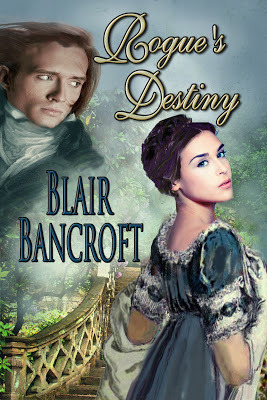
Warning: Although the story of Rogue's Destiny stands alone, it contains major spoilers for the previous books in the Regency Warrior series: The Sometime Bride, Tarleton's Wife, and O'Rourke's Heiress.
After suffering a broken heart and barely escaping the hangman, Jack Harding escapes his past by becoming the head of a private army and spending his leisure moments as a Devil's Disciple, a group of rakes who model themselves on the old Hellfire Club. But, to his surprise, he discovers that beneath the cold steel of a mercenary lurks the heart of a knight errant. When he meets a young woman from Quebec, alone at an inn on the road to London, he is enchanted, and shocked to find the young Canadian not eager to play by the rules of the Devil's Disciples.
Victoire du Bois, daughter of a Canadian courier de bois and granddaughter of an exiled English nobleman, has come to live with her lofty-titled relatives in England. But when they fail to meet her in Plymouth, she begins to wonder if they truly welcome the arrival of the young woman who is destined to inherit a large trust fund they might prefer to keep in the immediate family. A series of attempts on her life confirm her doubts, leaving Victoire with nowhere to turn but to the rake she nearly shot at an inn on the road from Plymouth.
Amazon Link to Rogue's Destiny
Smashwords link to Rogue's Destiny
Reminder: a 20% free read is available on Smashwords
Thanks for stopping by.
Grace
Next week: Dictionary for Writers, Part 5
Wrong. I had to delete the original hero and at least half his friends. I also had to delete my heroine's Abenaki half-brother, a character I absolutely loved - which was the problem, because he outshone the hero and might even have drawn attention from Jack as well. (It's always important to keep that spotlight shining on the hero and heroine.)
And then I had to go through and revise word by word to make Jack sound like Jack and not like the original hero. And make my heroine sound as if she were talking to Jack, not the previous hero. And then I had to write the last half of the book from scratch to accommodate all the changes made in the first half. Sigh!
So it took a while - frankly, just about as much time as writing the book from scratch, and with a lot more hair-tearing. But Rogue's Destiny is finally live on Amazon Kindle and Smashwords, with, hopefully, other e-reader formats available in two-three weeks.

Warning: Although the story of Rogue's Destiny stands alone, it contains major spoilers for the previous books in the Regency Warrior series: The Sometime Bride, Tarleton's Wife, and O'Rourke's Heiress.
After suffering a broken heart and barely escaping the hangman, Jack Harding escapes his past by becoming the head of a private army and spending his leisure moments as a Devil's Disciple, a group of rakes who model themselves on the old Hellfire Club. But, to his surprise, he discovers that beneath the cold steel of a mercenary lurks the heart of a knight errant. When he meets a young woman from Quebec, alone at an inn on the road to London, he is enchanted, and shocked to find the young Canadian not eager to play by the rules of the Devil's Disciples.
Victoire du Bois, daughter of a Canadian courier de bois and granddaughter of an exiled English nobleman, has come to live with her lofty-titled relatives in England. But when they fail to meet her in Plymouth, she begins to wonder if they truly welcome the arrival of the young woman who is destined to inherit a large trust fund they might prefer to keep in the immediate family. A series of attempts on her life confirm her doubts, leaving Victoire with nowhere to turn but to the rake she nearly shot at an inn on the road from Plymouth.
Amazon Link to Rogue's Destiny
Smashwords link to Rogue's Destiny
Reminder: a 20% free read is available on Smashwords
Thanks for stopping by.
Grace
Next week: Dictionary for Writers, Part 5
March 24, 2013
Legoland Wind-up
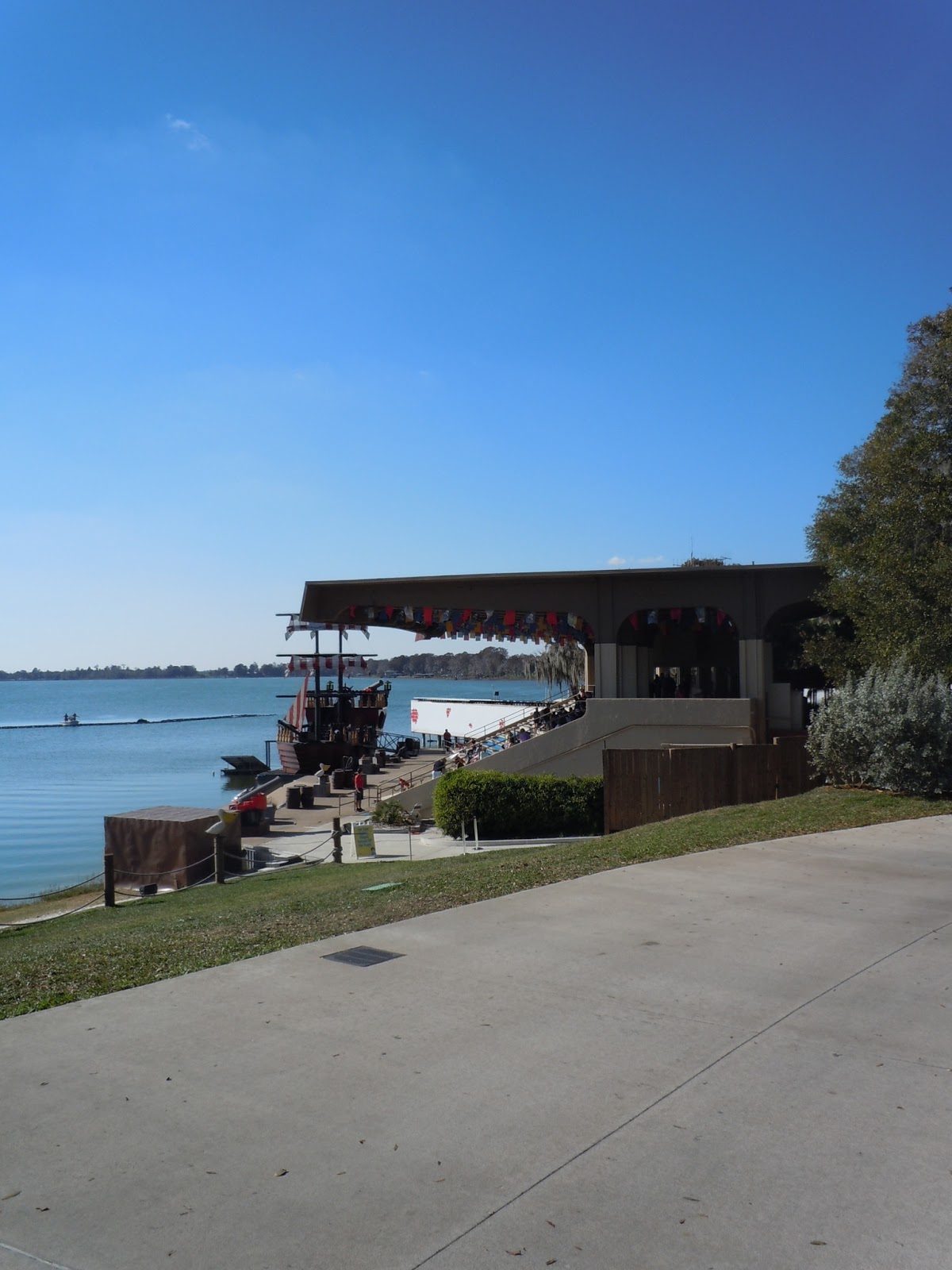
Way back when—and, no, I won't name the year—my husband and I stopped at Cypress Gardens on our honeymoon. What a contrast from our wedding in New Haven when it was snowing so hard some of the guests couldn't even get there. Or the chilling cold at Colonial Williamsburg as we watched New Years' Eve fireworks, including eighteenth-century-style set pieces. But Cypress Gardens? It was glorious. Warmth and beauty - not only from the gorgeous plantings and flowers, but from the elaborately garbed young women in antebellum gowns. And I'm delighted to report that Legoland has kept some of the magic of Cypress Gardens. No, the water show on the lake was but a pale imitation of the acrobatic grace of the performers in the "good old days," but the portion of the Gardens left intact for present-day visitors to enjoy is truly wonderful. A world away from the rides, Lego skyscrapers, and Darth Vader. I was so busy enjoying the peaceful ambiance I didn't take as many pictures as I should have. But I hope you enjoy the ones below.
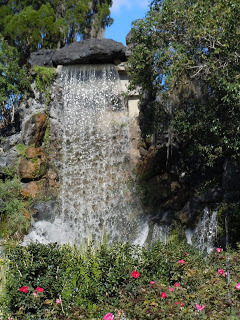 On the way to the lake
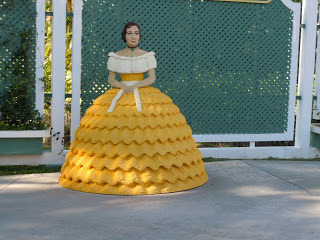 Antebellum greeter to the Gardens - made of Legos
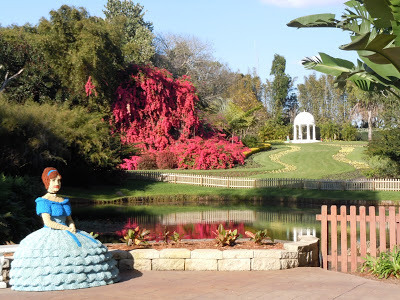 The classic post-card view of Cypress Gardens- except the girls used to be real!
 A forest of cypress knees
 A meandering stream
The banyan tree below was planted at approximately the same time—about ninety years ago—as the many banyans at the Ringling Museum in Sarasota. And although the trees there are large, they are nothing compared to this one, leading me to believe that the salt breezes in Sarasota may have kept the banyans there from developing to their full potential. Or else banyans truly thrive in the soil on Central Florida's "ridge," where so many oranges are grown. Experiencing this one, which I could only photograph one half at a time, was like standing in a cathedral. Truly amazing.

 Yes, I know it looks like several trees, but from what the brochures say, it's all one, which just kept putting down aerial shoots
From the sublime . . . back to more Legoland
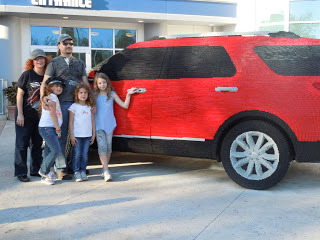
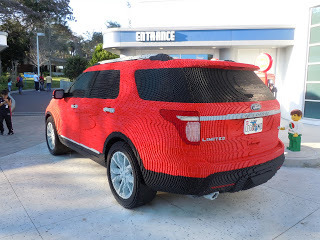 Yes, it's really made of Legos
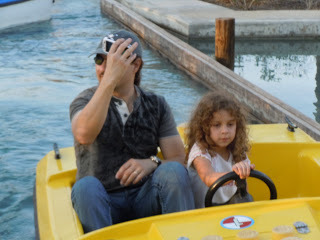 Cassidy at the helm
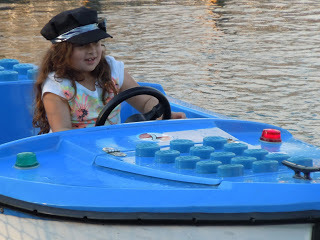 Riley
Riley
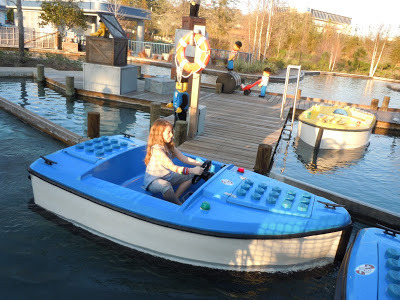 Hailey, docking, as the sun hangs low
And a fond farewell to Legoland Florida
~ * ~
Special note: Airborne - The Hanover Restoration, a Steampunk Romance, will be FREE on Tuesday, March 26, 2013. A young woman is caught up in the effort to restore a Hanover, also young and female, to the British throne a decade after the Duke of Wellington seized the government.~ * ~
Thanks for stopping by.
Grace
Coming soon: A surprise, followed by Dictionary for Writers, Part 5
Click here for a list of Grace's books as Blair Bancroft
 On the way to the lake
 Antebellum greeter to the Gardens - made of Legos
 The classic post-card view of Cypress Gardens- except the girls used to be real!
 A forest of cypress knees
 A meandering stream
The banyan tree below was planted at approximately the same time—about ninety years ago—as the many banyans at the Ringling Museum in Sarasota. And although the trees there are large, they are nothing compared to this one, leading me to believe that the salt breezes in Sarasota may have kept the banyans there from developing to their full potential. Or else banyans truly thrive in the soil on Central Florida's "ridge," where so many oranges are grown. Experiencing this one, which I could only photograph one half at a time, was like standing in a cathedral. Truly amazing.

 Yes, I know it looks like several trees, but from what the brochures say, it's all one, which just kept putting down aerial shoots
From the sublime . . . back to more Legoland
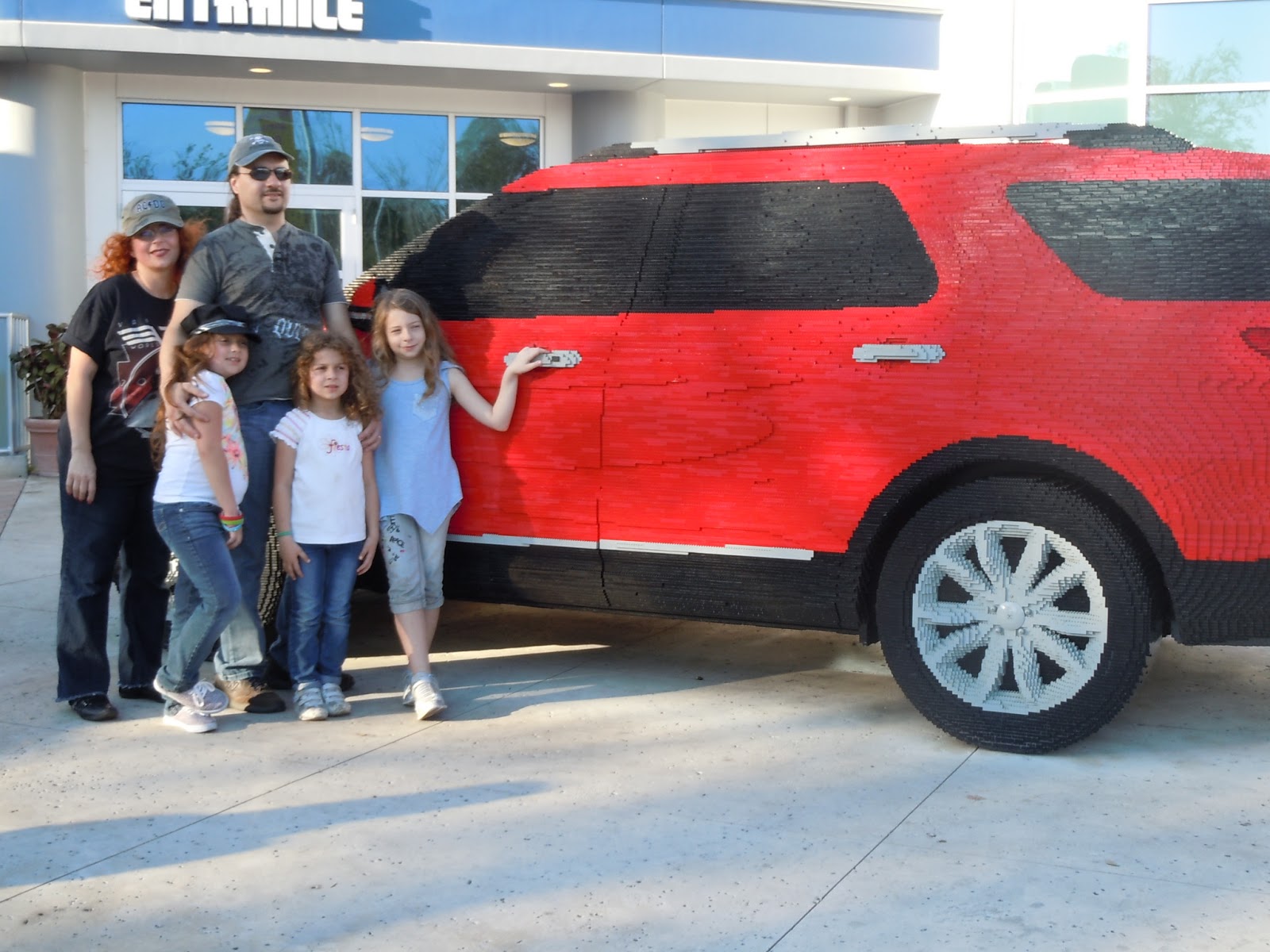
 Yes, it's really made of Legos
 Cassidy at the helm
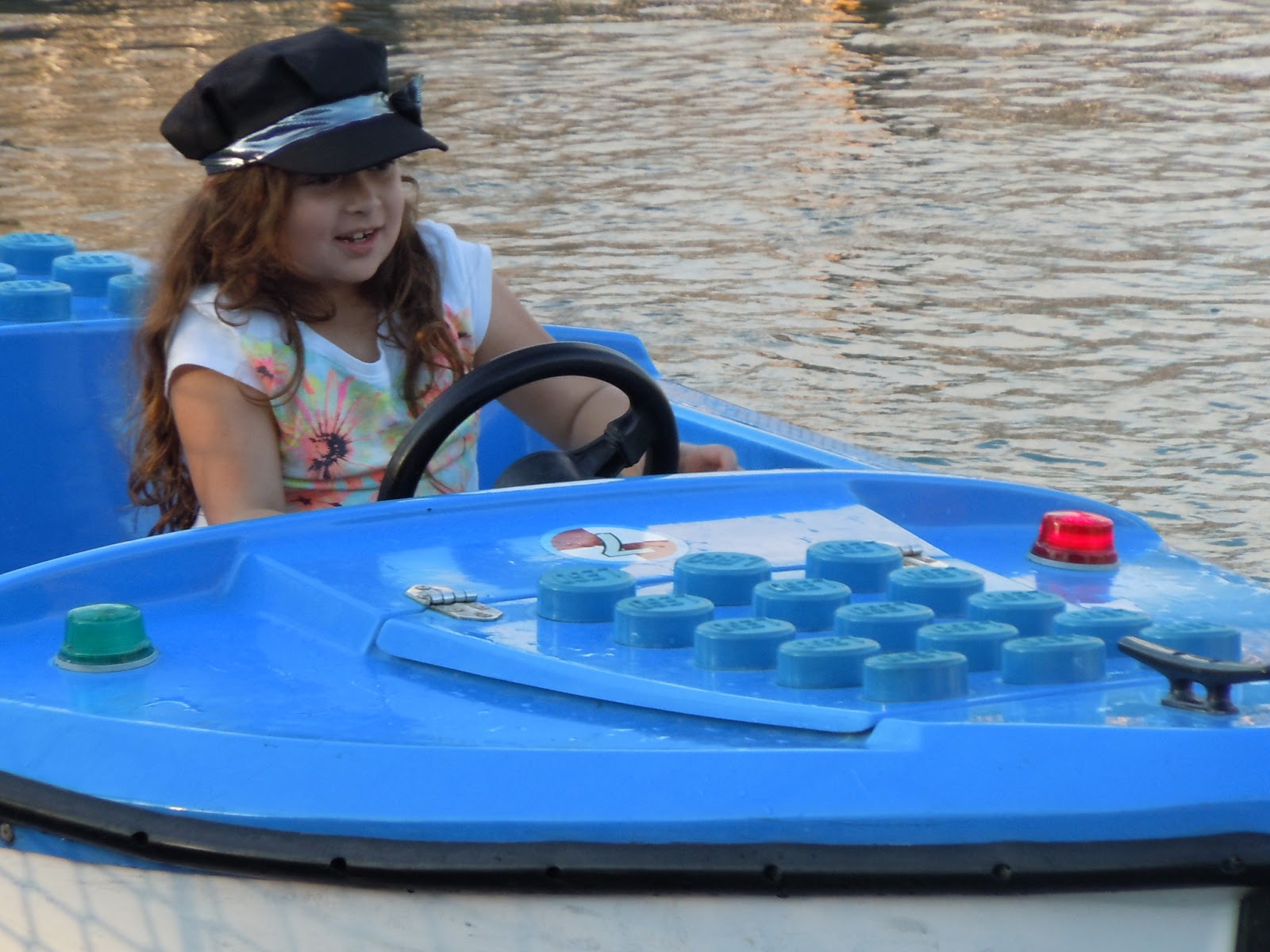 Riley
Riley
 Hailey, docking, as the sun hangs low
And a fond farewell to Legoland Florida
~ * ~
Special note: Airborne - The Hanover Restoration, a Steampunk Romance, will be FREE on Tuesday, March 26, 2013. A young woman is caught up in the effort to restore a Hanover, also young and female, to the British throne a decade after the Duke of Wellington seized the government.~ * ~
Thanks for stopping by.
Grace
Coming soon: A surprise, followed by Dictionary for Writers, Part 5
Click here for a list of Grace's books as Blair Bancroft
March 17, 2013
DICTIONARY FOR WRITERS, Part 4
In Part 4 of “Dictionary for Writers,” I an continuing definitions of the criteria which editors, agents, and contest judges look for in a fiction manuscript, particularly in romance novels.
Conflict. As both editor and contest judge, I see manuscripts where the author has mistaken petty bickering for true conflict. It just ain’t so! To dredge up a few clichés, Conflict should put the hero and heroine between the devil and the deep blue sea. Between a rock and a hard place. It should appear as if there is no possible way these two are ever going to get together. Their differences might include: family feud, à la Romeo & Juliet; the threat of severe illness; religious conflict; multiple divorces; differences in class & upbringing (more clearly applicable in historical novels but not unknown in the present day). Whatever you choose, the conflict should be serious.
There are two kinds of conflict: Internal and External. For Internal Conflict readers need to see inside the Hero's or Heroine’s heads. Their internal thoughts are called Introspection. These thoughts are usually presented in third person, reserving first person thoughts (in italics) for special emphasis. Internal Conflict is where an author reveals his/her main character’s angst or joy, their most personal plots and plans. External Conflict consists of all the forces ranged against them (as individuals and/or as a couple): angry parents, society’s condemnation, a job on the brink, someone wants to kill them, they have to rescue a child, keep a bomb from going off, etc.
Even if you are writing a simple novella of 20,000 words or less, you have to find a place to fit in both Internal and External Conflict. Without conflict, as I have emphasized before, you have nothing but "Boy meets girl, they fall in love, get married & live happily ever after. The end." Which takes up not quite the width of one line. Oops.
Note: I have also run into books where the supposed Conflict consists of the hero or heroine continually referring to some dramatic incident in the past that changed their lives, yet at no time does either one reveal what this incident was. Don’t do it! This makes your book a wall-banger (or a “move immediately to Archives”). Important incidents in the h/h’s past are Conflicts the reader needs to know about.
Dialogue. Oh, how authors love dialogue! It’s so easy to let the words spew forth. And don’t all those how-to books tell you to spark up your novel with dialogue! So you jump right in, creating dialogue like mad. Totally ignoring Who, What, Where, When & Why. You haven’t identified your characters. You haven’t described them, or their setting. You haven’t given us Whiff One of what they’re talking about. They are, in fact, talking heads indulging in a mystery conversation against a blank background. You do not want to do this.
Yes, you can begin a book with dialogue, but you need to get the necessary facts in place. Identify the people talking, give some idea of where they are and whatever background is necessary to understand what they’re talking about - whether it’s just sniping about a friend, arguing over an inheritance, or plotting a terrorist attack. Don’t be lazy. Add actions and colorful descriptions along with the dialogue. Allow your readers to see the scene as you see it. Something human, alive, comic, dramatic, heart-wrenching, or terrifying. Don’t leave readers floundering, wondering about all the things you should have told them along with the clever dialogue you wrote.
Note: Women’s Coffee-klatch dialogue or Men’s Night Out dialogue, which might very well be clever or make a lot of noise, is not legitimate unless it tells the reader something they need to know. Unless it moves the story forward. Never write Dialogue simply for the sake of livening up your narrative. Instead, make your narrative colorful enough that readers don’t miss the easy-reading, quick snap of Dialogue.
Narration. This is the tough one. Narration paints the canvas of your book. Narration allows readers to see inside the Hero’s and Heroine’s heads. And inside the heads of other characters who are allowed a Point of View. Narration describes your characters, their looks, their likes and dislikes. Narration tells us where they live and work, how they view the world, the people in it, and that special new person they just met (or perhaps have known since the cradle). Narration adds color, richness, depth. Narration lets readers experience the emotions of your main characters, get right inside their heads and feel what they feel. Narration gives us action. At the movies the action is acted out on the screen, but an author has to find a way to describe that car chase, gun battle, swim meet, or sex scene in words vivid enough to paint the picture for people who have only words to go on. It’s a challenge, a true challenge. Here lies the hard work of writing. Don’t give it short shrift.
Note: I have seen instances where authors mistook the advice to add details to their books for advice to add irrelevant details. This problem is difficult to describe, but if you mention a man sitting next to you on a bar stool, then that reference should have meaning - the man is about to speak, or he’s an eavesdropper who later causes trouble. He needs to have a function & not simply be mentioned for no reason except you read somewhere you should add details and that’s the only one you could think of. How about the noise, the smoke, the smell of beer? The general atmosphere of Friday after work, the heavy beat of Saturday night, or a more peaceful weeknight when only the regulars are present? Details are for ambiance, to add color to your tale, not for adding a passing reference to someone of no importance to the story. Yes, you can describe what the POV character is wearing. If it’s a guy, he can notice females passing by. But there always has to be a reason for the details you add, not just, “Oh, wow, I’m supposed to write something besides dialogue.”
Example of a narrative opening that reveals a remarkable amount in one short opening paragraph:
Early on a sparkling summer evening, Lord Reginald Beauhampton stepped onto the terrace of Lord and Lady Mythe’s Surrey home and gazed out over the green expanse of lawn. With a grin, he dashed all the way to the white stone steps, before he reminded himself he was not supposed to do that.
[Excerpt from His Secret Heroine by Delle Jacobs, now available from Amazon]
In just two sentences we learn: 1) it is summer; 2) the hero’s name; 3)setting - the terrace of the Mythe’s home in Surrey; 4)Lord Reginald is a lively character, good-natured but non-conforming.
Addendum: To add to previous posts on Point of View, Ms Jacobs reports: “I wrote that first chapter five times and still couldn’t get it. Then I realized it needed to be in Reggie’s POV. And then suddenly it jumped to life and so did Reggie.”
Plot. An author can do the most amazing things with plots—and every book requires one, even in books where it appears the only plot is, the more sex the merrier. It is possible to do almost anything with a plot, if you can find a way to explain the improbabilities. You box yourself in only when you allow your plot to do something legally impossible; for example, allow a bastard son to inherit a British title. Or when you fail to explain, in the most clear and plausible terms you can find, why the highly improbable is possible. It’s called “suspended disbelief.” If you work at justifying your plot as it unfolds, readers will accept it. If you throw the improbable at them without set-up or explanation, again, your book becomes a wall-banger. And, worst of all, it’s doubtful readers will buy your second book - or the one thereafter.
Another example of a no-no: your hero and heroine are not likable - they do things that make them look more like villains than the type of people readers were expecting when they bought your book. Again, if you can justify this, if you can find a really good reason for them to act this way, then, fine, that adds drama to the book. But they must redeem themselves before the end. Even in Mysteries or Thrillers with little or no romance, the main character must be someone readers can root for - not someone who is mean, greedy, scornful, heedless, etc. With the possible exception of literary fiction, readers must be able to care about, even identify with, the main character of the book they are reading. And if that character does something that turns them off, bye-bye, book customer. Bye-bye, dollars and cents.
Whether you spend weeks plotting every nuance before you start writing, or you’re an “out of the mist” author who wakes up wondering what your fingers are going to record today, you must find a way to make your plot believable.
To prove my point - in more elegant language - below is the definition of “plot” from Webster’s Unabridged Dictionary.
“the plan or pattern of events or the main story of a literary work . . . comprising the gradual unfolding of a causally connected series of motivated incidents: narrative structure . . .”
Please note the word “motivated.” I’ll say no more.
Style. There are varying definitions of style. I think of it as an author's approach to the craft of writing. For example, one author may be depended upon to present the intricacies of a complex plot, another may emphasize action, and yet another can be counted on to provide page after page of graphic sex. Some authors “tell” the story—the author standing on the outside narrating what is happening. Others “show” the story, letting readers see what is happening through the eyes of the main characters. (FYI, "Show" is the preferred approach for Romance.) For a bit more about “Show vs. Tell,” see Edit the Blasted Book, Part 4
An author may tend to use too many words, detracting from the story’s impact. Others use too few, requiring extensive revision to write in the color the story lacks. Whatever your personal approach to writing, analyze your weaknesses - names, spelling, punctuation, research, plotting? - and make a conscious effort to improve. For example, search an old phone book for names, check the Internet, movie credits, etc. Create lists of names - computer or hardcopy - so they are never a problem again. Buy a grammar bookand take the time to study it. Self- edit. Take out all those extra words that obscure your point. Add the color and drama you left out when you did a fast draft of that dialogue in Chapter 3. Don’t forget to run Spell Check.Can't self-edit? Find someone to do it for you. A good editor is worth his/her weight in gold.
Whatever the problem, capitalize on your strong points & don't accept your weaknesses. Use them as footholds to climb up to something better.
Voice. Voice is the way you put your words together. The thing that makes those words, sentences, and paragraphs uniquely yours. Voice should jump out and grab a reader, keep them turning pages. Voice, when well used, is a thing of beauty - even if you’re writing Horror instead of Romance. It’s the quality that sends chills up people’s spines, whether the author is talking about an evil spirit or falling in love. It’s what makes both Stephen King and Nora Roberts household names. Some authors were born with voice; others have to develop it the hard way. But voice is what makes the story uniquely yours. Your big solo, sung with the finest quality you have to offer.
Never, ever, try to write in someone else’s voice. Let your own voice be heard. And if it’s a bit ragged at first, keep trying. Yes, there are certain conventions each genre must follow, but don’t be afraid to push the boundaries. A unique thought, a new idea—a fresh voice—makes agents and editors sit up and take notice.
Presentation. The “nuts and bolts” of your manuscript - grammar, spelling, and punctuation. Yes, they count. They are vital to the impression you make. As I have stated in previous blogs, most editors were English majors. You want them to be absorbed in your manuscript, not wincing over the errors. Example: if an editor has two manuscripts of equal quality to choose from, but one will require hours of editing time and more hours of a copy editor’s time, and the other will require only minimal editing and copy editing, which one will she choose? In these tough economic times, the answer should be obvious. In any time, for that matter. When an editor chooses to publish a book, he/she is setting up a relationship which may last for years. Why should any editor choose to work for years with someone who cares so little for his/her craft that they present a book which has been carelessly written and even more carelessly self-edited?
Thanks for stopping by.
Grace
Next blogs: LEGOLAND 3, followed by Dictionary 5 - Fiction genres, primarily Romance
Click here for a list of Grace's books as Blair Bancroft
Conflict. As both editor and contest judge, I see manuscripts where the author has mistaken petty bickering for true conflict. It just ain’t so! To dredge up a few clichés, Conflict should put the hero and heroine between the devil and the deep blue sea. Between a rock and a hard place. It should appear as if there is no possible way these two are ever going to get together. Their differences might include: family feud, à la Romeo & Juliet; the threat of severe illness; religious conflict; multiple divorces; differences in class & upbringing (more clearly applicable in historical novels but not unknown in the present day). Whatever you choose, the conflict should be serious.
There are two kinds of conflict: Internal and External. For Internal Conflict readers need to see inside the Hero's or Heroine’s heads. Their internal thoughts are called Introspection. These thoughts are usually presented in third person, reserving first person thoughts (in italics) for special emphasis. Internal Conflict is where an author reveals his/her main character’s angst or joy, their most personal plots and plans. External Conflict consists of all the forces ranged against them (as individuals and/or as a couple): angry parents, society’s condemnation, a job on the brink, someone wants to kill them, they have to rescue a child, keep a bomb from going off, etc.
Even if you are writing a simple novella of 20,000 words or less, you have to find a place to fit in both Internal and External Conflict. Without conflict, as I have emphasized before, you have nothing but "Boy meets girl, they fall in love, get married & live happily ever after. The end." Which takes up not quite the width of one line. Oops.
Note: I have also run into books where the supposed Conflict consists of the hero or heroine continually referring to some dramatic incident in the past that changed their lives, yet at no time does either one reveal what this incident was. Don’t do it! This makes your book a wall-banger (or a “move immediately to Archives”). Important incidents in the h/h’s past are Conflicts the reader needs to know about.
Dialogue. Oh, how authors love dialogue! It’s so easy to let the words spew forth. And don’t all those how-to books tell you to spark up your novel with dialogue! So you jump right in, creating dialogue like mad. Totally ignoring Who, What, Where, When & Why. You haven’t identified your characters. You haven’t described them, or their setting. You haven’t given us Whiff One of what they’re talking about. They are, in fact, talking heads indulging in a mystery conversation against a blank background. You do not want to do this.
Yes, you can begin a book with dialogue, but you need to get the necessary facts in place. Identify the people talking, give some idea of where they are and whatever background is necessary to understand what they’re talking about - whether it’s just sniping about a friend, arguing over an inheritance, or plotting a terrorist attack. Don’t be lazy. Add actions and colorful descriptions along with the dialogue. Allow your readers to see the scene as you see it. Something human, alive, comic, dramatic, heart-wrenching, or terrifying. Don’t leave readers floundering, wondering about all the things you should have told them along with the clever dialogue you wrote.
Note: Women’s Coffee-klatch dialogue or Men’s Night Out dialogue, which might very well be clever or make a lot of noise, is not legitimate unless it tells the reader something they need to know. Unless it moves the story forward. Never write Dialogue simply for the sake of livening up your narrative. Instead, make your narrative colorful enough that readers don’t miss the easy-reading, quick snap of Dialogue.
Narration. This is the tough one. Narration paints the canvas of your book. Narration allows readers to see inside the Hero’s and Heroine’s heads. And inside the heads of other characters who are allowed a Point of View. Narration describes your characters, their looks, their likes and dislikes. Narration tells us where they live and work, how they view the world, the people in it, and that special new person they just met (or perhaps have known since the cradle). Narration adds color, richness, depth. Narration lets readers experience the emotions of your main characters, get right inside their heads and feel what they feel. Narration gives us action. At the movies the action is acted out on the screen, but an author has to find a way to describe that car chase, gun battle, swim meet, or sex scene in words vivid enough to paint the picture for people who have only words to go on. It’s a challenge, a true challenge. Here lies the hard work of writing. Don’t give it short shrift.
Note: I have seen instances where authors mistook the advice to add details to their books for advice to add irrelevant details. This problem is difficult to describe, but if you mention a man sitting next to you on a bar stool, then that reference should have meaning - the man is about to speak, or he’s an eavesdropper who later causes trouble. He needs to have a function & not simply be mentioned for no reason except you read somewhere you should add details and that’s the only one you could think of. How about the noise, the smoke, the smell of beer? The general atmosphere of Friday after work, the heavy beat of Saturday night, or a more peaceful weeknight when only the regulars are present? Details are for ambiance, to add color to your tale, not for adding a passing reference to someone of no importance to the story. Yes, you can describe what the POV character is wearing. If it’s a guy, he can notice females passing by. But there always has to be a reason for the details you add, not just, “Oh, wow, I’m supposed to write something besides dialogue.”
Example of a narrative opening that reveals a remarkable amount in one short opening paragraph:
Early on a sparkling summer evening, Lord Reginald Beauhampton stepped onto the terrace of Lord and Lady Mythe’s Surrey home and gazed out over the green expanse of lawn. With a grin, he dashed all the way to the white stone steps, before he reminded himself he was not supposed to do that.
[Excerpt from His Secret Heroine by Delle Jacobs, now available from Amazon]
In just two sentences we learn: 1) it is summer; 2) the hero’s name; 3)setting - the terrace of the Mythe’s home in Surrey; 4)Lord Reginald is a lively character, good-natured but non-conforming.
Addendum: To add to previous posts on Point of View, Ms Jacobs reports: “I wrote that first chapter five times and still couldn’t get it. Then I realized it needed to be in Reggie’s POV. And then suddenly it jumped to life and so did Reggie.”
Plot. An author can do the most amazing things with plots—and every book requires one, even in books where it appears the only plot is, the more sex the merrier. It is possible to do almost anything with a plot, if you can find a way to explain the improbabilities. You box yourself in only when you allow your plot to do something legally impossible; for example, allow a bastard son to inherit a British title. Or when you fail to explain, in the most clear and plausible terms you can find, why the highly improbable is possible. It’s called “suspended disbelief.” If you work at justifying your plot as it unfolds, readers will accept it. If you throw the improbable at them without set-up or explanation, again, your book becomes a wall-banger. And, worst of all, it’s doubtful readers will buy your second book - or the one thereafter.
Another example of a no-no: your hero and heroine are not likable - they do things that make them look more like villains than the type of people readers were expecting when they bought your book. Again, if you can justify this, if you can find a really good reason for them to act this way, then, fine, that adds drama to the book. But they must redeem themselves before the end. Even in Mysteries or Thrillers with little or no romance, the main character must be someone readers can root for - not someone who is mean, greedy, scornful, heedless, etc. With the possible exception of literary fiction, readers must be able to care about, even identify with, the main character of the book they are reading. And if that character does something that turns them off, bye-bye, book customer. Bye-bye, dollars and cents.
Whether you spend weeks plotting every nuance before you start writing, or you’re an “out of the mist” author who wakes up wondering what your fingers are going to record today, you must find a way to make your plot believable.
To prove my point - in more elegant language - below is the definition of “plot” from Webster’s Unabridged Dictionary.
“the plan or pattern of events or the main story of a literary work . . . comprising the gradual unfolding of a causally connected series of motivated incidents: narrative structure . . .”
Please note the word “motivated.” I’ll say no more.
Style. There are varying definitions of style. I think of it as an author's approach to the craft of writing. For example, one author may be depended upon to present the intricacies of a complex plot, another may emphasize action, and yet another can be counted on to provide page after page of graphic sex. Some authors “tell” the story—the author standing on the outside narrating what is happening. Others “show” the story, letting readers see what is happening through the eyes of the main characters. (FYI, "Show" is the preferred approach for Romance.) For a bit more about “Show vs. Tell,” see Edit the Blasted Book, Part 4
An author may tend to use too many words, detracting from the story’s impact. Others use too few, requiring extensive revision to write in the color the story lacks. Whatever your personal approach to writing, analyze your weaknesses - names, spelling, punctuation, research, plotting? - and make a conscious effort to improve. For example, search an old phone book for names, check the Internet, movie credits, etc. Create lists of names - computer or hardcopy - so they are never a problem again. Buy a grammar bookand take the time to study it. Self- edit. Take out all those extra words that obscure your point. Add the color and drama you left out when you did a fast draft of that dialogue in Chapter 3. Don’t forget to run Spell Check.Can't self-edit? Find someone to do it for you. A good editor is worth his/her weight in gold.
Whatever the problem, capitalize on your strong points & don't accept your weaknesses. Use them as footholds to climb up to something better.
Voice. Voice is the way you put your words together. The thing that makes those words, sentences, and paragraphs uniquely yours. Voice should jump out and grab a reader, keep them turning pages. Voice, when well used, is a thing of beauty - even if you’re writing Horror instead of Romance. It’s the quality that sends chills up people’s spines, whether the author is talking about an evil spirit or falling in love. It’s what makes both Stephen King and Nora Roberts household names. Some authors were born with voice; others have to develop it the hard way. But voice is what makes the story uniquely yours. Your big solo, sung with the finest quality you have to offer.
Never, ever, try to write in someone else’s voice. Let your own voice be heard. And if it’s a bit ragged at first, keep trying. Yes, there are certain conventions each genre must follow, but don’t be afraid to push the boundaries. A unique thought, a new idea—a fresh voice—makes agents and editors sit up and take notice.
Presentation. The “nuts and bolts” of your manuscript - grammar, spelling, and punctuation. Yes, they count. They are vital to the impression you make. As I have stated in previous blogs, most editors were English majors. You want them to be absorbed in your manuscript, not wincing over the errors. Example: if an editor has two manuscripts of equal quality to choose from, but one will require hours of editing time and more hours of a copy editor’s time, and the other will require only minimal editing and copy editing, which one will she choose? In these tough economic times, the answer should be obvious. In any time, for that matter. When an editor chooses to publish a book, he/she is setting up a relationship which may last for years. Why should any editor choose to work for years with someone who cares so little for his/her craft that they present a book which has been carelessly written and even more carelessly self-edited?
Thanks for stopping by.
Grace
Next blogs: LEGOLAND 3, followed by Dictionary 5 - Fiction genres, primarily Romance
Click here for a list of Grace's books as Blair Bancroft
Dictionary for Writers, Part 4
In Part 4 of “Dictionary for Writers,” I an continuing definitions of the criteria which editors, agents, and contest judges look for in a fiction manuscript, particularly in romance novels.
Conflict. As both editor and contest judge, I see manuscripts where the author has mistaken petty bickering for true conflict. It just ain’t so! To dredge up a few clichés, Conflict should put the hero and heroine between the devil and the deep blue sea. Between a rock and a hard place. It should appear as if there is no possible way these two are ever going to get together. Their differences might include: family feud, à la Romeo & Juliet; the threat of severe illness; religious conflict; multiple divorces; differences in class & upbringing (more clearly applicable in historical novels but not unknown in the present day). Whatever you choose, the conflict should be serious.
There are two kinds of conflict: Internal and External. For Internal Conflict readers need to see inside the Hero's or Heroine’s heads. Their internal thoughts are called Introspection. These thoughts are usually presented in third person, reserving first person thoughts (in italics) for special emphasis. Internal Conflict is where an author reveals his/her main character’s angst or joy, their most personal plots and plans. External Conflict consists of all the forces ranged against them (as individuals and/or as a couple): angry parents, society’s condemnation, a job on the brink, someone wants to kill them, they have to rescue a child, keep a bomb from going off, etc.
Even if you are writing a simple novella of 20,000 words or less, you have to find a place to fit in both Internal and External Conflict. Without conflict, as I have emphasized before, you have nothing but "Boy meets girl, they fall in love, get married & live happily ever after. The end." Which takes up not quite the width of one line. Oops.
Note: I have also run into books where the supposed Conflict consists of the hero or heroine continually referring to some dramatic incident in the past that changed their lives, yet at no time does either one reveal what this incident was. Don’t do it! This makes your book a wall-banger (or a “move immediately to Archives”). Important incidents in the h/h’s past are Conflicts the reader needs to know about.
Dialogue. Oh, how authors love dialogue! It’s so easy to let the words spew forth. And don’t all those how-to books tell you to spark up your novel with dialogue! So you jump right in, creating dialogue like mad. Totally ignoring Who, What, Where, When & Why. You haven’t identified your characters. You haven’t described them, or their setting. You haven’t given us Whiff One of what they’re talking about. They are, in fact, talking heads indulging in a mystery conversation against a blank background. You do not want to do this.
Yes, you can begin a book with dialogue, but you need to get the necessary facts in place. Identify the people talking, give some idea of where they are and whatever background is necessary to understand what they’re talking about - whether it’s just sniping about a friend, arguing over an inheritance, or plotting a terrorist attack. Don’t be lazy. Add actions and colorful descriptions along with the dialogue. Allow your readers to see the scene as you see it. Something human, alive, comic, dramatic, heart-wrenching, or terrifying. Don’t leave readers floundering, wondering about all the things you should have told them along with the clever dialogue you wrote.
Note: Women’s Coffee-klatch dialogue or Men’s Night Out dialogue, which might very well be clever or make a lot of noise, is not legitimate unless it tells the reader something they need to know. Unless it moves the story forward. Never write Dialogue simply for the sake of livening up your narrative. Instead, make your narrative colorful enough that readers don’t miss the easy-reading, quick snap of Dialogue.
Narration. This is the tough one. Narration paints the canvas of your book. Narration allows readers to see inside the Hero’s and Heroine’s heads. And inside the heads of other characters who are allowed a Point of View. Narration describes your characters, their looks, their likes and dislikes. Narration tells us where they live and work, how they view the world, the people in it, and that special new person they just met (or perhaps have known since the cradle). Narration adds color, richness, depth. Narration lets readers experience the emotions of your main characters, get right inside their heads and feel what they feel. Narration gives us action. At the movies the action is acted out on the screen, but an author has to find a way to describe that car chase, gun battle, swim meet, or sex scene in words vivid enough to paint the picture for people who have only words to go on. It’s a challenge, a true challenge. Here lies the hard work of writing. Don’t give it short shrift.
Note: I have seen instances where authors mistook the advice to add details to their books for advice to add irrelevant details. This problem is difficult to describe, but if you mention a man sitting next to you on a bar stool, then that reference should have meaning - the man is about to speak, or he’s an eavesdropper who later causes trouble. He needs to have a function & not simply be mentioned for no reason except you read somewhere you should add details and that’s the only one you could think of. How about the noise, the smoke, the smell of beer? The general atmosphere of Friday after work, the heavy beat of Saturday night, or a more peaceful weeknight when only the regulars are present? Details are for ambiance, to add color to your tale, not for adding a passing reference to someone of no importance to the story. Yes, you can describe what the POV character is wearing. If it’s a guy, he can notice females passing by. But there always has to be a reason for the details you add, not just, “Oh, wow, I’m supposed to write something besides dialogue.”
Example of a narrative opening that reveals a remarkable amount in one short opening paragraph:
Early on a sparkling summer evening, Lord Reginald Beauhampton stepped onto the terrace of Lord and Lady Mythe’s Surrey home and gazed out over the green expanse of lawn. With a grin, he dashed all the way to the white stone steps, before he reminded himself he was not supposed to do that.
[Excerpt from His Secret Heroine by Delle Jacobs, now available from Amazon]
In just two sentences we learn: 1) it is summer; 2) the hero’s name; 3)setting - the terrace of the Mythe’s home in Surrey; 4)Lord Reginald is a lively character, good-natured but non-conforming.
Addendum: To add to previous posts on Point of View, Ms Jacobs reports: “I wrote that first chapter five times and still couldn’t get it. Then I realized it needed to be in Reggie’s POV. And then suddenly it jumped to life and so did Reggie.”
Plot. An author can do the most amazing things with plots—and every book requires one, even in books where it appears the only plot is, the more sex the merrier. It is possible to do almost anything with a plot, if you can find a way to explain the improbabilities. You box yourself in only when you allow your plot to do something legally impossible; for example, allow a bastard son to inherit a British title. Or when you fail to explain, in the most clear and plausible terms you can find, why the highly improbable is possible. It’s called “suspended disbelief.” If you work at justifying your plot as it unfolds, readers will accept it. If you throw the improbable at them without set-up or explanation, again, your book becomes a wall-banger. And, worst of all, it’s doubtful readers will buy your second book - or the one thereafter.
Another example of a no-no: your hero and heroine are not likable - they do things that make them look more like villains than the type of people readers were expecting when they bought your book. Again, if you can justify this, if you can find a really good reason for them to act this way, then, fine, that adds drama to the book. But they must redeem themselves before the end. Even in Mysteries or Thrillers with little or no romance, the main character must be someone readers can root for - not someone who is mean, greedy, scornful, heedless, etc. With the possible exception of literary fiction, readers must be able to care about, even identify with, the main character of the book they are reading. And if that character does something that turns them off, bye-bye, book customer. Bye-bye, dollars and cents.
Whether you spend weeks plotting every nuance before you start writing, or you’re an “out of the mist” author who wakes up wondering what your fingers are going to record today, you must find a way to make your plot believable.
To prove my point - in more elegant language - below is the definition of “plot” from Webster’s Unabridged Dictionary.
“the plan or pattern of events or the main story of a literary work . . . comprising the gradual unfolding of a causally connected series of motivated incidents: narrative structure . . .”
Please note the word “motivated.” I’ll say no more.
Style. There are varying definitions of style. I think of it as an author's approach to the craft of writing. Do you tend to “tell” your story—the author standing on the outside narrating what is happening, or do you “show” your story, letting readers see what is happening through the eyes of the main characters? ("Show" is the preferred approach for Romance.) For a bit more about “Show vs. Tell,” see Edit the Blasted Book, Part 4
Do you tend to use too many words, detracting from your story’s impact? Or do you use too few, requiring you to go back and write in the color your story lacks? Analyze your weaknesses - names, spelling, punctuation, research, plotting? - and make a conscious effort to improve. For example, search an old phone book for names, check the Internet, movie credits, etc. Create lists of names - computer or hardcopy - so they are never a problem again. Buy a grammar bookand take the time to study it. Self- edit. Take out all those extra words that obscure your point. Add the color and drama you left out when you did a fast draft of that dialogue in Chapter 3. Don’t forget to run Spell Check.Can't self-edit? Find someone to do it for you. A good editor is worth his/her weight in gold.
Whatever the problem, do not accept your weaknesses. Use them as footholds to climb up to something better.
Voice. Voice is the way you put your words together. The thing that makes those words, sentences, and paragraphs uniquely yours. Voice should jump out and grab a reader, keep them turning pages. Voice, when well used, is a thing of beauty - even if you’re writing Horror instead of Romance. It’s the quality that sends chills up people’s spines, whether the author is talking about an evil spirit or falling in love. It’s what makes both Stephen King and Nora Roberts household names. Some authors were born with voice; others have to develop it the hard way. But voice is what makes the story uniquely yours. Your big solo, sung with the finest quality you have to offer.
Never, ever, try to write in someone else’s voice. Let your own voice be heard. And if it’s a bit ragged at first, keep trying. Yes, there are certain conventions each genre must follow, but don’t be afraid to push the boundaries. A unique thought, a new idea—a fresh voice—makes agents and editors sit up and take notice.
Presentation. The “nuts and bolts” of your manuscript - grammar, spelling, and punctuation. Yes, they count. They are vital to the impression you make. As I have stated in previous blogs, most editors were English majors. You want them to be absorbed in your manuscript, not wincing over the errors. Example: if an editor has two manuscripts of equal quality to choose from, but one will require hours of editing time and more hours of a copy editor’s time, and the other will require only minimal editing and copy editing, which one will she choose? In these tough economic times, the answer should be obvious. In any time, for that matter. When an editor chooses to publish a book, he/she is setting up a relationship which may last for years. Why should any editor choose to work for years with someone who cares so little for his/her craft that they present a book which has been carelessly written and even more carelessly self-edited?
Thanks for stopping by.
Grace
Next blogs: LEGOLAND 3, followed by Dictionary 5 - Fiction genres, primarily Romance
Click here for a list of Grace's books as Blair Bancroft
Conflict. As both editor and contest judge, I see manuscripts where the author has mistaken petty bickering for true conflict. It just ain’t so! To dredge up a few clichés, Conflict should put the hero and heroine between the devil and the deep blue sea. Between a rock and a hard place. It should appear as if there is no possible way these two are ever going to get together. Their differences might include: family feud, à la Romeo & Juliet; the threat of severe illness; religious conflict; multiple divorces; differences in class & upbringing (more clearly applicable in historical novels but not unknown in the present day). Whatever you choose, the conflict should be serious.
There are two kinds of conflict: Internal and External. For Internal Conflict readers need to see inside the Hero's or Heroine’s heads. Their internal thoughts are called Introspection. These thoughts are usually presented in third person, reserving first person thoughts (in italics) for special emphasis. Internal Conflict is where an author reveals his/her main character’s angst or joy, their most personal plots and plans. External Conflict consists of all the forces ranged against them (as individuals and/or as a couple): angry parents, society’s condemnation, a job on the brink, someone wants to kill them, they have to rescue a child, keep a bomb from going off, etc.
Even if you are writing a simple novella of 20,000 words or less, you have to find a place to fit in both Internal and External Conflict. Without conflict, as I have emphasized before, you have nothing but "Boy meets girl, they fall in love, get married & live happily ever after. The end." Which takes up not quite the width of one line. Oops.
Note: I have also run into books where the supposed Conflict consists of the hero or heroine continually referring to some dramatic incident in the past that changed their lives, yet at no time does either one reveal what this incident was. Don’t do it! This makes your book a wall-banger (or a “move immediately to Archives”). Important incidents in the h/h’s past are Conflicts the reader needs to know about.
Dialogue. Oh, how authors love dialogue! It’s so easy to let the words spew forth. And don’t all those how-to books tell you to spark up your novel with dialogue! So you jump right in, creating dialogue like mad. Totally ignoring Who, What, Where, When & Why. You haven’t identified your characters. You haven’t described them, or their setting. You haven’t given us Whiff One of what they’re talking about. They are, in fact, talking heads indulging in a mystery conversation against a blank background. You do not want to do this.
Yes, you can begin a book with dialogue, but you need to get the necessary facts in place. Identify the people talking, give some idea of where they are and whatever background is necessary to understand what they’re talking about - whether it’s just sniping about a friend, arguing over an inheritance, or plotting a terrorist attack. Don’t be lazy. Add actions and colorful descriptions along with the dialogue. Allow your readers to see the scene as you see it. Something human, alive, comic, dramatic, heart-wrenching, or terrifying. Don’t leave readers floundering, wondering about all the things you should have told them along with the clever dialogue you wrote.
Note: Women’s Coffee-klatch dialogue or Men’s Night Out dialogue, which might very well be clever or make a lot of noise, is not legitimate unless it tells the reader something they need to know. Unless it moves the story forward. Never write Dialogue simply for the sake of livening up your narrative. Instead, make your narrative colorful enough that readers don’t miss the easy-reading, quick snap of Dialogue.
Narration. This is the tough one. Narration paints the canvas of your book. Narration allows readers to see inside the Hero’s and Heroine’s heads. And inside the heads of other characters who are allowed a Point of View. Narration describes your characters, their looks, their likes and dislikes. Narration tells us where they live and work, how they view the world, the people in it, and that special new person they just met (or perhaps have known since the cradle). Narration adds color, richness, depth. Narration lets readers experience the emotions of your main characters, get right inside their heads and feel what they feel. Narration gives us action. At the movies the action is acted out on the screen, but an author has to find a way to describe that car chase, gun battle, swim meet, or sex scene in words vivid enough to paint the picture for people who have only words to go on. It’s a challenge, a true challenge. Here lies the hard work of writing. Don’t give it short shrift.
Note: I have seen instances where authors mistook the advice to add details to their books for advice to add irrelevant details. This problem is difficult to describe, but if you mention a man sitting next to you on a bar stool, then that reference should have meaning - the man is about to speak, or he’s an eavesdropper who later causes trouble. He needs to have a function & not simply be mentioned for no reason except you read somewhere you should add details and that’s the only one you could think of. How about the noise, the smoke, the smell of beer? The general atmosphere of Friday after work, the heavy beat of Saturday night, or a more peaceful weeknight when only the regulars are present? Details are for ambiance, to add color to your tale, not for adding a passing reference to someone of no importance to the story. Yes, you can describe what the POV character is wearing. If it’s a guy, he can notice females passing by. But there always has to be a reason for the details you add, not just, “Oh, wow, I’m supposed to write something besides dialogue.”
Example of a narrative opening that reveals a remarkable amount in one short opening paragraph:
Early on a sparkling summer evening, Lord Reginald Beauhampton stepped onto the terrace of Lord and Lady Mythe’s Surrey home and gazed out over the green expanse of lawn. With a grin, he dashed all the way to the white stone steps, before he reminded himself he was not supposed to do that.
[Excerpt from His Secret Heroine by Delle Jacobs, now available from Amazon]
In just two sentences we learn: 1) it is summer; 2) the hero’s name; 3)setting - the terrace of the Mythe’s home in Surrey; 4)Lord Reginald is a lively character, good-natured but non-conforming.
Addendum: To add to previous posts on Point of View, Ms Jacobs reports: “I wrote that first chapter five times and still couldn’t get it. Then I realized it needed to be in Reggie’s POV. And then suddenly it jumped to life and so did Reggie.”
Plot. An author can do the most amazing things with plots—and every book requires one, even in books where it appears the only plot is, the more sex the merrier. It is possible to do almost anything with a plot, if you can find a way to explain the improbabilities. You box yourself in only when you allow your plot to do something legally impossible; for example, allow a bastard son to inherit a British title. Or when you fail to explain, in the most clear and plausible terms you can find, why the highly improbable is possible. It’s called “suspended disbelief.” If you work at justifying your plot as it unfolds, readers will accept it. If you throw the improbable at them without set-up or explanation, again, your book becomes a wall-banger. And, worst of all, it’s doubtful readers will buy your second book - or the one thereafter.
Another example of a no-no: your hero and heroine are not likable - they do things that make them look more like villains than the type of people readers were expecting when they bought your book. Again, if you can justify this, if you can find a really good reason for them to act this way, then, fine, that adds drama to the book. But they must redeem themselves before the end. Even in Mysteries or Thrillers with little or no romance, the main character must be someone readers can root for - not someone who is mean, greedy, scornful, heedless, etc. With the possible exception of literary fiction, readers must be able to care about, even identify with, the main character of the book they are reading. And if that character does something that turns them off, bye-bye, book customer. Bye-bye, dollars and cents.
Whether you spend weeks plotting every nuance before you start writing, or you’re an “out of the mist” author who wakes up wondering what your fingers are going to record today, you must find a way to make your plot believable.
To prove my point - in more elegant language - below is the definition of “plot” from Webster’s Unabridged Dictionary.
“the plan or pattern of events or the main story of a literary work . . . comprising the gradual unfolding of a causally connected series of motivated incidents: narrative structure . . .”
Please note the word “motivated.” I’ll say no more.
Style. There are varying definitions of style. I think of it as an author's approach to the craft of writing. Do you tend to “tell” your story—the author standing on the outside narrating what is happening, or do you “show” your story, letting readers see what is happening through the eyes of the main characters? ("Show" is the preferred approach for Romance.) For a bit more about “Show vs. Tell,” see Edit the Blasted Book, Part 4
Do you tend to use too many words, detracting from your story’s impact? Or do you use too few, requiring you to go back and write in the color your story lacks? Analyze your weaknesses - names, spelling, punctuation, research, plotting? - and make a conscious effort to improve. For example, search an old phone book for names, check the Internet, movie credits, etc. Create lists of names - computer or hardcopy - so they are never a problem again. Buy a grammar bookand take the time to study it. Self- edit. Take out all those extra words that obscure your point. Add the color and drama you left out when you did a fast draft of that dialogue in Chapter 3. Don’t forget to run Spell Check.Can't self-edit? Find someone to do it for you. A good editor is worth his/her weight in gold.
Whatever the problem, do not accept your weaknesses. Use them as footholds to climb up to something better.
Voice. Voice is the way you put your words together. The thing that makes those words, sentences, and paragraphs uniquely yours. Voice should jump out and grab a reader, keep them turning pages. Voice, when well used, is a thing of beauty - even if you’re writing Horror instead of Romance. It’s the quality that sends chills up people’s spines, whether the author is talking about an evil spirit or falling in love. It’s what makes both Stephen King and Nora Roberts household names. Some authors were born with voice; others have to develop it the hard way. But voice is what makes the story uniquely yours. Your big solo, sung with the finest quality you have to offer.
Never, ever, try to write in someone else’s voice. Let your own voice be heard. And if it’s a bit ragged at first, keep trying. Yes, there are certain conventions each genre must follow, but don’t be afraid to push the boundaries. A unique thought, a new idea—a fresh voice—makes agents and editors sit up and take notice.
Presentation. The “nuts and bolts” of your manuscript - grammar, spelling, and punctuation. Yes, they count. They are vital to the impression you make. As I have stated in previous blogs, most editors were English majors. You want them to be absorbed in your manuscript, not wincing over the errors. Example: if an editor has two manuscripts of equal quality to choose from, but one will require hours of editing time and more hours of a copy editor’s time, and the other will require only minimal editing and copy editing, which one will she choose? In these tough economic times, the answer should be obvious. In any time, for that matter. When an editor chooses to publish a book, he/she is setting up a relationship which may last for years. Why should any editor choose to work for years with someone who cares so little for his/her craft that they present a book which has been carelessly written and even more carelessly self-edited?
Thanks for stopping by.
Grace
Next blogs: LEGOLAND 3, followed by Dictionary 5 - Fiction genres, primarily Romance
Click here for a list of Grace's books as Blair Bancroft
March 10, 2013
MORE LEGOLAND
WARNING: If you plan to visit Legoland Florida, food is hard to find past the area near the entrance. The only other food I found was a "restaurant" overlooking the lake, which featured pre-made sandwiches & ice cream. Since we were too busy seeing the park to stop to eat—and my family closed the place out 45 minutes after official closing time!—we were all starved. And restaurants don't exactly litter Rte. 27 either - we felt fortunate to finally find a Sonny's, else we might have wasted away before we made it all the way back to Orlando.
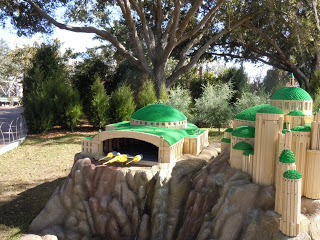 Entrance to the Lego version of Star Wars - with glare affecting my centering, alas
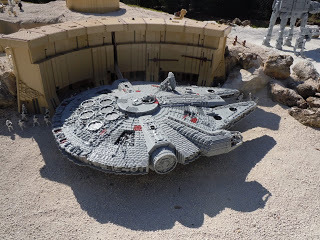 The Millennium Falcon
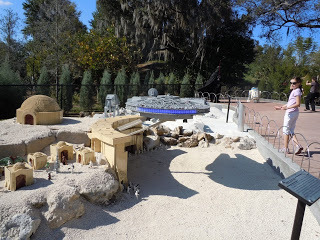 The Millennium Falcon, airborne
Note the amazing detail - and all done in Legos.
And no, I have no idea how the Falcon levitated. It was a case of "Press a button" & up she went! Can't find her?
That's the MF, with her sides glowing blue.
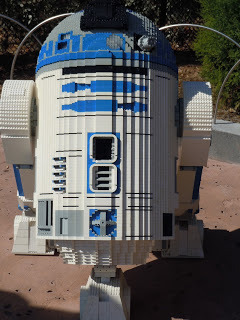 Everybody's favorite robot
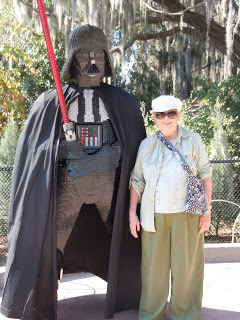 My apologies for ruining this photo of Darth Vader (my family insisted)
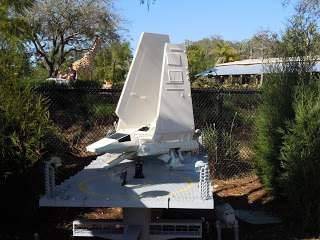 Unexpected backdrop - note Lego giraffe
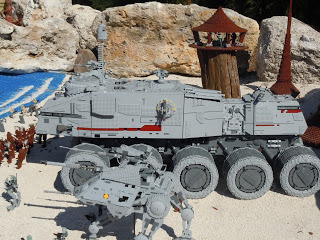 And many more remarkable details at Legoland's Star Wars
On to a some of our most famous cities & sights.
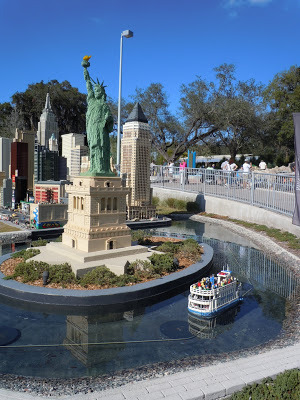 Lego ferry circling the Statue of Liberty
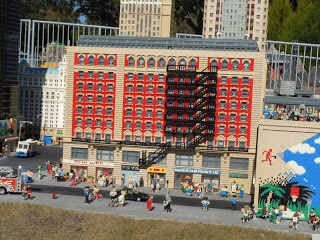
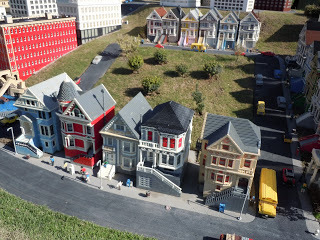
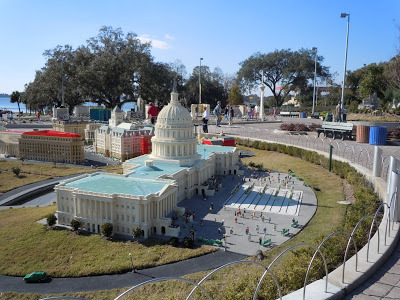
 A "Vegas" geyser
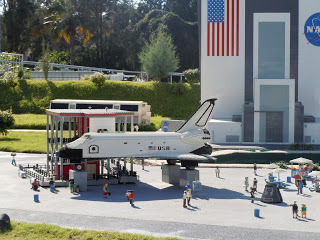
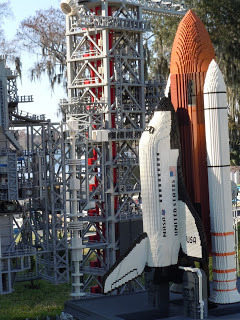
The Lego version of the Kennedy Space Center -
and a good way to end this week's visit to
Legoland Florida. (One more
installment to come.)
Thanks for stopping by.
Next blog: Dictionary for Writers, Part 4
Grace
Click here for a list of Grace's books as Blair Bancroft
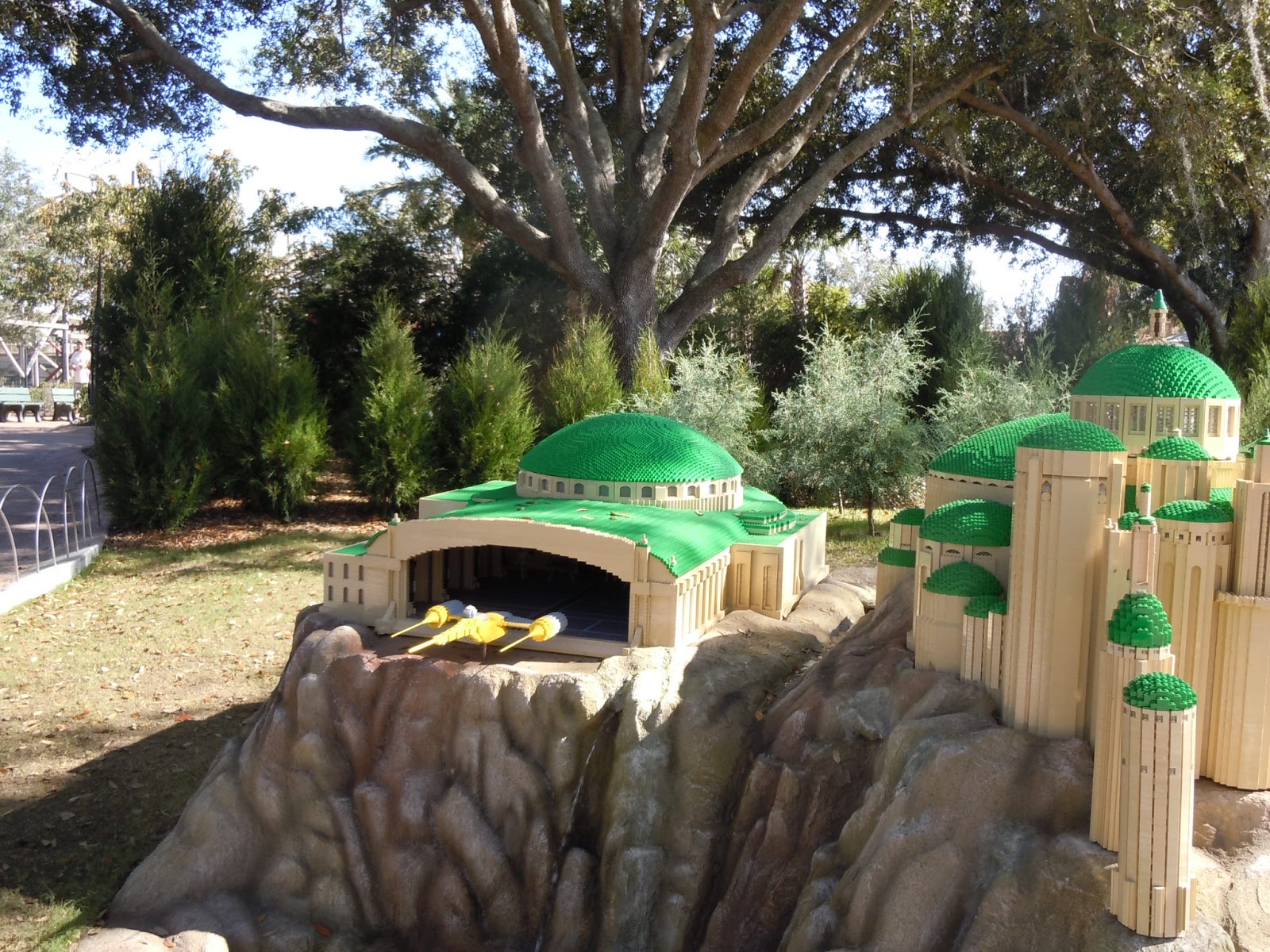 Entrance to the Lego version of Star Wars - with glare affecting my centering, alas
 The Millennium Falcon
 The Millennium Falcon, airborne
 Note the amazing detail - and all done in Legos.
And no, I have no idea how the Falcon levitated. It was a case of "Press a button" & up she went! Can't find her?
That's the MF, with her sides glowing blue.
 Everybody's favorite robot
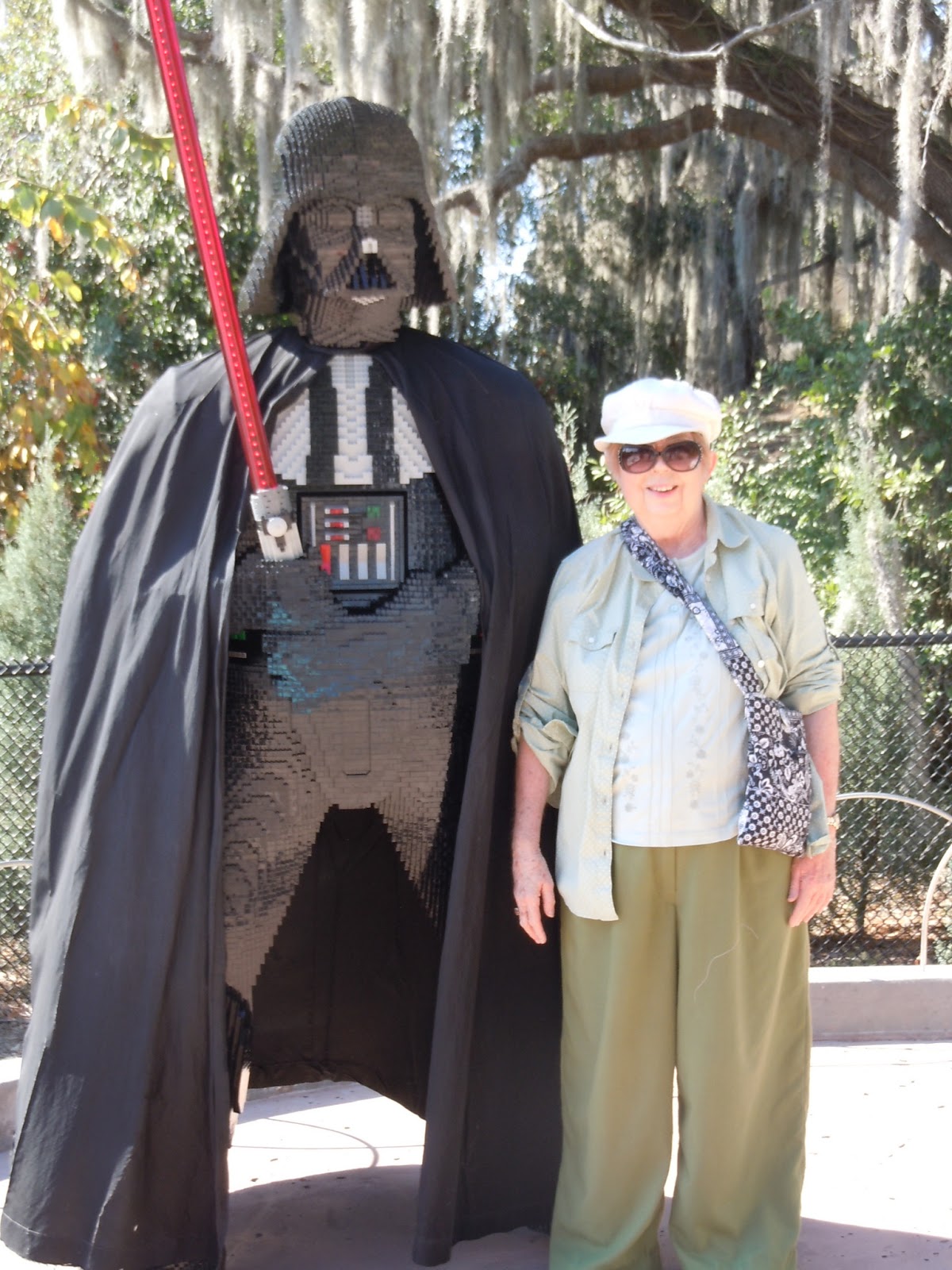 My apologies for ruining this photo of Darth Vader (my family insisted)
 Unexpected backdrop - note Lego giraffe
 And many more remarkable details at Legoland's Star Wars
On to a some of our most famous cities & sights.
 Lego ferry circling the Statue of Liberty
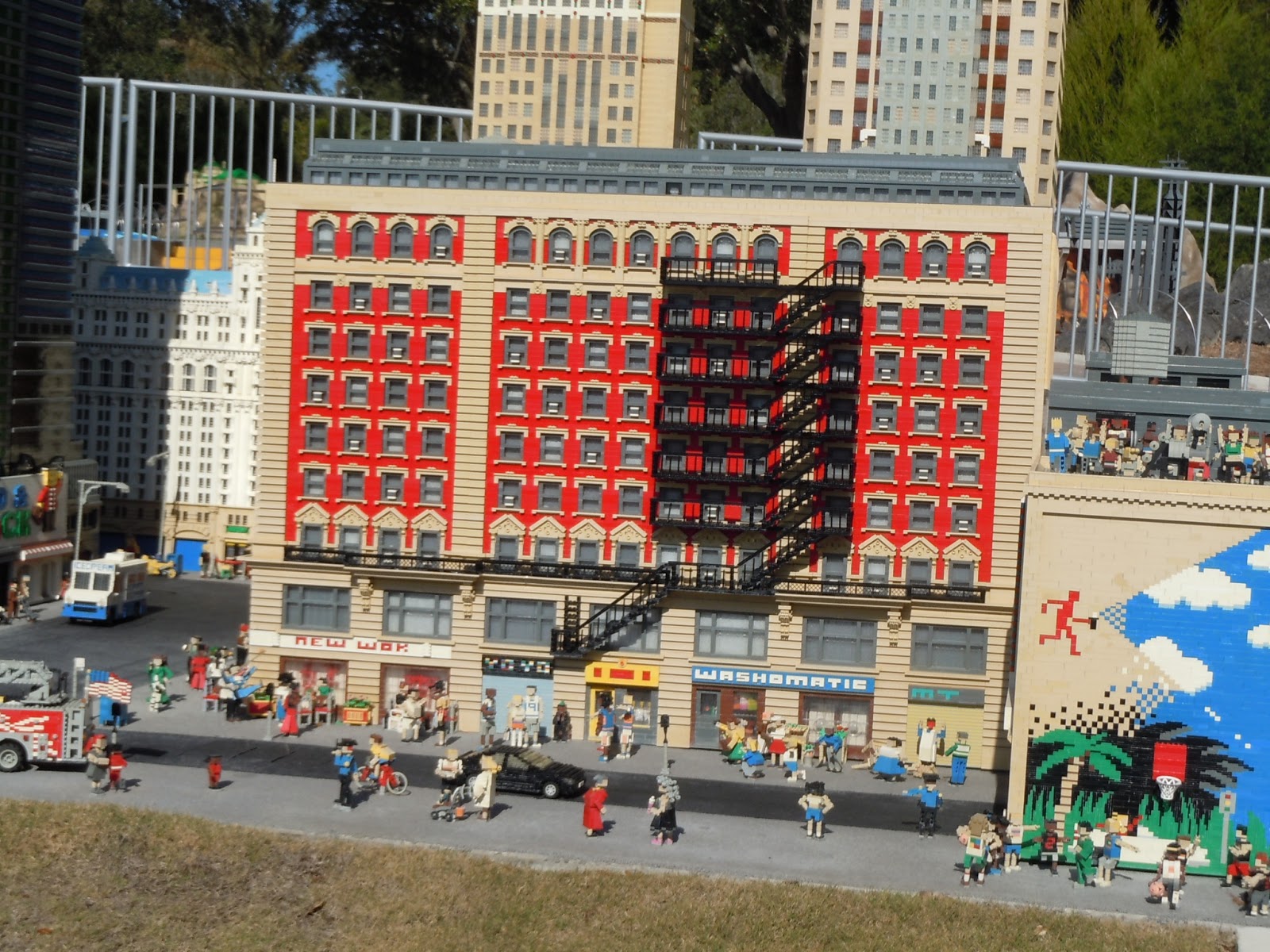
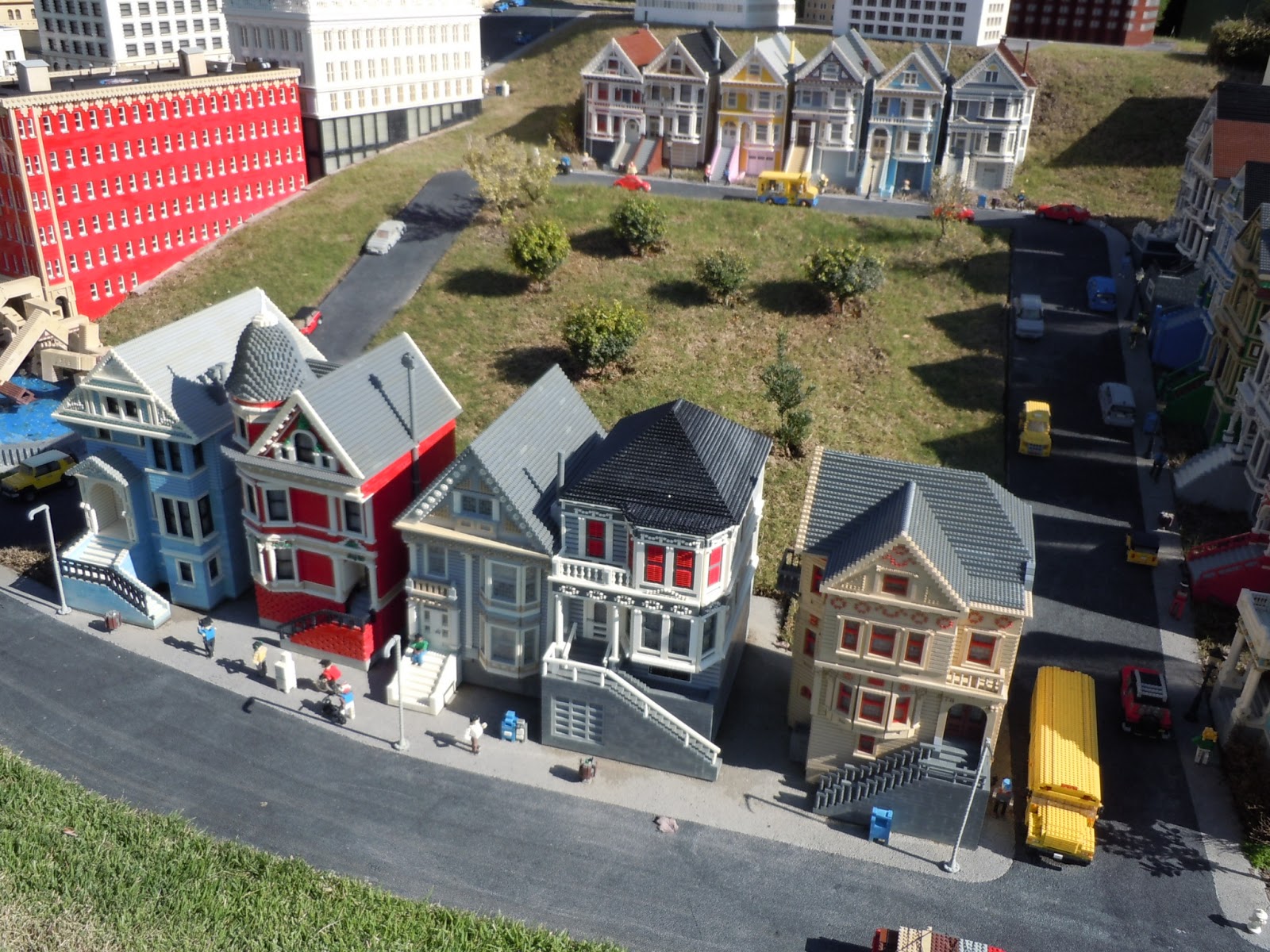

 A "Vegas" geyser

The Lego version of the Kennedy Space Center -
and a good way to end this week's visit to
Legoland Florida. (One more
installment to come.)
Thanks for stopping by.
Next blog: Dictionary for Writers, Part 4
Grace
Click here for a list of Grace's books as Blair Bancroft
March 3, 2013
DICTIONARY FOR WRITERS, Part 3
The following list contains the salient points most frequently found in contests sponsored by chapters of the Romance Writers of America. But, with the exception of the emphasis on romance, they apply to almost every work of fiction. Hopefully, authors of other genres will also find these definitions helpful.
Opening. A writer needs to grab a reader’s interest from the opening sentence and hang on tight. If left to my personal preference, I’d like to open with an atmospheric description, be just a little obscure, develop a bit of mystery . . . Well, too bad - forgetaboutit! It’s not quite as bad as “Wham, bang, thank-you, ma’am,” but readers expect to be “hooked” into the story from the first sentence and held captive right through those very first pages, preferably with a real zinger of a hook at the end of Chapter One. Although a bit wordy by 21st century standards, the most frequently quoted “grabber” is from Charles Dickens’s The Tale of Two Cities:
“It was the best of times, it was the worst of times, it was the age of wisdom, it was the age of foolishness, it was the epoch of belief, it was the epoch of incredulity, it was the season of Light, it was the season of Darkness, it was the spring of hope, it was the winter of despair…”
So take your time with that first paragraph. Or if you’re eager to plunge ahead, go back and edit it later. Polish it ‘til it shines. Do the same for the paragraphs that follow. Those first few pages are “make or break.”
Example of a classic “setting the scene” opening, superbly done, but no longer the recommended method for starting any but traditional Regency romance:
“The schoolroom in the Parsonage at Heythram was not a large apartment, but on a bleak January day, in a household where the consumption of coals was a consideration, this was not felt by its occupants to be a disadvantage. Quite a modest fire in the high, barred grate made it unnecessary for all but one of the four young ladies present to huddle shawls round their shoulders. . . .”
[Opening lines from Arabella by Georgette Heyer]
Examples of modern-day opening “hook”:
“It wasn’t every day a guy saw a headless beaver marching down the side of a road, not even in Dean Robillard’s larger-than-life world.”
[Opening line of Natural Born Charmer by Susan Elizabeth Phillips]
“The heavily shadowed gallery of the museum was filled with many strange and disturbing artifacts. None of the antiquities, however, was as shocking as the woman lying in a dark pool of blood on the cold marble floor.”
[Opening lines from The Third Circle by Amanda Quick]
“Miss Alexia Tarabotti was not enjoying her evening. Private balls were never more than middling amusements for spinsters, and Miss Tarabotti was not the kind of spinster who could garner even that much pleasure from the event. To put the pudding in the puff: she had retreated to the library, her favorite sanctuary in any house, only to happen upon an unexpected vampire.”
[Opening lines from Soulless, the successful Book One of the highly popular "Parasol Protectorate" series, by Gail Carriger]
Setting. The fashion of describing the setting before beginning the actual story may have gone out of fashion, but it is still vital to give readers as many clues as possible about the setting of your book, not only in the opening scene but in the changing scenes that follow. If you are writing an Historical, it’s easy enough to insert a Location & Date line—London 1889, for example. But even with that done, you have to give your readers some details of the setting: a nobleman’s house, gaming house, Hyde Park, brothel, tavern, theater, one of London’s many upscale men’s clubs, etc. . . .
In the course of editing and contest judging, I have seen entries where I couldn’t even tell what country we were in or whether the characters were in a city, suburb, small town, or on a ranch. Castle, house, condo, bar, sporting event . . .? Yes, you need to jump right into your story, but never forget your readers know only what you tell them. Don’t make your characters talking heads against a blank canvas—stick figures mouthing words, leaving readers with nothing concrete beyond the dialogue. They cannot visualize a scene unless you paint the details for them.
Possible Setting Details: Location & era - indicate by some means, close to the beginning, whether you book is contemporary, Victorian, Steampunk, Regency, Viking, Roman, Futuristic, Fantasy, etc. Landscape details - weather, endless vistas, sea, mountains, crowded slum, train, subway, street scenes, ranch, farm, space launch, etc. Household decorations - furniture, paintings, wallpaper, fireplaces, kitchen smells, colorful cars, animals, etc. You've built your own world, you say? Then make it clear - throw in a clue right up front that your work is Fantasy, Steampunk, Futuristic, or other venue created by your imagination. Don't credit your readers with the ability to read your mind. Tell them what they need to know.
Think of the famous paintings you have seen - then picture them set against a stark white background. Or the last professional play you saw - would it have been as good with no scenery, no backdrop to the drama being performed? Think of George Clooney or the giant Avatar mouthing words against a blue screen . . . weird, right? (Well, I would probably take Clooney any way I could get him, but . . .)
No matter how clever the dialogue, how fast the action, your characters should not be performing against a blank canvas. They are not “in the cloud.” They are “real” and can only be enhanced by delineating the world in which they live.
Characterization. As I have said in previous blogs, to me Characterization is the most important aspect of writing fiction. [Please see my 3-part series, “How to Develop Your Characters,” October & November 2012.]
Each person must be identified and described as they are introduced, including secondary characters. No, not the tweeny who does no more than scream in Chapter 13, but every character of significance must be recognized with a well-thought-out description. (Obviously longer for main characters than less important secondary characters.) The identifications add clarity; the descriptions add color—three-dimensions, if you will. You are creating the characters who must catch your readers’ interest, the people who will move your book forward. The people readers will love, hate, laugh at, laugh with, cry over, depending on what you tell them. Only you can show your readers what these people are like. Only you can bring them to life. Your characters are your “movers and shakers,” even if one or two are sniveling cowards. They must insinuate their way into readers’ hearts and make them care.
Readers also want to know what the most important characters wear, just as they want to know your characters’ quirks, faults, and idiosyncrasies, as well as their more sterling (or villainous) qualities. Whether your characters do something good or bad, be sure you have set up the possibility for this action; i.e., that it arises out of the character you have already shown your readers and is not something new that suddenly strikes out of the blue. Or, if your character must do something that doesn’t make sense, be sure you give your readers excellent motivation for this deviation from the norm. An author can sell almost anything to his readers if he provides the right motivation for his characters’ actions, but that motivation has to be clearly stated, not left to the reader’s imagination.
And keep in mind that if you are tempted to have either one of your two main characters do something illegal, make sure you have a very good reason for it. Readers want to love the hero and heroine; they don’t want them to have feet of clay. Yes, they can both be stupid, particularly in their relationship with each other, but they’re not supposed to do something that might hurt other people, show greed, prejudice, or other negative traits. And if they do, it has to be clear that they are destined to learn from these mistakes by the end of the book. In romance, readers want characters they can admire and identify with, not characters who are being mean to their spouses, their relatives, their children, etc. Then again, secondary characters can be as venal and downright nasty as you want!
Point of View. Point of View comes in three flavors - first, second, and third. Huh, you say—you never thought of it that way before? Okay, let’s start with First.
First person. Writing in first person means you write solely from one person’s point of view. Your main character writes as “I.” No one else in the book has a point of view. Of course, just to make life difficult, modern usage has amended that. There are now books which allow for two first-person views in the same book. For example, there’s a section with the heroine tells the story, using “I,” followed by a section where the hero offers his point of view, using “I.” Unless these switches are extremely well-dilineated, they can be confusing. (One simple method to keep things straight is similar to a Location & Date line. Simply put the name of the person with the new POV on a separate line before their section.)
There are also books where one character (in romance, usually the heroine) writes as “I” and a second character (usually the hero) is portrayed in third person (“He” or “She”). I can’t exactly recommend it, but since I’ve done it myself in Orange Blossoms & Mayhem, I can’t sneer at it either. Romance readers really do like to see inside the hero’s head, as well as the heroine’s.
In practice, many mysteries are written in first person, while romance readers tend to prefer third person. I personally find it easier to be humorous in first, so I’d like to see romance readers be a bit more tolerant.
Second person. Second person (“You”) usually turns up only in introspection, with one of the characters scolding her/himself with something like, You dumb idiot, you ought to have known better! Both second and first person thoughts, when inserted in a third-person narrative, need to be italicized.
Third person. The most common type of narrative. (“He” “She”) The hero, heroine, villain, and perhaps a few other important secondary characters, all get a point of view. It is, however, absolutely essential that you do not jump from one character’s head to the other, a sin called “head-hopping.” The preferred method is to stick to one character’s point of view throughout an entire scene. If you absolutely must switch within a scene, then try to balance the two points of views. (I violated this "rule" just yesterday, by the way.) Obviously, each author develops his/her own style, but readers truly hate writing that jumps back and forth from one POV to another, sometimes within the space of a paragraph. It’s simply too confusing. Beginners are advised to stick to the POV of the hero, heroine, and possibly a villain, if applicable.
Tense. This is a new one. Books have been written in past tense for as long as there have been books. But times they are a-changing. Some books, particularly those for Young Adults, are now being written in present tense. Reading it is a little disconcerting at first, but I found I adjusted rapidly, and a well-written present-tense flows well. Until the author forgets and throws in a bit of past tense here and there (as I’ve seen in contests I’ve judged). Writing in present tense is definitely an innovation worth consideration.
~ * ~
Thanks for stopping by.
Coming soon: Dictionary for Writers, Part 4 - Dialogue, Narration, Conflict, Plot, Style, Voice, Presentation. Also - Legoland, Part 2
Grace
Click here for a list of Grace's books as Blair Bancroft
Opening. A writer needs to grab a reader’s interest from the opening sentence and hang on tight. If left to my personal preference, I’d like to open with an atmospheric description, be just a little obscure, develop a bit of mystery . . . Well, too bad - forgetaboutit! It’s not quite as bad as “Wham, bang, thank-you, ma’am,” but readers expect to be “hooked” into the story from the first sentence and held captive right through those very first pages, preferably with a real zinger of a hook at the end of Chapter One. Although a bit wordy by 21st century standards, the most frequently quoted “grabber” is from Charles Dickens’s The Tale of Two Cities:
“It was the best of times, it was the worst of times, it was the age of wisdom, it was the age of foolishness, it was the epoch of belief, it was the epoch of incredulity, it was the season of Light, it was the season of Darkness, it was the spring of hope, it was the winter of despair…”
So take your time with that first paragraph. Or if you’re eager to plunge ahead, go back and edit it later. Polish it ‘til it shines. Do the same for the paragraphs that follow. Those first few pages are “make or break.”
Example of a classic “setting the scene” opening, superbly done, but no longer the recommended method for starting any but traditional Regency romance:
“The schoolroom in the Parsonage at Heythram was not a large apartment, but on a bleak January day, in a household where the consumption of coals was a consideration, this was not felt by its occupants to be a disadvantage. Quite a modest fire in the high, barred grate made it unnecessary for all but one of the four young ladies present to huddle shawls round their shoulders. . . .”
[Opening lines from Arabella by Georgette Heyer]
Examples of modern-day opening “hook”:
“It wasn’t every day a guy saw a headless beaver marching down the side of a road, not even in Dean Robillard’s larger-than-life world.”
[Opening line of Natural Born Charmer by Susan Elizabeth Phillips]
“The heavily shadowed gallery of the museum was filled with many strange and disturbing artifacts. None of the antiquities, however, was as shocking as the woman lying in a dark pool of blood on the cold marble floor.”
[Opening lines from The Third Circle by Amanda Quick]
“Miss Alexia Tarabotti was not enjoying her evening. Private balls were never more than middling amusements for spinsters, and Miss Tarabotti was not the kind of spinster who could garner even that much pleasure from the event. To put the pudding in the puff: she had retreated to the library, her favorite sanctuary in any house, only to happen upon an unexpected vampire.”
[Opening lines from Soulless, the successful Book One of the highly popular "Parasol Protectorate" series, by Gail Carriger]
Setting. The fashion of describing the setting before beginning the actual story may have gone out of fashion, but it is still vital to give readers as many clues as possible about the setting of your book, not only in the opening scene but in the changing scenes that follow. If you are writing an Historical, it’s easy enough to insert a Location & Date line—London 1889, for example. But even with that done, you have to give your readers some details of the setting: a nobleman’s house, gaming house, Hyde Park, brothel, tavern, theater, one of London’s many upscale men’s clubs, etc. . . .
In the course of editing and contest judging, I have seen entries where I couldn’t even tell what country we were in or whether the characters were in a city, suburb, small town, or on a ranch. Castle, house, condo, bar, sporting event . . .? Yes, you need to jump right into your story, but never forget your readers know only what you tell them. Don’t make your characters talking heads against a blank canvas—stick figures mouthing words, leaving readers with nothing concrete beyond the dialogue. They cannot visualize a scene unless you paint the details for them.
Possible Setting Details: Location & era - indicate by some means, close to the beginning, whether you book is contemporary, Victorian, Steampunk, Regency, Viking, Roman, Futuristic, Fantasy, etc. Landscape details - weather, endless vistas, sea, mountains, crowded slum, train, subway, street scenes, ranch, farm, space launch, etc. Household decorations - furniture, paintings, wallpaper, fireplaces, kitchen smells, colorful cars, animals, etc. You've built your own world, you say? Then make it clear - throw in a clue right up front that your work is Fantasy, Steampunk, Futuristic, or other venue created by your imagination. Don't credit your readers with the ability to read your mind. Tell them what they need to know.
Think of the famous paintings you have seen - then picture them set against a stark white background. Or the last professional play you saw - would it have been as good with no scenery, no backdrop to the drama being performed? Think of George Clooney or the giant Avatar mouthing words against a blue screen . . . weird, right? (Well, I would probably take Clooney any way I could get him, but . . .)
No matter how clever the dialogue, how fast the action, your characters should not be performing against a blank canvas. They are not “in the cloud.” They are “real” and can only be enhanced by delineating the world in which they live.
Characterization. As I have said in previous blogs, to me Characterization is the most important aspect of writing fiction. [Please see my 3-part series, “How to Develop Your Characters,” October & November 2012.]
Each person must be identified and described as they are introduced, including secondary characters. No, not the tweeny who does no more than scream in Chapter 13, but every character of significance must be recognized with a well-thought-out description. (Obviously longer for main characters than less important secondary characters.) The identifications add clarity; the descriptions add color—three-dimensions, if you will. You are creating the characters who must catch your readers’ interest, the people who will move your book forward. The people readers will love, hate, laugh at, laugh with, cry over, depending on what you tell them. Only you can show your readers what these people are like. Only you can bring them to life. Your characters are your “movers and shakers,” even if one or two are sniveling cowards. They must insinuate their way into readers’ hearts and make them care.
Readers also want to know what the most important characters wear, just as they want to know your characters’ quirks, faults, and idiosyncrasies, as well as their more sterling (or villainous) qualities. Whether your characters do something good or bad, be sure you have set up the possibility for this action; i.e., that it arises out of the character you have already shown your readers and is not something new that suddenly strikes out of the blue. Or, if your character must do something that doesn’t make sense, be sure you give your readers excellent motivation for this deviation from the norm. An author can sell almost anything to his readers if he provides the right motivation for his characters’ actions, but that motivation has to be clearly stated, not left to the reader’s imagination.
And keep in mind that if you are tempted to have either one of your two main characters do something illegal, make sure you have a very good reason for it. Readers want to love the hero and heroine; they don’t want them to have feet of clay. Yes, they can both be stupid, particularly in their relationship with each other, but they’re not supposed to do something that might hurt other people, show greed, prejudice, or other negative traits. And if they do, it has to be clear that they are destined to learn from these mistakes by the end of the book. In romance, readers want characters they can admire and identify with, not characters who are being mean to their spouses, their relatives, their children, etc. Then again, secondary characters can be as venal and downright nasty as you want!
Point of View. Point of View comes in three flavors - first, second, and third. Huh, you say—you never thought of it that way before? Okay, let’s start with First.
First person. Writing in first person means you write solely from one person’s point of view. Your main character writes as “I.” No one else in the book has a point of view. Of course, just to make life difficult, modern usage has amended that. There are now books which allow for two first-person views in the same book. For example, there’s a section with the heroine tells the story, using “I,” followed by a section where the hero offers his point of view, using “I.” Unless these switches are extremely well-dilineated, they can be confusing. (One simple method to keep things straight is similar to a Location & Date line. Simply put the name of the person with the new POV on a separate line before their section.)
There are also books where one character (in romance, usually the heroine) writes as “I” and a second character (usually the hero) is portrayed in third person (“He” or “She”). I can’t exactly recommend it, but since I’ve done it myself in Orange Blossoms & Mayhem, I can’t sneer at it either. Romance readers really do like to see inside the hero’s head, as well as the heroine’s.
In practice, many mysteries are written in first person, while romance readers tend to prefer third person. I personally find it easier to be humorous in first, so I’d like to see romance readers be a bit more tolerant.
Second person. Second person (“You”) usually turns up only in introspection, with one of the characters scolding her/himself with something like, You dumb idiot, you ought to have known better! Both second and first person thoughts, when inserted in a third-person narrative, need to be italicized.
Third person. The most common type of narrative. (“He” “She”) The hero, heroine, villain, and perhaps a few other important secondary characters, all get a point of view. It is, however, absolutely essential that you do not jump from one character’s head to the other, a sin called “head-hopping.” The preferred method is to stick to one character’s point of view throughout an entire scene. If you absolutely must switch within a scene, then try to balance the two points of views. (I violated this "rule" just yesterday, by the way.) Obviously, each author develops his/her own style, but readers truly hate writing that jumps back and forth from one POV to another, sometimes within the space of a paragraph. It’s simply too confusing. Beginners are advised to stick to the POV of the hero, heroine, and possibly a villain, if applicable.
Tense. This is a new one. Books have been written in past tense for as long as there have been books. But times they are a-changing. Some books, particularly those for Young Adults, are now being written in present tense. Reading it is a little disconcerting at first, but I found I adjusted rapidly, and a well-written present-tense flows well. Until the author forgets and throws in a bit of past tense here and there (as I’ve seen in contests I’ve judged). Writing in present tense is definitely an innovation worth consideration.
~ * ~
Thanks for stopping by.
Coming soon: Dictionary for Writers, Part 4 - Dialogue, Narration, Conflict, Plot, Style, Voice, Presentation. Also - Legoland, Part 2
Grace
Click here for a list of Grace's books as Blair Bancroft
February 24, 2013
LEGOLAND, FLORIDA
Click here for the final results of the 2013 Python Challenge. ~ * ~
This blog post is primarily a photo essay for the young and the young at heart. Plus engineers, builders of all ages, and anyone who can appreciate the intricacy of Lego constructions. And then there are all those rollercoasters for people who are not faint of heart. (I do not number myself among them, but the other seven members of my family, including the six-year-old, enjoyed them immensely.) And if you're too far away to have Legoland, Florida, in your future, I hope you will it enjoy it vicariously through these photos.
The family immediately headed for the Medieval area, which boasts a wooden rollercoaster.
Having taken a good look at the Legoland map the night before, I hired a cart so I could take it easy while everyone else ran from one place to the next. (Yes, that's me hiding in the shadows. Loved that cart!)
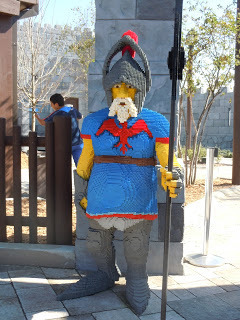
 A glimpse of the wooden coaster
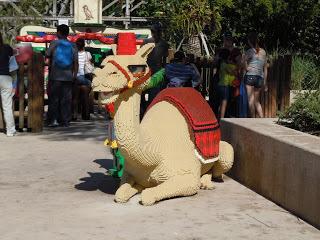
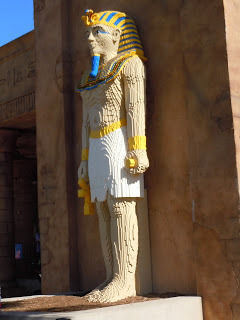 Lego Pharoah outside a shooting gallery
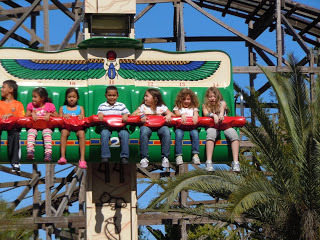 The 3 grandgirls on the right
 Amazingly real "elephants" on the Safari ride
 Guarding the "Coastersaurus"
It looks like Legoland is going to run to more than one blog - I don't want to overload Blogger's system or strain the patience of those who prefer bon mots to photos! Look for the next Lego post after Dictionary for Writers, Part 3. It will include Lego versions of Star Wars, New York City, Vegas, the Space Shuttle & much, much more.
Thanks for stopping by.
Grace
Click here for a list of Grace's books as Blair Bancroft
This blog post is primarily a photo essay for the young and the young at heart. Plus engineers, builders of all ages, and anyone who can appreciate the intricacy of Lego constructions. And then there are all those rollercoasters for people who are not faint of heart. (I do not number myself among them, but the other seven members of my family, including the six-year-old, enjoyed them immensely.) And if you're too far away to have Legoland, Florida, in your future, I hope you will it enjoy it vicariously through these photos.


The family immediately headed for the Medieval area, which boasts a wooden rollercoaster.
Having taken a good look at the Legoland map the night before, I hired a cart so I could take it easy while everyone else ran from one place to the next. (Yes, that's me hiding in the shadows. Loved that cart!)
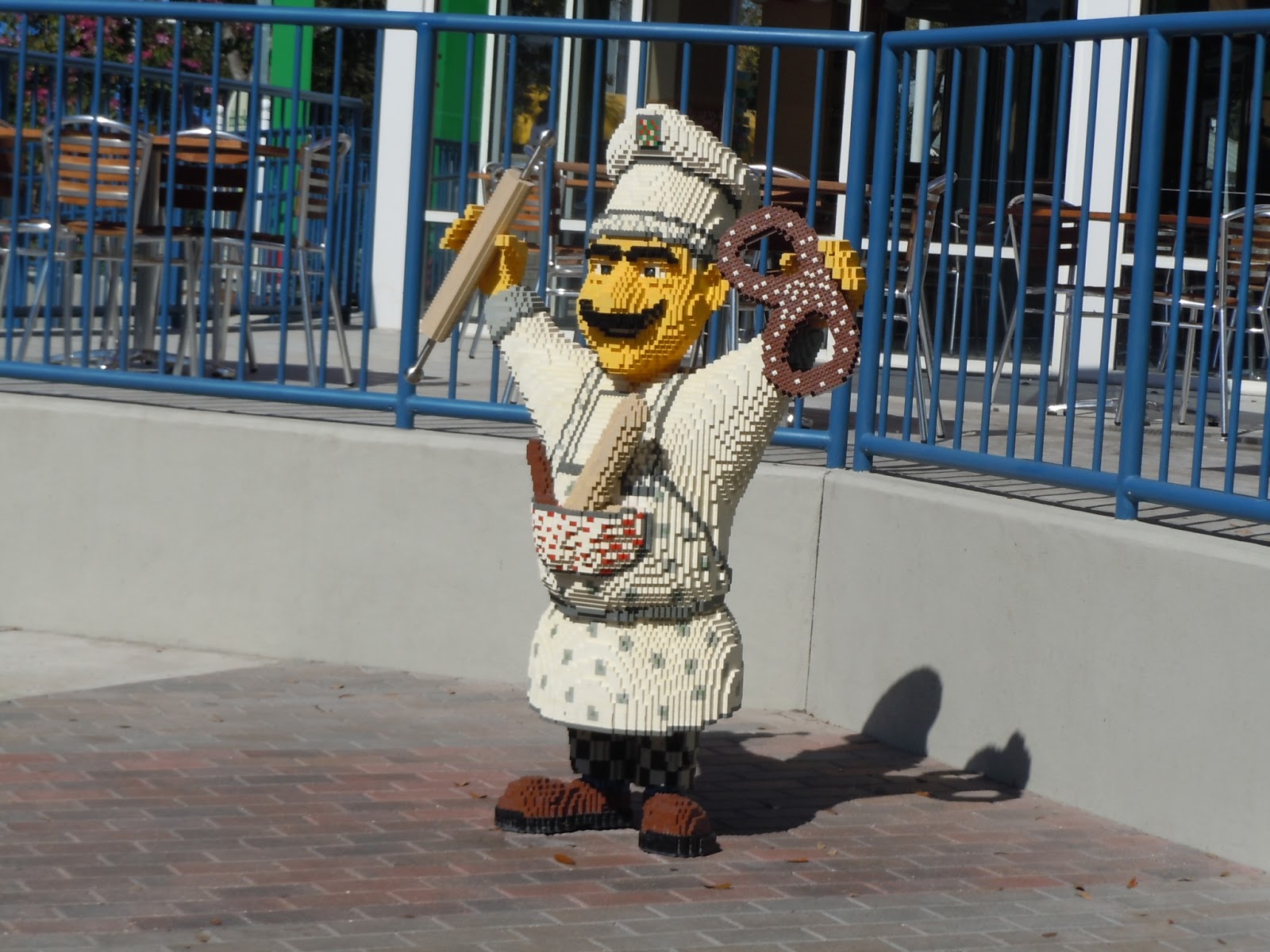
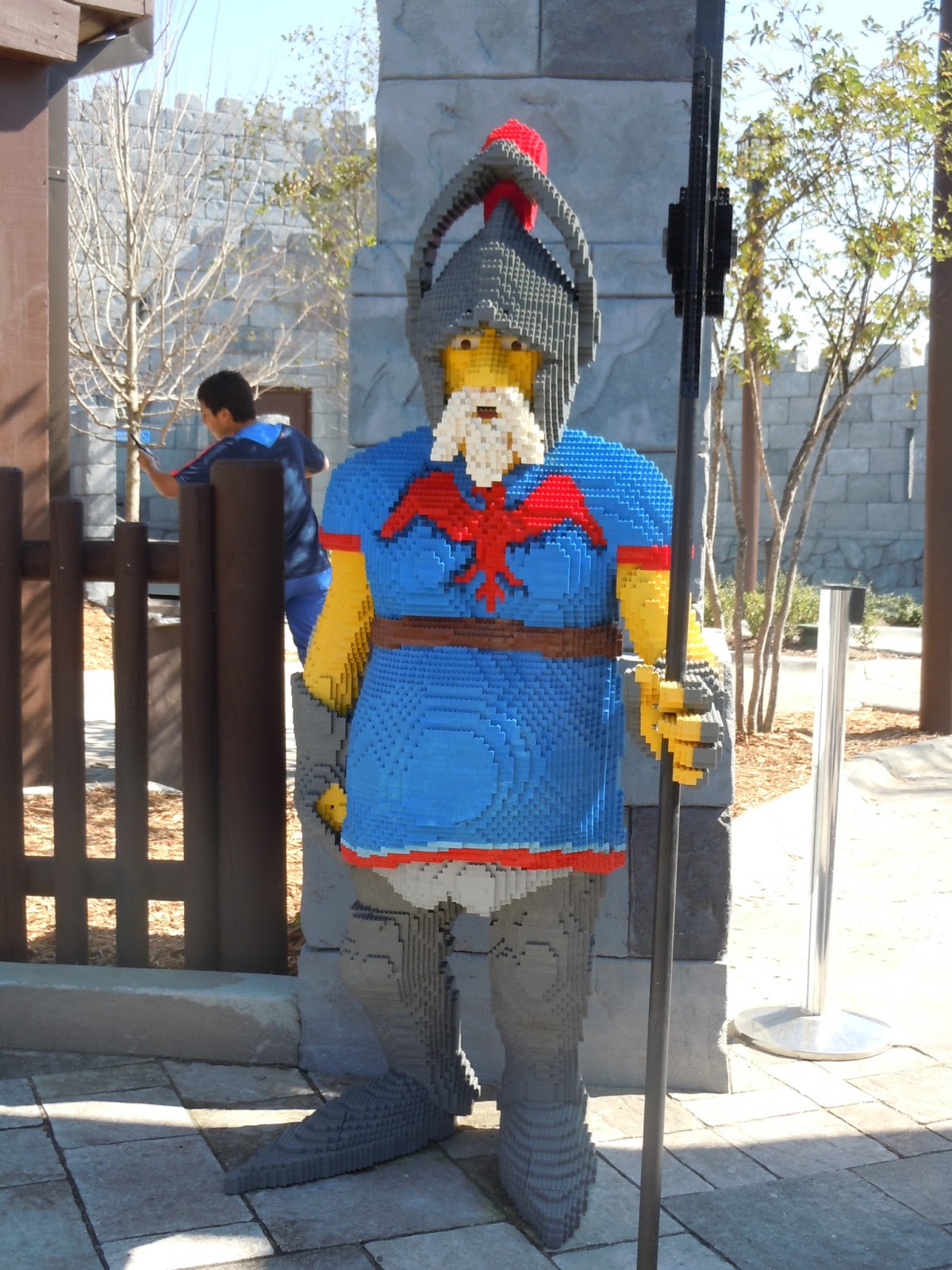
 A glimpse of the wooden coaster
 Lego Pharoah outside a shooting gallery
 The 3 grandgirls on the right
 Amazingly real "elephants" on the Safari ride
 Guarding the "Coastersaurus"
 It looks like Legoland is going to run to more than one blog - I don't want to overload Blogger's system or strain the patience of those who prefer bon mots to photos! Look for the next Lego post after Dictionary for Writers, Part 3. It will include Lego versions of Star Wars, New York City, Vegas, the Space Shuttle & much, much more.
Thanks for stopping by.
Grace
Click here for a list of Grace's books as Blair Bancroft
February 17, 2013
DICTIONARY FOR WRITERS, Part 2
For Part 1 of Dictionary for Writers, please see my blog of February 4, 2013.
A Few More Words Every Author Needs to Understand
Synopsis. “Synopsis” is frequently preceded by “That dreaded.” It’s the narrative summary of your opus, written in present tense. Most editors prefer 3-5 double-spaced pages. A few editors want long, detailed synopses, with as many as 15-20 pages. (If I personally had to write a synopsis of that length, I would consider that I’d finished the book, I knew what was going to happen, and forgetaboutit! I'd lost all incentive to actually sit down and write it.)
Character Briefs. Although not necessarily a part of a synopsis - if you have room, a few brief words on your major characters (and perhaps a couple of the most important secondary characters) are a good way to introduce your story.
Caution: do not make the mistake of thinking a reader is ever going to see your synopsis. An editor, agent, marketing personnel, possibly a cover artist, might see your synopsis. But that’s it. Everything you want the reader to know must be in the manuscript itself. Do not put information you want the reader to know in the synopsis, then fail to put it in your book.
Logline. This is the TV guide version of your book. Two, possibly three sentences, which I would advise putting at the beginning of your synopsis, single-spaced. Preferably words with a hook to grab an editor/agent’s attention right up front. Learning to compress your book into a Logline is also an excellent exercise for any author. A revealing discipline. It also gives you something you can zip out of your head on a moment’s notice and “pitch” with intelligence to anyone willing to listen.
Outline. “Outline” is what the name implies. Rather than a narrative summary of your book (as a synopsis is), an Outline contains a list of chapters with notes about what happens in each chapter. Some mystery writers prefer this method of planning their books, but a Synopsis is more common in Romance.
Character List. Strictly for author use. A “Who’s Who” of your book (which I consider a “must” for every book). You should include every single character (except perhaps the “tweeny” mentioned once in Chapter 14). I also list place names - houses, taverns, boats, etc. - any name that is used more than once, so I get it right each time.
Plotter. So-called “plotters” tend to think they are the only ones who “plot” their books. It just ain’t so. Some of us simply do it in our heads rather than require storyboards, photos, cards, detailed synopses, outlines, etc., in order to write a book. Plotters feel the need to know exactly where their story is going before they begin. Other writers, like myself, would be bored to death if we knew in advance what was going to happen. This, obviously, is a matter of personality rather than a case of “right” or “wrong.” Some people work better one way; some, another. For the other side of the coin, please see “Pantser” below.
Pantser. First of all, I absolutely hate this term for people who are not detailed plotters. The origin, however, makes sense. “Pantser” comes from the expression, “fly by the seat of your pants.” And, yes, that describes how we create our books rather well, but the word is ugly, ugly, ugly! I much prefer to be an “out of the mist” author. Yes, we invent main characters before we begin to write - but we might not have more than their names down on paper. (Maybe not even that.) We know how we want them to act, but we don’t put it down in black and white. After all, as we get to know him/her, we might find them saying things that don’t fit our original ideas at all. And since their character traits aren’t staring at us from some nicely typed outline, we feel freer to chuck our initial ideas and just let our characters run with their startling transformations. Makes for a more interesting manuscipt, I believe. But, again, to each his own.
However . . . please, call us something less ugly than “pantsers”!
Keywords. These are the words various book distributors ask us to use to describe our books. Keywords also make good Twitter hashtags. There is supposedly a whole science of Keywords - an attempt to narrow a category until your book might actually have a chance of being in the Top Ten or Hundred in that group. For example: Instead of “Regency” or “Regency Historical,” you might use “Regency Historical Romance,” or “Historical Regency Romance” or Regency Romantic Mystery.” Note: Print authors don’t have to worry about this, but e-authors frequently do, and indie authors must deal Keywords for every book.
Sweet. If there is a word I hate more than “Pantsers,” it’s “Sweet” as a description for romances that do not contain more than kisses and an occasional chaste bedroom scene between husband and wife. The reason I dislike having “sweet” applied to the traditional Regency romances I write is that so few of this sub-genre are “sweet.” They are “clever,” “witty,” “humorous,” “intelligent,” and often filled with action. In a proper Regency “sweet, starry-eyed heroines” appear only as “second bananas.” It also annoys me that authors can write completely sexless mysteries and never have their books called "sweet." Aargh!
Please! Somebody find a better word for the less graphic romances than “Sweet”!
Hot. I doubt there’s anyone who doesn’t know this definition as applied to a book, but since I wanted to include “Sweet,” “Hot” has to be here as well. Frankly, I consider it grossly unfair that everyone understands “hot” while allowing “sweet” to be applied to books where sex happens behind closed doors. Sigh. I know some authors who write incredible scenes of sexual tension, which to me are far stronger than graphic descriptions of what part goes where.
Hot, however, comes in different levels, from the magnificently done love scenes written by authors such as Nora Roberts to the much more hard-hitting, super-hot sexual details of authors like Beatrice Small.
Erotica. You could say that “Erotica” is super-hot sexual content carried to the extreme. The best books of erotica have a plot, but the emphasis is always on sexual details and can include almost every sexual aberration known to mankind, including Ménage à Trois, Gay, Lesbian, Bi, and Transgender activities.
Romantica. A name coined by Ellora’s Cave Publishing to describe its brand of erotica, which emphasizes romance and happy endings, along with graphic sexual details, and does not include some of the more aberrant sexual behaviors, such as bestiality. EC is sensitive about the use of "Romantica" for books other than their own.
[To be continued]
~ * ~
UPDATES on the Weird & Wonderful:
Python Challenge. The Python Challenge in the Everglades ended February 16, 2013. The total count was 68, the longest python caught, 14' 3". [When their website has been updated, I will post a link so you can see the photos and videos from this month-long event.]
My international thriller, LIMBO MAN, one of my personal favorites, will be free on Amazon Kindle on Tuesday, February 19, 2013.
My Romantic Suspense, FLORIDA WILD, has just been accepted by Ellora’s Cave (Blush line). No pub date as yet. This one has an Orlando area setting, as opposed to my five suspense/mystery books set in the not-so-fictional Gulf Coast town of Golden Beach, Florida (see my blog of February 11, 2013).
The Orlando Sentinel reports that Brevard County (on the Space Coast) has just tied New Smyrna Beach for the dubious honor of “Shark Bite Capital of the World.” The only saving grace, the shark bites on Central Florida’s Atlantic beaches tend to be more like dog bites, and easily mended. Lifeguards are so accustomed to shark fin sightings that they simply close the affected beach for half an hour until the shark has moved off in search of better pickings.
Grace note: when my parents first moved to the Florida Gulf Coast in 1963, they were warned not to swim after four o’clock in the afternoon. A warning that soon succumbed to the great influx of snowbirds and tourists (mustn’t scare the paying customers!) That doesn’t keep it from being advice as sensible in 2013 as it was in 1963.
A Jaundiced View of Romance, as seen by a sports writer for The Orlando Sentinel (2/15/13):
Click here for "Romance meets NASCAR"
 Lounging on the Suwanee - too cold to play outside!
Thanks for stopping by.
Grace
Coming soon: Legoland photos & Part 3 of Dictionary for Writers
Click here for a list of Grace's books as Blair Bancroft
A Few More Words Every Author Needs to Understand
Synopsis. “Synopsis” is frequently preceded by “That dreaded.” It’s the narrative summary of your opus, written in present tense. Most editors prefer 3-5 double-spaced pages. A few editors want long, detailed synopses, with as many as 15-20 pages. (If I personally had to write a synopsis of that length, I would consider that I’d finished the book, I knew what was going to happen, and forgetaboutit! I'd lost all incentive to actually sit down and write it.)
Character Briefs. Although not necessarily a part of a synopsis - if you have room, a few brief words on your major characters (and perhaps a couple of the most important secondary characters) are a good way to introduce your story.
Caution: do not make the mistake of thinking a reader is ever going to see your synopsis. An editor, agent, marketing personnel, possibly a cover artist, might see your synopsis. But that’s it. Everything you want the reader to know must be in the manuscript itself. Do not put information you want the reader to know in the synopsis, then fail to put it in your book.
Logline. This is the TV guide version of your book. Two, possibly three sentences, which I would advise putting at the beginning of your synopsis, single-spaced. Preferably words with a hook to grab an editor/agent’s attention right up front. Learning to compress your book into a Logline is also an excellent exercise for any author. A revealing discipline. It also gives you something you can zip out of your head on a moment’s notice and “pitch” with intelligence to anyone willing to listen.
Outline. “Outline” is what the name implies. Rather than a narrative summary of your book (as a synopsis is), an Outline contains a list of chapters with notes about what happens in each chapter. Some mystery writers prefer this method of planning their books, but a Synopsis is more common in Romance.
Character List. Strictly for author use. A “Who’s Who” of your book (which I consider a “must” for every book). You should include every single character (except perhaps the “tweeny” mentioned once in Chapter 14). I also list place names - houses, taverns, boats, etc. - any name that is used more than once, so I get it right each time.
Plotter. So-called “plotters” tend to think they are the only ones who “plot” their books. It just ain’t so. Some of us simply do it in our heads rather than require storyboards, photos, cards, detailed synopses, outlines, etc., in order to write a book. Plotters feel the need to know exactly where their story is going before they begin. Other writers, like myself, would be bored to death if we knew in advance what was going to happen. This, obviously, is a matter of personality rather than a case of “right” or “wrong.” Some people work better one way; some, another. For the other side of the coin, please see “Pantser” below.
Pantser. First of all, I absolutely hate this term for people who are not detailed plotters. The origin, however, makes sense. “Pantser” comes from the expression, “fly by the seat of your pants.” And, yes, that describes how we create our books rather well, but the word is ugly, ugly, ugly! I much prefer to be an “out of the mist” author. Yes, we invent main characters before we begin to write - but we might not have more than their names down on paper. (Maybe not even that.) We know how we want them to act, but we don’t put it down in black and white. After all, as we get to know him/her, we might find them saying things that don’t fit our original ideas at all. And since their character traits aren’t staring at us from some nicely typed outline, we feel freer to chuck our initial ideas and just let our characters run with their startling transformations. Makes for a more interesting manuscipt, I believe. But, again, to each his own.
However . . . please, call us something less ugly than “pantsers”!
Keywords. These are the words various book distributors ask us to use to describe our books. Keywords also make good Twitter hashtags. There is supposedly a whole science of Keywords - an attempt to narrow a category until your book might actually have a chance of being in the Top Ten or Hundred in that group. For example: Instead of “Regency” or “Regency Historical,” you might use “Regency Historical Romance,” or “Historical Regency Romance” or Regency Romantic Mystery.” Note: Print authors don’t have to worry about this, but e-authors frequently do, and indie authors must deal Keywords for every book.
Sweet. If there is a word I hate more than “Pantsers,” it’s “Sweet” as a description for romances that do not contain more than kisses and an occasional chaste bedroom scene between husband and wife. The reason I dislike having “sweet” applied to the traditional Regency romances I write is that so few of this sub-genre are “sweet.” They are “clever,” “witty,” “humorous,” “intelligent,” and often filled with action. In a proper Regency “sweet, starry-eyed heroines” appear only as “second bananas.” It also annoys me that authors can write completely sexless mysteries and never have their books called "sweet." Aargh!
Please! Somebody find a better word for the less graphic romances than “Sweet”!
Hot. I doubt there’s anyone who doesn’t know this definition as applied to a book, but since I wanted to include “Sweet,” “Hot” has to be here as well. Frankly, I consider it grossly unfair that everyone understands “hot” while allowing “sweet” to be applied to books where sex happens behind closed doors. Sigh. I know some authors who write incredible scenes of sexual tension, which to me are far stronger than graphic descriptions of what part goes where.
Hot, however, comes in different levels, from the magnificently done love scenes written by authors such as Nora Roberts to the much more hard-hitting, super-hot sexual details of authors like Beatrice Small.
Erotica. You could say that “Erotica” is super-hot sexual content carried to the extreme. The best books of erotica have a plot, but the emphasis is always on sexual details and can include almost every sexual aberration known to mankind, including Ménage à Trois, Gay, Lesbian, Bi, and Transgender activities.
Romantica. A name coined by Ellora’s Cave Publishing to describe its brand of erotica, which emphasizes romance and happy endings, along with graphic sexual details, and does not include some of the more aberrant sexual behaviors, such as bestiality. EC is sensitive about the use of "Romantica" for books other than their own.
[To be continued]
~ * ~
UPDATES on the Weird & Wonderful:
Python Challenge. The Python Challenge in the Everglades ended February 16, 2013. The total count was 68, the longest python caught, 14' 3". [When their website has been updated, I will post a link so you can see the photos and videos from this month-long event.]
My international thriller, LIMBO MAN, one of my personal favorites, will be free on Amazon Kindle on Tuesday, February 19, 2013.
My Romantic Suspense, FLORIDA WILD, has just been accepted by Ellora’s Cave (Blush line). No pub date as yet. This one has an Orlando area setting, as opposed to my five suspense/mystery books set in the not-so-fictional Gulf Coast town of Golden Beach, Florida (see my blog of February 11, 2013).
The Orlando Sentinel reports that Brevard County (on the Space Coast) has just tied New Smyrna Beach for the dubious honor of “Shark Bite Capital of the World.” The only saving grace, the shark bites on Central Florida’s Atlantic beaches tend to be more like dog bites, and easily mended. Lifeguards are so accustomed to shark fin sightings that they simply close the affected beach for half an hour until the shark has moved off in search of better pickings.
Grace note: when my parents first moved to the Florida Gulf Coast in 1963, they were warned not to swim after four o’clock in the afternoon. A warning that soon succumbed to the great influx of snowbirds and tourists (mustn’t scare the paying customers!) That doesn’t keep it from being advice as sensible in 2013 as it was in 1963.
A Jaundiced View of Romance, as seen by a sports writer for The Orlando Sentinel (2/15/13):
Click here for "Romance meets NASCAR"
 Lounging on the Suwanee - too cold to play outside!
Thanks for stopping by.
Grace
Coming soon: Legoland photos & Part 3 of Dictionary for Writers
Click here for a list of Grace's books as Blair Bancroft