
Blair Bancroft's Blog, page 56
June 30, 2013
EDITING, Part 1 - Layering
Grace Note: MGM Studio Portrait, c. 1944. Before getting down to Part 1of my new Editing series, I'd like to point out a photo (forwarded by my daughter with an identification request from the Portland Film Festival). After scribbling down and typing up the ID caption from the large framed copy of the photo I've had on the wall of three different houses over the last forty-some years, I added the Film Festival's digital photo to last week's Mosaic Moments several days after it was originally posted. The photo is strictly for film buffs and those who recall the great movies of the '40s, '50s, and early '60s. It's a formal portrait of MGM Studio greats, taken, as far as I can tell, near the end of WWII. If you're interested, keep arrowing down at the end of this post, past all my Historical Romances, and you'll find it.
~ * ~
EDITING - Layering in information
At my very first writing conference - sponsored by The Romance Writers of America umpteen years ago in Orlando - I heard Tami Hoag describe her writing process and realized it was similar to my own. I "wing" the initial draft of a chapter. In the back of my mind is a vague idea of what I want to accomplish and how I want to lead in to what happens next. But because I'm thinking ahead, intent on moving the story forward, I often skip, or give short shrift, to descriptions, explanations, motivations, and other things that add important points or color to the story. In my case, dialogue is always easy and seldom needs to change, but, oh, do I tend to cheat on the narration!
I'm not, of course, the only author with this approach to writing. (For example, Tami Hoag made it clear she does this too, and look how famous she became just a few years later!) I suspect, in fact, that almost all authors find they can do better the second or third time around. So you might want to take a look at some of the examples listed below.
All examples are from my current Work in Progress, Brides of Falconfell and will be re-edited several times more before being considered "finished."
Note: Serena is the first-person heroine in the excerpts below.
Example 1:
At least I thought not. But what did I know about such things beyond the on dits that were bandied about at every gathering of females? Poor Serena, who had no idea what it was like to break the rules.
At least I thought not. But what did I know about such things beyond the on dits that were bandied about at every gathering of females? Serena, sheltered daughter, sister, aunt, who had no idea what it was like to break the rules.
Example 2:
An eerie silence enveloped the morning; not even the customary rustle of the housemaids rekindling fires in the bedchambers could be heard. I'd swear even the birds had ceased to sing.
An eerie silence enveloped the morning; not even the customary rustle of the housemaids rekindling fires in the bedchambers could be heard. If the birds were indulging in their dawn chorus, not so much as a tweet penetrated Falconfell's thick walls.
Example 3:
"And then the footmen came to find us, for which I am grateful, I must admit. It's been a difficult week, my lord. My own tears were threatening to soak the ground."
"Violet's right," he said. "Helen's lips and fingertips were blue—they'd gone that way before she died. Gradually. I didn't even notice at first."
"And then the footmen came to find us, for which I am grateful, I must admit. It has been a difficult week, my lord. At that point I fear my own tears were threatening to soak the ground."
Silence stretched between us, though oddly not as awkward as it should have been between master and sometime governess.
"Violet is correct," he said at last. "Helen's lips and fingertips were blue—they'd gone that way before she died. Gradually. I didn't even notice at first."
Example 4:
"A temper tantrum, perhaps, or pure stage play. A plea for sympathy."
Not that I sympathized with her—she had ruined my wedding, after all. Nonetheless, could she not in that elevated state . . .?
"A temper tantrum, perhaps, or pure stage play. A plea for sympathy."
Sympathy? Who on earth would sympathize with such a creature? She had ruined my wedding.
Nonetheless, whatever her motive, could she not have worked herself into such an abysmal state that . . .?
Example 5:
When I was properly dressed and hoping for a bit of toast and tea, I discovered a veritable sea of servants in need of reassurance.
When I was properly dressed, I went to the dining room in search of a bit of tea and toast, only to find the sideboard empty. I descended to the kitchen, where I discovered a veritable sea of servants in need of reassurance.
Example 6:
And why had I skipped over Maud? She had her lucid moments but, all in all, there could be little doubt her sanity had slipped a cog or two. She might not have needed a valid reason to do away with Helen. Considering her an interloper might have been enough.
Wearily, I slipped out of the room and made my way to bed.
And why had I skipped over Maud? She had her lucid moments but, all in all, there could be little doubt her sanity had slipped a cog or two. She might not have needed a valid reason to do away with Helen. Considering her an interloper might have been enough.
Foolish creature! More likely I was making a mountain out of a molehill. Building nightmares from the remark of a five-year-old. It must be something in the gloom of Falconfell that turned a head of sound common sense into a diabolical machine conjuring monsters out of the mist. And yet the very air we breathed seemed tense with secrets, with an eerie menacing mystery undeterred by brilliant splashes of spring flowers. Even the stream crashing down the mountainside and racing through the valley offered more danger than picturesque beauty.
When I had arrived, I embraced any household that included Thayne Hammersley. Now . . . suspicion licked at the edges of my good sense, and fear—probably totally unjustified—seemed to lurk around every corner.
Idiot! I should be thoroughly ashamed of myself for allowing my mind to stray so far from reality.
Wearily, I slipped out of the room and made my way to bed.
~ * ~
I made numerous other adjustments to the chapter these excerpts came from, but the above best illustrate "layering." These examples are from a first edit, the edit I do at the end of each chapter. I go back every five chapters and read the whole section for continuity, as well as more "layering." And when the entire book is finished, I go back and edit the whole thing from top to bottom. If there are a lot of changes at this point - and naturally I hope there won't be - I type in the corrections and re-edit the whole blasted thing again.
This is how good books are made. With hard work and great attention to detail. Look at your work. Ask yourself:
Have I described my characters? (In addition to physical descriptions of both primary and secondary characters, this can include looking inside the main characters' heads and showing us how their minds work.)
Have I used colorful narration as well as dialogue? Have I taken the easy way out, writing mostly dialogue? Or have I gotten inside my main characters' heads and used introspection (narration) to show readers how they really feel?
Have I explained why my characters did what they did? - preferably through their own thoughts.
Is the plot understandable? Or did you just put it into a synopsis and forget that readers never see the synopsis, that everything you want the reader to know must in the pages of the manuscript itself? Or did you leave important plot points in your head, assuming your readers were mind readers?
Are there a more colorful words and/or expressions I could use to make my work more interesting?
I could go on and on, but I hope you get the gist of it by now. Never settle for a first draft. Go over your work until you've made it sing. But, yes, you have to know when to stop. There comes a moment in every manuscript when perhaps a year from now you might be able to improve it, but right now, this is the best you can do. It's time to stop and send that baby out there. Whether you're submitting to an agent, an editor, or going indie, it's time to cut the apron strings and say goodbye.
~ * ~
Thanks for stopping by.
Grace More editing examples next week.
Arrow down to the end of last week's blog to find the MGM photo.
~ * ~
EDITING - Layering in information
At my very first writing conference - sponsored by The Romance Writers of America umpteen years ago in Orlando - I heard Tami Hoag describe her writing process and realized it was similar to my own. I "wing" the initial draft of a chapter. In the back of my mind is a vague idea of what I want to accomplish and how I want to lead in to what happens next. But because I'm thinking ahead, intent on moving the story forward, I often skip, or give short shrift, to descriptions, explanations, motivations, and other things that add important points or color to the story. In my case, dialogue is always easy and seldom needs to change, but, oh, do I tend to cheat on the narration!
I'm not, of course, the only author with this approach to writing. (For example, Tami Hoag made it clear she does this too, and look how famous she became just a few years later!) I suspect, in fact, that almost all authors find they can do better the second or third time around. So you might want to take a look at some of the examples listed below.
All examples are from my current Work in Progress, Brides of Falconfell and will be re-edited several times more before being considered "finished."
Note: Serena is the first-person heroine in the excerpts below.
Example 1:
At least I thought not. But what did I know about such things beyond the on dits that were bandied about at every gathering of females? Poor Serena, who had no idea what it was like to break the rules.
At least I thought not. But what did I know about such things beyond the on dits that were bandied about at every gathering of females? Serena, sheltered daughter, sister, aunt, who had no idea what it was like to break the rules.
Example 2:
An eerie silence enveloped the morning; not even the customary rustle of the housemaids rekindling fires in the bedchambers could be heard. I'd swear even the birds had ceased to sing.
An eerie silence enveloped the morning; not even the customary rustle of the housemaids rekindling fires in the bedchambers could be heard. If the birds were indulging in their dawn chorus, not so much as a tweet penetrated Falconfell's thick walls.
Example 3:
"And then the footmen came to find us, for which I am grateful, I must admit. It's been a difficult week, my lord. My own tears were threatening to soak the ground."
"Violet's right," he said. "Helen's lips and fingertips were blue—they'd gone that way before she died. Gradually. I didn't even notice at first."
"And then the footmen came to find us, for which I am grateful, I must admit. It has been a difficult week, my lord. At that point I fear my own tears were threatening to soak the ground."
Silence stretched between us, though oddly not as awkward as it should have been between master and sometime governess.
"Violet is correct," he said at last. "Helen's lips and fingertips were blue—they'd gone that way before she died. Gradually. I didn't even notice at first."
Example 4:
"A temper tantrum, perhaps, or pure stage play. A plea for sympathy."
Not that I sympathized with her—she had ruined my wedding, after all. Nonetheless, could she not in that elevated state . . .?
"A temper tantrum, perhaps, or pure stage play. A plea for sympathy."
Sympathy? Who on earth would sympathize with such a creature? She had ruined my wedding.
Nonetheless, whatever her motive, could she not have worked herself into such an abysmal state that . . .?
Example 5:
When I was properly dressed and hoping for a bit of toast and tea, I discovered a veritable sea of servants in need of reassurance.
When I was properly dressed, I went to the dining room in search of a bit of tea and toast, only to find the sideboard empty. I descended to the kitchen, where I discovered a veritable sea of servants in need of reassurance.
Example 6:
And why had I skipped over Maud? She had her lucid moments but, all in all, there could be little doubt her sanity had slipped a cog or two. She might not have needed a valid reason to do away with Helen. Considering her an interloper might have been enough.
Wearily, I slipped out of the room and made my way to bed.
And why had I skipped over Maud? She had her lucid moments but, all in all, there could be little doubt her sanity had slipped a cog or two. She might not have needed a valid reason to do away with Helen. Considering her an interloper might have been enough.
Foolish creature! More likely I was making a mountain out of a molehill. Building nightmares from the remark of a five-year-old. It must be something in the gloom of Falconfell that turned a head of sound common sense into a diabolical machine conjuring monsters out of the mist. And yet the very air we breathed seemed tense with secrets, with an eerie menacing mystery undeterred by brilliant splashes of spring flowers. Even the stream crashing down the mountainside and racing through the valley offered more danger than picturesque beauty.
When I had arrived, I embraced any household that included Thayne Hammersley. Now . . . suspicion licked at the edges of my good sense, and fear—probably totally unjustified—seemed to lurk around every corner.
Idiot! I should be thoroughly ashamed of myself for allowing my mind to stray so far from reality.
Wearily, I slipped out of the room and made my way to bed.
~ * ~
I made numerous other adjustments to the chapter these excerpts came from, but the above best illustrate "layering." These examples are from a first edit, the edit I do at the end of each chapter. I go back every five chapters and read the whole section for continuity, as well as more "layering." And when the entire book is finished, I go back and edit the whole thing from top to bottom. If there are a lot of changes at this point - and naturally I hope there won't be - I type in the corrections and re-edit the whole blasted thing again.
This is how good books are made. With hard work and great attention to detail. Look at your work. Ask yourself:
Have I described my characters? (In addition to physical descriptions of both primary and secondary characters, this can include looking inside the main characters' heads and showing us how their minds work.)
Have I used colorful narration as well as dialogue? Have I taken the easy way out, writing mostly dialogue? Or have I gotten inside my main characters' heads and used introspection (narration) to show readers how they really feel?
Have I explained why my characters did what they did? - preferably through their own thoughts.
Is the plot understandable? Or did you just put it into a synopsis and forget that readers never see the synopsis, that everything you want the reader to know must in the pages of the manuscript itself? Or did you leave important plot points in your head, assuming your readers were mind readers?
Are there a more colorful words and/or expressions I could use to make my work more interesting?
I could go on and on, but I hope you get the gist of it by now. Never settle for a first draft. Go over your work until you've made it sing. But, yes, you have to know when to stop. There comes a moment in every manuscript when perhaps a year from now you might be able to improve it, but right now, this is the best you can do. It's time to stop and send that baby out there. Whether you're submitting to an agent, an editor, or going indie, it's time to cut the apron strings and say goodbye.
~ * ~
Thanks for stopping by.
Grace More editing examples next week.
Arrow down to the end of last week's blog to find the MGM photo.


June 23, 2013
Blair's Historical Romances
Grace note: I prepared this blog before going off to Boston and Cape Cod for ten days. Hopefully, it makes sense!
~ * ~
Having winged my way through loglines of my traditional Regencies, i thought I'd try the same with my Historicals. A fun challenge.
Listed in the order in which they were published, although I actually wrote The Sometime Bride first.
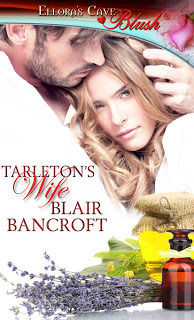
TARLETON'S WIFE The Regency Warrior Series, Book 1
At the battle of Corunna, a dying British major marries his dead colonel's daughter so she will have a home to return to. Eighteen months later she is making a new life for herself and the major's tenants—she is even involved in a budding romance—when the major returns - with a fiancée at his side.
First published in 1999 - this cover is from the paperback version currently available from Ellora's Cave Blush (e-version also available).
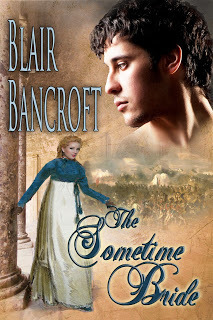
THE SOMETIME BRIDE The Regency Warrior series, Book 2
An epic tale of war, as seen through the eyes of two people much too young to be married, even in a marriage of convenience. A book of battles and spies, tragedy and deception. And a revealed betrayal that finally ends our heroine's seven years as a "sometime" bride.
First published in 2000
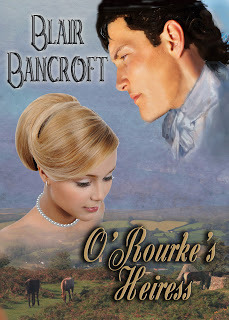
O'ROURKE'S HEIRESS The Regency Warrior series, Book 3
Terence O'Rourke, the deus ex machina, who appears in the final chapters of Tarleton's Wife, gets his own book. The young Irish bastard has only one love in his life, the daughter of his employer, as much a bastard as he. Except her father's goal is for her to marry a title. Which leads to considerable suffering, abuse, and yet another bastard baby. With no happy ending in sight.
Those are wild Dartmoor ponies grazing on the cover.
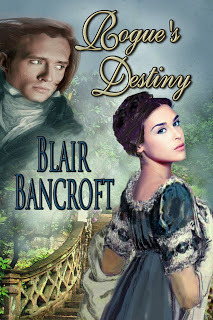
ROGUE'S DESTINY
The Regency Warrior series, Book 4
An "also ran" in Tarleton's Wife and O'Rourke's Heiress, Jack Harding has risen from almost being hanged to the powerful head of a merchant prince's private army.* But he never gets the girl - until he meets his match in a feisty young lady from Québec. The only problem: someone is trying to kill her.
*The merchant prince is, of course, the father who wanted his only daughter to marry a title in O'Rourke's Heiress.
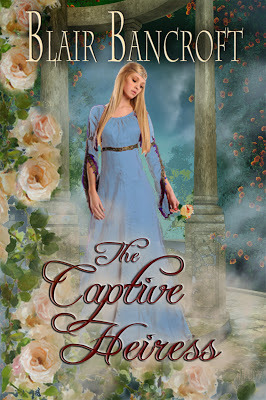 My all-time favorite cover
The Captive Heiress
is my best-selling book in Britain. Since it was originally written with Young Adults in mind (with extensive research into the 12th century, plus an update at the end about what eventually happened to all the genuine historical characters), I presume teachers have been recommending it, for nothing else could account for such exceptional sales! Anyway, it's a lovely little tale, chock full of real people of the time, most notably, King Henry II and Eleanor of Aquitaine, plus their children who eventually become so well known in the Robin Hood tales, King Richard and Prince John. (And, of course, with John there was that little thing called the Magna Carta. ) My favorite, however, is my young hero's friend, William Marshall, who has come down in history as the greatest knight who ever lived, even ruling England during the minority of John's heir.
My all-time favorite cover
The Captive Heiress
is my best-selling book in Britain. Since it was originally written with Young Adults in mind (with extensive research into the 12th century, plus an update at the end about what eventually happened to all the genuine historical characters), I presume teachers have been recommending it, for nothing else could account for such exceptional sales! Anyway, it's a lovely little tale, chock full of real people of the time, most notably, King Henry II and Eleanor of Aquitaine, plus their children who eventually become so well known in the Robin Hood tales, King Richard and Prince John. (And, of course, with John there was that little thing called the Magna Carta. ) My favorite, however, is my young hero's friend, William Marshall, who has come down in history as the greatest knight who ever lived, even ruling England during the minority of John's heir.
Logline:
A very young heiress is kidnapped so her guardian may enjoy her fortune until King Henry marries her off. Her only friend is a young squire who is so poor he cannot afford a horse and armor so he can become a knight. They eventually become part of the tumultuous court of King Henry and Eleanor, with no hope for a future together, until an attack on the queen leads to great changes for both William Marshall and our young squire.
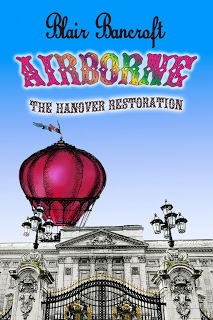 A Steampunk Adventure
I had a ball writing AIRBORNE - THE HANOVER RESTORATION . Such fun to create alternative history and machines that never existed in the 19th century. Also, a young lady who is in love with a train! I also happily messed with the British succession, putting Wellington on the throne, while discarding the true inventor of the airship. I mean, what's Alternative History all about if you can't do as you please?
Logline:A young miss believes she is traveling to the protection of her new guardian, only to discover he expects her to marry him! Not only is he a perfect stranger, but his household is full of odd machines, and, as if that weren't enough, he has involved her in a revolution - the push to put a young woman named Victoria on the English throne.
BRIDES OF FALCONFELL
a Regency Gothic, coming Fall 2013
Brides of Falconfell is not Goth, but a classic Gothic romance, written in first person because the heroine has to feel alone and beleagured. No peeking into anyone else's head, particularly the hero's.
Before the great surge of the present romance market, Victoria Holt wrote magnificent Victorian Gothics; Mary Stewart set the standard for contemporary Gothics. They were marvelous, and this is my stab at bringing that genre back to life.
Logline:
A managing female is summoned to the wilds of Northumberland to nurse yet another member of her family, only to find her patient deceased and the widower anxious to marry a woman capable of putting his unruly house in order. The possibility of past murder looms, even as a second member of the household meets death. Is our heroine next? Add a dark hero, a motherless five-year-old, a self-professed witch, a couple of gay family connections, and a murderer or two, and, hopefully, we have all the ingredients of a classic Gothic novel.
~ * ~
Thanks for stopping by.
Grace
For fuller descriptions and links to the above books, please see Blair's Books
~ * ~
Having winged my way through loglines of my traditional Regencies, i thought I'd try the same with my Historicals. A fun challenge.
Listed in the order in which they were published, although I actually wrote The Sometime Bride first.

TARLETON'S WIFE The Regency Warrior Series, Book 1
At the battle of Corunna, a dying British major marries his dead colonel's daughter so she will have a home to return to. Eighteen months later she is making a new life for herself and the major's tenants—she is even involved in a budding romance—when the major returns - with a fiancée at his side.
First published in 1999 - this cover is from the paperback version currently available from Ellora's Cave Blush (e-version also available).

THE SOMETIME BRIDE The Regency Warrior series, Book 2
An epic tale of war, as seen through the eyes of two people much too young to be married, even in a marriage of convenience. A book of battles and spies, tragedy and deception. And a revealed betrayal that finally ends our heroine's seven years as a "sometime" bride.
First published in 2000

O'ROURKE'S HEIRESS The Regency Warrior series, Book 3
Terence O'Rourke, the deus ex machina, who appears in the final chapters of Tarleton's Wife, gets his own book. The young Irish bastard has only one love in his life, the daughter of his employer, as much a bastard as he. Except her father's goal is for her to marry a title. Which leads to considerable suffering, abuse, and yet another bastard baby. With no happy ending in sight.
Those are wild Dartmoor ponies grazing on the cover.

ROGUE'S DESTINY
The Regency Warrior series, Book 4
An "also ran" in Tarleton's Wife and O'Rourke's Heiress, Jack Harding has risen from almost being hanged to the powerful head of a merchant prince's private army.* But he never gets the girl - until he meets his match in a feisty young lady from Québec. The only problem: someone is trying to kill her.
*The merchant prince is, of course, the father who wanted his only daughter to marry a title in O'Rourke's Heiress.
 My all-time favorite cover
The Captive Heiress
is my best-selling book in Britain. Since it was originally written with Young Adults in mind (with extensive research into the 12th century, plus an update at the end about what eventually happened to all the genuine historical characters), I presume teachers have been recommending it, for nothing else could account for such exceptional sales! Anyway, it's a lovely little tale, chock full of real people of the time, most notably, King Henry II and Eleanor of Aquitaine, plus their children who eventually become so well known in the Robin Hood tales, King Richard and Prince John. (And, of course, with John there was that little thing called the Magna Carta. ) My favorite, however, is my young hero's friend, William Marshall, who has come down in history as the greatest knight who ever lived, even ruling England during the minority of John's heir.
My all-time favorite cover
The Captive Heiress
is my best-selling book in Britain. Since it was originally written with Young Adults in mind (with extensive research into the 12th century, plus an update at the end about what eventually happened to all the genuine historical characters), I presume teachers have been recommending it, for nothing else could account for such exceptional sales! Anyway, it's a lovely little tale, chock full of real people of the time, most notably, King Henry II and Eleanor of Aquitaine, plus their children who eventually become so well known in the Robin Hood tales, King Richard and Prince John. (And, of course, with John there was that little thing called the Magna Carta. ) My favorite, however, is my young hero's friend, William Marshall, who has come down in history as the greatest knight who ever lived, even ruling England during the minority of John's heir.Logline:
A very young heiress is kidnapped so her guardian may enjoy her fortune until King Henry marries her off. Her only friend is a young squire who is so poor he cannot afford a horse and armor so he can become a knight. They eventually become part of the tumultuous court of King Henry and Eleanor, with no hope for a future together, until an attack on the queen leads to great changes for both William Marshall and our young squire.
 A Steampunk Adventure
I had a ball writing AIRBORNE - THE HANOVER RESTORATION . Such fun to create alternative history and machines that never existed in the 19th century. Also, a young lady who is in love with a train! I also happily messed with the British succession, putting Wellington on the throne, while discarding the true inventor of the airship. I mean, what's Alternative History all about if you can't do as you please?
Logline:A young miss believes she is traveling to the protection of her new guardian, only to discover he expects her to marry him! Not only is he a perfect stranger, but his household is full of odd machines, and, as if that weren't enough, he has involved her in a revolution - the push to put a young woman named Victoria on the English throne.
BRIDES OF FALCONFELL
a Regency Gothic, coming Fall 2013
Brides of Falconfell is not Goth, but a classic Gothic romance, written in first person because the heroine has to feel alone and beleagured. No peeking into anyone else's head, particularly the hero's.
Before the great surge of the present romance market, Victoria Holt wrote magnificent Victorian Gothics; Mary Stewart set the standard for contemporary Gothics. They were marvelous, and this is my stab at bringing that genre back to life.
Logline:
A managing female is summoned to the wilds of Northumberland to nurse yet another member of her family, only to find her patient deceased and the widower anxious to marry a woman capable of putting his unruly house in order. The possibility of past murder looms, even as a second member of the household meets death. Is our heroine next? Add a dark hero, a motherless five-year-old, a self-professed witch, a couple of gay family connections, and a murderer or two, and, hopefully, we have all the ingredients of a classic Gothic novel.
~ * ~
Thanks for stopping by.
Grace
For fuller descriptions and links to the above books, please see Blair's Books
June 9, 2013
Thoughts on Star Trek
 Clouds & diagonal sunlight looming over Orlando -
taken through the windshield by Grace using daughter's smart phone
Thoughts on Star Trek
I saw Star Trek—Into Darkness last week, and it brought back a whole host of memories, from the hope that Gene Roddenberry is able to look down and see what has happened to his grand idea to the fun of seeing a young Chris Pine as "Prince Charming" in The Princess Diaries 2.
[Grace note: Whoever cast Ann Hathaway and Chris Pine in The Princess Diaries films must have had a true gift for spotting talent.]
~ * ~
A long, long time ago, my husband, who never missed the important bits in the morning paper, packed up his wife and two sons—my daughter at 2 or 3 was considered too young—and drove us from our suburb in Branford (CT) to a college on the far side of New Haven. It was a miserable, rainy night and only about twenty people showed up to hear a man talk about his dream of creating a movie from a defunct television series. We could only hope our boys were old enough to remember, because we were believers, back before "Trekkie" became a household word.
We wanted to hear Gene Roddenberry because we admired not only his television series but his vision. Because he had put a black female and a Russian on the bridge of a starship when our country was still struggling with civil rights and trapped in the midst of the Cold War. We also laughed at the Tribbles, cried over the death of Jim Kirk's love in the 1920s, appreciated the Roman touch with the Romulans, went wide-eyed over Klingons, and were forever captured by the Enterprise family, its humanity, its courage, and its willingness to sacrifice for each other and for those left behind on earth. When we watched with our children, we knew they were learning valuable life lessons.
So we mourned Star Trek's demise. And drove through a rain storm to hear Gene Roddenberry speak. He must have been traveling the college circuit at the time, attempting to drum up interest in making a Star Trek feature film. Enough interest to convince investors that people would pay to see it. Enough people to make a profit.
The few of us at the college In New Haven that night couldn't have been much encouragement, but things must have gone better elsewhere, because in 1979 Star Trek - The Motion Picture made its debut. With the "villain" turning out to be our own Voyager explorer, refashioned by an alien race.
And, suddenly, Star Trek movies were off and running (my personal favorite, the one about the whales). They survived so well, they eventually ran right into the transformation from William Shatner and Leonard Nimoy to the capable hands of Chris Pine and Zachary Quinto. (And, bless him, Leonard Nimoy as occasional Greek oracle.) Has the most recent film gone too action-movie? Perhaps, but they've done it so well, few would quibble. And they've managed to keep a lot of the heart.
So, you guessed it - unless your heart is weak—this movie tops all others for nail-biting situations!—don't miss Star Trek - Into Darkness. My daughter might not have had a chance to meet Gene Roddenberry—and, yes, we made sure the boys met him personally—, but here is her Facebook post after viewing Into Darkness:
"OMG STAR TREK MOVIE!!!!! LOVE! LOVE! LOVE! LOVE! LOVED IT!!!!!!! LOVE LOVE LOVE LOVE LOVED IT!!!! AWESOME! EVERYTHING ABOUT IT! SO GREAT!!! KIRK, SPOCK(S), BONES, SCOTTY, PLOT, 3D EFFECTS!! BAD GUY, TEARS, REFERENCES TO MUDD, TRIBBLES, OMG! SO GOOOOOOOOOD!! TREKIES------ WHO ARE THE TREKIES ON FB??????????????"
~ * ~
Update to the Pantser/Plotter debate:
A few days ago I had just finished enjoying the Kindle version of Jo Beverley's The Demon's Mistress, when I found the following Author's Note - the quote begins at Sentence 2:
"Sometimes stories come to me with dramatic opening scenes, and this is one. I had no idea why this disheveled, gorgeous young man wanted to kill himself, and no idea why an elegant lady was determined to stop him, but I needed to know. In such situations, the only way to find out is to write on, and so I did."
Thank you, thank you, Jo Beverley, for confirming the validity of my oft-repeated statement: "I can hardly wait to get to the computer each morning to find out what is going to happen."
Thanks for stopping by.
Grace
Next Mosaic Moments: June 22 . . . or maybe a wee bit later
Likely topic: Blair's Historical Romances
Next writing series: editing examples
June 2, 2013
Blair's Book List
It seemed time to update my book inventory over the Memorial Day weekend and, frankly, the number of additions surprised me. I would have sworn I was mostly uploading backlist to indie pub, but I guess I've sneaked in a few new ones here and there. For this blog series, I thought it might be fun to go all the way back to the beginning and see if I could challenge myself to come up with fresh log-lines without looking at the originals. Unlikely, but I'm going to try. With emphasis on cryptic, humorous, intriguing, atypical . . .
LATER: I actually did it, which surprised me as some of these books go back more than a decade.
Blair's Traditional Regencies
A waif who won't talk until challenged by a Regency version of a vet with PTSD. (The closest I've come to writing soap opera.)
A young heiress hires a solicitor to find her a husband and gets much more than she bargained for, including a somewhat hilarious political election.
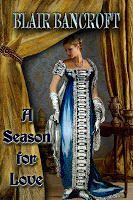
Two love stories for the price of one. A duke and a war widow, plus the unlikely combination of the duke's daughter and widow's brother. And mustn't forget the secret baby!
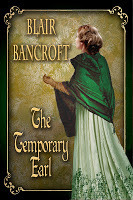
Not your classic duke marrying down but an engineer marrying up. Though he finds it difficult to conduct any kind of romance around a series of kooky characters, not to mention two sickrooms and possible murder. Even if he, the lowly engineer, does hold Power of Attorney for an earl. (My editor described this as her first "Regency Mystery.)
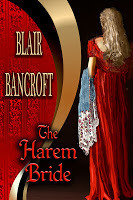
Trials, tribulations, terror, kidnapping, misunderstandings. The heroic sacrifice of young man to rescue a girl from the Topkapi harem. And the long recovery from the drama that singes their youth. Plus Lord Elgin and his marbles.
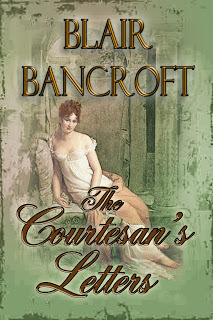
This one gets a special place. Originally published under a contrived name I won't mention here because Signet's marketing department felt that "courtesan" wouldn't play in the "heartland." It did, however, receive the Best Regency of the Year award from Romantic Times magazine and was nominated for a RITA. After getting my rights back, I re-published it under its original title. The setting includes a number of different places in England, including Oxford, Bath, and Stonehenge.
Log line:
The very proper headmistress of a girls' academy in Boston travels to England shortly after the War of 1812 to settle the estate of her grandmother, never dreaming that grandma was a well-known courtesan. In the course of settling her grandmother's many requests, she discovers that not all Brits are the enemy.
Two very young people make a marriage of convenience for which the bride does most of the suffering. The extremes she goes to to capture her husband's attention come close to killing her.
My paen to the engineers who built England's incredible waterways and to the volunteers who restored the system for modern boating enjoyment.
The daughter of the architect/engineer of the Kennet & Avon canal sets her sights far above her - all the way to a young marquess she first meets at age twelve.
A young lady, in hiding after humiliating herself at a dance, meets a young gentleman trying to recover from years of war. Fortunately, there's mistletoe at hand. (A Christmas novella)
A young lady in the midst of a glorious Season suffers one unhappy surprise after the other until, at long last, she is able to cope with her sorrow and offer the husband in her cold marriage of convenience one last surprise. (A Christmas novella)
Blair's Free Book Schedule on Amazon Kindle
Orange Blossoms & Mayhem (marriage & murder) Tuesday, June 4
Thanks for stopping by.
Grace
Click here for a list of Grace's books as Blair Bancroft
LATER: I actually did it, which surprised me as some of these books go back more than a decade.
Blair's Traditional Regencies

A waif who won't talk until challenged by a Regency version of a vet with PTSD. (The closest I've come to writing soap opera.)

A young heiress hires a solicitor to find her a husband and gets much more than she bargained for, including a somewhat hilarious political election.

Two love stories for the price of one. A duke and a war widow, plus the unlikely combination of the duke's daughter and widow's brother. And mustn't forget the secret baby!

Not your classic duke marrying down but an engineer marrying up. Though he finds it difficult to conduct any kind of romance around a series of kooky characters, not to mention two sickrooms and possible murder. Even if he, the lowly engineer, does hold Power of Attorney for an earl. (My editor described this as her first "Regency Mystery.)

Trials, tribulations, terror, kidnapping, misunderstandings. The heroic sacrifice of young man to rescue a girl from the Topkapi harem. And the long recovery from the drama that singes their youth. Plus Lord Elgin and his marbles.
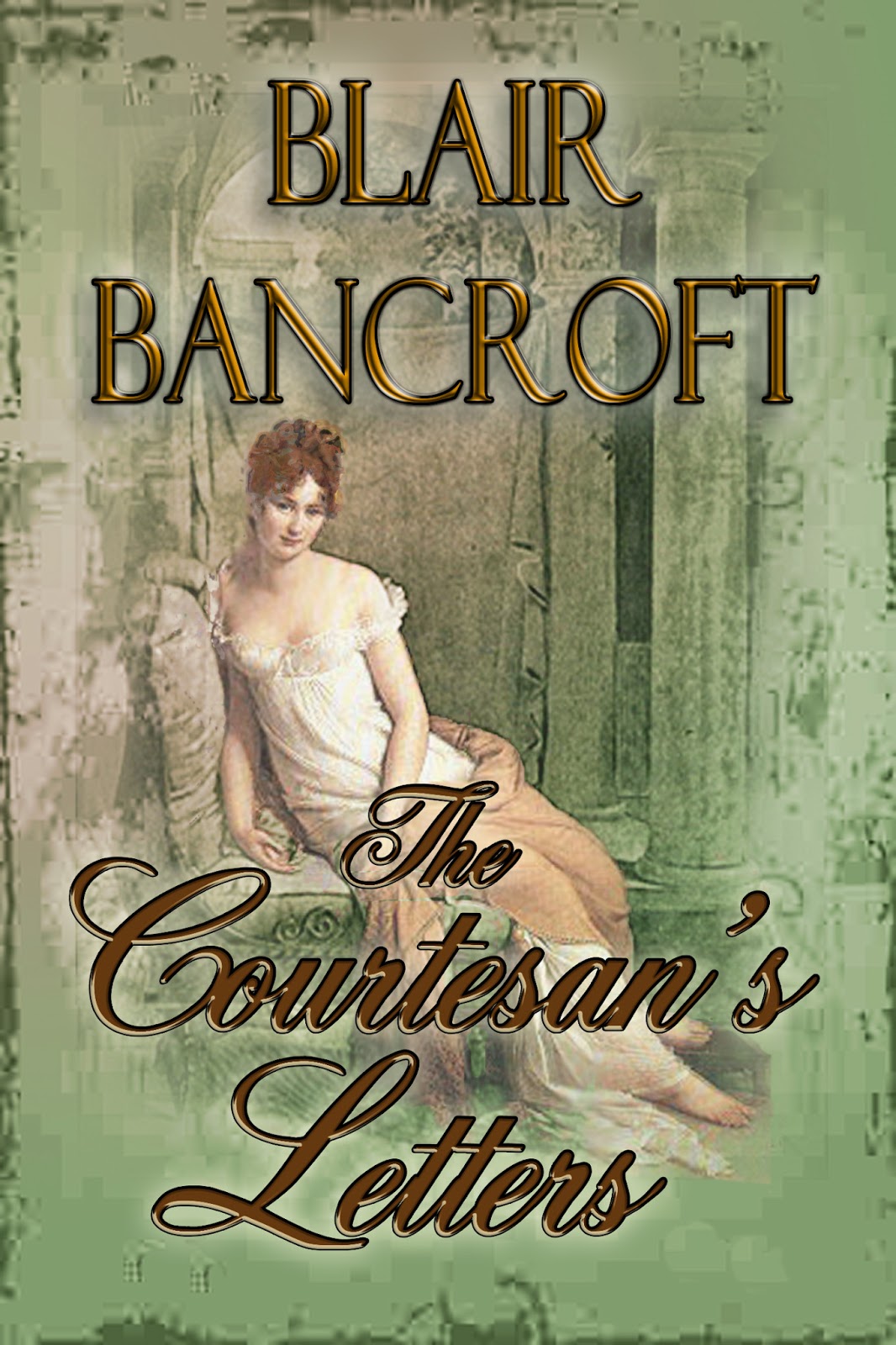
This one gets a special place. Originally published under a contrived name I won't mention here because Signet's marketing department felt that "courtesan" wouldn't play in the "heartland." It did, however, receive the Best Regency of the Year award from Romantic Times magazine and was nominated for a RITA. After getting my rights back, I re-published it under its original title. The setting includes a number of different places in England, including Oxford, Bath, and Stonehenge.
Log line:
The very proper headmistress of a girls' academy in Boston travels to England shortly after the War of 1812 to settle the estate of her grandmother, never dreaming that grandma was a well-known courtesan. In the course of settling her grandmother's many requests, she discovers that not all Brits are the enemy.

Two very young people make a marriage of convenience for which the bride does most of the suffering. The extremes she goes to to capture her husband's attention come close to killing her.

My paen to the engineers who built England's incredible waterways and to the volunteers who restored the system for modern boating enjoyment.
The daughter of the architect/engineer of the Kennet & Avon canal sets her sights far above her - all the way to a young marquess she first meets at age twelve.

A young lady, in hiding after humiliating herself at a dance, meets a young gentleman trying to recover from years of war. Fortunately, there's mistletoe at hand. (A Christmas novella)

A young lady in the midst of a glorious Season suffers one unhappy surprise after the other until, at long last, she is able to cope with her sorrow and offer the husband in her cold marriage of convenience one last surprise. (A Christmas novella)
Blair's Free Book Schedule on Amazon Kindle
Orange Blossoms & Mayhem (marriage & murder) Tuesday, June 4
Thanks for stopping by.
Grace
Click here for a list of Grace's books as Blair Bancroft
May 26, 2013
Controversy Gone Amuck
Before today's blog - a Python Update
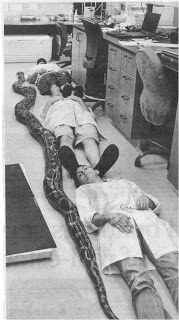 A Univ. of Florida pic, scanned from The Orlando Sentinel
From The Orlando Sentinel, May 21, 2013:
"A record-setting Burmese python was killed with a knife in a rural section of southern Miami-Dade County, after a long struggle in which it wrapped itself around a man's legs. The monster snake was 18 feet, eight inches long, beating the previous Florida record by more than a foot, according to the Florida Fish and Wildlife Conservation Commission."
Summary of the remainder of the article: Jason Leon, 23, of Palmetto Bay and friends were riding all-terrain vehicles near Florida City when one of them spotted the snake sticking out of a bush. Leon, who used to have a pet python, grabbed the snake behind the head, a friend handed him a knife, and he ended up wrestling the 128-pound snake, which wrapped itself around both legs and one of his arms. He reports he wasn't scared as he had two friends to back him up. After a 10-minute struggle, he cut the snake's head off. Although Jason donated the snake to the state, he hopes to retain the skin after the university's analysis is done. He plans to mount it on the wall.
Added May 26: Last night's TV news reported that the state has returned the skin to Jason.
Grace note: If he marries, I wonder what his bride will think about that!
~ * ~
The Controversy That Should not Exist
I'm still trying to figure out how different approaches to writing became a controversy. Until recently, I didn't think they had. There are all sorts of approaches to writing, each valid for the person involved. Two of the most common are generally referred to as: "Plotter" and "Pantser." I dislike both expressions, but for the sake of familiarity will use them in this article. Any alternatives* I came up with were as skewed to one side as the terms we already have. Skewed? Yes, skewed, because naming one side “Plotters” implies that “Pantsers” don’t plot. And that’s absurd. Of course we plot - we just do it in our heads or in random scribbled notes, not set down in page after page of precise outlines. Below, to the best of my ability, is a brief description of how I first discovered these differences, what the differences are, and why they have suddenly become a bone of contention.
*See Addendum below
At my very first RWA national conference - Orlando sometime in the mid 90s - I attended a workshop held in someone's hotel room. It was sponsored by RWA's Kiss of Death Mystery/Suspense chapter. There were several authors on the panel. I remember only Tami Hoag on the Pantser side and Ruth Glick (Ruth York) on the Plotter side. Frankly, I'd never thought about my writing style before. I simply did it. But I instantly recognized kinship with Tami, who told about simply sitting down and writing, plus the number of times she went through her manuscript, each time adding more description, more color, etc. (She may be the first person I heard use the expression "out of the mist.") Ruth represented the approach needed by Harlequin authors, which requires a great deal more work "up front" before one starts to write.
If you are one of those who has escaped hearing about Plotters versus Pantsers, let me explain. I heard a good example of a Plotter recently. A Harlequin author stated she wrote a 30-page outline for a 50,000-word book! She also had photos, research, and a zillion other details all neatly organized in a 4" binder. Great, particularly if you write for Harlequin/Silhouette. And if that’s the method that works for you.
A Pantser, however, gets the name from the early airplane expression - “flying by the seat of his/her pants.” I prefer to say I write “out of the mist.” Pantsers undoubtedly approach a book from all 360° of the compass. Which is good, as we’re all individuals, right? For me, it’s necessary to have a Title, the names of my major characters, some idea of who my characters are, and where the story is going before I start. But that’s it. Nothing but names written down - all the rest is in my head. As my characters develop, I scribble notes of what the next scene might be; but quite often, when I begin the scene, it goes in a different direction than I intended. (Always an improvement, I might add.) By the time I’ve finished, say, five chapters, I might have a stack of legal pad scribbles, reminding me of everything from ignored physical descriptions to a plot point I want to elaborate on. And in editing I do exactly that. Perhaps three or four more times before the book is done. This is how I work and I truly enjoy the spontaneity of it.
And there’s the rub, the reason for today's blog. There are as many ways to approach the writing of a book as there are authors. Until recently, I never considered the old Plotter vs. Pantser argument anything more than theoretical. Some authors plan their manuscripts with all the detail of an architect rendering a skyscraper, and some of us approach writing more like a modern artist creating a free-form painting. A matter of personality, which should not be a controversial issue. But this spring I encountered an attitude of Plotters attempting to tell Pantsers, “It’s my way or the highway.” Which forced me to rise up and say, “You’ve got to be kidding.” We are what we are. We do what we have to do to write the kinds of books we want to write.
Yes, it's wrong not to edit, not to polish your work. Yes, it's wrong not to be professional in your attitude about writing. Yes, it's wrong to present a manuscript full of errors in grammar and punctuation. But the method you use to write your book? That's yours, baby. All yours. If you want to stand on your head and dictate into a machine, that's your choice. It's only the finished product that becomes an editor's, agent's, or reader's business. Until then, you write that book any @#$% way that works for you. But, please, remember not to act as if other people's methods simply won't work.
Why this controversy exploded into rancor is hard to pin down, but I tend to think it's due to the elephant in the room, the huge influence the giant publishing house Harlequin/Silhouette inevitably has on the Romance Writers of America. (You noticed RWA's recent tightening of the rules, right? The emphasis on Romance, just Romance.) In my not-so-humble opinion, H/S has a right to demand lengthy detailed synopses from its authors, but its influence should not extend to a writers' organization which encompasses authors who write an almost endless variety of romance sub-genres. Authors deserve the freedom to create in any manner they deem fit and not necessarily in the manner advocated by Harlequin/Silhouette.
So there it is. I've found myself up to my neck in controversy again. Didn't plan on this one, just defending my territory, so to speak. I'd love to hear the opinions of other authors on this one.
Addendum:
While attempting to find alternatives for the ugly and misleading terms, "Pantser" and "Plotter," I came up with a bunch. But quickly realized they are as misleading (and/or insulting) as what I was trying to replace. But here they are:
Plan Ahead vs Out of the Mist (the most benign alternative)
Fettered vs Free
Crafting vs Creating
Deliberate vs Spontaneous
Craft vs Art
Hopefully, these terms give you an idea of how difficult it is to "label" any one style of writing. We should each develop a method that works for us and accept that we are all different. I strongly suggest none of us should stoop to making negative remarks about the other person's approach to writing.
Blair's Free Book Schedule on Amazon Kindle
Limbo Man (the Russians are coming) Tuesday, May 28
Orange Blossoms & Mayhem (marriage & murder) Tuesday, June 4
For covers and blurbs of the books above,
Thanks for stopping by.
Grace
Click here for a list of Grace's books as Blair Bancroft
 A Univ. of Florida pic, scanned from The Orlando Sentinel
From The Orlando Sentinel, May 21, 2013:
"A record-setting Burmese python was killed with a knife in a rural section of southern Miami-Dade County, after a long struggle in which it wrapped itself around a man's legs. The monster snake was 18 feet, eight inches long, beating the previous Florida record by more than a foot, according to the Florida Fish and Wildlife Conservation Commission."
Summary of the remainder of the article: Jason Leon, 23, of Palmetto Bay and friends were riding all-terrain vehicles near Florida City when one of them spotted the snake sticking out of a bush. Leon, who used to have a pet python, grabbed the snake behind the head, a friend handed him a knife, and he ended up wrestling the 128-pound snake, which wrapped itself around both legs and one of his arms. He reports he wasn't scared as he had two friends to back him up. After a 10-minute struggle, he cut the snake's head off. Although Jason donated the snake to the state, he hopes to retain the skin after the university's analysis is done. He plans to mount it on the wall.
Added May 26: Last night's TV news reported that the state has returned the skin to Jason.
Grace note: If he marries, I wonder what his bride will think about that!
~ * ~
The Controversy That Should not Exist
I'm still trying to figure out how different approaches to writing became a controversy. Until recently, I didn't think they had. There are all sorts of approaches to writing, each valid for the person involved. Two of the most common are generally referred to as: "Plotter" and "Pantser." I dislike both expressions, but for the sake of familiarity will use them in this article. Any alternatives* I came up with were as skewed to one side as the terms we already have. Skewed? Yes, skewed, because naming one side “Plotters” implies that “Pantsers” don’t plot. And that’s absurd. Of course we plot - we just do it in our heads or in random scribbled notes, not set down in page after page of precise outlines. Below, to the best of my ability, is a brief description of how I first discovered these differences, what the differences are, and why they have suddenly become a bone of contention.
*See Addendum below
At my very first RWA national conference - Orlando sometime in the mid 90s - I attended a workshop held in someone's hotel room. It was sponsored by RWA's Kiss of Death Mystery/Suspense chapter. There were several authors on the panel. I remember only Tami Hoag on the Pantser side and Ruth Glick (Ruth York) on the Plotter side. Frankly, I'd never thought about my writing style before. I simply did it. But I instantly recognized kinship with Tami, who told about simply sitting down and writing, plus the number of times she went through her manuscript, each time adding more description, more color, etc. (She may be the first person I heard use the expression "out of the mist.") Ruth represented the approach needed by Harlequin authors, which requires a great deal more work "up front" before one starts to write.
If you are one of those who has escaped hearing about Plotters versus Pantsers, let me explain. I heard a good example of a Plotter recently. A Harlequin author stated she wrote a 30-page outline for a 50,000-word book! She also had photos, research, and a zillion other details all neatly organized in a 4" binder. Great, particularly if you write for Harlequin/Silhouette. And if that’s the method that works for you.
A Pantser, however, gets the name from the early airplane expression - “flying by the seat of his/her pants.” I prefer to say I write “out of the mist.” Pantsers undoubtedly approach a book from all 360° of the compass. Which is good, as we’re all individuals, right? For me, it’s necessary to have a Title, the names of my major characters, some idea of who my characters are, and where the story is going before I start. But that’s it. Nothing but names written down - all the rest is in my head. As my characters develop, I scribble notes of what the next scene might be; but quite often, when I begin the scene, it goes in a different direction than I intended. (Always an improvement, I might add.) By the time I’ve finished, say, five chapters, I might have a stack of legal pad scribbles, reminding me of everything from ignored physical descriptions to a plot point I want to elaborate on. And in editing I do exactly that. Perhaps three or four more times before the book is done. This is how I work and I truly enjoy the spontaneity of it.
And there’s the rub, the reason for today's blog. There are as many ways to approach the writing of a book as there are authors. Until recently, I never considered the old Plotter vs. Pantser argument anything more than theoretical. Some authors plan their manuscripts with all the detail of an architect rendering a skyscraper, and some of us approach writing more like a modern artist creating a free-form painting. A matter of personality, which should not be a controversial issue. But this spring I encountered an attitude of Plotters attempting to tell Pantsers, “It’s my way or the highway.” Which forced me to rise up and say, “You’ve got to be kidding.” We are what we are. We do what we have to do to write the kinds of books we want to write.
Yes, it's wrong not to edit, not to polish your work. Yes, it's wrong not to be professional in your attitude about writing. Yes, it's wrong to present a manuscript full of errors in grammar and punctuation. But the method you use to write your book? That's yours, baby. All yours. If you want to stand on your head and dictate into a machine, that's your choice. It's only the finished product that becomes an editor's, agent's, or reader's business. Until then, you write that book any @#$% way that works for you. But, please, remember not to act as if other people's methods simply won't work.
Why this controversy exploded into rancor is hard to pin down, but I tend to think it's due to the elephant in the room, the huge influence the giant publishing house Harlequin/Silhouette inevitably has on the Romance Writers of America. (You noticed RWA's recent tightening of the rules, right? The emphasis on Romance, just Romance.) In my not-so-humble opinion, H/S has a right to demand lengthy detailed synopses from its authors, but its influence should not extend to a writers' organization which encompasses authors who write an almost endless variety of romance sub-genres. Authors deserve the freedom to create in any manner they deem fit and not necessarily in the manner advocated by Harlequin/Silhouette.
So there it is. I've found myself up to my neck in controversy again. Didn't plan on this one, just defending my territory, so to speak. I'd love to hear the opinions of other authors on this one.
Addendum:
While attempting to find alternatives for the ugly and misleading terms, "Pantser" and "Plotter," I came up with a bunch. But quickly realized they are as misleading (and/or insulting) as what I was trying to replace. But here they are:
Plan Ahead vs Out of the Mist (the most benign alternative)
Fettered vs Free
Crafting vs Creating
Deliberate vs Spontaneous
Craft vs Art
Hopefully, these terms give you an idea of how difficult it is to "label" any one style of writing. We should each develop a method that works for us and accept that we are all different. I strongly suggest none of us should stoop to making negative remarks about the other person's approach to writing.
Blair's Free Book Schedule on Amazon Kindle
Limbo Man (the Russians are coming) Tuesday, May 28
Orange Blossoms & Mayhem (marriage & murder) Tuesday, June 4
For covers and blurbs of the books above,
Thanks for stopping by.
Grace
Click here for a list of Grace's books as Blair Bancroft
May 19, 2013
Reminiscences of Controversies, Part 2
I was hoping for a little color to add to Part 2 of "Reminiscences of Controversies," and, lo and behold, three pics arrived in the morning's e-mail. It seems the Girl Scouts had a sleep-over at Coco Key on International Drive (Orlando). So here are some colorful bits to spice up my memories of the early days of e-publishing.
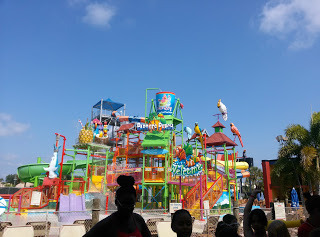 Coco Key Resort, I-Drive, Orlando
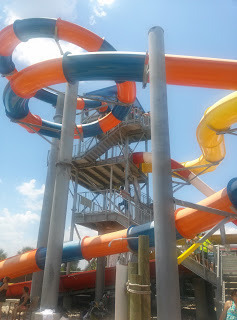 Coco Key Resort
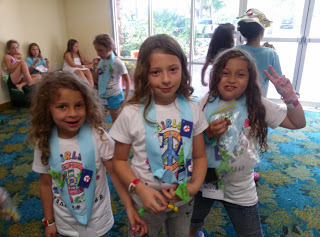 Cassidy, Hailey & Riley w/troop at Coco Key
~ * ~
Reminiscences of Controversies - Part 2
Continuing my series on how I've managed to put my foot in it through the years. (Gleefully, at times.) Here are excerpts from my article, "E-Books and You," written sometime between 2000 & 2002:
On CONTENT.
"E-publishers are looking for fresh ideas, new voices. They came into being as alternatives to print publishing, determined to offer a wide variety of ideas and styles than was acceptable in the traditional New York market. E-publishers are not afraid of cross-genres, older heroines, historicals set in the twentieth century, a long separation between the hero and heroine, or books set in foreign countries other than Britian or Ireland. If a book is well-written, it doesn't have to be rejected because the marking department says it's too long or doesn't have a hook they can sell. Yes, economical publishing costs make this feasible, but the open-minded attitude of e-publishers is the key ingredient which will appeal to the eager minds of Internet users looking for the world of the twenty-first century.
[Note: not much change here, except that major publishers have finally waked up to the e-revolution, most now adding an e-book line.]
ACCESSIBILITY.
Most print books, particularly category, have a lifetime of four to six weeks. That's right 30-45 days. After you spent six months, maybe a year, writing it. Not a happy thought. E-books are not only good for the length of your original contract, but for however long after that you want to keep your book on the web site. And your book is not fighting for doubtful placement at Barnes & Noble or even at your local mom and pop bookstore. Your book is right there on the World Wide Web, as available in London and Sydney as it is in New York, Boston, Chicago, suburbs across the nation, farms in the heartland, or college dormitoris. To those with the newest cell phone upgrades, it's even available on the beach!
[Note: so much change here the reality is mind-boggling. A deluge of e-books available on a myriad devices. So many good e-readers at a reasonable price; even some color e-readers at a cost that's not too far out of sight. And then there are I-Pads and Smart Phones, and an endless variety of devices offering book-reading capacity.]
MONEY.
For most of us who write romance, e-book royalties are best described as "not much, not yet." The royalty percentage of each download is high (often around 35%), but e-books are still in their infancy and volume has not yet had time to build. Except for erotica. The demand for e-erotica has been astonishing, and its authors are making good money, as much as print books, if not more. So even if you don't care for erotica, it's helping increase e-readership, and we should all be grateful for its impact.
[Note: Also a major change from when I wrote the above—primarily brought about by two things, I believe: the proliferation of e-reading devices and the advent of indie publishing. Well-known authors, publishing their backlists on their own, were among the first to discover this vast new market. And make good money. They were soon followed by those who "write between the cracks." Authors whose work was good but did not fit the New York guidelines. And then, of course, it seemed like half the world jumped on the bandwagon, and indie pub became the rage. Some good, some not so good. But you can't stuff the genie back in the bottle. Indie pub is as much here to stay as the formal e-publishing which began near the end of the 1990s. And, yes, a lot more than authors of erotica are making money, myself among them. For which I am enormously grateful.]
PUBLISHERS.
[Okay, I'm not going to repeat this paragraph. At the time I was proselytizing for recognition of e-publishers as true publishers, never dreaming what would happen when Smashwords and Amazon offered independent publishing. There are, however, many excellent e-publishers out there, who edit, provide covers, distribution, and pay royalties on time. In particular, if your work does not fit the New York mold, I strongly recommend submitting to a good e-publisher. This list has broadened a great deal in just the last few years as major New York publishing houses have added e-book divisions. Check with other e-pubbed authors to make sure you're submitting to one of the e-pubs who provides good service and prompt royalties. And if you'd rather go DYI, by all means do so. I've just edited several indie books, for example, where the characterizations and stories were truly impressive, comparable to only the top ten percent of New York print books. I will never, however, advocate writing a book and throwing it at the Internet with all the arrogance of someone who actually believes their first draft is undying prose. Edit, idiot! Edit! And if you can't do it yourself, hire someone who can.
I don't write articles on the e-revolution or e-pub any more. There's no need. It's happened, and even faster than I anticipated. But I'm proud to have been in on it from very near the beginning. By the time I "retired" to indie pub, I had nine print books and eight e-books to my published credit. And Tarleton's Wife, the book that started it all for me, is on its third incarnation. Ellora's Cave Blush, which had offered an e-version for some time, brought it out in paperback in the fall of 2012. Talk about longevity!
~ * ~ Although e-publishing has been the major controversy I've been embroiled in over more than a decade, there are others worth a mention.
I am a member of RWA's online historical romance chapter, The BeauMonde. I try to steer a median down the middle on the battles that rage over authenticity, but sometimes I blow my top and scream (via keyboard): How can it possibly matter what the weather was on a particular day in the year 1813? Do you really have to know the exact dates a certain play or opera was performed in London? Yes, I agree one shouldn't get the dates of the Frost Fair (which was unique) wrong. And one should never, ever have a bastard inherit a title. But, really . . . one can't be flexible about the weather? Or write about an opera by Mozart without citing the exact date and year? Come on, people, be real!
And—warning!—heaven forbid anyone should mention the word "horse" on the BeauMonde loop. In the blink of an eye there will be fifty posts on "horses I have known." Kind of hard on those of us who might like to get a word in edgewise. So, yes, I've been an old curmudgeon about that on occasion.
And, yes, I'm the one who broke the dam on indie publishing on RWAPAN, RWA's e-loop for published authors. I wrote a post called "Brave New World," and it was like the walls came tumbling down. Suddenly, all sorts of print authors were admitting they were making money by indie-pubbing their backlist, even as others rushed to join the gravy train. Not long after that, RWA was putting out a survey asking their authors how much they were making on e-pub. Finally.
Not that the battle is over - I still see a definite "class" system within RWA - print pubs vs. e-pubs vs. indie pubs. And I'm heartily sorry for it. This needs to change. Since I began writing more than twenty years ago, I have been involved in all three, and I can say with absolute honesty that my e-publishers provided far more extensive editing than my print publishers. And that I had to work a lot harder to write, edit, and format my indie books than I have ever worked at a book before. Give credit where credit is due. If someone writes a bunch of pages, calls it a book, and tosses it up on the net, warts and all, then that person's work should be shunned. But over the course of the past two and a half years of reading downloads exclusively, I have found some wonderful indie books (as well as some I deleted after the first few pages). Be open-minded. Accept that New York is not putting out all the good books. (It is, in fact, putting out some real wall-bangers, as well as the good stuff.) Be venturesome. Give something new a try. Reject the bad, accept, even praise, the good, no matter how the book found its way to Kindle, Nook, Smashwords, Sony, or your Smart Phone.
~ * ~
Next week: a different kind of controversy, one I put my foot in by accident because I had no idea it was such a sensitive topic. Some call it, "Plotter vs. Pantser." Since I hate both terms, finding them both inadequate and a tad vulgar, I haven't decided what to call the two sides of the coin yet. But controversial? Oh wow! You wouldn't believe!
Blair's Free Book Schedule on Amazon Kindle
Florida Knight (an SCA story) Tuesday, May 21
Limbo Man (the Russians are coming) Tuesday, May 28
Orange Blossoms & Mayhem (marriage & murder) Tuesday, June 4
For covers and blurbs of the books above,
Thanks for stopping by.
Grace
Click here for a list of Grace's books as Blair Bancroft
Thanks for stopping by.
Grace
ADD BOOK LINK
 Coco Key Resort, I-Drive, Orlando
 Coco Key Resort
 Cassidy, Hailey & Riley w/troop at Coco Key
~ * ~
Reminiscences of Controversies - Part 2
Continuing my series on how I've managed to put my foot in it through the years. (Gleefully, at times.) Here are excerpts from my article, "E-Books and You," written sometime between 2000 & 2002:
On CONTENT.
"E-publishers are looking for fresh ideas, new voices. They came into being as alternatives to print publishing, determined to offer a wide variety of ideas and styles than was acceptable in the traditional New York market. E-publishers are not afraid of cross-genres, older heroines, historicals set in the twentieth century, a long separation between the hero and heroine, or books set in foreign countries other than Britian or Ireland. If a book is well-written, it doesn't have to be rejected because the marking department says it's too long or doesn't have a hook they can sell. Yes, economical publishing costs make this feasible, but the open-minded attitude of e-publishers is the key ingredient which will appeal to the eager minds of Internet users looking for the world of the twenty-first century.
[Note: not much change here, except that major publishers have finally waked up to the e-revolution, most now adding an e-book line.]
ACCESSIBILITY.
Most print books, particularly category, have a lifetime of four to six weeks. That's right 30-45 days. After you spent six months, maybe a year, writing it. Not a happy thought. E-books are not only good for the length of your original contract, but for however long after that you want to keep your book on the web site. And your book is not fighting for doubtful placement at Barnes & Noble or even at your local mom and pop bookstore. Your book is right there on the World Wide Web, as available in London and Sydney as it is in New York, Boston, Chicago, suburbs across the nation, farms in the heartland, or college dormitoris. To those with the newest cell phone upgrades, it's even available on the beach!
[Note: so much change here the reality is mind-boggling. A deluge of e-books available on a myriad devices. So many good e-readers at a reasonable price; even some color e-readers at a cost that's not too far out of sight. And then there are I-Pads and Smart Phones, and an endless variety of devices offering book-reading capacity.]
MONEY.
For most of us who write romance, e-book royalties are best described as "not much, not yet." The royalty percentage of each download is high (often around 35%), but e-books are still in their infancy and volume has not yet had time to build. Except for erotica. The demand for e-erotica has been astonishing, and its authors are making good money, as much as print books, if not more. So even if you don't care for erotica, it's helping increase e-readership, and we should all be grateful for its impact.
[Note: Also a major change from when I wrote the above—primarily brought about by two things, I believe: the proliferation of e-reading devices and the advent of indie publishing. Well-known authors, publishing their backlists on their own, were among the first to discover this vast new market. And make good money. They were soon followed by those who "write between the cracks." Authors whose work was good but did not fit the New York guidelines. And then, of course, it seemed like half the world jumped on the bandwagon, and indie pub became the rage. Some good, some not so good. But you can't stuff the genie back in the bottle. Indie pub is as much here to stay as the formal e-publishing which began near the end of the 1990s. And, yes, a lot more than authors of erotica are making money, myself among them. For which I am enormously grateful.]
PUBLISHERS.
[Okay, I'm not going to repeat this paragraph. At the time I was proselytizing for recognition of e-publishers as true publishers, never dreaming what would happen when Smashwords and Amazon offered independent publishing. There are, however, many excellent e-publishers out there, who edit, provide covers, distribution, and pay royalties on time. In particular, if your work does not fit the New York mold, I strongly recommend submitting to a good e-publisher. This list has broadened a great deal in just the last few years as major New York publishing houses have added e-book divisions. Check with other e-pubbed authors to make sure you're submitting to one of the e-pubs who provides good service and prompt royalties. And if you'd rather go DYI, by all means do so. I've just edited several indie books, for example, where the characterizations and stories were truly impressive, comparable to only the top ten percent of New York print books. I will never, however, advocate writing a book and throwing it at the Internet with all the arrogance of someone who actually believes their first draft is undying prose. Edit, idiot! Edit! And if you can't do it yourself, hire someone who can.
I don't write articles on the e-revolution or e-pub any more. There's no need. It's happened, and even faster than I anticipated. But I'm proud to have been in on it from very near the beginning. By the time I "retired" to indie pub, I had nine print books and eight e-books to my published credit. And Tarleton's Wife, the book that started it all for me, is on its third incarnation. Ellora's Cave Blush, which had offered an e-version for some time, brought it out in paperback in the fall of 2012. Talk about longevity!
~ * ~ Although e-publishing has been the major controversy I've been embroiled in over more than a decade, there are others worth a mention.
I am a member of RWA's online historical romance chapter, The BeauMonde. I try to steer a median down the middle on the battles that rage over authenticity, but sometimes I blow my top and scream (via keyboard): How can it possibly matter what the weather was on a particular day in the year 1813? Do you really have to know the exact dates a certain play or opera was performed in London? Yes, I agree one shouldn't get the dates of the Frost Fair (which was unique) wrong. And one should never, ever have a bastard inherit a title. But, really . . . one can't be flexible about the weather? Or write about an opera by Mozart without citing the exact date and year? Come on, people, be real!
And—warning!—heaven forbid anyone should mention the word "horse" on the BeauMonde loop. In the blink of an eye there will be fifty posts on "horses I have known." Kind of hard on those of us who might like to get a word in edgewise. So, yes, I've been an old curmudgeon about that on occasion.
And, yes, I'm the one who broke the dam on indie publishing on RWAPAN, RWA's e-loop for published authors. I wrote a post called "Brave New World," and it was like the walls came tumbling down. Suddenly, all sorts of print authors were admitting they were making money by indie-pubbing their backlist, even as others rushed to join the gravy train. Not long after that, RWA was putting out a survey asking their authors how much they were making on e-pub. Finally.
Not that the battle is over - I still see a definite "class" system within RWA - print pubs vs. e-pubs vs. indie pubs. And I'm heartily sorry for it. This needs to change. Since I began writing more than twenty years ago, I have been involved in all three, and I can say with absolute honesty that my e-publishers provided far more extensive editing than my print publishers. And that I had to work a lot harder to write, edit, and format my indie books than I have ever worked at a book before. Give credit where credit is due. If someone writes a bunch of pages, calls it a book, and tosses it up on the net, warts and all, then that person's work should be shunned. But over the course of the past two and a half years of reading downloads exclusively, I have found some wonderful indie books (as well as some I deleted after the first few pages). Be open-minded. Accept that New York is not putting out all the good books. (It is, in fact, putting out some real wall-bangers, as well as the good stuff.) Be venturesome. Give something new a try. Reject the bad, accept, even praise, the good, no matter how the book found its way to Kindle, Nook, Smashwords, Sony, or your Smart Phone.
~ * ~
Next week: a different kind of controversy, one I put my foot in by accident because I had no idea it was such a sensitive topic. Some call it, "Plotter vs. Pantser." Since I hate both terms, finding them both inadequate and a tad vulgar, I haven't decided what to call the two sides of the coin yet. But controversial? Oh wow! You wouldn't believe!
Blair's Free Book Schedule on Amazon Kindle
Florida Knight (an SCA story) Tuesday, May 21
Limbo Man (the Russians are coming) Tuesday, May 28
Orange Blossoms & Mayhem (marriage & murder) Tuesday, June 4
For covers and blurbs of the books above,
Thanks for stopping by.
Grace
Click here for a list of Grace's books as Blair Bancroft
Thanks for stopping by.
Grace
ADD BOOK LINK
May 13, 2013
Reminiscences of Controversies
For those who are still wondering what was wrong with the romance cover
featured in my previous blog: the lovely, languishing heroine has three hands.
~ * ~
Reminiscences of Controversies
In my life before the Romance Writers of America, I must admit to a controversy or two. I can distinctly recall telling people in Connecticut, when I was a young wife and mother, not to put me on any committees as I was inclined to be too vocal. (Which, alas, was all too true.) And I got into it on an environmental issue when a neighbor (on Long Island Sound) wanted to build a deck on a rocky outcropping, which was partially below mean high water. Had to go all the way to Hartford for a hearing on that one. I won, by the way. But mostly I lived a pretty peaceful existence until I joined RWA somewhere around twenty years ago. And began to discover how far outside the box I really was.
I had been editor of a small publishing company for a number of years, and when I learned RWA chapter contests were still advocating Courier 10 at 25 lines to the page, I nearly choked. Courier, a hold-over font from the 19th century? They had to be kidding. I admit we'd had word processing computers only about ten years at that point (not counting the ones before PCs), but, well, really . . .?
I sighed and tried to conform, but using ugly old Courier with underlines for italics when the modern author could write in Times New Roman with real italics . . .? My solution? I only submitted to contests which did not specify a type font. And I gritted my teeth every time some other author complained that people using TNR were able to submit more words! Well, boo-hoo, so could they if they'd just get up out of their rut. (The johnny-come-latelies to publishing are undoubtedly dropping their jaws in astonishment. There was a time when TNR was frowned upon, considered "cheating"??? Oh, yes, a very long time, in fact.)
And then I discovered the multiple points of view I'd used in my first three books were a no-no. Since just about every book I'd ever read had multiple points of view, this was a shocker. But, according to RWA, romance readers wanted to concentrate on the hero and heroine, so that's what New York publishers were buying. Oops. In this particular case I struggled to remake my style—after all, we all like to make money, and the income from e-books at that time was pretty slim. The almost immediate result, a sale to Kensington. And then at an RWA conference workshop, I learned that Signet (a division of Penguin Putnam) was looking for traditional Regencies, and, lo and behold, I'd found my niche. In that particular sub-genre of romance, I could write Regency and use multiple POVs! [Of course that didn't last long. I was sailing along at Regency #6 when sex shoved the closed bedchamber door into Never-Never Land. Translate that as : both Signet and Kensington dropped their traditional Regency lines, and I was unemployed.]
To get back to multiple POVs, over the last decade some publishers have become more flexible about POV, but the controversy hasn't gone away. Only a year or so ago, I had a Romantic Suspense rejected by a major e-publisher because it had more than four POVs. (Although another major e-publisher accepted it without a murmur.) Note to all authors out there - be careful you write in the style expected by the publishers to whom you're submitting.
As you've guessed by now, I'm not a conformist. To laws of the land, yes, but not to traditions that need to be broken.
And then came the moment my mother, a very successful author of children's books, handed me a newspaper article on e-publishing. What? But it helped prepare me for what would happen only a year or so later. I had entered RWA's Golden Heart contest (for unpublished authors) with a Regency Historical titled Tarleton's Wife. Evidently, one of my judges was about to start an e-publishing company, and about two months before RWA's national convention, I was asked to help inaugurate the company by allowing them to publish Tarleton's Wife. There was no way I was going to turn down such an offer, of course. I felt like a true pioneer. And, after all, if my highly knowledgeable mother thought it might be the wave of the future . . .
Tarleton's Wife finaled in the Golden Heart. I went to Chicago for the RWA convention (1999, I believe), where I met my publisher and her gal Friday. And on the night of the awards, my publisher was the person I chose to sit with me "down front." All finalists were asked to prepare an acceptance speech so we wouldn't be caught flat-footed before the microphone. And I did exactly that. Which is how I happened to stand before the entire assembly of Who's Who in RWA and proclaim that Tarleton's Wife had already been contracted and would be published that December by the e-publisher, Wings Press. To tell you the truth, I had no idea I would provoke the enormous gasps that rang through the auditorium. No idea I was treading on sensitive toes or that it would be literally years before RWA recognized e-publishing, and even more before the true significance of e-publishing began to sink in.
Controversial? Oh yeah!
Those were tough years, while authors involved in the early days of e-publishing attempted to help others understand this great new medium of expression. I joined EPIC, the RWA of electronic authors. I wrote articles, which were posted to my website. (Blogs hadn't come along yet.) And everywhere we had to contend with put-downs from people who confused e-publishing with vanity publishing. No matter how frequently we told people we got royalties from a legitimate publishing company . . . Well, you get the message. To wean over readers, e-pubs had to go the paperback route as well as offering downloads, and to many skeptics POD (Print on Demand) became a dirty word. Poor e-publishers, they just couldn't win.
But gradually e-pubbing grew, and in another effort to lure traditional readers, the e-reader was born. The first one, with its backlighting, was a marvel. I loved it. But like the legendary Tower of Babel, e-pub split into what seemed like a hundred directions, each new e-device putting out books in its own exclusive language. And causing e-publishers no end of anguish as they struggled to make books available in whatever computer language their readers needed. No wonder so many of the early e-pubs didn't make it.
But I get ahead of myself. I searched for some of my early articles on e-publishing and found them interesting, and sometimes amusing. How much I got right - and how much I got wrong! Here are some excerpts from an article written sometime around 2000-2001 (unedited except for an occasional note):
"When Gene Roddenberry created the world of Star Trek, he envisioned a future where all information was retrieved from computers. Whether displayed on a monitor screen, a hand-held device, or spoken aloud, information on paper had become obsolete. Classic printed books were treasured artifacts.
TV viewers lapped it up; imaginations caught fire. A generation weaned on Star Trek set about making Roddenberry's vision a reality. Yet I doubt if anyone expected the changover to all-electronic information to gain a serious foothold in our lifetime.
But it's happening. Just look around. The Web, no longer tethered to a wire, surrounds us, providing instant worldwide communication and information. Is it the great marvel of our age? Or are we caught in an infinite spider's Web, irretrievably tangled with no hope of escape?
Do we want to escape? Do we want to escape television, airplanes, the telephone, cars, electricity, flush toilets—each, in its day, a startling innovation?
You get the message.
Bill Gates in his 1995 book, The Road Ahead, declared that the Internet—the Information Highway, as he called it—would become a dominant force in our lives. Not in the negative sense of Big Brother, but as a connector to a vast world of information, services, and communication. If you're reading this article, you are "online." You are already part of the Information Highway, the World Wide Web—the Internet. Would you give it up? Lose your ability to have instant communication with distant children, parents, your old school buddies? [Note: This was written, I believe, before Facebook.] Lose your instant ability to check the sports scores, research clothing in Medieval Times, print a map, order a gift basket for Aunt Tillie, download a book to read, chat with someone in New Zealand, even Anatarctica?
In 1997, when the Internet was a scant six years old, a group of experts got together to predict the dollar amount which would be generated by the Internet in 1998. They decided on a figure of eight billion. When the numbers were totaled at the end of 1998, the actual figure was one hundred two billion." [Note: What the figure is now, is beyond my imagination!]
[Several paragraphs skipped here about music downloads and What are e-books & e-readers.]
And then I wrote:
". . . . Until the major tech companies settle on a universal download format and produce e-readers at a reasonable price, most people who want to cuddle up with a book are going to stick to print."
[Note: I scorned the Kindle when it first came out because it wasn't backlit, but it was the device that won the blue ribbon from the public and pushed the e-book industry into an age of exponential growth. I've had one for more than two years now and never read books any other way.]
I went on to write:
"The catch phrase to remember? . . .
The Internet is not a fad. The Internet is the future. The future is NOW."
I ended my highly controversial (at the time) article with a quote from Bill Gates:
"We are watching something historic happen, and it will affect the world seismically, rocking us the same way the discovery of the scientific method, the invention of printing, and the arrival of the Industrial Age did. . . . Some people will seize upon the setbacks and proclaim that the [information] highway never really was more than hype. But on the highway, the early failures will just be learning experiences. The highway is going to happen."
Gates, Bill. The Road Ahead. New York: Penguin, 1995.
~ * ~ "Reminiscences of Controversies" will continue next week.
Blair's Free Book Schedule on Amazon Kindle
Death by Marriage Tuesday, May 14
Florida Knight Tuesday, May 21
Limbo Man Tuesday, May 28
Orange Blossoms & Mayhem Tuesday, June 4
For covers and blurbs of the books above,
Thanks for stopping by.
Grace
Click here for a list of Grace's books as Blair Bancroft
featured in my previous blog: the lovely, languishing heroine has three hands.
~ * ~
Reminiscences of Controversies
In my life before the Romance Writers of America, I must admit to a controversy or two. I can distinctly recall telling people in Connecticut, when I was a young wife and mother, not to put me on any committees as I was inclined to be too vocal. (Which, alas, was all too true.) And I got into it on an environmental issue when a neighbor (on Long Island Sound) wanted to build a deck on a rocky outcropping, which was partially below mean high water. Had to go all the way to Hartford for a hearing on that one. I won, by the way. But mostly I lived a pretty peaceful existence until I joined RWA somewhere around twenty years ago. And began to discover how far outside the box I really was.
I had been editor of a small publishing company for a number of years, and when I learned RWA chapter contests were still advocating Courier 10 at 25 lines to the page, I nearly choked. Courier, a hold-over font from the 19th century? They had to be kidding. I admit we'd had word processing computers only about ten years at that point (not counting the ones before PCs), but, well, really . . .?
I sighed and tried to conform, but using ugly old Courier with underlines for italics when the modern author could write in Times New Roman with real italics . . .? My solution? I only submitted to contests which did not specify a type font. And I gritted my teeth every time some other author complained that people using TNR were able to submit more words! Well, boo-hoo, so could they if they'd just get up out of their rut. (The johnny-come-latelies to publishing are undoubtedly dropping their jaws in astonishment. There was a time when TNR was frowned upon, considered "cheating"??? Oh, yes, a very long time, in fact.)
And then I discovered the multiple points of view I'd used in my first three books were a no-no. Since just about every book I'd ever read had multiple points of view, this was a shocker. But, according to RWA, romance readers wanted to concentrate on the hero and heroine, so that's what New York publishers were buying. Oops. In this particular case I struggled to remake my style—after all, we all like to make money, and the income from e-books at that time was pretty slim. The almost immediate result, a sale to Kensington. And then at an RWA conference workshop, I learned that Signet (a division of Penguin Putnam) was looking for traditional Regencies, and, lo and behold, I'd found my niche. In that particular sub-genre of romance, I could write Regency and use multiple POVs! [Of course that didn't last long. I was sailing along at Regency #6 when sex shoved the closed bedchamber door into Never-Never Land. Translate that as : both Signet and Kensington dropped their traditional Regency lines, and I was unemployed.]
To get back to multiple POVs, over the last decade some publishers have become more flexible about POV, but the controversy hasn't gone away. Only a year or so ago, I had a Romantic Suspense rejected by a major e-publisher because it had more than four POVs. (Although another major e-publisher accepted it without a murmur.) Note to all authors out there - be careful you write in the style expected by the publishers to whom you're submitting.
As you've guessed by now, I'm not a conformist. To laws of the land, yes, but not to traditions that need to be broken.
And then came the moment my mother, a very successful author of children's books, handed me a newspaper article on e-publishing. What? But it helped prepare me for what would happen only a year or so later. I had entered RWA's Golden Heart contest (for unpublished authors) with a Regency Historical titled Tarleton's Wife. Evidently, one of my judges was about to start an e-publishing company, and about two months before RWA's national convention, I was asked to help inaugurate the company by allowing them to publish Tarleton's Wife. There was no way I was going to turn down such an offer, of course. I felt like a true pioneer. And, after all, if my highly knowledgeable mother thought it might be the wave of the future . . .
Tarleton's Wife finaled in the Golden Heart. I went to Chicago for the RWA convention (1999, I believe), where I met my publisher and her gal Friday. And on the night of the awards, my publisher was the person I chose to sit with me "down front." All finalists were asked to prepare an acceptance speech so we wouldn't be caught flat-footed before the microphone. And I did exactly that. Which is how I happened to stand before the entire assembly of Who's Who in RWA and proclaim that Tarleton's Wife had already been contracted and would be published that December by the e-publisher, Wings Press. To tell you the truth, I had no idea I would provoke the enormous gasps that rang through the auditorium. No idea I was treading on sensitive toes or that it would be literally years before RWA recognized e-publishing, and even more before the true significance of e-publishing began to sink in.
Controversial? Oh yeah!
Those were tough years, while authors involved in the early days of e-publishing attempted to help others understand this great new medium of expression. I joined EPIC, the RWA of electronic authors. I wrote articles, which were posted to my website. (Blogs hadn't come along yet.) And everywhere we had to contend with put-downs from people who confused e-publishing with vanity publishing. No matter how frequently we told people we got royalties from a legitimate publishing company . . . Well, you get the message. To wean over readers, e-pubs had to go the paperback route as well as offering downloads, and to many skeptics POD (Print on Demand) became a dirty word. Poor e-publishers, they just couldn't win.
But gradually e-pubbing grew, and in another effort to lure traditional readers, the e-reader was born. The first one, with its backlighting, was a marvel. I loved it. But like the legendary Tower of Babel, e-pub split into what seemed like a hundred directions, each new e-device putting out books in its own exclusive language. And causing e-publishers no end of anguish as they struggled to make books available in whatever computer language their readers needed. No wonder so many of the early e-pubs didn't make it.
But I get ahead of myself. I searched for some of my early articles on e-publishing and found them interesting, and sometimes amusing. How much I got right - and how much I got wrong! Here are some excerpts from an article written sometime around 2000-2001 (unedited except for an occasional note):
"When Gene Roddenberry created the world of Star Trek, he envisioned a future where all information was retrieved from computers. Whether displayed on a monitor screen, a hand-held device, or spoken aloud, information on paper had become obsolete. Classic printed books were treasured artifacts.
TV viewers lapped it up; imaginations caught fire. A generation weaned on Star Trek set about making Roddenberry's vision a reality. Yet I doubt if anyone expected the changover to all-electronic information to gain a serious foothold in our lifetime.
But it's happening. Just look around. The Web, no longer tethered to a wire, surrounds us, providing instant worldwide communication and information. Is it the great marvel of our age? Or are we caught in an infinite spider's Web, irretrievably tangled with no hope of escape?
Do we want to escape? Do we want to escape television, airplanes, the telephone, cars, electricity, flush toilets—each, in its day, a startling innovation?
You get the message.
Bill Gates in his 1995 book, The Road Ahead, declared that the Internet—the Information Highway, as he called it—would become a dominant force in our lives. Not in the negative sense of Big Brother, but as a connector to a vast world of information, services, and communication. If you're reading this article, you are "online." You are already part of the Information Highway, the World Wide Web—the Internet. Would you give it up? Lose your ability to have instant communication with distant children, parents, your old school buddies? [Note: This was written, I believe, before Facebook.] Lose your instant ability to check the sports scores, research clothing in Medieval Times, print a map, order a gift basket for Aunt Tillie, download a book to read, chat with someone in New Zealand, even Anatarctica?
In 1997, when the Internet was a scant six years old, a group of experts got together to predict the dollar amount which would be generated by the Internet in 1998. They decided on a figure of eight billion. When the numbers were totaled at the end of 1998, the actual figure was one hundred two billion." [Note: What the figure is now, is beyond my imagination!]
[Several paragraphs skipped here about music downloads and What are e-books & e-readers.]
And then I wrote:
". . . . Until the major tech companies settle on a universal download format and produce e-readers at a reasonable price, most people who want to cuddle up with a book are going to stick to print."
[Note: I scorned the Kindle when it first came out because it wasn't backlit, but it was the device that won the blue ribbon from the public and pushed the e-book industry into an age of exponential growth. I've had one for more than two years now and never read books any other way.]
I went on to write:
"The catch phrase to remember? . . .
The Internet is not a fad. The Internet is the future. The future is NOW."
I ended my highly controversial (at the time) article with a quote from Bill Gates:
"We are watching something historic happen, and it will affect the world seismically, rocking us the same way the discovery of the scientific method, the invention of printing, and the arrival of the Industrial Age did. . . . Some people will seize upon the setbacks and proclaim that the [information] highway never really was more than hype. But on the highway, the early failures will just be learning experiences. The highway is going to happen."
Gates, Bill. The Road Ahead. New York: Penguin, 1995.
~ * ~ "Reminiscences of Controversies" will continue next week.
Blair's Free Book Schedule on Amazon Kindle
Death by Marriage Tuesday, May 14
Florida Knight Tuesday, May 21
Limbo Man Tuesday, May 28
Orange Blossoms & Mayhem Tuesday, June 4
For covers and blurbs of the books above,
Thanks for stopping by.
Grace
Click here for a list of Grace's books as Blair Bancroft
May 5, 2013
INTERIM
To fill in the gap while I'm struggling with my next blog topic: "Reminiscences of Controversies," plus fighting to get my garden in, finish my novella (in a new genre), judge fifteen contest entries (for three different contests), edit a book for someone else, prepare a puppet play of Cinderella with the grandchildren, and provide soccer transportation . . . I'm going to settle for a couple of pictures today. Enjoy!
And, oh yes, I'm doing an Internet radio interview on PWRTalk.com
on Tuesday, May 7, at 5:00 p.m. The topic: England's waterways
~ * ~
Below is a romance cover I've been hearing about for years, but only saw for the first time last month, when someone posted it to one of my author loops. Needless to say, it is the stuff of legends.
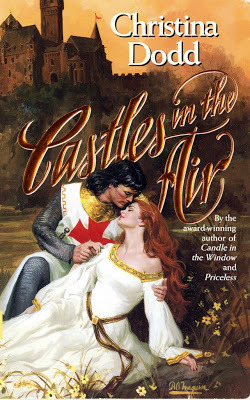 And, yes, the publisher did a reprint. Don't know what happened to the artist. Perhaps Sci Fi covers??
While my daughter was preparing a special photo celebration for her eldest daughter's tenth birthday on April Fool's Day, she ran across a bit of nostalgia from about five years ago . . .
~ * ~
Blair's Free Book Schedule on Amazon Kindle
Airborne - The Hanover Restoration Tuesday, May 7
Death by Marriage Tuesday, May 14
Florida Knight Tuesday, May 21
Limbo Man Tuesday, May 28
Orange Blossoms & Mayhem Tuesday, June 4
For covers and blurbs of the books above, Thanks for stopping by.
Grace, who writes as Blair Bancroft
Coming soon: "Reminiscences of Controversies" - some of the occasions I've put my foot in it, occasionally by accident; more often, quite deliberately.
Click here for a list of Grace's books as Blair Bancroft
And, oh yes, I'm doing an Internet radio interview on PWRTalk.com
on Tuesday, May 7, at 5:00 p.m. The topic: England's waterways
~ * ~
Below is a romance cover I've been hearing about for years, but only saw for the first time last month, when someone posted it to one of my author loops. Needless to say, it is the stuff of legends.
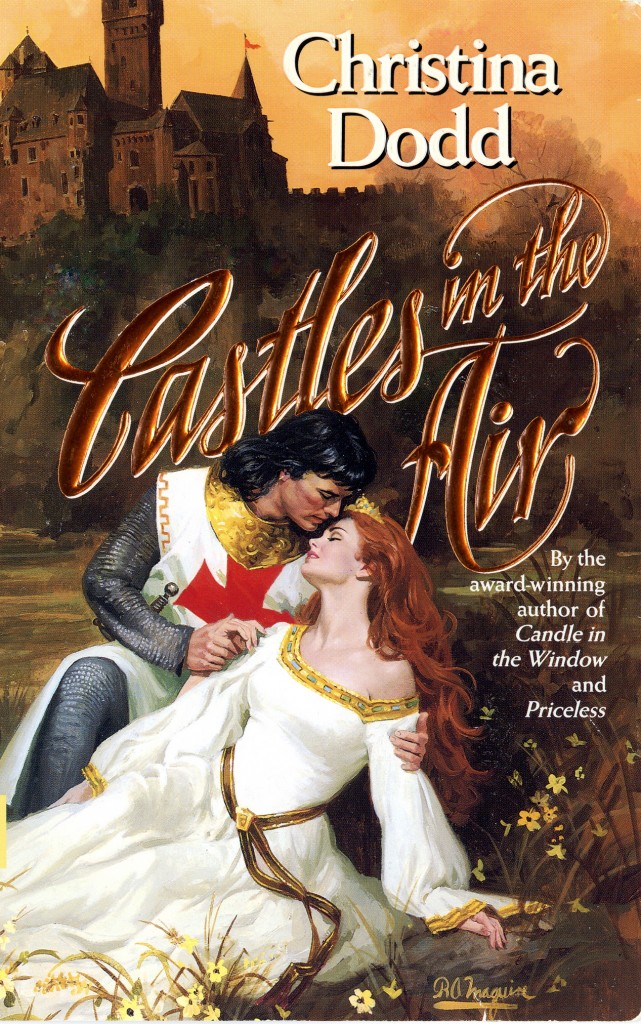 And, yes, the publisher did a reprint. Don't know what happened to the artist. Perhaps Sci Fi covers??
While my daughter was preparing a special photo celebration for her eldest daughter's tenth birthday on April Fool's Day, she ran across a bit of nostalgia from about five years ago . . .
~ * ~
Blair's Free Book Schedule on Amazon Kindle
Airborne - The Hanover Restoration Tuesday, May 7
Death by Marriage Tuesday, May 14
Florida Knight Tuesday, May 21
Limbo Man Tuesday, May 28
Orange Blossoms & Mayhem Tuesday, June 4
For covers and blurbs of the books above, Thanks for stopping by.
Grace, who writes as Blair Bancroft
Coming soon: "Reminiscences of Controversies" - some of the occasions I've put my foot in it, occasionally by accident; more often, quite deliberately.
Click here for a list of Grace's books as Blair Bancroft
April 28, 2013
How Does Your Novel Grow?
The following blog debuted on Savvy Authors in June 2012. I'm being lazy this week and repeating it here (without updating).
Mary, Mary, quite contrary,How does your garden grow?With silver bells and cockle shells,And little maids all in a row.
I’ve been working so hard to plant and encourage my garden this year—while finishing a novella and starting a new Regency, plus editing and formatting my next indie book—that I could scarcely escape the close analogy between growing a garden and writing a book. And when searching for a blog title, the old nursery rhyme popped into my mind.
Are we all contrary Marys? It’s certainly possible. Those who make a living wage with their writing have certainly turned their backs on the traditional nine to five. And those who hold down a job and still find time to write have to be blessed with a stubbornly contrary gene that keeps them going, no matter what.
Silver bells, cockle shells, and little maids all in a row? Surely a symbol of the creative imagination it takes to do what we do.
So . . . how does your novel grow?
If it’s like mine, the answer is, painfully. With great time, effort, and determination.
Details? you ask. Well, now, let’s see . . .
Good soil - start with a solid foundation. For a garden, it’s good soil. For a novel, I suggest the foundation is:
1. Read, read, read, read, read! I have judged c. 400 RWA chapter contest in the last fifteen years, and all too often I can tell the entrant set out to write a romance without ever having read one. (Or if he/she did, they weren’t paying attention!) Or perhaps you didn’t quite get the concepts of Goal, Motivation, and Conflict when you read a “How-to” book about them. Hopefully, reading books by the most successful romance authors will bring the points home. Certainly, they should give you a feeling for the style.
2. Research. Whether you’re writing Contemporary or Historical, you need to know what you’re talking about. Police procedure, raising horses, military service, Medieval times, Regency, Victorian/Edwardian - know the clothing, the proper terminology. Know the history/background of your chosen subject. Don’t try to “wing it.” Too many will know if you get it wrong.
The Seed. Once you have that germ of an idea, you need to plant it in that solid foundation of knowing what is expected in your chosen sub-genre and let it sprout from the inspiration of your fertile mind, supported by all that research you did.
Water. A seed won’t sprout in dry soil any more than a novel can grow without Goal, Motivation, Conflict. You have to water that seed with a good flow of all the necessary ingredients. Water it with two Good Main Characters, interesting characters—likable characters, the kind readers want to root for. (Of course for a villain, you need to make him/her someone the reader loves to hate.) Those characters need physical descriptions, information about their personalities and enough background so we can understand why they do what they do. The main characters need to reveal their thoughts through introspection, not just through dialogue. But when your characters do speak out loud, be sure they have something to say! Clever dialogue adds color, but it must always move the story forward; i.e., no dialogue just for sake of being cute and no dialogue thrown in just because you’ve written five pages of solid narration and ask yourself, “What do I do now?”
Fertilize. Your plants—pardon me, your story—will remain mediocre unless you add fertilizer (color) in the form of a well-delineated setting, well-drawn secondary characters (with descriptions), mixed with narration and dialogue that keeps the plot on track. Never get so wound up in your characters that you forget your plot or so wound up in plot that you fail to develop your characters. Make them grow, if you’ll pardon me hammering home the analogy.
Weed. Every chapter or two, go back and take a good look at what you wrote. Weed out the typos, fill in the missing words, and—far more important—spot the places where you used twenty words when ten would have been more clear, more to the point. Where did you stray from your Goals, Motivations, and Conflicts? Where did you fall into kaffeeklatch nonentities, straying from the plot and your characters’ purpose in this story?
Am I done yet?
As any gardener knows, you’re far from done. Gardening is demanding and never-ending.
The same is true of writing. Creativity is insatiable, requiring constant tending. You have to keep Watering and Fertilizing and Weeding. In a longer book you might want to add a sub-plot, perhaps a second romance or layer on another bit of conflict for the hero and heroine. Or perhaps you skimped on the fertilizer and find yourself with little more than an outline the first time around. Those pesky plants just won’t grow, hovering just above the soil like little stick figures. For those authors, I suggest mining your creativity for some super fertilizer. Expand each paragraph with more color, better descriptions, more clear motives, more internal joy or anguish, more sparkling dialogue.
Hopefully, by now you’ve found one of those new fertilizers that also keeps weeds at bay. Or maybe you’ve just become more skilled at spotting weeds and getting rid of them as you go along. For the great moment—the end of the growing season—is at hand. You’ve written, “The End.” But if you’re wise, you’ll ask yourself:
Am I done yet?
No!
Final Weeding & Edging. Go back to the beginning and read the whole blasted book line by line. Yes, I know you’re sick of it, but this final editing is all important. If you do it right, you will be amazed at the things you missed during those chapter edits. Everything from improper punctuation to poor transitions, from failure to properly introduce new characters to lack of continuity. In my case, I always end up making a number of insertions, clarifying points, adding more color, more emotion, etc. Others might find they have overwritten and must make numerous deletions rather than insertions.
Am I done yet?
Well, maybe.
If you made only a few additions or deletions, you might be able to “get by.” You might take a chance on assuming your precious baby is ready for submission. But, frankly, most published authors consider three or four edits the norm. (Chapter by chapter edits, then two or three times through the whole manuscript.) Never fall into the trap of thinking everything you write is perfect the first time. If you do, those pesky weeds will overwhelm your garden every time.
Picking Your Flowers and/or Vegies. Your garden has come to fruition. By George, you’ve done it! You have a colorful array of zinnias, marigolds, dahlias, morning glories, and whatever other glorious seeds you planted. Or maybe you’re chowing down on tomatoes, cucumbers, corn, and melons. Whether you chose flowers or vegies, you can finally pat yourself on the back for a job well done.
But unlike a garden that droops and fades each fall, your precious baby is just coming into full bloom, taking its first precarious steps out into the world. Will it catch an editor’s eye? An agent’s? Or will it faded into obscurity?
Dormancy. Gardens and novels are endless battles with the forces ranged against us, from a struggle with our own laziness to dealing with the demands of others. Never give up. Whether polishing an old project or starting a new one, respect that tiny seed of an idea, nurture it. Water with creative juices, fertilize with new imagination, and attack those weeds with a vengeance. Like those dead-looking perennials who rise to life each spring, an author also experiences a renaissance with each new book, returning to the battle bigger and more hardy than the year (novel) before.
How does your novel grow?
Plant. Water. Fertilize. Weed.
Repeat Steps 2, 3 & 4 until manuscript is complete.
Then do it all again.
The Author’s Motto: Determination, Perseverance, Endurance!
~ * ~
Blair's Free Book Schedule on Amazon Kindle
Airborne - The Hanover Restoration Tuesday, May 7Death by Marriage Tuesday, May 14Florida Knight Tuesday, May 21Limbo Man Tuesday, May 28Orange Blossoms & Mayhem Tuesday, June 4
For covers and blurbs of the books above, Thanks for stopping by.
Grace, who writes as Blair Bancroft
Click here for a list of Grace's books as Blair Bancroft
Mary, Mary, quite contrary,How does your garden grow?With silver bells and cockle shells,And little maids all in a row.
I’ve been working so hard to plant and encourage my garden this year—while finishing a novella and starting a new Regency, plus editing and formatting my next indie book—that I could scarcely escape the close analogy between growing a garden and writing a book. And when searching for a blog title, the old nursery rhyme popped into my mind.
Are we all contrary Marys? It’s certainly possible. Those who make a living wage with their writing have certainly turned their backs on the traditional nine to five. And those who hold down a job and still find time to write have to be blessed with a stubbornly contrary gene that keeps them going, no matter what.
Silver bells, cockle shells, and little maids all in a row? Surely a symbol of the creative imagination it takes to do what we do.
So . . . how does your novel grow?
If it’s like mine, the answer is, painfully. With great time, effort, and determination.
Details? you ask. Well, now, let’s see . . .
Good soil - start with a solid foundation. For a garden, it’s good soil. For a novel, I suggest the foundation is:
1. Read, read, read, read, read! I have judged c. 400 RWA chapter contest in the last fifteen years, and all too often I can tell the entrant set out to write a romance without ever having read one. (Or if he/she did, they weren’t paying attention!) Or perhaps you didn’t quite get the concepts of Goal, Motivation, and Conflict when you read a “How-to” book about them. Hopefully, reading books by the most successful romance authors will bring the points home. Certainly, they should give you a feeling for the style.
2. Research. Whether you’re writing Contemporary or Historical, you need to know what you’re talking about. Police procedure, raising horses, military service, Medieval times, Regency, Victorian/Edwardian - know the clothing, the proper terminology. Know the history/background of your chosen subject. Don’t try to “wing it.” Too many will know if you get it wrong.
The Seed. Once you have that germ of an idea, you need to plant it in that solid foundation of knowing what is expected in your chosen sub-genre and let it sprout from the inspiration of your fertile mind, supported by all that research you did.
Water. A seed won’t sprout in dry soil any more than a novel can grow without Goal, Motivation, Conflict. You have to water that seed with a good flow of all the necessary ingredients. Water it with two Good Main Characters, interesting characters—likable characters, the kind readers want to root for. (Of course for a villain, you need to make him/her someone the reader loves to hate.) Those characters need physical descriptions, information about their personalities and enough background so we can understand why they do what they do. The main characters need to reveal their thoughts through introspection, not just through dialogue. But when your characters do speak out loud, be sure they have something to say! Clever dialogue adds color, but it must always move the story forward; i.e., no dialogue just for sake of being cute and no dialogue thrown in just because you’ve written five pages of solid narration and ask yourself, “What do I do now?”
Fertilize. Your plants—pardon me, your story—will remain mediocre unless you add fertilizer (color) in the form of a well-delineated setting, well-drawn secondary characters (with descriptions), mixed with narration and dialogue that keeps the plot on track. Never get so wound up in your characters that you forget your plot or so wound up in plot that you fail to develop your characters. Make them grow, if you’ll pardon me hammering home the analogy.
Weed. Every chapter or two, go back and take a good look at what you wrote. Weed out the typos, fill in the missing words, and—far more important—spot the places where you used twenty words when ten would have been more clear, more to the point. Where did you stray from your Goals, Motivations, and Conflicts? Where did you fall into kaffeeklatch nonentities, straying from the plot and your characters’ purpose in this story?
Am I done yet?
As any gardener knows, you’re far from done. Gardening is demanding and never-ending.
The same is true of writing. Creativity is insatiable, requiring constant tending. You have to keep Watering and Fertilizing and Weeding. In a longer book you might want to add a sub-plot, perhaps a second romance or layer on another bit of conflict for the hero and heroine. Or perhaps you skimped on the fertilizer and find yourself with little more than an outline the first time around. Those pesky plants just won’t grow, hovering just above the soil like little stick figures. For those authors, I suggest mining your creativity for some super fertilizer. Expand each paragraph with more color, better descriptions, more clear motives, more internal joy or anguish, more sparkling dialogue.
Hopefully, by now you’ve found one of those new fertilizers that also keeps weeds at bay. Or maybe you’ve just become more skilled at spotting weeds and getting rid of them as you go along. For the great moment—the end of the growing season—is at hand. You’ve written, “The End.” But if you’re wise, you’ll ask yourself:
Am I done yet?
No!
Final Weeding & Edging. Go back to the beginning and read the whole blasted book line by line. Yes, I know you’re sick of it, but this final editing is all important. If you do it right, you will be amazed at the things you missed during those chapter edits. Everything from improper punctuation to poor transitions, from failure to properly introduce new characters to lack of continuity. In my case, I always end up making a number of insertions, clarifying points, adding more color, more emotion, etc. Others might find they have overwritten and must make numerous deletions rather than insertions.
Am I done yet?
Well, maybe.
If you made only a few additions or deletions, you might be able to “get by.” You might take a chance on assuming your precious baby is ready for submission. But, frankly, most published authors consider three or four edits the norm. (Chapter by chapter edits, then two or three times through the whole manuscript.) Never fall into the trap of thinking everything you write is perfect the first time. If you do, those pesky weeds will overwhelm your garden every time.
Picking Your Flowers and/or Vegies. Your garden has come to fruition. By George, you’ve done it! You have a colorful array of zinnias, marigolds, dahlias, morning glories, and whatever other glorious seeds you planted. Or maybe you’re chowing down on tomatoes, cucumbers, corn, and melons. Whether you chose flowers or vegies, you can finally pat yourself on the back for a job well done.
But unlike a garden that droops and fades each fall, your precious baby is just coming into full bloom, taking its first precarious steps out into the world. Will it catch an editor’s eye? An agent’s? Or will it faded into obscurity?
Dormancy. Gardens and novels are endless battles with the forces ranged against us, from a struggle with our own laziness to dealing with the demands of others. Never give up. Whether polishing an old project or starting a new one, respect that tiny seed of an idea, nurture it. Water with creative juices, fertilize with new imagination, and attack those weeds with a vengeance. Like those dead-looking perennials who rise to life each spring, an author also experiences a renaissance with each new book, returning to the battle bigger and more hardy than the year (novel) before.
How does your novel grow?
Plant. Water. Fertilize. Weed.
Repeat Steps 2, 3 & 4 until manuscript is complete.
Then do it all again.
The Author’s Motto: Determination, Perseverance, Endurance!
~ * ~
Blair's Free Book Schedule on Amazon Kindle
Airborne - The Hanover Restoration Tuesday, May 7Death by Marriage Tuesday, May 14Florida Knight Tuesday, May 21Limbo Man Tuesday, May 28Orange Blossoms & Mayhem Tuesday, June 4
For covers and blurbs of the books above, Thanks for stopping by.
Grace, who writes as Blair Bancroft
Click here for a list of Grace's books as Blair Bancroft
April 21, 2013
Florida Wild & Miracle in Orlando
Special note: I've just updated Dictionary for Writers, Part 5, with a whole new category: New Adult. Click here.
~ * ~
I'd like to share the cover for my Romantic Suspense, Florida Wild, to be published by Ellora's Cave Blush sometime in the not too distant future. Unlike my Golden Beach RS, this one is set in the greater Orlando area. Way, way in the background you can see the wooden rollercoaster that is featured at the beginning and end of the book.

Miracle in Orlando
When I submitted a workshop proposal to the Moonlight & Magnolias conference, I promised to have a new high res photo taken (the one I sent to M&M was more than a decade old). Truthfully, I'd like to use the one from twenty-five years ago, but . . .
My proposal was accepted, I turned to my daughter for recommendations, and found a local photographer named Simo Drissi. My photos—an amazing number in constantly changing poses—were taken outside in a small shopping center park. Simo and I agreed on our #1 choice, the one I call the "Blair" photo. The smiling one (Grace) I added as an extra for Facebook & Twitter. The third was my daughter's choice, forcing Simo to grind his teeth to make my stubby nails look decent (the only French manicure of my life!)
I post the photos here as a recommendation for Simo because strict anti-promo rules on RWA author loops make it impossible to do it there. But every professional needs a good photo, whether for the back of the book, social media, or your business card. And I think you'll agree if he can make me look good at my age, just think what he can do for someone much younger! I would also like to give a hearty thank-you to my talented hairstylist, Ileana Arroyo, from Penny's salon at Fashion Square Mall. And to my daughter, my makeup artist. During the decade or so she sang professionally, she worked as a makeover specialist at the cosmetics counters of a several large department stores in both Sarasota and Orlando. She is now a real estate investment broker and mother of the three cherubs you occasionally see on this blog.
 Blair Bancroft
 Grace
Grace Grace & French manicure
Hmm, did my daughter like the one above because it looks like Mom is about to say, "You're grounded!"?
 Same photo session, no retouching
For link to Simo Drissi website, click here.
Thanks for stopping by.GraceNext week: "How Does Your Novel Grow?"
Click here for a list of Grace's books as Blair Bancroft
~ * ~
I'd like to share the cover for my Romantic Suspense, Florida Wild, to be published by Ellora's Cave Blush sometime in the not too distant future. Unlike my Golden Beach RS, this one is set in the greater Orlando area. Way, way in the background you can see the wooden rollercoaster that is featured at the beginning and end of the book.

Miracle in Orlando
When I submitted a workshop proposal to the Moonlight & Magnolias conference, I promised to have a new high res photo taken (the one I sent to M&M was more than a decade old). Truthfully, I'd like to use the one from twenty-five years ago, but . . .
My proposal was accepted, I turned to my daughter for recommendations, and found a local photographer named Simo Drissi. My photos—an amazing number in constantly changing poses—were taken outside in a small shopping center park. Simo and I agreed on our #1 choice, the one I call the "Blair" photo. The smiling one (Grace) I added as an extra for Facebook & Twitter. The third was my daughter's choice, forcing Simo to grind his teeth to make my stubby nails look decent (the only French manicure of my life!)
I post the photos here as a recommendation for Simo because strict anti-promo rules on RWA author loops make it impossible to do it there. But every professional needs a good photo, whether for the back of the book, social media, or your business card. And I think you'll agree if he can make me look good at my age, just think what he can do for someone much younger! I would also like to give a hearty thank-you to my talented hairstylist, Ileana Arroyo, from Penny's salon at Fashion Square Mall. And to my daughter, my makeup artist. During the decade or so she sang professionally, she worked as a makeover specialist at the cosmetics counters of a several large department stores in both Sarasota and Orlando. She is now a real estate investment broker and mother of the three cherubs you occasionally see on this blog.
 Blair Bancroft
 GraceGrace & French manicure
Hmm, did my daughter like the one above because it looks like Mom is about to say, "You're grounded!"?
 Same photo session, no retouching
For link to Simo Drissi website, click here.
Thanks for stopping by.GraceNext week: "How Does Your Novel Grow?"
Click here for a list of Grace's books as Blair Bancroft


