
Blair Bancroft's Blog, page 61
May 28, 2012
EDIT THE BLASTED BOOK, Part 4
WRITING NO-NO'S
I'm sure some of you will find it difficult to believe it’s necessary to state a few of the “No-no’s” below, but in the course of judging over 400 contest entries for chapters of the Romance Writers of America and perusing my editing work for Best Foot Forward, I’ve encountered some noteworthy errors. Some of the “DO NOTs” are general essentials. Others are based on actual errors I’ve seen in contests or in my editing work. They are all things you really do not want to do. I hope the list below will help newbies avoid some of the pitfalls of learning the craft of writing fiction.
1. DO NOT try to write a romance until you’ve read extensively in the sub-genre of romance you want to write. That doesn’t mean you have to write exactly to formula, but understanding the tone of a line, or the feel of a publishing house, is essential to creating a saleable book.
2. DO NOT try to get by with an inadequate word processing program. (MS Word and Word Perfect are the two giants of the industry.) And no matter what word processing program you use, you need to have a 2003 or later copy of MS Word for editing purposes. Word’s Track Changes is a fabulous editing tool used by almost every publishing house, and even a died-in-the-wool Word Perfect lover like me has to admit it!
3. DO NOT use the formatting you used for college term papers. Use semi-colons and colons on rare occasions, preferably not at all. They are considered “academic.” Use automatic, not manual tab stops. And if you’re still writing in Courier at 25 lines per page, using underlines instead of italics, and a double hyphen for a dash, you are in danger of being considered obsolete before you’re ever published. (For further details, please see my recent blog: Formatting Manuscripts for the 21st Century.)
4. DO NOT throw in everything but the kitchen sink. Do not overload your story with three different sub-plots at the same time. Leave that for when you’ve become rich and famous and know how to handle it. Advice to beginners: keep it simple.
5. Similarly, DO NOT write down the thoughts of each and every person in a scene. Even multi-published authors avoid all but the occasional “head hop.” Look at a scene through one person’s eyes at a time, usually those of the hero or heroine. Put your readers inside their heads. Let them see what the hero/heroine sees, hear what they hear, feel what they feel. Readers want to empathize with their h/h, feel their joy and sorrow, root for them to come out on top. To do that, you have to concentrate only on their point of view. “Side trips” detract from the story.
Note: if you must change Point of View within a scene, try to do it near the middle, giving the other main character almost equal time. (This is not a general “rule,” merely a suggestion recorded here because it is one of the rules of a major e-publishing house.)
6. To elaborate on Number 1 above, DO NOT obscure your narration, introspection, dialogue, etc., in a waterfall of words. Keep focused. Readers do not want to know every last thing in your mind, in your research, in your characters’ lives. Write rich, not long. Write with color, but with clarity, not convolution.
7. Conversely, DO NOT settle for “bare bones.” If you are the opposite of the author who drowns his/her story in a waterfall of words, one of those who rushes the story ahead so fast you end up with little more than an outline, STOP, take a deep breath; then go back and add the color (descriptions, settings, emotions, complexities of character, the “well-turned” phrases you missed the first time around.
8. DO NOT use clichés or other overworked expressions (example: "Bloody hell!"). Avoid anachronisms like the plague. (Anachronisms are those “out of era” zingers, such as having a zipper in a dress in 1802 or using 21st century slang in the early 19th c.)
9. DO NOT throw in a dialogue tag every time someone speaks. (A “tag” is: he/she said, asked, exclaimed, snapped, growled, etc.) If you have established who is speaking earlier in the paragraph, a tag isn’t necessary and just adds clutter. However, if the tag is needed for the rhythm of the sentence, then by all means use it. But do not feel you have to attribute every last quote. For example:
Jed sat on the edge of his desk and tried to stare her down. “You’re kidding, right?”
10. Conversely, DO NOT throw in half a page or more of dialogue with no tags at all. This leads to readers tearing their hair, going back to the top, counting down “He - She,” trying to figure out who said what. Just don’t do it!
11. DO NOT use full sentences as dialogue tags. This is an absolute no-no for all authors, and yet it keeps cropping up.
Example:
Right: “Come on,” she cried as she ran down the hill.”
Wrong: “Come on,” Mary ran down the hill before the others.
12. DO NOT put the words of more than one speaker in the same paragraph; i.e., start a new paragraph each time the speaker changes. Do not put the words of two different speakers in the same paragraph.
13. DO NOT write a Third Person story without the hero’s point of view (in romance, writing without the heroine’s POV is unlikely). And I mean, right from the beginning. Do not write three or four chapters without allowing the hero to have his say. Romance readers really love their heros. Ignore the hero’s POV at your peril. If you’re writing Women’s Fiction, okay, but not Romance. The hero and heroine don’t have to meet in the first chapter (except in short Category romance), but you need to introduce your hero early. (This is another rule you can bend when you’re rich and famous, but not as a beginner.)
14. DO NOT turn an Exciting Plot into a Boring Book. Easier said than done, right? Here are a few things that might help.
a. DO NOT dwell on a lot of details that are irrelevant to the action. Focus on the story, on the emotions of your main characters, on the important secondary characters, on the characters’ interactions with each other and with the essentials of the plot. Every bit of narration and dialogue should move the story forward. Do not, for example, dwell on someone’s medical history, their extended social background, their great vacation last year - unless those things are important to the plot.
b. DO NOT fall into the trap of “Tell” instead of “Show.” If you play narrator, standing outside the story and “telling” readers what is happening, you’ve struck out. As mentioned in #5 above, let your two main characters (and sometimes the villain) “show” the story through their personal thoughts, dialogue, feelings, and actions.
c. For a lot more on this subject, please see EDIT THE BLASTED BOOK, Parts 1 & 2. Also, my 2011 blogs, entitled Writing 101.
15. And lastly, DO NOT be so arrogant (or sensitive) about your work that you can’t accept criticism. (Yes, some will be wrong, but keep listening, you still might learn something.) Most importantly, learning to take criticism without freaking out is essential to success. Remember, if you give your editor too hard a time, it could be Bye-bye Career.
~ * ~
As with all my Writing and Editing blogs, the above list only scratches the surface, but I hope some of you will find it helpful.
Thanks for stopping by. [And please take a peek at my books on Amazon Kindle, B&N's Nook & Smashwords (Smashwords offers a 20% free read.)]
Grace, who writes as Blair Bancroft
www.blairbancroft.com
@blairbancroft


WRITING NO-NOs
I'm sure some of you will find it difficult to believe it’s necessary to state a few of the “No-no’s” below, but in the course of judging over 400 contest entries for chapters of the Romance Writers of America and perusing my editing work for Best Foot Forward, I’ve encountered some noteworthy errors. Some of the “DO NOTs” are general essentials. Others are based on actual errors I’ve seen in contests or in my editing work. They are all things you really do not want to do. I hope the list below will help newbies avoid some of the pitfalls of learning the craft of writing fiction.
1. DO NOT try to write a romance until you’ve read extensively in the sub-genre of romance you want to write. That doesn’t mean you have to write exactly to formula, but understanding the tone of a line, or the feel of a publishing house, is essential to creating a saleable book.
2. DO NOT try to get by with an inadequate word processing program. (MS Word and Word Perfect are the two giants of the industry.) And no matter what word processing program you use, you need to have a 2003 or later copy of MS Word for editing purposes. Word’s Track Changes is a fabulous editing tool used by almost every publishing house, and even a died-in-the-wool Word Perfect lover like me has to admit it!
3. DO NOT use the formatting you used for college term papers. Use semi-colons and colons on rare occasions, preferably not at all. They are considered “academic.” Use automatic, not manual tab stops. And if you’re still writing in Courier at 25 lines per page, using underlines instead of italics, and a double hyphen for a dash, you are in danger of being considered obsolete before you’re ever published. (For further details, please see my recent blog: Formatting Manuscripts for the 21st Century.)
4. DO NOT throw in everything but the kitchen sink. Do not overload your story with three different sub-plots at the same time. Leave that for when you’ve become rich and famous and know how to handle it. Advice to beginners: keep it simple.
5. Similarly, DO NOT write down the thoughts of each and every person in a scene. Even multi-published authors avoid all but the occasional “head hop.” Look at a scene through one person’s eyes at a time, usually those of the hero or heroine. Put your readers inside their heads. Let them see what the hero/heroine sees, hear what they hear, feel what they feel. Readers want to empathize with their h/h, feel their joy and sorrow, root for them to come out on top. To do that, you have to concentrate only on their point of view. “Side trips” detract from the story.
Note: if you must change Point of View within a scene, try to do it near the middle, giving the other main character almost equal time. (This is not a general “rule,” merely a suggestion recorded here because it is one of the rules of a major e-publishing house.)
6. To elaborate on Number 1 above, DO NOT obscure your narration, introspection, dialogue, etc., in a waterfall of words. Keep focused. Readers do not want to know every last thing in your mind, in your research, in your characters’ lives. Write rich, not long. Write with color, but with clarity, not convolution.
7. Conversely, DO NOT settle for “bare bones.” If you are the opposite of the author who drowns his/her story in a waterfall of words, one of those who rushes the story ahead so fast you end up with little more than an outline, STOP, take a deep breath; then go back and add the color (descriptions, settings, emotions, complexities of character, the “well-turned” phrases you missed the first time around.
8. DO NOT use clichés or other overworked expressions (example: "Bloody hell!"). Avoid anachronisms like the plague. (Anachronisms are those “out of era” zingers, such as having a zipper in a dress in 1802 or using 21st century slang in the early 19th c.)
9. DO NOT throw in a dialogue tag every time someone speaks. (A “tag” is: he/she said, asked, exclaimed, snapped, growled, etc.) If you have established who is speaking earlier in the paragraph, a tag isn’t necessary and just adds clutter. However, if the tag is needed for the rhythm of the sentence, then by all means use it. But do not feel you have to attribute every last quote. For example:
Jed sat on the edge of his desk and tried to stare her down. “You’re kidding, right?”
10. Conversely, DO NOT throw in half a page or more of dialogue with no tags at all. This leads to readers tearing their hair, going back to the top, counting down “He - She,” trying to figure out who said what. Just don’t do it!
11. DO NOT use full sentences as dialogue tags. This is an absolute no-no for all authors, and yet it keeps cropping up.
Example:
Right: “Come on,” she cried as she ran down the hill.”
Wrong: “Come on,” Mary ran down the hill before the others.
12. DO NOT put the words of more than one speaker in the same paragraph; i.e., start a new paragraph each time the speaker changes. Do not put the words of two different speakers in the same paragraph.
13. DO NOT write a Third Person story without the hero’s point of view (in romance, writing without the heroine’s POV is unlikely). And I mean, right from the beginning. Do not write three or four chapters without allowing the hero to have his say. Romance readers really love their heros. Ignore the hero’s POV at your peril. If you’re writing Women’s Fiction, okay, but not Romance. The hero and heroine don’t have to meet in the first chapter (except in short Category romance), but you need to introduce your hero early. (This is another rule you can bend when you’re rich and famous, but not as a beginner.)
14. DO NOT turn an Exciting Plot into a Boring Book. Easier said than done, right? Here are a few things that might help.
a. DO NOT dwell on a lot of details that are irrelevant to the action. Focus on the story, on the emotions of your main characters, on the important secondary characters, on the characters’ interactions with each other and with the essentials of the plot. Every bit of narration and dialogue should move the story forward. Do not, for example, dwell on someone’s medical history, their extended social background, their great vacation last year - unless those things are important to the plot.
b. DO NOT fall into the trap of “Tell” instead of “Show.” If you play narrator, standing outside the story and “telling” readers what is happening, you’ve struck out. As mentioned in #5 above, let your two main characters (and sometimes the villain) “show” the story through their personal thoughts, dialogue, feelings, and actions.
c. For a lot more on this subject, please see EDIT THE BLASTED BOOK, Parts 1 & 2. Also, my 2011 blogs, entitled Writing 101.
15. And lastly, DO NOT be so arrogant (or sensitive) about your work that you can’t accept criticism. (Yes, some will be wrong, but keep listening, you still might learn something.) Most importantly, learning to take criticism without freaking out is essential to success. Remember, if you give your editor too hard a time, it could be Bye-bye Career.
~ * ~
As with all my Writing and Editing blogs, the above list only scratches the surface, but I hope some of you will find it helpful.
Thanks for stopping by. [And please take a peek at my books on Amazon Kindle, B&N's Nook & Smashwords (Smashwords offers a 20% free read.)]
Grace, who writes as Blair Bancroft
www.blairbancroft.com
@blairbancroft
May 21, 2012
GOLDEN BEACH, FLORIDA
A change of pace this week. I was editing one of my mysteries for indie publishing, and I realized the Prologue was an excellent mini profile of the town where many of my contemporary novels are set - the not-so-fictional Gulfcoast town of Golden Beach, Florida. The Prologue to Death by Marriage is a bit cryptic, but I hope those who are interested in my Romantic Suspense, Mysteries, and Thrillers will find it of interest. For those who have only read my historicals, maybe this peek at Golden Beach will intrigue you enough to want to try one of the following: Shadowed Paradise, Paradise Burning, Orange Blossoms & Mayhem, and (coming soon) Death by Marriage and Florida Knight.
Excerpt from Death by Marriage:
Prologue
Golden Beach is a Florida Gulfcoast town with miles of sandy beaches crested by heron, egrets, turkey-headed vultures, and snowbirds. The heron, egrets, and vultures are with us year-round. The snowbirds are seasonal. They migrate south by plane, train, and automobile between October and January and return to their northern habitats between April and June. A few—those less well endowed with green dead presidents—must sometimes confine themselves to a stay of one month. A sad circumstance, as unlike heron, egrets, and vultures, snowbirds are always in season. Hunted assiduously by both Florida natives and johnny-come-latelies for their fine northern plumage and their free-spending self-indulgence.
Some say Golden Beach was named for the color of its sand, but, truthfully, ninety years ago it was one of the first planned retirement developments in the country. And I’ve always had a sneaking suspicion the town fathers were honoring a senior’s golden years rather than golden sand. Or maybe they were simply picturing the wealth the retirees would bring with them. Whatever. The town was named before the market crash of twenty-nine, the one that precipitated the Great Depression, and by that time it was too late to change the name to Deserted, Breadline, or Lost Cause.
Golden Beach rose from the doldrums of hand-to-mouth existence only when the exuberant optimism of post-World War II exploded on the scene. And air conditioning. In two short months my grandparents (adopted) went from acres of oranges to a pink Mediterranean-style stucco mansion in the center of town. Did Gramma cringe when the vast orange grove my family had owned for four generations was platted for the Gulfcoast’s largest trailer park? Maybe. But after twenty years of hard times, she and Grampa probably just looked at their bank balance and smiled.
I never got to walk the orange grove, smell the sweet scent of spring blossoms, or pick a rough-skinned orange off the tree. I grew up in that three-story stucco a block from city hall, four blocks from the library, and a million miles from nowhere. As a child, I was happy as a clam. As a teen, awareness struck. Nothing, absolutely nothing, ever happened in Golden Beach. It was a dead-end far corner of the earth. I was young, young, young, trapped in a time warp where children should be seen and not heard.
Let me out of here!
At seventeen I fled to the Rhode Island School of Design like a rocket into the wild blue yonder. Life glowed on the horizon like a great sun rising. Freedom was mine. The world awaited.
Nine years later, emotionally battered, nearly down for the count, I came back.
Golden Beach.
Refuge.
~ * ~
Thanks for stopping by. Next blog (promise) - EDIT THE BLASTED BOOK - a list of "Don'ts"
Grace, who writes as Blair Bancroft & edits as Best Foot Forward (editsbyBFF@aol.com)
Excerpt from Death by Marriage:
Prologue
Golden Beach is a Florida Gulfcoast town with miles of sandy beaches crested by heron, egrets, turkey-headed vultures, and snowbirds. The heron, egrets, and vultures are with us year-round. The snowbirds are seasonal. They migrate south by plane, train, and automobile between October and January and return to their northern habitats between April and June. A few—those less well endowed with green dead presidents—must sometimes confine themselves to a stay of one month. A sad circumstance, as unlike heron, egrets, and vultures, snowbirds are always in season. Hunted assiduously by both Florida natives and johnny-come-latelies for their fine northern plumage and their free-spending self-indulgence.
Some say Golden Beach was named for the color of its sand, but, truthfully, ninety years ago it was one of the first planned retirement developments in the country. And I’ve always had a sneaking suspicion the town fathers were honoring a senior’s golden years rather than golden sand. Or maybe they were simply picturing the wealth the retirees would bring with them. Whatever. The town was named before the market crash of twenty-nine, the one that precipitated the Great Depression, and by that time it was too late to change the name to Deserted, Breadline, or Lost Cause.
Golden Beach rose from the doldrums of hand-to-mouth existence only when the exuberant optimism of post-World War II exploded on the scene. And air conditioning. In two short months my grandparents (adopted) went from acres of oranges to a pink Mediterranean-style stucco mansion in the center of town. Did Gramma cringe when the vast orange grove my family had owned for four generations was platted for the Gulfcoast’s largest trailer park? Maybe. But after twenty years of hard times, she and Grampa probably just looked at their bank balance and smiled.
I never got to walk the orange grove, smell the sweet scent of spring blossoms, or pick a rough-skinned orange off the tree. I grew up in that three-story stucco a block from city hall, four blocks from the library, and a million miles from nowhere. As a child, I was happy as a clam. As a teen, awareness struck. Nothing, absolutely nothing, ever happened in Golden Beach. It was a dead-end far corner of the earth. I was young, young, young, trapped in a time warp where children should be seen and not heard.
Let me out of here!
At seventeen I fled to the Rhode Island School of Design like a rocket into the wild blue yonder. Life glowed on the horizon like a great sun rising. Freedom was mine. The world awaited.
Nine years later, emotionally battered, nearly down for the count, I came back.
Golden Beach.
Refuge.
~ * ~
Thanks for stopping by. Next blog (promise) - EDIT THE BLASTED BOOK - a list of "Don'ts"
Grace, who writes as Blair Bancroft & edits as Best Foot Forward (editsbyBFF@aol.com)
May 13, 2012
AIRBORNE - THE HANOVER RESTORATION
The "Steampunk" I've been talking about for some time now is finally out, and I know some of you may be asking, "What on earth is Steampunk?" A quick, highly personal definition might be: alternative history set in a dark, gritty period c. 1875-1910. Stories are often centered around Britain & continental Europe and feature steam machines and intricate clockwork devices. The most well-known symbol of the period: the airship (dirigible). The human attitudes, however, are more "punk." Modern concepts, such as female equality, exaggerated garb, communication devices, and even "computers" crop up in Steampunk.
Airborne - The Hanover Restoration, however, is a Steampunk "What if." I asked myself how it all began, say, forty or fifty years earlier than most Steampunk novels. And since I was accustomed to writing Regencies, I extended the "feel" to the next generation and set my story in 1840. Basically, Airborne is a traditional Regency, set twenty years later, and with a bit of more drama than most trads. A 20% free read is available at Smashwords. https://www.smashwords.com/books/view/161141.
There is also a partial free read on Kindle. http://www.amazon.com/Airborne-The-Hanover-Restoration-ebook/dp/B0082B6F12/ref=sr_1_1?s=digital-text&ie=UTF8&qid=1336845785&sr=1-1 Hopefully, most of my Regency fans will enjoy the Regency feel, and my Suspense fans will enjoy the drama of the restoration of the Hanoverian dynasty to the British throne.
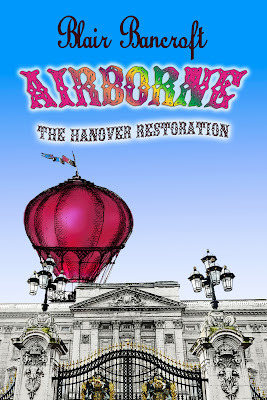
Miss Araminta Galsworthy travels to the home of her new guardian, Baron Julian Rochefort, an inventor like her father, only to find herself hastily married, shot at, and attacked by evangelicals who consider her husband's airship the work of the devil. She is also expected to play hostess to a bevy of guests, all of whom seem to be engaged in treason. Their intent: restore the monarchy, which was seized eleven years earlier by the Duke of Wellington, now Lord Protector of the Realm. Minta finds the concept shocking, as she was only ten when Wellington took over the government. Lord Rochefort's enemies are now legion: rival aeronauts from the continent, rival monarchists who want to place the Duke of Cumberland on the throne (or possibly the Duke of Cambridge). And a wily Wellington, who has allowed an already autocratic nature to grow into despotism over the course of his reign.
Minta struggles to adjust to new friends, new enemies, a new husband. To the concept of being an integral part of a revolution. Not easy for a girl just shy of her majority. But she finds her way past all obstacles, to become an important part of the great day when Lord Rochefort sets down Aurora, the world's first airship, in Hyde Park. All does not go as planned, however, and Minta almost loses her chance to live a life where she, not Aurora, is the center of her husband's universe.
~ * ~Thanks for stopping by.
GraceComing next: another installment of EDIT THE BLASTED BOOK (a list of Don'ts)

Airborne - The Hanover Restoration, however, is a Steampunk "What if." I asked myself how it all began, say, forty or fifty years earlier than most Steampunk novels. And since I was accustomed to writing Regencies, I extended the "feel" to the next generation and set my story in 1840. Basically, Airborne is a traditional Regency, set twenty years later, and with a bit of more drama than most trads. A 20% free read is available at Smashwords. https://www.smashwords.com/books/view/161141.
There is also a partial free read on Kindle. http://www.amazon.com/Airborne-The-Hanover-Restoration-ebook/dp/B0082B6F12/ref=sr_1_1?s=digital-text&ie=UTF8&qid=1336845785&sr=1-1 Hopefully, most of my Regency fans will enjoy the Regency feel, and my Suspense fans will enjoy the drama of the restoration of the Hanoverian dynasty to the British throne.

Miss Araminta Galsworthy travels to the home of her new guardian, Baron Julian Rochefort, an inventor like her father, only to find herself hastily married, shot at, and attacked by evangelicals who consider her husband's airship the work of the devil. She is also expected to play hostess to a bevy of guests, all of whom seem to be engaged in treason. Their intent: restore the monarchy, which was seized eleven years earlier by the Duke of Wellington, now Lord Protector of the Realm. Minta finds the concept shocking, as she was only ten when Wellington took over the government. Lord Rochefort's enemies are now legion: rival aeronauts from the continent, rival monarchists who want to place the Duke of Cumberland on the throne (or possibly the Duke of Cambridge). And a wily Wellington, who has allowed an already autocratic nature to grow into despotism over the course of his reign.
Minta struggles to adjust to new friends, new enemies, a new husband. To the concept of being an integral part of a revolution. Not easy for a girl just shy of her majority. But she finds her way past all obstacles, to become an important part of the great day when Lord Rochefort sets down Aurora, the world's first airship, in Hyde Park. All does not go as planned, however, and Minta almost loses her chance to live a life where she, not Aurora, is the center of her husband's universe.
~ * ~Thanks for stopping by.
GraceComing next: another installment of EDIT THE BLASTED BOOK (a list of Don'ts)
May 6, 2012
EDIT THE BLASTED BOOK, Part 3
MANUSCRIPT FORMAT FOR THE 21ST C. For Print & e-Pub
I never thought to get this basic in the EDIT THE BLASTED BOOK series, but the first thing any author needs before writing, let alone editing, can begin is a properly formatted manuscript. Yet the manuscripts I see coming in to the many contests I judge (and some of the manuscripts I get from my editing clients) reveal that someone needs to list the basics of formatting for today’s market. Authors are invited to use Comments below to add items I’ve left out. (Or e-mail me at BlairGAK@aol.com.)
Please note that these rules are for manuscripts, not for books being formatted for indie publishing. The rules below are for: 1) creating manuscripts for submission to NY editors and agents; 2) creating a manuscript for submission to an e-publisher; 3) creating a manuscript, which can be easily read, edited, revised, and polished before you get down to the final step of formatting for indie publishing.
Classic Formatting Rules (which many newbies seem not to know):
1. 1" margins all around
2. Double space - manuscript & synopsis
3. Title and Page Number in the Header - usually Title flush left & Page Number flush right. (Wherever you put the title, the Page Number is always flush right.) Note: if you are certain you will submit only to e-publishers, and if you never print your manuscript so you can edit hardcopy, then page numbers can be omitted. But I really don’t advise it. They’re easy enough to eliminate when you don’t need them any more.
4. Put a Required Page End (Page Break) at the end of each chapter. (Frankly, I’m stunned by the number of authors who don’t seem to know this.) DO NOT use “Enter” to get to a new page. Besides making your manuscript look highly unprofessional, it messes up your editing. Every time you add or subtract words from the page, the chapter end will likely shift, making a real mess! (I bolded this header because so many authors seem unaware of this absolute basic formatting rule.)
5. Location & Date Line - still flush left & in italics
Note: this means if you’re using Auto Indents, you have to highlight the Location & Date & remove the indent on that line. [Format - Paragraph - By - change .5 to 0]
6. DO NOT use a block paragraph at the beginning of each scene. For one thing, that’s BOOK format, not manuscript format and looks pretentious. Secondly, it’s really annoying to take the extra time and effort to do this when you’ve set up the Auto Indents that are required in contemporary publishing. (See below.)
7. Long quotes, such as letters (3 lines or more). Indent .5 from each side. Use italics (no quotes).
8. Single quotes are only used when INSIDE double quotes (as in dialogue). If there is a quote in a narrative passage, use double quotes.
9. A single space after each sentence. This is nothing to get upset about if you were taught, as I was, to use two spaces. Don’t agonize over retraining your fingers. Type the way you always have. At the end of the book, simply run a Search and Replace. Search for: space space. Replace with: space. (You make the “spaces” by hitting the spacebar.) In a matter of seconds a vast number of spaces will have disappeared.
Relatively Recent Rule Changes - some much too long in coming!
1. Times New Roman, 12 or 14. (And I really don’t advise using anything else. For example, you might be sending your ms to a computer which doesn’t support the type font you chose.)
2. Use Italics, not Underlines where italics are needed.
3. Use computer word count (which means forget all that malarkey about 25 lines to the page!)
4. Auto Indents only (in MS Word, this is done by Format- Paragraph - Special - First Line Indent - By .5) For indie authors, in particular: be sure you have NO manual tab stops anywhere. (For MS Word users, click on ¶ in the toolbar and look for the icon that looks like a sideways L with an arrow point. Get rid of every one of them!) [For instructions on converting manual tabs to auto tabs in both MS Word and Word Perfect, please see the archives of this blog: http://mosaicmoments.blogspot.com - Tab Conversion]
5. Use M-dashes and N-dashes instead of a double hyphen or space-hyphen-space.
In general, use a M-dash for a true dash, the shorter N-dash for a “stutter.” (For example, when someone is stumbling over what to say.) You can find both dashes under Insert - Symbols. Faster & easier are the old ASCII codes. Use Alt + the numbers on your keypad.
M-dash = Alt + 0151 N-dash = Alt + 0150
6. Ellipses are a genuine puzzle. I’ll stick with the classic ellipsis in the Chicago Manual of Style, which is three periods with a space before, after, and in between each one . . .
Some E-publishers, however, have arbitrarily decided to take out the periods...making the implied pause into a hiccup. A better compromise, I would suggest, is the three periods with a space before ... and after. Frankly, why anyone would want to change the standard ellipsis is beyond me. Whatever style you choose, just be sure you are consistent. If you are indie publishing, the choice is yours. If you are submitting to a publisher, their copy editor will use the rules the house approves.
7. Today’s manuscripts are submitted electronically in RTF. (Rich Text Format) [This is a simple “Save As” function.] Read the agent’s &/or publisher’s guidelines (or contest guidelines) carefully before submitting. Each is a little different, and following directions exactly counts.
~ * ~
Thanks for stopping by!
Coming soon: AIRBORNE - THE HANOVER RESTORATION , a Steampunk "what if" in Regency style.
More in the EDIT THE BLASTED BOOK series

I never thought to get this basic in the EDIT THE BLASTED BOOK series, but the first thing any author needs before writing, let alone editing, can begin is a properly formatted manuscript. Yet the manuscripts I see coming in to the many contests I judge (and some of the manuscripts I get from my editing clients) reveal that someone needs to list the basics of formatting for today’s market. Authors are invited to use Comments below to add items I’ve left out. (Or e-mail me at BlairGAK@aol.com.)
Please note that these rules are for manuscripts, not for books being formatted for indie publishing. The rules below are for: 1) creating manuscripts for submission to NY editors and agents; 2) creating a manuscript for submission to an e-publisher; 3) creating a manuscript, which can be easily read, edited, revised, and polished before you get down to the final step of formatting for indie publishing.
Classic Formatting Rules (which many newbies seem not to know):
1. 1" margins all around
2. Double space - manuscript & synopsis
3. Title and Page Number in the Header - usually Title flush left & Page Number flush right. (Wherever you put the title, the Page Number is always flush right.) Note: if you are certain you will submit only to e-publishers, and if you never print your manuscript so you can edit hardcopy, then page numbers can be omitted. But I really don’t advise it. They’re easy enough to eliminate when you don’t need them any more.
4. Put a Required Page End (Page Break) at the end of each chapter. (Frankly, I’m stunned by the number of authors who don’t seem to know this.) DO NOT use “Enter” to get to a new page. Besides making your manuscript look highly unprofessional, it messes up your editing. Every time you add or subtract words from the page, the chapter end will likely shift, making a real mess! (I bolded this header because so many authors seem unaware of this absolute basic formatting rule.)
5. Location & Date Line - still flush left & in italics
Note: this means if you’re using Auto Indents, you have to highlight the Location & Date & remove the indent on that line. [Format - Paragraph - By - change .5 to 0]
6. DO NOT use a block paragraph at the beginning of each scene. For one thing, that’s BOOK format, not manuscript format and looks pretentious. Secondly, it’s really annoying to take the extra time and effort to do this when you’ve set up the Auto Indents that are required in contemporary publishing. (See below.)
7. Long quotes, such as letters (3 lines or more). Indent .5 from each side. Use italics (no quotes).
8. Single quotes are only used when INSIDE double quotes (as in dialogue). If there is a quote in a narrative passage, use double quotes.
9. A single space after each sentence. This is nothing to get upset about if you were taught, as I was, to use two spaces. Don’t agonize over retraining your fingers. Type the way you always have. At the end of the book, simply run a Search and Replace. Search for: space space. Replace with: space. (You make the “spaces” by hitting the spacebar.) In a matter of seconds a vast number of spaces will have disappeared.
Relatively Recent Rule Changes - some much too long in coming!
1. Times New Roman, 12 or 14. (And I really don’t advise using anything else. For example, you might be sending your ms to a computer which doesn’t support the type font you chose.)
2. Use Italics, not Underlines where italics are needed.
3. Use computer word count (which means forget all that malarkey about 25 lines to the page!)
4. Auto Indents only (in MS Word, this is done by Format- Paragraph - Special - First Line Indent - By .5) For indie authors, in particular: be sure you have NO manual tab stops anywhere. (For MS Word users, click on ¶ in the toolbar and look for the icon that looks like a sideways L with an arrow point. Get rid of every one of them!) [For instructions on converting manual tabs to auto tabs in both MS Word and Word Perfect, please see the archives of this blog: http://mosaicmoments.blogspot.com - Tab Conversion]
5. Use M-dashes and N-dashes instead of a double hyphen or space-hyphen-space.
In general, use a M-dash for a true dash, the shorter N-dash for a “stutter.” (For example, when someone is stumbling over what to say.) You can find both dashes under Insert - Symbols. Faster & easier are the old ASCII codes. Use Alt + the numbers on your keypad.
M-dash = Alt + 0151 N-dash = Alt + 0150
6. Ellipses are a genuine puzzle. I’ll stick with the classic ellipsis in the Chicago Manual of Style, which is three periods with a space before, after, and in between each one . . .
Some E-publishers, however, have arbitrarily decided to take out the periods...making the implied pause into a hiccup. A better compromise, I would suggest, is the three periods with a space before ... and after. Frankly, why anyone would want to change the standard ellipsis is beyond me. Whatever style you choose, just be sure you are consistent. If you are indie publishing, the choice is yours. If you are submitting to a publisher, their copy editor will use the rules the house approves.
7. Today’s manuscripts are submitted electronically in RTF. (Rich Text Format) [This is a simple “Save As” function.] Read the agent’s &/or publisher’s guidelines (or contest guidelines) carefully before submitting. Each is a little different, and following directions exactly counts.
~ * ~
Thanks for stopping by!
Coming soon: AIRBORNE - THE HANOVER RESTORATION , a Steampunk "what if" in Regency style.
More in the EDIT THE BLASTED BOOK series
April 28, 2012
EDIT THE BLASTED BOOK, Part 2
Should You Hire an Editor or Copy Editor?
Note: Although this blog is written with indie authors in mind, it applies to all unpublished authors as well. Your chances of selling a well-presented book far outweigh your chances of selling a book chock full of errors, no matter how minor. Every one of them requires time (and money) to fix, and publishers will go for the well-presented book every time.
Since many of you know I offer an editing service, my thoughts on hiring an editor/copy editor may surprise you. I firmly believe most authors can “do it themselves.” Here are some questions you might ask yourself:
1. Do I want to spend the time and effort, or would I rather pay someone to do it?
2. Can I afford an editor?” Or better yet, “Can I afford not to hire an editor?
3. Did I love English class in school? Did I get As or Bs? Or was I out to lunch, always thinking of content rather than presentation?
4. Does presentation matter? I hope we answered that one in EDIT THE BLASTED BOOK, Part 1. YES, it matters!
5. How can editing affect the sale of my book? To indie authors: maybe not much, but I’m willing to bet bad editing will affect the sale of your SECOND book! To newbies: as stated earlier, yes, presentation is vital.
6. How do I find an editor?
For some suggested answers to these questions, see below.
~ * ~
1. Self-editing requires a lot of patience, but if you’ve edited your book at the end of every chapter and again at the end of every fifth chapter (or a similar system of your own devising), you’ve already got a good start on additions, deletions, awkward sentences, run-on sentences, dangling participles, etc. I strongly advise “editing as you go” so you won’t end up with a whole book that hasn’t had a single revision and is, therefore, a truly intimidating chore.
When you’ve edited that last section (for example, chapters 15-20), then it’s time to go back to the beginning and do the whole thing from start to finish, checking everything from convoluted sentences to “leap-frog” transitions, continuity, extra words, missing words, lack of clarity, etc. And if you made a LOT of changes, you just might have to go back and do it all again. By that time, it’s painful. Maybe even boring. But you have to do it! If your reaction is: “No, no, no, I can’t stand it. I have no idea what I’m doing. Help!” then you really do need to consider hiring an editor.
2. Good editing is not cheap. And, believe me, most editors earn their money. (Some manuscripts require so much work I’ve ended up earning about $2-3/hour. Now that’s just pitiful.) A professional editing service with major web site and multiple employees will most likely cost as much as twice the services of a small, private editing service (with minimal overhead). But they are easier to find.
Please remember the differences between editing and copy editing I pointed out in Part 1 of EDIT THE BLASTED BOOK. Editing is WAY more demanding and costs considerably more. The turnaround time will also be longer. And does the editor offer an overall “critique” as well as suggested changes to the body of the manuscript? This is always a plus.
Above all, remember that unless you are able to put in the time and expertise to do it yourself, you CANNOT afford NOT to hire an editor. The presentation quality of your manuscript directly affects your readers and, more importantly, your return readers. It also affects your reputation. Do you really want people wincing when they read your book? Or bored because the story bogs down in a sea of unnecessary words? I doubt that’s the reaction you envisioned when you wrote it.
Cost of Editing/Copy Editing:
The difference between Editing and Copy Editing makes a great deal of difference in what you should expect to pay for these services. On average, “editing” will be at least twice the price of “copy editing.” It may also be possible to find someone who will simply read your manuscript and offer feedback, which should be a detailed critique of characters, plot, dialogue, narration, setting, voice, etc. Warning: the critique without specific edits may leave you with a lot to figure out for yourself. The cost, however, should be somewhere in between full edits and simple copy editing.
3. CAN you edit your book yourself? I am convinced most authors can, if they’ll only take the time to do it right. Finish your book, do your best self-editing as you go along, then put it aside for a few weeks. [Yes, I know you’re itching to get it out there - I know the feeling well - but trust me, you need to distance yourself a bit before starting that final polish before uploading (or submission to an agent or editor).]
But if your imagination has always outstripped your English skills (you got consistently mediocre grades in English), then you need an editor. Save your pennies and do yourself the favor of hiring someone who can present your precious prose with the clarity it deserves. [A good editor will tell you where you went wrong and suggest how to fix it. He/she will not make any arbitrary changes (except possibly to the nuts & bolts of grammar, punctuation, and spelling). The actual revisions will be all yours.]
4. Whether your errors are obvious mistakes in English or more serious errors of lack of identification, lack of clarity, vague setting, shallow characters, elusive plot, too many words, lack of color, “talking heads,” etc., etc., a good editor should be able to find most of the problems and suggest solutions. (Sometimes it’s “Delete” and sometimes it’s “Add” or “Elaborate.”) There are, alas—as all editors have discovered—books which can’t be fixed without a complete rewrite. Those I try to send back to the authors after maybe five or ten chapters, and suggest he/she try again. Why waste money editing something that has to be completely rewritten? Which is also a good reason to send only a portion of your book for a first edit.
5. For the skeptics among you—but those probably aren’t reading this blog at all—yes, your friends, relatives, and unsuspecting customers will download that first book. But the more knowledgeable among them won’t get past the first ten pages, and it’s guaranteed they won’t recommend your book to friends. Nor will they buy any other book you write. And although the remaining readers may not recognize the more serious editing issues, they will likely wrinkle their brows and become bored. They might not be able to pinpoint why the story is going nowhere—stuck in meaningless dialogue or long narrative passages, saying nothing. They may not realize that the characters are shallow, the setting nebulous, the plot believable only by a five-year-old. They’ll simply stop reading or maybe read the whole thing, give you a pat on the back, but somehow never bother to download anything else you write. (“Oh wow, hey, that was great, man!”—but they never read another word by you.)
6. How to find an editor.
Some freelance editors advertise in the Classified section of Romance Writers Report, RWA’s monthly magazine. Also, a great many e-mail lists have sprung up dedicated to Indie Publishing, and most are associated with a database where editors & copy editors are allowed to advertise their availability. The social & business network site, LinkedIn, has several professional groups which also allow editors to reveal themselves. And, of course, you can always ask for recommendations from author groups you belong to or on author e-lists you belong to. Warning: Be careful you get an editor who understands the romance genre. For example, the editor of a technical journal might be a meticulous copy editor, but he/she would very likely have no idea what is expected in romance fiction.
~ * ~
Coming in the next couple of months:
1. Manuscript formatting for the 21st century - a LOT of changes out there!
2. A list of “Don’ts” - mistakes you really want to avoid
3. Editing basic: Don’t snow your readers under a blizzard of words or, conversely give them stick figures and a plot full of holes when they want MEAT!
Thanks for stopping by Grace’s Mosaic Moments!

Note: Although this blog is written with indie authors in mind, it applies to all unpublished authors as well. Your chances of selling a well-presented book far outweigh your chances of selling a book chock full of errors, no matter how minor. Every one of them requires time (and money) to fix, and publishers will go for the well-presented book every time.
Since many of you know I offer an editing service, my thoughts on hiring an editor/copy editor may surprise you. I firmly believe most authors can “do it themselves.” Here are some questions you might ask yourself:
1. Do I want to spend the time and effort, or would I rather pay someone to do it?
2. Can I afford an editor?” Or better yet, “Can I afford not to hire an editor?
3. Did I love English class in school? Did I get As or Bs? Or was I out to lunch, always thinking of content rather than presentation?
4. Does presentation matter? I hope we answered that one in EDIT THE BLASTED BOOK, Part 1. YES, it matters!
5. How can editing affect the sale of my book? To indie authors: maybe not much, but I’m willing to bet bad editing will affect the sale of your SECOND book! To newbies: as stated earlier, yes, presentation is vital.
6. How do I find an editor?
For some suggested answers to these questions, see below.
~ * ~
1. Self-editing requires a lot of patience, but if you’ve edited your book at the end of every chapter and again at the end of every fifth chapter (or a similar system of your own devising), you’ve already got a good start on additions, deletions, awkward sentences, run-on sentences, dangling participles, etc. I strongly advise “editing as you go” so you won’t end up with a whole book that hasn’t had a single revision and is, therefore, a truly intimidating chore.
When you’ve edited that last section (for example, chapters 15-20), then it’s time to go back to the beginning and do the whole thing from start to finish, checking everything from convoluted sentences to “leap-frog” transitions, continuity, extra words, missing words, lack of clarity, etc. And if you made a LOT of changes, you just might have to go back and do it all again. By that time, it’s painful. Maybe even boring. But you have to do it! If your reaction is: “No, no, no, I can’t stand it. I have no idea what I’m doing. Help!” then you really do need to consider hiring an editor.
2. Good editing is not cheap. And, believe me, most editors earn their money. (Some manuscripts require so much work I’ve ended up earning about $2-3/hour. Now that’s just pitiful.) A professional editing service with major web site and multiple employees will most likely cost as much as twice the services of a small, private editing service (with minimal overhead). But they are easier to find.
Please remember the differences between editing and copy editing I pointed out in Part 1 of EDIT THE BLASTED BOOK. Editing is WAY more demanding and costs considerably more. The turnaround time will also be longer. And does the editor offer an overall “critique” as well as suggested changes to the body of the manuscript? This is always a plus.
Above all, remember that unless you are able to put in the time and expertise to do it yourself, you CANNOT afford NOT to hire an editor. The presentation quality of your manuscript directly affects your readers and, more importantly, your return readers. It also affects your reputation. Do you really want people wincing when they read your book? Or bored because the story bogs down in a sea of unnecessary words? I doubt that’s the reaction you envisioned when you wrote it.
Cost of Editing/Copy Editing:
The difference between Editing and Copy Editing makes a great deal of difference in what you should expect to pay for these services. On average, “editing” will be at least twice the price of “copy editing.” It may also be possible to find someone who will simply read your manuscript and offer feedback, which should be a detailed critique of characters, plot, dialogue, narration, setting, voice, etc. Warning: the critique without specific edits may leave you with a lot to figure out for yourself. The cost, however, should be somewhere in between full edits and simple copy editing.
3. CAN you edit your book yourself? I am convinced most authors can, if they’ll only take the time to do it right. Finish your book, do your best self-editing as you go along, then put it aside for a few weeks. [Yes, I know you’re itching to get it out there - I know the feeling well - but trust me, you need to distance yourself a bit before starting that final polish before uploading (or submission to an agent or editor).]
But if your imagination has always outstripped your English skills (you got consistently mediocre grades in English), then you need an editor. Save your pennies and do yourself the favor of hiring someone who can present your precious prose with the clarity it deserves. [A good editor will tell you where you went wrong and suggest how to fix it. He/she will not make any arbitrary changes (except possibly to the nuts & bolts of grammar, punctuation, and spelling). The actual revisions will be all yours.]
4. Whether your errors are obvious mistakes in English or more serious errors of lack of identification, lack of clarity, vague setting, shallow characters, elusive plot, too many words, lack of color, “talking heads,” etc., etc., a good editor should be able to find most of the problems and suggest solutions. (Sometimes it’s “Delete” and sometimes it’s “Add” or “Elaborate.”) There are, alas—as all editors have discovered—books which can’t be fixed without a complete rewrite. Those I try to send back to the authors after maybe five or ten chapters, and suggest he/she try again. Why waste money editing something that has to be completely rewritten? Which is also a good reason to send only a portion of your book for a first edit.
5. For the skeptics among you—but those probably aren’t reading this blog at all—yes, your friends, relatives, and unsuspecting customers will download that first book. But the more knowledgeable among them won’t get past the first ten pages, and it’s guaranteed they won’t recommend your book to friends. Nor will they buy any other book you write. And although the remaining readers may not recognize the more serious editing issues, they will likely wrinkle their brows and become bored. They might not be able to pinpoint why the story is going nowhere—stuck in meaningless dialogue or long narrative passages, saying nothing. They may not realize that the characters are shallow, the setting nebulous, the plot believable only by a five-year-old. They’ll simply stop reading or maybe read the whole thing, give you a pat on the back, but somehow never bother to download anything else you write. (“Oh wow, hey, that was great, man!”—but they never read another word by you.)
6. How to find an editor.
Some freelance editors advertise in the Classified section of Romance Writers Report, RWA’s monthly magazine. Also, a great many e-mail lists have sprung up dedicated to Indie Publishing, and most are associated with a database where editors & copy editors are allowed to advertise their availability. The social & business network site, LinkedIn, has several professional groups which also allow editors to reveal themselves. And, of course, you can always ask for recommendations from author groups you belong to or on author e-lists you belong to. Warning: Be careful you get an editor who understands the romance genre. For example, the editor of a technical journal might be a meticulous copy editor, but he/she would very likely have no idea what is expected in romance fiction.
~ * ~
Coming in the next couple of months:
1. Manuscript formatting for the 21st century - a LOT of changes out there!
2. A list of “Don’ts” - mistakes you really want to avoid
3. Editing basic: Don’t snow your readers under a blizzard of words or, conversely give them stick figures and a plot full of holes when they want MEAT!
Thanks for stopping by Grace’s Mosaic Moments!
April 15, 2012
LIMBO MAN - a Thriller

FBI Special Agent Vee Frost does not care for Homeland Security’s list of job qualifications when they ask to borrow her services. “An experienced agent with a proven track record” is good. “Fluent in Russian” hints of an assignment close to her heart. But “Attractive female, under thirty-five” sends up red flags. Obviously, DHS is asking for services above and beyond the call of duty. But a loan to Homeland Security would look great on her resumé, and it sounds as if they really need her . . .
But when Vee agrees to turn on the charm for a mystery man who may hold the clue to something vital to U. S. security, she never anticipates a chase after two nuclear bombs from the old Soviet arsenal that will take her and the amnesiac Russian arms dealer from New York City to Connecticut, Colorado, New Jersey, and Florida, then on to Siberia and Iran. Nor does she expect to unearth a second personality beneath the façade of the tough arms dealer, Sergei Tokarev. A man with an agenda as hidden as the facts in his brain.
No matter how strong the bond Vee and Sergei form as they chase from one danger to the next, it seems doubtful either of them will live long enough for a happy ending.
Author’s Note: LIMBO MAN and ORANGE BLOSSOMS & MAYHEM were written years apart, and yet the two stories, featuring amnesiac heros, were uploaded back to back. My only excuse: with all the current headlines about Iran’s nuclear program, it just seemed the right time for LIMBO MAN to go “live.”
Speaking of going live, I was astounded when Limbo Man was first in line at Smashwords, going live almost instantly, followed by what must be a new record of about five hours for Kindle. After a rocky week, good news was much appreciated!
Coming next: Part 2 of EDIT THE BLASTED BOOK (which I expected to upload today instead of Limbo. Who knew?)

April 1, 2012
EDIT THE BLASTED BOOK
A Handbook for Indie Authors - Part 1
This is Part 1 of a series about editing fiction, particularly romantic fiction, including mystery, suspense, paranormal, and futuristic. Although it is intended for indie authors, who very much need to improve the quality of what they're uploading to the Net, much of it also applies to authors who would like to put their best foot forward when querying an agent or an editor. Do you want to present a manuscript which is going to cost the publisher time and effort to whip into shape, or do you want to present a professional-looking manuscript, which will cost very little time and money to be ready for publication? In today's tight economy, which manuscript will the editor choose?
A no-brainer, right?
Below is an introduction to the scary world of what it takes to make a manuscript ready for publication.
Editing vs. Copy Editing.
Many authors are not aware of the difference between editing and copy editing. I'll try to make it clear.
Editing is done by a person who has worked his/her way up in a publishing company, someone who has struggled long and hard to have "Editor or Associate Editor" beside his/her name. These are the people to whom you or your agent sends your manuscript. These are the people who will decide whether or not your book is published.
Copy edits are usually done by young publishing hopefuls, not long out of college. Frequently, they work at home. They are paid at "piecework" rates to find the nitty-gritty mistakes in your manuscript, from spelling, punctuation, and grammar to continuity (Were Betty's eyes blue in Ch. 1 and brown in Ch. 6?) and facts (Do you have a bastard inheriting an English title? - an absolute no-no). And, yes, copy editors make beginner mistakes. I've seen books where the copy editor inserted a decimal before 9mm, which would require the gun to have the smallest bullets in the history of the world!
You get the message: Editors are highly experienced; they're paid the relatively big bucks. Copy editing is lower echelon - almost anyone with a good English background, a keen eye, and patience can do it.
Editing. Among the many things an editor must look for are:
1. Does your first page capture a reader's attention?
2. Same for your first chapter. Does it have enough action, interesting dialogue, colorful details (whether setting, secondary characters or plot) to keep the reader turning the page?
3. Have you introduced both hero and heroine in the amount of time that is appropriate to the genre you're writing?
4. Have you made your hero and heroine likable? (They can have faults, but can a reader see that these will be remedied? Or is it merely a minor fault that makes your character more interesting?) Are your characters sympathetic? Do they have vulnerabilities? Will your readers root for them, really care about them?
5. Is your writing voice developed enough to appeal to the mass romance market?
6. Did you carefully outline your plot in your synopsis, then leave it there, assuming that the reader now knows everything he/she needs to know? (Which is nothing, as the reader never sees anything but the short blurb on the back of the book (or on screen in an online catalog.)
7. Have you ignored one of your two main characters, vastly favoring the point of view of one over the other? And, consequently, not revealing enough of the ignored character's thoughts, actions, and motivations?
8. Have you used so many secondary characters in the first few chapters that they completely overshadow your hero and heroine?
9. Conversely, have you created interesting, perhaps even colorful, secondary characters who truly enhance your story and are not simply being used as a "dialogue foil" to present backstory?
10. Did you bring your story to a stop in Chapter 1 by cramming in huge chunks of backstory, tempting your readers to chuck your book at the wall?
11. Or possibly you forgot to include any backstory or identification of your characters at all, making them blank-faced talking heads. After all, you know who they are, why can't the readers add mind-reading to their skills?
12. Dialogue. Have you incorporated setting, actions, description, and/or introspection (thoughts) into your dialogue? Otherwise, we're back to talking heads against a blank canvas. Not a pretty sight.
13. Did you write twenty words when ten would say the same thing and be more effective?
14. Do you have enough plot to hold a readers' attention for the full length of your book? Or are you giving us "diary entries" of daily activities instead of a story that is moving forward at a fast enough pace to satisfy modern readers?
~ * ~
The items listed above are just some of the things an editor must look for when reading a manuscript. And, more importantly, if the editor thinks your work worth the effort, he/she must then find ways to explain to you what must be fixed before your book is ready for publication. This requires a great deal of skill and experience and is a long, long way from simple copy edits. Yes, misspelled words and bad punctuation jump out at readers and are easy to criticize, but it's the more serious "edits" that make or break a book. Indie authors must realize this before they simply have someone proofread their manuscript and "certify" that it's ready for publication. Almost all manuscripts require careful "editing"and not just "copy editing."
I have a long list of books in my Kindle archives, books by authors I will not read again because their book did not capture my attention. Or books I put aside after ten pages because they were so poorly constructed I couldn't read any farther. But I keep active on my Kindle one of each book by authors I like to remind me to look for that author's next book.
Be the author whose book is "saved." Whose next book is eagerly awaited.
And never forget—although good spelling, punctuation, and grammar are important, your book won't make it without a good story and well-drawn characters.
So do it right . . . make more money.~ * ~
Coming next: Edit your own books or employ a professional?
Thanks for stopping by.
Grace, who writes as Blair Bancroft
& edits as Best Foot Forward (editsbyBFF@aol.com)

March 26, 2012
Dinosaurs in a Zoo??
Dinosaurs? An explanation can be found below the photo essay.
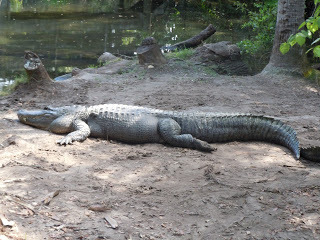
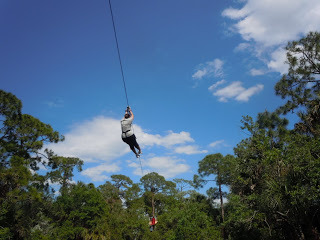
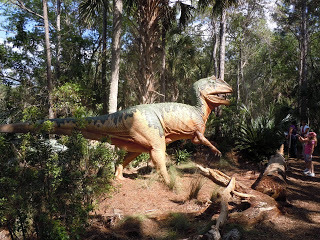
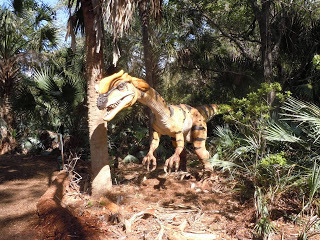
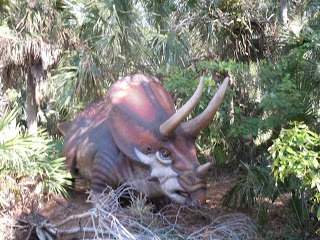
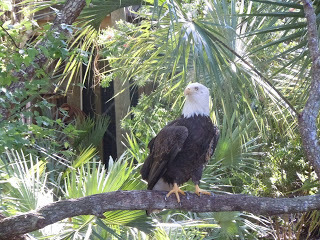
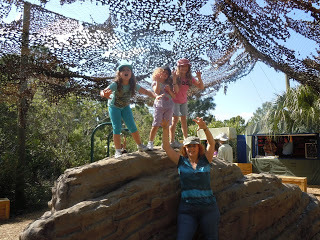
Spent a marvelous three hours at the Brevard (FL) Zoo Sunday—daughter, son-in-law & three grand-girls— all wishing we'd managed an earlier start. (By the time we got around to feeding the giraffes, they'd headed toward their barn for the night. Sigh.)
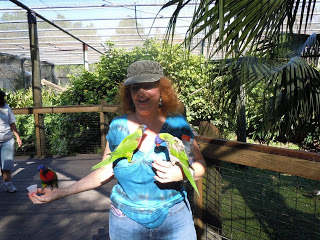
But all in all, the Brevard Zoo is an amazing place - no wonder cars were parked almost all the way to the main road. In addition to the usual array of animals, all "outdoors" in green habitats, there was a very special exhibit that will be there only through May 28, 2012. Sixteen life-size robotic dinosaurs ( not counting hatchlings), moving, roaring, a couple even spitting water, and one eating a large fish. Each carefully labeled in large letters, easy for a child to read. Grandchildren and adults alike were ecstatic. Best extra $5 above ticket price we'd ever paid.
Created, obviously at great expense, out of Houston, the dinosaurs are destined for Australia and New Zealand next, so this may be a last chance to see them in the U. S. for some time come. I cannot recommend the exhibit too highly. Above are a few highlights of our afternoon at the zoo. Believe me, those dinosaurs had all the adults thinking, "Jurassic Park"!
Coming next: Part 1 of EDIT THE BLASTED BOOK!
Thanks for stopping by. Grace

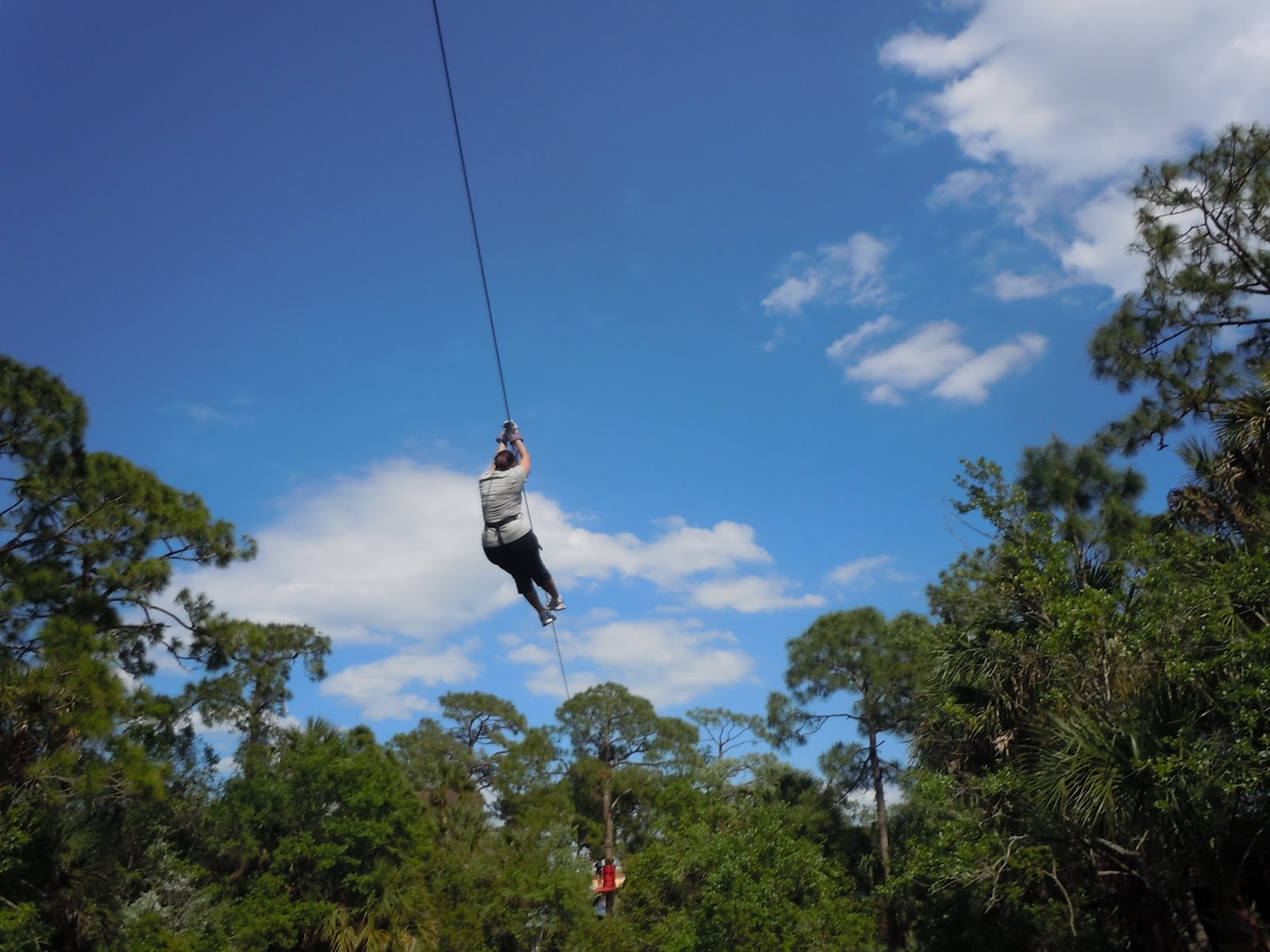

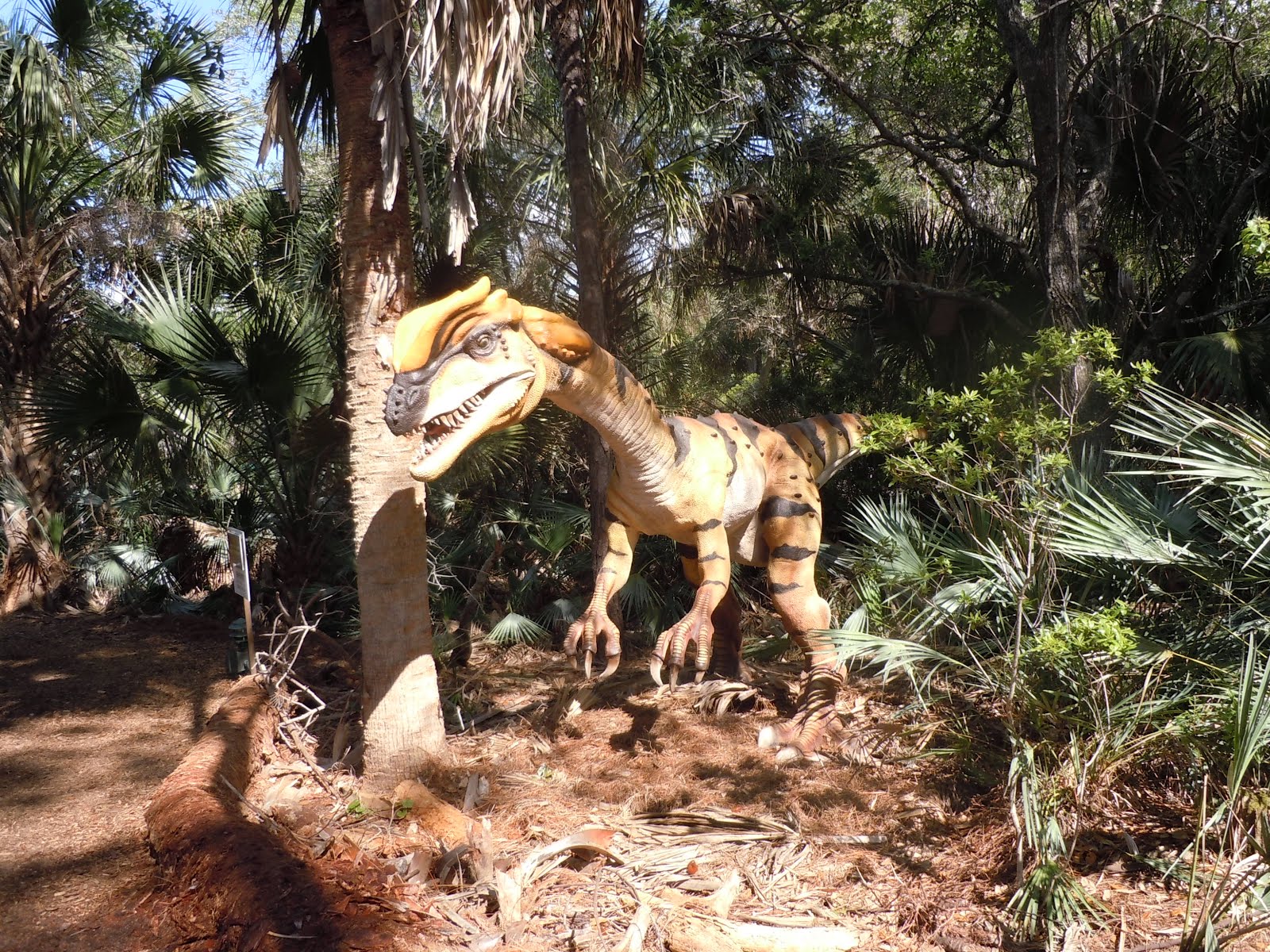

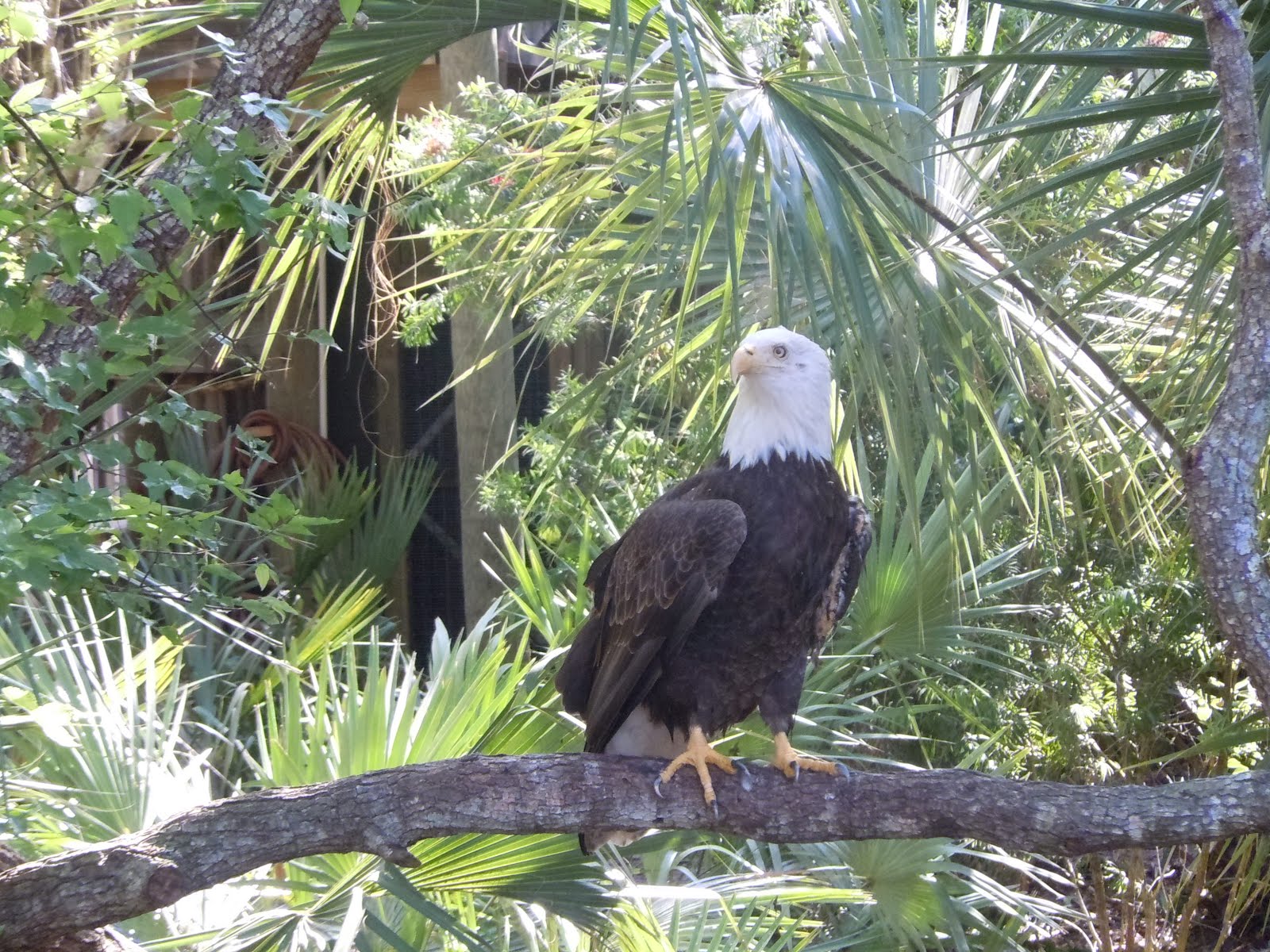

Spent a marvelous three hours at the Brevard (FL) Zoo Sunday—daughter, son-in-law & three grand-girls— all wishing we'd managed an earlier start. (By the time we got around to feeding the giraffes, they'd headed toward their barn for the night. Sigh.)

But all in all, the Brevard Zoo is an amazing place - no wonder cars were parked almost all the way to the main road. In addition to the usual array of animals, all "outdoors" in green habitats, there was a very special exhibit that will be there only through May 28, 2012. Sixteen life-size robotic dinosaurs ( not counting hatchlings), moving, roaring, a couple even spitting water, and one eating a large fish. Each carefully labeled in large letters, easy for a child to read. Grandchildren and adults alike were ecstatic. Best extra $5 above ticket price we'd ever paid.
Created, obviously at great expense, out of Houston, the dinosaurs are destined for Australia and New Zealand next, so this may be a last chance to see them in the U. S. for some time come. I cannot recommend the exhibit too highly. Above are a few highlights of our afternoon at the zoo. Believe me, those dinosaurs had all the adults thinking, "Jurassic Park"!
Coming next: Part 1 of EDIT THE BLASTED BOOK!
Thanks for stopping by. Grace
March 16, 2012
Elizabeth II's Coronation Chicken
A book I was reading this week inspired me to begin a new Blog Series. Tentative title: EDIT THE BLASTED BOOK! A Handbook for Indie Authors. (Nuff said.) Before embarking on that major chore, however, here is the promised Coronation Chicken recipe, which was printed in The Orlando Sentinel, February 1, 2012. According to the article, it was created by Constance Spry, a society florist and author, and chef Rosemary Hume for Queen Elizabeth II's coronation lunch in 1953. If you like your chicken from KFC, you may find this recipe a bit challenging.
Note: This is a cold chicken recipe.
1 chicken (5 pounds), poached
1 tablespoon vegetable oil
1 onion, finely chopped
1 tablespoon each: curry paste, tomato paste
½ cup red wine
1 bay leaf
Juice from ½ lemon
4 canned apricot halves
1¼ cups mayonnaise
½ cup whipping cream
¼ teaspoon salt
Freshly ground pepper
Watercress
Grace note: Before following the instructions below, please note that the chicken is supposed to be poached!
1. Remove the skin from the chicken. Cut meat into small pieces. Broil until golden brown. Allow to cool.
2. Heat oil over medium heat in a saucepan. Add onion; cook until soft and translucent, about 3 minutes. Add curry and tomato pastes, wine, bay leaf and lemon juice. Lower the heat; simmer uncovered until reduced, about 10 minutes. Strain; let sauce cool.
3. Puree apricots through a sieve or with a blender. Place in a bowl; mix in mayonnaise. Add cooled sauce; mix well. Whip cream to stiff peaks; fold into the mixture. Season with salt and pepper to taste. Add more lemon juice if needed.
4. Fold in the broiled chicken pieces, coating them well with the mixture. Garnish with watercress.
~ * ~
It sounds great, but I can't quite imagine taking the time to do all that. I wonder if baby apricot puree would do . . . Heresy, I know. But if anyone tries it, please let me know.
Coming soon (I hope): the first installment of EDIT THE BLASTED BOOK!
Thanks for stopping by.
Grace, who writes as Blair Bancroft & edits as Best Foot Forward
www.blairbancroft.com - editsbyBFF@aol.com - @blairbancroft
Note: This is a cold chicken recipe.
1 chicken (5 pounds), poached
1 tablespoon vegetable oil
1 onion, finely chopped
1 tablespoon each: curry paste, tomato paste
½ cup red wine
1 bay leaf
Juice from ½ lemon
4 canned apricot halves
1¼ cups mayonnaise
½ cup whipping cream
¼ teaspoon salt
Freshly ground pepper
Watercress
Grace note: Before following the instructions below, please note that the chicken is supposed to be poached!
1. Remove the skin from the chicken. Cut meat into small pieces. Broil until golden brown. Allow to cool.
2. Heat oil over medium heat in a saucepan. Add onion; cook until soft and translucent, about 3 minutes. Add curry and tomato pastes, wine, bay leaf and lemon juice. Lower the heat; simmer uncovered until reduced, about 10 minutes. Strain; let sauce cool.
3. Puree apricots through a sieve or with a blender. Place in a bowl; mix in mayonnaise. Add cooled sauce; mix well. Whip cream to stiff peaks; fold into the mixture. Season with salt and pepper to taste. Add more lemon juice if needed.
4. Fold in the broiled chicken pieces, coating them well with the mixture. Garnish with watercress.
~ * ~
It sounds great, but I can't quite imagine taking the time to do all that. I wonder if baby apricot puree would do . . . Heresy, I know. But if anyone tries it, please let me know.
Coming soon (I hope): the first installment of EDIT THE BLASTED BOOK!
Thanks for stopping by.
Grace, who writes as Blair Bancroft & edits as Best Foot Forward
www.blairbancroft.com - editsbyBFF@aol.com - @blairbancroft


