Meredith Bond's Blog, page 9
March 7, 2015
Finding your Antagonist
Sometimes it’s incredibly easy to identify the antagonist in a book. That’s the bad guy, right? The villain.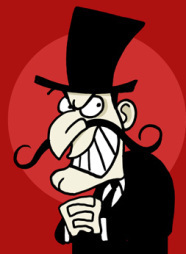
But what if there isn’t one bad guy? What if the antagonist is society, expectations (from either society or a particular person) or the protagonist themself?
As I’m sitting down to begin rewriting A Rake’s Reward, the last of my Merry Men Quartet books, I know that I will make my life so much easier if I identify the antagonist before I begin writing.
I didn’t do that in Bridging the Storm.
In fact, there isn’t one antagonist in that book. I’ve got three main characters – my hero, Dagonet; my heroine, Kate; and Tatiana.
Kate’s antagonist is easy—that would be her aunt, Tatiana Vallentyn. The woman makes Kate’s life nearly unbearable and is the one stopping her from moving on with her life. Phew! That is so nice! Well… not for Kate, but definitely nice for me.
Dagonet’s antagonist isn’t so easy. His is actually Merlin. At the end of the Children of Avalon series, Merlin gives Dagonet the gift to become young whenever he wants. The catch is that he has to do this. He can’t not become young. But Dagonet is tired of living. He’s watched all those he’s loved die and he wants to join them, but Merlin’s gift forces him to become young again and again, therefore keeping him alive. So I’ve got an unreachable antagonist who isn’t actively doing anything, but is still the one keeping my hero from getting what he wants. Oy!
Tatiana, although she is Kate’s antagonist, has her own goal in the book—to cure her children of consumption. Her antagonist is her own lack of magical power or knowledge—the only way she can cure her children. So… she’s her own antagonist. Tricky, huh?
What I’m really hoping right now, as I begin to work on rewriting (and it’s going to be probably a complete rewrite of the entire book) Rake is that I have an easy-to-identify antagonist. The thing is… I’ve got a nasty feeling things aren’t going to work out so nicely.
Have you had this problem or do you make sure your antagonists are easy to identify? Have you ever had any problems figuring out the antagonist in your story?
**We've got nine days (9!) before Bridging the Storm is "officially" published! Have you ordered your copy yet? If not, you should because the price is going to go up on March 16th. Click here to go to my book page where there are links to all the stores where you can get it or click the book title to go directly to Amazon.


February 28, 2015
Character Interviews
As a writer of romance, I know that the character is everything. They are the ones we read for.
They are the ones whose goals and determination drive my stories forward. They are the be all and end all of my books.
Yes, I love the plots—what happens in my stories—and my critique partners are always telling me that I spend way too much time crafting my plot and working the mystery or fight scene or the magic, depending on the book. But I’m slowly changing over from a “what happens next” sort of writer to a “what has to happen to force my protagonist to grow and learn” sort of writer. I’m moving from worrying about the plot to worrying about the characters. And that’s kind of funny because a lot of the reviews I’ve gotten for my book have commented on how real-to-life my characters are, so I guess I was doing something right. But I want it to be better.
In order to get better at characters, I’ve got to understand the people I’m writing about. I need to know where they came from, what’s important to them, and how they see the world. I have to be able to look at the world through their eyes and think like them in order to write from within their head. In short, I need to conduct character interviews.
I’m also learning, with my new release, that these interviews might be of interest to readers (if you’re a reader, please tell me if I’m right in the comments below!). I honestly hadn’t thought about it before, but as a reader, I think I’d want to know all this stuff about the people I’m reading about too. I become friends with people in books—both the ones I write and the ones I read. So, naturally, I’m interested in their earlier life. In their family. In why they despite the color yellow, if they do.
The funny thing is, I rarely conduct character interviews. I think deeply about the characters I write, but then I fill out a worksheet detailing their goals, why they have them and what is stopping them from achieving their goals. I have a very pretty worksheet filled with little boxes: strength, weakness, deep dark secret, special abilities, worst fear, etc. (if you’re a writer and you want a copy, just slip over to my website For Writers section. You’ll find this one among many others). But now, I’ve been asked to write up character interviews to be posted on blogs and I’m wondering what I should ask my characters.
What do you think? What would interest you in a character interview? What would you like to learn about the characters you read about?
My new Regency-set fantasy romance, Bridging the Storm (for which I need to write these interviews), is currently available to pre-order: From the mists of legend to the estates of the Regency, independent-minded Kate and the knight Sir Arthur Dagonet tussle with a force unanticipated by either, and stronger than any desire for life or death—love. And the prequel novella, Storm on the Horizon is free everywhere.
February 21, 2015
Talking about What is Love?
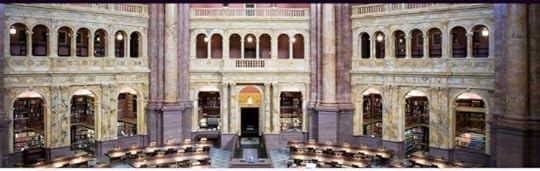 A week ago, I had the privilege of attending a conference at the Library of Congress entitled “What is Love? Romance Fiction in the Digital Age”. It was an amazing day filled with discussions about the current state of the romance market, books and, what I found to be the most fascinating, the romance community.
It was brought home to me again and again throughout the day as I listened to the discussions and had my own with quite a few of the other attendees that the Romance community is a very unique one among the genres of popular fiction. Romance writers are supportive people who believe strongly in “paying it forward” – helping others with their writing and learning how to navigate the very confusing world of publishing.
Because the conference included all writers, readers and publishers of romance fiction, one voice which was not heard quite as loudly among the cacophony was that of the self-published or indie-author. We did hear from some indie-authors (the very generous Liliana Hart was one of the panelists), but as I was thinking about this idea of community and “paying it forward”, I realized that the indie community is very similar to the romance community in this way. We help each other.
Indie-publishing is such a complicated endeavor, a new author needs to learn from those who have gone before. That’s not to say that they have to do it in exactly the same way as others, but they need to learn at least the basics of how to publish a book, and so we form communities within the larger indie-community.
I’ve had the honor of being a member of the WG2E community for a few years now. We are a group of authors who write in many different genres—romance, suspense, horror, even some non-fiction. We have shared knowledge, created websites and facebook pages, and even put together a few anthologies. From the ranks of this community, I found the wonderful people who have created the author services company Author Engines and who will be helping me get the word out about my new book, Bridging the Storm, and my re-release of Storm on the Horizon. (I can’t tell you how excited I am to not have to do my own marketing for a new book—is that terrible of me?)
So, after a full day of talking about books, publishing and romance writing, what I came away from this conference—aside from meeting some really nice and interesting people—is that I’m a member of two communities filled with wonderful, supportive and generous people. Really, I don’t think I could get any luckier!
What do you think of indie-authors? Of communities? Have you had the opportunity to be a part of one that you’ve felt to be indispensable to your work?
Don’t forget to click on the links above to find out more about about Bridging the Storm (now available for pre-order)! And you can read an excerpt here.
Storm on the Horizon has been rereleased with a new cover and added scenes. If you haven’t picked up your copy of this historical, paranormal romance, you can do so at your favorite e-retailer for free.
And congratulations to Toi Thomas who won the free copy of Magic in the Storm from last week's blog hop!
February 14, 2015
The Power of Your Voice

Welcome to the Spread Some Indie Love Blog Hop!
To my regular readers, I'll be posting a regular blog post next week--a fun one about the "What is Love?" conference I attended this past week at the Library of Congress.
You, dear reader, have an incredibly powerful voice. You can make an author’s day (with a nice review), you can tell an author what you’d like to see (either through Facebook, Twitter or an email) or you can show them how much you like their books (by telling your friends about it).
 I love hearing from readers. I love getting comments about my books—both good and bad. And I love learning what you’d like to know more about. It was through such comments that I realized that I needed to write Bridging the Storm, Book 2 of the Storm series which just went up for pre-order last Monday.
I had written Magic in the Storm about the seventh child of the seventh child in the seventh generation who is destined to be the most powerful Vallen (magical person)… except that he was born the wrong sex. It’s the story of how Morgan (the hero) learns how he can attain his destiny and the powers he should have had. Throughout the story, Morgan fights not only the fact that he doesn’t have all of his powers, but his mother as well. She is furious at him for  being male and has always hated him because of that.
But my readers wrote to me and cried out that they couldn’t understand how a woman could treat her son the way Morgan's mother treats him!
I wrote Storm on the Horizon so that people could learn about where Morgan’s mother, Tatiana came from. What was important to her (duty above all else!) and how she met and fell in love with Kit, Morgan’s father. It’s a sweet novella where we get to meet the young Tatiana and fall in love with her and Kit.
But then my readers cried out that they now loved Tatiana and still didn’t understand how she could treat Morgan so badly in Magic in the Storm. I’d actually made things worse!
 So, now, I’ve written Bridging the Storm. It is, partly, the tale of how Tatiana became the horrible person she is in Magic in the Storm—through no fault of her own, really, the odds were stacked against her… but you’ll have to read the book to learn more. But I couldn’t just have a sad tale of a woman going mad, I’m a romance writer! So the main plot of the story is actually the romance between Sir Arthur Dagonet and Kit’s niece, Kate Cherington.
Poor Kate was taken to live with her aunt and uncle when she was six, after her mother died. Terrified of being abandoned again she makes herself indispensable to Tatiana—so much so that Tatiana has no intention of ever introducing Kate to society so that she can find someone to marry. But Kate longs for marriage, or barring that, an exciting life of travel and exploration, just like in the books she loves to read.
Sir Arthur Dagonet is Sir Dagonet from my Children of Avalon series. At the end of Fire: Nimuë’s Destiny, Merlin gave Sir Dagonet the gift of being able to become young whenever he wants—only that gift has turned into a curse! Dagonet can’t die. After seeing everyone he’s ever loved pass on, he’s ready to go himself, he just needs to find someone to remove Merlin’s gift. Tatiana, the high priestess of the Vallen, might be the only person who can do this, so when she invites him to her home, he’s thrilled. Little does he know that there he’ll meet the one woman who just might make being alive worthwhile.
So, my dear Reader, without you I never would have written this book. Think about this the next time you lose yourself in a fantastic story. On the other end of it is a writer who would love to hear what you have to say about the book. A writer who, just might, take your words to heart and write another book—just for you!
Bridging the Storm now available for pre-order for only 99 cents at Amazon, Kobo, Apple iBooks and Google Play! Storm on the Horizon is being re-released on Monday, February 16, re-edited and with added scenes as well as a new cover and is available for free at your favorite e-retailer including Amazon, Barnes & Noble, Apple iBooks, Kobo, and Google Play.
Tell me what you think (ie, write a comment below) and I’ll enter you in a drawing to win the third book in the Storm series, Magic in the Storm!

February 9, 2015
Giving it Away
 I’ve got a new book coming out soon (Bridging the Storm), just had a story in an anthology come out (Love Least Expected) and will be re-publishing my free novella with new scenes added, lots of changes and a new cover (Storm on the Horizon) so, needless to say, I’ve been doing a lot of thinking about marketing recently.
I found a great series of videos to help me from Nick Stephenson and have generally been reading a lot. What Nick and a good number of people say is that in order to get readers interested in reading your work and buying your books, you need to give something away—frequently. That something could be a book (Nick suggests having two free books to lure in readers), a gift card or a short story (like I’ve sometimes published vignettes in my newsletter—and, in fact, I just finished a new short story yesterday which I’ll publish in my newsletter in the coming months) or even a Kindle (if you can afford that) or other merchandise (I gave away a pair of earrings the other night to someone who came to the Facebook party for the release of LLE).
But my question is: is this really necessary? If we stopped giving stuff away would our readers disappear? Are readers coming to expect this of indie-authors and therefore won’t follow someone or get their newsletter if that author doesn’t give stuff away? Would a reader go so far as to not read an author’s books if they didn’t give things away?
I worry that people sign up for my newsletter just enter a contest (and win something). After the contest is over and they get my newsletter in their inbox, they then unsubscribe. So that means that they didn’t actually care about my books, they just wanted a chance to win, right? That doesn’t sound like a true reader to me.
I completely understand giving away (or selling at a very low price) the first book in a series. That makes sense. Shops have been selling “loss leaders” for ages—it’s gets people into the store, or in this case, makes it easy for a reader to try out a new author. I’m fine with that idea and I’m happy to give away my novella Storm on the Horizon and sell Air: Merlin’s Chalice for 99 cents.
But once they’ve read one of these books and enjoyed it, do I need to give them another just to get them to sign up for my newsletter as Nick suggests? Yes, that would get them to sign up, but if I have to coerce someone to sign up, do they really want to be there? Isn’t it likely that they would just unsubscribe to the newsletter as soon as they get the second free book?
I guess what I’m saying is that I want readers who are interested in my writing to get my newsletter. I don’t want to force myself on anyone or trick anyone into getting something they’re not interested in. And if they’re only interested in it for the free stuff (physical or written), are they truly fans? Will they actually go out and buy my next book, which I’m telling them about in my newsletter?
I know that people can’t exactly go down to the local bookstore and browse the shelves any more to find the newest books. They can do that virtually at their favorite e-retailer, but do they? Or do they simply troll the internet looking for contests to enter and authors who are giving things away and only read those books?
When will this all end? Will it ever? Will we have to just keep giving away more and more stuff in order lure readers to our books?
I’m happy to—for lack of a better term—reward people for reading my work. I’ve got a link in the back of my Storm Series books that goes to a website where I’ve got detailed information on the world I’ve created and I’m planning all sorts of fun things like that for my release of Bridging the Storm (even an audio of me reading the first chapter of the book!). But I still wonder about how much I’ve got to give away in order to get readers.
What do you think? Do you give things away? Are you happy doing so?
February 8, 2015
Giving it away
I’ve got a new book coming out soon (Bridging the Storm), just had a story in an anthology come out (Love Least Expected) and will be re-publishing my free novella with new scenes added, lots of changes and a new cover (Storm on the Horizon) so, needless to say, I’ve been doing a lot of thinking about marketing recently.
I found a great series of videos to help me from Nick Stephenson and have generally been reading a lot. What Nick and a good number of people say is that in order to get readers interested in reading your work and buying your books, you need to give something away—frequently. That something could be a book (Nick suggests having two free books to lure in readers), a gift card or a short story (like I’ve sometimes published vignettes in my newsletter—and, in fact, I just finished a new short story yesterday which I’ll publish in my newsletter in the coming months) or even a Kindle (if you can afford that) or other merchandise (I gave away a pair of earrings the other night to someone who came to the Facebook party for the release of LLE).
But my question is: is this really necessary? If we stopped giving stuff away would our readers disappear? Are readers coming to expect this of indie-authors and therefore won’t follow someone or get their newsletter if that author doesn’t give stuff away? Would a reader go so far as to not read an author’s books if they didn’t give things away?
I worry that people sign up for my newsletter just enter a contest (and win something). After the contest is over and they get my newsletter in their inbox, they then unsubscribe. So that means that they didn’t actually care about my books, they just wanted a chance to win, right? That doesn’t sound like a true reader to me.
I completely understand giving away (or selling at a very low price) the first book in a series. That makes sense. Shops have been selling “loss leaders” for ages—it’s gets people into the store, or in this case, makes it easy for a reader to try out a new author. I’m fine with that idea and I’m happy to give away my novella Storm on the Horizon and sell Air: Merlin’s Chalice for 99 cents.
But once they’ve read one of these books and enjoyed it, do I need to give them another just to get them to sign up for my newsletter as Nick suggests? Yes, that would get them to sign up, but if I have to coerce someone to sign up, do they really want to be there? Isn’t it likely that they would just unsubscribe to the newsletter as soon as they get the second free book?
I guess what I’m saying is that I want readers who are interested in my writing to get my newsletter. I don’t want to force myself on anyone or trick anyone into getting something they’re not interested in. And if they’re only interested in it for the free stuff (physical or written), are they truly fans? Will they actually go out and buy my next book, which I’m telling them about in my newsletter?
I know that people can’t exactly go down to the local bookstore and browse the shelves any more to find the newest books. They can do that virtually at their favorite e-retailer, but do they? Or do they simply troll the internet looking for contests to enter and authors who are giving things away and only read those books?
When will this all end? Will it ever? Will we have to just keep giving away more and more stuff in order lure readers to our books?
I’m happy to—for lack of a better term—reward people for reading my work. I’ve got a link in the back of my Storm Series books that goes to a website where I’ve got detailed information on the world I’ve created and I’m planning all sorts of fun things like that for my release of Bridging the Storm (even an audio of me reading the first chapter of the book!). But I still wonder about how much I’ve got to give away in order to get readers.
What do you think? Do you give things away? Are you happy doing so?
January 31, 2015
Partying on FB
 Tonight (Saturday, January 31, 2015 from 7-10 pm est) I’m going to be participating in one of my first Facebook parties. I’ve been to one before a while ago, and this past Thursday my anthology co-authors and I had a test-run party taking over the Chicks4books FB page. But I really wanted a better idea of what I should be doing at an FB party, so I asked the always knowledgeable people of my home RWA Chapter the Washington Romance Writers. I got three fantastic responses.
The general consensus was that no one should go it alone. Have a group of author friends drop in throughout your party (that works well for the party my anthology friends and I are hosting tonight—there are nine of us in the anthology). Authors should have between 15 and 30 minutes as “their time”.
You begin by deciding why you’re there. Are you there to make friends—a fantastic reason to be there! Or do you want to build your “brand”? Or to sell one book in particular? For tonight’s party, we are all selling our anthology, but I’d also really like to get to know people and have them get to know me and what I write—so I’m going in with the goal of a mix of all three, really.
So what does one post in order to achieve these goals? Well, here’s a run down as proposed by Carlene Love Flores (I’m linking to the wonderful authors’ Facebook pages so that you can get to know them better and “like” them – because they’re really likeable people, truly!!):
Introduce yourself. Let people know who you are and what your write. Link to your Facebook page and your author website so that party-goers can pop over to check more about you.If you selling a book, post a SHORT (she really stressed short) excerpt from your book. That makes a lot of sense. People at a party don’t have a lot of time to sit and read a long excerpt. There is so much going on, they’ll have maybe a minute to read what you’ve got. Make it quick and enticing.Post 1-3 “games” for people to participate in. These are usually in the form of trivia questions which party-goers answer for prizes (Hope Ramsay told me to be sure to decide who will pick the winners of the prizes before the party begins. If you’re not the host, it’s best to let the host pick the winners because they’ll know more of the party-goers than you, most likely).Carlene also said to be sure to decide before hand when the winners will be picked. You want it to be some time either at the end of the party or even the following day so that late-comers will have a chance to win as well.
Avery Flynn (who actually wrote a great post about FB parties at Romance University) suggests that your games be in the form of trivia questions to which people can post fun pictures (hot guys are always popular for romance readers).
Hope had some terrific ideas for fun questions:
For people who have already read your books: post pictures of a hero or heroine from your books and have people try to guess which one it is.
If you’ve got animals in your books, have people post cute pictures of that animal.
Always a prize-winner: having people post selfies of themselves reading one of your books, either in paper or on their e-reader (with the book clearly visible in the picture).
Also, if your promoting a book, having people answer trivia questions which can easily be found in the book’s blurb or somewhere on your website is useful. Even better is if a picture can be posted (by the party-goer) to answer the question. For example, if I was promoting my new book Bridging the Storm (which I’m not—at least, not a this party), my hero is a red-head. I’d ask party-goers to post pictures of red-headed actors who they think would be good stand-ins for my hero.
Also good are asking party-goers to post pictures of places named in the book, even just general places, so if a book is a Western, a picture of a farm or a stables would work; is it a small-town contemporary romance, pictures of such places work well. You get the idea.
At the end of your allotted time, don’t forget to post a “goodbye” and thanks to the host. Along with that be sure to include all of your social media links and website address—anywhere on-line where people can find you and follow you, as well as a link for readers to sign up for your newsletter.The time goes really, really fast in these parties. You are constantly refreshing your browser so that you can see all the latest posts. There are multiple people posting to multiple conversations all at once. It gets a little crazy at times when you’re responding to three different conversations all at once, so be sure to have a drink in hand, a good keyboard at your fingertips and a sense of humor (it is a party after all!).
So, tell me what you think of Facebook parties! Worth it? Love them? Hate them? Have any good ideas of “games” people can play? I need all the help I can get! And please stop by our party tonight! Or tomorrow—we’re going to be leaving our trivia games open until Sunday evening so that even if you can’t make it to the party, you can still win something. See you there!
January 24, 2015
Writer’s Conferences, why go?
I just lost a morning’s work and I couldn’t be happier that I did. Why? Because I drove up to Hagerstown, MD to meet with the people putting together the Mid-Atlantic Fiction Writers Institute. We worked on scheduling and deciding on which seminars to offer at this year’s conference (to be held in Hagerstown in August: click here for more info). 
I’m going to be presenting my self-publishing talk, so their marketing guru asked if I’d be willing to be videotaped talking about the importance of attending writers conferences. I said sure, naturally, but then started thinking about why people should attend conferences. Here’s what I came up with:
To learn something. There is always more for a writer to learn, no matter how many years you’ve been writing or how many books you’ve published.This was a bit of a surprise to me when I was a new writer.
I’ll never forget when I learned it either. I was at my very first RWA National conference. I was so excited because I’d recently signed a contract with Kensington Publishers so I wasn’t only just attending my first big conference, I was attending as a Published Author (and member of RWA PAN – the Published Author Network). So, naturally, I went to the PAN meeting held just before the start of the main conference, and there was Jo Beverly. No, wait, let me say that again properly: There was JO BEVERLY!!!!!
I nearly went fan-girl crazy. She was my favorite author (still is one of them) and I only just managed to control myself from running up to her, groveling at her feet and asking for an autograph. But she very sweetly raised her hand during the discussion and complained that there weren’t enough seminars for well-established authors. She wanted more because, she said, there was always more writing craft for an author to learn and that’s what she was there for—to learn!
From the mouth of the best Regency Romance writer I’d ever read (aside from Georgette Heyer)—she wanted to learn how to improve her writing. Well, my friends, if Jo Beverly needs to improve her writing, so do you (um, and I do as well, I can assure you).
To network.I know that I’ve told the story here before (or, at least I think I did) of how I met the co-authors of the anthology Love Least Expected which will be coming out in a few weeks. Yup! At a conference (RT last May)… standing in line (there were many!). We started chatting (always do that! Don’t be shy.) and exchanged social media info (Twitter handles) and became friends. When they needed another person to join in with them on an anthology, they remembered me. Voila! I’ve got another book to add to my publishing creds and eight more friends (and, really, who doesn’t need more friends?).
Which brings me to…
Make friends.Every author needs friends who are also writers. We need someone to kvetch to who will understand our particular jargon. Someone who will understand when we bitch about bad reviews (because, goodness knows, you can’t bitch to the person who left you the review!). Someone who will celebrate with you when you write 5000 words, or 2000, or even just 200 when you’ve had a bad few days. Someone who won’t look at you funny when you complain that your characters just aren’t cooperating--you need your main character to be a man and stand up for himself and he keeps wimping out, or you wanted your villain to kill someone and he started talking to the person instead! Who else, but a writer, won’t look at you funny when you tell them this? Writers need writer friends; conferences is where you make them.
Sell your book.Frequently conferences have these wonderful people there called “editors” and “agents”. Granted, they are frequently associated with traditional publishing or may try to push you in that direction, but maybe you should go there. Maybe you should give it a try—doesn’t hurt (except for the rejections you will inevitably receive). Anyway, these “editors” and “agents” are there to listen to you for precisely 15 minutes (really, there’s usually someone standing close by with a stop watch) while you pitch them your book. At the end of the pitch, nine times out of ten they’ll say, “send it to me” or “send me a proposal.” And then they’ll tell you what to send them. This used to be one of the few roads to publishing. Of course, now we have self-publishing, but still, if you want to be traditionally published (and, again, it doesn’t hurt to try that route), this is a good way to go.
You’ll have an opportunity to rediscover the world, and maybe some ideas too.Lets face it, too frequently writers get stuck at their keyboards. Writing is a solitary job. Going to a writer’s conference will give you an opportunity to discover that there is a real world out there beyond your manuscript, Facebook and the internet. There are real people who you can interact with, face-to-face! And not only that, but they give you ideas.
These ideas can be anything from a new world to a new character to new enthusiasm for what you’re already doing. Go to a writer’s conference and you’ll hear a keynote speech that will inspire you (hopefully). Go and watch people interact. Talk to people about their lives and you’ll be handed (for free!) fodder for your characters. Let them show you pictures of their home, or where they went on their latest vacation and you’ll get ideas about where you can set your next novel, or take your own next vacation (or both-- tax write-off?).
Getting out into the world is a Good Thing. Yes, it can scare the dickens out of you at first, but it’s good for you. Believe me.
So, next time you hear of a writer’s conference, carefully inspect your bank account (because they can be pricey sometimes), do a cost-benefit analysis (be generous on the benefit side) and then sign up! Do you have any other reasons I should add to my list?
January 17, 2015
How to fall in love
 There was a great article this past week published in the New York Times about a study done to figure out if people can be made to fall in love. It got me thinking, as a romance writer, how I get people to fall in love in my books.
There are a number of ways and reasons why people fall in love, so many metrics, if you will. Here are a few I’ve found to be interesting and useful to use as I write my books:
A compelling reason why two people should NOT fall in love—opposites attract and/or some of us are just rebels at heart.The concept is that if there a very good reasons why two people should not fall in love—family, culture, society, or just because they have so little in common—is enough to make them really try and see if it couldn’t work anyway. Some people are just rebels who need to try things because they’ve been told that it won’t work or it isn’t right. In my opinion, that’s enough to make two people fall in love.
Giving something up.This is more a way to solidify a relationship than a way to build one, but if someone has to give something up to be with another person, something meaningful and important to that person, they’re much more likely to take the relationship seriously and really try to make it work. It builds a deeper bond.
See/understand/love someone’s essence (as defined by Michael Hauge as a person’s true self after you strip away the faces they wear in public: something that many of us don’t even see in ourselves because we get too caught up in believing in the face we show to the public) and loving and respecting that person.This is one of those things that can make for a really deep, moving story. The example Hauge uses to teach this concept is the movie Good Will Hunting. In it, Will doesn’t recognize his own potential because he’s been told by his father that he’s stupid. It takes some really deep, painful thinking and therapy (with the wonderful Robin Williams) for Will to recognize his potential and who he truly is. It is that person, the potential Will that the heroine falls in love with. It is his essence. It makes for a deep, wonderful and true love.
Thirty-seven questions. These are the questions created and proposed by the researchers spoken about in the NYT article I began this blog with.The concept here is that you sit down with someone to ask and answer 37 prescribed questions that get deeper and more personal as you go down the list. The reporter who actually went through all the questions with another person said that she not only learned a lot about the person she was exchanging answers with, but learned a lot about herself as well. Once the questions are completed, the two people stare into each others eyes for four minutes. Yes, a full four minutes. It’s a really, really long time to stare at someone and not say anything. The funny thing… it worked.
I wish I had a fifth option to write down here. Five would be a lovely number for a list. I suppose number five should be:
Why the hell not? Serendipity! Love at first sight! Pheromones, anyone?Of course, this is the one way for two people to fall in love and then quickly realize that they’ve made a mistake and later get divorced. It don’t think that falling in love at first sight or just for the hell of it makes for a strong relationship. You might disagree, and please feel free to tell me so! The argument for a chemical reaction is a good one, and I’d go with that because we are just big sacks of chemicals, liquid and bone trying to keep our species alive and healthy, but it’s not exactly romantic.
The thing is, no one knows what makes people fall in love, it’s why we love reading romance novels—to explore how we fall in love and celebrate it. So, what do you think? Can you add to my list? Do you use any one of these techniques when you write? Do you prefer reading books that use one more than any other?
The good news here is that very, very soon you’ll be able to read nine stories about people falling in love in the new anthology Love Least Expected (in which I have a story). It’ll be out in just a few weeks on February 3rd and you can pre-order it today (clicking the book cover will take you to Amazon, but it’s available at every on-line retailer).

The bad news is that, due to unforeseen circumstances, I think I’m going to have to push back the publication date of Bridging the Storm to later in March (I’d been hoping for the end of February). But keep your eyes open for news about it, coming to a computer monitor near you very soon!
January 10, 2015
Writing Scenes
I’ve been editing my novella Storm on the Horizon—trying to deepen the characters and make the story a little longer. As I was working on it, I needed to delve deeper into a scene, so I thought I’d look up scene worksheets and outlines on-line to see what other writers used and possibly update my own worksheet.
You wouldn’t believe what I found!
Yup. My own worksheet… on my critique partner’s website!
I was so certain that other writers used scene outlines or worksheets! Well, if they do, they aren’t sharing. So, since I thought it was silly that my worksheet didn’t even come up on my own website (I know it’s here, but buried under the “For Writers” section, I thought I’d do a series of blog posts on the various worksheets that I use when I write.
I’m a plotter. I need to think long and hard about what I’m going to write before I put fingers to keyboard. I need to consider my POV character’s goal for the scene and their goal overall for the book. I like to think about the conflict that stops them from getting what it is that they want. And, finally, I like to think about all everything that’s going to shape their reaction to what’s happening to them—that would include their background, their character and where they are emotionally at the start of the scene. To wrap my head around all these different things and get my mind thinking like this characters, I fill in this worksheet (if you click on the picture, it’ll take you to a PDF of the document):
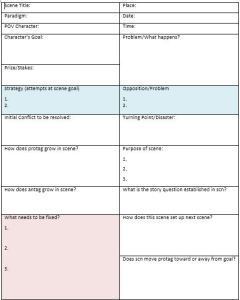
I’ll just quickly go over the details here:
Scene Title: That’s your title. What you call it. You don’t need to share that with anyone unless you want to title your chapters.
Paradigm: This is where this scene falls in your larger scale story structure: is it the initiating event? The crisis? The climax?
Place: Where the scene takes place
Date: If you need to keep track of time in your book—on which day things happen—this is the place to do so.
Time: If it’s relevant to the story
POV Character: Through whose eyes are we living this scene?
Character’s Goal: What is the character’s goal for this scene (not the whole book).
Prize/Stakes: There always needs to be something at stake or driving the scene forward. What is it?
Problem/What happens? Very briefly (a sentence or two), describe what happens in the scene.
Strategy: What is the POV going to do to try to attain their goal?
Opposition: What’s stopping them?
Initial Conflict: What is the character trying to do at the start of the scene? This can easily change during the course of the scene.
Turning Point/Disaster: What is the main turning point of the scene?
How does protag grow? In every scene the protagonist needs to learn something or grow in some way. How do they do that in this scene?
Purpose of Scene: This is your purpose, the authors. It can be something like showing the POV character’s growth in a particular direction or describing the world. There needs to be at least two, if not three purposes to the scene.
How does antag grow? Even the antagonist needs to grow (although, perhaps not in every scene), but if they do grow in this scene, how do they do so?
What is the story question? What question is posed (but not answered) in the scene. Ideally, you should answer the question not in the next scene but in one after that.
What needs to be fixed: If you’re editing this scene, what do you need to work on?
How does this scene set up the next scene? How do the characters move forward from this? What do they need to do in the next scene as a result of this one?
Does scene move protag away from or toward goal? This one is pretty obvious. J
Quick Scene Summary: Many scenes are not just a scene, but a scene and a sequel. This helps you design this and think about it a little more deeply.
Scene Goal: The character’s goal
Scene Obstacle: What’s stopping them
Scene Disaster: What happens—the turning point
Sequel Reaction: What’s the character’s reaction to what happened in the scene?
Sequel Dilemma: What problem does it create for them?
Sequel Decision: What are they going to do about it – this propels your story forward
I don’t fill out a worksheet for every scene, and I don’t always fill in every question on the worksheet. I play it by ear filling out what I need to work out in my head before I write. Sometimes I just go with the flow and write things as they happen and then go back afterwards to fill out the worksheet to be sure I covered everything that needed to be there.
So do you work out a scene worksheet when you’re writing? Do you find them helpful?