Meredith Bond's Blog, page 11
October 25, 2014
An Emotional Connection
 I was reminded last weekend to think about the emotional connection between my characters and the reader.
What was it that reminded me? The Washington Post Business section, oddly enough. There was an interesting article on the clothing design company FUBU (For Us, By Us). The man who started the company knew that there needed to be an emotional connection between people and the clothes they bought, so he set out to create a clothing company that catered to and created that connection.
Reading about the importance of an emotional connection between consumers and a product got me thinking about my own product—my book. I’ve always known that there needs to be an emotional connection between my reader and my characters. If there isn’t the reader isn’t going to be compelled to read about the character or care when they go through the ups and downs of the story.
So I thought hard about my characters in the story I’m writing right now, Bridges. Was there a strong emotional tie to my characters?
Well, my heroine, Elizabeth, is in a horrible situation where she has no opportunity to do anything with her life (the book is set in the Regency, the only way for an upper-class woman to do anything with her life is to get married. Her aunt is never going to present her to society, ergo, she’s never going to meet a man and get married. She’s in serious trouble facing a life of servitude). Two of the other main character's (can't quite call her an antagonist, although she does at times play that role) children are deathly ill with tuberculosis--um, yeah, there’s an emotional connection there. She is doing everything she possibly can to try to cure her children even though the doctor has declared that there’s nothing that can be done for them. She is now turning to magic to cure her boys. And, finally, my hero… hmmm…. Well, I love my hero. He’s one of the main secondary characters of my Children of Avalon series, Sir Dagonet. He’s a funny knight. But is he in danger in Bridges? No. Does he have any problems. Not anything major or life-threatening... Uh oh!
The character who I love the most has NO emotional connection between him and the reader! I’m in trouble!
So I sat back and did some hard thinking. I had to figure out exactly why my reader should love my hero, aside from the fact that he can be funny (even though he hasn’t really shown that side of himself in this book so far – another uh-oh) and he's a knight so he does the damsel rescuing thing a couple of times.
Luckily, with some minor tweaking of this character and what it is that he is doing and has done with his life, I could create a reason for my reader to feel for my character – he’s been alive since the middle ages (going on 1000 years old). To put it simply, he’s tired. He doesn’t want to live any more. In fact, he hasn’t for some time, but he was given the “gift” of being able to become young again at the end of the Children of Avalon series. The problem is that living forever isn’t all its cracked up to be. He fell in love and she died. He was forced to go on. His children have died, as have his grandchildren and great-grandchildren. Everyone he’s ever loved has died. He’s lived a full life, many times over, and is really ready to call it quits--but he can’t. He’s tried to kill himself, and isn’t able to because of the magic that resides within him, compelling him to become young again, and again, and again. He’s now devoted himself to travelling the world to try to find someone who can take away this “gift” which has now become a curse.
Was this easy for me to take a character I love and make his life a living hell? Goodness no! That’s probably why I was so easy on him when I started plotting my book and figuring out the characters and their problems.
But you can’t have a book without problems. You’ve got to make life difficult for your characters--even the ones you love the most. And so I’ve now made my poor hero's life horrible so that he can grow and develop. So that when he falls in love, it won’t actually be a good thing, but it’ll make him happy nonetheless.
Through reading this business article, I’ve turned an average, ho-hum book and character into something nuanced, exciting and, most importantly, emotional. The book and character are now filled with dichotomies that don’t go together easily. Will this make it more difficult to write—you bet! But it’ll also make so much more fun and interesting.
Emotion. It’s the key!


October 18, 2014
A Pat on the Back
I complain. A lot. (I apologize for that.)
If you're a regular reader of this blog, you've heard me complain about everything from not enough sales to what my characters think they're doing. But not today.
Today I'm going to do the opposite. Today I'm going to give myself a pat on the back.
Why?
Well, not just because I'm really happy with my sales numbers so far for my new release (although I am). And not because I just made a great break through with the hero of the book I'm writing which is going to make for a much richer story (although I did, and I'm doing a little happy dance about that even though it means I've got to stop my forward momentum in my writing of the book to go back now and rewrite a good chunk of the book so far).
No, I'm giving myself a pat on the back for the same reason why I want you to give yourself a pat too (as soon as you're done reading this, naturally). I'm doing so because I deserve it.
I work very hard. I write books! I make people smile, laugh and wipe away the occasional tear with my writing. I entertain people (and myself) with my writing. This is something to be proud of!
When you tell people that you're a writer, how many of you have heard, "Oh, I've got a great idea for a book" or "I've always wanted to write" or "I started a book once" or even "I love reading--not books like the ones you write, but, you know, other books." (Yeah, I've gotten that one a few times… Who admits to reading romance unless you're in a safe place where you know you won't be judged?)
The thing is, so many people "have a book inside of them", but how many actually do the hard work of getting it out? And not just getting it out, but doing so in a way that makes it easy and a pleasure for other people to read?
You did.
And for that you get a pat on your back.
Writing is really hard work! Writing well, even harder. Really working on the craft, the story and, yes, even on the grammar (as much as I hate it, I do work on it) is a lot of really hard work.
And you've done it! In fact, I bet you do it every day. For that alone, you deserve a pat on your back.
It doesn't matter how well your book sells--or doesn't--you got it out there! That is cause for celebration.
So take a moment today, and every day, and give yourself a pat for a job well done.
As my father likes to say, "You done good, kid."
October 11, 2014
Taking the Introvert Out
Most authors, not surprisingly, are rather introverted people. We prefer the company of our made up characters to that  of real people. With the people in our minds, we can have great conversations and never have to worry about saying the wrong thing (if we do, we just delete it and try writing that dialogue again).
But most authors also need to market their books. And in order to do that, we need to actually leave the safety of our computers and go out. Into the real world. To interact with real people. In real time. Face to face.
Are you trembling yet? I am.
I’ve got to do this today. It’s quite possible that I’m even out doing it as you read this happy little blog posting.
In the name of marketing and doing all the right things, I have co-sponsored a table at the Washington Romance Writers Reader/Blogger luncheon. It’s going to be a fantastic event with about 100 readers and 40 authors—not a great ratio, but if you also think of authors as potential readers (since they do read—a lot), it’s not that bad. There’s going to lunch and hob-nobbing with readers and giving away of gift baskets, books and swag of all sorts.
The part that worries me is, um, yeah, that hob-nobbing. I’ve got no idea what to say to people.
Oh, I’ve been to these sorts of things before and happily sat quietly munching on my lunch. Not a great marketing tactic, I have to say.
I’ve also been to these sorts of things from the reader perspective—I’ve got favorite authors whose books I read and who I’ve gone all fan-girl on. Except that after I tell them that I love their books, that’s about all I’ve got to say. The introvert swoops in, takes over, and wishes she were home, alone, with her nose in one of those books, not actually out talking with the person who wrote them.
I’ve got nothin’. I haven’t the foggiest idea what to say to someone whose books I’ve read. I have very little to say to someone who’s read mine. To someone who hasn’t read my books, I can happily tell them all about the books I write. That’s a conversation… if they’re interested in paranormal fantasy romance. And I can talk their ear off about publishing—self-publishing in particular, but they’re usually not interested. Why should they be, they’re readers, not writers.
So… I’m going out to talk to people to whom I’ve got nothing to say. Will I just sit at my little corner of the round table and nibble at my lunch, mum, while watching everyone around me chatter about whatever it is they’ve found to talk about? Quite likely. But I’m going to be a good little author and go out there. I’ll try to talk and make nice. I’ll try not to wish I had a delete button handy. I’ll try to make the readers I interact with happy that they came out to meet me and the other authors. I’ll try.
Keep your fingers crossed for me.
October 4, 2014
Just a plan
I love how one thing leads to another and mapping an idea where it came from.
As I almost always do on Friday mornings, I read through my favorite blogs for ideas of what to write my blog about this week. This morning there was (as there frequently is) a great blog on Anne R. Allen's site listing tricks every writer should know. A link there led me to Jami Gold’s Worksheets for authors (many of which are terrific and I highly recommend you check them out).
Among her worksheets was a business plan worksheet.
I’ve been toying with writing a business plan for a year (yes, a full year!), but I hadn’t found a less business-y, more author-ly way to put one together. Well, Jami Gold got me started.
I didn’t use her exact plan because it was still too business-y for me, but she got me moving in the right direction, so today I’d like to share with you what I came up with. Feel free to adapt this to something that would make the most sense for you and how you plan out your work.
The basic idea of a business plan is to plan out your goals for the year—what you want to accomplish, how you are going to do so, and how much it’s going to cost you. Some people also include what they expect to earn as they accomplish their goals.
In Gold’s business plan, she also includes a section on competition (what others are writing and how they’re able to be more successful than you). That section depresses me, first of all, and secondly, what works for one person may not work for another, so I left that out. Yes, I’m always looking to see what others are doing and adopting what makes sense for me, but I’m not terrific and breaking down what others do to compare it to what I do. Maybe that’s why I don’t sell as many books or have as big a fan-base, but this is what I’m comfortable with.
Basically, I plan on filling this business plan out in January, revising it in April and August to see how on track I am and how I need to change it (for instance, I may come up with a great idea for a book in May and feel that I need to write that instead of one of the ones I’ve got planned, or I may be invited to join in an anthology (as I was this summer) and so I push back my writing plan to write that short story instead, before returning to my original plan (now set back a month).
The point is that this is a living document. I’m not going to write it in January and then put it in a drawer until the following December to pull out and see how I did. This is something I’m going to amend and add to throughout the year. So take a look and see what you think. Is there anything here that you would add? Anything you’d get rid of? As always, I value your thoughts and insights!
September 27, 2014
Resist the urge to explain
Renni Browne and Dave King coined this phrase in their fantastic book Self-Editing for Fiction Writers. And it’s something to live by.
They use the concept in connection to dialogue tags – don’t have someone say something and  then tag it with the obvious: “I’m so happy!” she said brightly. Yeah, if she says she’s happy, she’s not going to do so slowly or in a dejected tone of voice.
Instead, you can show an action that goes along with the exclamation: “I’m so happy!” she said jumping up from her seat and enveloping Guy in a big hug. Now we not only know that she’s happy, but we can see her being happy.
If you feel you have to explain your dialogue, it’s not written correctly. You should be able to hear exactly how it’s said and so should your reader—from context, from actions. Resist the urge to explain.
But the key point I’d like to get across here is that your readers are actually intelligent people. You shouldn’t explain things to them. Assume that they’ll get it.
This concept goes hand in hand with showing vs. telling. If your characters behave joyfully, have bright happy conversation in quickly paced dialogue (few, if any tags), then you never need to say that they’re excited or happy. Your reader will get it. You don’t have to tell your reader anything, you’re showing it to them. Resist the urge to explain.
The same goes with italics. Some writers love italics (yes, deliberately italicized ). They use them all the time to tell the reader how they should be reading dialogue or what they think is important. They slant their lovely words and scream out to the reader “Hey! Pay attention here!” But do you need to? Will the reader not get it on their own from the context or the words being spoken? Yes, sometime italics are necessary, but, really, I've seen some writers go way overboard with their use of them. Resist the urge to explain.
And finally, the last place where a lot of writers need to remember to resist the urge to explain is in info dumps. That’s where a writer will give much more information than is strictly necessary. Describing a scene in two or three paragraphs when two or three words—maybe a sentence—will suffice. Or giving a paragraph or more of backstory when all we really needed to know was that the character doesn’t like broccoli. We really don’t need to know, in detail, exactly what spurred that hatred of a poor innocent vegetable. Don’t tell us. Just resist that urge to give over all the details you learned about your character.
The same goes with research. Yes, I’m sure you’ve done all the research necessary to understand your character's job, or the time period, or the precise weapon that’s used to kill the victim, but we don’t need to know all of those details you learned. Resist that urge! Just tell us what we need to know, the rest will come out word by word, here and there in your prose. The feeling, the ambiance, whatever it is will appear on your page (or not, as is appropriate). If you dump all of your research on the reader, they’ll get bored really quickly, or distracted from your actual story. Don’t do it. Resist that urge.
Readers are extremely intelligent people—hey, they picked up your book, didn’t they? So give them the benefit of the doubt and resist that urge to explain.
Have you read a book recently that made you just cringe or want to throw it against a wall because there was too much explained? Tell me about it! What annoyed you?
September 20, 2014
Procrastin–Oh, I need to…

Do you have any errands that need to be run? No? Laundry that has to get done? What about a toilet that must be cleaned? Why is it that all of these things, most of which I hate doing, I suddenly find absolutely imperative to get done right now, the moment I sit down to write?
I know exactly what I’m going to write. I know the scene. I know the characters. I know the book, and it’s a fun one that I’m really enjoying writing!
And yet, the moment I sit down at my desk I find that I suddenly need a cup of tea. And it can’t be any tea, it’s got to be that one that I bought at the flea market last summer. Yeah, the one that’s gotten pushed all the way to the back of my cabinet—which I might as well clean out since I’m there. And now that I’ve found the tea, I’ve got to decide which pot to make it in and then steep it for precisely three minutes.
Why do I do this?
Why is it that when I sit down to write suddenly there are so many other things that must be done. Those raspberries are definitely going to die on the bush if I don’t pick them right now! As soon as they are safely picked, washed and simmering on the stove to make yet another batch of raspberry jam, I have to check my email. See if anyone has messaged me on Facebook?
Sometimes I’ll find that an hour has passed since I originally intended to sit down and write. This is not good!
Ok, so my antagonist is going mad and I’m not exactly certain how I’m going to show that, but really, picking raspberries isn’t going to give me the answer. So I move my computer to my standing desk, but before I open it up, I do a little pre-writing—figuring out exactly what minor, little thing is going to set the antagonist off into screaming at my hero and accusing him of misleading her, lying to her (which he hasn’t, naturally). And then I remember that I’d better check my… no, wait. I’m working.
I stop myself.
At my standing desk, I can bounce on my toes and fidget to my heart’s content, but once I start writing, I stop moving (all except my fingers taping away at my keyboard, and my eyes which follow the pretty words flowing on to my computer screen). Once I get started, I’m fine. I’ll work solidly for two, sometimes three hours before I realize how much time has passed and that my tea is now icky room temperature. But sometimes it takes me some time to get going.
How about you? Do you find yourself procrastinating or do you get in front of your computer screen and just start typing away and being productive?
September 13, 2014
The Joys of Jutoh
I’ve been formatting books since January of 2012. Two and a half years! When I first started out there weren’t many ways to format an ebook. I learned by following a fantastic tutorial by an author (whose name I can’t now recall—ack!), but he taught how to format your book into HTML and then convert it into a mobi (for Kindle) and epub using Calibre.
I then found Paul Salvette who has fantastic instructions on how to format in HTML and then convert your book use KindleGen to create an mobi file and I’m not sure what he uses to convert it to epub, but you can be sure it’s something very techy because he believes in doing things “the right way”.
Well, finally, after trying nearly a dozen programs to convert my HTML files, I’ve found one that really does the trick  well—Jutoh. Yes, it costs money, but $40 isn’t a lot to pay considering that I charge $50 to do it for you. J (That includes cleaning your document, standardizing your punctuation, converting it into HTML and then finishing the formatting in Jutoh.) What I hate to admit is that now, with Jutoh, you don’t even need to convert your document into HTML if you don’t want to (although, I still do because I can put in pictures and links much more easily there than I can in Jutoh itself).
The thing is, with Jutoh, you can create beautiful ebooks with a minimum of fuss and even have it create different versions for the different vendors just by jumping through two additional hoops (it’s not difficult, truly). I’m currently teaching my on-line self-publishing class the beauty of Jutoh and how to get it to do all the lovely things we’d like to see in our e-books, but I’m thinking that I need to offer a class just in how to use Jutoh. Yes, there are great tutorials out there on Youtube (this is a link to a very good one) and a book produced by the creator of Jutoh, Julian Smart (who is fantastic, by the way and will answer even the stupidest questions from users—I know, I’ve emailed him a number of times), but perhaps a class devoted just to using that program wouldn’t go amiss.
What do you think?
Oh, and in my class prep for the self-publishing class, I wanted to show exactly how to upload a book to the different vendors and put it up for pre-sale, so I’ve done this (the easiest way to teach something is to do, right?). The Merry 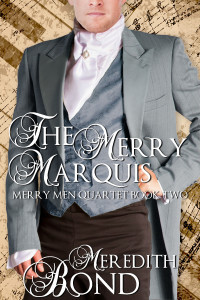 Marquis is now available for pre-order at Amazon, and Kobo and soon Barnes & Noble through Smashwords.
September 6, 2014
Love Beyond the Romantic
I'm a romance writer (I really hope you all were are of this, if not I've been doing something seriously wrong!). I spend a good portion of my writing time trying to figure out how two particular people fall in love, why they do so and why they can't be together (conflict in my story). But there's another love which us equally important which I'd like to spend a moment talking about today because it's a strong concept in my life right now, a major theme in many of my books, and just something important which we all might want to keep in mind as we write our own stories and live our lives.
Familial love. The love we feel for our family members--brothers, sisters and children (among other relatives).
It's so easy to take our families for granted. They're always there. Yes, they can sometimes be very trying (siblings and children especially), but should there be any sort of threat or problem, you know that they're there to help you or back you up. And when they're not there, we feel their absence.
Even if we don't have family, or close family, we still feel their absence. We are just designed that way. We all need a family of some sort.
Scai, the heroine of Air:Merlin's Chalice feels this way, and feels it acutely. She takes an huge risk, deciding to travel alone through forests known to be populated by thieves and wild animals in order to search for parents who abandoned her as an infant. Why? Because she knows the importance of family, despite not truly having one her whole life.
And it is this strong feeling of the importance of family that adds strength to Tatiana as the villain of Magic in the Storm simply because she is the hero's mother. Everyone Who reads the book asks in shock how a mother could turn on her son and be so very cruel to him--which is what led me to write Storm on the Horizon and now Bridges. To answer the unfathomable question.
Family, it turns out is a pretty strong theme in a number of my stories. And now that I'm facing living my life without either of the two members of my family who have been a constant presence for the past 21 years (my children who are now both in college), I'm beginning to see this--something that has clearly been in the back of my mind for a while.
So, if you've got children at home, tell them that you love them, appreciate their presence and try not to kill them. Soon enough they'll do exactly what you've been trying to teach them to do their entire lives-- become independent adults.
August 30, 2014
Networking
 It's essential. Networking is the new "black". You can't go wrong with it. It goes with everything. You can't avoid it, so just go with it. Well… as to the last one, why would anyone want to avoid something that could possibly make your career easier and better?
Ok, so for a writer what does it mean to network? It means getting involved with writer's groups--both the organized type (RWA, Mystery Writers of America, NINC, whatever your flavor is), and less official (Writer Unboxed, WG2E…), and the ad hoc (your group of friends).
But why?
Yes, writing is a loners occupation. We all sit at home (or in our favorite coffee shop, or wherever) all by ourselves and live in a world of our own imagination, talking and interacting with people who don't actually exist (and a good number of us aren't even labelled insane). But it is because ours is a lonely occupation that we need to connect with others.
We need to do so in order to maintain what sanity we have left. We need to do so to learn our craft and keep up with the industry, and we need to do so in order to sell our work, our books.
Networking, becoming part of a group (or many, as in my case) will give you the opportunity to grow personally, professionally and grow your audience.
So, just as an example, I'm a member of the RWA. That's not surprising, I'm a romance writer. But through the RWA, I'm also an active member of my local chapter, the Washington Romance Writers. Through this amazing group, I've learned all about the business of writing, and the craft as well because they have fantastic talks every month and an amazing retreat every year. I've met people (networked) and now participate in Lady Jane's Salon of Silver Spring (where I will be reading from Air on September 13th), I'm teaching an on-line class through the FF&P chapter (which I really should join because that's my genre. I haven't yet, but I will!), and I'm going to be a participating author at a luncheon for readers and bloggers in October where I'll get a chance to meet (and network with) many people who might buy my book and/or recommend it to other people to buy, and I’m going to be part of a panel on self-publishing at a Northern Virginia Writer’s group (more meeting of readers and other writers, ie, more networking!). Through just one organization I've had so many opportunities!
And that's just one of the writer's organizations with which I'm affiliated. Others have led to participating in anthologies (building my audience), more teaching opportunities, formatting clients, and learning so much from other writers.
So what are you doing sitting at home or in your local coffee shop all by yourself? Carve out some time from your writing schedule (and it doesn't have to be a lot-- just 15 minutes here and there) and get networking!
August 23, 2014
Formatting Tribulations
 I love formatting. The creativity involved, the logic of the computer programming part—everything really. There is nothing more satisfying than opening up a book either on my computer or tablet and looking at a beautifully formatted book. It’s even better if I’m the one who made it that way. It makes reading a pleasure, just as trying to read a badly formatted book is a frustrating experience.
To that end, I work really hard to learn all the best ways to create a beautiful book. I’ve learned HTML. I’ve fooled with all sorts of different conversion software from the easiest (Jutoh, in my opinion) to the hardest (MobiPocket), and everything in between.
The problem is there are a good number of these programs out there and more keep appearing almost weekly. Which one to use? That’s the question. And do you really have to know HTML to use them?
For most of these programs, you don’t actually need to know HTML. You don’t have to add computing code to your document to get a readable book, you only need to do it to get a pretty book and to make sure that all of your symbols (m-dashes, accents, whatever) turn out the way you want them to.
While coding your book into HTML helps to ensure that you get the look you want, you are still bound by the software you use to convert your HTML document into a mobi file (for Amazon upload) or an epub. Now, it is possible to convert your HTML directly into mobi or epub, but then you don’t get that lovely table of contents in your e-reader and the measure along the bottom of your book that shows readers how far they are through the book (the NCX file). To get that (without a ton of coding), you need to use a program like Sigil, Calibre or Jutoh.
My biggest challenge is to know which conversion program to use. I used Calibre for a while, but then found out that it was putting all sorts of odd coding into my books and I was told that Apple iBooks won’t accept any epubs created with the program.
Since then, I bought Jutoh and have been loving it, but when I put in dropcaps it doesn’t put them next to the text, but into the first line of the paragraph thereby creating spacing issues (a huge gap between the first line where the “dropcap” is and the rest of the paragraph). Sigil doesn’t do this, but it also doesn’t have some nice features that Jutoh has (in Jutoh I can create one document and convert it differently for the different vendors, right down to the links to other books which need to be vendor-specific). Jutoh also made putting footnotes into a document as easy as pie. I haven’t tried doing that in Sigil, but I’ve got a feeling it doesn’t have the capability--I would need to code them, which is a pest (been there, done that).
So each converting software has its issues. There is none that is perfect for every book. So, I trudge on experimenting with each new thing that comes out. The biggest catch with all this experimentation, of course, is that I teach formatting and just about every time I do so, I’ve got to rewrite my “lectures” to conform to what I’m currently using. And that’s what I’m doing this week.
My next formatting class (actually, a full self-publishing class for beginners, but if you already know what you’re doing, you can just skip or breeze through those lessons) is being offered on-line through the FF&P Chapter of the RWA (that’s the Fantasy, Futuristic and Paranormal Chapter of the Romance Writers of America ). You can sign up for it here.
So tell me, how you convert your books. Is there a program you prefer or do you take your chances by uploading a Word document directly?