Meredith Bond's Blog, page 12
August 15, 2014
Creating Complex Characters
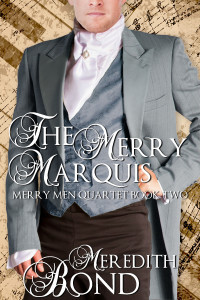
I’ve started reading and editing the first book I published with Kensington Publishers (finally got the rights back). It’s the one book I’ve written that’s gotten the most awards, so I didn’t think that I would need to edit or change very much, but I did want to read it through and update it a bit before I re-released it to the world. But in doing so, I’ve realized something:
I’ve got amazingly interesting and complex characters in there!
The wonderful thing, though, is that while they are complex and even seemingly contradictory (my heroine is both shy and outspoken), there is terrific back story which completely explains why they are the way they are.
Now, if you know me, I don't usually toot my own horn like this. The funny thing is this is the first book I wrote and I had no idea what I was doing. I really don't know how I ended up with characters like this! Reading and editing this book--which I've completely forgotten it's been so long since I wrote and read it--is a process of discovery for me.
Luckily, I didn't dump the characters' back stories in there, but sprinkled them in judiciously. I gave the reader just the information they need to know when they need to know it—no more, no less: touches of why the heroine is so shy; what makes her open her mouth and promptly put her foot into it. (With a tendency to do that, do you wonder that she would rather hide behind potted plants than put her self forward to speak to people? She’s an intelligent girl. She knows where her weakness lies, knows that she has trouble controlling her tongue.)
The point is that these are fully-formed, interesting people. Their childhoods molded who they are at the beginning of the book.
Your characters are that way too.
You just need to make sure you know it. And you know what that childhood was like. What was it that formed your characters into who they are? What were the big events which shaped them? What did their parents tell them—or not tell them—about themselves which shapes their self-perception?
I’m reminded of the example used so often by Michael Hauge when he talks about the “hero’s wound”. Each of us, Hauge says, has a wound which we carry around with us from childhood or young adulthood which shapes the way we see the world and ourselves. He gives the example of the movie “Good Will Hunting” where the hero was told as a child by his father that he was stupid and would never amount to much. The child believed his father, naturally, and so never realized that he was a mathematical genius who had the potential to do amazing things. This “knowledge” that he was stupid and worthless shaped his life and what he became of himself. It took the great Robin Williams who played his therapist to convince him that he could do more, be more. It took the story for him to learn to get beyond the wound inflicted by his father.
So, too, does my heroine, Teresa, have a wound that keeps her from controlling her tongue. She knows she should not be so outspoken, but doesn’t think she’s able to control it, so instead she hides from social interactions as much as a girl who is being presented to society can.
Now, as I said before, it's been ten years since I wrote the book, and therefore since I last read it, so I don’t remember how she gets beyond her wound, how she grows out of it, but I’m sure she must. And I will continue to read and edit my way through to find out how.
So, when you create characters, do you explore their background? Do you find their wounds? What tools do you use to do so? Here's a link to the Hauge Worksheet (and others--they're all bundled together in an Evernote Notebook).


August 9, 2014
Getting into deep POV
 Home again, home again tiddly pum… it’s from some book (Winnie the Pooh, I think) my husband likes to quote—often. But it is where I am, happily, after such a long journey. And so I turn back now to my real world, ie, writing! No, I haven’t fully gotten back into my writing because I’m still doing laundry, paying bills and getting myself resettled back into my ordinary life, but my mind is slowly working its way back to work and to the story I was writing—“Bridges”.
The thing is, before I can get started writing again, I’ve got to find my characters somewhere in the deep recesses of my mind. It’s not enough to just sit down, pick up my outline and start writing where I left off. If I did that, I wouldn’t be—and more importantly, my reader wouldn’t be—fully engaged in my POV characters.
No, I need to find them. I need to read what I’ve already written and re-find the voices, the thoughts, the perceptions of my hero and heroine (the points of view from which I am writing the story). If I don’t do that I won’t be writing their story. I won’t be able to show their life. I won’t be able to see the world of the story through their eyes.
I won’t be able to write in deep, emotional, perceptive point of view.
Writing deep is especially important in a romance, but, I would argue, it’s vital for any genre. We want to experience the life of the point of view character, no matter what you’re reading. You want to see the world through their eyes—it’s half the fun of reading: being able to experience a world through the eyes of someone other than yourself.
I get tired of being me all the time. I like to be other people. Some people are happy being themselves (my husband can’t imagine being anyone else), others read to live the life of someone else. Some people act and so become someone else for a short period of time. Writers become other people whenever they sit down at the keyboard.
If I am writing well, it’s because I’m thoroughly embodying my POV character. I’m thinking like s/he does. I’m seeing the world as they will see it based on her/his life and values. If I’ve grown up in an American inner-city, the child of poor immigrants I’m going to look at the world in a very different way than if I’d grown up in the suburbs, the child of a wealthy or middle-class family.
Or, as in the case of my current book—my hero grew up in the 8th century and is now living in the 18th (yeah, he’s old!!) where the story takes place, but his values are still those of his youth. He’s going to see the world very differently from the heroine who grew up in the 18th century. And I’ve got to get into both of their minds! I’ve got to understand the person. Where they came from, what they want and how they view the world. It’s all going to color what they see and what they say and how they experience the story.
This is where my own mind hasn’t been for too long while I was away on vacation (including the fact that I stopped writing “Bridges” to write a short story about a very different person from a very different point of view). And this is where I’ve got to go, what I’ve got to set in my mind, what I’ve got to become in order to write “Bridges”. Do you wonder that it’s taking me a little while to get there?
So, how do you get there? How do you embody your characters? Do you use the tricks of the method actors and relax to shed yourself and embody your POV character? Do you write from their point of view their thoughts? Do you interview them? How do you get into character to write?
And don’t forget to read my blog post (Today!!) at Read a Romance month
August 2, 2014
Letting Go
This will be my last post on summer vacationing, I promise! Next week I’ll be home and back to writing, so my blog will return to that topic. If there’s anything you’d like me to cover then, just pop me an email and I’ll be happy to oblige!
I’m still on holiday, can you believe it? I can’t. I also can’t believe I’ve been able to really vacation this year.
As I sit in a café over a tiny cup of espresso watching Paris stroll by, It’s hard for me to even think about work. Writing? The novel I’m in the middle of writing? Formatting I know is waiting for me as soon as I get home? They’re all hardly a blip in my mind. No, I’m enjoying Paris: the Louvre, Montmartre, the canal on an absolutely perfect summer day (temperature in the low 80s with a cool breeze), watching dumb tourists get swindled and try to bargain with the man selling mini Eiffel Tower key chains.
The funny thing is, I wasn’t like this last year when I went to San Francisco with my family for a vacation. Then my mind was constantly on my work worrying about everything I was supposed to be doing.
So what’s different? Maybe the venue? Maybe the fact that I’ve been on semi-holiday for the past six weeks in India? I honestly don’t know, but I do know that this has been the most relaxing vacation I’ve had in a long time.
And you know what? It feels really nice! To just let go. To not think about work for a week.
This relaxing thing isn’t something I do very easily or very often, so, yeah it’s kind of caught me by surprise. I have to say, though, I’m enjoying it.
When you read this, I’ll be in London and back to my usual thing of trying to vacation and work at the same time, because all good things must come to an end and deadlines must be met (a client has a deadline that cannot be missed so I am trying to get her work done in between sight seeing trips). And then we’ll be home again and it will be back to the grind full time.
 Hopefully, it will be with my calm, patience, and creativity all greatly enhanced.
And along with the grind, will come the fun of Read a Romance month. I’ll be there on August 9th, so please join me. I’m pretty sure I signed up to give away a book (if not, pop over here and I’ll be sure to have something special going on). And don’t forget to read all of the other authors’ ideas of “Celebrating Romance” at RARM because, as always, Bobbi has gotten some amazing authors to participate.
July 27, 2014
Getting Away
As those of you who follow me on Facebook know, I’ve been away for the summer—visiting my in-laws in Kolkata, India and now, on our way home, we’ve stopped off in Paris and next week we’ll be in London for a few days before we catch our plane home to the U.S.
There have been studies that have recently come out saying that going away on vacation leads to greater creativity, and more productivity as well. Since I’m only into my third day of vacation here in Paris, I’ll have to wait to tell you how that works out for me (my time in India wasn’t really a vacation, I was working just about everyday, although my hours were odd: usually I worked from 6-10 am and then from 8-10 pm: the times when my clients in North America were awake and at their computers).
I do have to say, though, that it only just hit me that it was Sunday and I needed to write my blog (I’m usually very good at posting every Saturday, usually in the morning), but I’ve been on vacation. Truly on vacation: the only thing that I’ve been thinking about is where we were going to go next and how we were going to get there (oh, and how much my feet were hurting from all the walking around Paris we’ve been doing).
But this is Good (yes, with a capital G). This is what leads to that greater creativity. To the higher productivity. Not working. Not even thinking about work. It’s amazing! It’s lovely!
Oh, I know that I should be writing something everyday to keep my “writing muscles” strong and working well. But, hey, I’m in Paris! I’m going to enjoy myself. It’s been 14 years since I’ve been here. My daughter, now 18, was four the last time we were here, so this is all new for her, and I am now enjoying showing her this beautiful city.
So for your enjoyment, I’m including some pictures from my last few days in India and our first few days in Paris. I wish for you a relaxing holiday at some point this summer. And don’t forget to join me on Facebook so that you can tell me all about it! I love to travel (as you can tell), even if it’s vicariously through others.

Every day the kids play cricket in the street.

We just don’t have insect control like this in DC.

Civilization may seem far away in India, but Domino’s is always a phone call away.

At the Arc de Triumph, Paris

I love looking down alleyways and doorways!
July 18, 2014
Living History
 Is it poverty that keeps people using old technology and living the same way they’ve been living for centuries? Is it choice? Is it opportunity?
How is it that I can drive out into rural India and see and experience how people lived so many hundreds of years ago? This is what I did recently when my family and I went for a long weekend sojourn to Bodhgaya (where the Buddha attained enlightenment), Rajgir (where there is a Peace Pagoda at the top of a small mountain/large hill depending on your preference) and the ruins of Nalanda University (one of the first universities in the world).
Where else would I be able to see two oxen pulling a hoe and tilling a farm? Only in a rural developing country? Where else do people still travel by cart and pony? Only in a place where tradition holds sway?
In the cities of India, people have shifted to traveling by auto-rickshaw, bus or taxi if they don’t have their own car. But in the towns of rural Bihar (the state in which Bodhgaya, etc, are located) people don’t have auto-rickshaws. They have carts pulled by small horses (ponies?), the same as they’ve had for probably hundreds of years.
It’s not that everything these people do is completely traditional. There were satellite dishes attached to some mud homes with thatched roofs – the oddest juxtaposition! These people have electricity. They have cell phones. But they also travel by foot or horse. They are shepherds walking their cattle through the fields to graze and carefully bathing them in the river. They are farmers who pluck rice from the stalks by hand—literally backbreaking work! Or squat down, scythe in hand, to tend to the vegetables they grow.
There were plenty of tractors (slowing us down as we tried to drive down the highway at top speed), but I didn’t see one in a field. I saw people tilling by hand or by oxen, instead. There were lots of motorcycles zipping down the road and every so often we would pass a fancy house with a shiny new sedan parked in the garage, but for the most part, the people who live and farm there do so in the same way they’ve been living and farming for hundreds of years.
This is fantastic for a historical writer like myself. I get to experience life as it was when my books are set. But for these people? Is this a good thing? Is it choice that keeps them living this way? Is it poverty? Perhaps a bit of both with the balance weighted more toward the poverty side—certainly my son, who is doing economic research in the area, would say so.
This living history one reason why I love India. I love visiting a place where you can see snatches of history being lived.

The “dorms” at Nalanda U.
I also love my creature comforts, I have to admit, so while it was very pleasant visiting Bihar, I didn’t love the fact that there was only cold water running in the tap and no hot water heater for my bucket bath (because there was no shower either—you pour cold water into a bucket and then dump large mug-fulls over yourself, soap quickly and then pour the water over your freezing cold, goose-pimpled body once again to rinse it off, all while standing the the middle of the bathroom because there is no designated bathing place). I went through withdrawal for a day when I couldn’t connect to the internet to check my email. And I will do everything possible to avoid using Indian public bathrooms because I don’t like to squat (men have it so much easier, it’s not fair!).
So now I am happily returned to my home in Kolkata where I can have a hot water shower if I want. Where the internet is available most of the time, and there is a toilet. But I still wonder about the exhibit in the Victoria Memorial Museum of a “typical Calcutta street scene”—it looked like anything you might see today walking down the street of Kolkata, but I think it was supposed to represent the city as it was at least a hundred years ago. I’ve got to go back and see if there’s a date on it because, honestly, it could have been from any time from about 1800 to today!
July 14, 2014
International Authors Day
 When I heard about International Authors Day, I knew I had to join in. What a fantastic idea! Not only do I love international authors, I like to consider myself one. So, in celebration of authors around the world I’m going to tell you a little about one of my favorite international authors, Chitra Banerjee Divakaruni. She is the author of one of my all-time favorite books, The Mistress of Spices.
For anyone who loves fantasy, you’ve got to read this. It’s filled with magic and “knowing”. For anyone who loves a story rich in fascinating characters, you’ve got to read this. It’s filled with the most amazing, well-developed characters each with their own fascinating stories—not to mention the heroine who is mysterious and captivating. For anyone who loves a romance, this is a romance, but not of the traditional sort. Yes, there’s a heroine and a hero, but restrictions on the heroine prohibit her from acting upon the feelings she has, so it’s a tragic love. For anyone who loves fantastic, evocative writing, you’ve got to read this because the language is incredibly beautiful.
In short, this is the sort of book that every reader would love to read, and every writer would love to emulate.
The story is that of Tilo, a mistress of spices who has been trained in the old ways. She owns and runs a little Indian grocery story which caters to the local Indian population who have recently come to America. And she can see into the very souls of her customers and and can recommend spices and concoctions to cure whatever is ailing them—everything from sadness to the inability to conceive to just dealing with being an immigrant in America. Her customers always get a lot more than they went in for.
The book is separated into chapters titled with the names of different spices and with each one you learn more about the spice, what it can do and how Tilo used it to help one of her customers. And then the hero comes into her life and she’s tempted, for the first time in her life, to do something for herself. To love. But she’s sworn to cater only to others. To treat people with her spices. And therein lies her greatest conflict.
It’s beautiful and evocative with a tinge of sadness, but best of all it makes you feel.
I highly recommend this lovely book for anyone who enjoys a touch of something international.
And if you’d like to try my meager offerings—nothing nearly as beautifully written, but hopefully fun and romantic—please look for An Exotic Heir wherever you buy books.
London society is shallow and cruel, sending Cassandra Renwick running to Calcutta, the exotic seat of the British Raj. It’s a fascinating place filled with interesting sights – including the dark and mysterious Julian Ritchie. But she never thought that an even greater heartbreak could be here in this alien and enchanting land.
Julian has always been discriminated against for being only half English. Embittered, he plots an intricate plan for vengeance with the innocent and lovely Cassandra as his pawn. But he soon finds that payback can be painful for the avenger as well when the threads of revenge unwittingly turn into the silken bonds of love.
And don’t forget to hop over to these other participating authors:

July 12, 2014
Ask an Author
 Goodreads just started a neat new feature – “Ask the Author”. It allows readers to ask any author, who has turned on this feature, anything. The author then has the choice to answer or not and do so whenever they want. Their answers will be broadcast to the person who asked, their friends, and to everyone following the author as well.
I think this sounds like a great idea on so many levels.
First of all; a reader can get questions answered directly from the author. They can ask anything from ‘why the heck did the hero do this just then?’ to ‘how does magic work in this world?’. Anything at all that is bothering them or that they want to know more about.
To me, this is really nice because I don’t have a FAQ page on my website. I’ve thought of putting one up, but I don’t know what Qs would be FA (what Questions would be Frequently Asked). I’ve got a page that tells all about the Vallen world and explains everything—accessible to those who have either of my Storm books through a link in the back. So, answering readers questions on Goodreads will be a great way to find out what questions readers have and then from that I can build a FAQ page and put it up on my website.
Another great thing about this new feature is that it gives me (and all authors) another way to connect with readers. I love talking with readers, finding out what they like and don’t like in the books they read (both mine and those of other authors). And, of course, I love talking about my writing—I mean, what writer doesn’t?  So, if people use this, I’ll have another opportunity to speak directly to readers—yay!
And finally, because my answers will be broadcast to not only the person who asks, but to their friends, those people, who may not have heard of me and my writing, will do so and know that their friend has read my books. Free advertising! My name gets put in front of people who may not have heard of me—always a good thing!
My answers are also sent to people who already follow me. A gentle reminder that I’m still here and still writing, in case they’d forgotten. On seeing an answer I give, maybe they’ll pop over to my page or my website to see what’s new with me (if they don’t follow me on Facebook), or they’ll think of a question for me that they never asked because they didn’t want to email me directly. Now they’ll know that I’m still here, still writing, being active and answering questions. This is all good!
So, thank you Goodreads! I love your new feature! Now, I’ve just got to hope that there are some questions for me to answer…
What do you all think of this new program? Like it? Hate it? Don’t see the point since you’ve never felt shy about emailing an author directly with any question you might have?
July 5, 2014
Commas Save Lives, Part 2/2
Many a call for dinner has grown tragically cannibalistic with the omission of a comma – “Let’s eat, Grandma!” so easily becomes “Let’s eat Grandma!”
Okay, I admit it, it has been a wee bit longer since the last comma blog than a couple weeks. Sorry! I’ve been grievously busy. But have no fear – I am once more here to spare the comma from its common abuses.
Let’s start with some parentheticals.
- Use commas to set off nonessential words, phrases, or clauses from a sentence.
The restaurant has an exciting ambiance. The food, on the other hand, is rather bland.
o Nonessential is an alarmingly vague word. What it means is that if you remove that word, phrase, or clause from the sentence, it doesn’t change the meaning. So, in
The boy who has a limp was in a car accident.
the limp is important to specify – otherwise, you don’t know which boy you’re talking about. However, if you say
Freddy, who has a limp, was in a car accident.
the limp is just an extra detail about Freddy, whom we presumably know, and is not essential.
o This can get dangerous sometimes. Look at this sentence:
Meredith Bond’s book Magic in the Storm is a delight.
That’s true enough. However, if you add two commas:
Meredith Bond’s book, Magic in the Storm, is a delight.
When you add the commas in, it renders the title nonessential, implying that it’s the only book she’s published. And if you read this blog, I’m sure you know that while Merry’s book is a delight, it sure isn’t her only one!
o Appositive phrases, which identify or modify the subject of the sentence, are almost always parenthetical.
Eleanor, his wife of thirty years, just noticed that his eyes are blue.
Sometimes, though, the appositive and the word it modifies are so closely related that you can call them one idea and omit the comma.
His wife Eleanor just noticed that his eyes are blue.
Do note, however, that while Eleanor’s name is regarded as essential to the sentence, her status as his wife is not. When you turn it back around, even omitting the longer qualifier, you have to put the appositive commas back in.
Eleanor, his wife, just noticed that his eyes are blue.
o The rules regarding “that” and “which”, especially with the use of commas, are heinously confusing. An easy rule of thumb – albeit one with a lot of exceptions – is that “which” turns things into parentheticals, but “that” does not. Take a look at the previous sentence, or just at these examples:
That book that she lent me is excellent.
That book, which she lent me, is excellent.
- And after all that, there are just a few assorted uses! Most of these are just common sense, but take a look.
o Use a comma to set off interjections at the beginning of sentences.
Hey, that’s my cake!
o Use a pair of commas to set off expressions and forms of address that interrupt the flow of a sentence.
Exercise is, however, very good for you.
Frankly, my dear, I don’t give a damn.
o Use a comma to separate the day of the month from the year, and (I know it sounds weird, but it’s in the grammar books!) between the year and the rest of the sentence.
It was in the July 5, 2014, blog.
Don’t use commas when it’s just the month and year! This also goes for the European style of date-writing, where the date comes first.
The first was in an October 2013 blog. The second, way later, was in the 5 July 2014 blog.
o Use a comma to separate contrasting parts of a sentence.
That is my cake, not yours.
- As a quick bonus, let’s look at commas in quotes. These rules are amazingly easy, but they can get just as easily messed up.
o Use commas to tag or put beats in direct quotations.
He said, “I’m not letting you put a thresher in our kitchen.”
“Saul,” I pleaded, “why not?”
“No,” he repeated.
o You don’t have to do that to one-word quotations that come after a dialogue tag.
He snapped “Stop.”
o Please take note of where the commas lie here! In American English – if you play by the British rules, ignore this bullet – if a piece of dialogue comes before a tag, it gets a comma within the quotes, whether it’s the end of a sentence or not.
“Just a little one,” I wheedled.
“Imogene,” he interrupted, “just don’t.”
And that’s all the urgent news about commas! I hope you enjoyed this, and your usual programming will resume next week.
June 27, 2014
Addictive Summer Reads
Lovin’ my “exotic” summer
This year my summer plans are to do the same thing I’ve done nearly every summer for the past 21 years—spend time in Kolkata, India. Kolkata (previously known as Calcutta) is where my husband grew up and where a good number of his family, including his mother, still live.
Family, as regular readers of my blog already know, is very important to me. Likewise, so is culture—knowing and experiencing one’s own culture. For my children to truly know their Indian half, we’ve always come to Kolkata in the summer (weather-wise it’s the worst time to go because of the heat (currently it’s about 100 degrees) and monsoon rain, but for school schedules has been the only time when we could visit). As a result, they’ve, in essence, grown up in Kolkata, even if they only lived there for 4-6 weeks at a time.
The city is an enormous, overwhelming place. It’s an ever-changing, growing city of millions of people (overcrowding is a serious problem) who live in every situation from near palace-like homes to literally on the sidewalk (sometimes you’re forced to walk in the street so that you don’t walk through someone’s “home”). There are so many shops, many of them are no wider than five feet and along some of the busier streets, they line either side of the sidewalk with one side being physical brick and mortar shops and the other being either tables covered with a tarp (remember those monsoon rains) and an electrical wire reaching across the sidewalk to allow for a bare light bulb to light the wares offered or just a tarp spread along the ground and the wares for sale arranged on the ground. From these shops you can buy everything from kitchen wares to underwear.
The bazaar where one buys food hasn’t changed much in the past three hundred years. Still vegetables are sold again either displayed on a table, or more likely in baskets on the ground by sellers sitting cross-legged in the center of whatever they’re selling, balance at hand to weigh what you choose. Vegetable sellers are grouped together, potato/onion/garlic/ginger sold by another person, fruit by another; rice (at least 5 or 6 types are on offer) in another. If you want fish, you need to go to the fish market; meat to the butcher (only goat and chicken are for sale, very little pork and no beef). Cages of live chickens are situated near the chicken seller who will grab a chicken (you can specify which one you want), cut off it’s head on one or two swipes of his enormous knife, pluck it and cut it into as many pieces as you want. Happily, now there are also shops where you can buy pre-cut chicken so you don’t have to stand and watch this gruesome procedure.
More and more supermarkets are appearing in the city, most of which are just for dry and frozen goods. And constantly old single-family houses are being torn down to be replaced by new apartment buildings—my mother-in-law gets called every week by the real estate developers offering to buy her house.
It’s an amazing place, Kolkata. With old and new existing side by side. Things that haven’t changed in hundreds of years mixing with the modern (the vegetable seller who doesn’t own a scale, but still weighs his goods with a balance and weights and who will have a cell phone tucked under his leg).
Some people hate the city because it is dirty and overcrowded. Venturing out of your house is taking your life into your own hands as driving laws are treated as merely suggestions, lanes are constantly ignored, and those pretty red and green lights that hang in intersections only sometimes adhered to. But I love it. It’s vibrant and proudly intellectual having given birth to some of the greatest artists and writers of India. Behind the grime of modern pollution you can see what once were amazing palace-like homes with distinctive, beautiful architecture.
This is where I’ll be spending my summer enduring the heat and basking in the love of my family.
If you’d like a little taste of Calcutta (as it was called during the Raj: the occupation of India by the British) you can find it in my Regency romance, An Exotic Heir, where the hero, Julian Ritchie took full advantage of the beauty of the city in order to woo the lovely English Cassandra Renwick. It’s one of my favorite novels because I was able to describe the city and show Cassandra falling in love with it as much as she was falling in love with Julian.
To one lucky commenter, I have this pretty bag which I bought here in Kolkata. 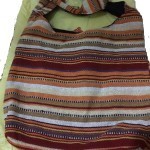
Here are a few more pictures I took just today (Friday, the 27th) of the Victoria Memorial in Kolkata (known to the locals as the “Toria Moria”)

The English in Calcutta during the time of An Exotic Heir.
June 21, 2014
What world do you want to live in?
To my regular readers, I offer you an apology to begin with. Today’s blog and next week’s are both part of blog hops. Today’s post is meant to introduce readers to my world, next week’s to give you all a taste of the fun I’m having this summer (if you follow me on Facebook, you’ve already been getting a some of this from my posts, but I’ll go into more detail here than I can on FB). The following week I’ve got a really interesting post that, I hope, will make you all think: “Are Our Books Alive?” So, bear with me, kind readers, and enjoy!
What kind of world do you want to live in? Is it a world with vampires? With werewolves? Is it a world in the 25th century, or the first? Is it a world where magic is real?
It is through books, naturally, that we get to live in these worlds. Experience them. Become a part of them.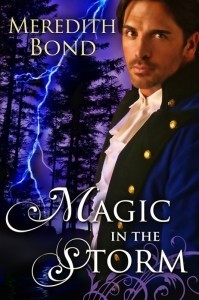
The world to which I love to escape is one where magic surrounds us every day, only we don’t know it. Where people do amazing things like write symphonies, cure disease and lead us with charisma. In the world where most of us reside day to day, this is just done with talent and skill, but how do we know that it isn’t magic? In my world it is. People who do these things, and much more, I call Vallen (which literally means “powerful” in Latin). They are tied to an element in nature which dictates where their abilities lie—although everyone is different in what they are able to do.
The beginning of this world is detailed in the Children of Avalon series, where we meet Scai, Dylan and Bridget, a trio of heroes who are charged with stopping Nimuë (once known as the Lady of the Lake) from becoming the most powerful Vallen. It’s a post-Arthurian tale, where Morgan le Fey and Merlin, along with a knight of the Round Table, Sir Dagonet, mentor the trio as they move toward fulfilling their destiny as laid out in Merlin’s prophecy. It’s great fun (if I do say so myself) because it’s a world filled with magic, very good people and very bad. And it’s a story of family and the importance of family—whether they’re blood relatives or not.
The wonderful thing about the Vallen world, though, is that it doesn’t just exist in medieval times. It spans all times. So, my Storm series (currently consisting of a novella and one novel, but soon I’ll be adding another novel to the series) is set in the same world as the Children of Avalon, just a little later – during the Regency.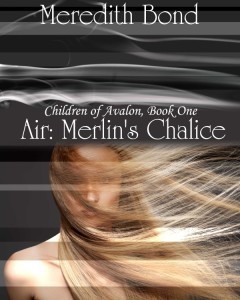
Because with each succeeding generation and intermarriage with ordinary people, magic grows weaker in the Vallen, every seven generations the high priestess (and it has always been a woman) becomes the Seventh and is endowed with the ability to renew the magic in those s
he touches. It is a great responsibility to be of the sixth generation and the one to bear the seventh, and it is a responsibility Tatiana Ashurst feels keenly. She has to marry the right man—a powerful Vallen—and then she has to raise her seventh daughter to be the Seventh with a thorough understanding of all magic and the magical laws of their people. But what w
ould happen if that seventh child is a boy? Magic in the Storm explores this concept.
This is my world, the world I like to escape to. It’s filled with magic, evil and wondrous things, all hidden right before our eyes. Care to join me?