Meredith Bond's Blog, page 14
April 5, 2014
Archetypes for fun
Archetypes are an incredibly useful way of defining a character. Knowing what archetype your characters fit into could help you know how the character will act in different situations and what their flaws may be. That being said, don’t feel that you have to strictly adhere to any one archetype for each character. Your characters can blend different archetypes into one whole and interesting person.
I’ve been thinking about this recently as I start to plot and put together a bridge story. I think I’ve mentioned it before—it’s the bridge between Storm on the Horizon and Magic in the Storm, and also the Children of Avalon Series and the Storm Series. It is, in a few words, Sir Dagonet’s story.
I love Sir Dagonet. He’s a fun character who so many people can sit back and just enjoy. He’s the jester, the trickster and a bit of a shape-shifter as well. I based him off of King Pellinore from the Once And Future King—or, at least, my memory of him, since I haven’t read the book in eons.
T. H. White’s The Once And Future King is absolutely my favorite version of the King Arthur myth. I read it when I was a teenager and again years later, and it has stayed with me, a part of me, if you will, ever since then. It was what really solidified my love of King Arthur. And one of the funniest, most lovable characters in it is this minor, secondary character, King Pellinore who shows up a few times, but most notably as he is chasing after the “questing beast”.
Although my character, Sir Dagonet, isn’t chasing after anything, he is, like Pellinore, a comedic character. His very distinctive speech ticks (Wot? Wot?) are funny and yet he has a depth to him that is as sweet as it is unexpected. He is the jester, known for his funny repartee (especially when engaged in battle), and his general silly-air headedness. But deep down inside, he’s the smartest person in the court, on the quest, or wherever he is. He has a depth to him that people don’t see until after the fact when one silly thing he says, seemingly in jest, turns out to be a key clue to the entire plot. (And no, I’m not going to give away what he says and what the clue is, just know as you’re reading Air, in particular, Dagonet actually tells you what’s going to be of vital importance in Fire: Nimuë’s Destiny, the third book in the series.)
As the trickster, Dagonet makes light of important situations and cuts people down to size. When others are taking things too seriously, he’s there with a joke to lighten the mood. But Dagonet also embodies the shape-shifter archetype in that there is much more depth to him than meets the eye. A shape-shifter looks like one type of person, but has the ability to be someone else entirely, just as Dagonet looks like a fool, but is actually the smartest person around.
By blending these two archetypes I was able to have a lot fun with Dagonet throughout the Children of Avalon trilogy. In giving Dagonet his own book, I get the opportunity to explore the man behind the witticism. The trick for me is to bring to life this man who will obviously have changed in the 900 years since the time of Bridget, Scai and Dylan and yet, still remains true to his original self as a funny, intelligent, thoughtful man.
Have you toyed with archetypes? Do you use them when you’re creating the characters who people you stories? What do you think of them?


March 29, 2014
Which came first the character or the plot?
Usually when I get an idea for a book, it’s a situation: racial discrimination in British India, falling off a balcony, a  family where the seventh child is always a girl. They’re plots. And very quickly my imagination begins to fill in the story that creates and results from the situation.
I then move to who would people the situation. Who would suffer, how and why? How did they get into that situation, what is it about that person that brings the situation to life? And, because I write romance, who would save them from the situation and be exactly the one right person for the protagonist, to complete their life (and it is always that there is really one protagonist and the love interest is the one who saves them)?
In Magic in the Storm, Morgan is the protagonist. It is his story. He is the boy who should have been a girl. The heroine, Adriana is there because she is the only one who can make him strong enough to overcome being the wrong sex. She is the ying to his yang.
In An Exotic Heir, Julian Ritchie is only half English. But that’s not how he’s known. He’s know for being half Indian and because of that he is considered “not good enough and never will be”. Until he is pulled kicking and screaming from his plot of taking his revenge on all those who discriminated against him by his love for the one person who accepts him as he is. Julian is the protagonist even though the book begins with the heroine, Cassandra leaving London, thinking that she’s been made the laughing stock of society.

So, while I quickly start my book ideas with a situation, I very quickly move into the people, the characters who will bring it to life. There is no plot without deep, complicated people. They are who we read for. So while my kernel idea is always plot, the plotting quickly moves to the characters.
But now I’m facing a conundrum. The story I’ve just begun working on has no plot. It is nothing but characters. My kernel idea started with a woman going mad (Tatiana) and a man who has been alive for so long that he’s done everything except have a home and love, and is looking to that to complete his life (Dagonet). I have people. Living, breathing, flawed and lovable people. And NO PLOT!
I’ve never faced this problem before. As I said at the beginning, I’ve always started out with a plot and then figured out who it would happen to. Here I’ve got people who need to grow and develop. I know how they need to grow and develop, and now I’ve got to find situations which will try them. Test them. Push them to where I want them go. What is it that will turn Tatiana from the sweet woman we know in Storm on the Horizon into the scarily crazy, controlling woman we know and hate in Magic in the Storm? How will Dagonet survive living in one place after spending the last 900 years traveling the world? Can he? Is it in his nature to be able to do that?
These are the questions I’m grappling with right now. This is what I’m working on, building toward. These are the building blocks of the story I’m mapping out right now. Will they form a beautiful finished home/story when I’m done? I sure hope so. But right now I’m floundering because I’ve started in a place I’ve never been before. It’s fun. It’s frustrating. It’s scary. Let’s see how it works out.
So, where do you begin your stories? Do you start first with character? A situation? A plot? A place? Do all of your stories start the same way?
March 22, 2014
Release day blitz or how to lose your mind before 10 am.
March 18, 2014 
It’s release day! I’m so excited! I’m so nervous! I’m so tired and it’s only 10 am. I’ve been sitting at my computer since 7. At 9:30 I finally took a break and got myself something to eat. Now I’m realizing that maybe decaf wasn’t a great idea. What I need is some serious Caffeine (if only it didn’t make my heart pick up a really great jazz beat)!
In the past two and half hours I’ve posted my message (Release Day! Enter to win a necklace! Click the link and buy the book! – not in those words, but that was the idea) on fifteen Facebook pages, three Google+ pages, a number of times on Twitter, and asked friends to promote it as well.
Before all this, I hired a book touring company which had it listed on 21 blogs. I ran a Goodreads giveaway, my own giveaway (for e-copies, which Goodreads doesn’t allow you to do) and a giveaway on Booklikes. I submitted it to many, many websites to review (received one review in time even though I did this a month before the book came out. Maybe I’ll receive more, who knows).
After I posted to all the FB pages, I realized that I posted the wrong link! Face palm. I used a “bookme” (bookme.com) link so that anyone in the world could click it and be taken to their local Amazon. But then I remembered SmartUrl (smarturl.it) which does the same thing and allows you to track the clicks! Argh! Well, I guess I’ll know if anyone clicked by the sales (if there are any).
—–
Ok, it’s now 12 pm, and just to make myself crazier than I already am (for verification, please speak to my children, husband and friends), I’ve checked KDP. It lists not one sale. Not one. Nothing. A morning spent advertising like crazy, promoting like a fiend and listed on so many sites and there is not one sale. I do have 80 entries for my giveaway. That’s nice. But that’s supposed to translate into sales, right? So either I’ve written a book that really no one wants to read or they fear that it will be awful and they don’t want to take a chance even for a lousy three bucks. But it’s funny, there have been a good number of clicks when I finally put in my “smarturl”. So why is no one buying the book? Or is KDP just not showing me sales?
Time to sit back and think about this whole thing: so, what does this all mean to me? Well, it means I’m not going to kill myself with a media blitz ever again, I can tell you that. Was it worth it? A very big negativio. I can only hope that sales will come when they come… in time, slowly… hopefully.
Oh, and I’m running a Facebook ad which I started this afternoon (meant to start it tomorrow, but I forgot to change the start date).
I do have to say one thing, although I haven’t sold any books, I have gotten quite a few “likes” on my FB page. I don’t know what that will buy me, though. Certainly not the “Embrace Failure” t-shirt I want.
——-
March 22, 2014
Yes, after I sold a total of three books on my release day, and after I took my daughter (who also happened to have a horrible day) out for a dinner of comfort food at a hamburger joint (not that I drown my sorrows in food, I honestly don’t–you know I’m really upset when I don’t eat.), I sat back and thought about this. You know, the whole “why do I write if no one buys my books” thing. And I decided that I write for me. It’s a conclusion I came to a while ago (when other books didn’t sell as well as I’d hoped), but I’ve got to remind myself of it, especially after such a lousy release day.
I write because I love to write. Because I need to write. Because writing makes me whole and makes me happy (even if I don’t love it while I’m slogging through a particularly difficult scene, trying to put words on the page). I have stories to tell and I am going to tell them. I’m not in this to make money (if I were, I definitely would need a new job).
So, I’ll close out this highly emotional blog posting by saying that my sales are slow, but steady-ish, and will hopefully pick up, because, while I write for my own happiness, I also write for the happiness of others. Being able to take someone out of their ordinary life and into a world of my creation is my greatest joy.
 So, if you aren’t one of the select group of people who have already bought your copy of Air, this is where you can buy your passport into a world full fun, magic, people who never die and others who are (nearly) burnt at the stake—yes, post-Arthurian England.
March 17, 2014
Writing Process Blog Tour
Today is Blog Tour Day. This blog tour is where writers and authors answer questions about their writing process. Misha Crews, who was so sweet as to invite me to this, posted his last week. You can check out her writing process here: Story Juggler
What am I working on?
I just started a new book! So, yes, I’m in the “honeymoon” phase plotting, creating characters and having loads of fun before the hard work of actually writing the bloody thing begins. The book will be a bridge book linking my two Storm series books, Magic in the Storm and Storm on the Horizon (which is free here!) AND the Storm series with the Children of Avalon series. Now I just need to somehow work bridges into the story. 
How does my work differ from others of its genre?
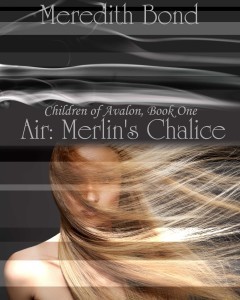
Whenever anyone asks me what other books are like mine, I’m frequently stumped. There have, more recently, been more and more historical paranormal romances like Magic in the Storm, but not many. The Children of Avalon series, on the other hand, will be part of a good old tradition of Arthurian legends (even though the series is set 200 years after Arthur). It’s a traditional romantic fantasy, but the series is New Adult, which means it’s mainly about the three protagonists and how they discover themselves and their place in the world. The magic, evil villain (Lady Nimuë) and comedic knight (Sir Dagonet) are just for fun. (Air: Merlin’s Chalice, the first book in the series, will be released tomorrow! You can pre-order it at Barnes & Noble, iTunes and Kobo or check back at my website for the Amazon link tomorrow.)
Why do I write what I do?
Because it’s what I would want to read. It’s fun. It’s light. And it’s a great escape from the everyday world.
How does your writing process work?
I’m a plotter. I meticulously discover who my characters are, what they want (their goals) and why, and then plot out how they’re going to get it. I’ll spend a week or so just plotting and figuring things out before I begin writing. Oh, and I’ve got tons of worksheets—you can find some here and the rest in my book on writing, Chapter One.
NEXT WEEK
Rhonda Hopkins: http://rhondahopkins.com. Award-winning romantic suspense and horror author, Rhonda Hopkins, has learned firsthand that truth is stranger than fiction. Her two decades of experience working closely with judges, attorneys, and within the legal system as an investigator for her state and for the family courts impart a depth and realism to her characters that gives truth a run for its money. Having come in contact with the best and the worst that society has to offer, Rhonda’s imagination is filled with story ideas. A short story by Rhonda has recently been published in Let’s Scare Cancer to Death. All proceeds from the book will go to the V Foundation for Cancer Research.
Cate Dean: http://catedeanwrites.com/ The supernatural and the unexplained are Cate’s domain. She’s been spooked and fascinated by them since she was old enough to read. Writing paranormal is like going to her favorite hangout every day—no work and all fun. She also believes in the supernatural—and that belief has been reinforced by several nerve jangling encounters in my travels. She recently revealed the cover for her upcoming paranormal romance, Final Hours.
March 15, 2014
Where do ideas come from?
As I’m getting ready to publish Air, the one question I’m dreading most is “So, where did you get your idea for this?” I didn’t do what I now teach my Start Write students to do—write down their kernel idea. Now, it’s the first thing I do when I start a new book.
The kernel idea is a great concept created by Bob Mayer (you can read all about it in his terrific book The Novel Writer’s Toolkit). He suggests that you write down the core concept or kernel idea of your book before you start writing. Doing so will help you when you’re plotting (if you do) or when you feel as if you might be straying from your main concept (if you don’t plot).
 Because I didn’t write this down, or make any other notes regarding the beginning of Air, I honestly can’t remember how I came up with the idea for the three kids who are the protagonists of my a Children of Avalon series. (My memory is like this colander. It holds some things, but too much just leaks right through.)
According to a fun blog I saw recently, when Theodore Geisel (Dr. Seuss) was asked where he got his ideas he answered: “I get all my ideas in Switzerland near the Forka Pass. There is a little town called Gletch, and two thousand feet up above Gletch there is a smaller hamlet called Über Gletch. I go there on the fourth of August every summer to get my cuckoo clock fixed. While the cuckoo is in the hospital, I wander around and talk to the people in the streets. They are very strange people, and I get my ideas from them.”
Now if only I could come up with such a clever answer. I think I might have to invent one. J
The Children of Avalon series did start out as middle grade books, then the trio got progressively older and older as more people read and commented on early versions, until the trio ended up at the ages where they are now (18, 20, 21 of Bridget, Scai, and Dylan respectively). I think I just can’t write kids books. I didn’t even treat my own kids like children when they were little–it’s why, I think, they were both quite mature for their ages, and why they learned to read so young (I taught them the alphabet from the age of 12-18 months, my daughter was reading by 2 simply because I didn’t know kids weren’t supposed to be able to do that).
But where the idea for a book comes from is rarely easy to pin point. I have had “Ah-ha” moments like with Magic in the Storm, where I remember exactly where I was and what I was doing when the idea came to me. But mostly ideas just grow organically, or from chats with my husband. He comes up with some great ideas, which I happily use—frequently without giving credit where credit is due (but he’s my other half, so his ideas are my ideas, right?).
So, do you always know where the ideas for all of your books come from? Do you write them down? Where do you get your ideas? I know I’ve got too many, but I’m curious about yours.
And remember, Air: Merlin’s Chalice will be coming out on Tuesday, March 18th! If you want a coupon for a 50% discount to buy your copy, just subscribe to my quarterly newsletter (it’ll be going out on Monday). You’ll also get a free vignette each quarter, as well as all my news.
And check back here Monday when I’ll be taking part in a special Writing Process Blog Tour!
March 8, 2014
A spark of beauty in the ordinary
 I read a blog everyday which tells me what’s going on in my home town. It’s an interesting blog for those of us who live here detailing new restaurants which are going in, old ones which are closing, and the problems with new public transit proposals. Ordinary things which happen in American suburbia. Today, however, I learned about something wonderfully surprising. Beauty where I never would have expected it and wouldn’t have thought to look for it:
In the email notifications from the county waste management services—yup, trash pick-up. Apparently, unbeknownst to those of us who don’t get these notifications (although I could sign up to receive them, and now I just might have to), the woman who writes them has put a little surprise at the bottom of each one: a poem.
This week when we had snow on Monday, closing the county government and therefore pushing trash pick-up forward a day, she added in the Thomas Hardy’s poem “Snow in the Suburbs”. Very appropriate. Very pretty. Not at all what you would expect in a notification that your garbage is going to be picked up a day later than normal.
But what this woman does really spoke to me. She takes an ordinary, boring thing and makes it beautiful. And apparently, she’s been doing this for long enough that when she doesn’t put a poem at the end of her notifications, people complain!
As I sit here contemplating the novel which I’ve just finished writing, and I’m thinking about editing it (the most mundane part of the writing process for me), this woman has inspired me to look for the beauty in my job. How can I take something boring (trash pick-up, editing) and make it interesting? Surprising? Beautiful?
Can I do the same thing with my novel? Is there a spark I can put in where my reader would least expect it? Is there a surprise I can slip into the folds of my plot and subplots? A poem? A brief romantic moment amidst my heroes battling for their lives?
I don’t know yet what the answer to these questions are, but I’m working on them.
As I step back from the trees of my work—looking for passive voice, action tags instead of dialogue tags, getting rid of those dreaded adverbs—to analyze the forest of my novel to ensure that I have all of the elements necessary and enough of them in the right places, I will also look for places where I can slip in a little extra beauty. I will try to find a place for that unexpected beauty, that bit of fun amidst the ordinary.
Do you have these sparks? This moments of beauty in your work? A surprise where your reader isn’t expecting something? Did they happen naturally, or did you have to step back and work to find a place to slip them in?
March 1, 2014
Your brain on books
I still love that old commercial against using drugs – “This is you brain” [shows a picture of a whole egg]; “This is  your brain on drugs” [shows a picture of an egg frying]. It’s been parodied so many times, but the most basic concept of the ad holds—when we do things, like take drugs, or in this case, read—our brain changes.
There have been a number of studies to show this (the most recent one was reported here in January) so we know it’s true. When we read, our brains actually experience what is happening in the book. If we read about someone running for their life, our neurons truly fire as if we were running for our lives. If we read about someone relaxing in a bubbling hot tub, the scent of roses wafting up from the water, candle light flickering in the darkness all round us—well, can’t you just imagine it? Can’t you just smell it? The scent of roses, tinged ever so slightly with the chlorine of the water. The bubbles gently tickling your skin as you lay there surrounded by warmth and flickering candle light. Ahhh…
 Sorry.
But as you were reading about what I’d really like to be doing right now rather than sitting in my barely tolerably warm office, my fingers a little stiff with cold, trying to tap out this blog post, neurons were firing in your brain. Your smell sensors were lighting up giving you that scent. You kinetic sense was working away feeling those tickling bubbles, no matter where you are or what you’re doing right now.
By reading, you can actually experience the words on a page in your mind!
I think that’s pretty incredible.
But more than that, it puts a huge burden on us writers. We’ve got to create that picture, incite those sensations, bring forth those smells, that heat (or cold), make our ears ring with sounds that only exist in our words on the pages of the stories we write.
So here is my argument (one that I’m sure I’ve made before, but it’s important enough to make again… and again). You’ve got to bring all of a reader’s senses into play when they are reading your work. You’ve got to describe where your characters are not just by telling us what it looks like, but by what it sounds like and smells like. Granted, for historical authors, we may not want to get too historically accurate in those smells (I talk about that in a guest blog which will be posted in March — keep an eye out for it), but still, you need to tap into those sensations. You need to get those neurons firing within the brain of your reader.
Now, I am the worst—and I really mean The Worst—offender when it comes to not writing descriptions. And I’m not talking not writing five-senses, I mean ANY descriptions. My first draft reads almost like a movie script. It’s all dialogue. There’s some internal thoughts and emotions going on, but mainly, it’s people talking. They could be in a black box for all my reader knows.
Yeah, I might mention that they’re standing in a living room. But do I describe that room? No, I do not. Do I say that there are the smells of roasting chicken wafting over from the kitchen down the hall? Nope. Do I mention the chill in the air leaking in through the double glazed windows which the hero just paid a hell of a lot of money to have put in to keep out that chill? Nope. Do I mention the sounds of children playing next door. The intermittent thunk of a soccer ball getting kicked and subsequent shouts as kids as either a goal was scored or just missed? Not a word.
That’s what my second draft is for. It is what I go back and put in after I’ve gotten down the basic plot.
In my first draft it’s all dialogue. I worry about plot. There’s some action (especially for action-heavy scenes). There’s some internal thought because I do want to get across what my characters are feeling as they’re speaking that dialogue and hearing what the other characters have to say. I worry about character development and how my characters grow and change. But I’m just awful when it comes to writing description. So I’ll go back and put it in later.
This is what I’m working on right now with the third book of my Children of Avalon series. I’ve written all but that very last scene and I’m about 10,000 words short. No, I don’t think I’m going to be able to add that many words with my descriptions, but I’ll get close by beefing up the five senses, descriptions and making sure my heroine is as spunky as she needs to be. I’ll make my exciting scenes more exciting, my romantic scenes more romantic and up the angst all around. In other words, heighten all the emotion, because that’s vitally important too.
Yes, the book is written, but it’s not nearly close to being done.
February 22, 2014
Blog: How to Blog
 Wow, I’m suddenly into meta blogs here, and it’s totally unintentional, honestly. But as I’m sitting here thinking about the launch of my new series, the Children of Avalon, I’m also trying to come up with blogs to write for the blog tour I’m going to be doing in May, after the third book in the trilogy comes out.
Not only do I need to think about what I’ve got to write about, but how I’m going to write it. Yes, there is an art, a craft to writing a blog. It’s taken me a few years of both writing and reading blogs to figure this out, and I’m still not sure I’ve got it down, but I try.
The key to writing an easy to read, interesting blog post is, I think summed up very well in Anne R Allen’s blog this week—skimmable.
As a writer this kind of makes me sad. I’m vain enough to not want people to skim through my writing. I want readers to thoroughly read what I write, but in both today’s busy world and this particular genre of writing, that’s really not a reasonable request. I realize and acknowledge this. So the trick to writing a good blog, it seems, is to write something that people don’t actually have to read every word of:
• Have short, frequent paragraphs. They’re easy to zip through.
• Use bullet points where ever possible. It’s not something I do a lot because my writing doesn’t usually lend itself to bullets, but I’ll try to see if I can’t do it more often.
• Put yourself into your post– make it personal and written with your own distinctive voice. All of you who’ve been reading my blog for a while now know just how I sound. You know how I write—lots of asides either separated by dashes or parenthesis, right? But this is me. It’s my voice. You need to write in your voice, whatever and however it may be.
• And the last point which scares me the most regarding this blog tour—know what the blog you’re writing for is about, what the readers of it expect when they go there. So you need to both read the blog and know who else is reading it and then write for them, to meet their expectations.
For example, if I’m going to write for a blog about writing, I’m going to write something about how I wrote my book (you know, the one I’m selling, the reason I’m on the blog in the first place). If the blog is aimed at readers of history, I need to write something about the historical time period in which tithe book is set. A completely different blog! If I don’t know for whom, I’m writing, how can I possibly know what to write. So I expect that the company I’m using to organize this blog tour for me will give me the list of blogs where I’ll be guest posting so I can read them first, and get an idea of what to write. Yes, I’ll go in with a few generic guest posts in my pocket, but still, I will tailor my posts to the blog.
So, what about you? Have you blogged? Guest blogged? When you did, did you do your due diligence first, ie, how did you prepare?
February 15, 2014
Ugh! Marketing!
I am like so many other authors and hate marketing. It all seems to be such a crap shoot. You throw yourself out there and try not to sound desperate.
But here I am, revving up my marketing engine in preparation for the publication of the first book of my new Children of Avalon series, Air: Merlin’s Chalice. It’s the first new series I’m publishing since my Storm series in 2012 (I can’t believe it’s been so long since I published Magic in the Storm!), and this time I want to do it right.
For the past year or more I’ve been reading and watching others put out new books, trying to learn how it’s done right. So far this is what I’ve gathered should be done:
Start early!
Some people say you should start months in advance, but if you start pushing your book that early and it’s not available for people to buy right away, I’m afraid they’re going to have forgotten about it by the time it actually comes out. On the other hand, I definitely can see the point of sending it out for reviews early. Some reviewers will take months to review a book.
Do a blog hop – either organize it yourself or use a company to do so, but from all that I’ve read that is The Way to get your name and your new title out there. For the Children of Avalon series, I’ve decided to use a company (Tasty Book Tours). They’re going to organize a 3-4 week blog hop for me in May when the third book in the series will be published.
The catch to doing a blog hop is that you’ve got to have something to blog about. I’m on pins and needles trying to think of interesting blogs to write about the book, the series, the world. I haven’t yet started writing them, but I know that I really need to get started doing that.
Make people look forward to your book by posting teasers and excerpts (click here for excerpt from Air).
Make a big deal out of your “cover reveal”.
I teased my followers on Facebook and then included the cover of Air in my January newsletter. I followed that up with a “big reveal” on Facebook and my website two weeks later. I don’t know if it worked. I don’t know if I have enough followers or if they care. But I tried.
Don’t over do it by smashing people over the head with Facebook posts and tweets saying “it’s coming, it’s coming”. I get really annoyed when I follow someone on Twitter only to be bombarded by them with private messages telling me to buy their book. And I wouldn’t want the only thing I read from an author on the Facebook page is to buy this or that. So, while I’ve informed my readers and followers that the book is coming, I don’t do so every day and I try to mix up my postings with stuff other than the news that I’m going to be publishing a book soon.
What else is there to marketing a new book? I’m sure that what I’m doing is not all that I could be doing. What do you think? Is this enough? Is it too much? Am I missing anything vital here? Your thoughts are always appreciated.
February 8, 2014
Meta Blog
My teenage daughter loves meta everything — commercials about commercials, books about writers, she even has a t-shirt that says “This is my hipster t-shirt”. So, I thought I would be meta today and write a blog about blogs.
Blogging and reading blogs has become an integral part of being an author
A good number of authors have their own blogs. Most are about their own work, sort of a “see what I’m doing now” or “lets get close and personal with my characters” sort of thing.
This is great! I love getting to know characters better and finding out more about what’s happening in my favorite authors’ lives. And having a reader-centric blog is also a really good marketing tool. Readers love them and they help sell your books. I think it’s a win-all-around situation.
But the one thing I notice about blogs like that is that they’re written sporadically — whenever the author has something to report or feel the need to push one of their books, or even a series. So how do readers know when to go back for the next installment?
And then there are blogs by authors and other publishing professionals meant for writers (like this one). Naturally, these are the ones I read most. Like Writer Unboxed, Romance University, Anne R. Allen’s blog, Terrible Minds by Chuck Wendig, The Book Designer and Kristine Kathryn Rusch, to name a few of my favorites. Each one has its area of specialty where you can learn an amazing amount.
If you go over to these blogs, you’ll also notice something else — they blog regularly either every day, once a week, or on some other schedule. But the point is, there is a schedule. I know that, at the very least, every week I’m going to get a new posting to read. This is really important.
If your readers know you’re going to be there, they’ll keep coming back.
You know that I’m going to post a new blog every weekend (I try to get it up on Saturday, sometimes life intrudes and it’s not up until Sunday). I do so without fail every single week. Even when I’m away for whatever reason, I always make sure that there’s going to be a new posting every week for you guys to read, and hopefully, enjoy if not learn from. And here’s the really amazing thing — I’ve been doing this since October of 2011! Yes! Nearly two and a half years! Holy Cow! This is my 128th post! If you’ve been with me the whole time, THANK YOU! If you’re new to my blog, THANK YOU for coming, for stopping by, for taking a moment of your day to read what I have to say.
It’s not always easy to figure out what to write (any guidance you can give on topics you’d like to see me cover would be greatly appreciated) but you know that I will always be here to write about something (hopefully something interesting to you). But the message here is to write… consistently… regularly.
Write a blog.
Do it on a regular schedule — whether it’s daily, weekly or monthly. And let your readers know what that schedule is so that they know when to come back.
Write on something that interests you. Something you would want to read. If you don’t, you won’t keep it up. You won’t get to the moment I just had where you realize that you’ve been posting to your blog for so long.
I love writing this blog (even though I sometimes have trouble thinking of what to write) and I hope that you enjoy reading it (and don’t mind putting up with my, sometimes, cringe-worthy grammar).
I know you all are not big on writing comments (that’s ok), but if there’s anything you’d like me to write about, tell me, and if there is a blog that you love reading, share it — I’m always very happy to have another blog to read on a regular basis and I’m sure other readers wouldn’t mind getting some recommendations as well. Please share, thanks!