Meredith Bond's Blog, page 13
June 13, 2014
A Production Schedule
Production schedules have recently been mentioned — I believe it was in an interesting blog by Russell Blake, which people have been discussing on a yahoo loop I follow. My question is, how detailed should a production schedule be? And what do you think it should include?
I’m thinking it could be as simple as the book will be finished by this date, the cover by that one, then the formatting, marketing and then publication of the book (notice, marketing comes before the publication date–too frequently with my books, at least I’m so focused on getting everything done I forget that).
On the other hand, a publication schedule, I suppose, could get even more detailed and could include such things as when each chapter will be done, or at least a rough estimate of how fast the book will get written. When it needs to be in the editor’s hands and then, possibly even a detailed marketing plan.
That is my goal in a publication schedule. I’ve got a very rough one that I make up very four to six months, detailing for myself what I’m going to be working on, when. It’s more rough: I’d like this book to be done by this date, to the editor by that one (about two to three weeks later, allowing time for the book to sit for a week before I get to editing it and then allowing myself two weeks to edit.
Clearly, now that I think about it, my production schedule is much too mushy. I don’t have built in there when I need to get the cover done or when that marketing is going to begin, let alone exactly what marketing I’m going to be doing, which, I think is an important part of that schedule.
It’s hard to make such plans when a book is still more of an idea in my head than a reality on paper, but conceptually, at least, I know that I should be doing this. Hopefully, by the time the book is halfway done, I’ll have gotten more serious about creating this production schedule–to the point where I’ve actually begun to do it seriously.
What about you? Do you create a production schedule? If so, when? And what do you include? How detailed does it get?


June 7, 2014
Your Mileage May Vary
I want to know how to be a very successful indie-author. I want to know how to sell hundreds, no, thousands of books every month. Yeah, ok, I’d be happy with hundreds.
There are people who do so—sell hundreds, and even thousands of books every month. Not a lot, but we sure do hear about them a lot. And because we hear about them so much it makes it seem like there are a lot more people selling so many books than there actually are.
Most people who are indie-authors don’t actually sell all that many books. It’s not because their books are bad. It’s not because they don’t market them. It’s not because they’re books are un-edited or uninteresting. It’s just the way it is. Not everyone can be a best seller.
But still, for those of us who are not best-sellers, we want to know the secret because, I mean, really, there’s got to be one, right? Did you get on to a certain blog which went viral? Did you tweet something which was retweeted a million times and everyone who read it ran out and bought your book? Just what did you do to get these sales?
Why am I hearing an utterly profound silence when I ask this question?
Because no one, not even the successful people know the answer. Yes, they might have done something that went viral. All of their books might have suddenly started the selling the day the uploaded their sixth book, or their tenth. They might have been featured somewhere (cough coughbookbubcough cough) that got them tons of sales in one day so that they shot up the charts and therefore got noticed even by people who don’t read certain email newsletters. Or maybe their metadata is amazing.
The point is, whatever they did, it’s not going to work for everyone.
Doesn’t that just suck?
I mean, really? I want an answer. I want a formula. Write a great book and you’ll get noticed and sell thousands if not millions of copies. Um… no.
I’m not saying my books are horrible, nor are the best thing since Shakespeare. They’re fine, fun books written the best I can write them. But just writing the best book you can isn’t going to sell a lot of books even if you do write as well as Shakespeare… or Jane Austen… or J.K. Rowling… or whoever you think is the best writer.
It’s a lightning strike. Perhaps it’s a combination of factors. Who knows?
And that’s the really hard, frustrating part of being a writer.
One of my students in my class, when I told her not to expect to make much (if any) money with her writing looked at me with deep concern in her eyes and said, “but you do break even don’t you?”. I fudged a little and said that yes, I do. It’s only a little fudge. I have broken even if with some books and I will with my newer ones. It just might take a little while to do so, and longer with some books than with others.
And of course, that reminds me of the famous quote by the economist John Meynard Keynes: “In the long run, we’re all dead…” so it really doesn’t matter, does it?
May 31, 2014
Who Cares?
It’s a really cruel thing to say to a writer about their work, and yet I do it… maybe more frequently than I should. But I do it because I do care.
I care about the writer, my student. I care about their work, wanting it to be the best it can be. I care enough to be unkind sometimes. And I always do it with a smile on my face and in a pleasant tone of voice. I’m not doing it to be mean, honestly.
The point is that you’ve got to make me, your reader, care about your story, about your characters, before I’m willing to spend the time it will take me to make it all the way through your book. For me, that’s a considerable amount of time (I’ll admit it, I’m a slow reader… I linger) when I could be doing something else (like writing or thinking about my own writing).
You can have the most fantastic plot, the most mysterious of mysteries, the highest of concepts but if I don’t care I won’t read it.
I am opening myself up to you, laying myself bare.
I am spread-eagle on the ground begging you to make me scream, laugh, sigh or burn with anger. Don’t make me stand up, shrug my shoulders and walk away.
Make me care.
You too, the author of this story, need to care right from the beginning. You may have a fantastic plot in your head. This may just be the greatest story ever told, but if the characters don’t capture your attention, don’t make you care, then they certainly won’t do the same for your readers. And not only that, but you are going to be spending a hell of a lot of time with these characters. If you don’t love them, if you don’t care, writing this fantastic story is going to be even harder.
The biggest problem with this is ending the story when you know you won’t be spending so much time with these people any more… people you’ve come to enjoy spending time with. People in whose heads you have resided for the time that it took you to write their story. But take comfort, you have immortalized them and they’ll always be there for you to come back and visit.
So, who is your most favorite character that you’ve written? Who is it who you go back to visit even after your story is done?
Right now I’m visiting with Morgan from Magic in the Storm. I’m trying to find all those typos people have complained about in their reviews of the book (so far, I haven’t actually found so many typos as misplaced commas, but maybe that’s what they meant?) . But I’m finding that I’m actually enjoying my visit with Morgan and Adriana.
May 24, 2014
You are what you write
Are you comfortable in your own skin? Are you, generally, a self-aware person? Do you know just who you are and have come to accept that?
Does your writing reflect you? Is it you? The real you? 
If not, why not?
Our writing is–or should be–our passion. It should reflect who we are and what we love (or hate). It can reflect our hopes, dreams and desires.
Does that mean that people who write mysteries actually wants to kill someone? Obviously not. It could mean that they enjoy a good puzzle.
What about my good friend Debra Dunbar, who writes some of the best demon books? Is she a demon? No, but I definitely think she’s a bit of a rebel. She enjoys pushing limits just to see how far she can go while remaining safe and staying within the law. But she’s also a mom, and so there is that element of adhering to responsibility within her books too. How do you toe that line? That’s what makes her books really fun, I can tell you!
I write historical novels; does that mean I live in the past?
Well, in a sense, I wish I did. I do yearn for simpler times when we didn’t have to worry about how we present ourselves online. I enjoy behaving “properly” and appreciate it when others do too. So, yes, in a sense, I am an old fashioned sort person.
But my books aren’t just histories, they’re romances and they have deeper themes as well: fitting in and family in my Merry Men Quartet and Children of Avalon trilogy respectively. And, yes, I have “mother issues” as one reader asked me after reading Magic in the Storm (where the villain is the hero’s mother).
The point is, my books reflect who I am. All of those stories, all of those characters I create, they aren’t based on people I know so much as they are based on me. They are a part of me. Obviously, my brain came up with them.
Does that mean if you read my books, you will be reading me and getting to know me? No. The books are fiction. The characters are as well. They’re not all me, there’s still a lot of creativity that goes into creating these characters. But they do all come from the same source–my brain.
But what does this mean for you and your writing.
Yup, you got it: all of your characters are a reflection of you. All of your stories are things you need, or want, to explore. Your books are you. You are what you write.
Think about this as you’re plotting your next story. What is it that is important to you? What is it that you’d like to explore? What would you love to try, but may never get the chance? You can do any and all of these things in your books.
And if your books aren’t a reflection of you? Well, then, perhaps you’re not actually writing your story. Perhaps you’re not writing what you are passionate about. And so, perhaps you should reevaluate what you are writing and bring it closer to home. You’ll end up with a better story.
How do your stories reflect you?
May 19, 2014
Apologies
My profuse apologies to my regular readers! I didn’t prepare a post for this past weekend because I was at the Romantic Times Convention in New Orleans (oh, all right, and I completely and utterly forgot — there, I said it, are you happy now? ).
I will be writing about the conference as soon as I catch up with the rest of my life. But for now, here are some pictures from the fun.
Enjoy!
New Orleans is beautiful night and day…


And it was New Orleans, so we donned masks and partied!

J.T. Bock

Kate Johnson

on Bourbon Street
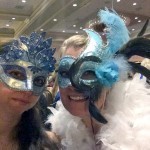
Me and Debra Dunbar
And I went to some talks too…

Lisa Kessler, Eloisa James & Sabrina Jeffries
And met friends…

Kim Adams and Kimberly Kincaid
May 10, 2014
Five things I learned writing Fire: Nimue’s Destiny
One of my favorite bloggers (okay, the favorite blogger to many), Chuck Wendig, seems to have a series going on on his blog, Terribleminds: “Five things I learn writing…”.
It’s really interesting to read what others have learning writing their last book. It made me think about the five things I learned writing my last book (this might have been Wendig’s evil plan all along, who knows. It’s entirely possible that he’s just nasty and clever that way. I don’t know the man.).
But as I was trying to think of these five wonderful things, it hit me.
Every single book I write… every single book any writer writes, no matter how many books they’ve written before—whether this is their first one or their thirtieth—teaches us something.
I always tell my writing students that writing every book is a different and new experience. It doesn’t get any easier the more books you write because each book is individual.
Just as we, people, are all individuals, so too is every book.
Yes, we (or nearly all) have two legs, two arms, a head, eyes, nose, mouth, and all that other good stuff. So, too, do all books have a beginning, middle, and end. Most follow the same basic story structure (although, just as not every person is born perfectly formed, not every book follows a basic structure–it’s not bad, it’s just different).
But that’s where the similarities between people stop. Every person is different. Every book is different. Every book is a new and different experience to write.
Therefore, for every book you write, it is entirely likely (and, I would say, hopeful) that you will learn five things as you write it.
So, as I sit here on the brink of my third and final book in the Children of Avalon series, Fire: Nimuë’s Destiny, to be released (Monday!!!), what five things did I learn writing that book?
It’s okay to be short. I always write short. I’m just a concise writer. And I, sometimes, take to heart a little too much the old adage: “Only write the parts people will read”. It makes for very short books.
I worked and worked on getting Water to be “long enough”. After I wrote it, I went back and added a character and a subplot. It made for a better book. A more interesting book. It was a good thing.
I thought, after I was finished writing Fire and it was, once again, too short, that I might do the same thing. But then I didn’t. Not only because I couldn’t for the life of me think of another character or subplot to add (there are already too many characters, honestly), but because I was happy with the way the book was. The story worked. I didn’t want to add anything else. So I left it. Short. And that’s okay.
Don’t ever, ever give up on a book. I wrote Air, then quickly followed it up by writing Water. I started writing Fire immediately after that and then stopped half-way through deciding the shelve the series until later.
I had other things I wanted to work on (my Storm series) and I wasn’t sure what I was going to do with the Children of Avalon series. I shopped Air around to a number of agents and publishers and wasn’t getting the enthusiasm I’d hoped for. But then at the beginning of this year (yes, on January 2nd) I went back to it. I read what I had written of Fire. I reworked a lot of the story and then I finished writing it. Something I hadn’t been sure I was ever going to do when I put it away years ago. I can tell you now, I’m really happy I did.
You’re allowed to change your mind. Plotting out a story’s structure is really important. But it’s just as important to not hold yourself to it. Allow for change. I’m a pantser. I plot out everything in my books before I write. With Fire, I plotted it all out, but then it wasn’t working and it wasn’t enough. I changed my outline. And then I changed it again. I added scenes and took others away. Things changed even as I was writing. In the end, it worked, and that’s all that matters. So, now, I’m more open to change.
Family is really, really important. It’s the theme of the entire series, but in Fire I bring it home when Bridget’s brothers are captured by Lady Nimuë (my villain). It touched me personally because I’ve got brothers (like Bridget, who was raised as the only girl in her family, I too was the only girl in mine, only I’ve only got two brothers and she’s got five—eek!).
I love my brothers dearly, and even though we don’t talk all the time, we’re close. The thought that anything could happen to them… well, when I wrote the scene where Bridget sees her brothers shackled to a wagon, let me tell you, I was feeling it! And then I went and did something worse… but you’ll have to read the book to find out what. (Insert evil laughter (and a few tears) here.)
It’s hard finishing a series. I’ve done it once before with my Merry Men Quartet, but that was years (read eons) ago. I’ve really gotten attached to these people. I have lived every day with them for so many years (the year or so when I first wrote Air and Water, and then again when I went back to Fire). I’ve struggled with them and fought with them. I’ve shed a few tears with them and laughed a whole lot with them. And now they’re gone from my writing life.
Well… not completely. I just can’t quite let go! That’s why I’m writing Sir Dagonet’s story. I’m not ready to let go, quite yet. J
Fire:Nimue’s Destiny will be on the virtual bookshelves on Monday! Look for it.
May 3, 2014
What if you can’t trust your character?
I’m starting a new book. It’s fun. It’s exciting. It’s hard!
Every book is different in the way it’s difficult. Some are hard to plot, but once I’ve gotten a hold of the story in my head, it’s just a matter of writing it all down, hearing those voices in my head and watching them enact the story. Some are hard to catch hold of the characters—which is really awful because it’s the characters who make up the story. I need them solid and real (in my own head) so that they can become real on the page.
With Bridges (just what I’m calling my work-in-progress now, it actually has no title, but I’ve got to call it something), my characters are making things difficult for me.
I know exactly who my hero is, how he speaks and what he wants. He’s easy. The fact that he’s not going to attain his goal in order to attain love instead is a minor hiccup, but one I can deal with—the book is a romance after all.
My heroine started out trying to be another heroine I’d already written. That was all wrong and I had to start again. I think I’ve got her down now, but I’ll need to write a few scenes from her POV in order to be sure I’ve got her voice and her personality in my head. I can deal with that. She’s got a definite problem and a definite goal which she will achieve. She’s the lucky one in the story—she gets it all, her goal and the love. She’ll have to make a few compromises along the way, and deal with some unexpected twists and turns, but in the end she’s going to get exactly what she wants (lucky thing).
Then there’s my third character. She’s the problem. She’s not really an antagonist, at least not to the hero, although she is to my heroine. She isn’t actively working to stop my heroine from attaining her goal, but she is a road block in the heroine’s way. The trick is that through the story she slowly goes mad, as in insane. I want to show this because it’s extremely important that the reader watch this happen. The question I’m stumbling over is whether I should show this happening from within her head or outside of it from the point of view of others around her.
I think it’ll be much more powerful if I show from within her mind, but then I’m worried that readers won’t get that she is actually insane. They might just sympathize with her. Empathize with her. To herself, she justifies everything she does no matter how crazy it is. It all makes perfect sense to her. She needs to be in control. If that means going beyond the norms of civilized behavior, it’s all right—to her. If she is extremely cruel to someone, it’s justified–to her. But I’m afraid my readers won’t get this. They won’t make that leap that what she’s doing is wrong, and not the actions of someone in their right mind. If I write the story of this woman going insane from her point of view I’ll be invoking the concept of the unreliable narrator, which is really interesting and loads of fun, but will my readers get it?

Unreliable narrators
I know I’m supposed to assume that my readers are intelligent people, but they don’t always make the same leaps of understanding I do. I know my characters inside and out. I know their motivations, but I’m not always able to convey that in my story.
I’m really afraid that if I have one unreliable narrator in a third person story told from three points of view (hero, heroine and this woman), that the reader just won’t get it. They won’t see that she’s become unreliable. What should I do? Write it and see if it works? Or just leave out this woman’s point of view and show her descent into insanity from the point of view of the others in the story (ie the hero and heroine). What do you think?
April 26, 2014
Dancing in the graveyard
It’s currently my favorite song, Dance in the Graveyard. If you don’t know it, here’s the video.
https://www.youtube.com/watch?v=lPOM0...
It’s by a country group called Delta Rae (I don’t usually like country music that much, but their harmonies are fantastic) and from the very first moment I heard it, I could identify. It made me laugh. It made me smile. From the upbeat catchy tune to the beautiful words and lovely imagery and, most importantly, the message.
“When I die I don’t want to rest in peace,
I want to dance in joy,
I want to dance in the graveyard.
While I’m alive,
I don’t want to be alone,
mourning the ones who came before,
I want to dance with them some more.
Come dance in the graveyard.”
You might think it’s about the zombie apocalypse, and in the video, they do dress as zombies, but there’s a deeper meaning to it. One that touches me.
They’re not mourning those who die, but celebrating them. But I don’t think it’s just the people who die who are the ones being danced with. I don’t take the song that literally, although you can.
I look at it more broadly. When I fail, I may sit and cry for a few moments, but then I get up and look at what I did and learn from it. I don’t mourn, I celebrate. I don’t sit down and quit, I get up and dance in
the graveyard. I make the best of what’s happened and celebrate whatever successes I can.
I celebrate my hopes and dreams. I celebrate all the good things around me. I’ll get up and dance in that graveyard.
That’s me. I am, as they say, a “glass half-full kind of person”. What about you? What about your characters?
What do they do when life is lousy (and it will be in your book)? Do they dance in the graveyard? Do they celebrate what they have? Do they work harder to make things right, or joyful? If they are a true hero, that’s what they should do.
Heroes don’t quit. Heroes don’t mourn for long. They do something about it. They learn and grow and change and change others. They not only dance in the graveyard, but they pull others in to dance with them.
If you watch the video of the song, in the beginning the lead singer sends up a flair into the night sky which draws people to the graveyard to meet those who they’ve lost and dance with him. He makes things better for many people. He brings joy.
Your hero should do the same, in their own way. They need to solve that crime, or protect those who need protecting. They need to make whatever is wrong right and bring joy, or even just resolution, to others around them.
Think of your hero. Think of what kind of person they are. Where do they find joy? Where do they find happiness? How do they deal with hard times? Do they dance in the graveyard?
Do you?
April 19, 2014
Longevity of love
I was asked to write a blog post on “celebrating romance” for the annual Read-A-Romance Month. What follows is where my mind first went when contemplating the concept. But then I realized that it’s really not right for a post that’s supposed to introduce readers to me and my writing. So, I post it here for you to contemplate along with me.
Most romance novels are about people falling in love. They invariably end just with the couple committing to each other in some form. In my sweet Regency romances, they end with a kiss; in hotter romances, they end with the couple consummating the relationship both physically and emotionally. But then what happens?
Well, I have to admit, my most favorite fan letters have been readers telling me what happens next: they go on to have two children and then go on an archaeological dig in Greece (for A Dandy in Disguise where Rose and Fungy both have a love of the classics and archaeology). Whatever it is that happens next lives on in the reader’s mind as they contemplate these two characters, the hero and heroine, who have come alive for them. It’s beautiful and what every writer wishes for.
But what does happen with love in a marriage? I’ve now been married for over twenty years and am still madly in love with my husband. My parents-in-law celebrated their 50th wedding anniversary not too long before my father-in-law passed away. His passing devastated my mother-in-law, naturally, and it wasn’t just because she missed having him around. It was because even after such a very long time together, she was still wonderfully, thoroughly in love with him.

Celebrating their 50th anniversary
Certainly, the love I write about—new love, falling in love—is very different from older, mature love. I’m sure there must be romance novels about this kind of mature love. The love that comes with truly knowing someone—all of their quirks, habits and oddities. The love that comes with living with someone day in and day out.
When I think about celebrating love, I think of this older love, because while it is wonderful to have a new love, it is the love that withstands the test of time which I believe is truly worth celebrating. So, my hat off to everyone who reads this who has loved for a good number of years.
Enjoy your love. Celebrate your love. Take another look at the person you love and appreciate them. Give your love an extra kiss tonight before you go to sleep and let them know how much you love them—a word (or three) will make a difference.
April 12, 2014
On Quitting
Two self-published authors have announced this week that they’re quitting the business. They’re not going to  publish their work any more. They’re removing all of their books for sale and going back to a private life where they won’t have to deal with the nastiness that can too often be found on-line.
I didn’t know either of these women, but I wish them well. I hope that they’re happy with this incredible, life-altering decision.
I couldn’t do it.
Yes, I’ve thought about it, especially after a particularly rough day (see “Release Day Blitz” ), but it’s a huge step to take. Instead, I embrace the concept that while I love to write, and my writing makes some people happy, I could never not do it.
The reason these authors quit is because of on-line bullying, which is awful. The anonymous jerks who live to hurt others, who get some sort of power trip by belittling others should not be rewarded in this way. I am grateful and thank the gods every single day that I’ve never been singled out for such an attack because it can happen to anyone, anytime, for any reason, or no reason at all. These nasty people catch their claws into you and if you respond in the least way they’ll just dig them in deeper.
I stay far away from such behavior. I don’t respond to anyone who says anything about me. Period.
I love those who review my books—positively or negatively (well, ok, I may not love the negative ones, but I respect them). If I can find them to thank them personally, I do. If I can’t, well, then they go un-thanked.
But to quit? For good? Forever? I just can’t imagine it. I’ve got too many books inside of me. I’ve got too many stories to tell. My successes aren’t great, but I am grateful each and every time someone buys one of my books and I hope that it brings a smile to their face. I am a mid-list author and I’m proud of it. I will never be on the best-seller lists and I’m good with that. I do what I love.
And I hope that the nasty people who live on-line stay far, far away.
Have you ever been the subject of on-line nastiness? How did you deal with it?
And don’t forget, Water: Excalibur’s Return is coming out Wednesday, April 16th! I’ve got my rafflecopter giveaway for a really beautiful, watery necklace running on my homepage. Don’t forget to join! Considering my fantastic success (not!) on the release of Air: Merlin’s Chalice, and the fact that I’m going to be away helping my daughter decide where she wants to go to college, I’m going to try doing near to nothing on the release day of Water. Let’s see how this works out. I’m open to trying everything, and nothing. What do you think? Am I making a mistake? I’d love to hear your opinion.