Meredith Bond's Blog, page 10
January 3, 2015
Goals, Hopes & Dreams
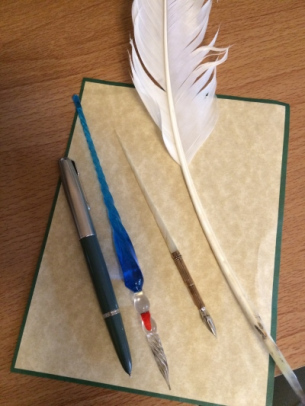
The hardest part was picking which pen to write with.
I just finished working on my First Writing for the year noting down my goals, hopes and dreams for 2015. Just to be clear:
A Goal is something attainable. It’s something you plan on doing and are able to achieve it.
A Hope is something that you’ll have to work really hard to attain, perhaps harder than you might normally, but it is still something that you can do.
A Dream is something that is out of your control. You dream to be able to do something (like one of mine is to get onto a top list with one of my books). There isn’t a lot I can do to attain that dream except to keep writing the best books I can and do the best marketing I can (something I’m already doing) and then wait for lightening to strike. Yeah, it’s that last part that’s kind of out of my hands, and therefore makes this a dream.
So, have you written your goals, hopes and dreams for the year? I think it’s important to have such a list to start out the year. It’s a road to follow and something to reach for, as well.
And as always happens at this time of year, many other bloggers have written about what all writers should be thinking about, and perhaps moving from the “hope” section of our list to the “goal” section. Here are a few I found that resonated with me:
From IndiesUnlimited:
Publish better stuff—I’m always working on improving my craft. This coming year, I plan to work at it more consistently.Create a publishing schedule—I started doing this in 2014, and I hope to be able to get better at doing this.Create a marketing budget—I’ve never done this, but I really, really should!Use social media time wisely—I tend to stay away from social media if I’m really busy, but I really want to make a concerted effort to be more consistent about the time that I spend there.Also extols us all to work on our craft.Have fun—I love this! It is so important and too many people just plain forget to do it! I am definitely going to work harder at this one!Translations and foreign rights—this really falls into the dream category for me because translating your work is a very expensive proposition. And I wouldn’t even know how to begin to sell my foreign rights.Take an on-line course—I’m totally in favor of this one (see improving craft above).Be more active in professional associations—This is so important. It’s how we get opportunities to collaborate and commiserate. Joanna recommends The Alliance of Independent Authors. I’m on my way over there now to check it out!Jennifer Crusie wants to read more fiction (I’m there!) and organize herself.
Chuck Wendig of the Terrible Minds blog not only tells us (writers) what we should be doing in the new year, but Amazon and traditional publishers as well. For writers, he extols us to:
demand appropriate payment for our worklook into hybrid publishingdon’t rush your work to market before it’s readysupport other writersbe optimisticSo, people, it’s time for you to get hopping on that first writing if you haven’t done it yet. I hope the ideas from others have helped you put together your own ideas for your goals, hopes and dreams. And finally, I really hope that you attain at least one of your dreams in the coming year! Happy New Year!


December 27, 2014
Writing Day
I was looking up interesting New Years traditions for a blog post I wrote for Supernatural Superlatives the other day and found "First Writing Day" or Kakizome which I am definitely going to adopt--with modifications.
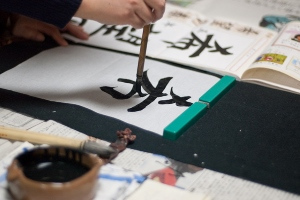 Kakizome is a Japanese tradition where on January 2nd people (usually children) write poetry containing auspicious words and phrases such as long life and youth--things people want for the coming year. They (frequently) then burn their beautiful art work in the hopes that what they've written will come true.
So here's my proposal: First Writing Day (also on the 2nd of January, since on the first we're all getting over celebrations from the previous night and the second is really the first day of the year). On this day I'm going to write a list of what I'd like to see happen in the coming year--my hopes, my goals… my dreams. I'm then going to tuck away this piece of paper in a place where I'll be able to find it again at this time next year. A year from now I'll take it out and see how I did.
It's a mix of dreams and resolutions.
I believe it should be hand-written (as the Kakizome is written with special auspicious well water mixed with ink) on nice paper and placed somewhere special (so it can be found again).
Now, it would be nice to hope for peace in the world and an end to hunger, but that's not something I, personally, can accomplish, so I'm going to leave that off my list. This is going to be a list of hopes I have for myself. Goals of things I'd like to get done during the year.
Usually when I write out a list of goals I'm very practical about it and don't try for something I know I can't attain (write and publish ten books within the year). I'm a practical person, so on my list I might put down the goal to write five books -- it's ambitious, put possible if I work really hard. And I'll also add in some personal goals as well.
So today, just a few days before New Years, I challenge you, my friends, to join me in First Writing Day. You don't need to tell anyone what you've written, it should be kept private and personal, but do drop me a comment below to say if you're with me or not. If you tell me that you are, I'll personally check back with you on the 2nd to remind you to do this, and you can tell me if you have or not (nothing like a little nudging to get a tradition started).
And to everyone I wish you all a very happy and healthy New Year.
December 20, 2014
Critique me, baby
I’m a writer. My work is going to get criticized.
I spill my heart, my emotions and my passion on to a page every day and then put it out into the public eye for people to stomp on.
How smart is that?
Well, sometimes it’s very smart. Sometimes I get fantastic reviews telling me how I moved someone. Sometimes people tell me what great characters I create, or that I allowed someone to escape from a difficult situation, even for just a little while. Comments like that make it all worth while, this writing business.
Other times, however, I’m told what a lousy writer I am. That my work is juvenile or badly written. Readers point out mistakes in my books that should have been caught, but weren’t even though I and at least three other people read the book (sometimes many times) before it was published.
Does this hurt? You bet it does!
Am I going to stop writing because of it? No way!
I’m going to use the criticism I receive to make my work, my writing, better. I have learned to take the negative things that people say about my writing and turn it around into a learning experience. How else am I going to get better?
Early on in my career I got some scathing criticism from people very close to me. It really, really hurt and for a moment I even contemplated giving up before I’d even gotten started. But if I’d done that, I would have been a very unhappy person because I’ve got stories to tell. I’ve got people talking to me in my head telling me, no, showing me their stories. I need to write them them down and I have a lot of fun taking an idea and expanding on it; taking a concept for a person and building it into a well-rounded character.
Just because someone tells me that I failed once, doesn’t mean that I’m going stop, give up and sell my horse. I’m going to get right back at it until I get better. I have moments when my writing is moving, transporting and all things wonderful. I just need to make those moments happen more often—like, all the time!
To that end, I recently I asked my editor to read and give me her harshest comments on Storm on the Horizon. Why? Because even after thousands of people have downloaded the book and it’s gotten some good reviews, I know that it could be even better. I just couldn’t see how to get it there; what I needed to do to make it better (it’s always hardest to critique your own work).
Having a professional give me constructive criticism will help me become a better writer. Fixing this one book will allow me to realize more quickly where I might be going wrong with my next one, giving me an opportunity to fix it before it makes it out into the public eye.
So, I take the criticism with a smile and a nod of my head. I think about it deeply and figure out how I can fix this book and make all that come after it better. So, thank you, Chris! Thank you for being open, honest and straight forward in how I can make my book better.
And for my readers, be on the look out for a republished, better version of Storm on the Horizon in January! I’m getting to work!
I do have a special holiday gift for you all -- I've dropped the prices of many of my books until mid-January. Happy Holidays!
December 13, 2014
Social media – More! New! Better?
With changes coming to Facebook (and many of which have already been implemented) many  authors are looking to other social media outlets as a way to connect with readers and advertise their books. The two options which seem to be growing in popularity just now are Google+ and Tsu.
Google+ isn’t new, but so far it has been under utilized by a good number of the publishing community. Just from poking around on it, I’ve seen a lot more visual artists than writers. But that doesn’t mean writers aren’t there -- and actually, recently, I've noticed that there are a lot more writers. I’m actually a member of a number of writing “communities” including “Books, Blogs & Give Aways”, “Self-Publishing” and “Writers Corner” among others. These are active groups where you can discuss and learn about all things that might interest an indie-author or promote your work. If I knew that there were a good number of readers on Google+, I would happily ditch Facebook and concentrate all of my social media energies there. I just haven’t heard that there has been a lot of success by authors who post to G+ in interacting with readers. Have you? You can find me on G+ at https://plus.google.com/u/0/+Meredith....
The other new option is a brand-new social media site called Tsu. There has been a huge jump onto this site by authors fed up with FB’s new (or coming) rules about using posts to advertise books. Again, the question is will readers follow? Tsu is similar to FB in that you have a newsfeed which shows you the posts of the people you follow or are friends with and there is space for you to comment on the postings of those people. I haven’t yet figured out if I can see the postings of other people who aren’t in my “family” or if others can see mine (if I label it public, I’m assuming that anyone might see it). But the idea is that you develop your own network or “family” of followers (people who follow you), friends and people who you follow. This “family” is also populated by people joining Tsu by clicking on your profile (mine is https://www.tsu.co/MeredithBond). You can also use hash-tags to mark your postings and, I presume, use them to search for postings by others which you might be interested in reading (similar to the way Twitter works). Again, though, the question is, will readers follow all these authors on to Tsu?
So, what do you think? Are you ready to ditch FB in favor of either one of these options? Have you already done so? I don’t know about you, but I really don’t have the time to post to a lot of social media sites. I prefer to pick one where I’m going to concentrate my energies and limited social media time. I just have to figure out where it’s most worthwhile for me to hang out.
 And here’s another bit of news: my box set (boxed set?) of the Children of Avalon series is available, as of today at Amazon, Apple iBooks and Kobo. I’ve published it at Barnes & Noble and Google Play as well as soon as those links are live I’ll be adding them on to my bookshelf as well.
December 6, 2014
Engaging Readers
There are some funny ideas out there on how to attract readers—have you ever heard of having a Reader’s Page on your site where readers can post whatever they want (about your books, I presume)?
I could imagine that a really big author like J.K. Rowling could have something like this to encourage her readers to discuss her books—a bulletin board of sorts. But your average author? I don’t think so.
I’ve seen FAQ pages on author’s sites, and have toyed with the idea of putting one up myself (haven’t gotten around to it for two reason: 1) I’m too busy writing my books, teaching, formatting and trying to do some marketing; and 2) I don’t know what sort of questions my readers might have that I should answer.)
I have a hard enough time getting my readers to engage with me on Facebook (I’ve got really quiet readers, I think) or here, on my blog. But to ask readers to write content for a page on my website? I think the page would sit blank for years—until I gave up on the silly idea and took it down.
I do love the idea of engaging with readers, though. I think it’s not only vital to creating devoted readers, but makes the writing so much more fun if I’ve got real, live people in mind when I’m writing my books. For example, I had a great conversation with a reader who messaged me on Facebook to tell me what a disappointment my character Tatiana Vallentyn was in Magic in the Storm. Naturally, I asked her why she felt that way. We got into a terrific conversation which led to me writing Bridges – which I’ve finally decided to title Bridging the Storm (what do you think?). But it was her for whom I wrote the book. It was that one person who I had in my mind as I wrote. I wanted to make her happy, and if I was making her (a bold, outspoken critic) happy, then surely I would end up making a number of other people happy as well.
It’s that sort of engagement that I think all writers desire. I mean, yes, I love getting letters and reviews that say that someone enjoyed reading my work, but I also really appreciate constructive criticism. I like hearing what worked and what didn’t.
To that end, as soon as I’m done editing Bridging the Storm, I’m going to be putting out a call for beta readers (within the next few weeks). I need to know if the book works – there are some very difficult parts in it (sort-of spoiler alert: Tatiana goes mad and it’s very clear why and how, ie something really bad happens to her), so it’s not your ordinary sweet romance, which could be difficult for some people to read.
But I’ve gotten away from my main point here – attracting readers to your site. Do you go out of your way or do something special to attract readers? Do you have a reader’s page on your website? What do you think of the idea?
November 29, 2014
Blogging 101
 On the last night of my critique class this past Tuesday, I opened up the floor for my students to ask me questions--about anything writing related. They came up with some good questions (which is better to write in the past or present tense? Do I read reviews of my work?). And one student asked about blogging.
Being a dedicated blogger (I really love writing my weekly posting even though sometimes I have a hard time figuring out what topic to write on), I thought I could answer this one pretty easily. I did, but I thought I'd share with you the top ten things you should know about blogging -- a sort of Blogging 101. So here they are. Tell me if I've forgotten anything.
1) Blog regularly. Choose how often you know you'll be able to blog -- is it once a month, once every other week, or once a week. Be realistic about this because you're going to have to keep to this schedule for (hopefully) a long time.
2) Choose one or two topics on which you can write a lot. (see note above regarding how long you'll be writing your blog).
3) Write on a topic that really interests you. (again, see #1 above)
4) Make sure that you write on a topic that has pretty broad appeal. You do want others to read your blog.
5) Make your blog a part of your author brand. This blog reflects you, who you are, and quite possibly what you write.
6) Use your blog to promote your books -- but not too much, you don't want to turn people off with too much self-promotion.
7) Use it to promote other writers. I don't do a whole lot of this (I don't have guest bloggers, although a number of authors do and it works really well for them), but when I find a book that I find really helpful, I love to write about it (and that keeps with my topic of blogging about writing and self-publishing).
8) Promote your blog. You do need to tell people about it in order to build your audience.
9) Post your blog everywhere -- you want it to appear everywhere your readers might be (this blog is posted on Facebook, Twitter, Tumblr, Triber and Goodreads. I should (but rarely find the time) post it on Google+ and Pinterest)
10) Don't be afraid to get creative with your blog. There are a lot of people out there blogging. Make yours stand out.
and most importantly
11) Have fun with it!
And to all my U.S. readers, have a fantastic and safe Thanksgiving!
November 22, 2014
Grammar Tools for those in need
 I hate grammar, I don't think I've hidden that fact from anyone, ever. My high-school English teachers, if they remembered me at all would heartily attest to the fact. My mother ( a PH.D in linguistics, of all things!), were she alive today, would have a few choice words on my hatred of grammar (it was from my very eloquent mother that I learned both male anatomy and how to curse). And every member of my immediate family could probably speak at length on this hatred (as they've all had the misfortune of being asked to proofread my writing and correct it).
It got to the point where they finally rebelled and told me that this was just plain embarrassing (ok, the kids were teenagers, of course they were embarrassed, but my husband agreed with them, this time). I had to do something about it. It also didn't help that I was beginning to teach writing, so I really did have to know proper grammar in order to teach some of the trickier bits that are new writer pitfalls (passive voice, tense the that/which mix-up, etc).
But what is a person who has avoided learning grammar all of her life going to do? I was an adult so I didn't want to read some children's book on the subject. I didn't have the patience to actually read Strunk and White. What I wanted was a book written for adults detailing just what I needed to know (where do I put those damned commas, anyway?) in a fun, or at least semi-interesting way.
I found Eat Shoots and Leaves by Lynne Truss. Fantastic! It told me what I needed to know, threw in a little history (I learn better if I understand where the rule comes from--it makes it less arbitrary and therefore more meaningful) and funny examples. I loved it. I ate it up and actually learned something. I also did a lot of reading on particular topics on the internet—things like passive voice which Lynne Truss' book didn't go into.
I am, however, always on the lookout for new books on the subject because, as everyone who reads this blog regularly can probably attest, my grammar still isn't great.
Last night one of my writing students told me a great book on grammar—really useful and fun to read, he said. So, I bought it and then spent a good deal of time last night reading it.
He was right!
Wow, is this book useful! I'm in love! With a grammar book! And when I tell you the name you're going to say “Oh, yeah, I know that book.” We'll, I'd heard of it too, I'd just never cracked it open. I am so glad I did though!
Woe is I by Patricia O’Conner is fantastic! It's got everything a writer needs to know including a whole long section of sound alike, commonly mixed up words like affect/effect and already/all ready, how to know which to use: that or which, and so many other great things. It was getting late by the time I got to the chapter on commas and I really wanted to be at my clearest mind to read that chapter, so that will be my lunchtime reading today. But I highly recommend this book!
One other new-to-me grammar helper is an app called Hemingway which was highlighted in the Washington Post Magazine last weekend. This is incredibly useful for writers and well worth the $7 it cost (although you can use it free on the Internet, I wanted it installed on my computer so I could have it analyze chapters at a time rather than just a few paragraphs). This program looks at your writing and tells you if your sentences are complicated or very complicated. It finds and highlights all adverbs and instances of passive voice.
Oh, my, God, I'm in love!
This is so much better than doing a search for words that end in "ly" as I used to do in an attempt to find adverbs in my writing. And passive voice can be hard to spot, but this does it for me so that I can just spend my energy fixing these grammatical /writing craft goofs instead of trying to find them.
So what are your favorite tools to help you with grammar and writing craft. Oh, and need I say that none of these tools beat having a real live editor going through your work and reading for consistency, pacing, and the occasional missed word? I hope not!
November 15, 2014
Facebook Public
 Facebook has a new privacy page which makes it is easier than ever to control who sees what you post on the site and what you see. This is great news… for most people. It doesn't, however help me at all, and it may not help you either.
I'm a writer. I have to be on Facebook and any and every other social media platform in order to reach readers and advertise my books (my daughter laughs and is astounded that her fuddy-duddy old mother has such an on-line presence).
Being on Facebook (and other such sites) is business. Readers want to know who I am, what I'm writing, and even details about my private life. They want to get to know me. And I want them to know me too because as they do, they'll feel a connection to me and will be more likely to buy my books.
So Facebook' s new privacy stuff doesn't really apply to me (and most other authors who do as I do). I don't want to be private. I want to put myself out there. I want readers, ie, the general public, to know who I am…
Up to a point.
I am as careful as I can be to only share what I want the world to know. I don't share everything that is going on in my life. That's not to say that Facebook doesn't know everything if they track what websites I visit on my computer (and they do). It's just that they don't share that with the world (only advertisers) and neither do I.
The point is, I've created a persona. A person named Meredith Bond.
The world knows that she’s got a son and a daughter. They think she lives in Washington DC. They know that she teach writing, that she format books as well as writes her own, and they may know a few more bits and pieces about her, her religion perhaps.
But they don't know me. Who my true friends are. They don't know where I actually live (it probably wouldn't be too hard to figure it out if you studied my on-line presence and that of the people I'm associated with, but you would have to make a concerted effort to do that and honestly, I don't think anyone is that determined to find out). And I'm not going to share all this information because while I've got an on-line presence and I'm happy to share to build my network and my audience, I also like my privacy.
Facebook's new privacy measures are great--for those who have the liberty to use them. I don't.
So, today's assignment, if you will (sorry, teacher Merry speaking here), is to think about what you share on social media. How much of your actual life is out there for others to see? Do you share the names of your children? (I hope not.) Do you share their photo? (I have shared pictures of my daughter, but not my son (I don't think--he's a more private person; my daughter doesn't mind)). What about your spouse? (Have you noticed that I never mention mine at all, ever? Because he's extremely private and sensitive to this topic).
Do you think about your public persona? Is it carefully crafted? If not, don't you think it's time you gave this some thought?
November 8, 2014
Strong voice, Strong Character
 What is it that gives a character a strong voice? Why is it that some characters just naturally come to us loud and clear in their own voice, in their own words?
Characters like that just scream to have their stories written in the first person. They couldn’t stand to be written about. Or even being subjected to the third person.
No. They must stand out there on their own and in their own voice, in their own pronoun, tell their story. “I did this.”
What is it that makes a character like this?
I wish I had an answer for you, I really do. But I don’t. I only know that it’s happened to me a couple of times where I’ve had characters that just refused to be written in the third person. And when the character wasn't so strong to begin, I coaxed them into being so.
Strong characters are frequently people with a strong agenda. Lilith in my short story, "In a Beginning", started out her story furious with Adam who was trying to dominate her. She wouldn’t stand for it. Nor would she allow me to tell the story. She had to do so.
And I had a character, Jane, who, as she herself claimed, was as ordinary as her name and much too outspoken for a proper young miss in Regency society. She was forced to remove herself from society and go to live at a small estate near York where, naturally, she had a Grand Adventure (yes, that has to be in caps). But she began her life with a strong, determined voice. She knew exactly who she was (a woman with a fascination for farming, of all things!) and who she wasn’t (a proper, simpering girl who can giggle prettily behind a fan and bat her eyelashes at some ignoramus who is trying to flirt with her—see, even now her voice is coming out!). This story is yet to be completed, but it’s next on my list to write, after Bridges.
Characters like these, tend to be strong people, confident in themselves. They pop fully formed into my brain and immediately start flowing out from my fingertips. There is rarely any hedging and hawing on who they are, although some time may need to be spent figuring out what their story is and how it’s going play out.
And then there are characters who need some coaxing. There are those, who could very well end up as strong characters, but need a little help coming out of their shell.
Scai, from Air: Merlin’s Chalice was like that. She was happy to be written in the third person. She started out as a more timid character. I needed to work with her in order to get her to come out of her shell. She eventually got there, but it took a lot of writing, a lot of encouragement on my part to get her to speak out for herself. I knew that the story needed her to speak in her own voice. It needed that strength in order to work well. Frankly, it needed a stronger character than Scai was when she was first “born”. But just as some young children hide behind their parents when in public and need some gentle coaxing to come out as they grow and mature, some characters are the same way. They need their hand to be held for a little while. They need gentle encouragement to come out of their shells in order to be the hero I know them to be.
To encourage more shy, subdued characters to come out, you need to encourage them to take chances, to be stronger, bolder, more sure of themselves. Sometimes you’ve just got to push them to be the hero, rather than simply a protagonist. Write them. Put them into difficult situations and watch as they shy away at first. That’s all right. Write them some more and put them into situations where you know they’ll triumph. After that happens a few times, they’ll gain the confidence to tackle that first scene again and come out stronger. By the end of your first draft, they'll have become the strong character you need.
Now, you all may believe me to be mad to think of my characters in this way—as real people with either strong personalities or shy people who need to mature a little before they can become stronger characters, but for our characters to read as real people, they need to be real people to you. They need to be complicated. They need to be complex. They need to have their own personalities. If they don’t, your reader won’t believe in them, and that’s what a reader wants to do. They want to get lost in someone else’s life for a little while. So I allow myself to get lost in these people my brain creates. I allow them to be real to me while I write their stories.
So give your readers strong characters. Give them realistic ones. Walk with me on crazy side for a little while and see the people who pop out of your brain and on to your page as real people and treat them as such.
Have you had characters that started out "life" as strong, real people? Have you had any who you had to coach? How did that work out?
November 1, 2014
Are you NaNo-ing?
 I think it's the greatest thing to hit writing. It inspires new writers to complete a manuscript, perhaps for the first time. It reinvigorate experienced writers to get moving on a project or just to write another book. It's a great way to test out an idea without committing months to it (just one). And some people find it’s a great way to meet new writers and develop a community which is so important in this lonely, usually, self-driven occupation of ours.
Of course, I'm talking about National Novel Writing Month, aka NaNoWriMo.
Are you participating?
I have to admit, I don't, usually. In the past, I haven't had the luxury of being able to drop everything in my life to write a book--I had teenagers, and before that young children.
I did manage to do it once before when my kids were smaller and I still love the book I wrote that month, and I'm still planning on revising it and filling in all the research gaps I had to leave in order to finish it within the month.
This year, I'm going to take advantage of the month to get my book, which is simply taking too long to write, finished. It's going to help a great deal that my kids are now both in college and my husband will be away for most of the month on his own business trip. I've got no one to answer to except my formatting clients and students in the two classes I'm teaching right now. Which just means that I can write late into the night when my husband usually wants me there beside him in bed for some reason.
Now, I know this may be a little late, and perhaps I should have posted this blog last weekend (not terrific at thinking that far ahead--I apologize), but here is a link to all the writing worksheets I use when I sit down to write a book. They're the same ones I give to my writing students and a good number of them, along with explanations, can be found in my writing book, Chapter One. They cover everything from what you'll want to have on hand, and in your ,mind when you begin writing, to a number of story structures, to in-depth pov questionnaires (to help really get you in your character's mind).
Enjoy them. Use them. If you share them, please make sure you send people to this blog to do so (I love getting new readers).
Here's the link! And good luck on your writing!