Meredith Bond's Blog, page 5
December 12, 2015
Formatting tips
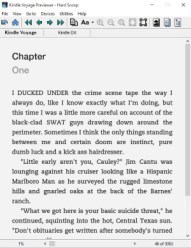 For Hanukkah this year, I bought myself a present–a Kindle Paperwhite.
Yes, I took advantage of the Black Friday sales and spent some of my hard-earned formatting dollars for something that will ultimately help me with my formatting, although I didn’t realize this at the time that I bought it. I thought I was getting myself a way to save space on my poor iPad which has been struggling recently with its very limited storage capacity. I thought I was getting myself something which would make reading my ebooks easier on my aging eyes. And I thought I was getting something that would be lighter to carry around than my, admittedly already quite light, little iPad mini. I got something even more important, though, I got myself a way to check the formatting of the books I format for my clients (and myself)–so you know that this is now going to go under business expenses (or, at least, half the price can be deducted from my taxes).
I had always checked the books I formatted for Kindle with the Kindle Previewer app, but the default is to show you what one would see on a Kindle Fire, in other words, on a tablet. What one sees on an e-ink device is very different! And I didn’t realize this until I had one in my hand.
One of the first books I downloaded onto my new Kindle was one that I’d just updated for a client of mine, a cozy mystery which I’d been wanting to read for some time (yes, one advantage of being a formatter is that I get to read the books I format). On her cover, her designer had used all small case letters, so I’d put her drop caps that way as well. It looked great on my tablet, not so great on the e-ink device (the letters sat too low). I’d also forced the titles into a sanserif font (again to match what was on the cover), but put that next to the serif font of the text and it just didn’t work. With the author’s permission, I got rid of the drop caps and just made the first four words of each chapter bold (and not capitalized), and switched the chapter title to display in the standard font.
I then checked through other books which I’d formatted recently to make sure that they looked all right. All of them did, including, oddly enough, another book in which I’d forced a sans-serif font on the chapter titles (I think because I’d also put the number of the chapter into gray and the words “Chapter” and the number of the chapter on top of each other, so it’s more of a design element than simply the title of the chapter). Drops caps in other books worked well as capital letters, not lowercase.
There are a few important takeaways here:
–Be sure to check what your book will look like on a variety of devices. Happily, the Kindle Previewer app does give you that ability, so you don’t actually need to have a Kindle to check this.
–If at all possible, leave the choice of font up to the reader. This is the default in e-books and it’s a good thing. Some people read serif fonts more easily, others prefer sans-serif. And while it’s really nice (and fun) to have the font family (if not the font itself) match what’s on the cover of the book, the reader probably won’t remember what sort of font is on the cover when they’re reading the book. You just want to make the reading experience as easy and thoughtless as possible so that people can read and enjoy the content and not think about how it’s laid out.
–Fewer fonts and fancies make for a cleaner, easier to read design (this holds true inside the book, as well as on the cover).
All this being said, I’m a firm believer, naturally, that if the reading experience is pleasant (ie, the book is well formatted) the book as a whole will be thought of in a better light than if it had not been well-formatted. In other words, a reader’s enjoyment is affected not only by the content, but by how the content is laid out.
So, what do you think? Do you mind if a book has different fonts in it? Do you put special little touches into your book? Do you not even think about the font at all when you’re formatting? As always, I welcome (and encourage) your thoughts and ideas on the subject.


December 5, 2015
Getting motivated
 Why is motivation the hardest thing for a writer—or even just a creative person no matter what their medium? We are doing what we love to do. We get great satisfaction from it both internally and externally (hopefully) and it fills a need deep within us.
Most people don’t write because they want to be famous and earn a lot of money. If they start out with that goal in mind, they’re going to be disappointed because it takes usually years and many, many books to begin to get any sort of recognition or monetary return on our hard work—as Cathy Maxwell has said, there are many much easier ways of earning money than writing.
We write because we need to. Because we’ve got a story to tell, and characters in our heads that need a way out.
So why is it so hard to just sit down and write?
I don’t know about you, but I’m always finding excuses not to write. I’ve got to do some formatting (except the client did say that there was no rush to get the job done, but I’ll do it anyway); I’ve got to do some marketing (read fool around on Facebook, Google+ and Twitter for a couple of hours, more if I head over to Tumblr as well). I really should do this, or that. Hell, I’ve even run errands rather than sit myself down and write.
Why?
It makes absolutely no sense. And yet… there it is.
So we cope. We create strategies to motivate ourselves:
We participate in NaNoWriMo.
We make deals with ourselves—if I write so many words, I’ll get X (something yummy) or get to play for Y minutes.
We work with other people doing writing sprints or other such incentives—peer pressure is motivating.
These can be great mechanisms to get ourselves writing. After listening to a terrific podcast on Joanna Penn’s The Creative Penn where she interviewed Mark McGuinness, who has a book out on motivation for creatives, I picked up a few more ideas which I want to try. They’re a little deeper than the ones mentioned above:
Commit to a time when you are going to write. At that time sit down, turn off your wifi and just write (or stare out the window, but writing is better). When the time is done, you’re done. That’s it! Do it again tomorrow. See what you end up with because if you’re just going to sit there, well, you might as well write something!
Compare yourself to the best writers in your genre. This isn’t to make yourself feel bad.

November 28, 2015
What’s for dinner?
It’s Thanksgiving, so what’s for dinner?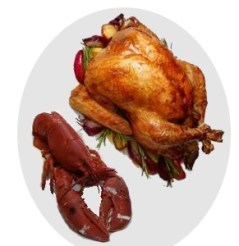
Americans love our Thanksgiving with passion. But with just as much enthusiasm do we love to discuss and debate what to eat for the meal that the holiday is centered around. Historical accuracy is at play here, so as a writer of historical fiction, this debate is near and dear to my heart.
Historically, the pilgrims had a huge smorgasbord of goodies. They ate turkey, goose, venison, lobster, corn, and pumpkin, among other things. They didn’t have our beloved sweet potatoes, nor, apparently, any potatoes at all. And pie would have been off the menu because of a lack of sugar. Poor things!
So why do you think turkey has become center of our Thanksgiving meal and not, say, venison or lobster? It’s a question I feel I’ve got to ask because last year my family had a traditional New England Thanksgiving with friends in Boston. They served lobster, naturally.
It was a happy gathering, but this year my children begged me for the traditional meal that they’re used to—turkey, stuffing, sweet potato pudding with marshmallows and green bean casserole. I’m very happy to oblige, especially since I’ll be able to put said children to work in the creation of this lovely meal (they’re adults, I think it’s time they helped with the cooking). I’ve already made the apple pie (it’s been in the freezer for a month, ready to be popped into the oven at just the right time) and will happily oversee my daughter as she makes the pumpkin pie, while my son whips the cream to go on top.
But aside from emotional reasons, is there any reason we shouldn’t have venison or lobster?
No. Not really. They’re equally accurate, historically. But then, we should probably leave out the sweet potatoes and the pie.
Wait? No pie?!
Well, you see, it’s a balance. Just as in my novels, while I do try to be as historically accurate as possible, I don’t carry that to extremes. I have my characters bathe every day and smell nice. They brush their teeth and have pearly whites. Women behave boldly and stand up for themselves and men respect them for that. Is this historically accurate? Nope. Not at all.
But tradition and modern sensibilities determine that my characters behave this way. Just as our modern sensibilities demand pie for dessert on Thanksgiving.
So, no matter what you eat, I hope that you and yours have a wonderful, delicious Thanksgiving, and we’ll all enjoy our historical inaccuracies and traditions.
November 21, 2015
The Creative Process
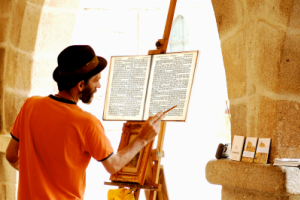 I learned something interesting yesterday. Apparently all artists, regardless of medium, go through a similar creative process.
I suppose that makes sense, although, to be honest, it never occurred to me that painters did (I met a painter who goes through this process, which is how this all started). I’d always thought that painters knew precisely what they were going to paint when they began a canvas. I imagined that they had the picture already created in their mind’s eye.
Apparently they don’t. No more so than a writer who writes by the seat of her pants knows exactly how her book is going to go when she sits down to write.
I guess that means that there are probably seat of your pants painters and those who do have the whole thing planned out, just as there are writers who know how their story is going to go when they begin to write and those who don’t.
So, what is this process? And since all artists seem to go through it, is there a reason for the madness?
Well, it seems as though, we all start out with an idea that we love–if we didn’t we probably wouldn’t start the whole process.
We then become worried that perhaps it wasn’t such a great idea after all–this would be when the reality of just how difficult it is to bring this idea to fruition hits us. This is the stage where we realize that creation is actually hard work after all. But we persist, because we’re a pretty stubborn lot and it was a good idea to begin with, so maybe there’s hope.
And, indeed, once we’ve continue to work at our project, we see that, yes, it was a good idea and this will work out after all… Until it doesn’t.
Yes, just like our stories, our creative process must have a black moment when all is lost and there is just no way this is going to work. For me, that’s either the part where I am right now in my WIP when I’ve reached the midpoint of my book but I am no where near the midpoint of my intended word count. Goodness only knows how I’m going to stretch this out to be as long as I feel it should be. Do I have to go back and replot out my whole book? Maybe I should just give up, the whole idea? But wait, I can’t do that, move told too many people what I’m working on. Argh! If I don’t finish it… Well, there’s no choice I’ve got to slog on. I’ve got to figure something out!
So I continue on and figure that I’ll add in a subplot after I’m through writing the whole book… Or something.
Soon enough I’m sailing along in my writing. Things are progressing in my story and I’m on a roll. This is great! I’m so thrilled with myself and my writing… Until I start to worry about length once more, or I hit the black moment in my story and get my characters into such a jam that even I have no idea how to get them out again. So I back up, do some more character analysis, figure things out and get them out of that horrible moment.
And then, wham! The book is done before I know it, but I’ve got to force myself to draw that ending out, to write those feel good, mushy scenes. I usually spend a day or two agonizing over how to end the book in order to leave my reader satisfied and my characters with their happily ever after.
The artist in me needs to be satisfied too, but for that to happen I need to do a few rounds of editing first, read through the story a number of times, add a few touches with my “paint bush” and liberally apply my eraser as well.
And then I’ll sit back and really wonder if it’s any good at all. It’s at that point that I need to take that leap of faith and send it off to others to read and hope that they like it (I honestly never know whether what I write is any good until I get that feed back).
So why do we do this? Why all these ups and downs in the creative process? Is there a purpose to the highs and lows? The only reason I can see is that we’re putting ourselves out there, baring our souls and our creativity for the world to see and criticize and, frankly, we’re a pretty insecure lot who fear being told that our art stinks.
The thing is, if we didn’t do this, we wouldn’t even have a chance at creating something beautiful. This process is necessary. This process is what makes our art special and unique and fascinating and enticing to others who don’t have the ability to create.
Yes, it can be painful. Yes, it’s frustrating at times. But in the end it truly is wonderful—even all those head-banging moments.
We feel, therefore we create, therefore we are artists.
What’s your process like? Is it anything like mine?
November 14, 2015
On Naming
Names can be so fascinating, but what to name your characters can sometimes be downright agonizing. Some people have an easier time naming their own children than they do the children of their mind—their characters.
There is so much in a name. It’s not just what people call you, it’s how it sounds, where it’s from, what it means and who else has held that name before. All of these things need to be taken into account when naming your characters.
The sound of a name can invoke a feeling or an impression. Names with hard consonants give their bearers the impression of being a strong person – men with names like Michael, John and Richard; women’s names such as Katherine or Margaret. Other names denote a softness or weakness to the person – Harold, Myron, Grace or Claire (my apologies to people with these names).
Names are also culture and country-specific. You wouldn’t name a Welsh character something Hispanic. You need to be sure that the name you give to your character is appropriate to where they come from and when. You can’t give someone a name that wasn’t used at the time that they lived—and that includes unusual/modern spellings of traditional names like the currently popular Caitlyn (thanks to Ms. Jenner).
Within culture-specific names, you might also want to consider the point of view of your reader. To my American ear the name Ulrich sounds like it would be perfect for a villain, but perhaps to a German speaker it is a name of power and strength. To try to figure this out, you can either ask your readers outright, or research who else has held the name in question. If it’s the name of a popular, handsome movie star, you might not want to give the name to a maligned character.
Personally, I’ve gotten a good bit of kick-back from my character St. John Fotheringay-Phipps (correctly pronounced Sinjin Fungy-Fipps thanks to the wonderful British language), otherwise known as Fungy. He started out being purely a comedic character, an extreme dandy. But he quickly grew into one of my favorites and I couldn’t just leave such a strong and wonderful character alone. He needed to be fleshed out and deepened. He needed to be a hero, and so I ended up with a protagonist with an odd name. But he bears it well and, in fact, in his book, A Dandy in Disguise, what he is called changes as he grows—in the beginning of the book he is just called Fungy by the heroine and others, but as she gets to know him better and he grows as a character, she and others begin to call him St. John instead. A more dignified name for a more mature character.
In my current book, I’ve named my hero Stephen, but as he is growing and developing, I’m thinking that a name that begins with S might not be appropriate or quite strong enough for the man. I’m thinking of changing his name to David. But in order to make this change, I’ll need to write a scene from his point of view using the new name and then a scene from the heroine’s point of view using the new name. If it feels comfortable, I’ll make the shift throughout the manuscript. If it still doesn’t feel right, I’ll keep his name as it is.
Why did I chose David for this character? Because it is a strong name with those  hard consonant sounds, and yet the biblical David did have moments of uncertainty, of weakness, of vulnerability and all of these characteristics apply as well to my hero, who grows from a man of certainty to one who isn’t so sure that what he’s doing is right for him, and then moves onto a new path knowing that he’s finally headed in the right direction. All this, I feel, is embodied in the name David, based on biblical stories and other people I’ve known, heard of or read about with the same name. So, you see, it isn’t just one thing which determines a character’s name, but a whole slew of variables.
As I am traveling just now and meeting an incredible number of new people from all over the world, I’m embracing the opportunity to not only get to know these people, but their names as well. Just within the past few days I’ve met Eavan from Ireland (pronounced Yvonne), the aforementioned Ulrich from Germany (who is not villainous at all, but rather a very sweet man), and Pilar from Boliva. I’ve met people from Senegal whose names I couldn’t even begin to pronounce (or write) and others who come from a fascinating mix of backgrounds with equally interesting names. As I struggle to take in their names, they do the same with my own odd name – most people hear Mary when I say Merry, and one person misheard altogether and is convinced my name is Merriweather (I don’t have the heart to correct her after spending a whole day sight-seeing in her company).
Have you struggled with naming your characters? Have you thoroughly investigated the fantastic website ? How do you figure out how to name your characters?
November 7, 2015
Vacation Smaycation
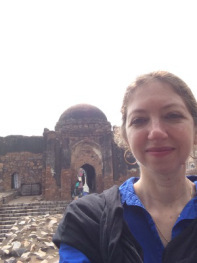 I don’t take vacations, I just work a little slower than normal.
As we were on the flight from the US to Germany (on the first leg of our journey), I looked over at my husband and told him how much I was looking forward to this vacation (three weeks in Asia, visiting India, China, Japan and Viet Nam—my husband on business, me tagging along). He just laughed at me and said, “But you never take vacations! You keep working right through.”
And he’s so right! I don’t. Even a few years ago when we went to a ClubMed for four days and I promised—promised!—that I would fully take a vacation. I was still checking my email at least once a day. Yes, I did so while lazing at a pool, but still, even checking my email is working because I’m thinking about work.
When my husband takes a vacation he puts a vacation notice on his email saying that he’s out of the office and will get back to people when he returns… and then he does exactly that! He doesn’t check his email (maybe once in four days and then for just a quick scroll through to make sure his world has come crashing down).
I can’t do that. I get paranoid that I’m going to miss out on something important. My husband’s cousin (who I visited the other day) agreed with me that she never fully goes on vacation either (she’s a teacher and school administrator). She hit the nail right on the head when she said that it’s because we’re women and we need that validation that we’re needed. Our work is important to us not just as a job or to earn money, but as a reflection of who we are.
Most men just don’t have this insecurity. It’s not that they’re conceited, they just know that what they do is important, that they are important, and, because of that, their work will be there when they get back. For many women (including me), we’re not so sure that’s the case.
I know that my own writing will be there. No one else can write my books. But the formatting work that I do and the little bit of promotion I do nearly every day (just posting on Facebook every day or so counts) just might disappear (along with any potential book sales) if I don’t keep up.
And so here I sit in my hotel room in New Delhi working: writing, answering emails, posting on FB, doing whatever formatting I’ve got at the moment. In a few hours I’ll go out with a friend (also here with her husband who works with mine) to a handicrafts museum and the Old Fort. I’ll turn off my work for a few hours and be on vacation. But the moment I get back to the hotel and my phone is connected to wifi, you know I’ll be checking my email (and I’ll be sad when I don’t have anything new because while it’s day time in India, it’s night in the US where most of my clients, readers and friends are).
I wish I could be fully on vacation, but it just doesn’t seem to be in my nature—whether it’s insecurity or just because I love what I do so much that I don’t want to stop doing it even for a week or two. So, I’ll lug my PC through Asia. I’ll spend a few hours every morning working. And I’ll be happy and feel validated. And if you’ve emailed me or are expecting your book to be formatted, you can rest assured all that will happen in-between a few hours of vacation here and there.
If you can completely stop working, I’m happy for you. It’s good for you to do that. We should all be able to do it. Enjoy!
October 31, 2015
On Writing Fast
 I was having lunch with a writer friend of mine who was happily telling me about her new series. It sounded fantastic, which is nothing less than what I would expect of her, she’s a great writer who writes really creative stories. But then she told me something that absolutely blew me away: She is planning on publishing a book in this series every two months starting this January.
Now that wouldn’t be that mind-blowing except that she’s only just finished writing the first book. So she’s planning on writing the second book, and quite possibly much of the third in a little over two months! Wait, what?
“Yes,” she said with a shrug and a huge grin on her face, “the second is already started and the third is plotted out.” Might I mention here that she only came up with the idea for this series this past summer?
Okay. First of all, it amazes me that she can write two books at once. Secondly, they’re consecutive books in the same series. Third, she can write a book in two months, comfortably? Possibly even a book and a half — because she’s writing two at once, remember?
That is what blows my mind! Oh, and she works a part-time job and has two little boys. I’m beginning to wonder if she sleeps!
She looked and sounded happy–obsessed with her books, but who wouldn’t be when they’re writing something new and exciting. I would have gushed to her about my new book as much as she gushed to me about hers, only I had other things to gush about (my impending trip to Asia and such).
I feel like a shlub next to her. It takes me months to write one book and there is no way I could write two at once. My brain just can’t split focus like that. I am hoping to get my current WIP done in, oh, I don’t know, two or three months. I’ve already been working on it for one month, so, maybe it takes me three to four months to write a book.
I know other people who can’t imagine writing a book in six months. Others take a year or more. So what is it that makes my friend able to write so fast?
Perhaps it is her intensity which allows the words to flow. She is completely involved in her story, in the world. It seems to be nearly all she thinks about. And when she’s working her other job or taking care of the kids, I can just imagine that her unconscious mind is working hard creating new plot lines or moving her story forward so that when she actually sits down to write it just pours out. But it’s really got to be an intense focus that she has to be able to write so fast. It’s the only thing that I can think of.
I’m astounded, and thrilled, that she’s writing so well. I also can’t wait to read what she’s written–I’m going to beta read her first book for her (she promised to get it to me by this weekend, so as you’re reading this, I might be reading that).
So how fast do you write? Could you write a book in two months? Do you? Can you write more than one at a time? I’m curious! Please share!
October 22, 2015
Myths and Mysticism
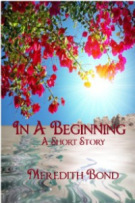 Old myths are fantastically interesting. Myths of mysticism even more so. I love studying these old stories and creating new ones based on them. It’s how I came across the idea for my short story “In A Beginning” in the Tales From The Mist Anthology and it’s how I began my research for my Vallen world. They both began with ideas of mysticism.
In the beginning there was God. S/he created man and woman in his/her image. And, yes, I’m deliberately using both male and female genders because, according to the myths, the first creature God created was one which was both male and female created in God’s image. The creature was then separated into male and female, Adam and Lilith.
They were created of the same dust, born at the same time. They were equal… except that Adam demanded dominance…and thus begins the story of Lilith and how she left the Garden of Eden and came to know (yes, in the biblical sense) the demon Samael.
The stories compound from there creating a mythology of Lilith that is as broad as it is creative. You can read my fictional version of events in “In A Beginning“. (Just as a side note—after I wrote the story, I gave it to my rabbi to read. He said that, although he wasn’t used to reading stories “like that” – yes, I gave a man of God a story to read that has explicit sex in it, but hey, he’s an adult, and a totally cool, easy-going kind of rabbi, too (he goes to Grateful Dead concerts and then tells us about on Yom Kippur! sorry, way off the point)– he did agree that my fictional depiction of the Lilith tale is a plausible one that jives with many of the myths he’d read. I took that as a rabbinical stamp of approval and did a little happy dance—out of the rabbi’s sight.)
Fast forward a couple thousand years and we have the birth of Wicca. A fascinating religion based on Celtic Pagan rituals. The blend of witchcraft with Wicca—since the two are usually linked—is a fascinating study. I especially love the Wiccan Rede:
Bide the Wiccan law ye must,
In perfect love, in perfect trust.
Eight words the Wiccan Rede fulfill:
An ye harm none, do what ye will.
Ever mind the Rule of Three:
What ye sent out, comes back to thee.
Follow this with mind and heart,
And merry yet meet, and merry ye part.
It is based on this, that the world of my own creation, the Vallen, rests. The Vallen are a people dedicated to harming none and using their special abilities to help ordinary people—for what other reason would a people be given magical abilities?
So as we move into that special time of year when the walls between our world and The Other thin, it’s a wonderful time to snuggle up with a book of myths or tales of people who consort with the devil, have special abilities, or are in some way extraordinary.
The authors of Tales From The Mist are having a special promotion and blog hop through October 30th. Please check out the blogs of the other authors and pop over to our website to enter the contest to win all sorts of fantastic stuff (including a copy of Air: Merlin’s Chalice and a $10 Amazon gift card from me).
Enjoy!
October 17, 2015
Traveling Through Time
 Don’t we all dream of it? Hopping into a time machine of some sort and ending up sometime else?
If you’re going back in time, the more practical of us worry about bathrooms (or lack thereof) and general cleanliness—yes, I love writing historical fiction, but what I, and all writers of the genre, gloss over is the fact that people didn’t bathe all that often and those pearly whites that our heroes and heroines flash probably wouldn’t have been so white (whitening fluoride toothpaste? nope). I suppose going into the future, you wouldn’t have that problem—other problems, quite likely, just not the sanitation issue.
But when we sit down to read a time-travel book (usually romance), it’s the differences in social expectations and culture that fascinate us, whether the character is one from the present going back in time, or one from the past coming forward. There is nothing more fun for a modern person to read than how someone who is used to life being one way, suddenly finds that nothing is the way they think it should be. That disconnect is the real fun and seeing how our hero or heroine deals with it.
And then there’s the time-travel that I’m beginning to write just now. I cheat. Sorry.
I suppose it’s less of a time-travel and more of a past-life experience story. The heroine is hypnotized and goes back to re-live a past life where all of the same people in her current life take on new roles or characteristics—or they have the same characteristics, only she hadn’t noticed them before.
Am I cheating my readers of the fun of having someone from modern times try to deal with life in the middle ages? Quite possibly. But the story revolves around what my heroine learns about her present life by living a past one.
Can you tell that I’m really having fun writing this book? I am! In fact, I can hardly wait to get back to it every afternoon (when I finally get a chance to write) and only exhaustion stops me every evening (well, that and hunger). It’s a tale that is pulling me in and making me curse all the other things I have to do in my ordinary life.
It took me some time to get to this point where I can just forge ahead and write. It took a lot of looking at my characters, analyzing who they are and what their problems are. I had to sit and go through story structures and figure out how the events would unfold. I had to figure out where the romance would come in and how to blend the stories of my hero and my heroine who each have their own to live through as well as the one they share.
But it’s all set to go now. I’ve got my W structure on the wall, my outline all filled out, my Scrivener list of scenes drawn up all ready and waiting for me to live the story and write it down so that you can read it and live it along with me. I’m setting off on this journey with these people who live today and live years ago, both. And I’ve got to weave together all the strings of the book so that they come together in the end into a beautiful knot—a blend of time and desire, problems and solutions, people learning and growing.
Have you written a story that you just couldn’t let go of? That you didn’t want to stop writing? Tell us about it in the comments below!
October 10, 2015
Blending Structures
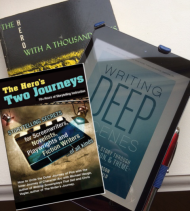 Writer Unboxed featured a new scene writing book this week that had me clicking straight through to Amazon. Granted, it doesn’t take a lot to get me to buy a new writing book, but this one sounded like fun. Writing Deep Scenes by Martha Alderson and Jordan Rosenfeld.
Scenes! They’re the basic building block of any novel. Building a better scene is essential to building a better book, right? Absolutely.
The catch, though, after reading through the first three chapters of this book (yep, I bought it), is that the book isn’t actually about building a better scene, it’s about story structure.
They break down a novel into three component parts: Action, Emotion and Theme: Action, being your protagonist’s GMC; Emotion is your character’s personality traits, both good and bad; Theme being the big picture, what you want your reader to walk away with. They then re-imagine story structure based on these parts—how each build the individual acts within a novel.
Basically what they described was essentially Campbell’s Hero’s Journey couched in different terms and made into a four-part story structure. That’s fine. The hero’s journey is an excellent story structure for the right story (it just so happens that my current WIP falls into to that structure very neatly, so I was very happy to revisit it).
When the authors describe Emotion, it’s as if they’re pulling on Michael Hauge’s Inner and Outer Journey structure, although they describe the transition of the protagonist as going from Darkness and Shadow to Light. It’s a cute metaphor. It works, although I’d rather work from Hauge’s structure because I found the way he described the journey very easy to understand (I even created a worksheet to guide myself—and other writers—through it. You can find it here).
I have to say, the combination of Campell’s Hero’s Journey and Hauge’s Two Journeys makes a very nice story structure. It’s so important to remember to consider the internal growth of the character as they attempt to attain their external goals and how the internal and external play off of each other. The list of possible types of scenes provided by Alderson and Rosenfeld I didn’t find quite as useful (and that’s the bulk of the book), but I’m certain the newer writers will.
I won’t say that I wasted my $10 on this book, but it’s not quite as insightful or useful as I’d hoped it would be. Although, as I’m beginning to plot out a new novel, I certainly appreciate being reminded of story structures I have known, used and loved for many years. Happily, I can go back to my own worksheets for these structures and use them to develop my new story.
Off I go on a new journey.
What about you? Do you favor one story structure over another or do you try out different ones with each book you write (or perhaps test out one story with different structures)?
Interested in checking out my worksheets for these structures? Click here to be taken to my OneDrive Public Folder where they’re located. Share. Enjoy. Use them well, but please remember where they came from. Thanks!