Meredith Bond's Blog, page 3
May 9, 2016
Mothers and Daughters
My apologies to my regular readers! I had this all ready to go, and then left for a family event and completely forgot to post it! So sorry!! But here is the blog post that should have been up for Mother’s day. 


April 30, 2016
Stupid or Smart: A new book on self-publishing
I keep shooting myself in the foot and then wonder why I’m hobbling around. A few weeks ago I realized I could still walk, kind of, so I got a much bigger gun and really made it so I won’t be able to walk.
 Nice metaphor, huh?
What I’m talking about is the fact that for years I’ve been teaching people how easy it is to format their books themselves, even though I’ve got a business doing that. I’ve been slowly putting myself out of business by teaching people to do for themselves what they had been paying me to do for them.
Smart, huh?
Well, clearly that wasn’t enough. I was still getting clients and my old ones were coming back to me with the books they were writing. So now, just to make sure I go out of business (I really, really don’t want to, by the way. I love formatting. I love making other people’s books beautiful), I’ve written, and published a book on self-publishing with an emphasis on formatting. Now even more people will have the opportunity not to hire me! Yay! 
So why have I done this? Well, because I’ve been promising people I would for a while now. I actually owe copies of this book to the students from two on-line classes which I’ve taught.
Other than that, I honestly have no idea why I did this. I’m sure it won’t sell very many copies–there are a number of books out there which claim to teach new authors how to publish. Granted, I think mine will make the process really easy to understand and I do give step by step instructions on how to format. So, I would argue, that mine is a good investment.
I suppose this was just something I had to do. But now I’ve done it. I can not worry about it any longer (having this promise of a book hanging over my head was bothering me) and try to go about my business—if I have any left.
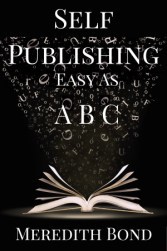
So, if you’re a new author or know of any, you might want to take a look at the book. It is cleverly called Self-Publishing: Easy as ABC and can be found, for the moment, only on Amazon. I will be uploading it to other retailers soon and a POD version will be available any day now as well.
On the up-side, the book was fun to put together and it was even more fun presenting it as a PowerPoint to a group of newbie authors last week in Culpepper, Virginia.
April 23, 2016
The Power of Free
Nick Stephenson, among others, has taught us the power of book funnels (where you price the first book in a series at either free or .99 in order to drive sales to the next books in the series), but what about just giving away your work? Not a book in a series, but a stand-alone novel. What does that do to your sales? Does it do anything? Does it make any difference at all?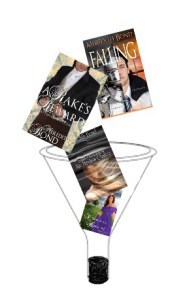
That’s the question I hope to answer with a little experiment I started today.
With the sales of my new book, Falling, not exactly inspiring, I decided that it wouldn’t hurt to just give it away—but not in the ordinary way of making it free on all the e-retailers where it would normally be sold. Instead, I’m giving away the book chapter by chapter—two a week–on Wattpad.
Wattpad is a really interesting website wherenew authors post their work hopes that others will read and give them constructive comments. Published authors sometimes post the first few chapters of a book and then tell readers that if they want the rest they need to buy it from an established e-retailer. Others post the first in their series—a whole novel or novella—there for free.
In the past, I’ve published a few chapters of my writing text book and the entirety of Storm on the Horizon, which I give away everywhere (it’s the book funnel for my Storm Series).
This time, however, I’m going to give away a whole book with no strings attached.
Falling is not the first in a series, although Iwill certainly be writing more books using the characters in that story, so it will eventually become a series. But at the moment, it’s not officially tied to any of my other books (except that it is a Vallen World book like many others of mine).
No, I’m just giving it away. Why? Because so fewpeople are buying it.
I write because I want people to read my work. As I’ve mentioned before, Cathy Maxwell said it best when she said that if you want to earn money, there are much easier ways to do so than by being an author. So, clearly, I’m not writing to earn money. So, why not give away my work? Not all of it, naturally, but a story here and there.
Maybe this will generate sales, maybe it won’t. That’s not the point. The point is to be read. That’s what makes me happy—and it’s even better when I get comments back afterward. To that end, I have asked readers to leave mecomments on whether they liked the book or not.
So, this is my experiment. I’ll keep you posted on how it goes.
What do you think? Is this a terrible idea? A terrific one? Have you posted work to Wattpad? How’d it go?
Oh, and if you want to spread the word that Falling is free, here’s the link to the first chapter on Wattpad.
April 16, 2016
Uncertain Times
I’m about to head out of Brussels, where I’m living at the moment, to return to the U.S. for a few weeks (I’m going to be giving a talk on self-publishing in Culpepper, Virginia, you can sign up here if you live in the area).
As I’m sure you’re all aware we’ve had some “exciting” happenings here—both the airport and a metro station were bombed a few weeks ago by terrorists. Happily, the airport has gotten flights running again as they rebuild. This is such a relief for me since I was not looking forward to having to travel to a strange city to catch my flight to the U.S. But just as I had figured out how to get to the airport when the train that normally goes there is no longer running (because they haven’t figured out how to make it secure), the air-traffic controllers decided to strike to protest changes to their pensions.
So many people see this as a kick in the teeth to all those who worked so very hard to get the airport functioning again after all they’ve been through. The air-traffic controllers are worried about their pensions when others are doing all they can to create a safe, terrorist-free travelling experience? This is sad, and definitely makes my life much more difficult. It adds a lot of conflict!

I’m just like that! A little off balance.
But I love conflict! It’s what makes my books so interesting! It’s what drives all novels! Without conflict our books would be boring blobs of ordinary life.
Now, wait, this is my ordinary life that I was just complaining had too much conflict in it.
Well, yes. We love to read about conflict. We love to experience it vicariously when it happens to fictional people (since we really don’t want it happening to real people, that’s no fun). The thing is, we don’t want it in our own lives. That’s normal.
So, how do we add more of it to our books?
Start by knowing your characters well. Know what they don’t like to do (travel, in my case). Know what they want and what will get in their way (okay… I want an easy, safe flight. Standing in my way is how to get to the airport when no trains are running and traffic isn’t getting through because of security checks, also the air-traffic controllers who might make it so my flight is cancelled). Then blend that all together in your handy-dandy plot blender (your brain, silly), and come up with a plot line—and then make it worse (believe me, my imagination is running wild with all the things that can make my trip worse!).

On my way!
Still having problems? Make a list. Honestly! Make a list of all the ways your character can solve their problem and a list of everything that stops them. Voilà! Conflict.
Get to the airport — no trains, no taxis
Get through security — I and my luggage will be checked at every turn
Hope that my flight is still flying despite the air-traffic controllers –they’re running a reduced schedule of their already reduced schedule! My original flight was cancelled. Will this one be cancelled as well?
Yikes! Conflict! Conflict! Conflict! And, really, all I’m trying to do is get home. Maybe I should write a story about it. Actually… it doesn’t have enough conflict to do that–thank God! But now you’ve got an idea as to how much conflict you really need in your story.
Keep your fingers crossed for me!
April 9, 2016
10 Rules of Thumb
I have been busy this week writing my non-fiction self-publishing book. It’s something I’ve been meaning to do for a very long time.
 I’ve been teaching self-publishing for four years both in person (at a community college and seminars) and on-line. I even promised the students in my last on-line class that they would get the class as an epub afterward… and then, to my shame (!), I never delivered because I realized that I would need to do a lot of writing and re-writing of my lectures to put them into shape to be a book.
Well, finally, I’ve done it. I’ve created an ABCs of self-publishing. As of this moment (Friday afternoon) I’ve got A through X finished. Yes! I’ve got something for just about every single letter (okay, there were one or two where I cheated and said “see this other letter for more information on this topic”). And I do actually have topics for X, Y, and Z (X-tras to put into your book; You — your bio; and Zoom In/Zoom Out taking a final look at how your book looks). I’m hoping that at this time next week, I’ll be able to tell you all that the book is on sale, but first I’ve got to get a cover designed and edit the thing.
So today, I thought I’d share a chapter of my this book with you– T: Ten Rules of Thumb. See what you think:
Work on your writing skills. No matter how beautiful your book is, if it isn’t well written, it won’t sell.
Make sure you get your books professionally edited. Yes, I’ve said this before and I might very well say it again. Why? Because it is that important!
Make sure your book looks as professional as possible in all ways – cover, editing, formatting. Self-publishing does not give you permission to put crap out into the world. It won’t sell and you won’t be doing anything positive for you or your career.
Build your audience. You can do this before you publish by having an on-line presence. And you must do it after you publish or else who’s going to know that you’ve published anything?
Read! Read what other writers are writing. Read in your genre and read outside your genre.
Treat this like a business, because you know what? It is a business. What does this mean? That means keeping track of the money you spend and the money you earn. It means treating others in this business with respect. And it’s a good idea to have a one, three and five year business plan (I’ve got a sample business plan here on my website).
Keep your goals realistic. You’re very unlikely to hit a top list with your first book—yes, it has happened, but I can probably count how many time on two hands.
Be strong! Writers are sensitive people. We bruise easily; get depressed easily. If you know you’re going to be hurt if you get a bad review, don’t read your reviews! If you know that you’re going to get depressed if you have low sales numbers, don’t dwell on them. Just focus on writing the best book you can.
Take negative comments as a call to action. When people tell me that something I’ve written is bad, I want to know more. What was bad and why? How can I fix it? The same goes with my on-line presence and even how I format books. I take all criticism as something constructive, a way to learn and improve what I do. You should too!
Keep writing! The more books you have published, the more you’ll sell.
April 2, 2016
You/Your Pseudonym
Two weeks ago, when I took part in a blog hop that threw me off my regular schedule (sorry about that!) I teased you with a name: Elena Ferrante.
If you read through to the bottom and found that little teaser, I hope you looked her up. She’s a fascinating story – and I say story deliberately, not person. Because Elena Ferrante isn’t a person, it’s a pseudonym for the writer of some best-selling, widely acclaimed books (which, I admit, I have not read).
But the story of her name and anonymity is just as popular and talked about—possibly even more so—than her actual books.
The fact that Ferrante used a pseudonym is not unusual. A lot of authors do so—especially romance and erotica writers who don’t want to jeopardize their outside jobs, children’s lives or social standing within their private-life communities. By publishing under a nom de plume all that is private remains private. No jobs or social standing will be jeopardized.
But to be so protective of her identity that she won’t even appear in public or social media (even under her pseudonym for fear of her true identity being discovered) Farrante is in the extreme. Because of this, she’s almost asking people to try to discover her real identity. One professor and trained analyzer of text (philologist) even went so far as to try to analyze her books to try to discover who she truly is. He came up with an answer, but both Farrante and the person he said was truly her have denied that they are one and the same.
I’m not even going to delve into why she has done this—she answers the question herself in this excellent interview done, by email, with The Guardian Newspaper. Instead, lets look at it from the perspective of a modern genre writer, such as we (I’m including you, reader, I hope you don’t mind) are.
I know some writers are very protective of their identities, posting fake pictures on social media (or pictures of things other than themselves). But the point is, they are on social media. They have an on-line presence. Why? Because it’s necessary to be a genre writer today. We need to engage with our readers, it’s how we build our readership. It’s how our books are discovered. And this applies to both self-published writers and those who are traditionally published. Everyone needs to be on social media to sell their books and have a dedicated audience.
The story of Eloisa James comes to mind when thinking about Farrante’s story. In case you don’t know, she is a New York Times best-selling writer of Regency and historical romance who did manage to keep her identity absolutely secret for many years while she worked as a professor at a New York university. One way she managed to continue to write and sell her romances was because the audience who read her books were not her university colleagues. She was also doing this before social media became quite so essential to a writer’s career. She went public with her true identity in 2005.
Could she have remained so anonymous today?
I think not. It’s essential to a writer to be a person and not just a name. The fact that the world is so fascinated with Farrente’s identity speaks to this. We want to know the author of our books. We want to see who they are and where they come from and how they got their ideas for the stories they write.
 So, is it possible to remain anonymous and be a genre writer? Yes. Many people do it. But it’s not easy and it severely limits what you can do—you can’t sell your books yourself and you can’t talk in public anywhere where someone might recognize you, among other limitations.
Personally, I write under a pseudonym both because my children were small when I began writing and also because my real name is very ethnic-sounding and when I began publishing Regency writers had British-sounding names. I’ve come to love my alter-ego and love being her. I wouldn’t switch to writing under my real name unless really forced to. Even the classes I teach and the non-fiction books I write I publish under my pseudonym. I like it that way not because I’m trying to hide who I am (if you search for me, you’ll find my real name very easily), but because that’s writer me, Meredith Bond, not private life me.
So, what about you? Do you write under a pseudonym? How hard do you work to keep your real identity hidden?
March 23, 2016
Writer, Be Proud
 After the horrific acts of terror in Brussels yesterday, I wanted to stop and think about what it is that we’re doing here. Acts of terrorism are terrible and must be stopped, but as with all horrible things that happen to us, they do make us pause and look at our lives and what we do.
We write stories. We take people away from the awful things in life and give them a break.
Yes, our stories do contain terrible things happening to good people–if they didn’t they would be boring and unreadable, but reading about terrible things prepares us for when we have to live through such things in reality. It teaches us how to react, what to do and not do. As Lisa Cron explains in Wired For Story, it is stories that have kept mankind alive. It is stories that help us to understand life and all the messy aspects of it.
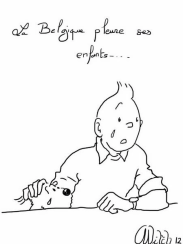 I live in Brussels. I just moved here with my husband for his work and am growing to love this city very much. Because of my work, I usually don’t leave my apartment until I force myself out in the afternoon to get some fresh air and exercise, but my husband travels (he happens to be out of the country right now) and he could have easily been at the airport when those bombs exploded (in fact, one of the people who works for him was in a plane that took off from Brussels Airport just minutes before the explosions. His office was in a panic until his flight landed and he was able to check in to say that he was all right).
But yesterday, when my husband’s assistant called to make sure that I was okay (even though their office is just a few blocks from the metro station that was bombed), he told me that he wasn’t watching the news. He had turned off all communication with the outside world. It upset him too much. He couldn’t deal with it. I very nearly told him that he needed to pick up a novel and take a break–I didn’t because he was at work.
So all this is to say, that you should feel proud of what you do–writing. You make life bearable for everybody who will read your work and have an opportunity to escape.
In between reading about the horrific things that were happening in the city around me, I edited Falling, rewriting and fixing scenes. I escaped into a time and place where the worst thing was that the hero was falling in love with a woman who was off-limits to him and she didn’t know who he really was.
This was my escape. This is what let me read about the real world and not break down in tears – well, that and the wonderful outpouring of messages from my friends and family who contacted me to make sure I wasn’t anywhere near the bombings.
Thank you for what you do. Thank you for being a writer and letting the world escape into your fantasies. And thank you for being here with me—even across the distances.

And I promise, next week we’ll get back to our regular schedule of posts on Saturday mornings and regular topic of writing and self-publishing. Thank you for your patience.
March 16, 2016
It’s the little things…
 …that make life worthwhile.
The smile. The hug. A kind word.
We all know this. But do the characters in our books?
As writers, we worry that there’s enough conflict to sustain an interesting story. We make sure our characters have a strong, meaningful goal which they need to attain by the end of the book. But do they stop for just a moment to allow something small and worthwhile to happen? That smile. That hug. 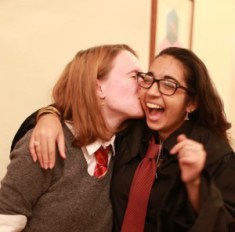
I love a good action story as much as the next reader, but I also really appreciate those moments when the action slows and and I’m allowed to take a breath and just enjoy a sweet moment.
As a writer, I try to remember to include those moments in my books. Thinking back on the books I’ve written, a few moments stand out in my mind–when Julian and Cassandra are standing in the rain under the banyan tree in An Exotic Heir; when Dagonet and Kate are talking on the bridge in Bridging the Storm. There are others, naturally, but, even though I know the power of the quiet moment, I too get caught up in the excitement of a story, and sometimes forget to put that time in. 
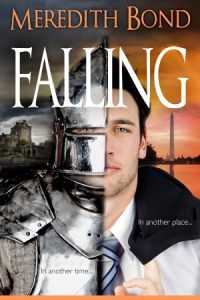
I know that I’ve got a few of those moments in my newest book, Falling, about a woman who has a fear of falling and how it leads to her finding the man she was destined to love…again. A contemporary paranormal romance, Falling tells the story of Erin Freyn and David Elder. Erin is a hill staffer forced to take an apartment she can’t even walk into due to her phobia. David is a public defender with a talent for hypnotizing people. When David is brought in to put a post-hypnotic suggestion into Erin’s mind, they relive a past life where David and Erin were lovers and Erin was destined to become the high priestess of the Vallen, a magical people. In this life, Erin knows next to nothing about the Vallen and absolutely nothing about high priestesses. Her search for information brings her and David closer together and leads to fascinating discoveries.
Even as you are reading and enjoying the sweet moments in your books, don’t forget to take a moment to share the little things with those you love.
Share the love by visiting the other sites in this blog hop! And here’s a link to the Facebook page for the hop.
Don’t forget that there are a ton of fantastic prizes to be won!
a Rafflecopter giveaway
March 12, 2016
What’s an honest author to do?
I don’t follow the K-boards. I was never quite comfortable in the medium of a bulletin board, but a good friend and fellow author does. This morning she sent me the most incredible email describing for me all the ways authors try to game the system on Amazon.
With the odd way that Amazon pays authors in their Kindle Unlimited program, it’s almost as if they’re asking for people to try to test the limits of what they can get away with.
 She told me of people who, when authors were paid by the book, they would serialize their novel so that they would get paid for selling more books–even going so far as to have ten page books.
As a side-note, I was nearly fooled into a trick like this by an author who serialized a book but didn’t say so in the book’s description. I thought I was buying a complete book… until it ended at a cliff-hanger in the middle of a scene. I bought the second book, but when that one was even shorter than the first and also ended at a cliff-hanger, I caught on and stopped buying books by that author–forever. It was a shame because she was a good writer and I enjoyed the first two parts of her book. But I hate being taken for a sucker.
Now that has Amazon started paying authors by the number of pages people read of their books, they have figured out a way to game that too. Apparently, they’re putting links in the back of their book for something the reader might want–another free book or a gift card or some such thing–so that the reader will skip to the back of the book to click the link. It then appears as if the reader has read the whole book and the author gets paid. They are apparently even writing or somehow putting together tomes of 3000 pages or more to get paid even more.
Because of this, my friend wrote to me in a panic because I also format all of her books for her–were the Table of Contents in the back of her books? Amazon is now, apparently, cracking down on this. They think that by putting the TOC in the back, my honest friend (and me and just about every author I’ve formatted for because I always put the TOC in the back unless asked not to) is trying to scam them into paying her for pages that haven’t been read.
I’ve always put the TOC in the back in order to give the reader more book to read when they click on the “Look Inside” feature. For the same reason, I also encourage authors to put their dedication and acknowledgements in the back, along with anything else that might normally be in the front of a book (other books by the author, a note to readers, whatever).
I’m trying to give readers more, but Amazon’s computers might see this as trying to game the system. So, what’s an honest author to do?
It really saddens me that there are authors who try to get money they’re not owed. It makes things difficult for those of us who are just trying to earn a little money while making people happy with our writing. Those of us who are writers first, business owners second are having to pay and up-end our lives and our work because of these dishonest people.
There was recently the dust-up over Brent Underwood and his book which was nothing more than a picture of his foot. With getting friends and relatives to rate and buy the book, he managed to become a “best selling author” on Amazon — if you didn’t hear about it, there’s a blog post about it here.
Yes, he could do this. Was this right? Obviously not. Is it going to mess things up for those of us who work hard and actually deserve all those wonderful reviews that are left for our books and the terrific sales that result from them? You know it’s going to be true.
Amazon has for a while been pulling reviews that they think come from associates (friends, family or co-authors) of an author. They remove reviews that they think were paid for. They seem, at times, to remove reviews just because they can.
There is nothing we can do about this, but to continue writing the best books we can. Maybe I’ll get a flurry of work from clients who want their TOC placed in the front of their books, rather than the back. I don’t know–but I certainly won’t charge my clients for this because a) it’s a minute’s work and b) it’s not their fault other authors are being so horrid.
What do you think about all this? Do you put your TOC in the front or the back? Have you heard about these games people are playing?
In my litt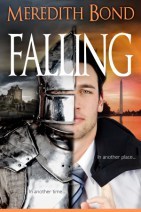 le effort, not to game the system, but simply give readers a fun book to read, my new book, Falling, is now available for pre-order. Want to know more? Read the first chapter? Click here. Want to buy your copy from Amazon? Click the cover. If you want to get it from Kobo or iBooks, it’s available there too. Thanks!!
March 5, 2016
Being there–Visiting your setting
Do you need to visit a place to be able to set a story there?
 I’m thinking about this as I begin a short story that’s to be based in Switzerland. It’s been ages since I was there (I visited when I did my “grand tour” after graduating from college). And even when I was there, I didn’t go to Basel, where my story will be set.
I’ve got pictures from the internet and descriptions of Basel, but I haven’t been there. I don’t know what the place feels like.
On the other hand, my story is set over two hundred years ago, so the city would have felt very differently then than it does now. There are, no doubt, many additions to the city since then—trams and other forms of public transportation, many more buildings and so on.
So would visiting now give me a feel for what the place was like two hundred years ago?
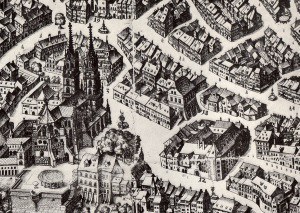 Actually, it might in that I would be able to wander the older streets and see what it might have looked like at the time.
But once again, the internet comes to my rescue. I can search for pictures from the time period of my story. I don’t get too many, but enough to get an idea of what it might have looked like.
Is it enough? Well, it will have to be since I can’t easily hop over to Switzerland for a visit.
 This is where my writer’s imagination will have to take over and my readers will have to be happy with my scant descriptions. Hopefully, they’ll be too involved in the characters and they story to worry too much about where it is taking place.
So what do you do when you can’t get to the setting of your story? Rely on the internet? Or do you prefer to try to get to the place itself?
As you might have guessed from the fact that I’m starting a new story, I’ve finished writing Falling. I’ve gotten the most amazing cover from Kim Killion (whose work I just love) and am waiting for my editor and beta readers to give me comments on the book (if you offered to beta read, please email me, I’m missing people I know offered to read for me!). So stay tuned for a great cover reveal and more info to come!