Jason SurfrApp's Blog, page 25
March 22, 2015
Why you should find an accountability partner
Whether in public or private, surrounding yourself with people who keep you accountable is critical for success.
First, let’s talk about public accountability and how powerful it can be when it comes to taking action:
We humans have the amazing ability to talk ourselves into or out of nearly anything. When you have a project you want to launch, business you want to start, or life change you want to make, your brain will do everything in its power to tell you all the reasons why you shouldn’t be doing that thing. We’re wired that way, just accept it and move on.
By making whatever you’re working on public (and asking for accountability) you tell your brain to shut its dirty mouth. You take a giant leap forward, and like the Greek King Leonidas in the movie 300, you kick your brain in its doubt-filling chest and yell “THIS. IS. SPARTAAA!”
If you’ve never asked for public accountability, then this will seem foreign and uncomfortable to you. That’s okay. The uncomfortable feeling you have is your brain resisting. Embrace those feelings of discomfort and put yourself out there. If you’ve surrounded yourself with people who know you and love you, their support should spark your action-taking-fire and keep it burning for as long as you need it. (I know, a lot of weird metaphors in here).
Now let’s talk about private accountability:
Maybe you aren’t working on a project that you want to share publicly. Maybe you’re trying to make changes in your personal life that you don’t want to blog about or put on social media. That’s totally fine and that’s why you’re going to want to find an accountability partner (or partners).
When picking an accountability partner you want to pick someone who has a few key qualities:
They are reliable (can be reached quickly and respond quickly).
They are okay with being your accountability partner.
They can relate to what you’re doing on some level (you wouldn’t pick a non-smoker to help you quit smoking, or you wouldn’t ask someone who’s never been through the book writing process to help you write your book).
You can be honest and open with this person and they’ll give you honest and open feedback (you don’t just need a cheerleader).
An accountability partner can come in any shape or size. It could be a paid business coach. It could be a friend from childhood. It could be a random stranger you met on Twitter a few years ago and stay in contact with. Whoever it is, make sure they meet the criteria above so they can actually help you accomplish your goal.
One great thing about accountability is that you won’t need it on a constant basis forever. Often it’s just the spark that gets you going or helps you through a rough patch. I will say, though, don’t stop asking for accountability until you’ve accomplished something. Accountability is great for getting started, but it really comes in handy when you hit roadblocks that try to derail you from whatever you’re working on. You probably won’t see it coming, and that’s the moment when accountability truly makes the difference.
On April 1, I want to be your profit accountability partner.
Just a few days from now I’m launching a project called One Week To Profit. I realize April 1 is April Fools, but I guarantee you this project will be no joke!
Over the past year I’ve come to realize that there are hidden profits tucked away in different crevices of everyone’s businesses. More often than not, business owners want to create a new product or new feature with their business to try to increase profits. But there are profits staring us right in the face, we just need to spend a little bit of time uncovering them.
One Week To Profit is a 7-day email course that will walk you through seven lessons to help you increase profits with an existing business (product or service). The seven lessons that you’ll get in-depth information about are:
Repackaging – How to take existing products or services and repurpose them to bring in additional profit with little-to-no-effort.
Your Hours – You don’t don’t have to be paid by the hour to understand your time is worth money. I’ll show you an exercise that will widely open your eyes when it comes to your profitable hours.
Expenses – By spending a couple hours going through all my business expenses I was able to identify nearly $20,000 in lost yearly profits. I guarantee you’ll be able to identify lost profits with this lesson.
Deal Sites – Groupon may have paved the way, but sites like AppSumo, Mighty Deals, and many others can bring in thousands of dollars in additional monthly revenue.
Partnerships – Finding the right partner can create tremendous revenue potential, help grow your customer list, and alleviate the stress of thinking you have to do everything yourself.
Other Mediums – Podcasting is the new kid on the block, but what other mediums should you be exploring to sell more of your stuff?
W.O.M. – Word of mouth marketing is the holy grail of marketing. I’ll show you how your existing customers can create tons of new business (and profit) for you.
And of course, One Week To Profit will be sold in a unique way. I’ve already given you way more information than I normally would, so you’ll have to be patient to find out how its being sold. (If you’re guessing it’ll be $1 increase per sale, you’d be incorrect.)
Get to work on that public or private accountability!
The post Why you should find an accountability partner appeared first on Jason Does Stuff.


March 15, 2015
How to claw your way out of debt

In 2013 I had $9 in my bank account and $100,000 in debt. My net worth was $-99,991.
Debt is something we all deal with at some point in our lives. Some of us are riddled with debt, stuck in its invisible grasp with no sight of escape. Some of us just have school loans, which seem harmless because of low fees and payments, so we ignore the soul-sucking and bank-account-syphoning elephant in the room. Some of us are able to use debt to our advantage to escape a bad month of business or get through hard times. But debt is dangerous and it needs to be dealt with head-on.
Did you know the average credit card debt per U.S. adult, excluding zero-balance cards and store cards is $4,878*?
How about the fact that 26% of small business owners carry a balance of nearly $10,000 on their business credit cards*?
Or did you know that more than 35% of Americans are seriously concerned about being able to meet essential financial obligations such as their mortgage, loans, credit card, or bill payments*?
These are serious issues. Debt is a crisis in our country, and that’s evident at the highest level of our government and for the lowest-income worker in Devil’s Lake, North Dakota (nothing against Devil’s Lake, I’ve actually been and its a lovely little town).
I’m not coming at you like some high-and-mighty financial analyst. Instead, I’m coming at you from the perspective of a small business owner who racked up over $100,000 in debt keeping my business afloat. If you’re stressed out about your $5,000 credit card balance, imagine what it would feel like if you had 20 additional maxed out credit cards! Plain and simple: It sucked.
I want to be clear that I didn’t get into overwhelming debt overnight. I also wasn’t buying extravagant things. My business had monthly operational costs. These costs ranged from salaries, design/development expenses, advertising/marketing, and countless products and services that kept everything organized. Over the course of a year, I went from $12,000 spread across two credit cards to more than $100,000 across six different credit cards.
Having six credit cards may shock some of you, but I wouldn’t be too surprised if a large portion of people reading this have three, four, five, or six credit cards. It’s a slippery slope that many of us end up sliding down without control.
Alright, you get the picture. I had a huge amount of debt. You have debt. Now the how the heck did I (and do you) get out of debt?
Step #1: You have to draw your line in the sand.
For me, when I hit $100,000 I knew something had to change.
Unfortunately, that change came with the tough decision of closing my business’s doors. That meant letting people go. Cutting as many expenses as possible. And accepting the fact that my business was no longer profitable and was, in fact, the exact opposite.
I hope, for your sake, that $100,000 is not your number. I hope it’s a drastically lower number.
If you don’t have debt for business purposes, your line in the sand should happen right now at whatever your current overall debt is (across all cards and loans).
TIP: A great thing to help draw your line in the sand is to have someone hide your credit cards so you can’t have access to them. Or just cut them up. Start using just debit cards or cash only.
Step #2: Change your mindset.
We’re a country driven by consumerism.
Turn on any TV. Open any magazine. Browse any website. There’s a new gadget, a shiny new car, something that begs you to pull your wallet out of your pocket and spend money you don’t have. Today is the day you tell yourself:
“I don’t need XYZ thing. I want it, but I don’t need it.”
How many things have you purchased with your credit cards in the past year that you can actually name off the top of your head? If you can’t remember what you spent your last couple thousand dollars on, it wasn’t that important and you didn’t actually need to buy it.
What’s more important in your life? Owning a couple new material goods, or not being stressed out over your current financial situation?
Drive a less expensive car for awhile. Enjoy the TV you have (or just watch stuff on your laptop and get rid of your TV and cable). You already own way more stuff than you could ever need. It’s time to stop spending.
I was incredibly inspired by Joshua Fields Millburn and Ryan Nicodemus of TheMinimalists.com when it came to changing my mindset about material goods and debt. I’d highly recommend spending time reading their articles or books. I even interviewed Joshua and you can read that here.
Step #3: Make a spreadsheet of all your current expenses.
Spend a few hours and write down all your expenses.
Your mortgage or rent. Your car payment. Your home utilities (cable, electricity, water, phone, etc.). Your insurance(s). The amount of money you spend on food per month (eating out and groceries). How much you spend on alcohol or at bars. Any subscription services you pay for (Netflix, Spotify, etc.). Your credit balances and monthly payments.
List EVERYTHING out.
You can use a service like Mint.com or spend a little bit of money to have a financial planner help you (your local bank should be able to help you find someone).
It’s very important to list every single thing out so you can see the big picture. The problem with debt is that it’s usually separate from your bank account and therefore you don’t see things side-by-side. Also, I was shocked when I learned that I spent almost $2,000 on food per month. I thought it was just $10 here and $20 there. I was able to save a bunch of money just by cutting back in that area, and I’ll get to that more in a moment.
Step 4: Reassess your expenses.
Now that you have a spreadsheet, sit down with someone and look them over.
If you have spouse or family member, this is a great person to start with. You’ll probably be embarrassed to show them—but you know what—that’s a huge red flag that you NEED to show someone your finances.
Look at places where you can cut back and start saving money (money you’ll be applying to get rid of your debt). A couple places that made a big difference for me were:
Cell phone bill (Yearly savings: $1,440)
I was paying $260/month for a family plan. I went into AT&T and asked them if they had a better option based on my usage. They did and changed me to a $140/month plan.
Cable bill (Yearly savings: $600)
I was paying $185/month and hadn’t changed my plan in years. I called and asked for a better plan and although it took awhile, I was able to reduce my rate to $135/month.
Food (Yearly savings: $6,000)
I was paying $2,000/month on food ($1,400 was eating out). I knew I needed a budget, so I told myself I could only spend $1,500/month on food (half for eating out, half for groceries). When I ran out of money for eating out, I couldn’t eat out again until the next month.
Entertainment (Yearly savings: $1,800)
Drinks with friends, seeing movies (and getting popcorn), two Netflix subscriptions in one house, and a bunch of other stuff. Writing all this out showed me I could cut back and save over $150 per month.
Just by reassessing my finances and creating a little bit more of a budget, I was able to find almost $10,000 I could apply to my debt!
Do a little bit of cutting back in the short term and you’ll find it is definitely worth it. You’ll be amazed at how living frugally for a short time can help get you out of debt exponentially quicker.
Step #5: Make a few difficult phone calls to your credit card/loan companies.
These phone calls suck, but staying in debt sucks much worse.
Did you know that American Express has a hardship case that will lower your credit card APR to 0% for three months, 1% for the next 3 months, and then 9.99% for the 6 months that follow? All you have to do is call the number on the back of your American Express card and ask to talk to someone about a hardship case.
I didn’t know this existed when I called American Express and was simply looking for any way to reduce my 24% APR. I explained my business was going through hard times and instead of defaulting on my payments, I was hoping they had a way to help me out. It helped my case that I’d almost never missed a monthly payment and had been a cardholder for 5+ years. Those aren’t mandatory items for a hardship case, just use them to your advantage if you do call in.
NOTE: If you apply for American Express’s hardship case, they do have to lock your cards during that time period. This sounds scary, but you shouldn’t be using your cards anymore, anyway.
I also called Citi Card and Wells Fargo Platinum Card. While they didn’t have a hardship case like American Express they were both willing to lower my APR by over 10% on each card.
All-in I spent about an hour making these incredibly humbling phone calls. But given the amount of debt I had and the lowered interest rates, I was now on pace to save over $400 in credit card fees each month.
That’s an additional $4,800 which when you add in the savings from my expense-reassessment, meant I had nearly $15,000 to pay toward debt.
NOTE: I didn’t have student loans, so I’m not sure this would work with them. I think it’s absolutely worth a try though. I don’t think this would work with auto loans. If you have a mortgage you could talk about refinancing, but I’d seek more professional advice for that.
Step #6: Build a get-out-debt plan.
Spreadsheets are your friend!
Just like you created a spreadsheet for expenses, it’s time to make another one that shows you exactly how much you owe on your cards, how much you’re paying each one down per month, and what your plan is for the next 12 months.
Seeing my debt laid out on one sheet, was incredibly powerful. Yes, the total amount of debt staring me in the face sucked, but the fact that I could see a path to paying down my debt was encouraging.
You should aim to pay off the credit card or loan with the smallest balance AND highest interest rate first. Plus, as Dave Ramsey says, paying off one card creates a snowball effect. Once you see that one card paid off, it motivates you to want to pay off the rest (instead of evenly reducing all cards).
*Bonus* Step #7: Work with a wealth management specialist.
Don’t think this is for you? Think again.
I wanted to add in a note about working with a wealth management company. I’d always heard of these companies but thought to myself: “I’m not wealthy, how can I afford to work with them?” Well, a good friend of mine recommended someone to me and I reluctantly took a phone call with them.
That phone call was awesome. Not only did I learn that I didn’t have to be wealthy to work with someone at a wealth management company, but some firms (like the one I talked to) don’t charge an arm and a leg. Actually, they don’t charge anything at all if you switch some of your existing insurances, banking, etc with companies they’ve partnered with.
My girlfriend and I are just getting started with our new financial plans, but we’ve been very happy with our experience thus far. Both in helping us organize and attack our debt, as well as understanding how we should manage our cash flow and where we should be putting money for “retirement.” (I put retirement in quotes because I doubt we’ll ever retire, but we’ll want money to be growing somewhere outside of our bank accounts.)
Your plan won’t be perfect and that’s okay.
Be ready to adapt, change, and iterate on your get-out-of-debt plan.
When I created my first plan I was hell-bent on paying off all $100,000 of my debt in 12 months. Well, things didn’t go according to plan. I didn’t make as much money as I’d hoped and I had a few unexpected expenses pop up. Nevertheless, I tweaked my plan along the way and was able to make a huge dent in my debt.
I was supposed to pay nearly $2,000 per card per month to reach my goal of being debt free in one year. Some months I couldn’t pay that much and some months I had to actually only pay the minimums. But throughout the year, I did my best to stay on track. I was able to pay off HALF of my debt in 2014. More than $25,000 of that came from money I was already spending (cutting back and budgeting, hurray!). The rest of it came from working a bit harder and putting extra income directly toward debt and not travel or material goods.
I’m not 100% debt free, but I’m incredibly proud of the progress I’ve made and know I WILL be debt free in the next year by sticking to this plan.
The post How to claw your way out of debt appeared first on Jason Does Stuff.
March 8, 2015
25,000 Email Subscribers Gone Wrong
A few years ago, I put my first email signup form on a website (for my IWearYourShirt business). I had no clue what I was doing, but several people had told me I needed to “grow an email list.” I had plenty of traffic coming to my website, so I started to get subscribers quickly. Actually, I started to get a lot of subscribers.
Over the course of a year I racked up more than 25,000 email subscribers. There was only one big problem: I had no idea what to do with them.
I would send emails haphazardly. Sometimes on a Monday, sometimes on a Thursday, sometimes two emails on the same day if I felt like it. Whenever I thought I had an interesting thing to share, I pushed it to my email list. This was problem number one, but not the biggest problem, by any means.
You see, after sending emails for a few weeks, I noticed a trend. The more emails I sent with giveaways, prize opportunities, or freebies, the higher the open and click-through rates. These two statistics were digital crack. I craved seeing them climb higher and higher. And the subscriber number? That was like, well, I don’t do drugs but whatever is better than crack. Super crack!
If you’re a veteran email marketer (or just marketer in general) you probably already know where this story is going. Either way, hold on tight because it’s about to be a bumpy ride.
The more giveaways and prizes I offered to this growing email list, the more interaction the emails garnered. An iPad giveaway here, a $100 visa card card there, so on and so on. There were times when I could send an email to this list asking them to like a Facebook page, and more than 1,000 people would do it within an hour. That’s pretty damn powerful in the 2010–2011 era of social media.
But then I noticed another trend with my email list. When I sent an email without a giveaway or prize, the open and click-through rates were abysmally low. Even worse than that, those emails usually came back with negative responses and high numbers of unsubscribes. I’m not sure which hurt my ego more, but it’s silly to look back and think that I let any of that dictate my decisions so much.
Nevertheless, I kept the email list going for years. I reduced the giveaways and sent fewer emails. I didn’t like the feeling that I had built this sizable email list of people who only cared about giveaways. Heck, that wasn’t even why they signed up for the email list in the first place. I never advertised, “get on this email list to get free stuff!”
I tried lots of different content in the emails. I varied the sending schedule, and even tried a set day and time for a while. I tried segmenting the list. I tried deleting huge chunks of subscribers (we’re talking 5,000+ at a time). I took a break from sending any emails to this list for nearly a year (never a good idea by the way). I even tried changing the name and email address of who the email came from. Unfortunately the damage was already done and the list was essentially worthless. In fact, it was costing me a couple thousand dollars every year.
After two years of trying everything I could think of to cater to this large list of subscribers, I finally gave up. I realized I had fallen into a sunk cost trap, and just needed to let go and move on (which as we all know, is never easy).
So I sent three final emails. One announcing the list was closing down. One letting people know they could get on a new email list I was passionate about that wouldn’t feature any giveaways (The Action Army). I was clear about the type of content the list would receive. And the last email simply thanked them for being subscribers and said goodbye.
Then I deleted the list. I didn’t back it up. I didn’t save it. I just deleted it. 25,000 subscribers gone.
After all was said and done, only about 200–300 people moved from my old email list to this email list. And that made me happy.
I am over wanting a huge email list (wide). Instead, I want an email list that thoroughly enjoys the emails I send (deep). This is what I’m building with The Action Army.
You still might be wondering why I would walk away from 25,000 subscribers. It’s simple. They were the wrong subscribers for me. They weren’t my “Rat People,” as my friend Paul Jarvis says. They weren’t my “Tribe,” as Seth Godin says. It was simply a list of people who wanted something from me that I wasn’t happy giving them.
My thoughts on email marketing have changed drastically over the years. You might assume I loathe email marketing and list building because of this story and my not-so-great-experience. But it’s actually the contrary. This email list, the Action Army, that I’ve been building for the past year has brought me a ton of value and dollars in my bank account. I made a mistake and failed with my previous list, but I also learned a lot from the experience too.
I want to close this out with a few things that I think are incredibly important when it comes to building and running a great email list:
1. Be crystal clear about what your subscribers are going to get if they sign up for your email list. Let them know the schedule, the type of content, and what kind of value you are providing them. Put this information right next to your signup form and remind them of it in a Welcome Email.
2. Do not worry about the numbers. Again, don’t focus on going wide with your email list. Focus on going deep. If you only have 15 subscribers, that’s totally fine. Pamper the heck out of them, engage with them, but make sure you’re doing it with the content you want to be sending.
3. Don’t hide the unsubscribe button/link. In fact, make the unsubscribe option prominent in your emails. I promise you, if someone wants to leave your list, you should let them go and wish them well on their way.
4. Unless you’re Groupon, do not create an email list with giveaways, deals, and prizes. Trust me on this one—you’ll build a list of people who only want those things. It’s not worth the extra subscribers because they won’t bring you any value in the long run. They’ll actually end up costing you time and money.
5. Deliver your unique value to your subscribers with every email. Don’t copy someone else’s strategies. Don’t copy subject lines. Just pour your uniqueness into every email you write.
People always ask me the question: “What’s your best marketing advice?” And I have a very simple answer these days: Build a quality email list. It’s not a sexy answer, but it’s the smartest and most valuable marketing you can do these days.
The post 25,000 Email Subscribers Gone Wrong appeared first on Jason Does Stuff.
March 1, 2015
How to become a rockstar at to-do lists

To-do lists are essential to getting things done. Lots of people ask me how I juggle so many projects, businesses, and ideas at one time. The answer: I’m a to-do list aficionado.
I want you to get better at completing tasks, managing multiple projects, and enjoying the feeling of accomplishment on a daily basis!
I think I’ve tried every to-do list app in existence, and I always come back to physically writing out my to-do lists. Here’s why:
Creating to-do lists online leads to going other places online
When I used slick to-do list apps, I always found myself getting distracted and ending up on a social media site or reading some random article. Unless you create and update to-do lists with all other programs closed and WiFi turned off, you will get distracted. It’s a fact of life.
Scratching off completed to-do list items is empowering
There’s just something about physically drawing a thick line through a completed item on a to-do list. You can feel the accomplishment. You get to physically enjoy checking an item off your list. It’s just not the same when you highlight an item on a screen and hit the delete key (or format the text to strikethrough).
Rewrite your to-do lists daily
One thing that really helps me tear through my daily to-do lists is to rewrite them each day. That means I have to go back to the previous day’s list and rewrite all the to-dos I have not finished yet. It creates a built-in accountability mechanism to just get things done so you don’t have to keep rewriting them over and over again. When you type out your to-do lists you can copy and paste (that’s easy and effortless). But actually rewriting a list of things from the previous day is cumbersome and annoying. It keeps you very in tune with your progress.
Break to-do items into smaller tasks
This is one of the biggest problems with to-do lists: We don’t write specific small tasks, we write big picture items. If you want to get the website up for your next business or project you do not want to put “get website up” on your to-do list. That’s too big of an item. Instead, you need to boil it down into the smallest steps possible. Here’s an example:
Finish the website wireframes for the designer
Get the designer to deliver first crack at designs
Make tweaks on design and get final files
Talk to my developer about hosting the website (where is it going? cost?)
Give final design files (when ready) to the developer
Have the developer code the site
Buy the domain
Get the email capture stuff working (sign up for MailChimp, give developer access)
Write the meta data for the title, keywords, and description
Write the homepage copy
Write the about page copy
Get my headshot ready
What links do I want in the navigation? What about in the footer?
Get photos from Unsplash for contact us page
Show the website to a friend for typos and feedback
Launch the website!
That’s 16 individual tasks and there are probably 16 more that would be added in the process. But when each one is something simple and achievable. You can get it done and move onto the next one. Plus, this helps you avoid mistakes and forgotten steps.
Create multiple types of to-do lists
Besides breaking to-do list items into smaller tasks, I also like having multiple to-do lists. I use Post-It notes, a journal, and a piece of paper taped to my wall. I like to think of these of daily to-dos, weekly to-dos, and monthly to-dos (respectively). The daily to-dos on Post-It notes are tasks I need to get done immediately, and once they’re finished I can crumple them up and throw away (another empowering feeling—even better than crossing off). The weekly to-dos in my journal keep me on schedule for whatever project(s) I’m working on, and give me a place to look back on how much I have (or have not) accomplished. The monthly to-do sheet that I tape to the wall in front of my desk is a constant reminder of everything I’m working on. This may seem like a lot of work for to-do lists, but it’s really only 5–10 minutes per day and well worth it.
Find what works best for you
These are simply my thoughts based on my experiences with to-do lists. To-do lists are my secret weapon to being able to launch a lot of projects. And I want you to enjoy the feeling of accomplishment too!
The post How to become a rockstar at to-do lists appeared first on Jason Does Stuff.
February 22, 2015
You are not average
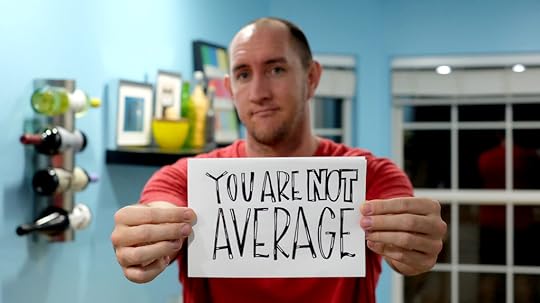
I’m not average. I’m special. I’m different.
It’s a really weird thing to type these next few words, but I teared up while writing those three previous short phrases. I don’t think I’ve ever actually written them before. I’ve said them, but I say a lot of things. It means more to write them down. Writing has a sense of permanence that spoken word doesn’t.
I’ve always felt like I was different from other people. It started for me as a kid when I was—not unlike many of you—bullied in school. Growing up I was a bit of a gangly mess. I think by age eight I already had size 13 shoes (okay, maybe not that big) and my ears were probably fully grown. I wasn’t taller than the other kids (yet), but parts of my body were definitely not on the same growth patterns as others.
While growing up it wasn’t that I thought I was different, it’s that I was told I was different. I was physically and emotionally punished for it.
Luckily for me, I had an incredible guiding force in my life when I was a kid: my mom. No matter how bad things got, she was there to support me and help me. (Dammit, I didn’t intend for this to be an emotional article, but I’m embracing my more vulnerable side because I truly believe it’s helping me bring more value to the world.) I’d love to share the bits of wisdom with you that she shared with me, but the honest truth is that I’ve completely blacked out the memories of the majority of my childhood. That’s not a joke; it’s a hard truth. I’ve locked away a lot of uncomfortable memories in one of those bank vaults with the titanium wheel and fingerprint pad on the outside. Maybe we’ll dig into that issue at a later date, folks.
Nonetheless, I started out very average but was molded into something else by my peers and circumstances throughout my teens. I resisted making friends and clung tightly to the ones I trusted. I tried not to excel at much of anything for fear of more bullying.
This is my first time admitting this, but I scored a 1430 on my PSATs in high school (1600 was perfect at my time of taking them). I was in an SAT planning class, and when I got my score a couple guys who were on the high school basketball team with me made fun of me and called me a nerd. If you can imagine trying to be a jock, but then being called a nerd in front of your peers (by your supposed co-jocks), it was painful. When I took the actual SATs, however, I purposefully breezed through it—scoring a very average 1050. I didn’t intentionally organize this decline in test scoring, but I’m 99% certain my subconscious took the reins and made it happen.
When I got my scores, I showed them to my fellow co-jocks like a badge of honor. “Look at this 1050, it’s completely average! I’m not a nerd anymore right??” I didn’t want to be made fun of, so I managed to fit perfectly in the middle, hidden away from nerd-criticism.
Even in college I coasted through school, through friendships, through relationships, through mediocre part-time jobs, all to make sure that I stayed right in the line of average. Sure, there were blips of standing out—like that time my friend Alun and I decided we’d bleach our hair and dye in some leopard spots (still sorry about that, Grampa). Or when I got my ears pierced. Or when I wore parachute pants and puffy vests.
But then something happened. A moment in time that I can picture with absolutely perfect detail. The moment I decided not to let external influences keep me in a state of average any longer.
I was sitting at the desk of my 9–5 design job right out of college. I can still remember the beige desktop and the carpeted half-wall that surrounded me. The cheap desk chair that raised up and down with the little lever on the side. My starchy gray dress pants and blue button up shirt from Express. I had recently picked up a copy of Seth Godin’s book The Purple Cow and was reading it during a lunch break.
If you’ve read The Purple Cow, you know where this is headed. If you haven’t, just know that Seth talks about standing out from a crowd of normal black and white cows and becoming a “purple cow.” Here’s the singular takeaway for me while reading Seth’s book: “I want to be a Purple Cow. No, you know what? I am a Purple Cow.”
F*$k being average.
(I’m sorry, Grama.) This is one memory I can recall clear as day. In the middle of reading this small hardcover purple book written by some bald guy I’d only just recently heard of, I said to myself, “F*$k being average. I’m different. I’m special.”
It was in that moment that I created the tiny snowball-sized idea in my mind that would eventually turn into a roaring avalanche of difference. I didn’t want to be average anymore. I didn’t want to hold myself back from standing out. I wanted to embrace my difference.
This was a pivotal shift in my life in 2006. For the first time, I was going to completely buck the system and abandon the security and stability of the average American Dream. I was going to start my own business. I was going to be different. I was going to strive to do bigger things with my life.
From that moment forward, I’ve pushed as many proverbial envelopes as possible. I’ve taken more entrepreneurial risks than many people will take in their lifetimes. I haven’t been willing to settle for average. I’m not saying that to brag; I’m saying that because I’m damn proud of myself.
I don’t think you should settle for average either. We all have own our unique differences. It can be uncomfortable to embrace who you truly are, but it’s time to show the world your true colors.
As my girlfriend, Caroline, so eloquently wrote:
“When we play small, nobody wins. We miss out on realizing our potential and the world misses out on all the great things we can create when we’re living out the fullest, brightest expression of our gifts.”
Stop pretending to be someone you’re not for fear of ridicule or criticism. Don’t waste your time surrounding yourself with people who make fun of you for being yourself. In fact, one of the best things you can do for yourself in this lifetime is to quit your crappy friends. A few years ago I wrote an article about friendships. It still applies to me today and I hope it resonates with some of you as well.
My friend AJ Leon said it perfectly:
“This is not your practice life.”
You don’t have to stay on the path of average. You don’t have to let other people control your circumstances. You don’t have to continue to do things the same way you’ve done them before. You alone can decide your future, you just have to let go of your past and take action (which isn’t easy, but is absolutely doable).
You are not average. You are special. You are different. And so am I.
The post You are not average appeared first on Jason Does Stuff.
February 16, 2015
Announcing: Product to Profit Masterclass

One of the best feelings you can have in business is to create something and then have someone show their appreciation by purchasing it. That small action seems so simple and mundane when you write it as one sentence, but if you’ve never experienced it, you don’t know how amazing it actually is.
As creators, we pour our time and energy into our projects and products. We devote countless hours with the hope of validation (read: purchases). But for many people, they don’t get to the validation stage. They end up stuck somewhere in between “hell yes, people want to buy my stuff!” and “why the heck don’t people want to buy my stuff??”
Have you ever heard of the “hero’s journey?” I bet you have. It’s a storytelling device used in movies, books, etc. all the time. You have a person (before he/she’s a hero) start out with nothing but an idea. Then that person decides to turn that idea into a reality. Inevitably something goes terribly wrong somewhere along the way, and they have to fight some epic battle. They barely win the battle, come out a stronger person, and achieve their idea/dream/goal. They are now the hero.
So how does that relate to business?
Very simply, every business has its own hero’s journey. It starts as an idea. Then it goes through the creation process (sometimes a long and arduous process). There’s always some type of failure or bump in the road (or an epic sword-filled battle). There’s a ton of trial and error. And then… Success!
However, the majority of people’s businesses only make it to the failure part of the journey, or if they’re “lucky,” the trial and error section. So many people never get to enjoy the taste of glorious success (read: customers buying their stuff!).
If this sounds familiar to you, you are not alone! I’ve experienced this same journey with my various businesses over the years. For the first few years of being an entrepreneur I only focused on service-based businesses. But a few years ago I dipped my toes into the world of products. Things I could spend time building, launching, and setting aside. These products had many different legs to stand on and were able to make money in a multitude of ways (without countless hours of my time!).
Over the past three years I’ve built and launched somewhere between 7-10 products. Products like my recent book, a few online courses, a t-shirt store, and more. Some of them did well. Some of them did really well. But one thing they’ve all had in common was a product to profit roadmap.
And that’s where my next project comes in: The Product to Profit Masterclass
The Product to Profit Masterclass is a collaboration between myself, my buddy Paul Jarvis, and our mutual friend Nathan Barry. We’re teaming up to bring you a 3-hour live online masterclass on February 26 at 1pm EST that will help you take any idea you have and show you the exact steps to make it profitable.
This masterclass will show you how to make actual money from your ideas by learning from all the mistakes and failures we’ve made along the way. We’ll share specific steps on how to grow your audience, how to validate your product (before wasting time and money), the most efficient way to build the actual product itself, launch sequences that work extremely well for us, pricing and positioning advice we’d wish we’d had, and much more.
We were going to charge $499 to attend this masterclass, but instead I convinced Paul and Nathan to use the Bumpsale pricing. So, as of 10am EST today, the tickets for the Product to Profit Masterclass are on sale starting at just $1. Each time someone buys a ticket to attend the class, the price will increase by $1. The sooner you buy, the better the price of your ticket!
NOTE: All of the content from the masterclass WILL be available after February 26, but ONLY to the folks who purchase a ticket before the event. After February 26 you will not be able to purchase this masterclass or get any of the content from it. If you can’t watch live on February 26, don’t worry, we’re recording the class and you’ll get access to it forever as long as you’ve purchased a ticket ahead of time!
If you want to take your existing product or an idea you have for a new product and turn it into a profitable business buy your ticket to the Product to Profit Masterclass now.
I’m super excited to co-host this class with Paul Jarvis and Nathan Barry. They’re two incredibly smart and successful guys. I want you to learn from our mistakes and successes over the years and apply them to whatever product you’re currently building or have already built and are trying to sell.
Hope you’ll join us next Thursday!
The post Announcing: Product to Profit Masterclass appeared first on Jason Does Stuff.
February 8, 2015
Luck

For as long as I can remember, the saying, “you just got lucky” or “that person is so lucky” has always made me cringe. I’ve never believed in luck—let me explain why.
Everything that happens in life can be traced back to some amount of effort. Or, in many cases, it’s a crapload of effort.
When someone hits the game winning 3-pointer in basketball, it’s not luck that makes the shot go in. It’s the 500 3-pointers that athlete has shot every day, for months or years. It’s the muscle memory that athlete has developed over thousands of painstaking hours. There’s not some miracle wisp of wind (luck) that floats the ball into the hoop.
When someone’s business starts to take off people immediately jump on the luck bandwagon. (In this scenario luck is the exact same thing as overnight success.) Even if a company goes “viral” at launch, there’s still an immense amount of planning, preparation, coordination, and previous successes (and failures) behind the scenes. It’s not luck. It’s organization and execution.
Look at any best-selling author … EVER. Not one of them sat down and wrote a book in a week. Got it published the next week. And then sat back and watched as it became a New York Times best-seller. Yet people call authors like Seth Godin, J.K. Rowling, and many others “lucky.” Seth and J.K. (we’re on a first-name basis because we’re author buddies) both got rejected by publishers countless times. Heck, Seth Godin got rejected a staggering 900 times by publishers. 900! And he’s lucky? Hell no, he’s not. He’s a hard-working author who got what he earned from persistence and effort.
I could go on and on and on with examples. Maybe the only people who truly could be deemed lucky are lottery winners. However, the majority of lottery winners (a high majority) have played for years and invested thousands of dollars to win. Many lottery winners have strategies, systems, and complex buying patterns. Sure, there are a few people who’ve bought a single ticket and won the lottery, but that’s unbelievably rare.
Luck has this amazing ability to show up after all the hard work has been put in, and often times, after someone has lost hope that their effort will pay off. I believe that the only time so-called luck shows up is after you’ve gone far enough in whatever you’re working on that you deserve recognition on some level.
That’s exactly what luck is to me: recognition of hard work.
For me, this came on November 3, 2012 when I launched BuyMyLastName and asked the world to bid on my last name. In the first 24 hours the bidding was over $30,000. A lot of people called that luck. LUCK? I’d been working 14-16 hours every day for the previous four years with IWearYourShirt to build a following and a community that gained attention in the media. Luck didn’t have anything to do with it. About 5,000 hours of effort and the balls to put a crazy idea out into the world—that’s what made the difference.
The illusion of luck can consume you if you’re not careful. If you buy into it, you’ll end up sitting idly on the sidelines, while the dedicated, hustling, hard-working people pass you by on their road to success. It’s like Coleman Cox said in 1922:
“I am a great believer in luck. The harder I work, the more of it I seem to have.”
Don’t sit around waiting for the luck train to show up. Luck is for leprechauns and cereals with marshmallows in them. For the rest of us, it’s just hard work, patience, and persistence that will get us to our dreams.
The post Luck appeared first on Jason Does Stuff.
February 7, 2015
Hello Medium Reader,
Why yes, I know you’re coming from Medium because I made this page specifically for you. Rather than sending you to some generic page that I’d share with the general public I wanted to create something just for you.
If you enjoyed the article you just read I think you’ll enjoying signing up for my weekly newsletter called The Action Army.
Don’t need anymore information about it? Ready to join? Scroll back up to the top of this page and you’ll see the signup form. Enter your name and email address and then confirm your subscription by clicking the link in the email you’ll receive. Once you’ve done that you’ll be all set.
Need a bit more convincing of why you should sign up for my weekly newsletter?
Here are five reason why I think you should join The Action Army:
1. I genuinely care about my email subscribers.
I’m not just some online marketer trying to rack up a buttload of emails so I can spam you with my next set of e-books or get-rich-quick DVDs. When I send you an email each Monday it’s coming directly from me. If you reply to the email, I’ll reply back. The Action Army is a two-way street, and one that I keep in tip-top shape.
2. I just wrote the word “buttload.”
If you’re into that kind of thing (not butts, but nonsensical writing), then I think you’ll enjoy subscribing. If I just offended you, now would be a good time to close this page and go back to reading stories on Medium.
3. Every project I launch goes to The Action Army first.
Want to know when my next book is coming out? How about the next time I’m launching a free online course (my last one had 500 students sign up in 24 hours)? I launch about one project per month and I pour my heart and soul into them. If you aren’t interested, just ignore that email. I promise not to deluge your inbox with follow ups about it.
4. I invest in my writing.
I have a copy editor who edits every one of the emails I send out. No, not my personal emails. The emails I send each Monday to The Action Army. Her name is Ashley and she rocks. She tells me when my writing sucks and she fixes all my grammar and tense issues. If this page has any errors it’s because she hasn’t had time to get to edit it yet and I’m impatient.
5. I want you to unsubscribe from The Action Army.
Don’t like the emails you’re getting? Hit the unsubscribe button. I won’t chase you down and I’m happy to see you go. I take The Action Army very seriously. I used to be afraid of people leaving my email list, now I encourage it.
So what are you waiting for?
If you’ve read this far, you’re probably still interested in joining The Action Army. Scroll back up to the top and sign up. Thank you for the opportunity to take up space in your precious email inbox. I will not take that for granted.
Jason Zook
The post Hello Medium Reader, appeared first on Jason Does Stuff.
February 3, 2015
An A-Z List of Things I Use and Love

Ever wondered what email marketing provider I use? How about my favorite gluten-free tortillas? What camera I use for all my Instagrams? Or what about the sites I get royalty-free music and photos from? This is my A-Z List of things I use and love.
Some of the products and services listed below feature “my affiliate link.” I wanted to be completely transparent about this and you should know that using my affiliate link gets you the same exact price, I just make a little bit of money from your purchase. Think of it like giving me a high five, but with that high five I can afford to buy more t-shirts!
Let’s dive in…
A: American Express Delta Skymiles Platinum Card (link)
Whoa, what a freakin’ weird thing to start this list with right? Well, I use this damn card all the time and it actually has decent rewards (by no means am I a credit card reward wizard). Each year this card gives me a free companion flight anywhere in the US and helps accrue points that can be redeemed for flights and hotels. Using this card in 2011 to pay for all my business expenses got me to Platinum status on Delta and I got upgraded to first class on nearly any flight I took. It was glorious (and I was already spending the money anyway!). You won’t find another credit card on this list because this is my favorite one. Oh, and the American Express iPhone app is badass. Seriously. It’s really well done.
Price: $195 per year
B: Badger.com (my affiliate link / normal link)
Badger.com is my domain registrar of choice. Whenever I have a new project idea, I immediate run to Badger.com to see if the domain is available and to buy it. My good friend Conrad runs things at Badger and is incredibly transparent and honest when it comes to domain name stuff. Plus, they never badger you (see what I did there?) to add features or pre-select five year domain renewals.
Price: $15 per domain
C: Cotton Bureau (link)
Listen, you don’t become “the t-shirt guy” if you don’t love t-shirts. Cotton Bureau is a crowdfunding/purchasing site where cool t-shirts are put up for sale. The designs have to be approved by the Cotton Bureau staff and then have to sell a certain amount before they can be printed. Cotton Bureau handles the screen printing to keep the quality high and I think I’ve backed 10 t-shirts so far? Love this place.
Price: Free to browse, $25-30ish per shirt
D: Dropbox (link)
If you’re still using external hard drives to backup your computer, you must get Dropbox and ditch the clunky drives. I made the switch to cloud backups a few years ago and haven’t looked back (or had any issues). I use Dropbox to backup everything on my laptop. It’s also a great resource for sharing files with people or creating publicly accessible links to stuff on your hard drive.
Price: Free up to 2GB, $9.99/month for 1TB, and bigger plans.
E: Everlane (my affiliate link / normal link)
Sticking with the clothing trend, I have to give a shoutout to Everlane. I first found them when I was searching for a new Dopp Kit. Then I found out they made high quality clothing (sustainably) and were completely transparent about their process, pricing, and profit. Freakin’ awesome. Their newsletter is one of the few retail companies I look forward to getting because the stuff is so fairly priced.
Price: Get out your wallet! (not expensive, just a ton of great stuff)
F: Flywheel (my affiliate link / link)
I’ve used a bunch of different website hosting providers over the years and none of them compare to the customer service and usability of Flywheel. If you have a WordPress website or are thinking about creating one, I would 10000% recommend Flywheel to you all day long. Rick and his team are awesome and have helped me solve so many silly issues that no other hosting provider would care about. Flywheel is a fantastic resource for anyone who manages WordPress sites for other people too (you can manage billing per site, add collaborators, and lots of other stuff). This site, JasonDoesStuff, is proudly hosted by Flywheel!
Price: $30/month (1 site), $100/month (10 sites), and Custom Plans
F: Fujifilm XT-1 (my affiliate link / link)
What? A second “F???” I know, I know. But hey, this is my blog so I can make up the rules and add duplicate letters to the alphabet. Even though I’m a fan of the camera on the iPhone, I still enjoy taking some higher quality photos here and there. As a previous multiple DSLR owner, both Nikon and Canon have provided me with quality equipment over the years. However, I recently made the switch to the Fujifilm XT-1 and I’ve been absolutely loooooving it. It’s not drastically smaller than a DSLR, but it’s more compact size definitely makes a difference. Plus, the ability to use my iPhone as a wireless viewfinder is pretty freakin’ cool. In case you were curious, I own the 14mm, 35mm, and 55-200mm lenses.
Price: $1,200 (body only)
G: GoSquared (link)
I always used Google Analytics before and it was confusing. Nothing was intuitive or easy to find. When my friend Paul Jarvis introduced me to GoSquared I was in love. Every thing I could possibly want is right on the dashboard (unique visitors, referring pages, visitors currently on the site, location, etc). I share an account with my girlfriend, which is a fun little hack, and we have probably 10 websites on GoSquared. Oh, and you can share access to sites with other people (like Google Docs or Dropbox)!
Price: $18/month (free trial for 14 days)
G #2: Gumroad (link)
Gumroad is a really simple and easy to use e-commerce solution. I remember when they popped up a few years ago I sold a nerf basketball using them. It took me a matter of minutes. I use Gumroad for random one-off or unique things I sell (like my consulting calls, review videos, etc). The simple sales pages are customizable and can be embedded on your own website so your potential customer never knows Gumroad existed. Here’s my consulting call as an example.
Price: Free to use, they take a 3% transaction fee on all purchases (like PayPal, Stripe, etc)
H: Honey (link)
I found the Honey Chrome Extension a few years ago and always forget I have it turned on until… *bing* it pops up and tells me there’s a coupon code I can use on the website I’m about to buy something from. It’s a simple Google Chrome Extension that runs in the background and searches for coupons based on whatever site’s checkout page you’re currently on. It doesn’t always find coupons, but it’s nice to save 20% off stuff here and there.
Price: Free!
I: Incompetech Music (link)
This is a royalty free music site I found during the IWearYourShirt days. Since I still create a video here or there I’m often in need of some background music. Incompetech has a ton of different music styles and the majority of them are instrumental and royalty free (and organized by music type or keywords). If I can’t find it on Incompetech I’ll look on AudioJungle, but I always try going the free route first.
Price: Free!
J: Journal, by Landmade (my affiliate link / link)
Yeah yeah yeah, I kind of phoned it in here. But hey, I love journals and I couldn’t think of anything else for the letter “J.” Crazy right? If you know of anything cool that you think I should check out, shoot me an email. Otherwise, I’m enjoying my cork journal from Landmade.
Price: $15
K: Kickstarter (link)
I went back and forth on whether to use the letter “K” for Kickstarter. But then I realized how much I love Kickstarter and how powerful of a marketing platform it can be (if used correctly). Kickstarter has introduced me to some really cool projects and companies over the years. I’ve backed at least five project per year for the last few years, some of them at the $5 level and some at the $1,000 level. Some recent projects I backed are:
Exploding Kittens
Next Keyboard
Barbell Denim
Charging Bracelet
SLIDE Wallet
And as a little plug to a good friend, if you’re thinking about running a Kickstarter campaign, you should definitely check out FundYourDream.
Price: Hide your wallet!
L: LeadPages (my affiliate link / link)
LeadPages is something I discovered in 2014 and have really enjoyed using. If you aren’t handy with creating websites or landing pages (read: writing code and doing design work), then LeadPages is worth its weight in gold! With a few clicks of the mouse you can have a simple landing page set up for almost anything. Plus, they’re really great at helping convert leads into email subscribers which we’ll get to next. Oh, and if you’re a WordPress user their WP Plugin makes it super easy to make custom URLs on your domain (here’s my sponsorship course as an example).
Price: $37/month or $67/month
M: MailChimp (my affiliate link / link)
For years I used an incompitent email marketing provider because I simply didn’t understand the value of email marketing. When I made the switch in 2012 to MailChimp, everything changed. I love the design and usability of MailChimp and have started using their segmentation and automation features a bit more. There are tons of email marketing providers out there (and I’ve tried a bunch), but MailChimp is my personal favorite.
Price: Free up to 2,000 Subscribers!
M #2: Must B Nutty (link)
This is the ONLY food item in this list. I found these guys via my friend Web Smith on Twitter. Gluten-free, grain-free, vegan, almond flour tortillas. I use these to make tacos or tostadas with my girlfriend, or we put a little Kerry Irish Gold butter on them, sprinkle some coconut sugar and cinnamon, and make a little healthy dessert.
Price: $9.99 (1-pack), $29.49 (3-pack), $56.99 (6-pack)
N: NounProject (link)
My girlfriend Caroline introduced me to Noun Project and it’s a designer’s dream. Have you ever wanted an icon for something but just couldn’t find anything on Google Images? Yeah, your problems are solved with Noun Project! You can search terms like “question mark” or “microphone” or “person” or “exercise.” There are so many awesome icons to sift through and Noun Project makes it suuuuuuper easy.
Price: Free! Almost all icons are free with attribution to the creator or are $1-2.
O: “Open” by Andre Agassi (my affiliate link / link)
I have another list of my favorite books, but I had to give Open, by Andre Agassi a mention. I’ve read a ton of non-fiction over the past year, but Open was probably the best book I’ve read to date. Tennis holds a special place in my heart because I worked for the ATP right out of college and got to watch Andre’s last match at the US Open, but it’s still an amazing book. I loved Andre’s writing style, his vulnerability, and his incredibly detailed memories of his matches and life. A must-read in my opinion!
Price: $8.79
P: Pocket (link)
My friend Clay Hebert introduced me to Pocket a few years ago and I really enjoy it. Think of it like bookmarking with tags and good design. So instead of having a bunch of toolbars or folders full of website bookmarks, I use Pocket and store everything with tags. I can always go back later and search Pocket for an article, website, product, etc.
Price: Free!
P #2: Product Hunt (link)
I visit Product Hunt daily. It’s a great place for finding new apps, new books, new podcasts, new services, etc. I’m proud to say I was Product Hunt user #609 and have enjoyed watching them grow as a company. I’ve also enjoyed sharing my own projects/products on Product Hunt and seeing a huge spike in traffic and purchases.
Price: Free!
Q: Quirky Ascend (my affiliate link / link)
I was originally just going to share Quirky.com because I’ve purchased a few cool products from them, but then I visited the site and saw the Quirky Ascend. I don’t know about you, but I’ve always thought the garage door opener I keep in my car is antiquated and ugly. The Quirky Ascend makes any garage door opener operational from an iPhone for just $100. I. Can’t. Wait. It’s about time our smartphones did more smart things!
Price: $100
R: RODE Microphones (links below)
Someone reached out to me from RODE in 2010 and we’ve stayed in touch ever since. I own the RODE Smartlav, RODE NT-USB, and RODE Podcaster. They make fantastic audio equipment and have been great to me over the years. I use the Smartlav to record audio in videos where I’m not at my desk. I use the NT-USB on most of my Skype calls. And I use the Podcaster for interviews or anything recorded.
$78 (Smartlav)
$169 (NT-USB)
$349 (Podcaster)
S: Slack (link)
I’d heard about Slack a year ago from my friend Rafa, but I didn’t dig very far into it. However, with recent product launches and collaborations, Slack has been instrumental in keeping track of multiple teams and multiple projects. Think of it like a Facebook Group, but with outstanding design and functionality (and a beautiful iPhone app). Slack just makes it easy to talk to people and their Mac App is great because I can switch between a ton of teams. Also, Slack has a great video explaining their product.
Price: Free!
S #2: Square Cash (link) and Square Invoices (link)
I used to be a Freshbooks user, and while they’re great, Square is just a bit better when it comes to design and ease of use. I use Square Cash to send money with the tap of just a few buttons on my iPhone. It’s ridiculously easy to setup and there are ZERO fees when sending money (maximum of $2,500 per day I think?). I can’t remember, but I do think you need to use your debit card if you are sending money. If you are receiving money with Square Cash you can input any bank account. Square Invoices on the other hand let you quickly and easily setup invoices. I have a few clients that still need invoices for things, so it’s nice to be able to whip these up with ease and know they’ll look professional (and are easily payable by credit card!).
Price: Free!
S #3: Stripe (link)
WTF? A third “S??” Ya, it’s fine. Stripe is the cat’s meow (if that’s still a thing that’s really good). They just know what the heck they are doing when it comes to online payment processing. We use them for Teachery. We use them for the Bundle of Awesome. I’ll be using them many more times over this year. Plus, their customer service is fantastic. If none of that made sense to you, just know Stripe is a way better alternative to PayPal.
Price: Free to sign up, 2.9% per transaction + $0.29
S #4: SoundCloud (link)
Yes. It’s a 4th “S” just deal with it. I’ve gotten really into podcasting and SoundCloud just makes it easy. Their embeddable player is really slick and you can see it in action on both my podcasts: Invisible Office Hours and Sleeping With The Boss. Plus, the SoundCloud player is playable directly in Twitter or Facebook when you share an audio clip (which is awesome). I know there are a few ways you can host and submit a podcast to iTunes, but I’ve thoroughly enjoyed using SoundCloud.
Price: Free, $6/month, or $15/month (depending on amount of content and features you want)
T: Teachery (link)
I mean, c’mon, I have to promote a product I’m actually building! If you’re thinking about creating an online course (which I highly recommend) you should absolutely give Teachery a look. My co-founder and I have spent nearly a year creating what we think is the easiest online course building platform. Teachery was built with two things in mind: #1 Ease of use and #2 Course creator profitability. This Teachery blog has a bunch of great free resources too.
Price: $0/month, $49/month, or $179/month
U: Ugmonk (link)
One of my favorite t-shirt companies, although Ugmonk is much more than just a t-shirt company. The founder Jeff Sheldon creates beautiful apparel and products and has been doing so for years. Ugmonk is the ultimate story of build something slowly and with a focus on quality. Every once in awhile a t-shirt pops up that I have to grab, but lately I’ve just really enjoyed watching Jeff share behind the scenes of Ugmonk.
Price: Free to browse!
U #2: Unsplash (link)
I mentioned royalty free music earlier, well this is my go-to place for royalty free photos! Unsplash has some of the most beautiful photos from some of the most talented photographers. I head to Unsplash on a weekly basis to grab a new image for a blog post or something I want to put a quote over and share on Instagram.
Price: Free!
V: Voyage, by Kindle (my affiliate link / link)
I know, I kind of cheated here, but again, it’s my list and I can cheat. I’m new to the world of book e-readers, but have enjoyed the experience using the Kindle Voyage. While the experience of browsing the Voyage could be a ton better, the experience reading a book is really solid. Plus, you can’t beat having 1,000 books in the palm of your hand. I wasn’t sure how I’d adjust to using an e-reader but the Voyage is solid.
Price: $199
W: Wistia (link)
I use Wistia for video hosting for my online courses and a few other projects where I don’t want videos to be branded by other companies (YouTube, Vimeo, etc). They’ve done a fantastic job creating a video player that’s both easy to use and beautiful. I’m a big fan. Oh, and you can actually embed Wistia videos in emails with MailChimp (something you can’t do with YouTube, etc).
Price: Free (with Wistia branding), $25/month (what I use)
W #2: WeMo (my affiliate link / link)
One day in 2013 I had an idea in the shower. I wanted to create a simple gadget that plugged into an electrical outlet and let you control that outlet via my iPhone. Well, after some Googling I found the Belkin WeMo. Dangit Belkin! I will admit I think there’s an opportunity to make a simpler version of this product, but I have two WeMos in my house: One that controls our living room light and one that controls our upstairs office lights. You can schedule the lights to turn on/off at certain times, you can control them from your iPhone while in Hawaii (like we did!), and you can add on other products from Belkin (light switches, etc).
Price: $40 on Amazon
X: I was going to try to get cute here…
But there’s no product I use or care about that begins with “X.” Remember this xylophone though??
Y: You’re Getting Old (link)
Truth be told I was drawing a blank on “Y.” Then I asked my friend Paul and he pointed me to You’re Getting Old. Put in your birthday and see a whole bunch of fun stats, facts, numbers, and more related to your age. It’s fun!
Price: Free!
Z: Zenlist (link)
I’m a huge to-do list fan. I have to-do lists in my notebook, on post-its, on a piece of paper taped to my wall, in Google Docs, in projects on Basecamp, blah blah blah. The great thing about Zenlist is it only allows you to list 3 things. I use it to list my 3 biggest projects of the day, but you could use it to do 3 small steps of a bigger project. I just dig it.
Price: Free!
If you have anything super awesome you think I should add to this list email it to me!
The post An A-Z List of Things I Use and Love appeared first on Jason Does Stuff.
February 2, 2015
My weird morning ritual and why you need one too

Changing my morning ritual has made the biggest impact on my overall happiness and productivity. Before I share my new ritual, I think it’s important to share my old one because I’m willing to bet the shirt off my back yours is eerily similar.
Wake up: Whether to an alarm or not, grab iPhone and swipe open. Immediately check any application showing a red notification (Twitter, Facebook, and email).
While reading email: Find out that I forgot to do something or someone wrote me an angry email. Fight the urge to write an angry reply, especially because I’m still lying in bed.
While scrolling through Facebook: See a post from someone bashing Obama, or a rant about taxes, or a puppy that’s in need of help, or a post about how Obama invented taxes on puppies.
While skimming Twitter: Read a tweet from someone complaining about how awful customer service is. Or a similar message about Obama/taxes/puppies.
Get up: Grumpy, sulking, and forcing myself to do some sort of “work” before anything else. Still thinking about how I’m mad at the stuff I read, and how much I disagree with it.
You get the point. Believe or it not, you’re experiencing the same thing if you have a similar morning ritual. Even if you have the most highly curated feeds and friend lists, negativity will always slither its way through the cracks of our digital lives.
Here’s where I took control back. I decided to make a change and quit starting my day with negative things. I decided to remove all opportunities for the boa constrictor of negativity to make his way around my neck. I decided to start spending the first 10–15 minutes of my day with positive experiences.
So what did I do?
Meditation? Yoga? Deep breathing? Hide my iPhone in another part of my house? Get a puppy that can do taxes? Nope. I instituted InstaCoffeeHobbes. (And yes, that’s a terrible name I just made up.)
Insta = Instagram: I keep my phone next to my bed, that wasn’t going to change. But I removed the Facebook and Twitter apps and moved the mail app to the second page. When I open my phone, one of the only app icons I click is Instagram. Why Instagram? Because it’s a selective feed of photos of friends, family, beautiful people, cars, landscapes, and more. I can’t remember the last time something showed up in my Instagram feed that was negative.
I spend between 5–15 minutes on Instagram. I get caught up on new photos from people I follow and check out the Instagram explore page to find interesting new stuff. After that, I close my phone and get out of bed.
Coffee = Coffee: I do own a Chemex and French press, but I don’t have the patience for them in the morning. I throw a couple scoops of Bulletproof Coffee in my automatic coffee maker and hit brew.
If you aren’t familiar with Bulletproof Coffee I invite you to watch this video. It’s an adjustment and weirds some people out, but I swear by it these days. And hey, Jimmy Fallon and Queen Latifah enjoy it, too.
Hobbes = Calvin and Hobbes: While my coffee is brewing, I grab one of the twelve (not kidding) Calvin and Hobbes books I own. Why Calvin and Hobbes? First, it takes me back to a happy place in my childhood. I remember flipping through the Sunday paper with my mom to find the newest comic from Bill Watterson. I remember pretending I was Calvin and living out his adventures in my mind. I also remember re-reading the books in the attic of my grandparents house later in life (it was a finished attic, they didn’t force me up there or anything weird). Second, Calvin and Hobbes has some of the greatest writing about life you will ever read. Don’t believe me? Go read a few comics right now and tell me I’m wrong.
Instead of looking at my phone or firing up my laptop (where I could find negativity) while my coffee is brewing, I smile and conjure up feelings of happiness by reading a handful of comic strips.

By the time my coffee is finished brewing, I’ve spent 10–15 minutes doing only things that make me happy. My day has started with positivity—positivity that will be a shield of armor from the rigors of the rest of my day. If I were to start with negative influences first, the rest of the day is an uphill battle to reach positivity.
I’d rather start at the top of Mount Positivity each day, wouldn’t you?
You may not be a big kid at heart and want to read Calvin and Hobbes. You may despise coffee. You may not have an Instagram account. But I guarantee you can replace InstaCoffeeHobbes with your own thing(s).
Maybe that’s sitting cross-legged and breathing deeply in a dimly lit corner of your house while videos of puppies play in the background? I don’t know. If that takes you to the peak of Mount Positivity each morning, then do that! I know how important starting my day off without negativity has been for me, and I want that for you as well.
It doesn’t matter if you work from home or work a 9-to-5 job and have a commute; invest some time finding a morning ritual that makes you happy.
Take control of how you start your day—don’t let the start of your day control you.
The post My weird morning ritual and why you need one too appeared first on Jason Does Stuff.